“In a time of destruction, create something.” Maxine Hong Kingston
I have been trying to write poems this year. If you love poetry, I recommend listening to The New Yorker poetry podcast. Poetry editor Kevin Young interviews poets who read a poem from the New Yorker archive plus one of their own poems. Also inspiring, if you are interested in haiku, is Natalie Goldberg’s book, Three Simple Lines. She writes about her pilgrimage to Japan, about haiku, about the first Japanese masters, Basho, Buson, Shiki.
I have started to write my own version of Haibun, a Japanese form that combines concise prose with a haiku. I loosely interpret this form, writing a daily observation in a few sentences plus a “sort of” haiku. No more 17 syllables, just three simple lines. Maybe these aren’t haibuns or haikus at all…. maybe they are just what they are.
I Womb
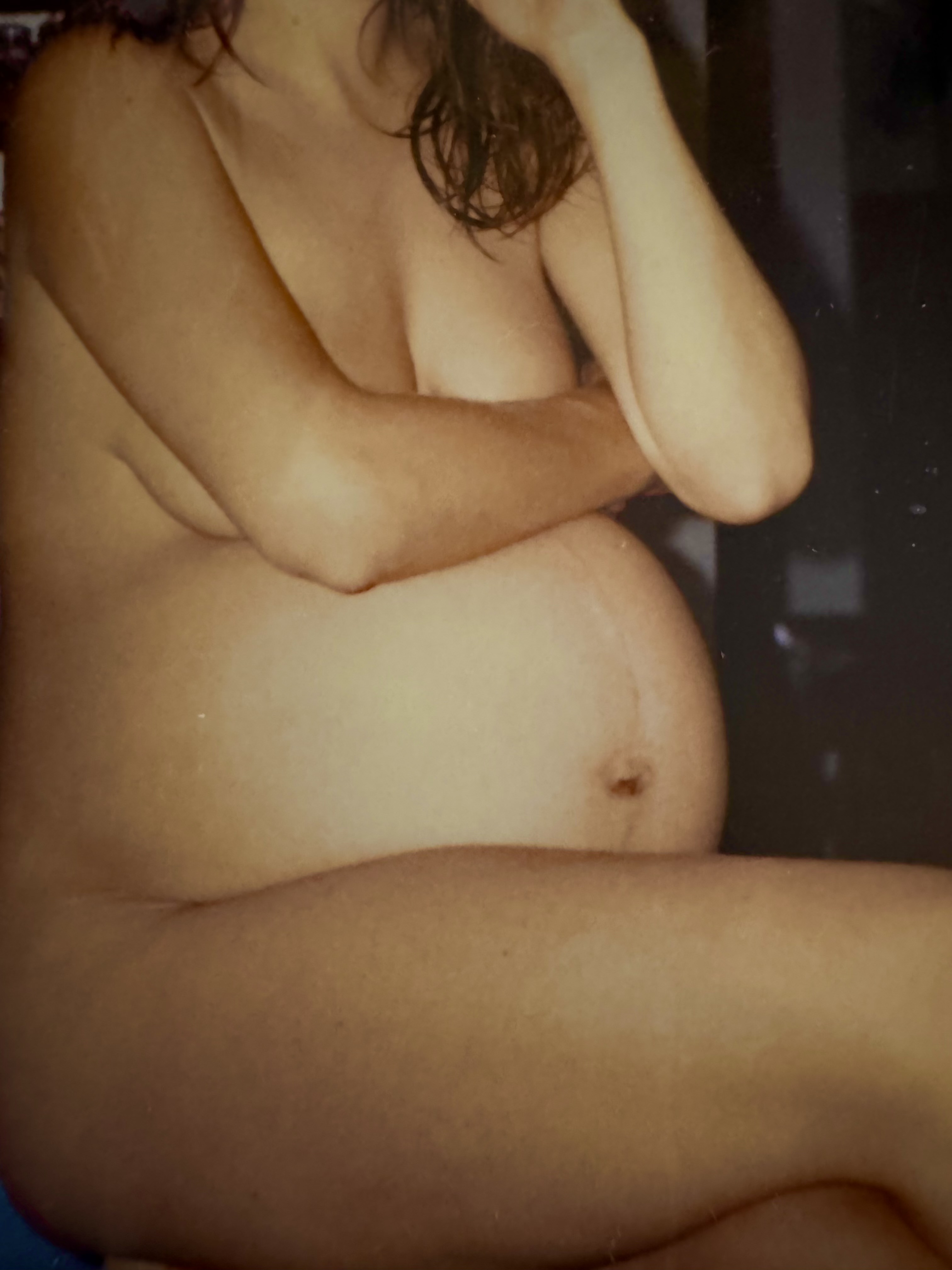
Morning crossword, four letter word, first site of eviction. “Womb,” I say aloud with certainty. But no, the answer is “Eden.”
Every human’s first home, the blood red womb
II Orange
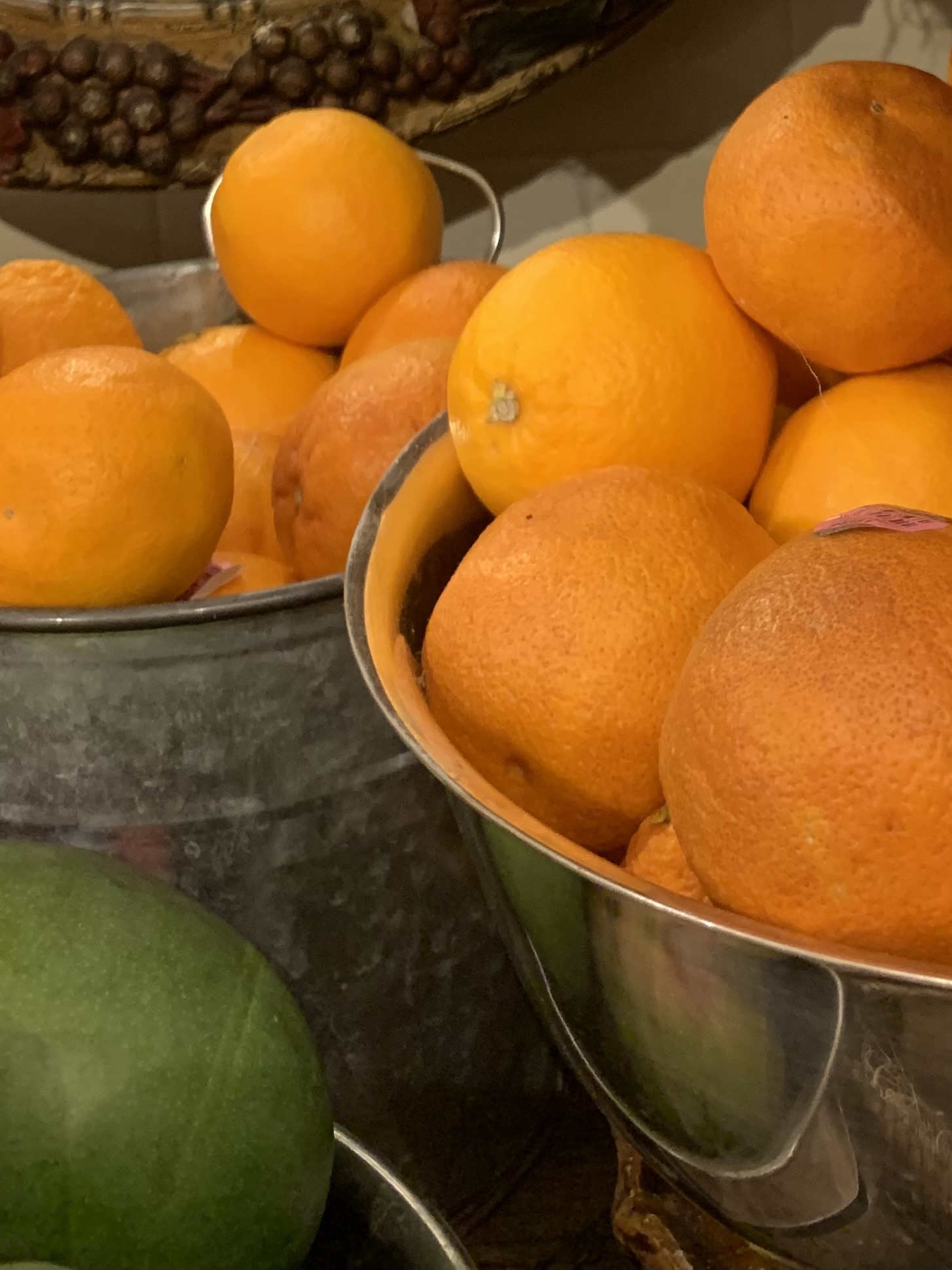
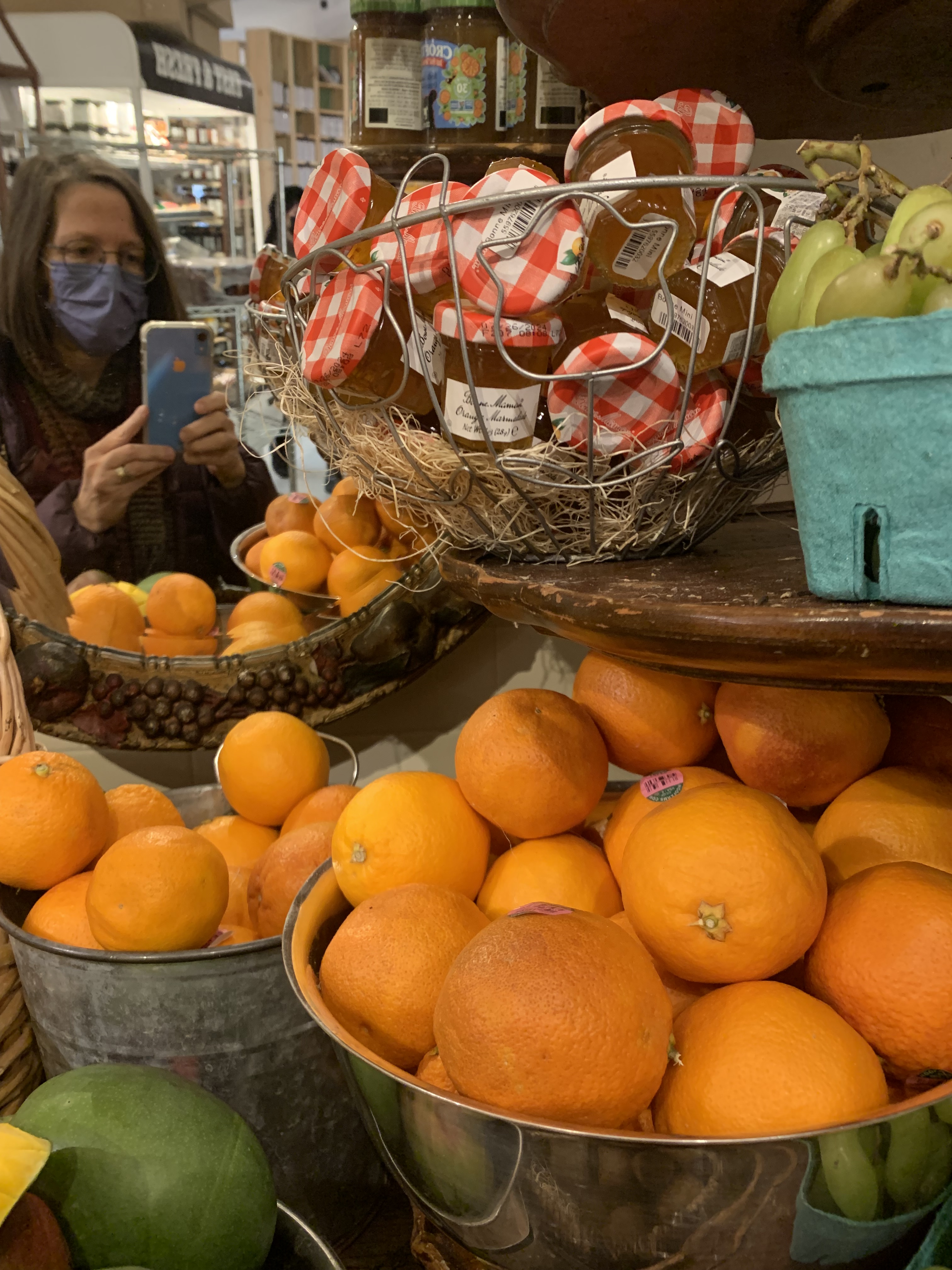
I go to the store to buy blood oranges for the cake and discover they have been rebranded raspberry oranges. the word “blood” is off-putting to consumers. I feel angry.
Remote, bloodless pale body of moon his face, forgotten
III Knife
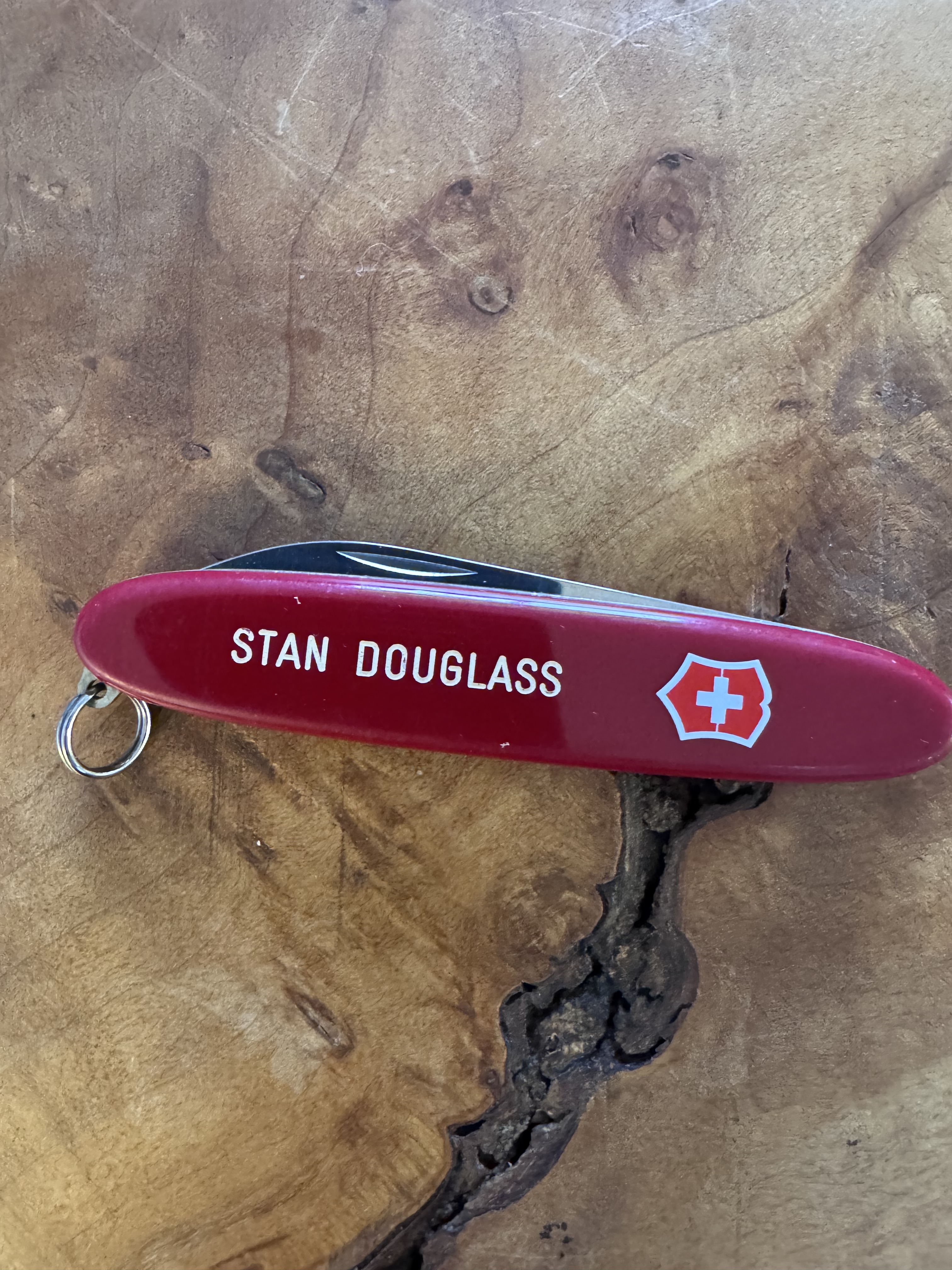
I go to an estate sale and buy a box of assorted junk for two dollars. At the bottom, I find a small Swiss army knife tucked into a black sleeve. The knife is marked with white letters: Stan Douglass. I look up Stan’s obituary.
When fifteen, only a lad, Stanley made a vow to serve the Lord
IV Ruth
My son and I walk along the street, heading to Value Village. He’s shouldering an old chair he took from a free pile, then regretted. I’m following. Suddenly a telephone pole is in front of me with
R U T H
painted in big red letters. Just a day ago, my friend and I compared middle names. Her middle name is Mazal meaning good luck. Mine is Ruth, I texted, and she texted back that “the biblical Ruth is a very special woman, and her name is synonymous with unwavering loyalty and kindness.”
Is it a sign? Four red letters tell my fortune
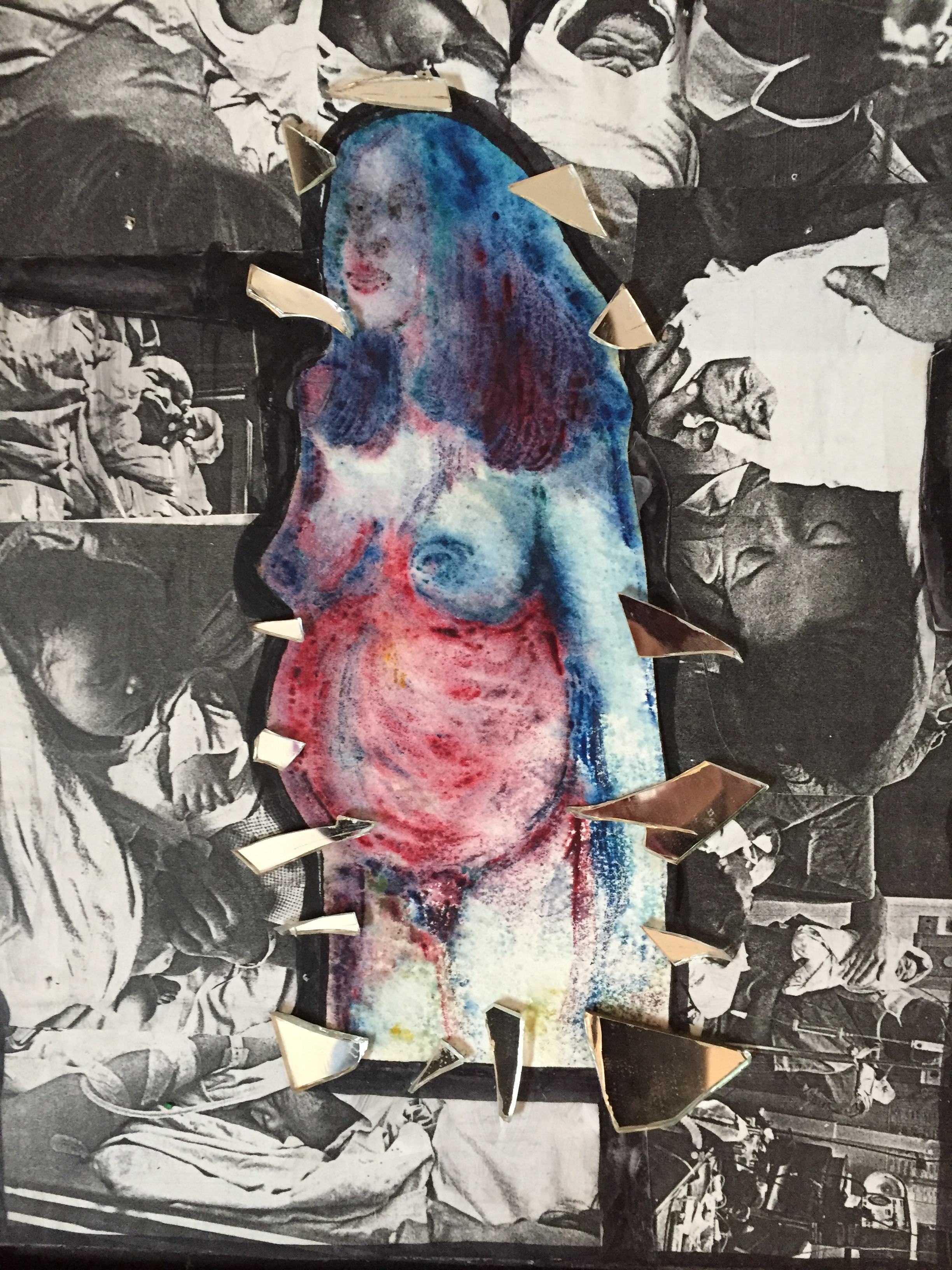
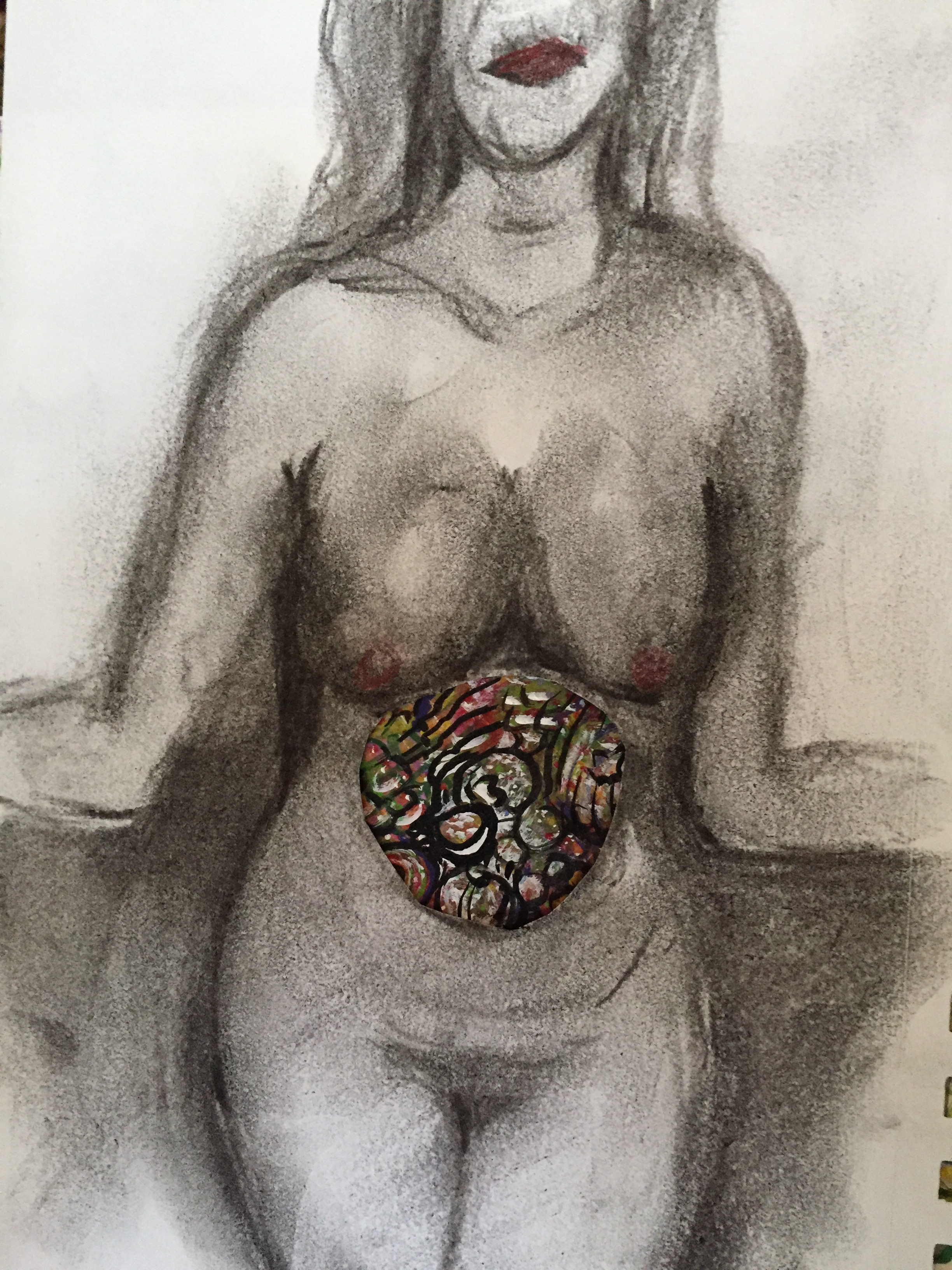
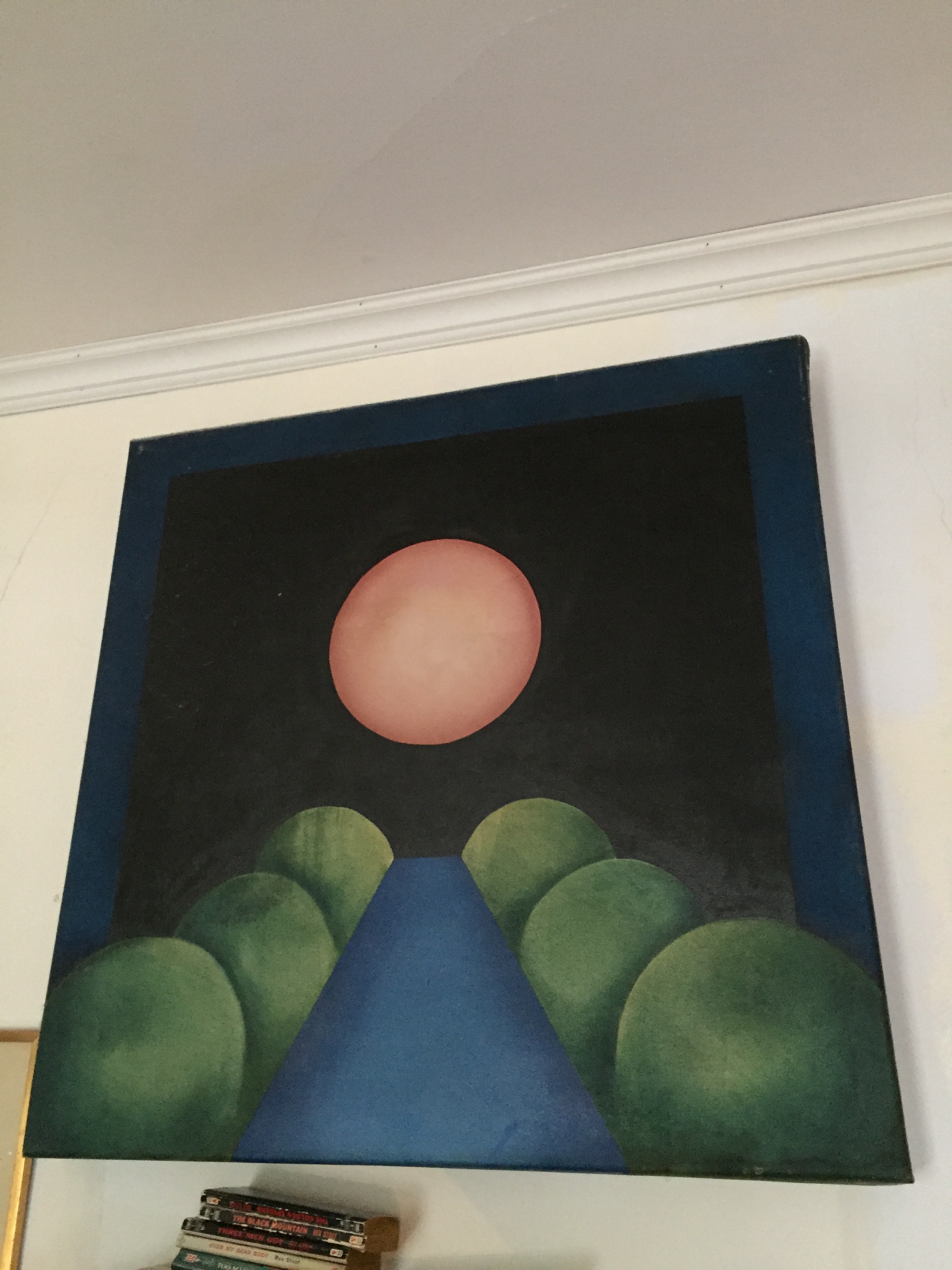
The moon painting is by Bob Sabatini. Other creations are mine.
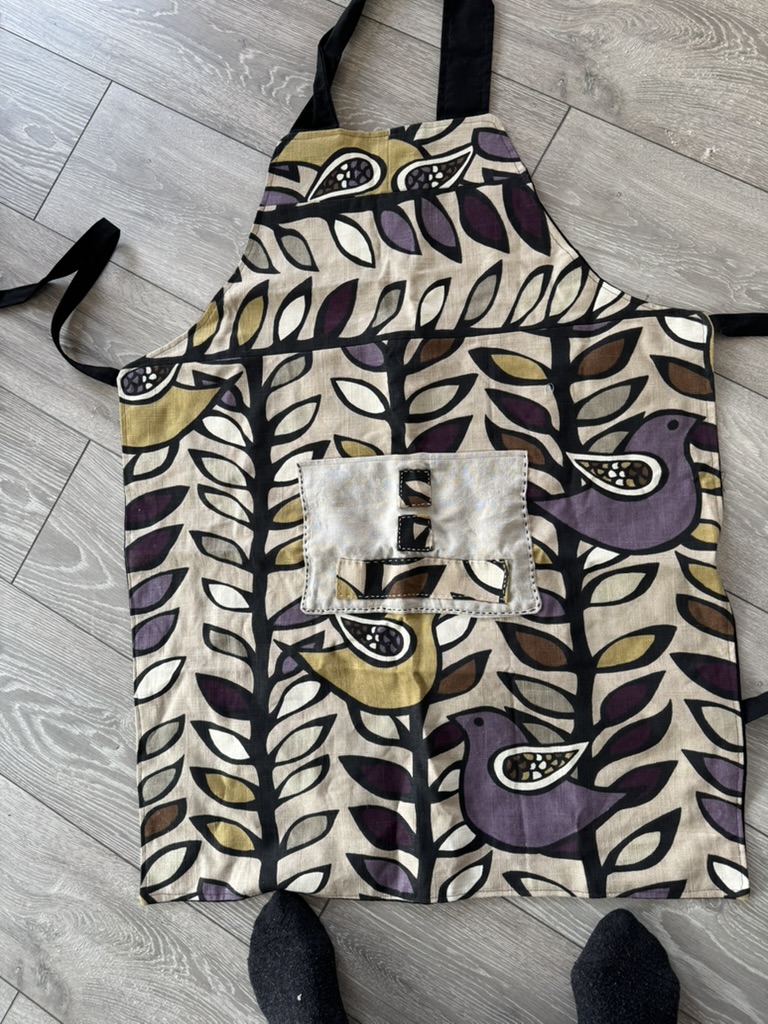
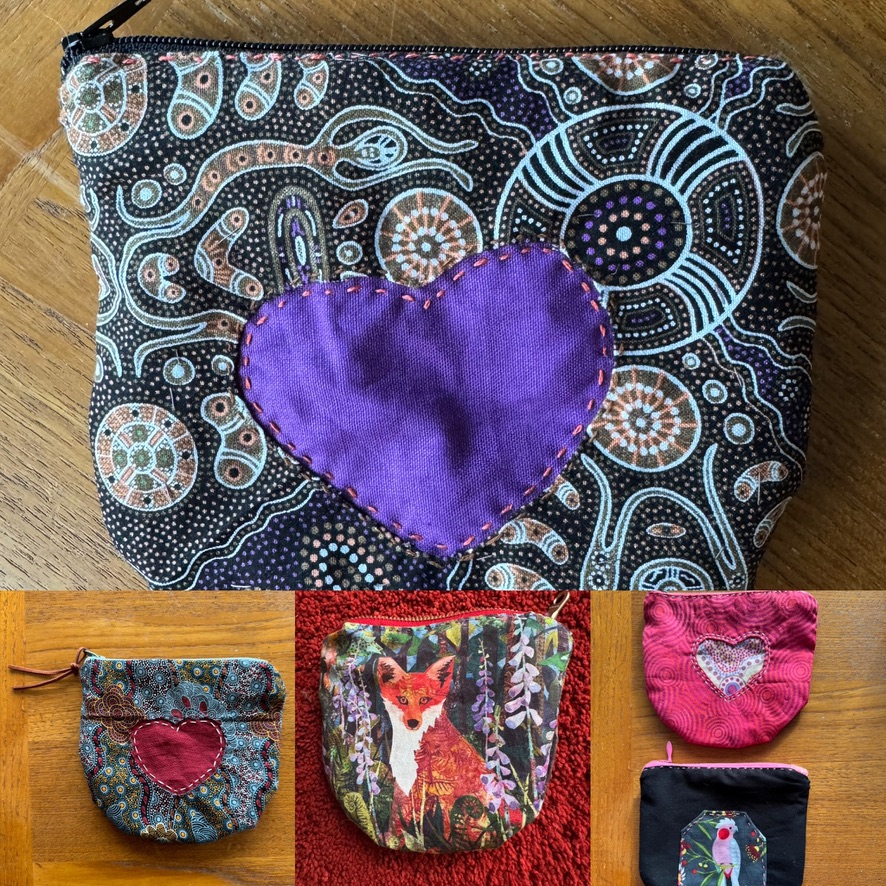
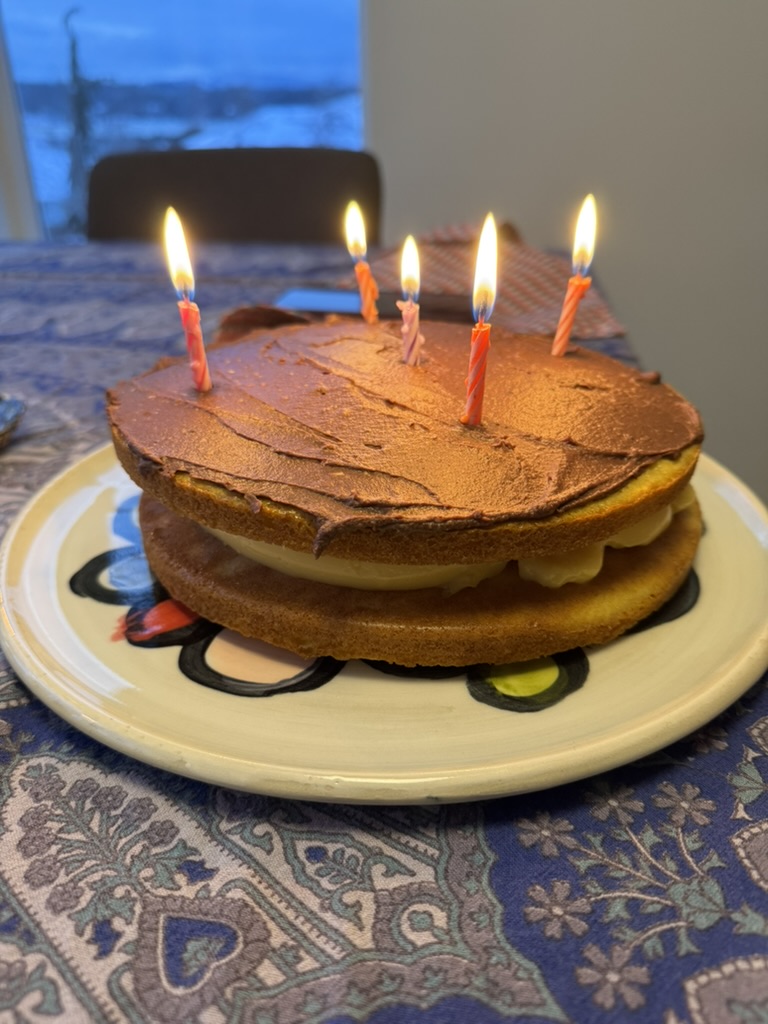
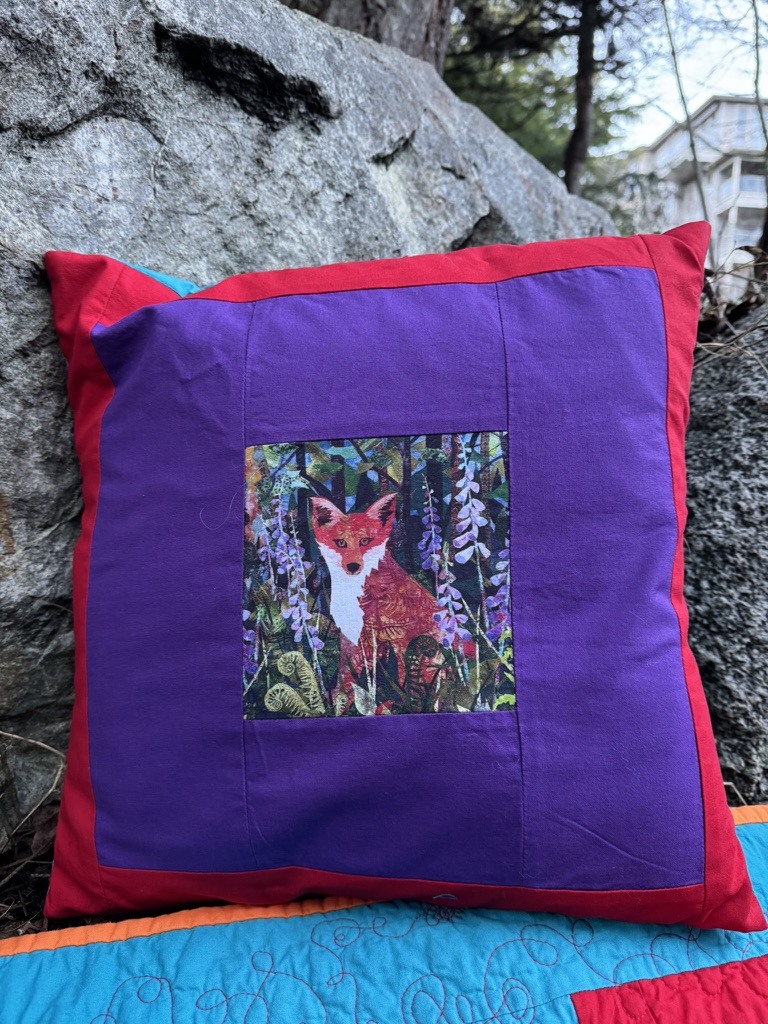
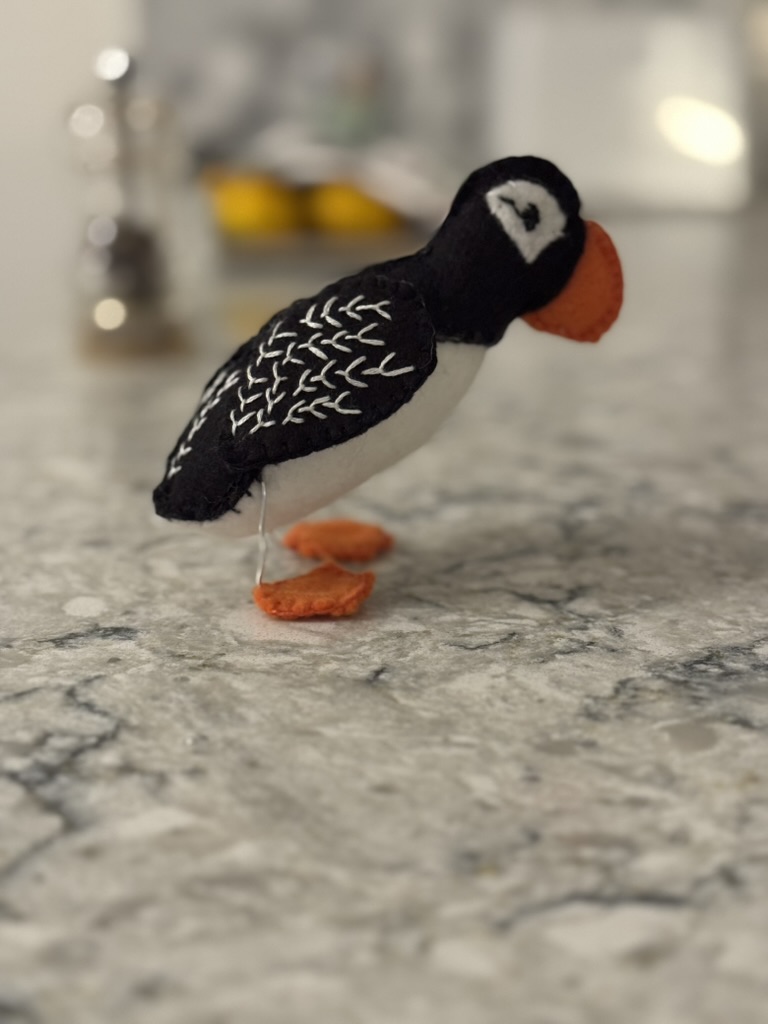
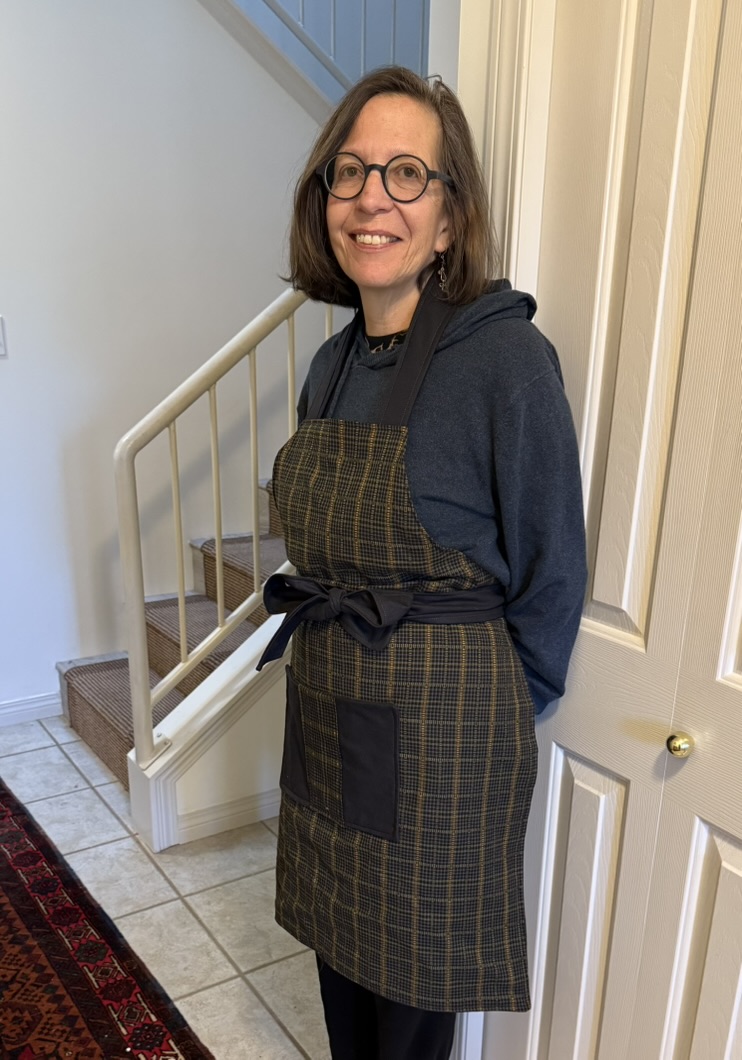
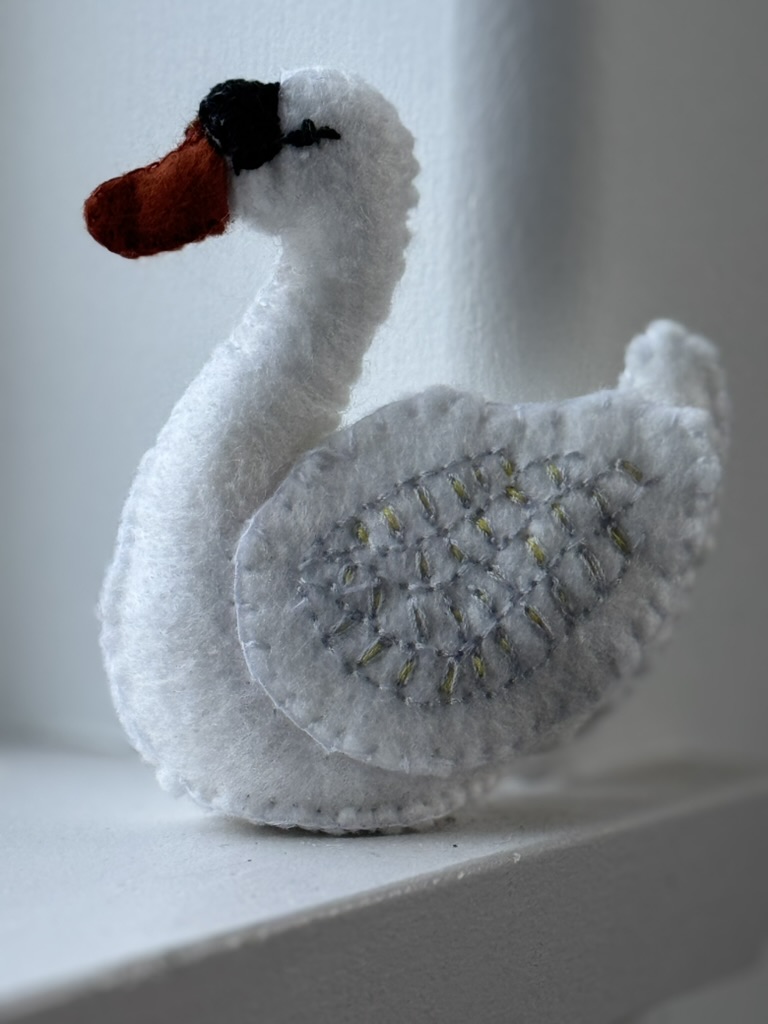
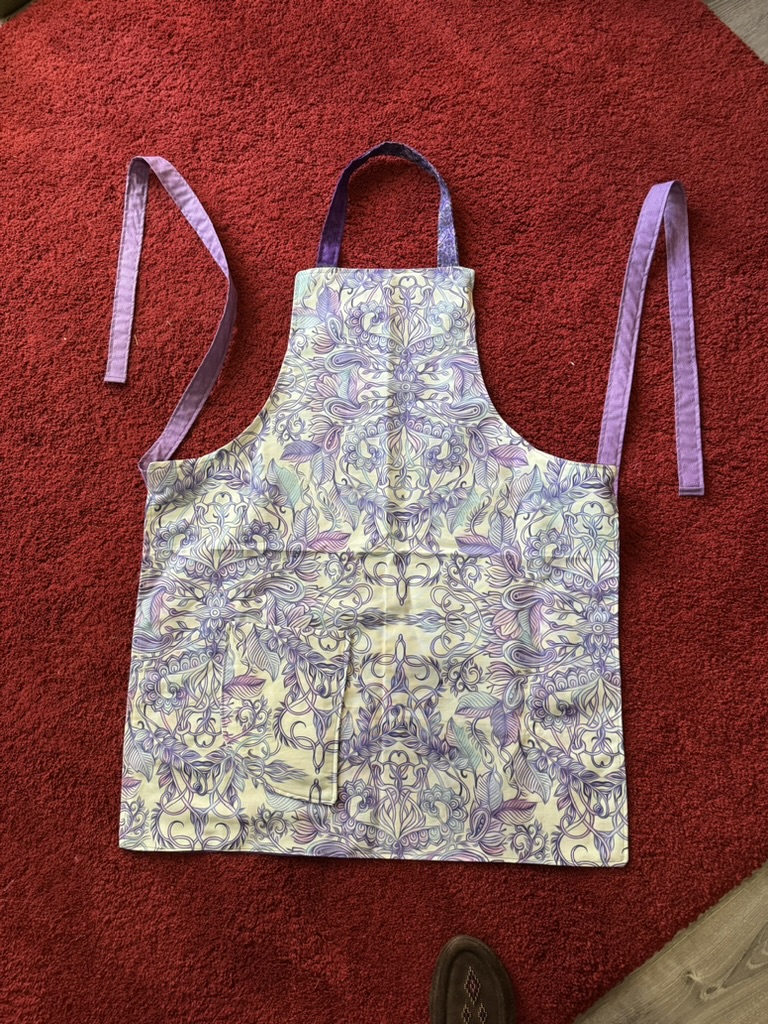
It’s my 67th birthday today, a good day to review the year in creation. What did I make this year? Eleven blog posts (this is the twelfth); a few stories, poems, and essays; felt birds for family members and felt Christmas decorations; three aprons (one for Nancy, one for Meytal, one for me); a baby quilt and matching pillow for the great grandson of my friend, Lillian; embroidered pillows for my niece; a patchwork pillow for my friend Janis; little zippered bags for everyone; “One Thousand Joys,” a wall hanging for our stairwell; a lunch bag for me; some drawings and comics; a sling bag for Nancy; some collages (thank you Kathryn for the inspiration); and cakes and more cakes for friends and family.
Living a creative life feels as important as ever.
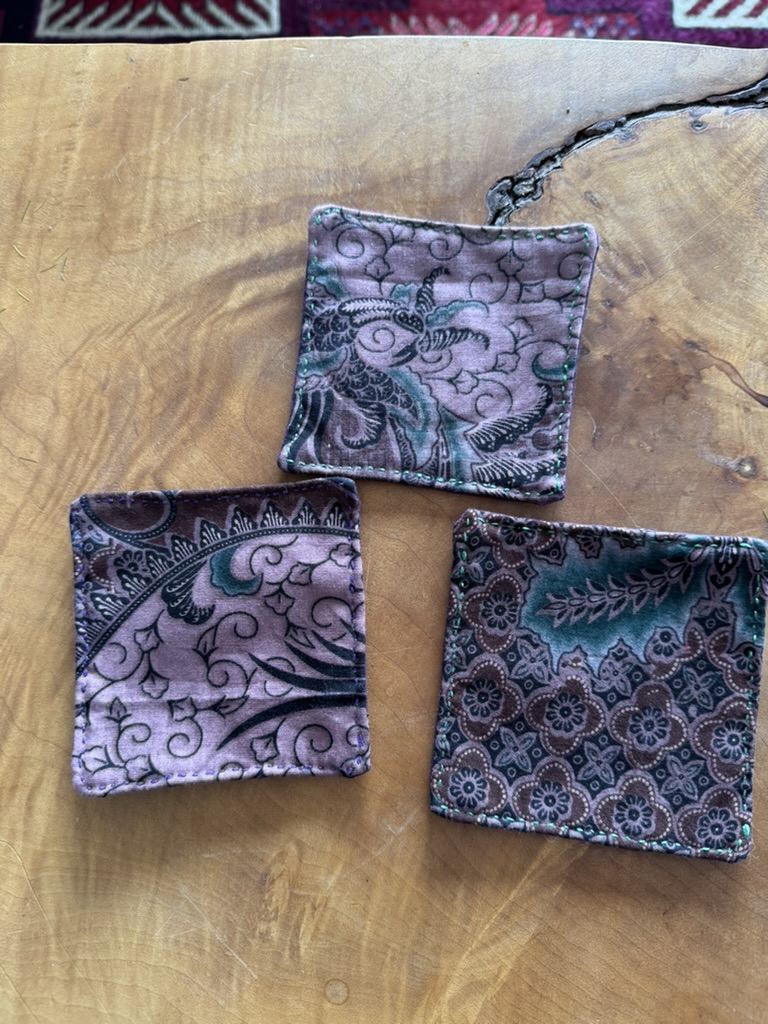
Coasters made from a shirt I bought at a yard sale10,000 JoysMe and Nancy – her birthday apronKathryn’s vegan chocolate cakea pillow for Janis’s birthdayMeytal’s birthday apronSling bag for NancyMichael wanted a Boston Cream Pie and I deliveredA lunch bag for meTwo pillows for my niece’s birthdayA quilt and pillow for a little baby I’ll never meetMichael named the owl I made him “Winston”Nat’s puffinI wanted an autumn apron, so I made thisFelt tree ornaments for my dear writing group membersSarah’s swanEvan’s heronCollage: Pieces of Me
Show and Tell

In old age,
let us
return to kindergarten
rituals.

Show something,
then tell about it
during circle time
with our friends.

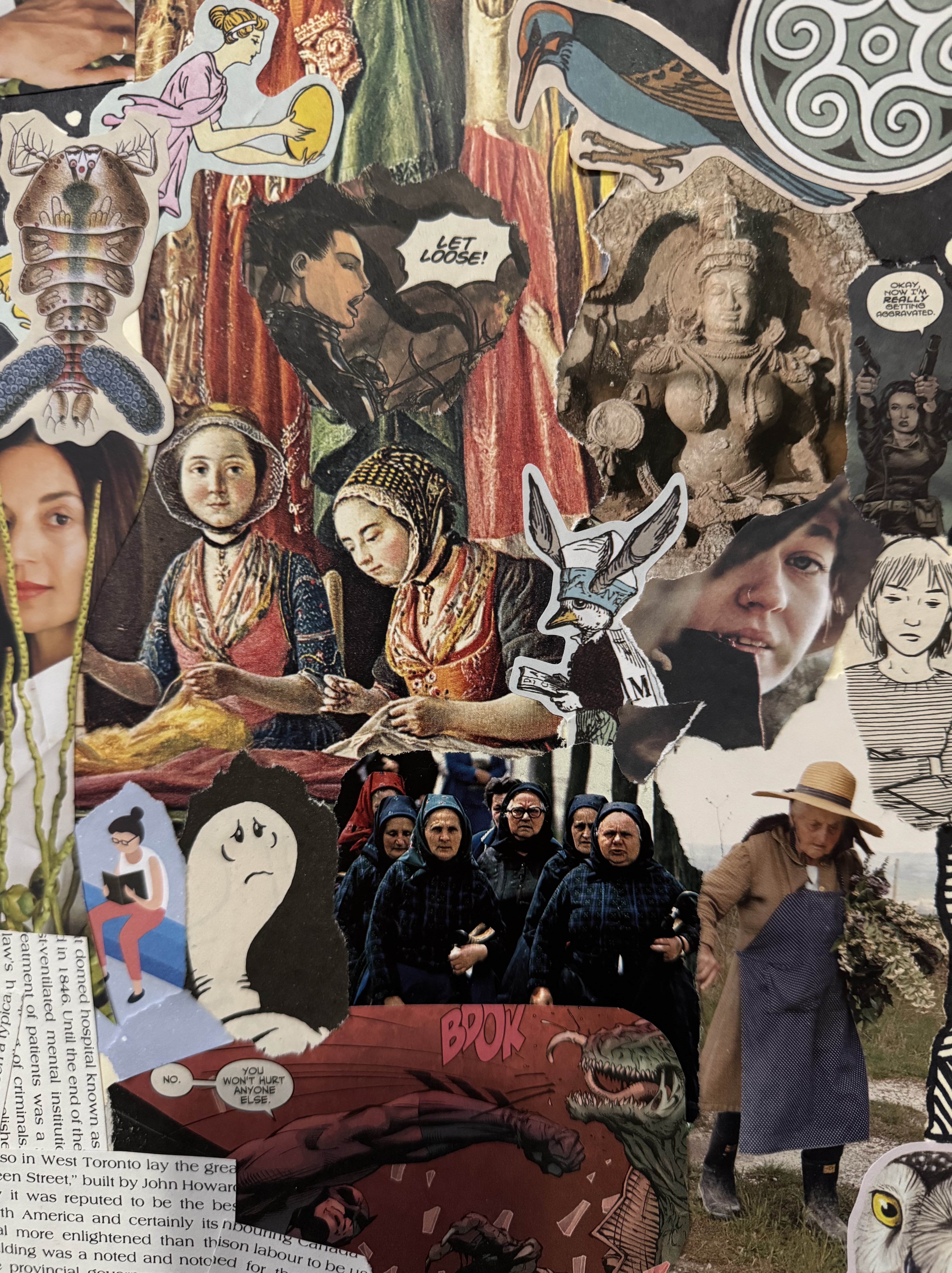
I went to collage club
at the library
Women of all ages were
cutting up old magazines.
Glue sticks and colourful scissors
lay across white tables like
sacred instruments.

As we cut, some of us
spoke; others
remained silent.

I made a collage
about the pieces of me.

Cool and aloof,
wise owl
serious as I sew buttons.
Sometimes a poor silly worm,
my blind eyes sensing light.

In past lives I was
fertility goddess,
discus thrower
seamstress
parasitic crustacean.

Inside of me, Batman blocks a monster:
“No, you won’t hurt anyone else.”

Inside of me, a bitch brandishes her guns:
“Now, I’m really getting aggravated,” she says, her voice rising on the smoke.
If women let loose their anger, the world would burn.

One spring day in Toronto,
forty years ago,
I rode the Queen West streetcar to work.
As we clattered past the mental
institution, number 999,
a statuesque woman, her
proud head shorn,
strode the sidewalk, naked.
Her brown thighs shimmered in
the light, her high breasts bounced lightly,
nipples hardened in the coolness
of that morning.
Everyone around me was,
for a moment, silent, awed
by this strange beauty.

Crustacean, crone, bird,
woman, warrior, gatherer of words,
seamstress of memories
Can you see all the pieces of me?
“When we run from our suffering we are actually running toward it.” Ajahn Chah
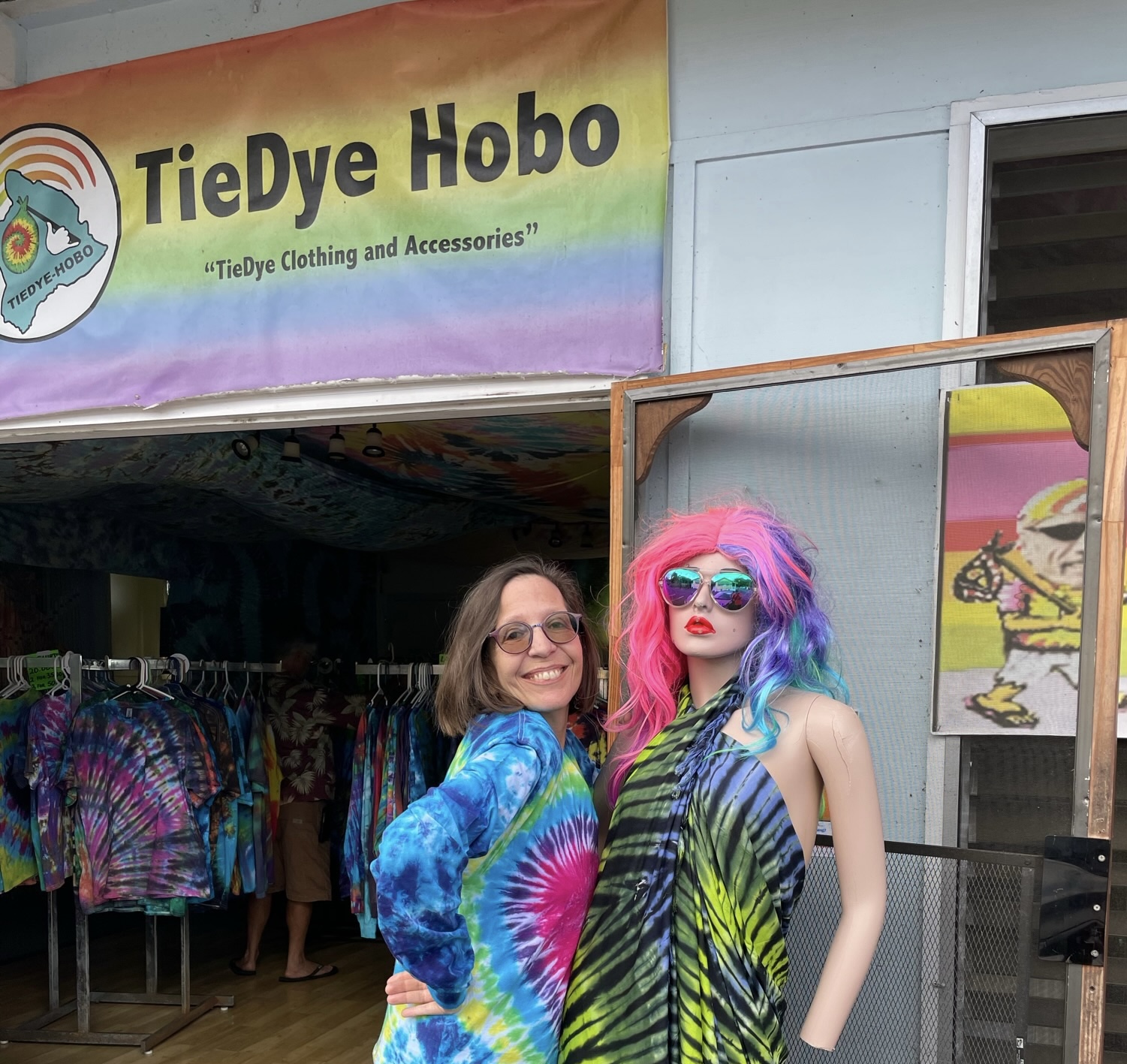
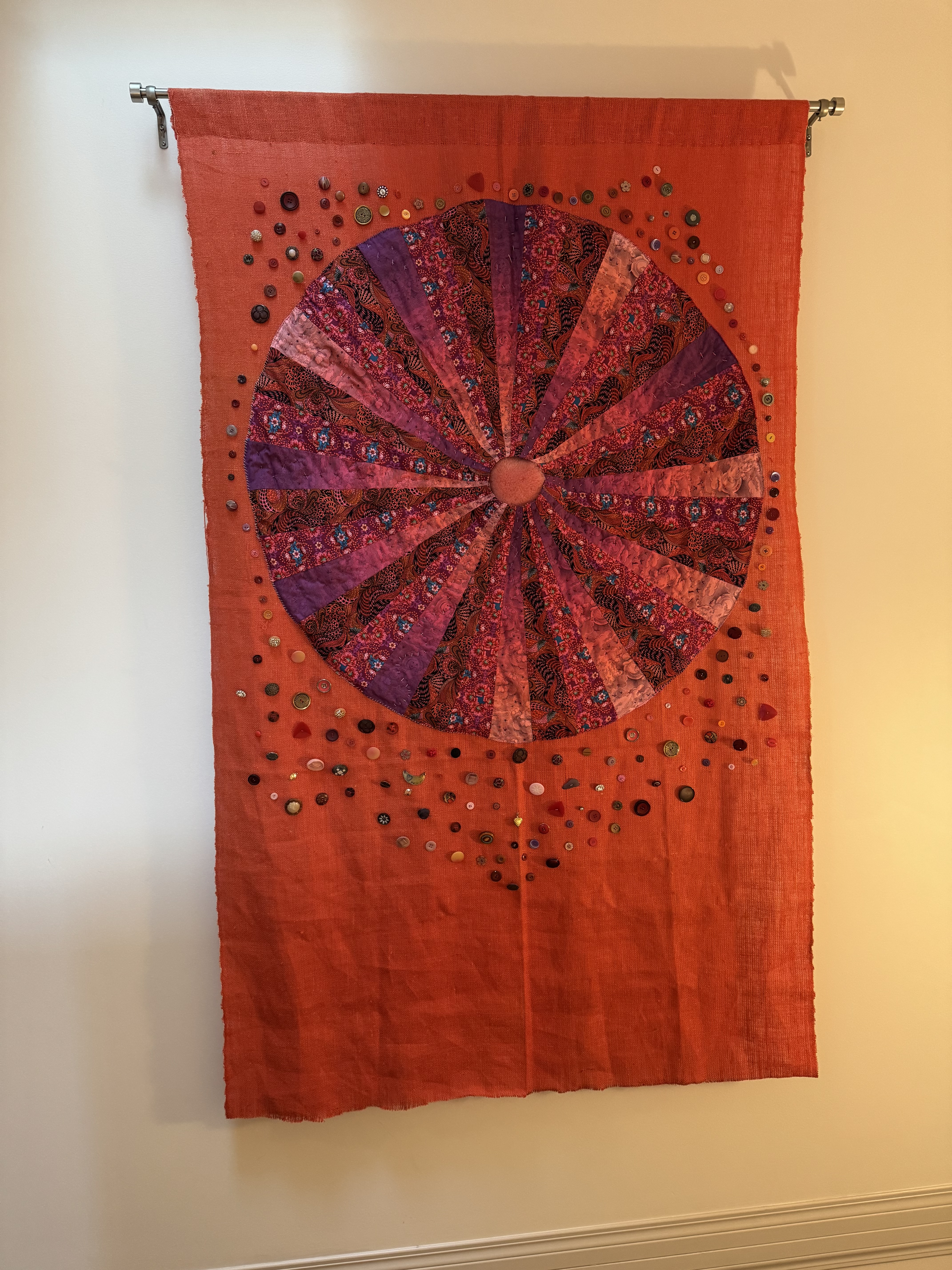
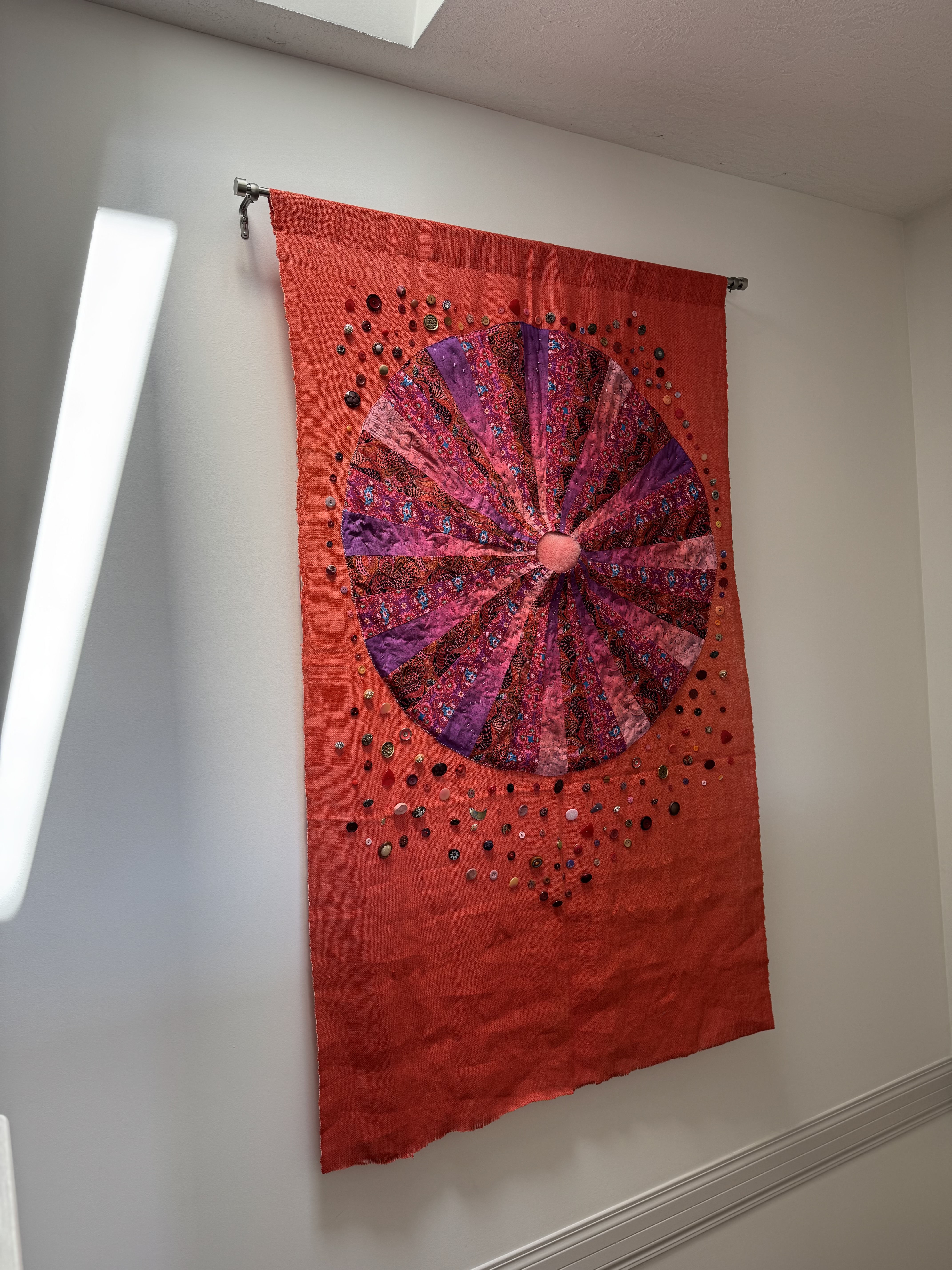
I’ve been basking in two messages from my unconscious this week. In one dream, a person wearing a bright tie-dyed shirt holds a hand lettered sign, “You are not alone.” In another dream, a young man, bearded, hugs me and whispers in my ear, “Thank you for your patience.” The messages are hackneyed, and yet they were delivered to me fresh, warm, colourful,by stately messengers. It doesn’t matter if they—the messages and the messengers—aren’t “real”; they are just as real as the people and events, the words, ideas, and things I encounter in my dream-like conscious life. And more to the point: They provide great comfort, having bathed me all week in an orange glow, a glow like that emanating from the 10,000 joys wall hanging, now installed in our stairwell.
The wall hanging seems to collect the sunlight falling in through the skylight and send back a peachy radiance. Several times now I’ve gone to flick the hall light off, thinking the switch is on when it shouldn’t be. No, the light is off, but 10,000 joys shed their own uncanny light.
When I made the piece, I kept telling myself, you don’t have to make its counterpart, 10,000 sorrows. It’s okay to just focus on joy right now. But of course, you cannot have 10,000 joys without 10,000 sorrows. I wish we taught this truth to children in kindergarten. You don’t experience joy without experiencing sorrow. And it’s okay. When you cling to joy and try to avoid sorrow, you just prolong it. I wish I’d gone to a Buddhist kindergarten, where these truths would be taught elegantly and logically, instead of being told by adults that “life isn’t fair,” which seems tawdry and cruel in comparison to the dharma.
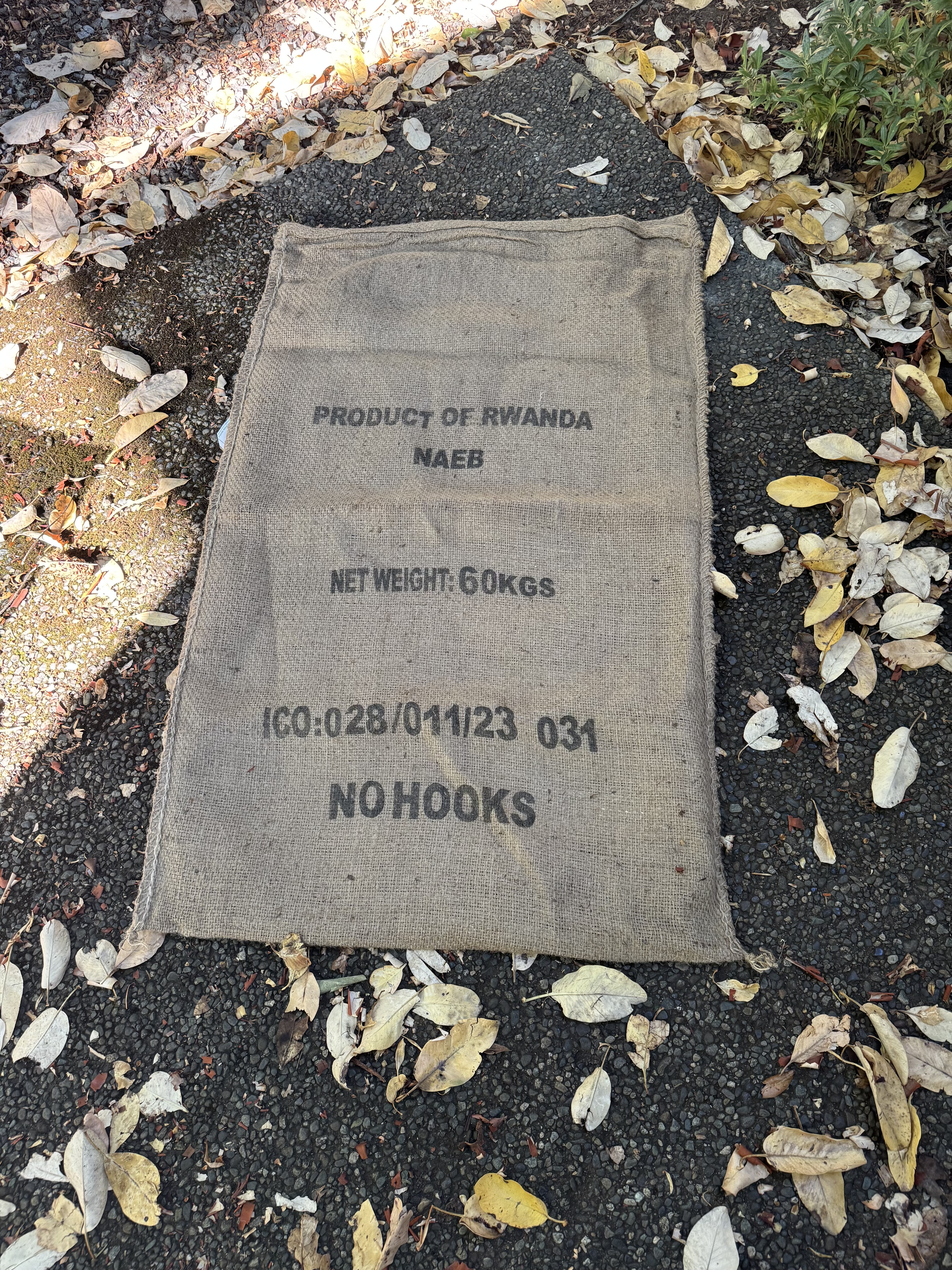
Inevitably, I am called upon to make joy’s counterpart. I had coffee with a friend yesterday at Esquimalt Roasting Company. As I waited at the counter for our lattés, I noticed a large burlap bag draped over a plastic bucket. I picked it up and showed it to the barista. Can I buy this? I asked. In my imagination, I was already picking its seams and spreading it out, a wide brown canvas for thousands of sorrows. It’s free! she responded. So now I have the backdrop for the wall hanging. I had originally thought it should be black, but brown is less dramatic than black, more subdued and complex, as sorrows often are, especially as we digest them.
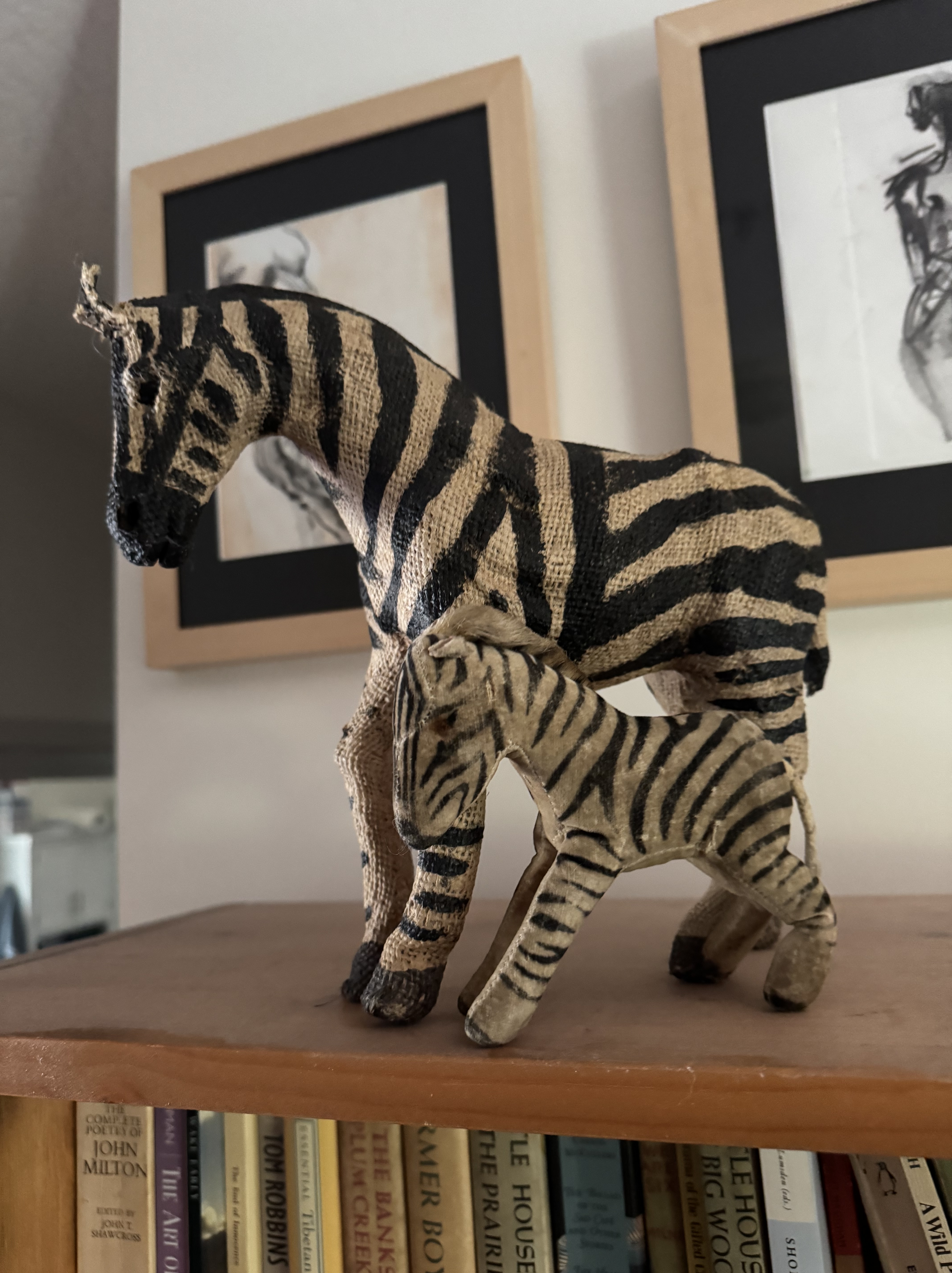
The burlap bag was pure serendipity. Another magical find was a zebra at the ReStore in Langford. Purchased for 70 cents ($1.00 but there was a 30% off sale). This zebra is majestic, dignified, kind, warm. She stands about 10 inches high. Her stripes are unrealistic, but otherwise she is a convincing animal. I dug out a stuffed toy zebra I’d kept from childhood in a box under the stairs. It’s remarkable this sixty-year old stuffed animal still stands! They now live together, mother and child, atop a bookshelf in our bedroom. I like to gaze at them from bed. Something about them feels calming, comforting. I loved my zebra striped one-piece bathing suit when I was eight years old. When I wore it, my reward was a zebra tan that was pure magic.
How to find comfort
Face fear, face grief, crunch on them like buttered toast, let them nourish you. Small striped body in the mirror, some kind of childhood magic. Let dreams bathe you in orange light. Sweet’s after tastes bitter, crying sparks a belly laugh. Joy and sorrow are so intertwined, you can’t tease them apart, please don’t waste time trying. Practice the butterfly hug: Hands cross collarbones, thumbs meet, fingers tap lightly, lightly. A comforting rhythm will come. It will come.
I start the year with a glance back over 2023. Last year, creativity often eluded me. She was a timid fox, hiding in her hole. I tried to lure her out, but at the first sign of self-doubt, she’d scurry back down the tunnel. Making things—in cloth or paint, in the kitchen, with words—can feel pointless in the face of climate crisis, grief, war, and ennui. And yet, don’t you think we must continue to create as an antidote to all the destruction?
When fox stayed out long enough, she inspired me to bake cakes, sew things, paint mandalas, and write stories and poems.
Baking
I love making cakes and preparing gifts for people. I fantasized once about starting a small business: I could make bespoke cakes and gifts to order (quilted bookmarks, small herb bouquets from my garden, stones from the beach that feel good in your hand). Nice idea, but maybe not a great business move.
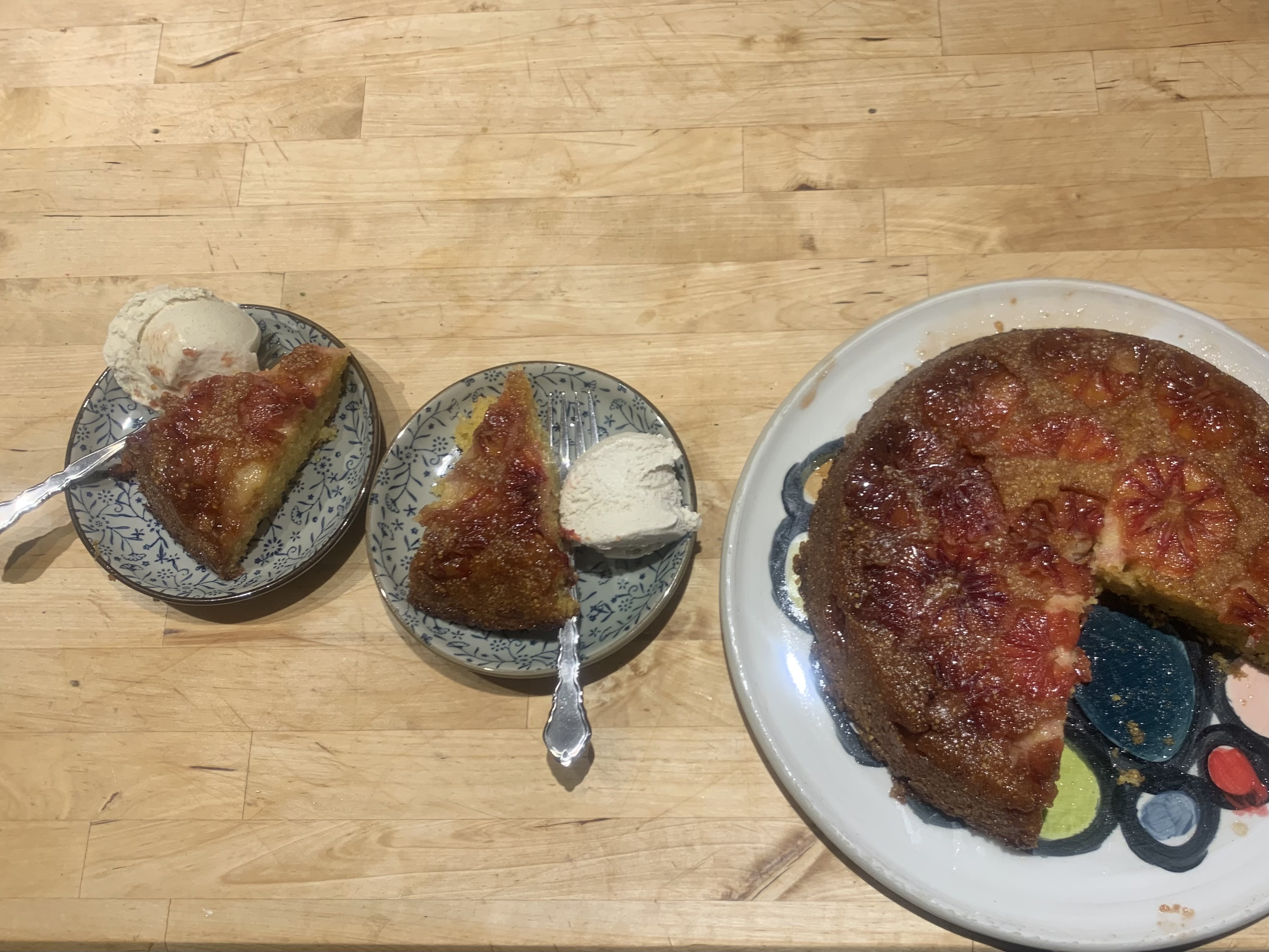
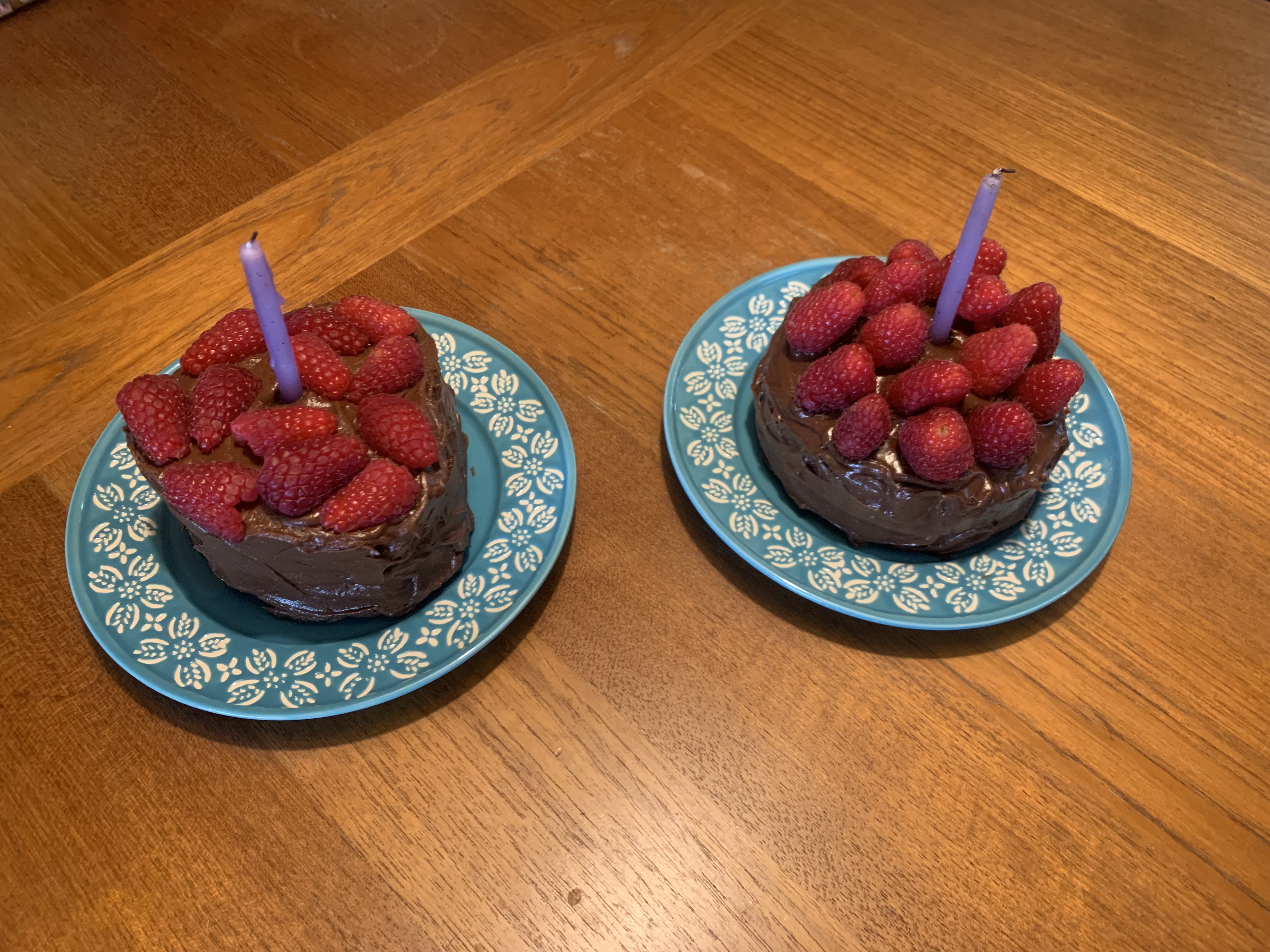
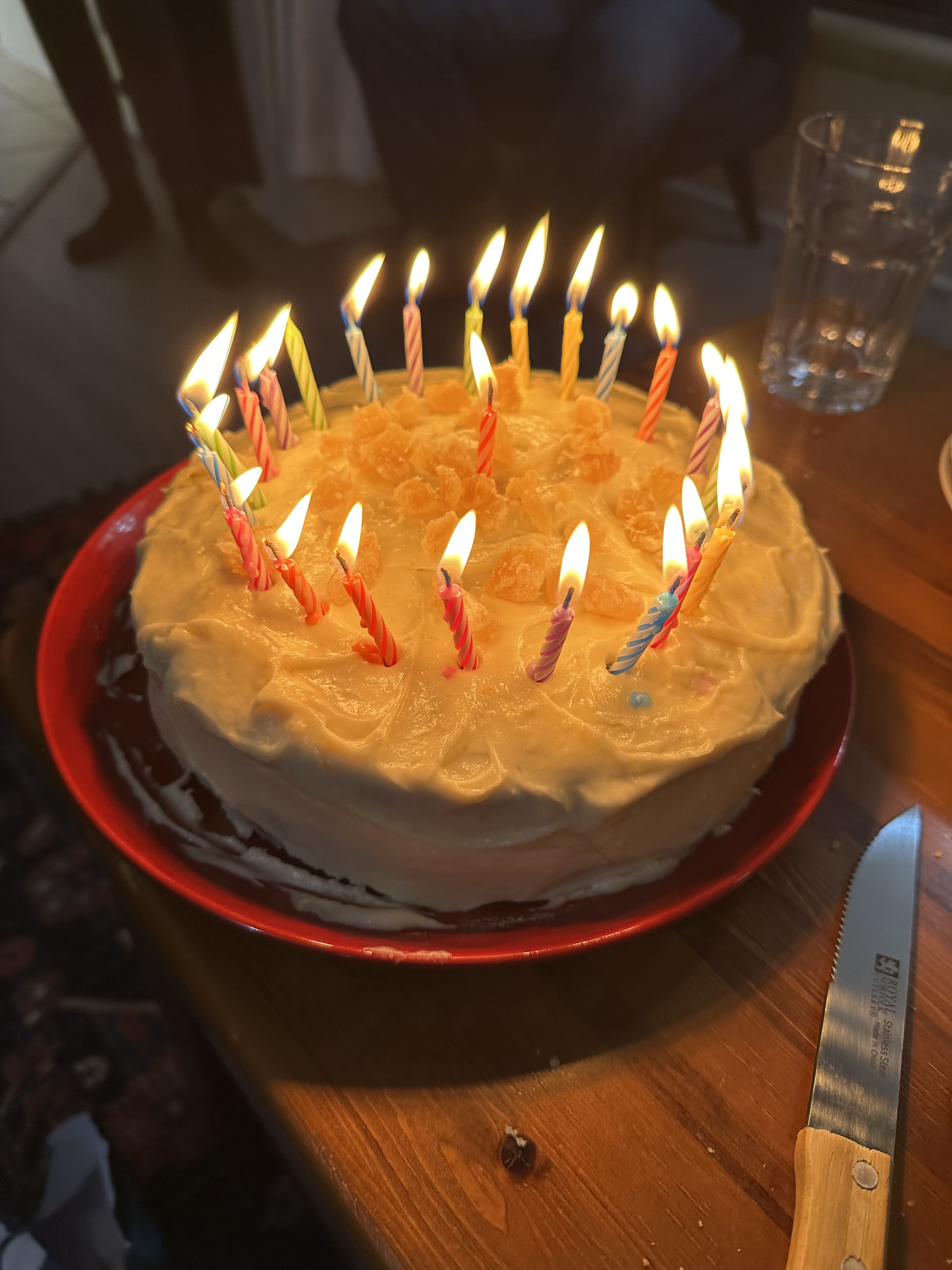
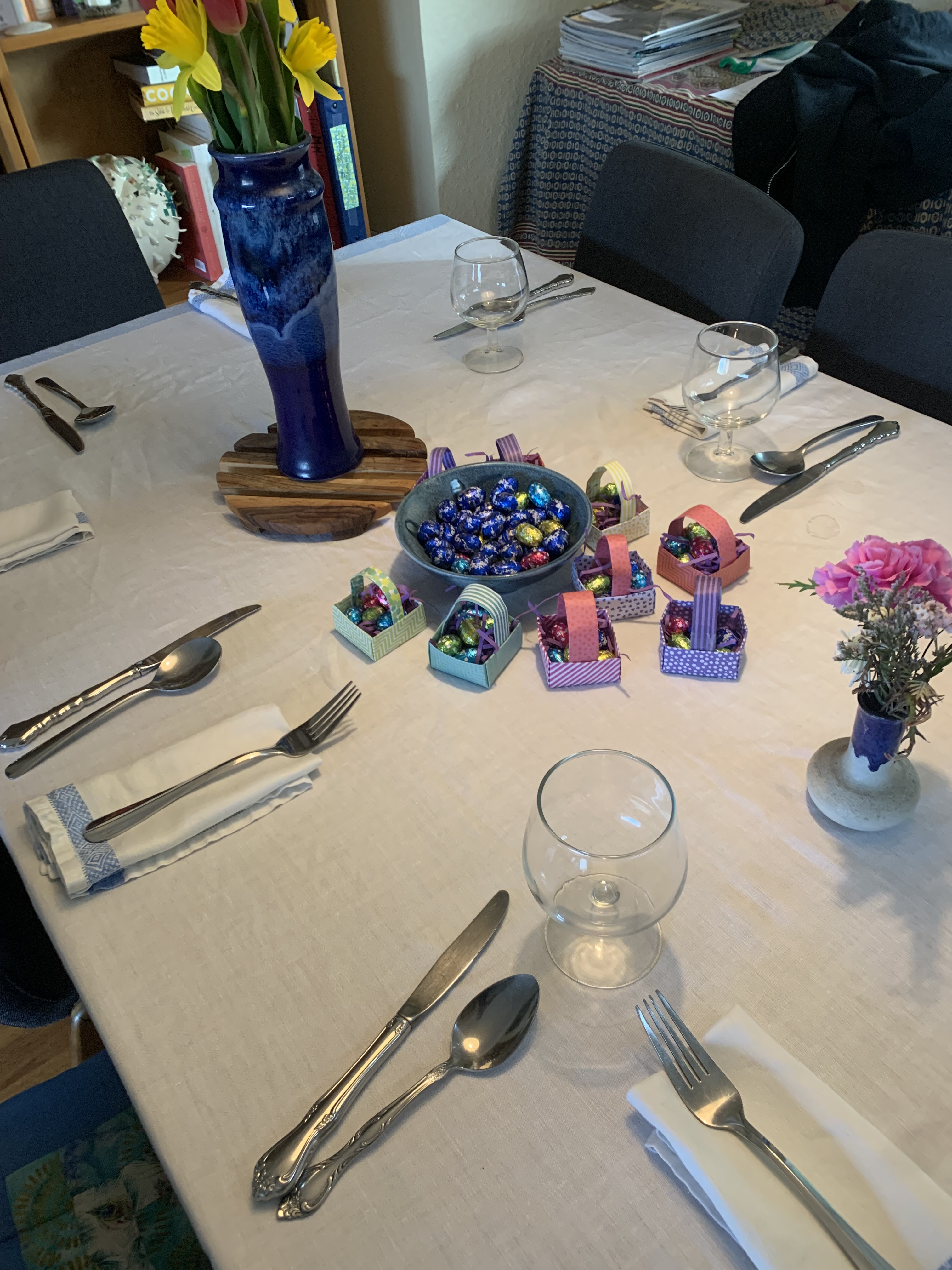
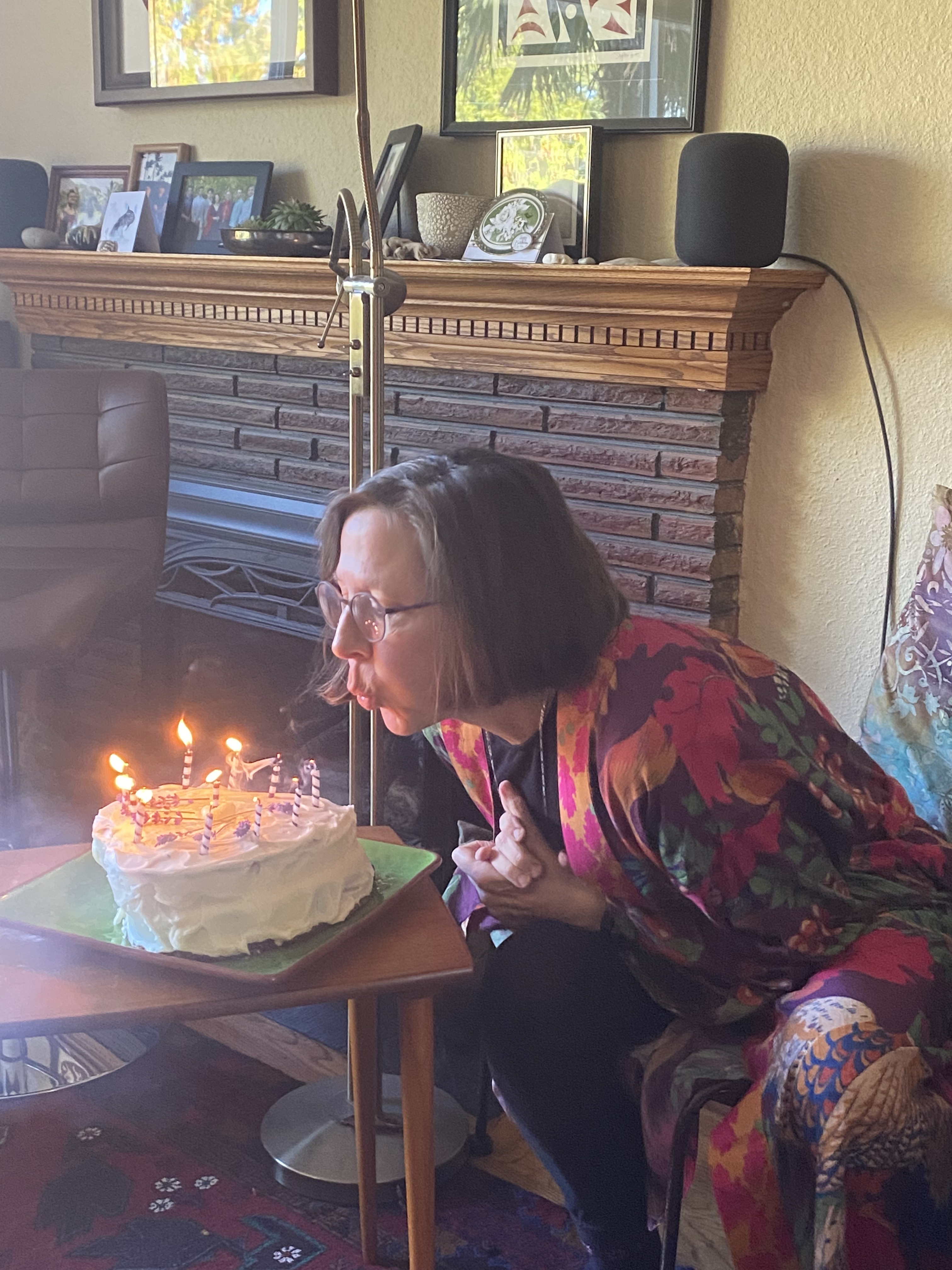
This year Michael got an upside-down blood orange cake for his February birthday, and we had fun sourcing the oranges. Found some good ones at the Market Garden on Catherine Street (where shoppers sometimes sit down to play the grand piano—such a cool store). I baked mini-chocolate cakes with strawberries later in the month for Barbara, and for Easter, an almond torte with whipped cream and more strawberries. Like my mother before me, I love to set a beautiful table, and Easter was no exception. The origami Easter baskets filled with foil-wrapped chocolate eggs provided a whimsical touch. (Entertain your inner child, I say.) For my own birthday party, a classic carrot cake baked in a heart-shaped pan frosted with cream cheese icing. For Andréa’s big five-oh: applesauce cake with three kinds of ginger. And for the final English conversation café at work: ginger cake with buttercream icing. What is it about a cake that speaks pure love?
Sewing
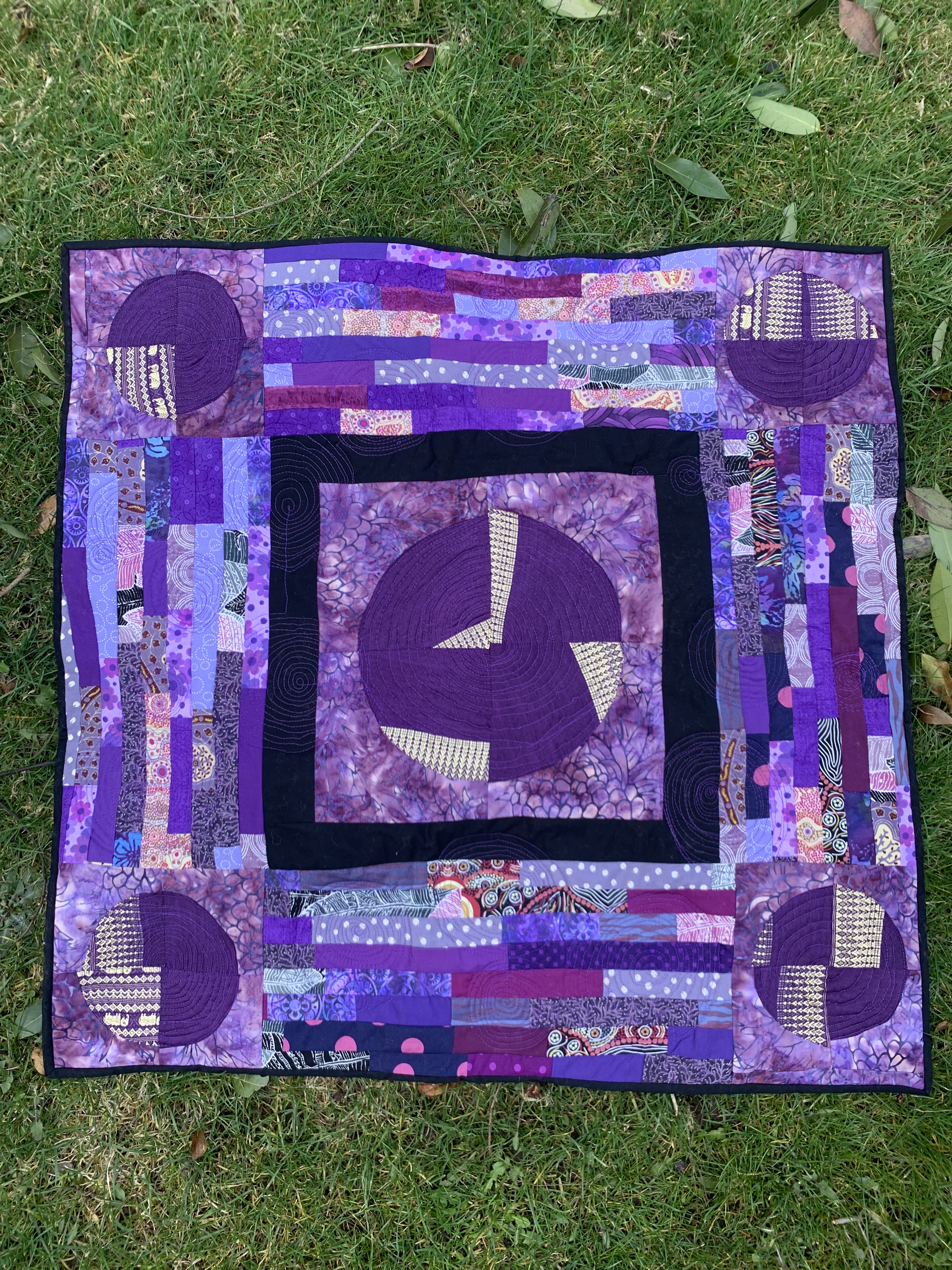
I didn’t make any new quilts, but I did sew a purple wall hanging, about 30 by 30 inches, that now hangs in our bedroom. I like to lie in bed and gaze at it. Four sentinel circles surround a larger one—all shot with gold thread (fragments cut from an old wraparound skirt from a yard sale). Those circles/mandalas ground me; cloth clocks tick noiselessly, watching over us as we sleep.
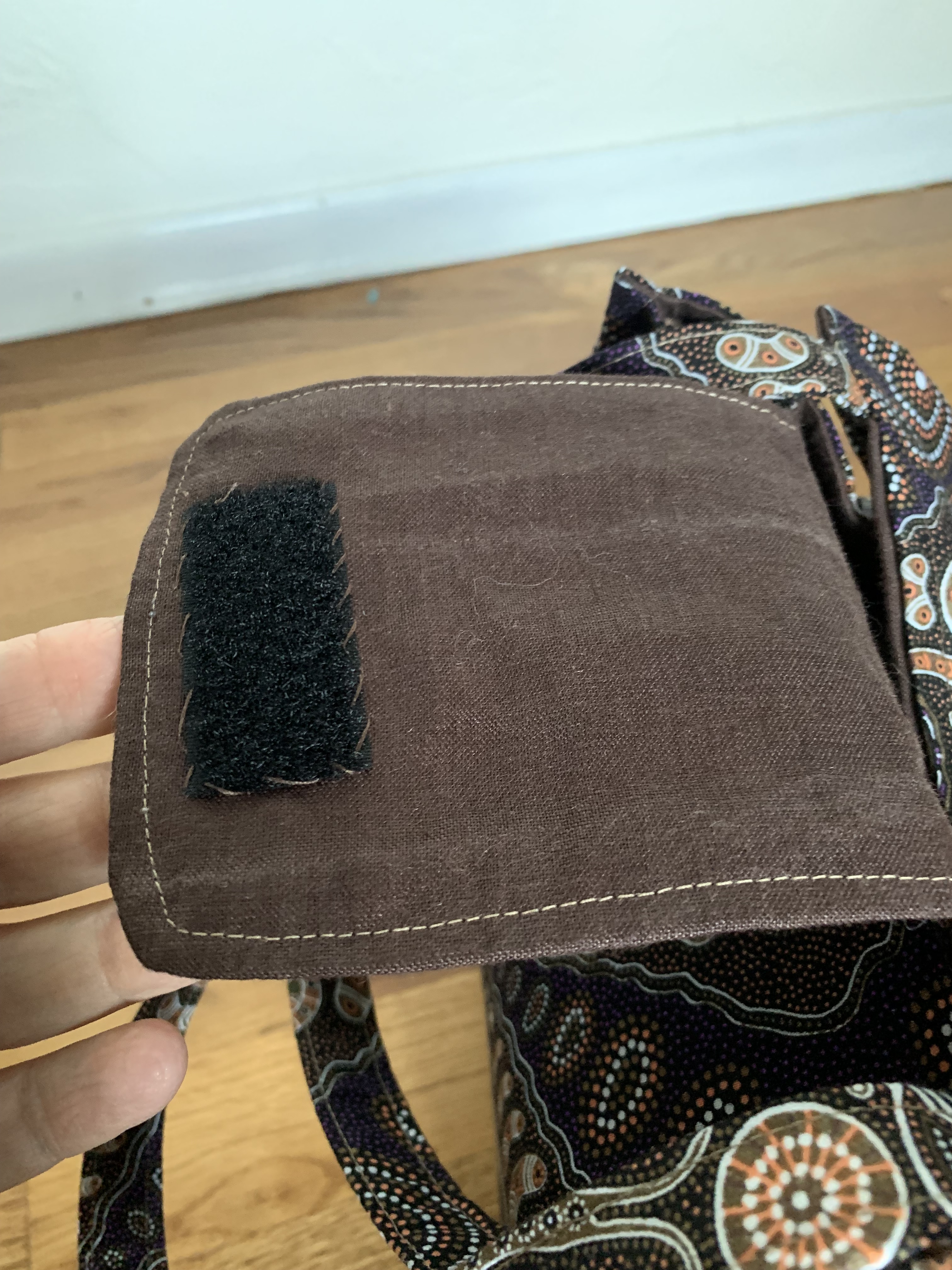
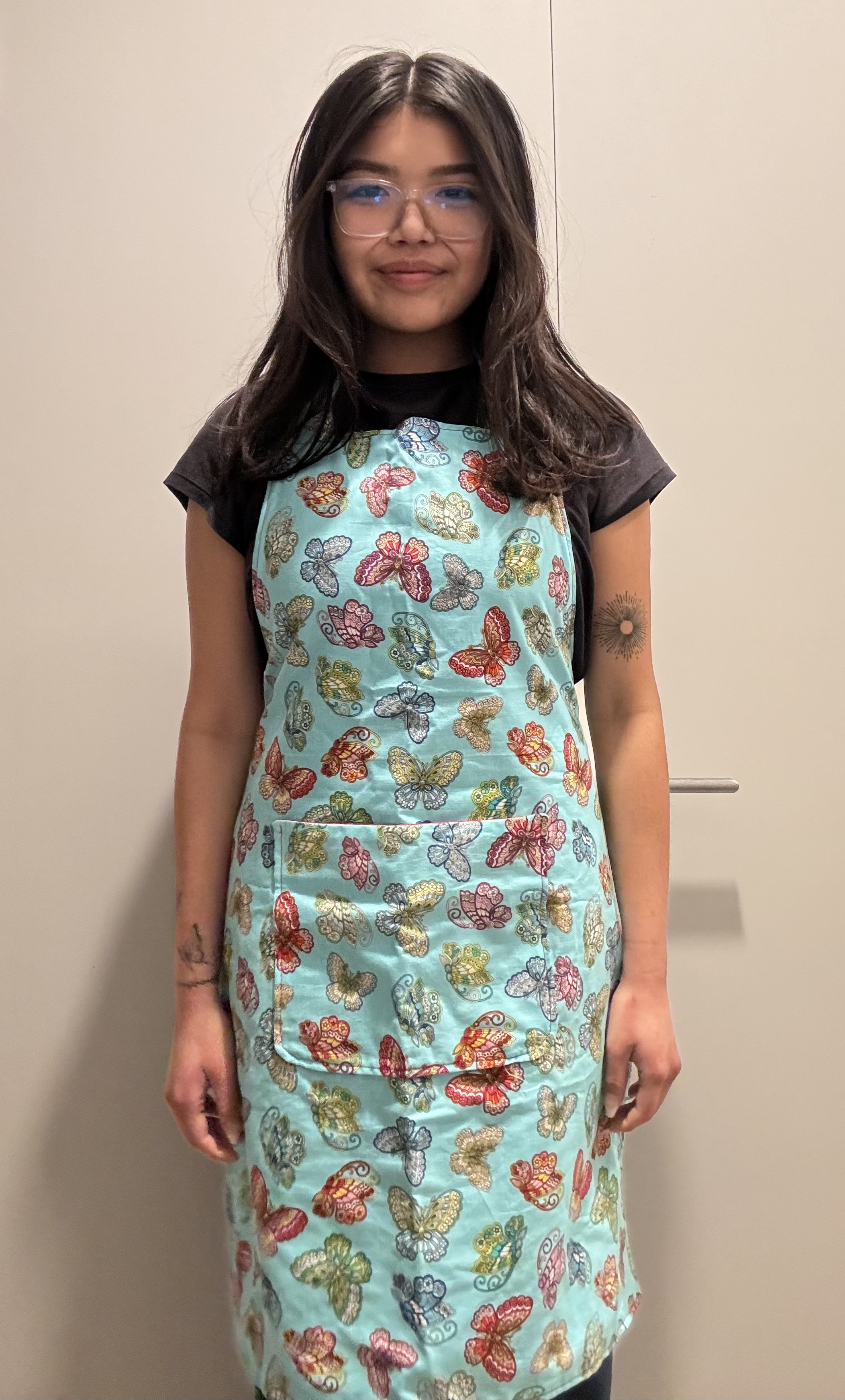
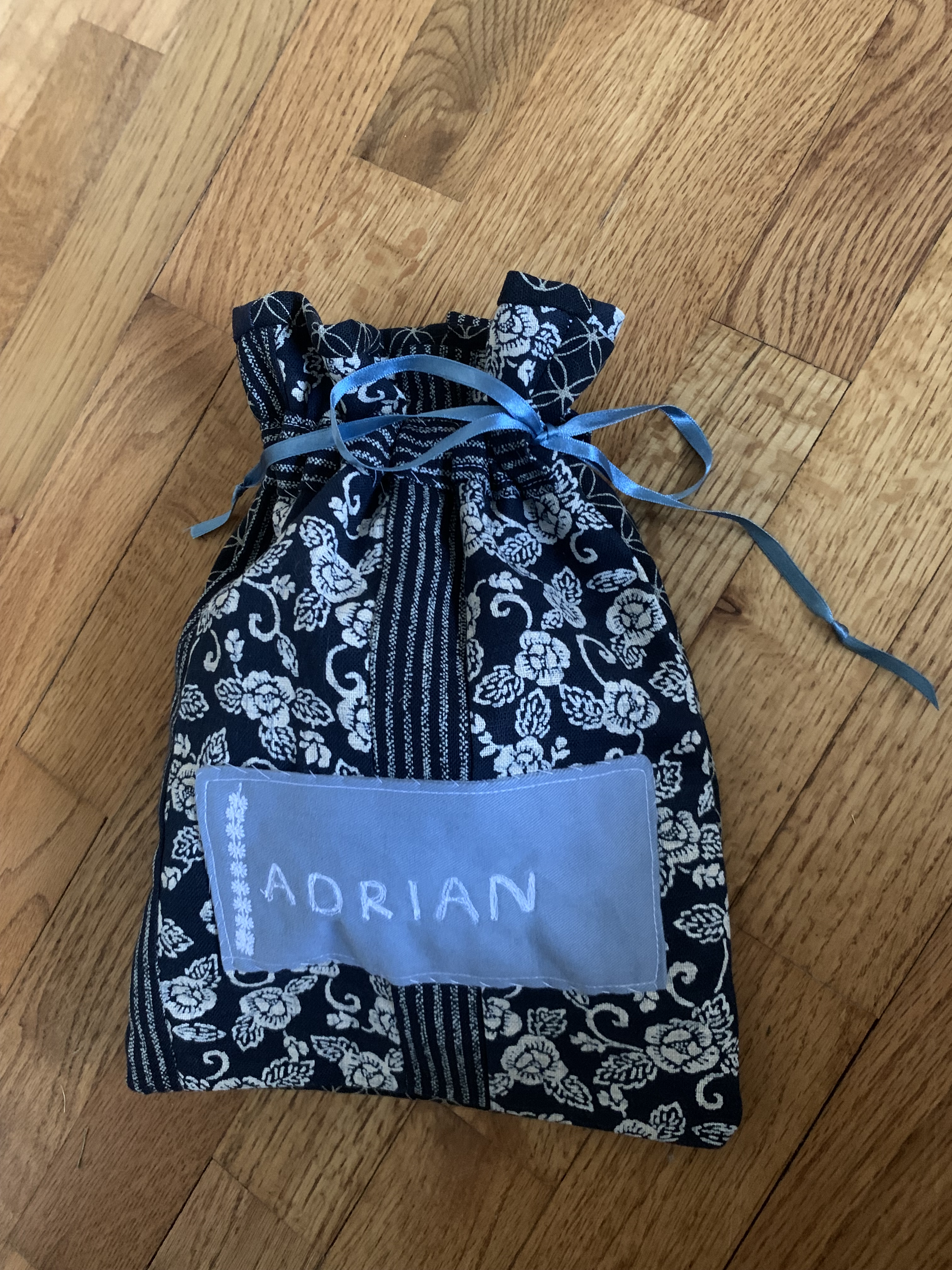
Smaller sewing projects attract me because results come together quickly. My sister Kathryn bought me a drapery panel of Indonesian fabric in browns, reds, and purples at a thrift store. A lot of fabric—40 by 83 inches—for only $4. I’ve enjoyed making some things from it: placemats and napkins mostly, and a sweet little fabric basket (I made a few of these for friends for Christmas, then filled them with chocolates and gifts). I felt most proud of the lunch bag I made for my boss, Nancy, because it tested my skill. I used fabric in a brown geometric pattern by an Australian Aboriginal designer. Then I lined the bag with sturdy brown linen from a too-big jacket I bought at a yard sale down the street. Nancy loves it. Adrian’s bag (filled with toys) for his second birthday involved some great scraps I bought from Smoking Lily on Government Street. Finally, I sewed a butterfly apron at Christmas for my niece. She is beautiful in any outfit, even an apron.
For my 65th birthday party (the theme was poetry and potluck), I made fabric wrappers for second-hand poetry books I bought for guests. So fun to comb through my stash and find colours and patterns that sing together. Party favours were fun when you were a kid, and they are even more fun when you’re an adult. Again, entertain that inner child…
Making Mandalas
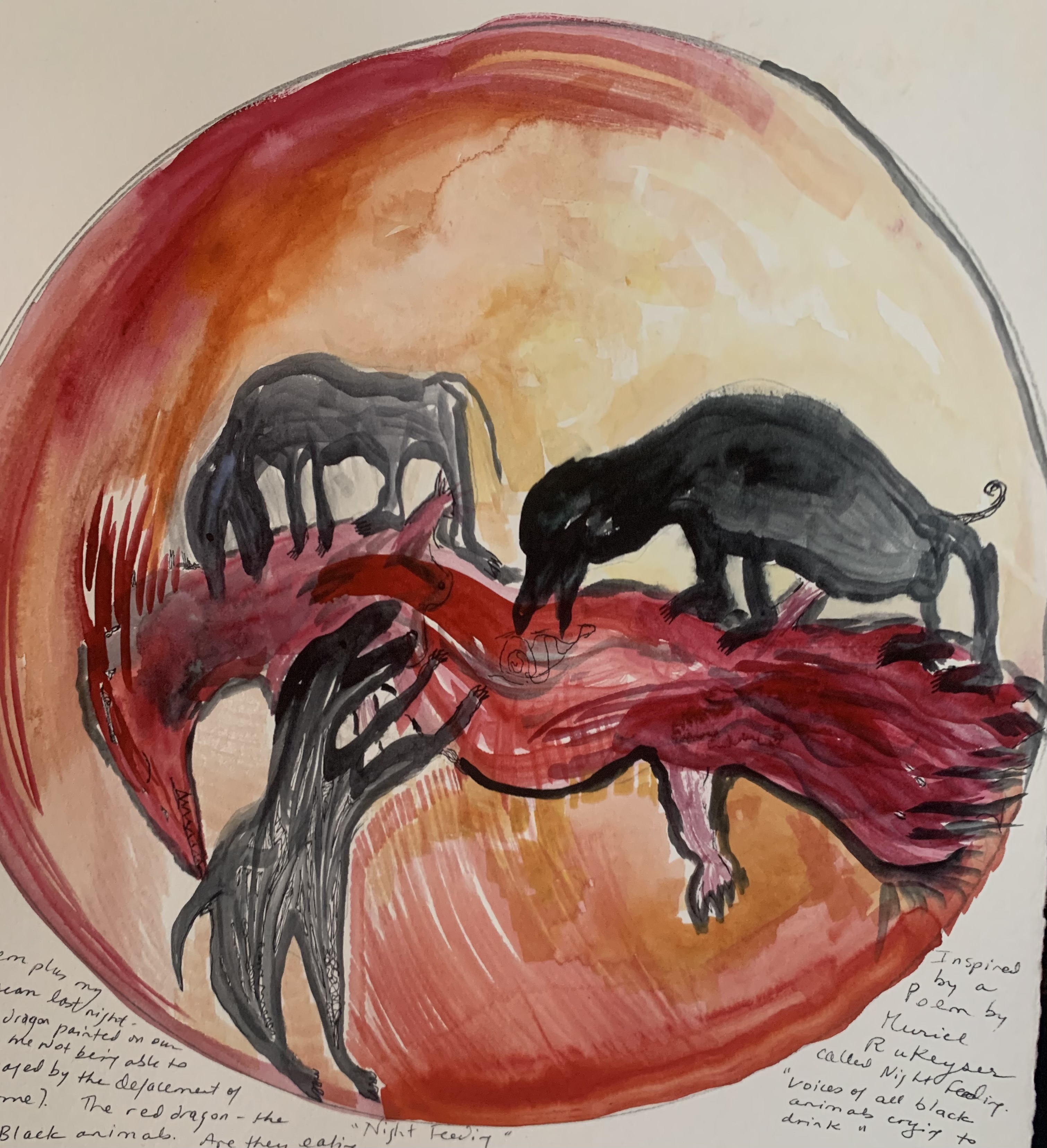
Michael and I had a Monday Mandala practice for a while, but it fizzled out sometime during the year. One exciting project: we delivered a multi-day mandala-making workshop in March and early April on Zoom. Our participants were mostly from New Mexico—all lovely, open-hearted women. It was a good experience. Michael was a guest presenter at two Creating Mandala monthly events. The CM team featured a new goddess each month, and Michael chose to talk about the High Priestess (Tarot) and Kali (Hindu goddess associated with death). I attended both of these events with pride and pleasure. Some mandalas last year were inspired by dreams—a rich transmutation. I dreamed I entered a room in my house and found that someone had painted on my white wall a red dragon being devoured by three beasts. Still musing on the meaning of that one.
Writing
Here’s where the fox was most recalcitrant. I aborted so many poems, blogposts, and stories last year, I am surprised to find anything in my files. I posted on this blog only five times in 2023. However, I did complete a series of linked short stories (started in previous years): Nothing is Wasted: The Stan and Deedee Stories. I shared them with a few friends and family members. If you are interested in reading them and you’d like a digital copy, let me know (maddyruthwalker@gmail.com) and I will send you one.
Some months, I had nothing new to share with my writing group. I’d scour the old folders for some scrap from the distant past to read. Or I’d just listen to others read their work. But that’s okay. I know that I’ll write again. When nothing seems to be happening, the fox is deep in her hole, pregnant with kits. How many will be born and when? Just have faith.
I wrote only a few poems in 2023, and one was for my birthday. Each guest was asked to bring a poem to share. It was extraordinary to see my friends and family members get up into the poetry seat and read poems they’d chosen, poems they’d written: one of the best gifts I’ve ever received. To close the offerings, I read my own poem– one that expresses the expansiveness I feel as we enter 2024. Happy New Year to you!
Expansion

I started slim
and willowy.
Then, whoosh of years.

My waist - heavy as grief,
soft as dough -
expanded.

Grief. Have you met her?
Well then you know the
grace that she bestows.

Hard things—she
cracks them open,
ignites a hotter flame,
imbues a deeper shade of red.

So, like my waist,
my heart’s made wide by grief,
a vast container for the love I feel
for trees, and animals, the sky,
the planet, for you, my friends,
for people everywhere,
for life expanding.
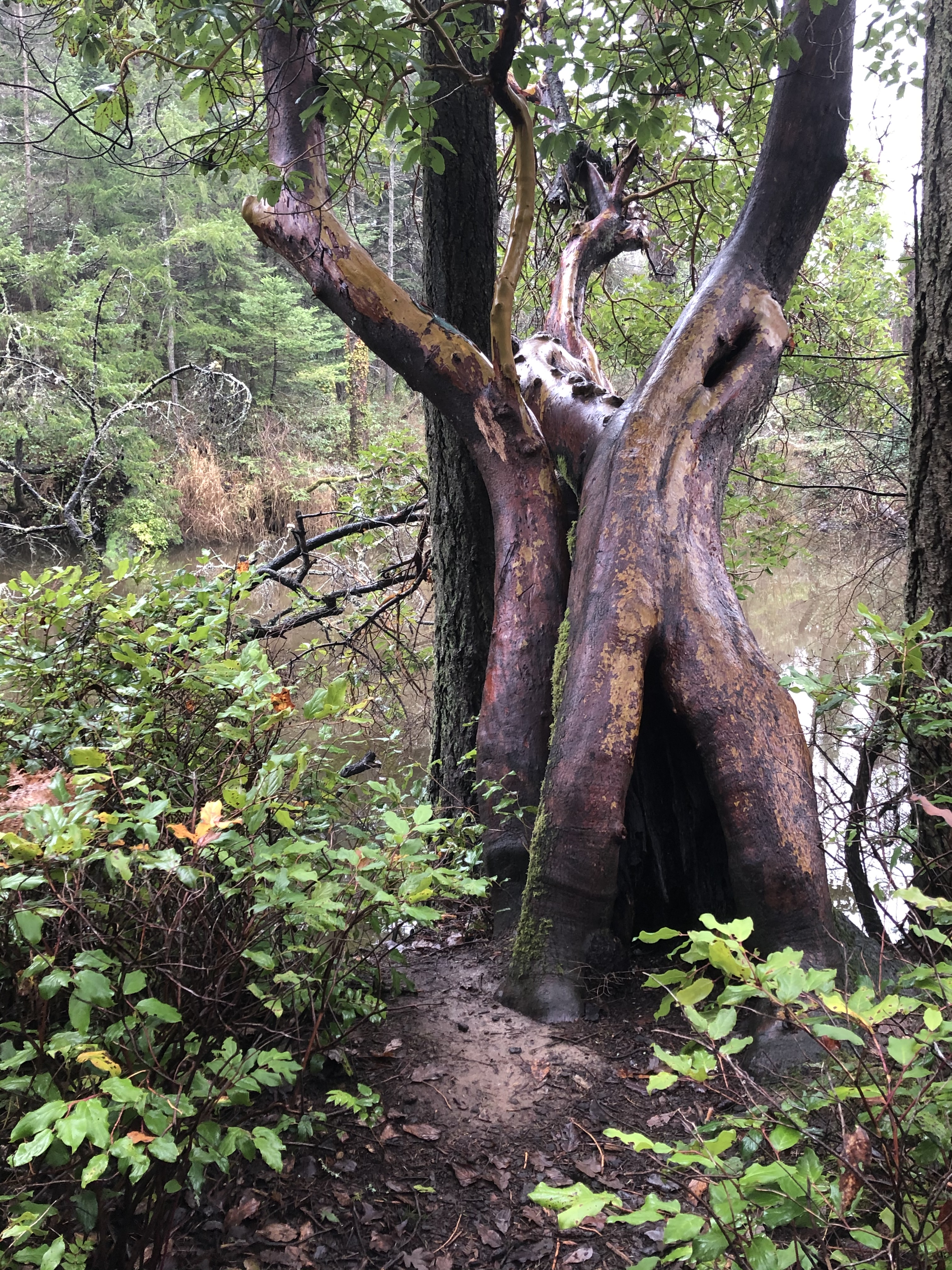
Blood runs green


If you could see her, you’d want
to embrace her too, drape her
massive arching thighs with yours.

Close your eyes, I’d say, and after
awhile, you’d feel her green
rhythm thrum your jangle into hum.

I can see your skeptical eyebrow,
raised—believe me: your blood

would bloom viridescent, and then
you’d slide smoothly off her trunk
to crouch beside her on the bank.

You’d place your palm on her red
skin, wired to the wild.

On that spot, I’ve seen so much—
once, the great horned owl’s cold
yellow eye locked mine and

for several seconds, we were
one. Another time, I watched the
racoon family on the farther shore:

mother and seven kits; washing
tiny hands in brown eddies.
I’ve watched mallard rafts

go with the flow, a river otter’s
easy drift, a heron fish the
private pool beneath her arch.

I wish she could have purified you, too.

I thought of this too late.

They put up a fence; they broke
the green connection. I wish you
could have seen her.
Tree


Today I heard a
sparrow trilling
from inside your
cool green chamber.

I long to join her
there—safe, nested,
hidden. Free to sing
my heart out.
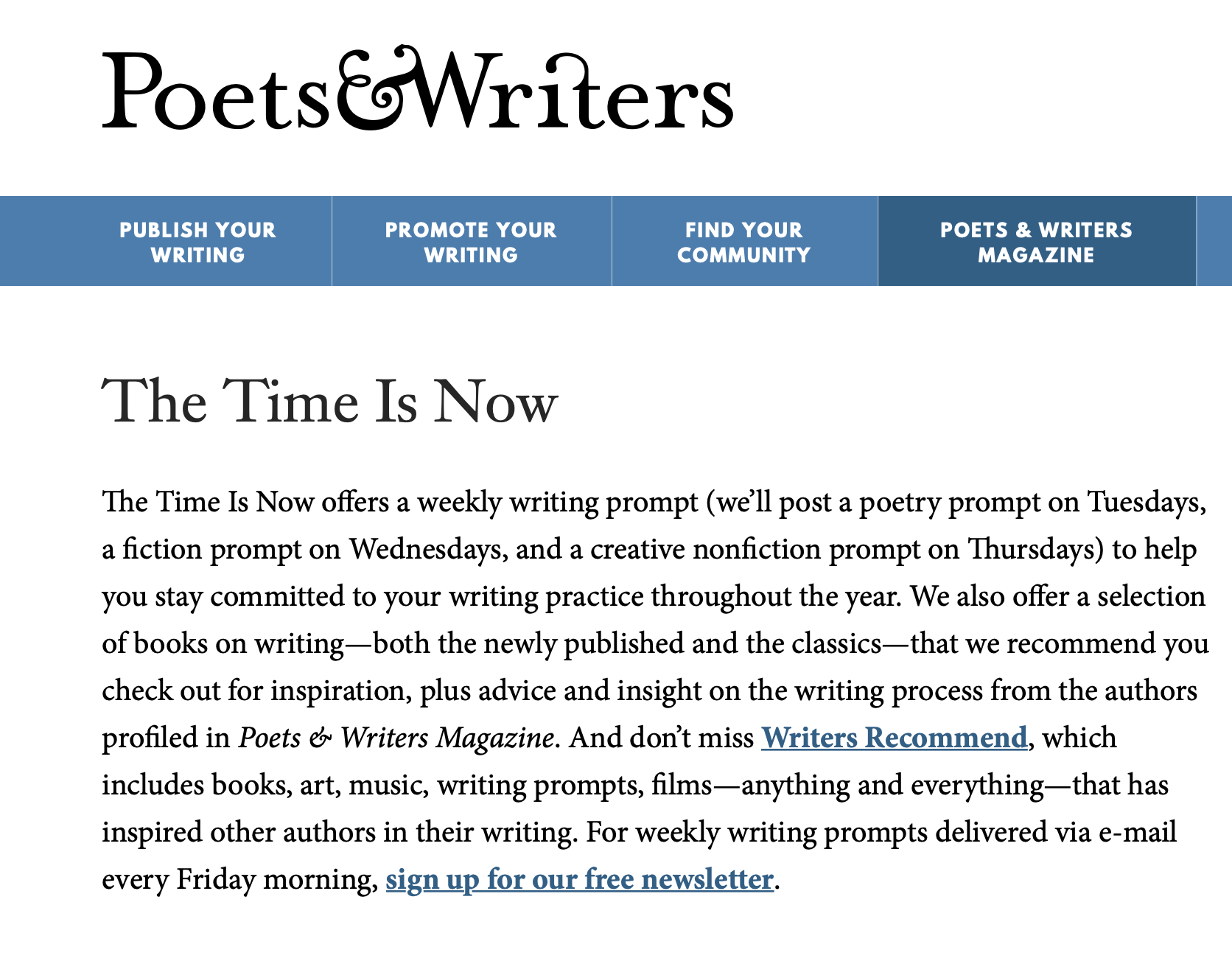
On Fridays I work a half-day at home, and every other Friday afternoon, I see my therapist. That Friday seemed like any other. I sat at my desk, sipped coffee, read student assignments, and provided written feedback using Word’s “comment” feature. I gazed intermittently at the grey skey outside the window. Taking a break between students, I checked “The Time is Now” for a writing prompt. Part of the Poets & Writers website, “The Time is Now” offers free weekly prompts for poetry, fiction, and non-fiction. I felt like writing something other than “you have a modifier problem in this sentence” or “a transition between these paragraphs will create a sense of flow.” That morning, the poetry prompt I read was this:
I clicked the hyperlink to read Kien Lam’s poem (I invite you to read it here). Then without thinking too much, I opened a fresh Word document and started to type couplets. The apocryphal story of your birth incorporating a fantastical tone. This is what I wrote:
Hallowe’en Baby
Like everyone, I come from a mother. I curled in a womb until the time of my
birth, when the veil between worlds, like a fully ripened cervix, was thinnest.
A beldam from the other side invaded the plexiglass cage where I
lay on my belly, helpless, hours old. That witch, she pulled me from my
crib into the stars, shrieking with laughter as my limbs contracted in fear.
She claimed to be my true Mother, but her touch was icy
and her tits were cold and milkless. I hung from her broom until
November first, when a meteor carried me, feverish, back to my crib.
I recovered there, alone, sucking my thumb for comfort. Nobody knew.
From that time, grief has grown thick as a callous to shield me from assailants:
For example, my Mother might try to pierce me again from the other side.
I didn’t toy with the poem too much—this is pretty much as it first flowed. At 1:00 p.m., my half-day of work over, I gathered my things, including the poem, which I’d printed out, and drove to my therapist’s office. I read the poem to her. I realized as I read it that it wasn’t just the prompt and Lam’s poem that had pushed the words out—it was remembering the story my mother had told me: I’d spent my first days of life separated from my parents, lying tummy down in a crib in the hospital nursery. My mother had a fever, and they put me in isolation to “protect me.” My father was at home caring for my two older sisters. I wasn’t held in my parents’ arms for days; I didn’t hear their familiar voices that I’d heard daily in utero. I lay there alone, not knowing when somebody would come to me. A connection was broken. That was 1958; I hope this separation between baby and parent wouldn’t happen today.
Writing the poem and reading it to Nancy felt like rupturing the dam holding back feeling and understanding. A river of sadness and comprehension washed over me. Pieces fell into place. My therapist’s contribution was to help me see the link between the absence of my parents’ touch and their voices in early infancy and my difficulty trusting connection in relationships.
For a day or two, I felt high with the transformative knowledge. It explained so much. Writing that poem had planted a seed, so I decided to change my writing practice in 2023. My memoir (Sow’s Ear), novel (Geraldine), and book of linked short stories (Deedee and Stan: Domestic Stories) languish in folders on my desktop. I don’t want to continue to stew about “getting published” in 2023, to desultorily send my work out to indie publishers. I want to write. The time is now. So, I signed up to receive weekly writing prompts, and my aspiration is to use the prompts to write, if not weekly, then often, sometimes writing poems and other times fiction and non-fiction.
I want to focus on the practice of writing: an embodied practice, a way of touching into deep feelings, into life’s mystery. My experience of writing “Hallowe’en Baby” was profoundly moving. I don’t expect all of my writing next year to be equally therapeutic, of course. However, I believe many revelations will emerge from writing this way.
I’ve started on this week’s poetry prompt, following the Seamus Heaney poem, “Postscript”: “think back to a natural landscape that has made a lasting impression on you and write a poem addressed to a loved one that describes this unique terrain’s lasting beauty.” I realized, with sadness, that I’ve spent most of my life indoors. I can’t remember many natural landscapes that have made a “lasting impression.” Perhaps two or three. So, that’s quite a discovery! And it makes me want to get outside to observe the trees and the ocean, to feel the wind and sun, to watch the sky. It makes me want to go different places, to travel, to soak up the transient beauty of this world.
I’m not a gambler. I’ve never been one to buy scratch & win or lottery tickets, with the exception of raffle tickets for a good cause. But I have a weakness for the random—for letting books fall open, for reaching into my closet with my eyes closed. I wrote about random acts of reading in one of my early posts.
Lately, my hunger for the random has become ravenous. Perhaps it helps me cope with the relentlessness of karma, of knowing that everything arises as a result of a complex web of causes and conditions. If I just grab something, I cheat the chain of causality for one moment. An illusion of course, but it briefly satisfies something in me.
When I was at Women in Need thrift store a week ago, I bought a $5 jewelry “grab bag” and felt the thrill of not knowing what I would find inside. And then, at the Juan de Fuca 55+ Activity Centre Craft Fair last weekend, I picked up three “toonie bags,” again feeling excitement at the potential. I know the chances of getting things I neither want nor need are extremely high. But a pesky “what if?” tugs at me. What if there’s magic inside those bags?
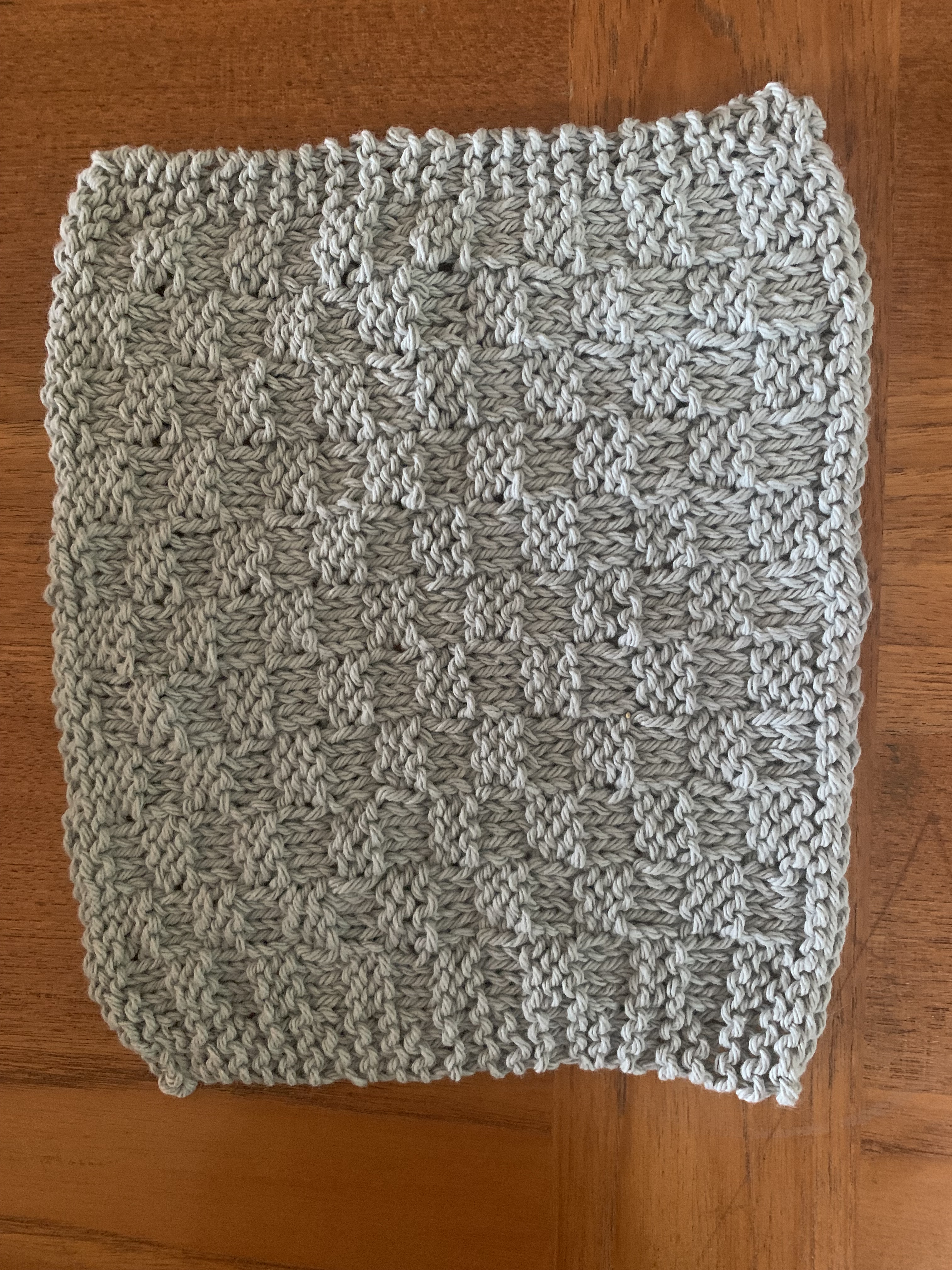
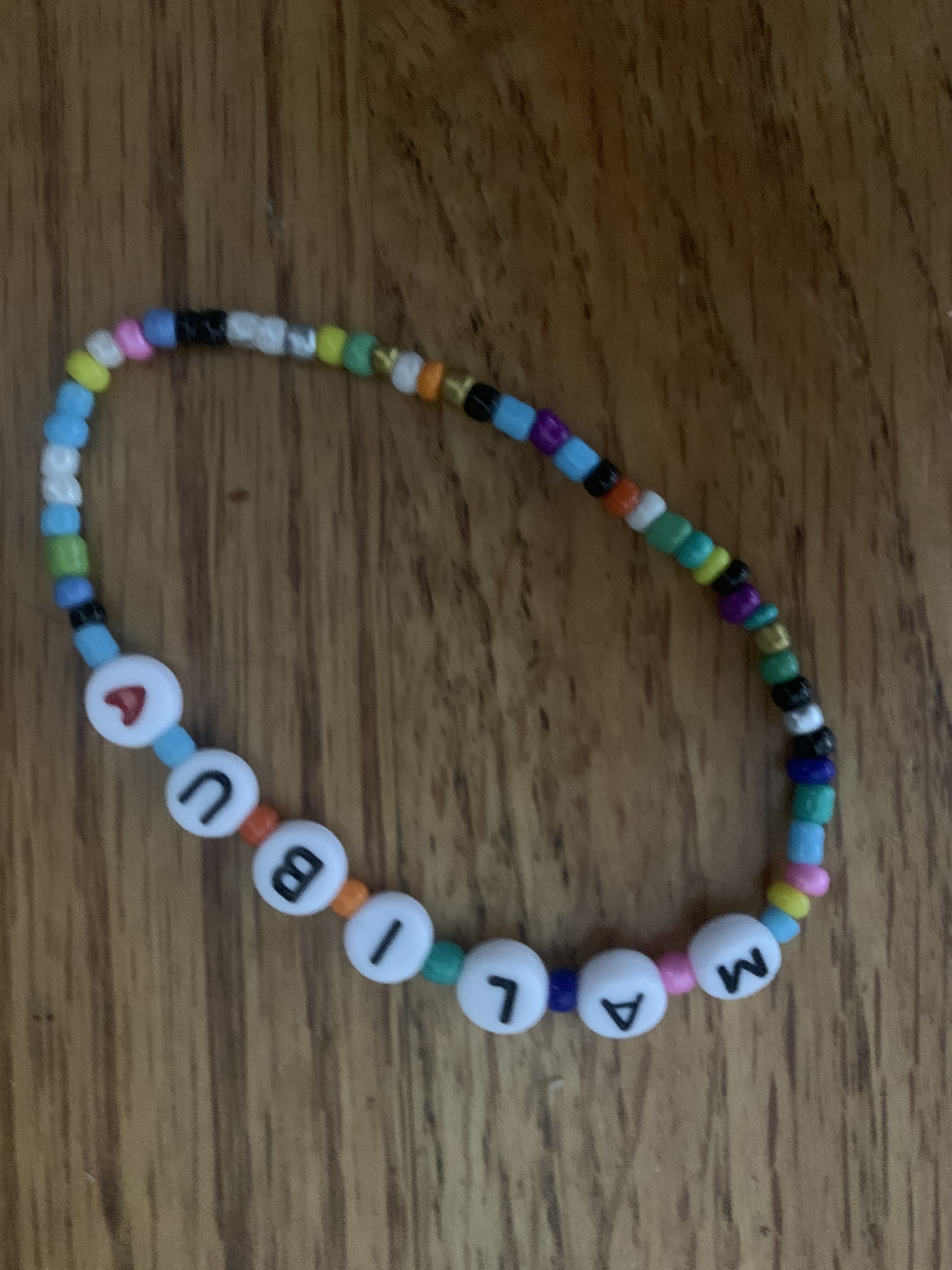
I tell myself it’s not such an expensive gambling habit: $11.00 spent over the past ten days. As you have probably already predicted, the $11.00 yielded mostly junk. Costume jewelry I would never wear. Small glass bowls, silver candles, a MALIBU beaded bracelet: all of these go right into the Goodwill donation bag. But there were a couple of things I liked. A cheesy “love” ring that nestles nicely next to my wedding ring for the time being. Three hand-crocheted dish rags in a shade of grey-green that I love and will use daily. And the priceless frisson of possibility … If I do this too often though—spend too much money on “grab bags”—I get disgusted with myself, like a gambler must feel about their addiction.
The thrill of grab bags
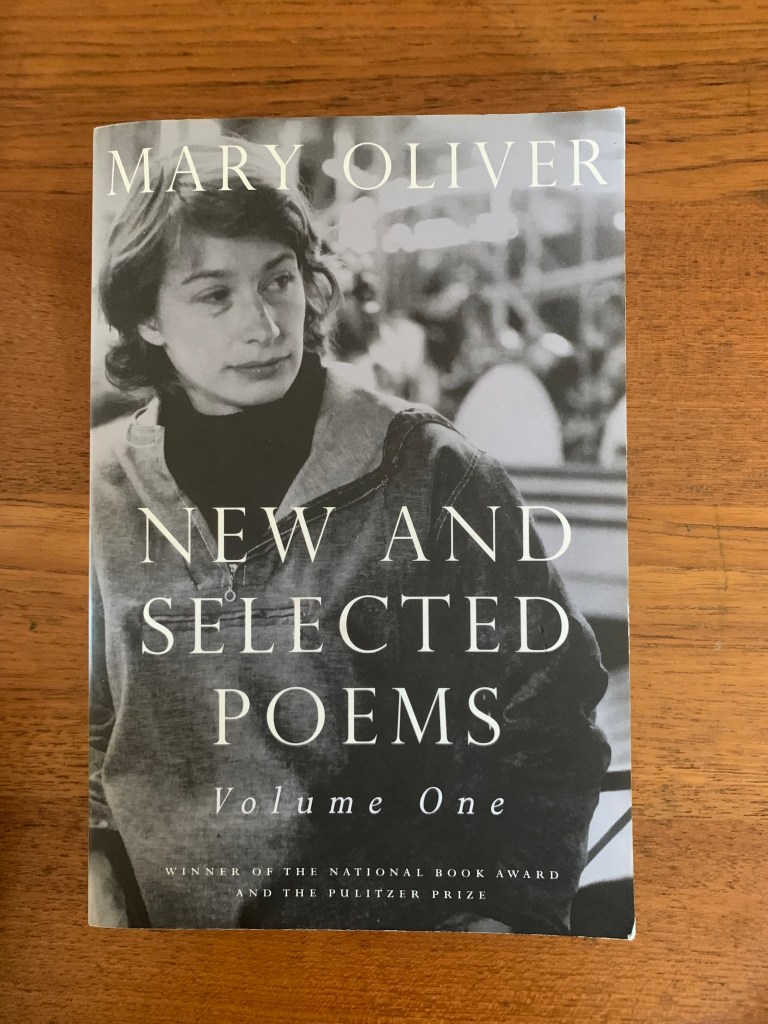
Today, Mandala Monday, I asked Michael to continue with the buffet of randomness. Last time, we each chose a tarot card to inspire us. This time for our mandala-making prompt, I suggested that I would take a book of poems by Mary Oliver and open it anywhere, read the poem, and we would create mandalas in response. Being game to participate in most of my creative ideas, he agreed. I opened to the poem, “White Owl Flies Into and Out of the Field.” Do you know this poem? The huge white owl, wingspan five feet, picks up a rodent from the snowy field and flies off to the frozen marshes to devour it. Oliver imagines the animal’s death in the jaws of the owl as something incandescent, perhaps even pleasurable. Death, she muses, may be entirely unlike the darkness we tend to imagine:
maybe death isn’t darkness, after all, but so much light wrapping itself around us — as soft as feathers —
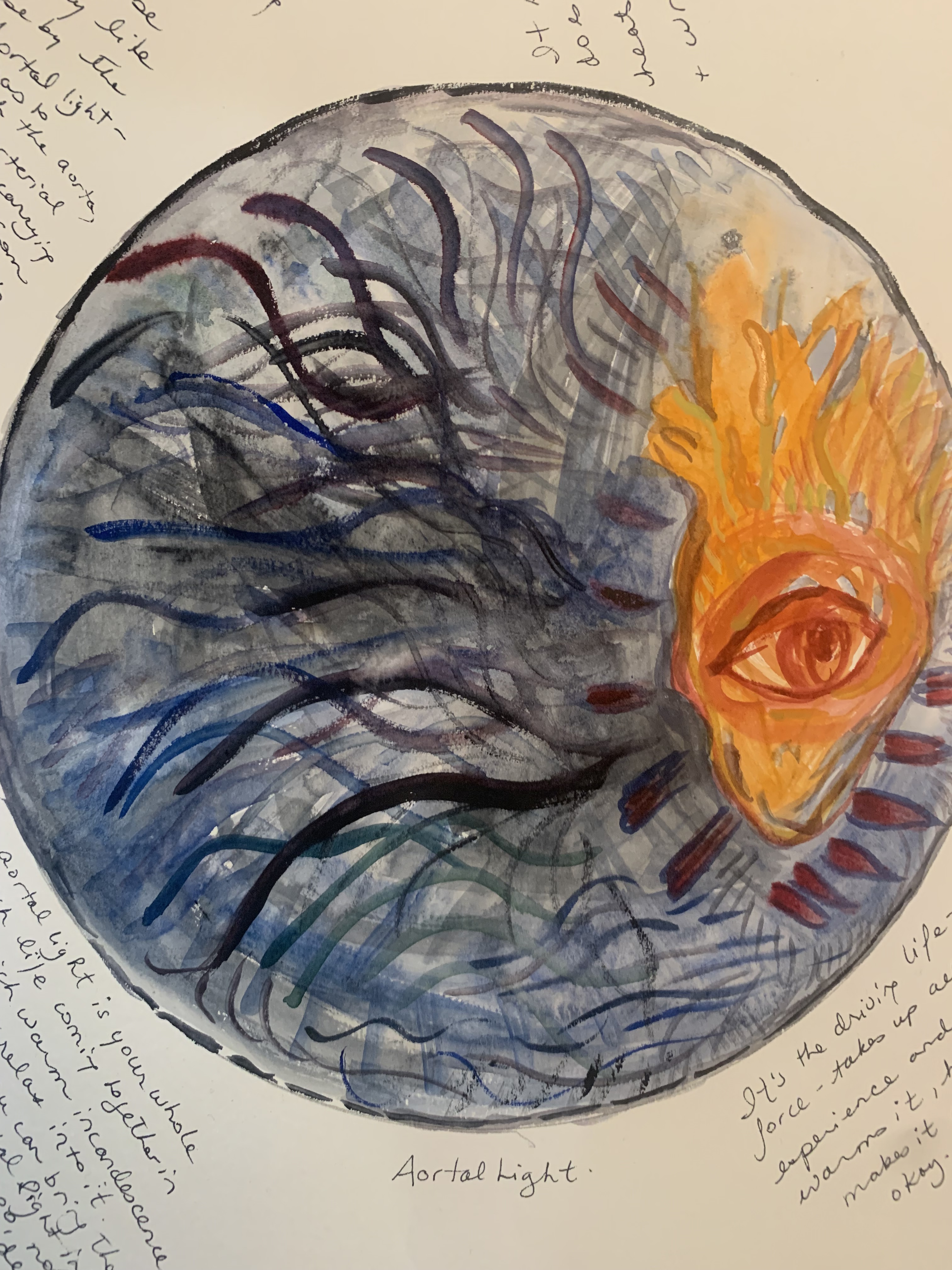
Michael and I sat across from each other at the dining room table, he with his IPad and I with old watercolours and a piece of heavy paper I’d traced a plate on. The songs from Leonard Cohen’s Old Ideas album surrounded us. We worked for a time. I sloshed paint and Michael used his magic wand. I persist in thinking of making digital art on an iPad as something otherworldly, technology out of my reach, which isn’t at all true. However, more and more, I recognize the ways I deceive myself, all of the little lies I tell to keep my life comfortable.
I like to mop up watery colour with an old rag, feel the wet paper under my palm, scrape at the bottom of the indigo blue with my brush, feel that I am using up every last bit of paint. The embodied experience of artmaking.
I got stuck on a phrase near the end of the poem, “aortal light.” Adjective + noun. Aortal – from aorta, the great arterial trunk that carries blood from the heart to be distributed by branch arteries through the body. I imagined aortal light as a lantern that pulses like a heart, sees all with a glowing eye. Warmth and insight at the end of life.
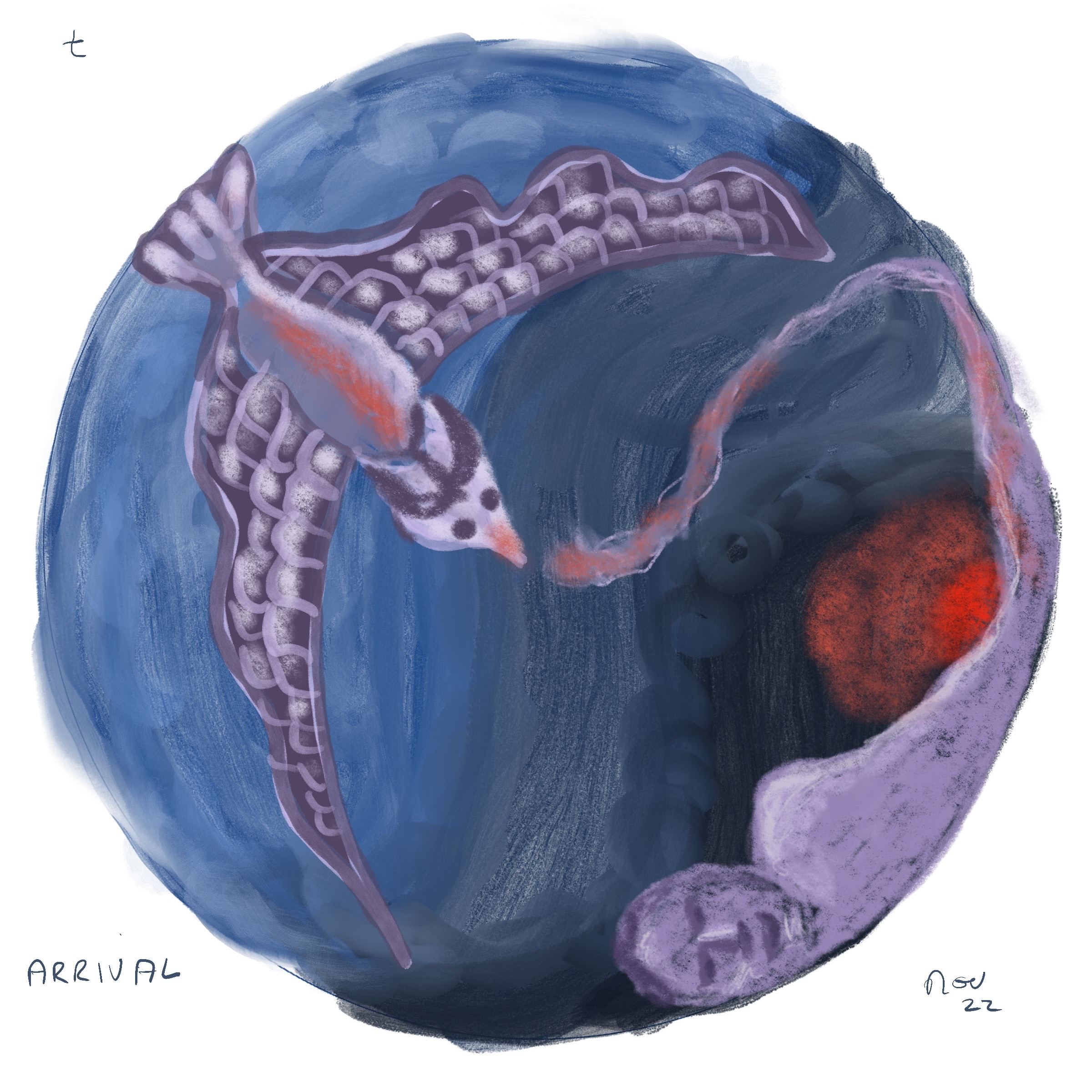
I fell in love with Michael’s “Arrival.” After creating hundreds of mandalas, he has developed a quick entry into the thriving, visceral archive of his subconscious. His images are evocative, and today both the image and the act of creation visibly disturbed him. I was riveted by the words he read to me after we’ve finished painting and writing. His honest expression of troubled feelings about the mandala—his fear of death—they scalded me. Would that I could be so honest! I like to think I won’t be scared when I am dying. I may be deceiving myself again.
Oliver writes, we “let ourselves be carried, as through the translucence of mica, to the river that is without the least dapple or shadow — that is nothing but light — scalding, aortal light — in which we are washed and washed out of our bones.”
Choosing the random means taking a chance. Please, big “S” Self, let me take more chances in this life. Not just by grabbing toonie bags and reading random poems—please let me take a chance in being honest, vulnerable.
I often despair of my monkey mind, the jumble of thoughts that keep me from noticing what’s present. At the same time, I appreciate my tangential mind. I love following its pathways through shadowy tunnels of white-flowering hawthorns. I seem to always turn a corner to find myself in an unexpected field of light.
Today as I ate breakfast sitting at the kitchen table, I started to examine the ceramic trivet my father gave me years ago after a trip to Granada. The trivet is decorated with an Arabic design: a mandala in teal, navy, red, and cream. I love the waving flower petals that seem to be in motion, dancing in the wind. The Arabian design on the Spanish trivet took my mind to the poem I’d just been reading by St. Teresa of Avila (1515-1582), a mystic living in Spain after 700 years of Arab culture. St. Teresa was intimate with her God; you can feel it in her language. I re-read the lines,
A woman’s body, like the earth, has seasons;
when the mountain stream flows,
when the holy thaws,
when I am most fragile and in need,
it was then, it seems,
God came
closest.
God, like a medic on a field, is tending our souls
And then, a few lines down,
Why this great war between the countries—the countries—inside of us?
From “When the holy thaws” by St. Teresa of avila
My counsellor tells me that I aggress against myself—a pattern in my life. An ongoing war rages between the countries inside of me. I like to think of God as a medic tending to my wounds, lifting me off the battlefield, holding me close, bringing my countries to peace. I remembered the stage six mandala I drew recently, with a little girl and a dragon (my warring countries). I wrote tenderly to myself, “lay down your sword, little one.” Perhaps the holy is thawing.
I’d snagged that wonderful book, Love Poems from God: Twelve Sacred Voices from the East and West, from a cardboard box of free stuff. I love our neighbourhood. There is a little clearing across the street near the mail box where all of us take things we don’t want anymore. Neighbours and visitors from other parts of town come to adopt old things and bring them to their new homes—a brilliant system!
This book caught my eye. What a great find. But boxes of free stuff and friendly dogs are not all that’s on offer here. The neighbourhood has other delights. Yesterday, I started work early in my home office in the basement, checking copy edits for a book. At 10, I took a break from the highly focused work. Michael, Marvin, and I walked down to the Gorge where a pop-up concert was in full swing. A local musician, Danielle Lebeau-Peterson, was playing her guitar and singing under a white tent. Danielle is the daughter of my eldest son’s first music teachers—Connie and Niels, and I marvelled at the “small world” (we’re all connected) feel of Victoria. Her mouth is like her mother’s.
The clouds in the sky threatened rain, but so far it was dry, and children and their parents gathered around Danielle as she sang and played, smiled and bantered. She knew songs from Disney movies, which delighted the younger crowd. The Tillicum-Gorge Association folks had set up a table with a big urn of Tim Horton’s coffee, cartons of donuts, and boxes of Timbits. There was a clipboard with paper and the question, “What do you love about our neighbourhood?” The cheerful woman behind the table filled my cup with coffee, and I took up the pen and wrote, “Everything.”
We sat on the grass listening, and when Danielle asked for requests, I called out “Blackbird,” that gem of a song written by Paul McCartney. It was one of my father’s favourites, and she played and sang it perfectly—her clear ringing voice floating up and over the Gorge: “You were only waiting for this moment to be free.” I smiled while my tears fell on the grass, and Marvin tugged at his leash, tried to smell the woman sitting next to us. This is the first Father’s Day I’ve lived without a father. But he was there in the high, truthful notes of the song. He is still with us.
And now, I am still sitting here with the book of poems on one side of me and the trivet on the other, back from that pleasurable sojourn, ready to fill the hummingbird feeder with sugar water and play with the dog. I love my mind and my heart. I love the rich stuff of daily life that produces all of these memories, feelings, and thoughts. The tangents take me unexpected places, but they always lead me back home to love and beauty.
I sat in a coffee shop with a latte and a pumpkin scone, my journal from summer of 1977 before me. Pages and pages of my fat cursive filled the college notebook. At one time, I’d felt burdened by the huge tub of journals—a sporadic record of my life dating back to my early teen years. But lately, I am grateful that I saved these ragged books; they give me insight into who I was and am and the forces that shaped me. I laugh out loud when I come to a passage about my strange encounter on a Greyhound bus from Gravenhurst to Toronto. I describe the encounter as “euphoric.” A handsome man sat next to me:
Every time his arm brushed against me, shivers went up my spine. For a while we slept, and our bodies were quite separate. While he was awake, I was always worried that he might know exactly what I was thinking. At some point, when the bus turned, my arm was nestled next to his. . . . And then he began to gently stroke my arm. I kept telling myself I was imagining it, but I wasn’t. The rest of the ride was seventh heaven. He continued to ever so lightly caress my arm. Neither of us looked at the other, yet I felt an infinite closeness, a bond with this gorgeous man. As we approached Toronto, I was surprised, the ride seemed so short. . . . When he got off the bus and it pulled away, I saw him standing on the sidewalk looking at me. I looked back. He was so beautiful. That was a most incredible experience.
I love that 18-year-old me: naïve, open to life, hungry for it. Trusting, fearless, sensual, absurdly passionate, saying yes to everything. Wait a minute, though. I take a pause. Yes, there’s something juicy about her eagerness to embrace the strange. But let me think past the wild beauty. This young woman’s lack of boundaries sometimes led her into the dark: dangerous situations and unhealthy relationships. It’s a little easier on my heart to squint from both the distance of time and third person point of view.
The romance of saying yes to life masks an inability to say no, to discern what you truly want, what’s good for you. I see with clarity and growing acceptance how my early childhood experiences of boundary-less-ness have engendered a lifetime of struggling to set limits. I learned early on that to say no, to set a limit, meant to risk being rejected, unloved, or abandoned. Thus, I said yes even when I felt no. I accommodated others at all costs, a human pretzel, ignoring the internal cries that grew fainter:
“I can’t do this, this doesn’t feel right, I don’t want to, I don’t like this, no, I can’t, no…no…no….” Whispers fading away.
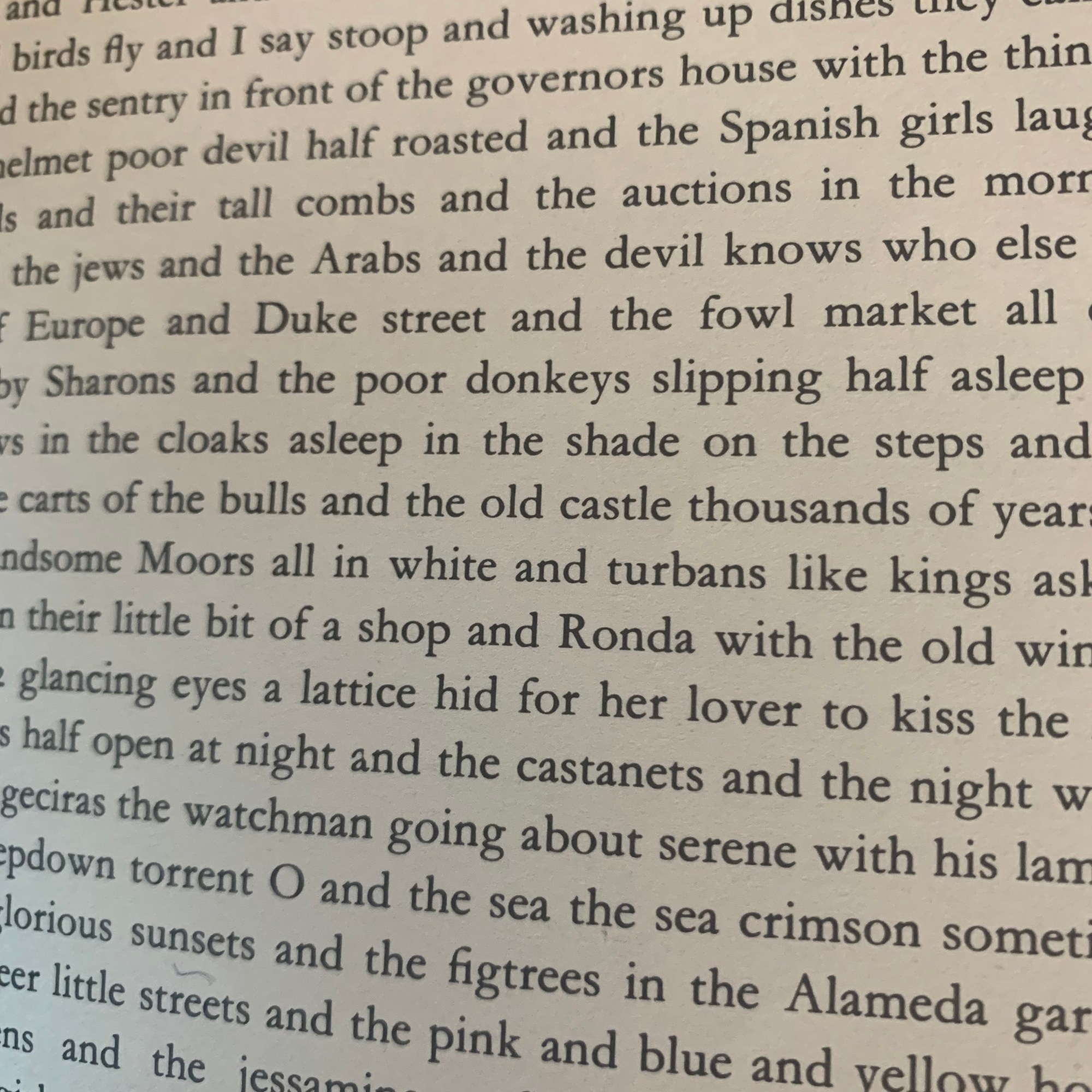
Author James Joyce apparently described “yes” as “the female word” that showed “acquiescence, self-abandon, relaxation, the end of all resistance” (see Hugh Kenner’s [1987] Ulysses. Johns Hopkins University Press). At the end of Ulysses, Joyce puts “yes” into his character Molly Bloom’s mouth many times during her pages-long monologue that ends the book.
“yes my mountain flower and first I put my arms around him yes and drew him down to me so he could feel my breasts all perfume yes and his heart was going like mad and yes I said yes I will Yes.”
I was enamoured by Joyce when I studied Ulysses during my PhD program, and his idea that “yes” was a female word aligned with my view of myself as a nice, easy-going, accommodating female. But now his gendered claim about “yes” disturbs me. Sure, I see the value in saying yes: the self-abandon and relaxation Joyce cites. And female energy has long been associated with yielding, opening, giving birth (the ultimate yes), just as male energy is associated with law and logos. But—as with most things—context is everything.
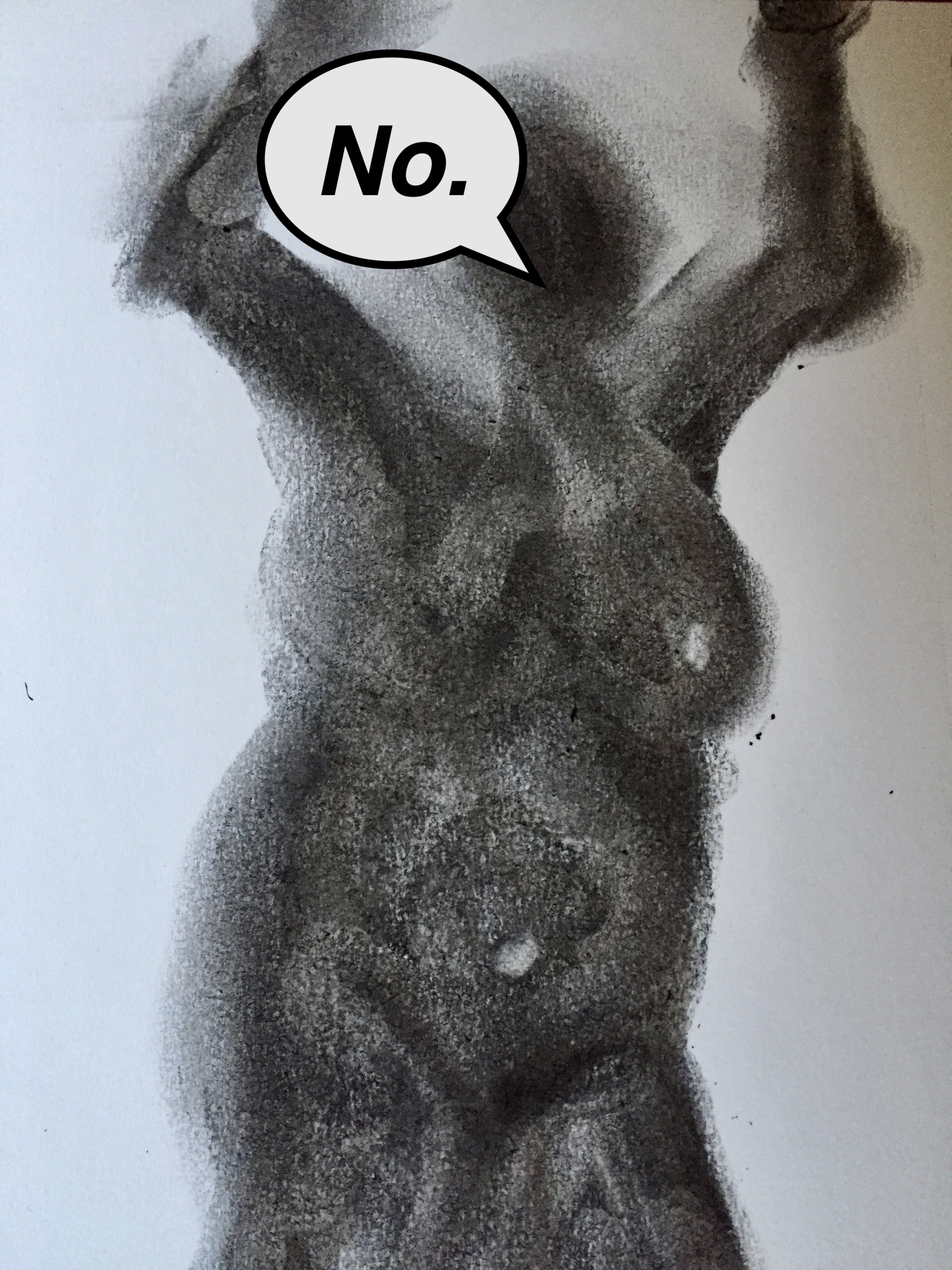
I am learning to say no. No thank you, I don’t want to teach a course next semester. No, I’m busy with other clients—I cannot edit your dissertation. No, I’d rather not. No, that doesn’t work for me. Kindly, but firmly: no no no no no no no. Like the terrible or terrific two-year-old, I am the terrible terrific 62-year-old: No, no, no, no. Because saying no makes space for a-flesh-and-blood-I-mean-it-down-to-my-toes, yes.
Hard Work of No

To push the muslin down
into the vat of boiling blue,
I used my broomstick
pounding, nonono and nonono

It took a month to wring
it out. My shoulders ached,
my hands turned blue,
each drop a no no no no no

Ten yards of billowing
indigo—a sister to the sky—
I hung it out to dry, to crackle
in the wind: no no no no, nononono

With bundled sheet across
my breasts, I headed back
to childhood, and there I found a
cache of suffocated noes

reduced to infant bones,
all petrified, but still faint
echoes of the negative. From
those timbers, I built a scaffold

and as I worked, I sighed
reminders to my infant bones
of the pleasures of autonomy:
a no and a no and a nonono

Birds helped by lifting corners
of the sheet, then draped it
on the bony frame. A blue-domed
tent appeared before my eyes then

Spent, I crept inside, where bluish light
bathed me to sleep and children’s bones
sang me a lullaby of no no no and no no no
of no and no and no and no

It took the hardest work
to get here. Know my tool
of choice: Nicely, firmly, thank
you, thank you, no and no and no

A month went by. I woke
refreshed and listened to a
sound, a curlicue of pink
that whistled through my core

And there again the whistle,
delicious worm of want
winds up my empty throat,
and from my tongue

slides out the baby of
a thousand noes, the
pretty word all plump
with meaning: yes


Madeline Walker, October 2021
In the last few weeks of my father’s life, my stepsister Sandra held the phone near his ear when one of us called. He lay in a bed set up in the living room, slipping in and out of consciousness. We’d given up on FaceTime; he could no longer see us. But perhaps he could hear my voice. You never know.
That day, perhaps two weeks before he died—I don’t remember—I felt desperate. I was frenzied in my wish to connect, to penetrate the veil, to make him hear me. But I had nothing to say other than I love you, you were a good father. He’d heard it all before.
So I sang. First, Summertime, from Porgy and Bess, my voice catching and scratching like an old record. Then, I pushed on with the next song that entered my head: Mac the Knife. I scrambled around the world wide web until I found the lyrics. Oh, the shark, babe, has such teeth, dear / And it shows them pearly white. Somehow, I thought he’d remember that song, but I don’t really know the melody beyond the first two lines. I faked it, trying too hard, straining, improvising, hoping. Hoping for what? For his sweet voice to say, “Madeline, that was wonderful”? Nothing.
So, then, a poem. I’ll read a poem. Robert Frost is a good safe bet.
I wanted to find Nothing Gold can Stay, a poem about impermanence. But my memory failed me. I couldn’t recall the title, so I accepted instead the first poem that popped up when I searched for Frost: Stopping by Woods on a Snowy Evening. I pressed on, putting as much feeling into my voice as I could, wishing I’d chosen a more dramatic poem, a poem I could really emote. Instead, just the simplicity of an Alex Colville painting. A man and his horse on the darkest evening of the year, stopping.
The woods are lovely, dark and deep, But I have promises to keep, And miles to go before I sleep, And miles to go before I sleep.
When I finished the last lines, my stepsister’s voice entered. She’d been there all along, holding the phone. She said kindly that she could listen to me all day, my voice was lovely. But Dad was asleep; he’d been asleep the whole time. She thought perhaps he could still hear me. Did he move an eyebrow?
But really, I know she didn’t have the heart to interrupt me. We said good-bye. A week later, I used the voice memo app on my iPhone to record myself singing “Blackbird” by the Beatles, Dad’s favourite song, and I texted it to Sandra, with a note, can I talk to Dad on Wednesday? But Tuesday was his last day here.
A frantic energy inhabited me during those final one-sided calls. Helpless, I worked overtime to get through, to make a mark. Hey you, this is your daughter. Papa! You there? Remember me? Your youngest daughter? Remember how you and I used to joke about you being King Lear, and I was your Cordelia? Sir, do you know me? Surely you do. Just give me a sign.
Father

In this wine-dark place
a tiny voice
a whisper:
hush, little baby, don’t you cry

From long ago
from far away
a thread
of red travels along
my bloodline

when that shark bites with his teeth,
babe
scarlet billows start to spread

and meets a tributary.
I know your voice.
You are mine.

I want you close
daughter,
but this trip
is made alone.

The woods in here
are dark and deep

I want to sleep,
dear, but
a worry burns:

Tell me, do I have
promises still to keep?

No, I hear you say,
no more promises to keep.

Spread your wings,
I hear you whisper

Take to the sky papa,
Take to the
red-blood sky.


































 Madeline Ruth Walker