A love to which there is no reply

We recently spent three days in New York City.

As I read the last line of Mary Oliver’s poem “Heavy”—”a love to which there is no reply”—it occurred to me that this describes my love for NYC. You can love NYC, but NYC doesn’t love you back. NYC doesn’t actually give a shit about you; the city is completely self-absorbed, and that’s just fine. It’s all part of the city’s mystique, its swirling, pigeon-flocked, neon-lit-glass-and-steel, rapid-fire, whirling-dervish, creative vibration. 

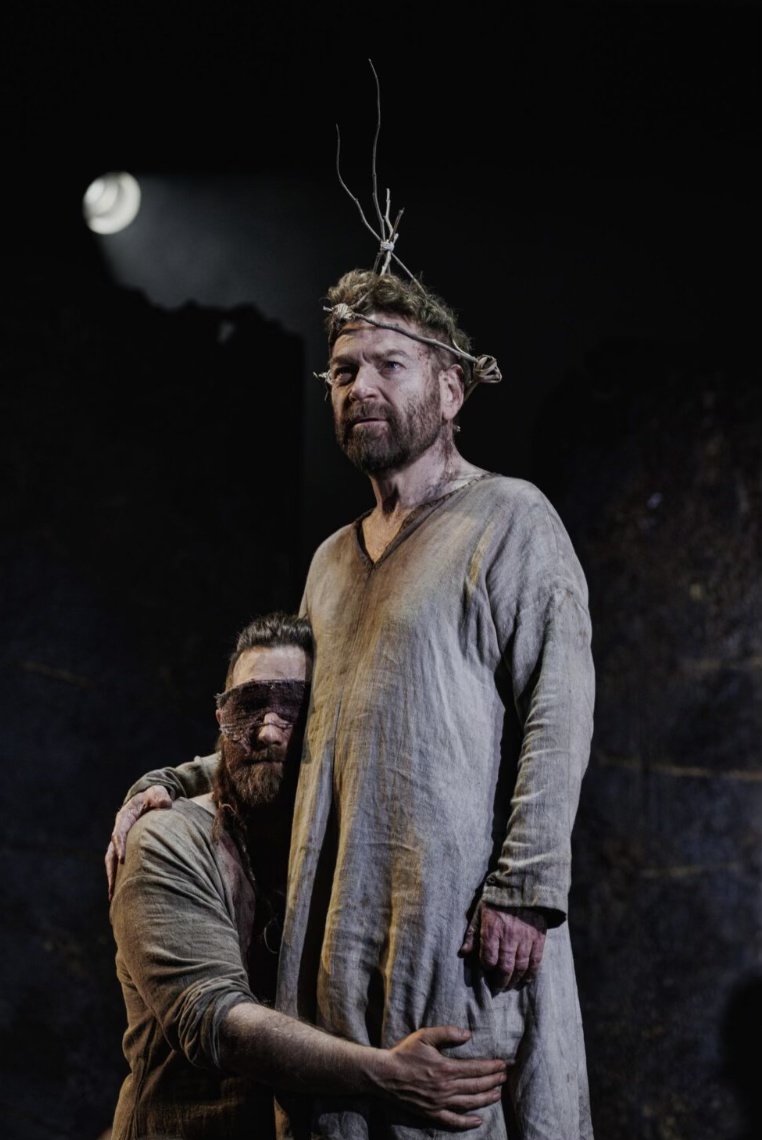
We stayed at a sweet hotel in the Flatiron district, saw wonderful exhibits at the Whitney and the Met, watched Kenneth Branagh as King Lear, went to a comedy show where five hilarious stand-up comedians made me laugh for ninety minutes. I loved all of it, every minute. But a few small vignettes stay with me and keep breaking the surface of my thoughts.  

One dollar for an original print

In the Whitney Museum gift shop there’s a vending machine at one end where you can slide four quarters into the slots, push, and out pops an original print of some NYC iconic object or scene by Ana Inciardi. We put our quarters in, and now we own two tiny prints (2.5 inches by 3.5 inches): a black and white cookie and a NYC water tower. Inciardi is kind of genius, isn’t she? I don’t know if she profits from this—surely a print for a dollar is not netting her much money. But it is such a delightful thing to encounter: a vending machine dispensing original art. I want art vending machines to be installed everywhere, machines where you insert coins and receive poems, collages, small clay sculptures, watercolours, flash fiction, holograms, fabric art, tarot cards… Can you see it? 

The women’s washroom at Barnes and Noble 

To use the washroom at the Fifth Avenue location of Barnes and Noble, you must first purchase something. At the bottom of your receipt is the bathroom code. I bought The Temporary, a novel by Rachel Cusk, an author I have been wanting to read (the novel is wonderfully written, but very depressing). I then used the code to enter the women’s washroom, where there was a line up for the two working stalls (there always seems to be one stall with a scrawled “out of order” sign). A woman of colour (#1) exited one of the stalls, but the next person in line (white woman) looked in, then withdrew with a look of disgust on her face. Woman #1, was busy washing her hands. I said to woman #2, “what’s the problem? You’re not going in?” Woman #2, not making eye contact with me, said cooly, “they got stuff all over the seat.” I went into the stall and saw a fine spray of water droplets on the seat, likely created by the toilet’s back spray. Quickly removed with a wipe of toilet paper. The venomous way woman #2 said “they got stuff all over the seat” implied something terrible, perhaps excrement smeared everywhere. Her contemptuous reaction was so overblown and ridiculous—it felt symbolic of a rising wave of incivility and prejudice in (American) society. Ugh.

Four girls draw a statue

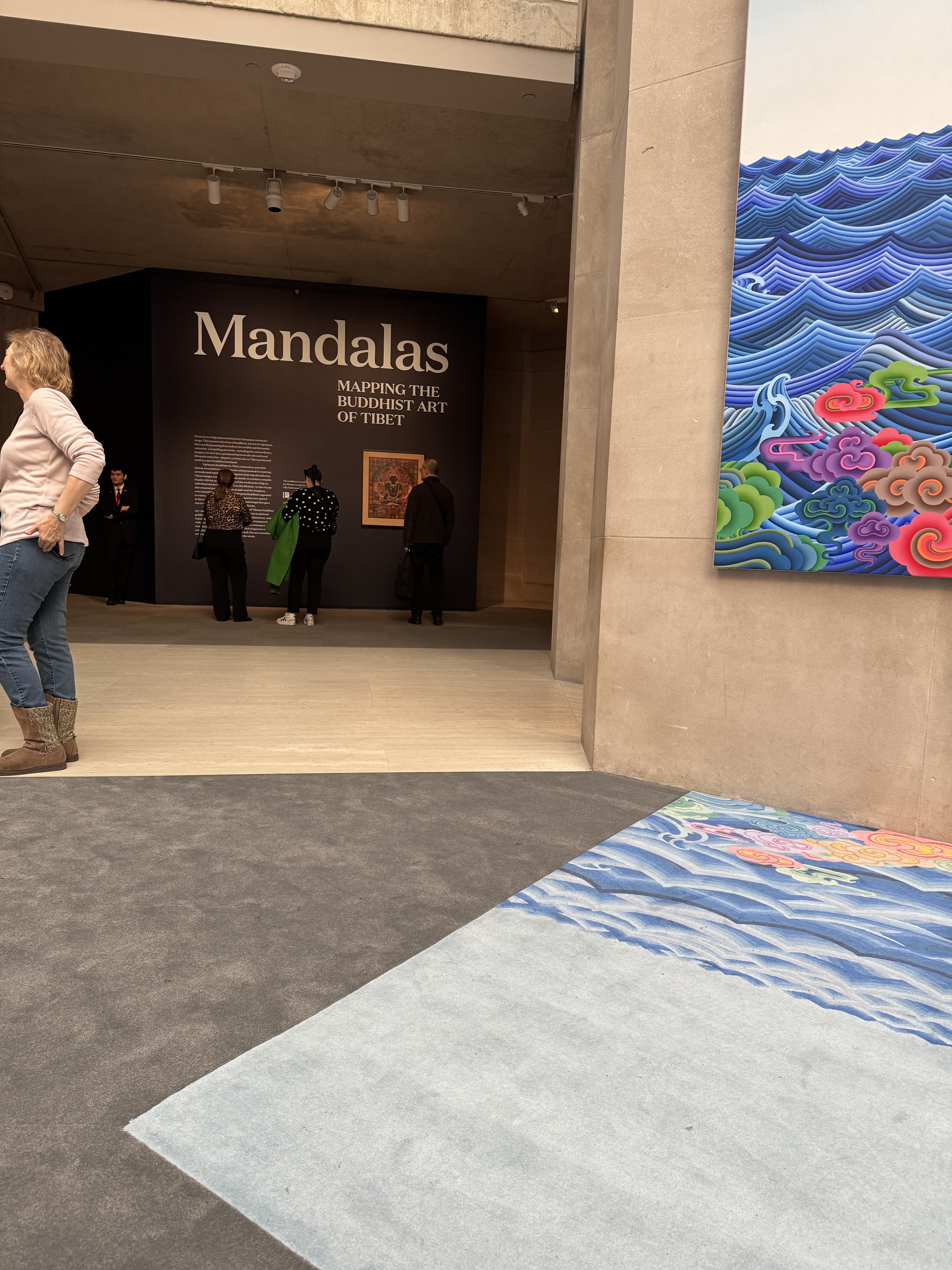
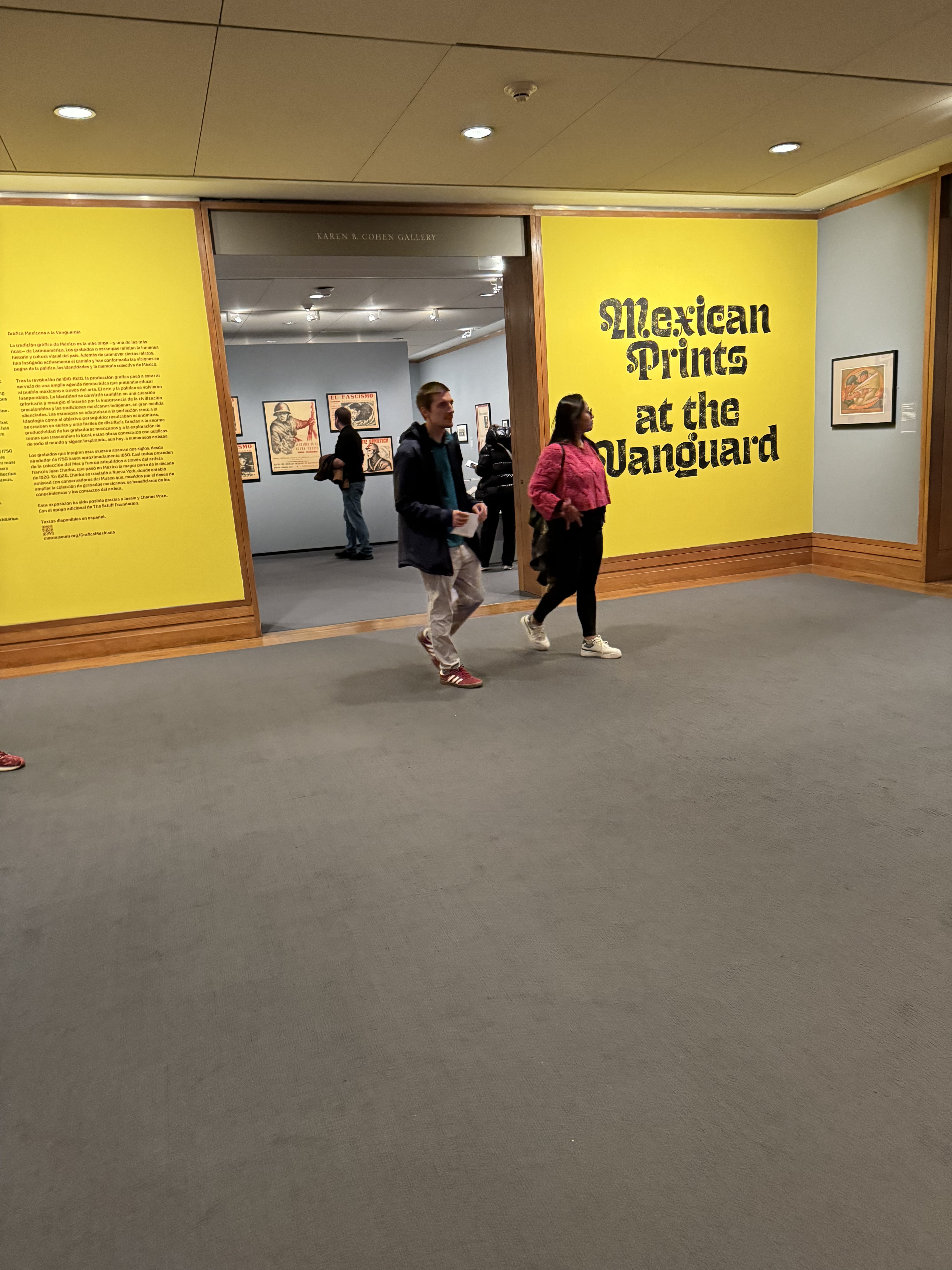
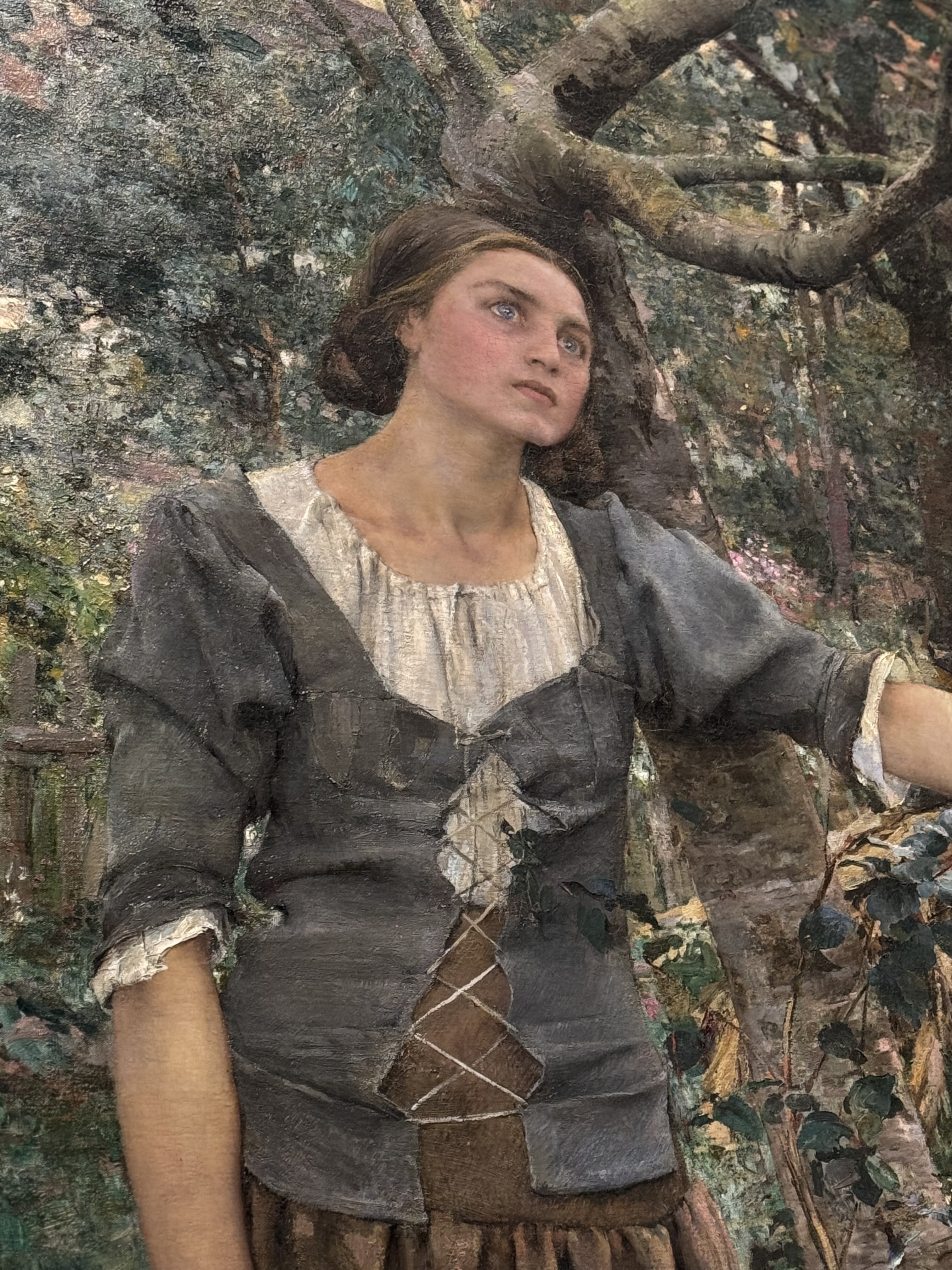
I loved the two exhibits we spent time with at the Metropolitan Museum of Art: Mandalas, Mapping the Buddhist Art of Tibet and Mexican Prints at the Vanguard. As we left the museum, passing through the Leon Levy and Shelby White court filled with ancient Greek and Roman statues, I saw four teen girls sitting on the marble floor in front of a bench, absorbed in drawing a statue of a nude man. This is what I will remember from the trip… their bowed heads, their silent engagement with the statue and with each other. A refreshing palate cleanser after bathroom woman #2’s remark.  Oh, and the Joan of Arc by Jules Bastien-Lepage (1879): her face had me swooning.

Docent at the Met

We got a bit lost after the Mandala exhibit and asked a docent for help locate the gallery where the Mexican prints were on display. She led us rapidly through throngs of people, and I told her my mother had been a docent for years at the Art Gallery of Ontario (I had many moments of thinking of my mom in NYC—we visited the city together in my early twenties and saw, among other things, Zero Mostel in Fiddler on the Roof). The docent explained she had to do highlights tours for two years before they let her specialize in anything. I asked her what she specializes in now. Arms and armour, she answered. And I get to have another speciality, she said, but I am taking a break. Evidently, it’s exhausting to learn all there is to learn about the arms and armour in the Met’s extensive collection. 

Pumpkin Pie at the Malibu Diner 

Before the show at Gotham Comedy Club, West 23rd and 7th Avenue, we ate dinner at the Malibu Diner across the street. An old-fashioned American diner with a huge, laminated menu, plenty of booths with red vinyl benches, low chrome stools facing the long counter. All of the waiters spoke Spanish among themselves. When our waiter brought my twice-baked potato, I said Gracias Señor, and then he started to speak to me in Spanish, and I had to explain that I only know a few words. He laughed. 

We paid for our meals and went to the club, but we were early. The woman said come back in half an hour; they were running late. Where to go? The cold wind bit our cheeks that night. So, we returned to the diner, where the waiters welcomed us like old friends. Come, come to the back, sit in this booth, where you won’t feel the wind that sneaks in whenever somebody opens the door. It’s warm back here. Our same waiter from before brought pumpkin pie with whipped cream. Sometimes eating dessert is the perfect way to pass time.

Shakespeare groupies

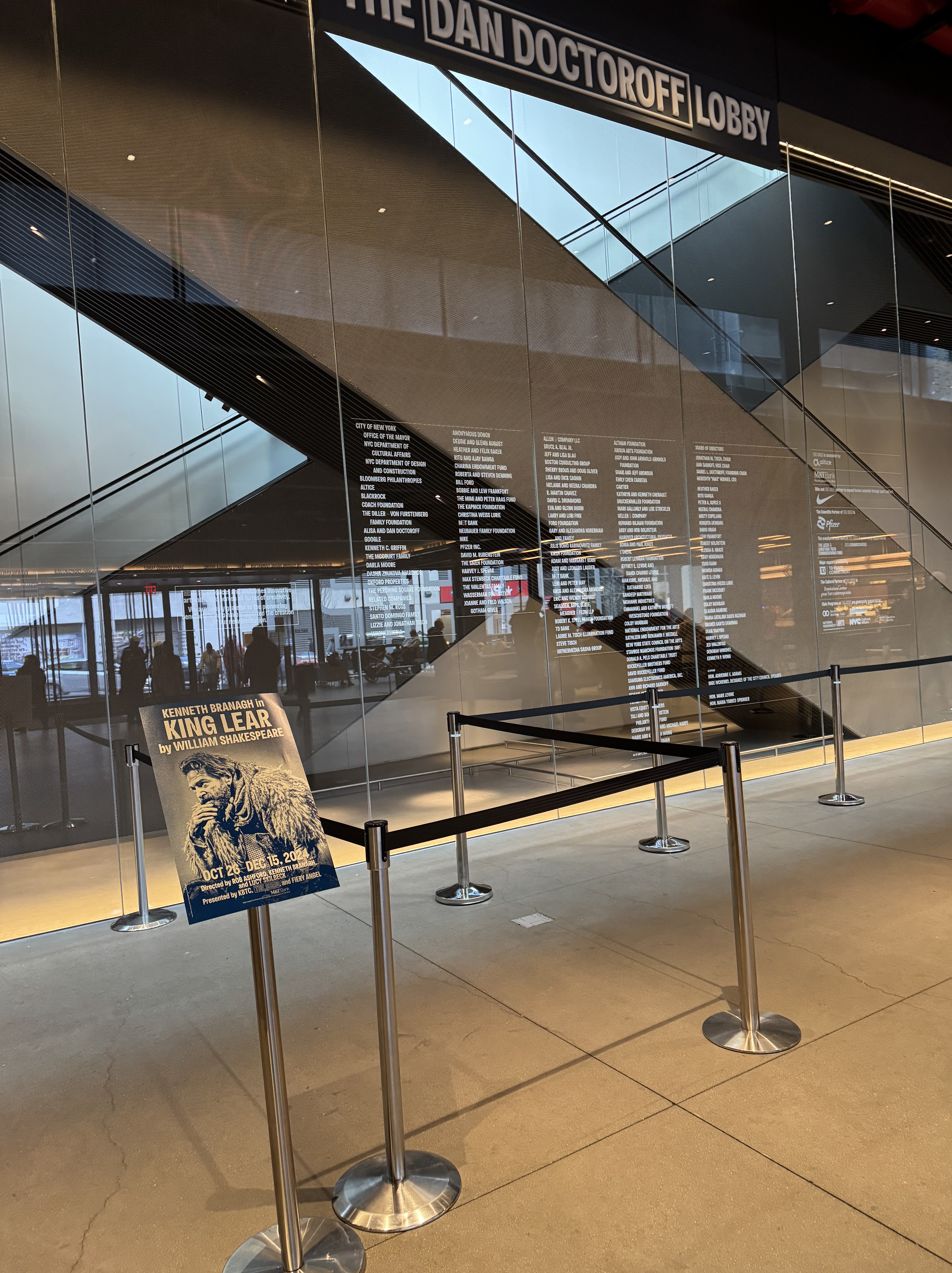
We took our excellent seats at the Griffin Theatre (at the Shed), where we had tickets to see King Lear. In front of us, two women about my age were taking off their coats and chatting. They started to engage us in conversation—where were we from? Did we go to a lot of Shakespeare plays? They had both lived in Atlanta and belonged to a Shakespeare reading group. When one of them moved to Baltimore, Maryland, they figured that was it—they wouldn’t see each other again. But then the Maryland woman saw an advertisement for King Lear with Kenneth Branagh and called her Atlanta friend. Why don’t I buy tickets? You can fly here. We’ll go together. So, Atlanta woman got a flight to Baltimore, and that morning they’d taken the train from Baltimore to Manhattan. We’re Shakespeare groupies, the blonde woman from Atlanta said. In April, we’re going to see Denzel Washington in Othello, said the Baltimore woman. Shakespeare groupies. I love it. 

Window shopping

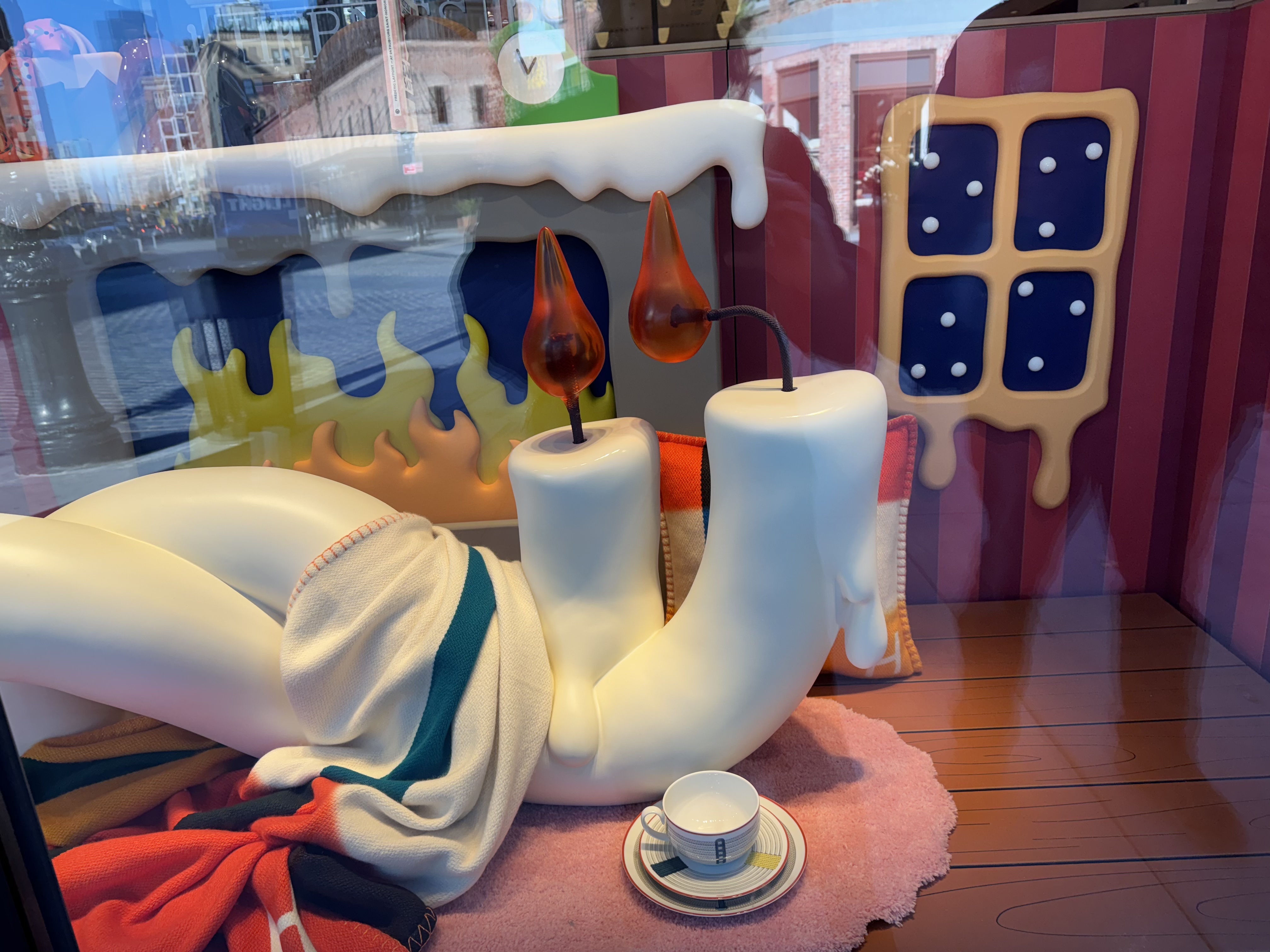
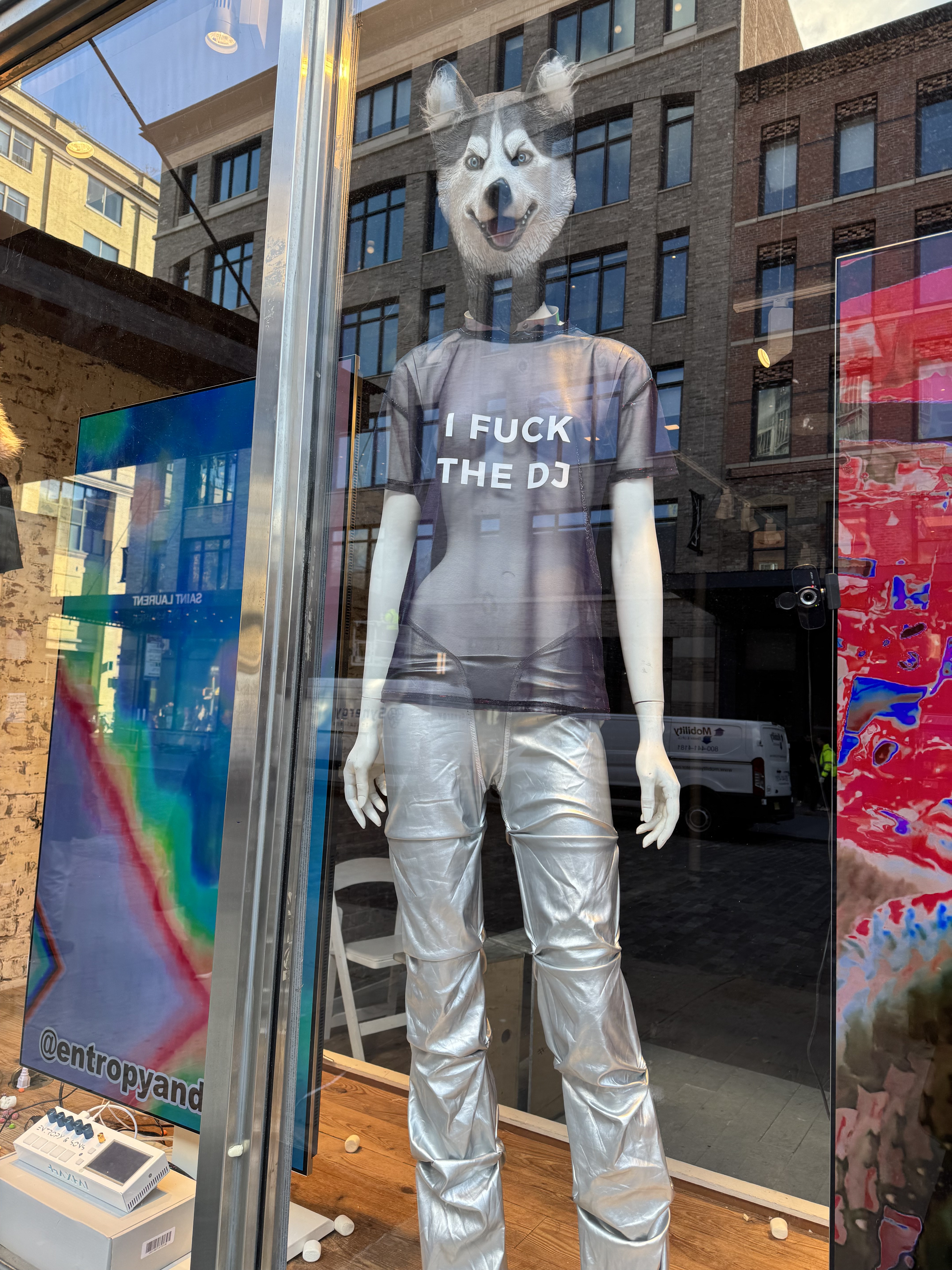
NYC is the best place to window shop. No need to buy a thing; just absorb the kaleidoscope of artifacts and moods rippling through glass. Mannequins wearing weird t-shirts, everything Harry Potter, bolts of cloth, soaps, sculpture, ceramics, sexy candles, life messages, and rainbow bagels.

Until next time…

We walked through Chelsea along a sidewalk that bordered a basketball court. Kids were shooting baskets on the first day of December, laughing, talking. A flock of grey pigeons passed overhead while the sun winked from behind a fringe of clouds. A bubble of pure joy passed through my body and into my head, exploding into a private smile. I love you, New York City; no reply necessary. 

Cotton handkerchiefs and other delights

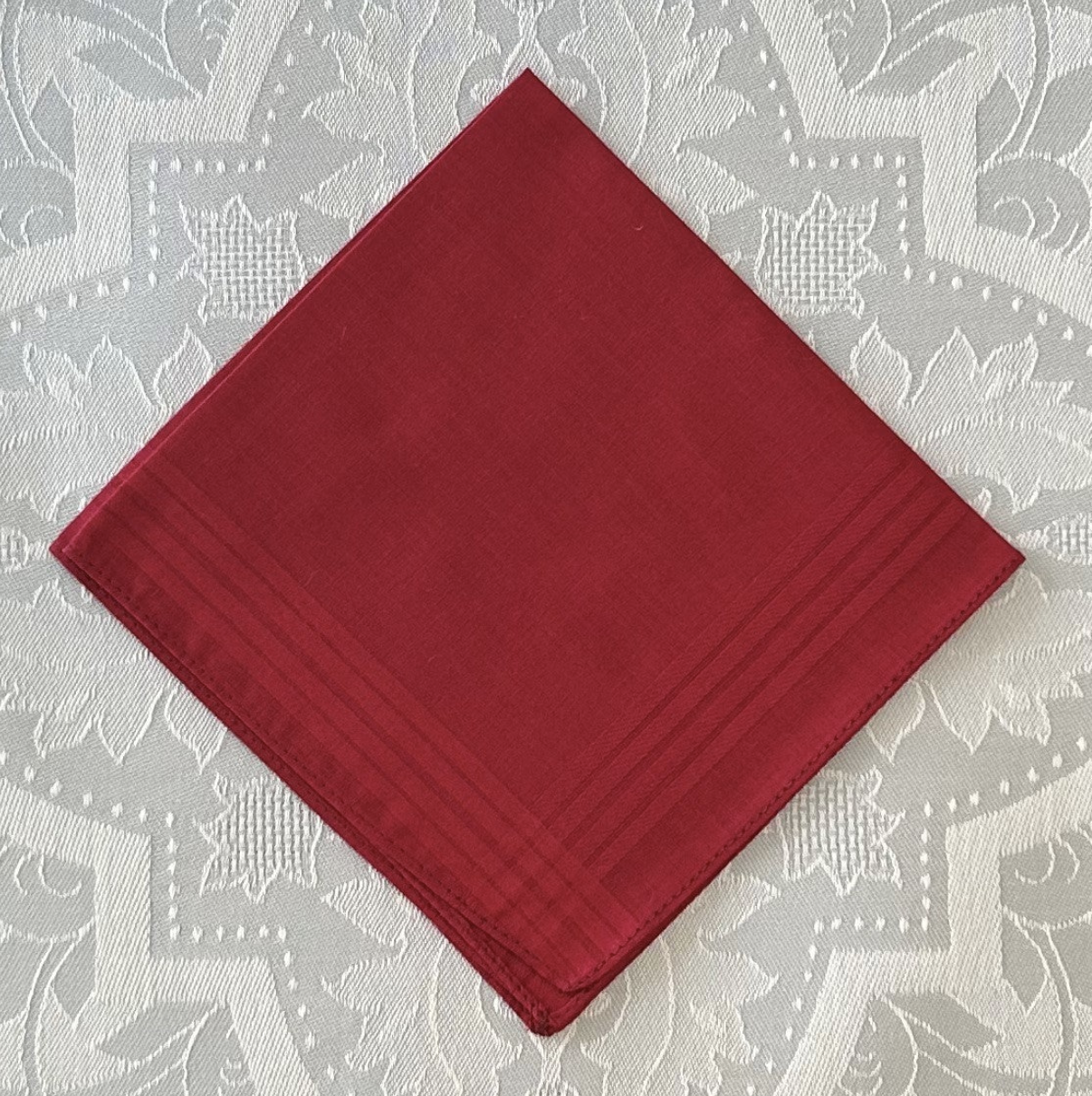
On Thursday, two days after the US election, I cycled to my volunteer gig at the craft store. Perhaps one of the last good-weather days for bike riding. No rain, trees shedding their remaining coloured leaves, a bright blue sky. The wind rushed into my face as I flew along the bike path, and my eyes started to water, which set forth a gush of tears because grief is like that. It sits inside you—a tight, impacted ball, unexpressed—and then some external trigger unfurls it like a flag. Eyes watering from the wind or a song or a television show. I cried all of the way, tears streaming down my cheeks, salt drops flying back into the wind that gave birth to them. I was happy to find in my purse a ruby-red cotton hanky to mop up the tears. Double delight.

I locked my bike then stopped at the Parsonage Cafe and waited for my order, a latte and warmed blueberry muffin with butter. The latte came first, and I asked about the muffin because I thought maybe they’d forgotten about it. The friendly counter guy said, “oh, it takes a few minutes because they warm muffins in the oven.” I smiled. When I got to the craft store, I turned on the lights and heat, cashed in, then took the warm muffin out of the brown paper bag. Two halves fell open, steaming. Salty butter had melted into the crumb to mix with soft, warm blueberries. I was expecting a little plastic tub of butter and a plastic knife, so what a delight. Thank you for doing it, delightfully, the old way. Like cotton handkerchiefs instead of Kleenex.

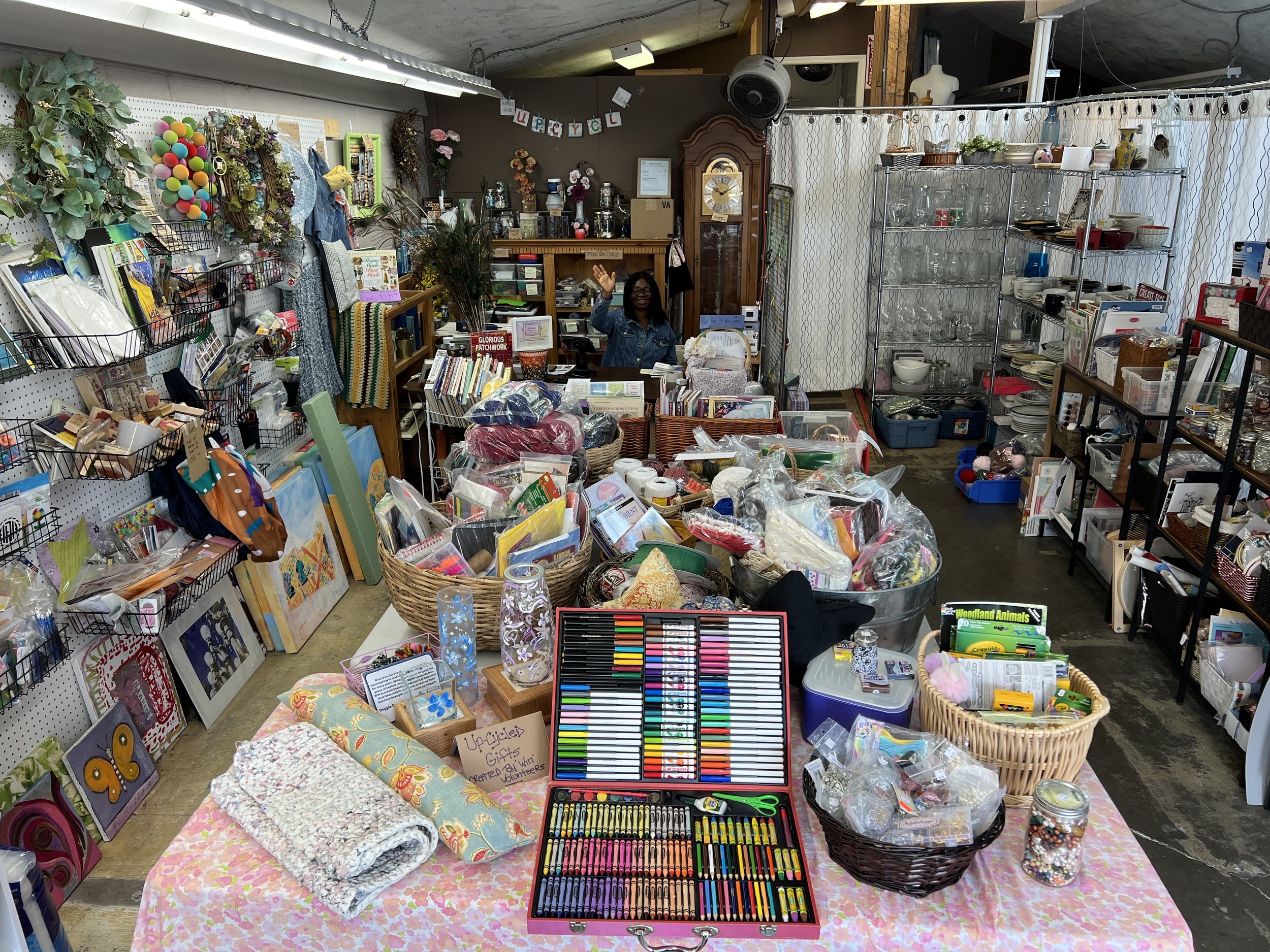
During my shift I met interesting people, as I do every week. Two women came in, one with an unusual looking buggy, not a baby buggy, but a pet buggy. Two zipped, mesh compartments were stacked on a wheeled frame. She came up to me immediately. “I have my two cats with me, is that okay?” 

“Of course. I love cats. I’ll come to meet them.” 

“This is Ronny, and this is Jimmy. Jimmy is a bit shy; you can see he’s at the back.” I could see two lean black cats—brothers I determined later—through the fine mesh. Ronny sniffed the hand I lay against the fabric. Jimmy just watched with golden eyes. 

The two women browsed the store, staying a good long time. Other customers came in and out. A few years ago, I would have fretted over it. I actually didn’t know what the store policy was regarding animals. Was it okay that cats were in the store?  Did other customers have allergies? Did somebody dislike cats? Were we breaking a rule? But I didn’t say a thing, and I didn’t worry. (I recognized, later, the delightful absence of worry). I just listened to the lovely chatter that fills the store and makes me want to come back and work another Thursday, even as I constantly wonder if it’s the right volunteer gig for me. 

Women (mostly) talking about life and about their crafts and projects, oohing and ahhing over the treasures they find. Often chatting with me about what they’re working on, a crone stick or a pocket skirt or an appliqued cat pillow. Or they tell me whom they are buying materials for—a daughter learning to knit, a grandchild who loves stickers. 

The cat owner talked with her friend, but she also spoke periodically to her cats. “Oh, Jimmy, what a nice stretch you’re having!” And “You boys are so good, so patient.” When she came to pay, she had a bag bulging with Christmas foam shapes. “I’m giving these to our craft leader at the church; she’ll have the children making wonderful things.” I don’t know for sure, but I hazard a guess that she is one of those revered creatures, a childless cat lady, the most generous and loving people around. Delight!

After my shift, I cashed out, set the alarm, turned the key. I unlocked my bike, then looked up at the darkening sky. It was only 4:15, but daylight savings is over and we’re in for early nights. I looked at my bike light and wondered how to turn it on. Somehow, I had forgotten. It had been months since I’d used it, not needing extra light during my summer rides. I tried a few things, but nothing worked, so I walked half a block to North Park Bikes. Leaving my bike just outside, I went into the store’s lower level where they do repairs. A friendly guy with a ginger beard asked if he could help. “I’m kinda embarrassed, but I’ve forgotten how to turn on my bike light.”

 “Oh, don’t be embarrassed, just bring it in, we’ll figure it out.” I wheeled it in, and the first thing he tried (keep steady pressure on the + button) worked. “Thank you sooo much!”  A simple, delightful thing: help asked for and freely given.

At the end of the day, I had many delights to gather (I have been inspired by Ross Gay’s Book of [More] Delights since I finished it a few days ago; it’s just as good as the first book). Tears released into the wind, cotton hanky, butter melting into a warm muffin, sweet customers, absence of worry, childless cat ladies, help with my bike. 

The Untangler

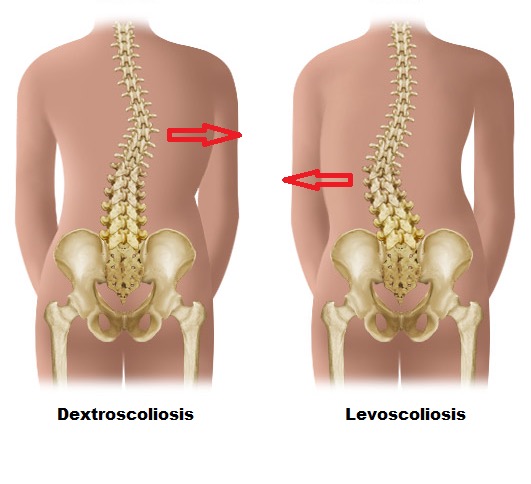
I can’t remember a time in my life when my right shoulder wasn’t lower than the left one. Its slope was unremarkable; this is just the way I am. Then, in my early sixties, a physiotherapist told me I have scoliosis; perhaps I’ve had it since childhood. I didn’t pay much attention. A year later, a Thai Massage practitioner sat behind me on the mat and looked at my twisted spine. “What happened to your back?” she said bluntly. This year it’s been harder than ever to stand up straight. I have daily lower back pain. I feel deformed, out of balance. I used to be five foot six, but during my last doctor’s appointment, I discovered I am now five feet four inches tall. A recent CT scan confirmed it: I have moderate lower thoracic/lumbar dextroscoliosis, a right-bending curvature of the spine. It’s time to figure out what to do. 

I started reading about the condition—S-curves, C-curves, thoracic and lumbar varieties, and treatments, including the Schrott method. I’ve looked at archival black-and-white photos of crooked backs, at racks and braces that looked like torture devices. I started doing yoga for scoliosis and made an appointment with a physiotherapist who specializes in treating this complex condition.

As I wait for my appointment, I have mental work to do. My sister told me about Dr. Joe Dispenza’s website, where there are inspiring stories of transformation and physical healing through meditation. I started to think about how powerful our minds and imaginations are. For many years, my friend Diane has exercised her powerful imagination as a force for good. She has had rheumatoid arthritis since she was 13 and uses visualization to help with her pain. “One of my most powerful visualizations is the dragon, which I call upon during episodes of severe pain,” writes Diane. Describing the creation of her dragon in 2010, Diane writes, “As I surrendered to the flow of molten sensation, the dragon appeared, and I clung to its fiery body until our energies merged. The pain and strength became one, flowing through us as we surrendered to the sensations.”

This visualization has transformed the way Diane sees pain—no longer as an enemy, but as sensation. Pain, she writes, is “neither ‘good’ nor ‘bad’—it simply exists, a presence I accept at the core of my being.”

Diane's AI created image of a woman riding a dragon.
Diane began creating AI images and digital iPad art to visually express what pain feels like in her body, hoping the images resonate with others experiencing pain and disability. This is one of Diane’s AI created images.

Another friend, Janis, visualizes protector angels to bring calm. When her schizophrenic daughter was in crisis, she imagined an angel lovingly holding her adult child, an image that helped her to sleep. 

Anybody in a twelve-step program knows the support that one’s imagined higher power can provide. It doesn’t matter if you visualize the ocean, the forest, a goddess, or your community as your higher power (it’s yours, after all)—the image you create can soothe, comfort, inspire, and heal.

I am reading Dr. Gladys McGarey’s book, The Well-Lived Life: A 103-Year-Old Doctor’s Six Secrets to Health and Happiness at Every Age. In one chapter, she writes about having breast cancer in her nineties. She combined visualization with a lumpectomy and radiation, knowing that how she thought about the tumour played an important part in healing. She started talking to the lump in her breast that she pictured as a “pretty little hand-tooled suitcase.” She spoke kindly to it: “Darling, we’re going to have a family reunion . . . . If there are other cancer cells in my body, call them together, and tell them to get in the suitcase and come on the trip.” I just love that image of the pretty suitcase and all the gathered cells going to a family reunion. There are no enemies inside of us, just family members, and some of them need to regroup elsewhere (or straighten up). 

Book cover of Gladys McGarey's book

Visualization is a powerful tool. 

As I thought about Diane fusing with her fiery dragon, the huge feathery wings of Janis’s angel, and Gladys McGarey’s darling hand-tooled suitcase, I wondered which image, combined with physiotherapy and exercises, could help me straighten my spine. 

I remembered a recent dream that—at the time—struck me as important. My husband Michael and one of my sons accompany me to a job interview. An unusual scene greets us: We are in a large, high-ceilinged space, with brown leather sofas and armchairs spread throughout and around the circumference of the room. My husband and son are told to sit on one of the outer sofas. It’s a public interview; many people are there as audience. A group of men and women at a long table interview me while I sit before them in a butter-soft armchair. The interview is short. I’m told that I have the job. I am the new Untangler. Applause crashes through the air. Everybody is so happy for me! I got the job as the Untangler! One interviewer remarks that I didn’t even need a graduate degree to get this job. Lucky me. 

When I woke from the dream, the unusual noun, untangler, floated free and visited me throughout the day. Now I am thinking of it again—what does it mean to be an untangler? 

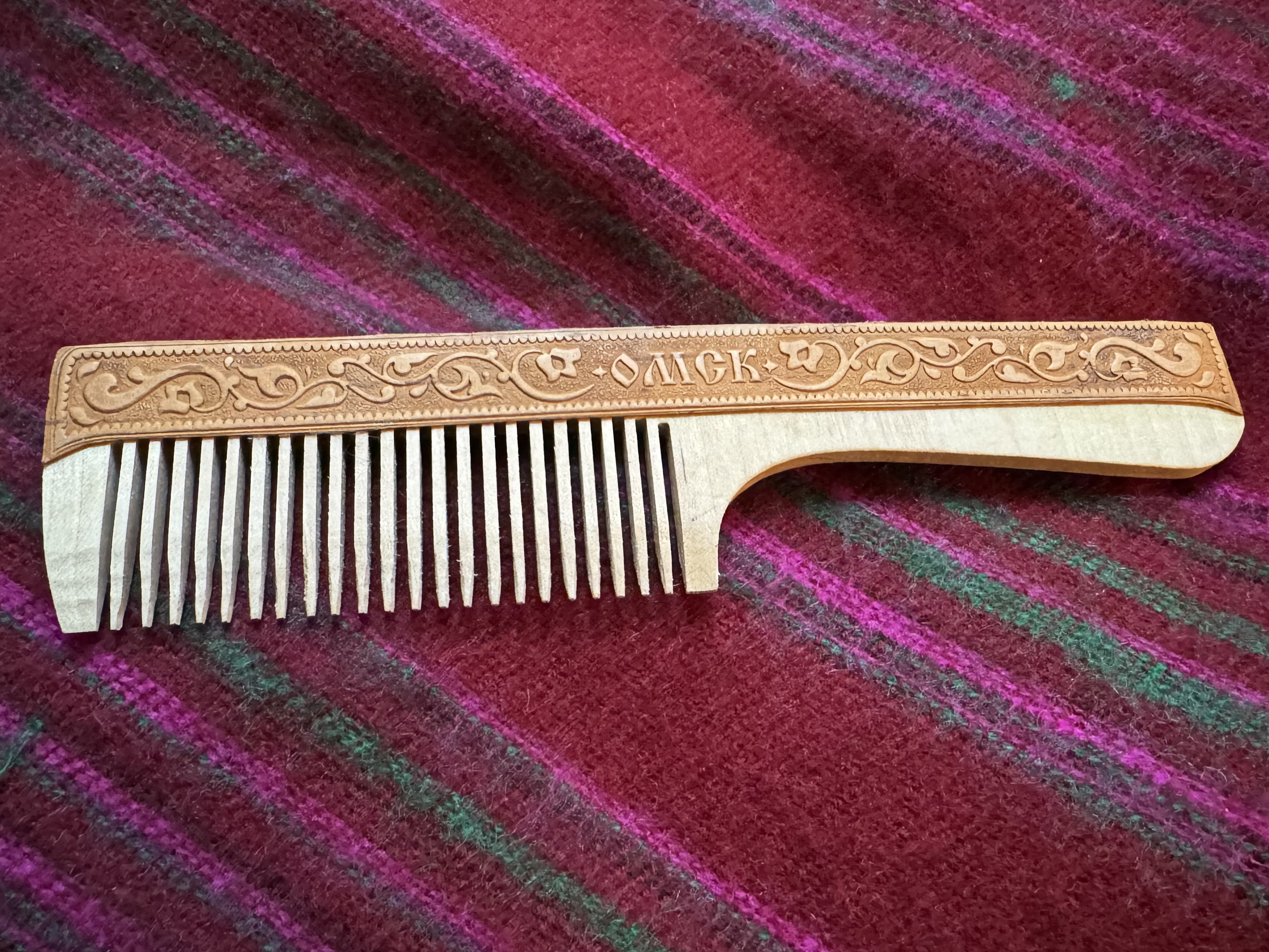
The comb is the foremost untangler, a simple yet effective tool. The earliest known comb was discovered in Syria and dates from 8,000 BC. Made from animal bone, it looks much like the combs we use now, with a handle and teeth. You can buy a cheap black plastic comb in any drugstore, but I am thinking of a more elegant object: the carved wooden comb my friend Olga gave to me. She brought it back from Omsk, Russia, her hometown. I keep that comb at my desk to remind me of her, but lately, I have been using it to comb my hair. To comb is to untangle, to straighten. 

A wooden comb with the handle carved with Omsk and garlands.

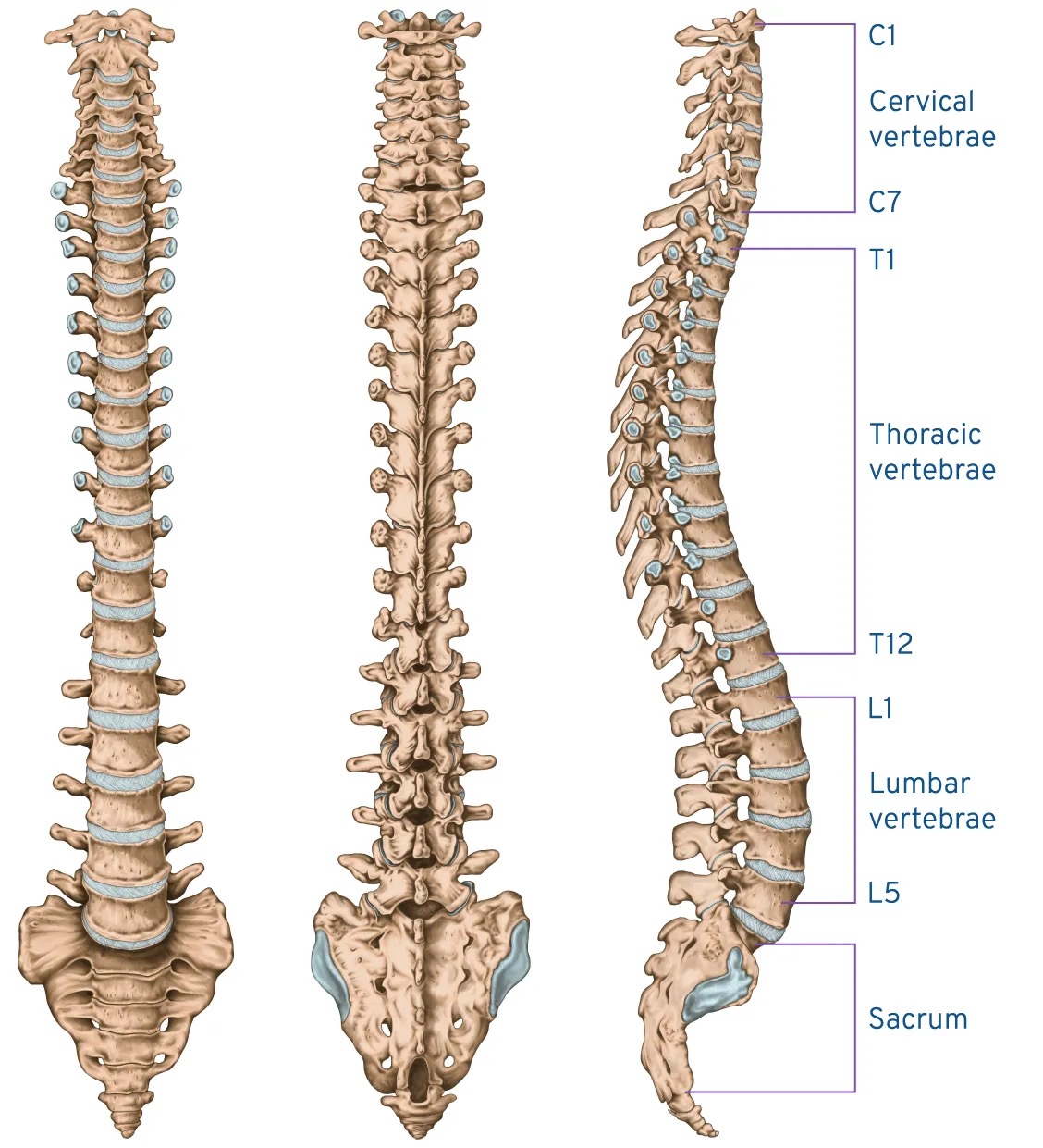
I choose to imagine that wooden comb combing my spine as I walk and when I meditate: long, smooth strokes. (Don’t get too literal; my knobby vertebrae would never fit between the teeth.) When the teeth meet a tangle of resistance, I tug a little, gently exerting pressure, pulling the spinal cord out of its curve. Combing the cervical vertebrae then to the thoracic—T1 right down to T12, then combing through lumbar 1, pulling a bit harder at L2, which—my scan shows—has slipped forward six millimetres to press the nerve, then L3 right down to the sacral region. Comb, comb, comb.  Straighten, darling spine, straighten. Who knows the power of the mind, the power of an image? I was hired as the untangler, so every day, I do my job. 

Anatomy of a spine: shows the cervical, thoracic and lumbar vertebrae sections.

Credits

Types of scoliosis: https://www.hudsonvalleyscoliosis.com/what-is-scoliosis/types-of-scoliosis/

Thank you to Diane, who gave me permission to share her dragon image and story and to Janis, who gave me permission to share her angel story.

Anatomy of spine: https://mxnspine.com/anatomy/

Books

Last night in bed I was reading Dreyer’s English: An Utterly Correct Guide to Clarity and Style, an amusing book by Benjamin Dreyer, a Random House copy editor. I happen to be two weeks into my final six-week course for Simon Fraser University’s Editing Certificate, so my late night reading aligned with the language-focused mood I’m in. I was enjoying Dreyer’s humour when I read this sentence, which made me sit up in bed:

“You might—or might not—be surprised to learn that many copyeditorial man-hours have been expended over the decades as to the correct construction of the common vulgarity—and an enchantingly common vulgarity it is—used to describe an act of fellatio.”  After the term “man-hours” was an endnote: “I know I’m supposed to prefer and use ‘person-hours’ or ‘work-hours.’ I can’t, so I don’t. Please forgive me.”

It wasn’t the discussion of whether or not to use a hyphen with blowjob (Dreyer’s preference is no hyphen) that bothered me. I’m no prude (I hope). It was the insistence on “man-hours” without even trying to find an alternative. 

What about just writing “many hours have been expended by copy editors over the decades”? Such an easy way out of “man-hours,” a term that makes the labour of fifty percent of the world’s population disappear. I wonder if Dreyer is just paying lip service to the requirement of conscious editing, editing that does not harm or marginalize. Karen Yin created The Conscious Style Guide, such a useful resource. Countless other editors and writers have worked to use language carefully and critically as a force of good in the world. Dreyer has power, privilege, and pull, and he could use these forces for good by making some small adjustments. 

So, there I was, lying in bed, irritated by “man-hours.” What about the millions of “man-hours” women spend breastfeeding? And that started me thinking of breastfeeding, women feeding their infants and toddlers with nourishment produced from their own bodies. Once I started to think of breastfeeding, scenes from two novels came into my mind, one from John Updike’s 1968 Couples and the other from John Steinbeck’s 1939 Grapes of Wrath. In both scenes, an adult man is sucking at the breast of a lactating woman. Updike’s scene is highly erotic (or at least, I found it so when I read it in my twenties), whereas in Steinbeck, the character Rose of Sharon is offering her breast to a starving man, an image I find disturbing. I’ve forgotten so much from the thousands of books I’ve read in my life. But those two scenes have stayed with me throughout the years. 

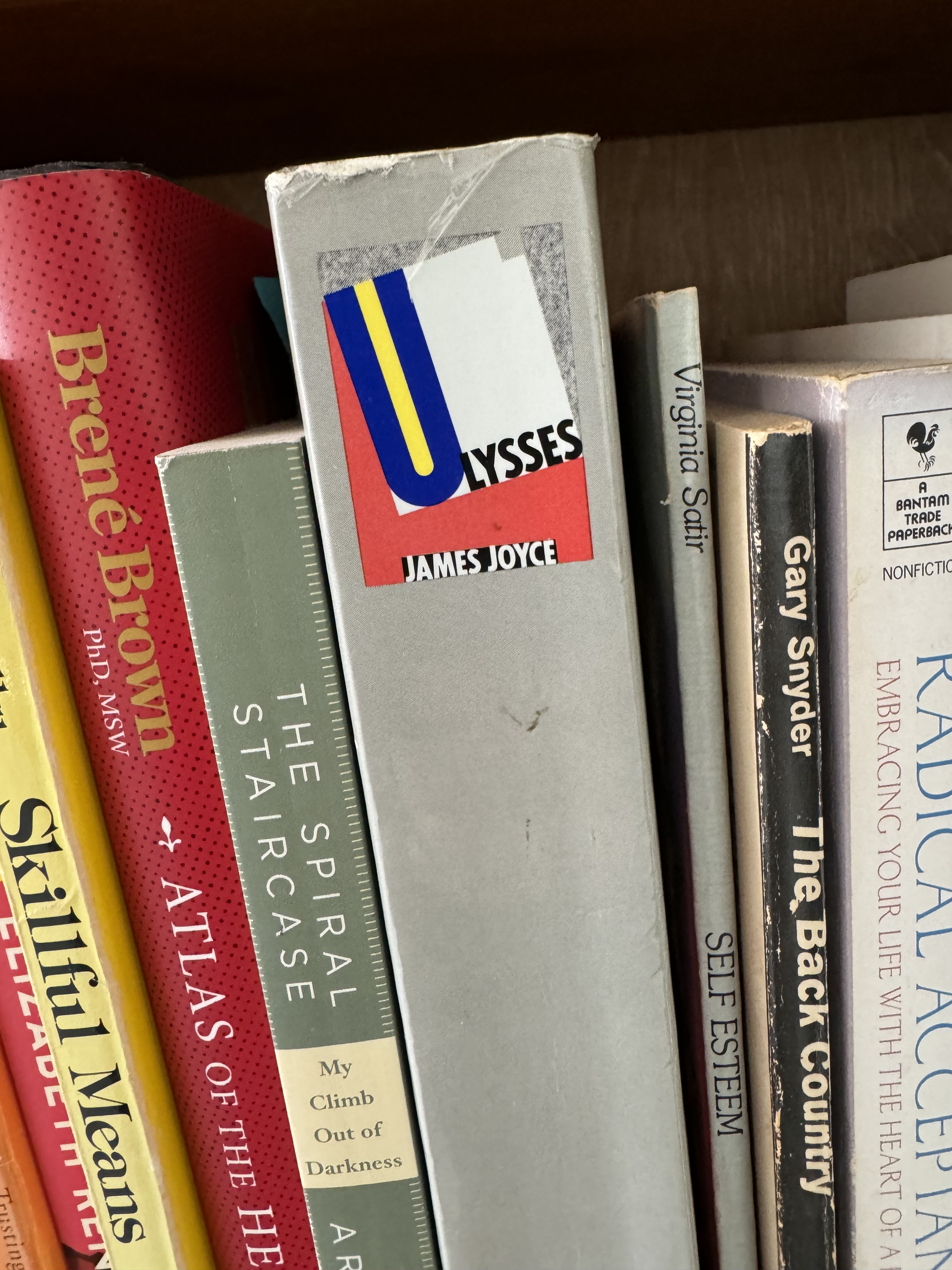
In our new house, we have a bookshelf at the top of the stairs, so every time I ascend to the main living space, a patchwork of book spines meets me like an old friend. The elongated blue U on the thick spine of James Joyce’s Ulysses always catches my eye. My mind likes to repeat itself, going back to well-trod memories, and so I return over and over—with nostalgia—to the summer in grad school when I studied that great modernist novel. It was an intense, six-week seminar course. A small, intimate group of students, mostly women, met for three hours, twice weekly. Each student had to present several times on chosen topics. I was working hard. Add to my hard work and yearning for an A, the presence of a provocative, flirtatious professor who created a highly charged atmosphere in the hot seminar room.

I was immersed in the complexity of Joyce’s schema for the novel, based on Homer’s Odyssey, and by turn delighted then confused by his fresh, arcane, mysterious writing. I could slide down rabbit holes every day, trying to parse meaning. 

One day, I took the boys to the beach at Thetis Lake and brought the novel with me. We went in for a swim, and as we came up to our beach blanket where I had laid Joyce’s novel, my six-year old son, who was learning to read, said to me, “Why are you reading a book called Useless?” I laughed. I could see how his mind’s eye read useless; so many of the same letters as Ulysses. I reported this to my professor next class, and he couldn’t stop laughing. He thought what my son said was inadvertently profound, the title Useless pointing to the modernist idea of the inutility of art: art for art’s sake. 

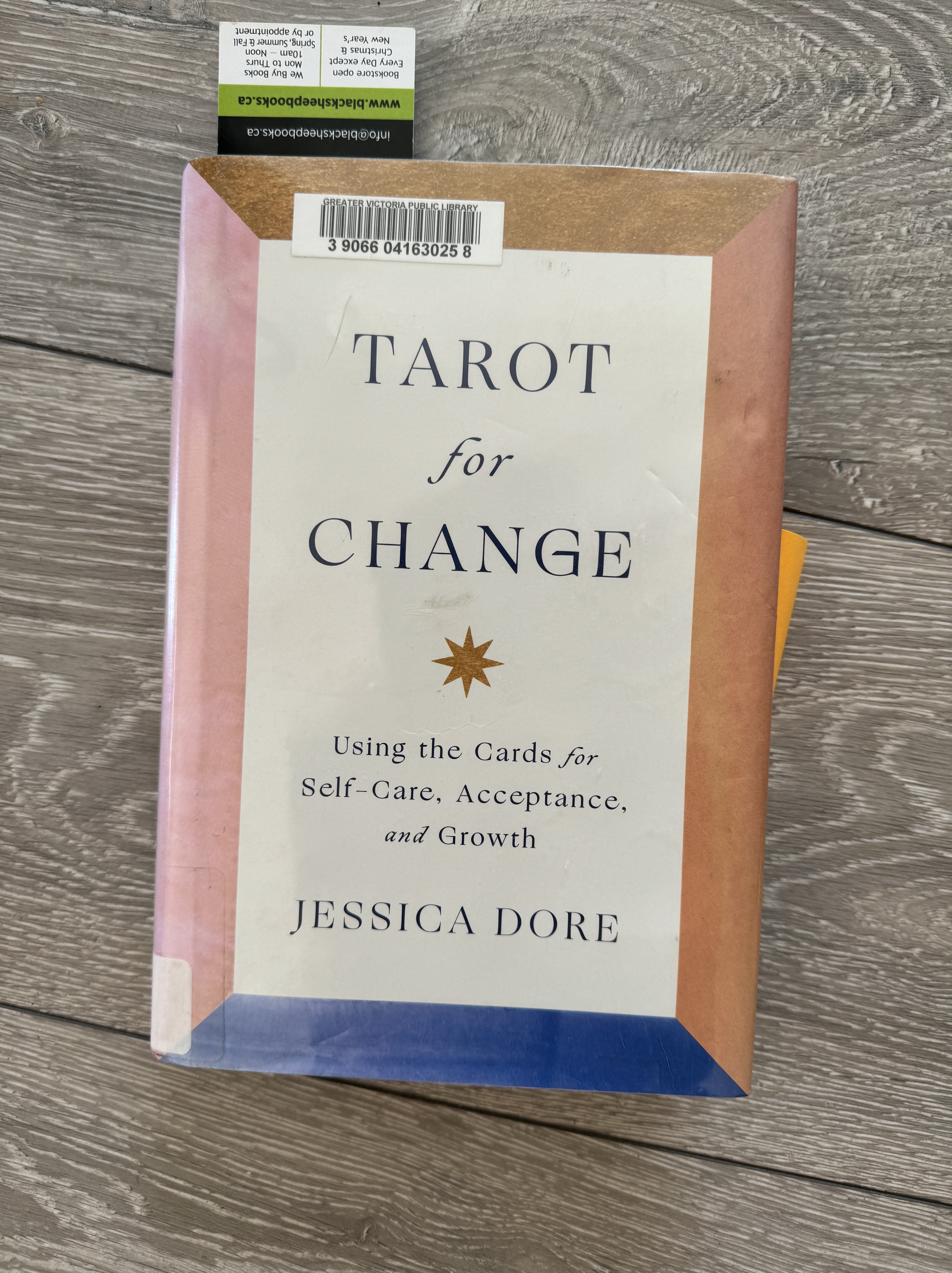
In the mornings, I’ve been trying to not grab my phone immediately, but instead, to read and write. I’m reading Jessica Dore’s Tarot for Change: Using the Cards for Self-Care, Acceptance, and Growth. I first discovered Dore when my husband, Michael, told me about her newsletter, Offerings, on Substack. I love the way she thinks about books and tarot and life, so I borrowed her book from the library, and it’s on the coffee table, ready to dip into whenever I sit down for a spell. It’s funny, the actual tarot card she is writing about (and she writes about all 78) doesn’t matter much—each page has some nugget of wisdom, wisdom from her life experience, and from theology, psychology, literature; wisdom drawn from C.G. Jung, D.W. Winnicott, and newer therapists like Marsha Linehan and Steven Hayes. I enjoy the nuggets. 

Here’s an example of a Dore nugget—this is from her comments on the Empress:

“The Empress represents nature and is, in my experience, one of the most misunderstood arcana in the tarot. People love her but can’t put a finger on why. I think it’s that we long to be in our bodies but have forgotten how, and she shows us what it would feel like if we could. Many of us think of the wild as something ‘out there,’ and I think that’s sad for us. It shows how cut off we are from the fact that somewhere deep down and old we are still the wild, and the body—with all its cycles and rhythms and ebbs and flows and generation and degeneration—is proof.” (pp. 47–48) 

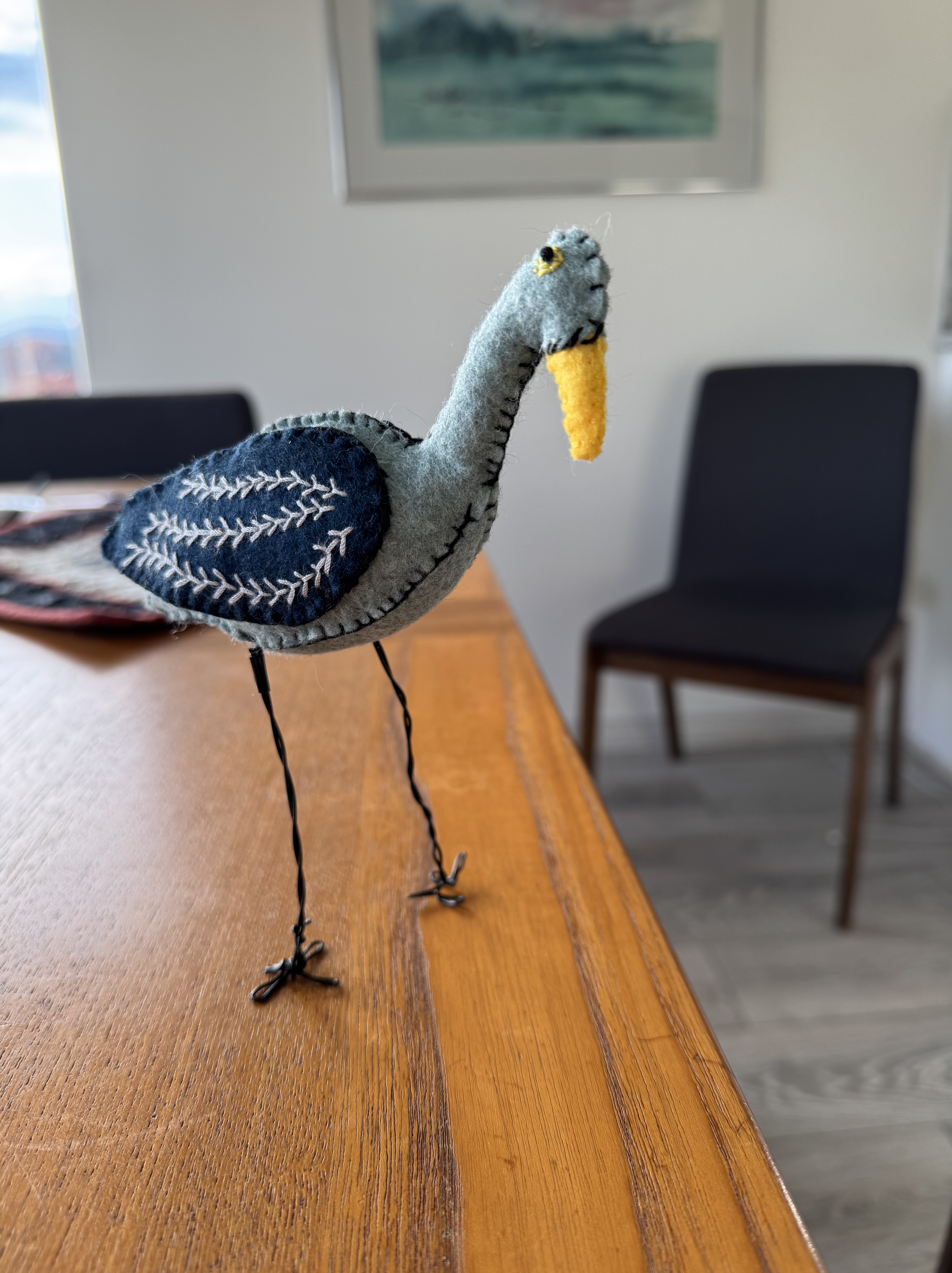
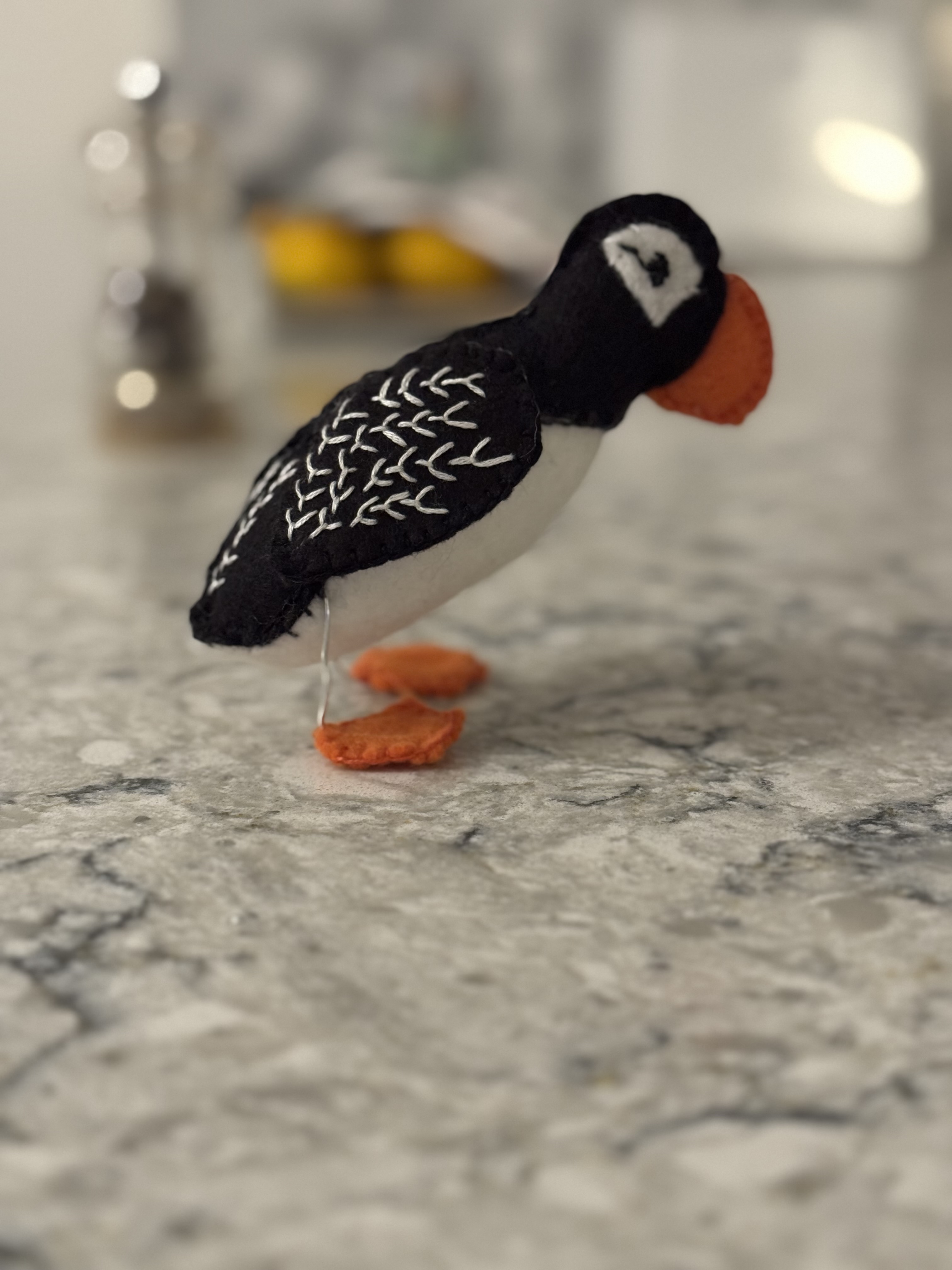
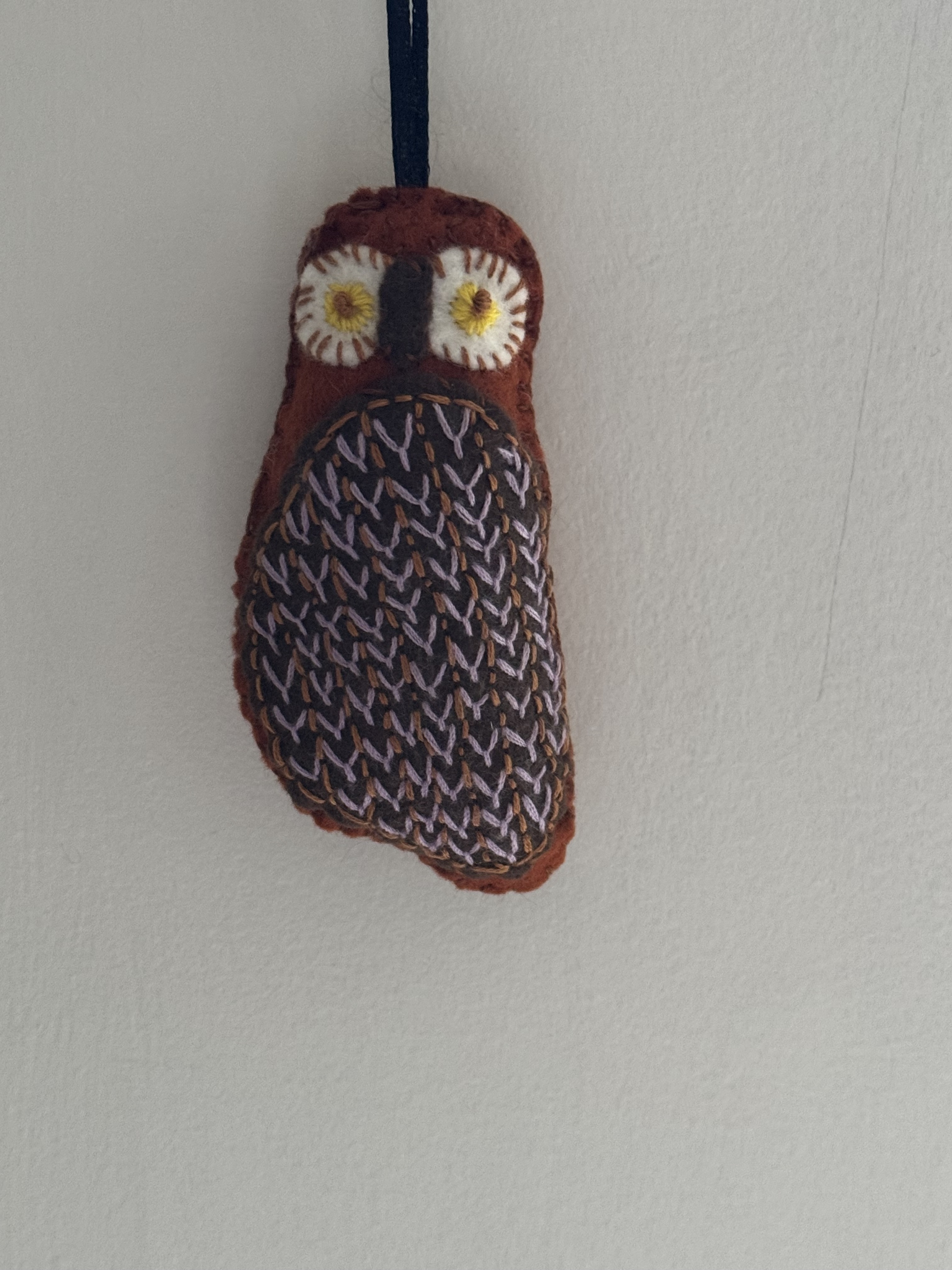
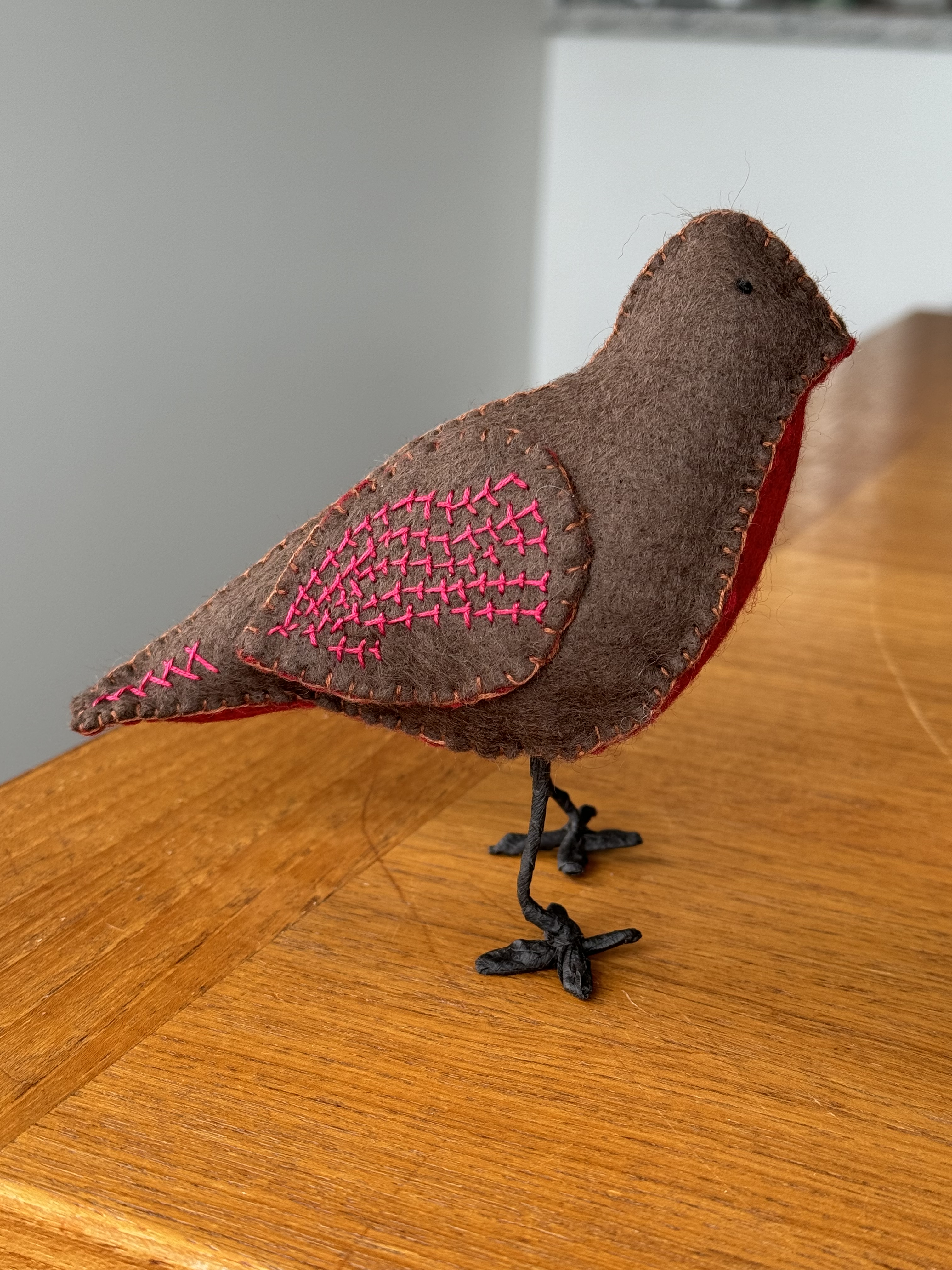
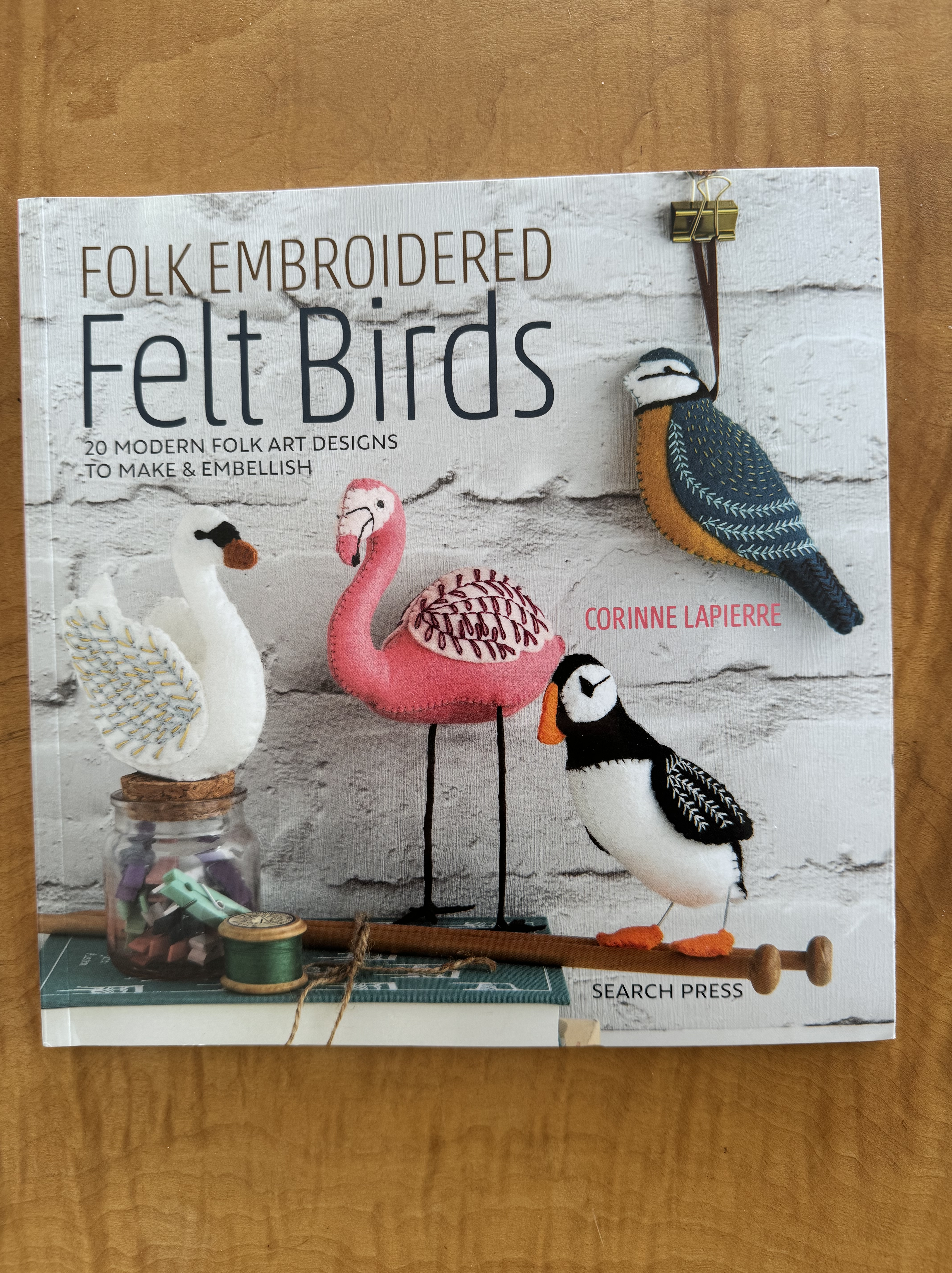
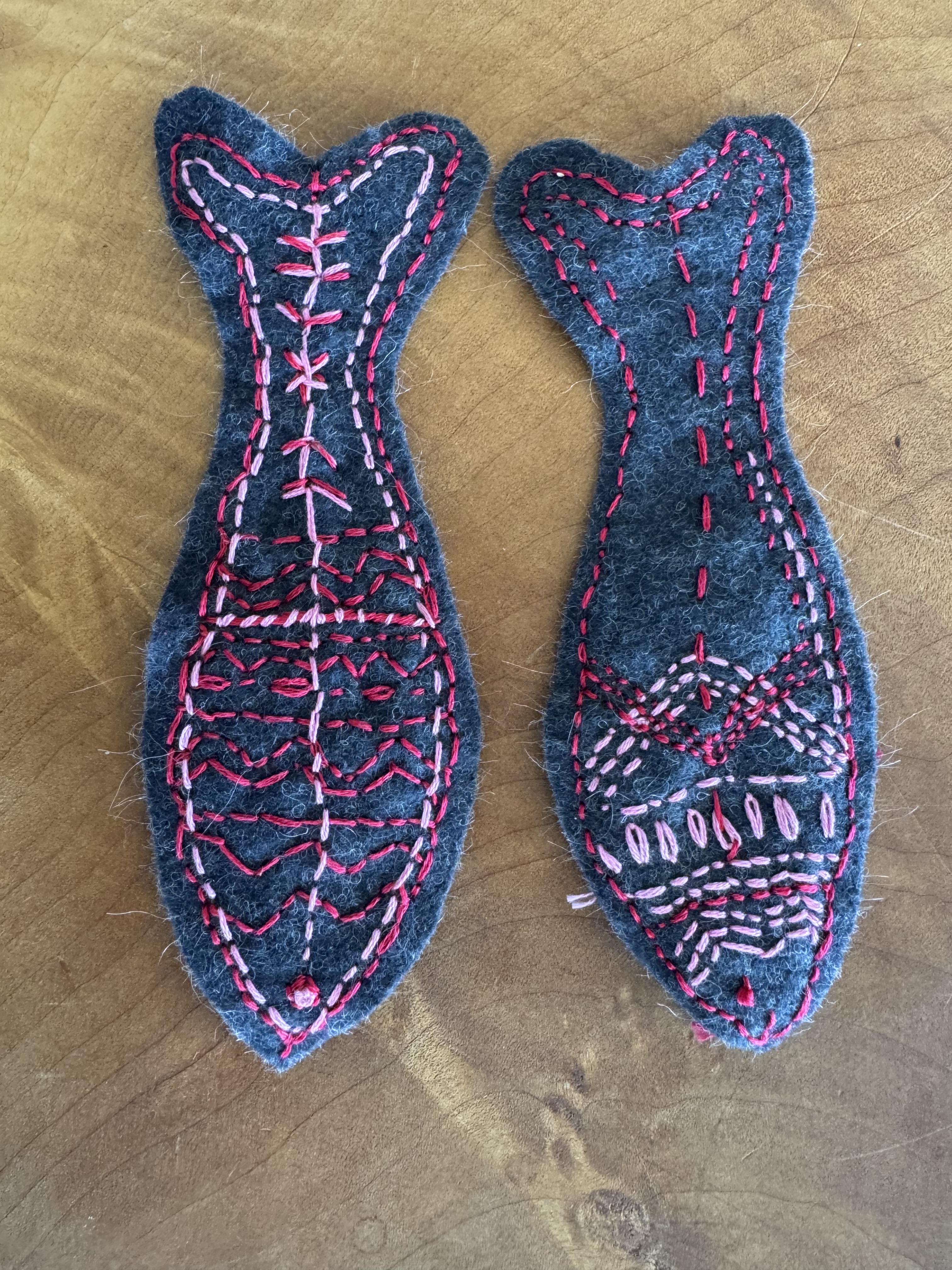
Folk Embroidered Felt Birds: 20 Modern Folk Art Designs to Make & Embellish by Corinne Lapierre. I took this book out of the library and promised myself I’d make two birds before it was due back. I like embroidering at the end of the day, after my mind has been busy with thinking, editing, word stuff. Nice to just sew coloured thread in pretty designs. I met my modest goal—I made a wonky robin and a not-bad pigeon. Then I got a notice the book was due and couldn’t be renewed, as somebody else wanted it. I made a heart for a friend’s birthday, then another heart with a favourite quotation on it, “still, flowing water” from Ajhan Chah, which is to remind me of the paradox that mind is both still and flowing. I don’t entirely understand his talk on this topic, but I still find it inspirational. Then I took out another book by Lapierre, Fabulous Felt, and I made some fish. But I realized what I really want to do is to make all of those twenty birds from her felt birds book, so eighteen more. And it seems that everybody wants the library book, so I ordered a copy and it arrived today. Lots of birds to come!

Gift Horse

I was peeling off my wet swimsuit after a sauna. A woman sat on the bench near me, her girth spread wide, a walker placed next to her. She was holding forth to two other women, telling a tale of animals visiting people in hospital. First, it was about the little dog she’d take regularly to visit her mother, who, after many months of illness, had died. Stroking the soft fur gave her mother solace. And she’d heard somewhere that there was a horse. No, really, she insisted, there was this horse who visited hospitals. She’d heard that an orderly led the animal down a hallway, and the horse stopped at one room and wouldn’t budge until he’d visited the man lying there. The man was dying of cancer. 

One of the women was trying to get away from this monologue. You know how people stand at the ready, waiting for a small break in a stream of words so they can politely exit? She stood at the edge of the lockers, fully dressed, body ready to spring. The other woman, still in her swimsuit and sitting beside her large friend, seemed rapt. The rapt woman commented softly, “Oh, the horse could smell the cancer.” This remark seemed to be the thing that released the one who wanted to flee. She took off with a wave of her hand. 

So apparently, the horse spent a long time visiting the man. As I rolled my suit down over my damp breasts and belly, I imagined liquid brown eyes the size of dessert bowls, a fringe of moist, black lashes, the equine head leaning over the bed as the man’s transparent hand stroked the muzzle. The hospital bed would be high, high enough so they could have skin-to-skin contact, the chemo-ravaged man tilting forward to connect with the curling lip. A horse’s kiss. 

As I left the change room, the large woman was still talking about animals in hospitals. I think she’d moved on to other kinds of animals, but I couldn’t get it out of my mind: the image of an auburn horse with a white blaze on its forehead, a huge animal, perhaps 16 hands, rough mane flipped to one side, his bulging legs so close the dying man could run aching hands over those velvety pillars. I could see the horse nuzzling the man, and then standing patiently, quietly by the bedside. The clock ticks, the nurses click by, machines gurgle and beep. The horse stands, a living mountain, a witness to the man sleeping.

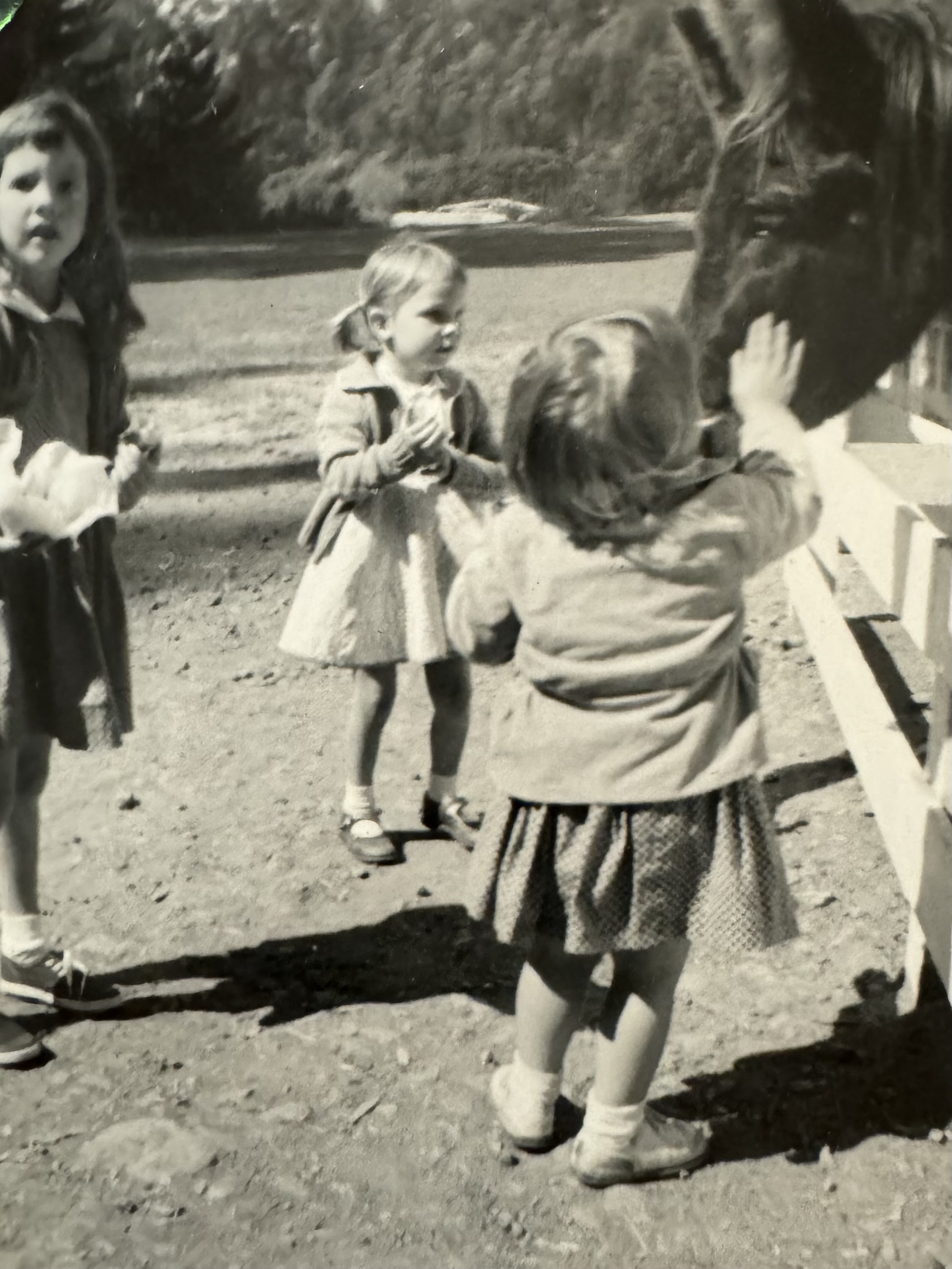
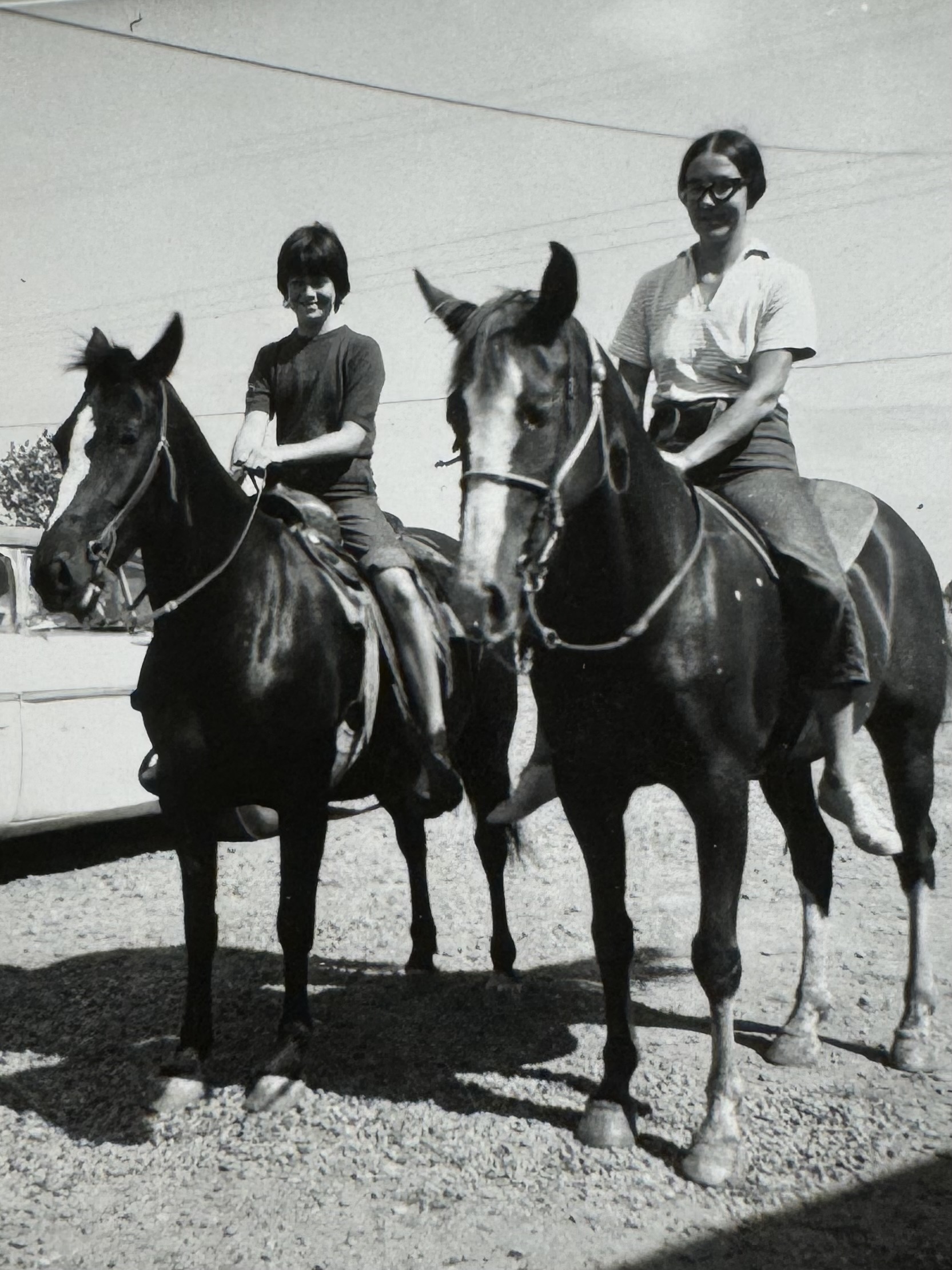
I thought of horses. We’d loved the horse books, Black BeautyMy Friend Flicka. My aunt had a farm in Sacramento we visited as children; the horses were so tall, they scared me. The horses and ponies at the Children’s Farm in Tilden Park seemed more benign, gentle. And then, much later, at my father’s farm, Poco (tall and dark red) and Blackie (small, black of course, unpredictable) lived for a time. We visited them in the barn and the fields, our pockets filled with apples.

The image of the horse in the hospital stayed with me. How did he fit in the elevator? Is the story true? I didn’t want to look it up, to Google “horses in hospitals.” I wanted it to be just what it was, a tale overheard in a women’s change room, a scene in my mind I could replay over and over. 

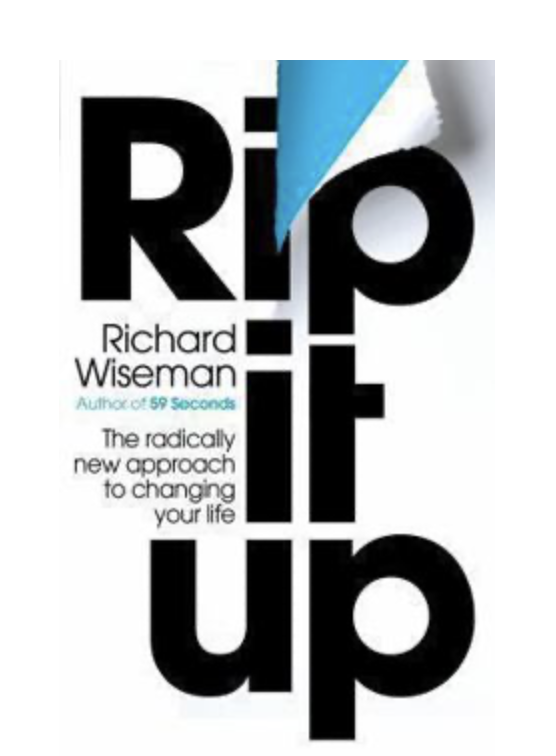
I had a sauna because it’s something that delights me, being held in intense heat, my body melting against cedar boards. I’d opened a little piece of folded paper earlier in the day, and on it I had printed “sauna and hot tub.” On my dresser is a white ramekin filled with little pieces of paper. And on each piece, I’d written something I love to do, something that delights me, gives me pleasure, makes me happy. Swim, visit a thrift store, sing, coffee with a friend, sit on the beach, write, buy flowers, visit a library, ride my bike. I’d responded to an exercise in a self-help book by Richard Wiseman, Rip It Up. The book is about the “As If” principle (based on the work of psychologist William James), and the premise is that behaviour determines outcome: if you smile, you’ll feel happier. If you do things you enjoy, you’ll enjoy life more.

Self-help books usually over-promise and under-deliver. There’s no shortcut to living a good life. Meditate, work on being aware, practice gratitude and compassion. Exercise, eat well, connect with people and nature, right speech, life of purpose. All that. But there is something of value here, in this book that I took from a shelf at the Spiral Café. This exercise has you doing things you love to do more often—your behaviour determines an outcome of feeling good, appreciating your life. 

A couple of days after I heard the story in the change room, horses were still on my mind. I thought of the saying, “don’t look a gift horse in the mouth.” I never liked this adage . . . it seemed like a trap. Wasn’t it okay to politely decline an offering? Must you take everything people give you? Could you say, “I’m sorry, I don’t have room in my house for the [fill in the blank].” And then there’s the Trojan Horse. Had the Trojans examined that wooden horse before accepting it, they would have discovered the Greeks, their enemies, hiding inside. So surely, we should be looking gift horses in the mouth?  

But I started to see the aphorism another way, not about material gifts at all. Disappointment might hold a gift if you tilt it a little in the sun. Struggling to let go of a disappointment, I wrote to a friend about it. In her wisdom, she encouraged me to “let go, let go” and “just enjoy what comes your way.” I like the simplicity of that: “Just enjoy what comes your way.” The man in the hospital bed, whether real or fictional, enjoyed what came his way. He welcomed the gift of a horse, as rare as a unicorn, visiting him on his deathbed. He welcomed the horse as naturally as you welcome the visit of a beloved relative, which of course the horse was—a beloved relative. With pure gratitude, pure love. 

Room With a View

We moved to a new house at the end of June. We’ve slowly started to hang pictures on the walls. My new favourite spot to sit is at one end of the blue couch, feet up on the old footstool that used to belong to my mother-in-law. I can see the Olympic Mountains from where I sit, through the big sliding doors to the balcony. The mountains are sharp snowy peaks one day, and ghostly shapes draped by veils of cloud the next. Today, the smoke from the Sooke fire smudges the place between land and sky. I like this view. It feels very expansive, big sky all around us hosting clouds and sun, mountains there like a mirage, a faraway dream. Just imagine it…my photos don’t do justice.

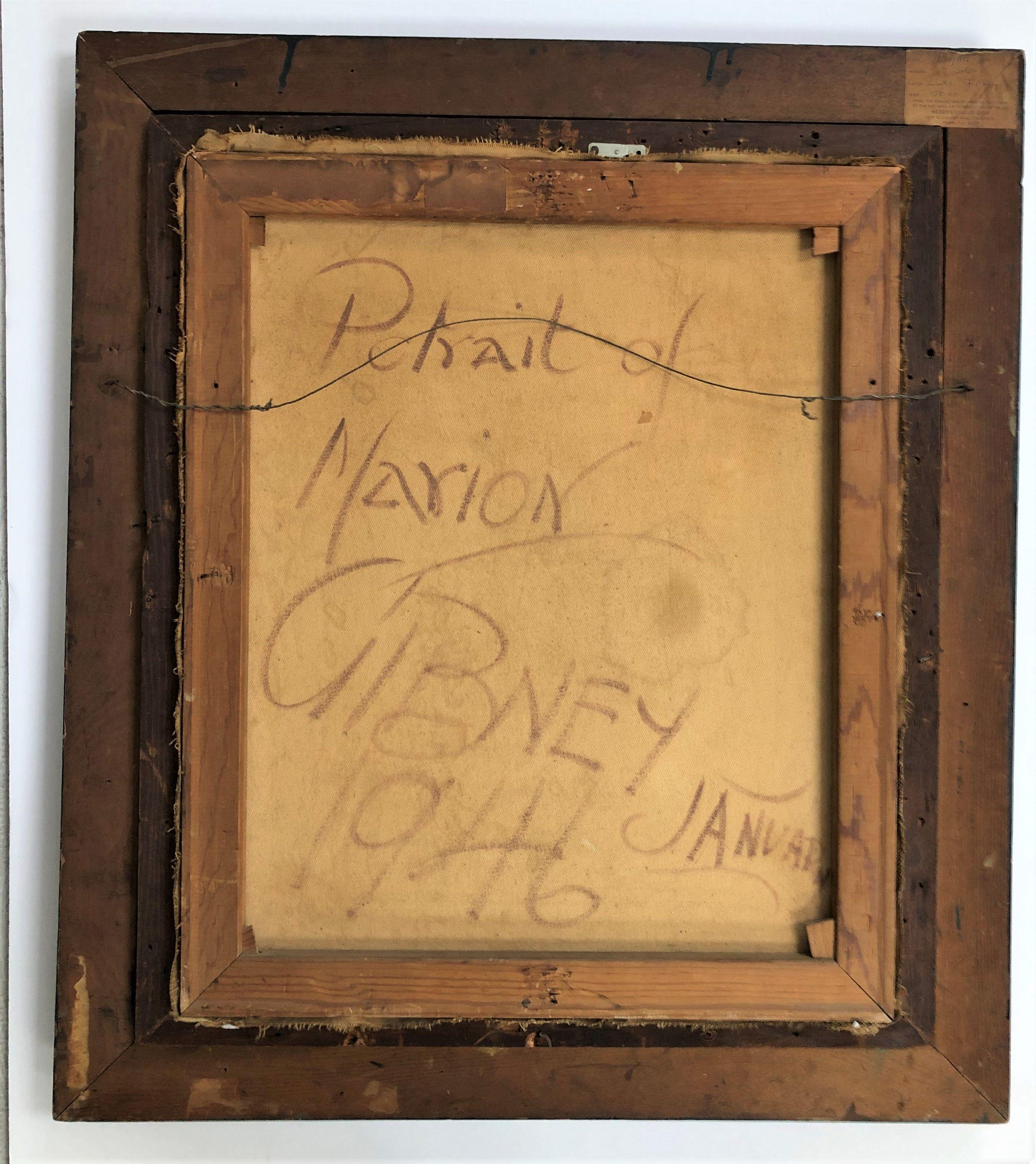
I sit on the couch and gaze at the interior view. High on the wall above the plant table we hung Portrait of Marion (1946), an oil painting by Irish American painter Luke Edmond Gibney who lived in the San Francisco Bay area (1904–1960). My mother loved many California artists, particularly those from the Bay area, where she lived for many years and where I and my sisters were born. She collected paintings by Joe Tanous, Robert Moesle, Emmy Lou Packard, Lou Gibney, and Geneve Rixford Sargeant as well as plenty of jewelry designed and made by Peter Macchiarini (jeweler and sculptor). 

I grew up with Portrait of Marion in our houses, and as a child, I pretended the woman in the painting was my mother. I both loved and was slightly scared of her—beautiful, aloof, pale, mysterious. And there is a ghost of a resemblance to my mother in Marion—the straight, very dark brown—almost black—hair. The remote, unreadable expression. Because I couldn’t see her eyes, I felt nervous. What was she thinking? Feeling? The piece unsettled me as a child, but I can be unsettled by a piece of art, yet still feel very close to it. 

The year after my mother died, I precipitously arranged an online auction to sell off most of her art collection, including Portrait of Marion. I am grateful now that only a few pieces sold, and Marion remained in our family for me to reclaim. Sometimes you can be in too big a hurry to get rid of stuff.

These days, I feel great affection for this dignified, unknowable woman.

Another lovely spot in our new house is to sit at the dining room table, where I have views of the water and the edges of Portage Park. The park is both meadow and forest bordering Thetis Cove on Esquimalt Harbour and is named for an old portage route between the harbour and Gorge waterway.

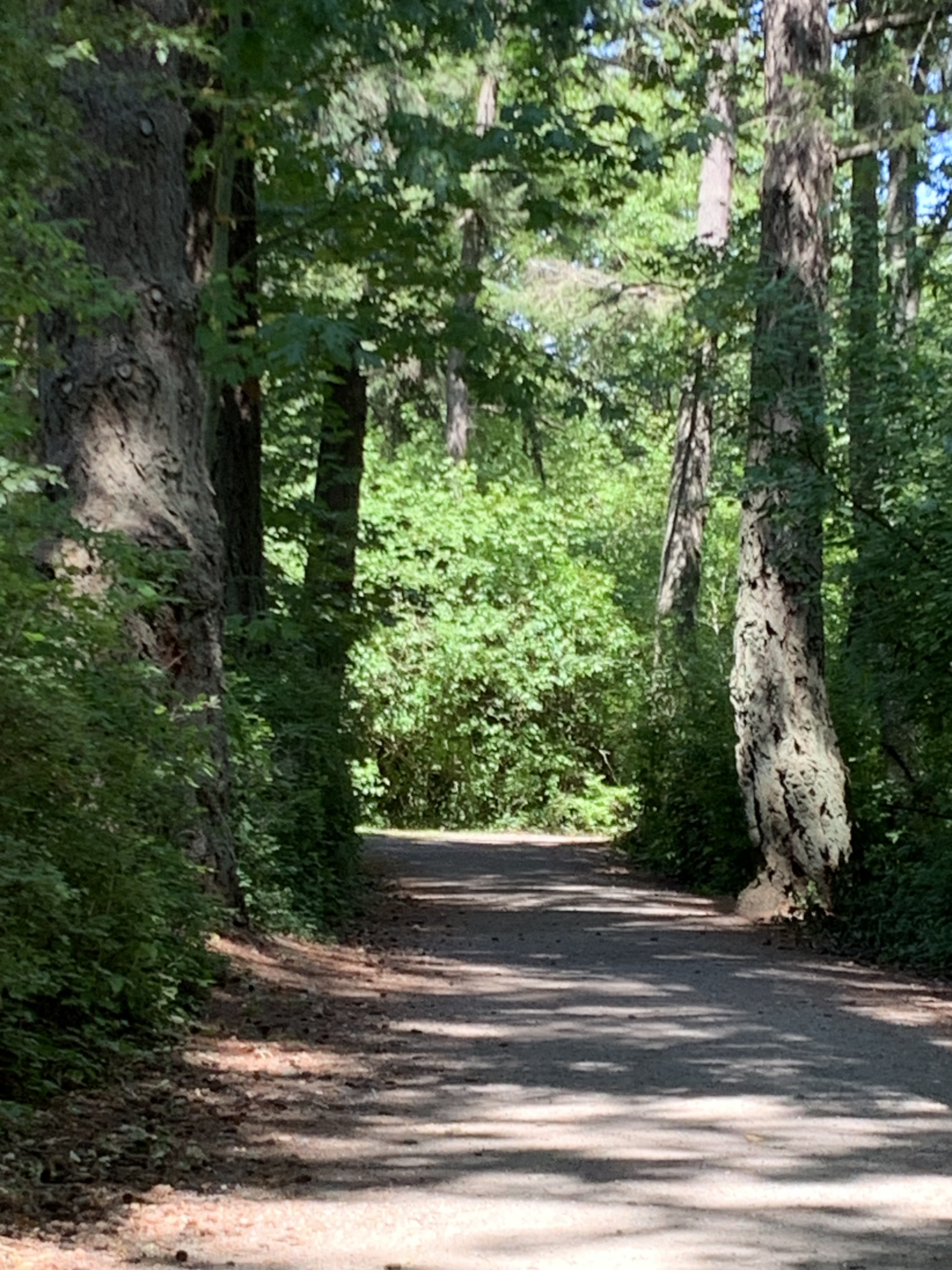
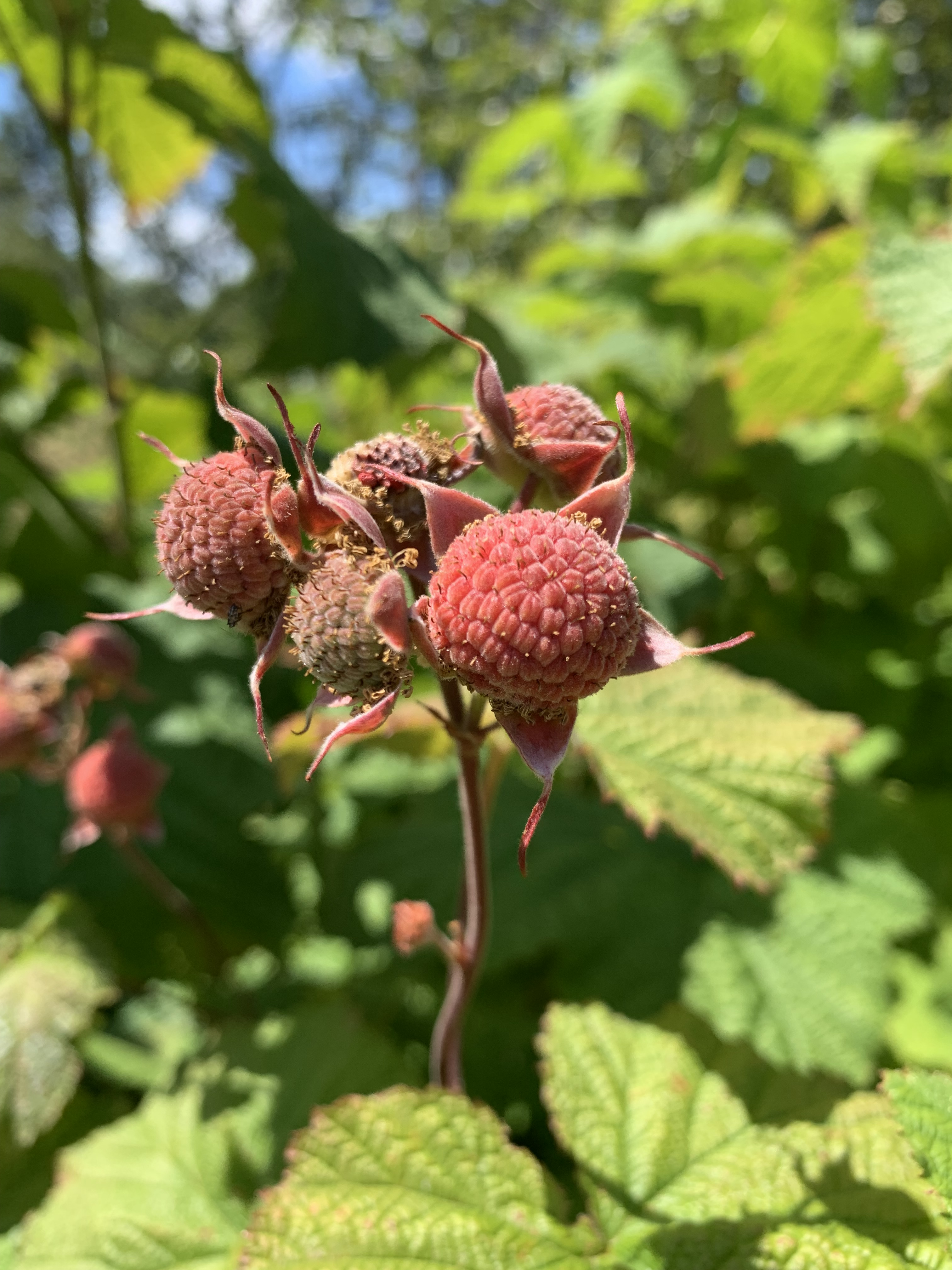
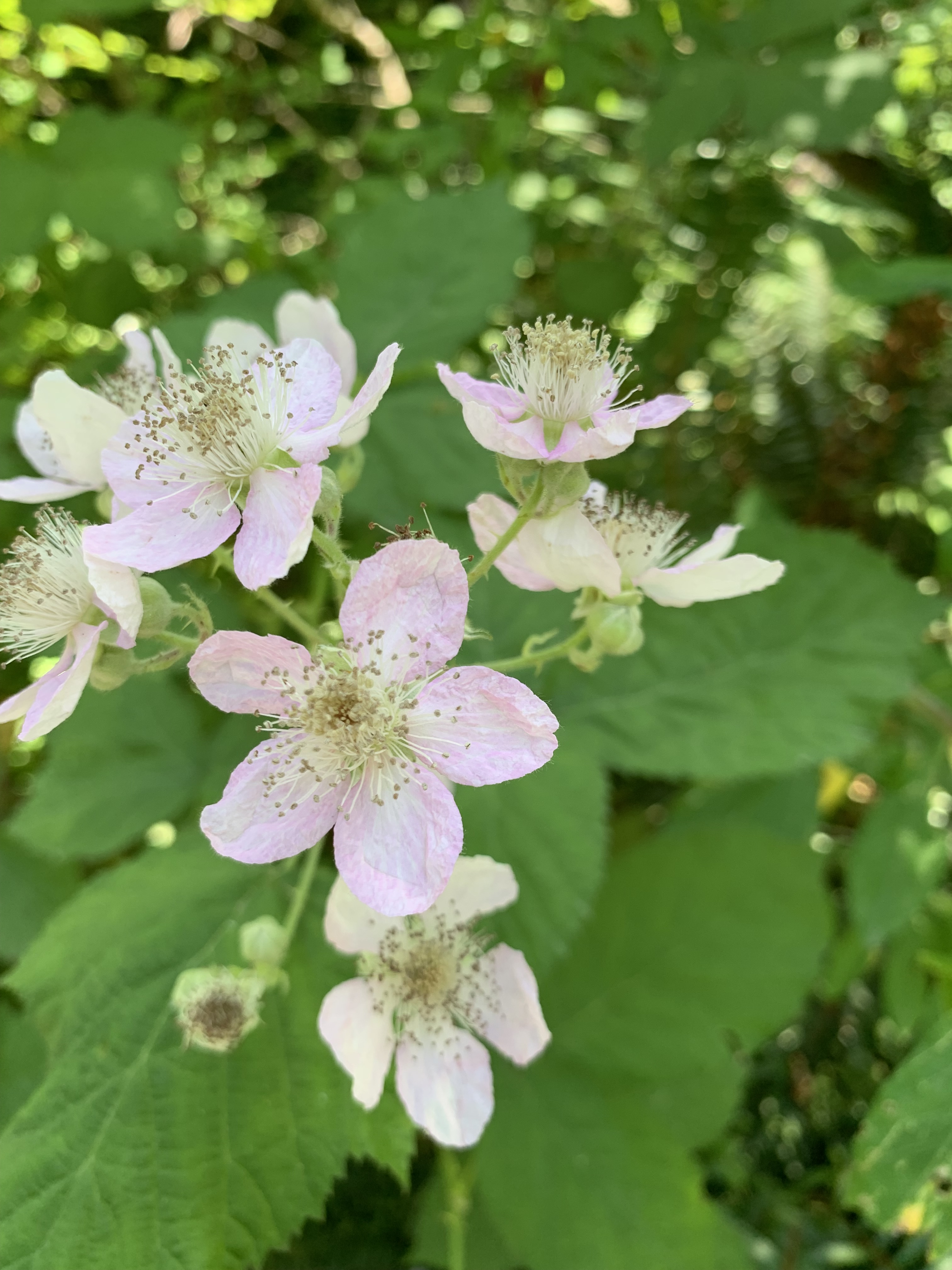
The view from the window invites us outside, across the railroad tracks to the park trails. Trees, plants, birds, and rabbits abound. Fennel towers scent the air liquorice as I pass. Tall meadow grasses and salal, furry thimbleberries, prickly thistles, Oregon grape, Queen Anne’s Lace. Apple trees and blackberry bushes along the trails will yield sweet fruit, free for the picking, by August and September. 

When we walk for five minutes through the forest, we reach the pebbly shores of the cove. Richards Island is before us, with Fisgard Lighthouse to the right. We stand on the beach in the mornings, entering the peace and quiet of this land. At low tide a few leggy herons feed in the shallows and eagles spin overhead. I am privileged to live here, lək̓ʷəŋən Traditional Territory, home of the Songhees and Esquimalt First Nations.

The name of our new road is Hallowell, which makes me think of hallowed or holy ground, All Hallows Eve (Halloween, my birthday), and being well. I like these word associations. 

It took us weeks to get around to smudging our house, but finally, we did. We lit the sage stick and walked from room to room, fanning the sweet smoke, repeating these words: 

May this space be a place of love, peace, and joy. 
Let this smoke cleanse away any lingering negativity from the past. 
May all who enter here feel welcome and blessed. 
With the healing power within, I cleanse and purify my body, mind, and spirit. 

 We like it here. 

The Word Shed

Sometimes a word rolls around in my mind for weeks. Lately, it’s “shed,” both noun and verb. I started to make notes about “shed” and its associations. When I saw the document file that I’d titled “The Word Shed,” I recognized a new meaning: my mind is a word shed. A space where I collect words, play with them, combine them, examine their denotations and connotations, milk their honey.

Shed the noun is a simple roofed structure, typically made of wood or metal, used as a storage space, a shelter for animals, or a workshop: a bicycle shed | a garden shed | a woodshed. Or a place to work. Last summer we met a couple at their yard sale, and they showed us the woman’s “She Shed” in the backyard. They’d built the small one-room shed during the pandemic: it was a place for her to work at home in peace and quiet. I’d never heard the term “She Shed” before. I like it better than “Man Cave.”

Michael’s drawing of an old shed located in my father and Marion’s sugar bush near Markdale, Ontario. We called it the “sugar shack.”

The Shed is a restaurant in Tofino where, two years ago on my sister’s birthday, I had a delicious salmon bowl that I recreated at home later. I knew the ingredients: salmon, quinoa, raisins, almonds, chopped apple, kale, white cheddar. I intuited a dressing of tahini, olive oil, lemon juice, garlic, honey, and yogurt. I discovered the recipe, handwritten on blue paper, in my recipe binder and realized that I’d somehow cared enough to reverse engineer the recipe, though I can’t remember writing it down.

I made the Salmon-Kale-Quinoa Bowl again the other night and it was delicious. I didn’t have white cheddar or puffed rice, so I used shaved parmesan and skipped the puffed rice.

The Shed restaurant invokes a homey feel. I remember being there with Jude and Michael, tucked into a cozy booth while rain spattered the windows and wind whistled outside. Like sitting in a warm shed on a stormy day. We walked on the beach after lunch in our rain gear. 

Over the years, we’ve had two sheds built on our property for storage, bicycles, and garden stuff. Now we’re moving and clearing out the sheds. I’d forgotten about the stuff I stored there. Out of sight, out of mind were boxes of old letters, some going back forty years; kids’ artwork, writings, and report cards; notes from university courses; my old journals. Sorting and shedding and shredding old papers over the last few months has been part pain, part joy, and sometimes so funny I laughed out loud.

Another shed: On December 1, we’ll be in New York City to see Kenneth Branagh in the role of King Lear at the Shed, “a new cultural institution of and for the 21st century.” Their website explains: “We produce and welcome innovative art and ideas, across all forms of creativity, to build a shared understanding of our rapidly changing world and a more equitable society.” After a run in London, England, Branagh is bringing the play to this exclusive U.S. engagement.

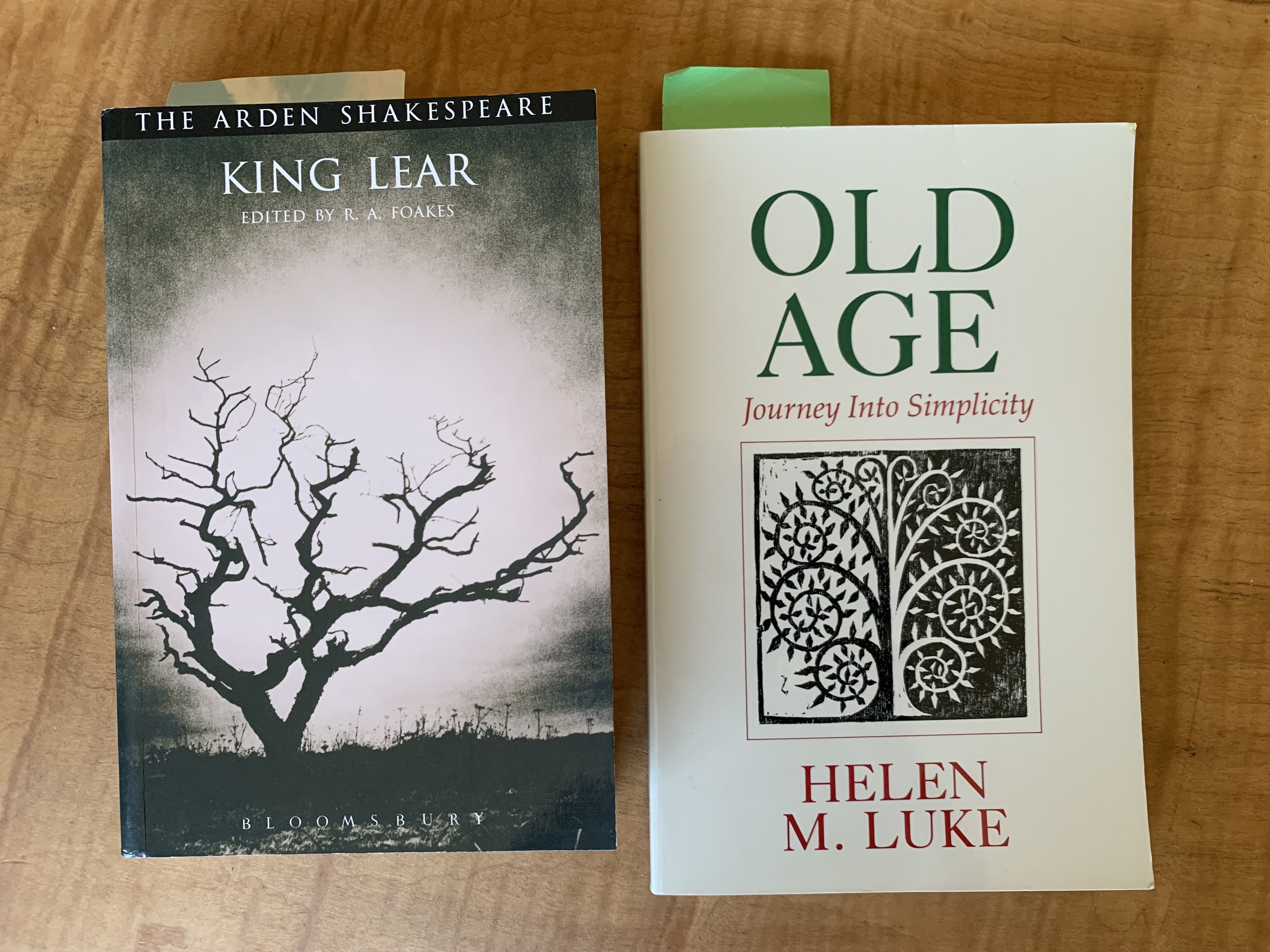
It’s months away, but of course we had to buy tickets early. It will be exciting to see Branagh play Lear in my favourite Shakespeare play. I am reading Helen Luke’s book Old Age, and the chapter on King Lear moved me, particularly when she refers to the two lines spoken by Lear to Cordelia in Act 5, Scene 3, “When thou dost ask me blessing I’ll kneel down / And ask of thee forgiveness.” Luke writes,

“If an old person does not feel his need to be forgiven by the young, he or she certainly has not grown into age, but merely fallen into it, and his or her ‘blessing’ would be worth nothing. The lines convey with the utmost brevity and power the truth that the blessing that the old may pass on to the young springs only out of that humility that is the fruit of wholeness, the humility that knows how to kneel, how to ask forgiveness” (p. 27). 

Lear’s story resonates because he shows us that shedding egotism and pride may be followed by an exquisite sense of humility. Many of us experience this as we grow older. Only after Lear is hollowed out by loss can he enjoin Cordelia to “live / And pray, and sing, and tell old tales, and laugh / At gilded butterflies.” Only after loss decimates us, do we feel an unusual lightness of being. So different from the lightness of youth, this lightness we purchase with grief. 

Shed your burden ~ watercolour by Madeline Walker

Then there’s the verb, “to shed.”

To rid oneself of superfluous or unwanted things or feelings…to give off, discharge, or expel, such as a cat shedding fur, a snake shedding skin, a tree shedding leaves. 

Shedding blood. Bloodshed. Viral shedding. We all shed tears. 

And don’t forget the intransitive verb, to woodshed: to practice a musical instrument, to work out jazz stylings, to go over difficult passages in a private place where you can’t be heard.

Isn’t it odd that the noun shed refers to a place where you store and keep and gather things, whereas the action word (transitive verb) means to let go of, release, slough off feelings, body parts, objects? These meanings are in tension with each other – one wants to keep, the other to release. 

But perhaps it isn’t so odd. The tension between the noun and the verb merely replicates the push and pull we feel in our lives between holding close and letting go. 

The Shed in Tofino: https://www.shedtofino.com

The Shed in Manhattan: https://www.theshed.org/program/302-kenneth-branagh-in-king-lear-by-william-shakespeare

Short Story Thursday

I wrote this story and read it to my writing group the other day. They laughed, so I thought I would share it with you. See the end of the post for the writing prompt that got me going.

Phantom Love

Rhythmic buzzing in my right thigh rouses me from a restless sleep. Ugh. Two a.m.? Three? Not again. I laid my sweaty hand on the that patch of skin where, most of the time, my phone nestles deep and safe in my pocket. Second night of this “digital detox” getaway that Noelle insisted on, and I’ve gotten only a few hours of sleep so far. The blackout curtains mean I can’t clearly see the silhouetted curve of her hip beside me, but I sense her closeness. She sleeps on her side facing me, and she’s deep into an REM phase—rapid breathing suggests she’s enveloped by good dreams. I feel puffy exhalations puh, puh, puh as she sleeps the sleep of the virtuous. Sucked into the vortex, from valerian tea to silk eye masks, from yoga on the beach to vegan dinners at community tables, Noelle is loving this. 

Me, not so much. Soon after we arrived here and handed our cellphones to the gatekeeper to lock away, my thigh started buzzing.  

This nightmare started at dinner two weeks ago, when I received an unexpected ultimatum. Noelle and I sat at the table, and I did what I always do. I ate dinner with my cell phone propped against the pepper grinder and skimmed through multiple texts flowing in from my business partner,. To get my attention, Noelle took her spoon and started to tap her wine glass. Ting ting ting. I ignored her and read on, chewing my food. Ting ting ting. I glanced at her and smiled then returned to the urgent texts—the conference we were working on was fucking up: a caterer pulled out and the AV guy had Covid. I’m an event planner, so I have to be plugged in 24/7.

Noelle’s a playful woman, and I thought she was just having fun with the glass tapping. Ting ting ting. Yes, I get it, like a wedding. You want to make a speech. Cute. But the third time she did it, I felt irritation bristle over my scalp like a hot caterpillar. I turned my face toward hers.  What are you doing, Noelle? I kept my voice level, calm. Vowed not to lose my temper. In my peripheral vision I saw texts cascading down the screen and it was all I could do not to grab the device. 

James, you are on that cell phone all of the fucking time. I. Can’t. Stand. It. Anymore. (Big, dumb, serious pauses between words designed to show she means business.)  Either you go on a digital detox with me—three days no phone, no devices at all—or I’m moving out. 

What? This coming from my gentle girlfriend who never swears. Her unprecedented use of “fucking” shocked me. That ultimatum was for sure scripted by her girlfriends. I could just see them (what are their names? Annika? Angela? All A names) hovering around her, coaching her on how to language the confrontation with the neglectful boyfriend. 

Put on the spot like that, I agreed under duress. So last week, I spent hours I didn’t have rescheduling meetings and getting Wyatt, my partner, up to speed on the stuff I was responsible for. The tide of resentment toward Noelle was rising (red flag—why don’t I ever pay attention to these?). The day before the trip, Noelle described how great it would be—the pristine lake, the waterfall, the healthy meals, the fellow detoxers. It will bring us closer than ever, she beamed. But I knew the truth: this experience was going to be brutal. This. Was. Going. To. Be. Brutal. 

So, 39 hours into a 72-hour torture session, and my withdrawal was bad. The tactile hallucinations—buzzing in my thigh—were frequent. But worse than phantom vibration syndrome was the sensation that I was an amputee. When my phone’s in my pocket, I can connect with people in the flesh and have pleasant conversations. I can be social, I can hang out, do fun activities. As long as it’s there, snug against my thigh, and I know I can check it soon, I’m okay. 

On the first day, we went on a “mindfulness hike,” but without my iPhone to take a picture of the waterfall and share on my feeds, I was aching. The sweet weight of it in my pocket, the familiar warmth of it in my hand. I can picture the wallpaper on my home screen—the swirling multi-colours of the new Gangnam Apple logo. Beautiful, colourful app icons arranged neatly across the screen. Blue folders. Apple green text boxes filled with words, information, emojis: world at my fingertips. My hands want to cradle the smooth oblong, touch its face to make everything come alive, swipe and swipe and swipe again.

I scrabbled around in the bedside table drawer for the flashlight they provided for night trips to the bathroom. With blackout curtains cloaking the windows and no devices emitting blue light, it was impossible to see a thing in there. I angled the light down so as not to wake Noelle and once in the cedar-walled bathroom, I found my overnight bag and my Ambien. I can get through this, I kept chanting to myself. To save my relationship, I can get through this. 

But when Noelle shook my shoulder the next morning, trying to rouse me with an oat-milk latte so we could go down to do yoga on the beach, I realized my intention had dissolved during the night, washed away by the rising tide of resentment. No, I said, pulling away. No, go away, I need more sleep. The back of my head felt the chill from her arctic green eyes. I can’t do it, Noelle. Sorry, I mumbled into the pillow. When I wake up, I’m getting my phone from the front desk and taking an Uber home. 

A long pause, and then I hear the door close with a bang as I descend into sleep again. 

Two hours later, showered and caffeinated (I had tucked a Red Bull into my overnight bag), I told the woman at the desk I was leaving early. She wasn’t surprised. As she located my phone in the locker, tagged with my name and room number, she told me I should try again another time. I smiled agreeably, but was thinking yeah right, snowball’s chance in hell.

I turned on my phone. Relief imploded my chest as the Apple logo emerged from a black screen. I sat in the back of the Uber, holding my phone and letting the waterfall of new messages tumble by. It was a thirty minute drive (not cheap but well worth it) back to my place, so I had plenty of time to enjoy catching up on Instagram, Facebook, TikTok, X, Reddit, Telegram, Discord, email, messages, voicemails, and more. Why feel ashamed for loving this? 

And then I started to think about Noelle and how ill-matched we were. Once she’s moved her stuff out of my place, I’ll reinvigorate my Tinder profile, but first I’ll edit it. Some people say, must love dogs or cats or whatever, but I’ll say, must love her smartphone. Why not? I see lots of lovely faces everywhere lit by screenglow. One of those women is for me. Why can’t I be with somebody truly compatible? We’ll eat dinner with our phones propped before us. Screw the pepper and salt grinders—I’ll buy us matching smartphone stands. We’ll look up at each other occasionally and smile knowingly. Luddite Noelle made me keep my phone out of the bedroom, but my new girlfriend and I, we’ll keep our phones close by us on our bedside tables, charging, ready if we need them. 

The buttery leather upholstery of the Tesla held me gently in its embrace. My phone was warm in my hands. Soon I would switch it to vibrate and slide it into my right pants pocket. Now that people knew I was back in the world, it wouldn’t be long before I’d feel that comforting buzz against my thigh. I smiled in anticipation. 

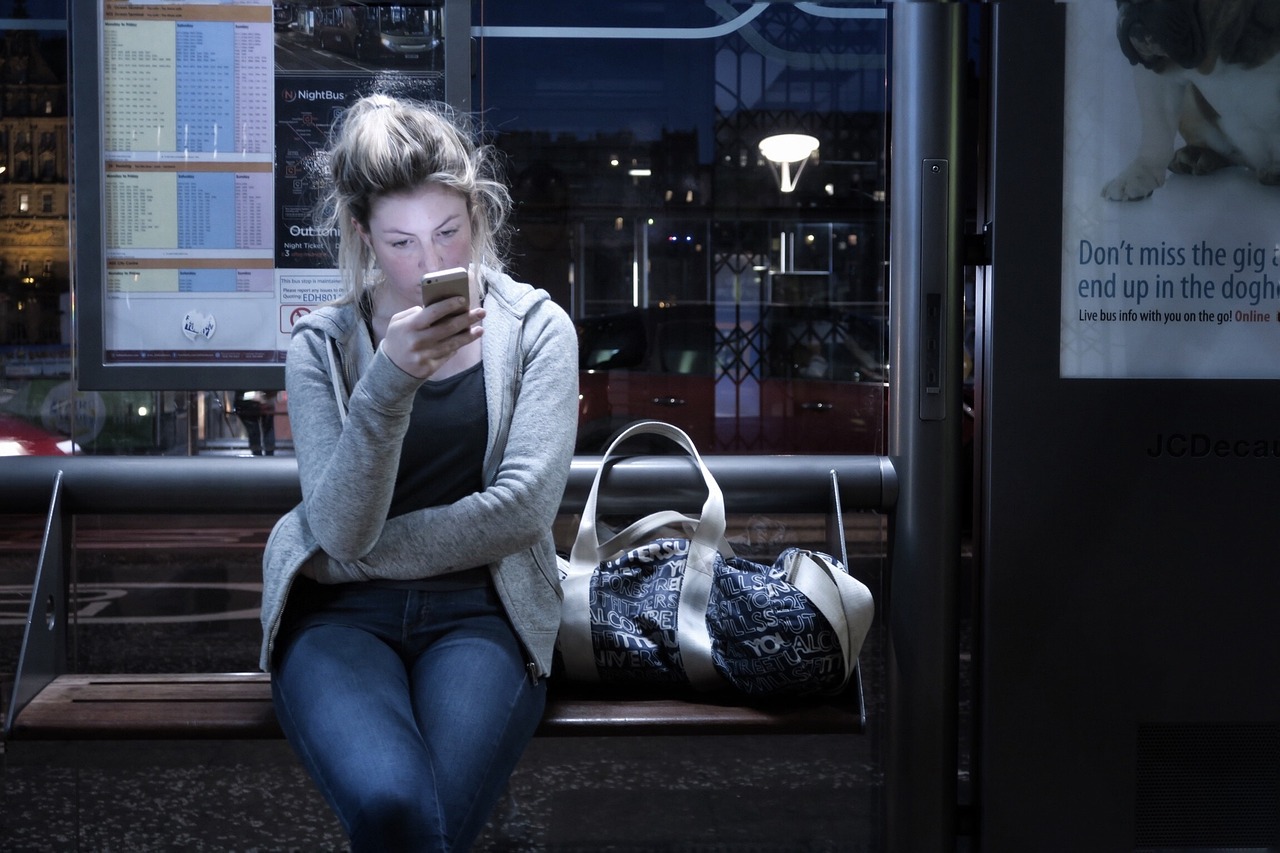
Image by StockSnap from Pixabay 

From Poets & Writers “The Time is Now” writing prompts. https://www.pw.org/writing-prompts/

Imperfect Imbolc

Last week, while on vacation in a small town in Mexico, I read Wintering by Katherine May. Perhaps it seems like an odd choice for a “beach read” in the sun. But the subtitle spoke to me: The Power of Rest and Retreat in Difficult Times. Something in me said—yes please! Give me permission to lay down my (figurative) sword, to retreat when things aren’t going smoothly. I was thirsty for her message that during fallow times, rather than pushing ourselves to do more, we need to withdraw and rest. We need to do less. In the book, winter is both a season and a metaphor for those difficult times; we periodically “winter” throughout our lives, not just from December to March. Wintering occurs when we encounter death, loss, illness, or other big change. When life disrupts us, shakes us up. 

When May wrote about ritual, I took notice:  

“We need the pauses that ritual gives us. So much of contemporary life is about the denial of personal darkness. We’re supposed to be always upbeat, always available, always bursting with energy and optimism. There’s simply no time for negative feelings… Ritual invites these things. … [Ritual] might draw attention to cyclical time, to the way that things come around again and again. That helps us to think about change, about how far we’ve come, about what we’ve lost.” 

With Imbolc (February 1-2) on the horizon, I set an intention to mark the next pagan sabbat with ritual. Midway between Yule and the spring equinox, Imbolc is associated with new growth, new beginnings, hope, lambing (Imbolc is translated as “in the belly”), and Brigid, the Celtic goddess of fire and fertility. Some things we can do to mark this sabbat are to make a bonfire to symbolize the returning of the light (the darkest days of winter are behind us); create an Imbolc altar with the colours and objects associated with the sabbat; make a Brigid’s cross with reeds; and perform a house cleaning ritual: clean or declutter then “smudge the perimeter of each room with … salt, sage, candle flame, and water” and chant an incantation of cleansing as you move through the house. You can anoint doors and windowsills with “blessing oil” to prevent anything negative from crossing into your home.

These suggestions resonated. My intention was strong. I would set aside February 1st to create the altar and do the housecleaning ritual with Michael.

But a few days ago, we both got sick with Covid. Here we are on the eve of Imbolc with cotton wool heads and raspy throats, runny noses and low energy. My plan to make a day of the ritual retreated into the fallow field of sickness. So, we followed May’s message in Wintering: do less. We adapted ritual to align with healing. 

Our minimalist Imbolc

For our “altar,” we used our dining room table. We spread the white tablecloth (not ironed, too much energy required). White symbolizes snow and purity. We placed a red candle from the Christmas Angel chimes into a tiny Noxema-blue jar that Olga’s son discovered on one of his beachcombing adventures. Red is rising sun; blue is flowing water. This morning, I finally managed to get out for a walk, and we passed our local farm-stand florist and picked up a “pixie bouquet” ($10). There were no daffodils or snowdrops (the flowers suggested for an Imbolc altar) available. Just red and orange flowers, which is fine because they conjure the rising sun and Brigid’s fire. 

We collected the remaining items for our altar and ritual: a smudging stick I’d bought at a local garden stand a few years ago, a small pottery bowl filled with water, a fertility figure reminiscent of the Venus of Willendorf, and a sheep to symbolize “in the belly” and lambing season. Okay, strictly speaking it’s a ram, but we had to adapt. 

Lambing season

When I think of lambing, I think of “the farm”: my father and stepmother’s 50-acre property in Bruce-Grey County, Ontario. They kept sheep for many years, and one winter I visited during lambing season. I remember my father getting up throughout the night to check on the heavily pregnant ewes. I went out with him once: I have an image of his hands slippery with blood in the dim, cold barn while he helped with a difficult birth. Afterwards, we watched carefully to make sure the newborn suckled properly. A rhythmic quiver in her long tail showed she’d latched on and was getting first milk. 

Looking back, I now recognize the courage and commitment my father and stepmother must have had to buy those 50 acres and take that leap of faith. My dad, a city guy who fled academia, totally immersed himself in farming. He read everything he could about it and talked to the locals, hungry and humble in his search for knowledge and skill. Always experimenting, working hard, taking risks, living his dream. Facing all of the inevitable challenges and bad times farmers have. Being a so-called hobby farmer didn’t make him immune to bad weather, problems with stock, foxes killing the chickens, electric fences falling down, money shortages. Marion worked alongside him and also worked full-time as a nurse to finance the farm operations. Despite the challenges, they experienced much satisfaction and joy. Dad and Marion, I am so proud of your daring and adventure, your bravery and strength. 

Cleaning and ritual

We didn’t have the energy to clean the whole house, so we chose just one thing: the bookcases. After removing the pottery and other knick-knacks, we dusted the shelves and the books’ spines and tops. We wiped down the objects, sorting out things that we no longer wanted. When the cleaning was complete, Michael found an incantation online that we said together as we moved clockwise through the house, flicking water from the little bowl, letting the earthy-sweet sage smoke float into the corners of the rooms. Brave red candle lit the way, and Marvin followed us from room to room. 

With the purifying power of water,
With the clean breath of air,
With the passionate heat of fire,
With the grounding energy of earth
We cleanse this space

May the goddess bless this home,
Making it sacred and pure,
So that nothing but love and joy 
Shall enter through this door.

I worried a little that we were doing it wrong…but what’s right and what’s wrong? We made the ritual our own. We paused today to focus on the cycle of life and seasons. We purified our home for Imbolc, and we did it imperfectly. 

Recommended Imbolc reading

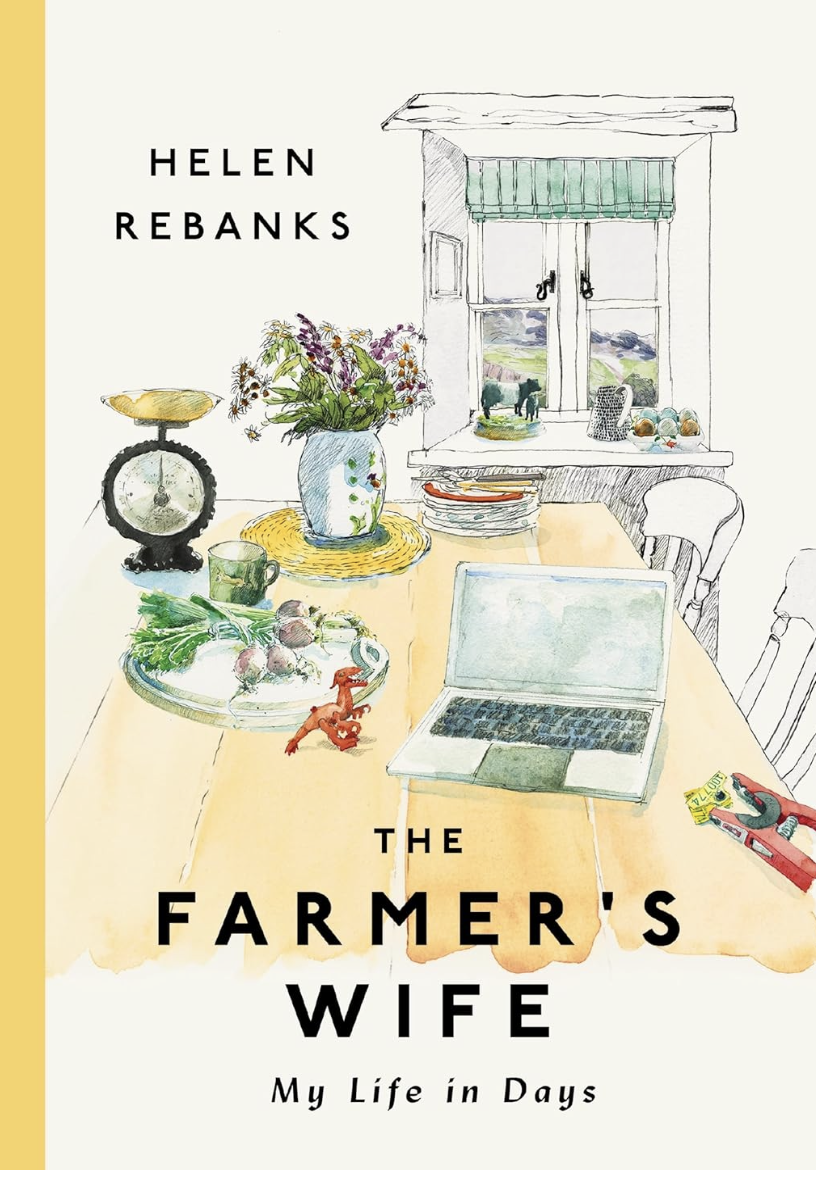
The Farmer’s Wife: My Life in Days, by Helen Rebanks. This heartfelt book, peppered with recipes, is an honest and passionate account of farming and raising a family in the Lake District, UK. There’s lambing, of course, but there is so much more. Rebanks writes about women’s role in farming: they often do all of the mundane, quotidian work that goes uncelebrated. So she celebrates the farmer’s wife by showing the importance of domestic and indoor work. I loved reading her descriptions of daily minutiae: the shopping, cooking, childcare, all mixed with tagging lambs’ ears, shovelling snow, gardening, and other outdoor chores. An equally important aspect of the book is her persuasive argument that we must support local, sustainable, biodiverse farms—such as theirs—to ensure a healthy future. 

Creativity is a fox: A year in review

I start the year with a glance back over 2023. Last year, creativity often eluded me. She was a timid fox, hiding in her hole. I tried to lure her out, but at the first sign of self-doubt, she’d scurry back down the tunnel. Making things—in cloth or paint, in the kitchen, with words—can feel pointless in the face of climate crisis, grief, war, and ennui. And yet, don’t you think we must continue to create as an antidote to all the destruction?

When fox stayed out long enough, she inspired me to bake cakes, sew things, paint mandalas, and write stories and poems. 

Baking

I love making cakes and preparing gifts for people. I fantasized once about starting a small business: I could make bespoke cakes and gifts to order (quilted bookmarks, small herb bouquets from my garden, stones from the beach that feel good in your hand). Nice idea, but maybe not a great business move.

This year Michael got an upside-down blood orange cake for his February birthday, and we had fun sourcing the oranges. Found some good ones at the Market Garden on Catherine Street (where shoppers sometimes sit down to play the grand piano—such a cool store). I baked mini-chocolate cakes with strawberries later in the month for Barbara, and for Easter, an almond torte with whipped cream and more strawberries. Like my mother before me, I love to set a beautiful table, and Easter was no exception. The origami Easter baskets filled with foil-wrapped chocolate eggs provided a whimsical touch. (Entertain your inner child, I say.) For my own birthday party, a classic carrot cake baked in a heart-shaped pan frosted with cream cheese icing. For Andréa’s big five-oh: applesauce cake with three kinds of ginger. And for the final English conversation café at work: ginger cake with buttercream icing. What is it about a cake that speaks pure love?

Sewing

I didn’t make any new quilts, but I did sew a purple wall hanging, about 30 by 30 inches, that now hangs in our bedroom. I like to lie in bed and gaze at it. Four sentinel circles surround a larger one—all shot with gold thread (fragments cut from an old wraparound skirt from a yard sale). Those circles/mandalas ground me; cloth clocks tick noiselessly, watching over us as we sleep. 

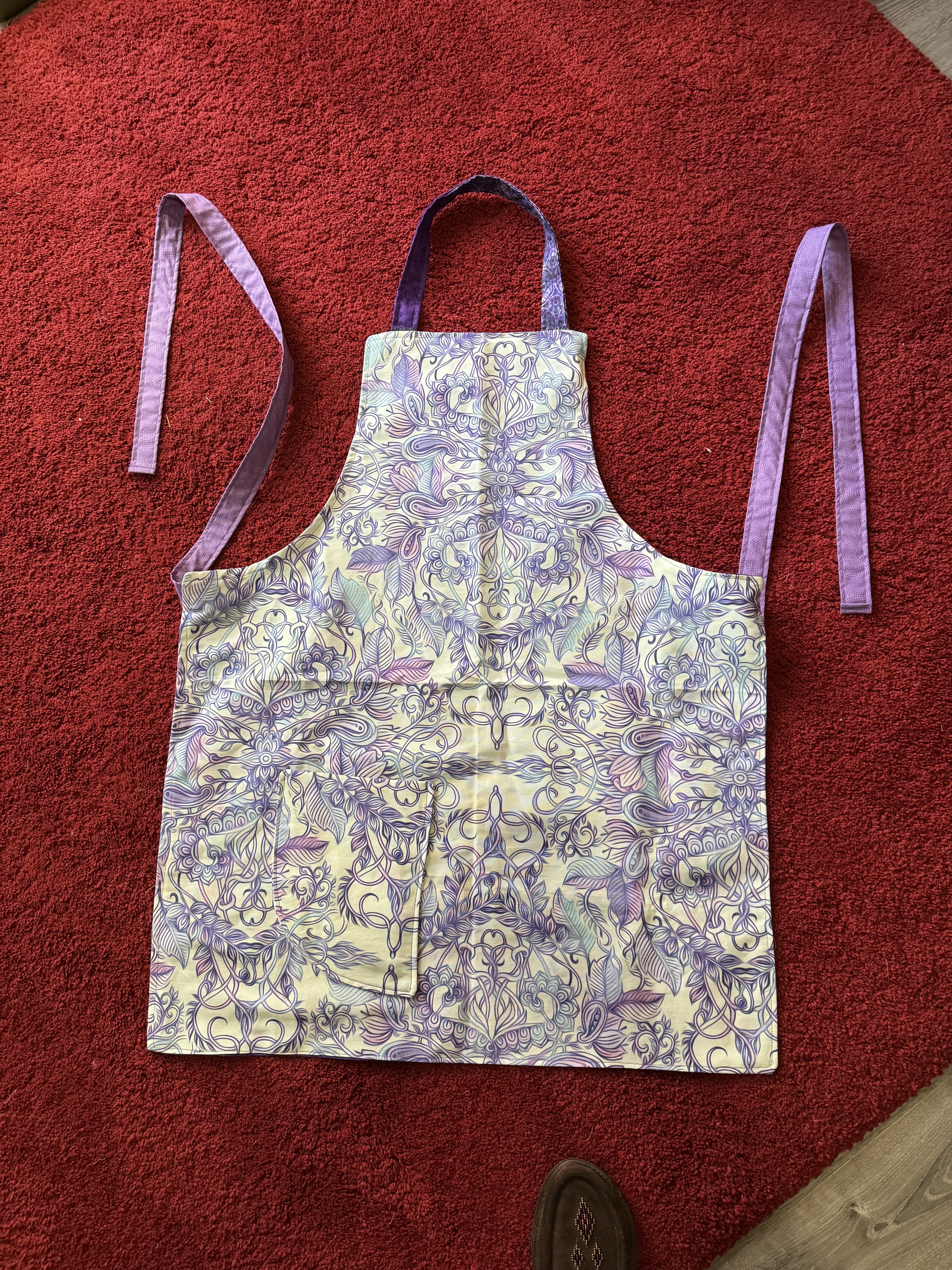
Smaller sewing projects attract me because results come together quickly. My sister Kathryn bought me a drapery panel of Indonesian fabric in browns, reds, and purples at a thrift store. A lot of fabric—40 by 83 inches—for only $4. I’ve enjoyed making some things from it: placemats and napkins mostly, and a sweet little fabric basket (I made a few of these for friends for Christmas, then filled them with chocolates and gifts). I felt most proud of the lunch bag I made for my boss, Nancy, because it tested my skill. I used fabric in a brown geometric pattern by an Australian Aboriginal designer. Then I lined the bag with sturdy brown linen from a too-big jacket I bought at a yard sale down the street. Nancy loves it. Adrian’s bag (filled with toys) for his second birthday involved some great scraps I bought from Smoking Lily on Government Street. Finally, I sewed a butterfly apron at Christmas for my niece. She is beautiful in any outfit, even an apron. 

For my 65th birthday party (the theme was poetry and potluck), I made fabric wrappers for second-hand poetry books I bought for guests. So fun to comb through my stash and find colours and patterns that sing together. Party favours were fun when you were a kid, and they are even more fun when you’re an adult. Again, entertain that inner child…

Making Mandalas

Michael and I had a Monday Mandala practice for a while, but it fizzled out sometime during the year. One exciting project: we delivered a multi-day mandala-making workshop in March and early April on Zoom. Our participants were mostly from New Mexico—all lovely, open-hearted women. It was a good experience. Michael was a guest presenter at two Creating Mandala monthly events. The CM team featured a new goddess each month, and Michael chose to talk about the High Priestess (Tarot) and Kali (Hindu goddess associated with death). I attended both of these events with pride and pleasure. Some mandalas last year were inspired by dreams—a rich transmutation. I dreamed I entered a room in my house and found that someone had painted on my white wall a red dragon being devoured by three beasts. Still musing on the meaning of that one. 

Writing

Here’s where the fox was most recalcitrant. I aborted so many poems, blogposts, and stories last year, I am surprised to find anything in my files. I posted on this blog only five times in 2023. However, I did complete a series of linked short stories (started in previous years): Nothing is Wasted: The Stan and Deedee Stories. I shared them with a few friends and family members. If you are interested in reading them and you’d like a digital copy, let me know (maddyruthwalker@gmail.com) and I will send you one. 

Some months, I had nothing new to share with my writing group. I’d scour the old folders for some scrap from the distant past to read. Or I’d just listen to others read their work. But that’s okay. I know that I’ll write again. When nothing seems to be happening, the fox is deep in her hole, pregnant with kits. How many will be born and when? Just have faith.

I wrote only a few poems in 2023, and one was for my birthday. Each guest was asked to bring a poem to share. It was extraordinary to see my friends and family members get up into the poetry seat and read poems they’d chosen, poems they’d written: one of the best gifts I’ve ever received. To close the offerings, I read my own poem– one that expresses the expansiveness I feel as we enter 2024. Happy New Year to you!

Expansion

I started slim 
and willowy.
Then, whoosh of years.

My waist - heavy as grief,
soft as dough -
expanded.

Grief. Have you met her?
Well then you know the
grace that she bestows.

Hard things—she
cracks them open, 
ignites a hotter flame, 
imbues a deeper shade of red. 

So, like my waist, 
my heart’s made wide by grief, 
a vast container for the love I feel 
for trees, and animals, the sky, 
the planet, for you, my friends,
for people everywhere, 
for life expanding.