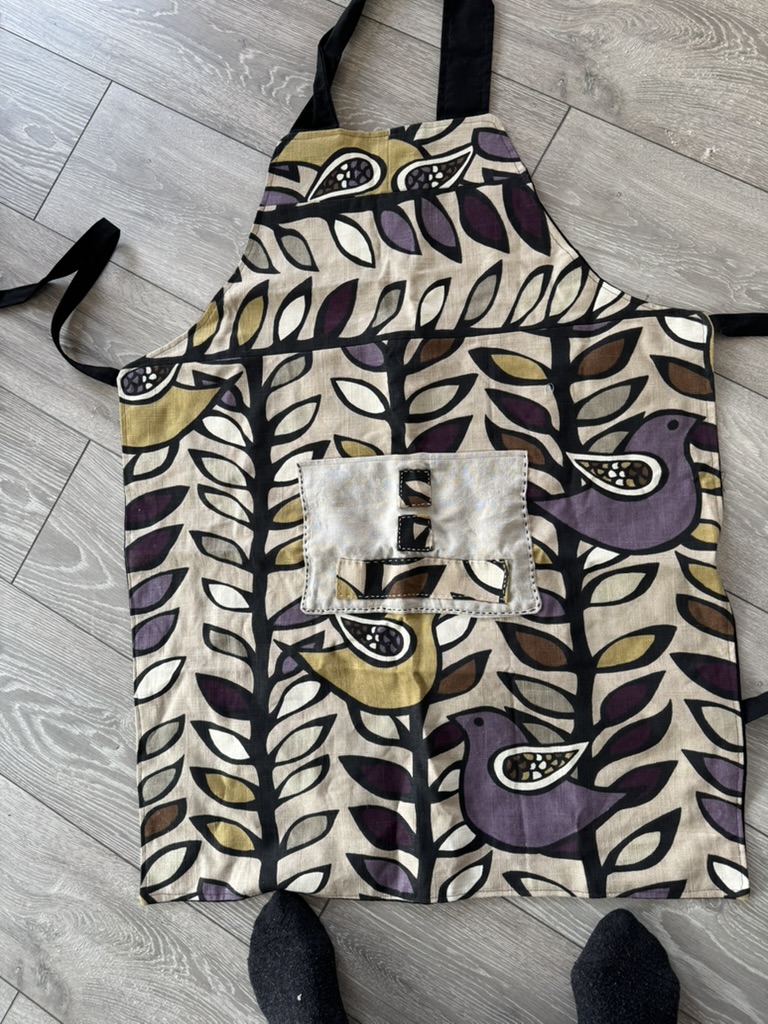
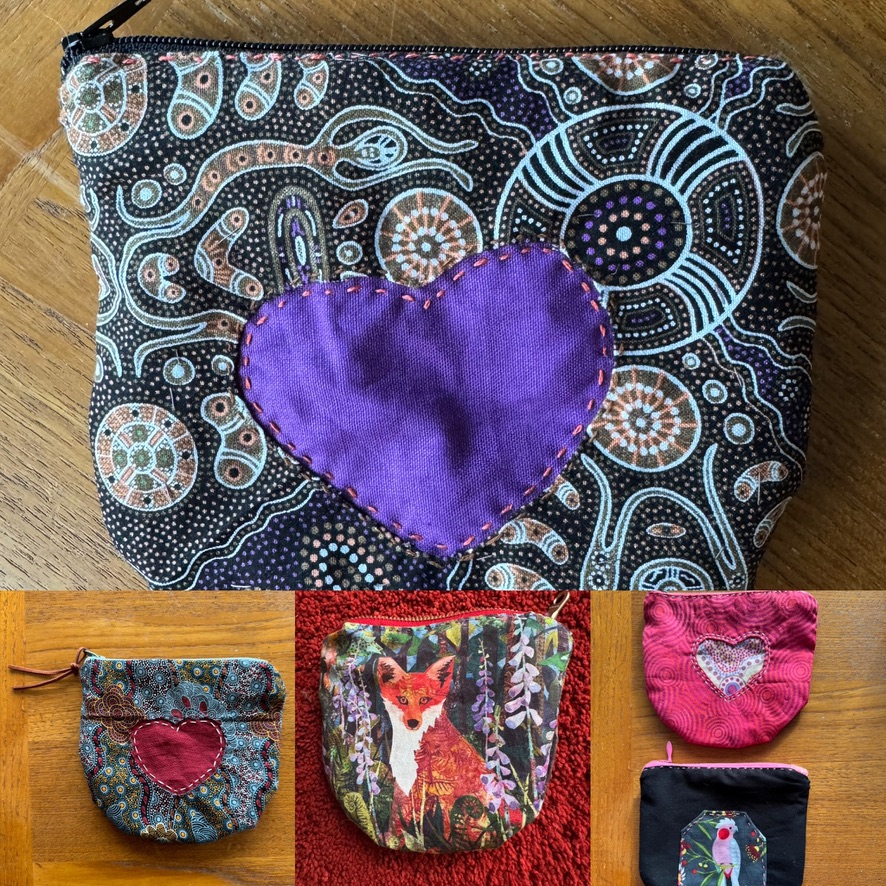
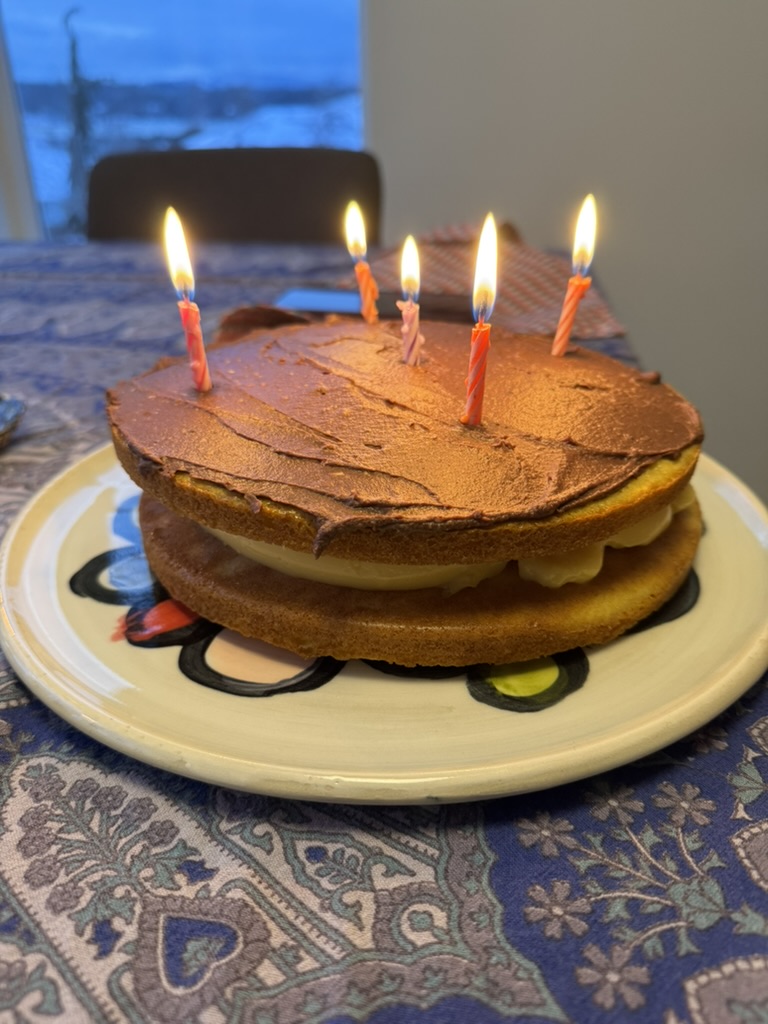
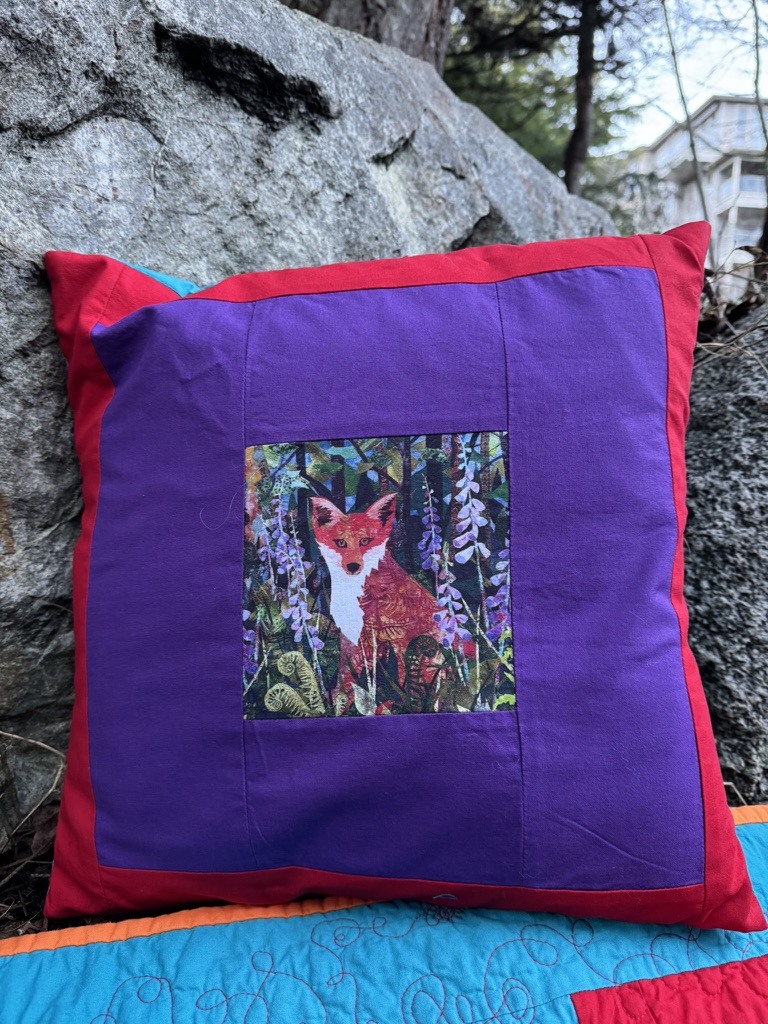
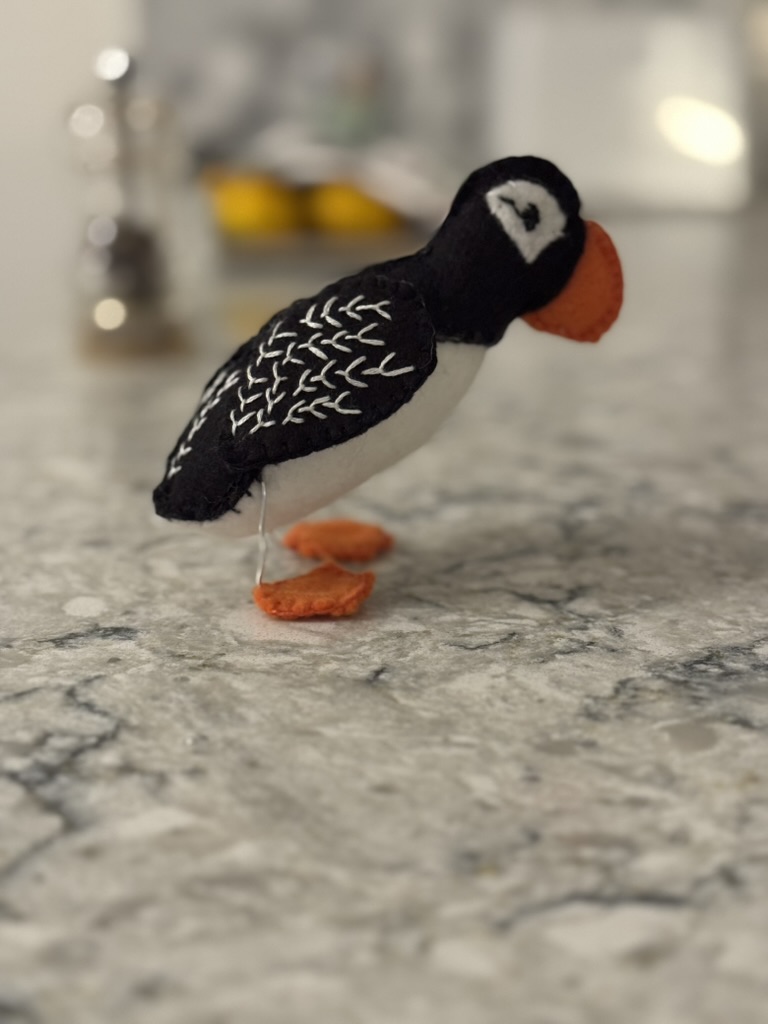
It’s my 67th birthday today, a good day to review the year in creation. What did I make this year? Eleven blog posts (this is the twelfth); a few stories, poems, and essays; felt birds for family members and felt Christmas decorations; three aprons (one for Nancy, one for Meytal, one for me); a baby quilt and matching pillow for the great grandson of my friend, Lillian; embroidered pillows for my niece; a patchwork pillow for my friend Janis; little zippered bags for everyone; “One Thousand Joys,” a wall hanging for our stairwell; a lunch bag for me; some drawings and comics; a sling bag for Nancy; some collages (thank you Kathryn for the inspiration); and cakes and more cakes for friends and family.
Living a creative life feels as important as ever.
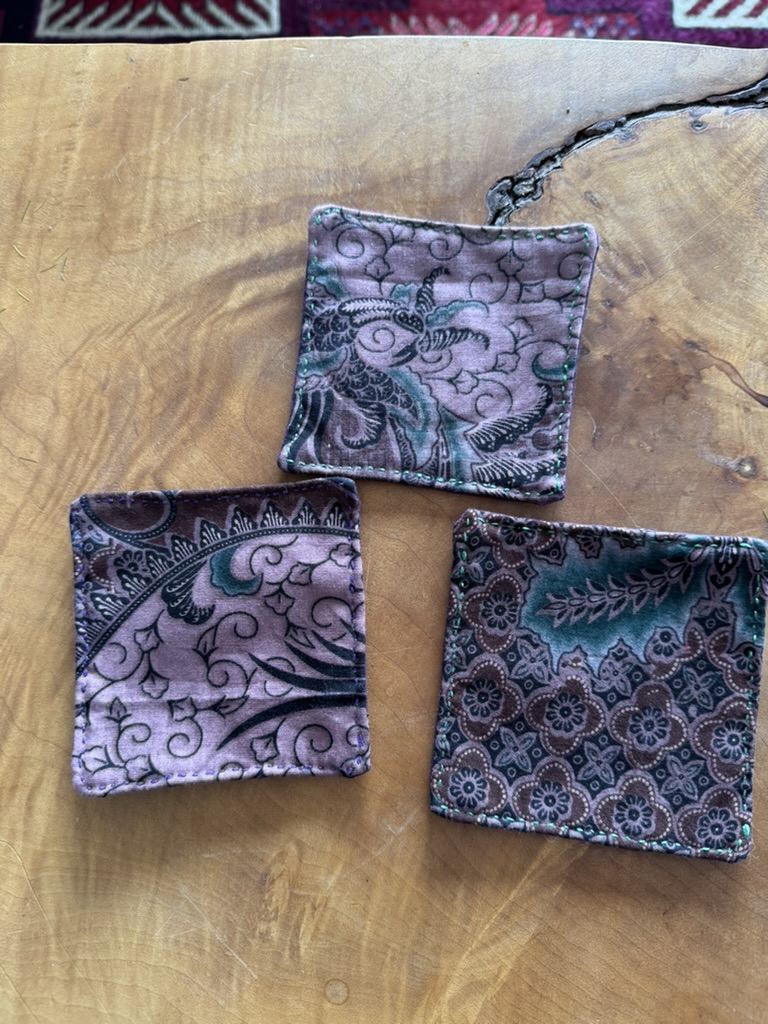
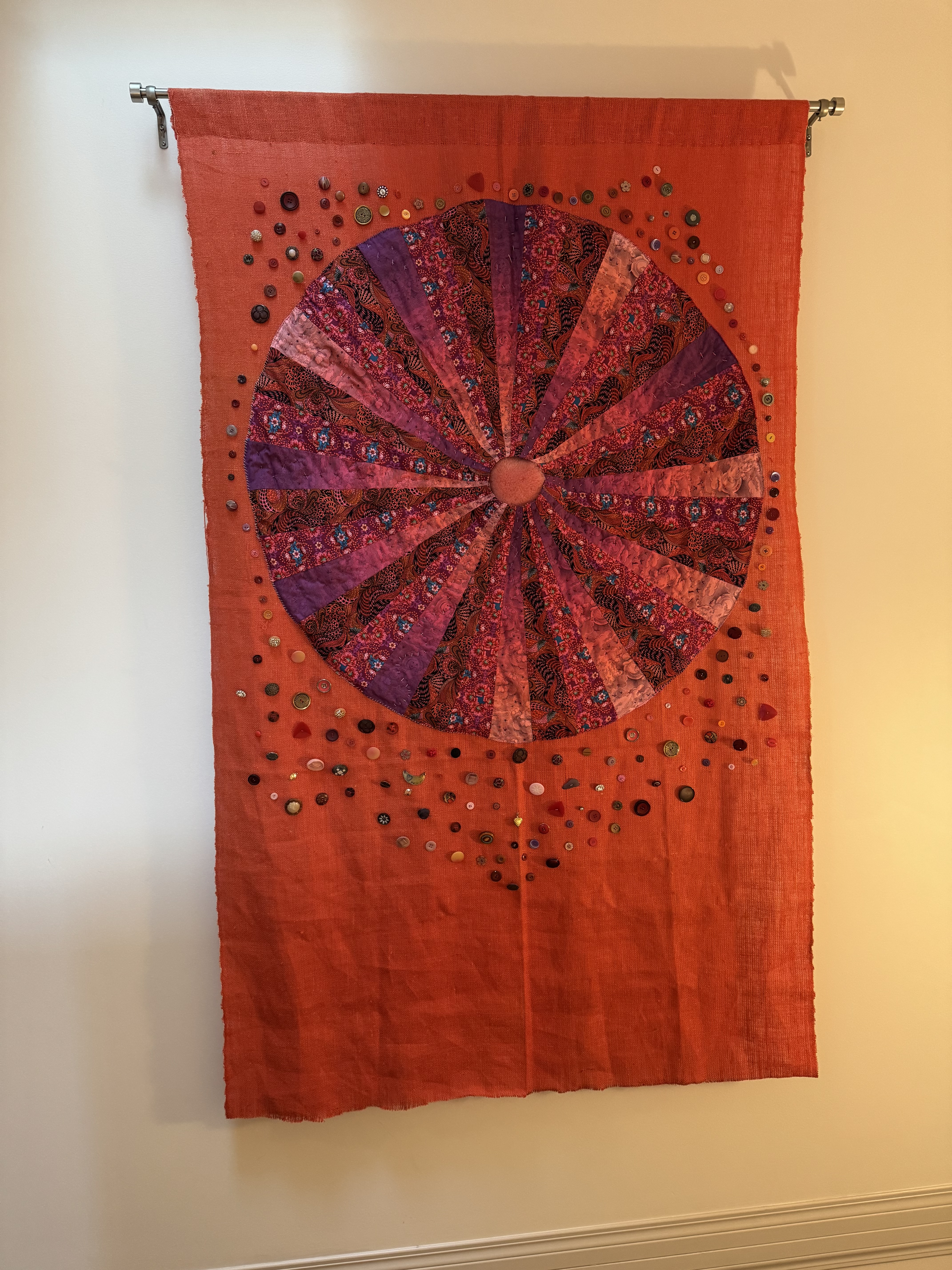
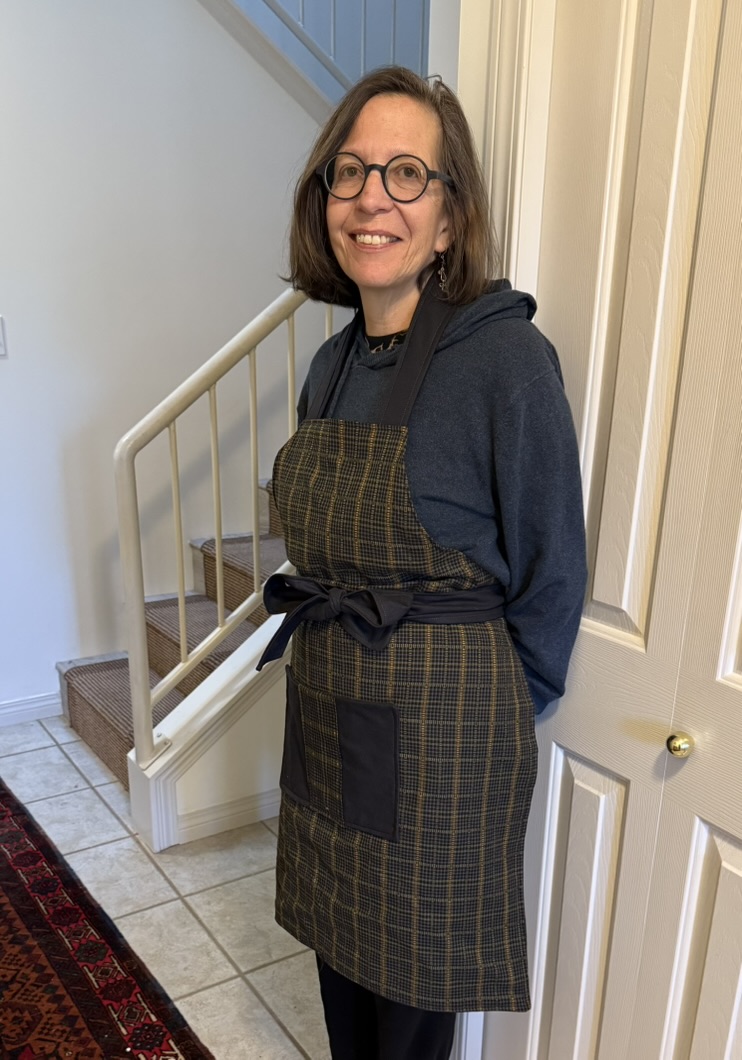
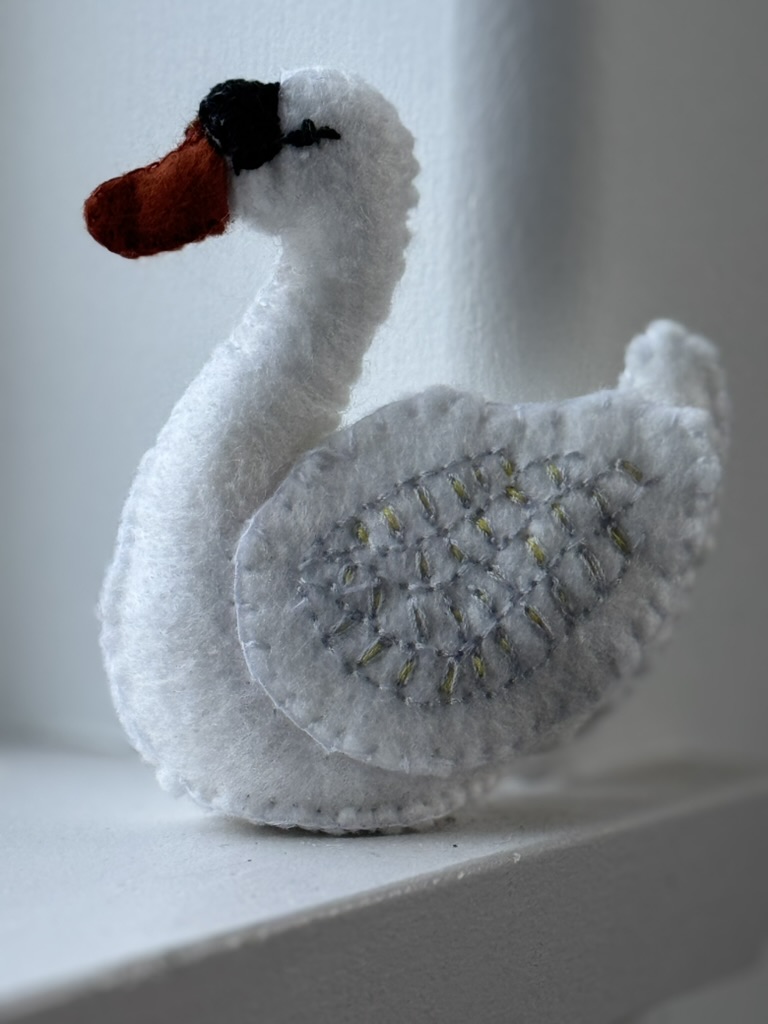
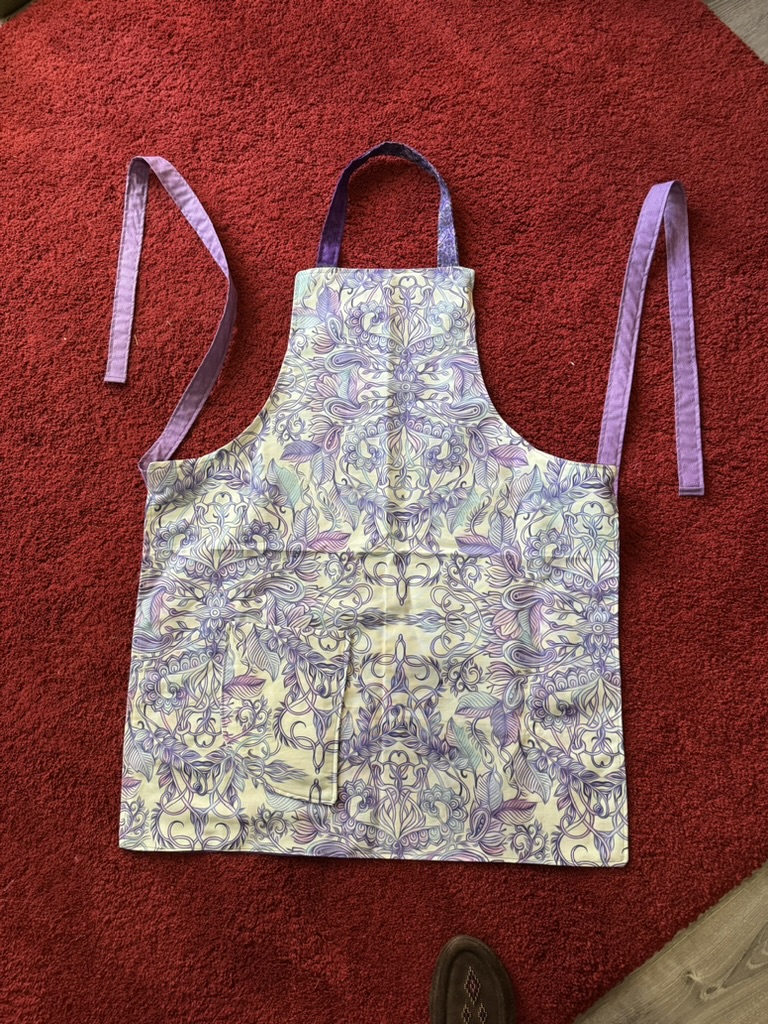
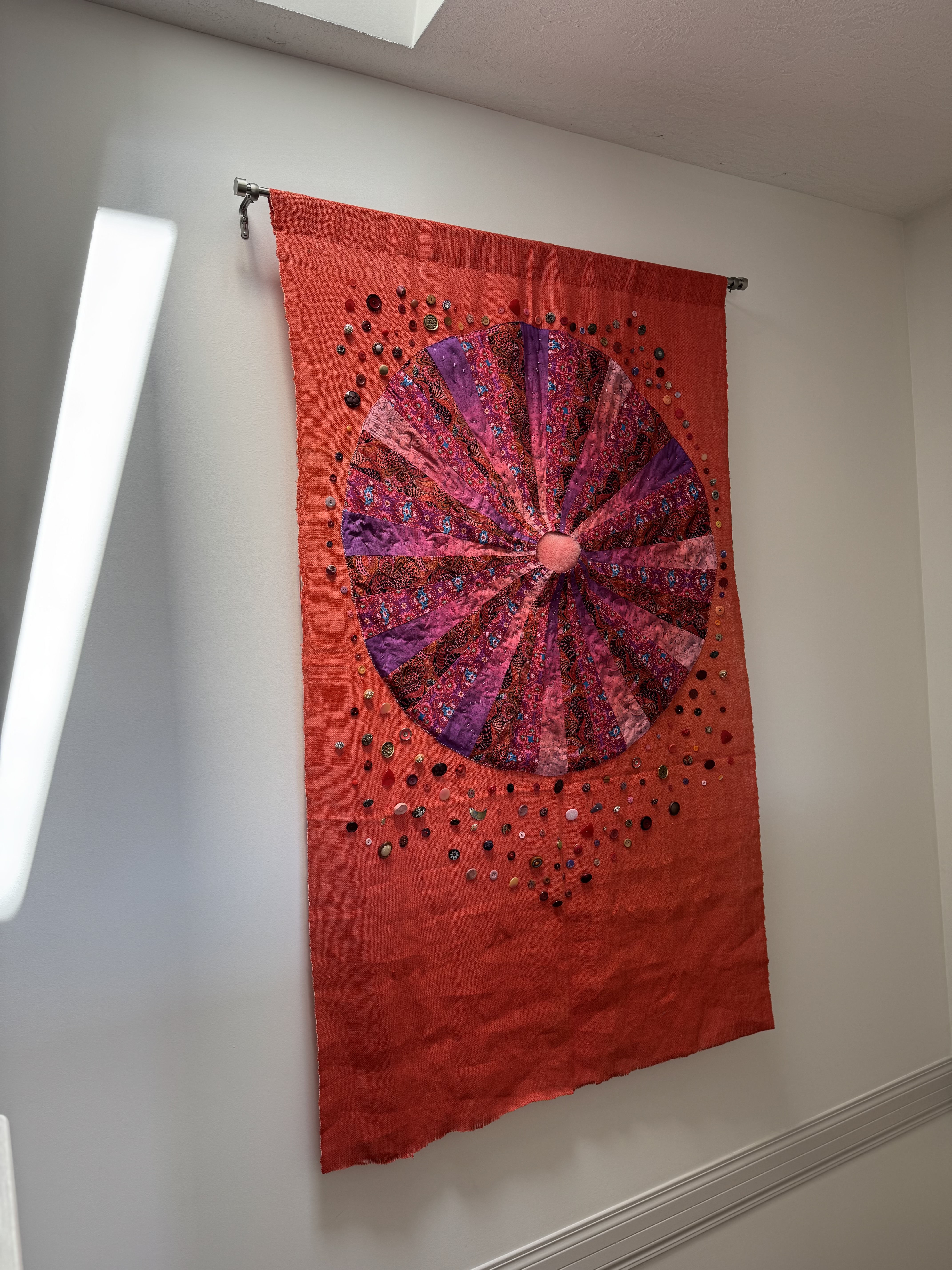
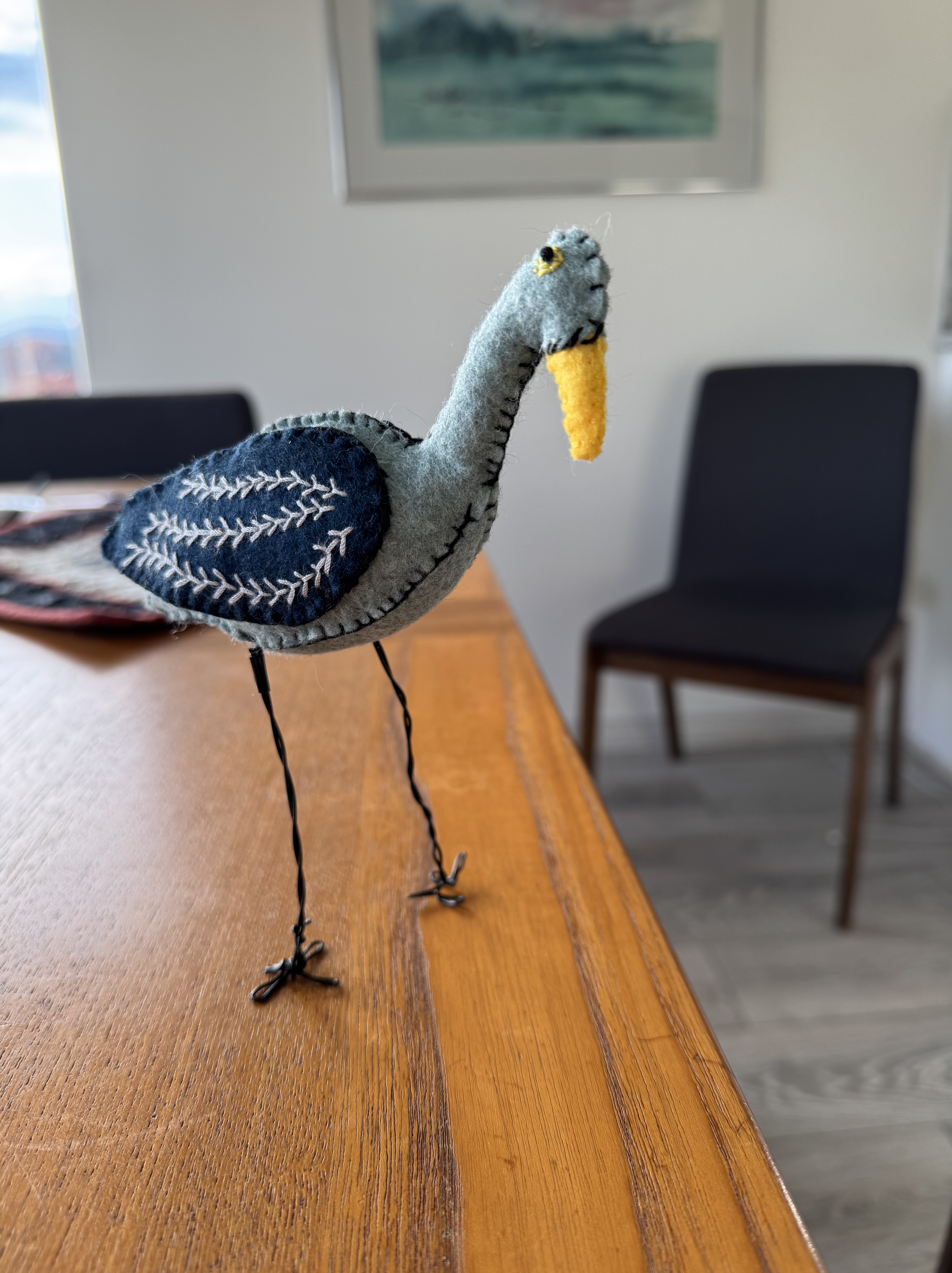
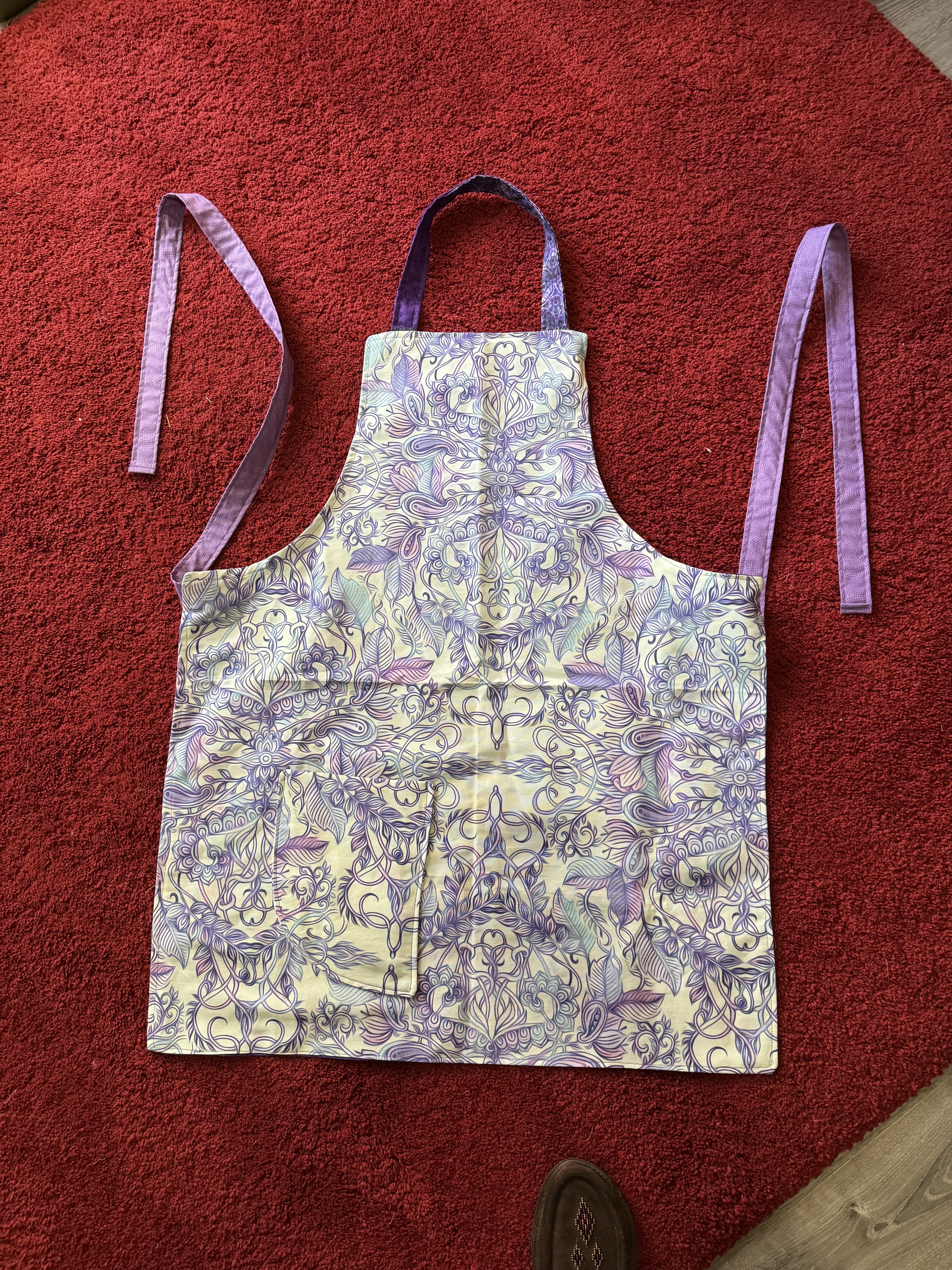
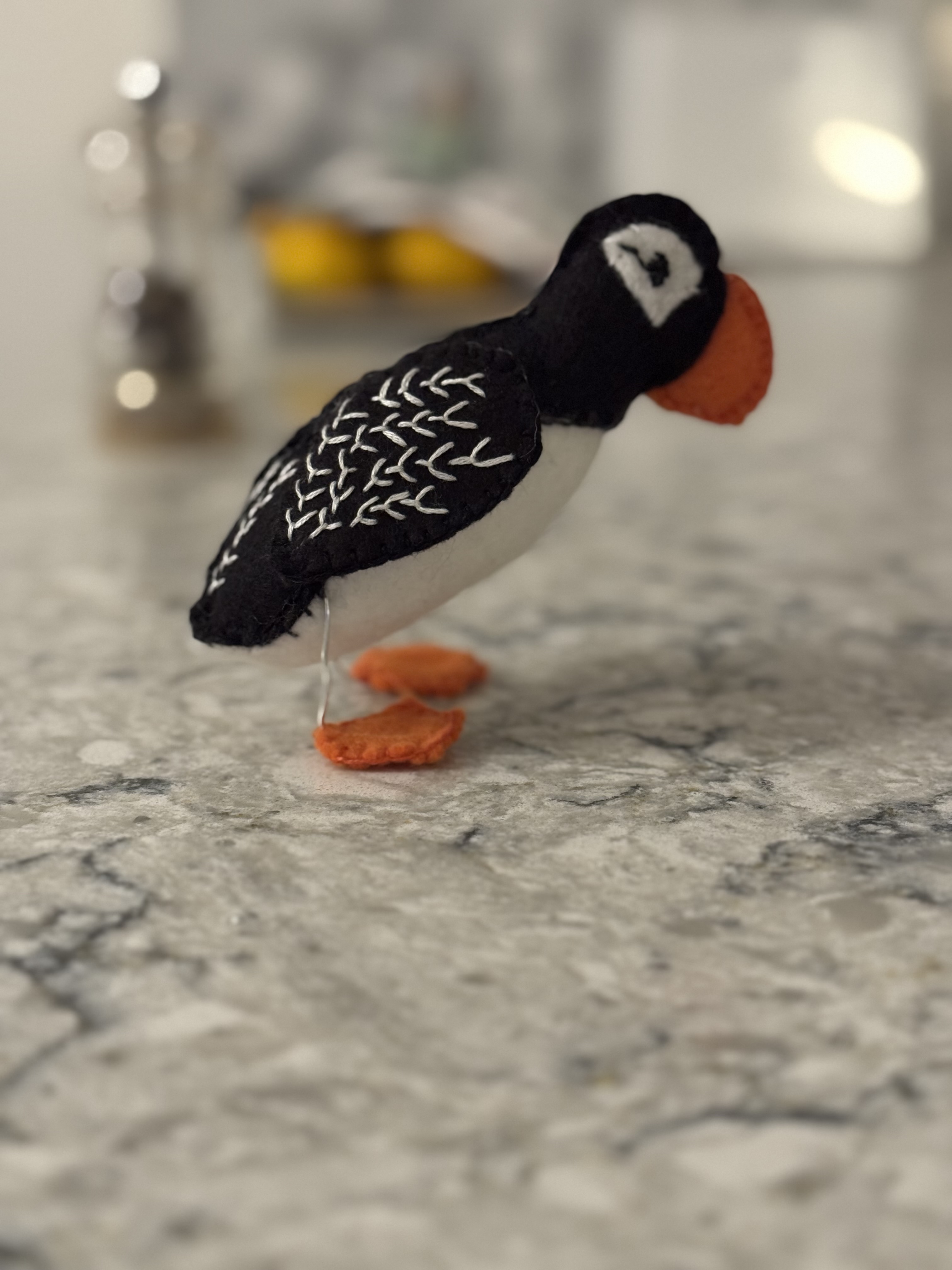
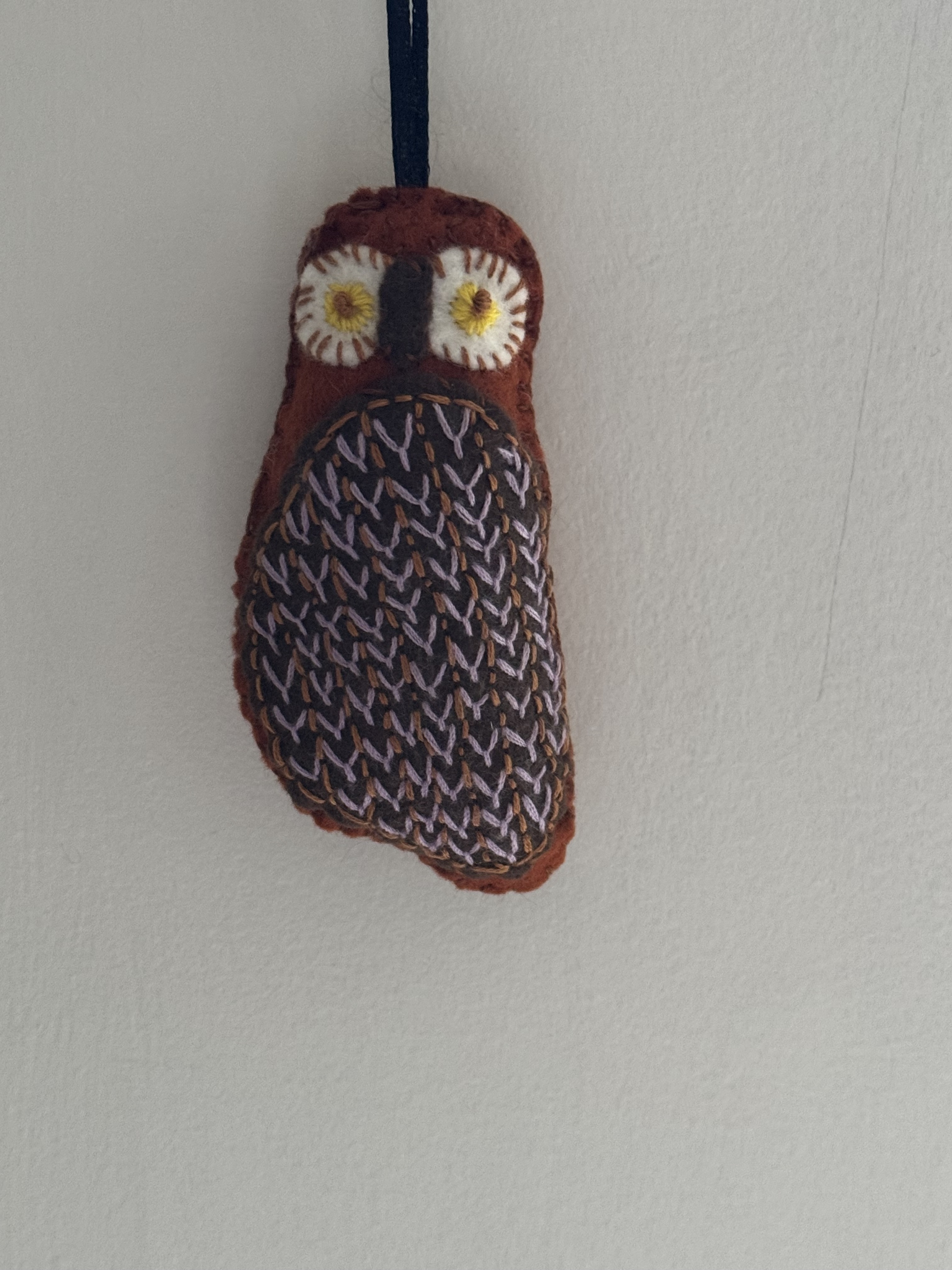
Coasters made from a shirt I bought at a yard sale10,000 JoysMe and Nancy – her birthday apronKathryn’s vegan chocolate cakea pillow for Janis’s birthdayMeytal’s birthday apronSling bag for NancyMichael wanted a Boston Cream Pie and I deliveredA lunch bag for meTwo pillows for my niece’s birthdayA quilt and pillow for a little baby I’ll never meetMichael named the owl I made him “Winston”Nat’s puffinI wanted an autumn apron, so I made thisFelt tree ornaments for my dear writing group membersSarah’s swanEvan’s heronCollage: Pieces of Me
Show and Tell

In old age,
let us
return to kindergarten
rituals.

Show something,
then tell about it
during circle time
with our friends.

I went to collage club
at the library
Women of all ages were
cutting up old magazines.
Glue sticks and colourful scissors
lay across white tables like
sacred instruments.

As we cut, some of us
spoke; others
remained silent.

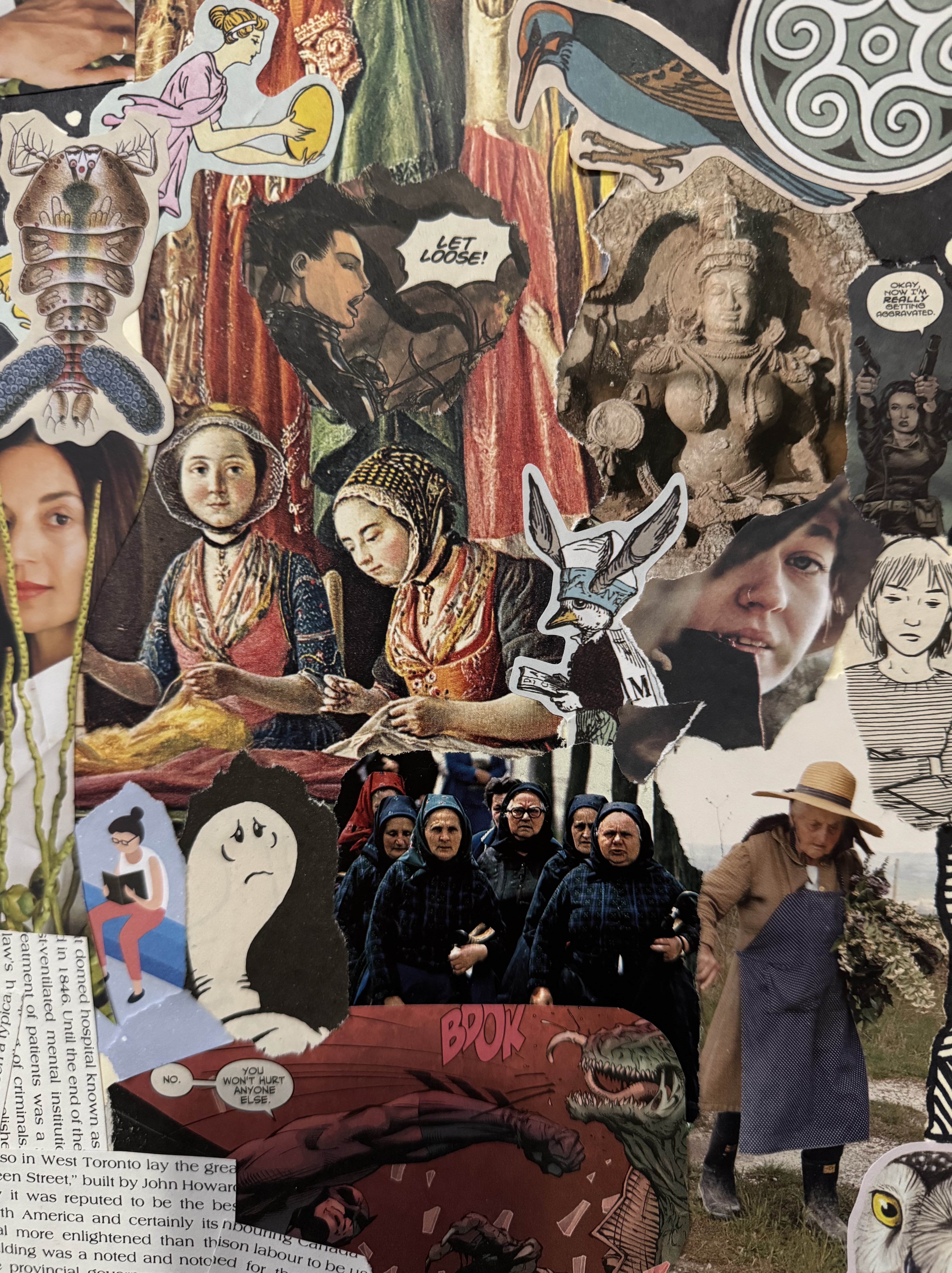
I made a collage
about the pieces of me.

Cool and aloof,
wise owl
serious as I sew buttons.
Sometimes a poor silly worm,
my blind eyes sensing light.

In past lives I was
fertility goddess,
discus thrower
seamstress
parasitic crustacean.

Inside of me, Batman blocks a monster:
“No, you won’t hurt anyone else.”

Inside of me, a bitch brandishes her guns:
“Now, I’m really getting aggravated,” she says, her voice rising on the smoke.
If women let loose their anger, the world would burn.

One spring day in Toronto,
forty years ago,
I rode the Queen West streetcar to work.
As we clattered past the mental
institution, number 999,
a statuesque woman, her
proud head shorn,
strode the sidewalk, naked.
Her brown thighs shimmered in
the light, her high breasts bounced lightly,
nipples hardened in the coolness
of that morning.
Everyone around me was,
for a moment, silent, awed
by this strange beauty.

Crustacean, crone, bird,
woman, warrior, gatherer of words,
seamstress of memories
Can you see all the pieces of me?
“When we run from our suffering we are actually running toward it.” Ajahn Chah
I’ve been basking in two messages from my unconscious this week. In one dream, a person wearing a bright tie-dyed shirt holds a hand lettered sign, “You are not alone.” In another dream, a young man, bearded, hugs me and whispers in my ear, “Thank you for your patience.” The messages are hackneyed, and yet they were delivered to me fresh, warm, colourful,by stately messengers. It doesn’t matter if they—the messages and the messengers—aren’t “real”; they are just as real as the people and events, the words, ideas, and things I encounter in my dream-like conscious life. And more to the point: They provide great comfort, having bathed me all week in an orange glow, a glow like that emanating from the 10,000 joys wall hanging, now installed in our stairwell.
The wall hanging seems to collect the sunlight falling in through the skylight and send back a peachy radiance. Several times now I’ve gone to flick the hall light off, thinking the switch is on when it shouldn’t be. No, the light is off, but 10,000 joys shed their own uncanny light.
When I made the piece, I kept telling myself, you don’t have to make its counterpart, 10,000 sorrows. It’s okay to just focus on joy right now. But of course, you cannot have 10,000 joys without 10,000 sorrows. I wish we taught this truth to children in kindergarten. You don’t experience joy without experiencing sorrow. And it’s okay. When you cling to joy and try to avoid sorrow, you just prolong it. I wish I’d gone to a Buddhist kindergarten, where these truths would be taught elegantly and logically, instead of being told by adults that “life isn’t fair,” which seems tawdry and cruel in comparison to the dharma.
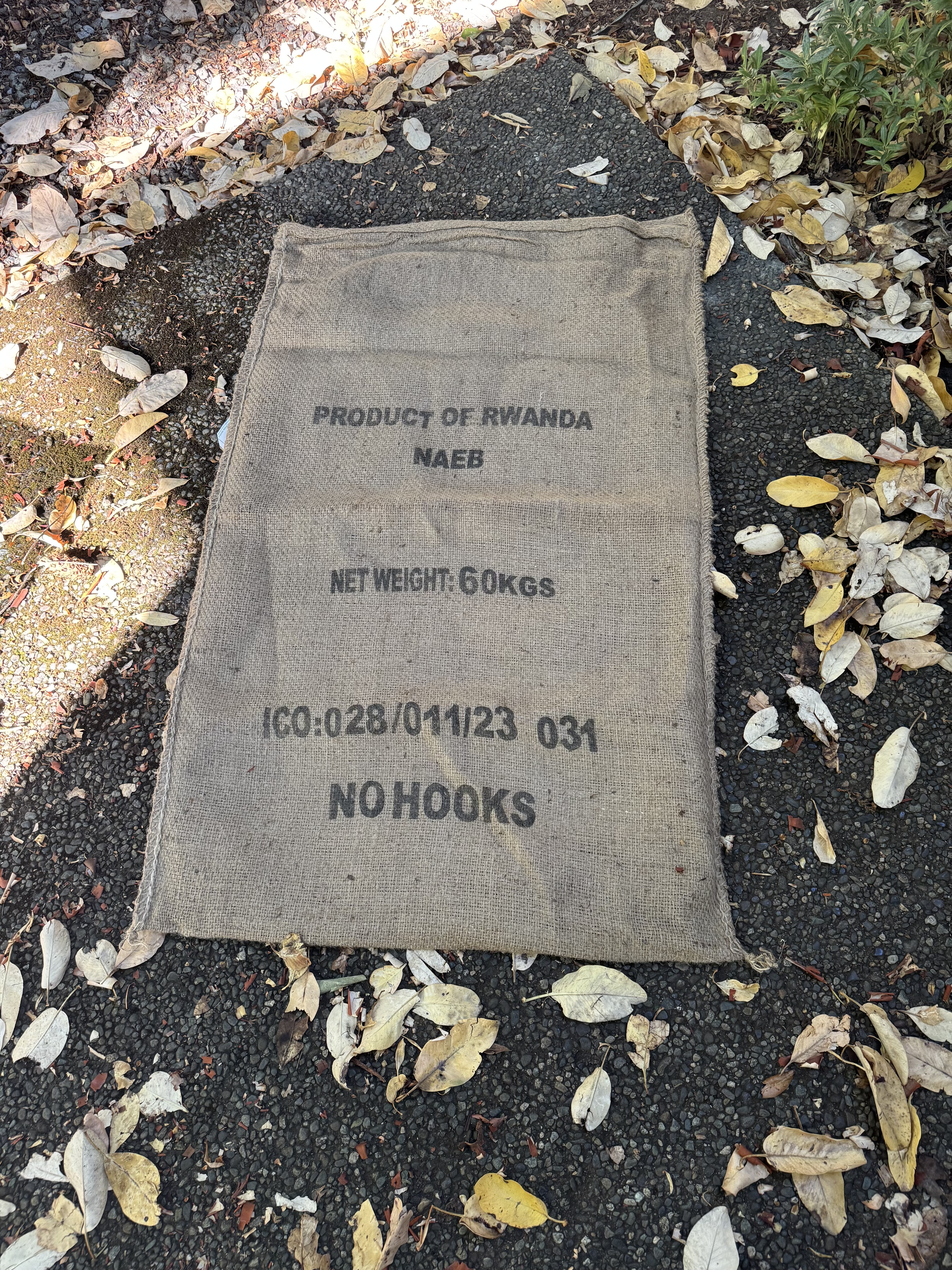
Inevitably, I am called upon to make joy’s counterpart. I had coffee with a friend yesterday at Esquimalt Roasting Company. As I waited at the counter for our lattés, I noticed a large burlap bag draped over a plastic bucket. I picked it up and showed it to the barista. Can I buy this? I asked. In my imagination, I was already picking its seams and spreading it out, a wide brown canvas for thousands of sorrows. It’s free! she responded. So now I have the backdrop for the wall hanging. I had originally thought it should be black, but brown is less dramatic than black, more subdued and complex, as sorrows often are, especially as we digest them.
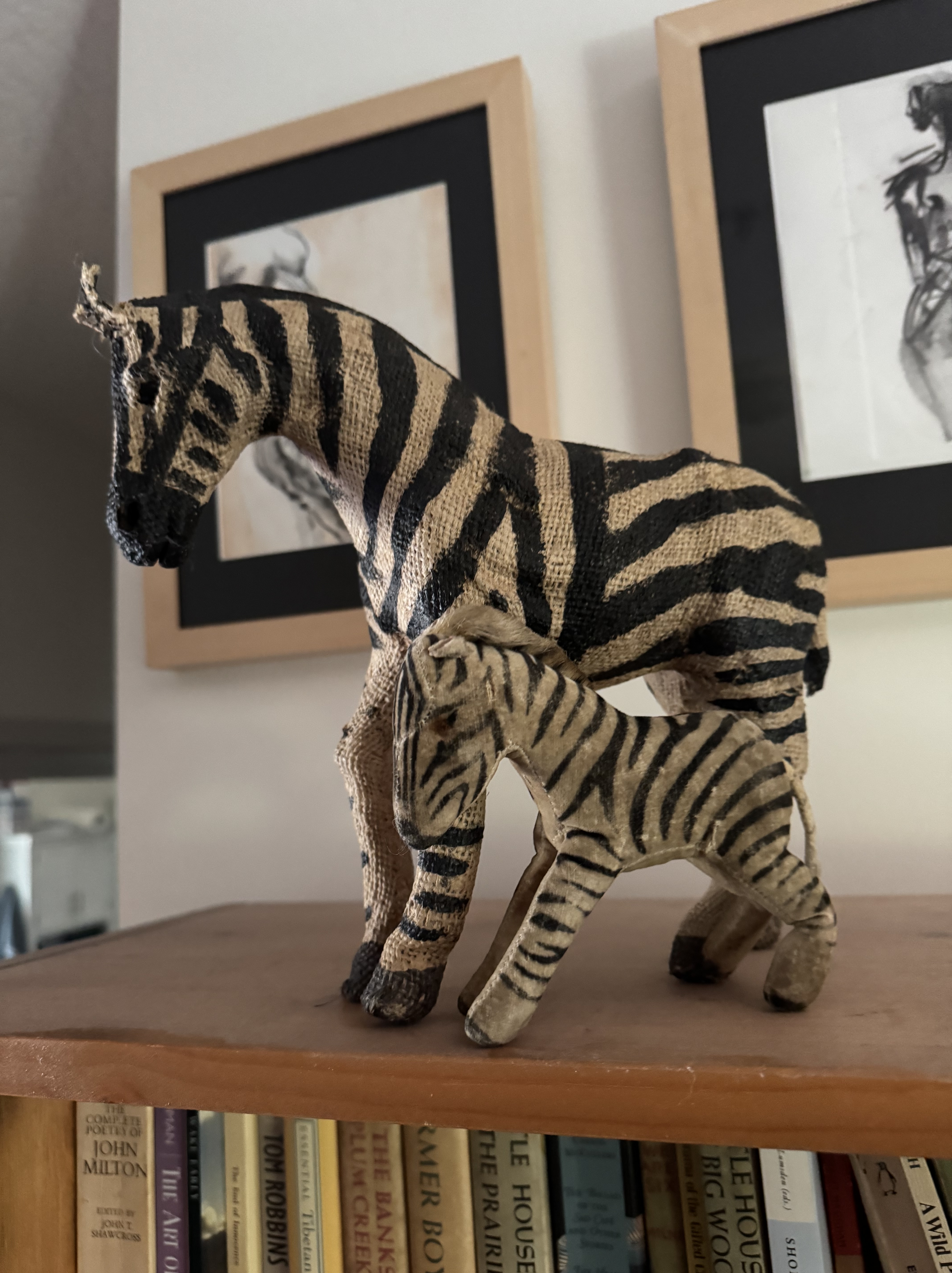
The burlap bag was pure serendipity. Another magical find was a zebra at the ReStore in Langford. Purchased for 70 cents ($1.00 but there was a 30% off sale). This zebra is majestic, dignified, kind, warm. She stands about 10 inches high. Her stripes are unrealistic, but otherwise she is a convincing animal. I dug out a stuffed toy zebra I’d kept from childhood in a box under the stairs. It’s remarkable this sixty-year old stuffed animal still stands! They now live together, mother and child, atop a bookshelf in our bedroom. I like to gaze at them from bed. Something about them feels calming, comforting. I loved my zebra striped one-piece bathing suit when I was eight years old. When I wore it, my reward was a zebra tan that was pure magic.
How to find comfort
Face fear, face grief, crunch on them like buttered toast, let them nourish you. Small striped body in the mirror, some kind of childhood magic. Let dreams bathe you in orange light. Sweet’s after tastes bitter, crying sparks a belly laugh. Joy and sorrow are so intertwined, you can’t tease them apart, please don’t waste time trying. Practice the butterfly hug: Hands cross collarbones, thumbs meet, fingers tap lightly, lightly. A comforting rhythm will come. It will come.
We trudge up our front steps in the early evening, returning from dinner with friends. We ate turkey, stuffing, beans and brussels sprouts, gravy, mashed potatoes. Our contribution was a salted caramel apple pie and vanilla ice-cream for dessert. We all ate too much. “I’m putting on my fat pants,” says my husband as he enters the code on the front door. At that moment, I turn on the steps to see a man pushing his daughter in a stroller across the street. The autumn light is waning. I catch the eye of this young father. It’s clear to me that he had heard what Michael said about fat pants. We share a smile.
That moment of human connection and common understanding made me happy all evening. What was it? It was knowing the feeling of eating too much and needing to get out of the jeans and zippered clothing, to put on the good old pjs with the forgiving drawstring. That young dad had a pair of fat pants too, I bet, a grungy pair of UVic sweats he pulls on when he’s eaten too many of his wife’s homemade cookies.
These days I wear fat pants most of the time. There has been a softening, not only of the gut, but of the days themselves. The hard beep of the alarm in the morning is gone, replaced by a warm hand touching my back, caressing my flank. The morning routine is unrushed. I push up the shade to see dawn clouds flushed in pink. The coffee tastes good.
I spend as long as possible in my pajamas, then switch to leggings with an elastic waist to take the dog for a walk. I step on the scale every once in a while, and my weight remains the same, hovering around 55 kilograms. But the body expands, loosens, just as time loosens around the edges. The weekends are no longer demarcated. The fence separating Saturday and Sunday from the rest of the week crumbles to reveal the long week as a flat green field. But as you traverse the field, day by day, hillocks rise up before you, unexpected, beautiful. A sudden offer, an old friend reaching out. Time to read a book in the middle of the day. The best morning glory muffin you’ve ever tasted.
Sometimes you panic because the borders have disappeared. Terrifying, all that unmarked space. So, you write to-do lists and make a lot of coffee dates and sign up for classes and try to get part-time work. Then you wake one morning, see the light leaking through the crack between blood-red curtains, hear the bird singing. You realize you’ve gone from writing in the first person to writing you, in the second person, and that you’re not even sure who you are anymore. Everything feels raw, your nerves pulsing beneath your bare skin. You realize you’ve gone from the occasional joy of a fat pants evening to a fat pants life, traversing a field without landmarks.
When I was in my forties, my mother was in her seventies. (We could rapidly figure out each other’s age because I was born when she was 30.) Those days, I had scant time for or interest in her stories. Busy with kids, negotiating the break-up of my marriage, and immersed in the chaotic life of a graduate student, I was living my life 3,000 miles away from my mother.
We talked on the phone weekly and visited once or twice a year. When she started to tell a story from the past, I often zoned out or became irritated. I didn’t really care, or I thought I’d heard it before. She sensed my impatience because eventually she stopped expecting a weekly phone call. “You sound too busy,” she said. I didn’t disagree. My forties turned to fifties; her seventies turned to eighties. We kept in touch, but calls were infrequent.
On Valentines Day, it will be six years since her death. I am 66 now, and at least a couple of times each week, I think of something I want to ask her. Some thread we dropped that I’d like to pick up again. Some mystery from her past I want to understand. Some memory I want her to clarify. (There are so many amorphous, shady memories—are they true?)
How did you make that wonderful crème caramel? I wish I’d gotten the recipe. Tell me more about the trip you took to Russia. When you returned from the trip and tried to tell me about it, I had so much on my mind I didn’t listen. But now I really want to know. And the other trips… so many European cities you visited, sometimes with groups of students, showing them great works of art and architecture. I wish you could tell me more.
You didn’t talk to your own mother for decades. I never knew her, only met her once. Why were you estranged? Your childhood was traumatic. Is it true you missed a year of school because you didn’t have shoes to fit your feet? That you learned to drive the tractor at age nine (or was it 12) so you could help on the farm? That your dad kicked you out of the house at 17, but he’s the one you loved? Am I misremembering your narratives?
I have the old phone number in my head 416-922-9534; if only I could call, we would chat. She’d be happy to hear from me and to reminisce, I know. But she’s no longer available. The stories, too, are gone. They died with her.
I had the wherewithal to record my father talking about his life in 2014 when he was visiting (he was 87). I asked him a series of questions. Now, I am glad to have his voice preserved as he talks about his parents, being a father, his life as an academic and farmer, and formative childhood experiences. For example, he describes discovering an injured bird when he was a young boy, taking it home and nursing it back to health, then releasing it. That event cemented his lifelong love for birds.
I feel wistful now that I didn’t make audio recordings or write down some of my mother’s stories.
I signed up for an online course, “From Autobiography to Illustrated Story.” The goal is to produce a short, illustrated book about an object that we still have from childhood: its provenance and meaning to us. I have precious few objects to choose from. The yellow Tonka truck. A doll my mother made for me out of an old sock with yarn hair and an embroidered mouth, nose, and eyes. Little Bear, the Steiff teddy. And I have some things that belonged to my mother.
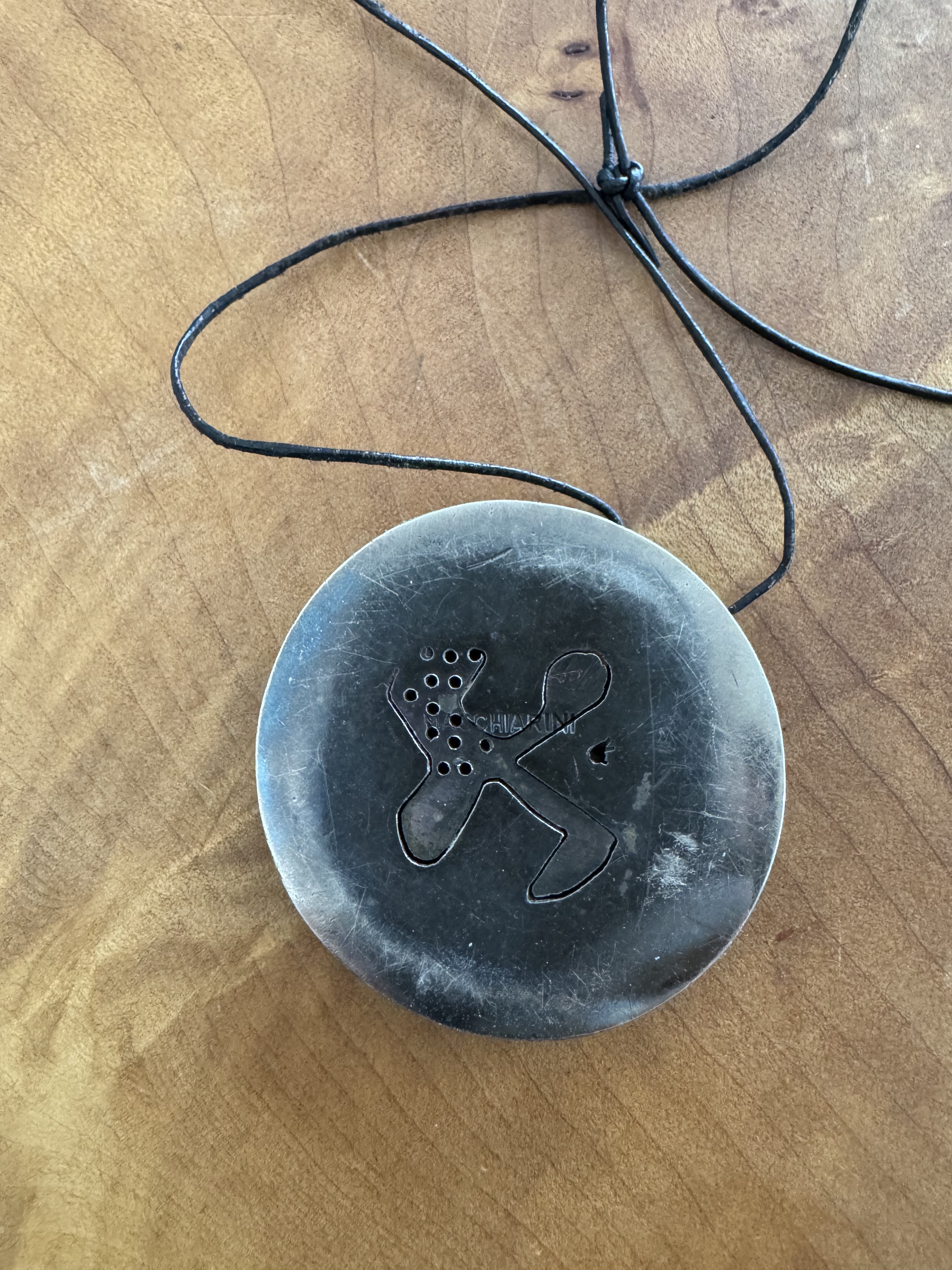
I decided I wanted to write about my mother’s Macchiarini pendant. My sister took it from her house after her death and gave it to me, thinking it suited me. I agree. Mom loved the work of Peter Macchiarini, an American Modernist jeweller (1909-2001) from North Beach, San Francisco. The several pieces my mother owned were passed down to us, her daughters. I have a couple of brooches, the pendant, and two belt buckles, and my sisters have other examples of his work.
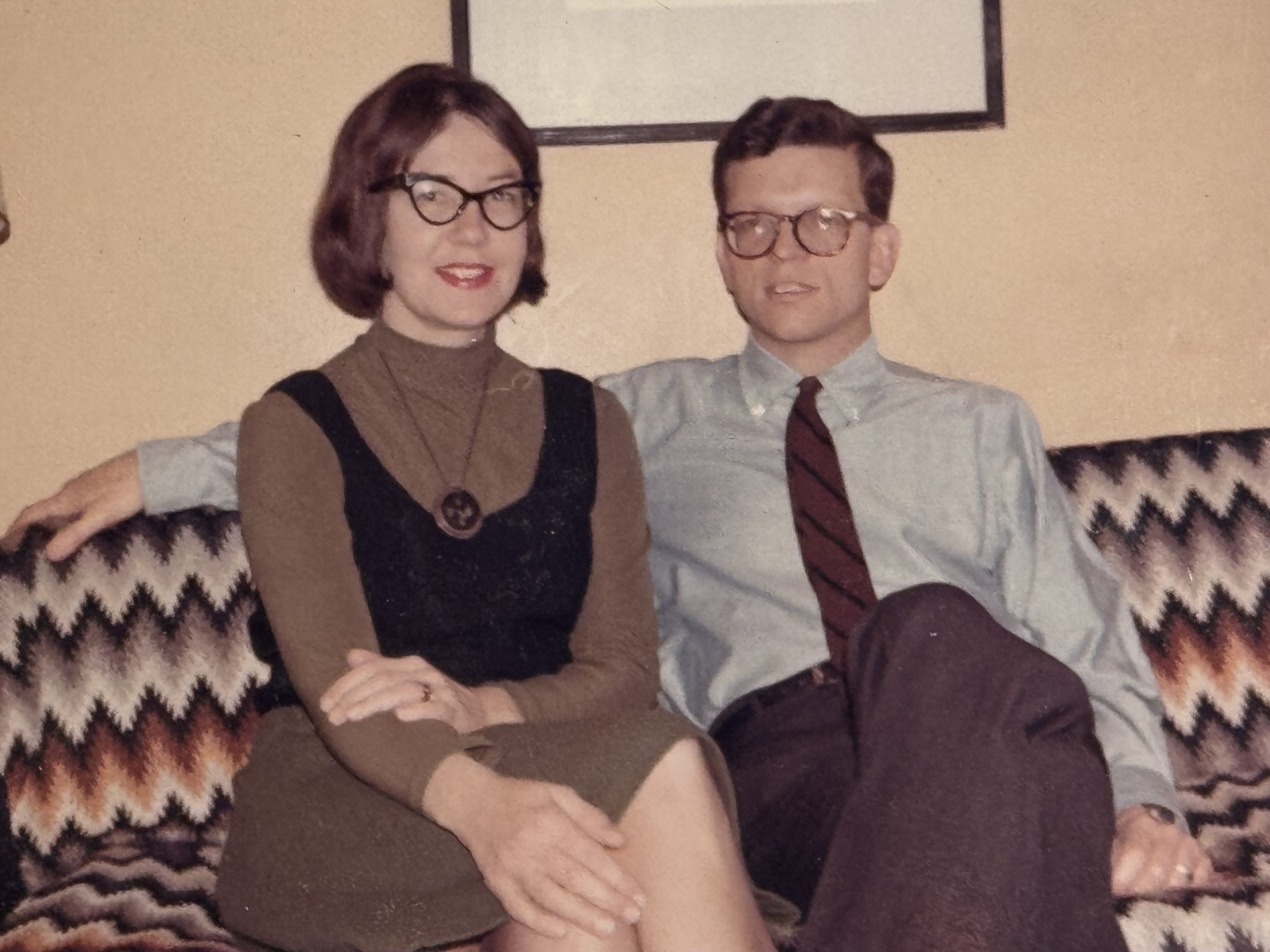
I want the pendant to tell a story—a story about my mother’s love for mid-century art, particularly from the Bay Area. Mom knew Peter, or at least I think she told me she did. She must have had anecdotes about how she bought the jewelry, what he was like, her San Francisco connection to him. She wore this pendant often, her signature piece. The photo of her and my dad shows her wearing it in 1964. She is wearing it again in the photo with her cat when she was in her sixties.
But the stories about Mom’s relationship with Macchiarini died with her. I can’t remember anything, and now I can’t ask her about them. What can I say about this unusual round pendant, a playful amoeba shape carved into dark wood and set in silver and gold? I can say that when I wear it, I feel warmth under its weight. Warmth around the heart, generated by affection. Our relationship was complicated. She was fucked up, inevitably passing along some of that to me. Yet there was so much love. She instilled in me a reverence for life’s beauty. And inextricable from that, a cellular knowledge of sadness.
I notice that my left hand is placed on my right arm just as my mother’s left hand is placed on her right arm in the 1964 photograph. Coincidence?
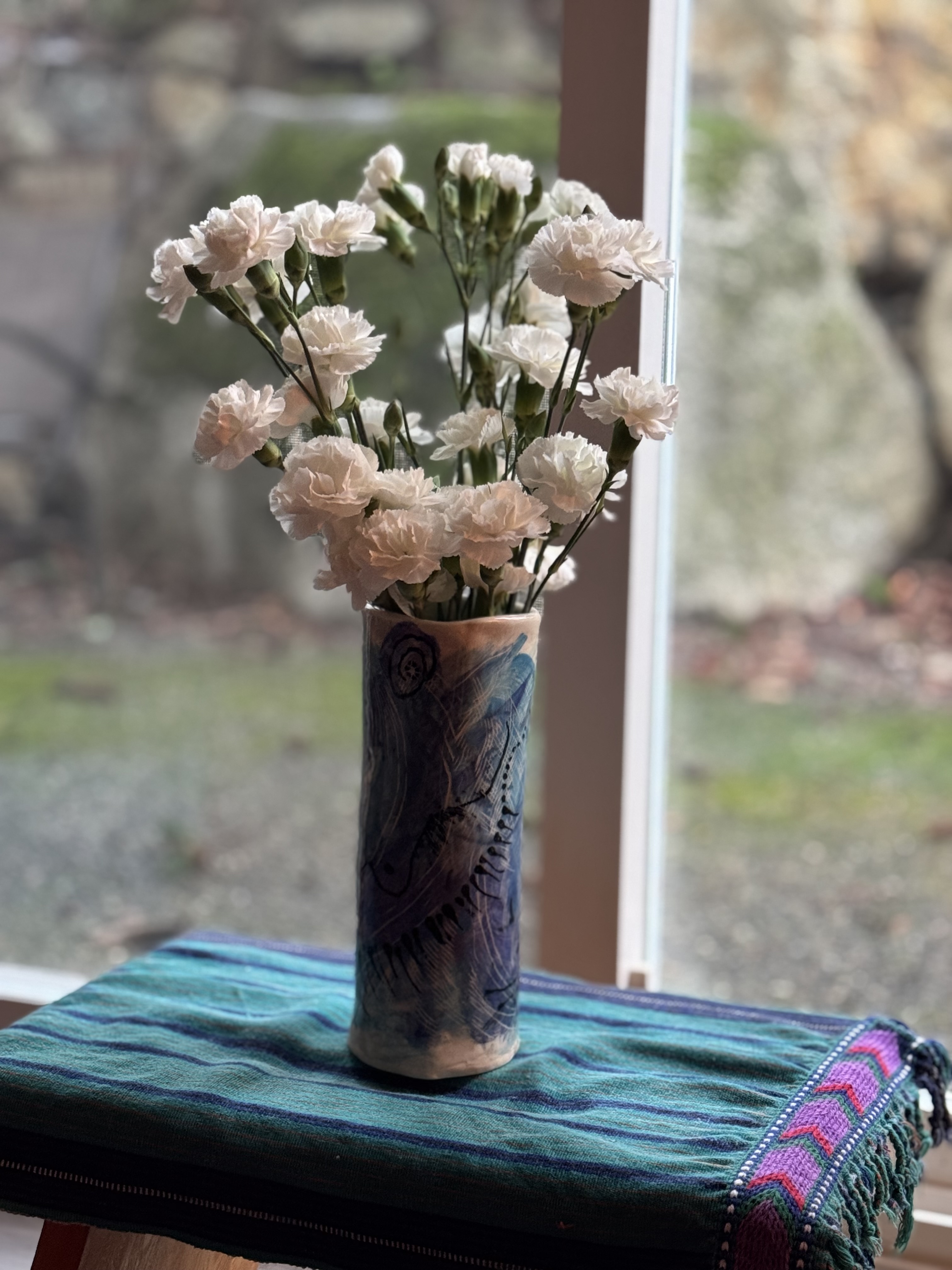
In mid-December, I bought a green glass jug in a second-hand store, half price. My aspiration was to make a beautiful winter bouquet for my friend, Lillian. I bought a bunch of silver dollar eucalyptus and two dozen white carnations. I envisioned white wintry bursts among the silvery green, but the more I trimmed and mixed the carnations with the stems of eucalyptus, the sillier and more incoherent it looked. I took basic Ikebana but still haven’t a clue how to make flowers and plants look good.
Finally, I used only the eucalyptus, splayed out in a free-fall arrangement. I attached a few small, red shiny balls to the stems, and the effect, I hope, was Christmassy and charming, if a bit messy. Lillian said she loved it. (But what could she say, really?) I was going to throw out the unused carnations, but it seemed such a waste, so I put them in a white and blue vase and placed it in my study on a low stool covered with a blue-green cloth.
I don’t like carnations, or I didn’t think that I did. I’ve seen too many sad, slender bunches wrapped in cellophane at the mini-mart next to the hospital. They make me think of last-minute purchases for the death bed, cheap flowers that outlive the person you visited. They seem so tight, orthodox, banal. Whorls of perfect, serrated petals, every bloom the same.
But they’ve grown on me. As I spend hours in their presence, they’ve become real. You could say I’ve become intimate with them. I sit here now, the last day of the year, gazing at their fresh ordinariness. The carnation is the sturdy, faithful flower that will see you through. Perhaps they are flower of the year: commonplace as canned milk. Carnations are one-foot-in-front-of-the-other flowers. Quotidian flowers. Bread-and-butter blooms. See you through the hardest times. Last for weeks. Nothing special.
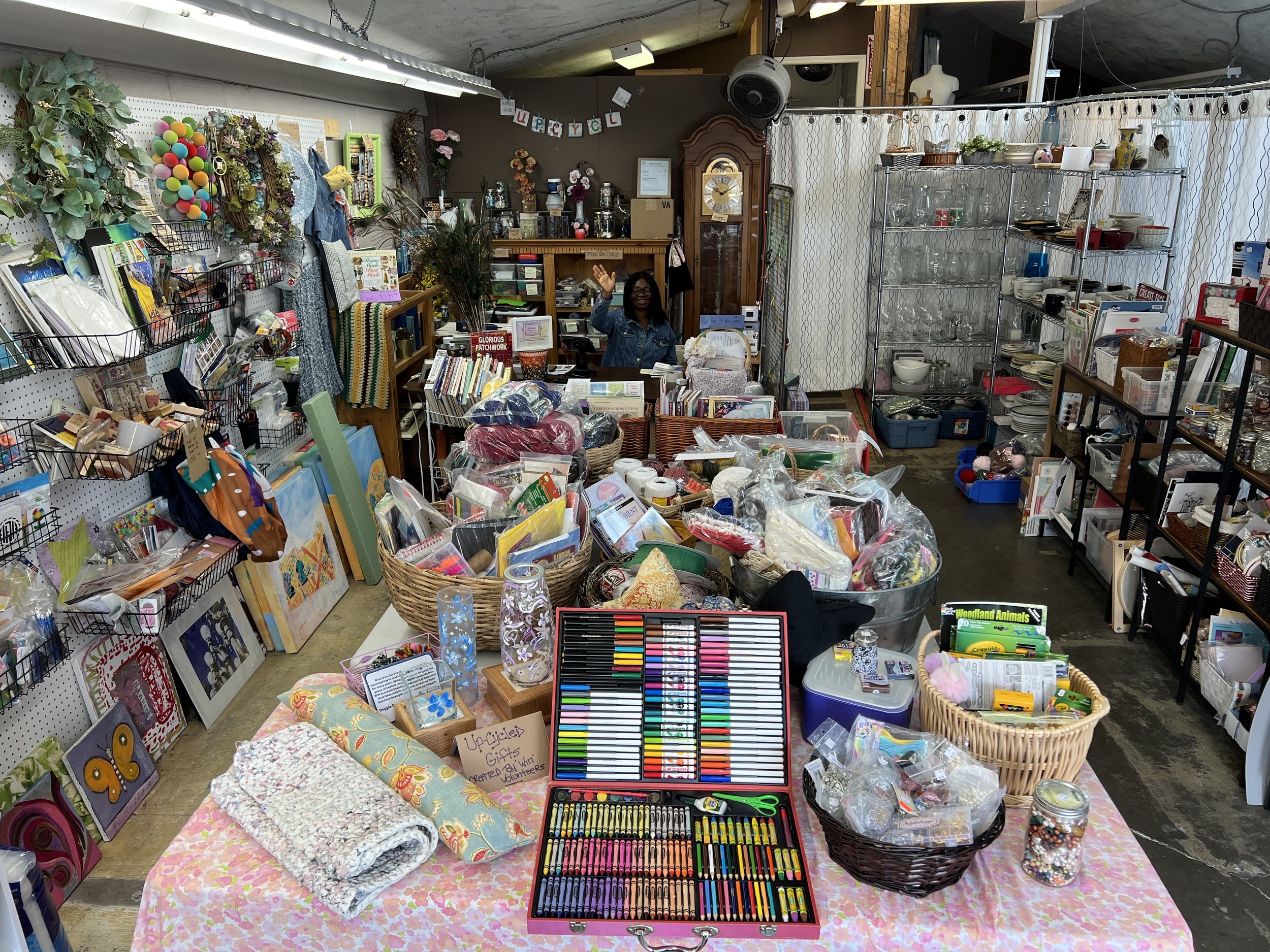
Although 2024 was my first year of so-called retirement, and thus I was given twenty additional hours each week, I wrote less, and I sewed less. (A few felt birds for family and other little felt creations, an apron, a crib quilt start, a fur-lined bag.) I did finish an editing certificate I started in 2020, which is a relief. And I made a lovely new friend and deepened existing friendships. I started a volunteer gig at a non-profit arts and crafts shop in August that has led to meeting many interesting people. Bonus: I get to surround myself with a messy profusion of materials that inspire me.
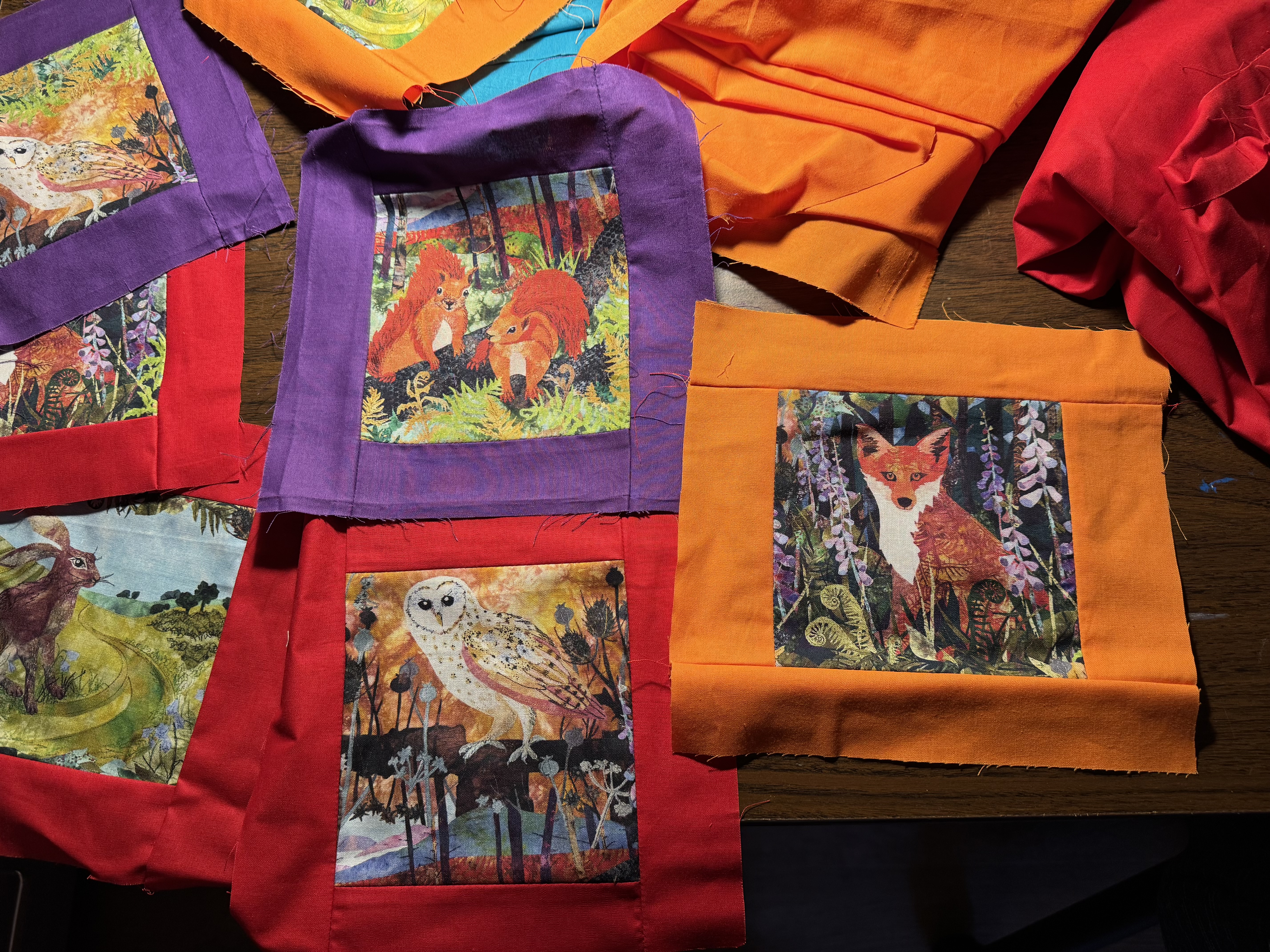
Kathryn’s robinAllison’s pigeonEvan’s heronNancy’s reversible purple apronNancy’s reversible purple apronSarah’s swanI made felt hearts for friends at Christmas.Nat’s puffinNat’s puffinI started a quilt for Lillian’s great grandson, FoxWilson the owl, a gift for Michael Magic bag lined with fake fur for Nat’s 30th birthdayWomen in Need’s Upcycle and Craft store on North Park Avenue. I work there on Thursday afternoons.
This year, I listened to probably one hundred dharma talks on Dharma Seed, with a broad aspiration of becoming more intimate with life—accepting whatever’s happening in my heart, whatever’s happening in the world. Making friends with wild mind. Accepting the truth of the way things are.
I read so many books this year. A couple that stick with me are Rebecca Solnit’s memoir, Recollections of My Nonexistence and The Age of Loneliness, a book of essays about life during the sixth extinction by Laura Marris.
Solnit writes a lot about being a woman. That’s what her title gestures toward—the peculiar “nonexistence” of being female in a patriarchy (remember mansplaining? She is behind that neologism[i]). She draws on John Berger’s 1972 Ways of Seeing, which I’ve known about for years and now am determined to read. She quotes words from him that jibe with my experience: “To be born a woman has been to be born, within an allotted and confined space, into the keeping of men. The social presence of women has developed as a result of their ingenuity in living under such tutelage with such a limited space. But this has been at the cost of a woman’s self being split into two.”
Perhaps that sounds dramatic in the Global North in 2024, but that has been my experience. Perhaps it’s different for lesbians. Perhaps it is different for women of subsequent generations, but Solnit and I were born three years apart (1961/1958), so we grew up at roughly the same time. Berger goes on,
“A woman must continually watch herself. … She has to survey everything she is and everything she does because how she appears to others, and ultimately how she appears to men, is of crucial importance for what is normally thought of as the success of her life. Her own sense of being in herself is supplanted by a sense of being appreciated as yourself by another.”
Solnit calls Berger brilliant and generous, to be able to imagine a woman’s experience, and I agree. What he writes here feels just as real as the carnations in front of me. Reading the passage and feeling its truth is freeing. No action needed, just awareness.
Similarly, truth pinged through me when I read Laura Marris writing about the age of loneliness. We become lonelier as we bear witness to the drastic reduction, or “great thinning,” of ordinary animals. Marris draws on the work of naturalist, Michael McCarthy, who writes of our baby boomer age group, “As we come to the end of our time, a different way of categorising us is beginning to manifest itself: we were the generation who, over the long course of our lives, saw the shadow fall across the face of the earth.”
Reading this series of essays, elegies to Earth as the shadow descends and animals disappear, I was gripped by a grief so deep I sat for a time and just cried. Again, the truth is freeing. Let’s not deny that this is happening. It’s really happening. We can still enjoy the beauty that is here.
In keeping with my mood of asceticism, I recently deleted my Facebook and Instagram accounts. Unlike the birds who used to sing outside my window, FB and IG will not be mourned. I feel light as I step through life with a new red pedometer safety-pinned to my leggings (the pedometer frees me from carrying a “smart” phone to count steps). Michael, Marvin, and I amble down to the beach at Thetis Cove to watch the sky change. Rippled water reflects a bank of pink clouds.
Thank you for reading. In the coming year, may you experience moments of lightness in a shadowy world.
Berger, John. 1972. Ways of Seeing. Penguin. Marris, Laura. 2024. The Age of Loneliness: Essays. Greywolf Press. McCarthy, Michael. 2015. The Moth Snowstorm: Nature and Joy. New York Review Books. Solnit, Rebecca. 2020. Recollections of My Nonexistence. Viking.
[i] From Wikipedia: The term mansplaining was inspired by an essay, “Men Explain Things to Me: Facts Didn’t Get in Their Way”, written by author Rebecca Solnit and published on TomDispatch.com on 13 April 2008. In the essay, Solnit told an anecdote about a man at a party who said he had heard she had written some books. She began to talk about her most recent, on Eadweard Muybridge, whereupon the man cut her off and asked if she had “heard about the very important Muybridge book that came out this year”—not considering that it might be (as, in fact, it was) Solnit’s book. Solnit did not use the word mansplaining in the essay, but she described the phenomenon as “something every woman knows”.
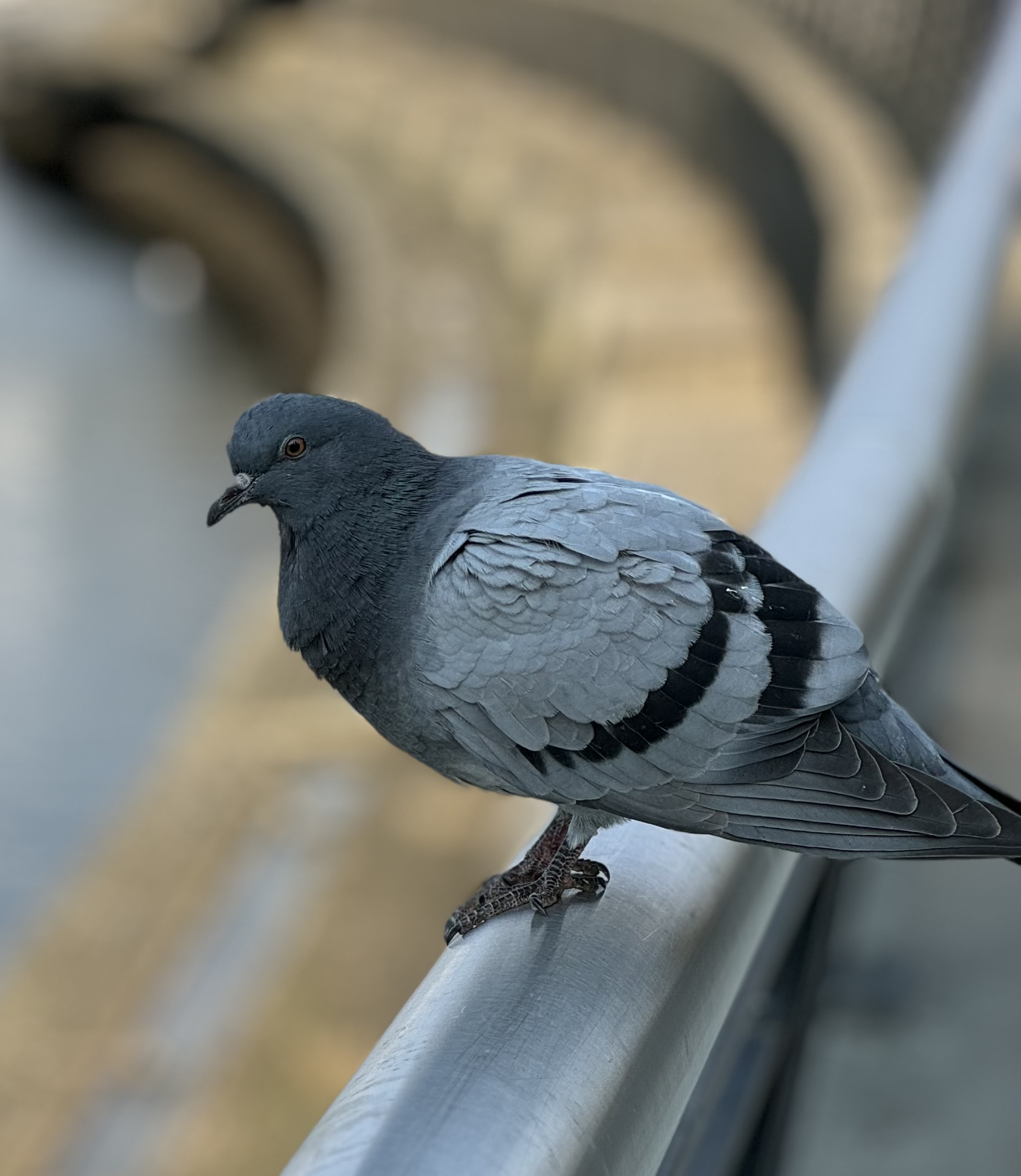
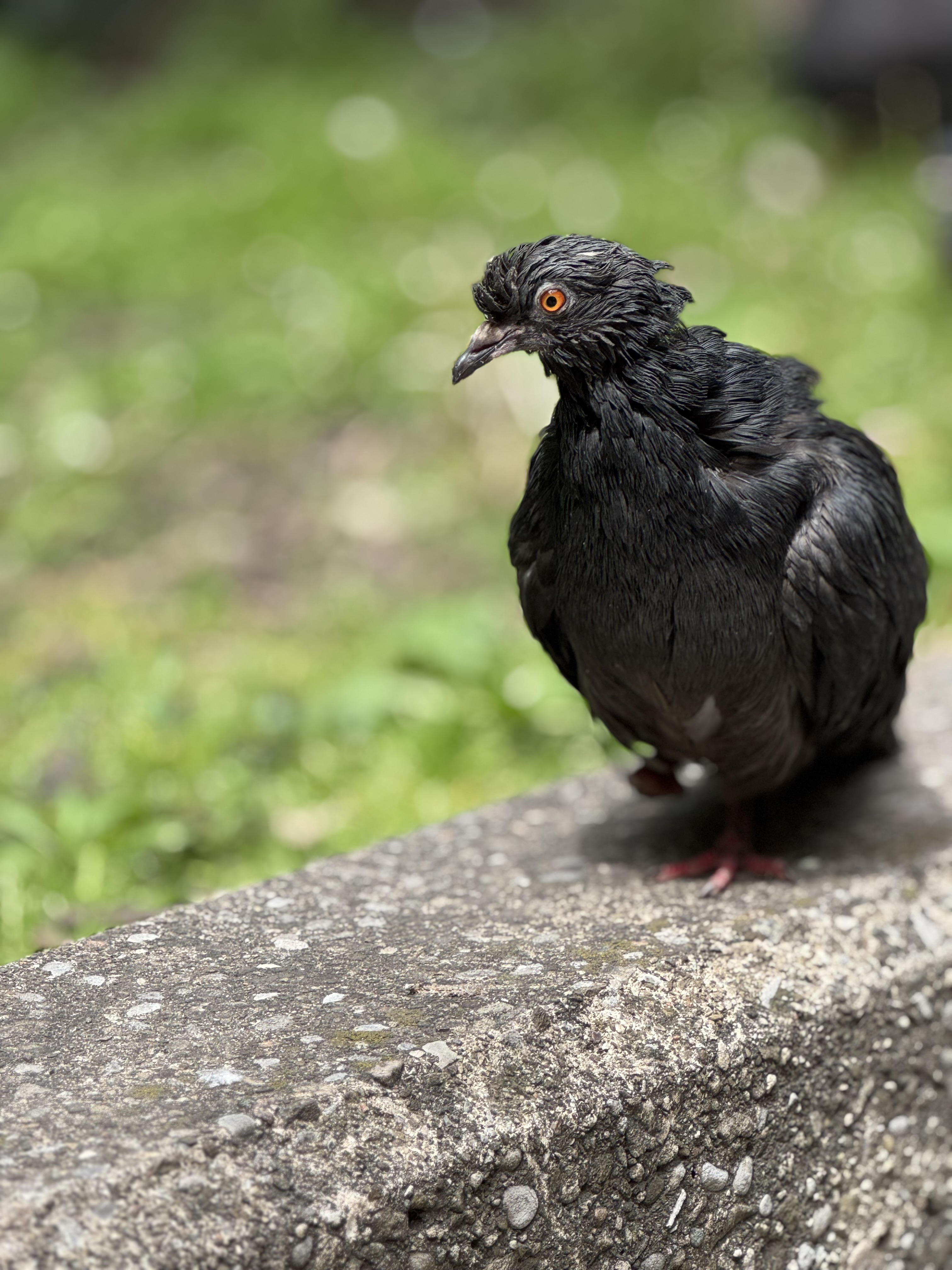
As I read the last line of Mary Oliver’s poem “Heavy”—”a love to which there is no reply”—it occurred to me that this describes my love for NYC. You can love NYC, but NYC doesn’t love you back. NYC doesn’t actually give a shit about you; the city is completely self-absorbed, and that’s just fine. It’s all part of the city’s mystique, its swirling, pigeon-flocked, neon-lit-glass-and-steel, rapid-fire, whirling-dervish, creative vibration.
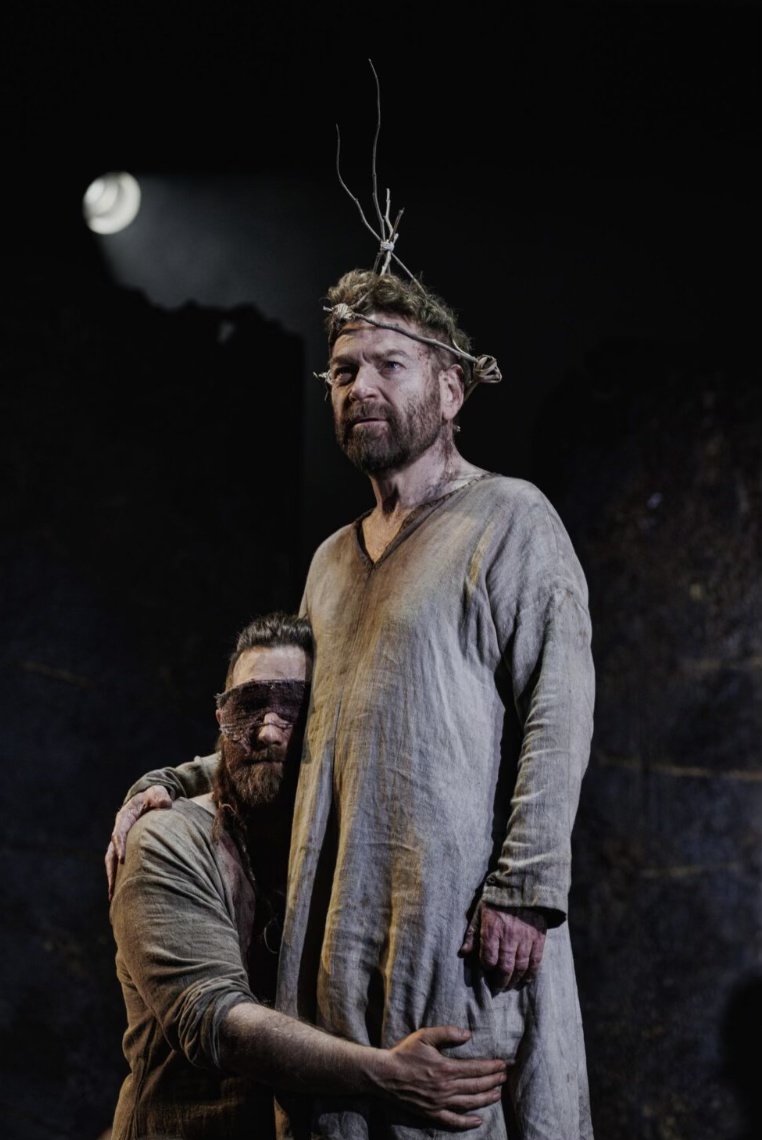
We stayed at a sweet hotel in the Flatiron district, saw wonderful exhibits at the Whitney and the Met, watched Kenneth Branagh as King Lear, went to a comedy show where five hilarious stand-up comedians made me laugh for ninety minutes. I loved all of it, every minute. But a few small vignettes stay with me and keep breaking the surface of my thoughts.
One dollar for an original print
In the Whitney Museum gift shop there’s a vending machine at one end where you can slide four quarters into the slots, push, and out pops an original print of some NYC iconic object or scene by Ana Inciardi. We put our quarters in, and now we own two tiny prints (2.5 inches by 3.5 inches): a black and white cookie and a NYC water tower. Inciardi is kind of genius, isn’t she? I don’t know if she profits from this—surely a print for a dollar is not netting her much money. But it is such a delightful thing to encounter: a vending machine dispensing original art. I want art vending machines to be installed everywhere, machines where you insert coins and receive poems, collages, small clay sculptures, watercolours, flash fiction, holograms, fabric art, tarot cards… Can you see it?
The women’s washroom at Barnes and Noble
To use the washroom at the Fifth Avenue location of Barnes and Noble, you must first purchase something. At the bottom of your receipt is the bathroom code. I bought The Temporary, a novel by Rachel Cusk, an author I have been wanting to read (the novel is wonderfully written, but very depressing). I then used the code to enter the women’s washroom, where there was a line up for the two working stalls (there always seems to be one stall with a scrawled “out of order” sign). A woman of colour (#1) exited one of the stalls, but the next person in line (white woman) looked in, then withdrew with a look of disgust on her face. Woman #1, was busy washing her hands. I said to woman #2, “what’s the problem? You’re not going in?” Woman #2, not making eye contact with me, said cooly, “they got stuff all over the seat.” I went into the stall and saw a fine spray of water droplets on the seat, likely created by the toilet’s back spray. Quickly removed with a wipe of toilet paper. The venomous way woman #2 said “they got stuff all over the seat” implied something terrible, perhaps excrement smeared everywhere. Her contemptuous reaction was so overblown and ridiculous—it felt symbolic of a rising wave of incivility and prejudice in (American) society. Ugh.
Four girls draw a statue
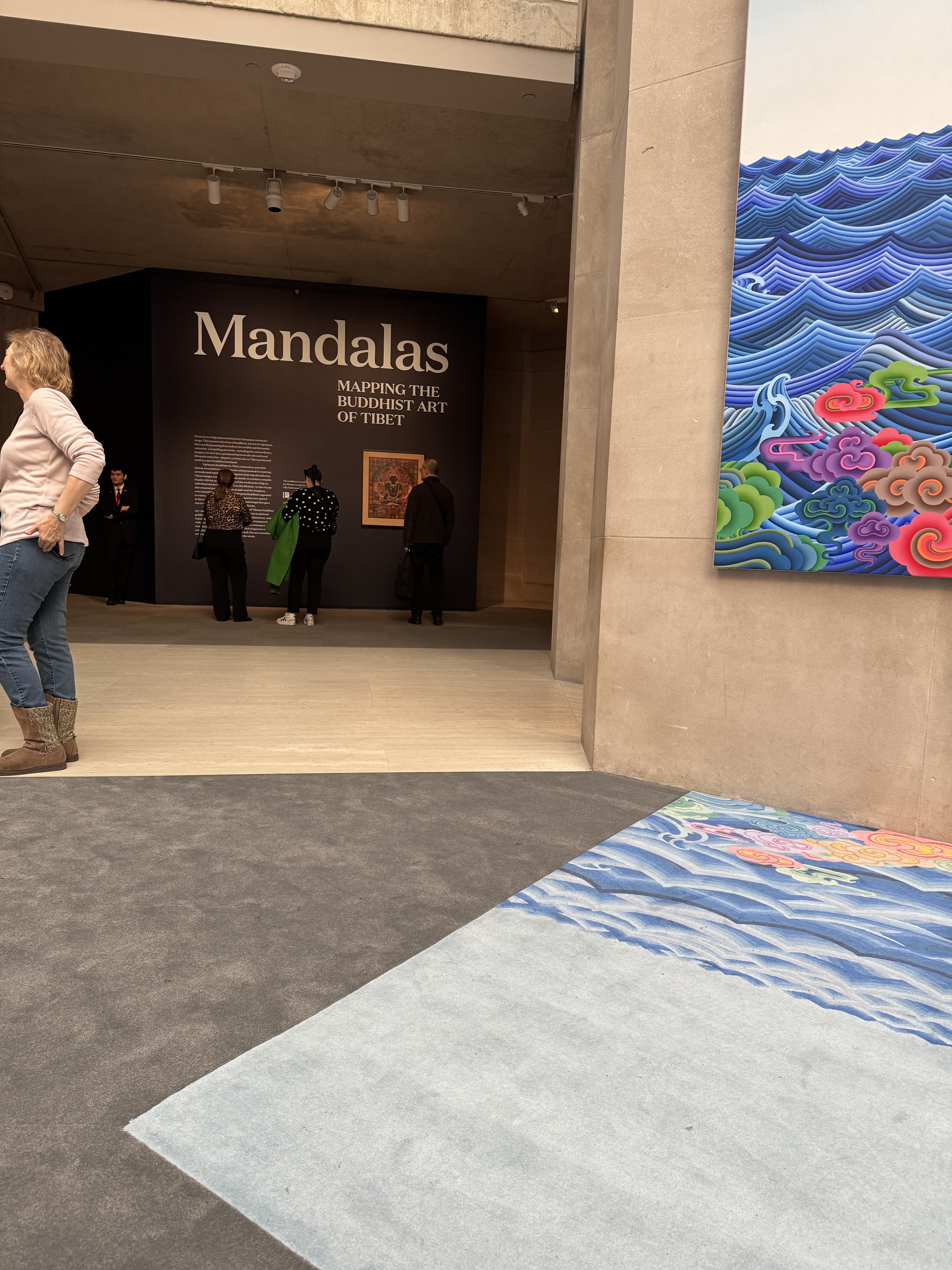
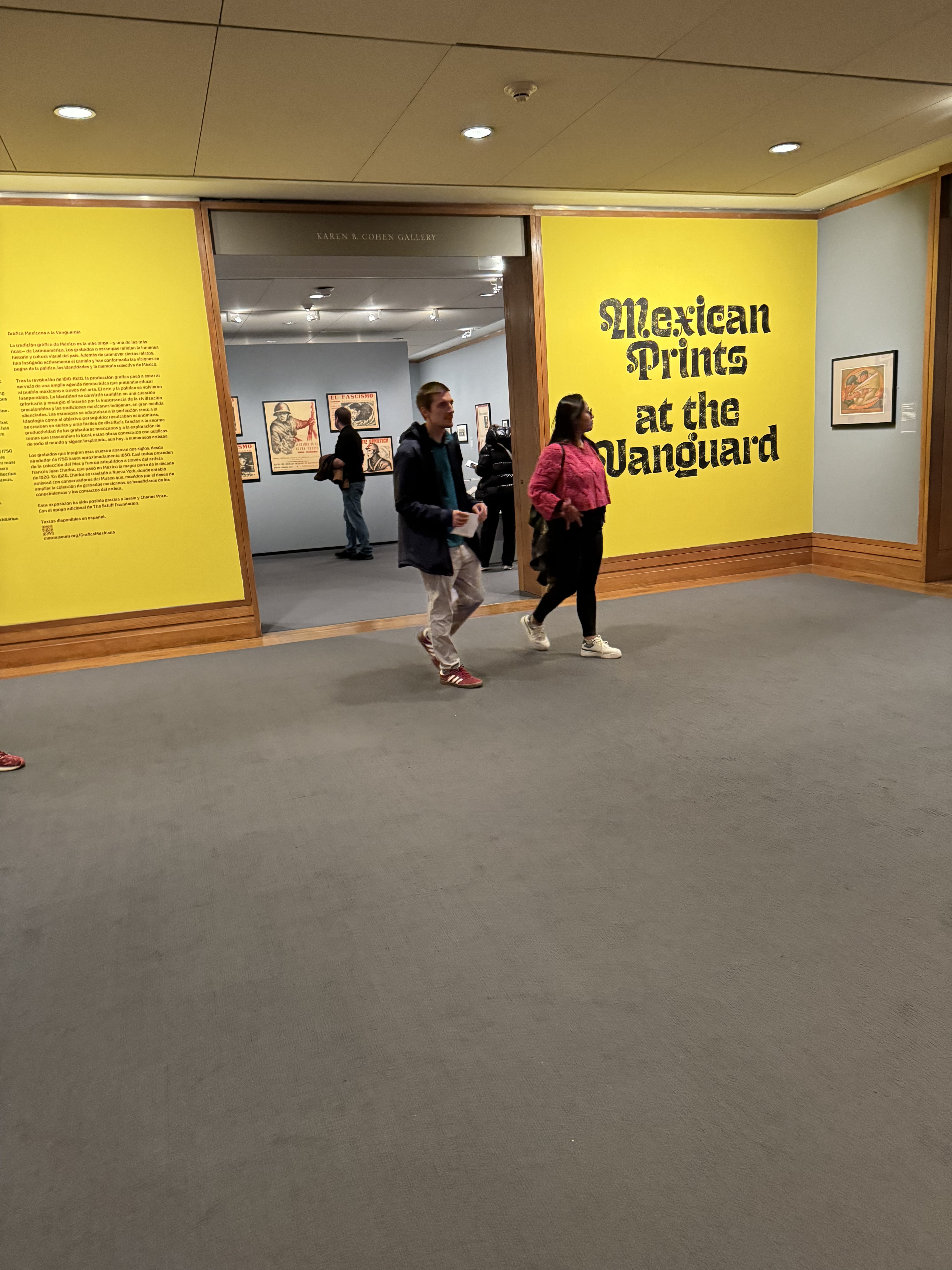
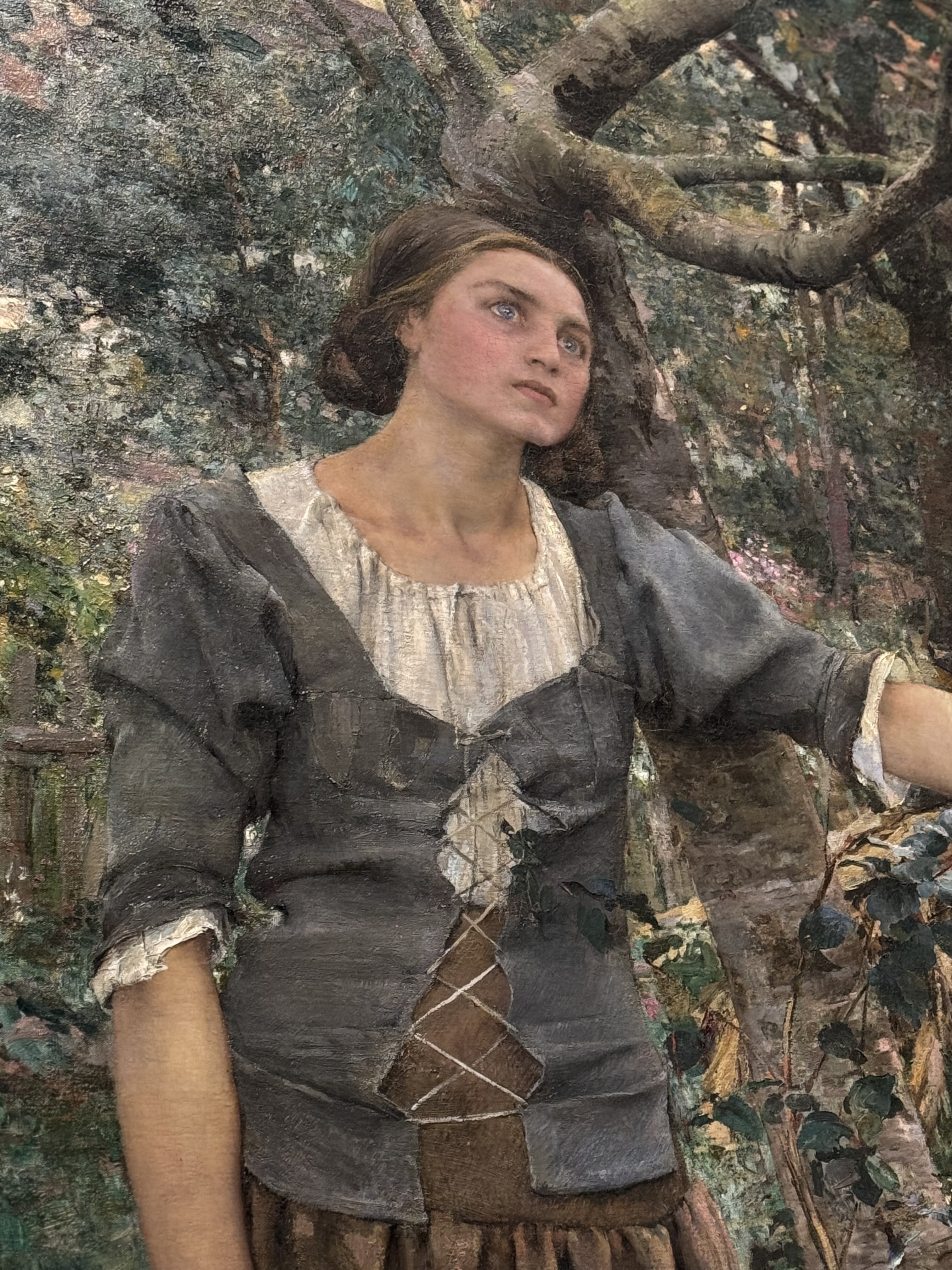
I loved the two exhibits we spent time with at the Metropolitan Museum of Art: Mandalas, Mapping the Buddhist Art of Tibet and Mexican Prints at the Vanguard. As we left the museum, passing through the Leon Levy and Shelby White court filled with ancient Greek and Roman statues, I saw four teen girls sitting on the marble floor in front of a bench, absorbed in drawing a statue of a nude man. This is what I will remember from the trip… their bowed heads, their silent engagement with the statue and with each other. A refreshing palate cleanser after bathroom woman #2’s remark. Oh, and the Joan of Arc by Jules Bastien-Lepage (1879): her face had me swooning.
Docent at the Met
We got a bit lost after the Mandala exhibit and asked a docent for help locate the gallery where the Mexican prints were on display. She led us rapidly through throngs of people, and I told her my mother had been a docent for years at the Art Gallery of Ontario (I had many moments of thinking of my mom in NYC—we visited the city together in my early twenties and saw, among other things, Zero Mostel in Fiddler on the Roof). The docent explained she had to do highlights tours for two years before they let her specialize in anything. I asked her what she specializes in now. Arms and armour, she answered. And I get to have another speciality, she said, but I am taking a break. Evidently, it’s exhausting to learn all there is to learn about the arms and armour in the Met’s extensive collection.
Pumpkin Pie at the Malibu Diner
Before the show at Gotham Comedy Club, West 23rd and 7thAvenue, we ate dinner at the Malibu Diner across the street. An old-fashioned American diner with a huge, laminated menu, plenty of booths with red vinyl benches, low chrome stools facing the long counter. All of the waiters spoke Spanish among themselves. When our waiter brought my twice-baked potato, I said Gracias Señor, and then he started to speak to me in Spanish, and I had to explain that I only know a few words. He laughed.
We paid for our meals and went to the club, but we were early. The woman said come back in half an hour; they were running late. Where to go? The cold wind bit our cheeks that night. So, we returned to the diner, where the waiters welcomed us like old friends. Come, come to the back, sit in this booth, where you won’t feel the wind that sneaks in whenever somebody opens the door. It’s warm back here. Our same waiter from before brought pumpkin pie with whipped cream. Sometimes eating dessert is the perfect way to pass time.
Shakespeare groupies
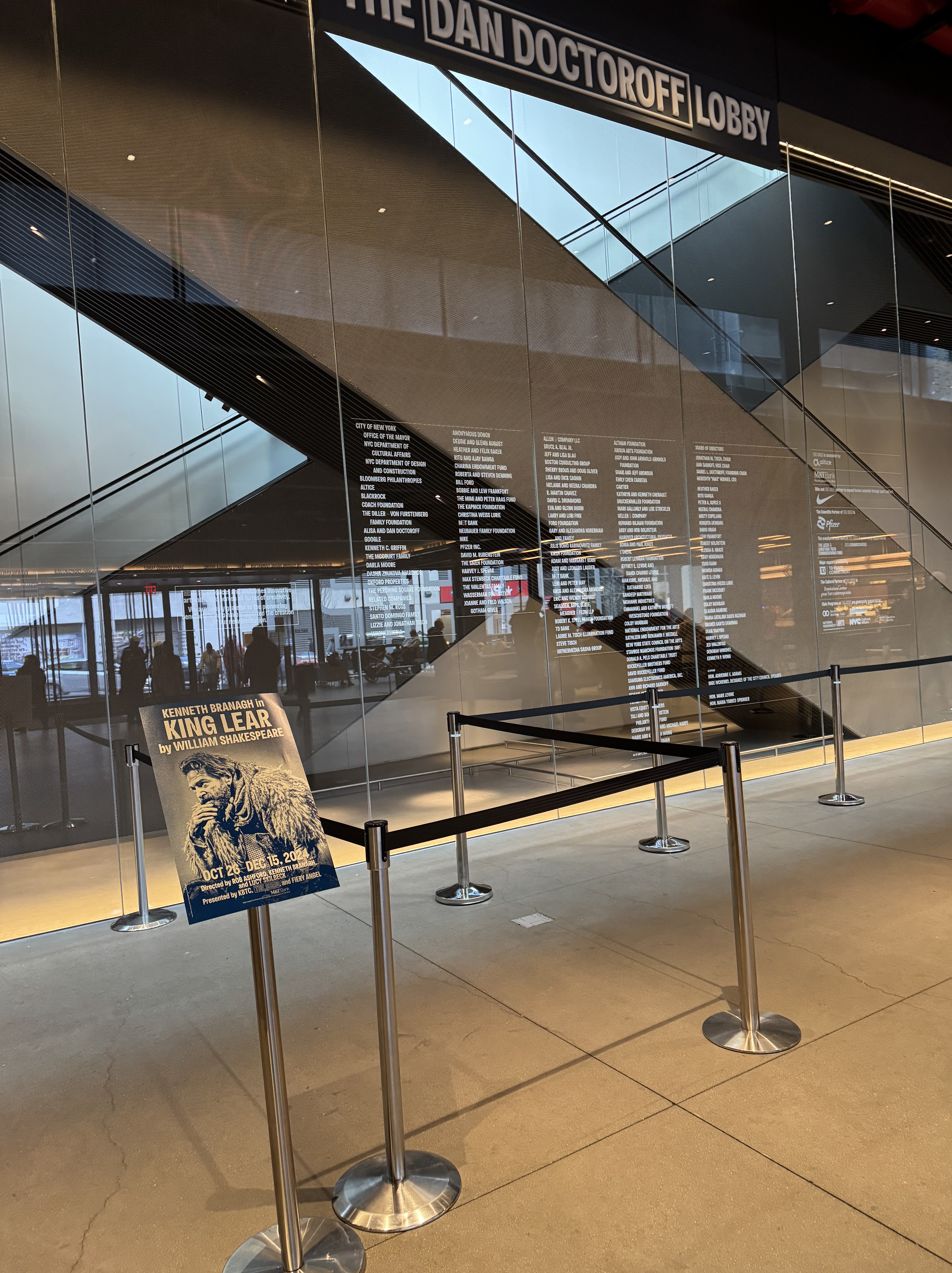
We took our excellent seats at the Griffin Theatre (at the Shed), where we had tickets to see King Lear. In front of us, two women about my age were taking off their coats and chatting. They started to engage us in conversation—where were we from? Did we go to a lot of Shakespeare plays? They had both lived in Atlanta and belonged to a Shakespeare reading group. When one of them moved to Baltimore, Maryland, they figured that was it—they wouldn’t see each other again. But then the Maryland woman saw an advertisement for King Lear with Kenneth Branagh and called her Atlanta friend. Why don’t I buy tickets? You can fly here. We’ll go together. So, Atlanta woman got a flight to Baltimore, and that morning they’d taken the train from Baltimore to Manhattan. We’re Shakespeare groupies, the blonde woman from Atlanta said. In April, we’re going to see Denzel Washington in Othello, said the Baltimore woman. Shakespeare groupies. I love it.
Window shopping
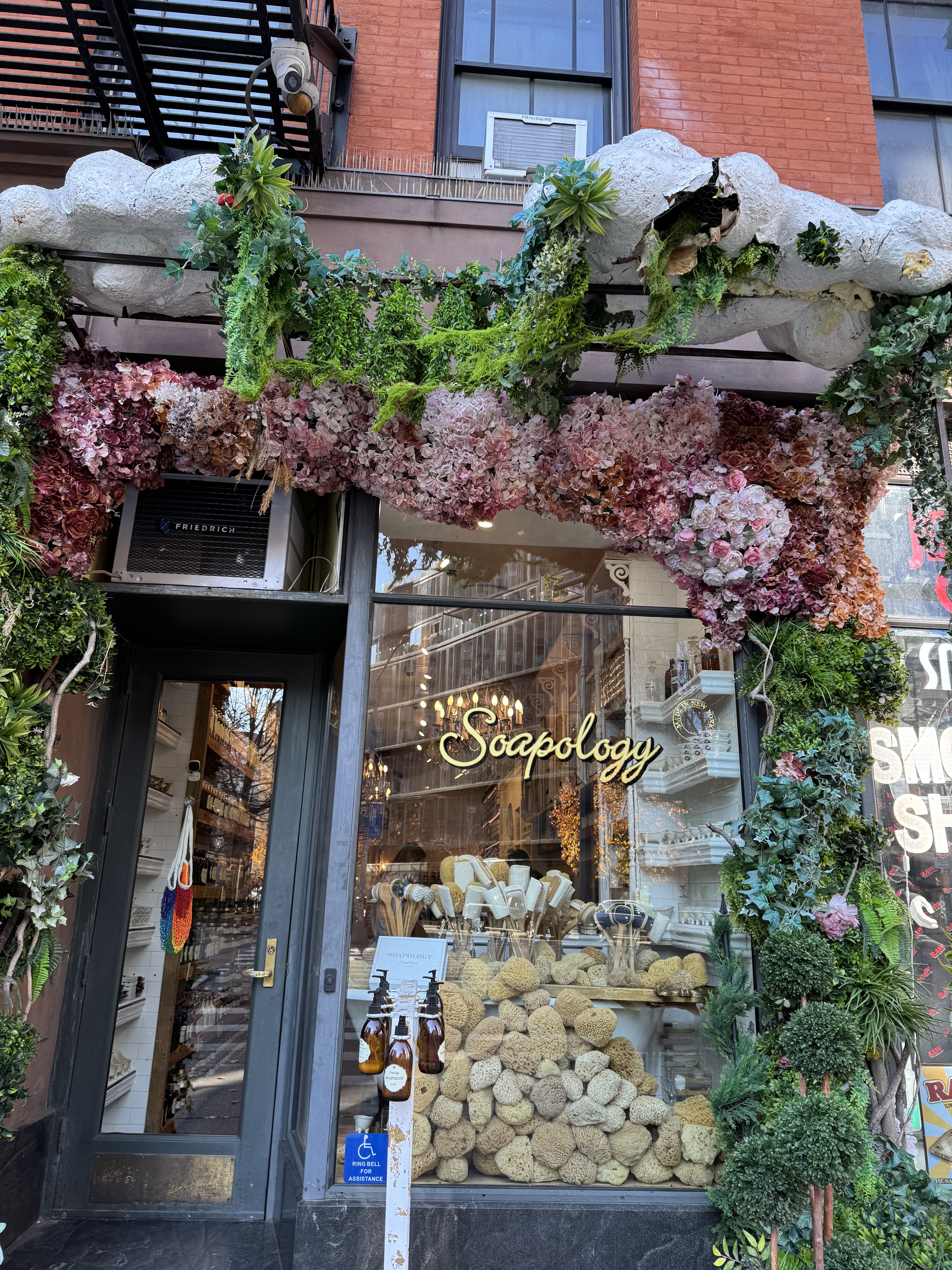
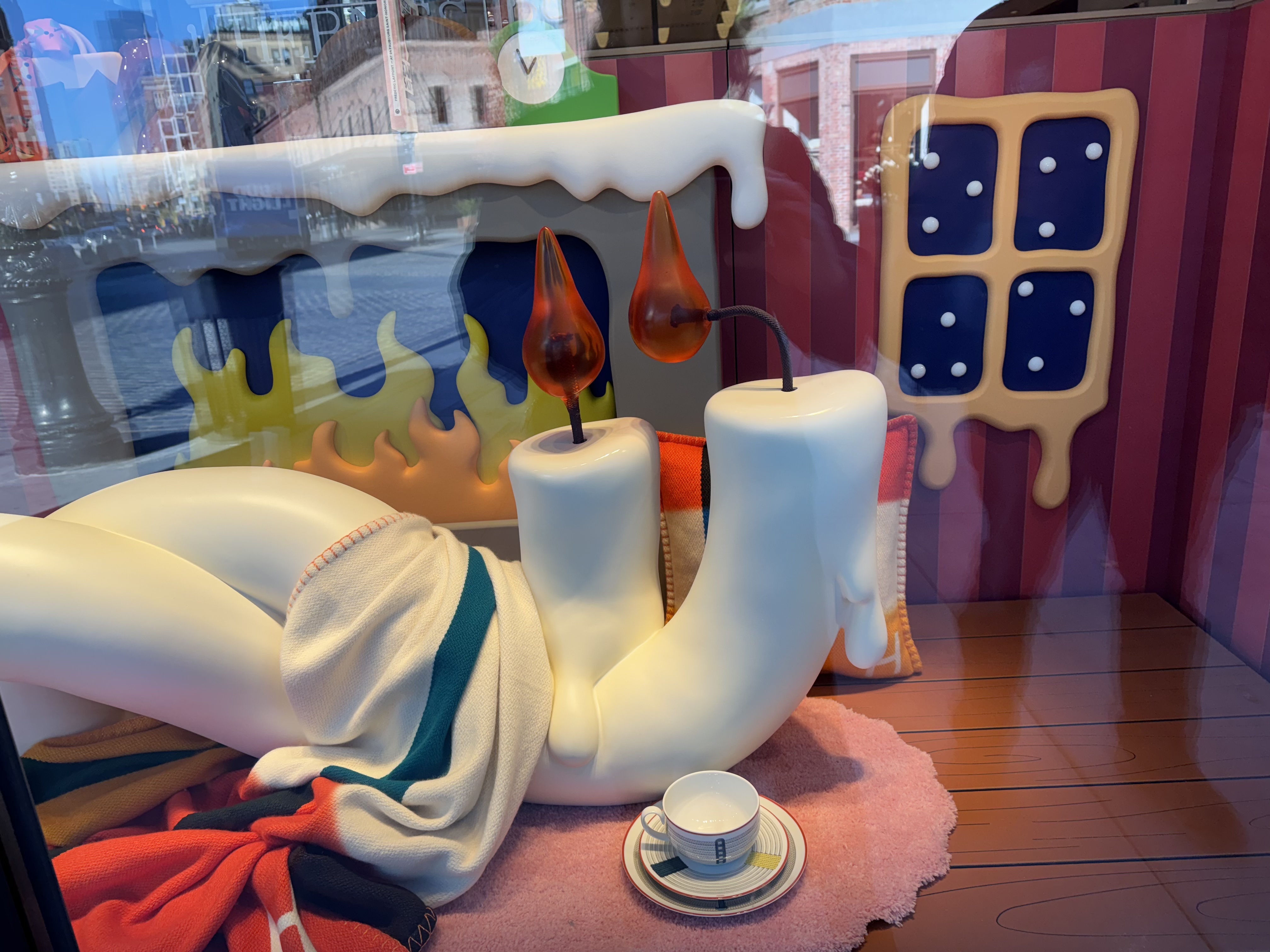
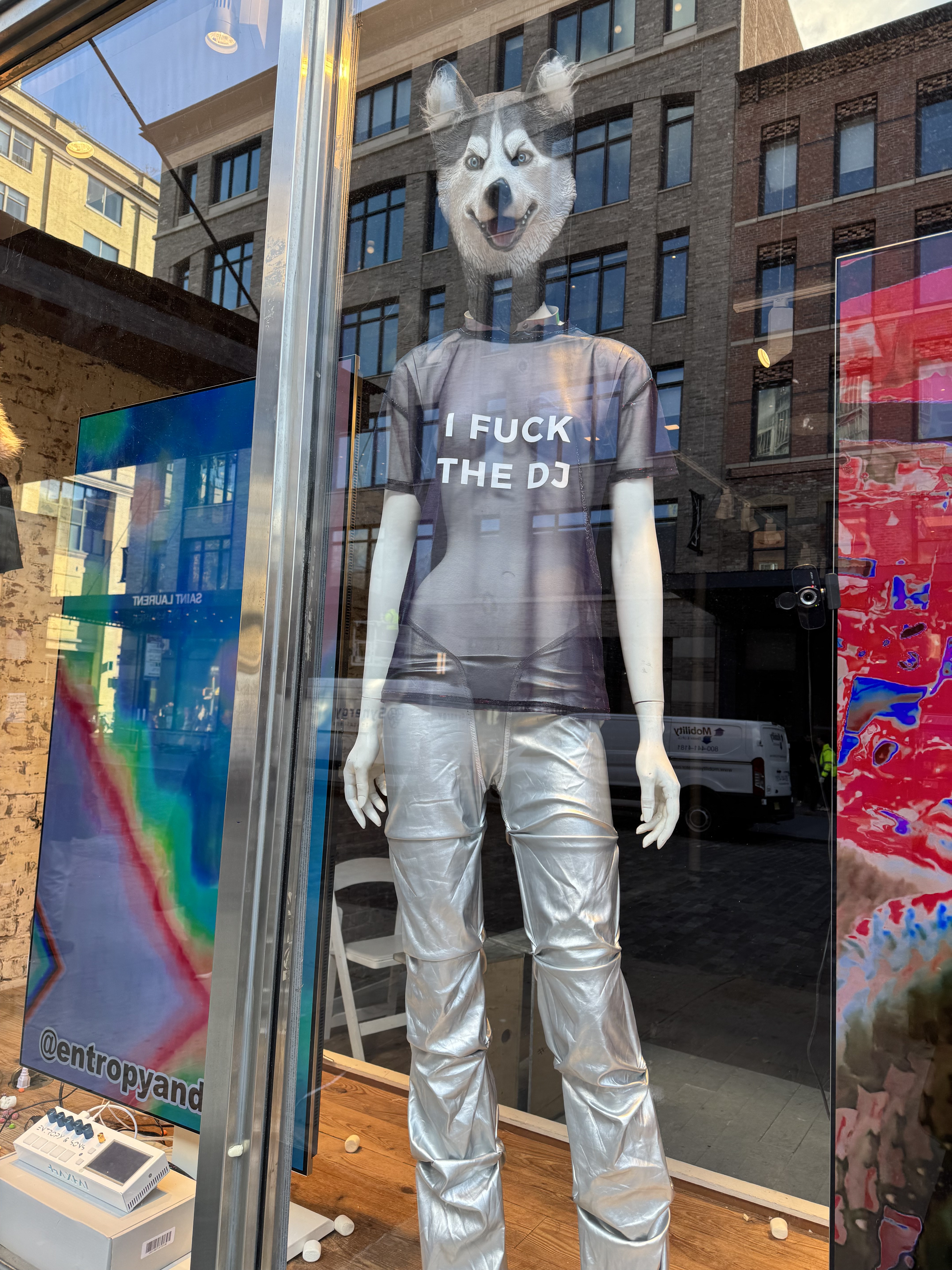
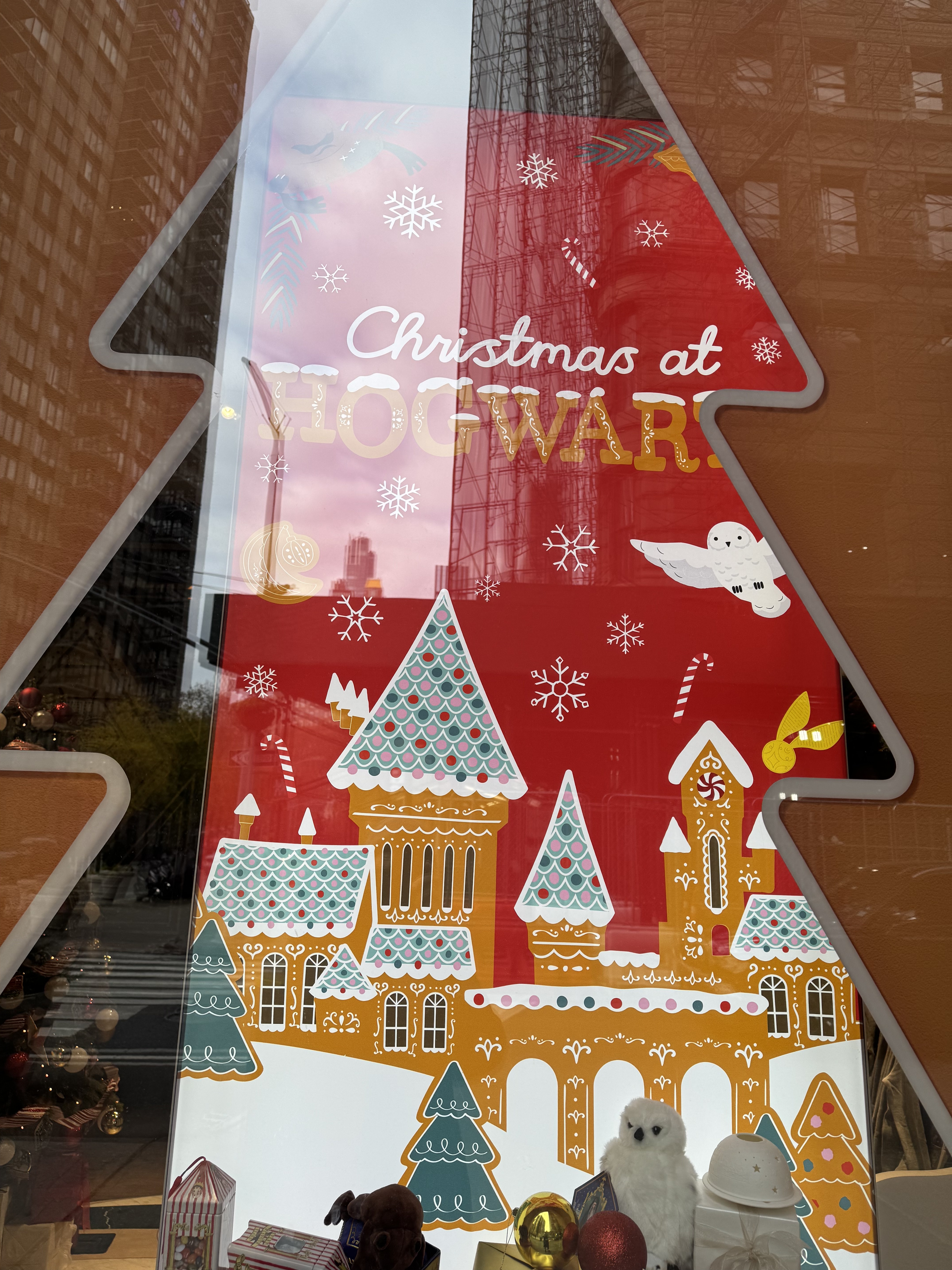
NYC is the best place to window shop. No need to buy a thing; just absorb the kaleidoscope of artifacts and moods rippling through glass. Mannequins wearing weird t-shirts, everything Harry Potter, bolts of cloth, soaps, sculpture, ceramics, sexy candles, life messages, and rainbow bagels.
Until next time…
We walked through Chelsea along a sidewalk that bordered a basketball court. Kids were shooting baskets on the first day of December, laughing, talking. A flock of grey pigeons passed overhead while the sun winked from behind a fringe of clouds. A bubble of pure joy passed through my body and into my head, exploding into a private smile. I love you, New York City; no reply necessary.
I start the year with a glance back over 2023. Last year, creativity often eluded me. She was a timid fox, hiding in her hole. I tried to lure her out, but at the first sign of self-doubt, she’d scurry back down the tunnel. Making things—in cloth or paint, in the kitchen, with words—can feel pointless in the face of climate crisis, grief, war, and ennui. And yet, don’t you think we must continue to create as an antidote to all the destruction?
When fox stayed out long enough, she inspired me to bake cakes, sew things, paint mandalas, and write stories and poems.
Baking
I love making cakes and preparing gifts for people. I fantasized once about starting a small business: I could make bespoke cakes and gifts to order (quilted bookmarks, small herb bouquets from my garden, stones from the beach that feel good in your hand). Nice idea, but maybe not a great business move.
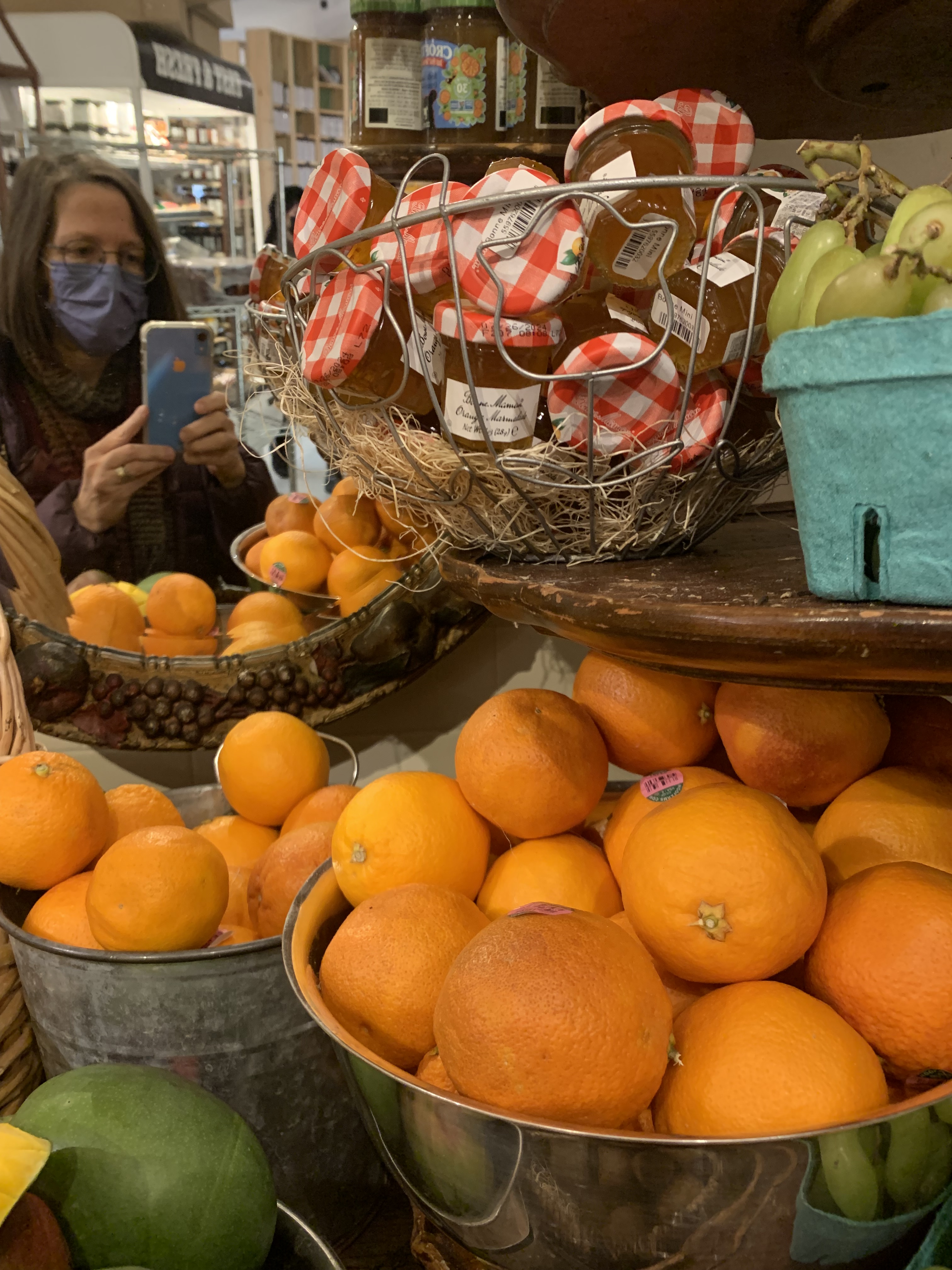
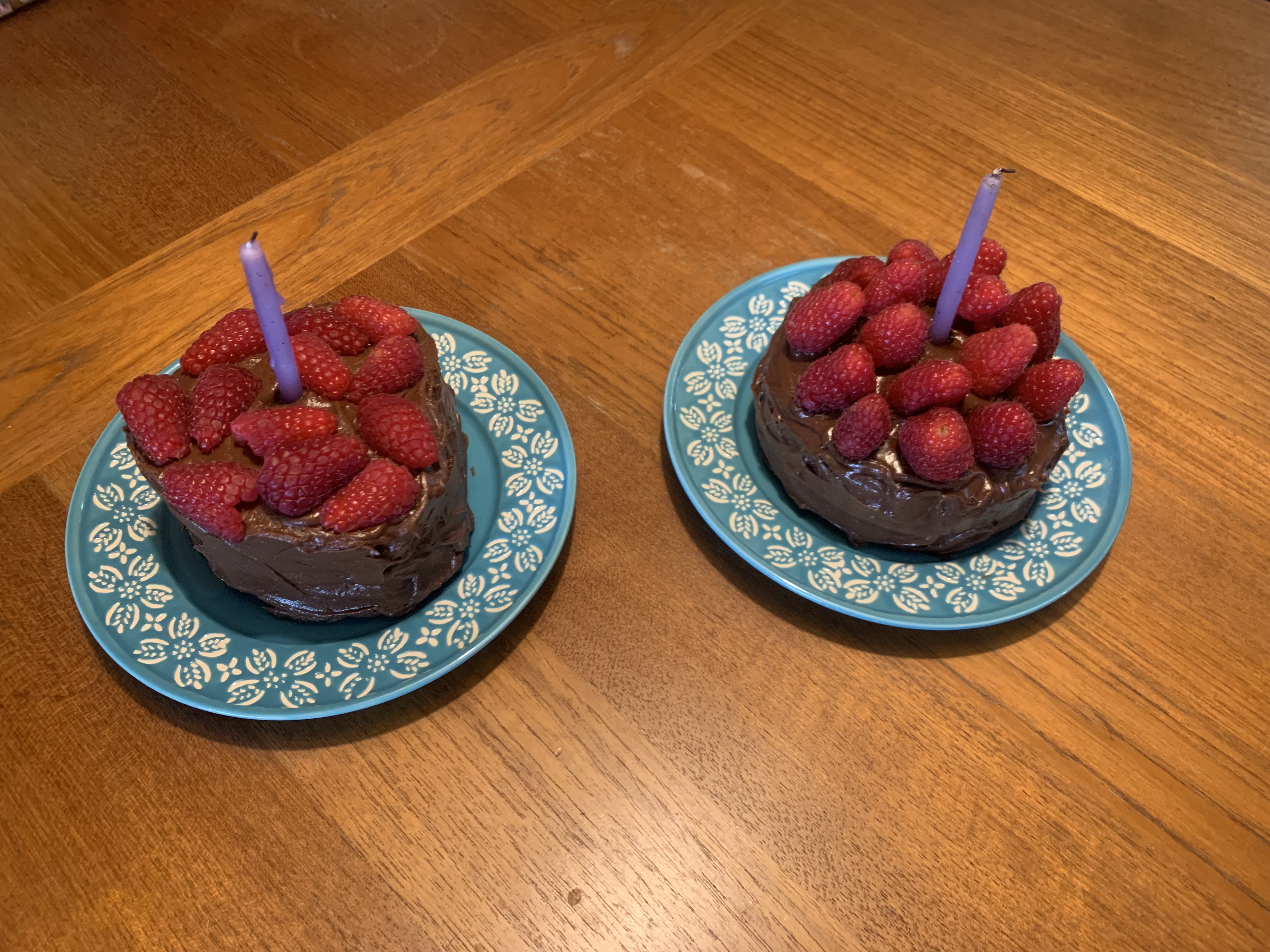
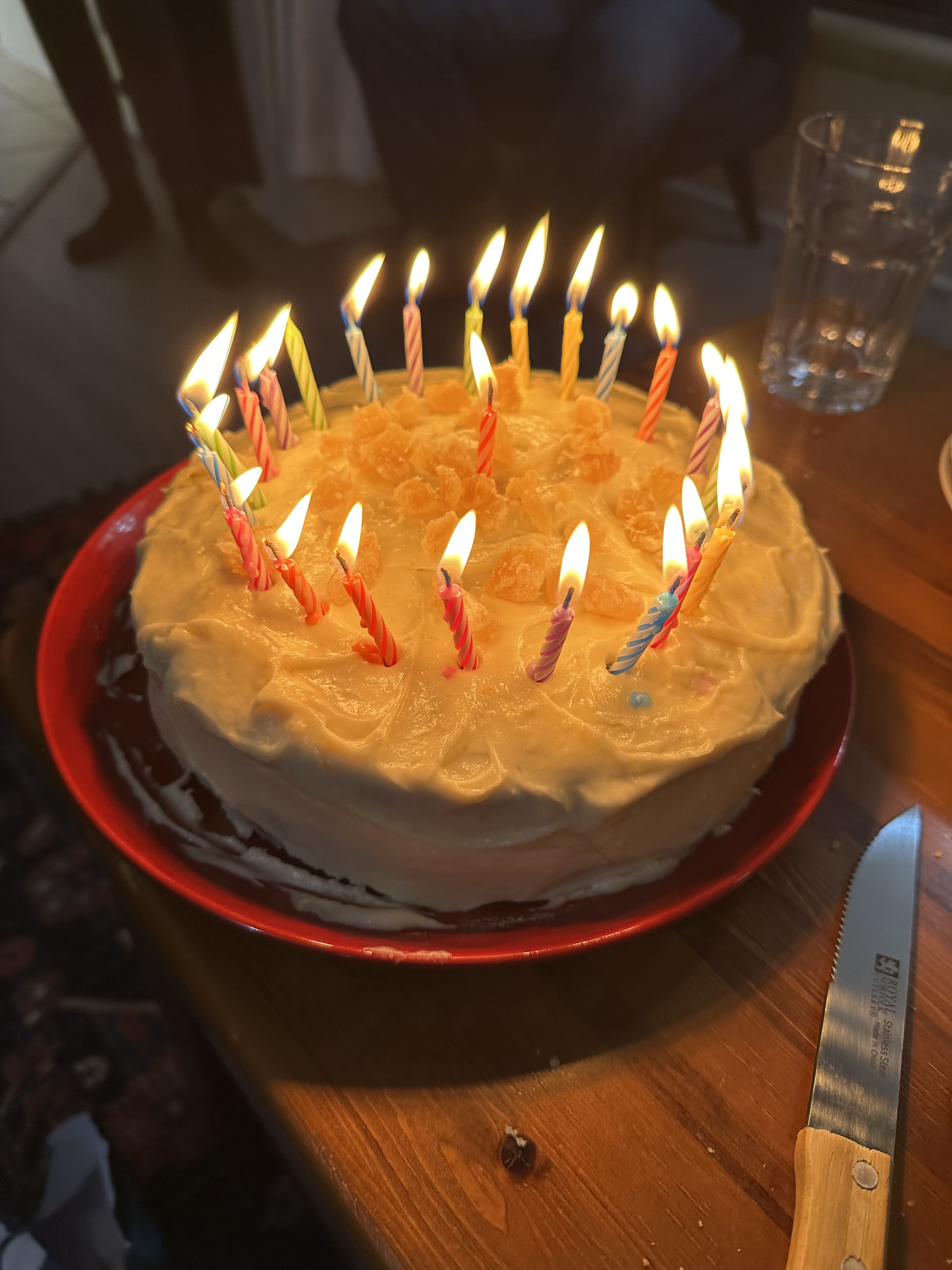
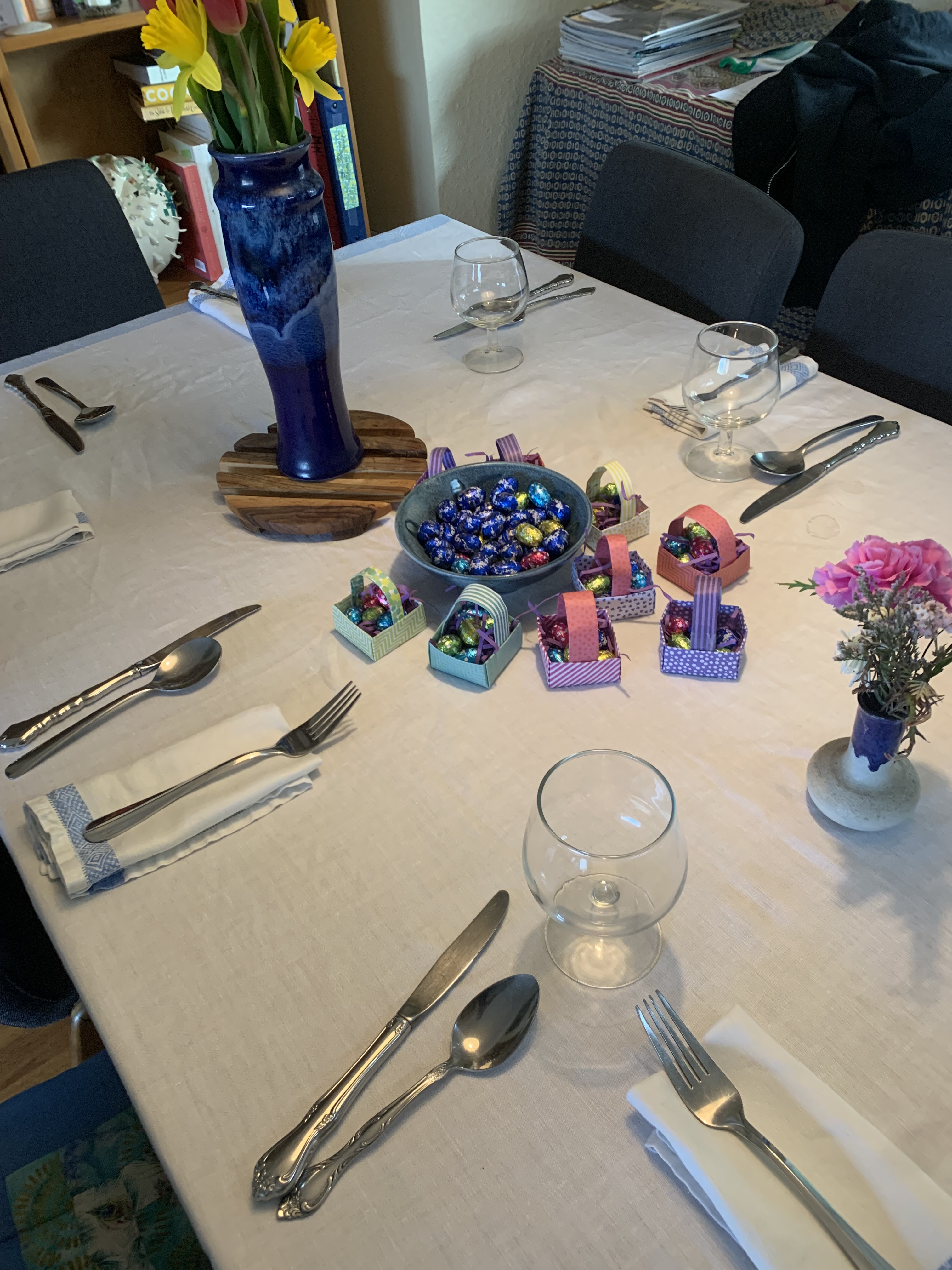
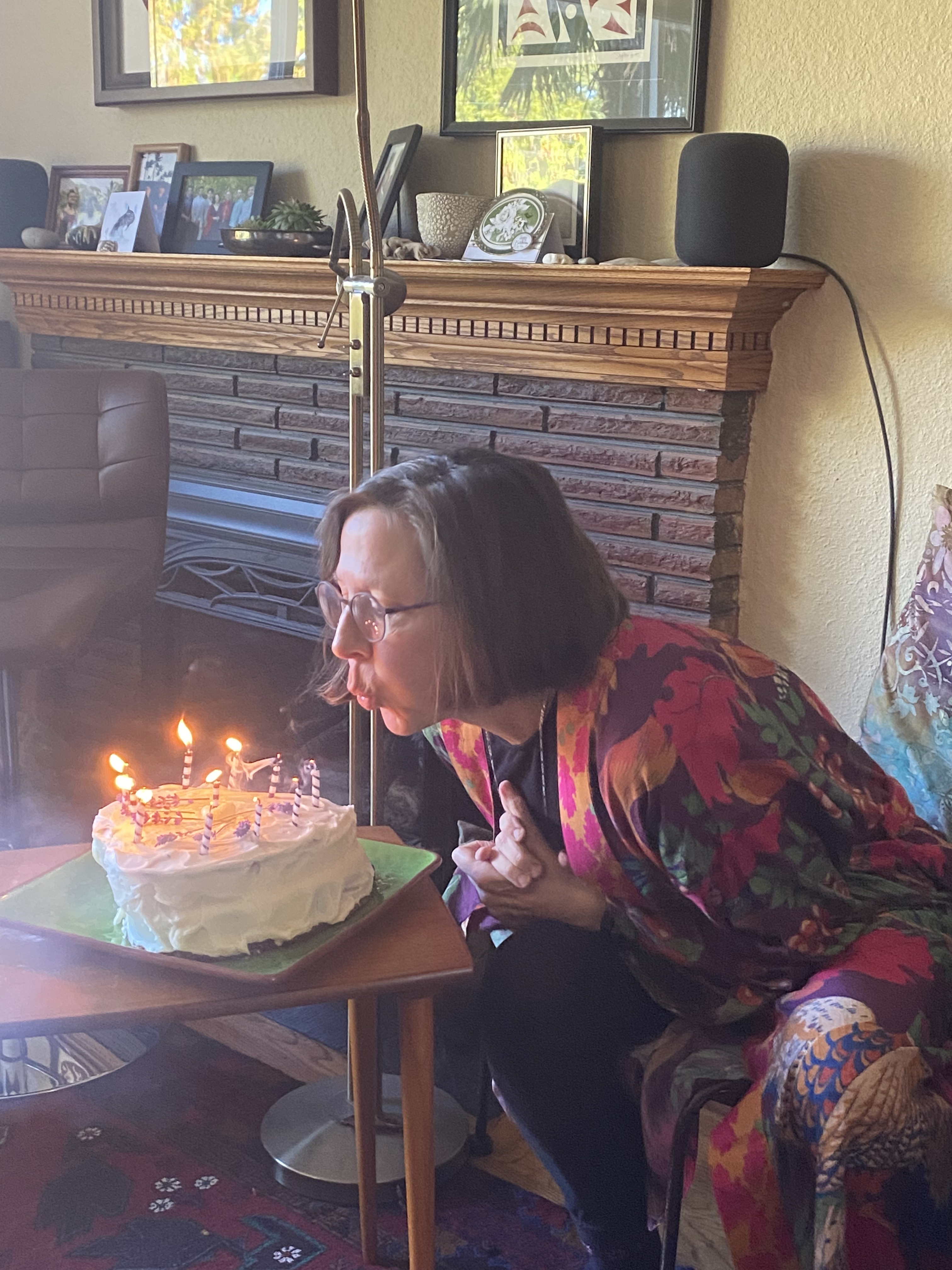
This year Michael got an upside-down blood orange cake for his February birthday, and we had fun sourcing the oranges. Found some good ones at the Market Garden on Catherine Street (where shoppers sometimes sit down to play the grand piano—such a cool store). I baked mini-chocolate cakes with strawberries later in the month for Barbara, and for Easter, an almond torte with whipped cream and more strawberries. Like my mother before me, I love to set a beautiful table, and Easter was no exception. The origami Easter baskets filled with foil-wrapped chocolate eggs provided a whimsical touch. (Entertain your inner child, I say.) For my own birthday party, a classic carrot cake baked in a heart-shaped pan frosted with cream cheese icing. For Andréa’s big five-oh: applesauce cake with three kinds of ginger. And for the final English conversation café at work: ginger cake with buttercream icing. What is it about a cake that speaks pure love?
Sewing
I didn’t make any new quilts, but I did sew a purple wall hanging, about 30 by 30 inches, that now hangs in our bedroom. I like to lie in bed and gaze at it. Four sentinel circles surround a larger one—all shot with gold thread (fragments cut from an old wraparound skirt from a yard sale). Those circles/mandalas ground me; cloth clocks tick noiselessly, watching over us as we sleep.
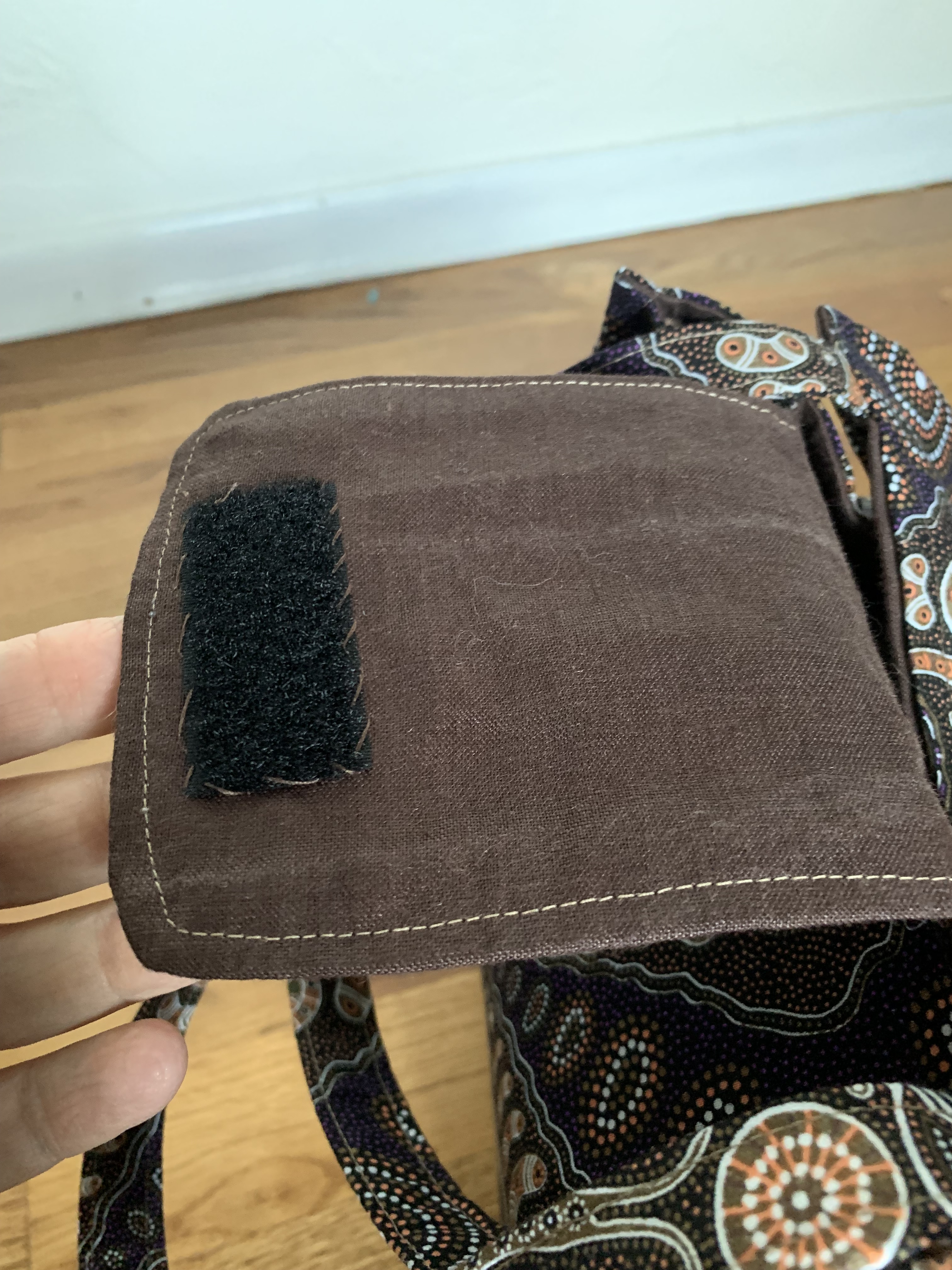
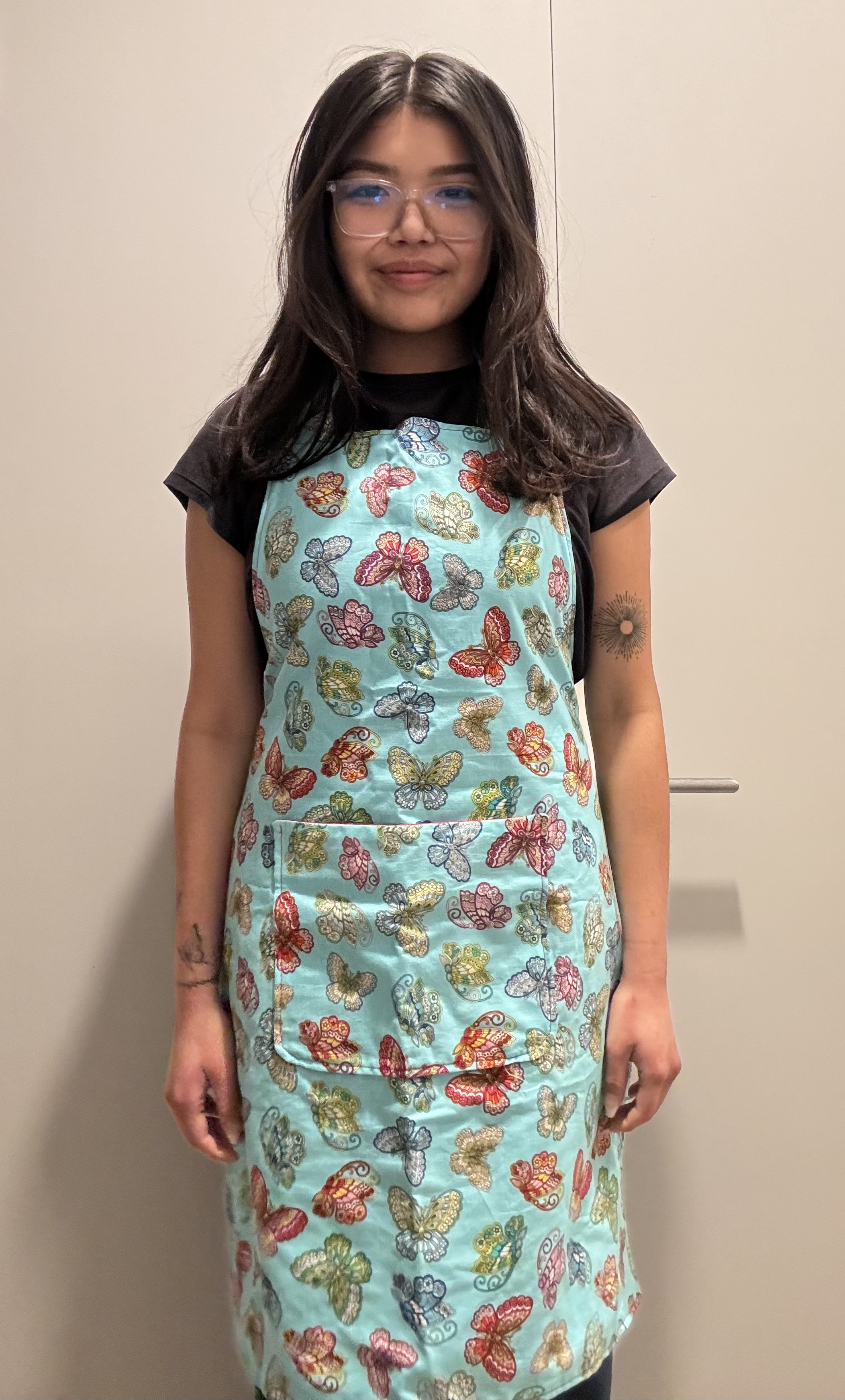
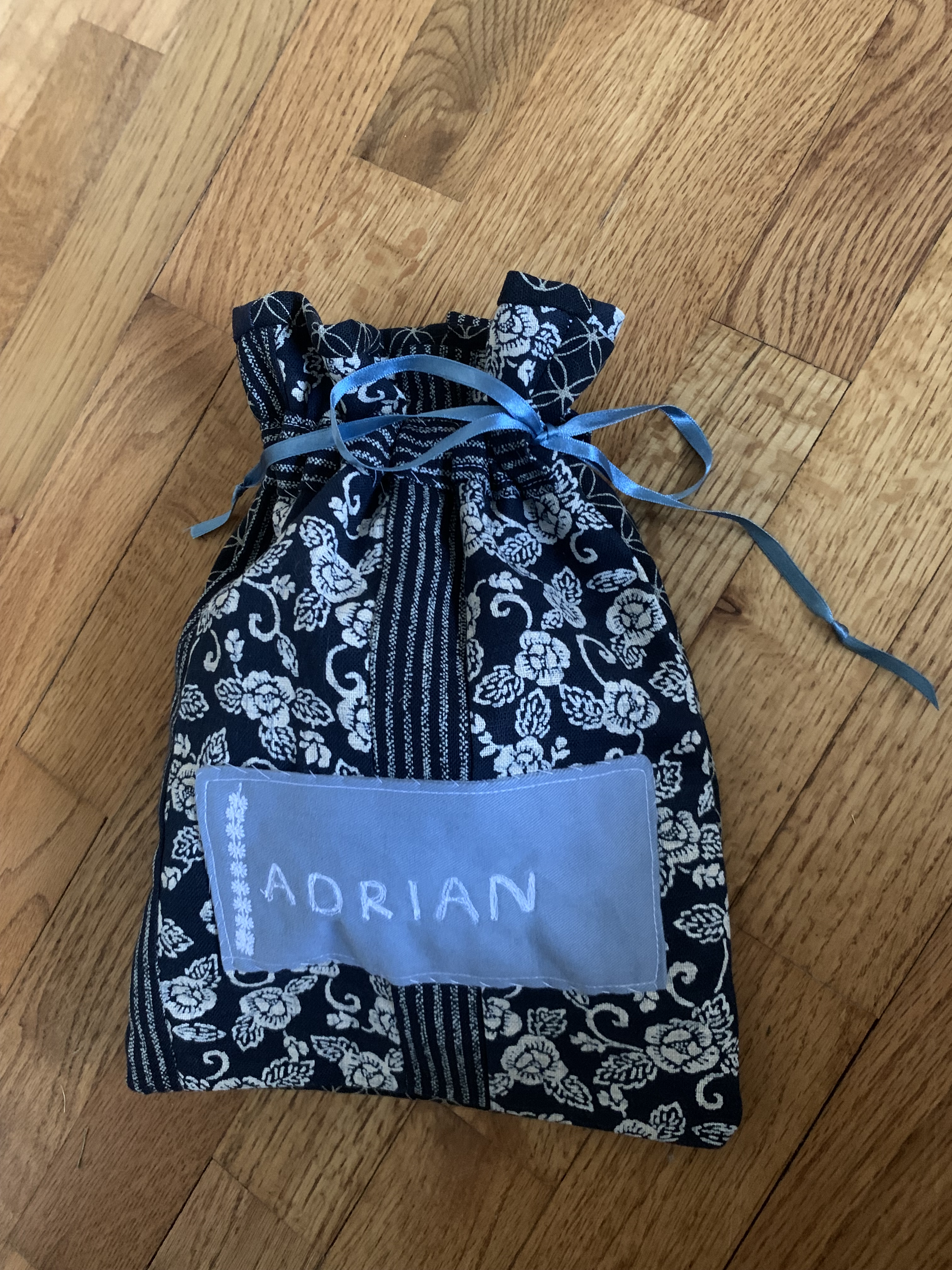
Smaller sewing projects attract me because results come together quickly. My sister Kathryn bought me a drapery panel of Indonesian fabric in browns, reds, and purples at a thrift store. A lot of fabric—40 by 83 inches—for only $4. I’ve enjoyed making some things from it: placemats and napkins mostly, and a sweet little fabric basket (I made a few of these for friends for Christmas, then filled them with chocolates and gifts). I felt most proud of the lunch bag I made for my boss, Nancy, because it tested my skill. I used fabric in a brown geometric pattern by an Australian Aboriginal designer. Then I lined the bag with sturdy brown linen from a too-big jacket I bought at a yard sale down the street. Nancy loves it. Adrian’s bag (filled with toys) for his second birthday involved some great scraps I bought from Smoking Lily on Government Street. Finally, I sewed a butterfly apron at Christmas for my niece. She is beautiful in any outfit, even an apron.
For my 65th birthday party (the theme was poetry and potluck), I made fabric wrappers for second-hand poetry books I bought for guests. So fun to comb through my stash and find colours and patterns that sing together. Party favours were fun when you were a kid, and they are even more fun when you’re an adult. Again, entertain that inner child…
Making Mandalas
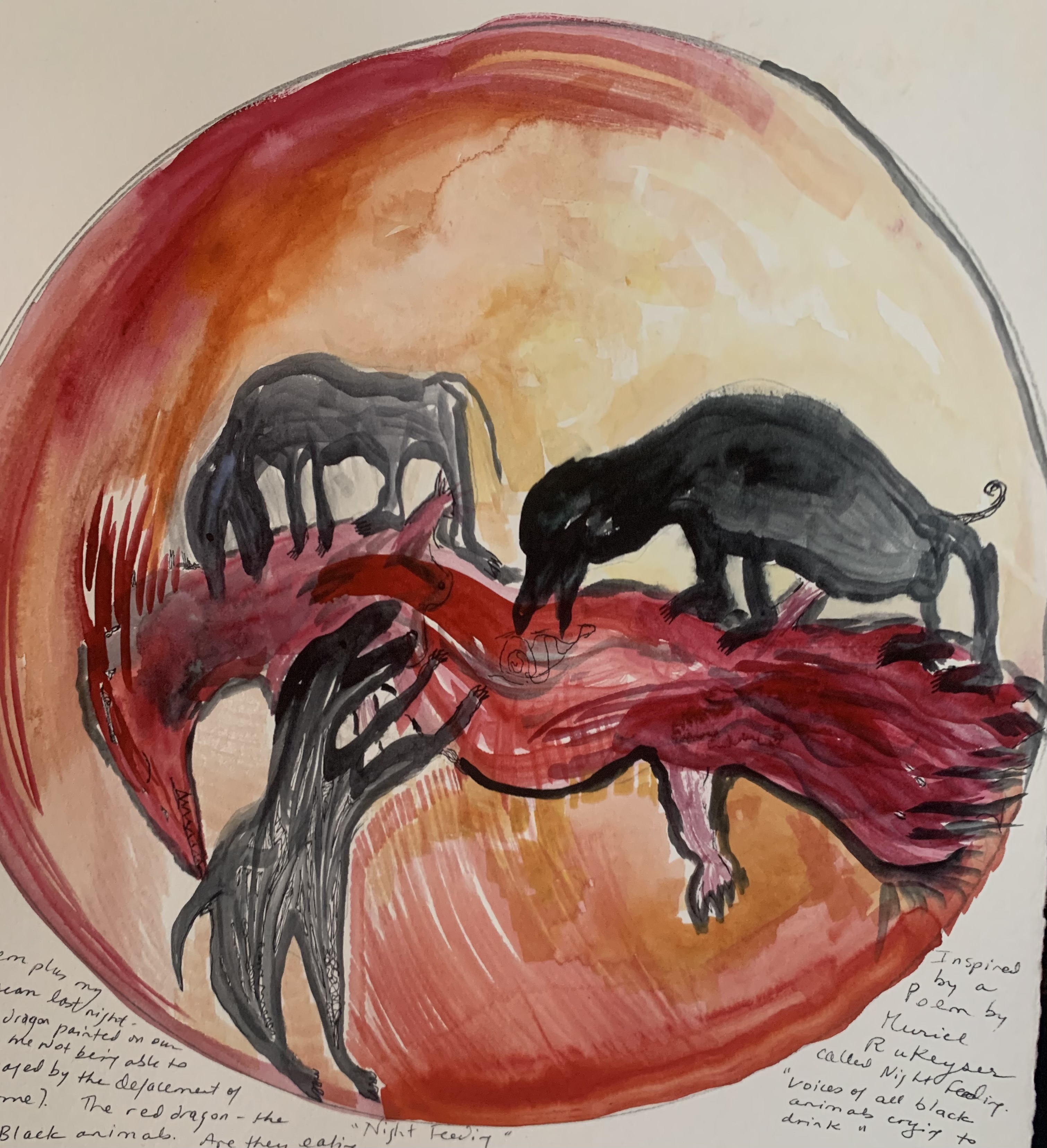
Michael and I had a Monday Mandala practice for a while, but it fizzled out sometime during the year. One exciting project: we delivered a multi-day mandala-making workshop in March and early April on Zoom. Our participants were mostly from New Mexico—all lovely, open-hearted women. It was a good experience. Michael was a guest presenter at two Creating Mandala monthly events. The CM team featured a new goddess each month, and Michael chose to talk about the High Priestess (Tarot) and Kali (Hindu goddess associated with death). I attended both of these events with pride and pleasure. Some mandalas last year were inspired by dreams—a rich transmutation. I dreamed I entered a room in my house and found that someone had painted on my white wall a red dragon being devoured by three beasts. Still musing on the meaning of that one.
Writing
Here’s where the fox was most recalcitrant. I aborted so many poems, blogposts, and stories last year, I am surprised to find anything in my files. I posted on this blog only five times in 2023. However, I did complete a series of linked short stories (started in previous years): Nothing is Wasted: The Stan and Deedee Stories. I shared them with a few friends and family members. If you are interested in reading them and you’d like a digital copy, let me know (maddyruthwalker@gmail.com) and I will send you one.
Some months, I had nothing new to share with my writing group. I’d scour the old folders for some scrap from the distant past to read. Or I’d just listen to others read their work. But that’s okay. I know that I’ll write again. When nothing seems to be happening, the fox is deep in her hole, pregnant with kits. How many will be born and when? Just have faith.
I wrote only a few poems in 2023, and one was for my birthday. Each guest was asked to bring a poem to share. It was extraordinary to see my friends and family members get up into the poetry seat and read poems they’d chosen, poems they’d written: one of the best gifts I’ve ever received. To close the offerings, I read my own poem– one that expresses the expansiveness I feel as we enter 2024. Happy New Year to you!
Expansion

I started slim
and willowy.
Then, whoosh of years.

My waist - heavy as grief,
soft as dough -
expanded.

Grief. Have you met her?
Well then you know the
grace that she bestows.

Hard things—she
cracks them open,
ignites a hotter flame,
imbues a deeper shade of red.

So, like my waist,
my heart’s made wide by grief,
a vast container for the love I feel
for trees, and animals, the sky,
the planet, for you, my friends,
for people everywhere,
for life expanding.
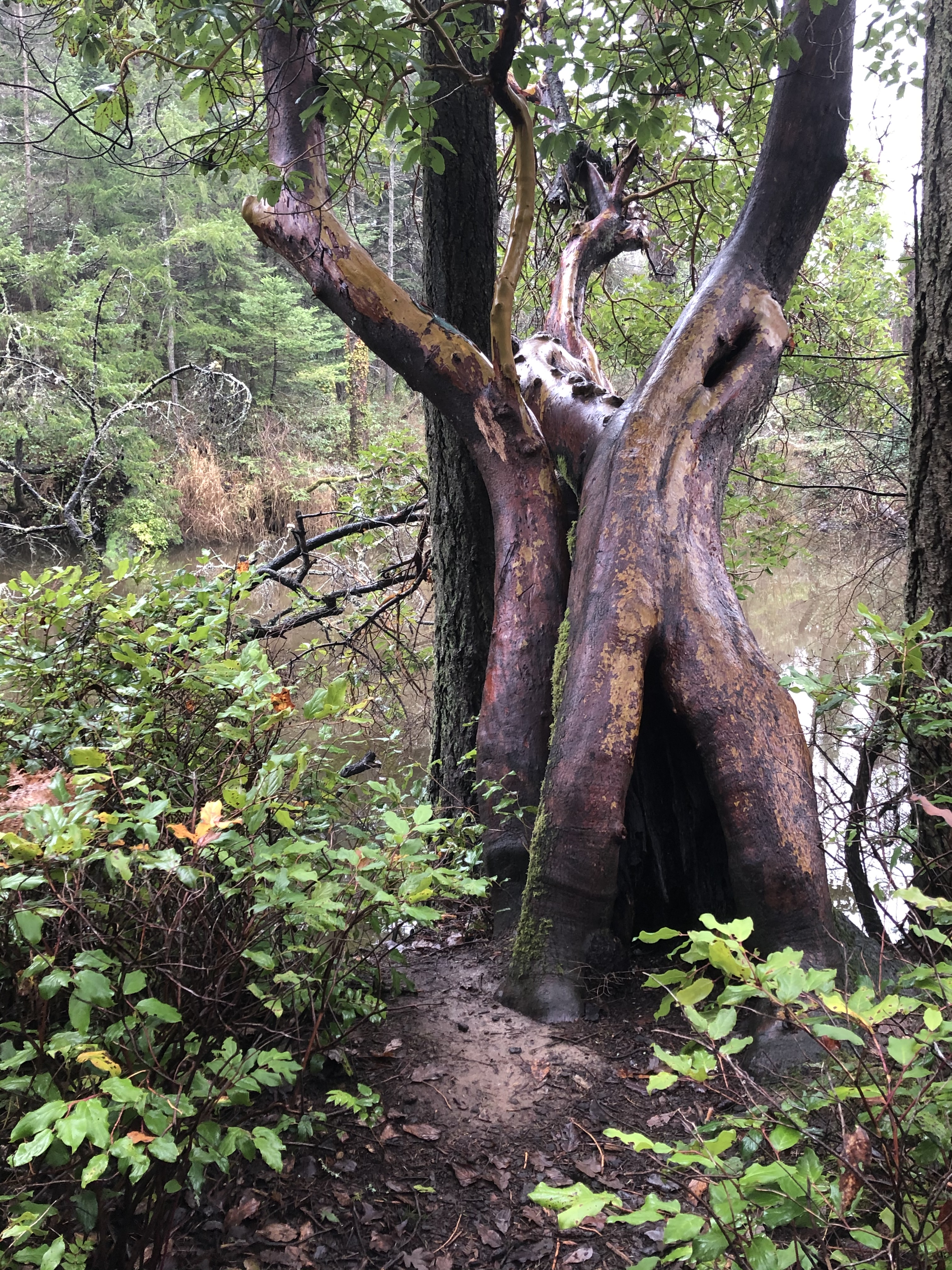
Blood runs green


If you could see her, you’d want
to embrace her too, drape her
massive arching thighs with yours.

Close your eyes, I’d say, and after
awhile, you’d feel her green
rhythm thrum your jangle into hum.

I can see your skeptical eyebrow,
raised—believe me: your blood

would bloom viridescent, and then
you’d slide smoothly off her trunk
to crouch beside her on the bank.

You’d place your palm on her red
skin, wired to the wild.

On that spot, I’ve seen so much—
once, the great horned owl’s cold
yellow eye locked mine and

for several seconds, we were
one. Another time, I watched the
racoon family on the farther shore:

mother and seven kits; washing
tiny hands in brown eddies.
I’ve watched mallard rafts

go with the flow, a river otter’s
easy drift, a heron fish the
private pool beneath her arch.

I wish she could have purified you, too.

I thought of this too late.

They put up a fence; they broke
the green connection. I wish you
could have seen her.
Tree


Today I heard a
sparrow trilling
from inside your
cool green chamber.

I long to join her
there—safe, nested,
hidden. Free to sing
my heart out.
I often despair of my monkey mind, the jumble of thoughts that keep me from noticing what’s present. At the same time, I appreciate my tangential mind. I love following its pathways through shadowy tunnels of white-flowering hawthorns. I seem to always turn a corner to find myself in an unexpected field of light.
Today as I ate breakfast sitting at the kitchen table, I started to examine the ceramic trivet my father gave me years ago after a trip to Granada. The trivet is decorated with an Arabic design: a mandala in teal, navy, red, and cream. I love the waving flower petals that seem to be in motion, dancing in the wind. The Arabian design on the Spanish trivet took my mind to the poem I’d just been reading by St. Teresa of Avila (1515-1582), a mystic living in Spain after 700 years of Arab culture. St. Teresa was intimate with her God; you can feel it in her language. I re-read the lines,
A woman’s body, like the earth, has seasons;
when the mountain stream flows,
when the holy thaws,
when I am most fragile and in need,
it was then, it seems,
God came
closest.
God, like a medic on a field, is tending our souls
And then, a few lines down,
Why this great war between the countries—the countries—inside of us?
From “When the holy thaws” by St. Teresa of avila
My counsellor tells me that I aggress against myself—a pattern in my life. An ongoing war rages between the countries inside of me. I like to think of God as a medic tending to my wounds, lifting me off the battlefield, holding me close, bringing my countries to peace. I remembered the stage six mandala I drew recently, with a little girl and a dragon (my warring countries). I wrote tenderly to myself, “lay down your sword, little one.” Perhaps the holy is thawing.
I’d snagged that wonderful book, Love Poems from God: Twelve Sacred Voices from the East and West, from a cardboard box of free stuff. I love our neighbourhood. There is a little clearing across the street near the mail box where all of us take things we don’t want anymore. Neighbours and visitors from other parts of town come to adopt old things and bring them to their new homes—a brilliant system!
This book caught my eye. What a great find. But boxes of free stuff and friendly dogs are not all that’s on offer here. The neighbourhood has other delights. Yesterday, I started work early in my home office in the basement, checking copy edits for a book. At 10, I took a break from the highly focused work. Michael, Marvin, and I walked down to the Gorge where a pop-up concert was in full swing. A local musician, Danielle Lebeau-Peterson, was playing her guitar and singing under a white tent. Danielle is the daughter of my eldest son’s first music teachers—Connie and Niels, and I marvelled at the “small world” (we’re all connected) feel of Victoria. Her mouth is like her mother’s.
The clouds in the sky threatened rain, but so far it was dry, and children and their parents gathered around Danielle as she sang and played, smiled and bantered. She knew songs from Disney movies, which delighted the younger crowd. The Tillicum-Gorge Association folks had set up a table with a big urn of Tim Horton’s coffee, cartons of donuts, and boxes of Timbits. There was a clipboard with paper and the question, “What do you love about our neighbourhood?” The cheerful woman behind the table filled my cup with coffee, and I took up the pen and wrote, “Everything.”
We sat on the grass listening, and when Danielle asked for requests, I called out “Blackbird,” that gem of a song written by Paul McCartney. It was one of my father’s favourites, and she played and sang it perfectly—her clear ringing voice floating up and over the Gorge: “You were only waiting for this moment to be free.” I smiled while my tears fell on the grass, and Marvin tugged at his leash, tried to smell the woman sitting next to us. This is the first Father’s Day I’ve lived without a father. But he was there in the high, truthful notes of the song. He is still with us.
And now, I am still sitting here with the book of poems on one side of me and the trivet on the other, back from that pleasurable sojourn, ready to fill the hummingbird feeder with sugar water and play with the dog. I love my mind and my heart. I love the rich stuff of daily life that produces all of these memories, feelings, and thoughts. The tangents take me unexpected places, but they always lead me back home to love and beauty.
The other night, we watched the Bach Consort ensemble perform Handel’s Messiah (Knowledge Network). I’ve heard the Messiah hundreds of times, but this time one line resonated especially—Gaia Petrone, mezzosoprano singing, “He was despised and rejected of men, a man of sorrows and acquainted with grief” (Isaiah 53:3) Yes, Jesus was acquainted with grief. And as we traverse our later years, don’t we all become well acquainted with grief? In the last six years the losses just keep on coming, so grief has become an intimate familiar to me.
And yet, there’s joy! The chorus sings “For unto us a child is born, unto us a son is given, and the government shall be upon His shoulder; and His name shall be called Wonderful, Counsellor, the mighty God, the Everlasting Father, the Prince of Peace” (Isaiah 9:6). My whole body is engulfed with joy tempered by grief; tears stream down my face. My intellect has no chance to do its fancy override of emotions, has no opportunity to ridicule me: You’re not Christian, Madeline, why so moved by this, you silly? The analytical brain successfully bypassed, I am immersed in the bittersweet joysadness of the words, bathed by a sense of the sacred: vaulted ceilings, stained-glass windows and flowing frescoes of a Viennese cathedral. The possibility of God. The swell of triumphant sound fills both church and body.
The past rolls in. I go way back and find myself sitting beside my mother who gifted me with her love for classical music. We sink into the wine-red velvet seats of a hushed concert hall. It was 1983, and I had my first job after graduating with a BA in English: I was secretary to the head engineer at the newly built Roy Thompson Hall in Toronto. There was one marvelous perk that kept me showing up at the gloomy subterranean office: free concert tickets. When I got tickets for the Toronto Symphony performing Beethoven’s Ninth and invited my mother, she was thrilled. During the final movement, as the four soloists and choir sang the “Ode to Joy,” I turned to her and saw her cheek wet with tears, her dark eye sparkling with complicated joy. Just as my father retreated into jazz to feel his feelings, classical music was the vehicle for my mother’s deepest emotions. Many times, I caught a glimpse of her crying as she sat on the living room couch, listening to a moving passage from a symphony or quartet or aria. As I wept last night over the Messiah, I felt our tears intermix. We are connected.
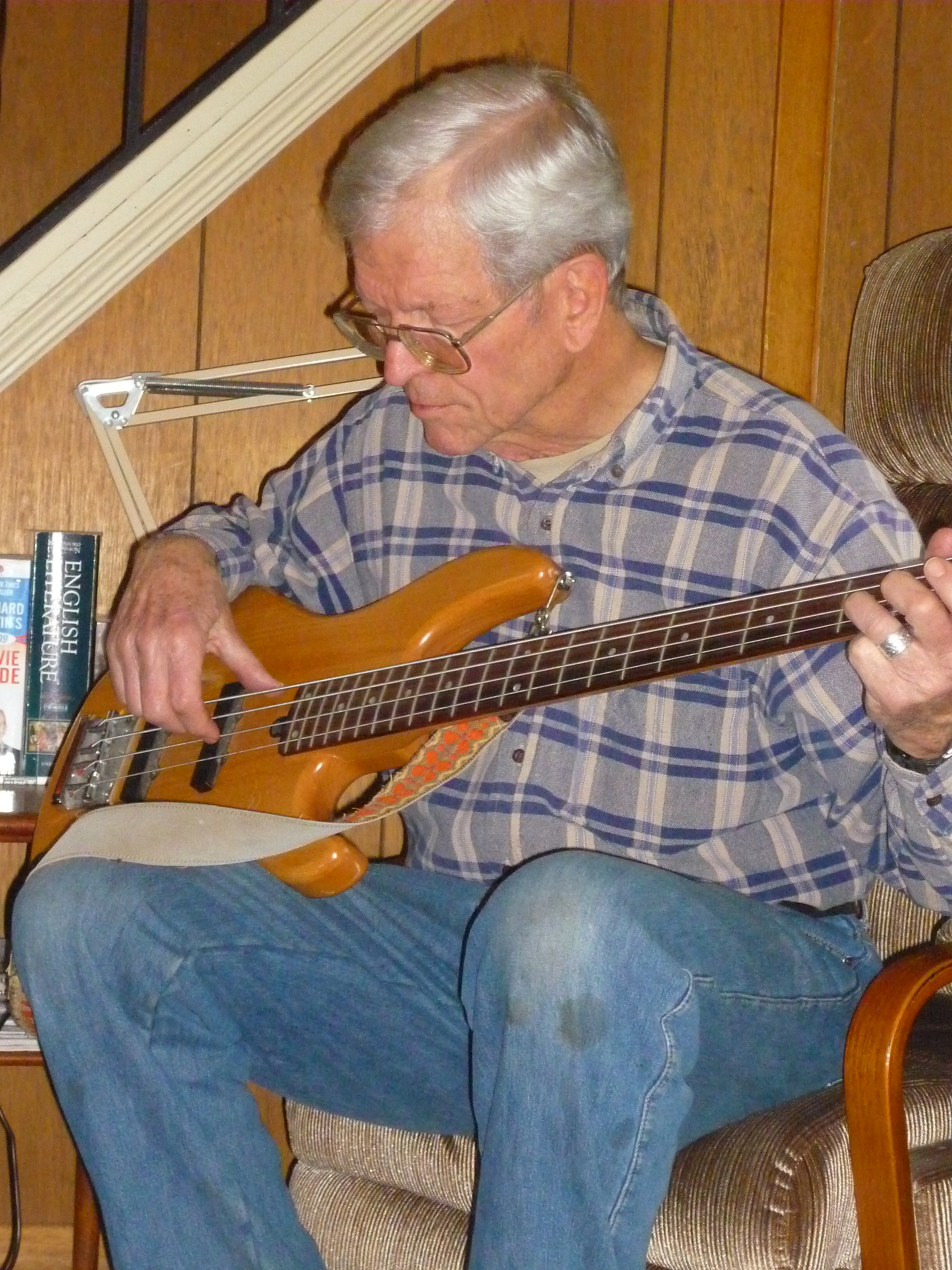
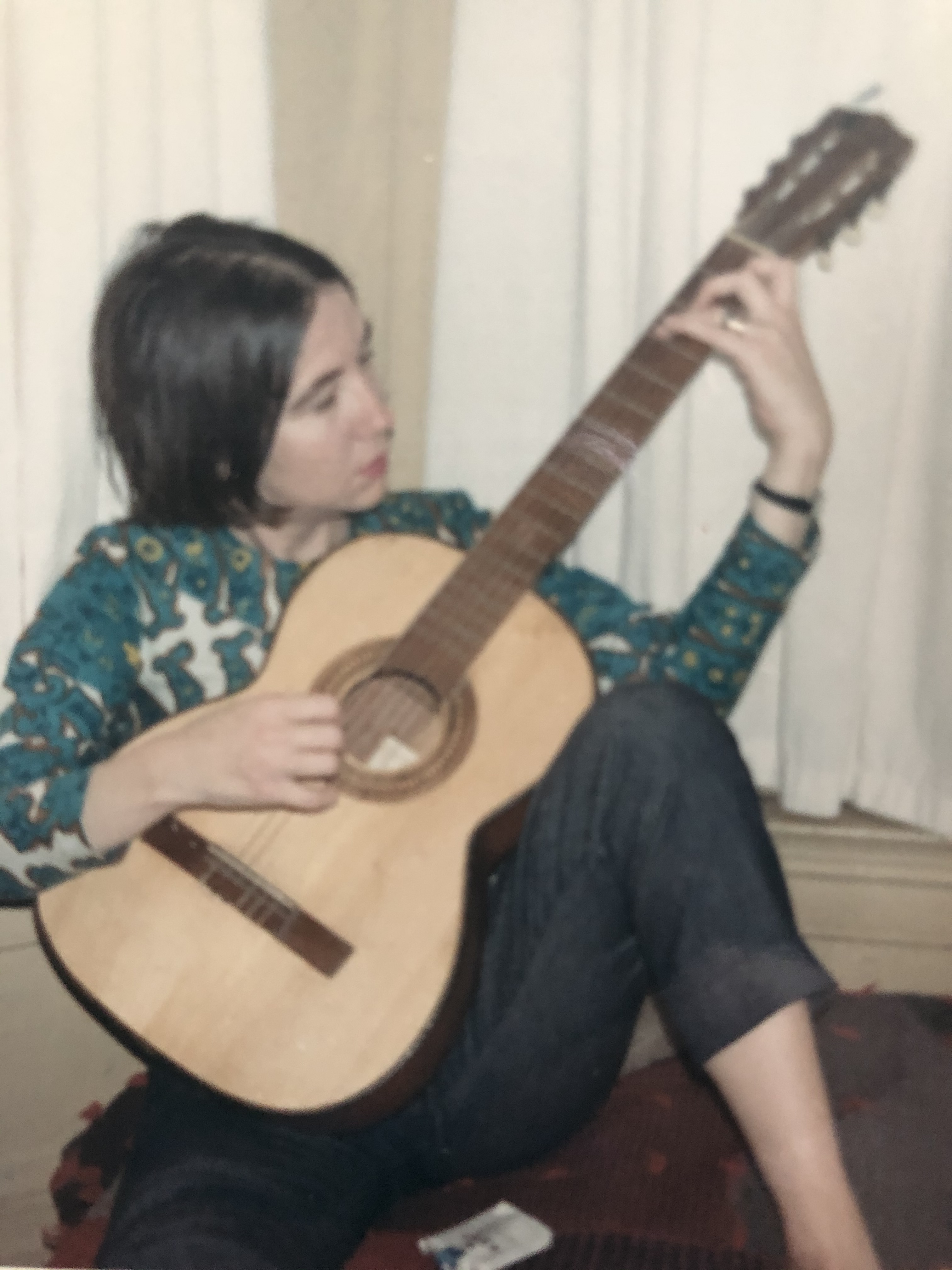
Papa playing his beloved bass; Mama in Berkeley with her acoustic
I noticed another sweet outcome from watching the Messiah: the opportunity to hug an old friend no longer with us. One of the second violinists resembled Hanna, who died in 2018. I went to sleep with that image of the violinist merging with the face of my dear friend: wide grin, glasses, brown bob laced with grey. When I met her in the dream, she felt real as anything, and I stayed for a while in her warm, familiar embrace. I love that I can still access my lost ones in the dream world.
So, in a few weeks the year rolls to a close. Last December I wrote about all the things I had accomplished during the year—sewing and writing projects, starting my business. What did I accomplish this year? I put one foot in front of the other every day. This December it feels like more than enough to just write a few paragraphs and give thanks for the good things in my life.
The Walker Sisters, circa 1963, Berkeley California
In August my eldest sister and niece moved from Yellowknife to Nanaimo. The three Walker sisters haven’t lived in such proximity since the 1980s in Toronto. Our closeness brings me comfort and happiness.
Walking the dog day in, day out, has given order to our lives. Sky and earth, weather, sun, moon, trees, and birds break through my orbit of self-absorption, and I am grateful for them all. To stand in rain puddles and watch the fast scud of grey clouds, cormorants flying low over the steel-gray Gorge—is to feel alive.
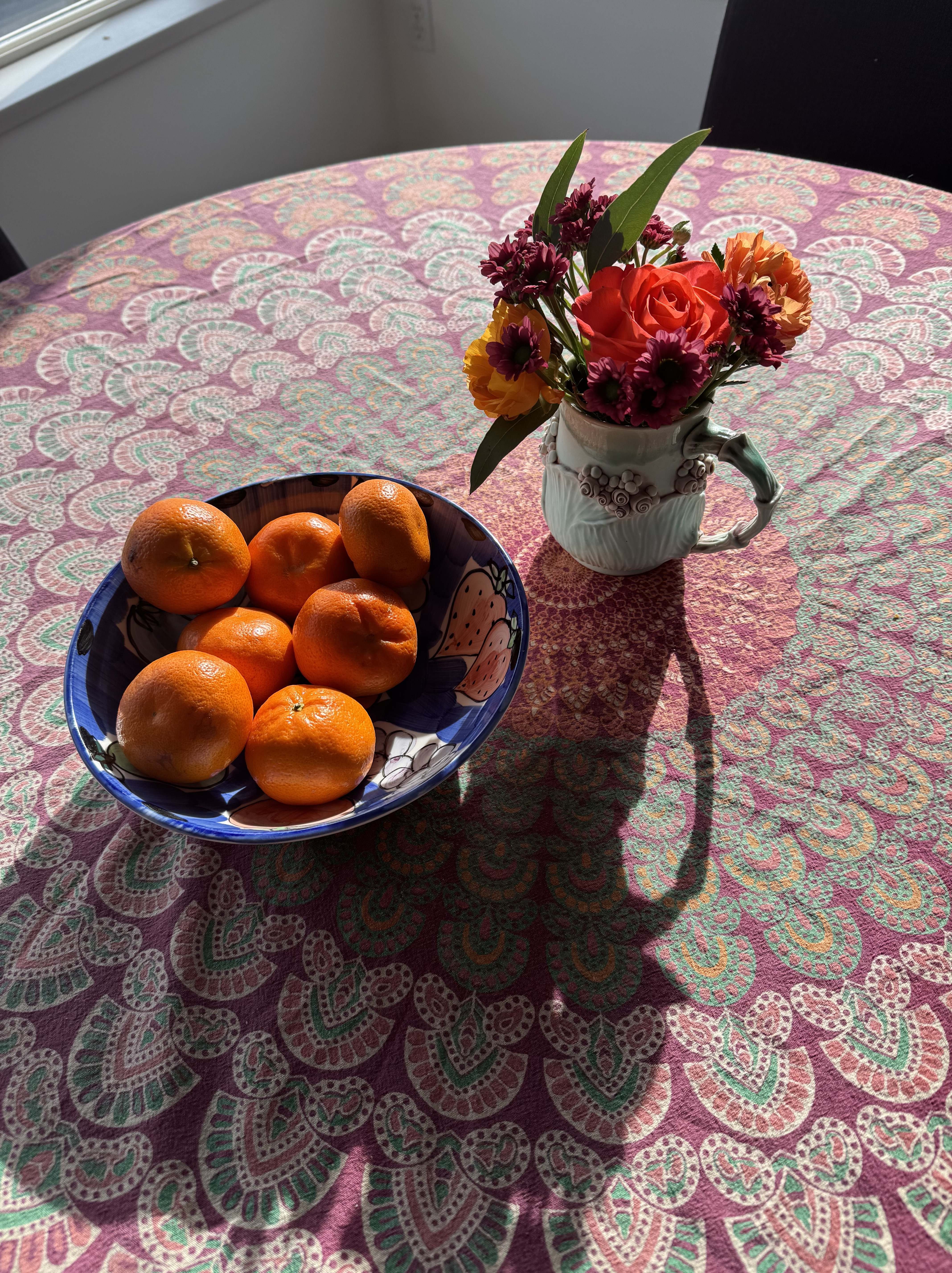
Although my writing group only met a few times this year, I appreciate each member. Late one recent afternoon, we sat in a beautiful room as the winter light slanted through the tall windows, Japanese oranges in a brown bowl, our faces rapt as we listened to one another read our work. We need stories now, more than ever.
This was a year for intake rather than output. I didn’t sew or write much. I read voraciously and watched a lot of television. Grateful to the authors whose words I enjoyed this year, too many to list. But three memoirs stand out for me. I loved poet Elizabeth Alexander’s narrative The Light of the World about her marriage to artist Ficre Ghebreyesus, his sudden death and her grief. She writes with the poet’s delicacy and attention to detail, and her grief/joy is palpable on each page.
Vivian Gornick’s memoir, Fierce Attachments, about her fraught relationship with her depressed mother, Bess Gornick, resonated with me. Vivian struggles for independence from Bess while loving her with the potent mix of passion/compassion limned with hatred and resentment that seems particular to some mother-daughter bonds.
Perhaps you have to be a Margaret Drabble lover or a lover of puzzles to appreciate this one (I am the former). In The Pattern in the Carpet: A Personal History with Jigsaws, Drabble leads us through her lifelong fascination with puzzles, mixing in portraits of family members, tidbits of the history of puzzles, and asides about memory, writing, and life. A circuitous maze-like quality to the writing brings form and content into alignment.
And so many good stories streaming on television. I was grateful for a daily escape from reality through hours and hours of Grey’s Anatomy, No Offence, Pretty Hard Cases, Succession, Shetland, The Chair, Shtisel, Lupin, and many more. . .
I look forward to the shortest day of the year and the return of the light. Thank you for reading, dear people. One foot in front of the other.


















































 Madeline Ruth Walker