Our stories die with us

When I was in my forties, my mother was in her seventies. (We could rapidly figure out each other’s age because I was born when she was 30.) Those days, I had scant time for or interest in her stories. Busy with kids, negotiating the break-up of my marriage, and immersed in the chaotic life of a graduate student, I was living my life 3,000 miles away from my mother. 

We talked on the phone weekly and visited once or twice a year. When she started to tell a story from the past, I often zoned out or became irritated. I didn’t really care, or I thought I’d heard it before. She sensed my impatience because eventually she stopped expecting a weekly phone call. “You sound too busy,” she said. I didn’t disagree. My forties turned to fifties; her seventies turned to eighties. We kept in touch, but calls were infrequent.

On Valentines Day, it will be six years since her death. I am 66 now, and at least a couple of times each week, I think of something I want to ask her. Some thread we dropped that I’d like to pick up again. Some mystery from her past I want to understand. Some memory I want her to clarify. (There are so many amorphous, shady memories—are they true?)

How did you make that wonderful crème caramel? I wish I’d gotten the recipe. Tell me more about the trip you took to Russia. When you returned from the trip and tried to tell me about it, I had so much on my mind I didn’t listen. But now I really want to know. And the other trips… so many European cities you visited, sometimes with groups of students, showing them great works of art and architecture. I wish you could tell me more.

You didn’t talk to your own mother for decades. I never knew her, only met her once. Why were you estranged? Your childhood was traumatic. Is it true you missed a year of school because you didn’t have shoes to fit your feet? That you learned to drive the tractor at age nine (or was it 12) so you could help on the farm? That your dad kicked you out of the house at 17, but he’s the one you loved? Am I misremembering your narratives?

I have the old phone number in my head 416-922-9534; if only I could call, we would chat. She’d be happy to hear from me and to reminisce, I know. But she’s no longer available. The stories, too, are gone. They died with her. 

I had the wherewithal to record my father talking about his life in 2014 when he was visiting (he was 87). I asked him a series of questions. Now, I am glad to have his voice preserved as he talks about his parents, being a father, his life as an academic and farmer, and formative childhood experiences. For example, he describes discovering an injured bird when he was a young boy, taking it home and nursing it back to health, then releasing it. That event cemented his lifelong love for birds.

I feel wistful now that I didn’t make audio recordings or write down some of my mother’s stories. 

I signed up for an online course, “From Autobiography to Illustrated Story.”  The goal is to produce a short, illustrated book about an object that we still have from childhood: its provenance and meaning to us. I have precious few objects to choose from. The yellow Tonka truck. A doll my mother made for me out of an old sock with yarn hair and an embroidered mouth, nose, and eyes. Little Bear, the Steiff teddy. And I have some things that belonged to my mother.

I decided I wanted to write about my mother’s Macchiarini pendant. My sister took it from her house after her death and gave it to me, thinking it suited me. I agree. Mom loved the work of Peter Macchiarini, an American Modernist jeweller (1909-2001) from North Beach, San Francisco. The several pieces my mother owned were passed down to us, her daughters. I have a couple of brooches, the pendant, and two belt buckles, and my sisters have other examples of his work.

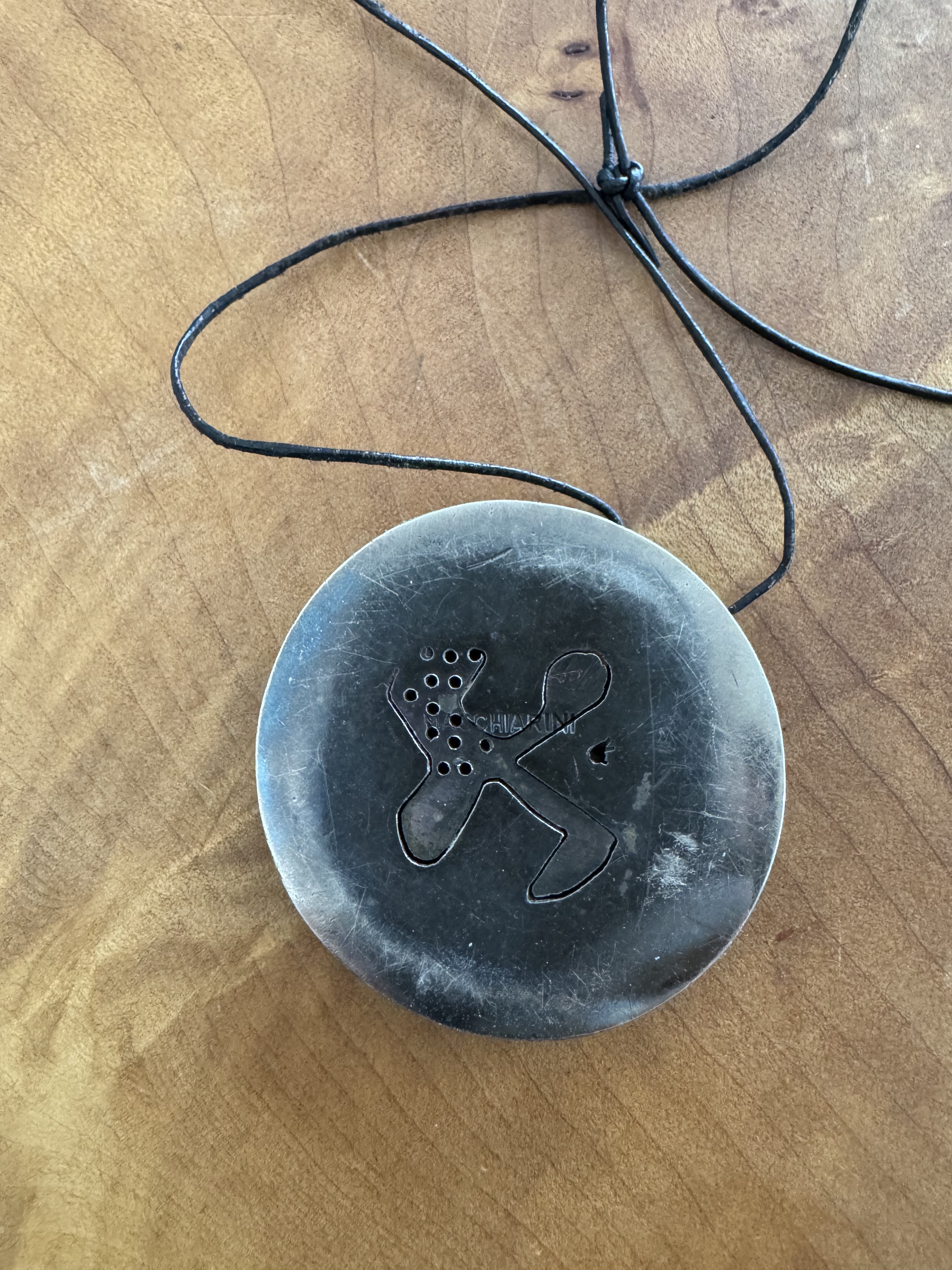
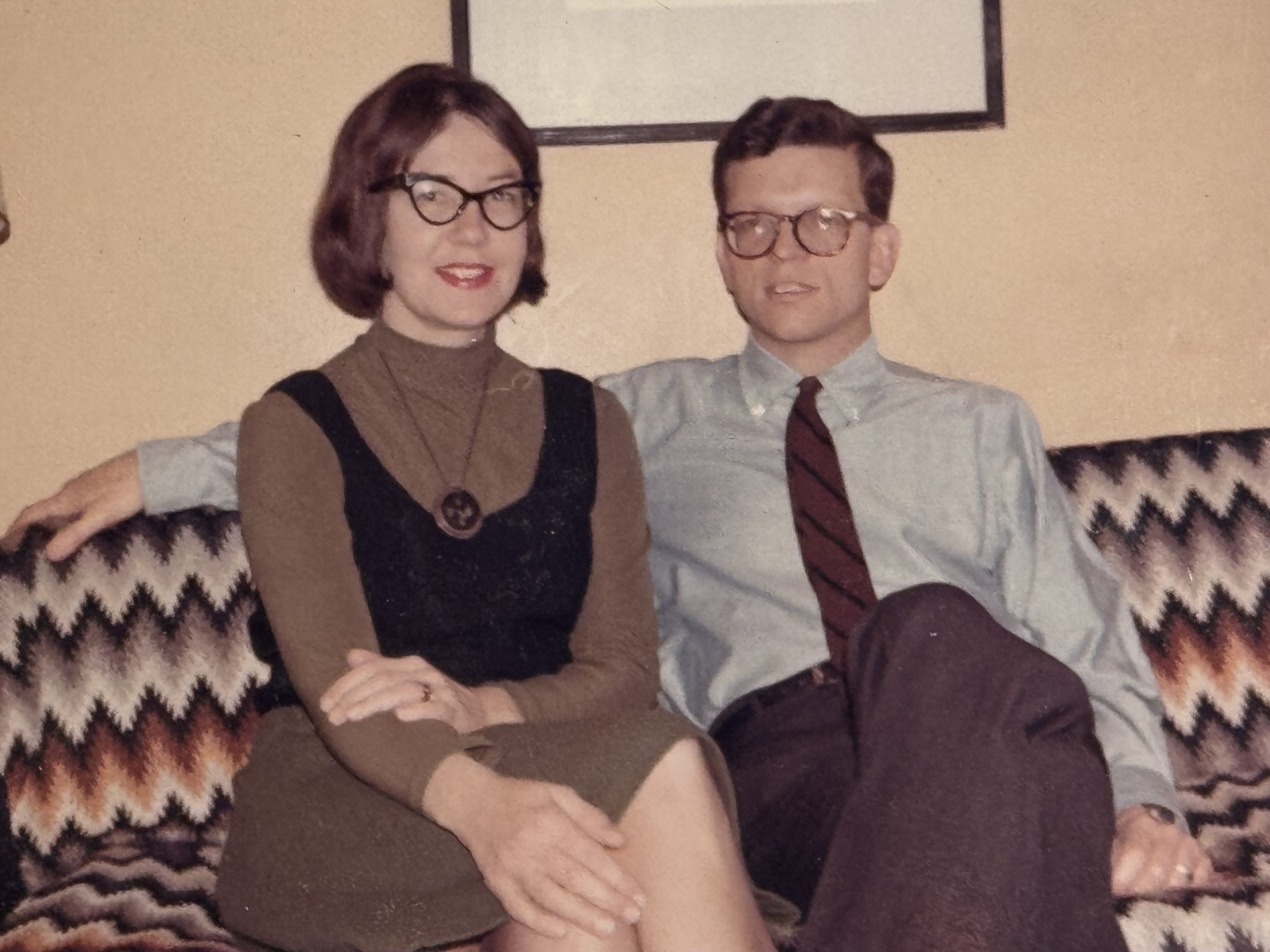
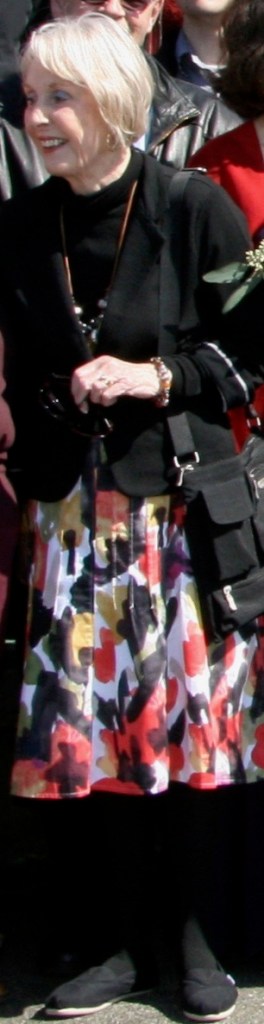
I want the pendant to tell a story—a story about my mother’s love for mid-century art, particularly from the Bay Area. Mom knew Peter, or at least I think she told me she did. She must have had anecdotes about how she bought the jewelry, what he was like, her San Francisco connection to him. She wore this pendant often, her signature piece. The photo of her and my dad shows her wearing it in 1964. She is wearing it again in the photo with her cat when she was in her sixties.

But the stories about Mom’s relationship with Macchiarini died with her. I can’t remember anything, and now I can’t ask her about them. What can I say about this unusual round pendant, a playful amoeba shape carved into dark wood and set in silver and gold?  I can say that when I wear it, I feel warmth under its weight. Warmth around the heart, generated by affection. Our relationship was complicated. She was fucked up, inevitably passing along some of that to me. Yet there was so much love. She instilled in me a reverence for life’s beauty. And inextricable from that, a cellular knowledge of sadness. 

I notice that my left hand is placed on my right arm just as my mother’s left hand is placed on her right arm in the 1964 photograph. Coincidence?

Imperfect Imbolc

Last week, while on vacation in a small town in Mexico, I read Wintering by Katherine May. Perhaps it seems like an odd choice for a “beach read” in the sun. But the subtitle spoke to me: The Power of Rest and Retreat in Difficult Times. Something in me said—yes please! Give me permission to lay down my (figurative) sword, to retreat when things aren’t going smoothly. I was thirsty for her message that during fallow times, rather than pushing ourselves to do more, we need to withdraw and rest. We need to do less. In the book, winter is both a season and a metaphor for those difficult times; we periodically “winter” throughout our lives, not just from December to March. Wintering occurs when we encounter death, loss, illness, or other big change. When life disrupts us, shakes us up. 

When May wrote about ritual, I took notice:  

“We need the pauses that ritual gives us. So much of contemporary life is about the denial of personal darkness. We’re supposed to be always upbeat, always available, always bursting with energy and optimism. There’s simply no time for negative feelings… Ritual invites these things. … [Ritual] might draw attention to cyclical time, to the way that things come around again and again. That helps us to think about change, about how far we’ve come, about what we’ve lost.” 

With Imbolc (February 1-2) on the horizon, I set an intention to mark the next pagan sabbat with ritual. Midway between Yule and the spring equinox, Imbolc is associated with new growth, new beginnings, hope, lambing (Imbolc is translated as “in the belly”), and Brigid, the Celtic goddess of fire and fertility. Some things we can do to mark this sabbat are to make a bonfire to symbolize the returning of the light (the darkest days of winter are behind us); create an Imbolc altar with the colours and objects associated with the sabbat; make a Brigid’s cross with reeds; and perform a house cleaning ritual: clean or declutter then “smudge the perimeter of each room with … salt, sage, candle flame, and water” and chant an incantation of cleansing as you move through the house. You can anoint doors and windowsills with “blessing oil” to prevent anything negative from crossing into your home.

These suggestions resonated. My intention was strong. I would set aside February 1st to create the altar and do the housecleaning ritual with Michael.

But a few days ago, we both got sick with Covid. Here we are on the eve of Imbolc with cotton wool heads and raspy throats, runny noses and low energy. My plan to make a day of the ritual retreated into the fallow field of sickness. So, we followed May’s message in Wintering: do less. We adapted ritual to align with healing. 

Our minimalist Imbolc

For our “altar,” we used our dining room table. We spread the white tablecloth (not ironed, too much energy required). White symbolizes snow and purity. We placed a red candle from the Christmas Angel chimes into a tiny Noxema-blue jar that Olga’s son discovered on one of his beachcombing adventures. Red is rising sun; blue is flowing water. This morning, I finally managed to get out for a walk, and we passed our local farm-stand florist and picked up a “pixie bouquet” ($10). There were no daffodils or snowdrops (the flowers suggested for an Imbolc altar) available. Just red and orange flowers, which is fine because they conjure the rising sun and Brigid’s fire. 
We collected the remaining items for our altar and ritual: a smudging stick I’d bought at a local garden stand a few years ago, a small pottery bowl filled with water, a fertility figure reminiscent of the Venus of Willendorf, and a sheep to symbolize “in the belly” and lambing season. Okay, strictly speaking it’s a ram, but we had to adapt. 

Lambing season

When I think of lambing, I think of “the farm”: my father and stepmother’s 50-acre property in Bruce-Grey County, Ontario. They kept sheep for many years, and one winter I visited during lambing season. I remember my father getting up throughout the night to check on the heavily pregnant ewes. I went out with him once: I have an image of his hands slippery with blood in the dim, cold barn while he helped with a difficult birth. Afterwards, we watched carefully to make sure the newborn suckled properly. A rhythmic quiver in her long tail showed she’d latched on and was getting first milk. 

Looking back, I now recognize the courage and commitment my father and stepmother must have had to buy those 50 acres and take that leap of faith. My dad, a city guy who fled academia, totally immersed himself in farming. He read everything he could about it and talked to the locals, hungry and humble in his search for knowledge and skill. Always experimenting, working hard, taking risks, living his dream. Facing all of the inevitable challenges and bad times farmers have. Being a so-called hobby farmer didn’t make him immune to bad weather, problems with stock, foxes killing the chickens, electric fences falling down, money shortages. Marion worked alongside him and also worked full-time as a nurse to finance the farm operations. Despite the challenges, they experienced much satisfaction and joy. Dad and Marion, I am so proud of your daring and adventure, your bravery and strength. 

Cleaning and ritual

We didn’t have the energy to clean the whole house, so we chose just one thing: the bookcases. After removing the pottery and other knick-knacks, we dusted the shelves and the books’ spines and tops. We wiped down the objects, sorting out things that we no longer wanted. When the cleaning was complete, Michael found an incantation online that we said together as we moved clockwise through the house, flicking water from the little bowl, letting the earthy-sweet sage smoke float into the corners of the rooms. Brave red candle lit the way, and Marvin followed us from room to room. 

With the purifying power of water,
With the clean breath of air,
With the passionate heat of fire,
With the grounding energy of earth
We cleanse this space

May the goddess bless this home,
Making it sacred and pure,
So that nothing but love and joy 
Shall enter through this door.

I worried a little that we were doing it wrong…but what’s right and what’s wrong? We made the ritual our own. We paused today to focus on the cycle of life and seasons. We purified our home for Imbolc, and we did it imperfectly. 

Recommended Imbolc reading

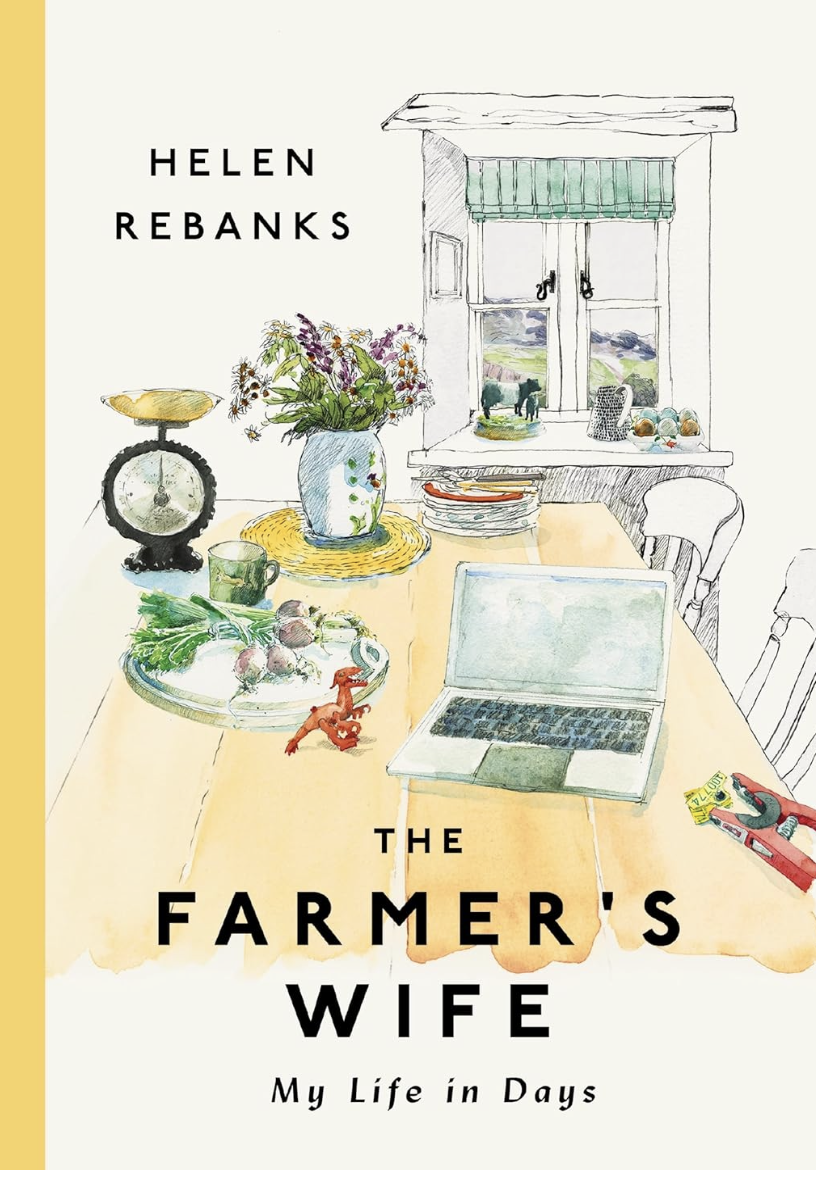
The Farmer’s Wife: My Life in Days, by Helen Rebanks. This heartfelt book, peppered with recipes, is an honest and passionate account of farming and raising a family in the Lake District, UK. There’s lambing, of course, but there is so much more. Rebanks writes about women’s role in farming: they often do all of the mundane, quotidian work that goes uncelebrated. So she celebrates the farmer’s wife by showing the importance of domestic and indoor work. I loved reading her descriptions of daily minutiae: the shopping, cooking, childcare, all mixed with tagging lambs’ ears, shovelling snow, gardening, and other outdoor chores. An equally important aspect of the book is her persuasive argument that we must support local, sustainable, biodiverse farms—such as theirs—to ensure a healthy future. 

Sewing/sowing history

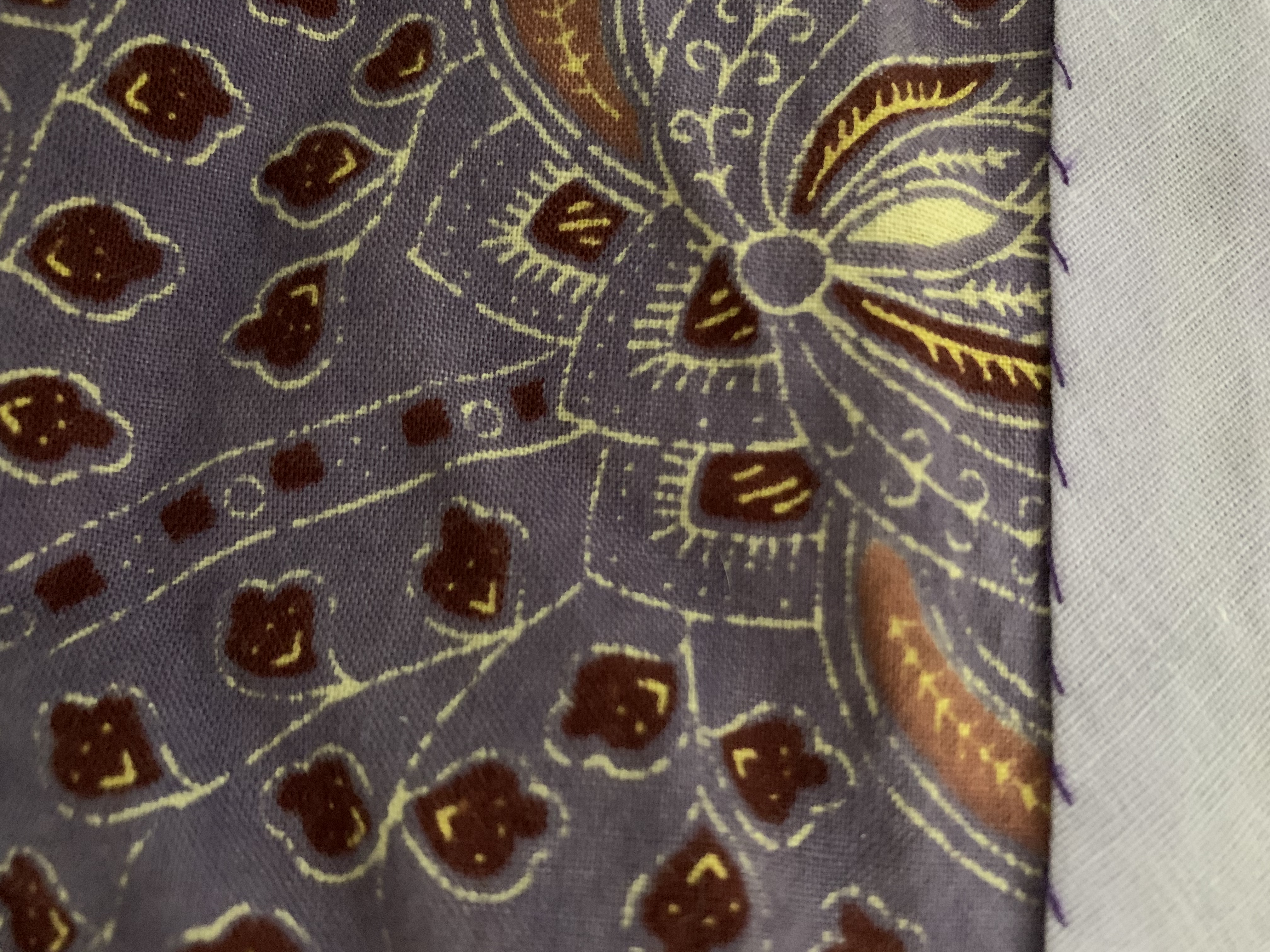
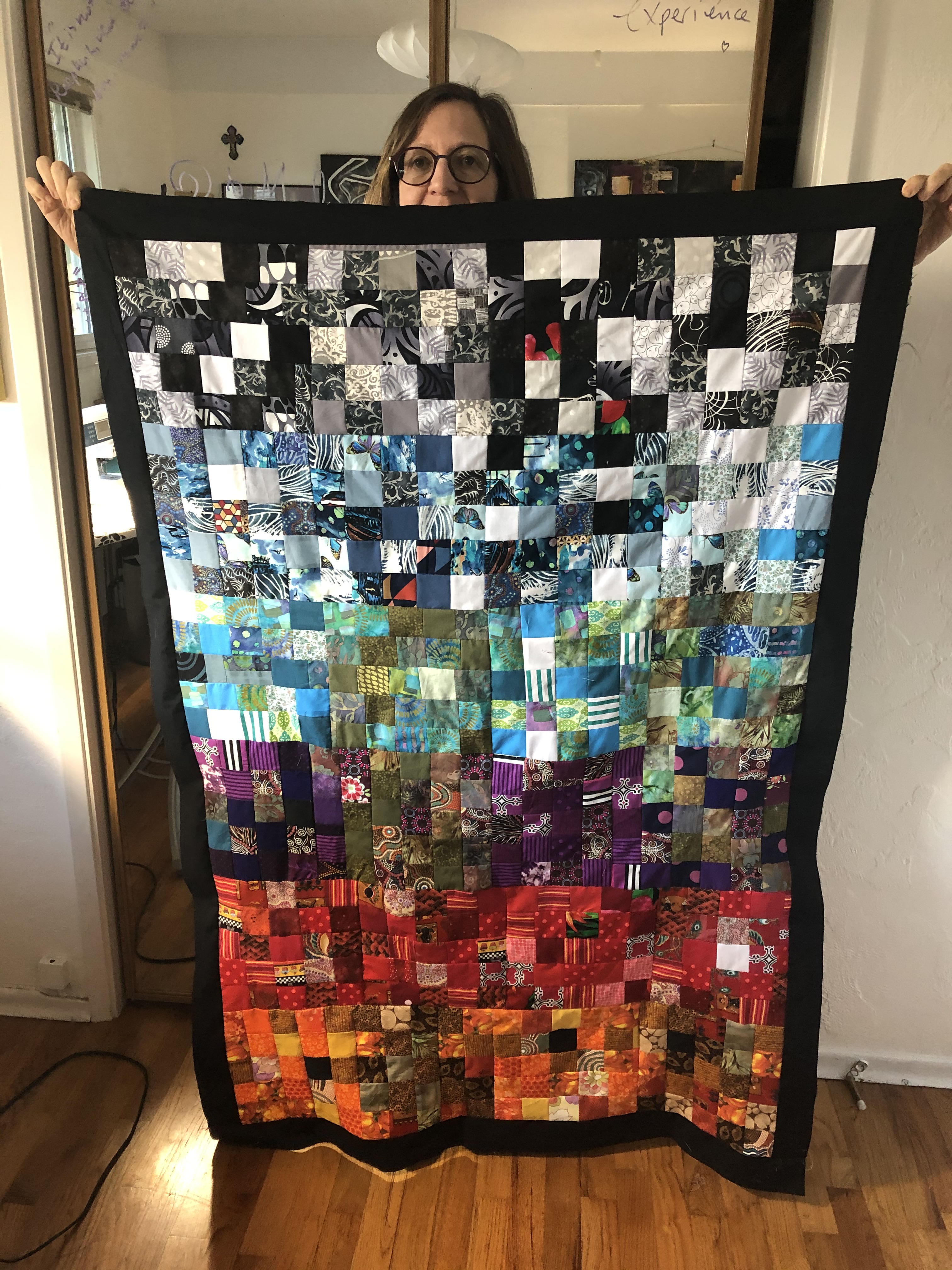
The lavender bias tape is sewn in small, even stitches along the inner edge of the richly patterned cloth. My grandmother once sat quietly, sewing this binding to finish the apron she was making for me. After wearing the apron for decades, I have been cutting it apart, incorporating squares of the purple, cream, and brown fabric into coasters for a friend, a shoulder bag for my niece, and now a quilt. These little squares and rectangles sew/sow history into new textiles. 

Grandma Marguerite Walker (nee Potter) was born in 1896 in Fort Scott, Kansas. Although I didn’t know her well, I have fond memories of her. She was gentle and genteel, soft-spoken, and poised.  When my parents when to Europe for several weeks when I was 8 or 9, she came to stay with us in Toronto. She taught me how to set a table during that visit because, apparently, my mother had never taught me the correct way to place napkin, fork, knife, and spoon. I once visited her in Los Gatos, California, where she lived for many years. One day, we wandered about, looking at the shops. “What a lovely colour your blouse is,” grandma said to a woman we approached on the street. That stranger lit up from the compliment, and I never forgot that simple, kind exchange. Another time we heard ambulance sirens in the distance, and my grandmother prayed aloud that nobody was hurt. This was something new for me. “Prayer” was not in my parents’ lexicon. And in her letters, grandma wrote “thot” for thought, not because she didn’t know how to spell—she was an excellent speller—but because she had her own shorthand. 

In my twenties, I underwent surgery to correct infertility. I was told after the surgery that I still had only a 15-20% chance of having children. Grandma Marguerite started sending me her copies of Unity magazine and told me her church congregation was praying for me. Ultimately, I gave birth to three healthy sons. I don’t know about cause–effect, but I was forever grateful to her for the energetic and spiritual work she undertook on my behalf. All of these warm memories float through me as I sew squares of Grandma’s apron into the mix of this new quilt, which I think I’ll call “windows to a purple world.” 

Windows to a purple world (quilt in progress)

This type of sewing I’m describing is upcycling, but with a difference. Take fabric that’s been in your family or is otherwise meaningful and make it into something new. If you do this, you incorporate stories into your sewing. A couple of years ago my friend Nancy gave me a large basket of textiles from her family—old linen tablecloths and napkins in pastel green, pink and salmon that her mother and grandmother had used over many years. I cut these precious pieces apart, mixed in other contemporary fabrics, and fashioned pillowcases. I gave Nancy the pillows for her birthday. She can remember her mother and grandmother and meals at the family table whenever she looks at them.  

I incorporated cloth from pink and green tablecloths and napkins from Nancy’s family into pillowcases.

Scattering scraps of one fabric over countless projects feels like I’m sowing seeds of connection far and wide. When Michael and drove to the Shakespeare Festival in Ashland, Oregon in the summer of 2017, we visited Sew Creative, a beautiful fabric store on the main drag. I fell in love with designs by Australian Aboriginal designers: swirly organic patterns that looked like amoebas and rhizomes done in purples, reds, browns, and oranges. And there was a binder there with each designer’s photograph and profile so I could learn about them–their processes and inspiration. I bought two one-yard pieces of fabric. During the last five years, I have cut and sewn those fabrics into countless things: purses, pouches, quilts, coasters. I love the dispersal of one thing into many. Cadmus sowed dragon’s teeth and up rose an army: the fierce Sparti (which means “sown”). I sow scraps of fabric and up rises. . .  delight! 

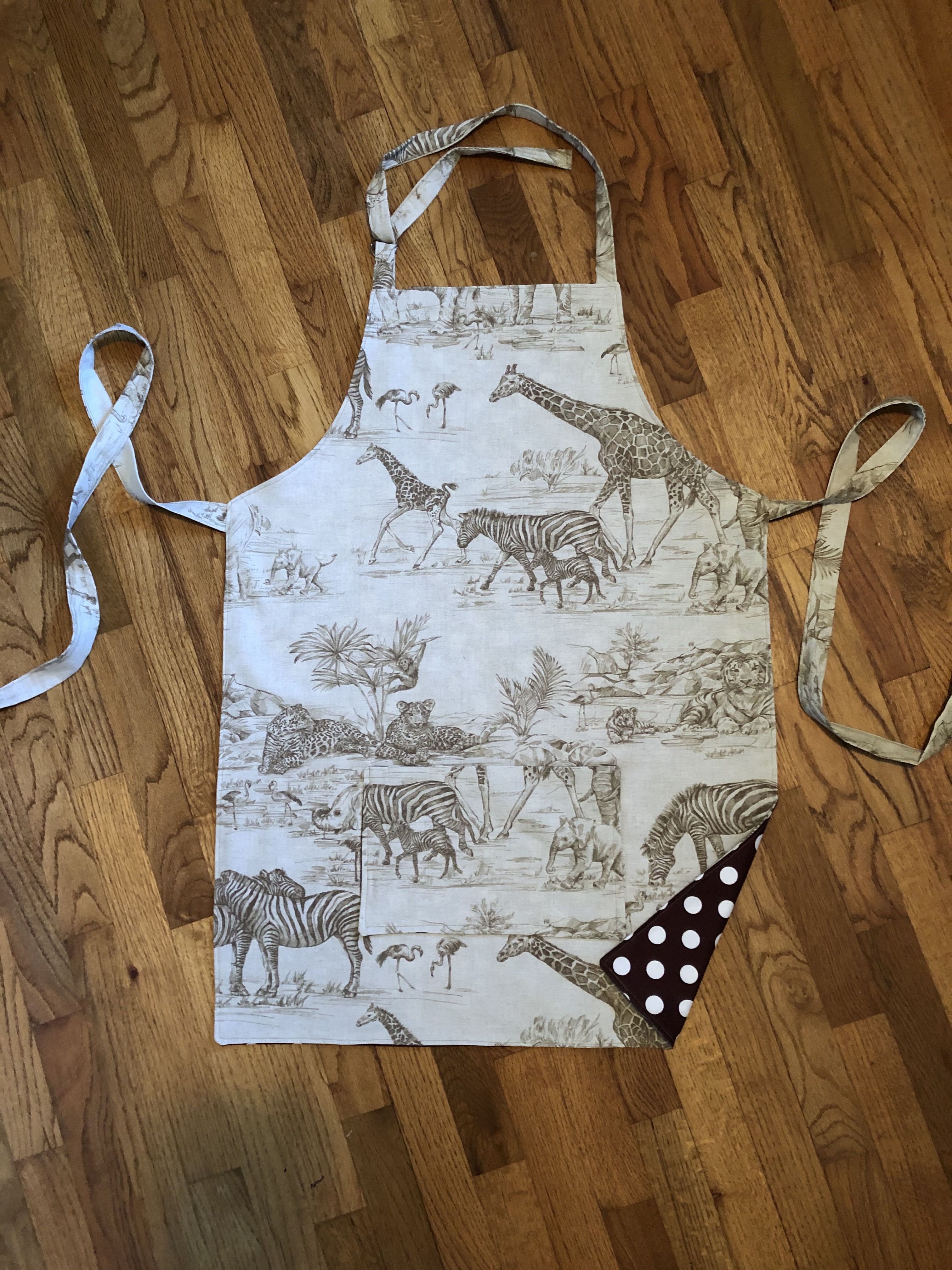
Scraps of the same fabric show up over and over again. The cloth Nat and Sam chose for their aprons (animals on the Serengeti; a bright turquoise broadcloth) show up in the bookmarks I recently made and distributed to friends and family. The blue tablecloth I bought at Value Village became the lining for my blue patchwork apron. It feels, at times, as if I—and not just the fabric—am being dispersed across time and space. It is too easy these days to disconnect and withdraw. I am trying to stay connected through writing and sewing, sewing and writing. Sowing myself far and wide through words and fabric.

Legacy of Loss/ Swords

Legacy of Loss

“The American experience, the focus on individual achievement, the acquisition of goods and money to prove one’s social value, is built on this sense of loss, this alienation from the warmth of the home culture, isolation from genetic bonds. This separation from one’s tribe creates an inner loneliness that increases as one ages.”

Annie Proulx, “A Yard of Cloth” (p. 20) from Bird Cloud.

I read this passage last night, and I had to get out of bed to copy those sentences. They struck a chord in me. I too feel that “inner loneliness that increases as one ages.” My mother, who died on February 14, 2019, distanced herself from her family as a teenager. When she coloured her hair blonde, her father was furious. Either he told her to leave, or she left voluntarily to flee the strictness of their farm in Lodi, California, I’m not sure which. She ended up in Los Angeles, working the switchboard at Kaiser Hospital. She would later meet an older woman, Phyllis, who became a kind of mother to her, paying for her therapy. My mother would go on to complete a BA and MA at University of California, Berkeley. 

Not only did my mother reject her parents, she spurned most of her seven siblings as well. However, she had a special bond with Fran, a gentle older sister who worked as a nurse. My mother claimed Fran saved her life by preventing their parents from treating my mother’s Bell’s Palsy with some kind of horse medicine. Most of these stories are so garbled in my memory. They seem half-fantasy and half-truth. I’m sure I have most of the stories slightly wrong. 

But the feeling is real—of striking out, fleeing family, rejecting those who engendered you, separating from tribe. That was an element in my mother: brutal independence. I don’t need you. I depend on nobody but myself. I remember the last time I visited her in Toronto, her brother, an Evangelical preacher living somewhere in the States, called her, and I picked up the phone. Apparently, he called regularly, wanting to reconnect, and she always hung up on him. When I tried to hand the phone to her, she wouldn’t take the call. I was shocked. You won’t talk to your brother? He’ll just proselytize, she said. 

My parents migrated from California to Toronto in 1965, another “alienation from the warmth of the home culture” that Proulx writes about. My mother left her adopted mother, Phyllis, which must have been heartbreaking for her, and my father left his mother. We three daughters were already used to being without a large tribe—we didn’t know most of our cousins or aunts and uncles. We were a nuclear family with no extended family to fall back on. I look back on how we grew up without the cushion of uncles, aunts, cousins, grandparents and how hard it is to survive that way. But we didn’t know anything different. 

Then, repeating the pattern of migration and loss, my first husband and I left our home in Toronto with our first child. We left our parents and siblings—it felt exciting and freeing. We started a new life in Victoria in 1988. My kids grew up without getting to really know their Ontario grandparents. 

I am thinking of my mother this weekend. It will be three years since she died. She was fierce and proud and insisted on individual achievement as the sine qua non. In her actions, she was a feminist. In elementary school, we were sent home for lunch every day for a 90 minute break, which necessitated mothers stay home to serve their kids lunch. She fought to get the school to allow us to stay there to eat a packed lunch so she could go out and work. Later, she pressed back when the bank wanted her ex-husband’s signature to get a mortgage. But she wouldn’t be called a feminist because she didn’t want to be seen as part of group of women who supported and uplifted each other, challenging the system together. All of her achievements in life, she thought, were due to her own hard work and merit plus a little help from individual friends. And it’s interesting how I’ve inherited some of this thinking, especially an unwillingness to ask for help. 

My mother and her father

As humans, we work so hard to connect. It is our default—we need each other. I treasure my sisters now, and I create my own chosen family in my friends. However, that profound sense of loss lingers at the edges of life. It’s the legacy of leaving family behind and striking out on one’s one. 

Swords

Swords are weapons of destruction and tools of discernment. 

Swords are on my mind.

About a year ago, I created a website for my new editing business and wanted a brand identity.  The Queen of swords from tarot seemed a perfect symbol for a female editor—the independent, unbiased woman, a seeker of truth, with clear boundaries and a direct style of communication. She sees problems and figures out how to solve them; she knows where to cut the extraneous to reveal the truth. Queens are about heart and swords are about mind—so she brings heart and mind into harmony.

I didn’t use a Queen of swords image from a tarot deck due to copyright laws. Instead, I planned to use an excerpt from a painting in the public domain, John Gilbert’s (1817-1897) Joan of Arc. I sent a mock-up of the website, including a sword image, to a few friends for their opinions. One of them noted that the image of Joan of Arc’s armour and sword was martial and scary and didn’t really reflect who I am. I agreed. I decided to let go of the sword as a metaphor for editing because of its primary associations with violence. 

And yet, swords keep coming up. On December 31, 2021, Michael and I each drew a tarot card to guide us during 2022. He drew two of swords; I drew Queen of swords. Evidently, the sword has much to teach both of us this year, so I am listening. As Michael has been studying the tarot for several years now, I asked him about swords. His words are a synthesis of all he has read and studied from various sources (but his main influences are Mary Greer, Rachel Pollock, and Anthony Louis). 

 “The suit of swords is aligned with the element of air, which is the suit of mental processes and thoughts. Swords are aligned with thinking, intellect, reason, yang energy, severing unhealthy connections, and the courage of the warrior. They’re about logos, problem solving, things we have to work through before we can find serenity. 

Swords are aligned with prajna, deciding what to accept and what to reject or cut; it’s the suit of discernment and decisiveness. Also, because swords are about mental things, they can also be about willful blindness, about illusion. Swords is where we discover the obscurations of mind that trap us. 

Two of swords shows a woman blindfolded, and the eight shows a blindfolded, bound woman surrounded by swords. However, these are mental obscurations – imagined entrapments rather than actual physical imprisonment. The four of swords has a person lying on their back with three swords above – this is contemplation. Swords is about how you use your mind. Some sword cards are about meditation: training, calming, and taming the mind. 

Swords are not just about cutting, but they’re also about piercing – which is penetrating insight.”

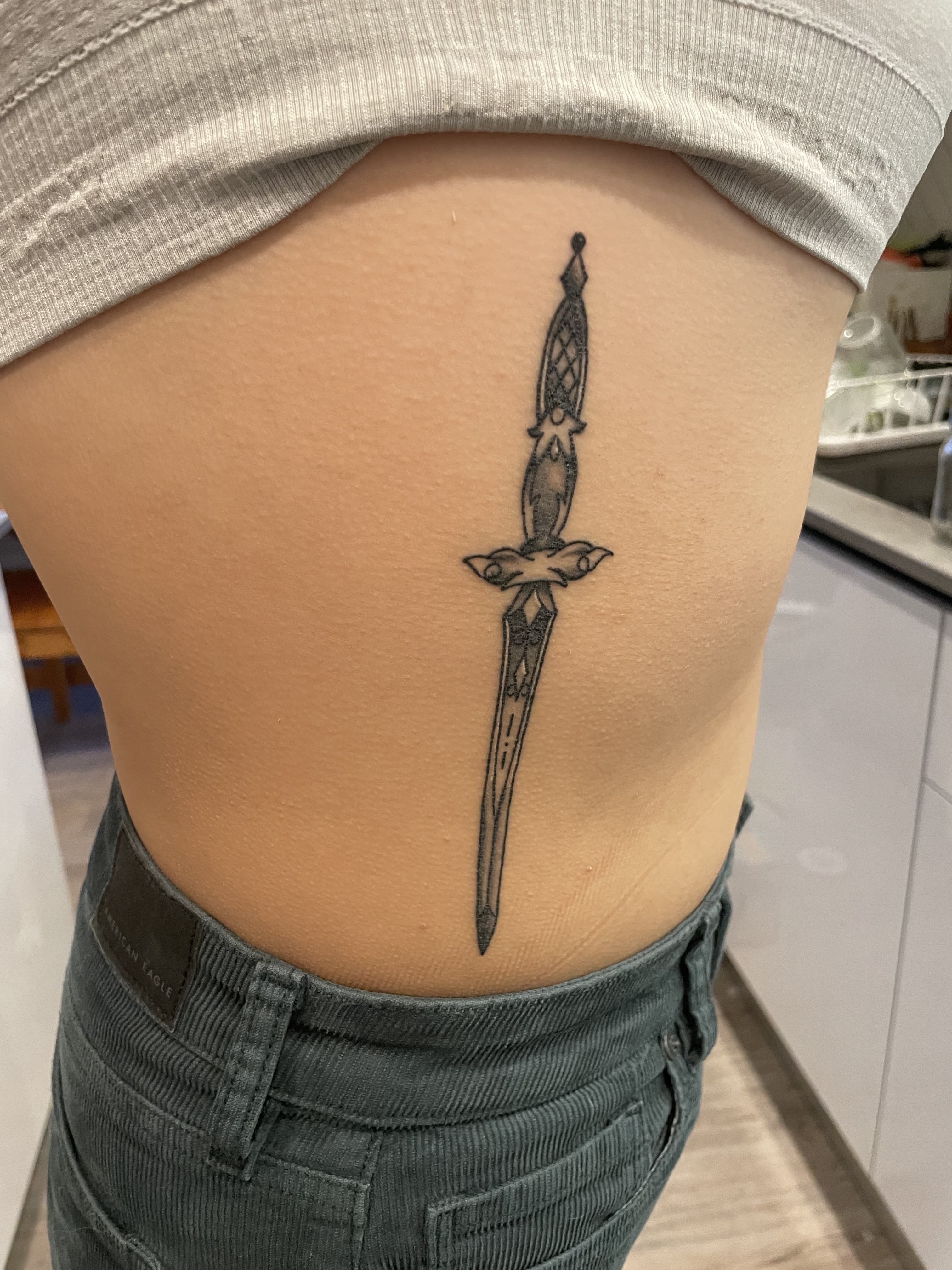
I asked Michael about his tattoo of the three of swords. “Well, threes are energy, vitality, motion – they arise from loss or partnership or conflict. Three of swords is heartbreak, alienation, and sorrow—mental alienation and loss. The three of swords invites us to find the sweetness and wisdom beneath our sorrow –that’s my take on it. Go underneath the sorrow – penetrate and pierce it.”

Cutting and piercing are the work of the sword. And underneath the pain is sweetness.

Recently, a client asked me to cut 40% from several of her book chapters—truly an exercise in figuring out what’s most important. Same thing in life. Look at what you most value and treasure it. Let go of what you no longer value.

As the Queen of swords accompanies me throughout this year, I would like to continue to examine the mental obscurations that trap me and prevent me from experiencing serenity. For example, much anxiety arises from worrying about the future, but I know there is no future. There is only today.

Grief’s flat feet

My dad, 1927-2021, looking over his land soon after they bought the farm.

We walked slowly Thursday morning because overnight, recycling boxes and bags heaped with cans, bottles, cardboard, and newspaper had appeared at the curb. Blue splashes up and down the street that Marvin had to investigate, and so our walk slowed to a shuffle. He snuffled like a pig rooting for truffles, straining at the leash to lick the pizza box, to reach the Friskies can with a smidgen of catfood left on the rim. The night before, during his last walk of the day, he’d let out a volley of piercing barks at a pile of recycling across the street. Perhaps to his eyes, in the dark, the mound of stuff piled high above the blue box was a threatening mammal.

Early September’s morning chill, high scudding clouds above, and a Northern Flicker playing hide and seek in a hawthorn tree, his red head popping in and out of sight. The street is quiet—just the distant thunder of the McKenzie interchange as a blur of cars crosses into town. I am grateful to work at home, no need to commute. Instead, I love these 7 a.m. walks. Something in a recycling box caught my eye. Neatly folded on top of a pile of newspapers was a section of Saturday’s Globe and Mail, folded to the crossword puzzle. Every clue solved; every box filled with a neatly penciled block letter. Perfection. Did my puzzle-solving compatriot struggle over it as much as I had? 

I felt connected to that person—their careful block letters different from my scribbled slanty ones, but we both finished the thing. Did they do it quickly, or did they stretch out the experience into Sunday or even farther down the week, relishing it? Did they approach the task methodically or fill in random clues? Did they ask for help or go it alone? Dictionary or no dictionary? Google or purely old school?  

Marvin ate half of my pencil.

Think of all of us across the nation who turn to the crossword first thing on Saturday. Sharp number 2 pencil. Or maybe a mechanical one. Do some confident people use pens? Fresh white eraser by Mars. Or a pink Dixon, perhaps? We sit in armchairs, on couches, sprawled on deck chairs, scrunched on buses and subways, drinking lattes in coffee shops. All of us, together in the challenge.

My mother did crosswords daily for the last 22 years of her life. They helped fill blocks of morning time after her mandatory retirement from her job as a lecturer in art history at Ryerson Polytechnic in Toronto. I found a letter from her dated February 1997. She had just received a package I’d sent intended to cheer her up: 

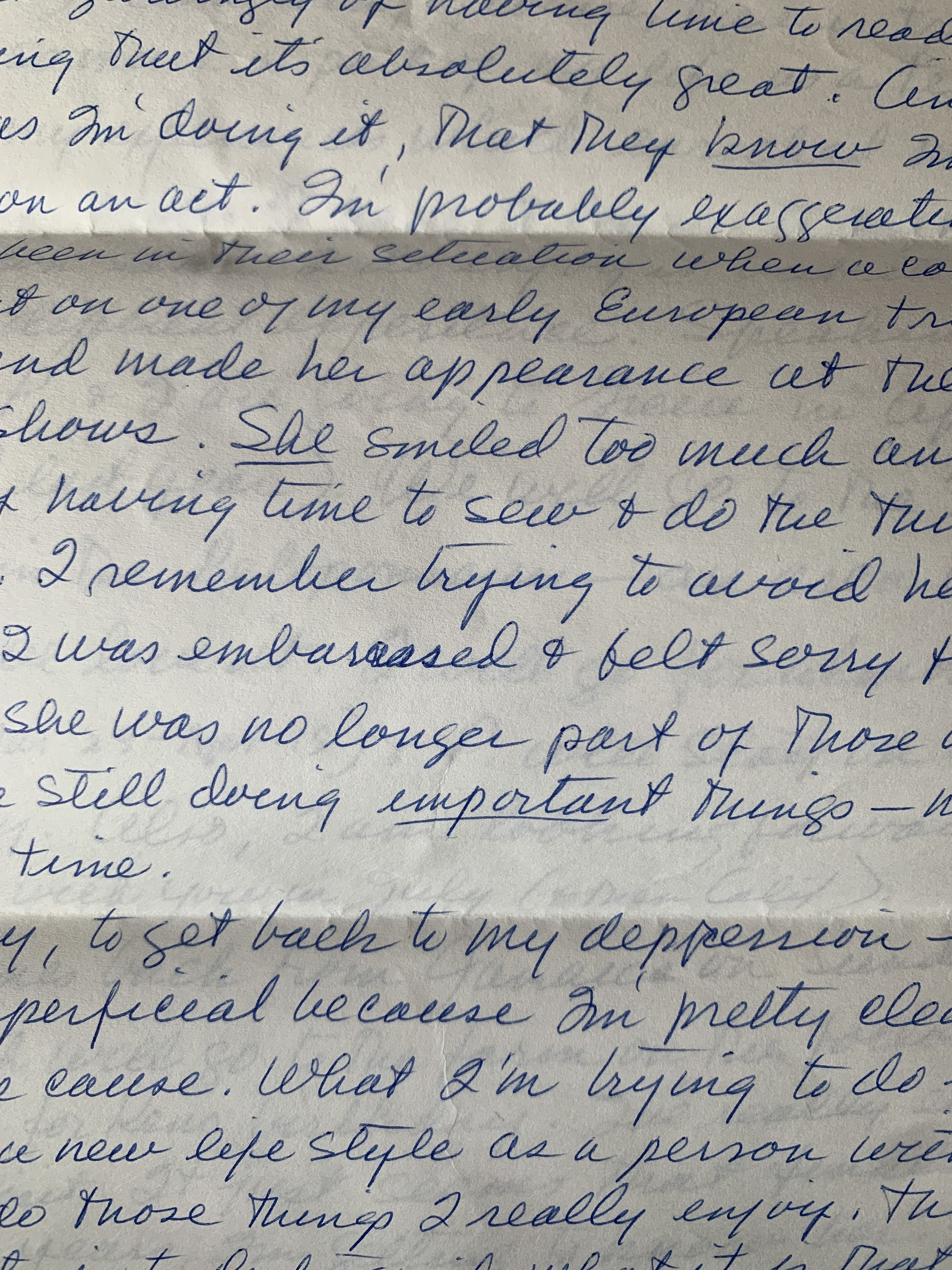
“I didn’t realize my depression was so obvious. It isn’t a deep depression. It is simply that I no longer have an audience and no longer get paid for doing something I enjoy. The awful thing is that as soon as a person retires, he/she loses status. I notice it when I talk to people at Ryerson . . . They seem extra kind and sort of smile at me and ask me what I’m doing, etc. I smile back and try to talk glowingly of having time to read, etc. pretending that it’s absolutely great. And I know, as I’m doing it, that they know I’m putting on an act. . . So, I’m trying to develop a new lifestyle as a person with time to do those things I really enjoy. The difficulty is to distinguish what it is that I enjoy doing! Meanwhile, I do crossword puzzles, which is new for me and I’m getting pretty good at it (usually at breakfast), and it’s very nice to have the leisure not to have to rush.”

I started doing the Saturday crossword soon after my mother died in 2019. I thought they were too hard at first, and so I’d abandon them quickly. I have a healthy vocabulary, and I love language, but the crosswords seemed like something else. They’re filled with puns and tricks, and it seemed you had to be part of the in-crowd to get them: both hip to idiomatic English across the decades and savvy about current cultural trends. I’m just too literal, I thought, and what I know fills such a narrow groove. But then the challenge started to intrigue me. Now I look forward to the Saturday paper. After reading the headlines and the obituaries, I find the crossword, fold it into a nice rectangle, and begin.

All of this is a preface to say, I’ve had no will to write. Nothing seems worth writing about, these days. Life has a flat, fallow quality. Nothing’s important enough. Although there’s plenty of big bad news—pandemic, systemic racism, climate change—I don’t feel equipped to talk about any of it. 

So, I push myself to finish this rather silly piece, a blog post about something as quotidian as the crossword puzzle. I stop and pause often to ask, “Why bother?” Why bother indeed. But it’s just that writing something, anything, seems as if it might be the antidote to the flat way I feel. 

My thoughts return to my mother, sitting on the loveseat in her high-ceilinged living room, wrapped in a thick robe, blinds down, doing the crossword. Filling the hours. Her sleek black cat, Cicero, is curled up beside her. She is deep into it, puzzle dictionary next to her on the small rococo marble-topped table, Schubert’s Trout Quintet playing softly on the CD player. Missing the old nicotine rush, the sweet suck of smoke into her lungs, she holds the pencil like a cigarette for a moment. I miss her. In that old letter from ’97, she wrote, 

“I’m probably exaggerating, but I have been in their situation [those Ryerson people who acted extra kind toward her] when a colleague retired and made her appearance at the annual fashion show. She smiled too much and talked of having time to sew and do the things she enjoyed. I remember trying to avoid her because I think I was embarrassed and felt sorry for her because she was no longer part of those of us who were still doing important things—not just passing time.” 

Mama and me, back in the day.

Doing important things v. Just passing time. . . I flinch at my mother’s binary of “important” paid work and “just passing time.” But something in what she wrote resonates with me. I work part time as a self-employed editor, but lately, I often feel as if I’m just “passing time.”

Maybe this is just the flatness of grief. Flat-footed grief walks over me. After many losses, I am a fallow field—nothing growing here.  

I have been reading memoirs about aging parents. . . Elizabeth Berg writes in hers, “I think as long as a parent is alive, it’s easier to feel young.” After my father died at the end of June, I’ve felt old, flat, fat, tired, sad. Nothing feels important. Especially not the weekly crossword. And yet, musing over the word problems gets my brain churning slowly, raking over clues like a pitchfork turning organic matter in the compost heap. I feel connected to crossword puzzlers across Canada. I imagine, for example, an old guy in Mahone Bay—let’s say he’s 82, goes by Ernest Nickerson and sits in the kitchen nook with morning coffee, chewing the end of the pencil as he tries to remember what a 10-sided shape is (79 across, 7 letters). 

From our 2012 honeymoon in NYC

Remember geometry class in tenth grade? That’s where Ernest first noticed the girl who would be his wife, in geometry class at Mahone Bay School. As he digs deep for the name of a ten-sided shape, another thought is unearthed from that compost heap: Darlene’s thick red hair, held back with tortoiseshell barrettes. He couldn’t take his eyes off those red wings in front of him during class, couldn’t stop imagine pulling his fingers through that rough, dark crimson hair. He unclicks the delicate barrettes to let those wings loose to fly. If Darlene were alive now, Ernest thinks, she’d lean into my ear, her coarse grey hair tickling my nose, skinny shank up against mine, and whisper, “Decagon, Ernest. You knew that, honey.” 

I write to get momentum, to feel connected to people, to create worlds. To feel connected to you, and Ernest, and Darlene. So, if you are a maker, a creative person, (we all are, each in our own way) remember: The work wants to be made, and it wants to be made by you. Even if it doesn’t seem important. Believe me, it’s important. It connects you to life. The fallow field regenerates.

Memoirs about aging and dying parents that I recommend:

  • Roz Chast, Can’t We Talk About Something More Pleasant?
  • Philip Roth, Patrimony: A True Story
  • Elizabeth Hay, All Things Consoled: A Daughter’s Memoir
  • Elizabeth Berg, I’ll Be Seeing You.
From a later trip to NYC, March 2019, after my mother died. Sugar skulls in a restaurant display.

A sense of belonging

“Human beings are creatures of belonging, though they may come to that sense of belonging only through long periods of exile and loneliness.” 

David Whyte, The Three Marriages: Reimagining Work, Self and Relationship

Ever since I was small, I have felt I don’t belong. As I grow older, I see how this sense of not belonging is linked to black and white thinking: I am excluded either because I am not good enough or because I am superior (“arrogant worm,” as they say in AA). This strain of thought is endemic for alcoholics. To break the spell, it’s crucial to look for similarities not differences when you attend twelve step meetings or, indeed, whenever you feel the sharp edges of polarity creating a sense of distance. 

For me and perhaps for you, the isolation resulting from the pandemic has exacerbated loneliness and a sense of exile. Last month I was feeling particularly alone in the sadness that can arise from being a parent. Only in recognizing that many other parents across the world share in this pain did I not feel so alone. Facebook groups and other modes of connecting across space and time are wonderful to bring a sense of “I’m not the only one.” But also useful has been the Buddhist practice of Tonglen, breathing in the thick suffering of others in your predicament and breathing out coolness and healing. This practice connects me with others, but more than that, it dissolves the sense of specialness and exclusion I am prone to. We’re all in this together.   

There is another simple practice I have started. I review small events from the perspective of community. This week, for example, I went to an acupuncturist for the first time. She is a gentle young woman named Demi with a river of brown curls running down her back. She made me feel so comfortable and safe as she stuck a dozen needles into my legs, hands, and back. As I laid face down on the warm table in a quiet room, I felt joined with all of the other people suffering sciatica or other pain in their bodies, and I also felt part of a group of people who get acupuncture. I could picture hundreds of us lying on surfaces—floors, grassy fields, dusty streets, tables, beds—and kind practitioners breathing slowly and rhythmically, putting us at ease, as they insert the slim sharp points. I imagine a collective release of endorphins through bodies old and young, fat and slim, smooth and rough. I imagine our relief. 

The next day, I suffered from self-doubt about my new editing business—will I get clients? Will people I’ve done work for get back in touch with me? And imposter syndrome: Am I really an editor or just pretending? Perhaps I don’t belong.

Drawing a tarot card, I asked, “What do I need to know right now?” I pulled the Six of Wands, then consulted Joan Bunning’s Learning the Tarot. She writes that “the Six of Wands appears when you have been working hard toward a goal, and success is finally within reach. . . . If you do not feel close to victory now, know that it is on its way provided you are doing all you can to make it happen.” I felt encouraged. 

Amazingly, later that day, I received two emails from former clients who wanted me to do work for them. The next day, a new client gave me an update on work that is planned for this summer. And a referral from a colleague I thought would come to nothing yielded another email today asking for my services.

I feel not only encouraged by all of this positive activity, but connected to a community of editors. Yes, I belong. Amazed by the rightness of the card, I feel connected to all those people everywhere who use tarot to help them make sense of life.  I can see the decks being shuffled and cut by hands everywhere—brown hands, gnarled hands, arthritic hands, young hands, a hand with a missing finger. . . . We shuffle and cut and draw and learn about ourselves and others, about our Fool’s journey on this Earth.

On Friday, I felt down again, and as I sat in the backyard with my next-door neighbour and we watched the puppies play, I shared a little of my current grief. She popped out of her lawn chair, “I’m going to get my Animal Spirit cards. They’ll help you to feel better.” She came back with the deck and I shuffled and drew. I tried to pull just one, but two cards were stuck together—Elephant and Otter. She read aloud the description of each animal, and a tear rolled down my cheek. 

The descriptions felt resonant—the qualities of the unstoppable, gentle, noble elephant and the giddy and joyful otter were combined inside of me. I felt connected to my neighbour then, linked to her through her kindness to me and her willingness to explore beyond the rational self. I feel connected to everybody everywhere who is suffering and uses tools to understand themselves and bring solace: tarot, mandala-making, building sand-castles, creating songs and singing them, writing novels and poems, reading palms, tea-leaf interpretation, or casting the I Ching. 

Then on Saturday, I was washing dishes and noticed movement in our back neighbour’s yard. Raccoons? I fetched my binoculars and trained them on a raccoon couple mating—the male straddling the female and biting her neck. Their black bandit masks and long striated fur were crystal clear through the binocs. I was awed. I am part of a community of animals—our bodies are drawn to one another, we mate. I am connected not only to a world of animal lovers, but to a world of lovers of animals. We train our binoculars on birds and lovely beasts of all kinds; we are curious about the natural life we are part of. 

Antoine de Saint-Exupéry wrote that “what is essential is invisible to the eye,” and that has been my experience. An (invisible) sense of community is essential to me now more than ever. This week I call forth community in many ways. I call it forth through my pain and suffering. I call it through being a patient of acupuncture. I call it through using tarot and other mystical tools. I call it through imagining myself as a member of overlapping groups: editors, parents, and neighbours. And I call it through membership in a society of homo sapiens and other animals. An invisible sense of belonging keeps me going. I may not be able to touch you but I feel you.

Shake your wet weathers in the warm wind

Bouts of anxiety come and go these days: chest tightens, stomach burns, heart flutters. Tears come at any time, unbidden. My hands and face feel raw. My heart even more so. I  am finding comfort in small things. When I saw #StayHomeWriMo’s mental health prompt, “starting re-reading one of your favourite kids’ books,” I took Little House in the Big Woods and Little House on the Prairie off the shelf, the first two books of a series based on Laura Ingalls Wilder’s childhood, specifically pioneer and settler life in Wisconsin, Kansas, Minnesota, and Iowa in the late 1800s. I have the first four books, and I’ve kept them since childhood, moving them from house to house dozens of times. Faded covers, deckled edge pages, and canary yellow flyleaves. Garth Williams’s droll pen and ink illustrations make the stories and the characters come alive. Rereading them more than fifty years later, they produce the same warm feelings of comfort and safety they did back then.

Screen Shot 2020-04-10 at 12.56.29 PM

As I snuggle in bed, I enter a fictional world governed by capable, predictable adults. Wolves howl outside, bears roam the woods, storms erupt and cold winds thrash against the house, malaria descends upon the family, and Indians living down in the creek beds want to kill and scalp all white people. Yet Ma and Pa are there, keeping Laura, Mary, and baby Carrie safe.

Nestling into words and images describing snug, clean, safe indoor environments, I enter the log house in the big Wisconsin woods (Book 1). In the deep of winter, fire shines on the hearth, bulldog Jack and Black Susan the cat stretch out on the warm wood floor. Comfy in her red flannel nightgown, tucked into the trundle bed she shares with her sister, Laura “looked at Pa sitting on the bench by the hearth, the firelight gleaming on his brown hair and beard and glistening on the honey-brown  fiddle. She looked at Ma, gently rocking and knitting. She thought to herself, ‘This is now.’”

IMG_0738

Like a swarm of bees, I can feel the critical arguments seething through my mind as I continue reading: I am trained to call out patriarchal culture, gender construction, racism, oppression, and colonialism, and it’s all there in these books. But I switch off those arguments, sinking into our collective unconscious where an archetypal protector tucks us into cozy trundle beds, watching over us, every one, during this difficult time.

I remembered my 60th birthday party, a year and a half ago. Despite drawing a tarot card that spelled disaster, I experienced the snug feeling of being safe, loved, and watched over. Those were happier times when we were able to gather—when physical distancing was unthinkable.  I invited a friend to the party who reads the tarot, specifically the Motherpeace deck. Karen Vogel and Vicki Noble created Motherpeace tarot in the late 1970s in Berkeley, California, where they worked together as academics, feminists, and sacred healers. This big round deck draws on ancient Goddess wisdom, the occult, magic, myth, and feminine energies. Although when I first saw the deck, I felt disappointed by what I perceived to be crude artwork, I became more and more interested in how these two women had translated the 78 cards from more traditional decks into sacred feminine images.

At my party, I felt honoured by Pamela’s willingness to read for my friends, and one by one, I asked people if they would like a reading. Several of my women friends did, and so by turns, they sat in my low bamboo writing chair that I had dragged into the living room from my sewing room. Pamela, having spread her blue velvet cloth over a low footstool, handed each querent the deck to shuffle. It takes a bit of time to get used to working those big circular cards into a shuffling sequence, and I noticed each of my friends handled the task slightly differently. Pamela asked each woman for her question: What do you want to know? Not a yes/no binary question, but a how or why or what question. Next, Pamela asked them to cut the cards three times, choose three cards, and lay them down. The three-card sequence represents the past, present, and future.

Sometimes, through the buzz of conversations, soft lamplight, music, balanced plates of food, and milling bodies, I glanced at the rapt look on the querent’s face as Pamela leaned in toward her, long blonde hair falling around her beautiful serious face. Sometimes I heard laughter from that corner. And I kept getting little warm flutters in my heart—thinking of how happy it made me for each of my female friends to have this loving attention paid to her for a few moments. To consider her life as this rich, mysterious path. To feel the soundings of old wisdom, submerged, but like a vein of molten lava, spreading warmth and understanding into her body, from the seat of her pants into her torso. But of course these are my feelings about tarot—not theirs. Yet it made me happy. It was as much a gift to me as a gift to each of them.

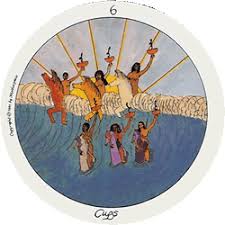
It was enough for me to know the gift Pamela had given my friends, but then, as I stood in the doorway saying good-bye to a guest, she patted the pillow on the wicker chair. “Your turn.” I sat down, and when she asked me for my question, it came without hesitation, from where, I don’t know: “How do I connect with my power?” The first card, my past, I didn’t take too seriously—six of cups with three women in the water and three riding a wave of orgasm. Perhaps it signified all of the good love I had been experiencing since I met Michael. Perhaps I had started to take it for granted, this bath of love I swim in.

six of cups

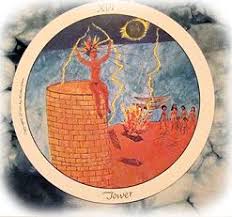
But the present card was the Tower, a powerful card of transformation. “This is the card of big change,” said Pamela. “The card that signals big change in a person’s life, like when your husband leaves you—not like this is actually going to happen,” she laughed. And we both looked across the room and smiled at Michael, who was oblivious to our reading, deep in conversation with one of my sons. “I’ve been getting messages that I need to surrender to something,” I hold her. “Well now you have no choice. It could just be turning 60, the big change.”

tower motherpeaceAt the time, I thought the big change the Tower signified was the crumbling of ego. I was being called to surrender to the slow incremental losses of old age. But the Tower signifies sudden change, and today I believe it foretold the capital c Change the pandemic has brought: change that shakes the very foundations of our lives, change that brings our beliefs and systems under scrutiny and asks us what is most important in life.
My future card, the ace of wands, depicts a small brown body breaking free from a blue eggshell, surrounded by flames. Rebirth, creativity, and victory follow sudden loss. All of my life, I have swum against the river trying to locate firm ground. But wait a second, could surrendering to the flow, to the changes, be a way of accessing my power—connecting with it? Letting go, like surrendering to the body’s irresistable contractions during birth, could be the opening to rapture. Ego dissolves into the deep thrum, the slow heartbeat of the Earth that we finally hear when our struggles to get ahead, to get somewhere cease. All my fighting is just thrashing around on the water. Let go and get swept into the current. That seems about right.

ace of wands motherpeace

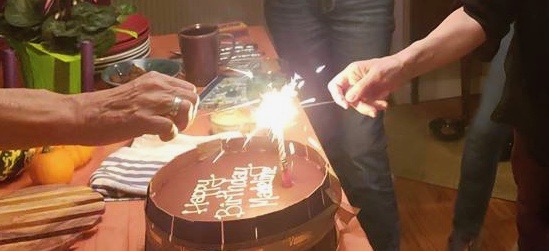
Later that evening, we lit sparklers and ate a cake, resplendent with glossy chocolate ganache and “Happy Birthday Madeline” in piped white sugar lettering. People hung around for a while, then started to leave—much hugging and laughing in the small entranceway. In the now quiet house, Michael and I cleaned the kitchen and put away the leftovers. Something about hearing the dishwasher clicking into its cycle, wiping down the counters, folding damp dishtowels over the oven door, turning off the porch light, rearranging the chairs felt so simple, safe, and sweet. I had a memory of early childhood, when my father used to go around the house and secure everything. Lights off, things put away, daughters in bed, kissed goodnight. Only the whistle of the radiators and murmur of mother and father talking in their bedroom. Nobody, nothing can hurt me now. Did this ever really happen? I don’t know, but the sensation of being safe and warm was real, just as these last few nights I’ve channelled Laura in bed in the little house in the Big Woods to help calm my anxiety.

Version 2

As I lay in bed that night beside my husband, I felt safe, warm, and contented. Now that I had been given permission by the Tower, I could let go. Everything was coming apart anyway, we were all falling, so I didn’t need to hang on so fiercely after all. I fell asleep and dreamt of blue bits of eggshell scattered over the ground, the detritus from rebirth. They crunched under my bare feet as I shook my wet feathers in the warm wind.

The meaning of that dream feels clearer now, many months later. Now that the big Change is here, we get to choose our rebirth. I like to think of all of us as little birds shaking our wet feathers in the warm wind, bits of shell still clinging. We will fly again.


Resources for anxiety

https://bouncebackbc.ca/what-is-bounceback/

https://www.anxietycanada.com/

Resources for writers

NaNoWriMo https://nanowrimo.org/ Sign up with the organization that puts on National Novel Writing Month (November) to get their Covid 19 prompts

How to write when life is sad and wretched: https://discover.submittable.com/blog/how-to-write-when-life-is-sad-and-wretched/

Helen Sword (there is a free online writing retreat coming up later this month): https://www.helensword.com/


.


Hear my whispers

When I am frayed and strained and drizzle at the end
Please someone cut a square and put me in a quilt
That I might keep some child warm

And some old person with no one else to talk to
Will hear my whispers

And cuddle
near

excerpted from Nikki Giovanni’s “Quilts”

I wish I knew more about the dresses that were cut up and sewn into still-bright stars and pleated petals that make up the quilt on our bed. I can imagine young girls in the 1970s in their cotton frocks, blue and brown paisley, flowered yellow and orange peplum, pretty prints swinging from slender waists. Probably those dresses were home-made to begin with, with smocked bodices and full skirts. Or perhaps they were simple jumpers. I wish I knew. Once a dress had been handed down a few times from sister to cousin, and the littlest girl in the family outgrew it, the dress was cut into pieces for a quilt.

But it’s too late now to hear more stories because Frankie (Frances), the quilter, died last month at 90.  She was Michael’s sister-in-law, and when we visited her two months before her death, she gave us the quilt she sewed with her grandmother-in-law, Michael’s Grandma, whom everyone called Granny Dobie. Frankie described how Granny had travelled from her farm near Mission B.C. to Prince George with the unfinished quilt and a quilting frame that she set up in the living room. Granny then patiently instructed her granddaughter-in-law how to hand quilt so they could finish the quilt that would cover Frankie and Mac’s marriage bed.

When I lie under the quilt every night, I like to examine the stiches and think of the four hands that made them. In my mind, I see the two women—one young, one old—sitting together in companionable silence over the frame, stitching small, even dashes in white thread, tracking every seam, curved and straight, and securing the three layers of the quilt together.

We were so touched when Frankie wanted us to have the quilt—perhaps it was because she and I talked sewing when we visited, and she knew we’d both appreciate the work that went into it. When she gave us the quilt in September, she told us that Granny had used old dresses to sew all the stars and petals into blocks, placing yellows and oranges against their blue complements. I am no pink fan, so I wasn’t sure about the quilt at first, but now I treasure it. This old quilt will always remind me of vivacious, elegant Frankie.


Version 2For Frankie

Slender and strong as bamboo,
Frankie was fierce with reality.
She wore lipstick even on bad days,
or perhaps especially on bad days.
As she spoke in smart, tart
soprano, her long graceful hands wove the air.

Those hands
were hands that sewed and weaved,
that worked and loved,
a life time.

A mother lode of feelings


IMG_0268

My mother loved this card I made for her birthday in 2016. “How did you get me so perfectly?” she asked.

Motherlode

Corns crunch as I turn the wooden grinder
over a tiny heap of grey-black grains for
pfeffernüsse, the recipe you passed to me from your
German mother.

In a clan of ginger, your dark crown pulled the eye.
Beautiful ungainly schwartz
learned to pick peaches at 6,
to drive a car at 12.
You were a barefoot child,
smoldering into life.

Your seed sprang from
hard dry loins of dustbowl farms,
you blossomed dark to light,
turned burlap sacks to rickracked frocks,
pushed hard against poverty,
ate books, ached for knowledge,
opened your scarred scared heart to love.

Passionate proud creature, you live
inside me, your pepper cutting
through my honey, brave unexpected heat
sears the surprised and happy tongue.

“Motherlode” was one of the poems in my first and perhaps last book of published poetry,  birth of the uncool  (2014, Demeter Press). Unfortunately, the first four lines of this poem are missing in the book. When the manuscript was sent to me for a final examination and approval, I didn’t notice the flaw. Without those lines, the poem doesn’t make much sense, which bothers me. I wanted to be mad at the copy editor, but truly it was my fault.

So I offer it here today in its wholeness because I have been thinking of my mother.

When a person we love dies, we measure the next year’s turning as a series of firsts.  First my mother’s birthday rolled around in April, and she wasn’t here to call, to wish happy birthday, to send a card to. Then it was the first time I visited the house where she lived, but she was no longer there, calling from the top of the stairs, “Madeline? Is that you?” Then I celebrated my first birthday without my mother in the world, and coming up is my first Christmas without her.

I spent only one Christmas with her in the thirty years since I moved with my family from Ontario to the West coast. But still, we would talk on the phone every December 25th. I sent gifts, and for a long time, so did she. I’d ask if she had bought a Christmas tree and often she had bought two tiny ones: one for the front room and another for the back room, where they would sit in front of the fire burning in the fireplace, watching the snow fall outside. Sometimes we’d talk about Handel’s Messiah, a piece we both adored and listened to over and over again that time of year. After a while, I stopped asking if she’d made pfeffernüsse because I knew she hadn’t.

She was eating very little in the years and months before she died, cooking only occasionally, and baking hardly at all. But for so many years—all my childhood years—there was the joy of making pfeffernüsse with Mama.

I remember best the warm doughy mounds sliding out of the oven on blackened cookie sheets. A happy human conveyer belt, we dipped them still warm into the bowl of milk flavoured with vanilla extract, then popped them head first onto the plate of powdered sugar, then onto a rack to cool. The powdery tops hit my tongue with a blast of melting sweetness, then my teeth sank into the chewy milk-moistened dough, meeting honey, liquorice, and pepper. We’d line tin canisters with waxed paper, packing them with layers of pfeffernüsse.

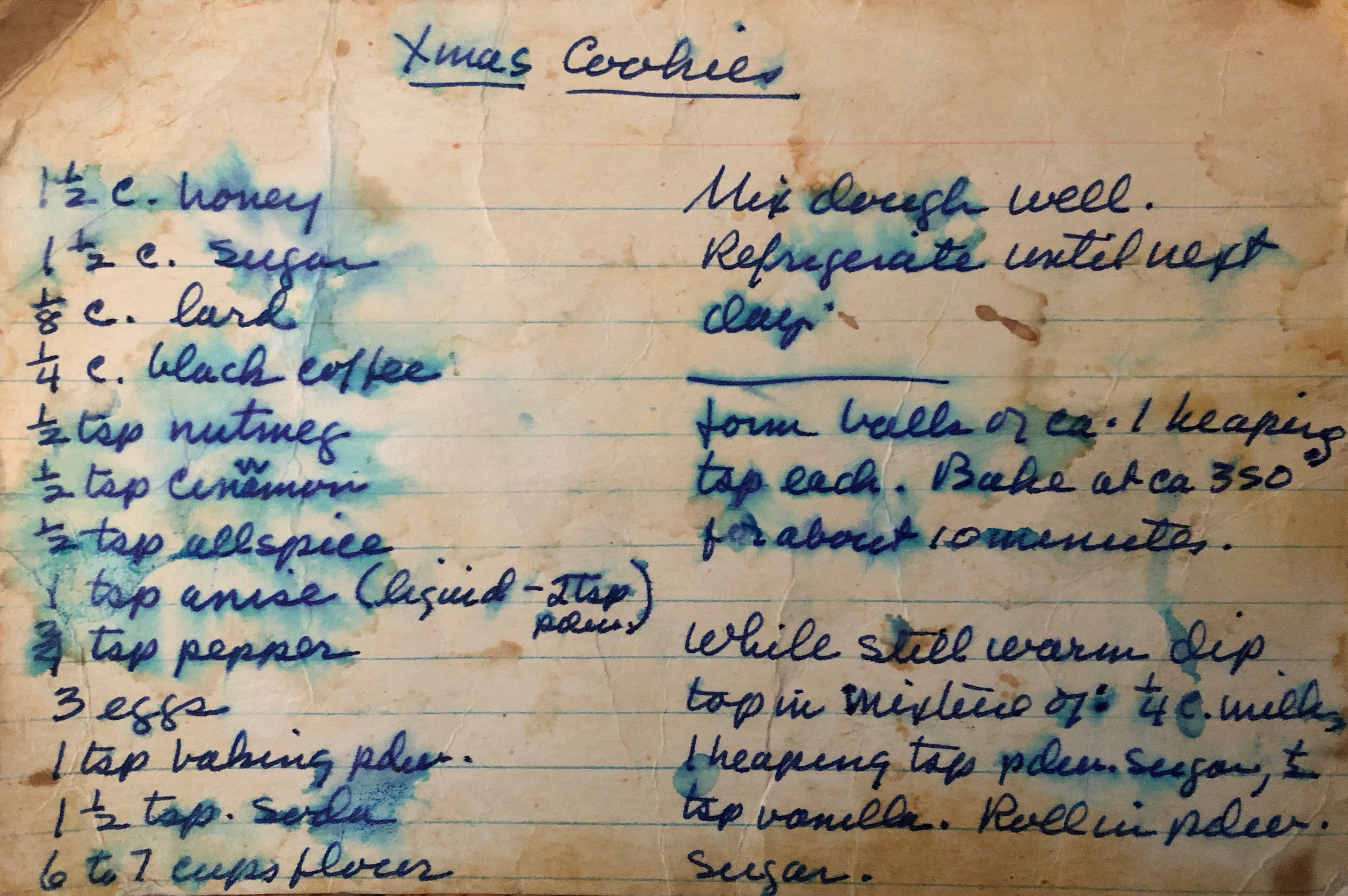
I would eat those pepper nuts until I felt sick.  And then when I had my own family, Mama sent me the recipe for “Xmas Cookies,” written in her energetic cursive.  I made them for my boys, even when they weren’t particularly interested in eating them. Eating dozens of them myself, I plumped up like a pfeffernüsse every December.

It’s early November now. Christmas is still many weeks away. But I am thinking of my mother, thinking of our complicated relationship. Acknowledging that while I followed her path in so many ways, I fiercely resisted and resented her too.  After she died in February, I spent the next seven months in therapy, trying to deconstruct the pain and grief I felt, pain and grief spiced by anger, softened by affection. Honey and pepper, pepper and honey. Mama and Madeline, Madeline and her mama.

IMG_0269


Let me hear your body talk

IMG_1884

A curse and a gift of ageing is a growing awareness of the ways I have been inauthentic in my life. Lately, I have become profoundly aware of the disconnection between my body and my mind.  I have ignored my body for so long, shut it up into submission, taken it for granted. These pronouncements presume a Cartesian dualism, an assumption that mind and body are separate, and though I realize they are not, that is how I have felt in my life—my body and mind feel separate.

Two years ago I started a graphic memoir, Let me hear your body talk. It was my attempt to illustrate the life of my body from infancy to the present day. After a dozen or so pages, I stopped and let the project languish. My reason was that I was too clumsy an artist to render my ideas. But another reason I stopped was that as I worked through my childhood and teenage years, drawing and writing, I felt acutely uncomfortable with how I had regularly ignored my body’s signals. From emotional eating to having sex with somebody who repulsed me, to neglecting pain, to resisting the gut’s intuition. I had abused my body through various compulsions: I was addicted early on to the approval of others, and later to food, cigarettes, and booze. Never having learned how to honour my body as precious, I considered it as merely an appendage to my brain/mind, which I believed was more valuable.

Although I can’t speak for others, my memory is that as a family, we weren’t grounded in our bodies. Moving the body, appreciating the body, enjoying the body, listening to the body: these were not on the agenda when I was a child.  Sports, exercise, or creative body expression were not encouraged or modelled by my parents. Sex was rarely discussed or mentioned, though it might have been alluded to. When I took up running in my late thirties, my mother commented, “You’re not overweight, so why? It can’t be good for you, jiggling around like that.” I suppose when I was very young, I lived shamelessly and happily in my skin, but I cannot remember. In our family, intellect was prized above all.

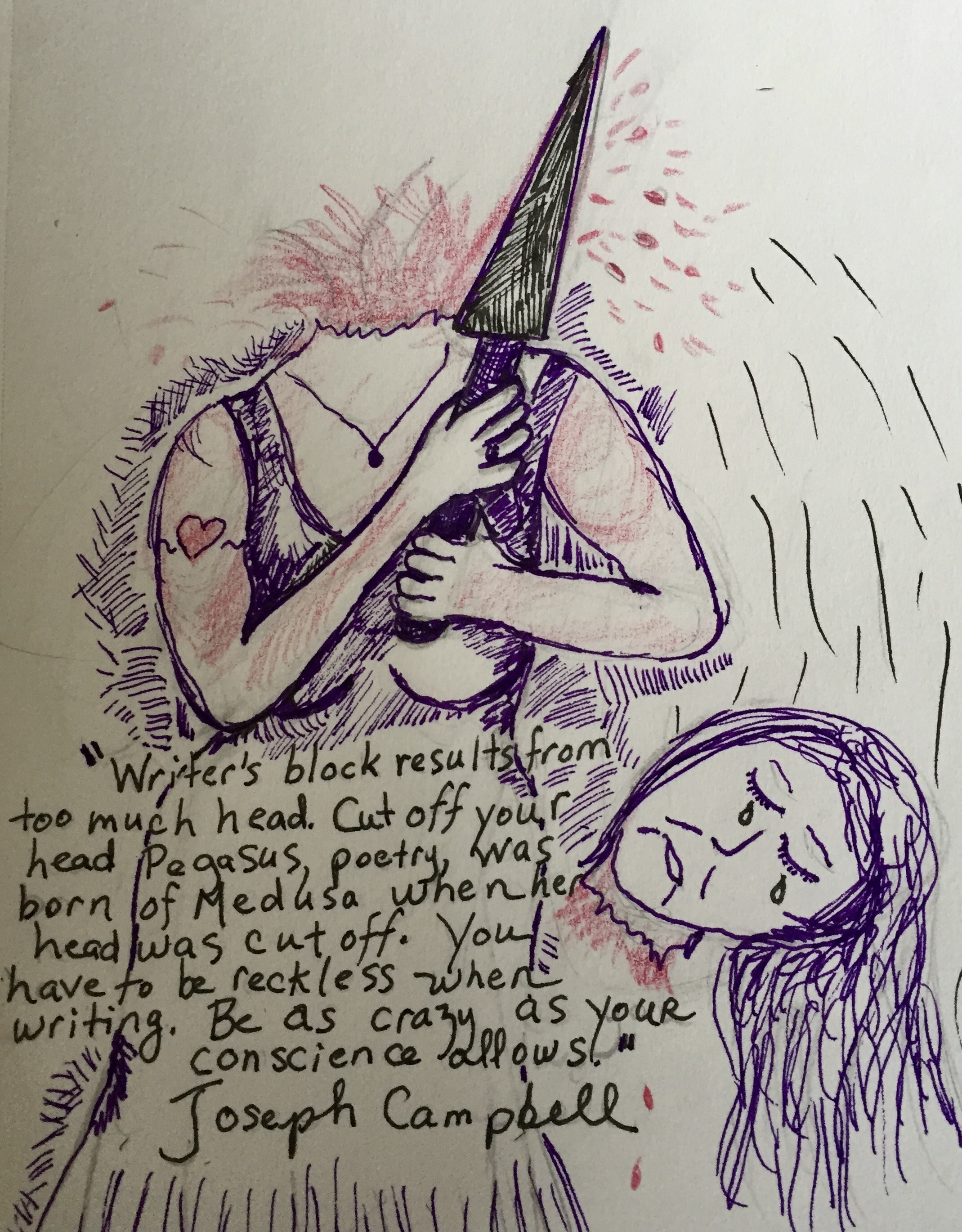
Of course, this is not to suggest my body has not been a source of bliss.  Sex can be rapturous. . . the ruminating mind dissolves as every nerve ending sparkles and shimmers. Being pregnant, giving birth, breastfeeding: all gave me tremendous pleasure/transcendent pain and left me with gratitude, love, and respect for my body and its capacity. But as the excerpt from my memoir shows, as a young woman I tuned out my body’s sensations and needs.  My people-pleasing antennae were turned way up; I wanted not to be a problem to others, so I suffered, often silently. I wanted to please the man I was with; my pleasure was secondary.

IMG_0054IMG_0052 4

These days, I meditate daily. Although my thoughts quiet for minutes at a time, I still haven’t felt fully connected to my body. Looking to change this, I bought Reggie Ray’s book, The Awakening Body on somatic meditation. Ray provides instructions on six somatic meditations. One resonated more than the others: yin breathing. “The place of yin is in the lower belly, approximately a couple of inches below the navel and in about the middle of the body. . . In Taoist meditation, this place in the lower belly is known as the lower dan t’ien” (p. 67).  Ray goes on to write that the lower dan t’ien’s role in the body “is the inner expression of the fundamental space of the cosmos, the original womb out of which all energy and life arise. It is the microcosmic expression of the same limitless reality we meet ‘outside’ in the earth at its infinite depth.” The concept of the “original womb” may sound inflated or unbelievable, and yet I immediately understood this concept because I had experienced the yin space before.

A few years ago, I had felt this space, an oval the size of a duck’s egg located about three inches below the navel, as a mysterious source of deep pleasure. At that time, I welcomed it, but I didn’t understand it. It would come to me late at night as I was drifting off to sleep, a pulsing sense of well-being in my whole body, but originating there at the body’s root—tingling pleasure that was not exactly sexual. A radiating pleasure-consciousness that felt rooted, centred, yet expansive. It’s hard to explain. As I said, it’s mysterious.

Lately, I have been doing yin breathing, breathing in and out through the lower dan t’ien and thereby, “roaming on the boundary between consciousness (the ego domain) and the unconscious (the deep Soma).  As a result, my body consciousness may be shifting. Recently, we  went to hear live jazz, the Amina Figarova Sextet, and I enjoyed music more than ever before. Instead of listening in my head, my whole body heard and felt. I enter the piano’s thrum, the saxophone’s sugarplum melodies, the drum’s silvery beats; I swallow the flute’s shivers and I become the tall brown bass, plucked.  My body is a repository for sound and I can’t help but move to the rhythms. I fill with jazz colours, jazz feelings. Body and mind are one. Feels so good.