“When we run from our suffering we are actually running toward it.” Ajahn Chah
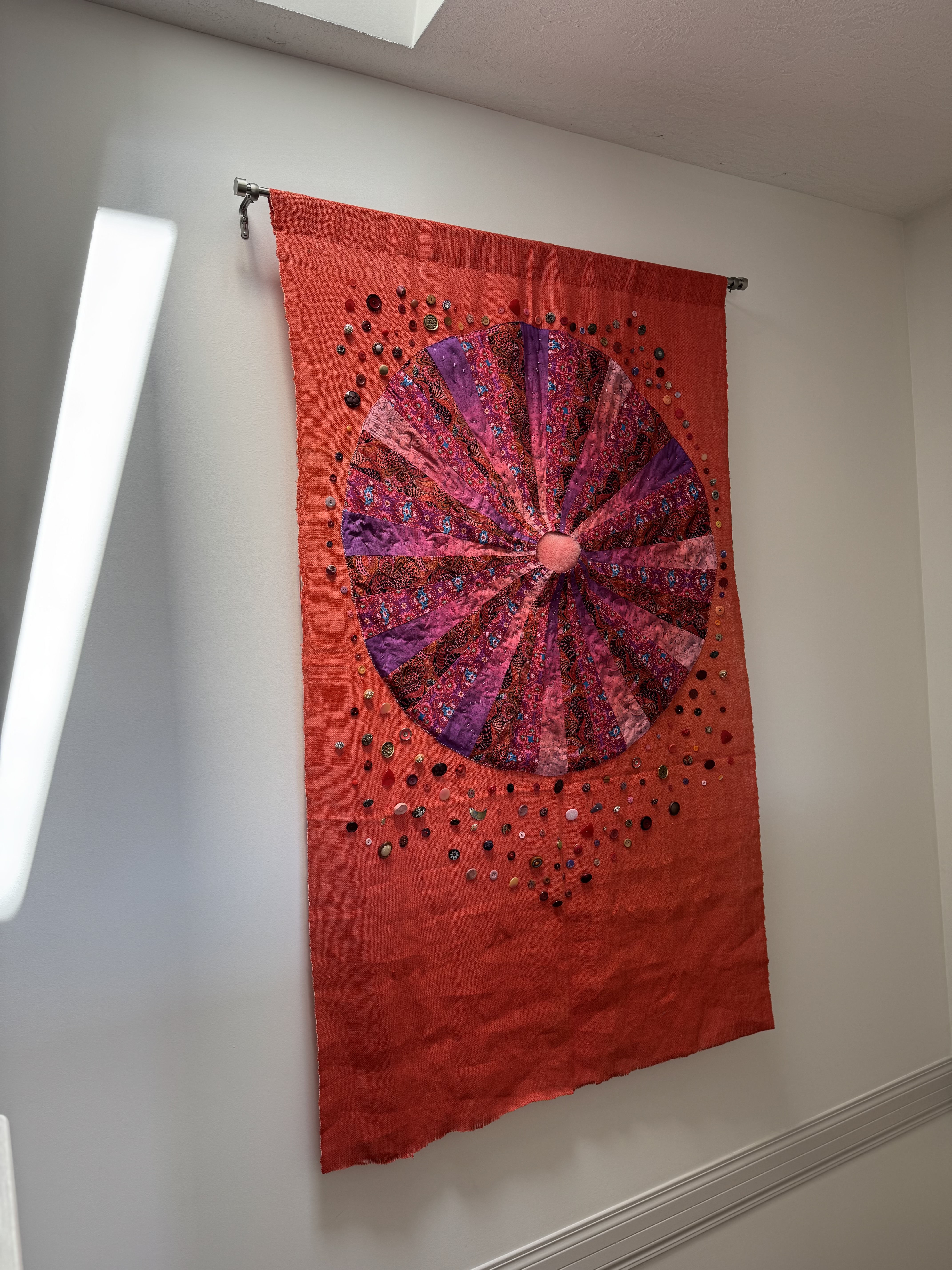
I’ve been basking in two messages from my unconscious this week. In one dream, a person wearing a bright tie-dyed shirt holds a hand lettered sign, “You are not alone.” In another dream, a young man, bearded, hugs me and whispers in my ear, “Thank you for your patience.” The messages are hackneyed, and yet they were delivered to me fresh, warm, colourful,by stately messengers. It doesn’t matter if they—the messages and the messengers—aren’t “real”; they are just as real as the people and events, the words, ideas, and things I encounter in my dream-like conscious life. And more to the point: They provide great comfort, having bathed me all week in an orange glow, a glow like that emanating from the 10,000 joys wall hanging, now installed in our stairwell.
The wall hanging seems to collect the sunlight falling in through the skylight and send back a peachy radiance. Several times now I’ve gone to flick the hall light off, thinking the switch is on when it shouldn’t be. No, the light is off, but 10,000 joys shed their own uncanny light.
When I made the piece, I kept telling myself, you don’t have to make its counterpart, 10,000 sorrows. It’s okay to just focus on joy right now. But of course, you cannot have 10,000 joys without 10,000 sorrows. I wish we taught this truth to children in kindergarten. You don’t experience joy without experiencing sorrow. And it’s okay. When you cling to joy and try to avoid sorrow, you just prolong it. I wish I’d gone to a Buddhist kindergarten, where these truths would be taught elegantly and logically, instead of being told by adults that “life isn’t fair,” which seems tawdry and cruel in comparison to the dharma.
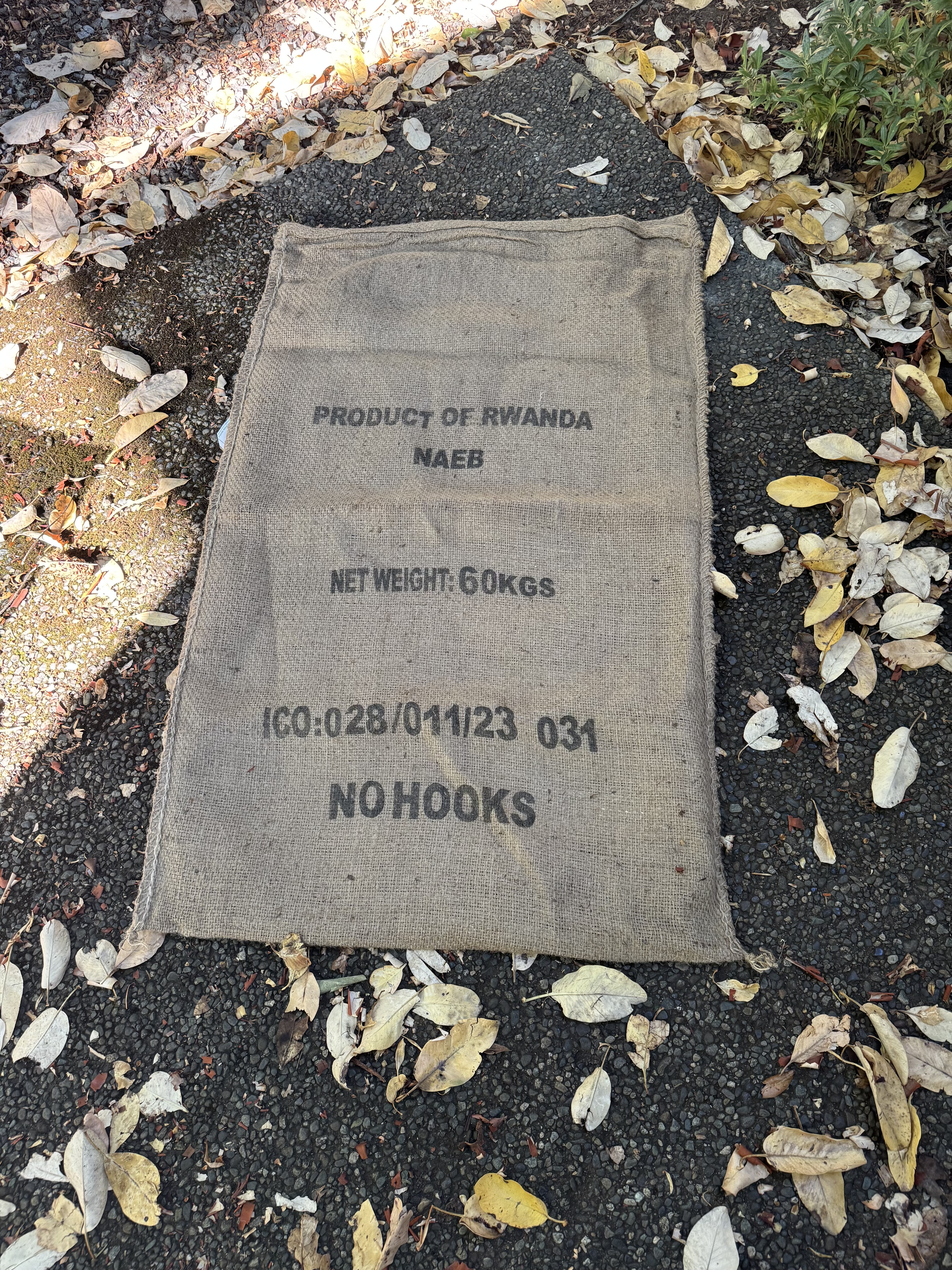
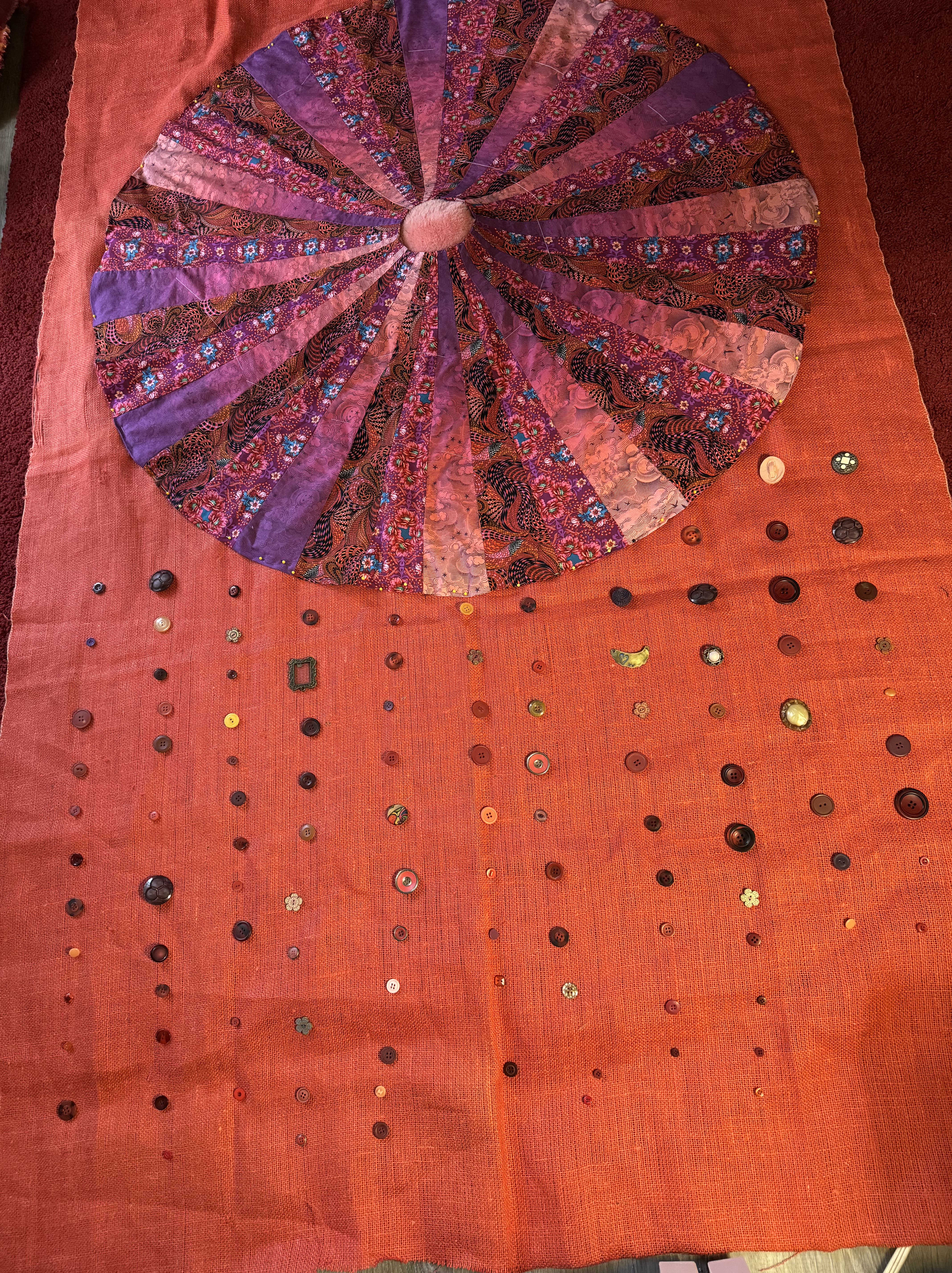
Inevitably, I am called upon to make joy’s counterpart. I had coffee with a friend yesterday at Esquimalt Roasting Company. As I waited at the counter for our lattés, I noticed a large burlap bag draped over a plastic bucket. I picked it up and showed it to the barista. Can I buy this? I asked. In my imagination, I was already picking its seams and spreading it out, a wide brown canvas for thousands of sorrows. It’s free! she responded. So now I have the backdrop for the wall hanging. I had originally thought it should be black, but brown is less dramatic than black, more subdued and complex, as sorrows often are, especially as we digest them.
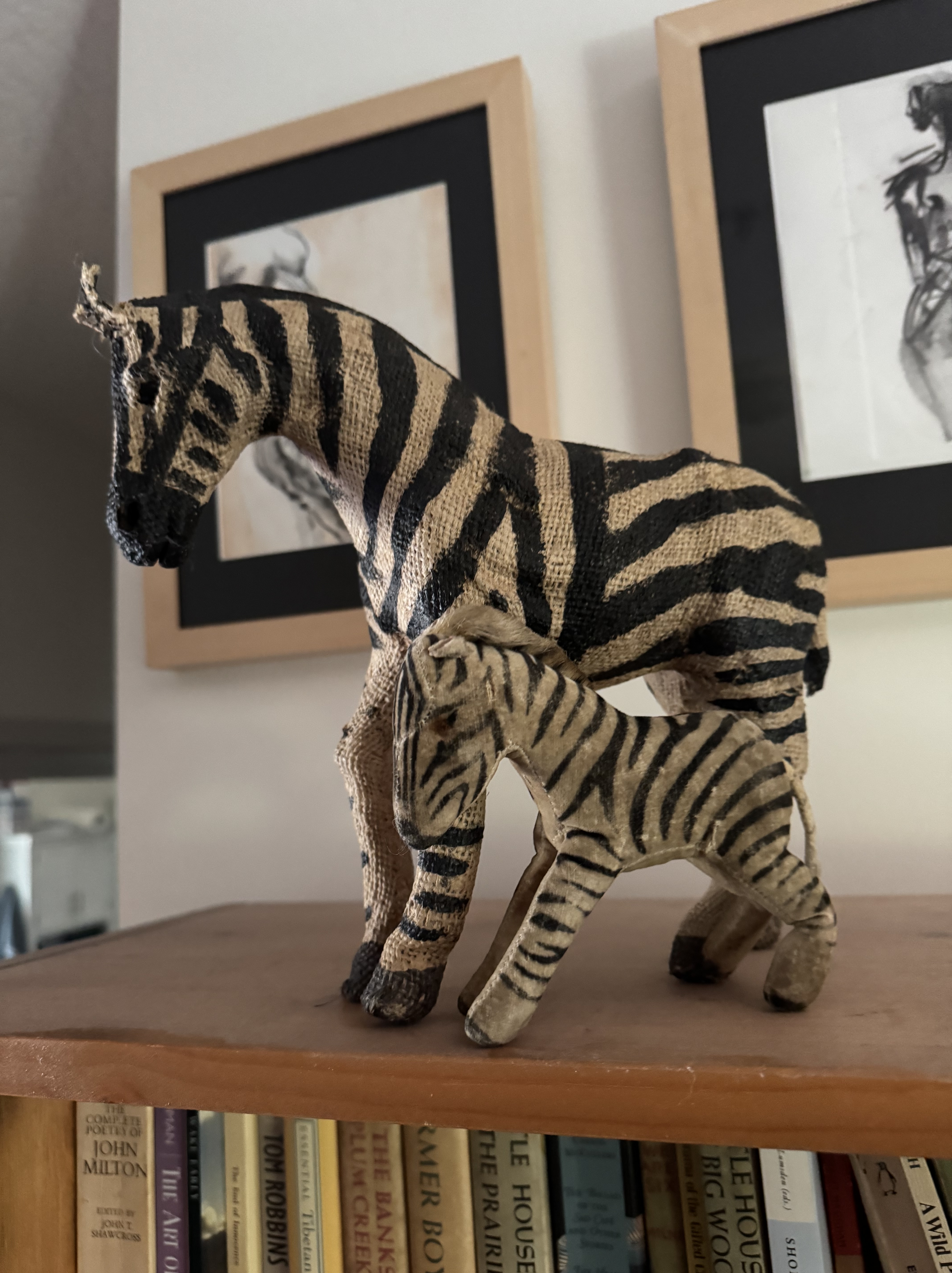
The burlap bag was pure serendipity. Another magical find was a zebra at the ReStore in Langford. Purchased for 70 cents ($1.00 but there was a 30% off sale). This zebra is majestic, dignified, kind, warm. She stands about 10 inches high. Her stripes are unrealistic, but otherwise she is a convincing animal. I dug out a stuffed toy zebra I’d kept from childhood in a box under the stairs. It’s remarkable this sixty-year old stuffed animal still stands! They now live together, mother and child, atop a bookshelf in our bedroom. I like to gaze at them from bed. Something about them feels calming, comforting. I loved my zebra striped one-piece bathing suit when I was eight years old. When I wore it, my reward was a zebra tan that was pure magic.
How to find comfort
Face fear, face grief, crunch on them like buttered toast, let them nourish you. Small striped body in the mirror, some kind of childhood magic. Let dreams bathe you in orange light. Sweet’s after tastes bitter, crying sparks a belly laugh. Joy and sorrow are so intertwined, you can’t tease them apart, please don’t waste time trying. Practice the butterfly hug: Hands cross collarbones, thumbs meet, fingers tap lightly, lightly. A comforting rhythm will come. It will come.
I am in Toronto for a few days. This city was my home from 1965 to 1989.
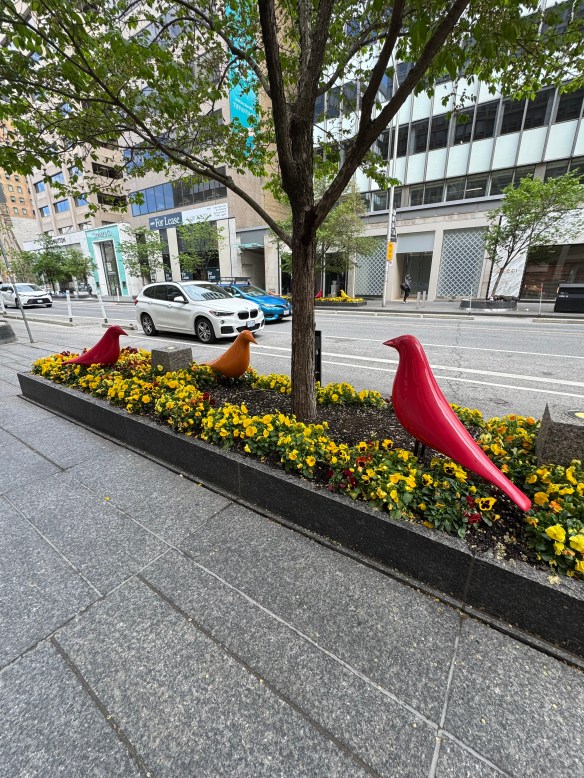
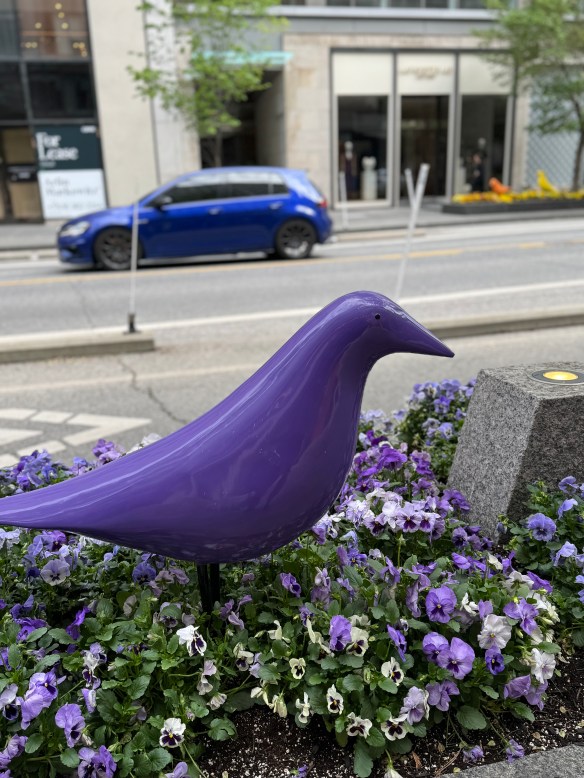
I have been walking Bloor Street West. First, the Mink Mile, that stretch between Yonge and Avenue Road lined with the tall glass storefronts: Zara, Birks, Lululemon, Holt Renfrew. Rich people shop here. Very few birds fly above these tall, inhospitable stores. Instead, big bird shapes in bright shiny colours line the sidewalks, ghosts of extinct species.
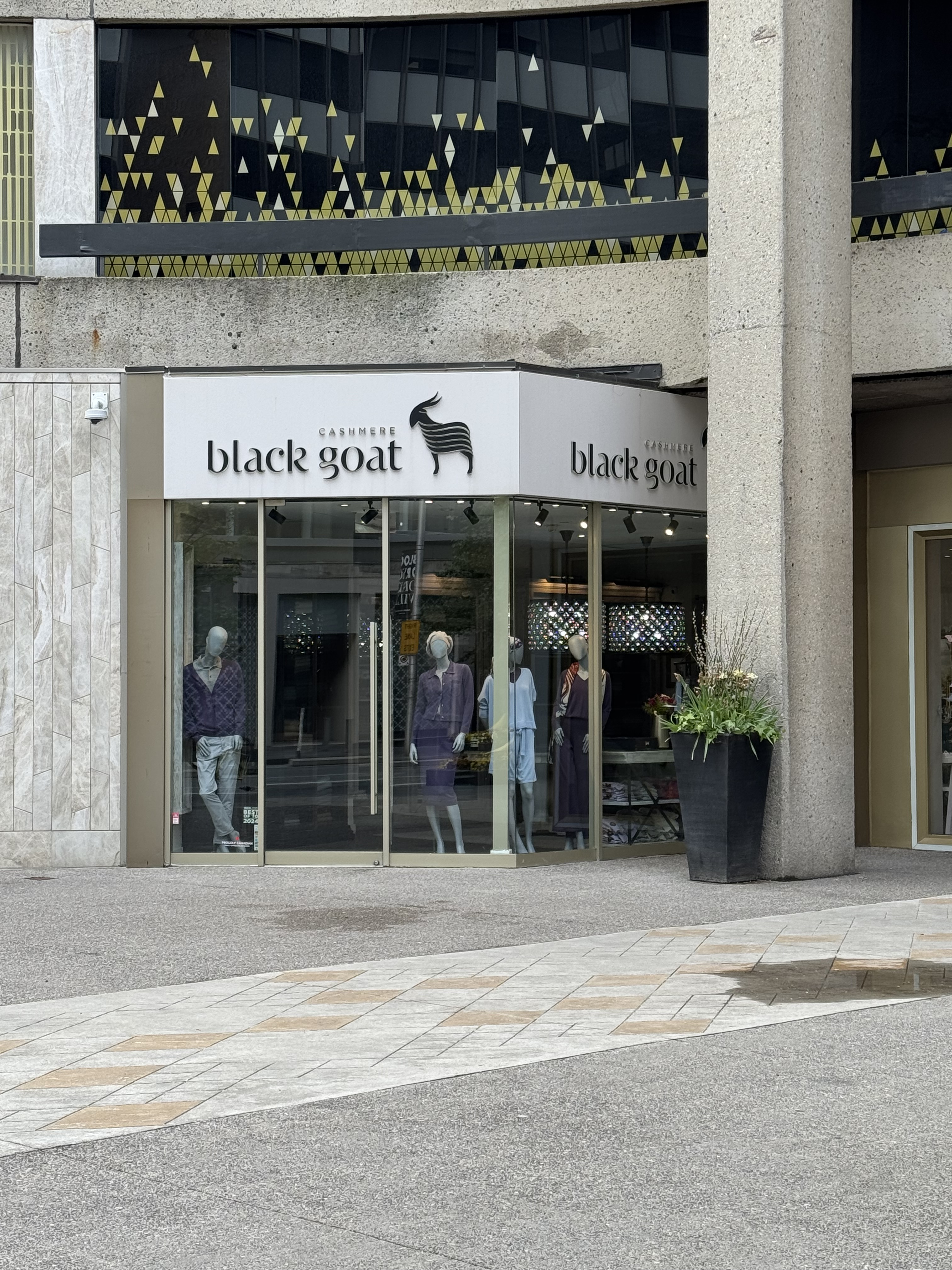
It’s cold in Toronto for late May. I wear a toque, jacket, leather gloves. But now I wish I’d brought a scarf. I admire the scarves in the window of Black Goat Cashmere, next to Ashley’s in what used to be called the Colonnade. This mall was one of my mother’s favourite places; after window shopping Bloor Street arm in arm, we’d drink coffee and eat pastries at the Coffee Mill at the back of the Colonnade.
I enter the store. Two saleswomen are upon me immediately. I ask about the small scarves, lifting one of them up out of the wooden box where they are displayed like confectionary, soft cashmere in artful designs, wool watercolours. “How much are these little ones?” “Oh,” says one of the women, advancing, “the Carre scarves are $385.” I laugh, folding the luxury item back into its box. “Perhaps in another lifetime.”
Pulling my zipper up to my chin and walking into a fierce wind, I take a detour to wander around the grounds of my alma mater, Victoria College. I feel nothing as I gaze over the green lawns, watching two young men kick a soccer ball. Alma mater means “nourishing mother,” but this place was not that for me. Those four years as an undergrad in English Literature are a blur. One thing stuck: a Shakespeare lecture by Northrop Frye when he—already extremely old—told us in his quavery voice that Bach’s Mass in B Minor was the voice of God speaking. All of us bent over our notebooks and wrote that down. It sounded profound.
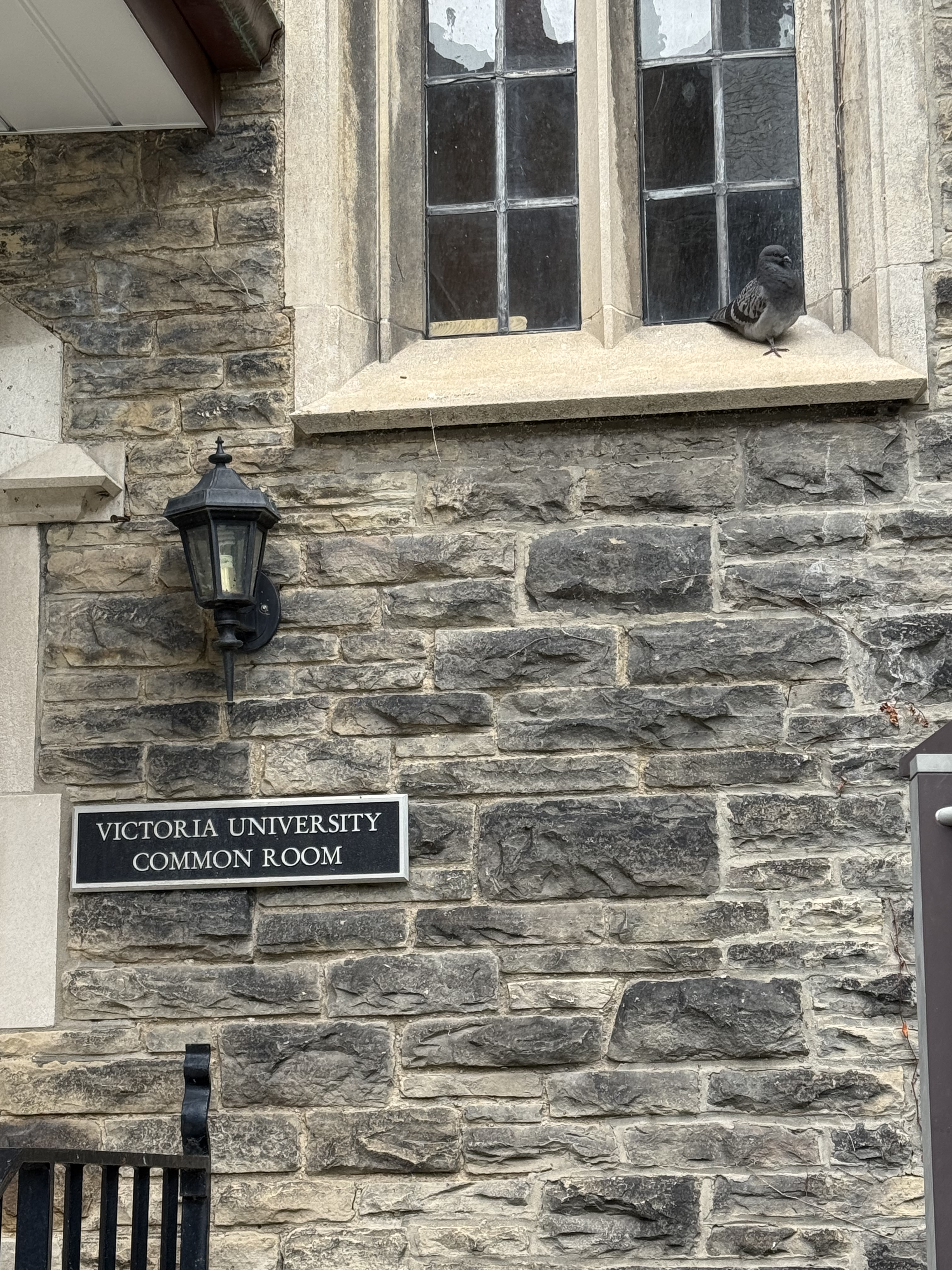
I was a lonely young woman. Barry Lopez writes that “It is not possible for human beings to outgrow loneliness,” and that seems true to me. Though I’m not as lonely as I was. I admire a pigeon perched in the recessed window of the Victoria University Common Room.
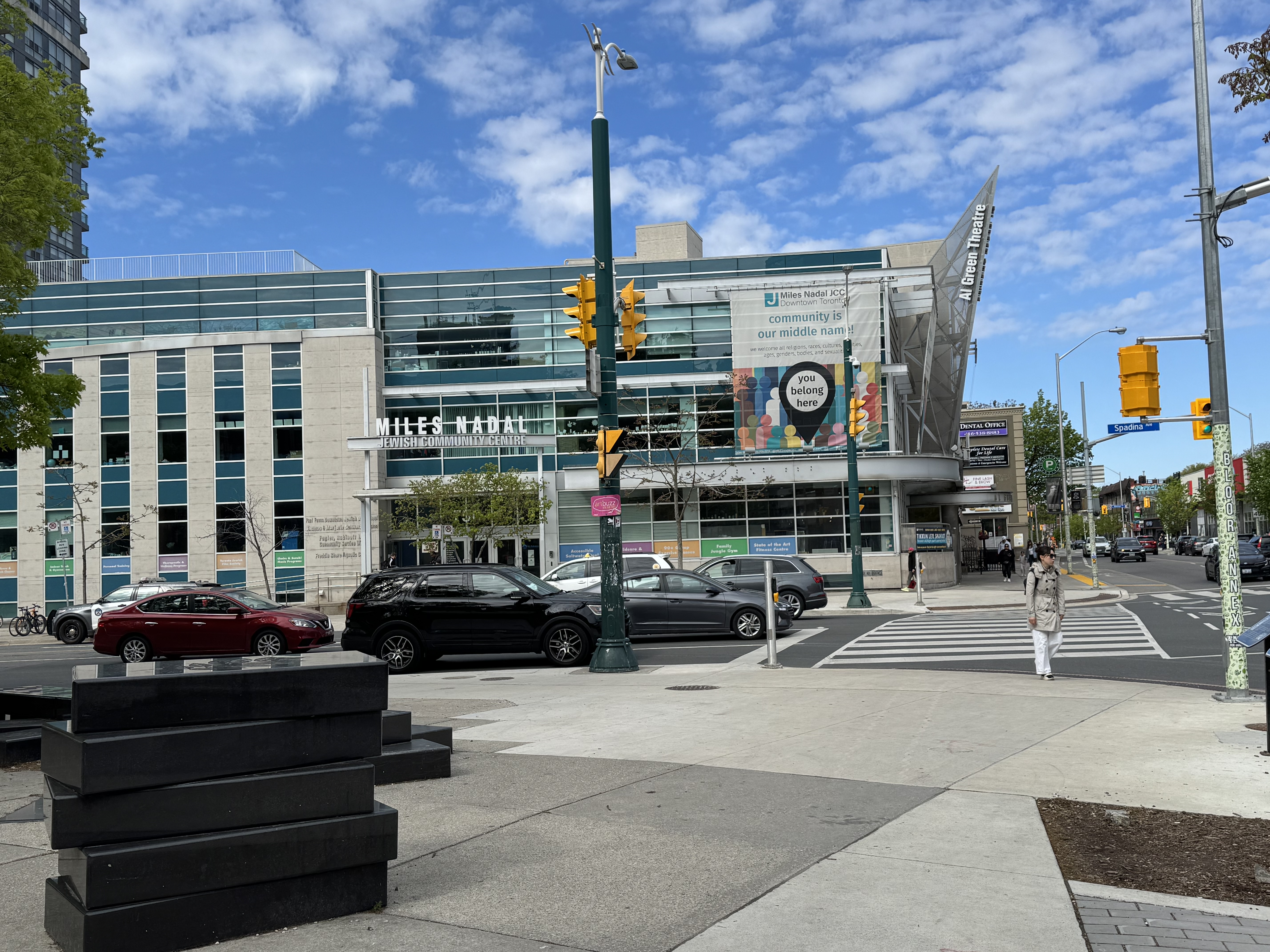
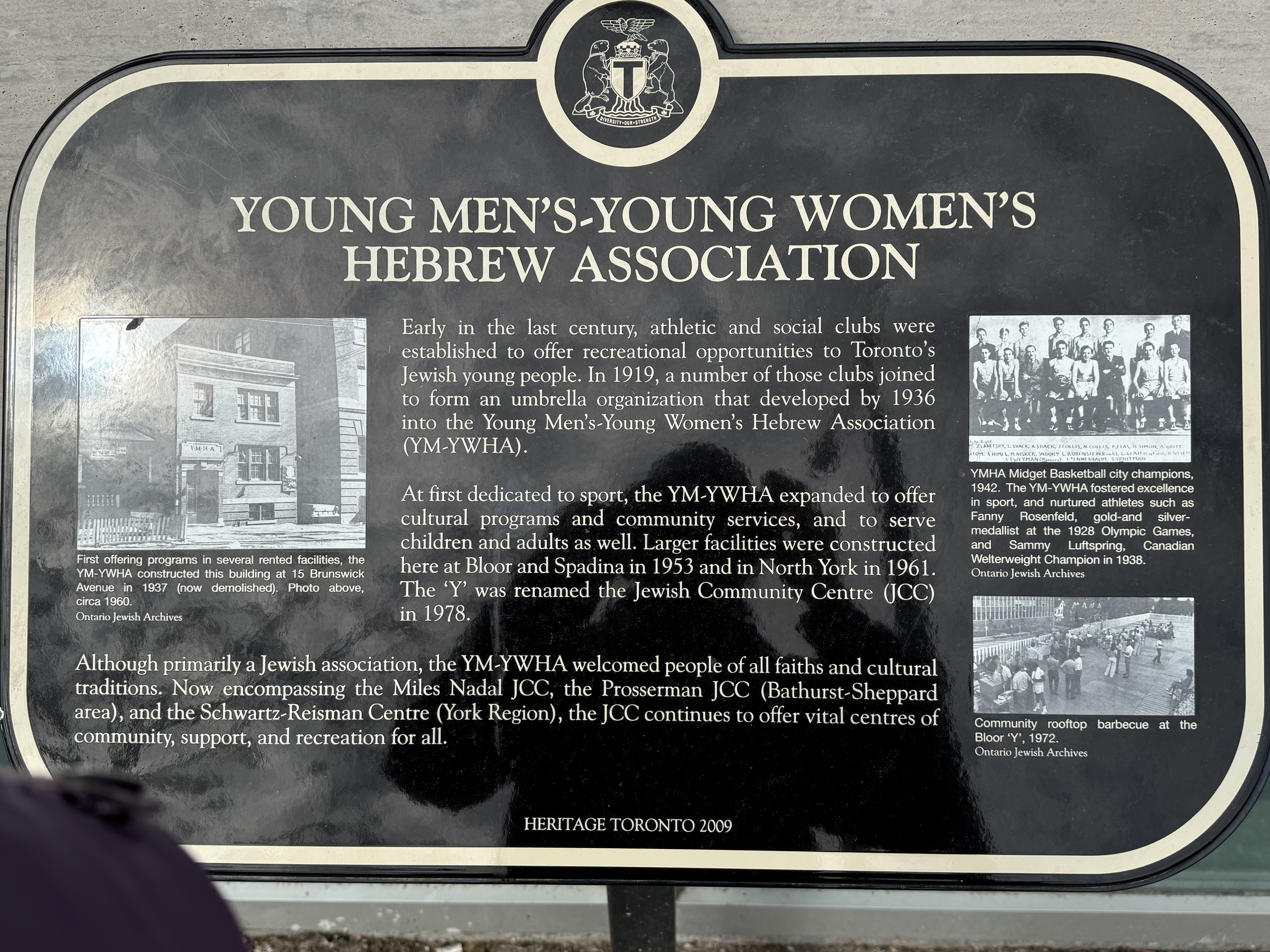
On the way up University back to Bloor Street, I check out the Gardiner Ceramic Museum, where I hope to see the work of contemporary ceramic artists, only to find that the main galleries are closed for renovation. I continue back along Bloor. It’s time for a coffee and I remember a Second Cup in the block before Spadina Avenue. And if that is no longer around, there’s a coffee shop in the old Jewish Community Centre (JCC), where my mother did aquafit for the last decade of her life. Back in the seventies, when it was the Young Men’s Hebrew Association, it was home to SEED, the alternative school my sisters and I went to as wild teens.
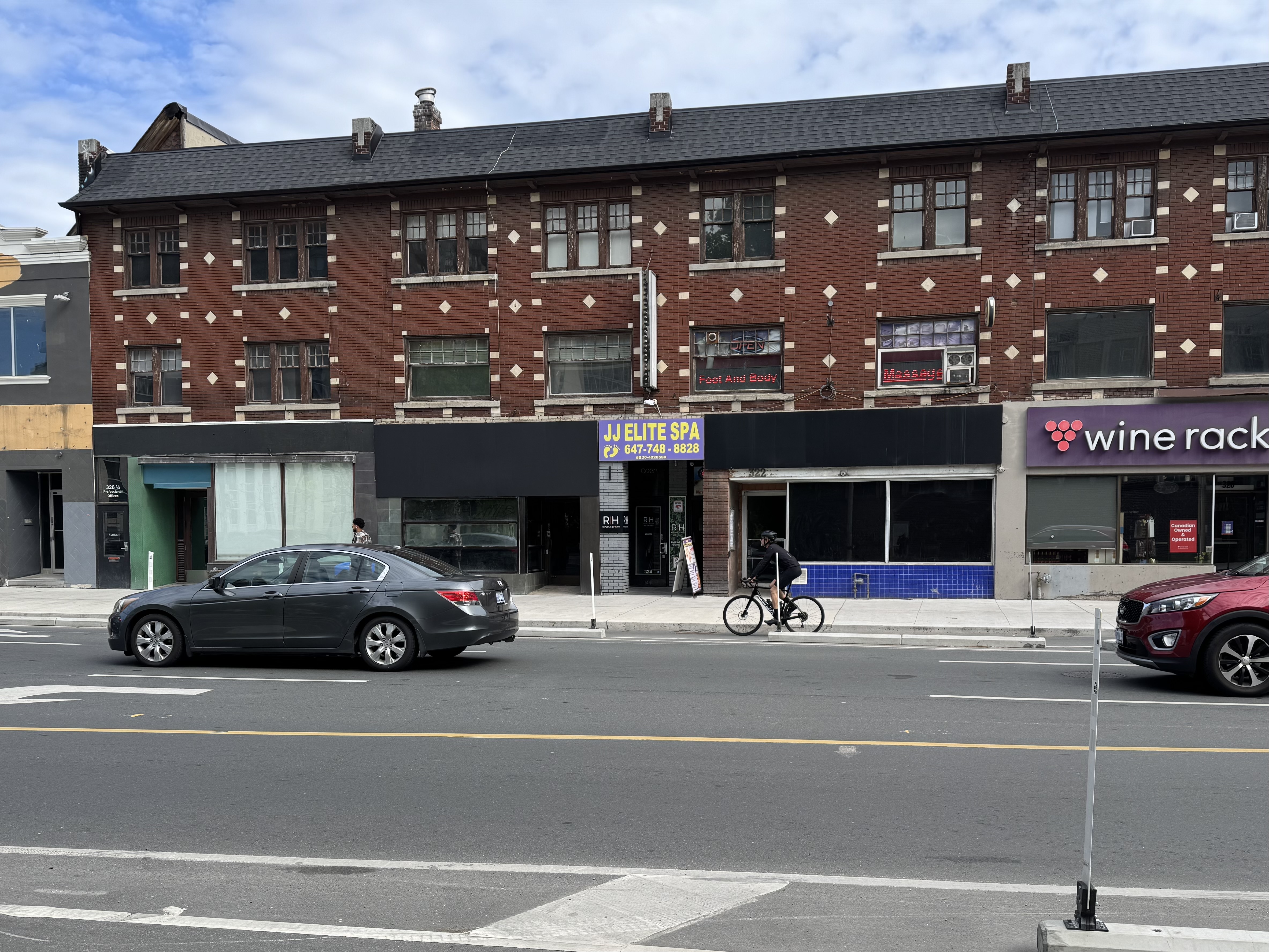
Second Cup is gone, and so are many of the other businesses on that block. Everything in life is impermanent, so I am not surprised Second Cup and Noah’s Health Foods have disappeared, and the spaces are vacant. Once upon a time there was a greasy spoon in this block where we drank coffee in thick cups, smoked cigarettes, and ate French fries. We walked over from “school” and stuffed our electric bodies into the vinyl booths, laughing, talking, flirting, mystified and excited by life. Once, for a time, my sister lived above the restaurant with her boyfriend, an apartment with burlap on the walls and plants everywhere. There’s history here.
The wine store remains. This is where we bought bottles for the meal marking my mother‘s death in February 2019. Her house is only a few blocks from this corner, and she died at home. We carried the clanking bottles through the snow. My sister made bouillabaisse and we sat around the teak table, drinking, eating, and telling our Virginia stories, stories filled with love, regret, sadness, and confusion.
I cross the street twice to the southwest corner and pull on the doors of the Jewish Community Centre, but my pull meets resistance. A security guard opens the door from the other side, just a few inches, and peers at me. “I am trying to get into the coffee shop,” I say. “No more coffee shop. Coffee shop no more,” a sort of palindrome of endings. And he closes the door in my face.
I keep walking. Surely, there is a sweet, cool, interesting café somewhere along Bloor. I am Ahab stalking the great flat white, but she’s nowhere to be found. I pass more than one Tim Hortons among the restaurants and bars still closed this cold morning, but no, I won’t go there. Cigarette butts decorate the grey pavement, evidence of parties spilling onto the street last night. Pigeons strut their stuff. I keep walking. Yes, I know Futures Bakery might be considered an interesting coffee shop, but I hold out for something else, some uncertain thing, something new, something not in the algorithm.
I keep walking. The Hungarian restaurant where we ordered dumplings and gravy and goulash soup: gone. The delicatessen and the cheese shop with a cow in the window: both gone. The café that once took up that southeast corner of Bloor and Bathurst: gone. Now there’s a Fancy Burger outlet, where you can add a syringe cheese shot to your beef patty for $1.49. This part of Bloor continues to metamorphize. Ethnic restaurants and record stores turn into cannabis shops and bubble tea counters. Used bookstores become pet pampering salons and tattoo parlours.
I am happy to see Midoco, the office supply shop, a place where you can lose yourself among the art supplies and fountain pens, is still in business. Ditto the Home Hardware.
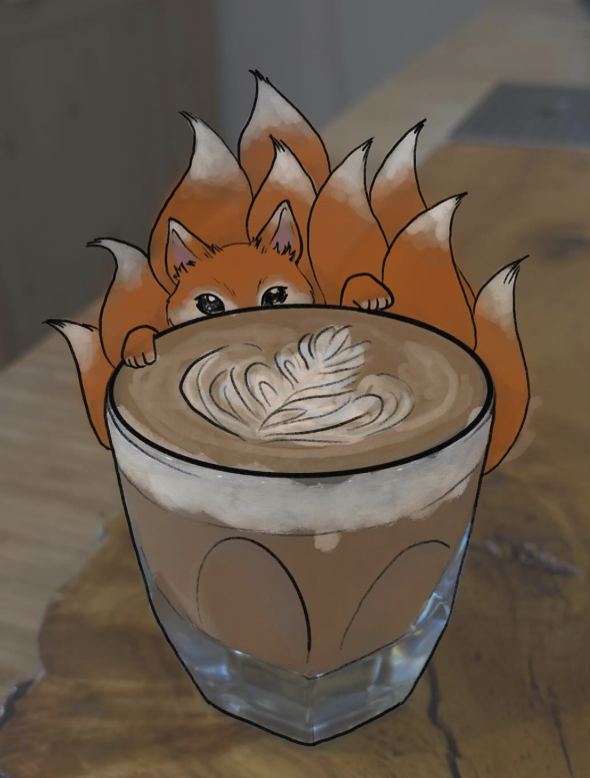
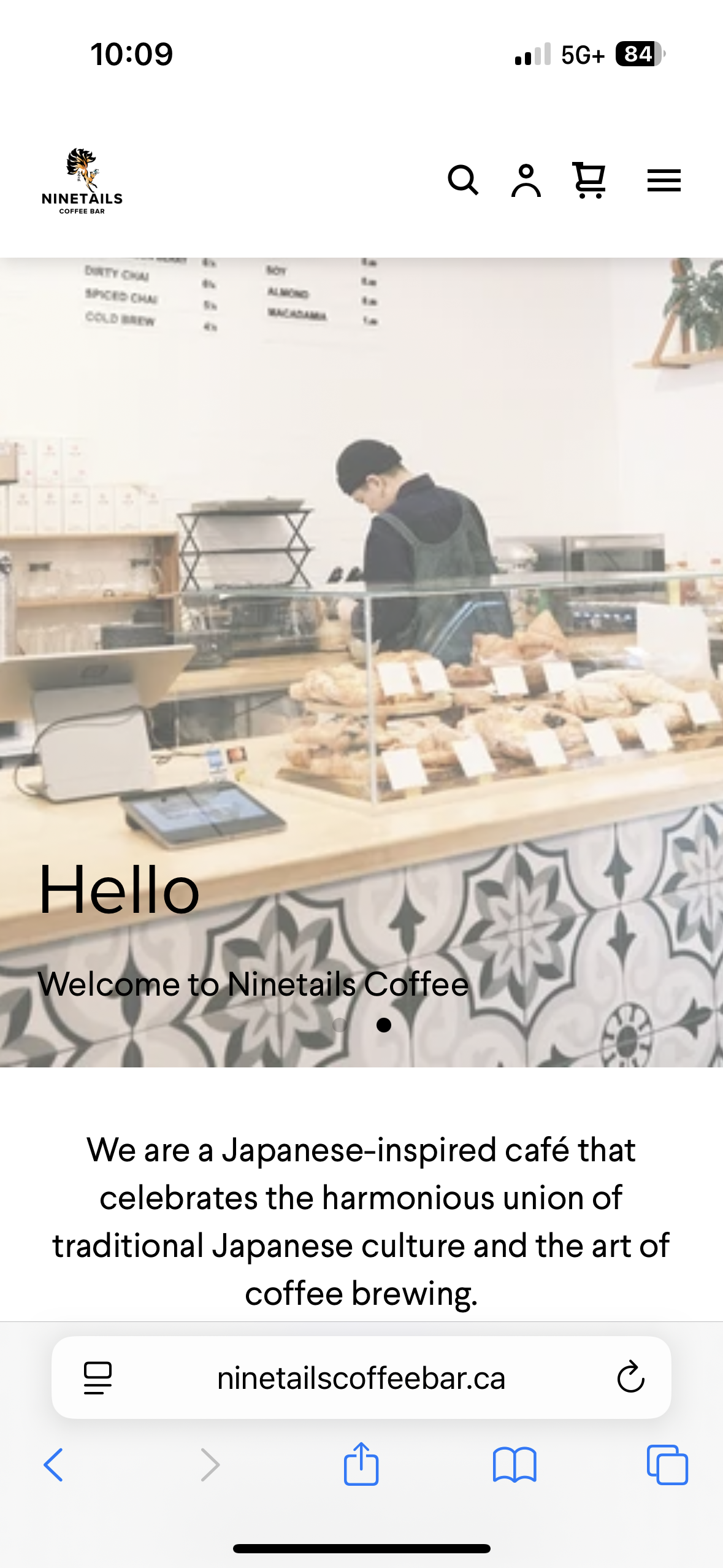
I keep walking, knowing that somewhere soon, I will come upon something interesting. I pass the small corner grocers, happy to see they still sell bargain produce and hanging pots of flowers. I pass Euclid, cross to the south side, and then, suddenly, there is an A-Frame sandwich board picturing a fox with many tails. I walk into Ninetails Coffee Bar, where two young Japanese women bustle behind a honey-coloured wood counter. White walls, a few small round tables graced by simple folding chairs. A coffee bar decorated with ceramic tiles patterned in grey, blue, and white. A full pastry case. Smiling faces welcome me.
My flat white, delivered in a short glass with a foamy fern on top, is delicious—strong and hot. While I drink my coffee I read about the coffee bar’s philosophy.
In Japanese folklore, Kitsune are foxes with mystical powers that can grow nine tails.
“we embrace the Japanese philosophy of ‘ichi-go ichi-e,’ which translates to ‘one opportunity, one encounter.’ This concept underscores the importance of cherishing every moment and every connection we make with our guests, as each encounter is unique and irreplaceable. Our goal is to provide you with a little window to Japan & Japanese culture within each visit.”
I gaze across Bloor to the north side and see, to my delight, a used bookstore that I’ll visit after I drink this coffee. It’s too easy to get lost in the past during this trip. Wandering through old neighbourhoods, remembering past experiences, feeling traces of old sadness and joy. But Toronto, like Freud’s Rome, is a metaphor for the mind. There is no denying that my personal history, etched through the decades, permeates my experience of Bloor West. I feel these vestiges of the past in my body.
But there is also the present: every moment is unique and irreplaceable.
The sun finally emerges from behind grey clouds on this cold day and streams through the glass over my table. I will never experience this moment again, as I drink this coffee, as I gaze at the people around me, the heavily inked man, the woman with green hair, as I examine the fox on the sandwich board outside, waving her many tails. She reminds me there is only one opportunity, one encounter. This is it.
Last year, Benji was hit by a car. He was Alma’s last cat of the dozen that graced her long life. I heard the thud as I sat sewing at the bay window. When I looked up, Benji lay crumpled on the street and no car in sight. Some asshole hit him and drove off. I threw down my sewing and ran into the street, grabbing my shawl on the way. He was still alive, making a peculiar huffing noise, blood trickling from his jaw that looked all crooked.
Oh no, this will destroy Alma. I scooped his light body up from the pavement and cradled him in the shawl. When I knocked at Alma’s door, it took a while for her to open it. Her eyesight wasn’t the best, so at first, I think she thought I was bringing her a loaf of my sourdough, wrapped in a kitchen towel. But soon she realized what was in my arms and began to cry.
Alma, we’ll can take him to Peter right away. Our healer Peter lives in a cottage just around the corner. Get in my sidecar, I told her, and I’ll hand Benji to you. Her crying had evolved into low keening. I dropped her purple cape over her shoulders, and she slipped on her sandals. I opened the door of the sidecar attached to my bike, and she slid into the seat, creakily, and held her arms open as if to take a baby. Benji was her baby—a cat she’d coddled and loved since he was a feral kitten, discovered in the old shed behind my cottage with three litter mates. We figured the mother had been killed by a car or racoon. The kittens were starving. We found homes for them, all but one. Alma had been without a cat for almost a year then, and when she saw little squirming Benji, she said she had to have him. Or he had to have her.
She fed him with an eyedropper for weeks and carried him close to her warm, wrinkled breast in a sling she asked me to sew for her. I made the sling with indigo cloth I had left over after making Peter’s shirt. Alma was a sight to behold, walking slowly to the corner store with her shopping cart, the sling around her front, a tiny feline face peeping from the folds of blue cloth.
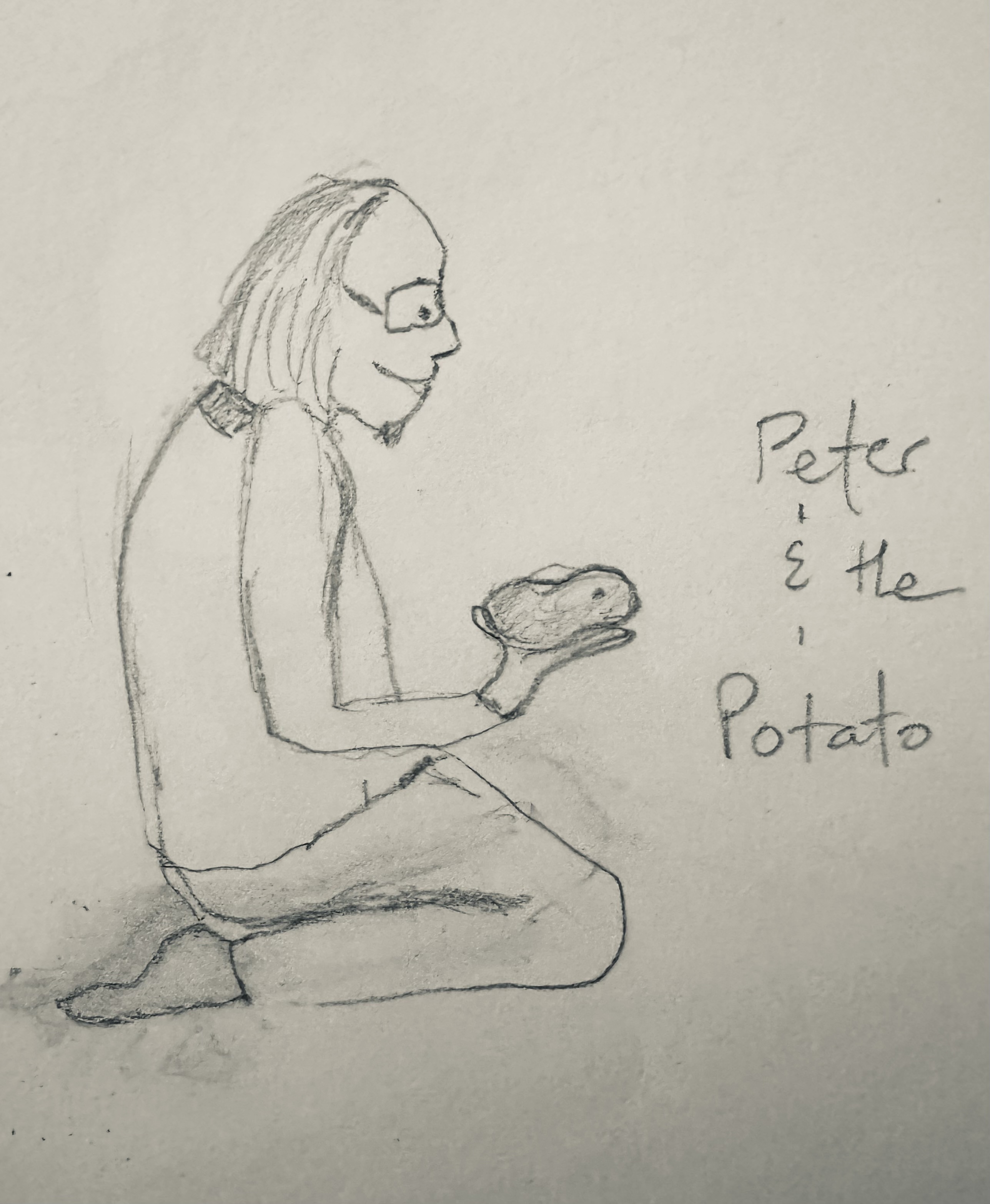
Oh Benji, Benji. Out of my peripheral vision, I could see Alma bent deep over his little body as I pumped the bike, swooshing down the road and around the corner. It took us only a minute to get to Peter’s. We knocked on the door, no answer, so I figured he was in the garden. We trod the narrow path beside the cottage. His back was to us as he sat on his haunches, examining a potato he had just dug from the soil. I looked fondly at the blue indigo cloth straining across the breadth of his back, a breadth of skin and warm muscle I had run my hands over just last night. My knees trembled with desire as I approached him with Benji now in my arms, Alma hobbling behind me.
An hour later, we sat in Peter’s front room on low velvet couches, drinking jasmine tea. Alma was holding a lifeless Benji in her lap. Peter had determined the injuries too severe to save him, so he’d administered a lethal drug in a long needle while Alma stroked the fur, matted with blood. Now, Benji looked so peaceful, curled up in my red wool shawl, Alma’s hand under his little skull.
Neither love nor money will persuade me to ever get another cat, Alma said, her voice soft and sad. She’d stretched her stick-thin legs out before her. Alma liked to wear sandals most of the year, except when it snowed, liked her feet to feel the air, and today I could see her thick greenish toenails and large bunions up close. She was terribly old.
Peter heaved a great sigh. Benji was a fine cat, he said. We had all loved Benji’s antics. He’d dance like Baryshnikov, trying to swat the clouds of gnats that floated above the garden beds in summer. His meow was a sweet question mark, meaow? And if you were lucky enough to hold him in your lap, you were blessed with a vibrational purr that set your thighs buzzing. A deep warmth and contentment emanated from his slight, stripey body. We all loved Benji.
Peter sighed again, shaking his head at the loss. We came to Peter with our sick and injured pets and even, sometimes, with our own ailments. His stinging nettle tonic has reduced my hay fever. His black cohosh tea has helped women all over our neighbourhood with menopause. Peter is not just a skilled herbalist. His magic hands can make me come just by stroking my breasts.
Several weeks after Benji died, a sunny June Saturday, I was at a yard sale with Alma. On summer weekends, Alma and I did the yard sale circuit together on my bike. I pedaled, and she rode sidecar. She has a thing for small dishes, tiny saucers and bowls, sized for fairies. I like to collect children’s books. I don’t have children, and I never will have. I’m fifty this year, but nonetheless I’m charmed by simple stories and illustrations. I would rather read three or four children’s books to myself at bedtime than a novel filled with crime, sex, mystery, and drama.
A book caught my eye, titled Part-time Dog. I opened the cover to the copyright page to check the publication year, 1965. I always do that first because I prefer old books. They provide the most comfort. I bought it, along with several others, two dollars for the lot. Alma found a gold rimmed bowl decorated with an image of two goldfish. Later, we had dinner at my place—a big salad and thick slices of my sourdough. After dinner I gave Alma a framed photograph of Benji dancing in the garden that I’d taken the year before. I’d caught him with both paws in the air, his golden eyes glittering with excitement. One small foot was off the ground as he leapt. The sun played over his orange and brown stripes, and the patch of white on his face made him look almost human. When Alma saw it, tears rolled down her wrinkly face. I moved next to her on the couch and put my arm around her. Not for the first time, Alma said that neither love nor money would persuade her to get another cat. Benji was the best and the last.
That night after Alma left, Peter slipped in my back door, and we made love silently. Through the open window, we heard whoo-hoo from the owl in the tall pine. I felt us smile in unison. What if this life was an illusion? What if I were a character in a children’s story about a happy seamstress and her herbalist? After Peter left, I lay in my narrow bed with the stack of new-to-me children’s books on the bedside table. Part-time Dog was on top, so I started with that.
Brownie is a small stray dog who shows up in the neighbourhood. He starts walking with the children to school, accompanies Mrs. Butterworth to the bank and watches Mrs. Tweedy rake the leaves in her yard. But he has no home, nowhere to go at night, so he sleeps under someone’s porch. Three women in the neighbourhood decide to adopt Brownie. It would be too much work for one of them to have him all the time. So, one gives him breakfast and keeps him in the morning, one has him in the afternoon and gives him his dinner, and another has Brownie every night, where he sleeps in his warm bed, safe and sound. I liked the book so much, I read it again, then fell asleep, dreaming of a little brown dog curled up at my feet.
In September, Peter noticed a white cat in his garden, sleeping on a warm stone, and he scratched her chin and stroked her, gave her some salmon he was cooking for lunch, and then asked around the neighbourhood. Nobody knew anything about her. She was a short-haired female with one blue eye and one golden, and he named her Nia. Peter worried he’d be taking her from her family, but still, nobody claimed her.
She claimed us, wandering back and forth from my cottage to Peter’s. When Peter gardened, she stayed close to his side, and when I sewed, she spread out on the table next to me, her purr matching the vibration of the sewing machine. And though Alma said she’d not have another cat for love nor money, there were many nights when Nia wandered into her cottage and curled up on her bed.
Christmas was simple and good. Alma, Peter, and Nia came to my cottage. We had a stew made with pumpkin from the garden and my sourdough bread. For dessert, Peter brought an apple cranberry pie he’d baked. We walked Alma home, then we went to Peter’s cottage because his bed is bigger than mine. I stayed all night. When I got up, Nia was nowhere to be found. After we drank our coffee, Peter went and called for the cat, but she didn’t come running, her white tail twitching and her little bell tinkling, as she usually did. Frost painted the windows white, and a crust of ice capped the blue bowl of water we kept outside for her. We went to my cottage next, but Nia wasn’t there. At Alma’s, we knocked at the door. No answer, so Peter opened it gingerly, and we called through. Silence. We walked to the back, to Alma’s bedroom, where she lay peacefully, her long white hair flowing out around her across the dark pillowcase, eyes closed in her wrinkled brown face. We knew her life was over. Nia lay at Alma’s feet, purring deep and low.
Later when we cleaned Alma’s cottage and found a copy of her last will and testament, we discovered she’d left the cottage to both of us. When Peter asked me to marry him in the spring, I said yes, you make me happy. But there’s one condition. Let’s keep things as they are.
We sleep sometimes at my place, sometimes at Peter’s, and other times at Alma’s. We kept things the same. The blue sling that kept Benji close to Alma’s chest hangs on the hook near the door, the framed photograph of him on the living room wall. The tiny dishes, neatly arranged, are displayed the way Alma liked them, on open shelves in the kitchen. Nia wanders from one cottage to the other to the other. She knows that food, water, and love are everywhere.
Note: Part-time Dog is a book I read to my children by Jane Thayer, pictures by Seymour Fleishman
About a week ago, on our morning dog walk, we stood waiting for the traffic light to change and a young girl, perhaps nine, long dark hair, hooded coat and wearing a backpack, approached and stood near us. She looked over at us a couple of times. When the light turned green, she walked in front of us a few metres, but she kept turning back, peering around her big hood to look at me. And at one point, as we crossed the bridge over the Gorge, I decided to say something. “Do you like dogs?” I thought perhaps she was looking at us because of Marvin, our goldendoodle, who trundled along beside us, at the end of his purple leash. Lots of times kids want to pet him, but they’re too shy to ask.
“Yes, I like all animals,” she said. And then she spoke, in the most serious way, a line I will not soon forget: “I’m a big fan of nature.” I moved ahead of Michael and she and I walked together for a minute, discussing how we were both big fans of nature. Then we were at the school crosswalk where we parted ways.
We laughed affectionately about what she’d said—what a great line! “I’m a big fan of nature,” we kept saying to each other throughout the day, and then “I’m a big fan of ____” and we filled in the blank with whatever…fizzy water, sunsets, Marvin, taking out the garbage.
I’ve thought about that delightful exchange many times this week. The girl’s innocent enthusiasm for nature. A simple trust in the goodness of the natural world and people. Her approach wasn’t naïve; rather, it seemed wise. We spoke so briefly, but what she said made me want to adopt her attitude of fandom.
I am a big fan of hand sewing
When we went to NYC in December, I heard about Tatter, a Brooklyn-based textile organization that is “committed to preserving skills of the hand.” They promise a lot:
“We work with makers, archivists, and anthropologists to develop extended courses that use textiles as a portal to reclaim history, cultural encounter, indigenous practices, a harmonious relation to the natural world, and making as a tactic of collective liberation.”
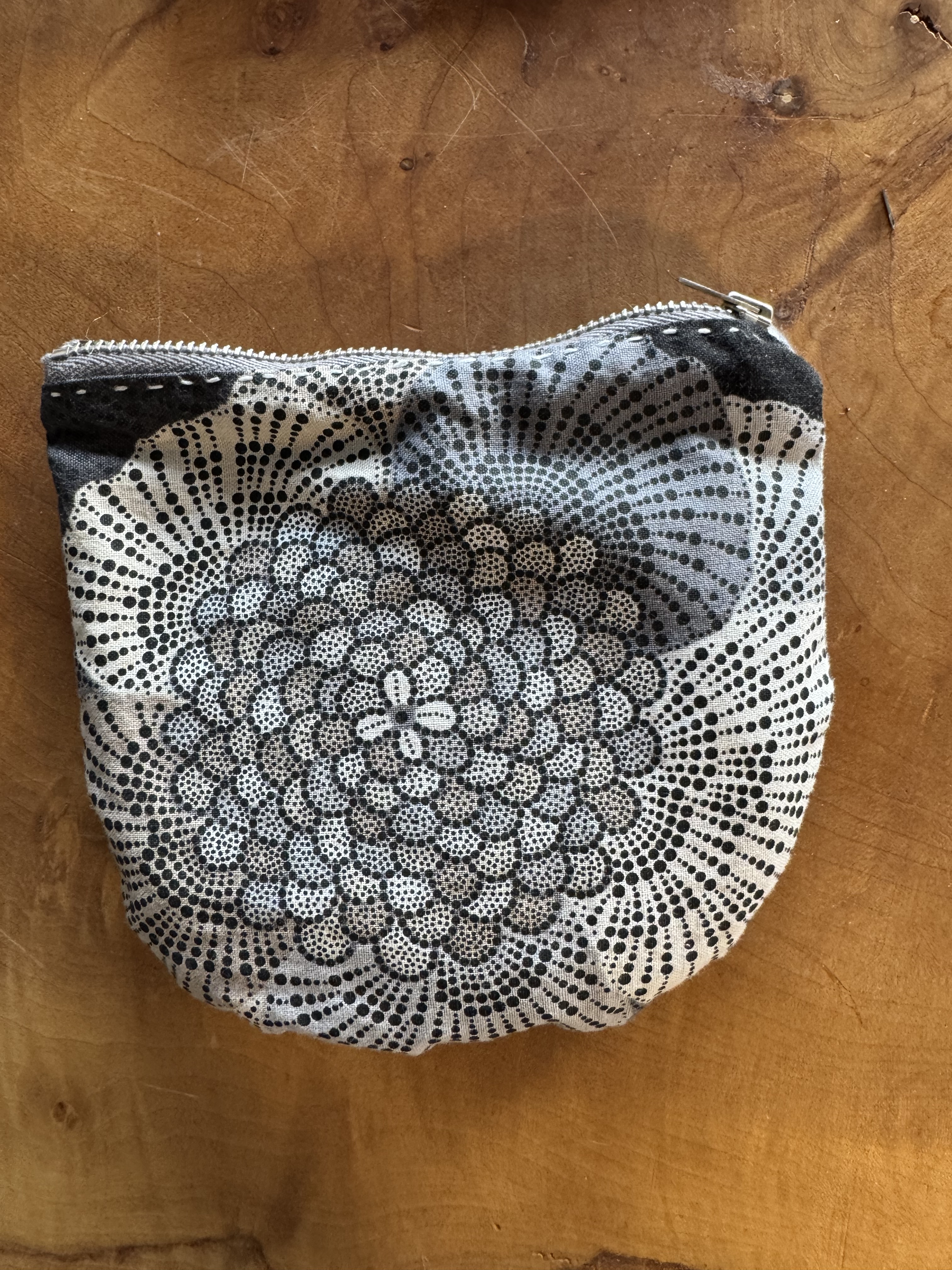
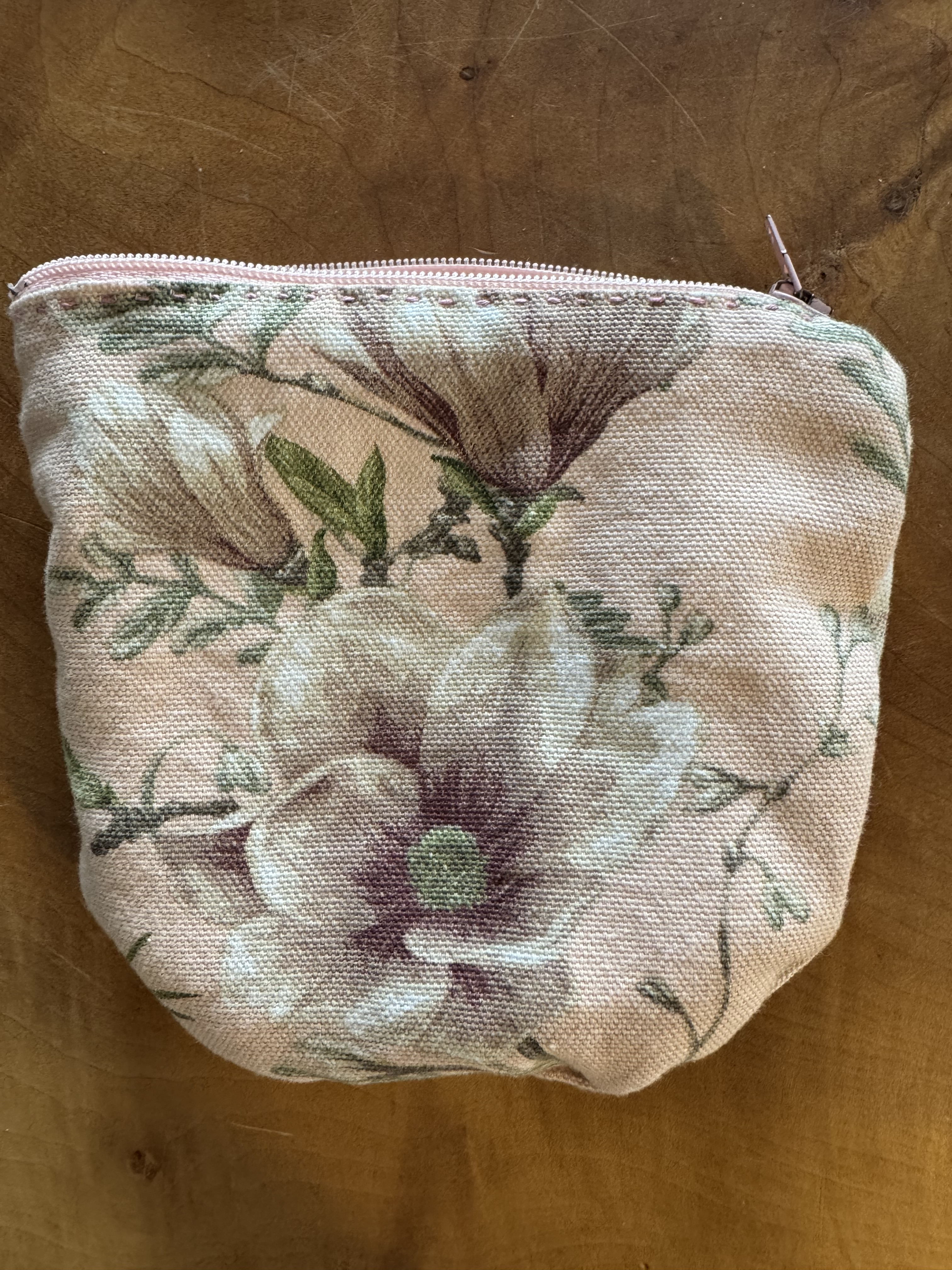
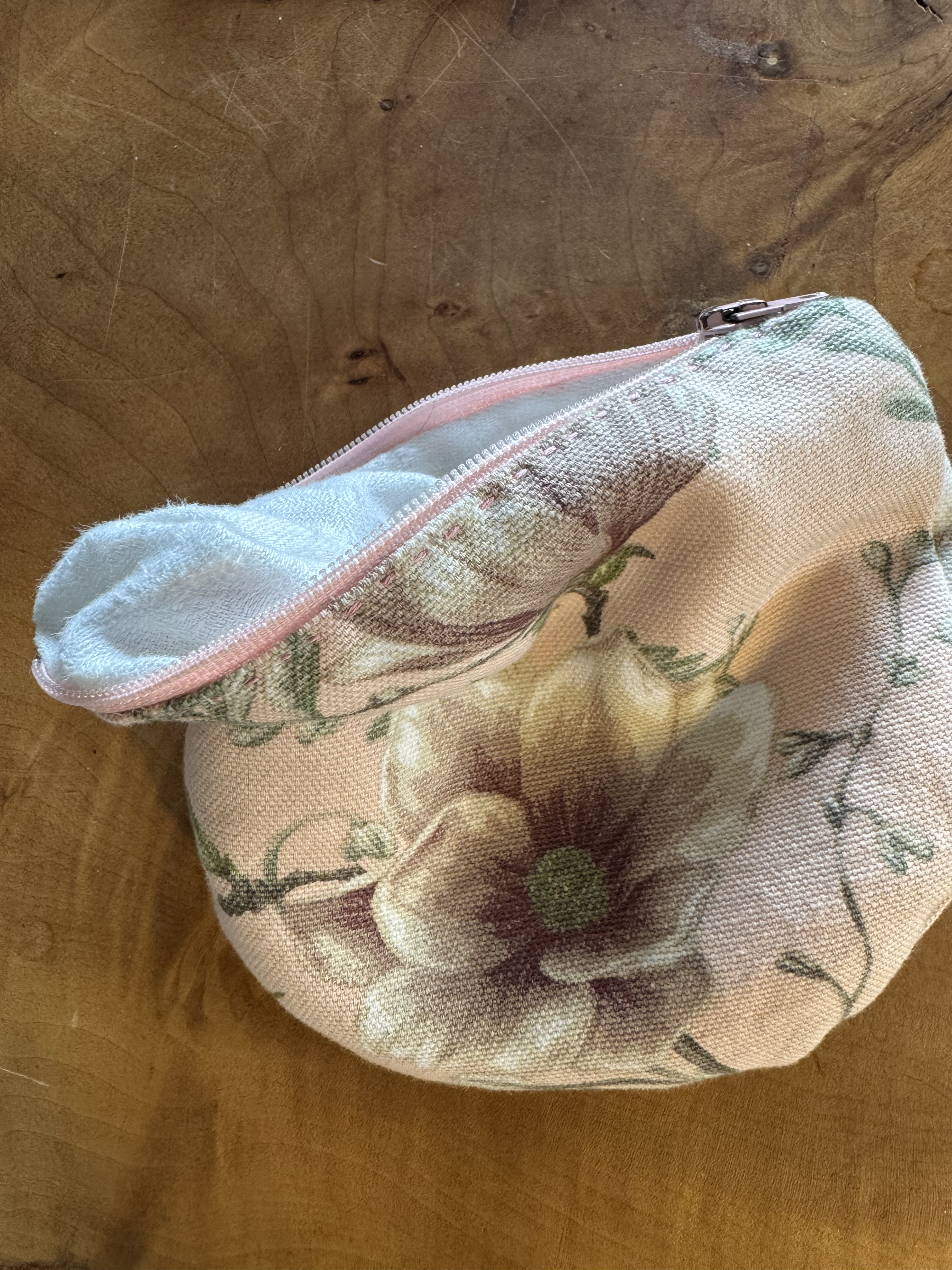
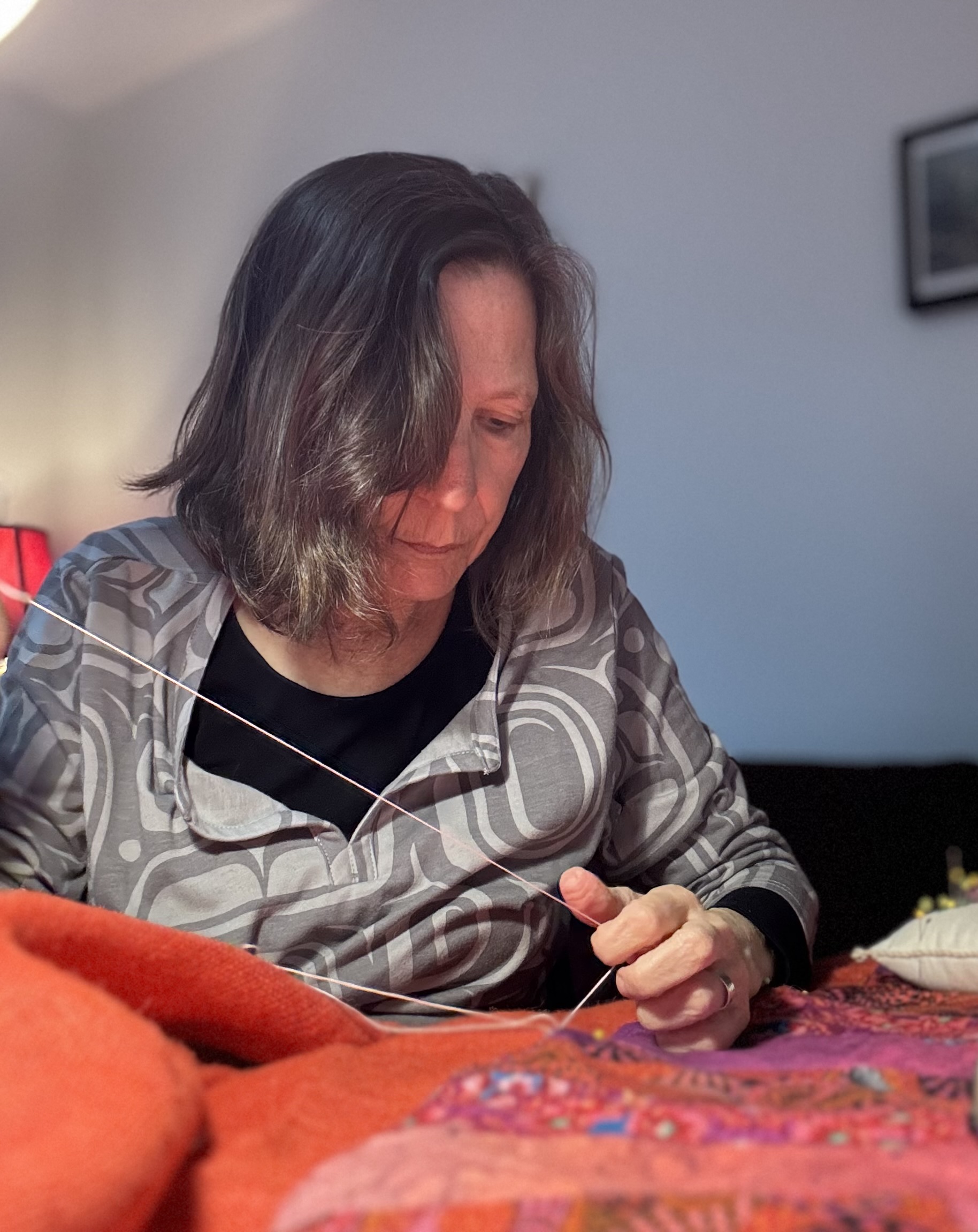
I didn’t have a chance to visit Tatter. However, in February, I took one of their classes on Zoom with Karen Stevens. We learned to hand-sew zippered pouches. Through this class, I rediscovered the enjoyment of hand sewing. The whole-body rhythm of a slow, contemplative backstitch and the satisfying emergence of a line of running stitches along a zipper‘s edge or around an appliqué. There is no rush with hand sewing, no urgency like I feel sometimes when I am at the machine. Hand sewing is portable and calming.
I learned some tips from Karen that I’ll share with you. Perhaps you already know this stuff, but for me, the following was revelatory information.
Don’t thread the needle, needle the thread. This practice makes so much sense, after years of trying to poke three saliva-soaked strands of embroidery thread into a tiny hole. Hold the very end of the thread(s) between index finger and thumb in your non-dominant hand while you angle the needle over the thread. Much easier to get eye over thread than thread into eye.
You don’t need knots. You can just sew one straight stitch several times over to start and end your length of thread. I think of it as akin to building a house with joinery rather than nails or glue.
Basting is a very useful practice. Sure, pins hold things together, but if you baste with big loopy stitches—it doesn’t take long—your fabric stays in place until you’re ready to anchor it with backstitches. I used to think of basting as a waste of time, but what is time for?
I am a big fan of upcycling stores
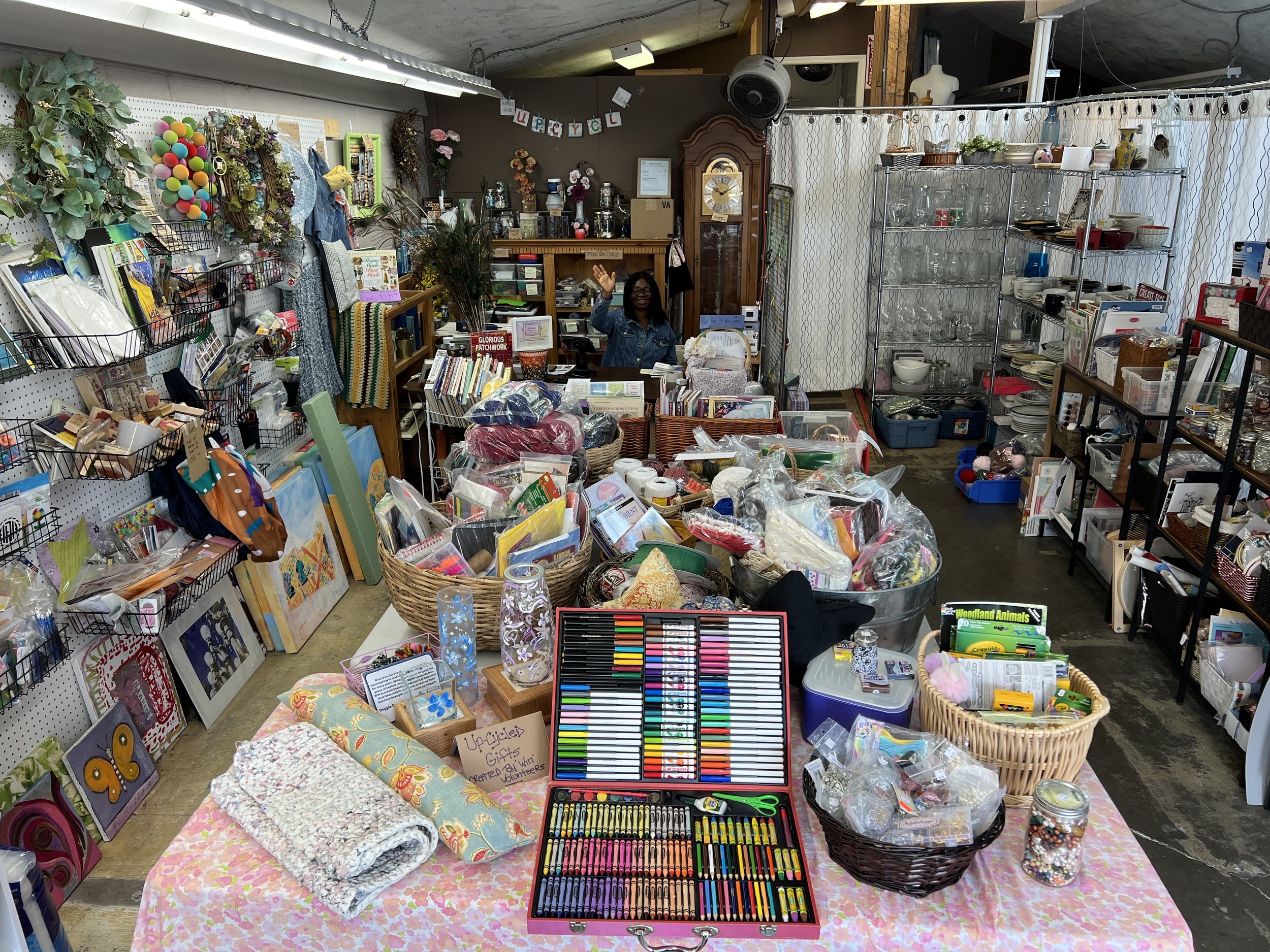
I happen to volunteer at one of those stores, Women in Need Upcycle and Craft, so I am biased. We just expanded to double the space, and every week I open boxes of fresh treasures to line our shelves. Some weeks it’s skeins of merino wool and tiny wooden canoes. Other times it might be a kit to make a paper lamp and bags of beautiful retro fabrics and lace.
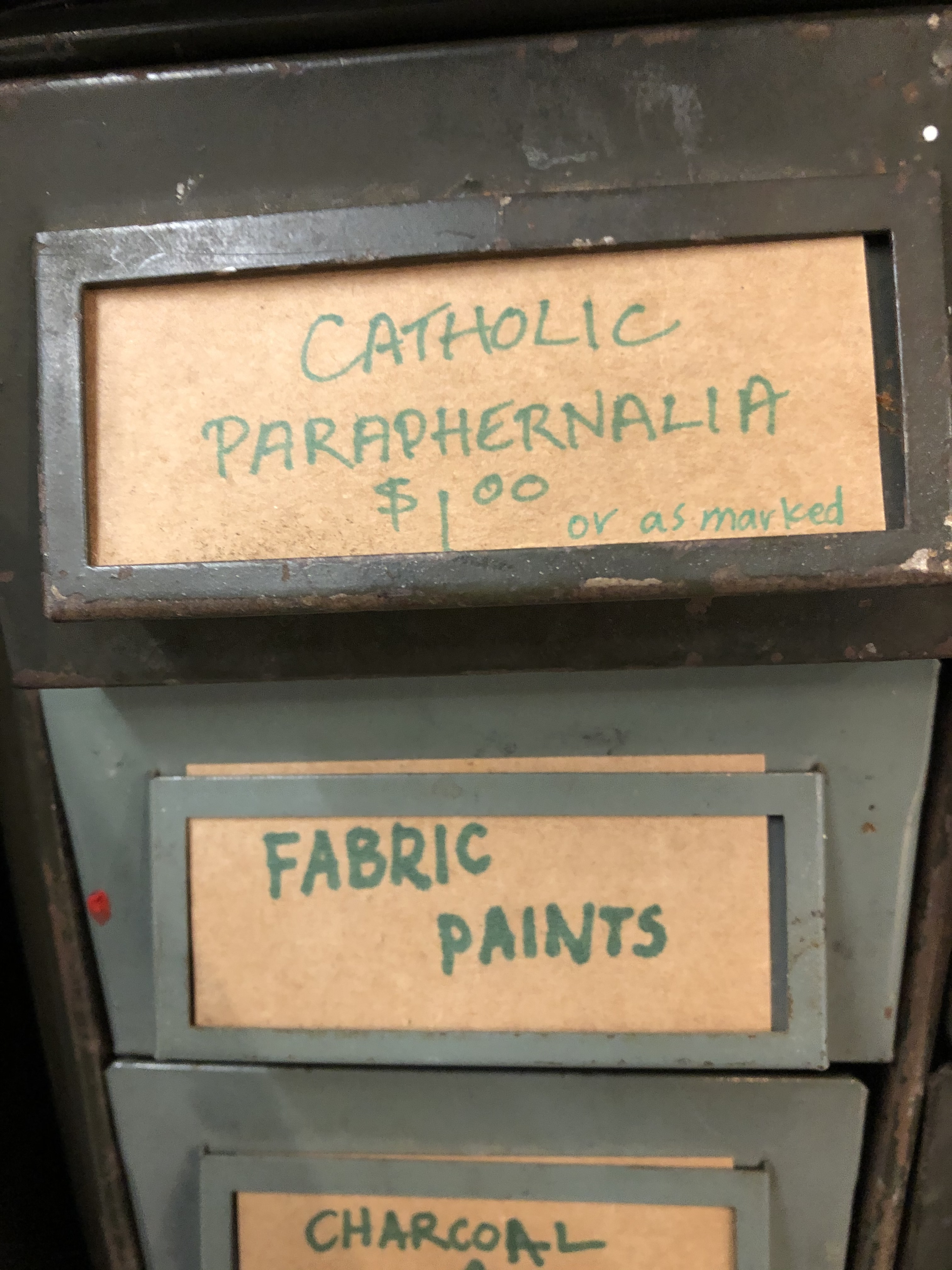
I appreciate all of our sister upcycling stores as well. The Green Thimble‘s name is alluring to eco-conscious sewists. Today, March 4, they are moving from their Quadra Street location to 2950 Douglas St. #400. At Green Thimble, I filled a small paper bag with scraps and loose buttons for only five dollars. I admired the refurbished sewing machines for sale and the bolts of fabric at bargain prices. Supply Creative Reuse Centre on lower Douglas is a finely curated collection of paper, books, cloth, yarn, buttons, ribbons, and more. I was impressed by their sliding scale prices. At Supply, I found a scrap of pink sheepskin for $1.50 that features as the centre of my wall hanging work-in-progress. Thrift/Craft in Market Square is a huge space filled with unusual items and hosted by a devoted proprietress. One of my favourite things there is the weird stuff housed in tiny drawers, for example, Catholic paraphernalia. In each of these places I encounter interesting people who like to chat about making things.
I am a big fan of creative immersion
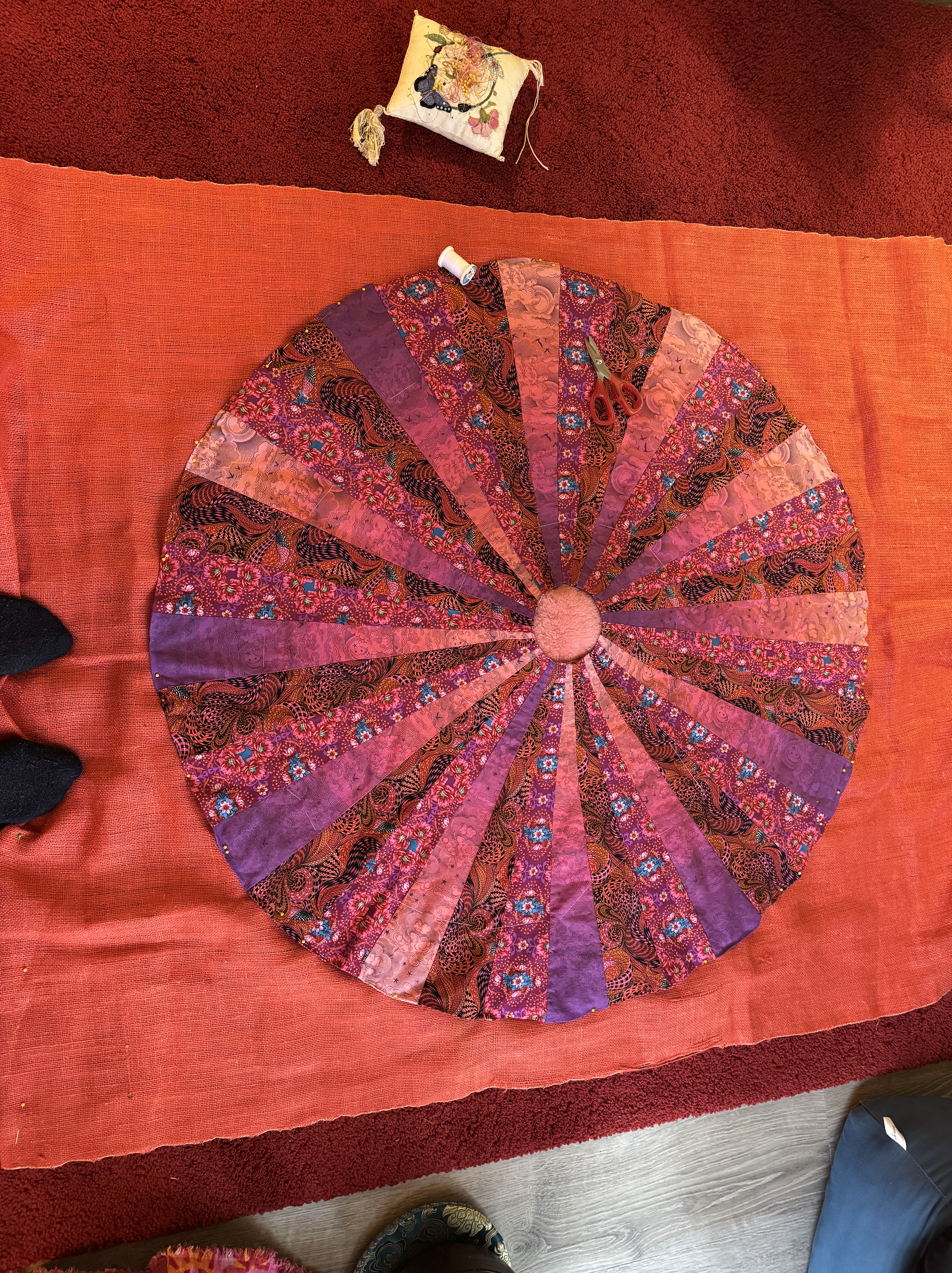
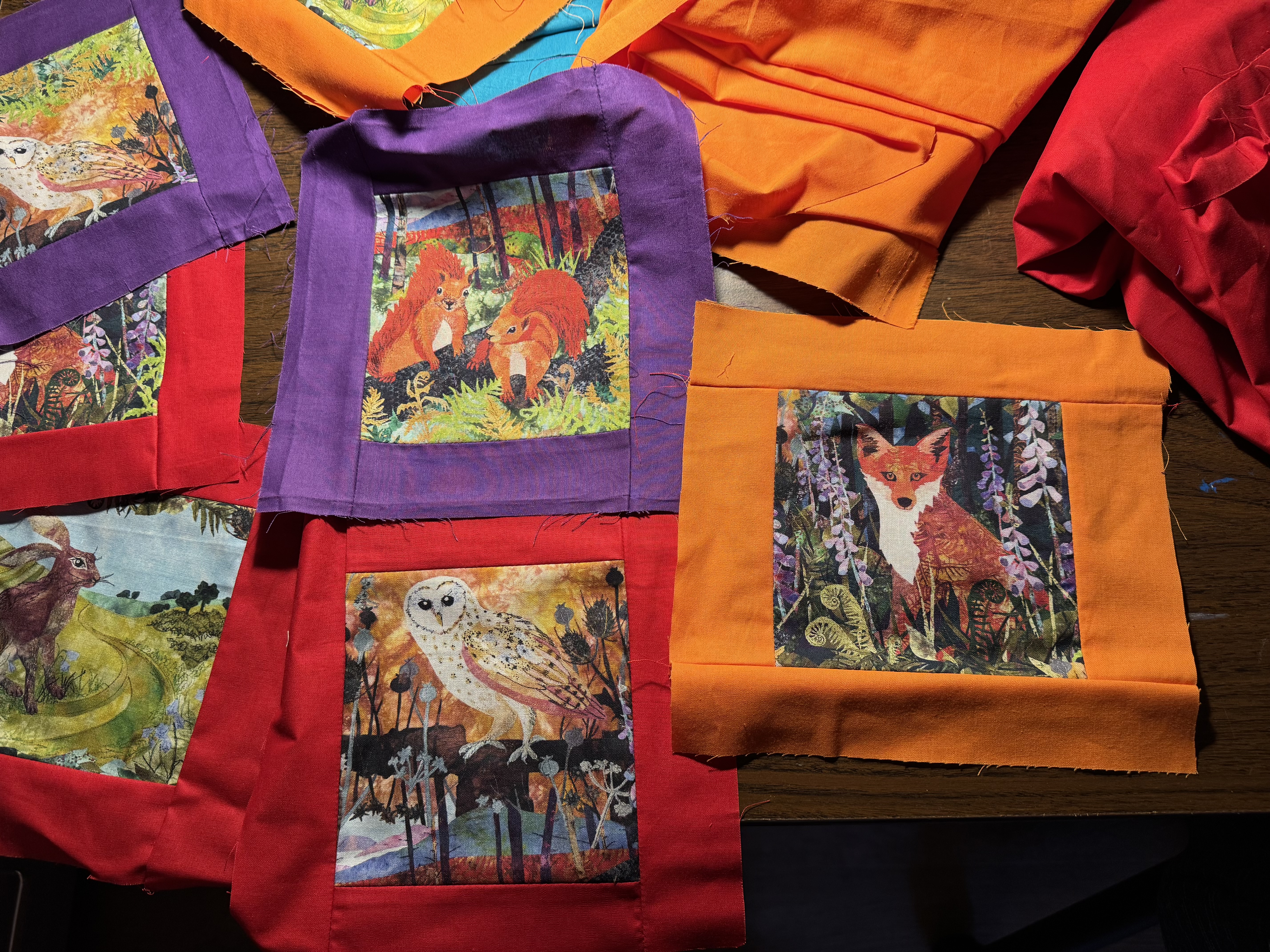
Immersing yourself in a creative project can lift your mood, and we could all use some mood uplift now. Am I right? I am presently working on “Ten Thousand Joys,” a large wall hanging in oranges, pinks, reds, and purples. At its centre is a fabric circle I created using a ten-degree wedge. I cut and sewed three alternating brightly-patterned fabrics together to make this 45-inch mandala. I cut an old blanket into cascading circles to lay under the mandala to create a three-dimensional effect. At the centre, the bit of pink sheepskin peeps through. I basted the padding onto a big piece of orange burlap I found at Value Village and then basted the circle onto the padding. Now I am in the process of using embroidery thread to sew the circle onto its backing at the circumference. I’ll add lots of embroidery stitches in bright colours, zig-zagging up and down the long wedges. The hanging will be finished by sewing on, not ten thousand, but dozens of pink, red, and purple buttons around the central circle. It feels inevitable that I will make a “Ten Thousand Sorrows” wall hanging next.
“When you open your heart, you get life's ten thousand joys, and ten thousand sorrows.” Chuang Tzu
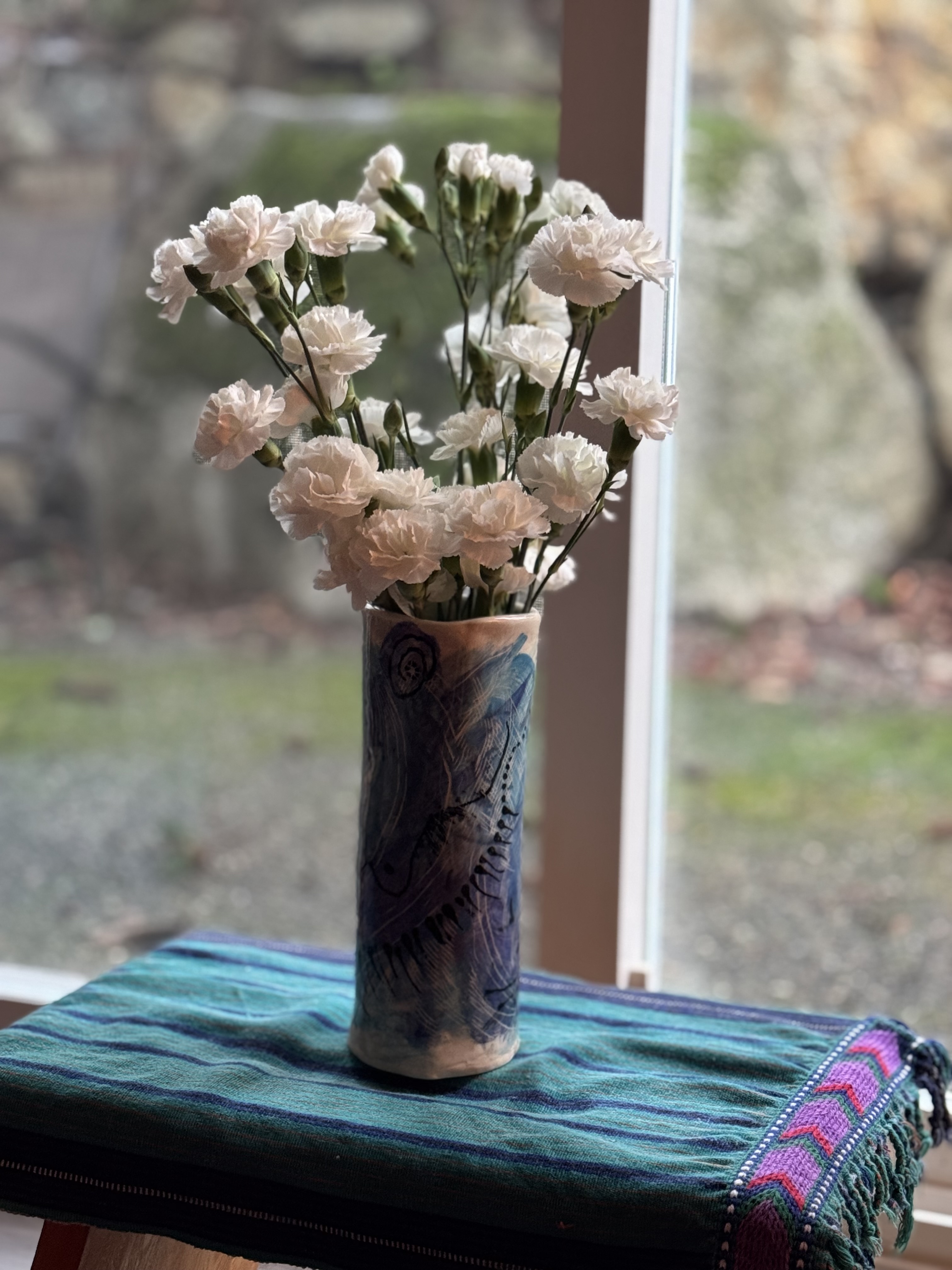
In mid-December, I bought a green glass jug in a second-hand store, half price. My aspiration was to make a beautiful winter bouquet for my friend, Lillian. I bought a bunch of silver dollar eucalyptus and two dozen white carnations. I envisioned white wintry bursts among the silvery green, but the more I trimmed and mixed the carnations with the stems of eucalyptus, the sillier and more incoherent it looked. I took basic Ikebana but still haven’t a clue how to make flowers and plants look good.
Finally, I used only the eucalyptus, splayed out in a free-fall arrangement. I attached a few small, red shiny balls to the stems, and the effect, I hope, was Christmassy and charming, if a bit messy. Lillian said she loved it. (But what could she say, really?) I was going to throw out the unused carnations, but it seemed such a waste, so I put them in a white and blue vase and placed it in my study on a low stool covered with a blue-green cloth.
I don’t like carnations, or I didn’t think that I did. I’ve seen too many sad, slender bunches wrapped in cellophane at the mini-mart next to the hospital. They make me think of last-minute purchases for the death bed, cheap flowers that outlive the person you visited. They seem so tight, orthodox, banal. Whorls of perfect, serrated petals, every bloom the same.
But they’ve grown on me. As I spend hours in their presence, they’ve become real. You could say I’ve become intimate with them. I sit here now, the last day of the year, gazing at their fresh ordinariness. The carnation is the sturdy, faithful flower that will see you through. Perhaps they are flower of the year: commonplace as canned milk. Carnations are one-foot-in-front-of-the-other flowers. Quotidian flowers. Bread-and-butter blooms. See you through the hardest times. Last for weeks. Nothing special.
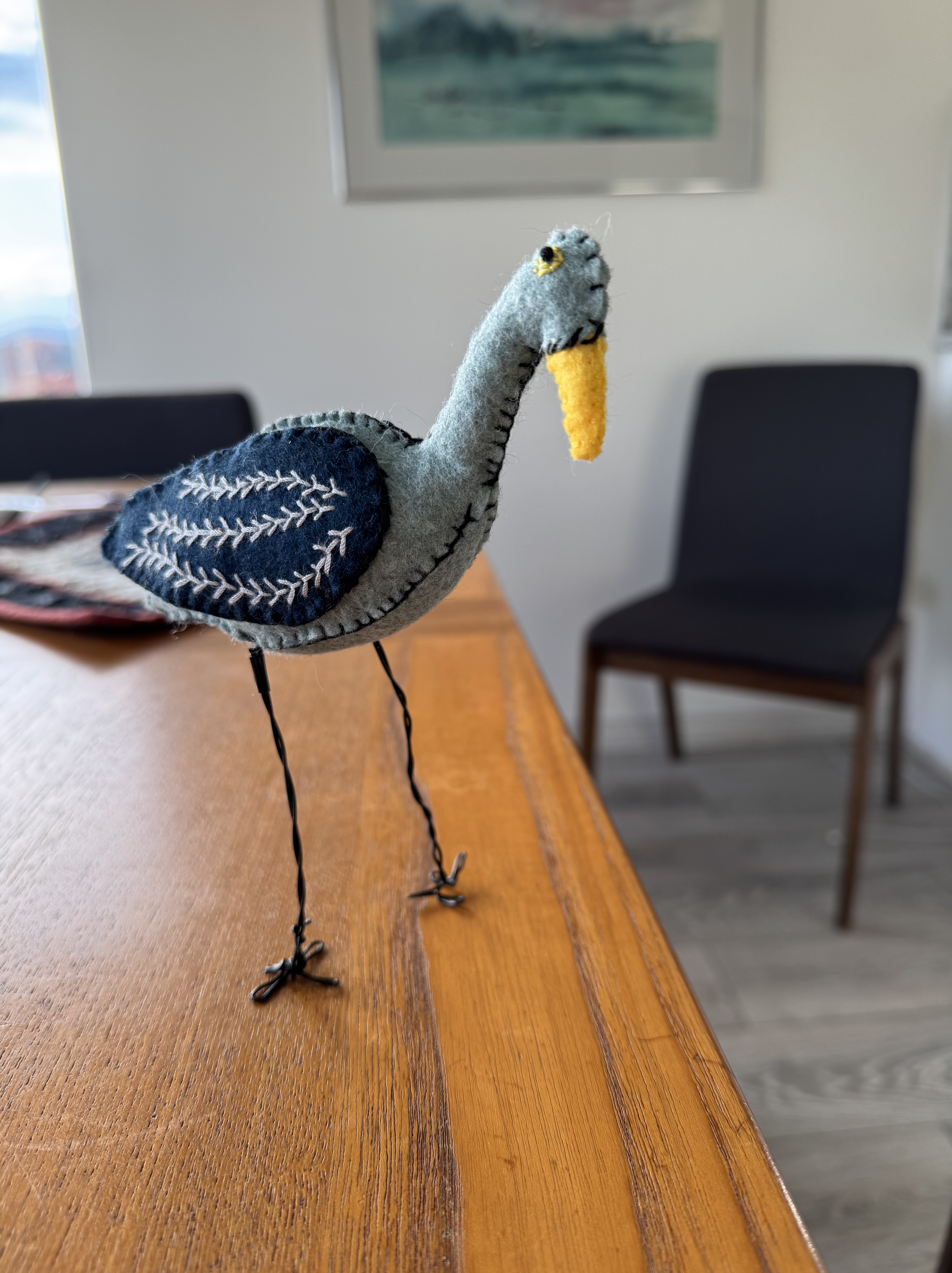
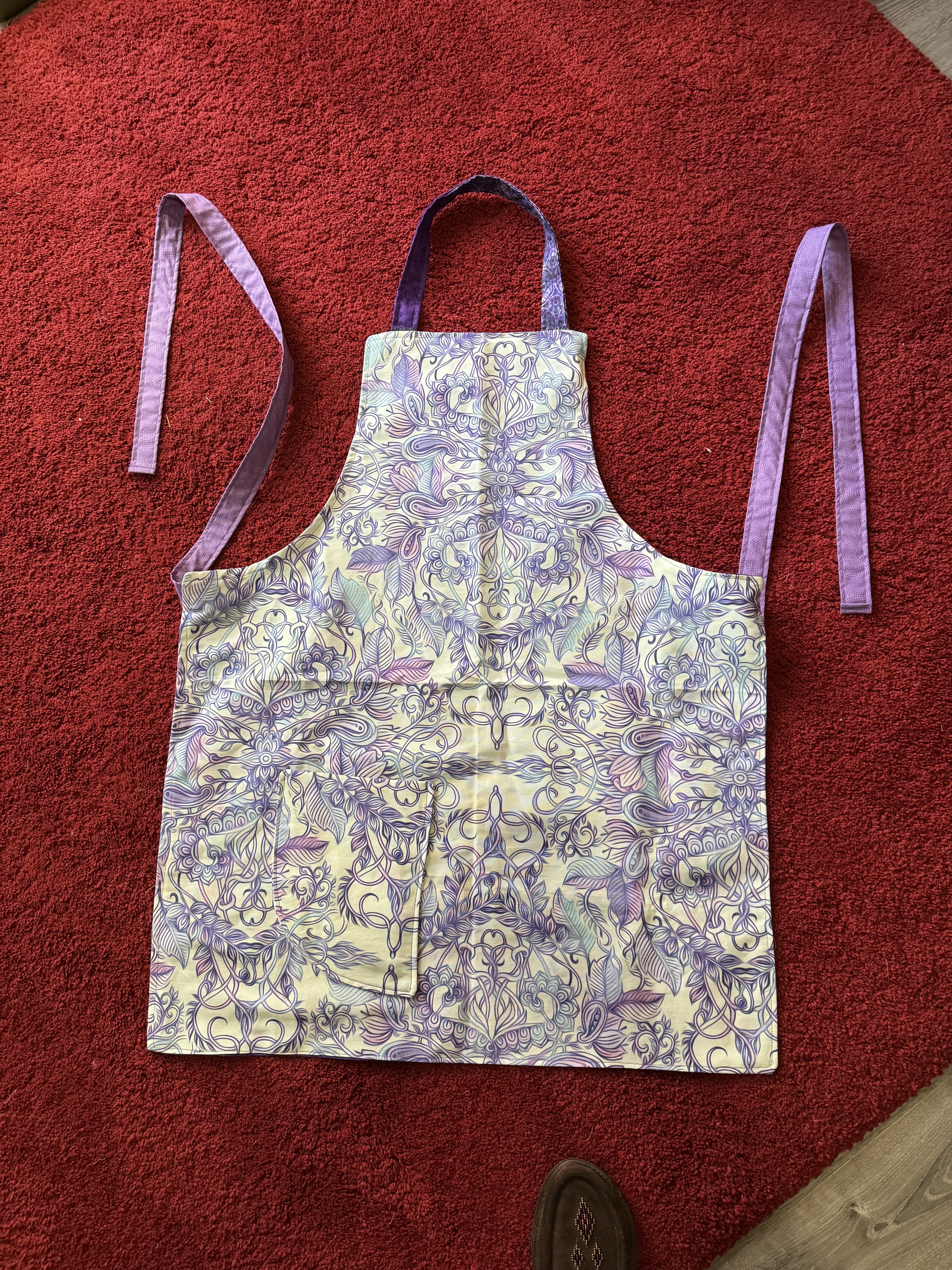
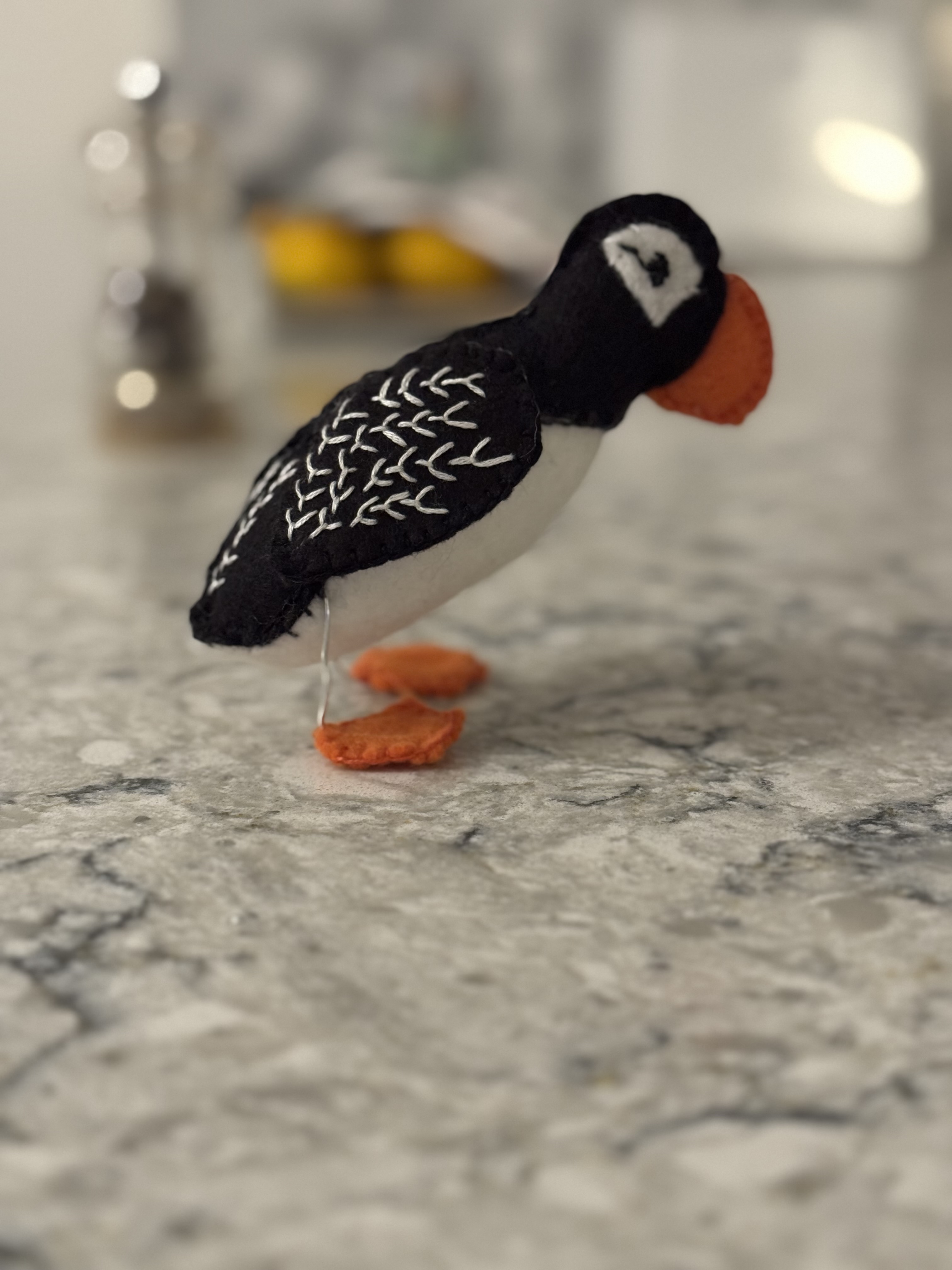
Although 2024 was my first year of so-called retirement, and thus I was given twenty additional hours each week, I wrote less, and I sewed less. (A few felt birds for family and other little felt creations, an apron, a crib quilt start, a fur-lined bag.) I did finish an editing certificate I started in 2020, which is a relief. And I made a lovely new friend and deepened existing friendships. I started a volunteer gig at a non-profit arts and crafts shop in August that has led to meeting many interesting people. Bonus: I get to surround myself with a messy profusion of materials that inspire me.
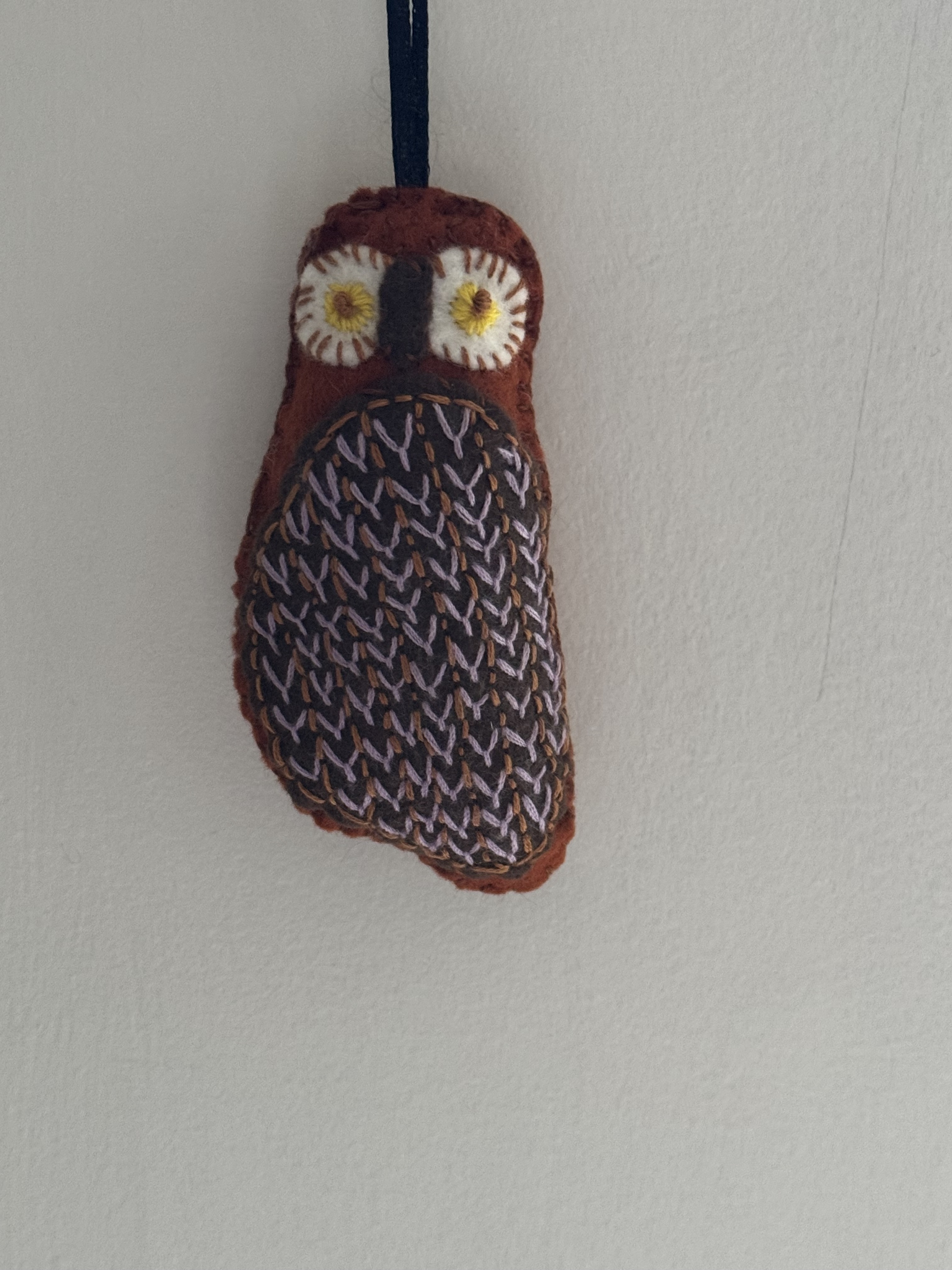
Kathryn’s robinAllison’s pigeonEvan’s heronNancy’s reversible purple apronNancy’s reversible purple apronSarah’s swanI made felt hearts for friends at Christmas.Nat’s puffinNat’s puffinI started a quilt for Lillian’s great grandson, FoxWilson the owl, a gift for Michael Magic bag lined with fake fur for Nat’s 30th birthdayWomen in Need’s Upcycle and Craft store on North Park Avenue. I work there on Thursday afternoons.
This year, I listened to probably one hundred dharma talks on Dharma Seed, with a broad aspiration of becoming more intimate with life—accepting whatever’s happening in my heart, whatever’s happening in the world. Making friends with wild mind. Accepting the truth of the way things are.
I read so many books this year. A couple that stick with me are Rebecca Solnit’s memoir, Recollections of My Nonexistence and The Age of Loneliness, a book of essays about life during the sixth extinction by Laura Marris.
Solnit writes a lot about being a woman. That’s what her title gestures toward—the peculiar “nonexistence” of being female in a patriarchy (remember mansplaining? She is behind that neologism[i]). She draws on John Berger’s 1972 Ways of Seeing, which I’ve known about for years and now am determined to read. She quotes words from him that jibe with my experience: “To be born a woman has been to be born, within an allotted and confined space, into the keeping of men. The social presence of women has developed as a result of their ingenuity in living under such tutelage with such a limited space. But this has been at the cost of a woman’s self being split into two.”
Perhaps that sounds dramatic in the Global North in 2024, but that has been my experience. Perhaps it’s different for lesbians. Perhaps it is different for women of subsequent generations, but Solnit and I were born three years apart (1961/1958), so we grew up at roughly the same time. Berger goes on,
“A woman must continually watch herself. … She has to survey everything she is and everything she does because how she appears to others, and ultimately how she appears to men, is of crucial importance for what is normally thought of as the success of her life. Her own sense of being in herself is supplanted by a sense of being appreciated as yourself by another.”
Solnit calls Berger brilliant and generous, to be able to imagine a woman’s experience, and I agree. What he writes here feels just as real as the carnations in front of me. Reading the passage and feeling its truth is freeing. No action needed, just awareness.
Similarly, truth pinged through me when I read Laura Marris writing about the age of loneliness. We become lonelier as we bear witness to the drastic reduction, or “great thinning,” of ordinary animals. Marris draws on the work of naturalist, Michael McCarthy, who writes of our baby boomer age group, “As we come to the end of our time, a different way of categorising us is beginning to manifest itself: we were the generation who, over the long course of our lives, saw the shadow fall across the face of the earth.”
Reading this series of essays, elegies to Earth as the shadow descends and animals disappear, I was gripped by a grief so deep I sat for a time and just cried. Again, the truth is freeing. Let’s not deny that this is happening. It’s really happening. We can still enjoy the beauty that is here.
In keeping with my mood of asceticism, I recently deleted my Facebook and Instagram accounts. Unlike the birds who used to sing outside my window, FB and IG will not be mourned. I feel light as I step through life with a new red pedometer safety-pinned to my leggings (the pedometer frees me from carrying a “smart” phone to count steps). Michael, Marvin, and I amble down to the beach at Thetis Cove to watch the sky change. Rippled water reflects a bank of pink clouds.
Thank you for reading. In the coming year, may you experience moments of lightness in a shadowy world.
Berger, John. 1972. Ways of Seeing. Penguin. Marris, Laura. 2024. The Age of Loneliness: Essays. Greywolf Press. McCarthy, Michael. 2015. The Moth Snowstorm: Nature and Joy. New York Review Books. Solnit, Rebecca. 2020. Recollections of My Nonexistence. Viking.
[i] From Wikipedia: The term mansplaining was inspired by an essay, “Men Explain Things to Me: Facts Didn’t Get in Their Way”, written by author Rebecca Solnit and published on TomDispatch.com on 13 April 2008. In the essay, Solnit told an anecdote about a man at a party who said he had heard she had written some books. She began to talk about her most recent, on Eadweard Muybridge, whereupon the man cut her off and asked if she had “heard about the very important Muybridge book that came out this year”—not considering that it might be (as, in fact, it was) Solnit’s book. Solnit did not use the word mansplaining in the essay, but she described the phenomenon as “something every woman knows”.
I was peeling off my wet swimsuit after a sauna. A woman sat on the bench near me, her girth spread wide, a walker placed next to her. She was holding forth to two other women, telling a tale of animals visiting people in hospital. First, it was about the little dog she’d take regularly to visit her mother, who, after many months of illness, had died. Stroking the soft fur gave her mother solace. And she’d heard somewhere that there was a horse. No, really, she insisted, there was this horse who visited hospitals. She’d heard that an orderly led the animal down a hallway, and the horse stopped at one room and wouldn’t budge until he’d visited the man lying there. The man was dying of cancer.
One of the women was trying to get away from this monologue. You know how people stand at the ready, waiting for a small break in a stream of words so they can politely exit? She stood at the edge of the lockers, fully dressed, body ready to spring. The other woman, still in her swimsuit and sitting beside her large friend, seemed rapt. The rapt woman commented softly, “Oh, the horse could smell the cancer.” This remark seemed to be the thing that released the one who wanted to flee. She took off with a wave of her hand.
So apparently, the horse spent a long time visiting the man. As I rolled my suit down over my damp breasts and belly, I imagined liquid brown eyes the size of dessert bowls, a fringe of moist, black lashes, the equine head leaning over the bed as the man’s transparent hand stroked the muzzle. The hospital bed would be high, high enough so they could have skin-to-skin contact, the chemo-ravaged man tilting forward to connect with the curling lip. A horse’s kiss.
As I left the change room, the large woman was still talking about animals in hospitals. I think she’d moved on to other kinds of animals, but I couldn’t get it out of my mind: the image of an auburn horse with a white blaze on its forehead, a huge animal, perhaps 16 hands, rough mane flipped to one side, his bulging legs so close the dying man could run aching hands over those velvety pillars. I could see the horse nuzzling the man, and then standing patiently, quietly by the bedside. The clock ticks, the nurses click by, machines gurgle and beep. The horse stands, a living mountain, a witness to the man sleeping.
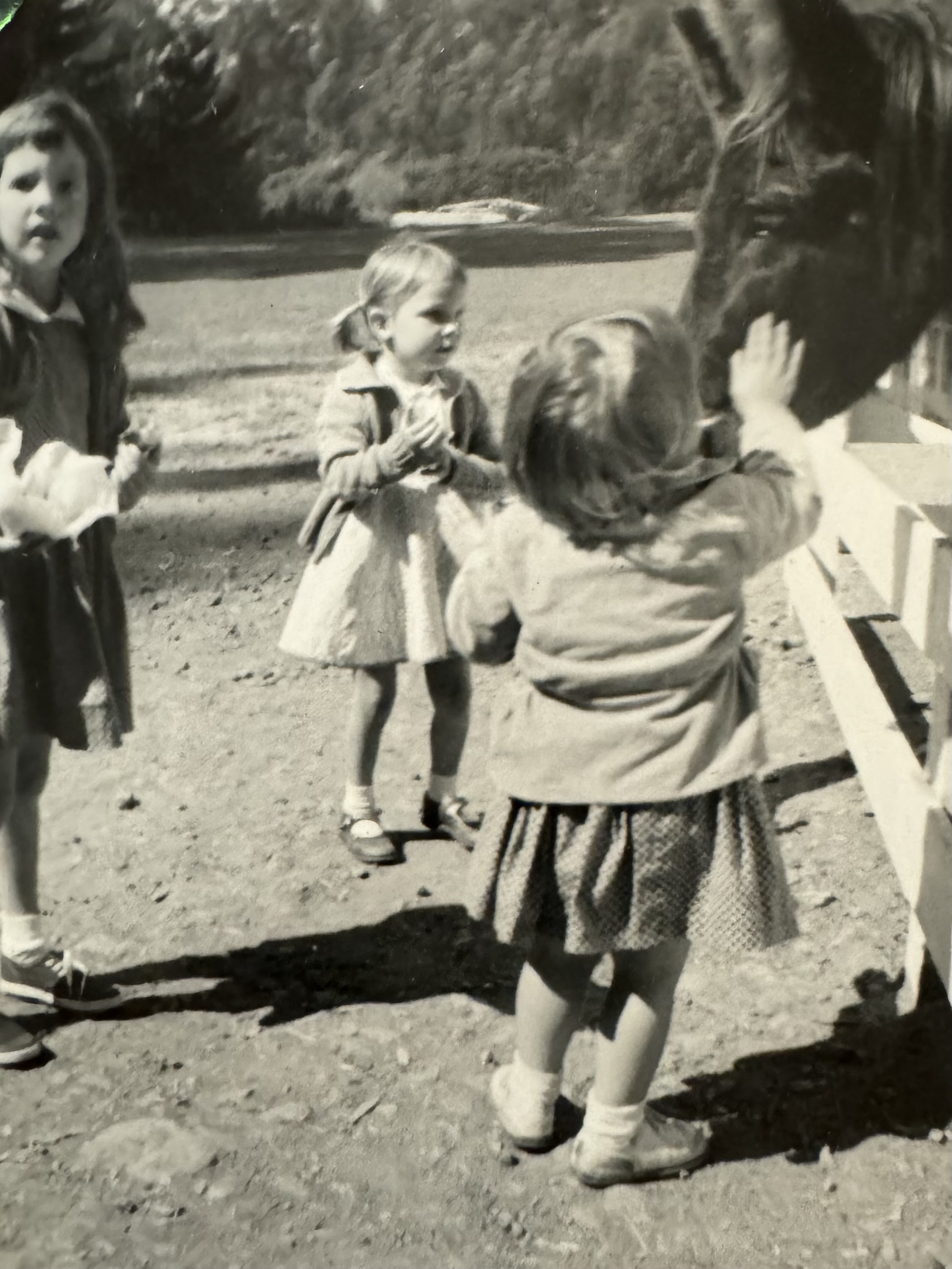
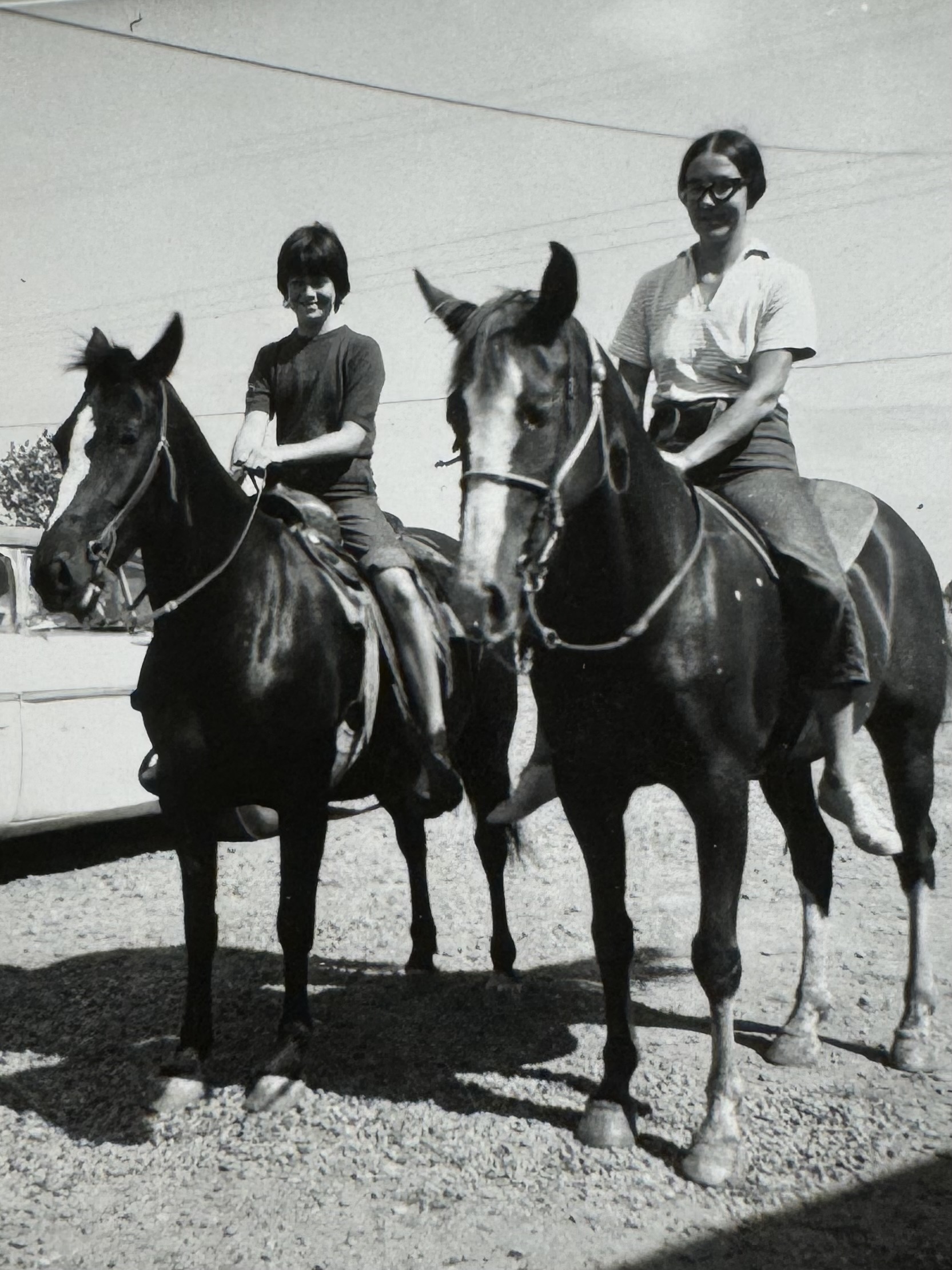
I thought of horses. We’d loved the horse books, Black Beauty, My Friend Flicka. My aunt had a farm in Sacramento we visited as children; the horses were so tall, they scared me. The horses and ponies at the Children’s Farm in Tilden Park seemed more benign, gentle. And then, much later, at my father’s farm, Poco (tall and dark red) and Blackie (small, black of course, unpredictable) lived for a time. We visited them in the barn and the fields, our pockets filled with apples.
The image of the horse in the hospital stayed with me. How did he fit in the elevator? Is the story true? I didn’t want to look it up, to Google “horses in hospitals.” I wanted it to be just what it was, a tale overheard in a women’s change room, a scene in my mind I could replay over and over.
The horses were gentle at the Children’s Farm, Tilden Park , Berkeley My cousin and mother riding horses at Aunt Fran’s farm, early 1960s
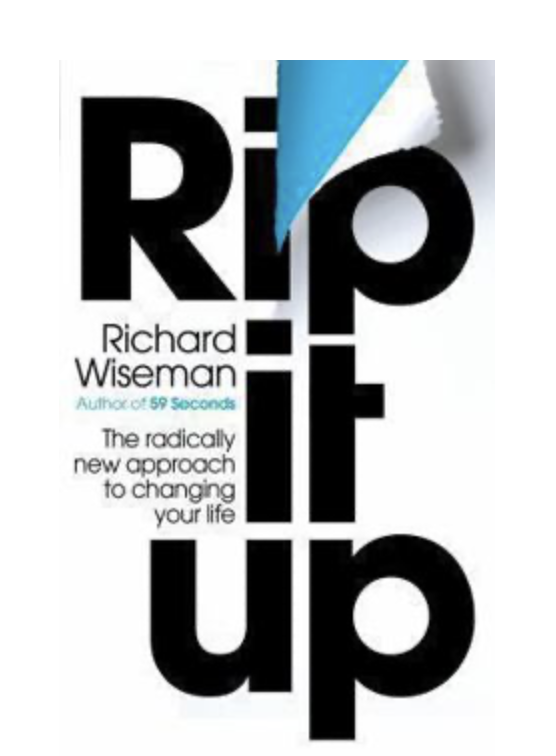
I had a sauna because it’s something that delights me, being held in intense heat, my body melting against cedar boards. I’d opened a little piece of folded paper earlier in the day, and on it I had printed “sauna and hot tub.” On my dresser is a white ramekin filled with little pieces of paper. And on each piece, I’d written something I love to do, something that delights me, gives me pleasure, makes me happy. Swim, visit a thrift store, sing, coffee with a friend, sit on the beach, write, buy flowers, visit a library, ride my bike. I’d responded to an exercise in a self-help book by Richard Wiseman, Rip It Up. The book is about the “As If” principle (based on the work of psychologist William James), and the premise is that behaviour determines outcome: if you smile, you’ll feel happier. If you do things you enjoy, you’ll enjoy life more.
Self-help books usually over-promise and under-deliver. There’s no shortcut to living a good life. Meditate, work on being aware, practice gratitude and compassion. Exercise, eat well, connect with people and nature, right speech, life of purpose. All that. But there is something of value here, in this book that I took from a shelf at the Spiral Café. This exercise has you doing things you love to do more often—your behaviour determines an outcome of feeling good, appreciating your life.
A couple of days after I heard the story in the change room, horses were still on my mind. I thought of the saying, “don’t look a gift horse in the mouth.” I never liked this adage . . . it seemed like a trap. Wasn’t it okay to politely decline an offering? Must you take everything people give you? Could you say, “I’m sorry, I don’t have room in my house for the [fill in the blank].” And then there’s the Trojan Horse. Had the Trojans examined that wooden horse before accepting it, they would have discovered the Greeks, their enemies, hiding inside. So surely, we should be looking gift horses in the mouth?
But I started to see the aphorism another way, not about material gifts at all. Disappointment might hold a gift if you tilt it a little in the sun. Struggling to let go of a disappointment, I wrote to a friend about it. In her wisdom, she encouraged me to “let go, let go” and “just enjoy what comes your way.” I like the simplicity of that: “Just enjoy what comes your way.” The man in the hospital bed, whether real or fictional, enjoyed what came his way. He welcomed the gift of a horse, as rare as a unicorn, visiting him on his deathbed. He welcomed the horse as naturally as you welcome the visit of a beloved relative, which of course the horse was—a beloved relative. With pure gratitude, pure love.
Poco, my dad, Brownie, my sister Kathryn, my son Nathaniel, and me: summer of 1995 at the farm
Last week, while on vacation in a small town in Mexico, I read Wintering by Katherine May. Perhaps it seems like an odd choice for a “beach read” in the sun. But the subtitle spoke to me: The Power of Rest and Retreat in Difficult Times. Something in me said—yes please! Give me permission to lay down my (figurative) sword, to retreat when things aren’t going smoothly. I was thirsty for her message that during fallow times, rather than pushing ourselves to do more, we need to withdraw and rest. We need to do less. In the book, winter is both a season and a metaphor for those difficult times; we periodically “winter” throughout our lives, not just from December to March. Wintering occurs when we encounter death, loss, illness, or other big change. When life disrupts us, shakes us up.
When May wrote about ritual, I took notice:
“We need the pauses that ritual gives us. So much of contemporary life is about the denial of personal darkness. We’re supposed to be always upbeat, always available, always bursting with energy and optimism. There’s simply no time for negative feelings… Ritual invites these things. … [Ritual] might draw attention to cyclical time, to the way that things come around again and again. That helps us to think about change, about how far we’ve come, about what we’ve lost.”
With Imbolc (February 1-2) on the horizon, I set an intention to mark the next pagan sabbat with ritual. Midway between Yule and the spring equinox, Imbolc is associated with new growth, new beginnings, hope, lambing (Imbolc is translated as “in the belly”), and Brigid, the Celtic goddess of fire and fertility. Some things we can do to mark this sabbat are to make a bonfire to symbolize the returning of the light (the darkest days of winter are behind us); create an Imbolc altar with the colours and objects associated with the sabbat; make a Brigid’s cross with reeds; and perform a house cleaning ritual: clean or declutter then “smudge the perimeter of each room with … salt, sage, candle flame, and water” and chant an incantation of cleansing as you move through the house. You can anoint doors and windowsills with “blessing oil” to prevent anything negative from crossing into your home.
These suggestions resonated. My intention was strong. I would set aside February 1st to create the altar and do the housecleaning ritual with Michael.
But a few days ago, we both got sick with Covid. Here we are on the eve of Imbolc with cotton wool heads and raspy throats, runny noses and low energy. My plan to make a day of the ritual retreated into the fallow field of sickness. So, we followed May’s message in Wintering: do less. We adapted ritual to align with healing.
Our minimalist Imbolc
For our “altar,” we used our dining room table. We spread the white tablecloth (not ironed, too much energy required). White symbolizes snow and purity. We placed a red candle from the Christmas Angel chimes into a tiny Noxema-blue jar that Olga’s son discovered on one of his beachcombing adventures. Red is rising sun; blue is flowing water. This morning, I finally managed to get out for a walk, and we passed our local farm-stand florist and picked up a “pixie bouquet” ($10). There were no daffodils or snowdrops (the flowers suggested for an Imbolc altar) available. Just red and orange flowers, which is fine because they conjure the rising sun and Brigid’s fire.
We collected the remaining items for our altar and ritual: a smudging stick I’d bought at a local garden stand a few years ago, a small pottery bowl filled with water, a fertility figure reminiscent of the Venus of Willendorf, and a sheep to symbolize “in the belly” and lambing season. Okay, strictly speaking it’s a ram, but we had to adapt.
Lambing season
When I think of lambing, I think of “the farm”: my father and stepmother’s 50-acre property in Bruce-Grey County, Ontario. They kept sheep for many years, and one winter I visited during lambing season. I remember my father getting up throughout the night to check on the heavily pregnant ewes. I went out with him once: I have an image of his hands slippery with blood in the dim, cold barn while he helped with a difficult birth. Afterwards, we watched carefully to make sure the newborn suckled properly. A rhythmic quiver in her long tail showed she’d latched on and was getting first milk.
Looking back, I now recognize the courage and commitment my father and stepmother must have had to buy those 50 acres and take that leap of faith. My dad, a city guy who fled academia, totally immersed himself in farming. He read everything he could about it and talked to the locals, hungry and humble in his search for knowledge and skill. Always experimenting, working hard, taking risks, living his dream. Facing all of the inevitable challenges and bad times farmers have. Being a so-called hobby farmer didn’t make him immune to bad weather, problems with stock, foxes killing the chickens, electric fences falling down, money shortages. Marion worked alongside him and also worked full-time as a nurse to finance the farm operations. Despite the challenges, they experienced much satisfaction and joy. Dad and Marion, I am so proud of your daring and adventure, your bravery and strength.
Cleaning and ritual
We didn’t have the energy to clean the whole house, so we chose just one thing: the bookcases. After removing the pottery and other knick-knacks, we dusted the shelves and the books’ spines and tops. We wiped down the objects, sorting out things that we no longer wanted. When the cleaning was complete, Michael found an incantation online that we said together as we moved clockwise through the house, flicking water from the little bowl, letting the earthy-sweet sage smoke float into the corners of the rooms. Brave red candle lit the way, and Marvin followed us from room to room.
With the purifying power of water, With the clean breath of air, With the passionate heat of fire, With the grounding energy of earth We cleanse this space
May the goddess bless this home, Making it sacred and pure, So that nothing but love and joy Shall enter through this door.
I worried a little that we were doing it wrong…but what’s right and what’s wrong? We made the ritual our own. We paused today to focus on the cycle of life and seasons. We purified our home for Imbolc, and we did it imperfectly.
Recommended Imbolc reading
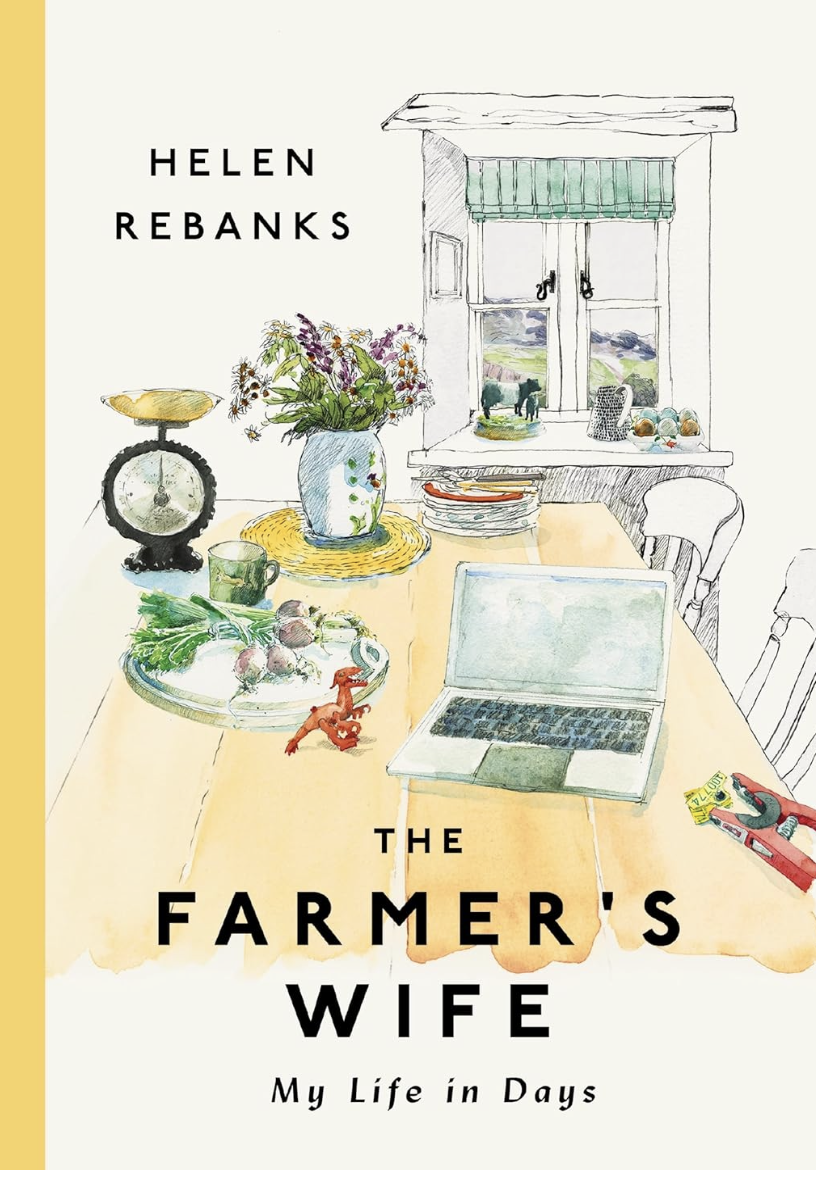
The Farmer’s Wife: My Life in Days, by Helen Rebanks. This heartfelt book, peppered with recipes, is an honest and passionate account of farming and raising a family in the Lake District, UK. There’s lambing, of course, but there is so much more. Rebanks writes about women’s role in farming: they often do all of the mundane, quotidian work that goes uncelebrated. So she celebrates the farmer’s wife by showing the importance of domestic and indoor work. I loved reading her descriptions of daily minutiae: the shopping, cooking, childcare, all mixed with tagging lambs’ ears, shovelling snow, gardening, and other outdoor chores. An equally important aspect of the book is her persuasive argument that we must support local, sustainable, biodiverse farms—such as theirs—to ensure a healthy future.
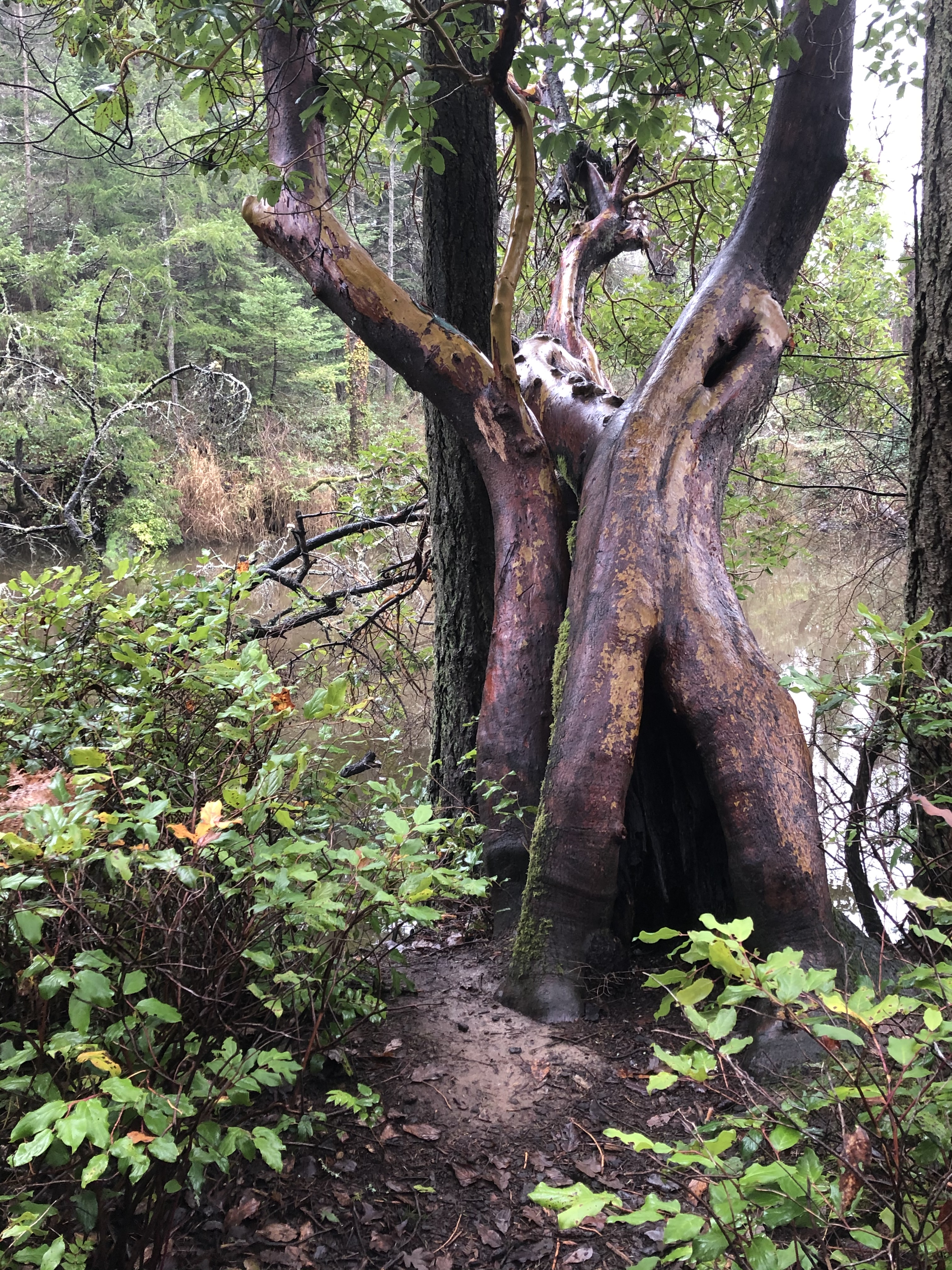
Blood runs green


If you could see her, you’d want
to embrace her too, drape her
massive arching thighs with yours.

Close your eyes, I’d say, and after
awhile, you’d feel her green
rhythm thrum your jangle into hum.

I can see your skeptical eyebrow,
raised—believe me: your blood

would bloom viridescent, and then
you’d slide smoothly off her trunk
to crouch beside her on the bank.

You’d place your palm on her red
skin, wired to the wild.

On that spot, I’ve seen so much—
once, the great horned owl’s cold
yellow eye locked mine and

for several seconds, we were
one. Another time, I watched the
racoon family on the farther shore:

mother and seven kits; washing
tiny hands in brown eddies.
I’ve watched mallard rafts

go with the flow, a river otter’s
easy drift, a heron fish the
private pool beneath her arch.

I wish she could have purified you, too.

I thought of this too late.

They put up a fence; they broke
the green connection. I wish you
could have seen her.
Tree


Today I heard a
sparrow trilling
from inside your
cool green chamber.

I long to join her
there—safe, nested,
hidden. Free to sing
my heart out.
I’m not a gambler. I’ve never been one to buy scratch & win or lottery tickets, with the exception of raffle tickets for a good cause. But I have a weakness for the random—for letting books fall open, for reaching into my closet with my eyes closed. I wrote about random acts of reading in one of my early posts.
Lately, my hunger for the random has become ravenous. Perhaps it helps me cope with the relentlessness of karma, of knowing that everything arises as a result of a complex web of causes and conditions. If I just grab something, I cheat the chain of causality for one moment. An illusion of course, but it briefly satisfies something in me.
When I was at Women in Need thrift store a week ago, I bought a $5 jewelry “grab bag” and felt the thrill of not knowing what I would find inside. And then, at the Juan de Fuca 55+ Activity Centre Craft Fair last weekend, I picked up three “toonie bags,” again feeling excitement at the potential. I know the chances of getting things I neither want nor need are extremely high. But a pesky “what if?” tugs at me. What if there’s magic inside those bags?
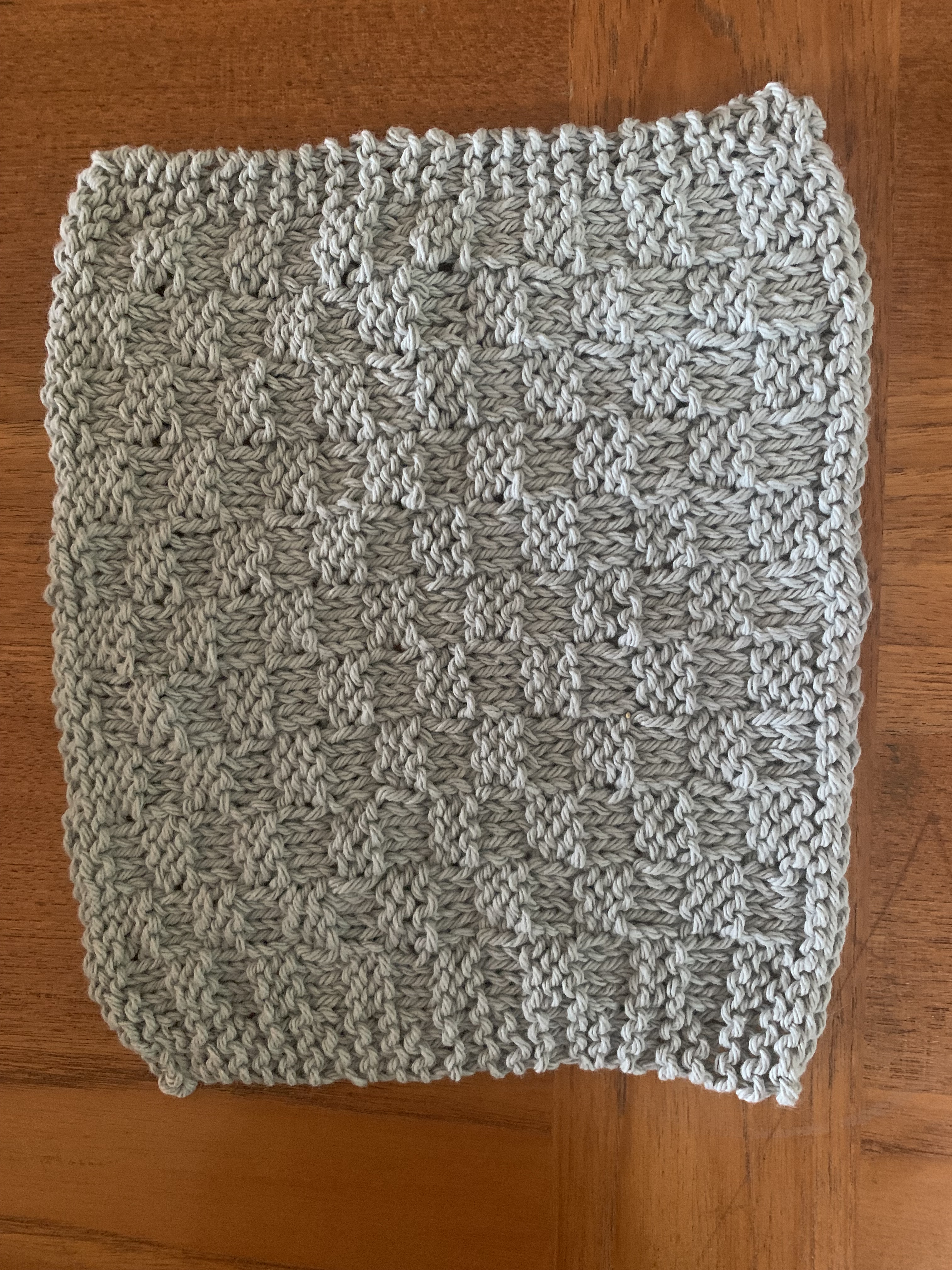
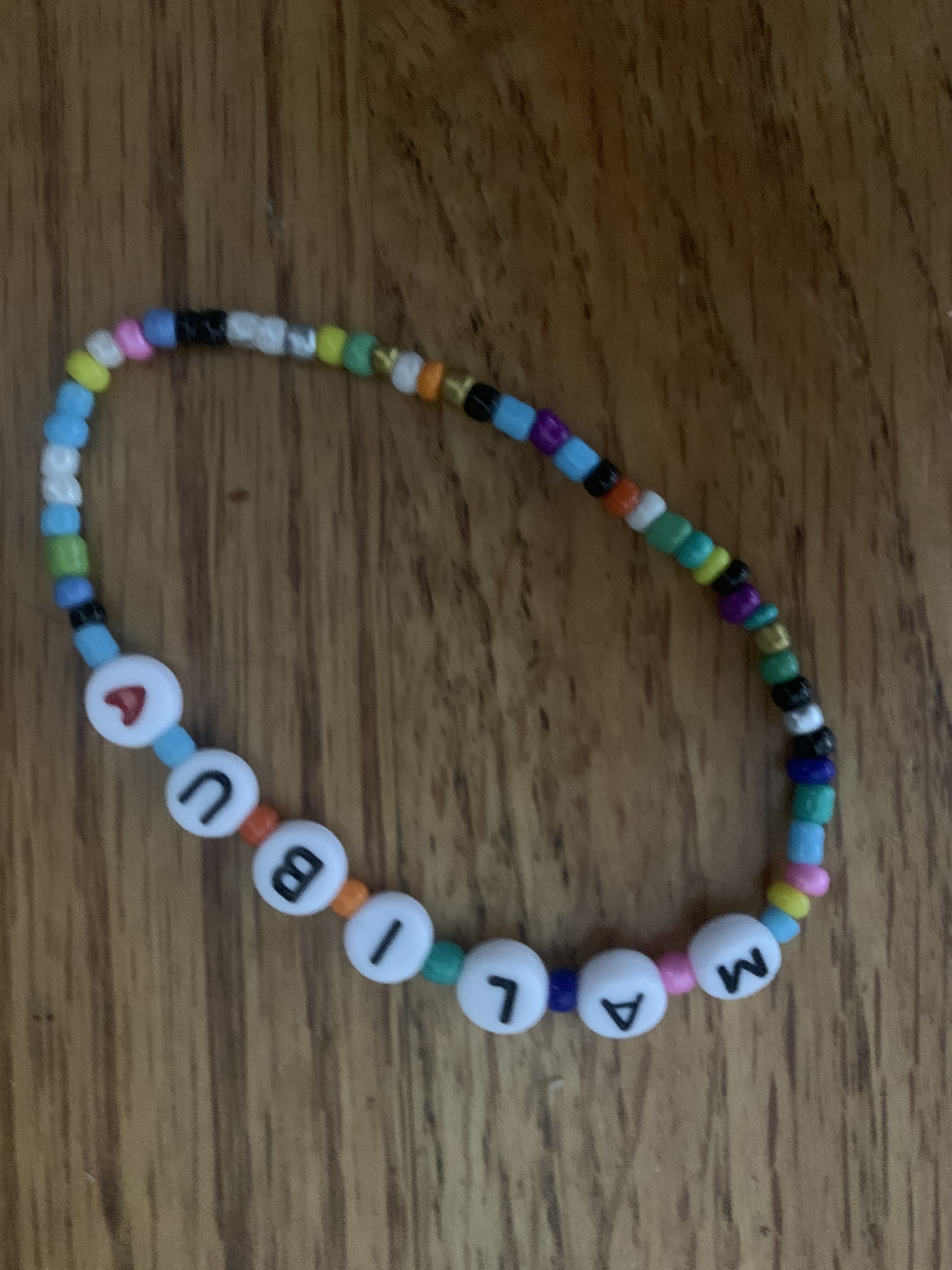
I tell myself it’s not such an expensive gambling habit: $11.00 spent over the past ten days. As you have probably already predicted, the $11.00 yielded mostly junk. Costume jewelry I would never wear. Small glass bowls, silver candles, a MALIBU beaded bracelet: all of these go right into the Goodwill donation bag. But there were a couple of things I liked. A cheesy “love” ring that nestles nicely next to my wedding ring for the time being. Three hand-crocheted dish rags in a shade of grey-green that I love and will use daily. And the priceless frisson of possibility … If I do this too often though—spend too much money on “grab bags”—I get disgusted with myself, like a gambler must feel about their addiction.
The thrill of grab bags
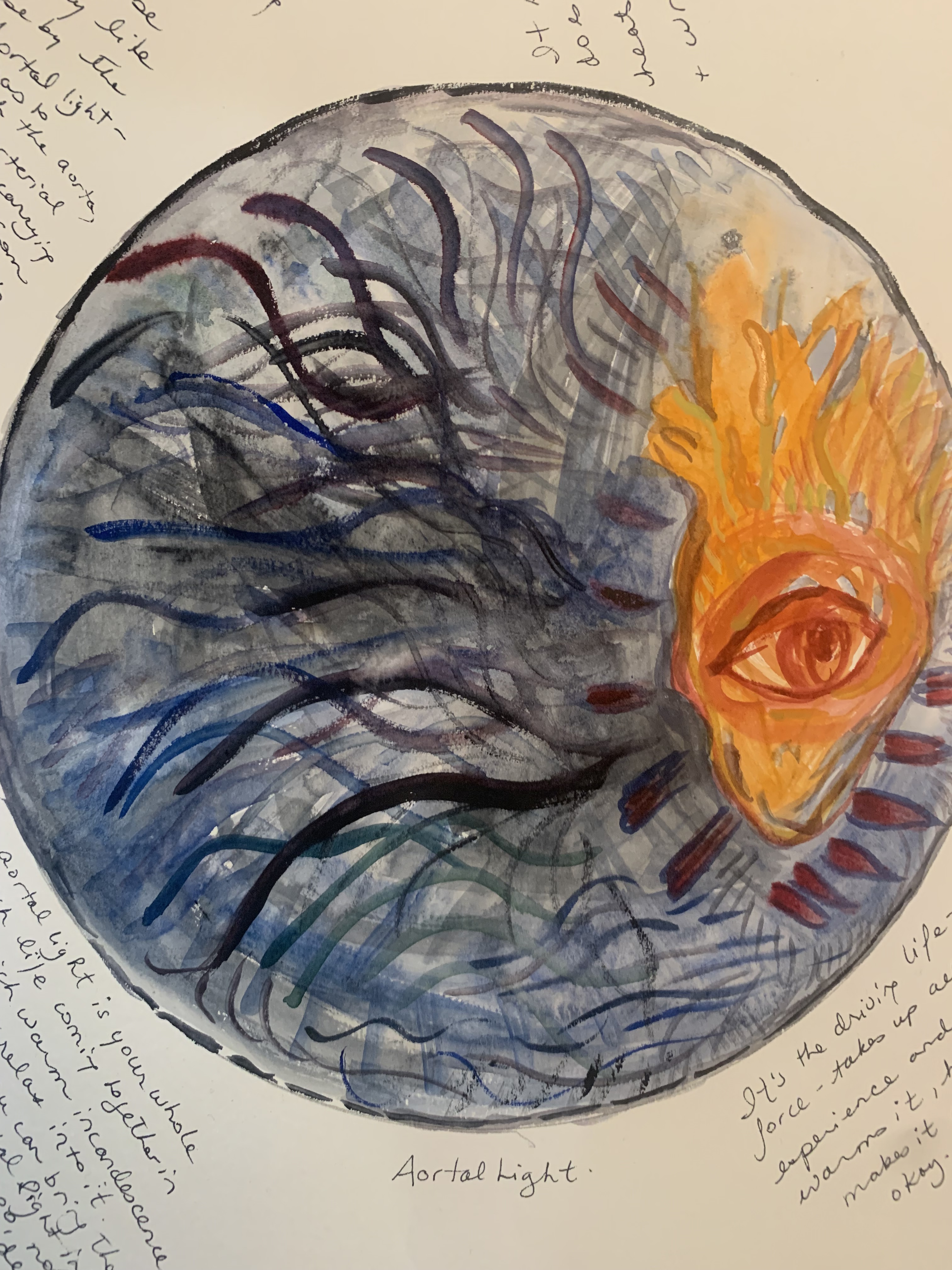
Today, Mandala Monday, I asked Michael to continue with the buffet of randomness. Last time, we each chose a tarot card to inspire us. This time for our mandala-making prompt, I suggested that I would take a book of poems by Mary Oliver and open it anywhere, read the poem, and we would create mandalas in response. Being game to participate in most of my creative ideas, he agreed. I opened to the poem, “White Owl Flies Into and Out of the Field.” Do you know this poem? The huge white owl, wingspan five feet, picks up a rodent from the snowy field and flies off to the frozen marshes to devour it. Oliver imagines the animal’s death in the jaws of the owl as something incandescent, perhaps even pleasurable. Death, she muses, may be entirely unlike the darkness we tend to imagine:
maybe death isn’t darkness, after all, but so much light wrapping itself around us — as soft as feathers —
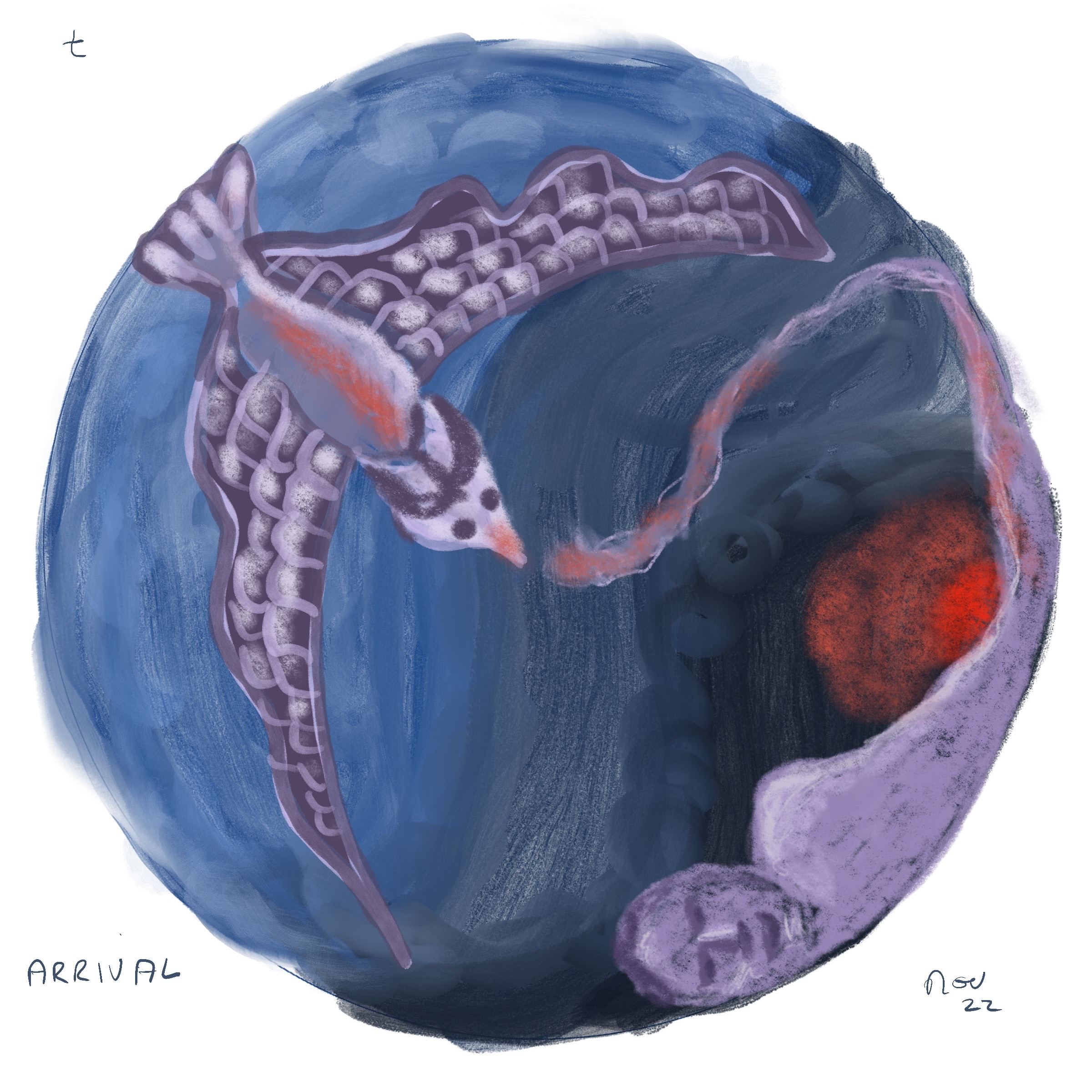
Michael and I sat across from each other at the dining room table, he with his IPad and I with old watercolours and a piece of heavy paper I’d traced a plate on. The songs from Leonard Cohen’s Old Ideas album surrounded us. We worked for a time. I sloshed paint and Michael used his magic wand. I persist in thinking of making digital art on an iPad as something otherworldly, technology out of my reach, which isn’t at all true. However, more and more, I recognize the ways I deceive myself, all of the little lies I tell to keep my life comfortable.
I like to mop up watery colour with an old rag, feel the wet paper under my palm, scrape at the bottom of the indigo blue with my brush, feel that I am using up every last bit of paint. The embodied experience of artmaking.
I got stuck on a phrase near the end of the poem, “aortal light.” Adjective + noun. Aortal – from aorta, the great arterial trunk that carries blood from the heart to be distributed by branch arteries through the body. I imagined aortal light as a lantern that pulses like a heart, sees all with a glowing eye. Warmth and insight at the end of life.
I fell in love with Michael’s “Arrival.” After creating hundreds of mandalas, he has developed a quick entry into the thriving, visceral archive of his subconscious. His images are evocative, and today both the image and the act of creation visibly disturbed him. I was riveted by the words he read to me after we’ve finished painting and writing. His honest expression of troubled feelings about the mandala—his fear of death—they scalded me. Would that I could be so honest! I like to think I won’t be scared when I am dying. I may be deceiving myself again.
Oliver writes, we “let ourselves be carried, as through the translucence of mica, to the river that is without the least dapple or shadow — that is nothing but light — scalding, aortal light — in which we are washed and washed out of our bones.”
Choosing the random means taking a chance. Please, big “S” Self, let me take more chances in this life. Not just by grabbing toonie bags and reading random poems—please let me take a chance in being honest, vulnerable.
“Human beings are creatures of belonging, though they may come to that sense of belonging only through long periods of exile and loneliness.”
David Whyte, The Three Marriages: Reimagining Work, Self and Relationship
Ever since I was small, I have felt I don’t belong. As I grow older, I see how this sense of not belonging is linked to black and white thinking: I am excluded either because I am not good enough or because I am superior (“arrogant worm,” as they say in AA). This strain of thought is endemic for alcoholics. To break the spell, it’s crucial to look for similarities not differences when you attend twelve step meetings or, indeed, whenever you feel the sharp edges of polarity creating a sense of distance.
For me and perhaps for you, the isolation resulting from the pandemic has exacerbated loneliness and a sense of exile. Last month I was feeling particularly alone in the sadness that can arise from being a parent. Only in recognizing that many other parents across the world share in this pain did I not feel so alone. Facebook groups and other modes of connecting across space and time are wonderful to bring a sense of “I’m not the only one.” But also useful has been the Buddhist practice of Tonglen, breathing in the thick suffering of others in your predicament and breathing out coolness and healing. This practice connects me with others, but more than that, it dissolves the sense of specialness and exclusion I am prone to. We’re all in this together.
There is another simple practice I have started. I review small events from the perspective of community. This week, for example, I went to an acupuncturist for the first time. She is a gentle young woman named Demi with a river of brown curls running down her back. She made me feel so comfortable and safe as she stuck a dozen needles into my legs, hands, and back. As I laid face down on the warm table in a quiet room, I felt joined with all of the other people suffering sciatica or other pain in their bodies, and I also felt part of a group of people who get acupuncture. I could picture hundreds of us lying on surfaces—floors, grassy fields, dusty streets, tables, beds—and kind practitioners breathing slowly and rhythmically, putting us at ease, as they insert the slim sharp points. I imagine a collective release of endorphins through bodies old and young, fat and slim, smooth and rough. I imagine our relief.
The next day, I suffered from self-doubt about my new editing business—will I get clients? Will people I’ve done work for get back in touch with me? And imposter syndrome: Am I really an editor or just pretending? Perhaps I don’t belong.
Drawing a tarot card, I asked, “What do I need to know right now?” I pulled the Six of Wands, then consulted Joan Bunning’s Learning the Tarot. She writes that “the Six of Wands appears when you have been working hard toward a goal, and success is finally within reach. . . . If you do not feel close to victory now, know that it is on its way provided you are doing all you can to make it happen.” I felt encouraged.
Amazingly, later that day, I received two emails from former clients who wanted me to do work for them. The next day, a new client gave me an update on work that is planned for this summer. And a referral from a colleague I thought would come to nothing yielded another email today asking for my services.
I feel not only encouraged by all of this positive activity, but connected to a community of editors. Yes, I belong. Amazed by the rightness of the card, I feel connected to all those people everywhere who use tarot to help them make sense of life. I can see the decks being shuffled and cut by hands everywhere—brown hands, gnarled hands, arthritic hands, young hands, a hand with a missing finger. . . . We shuffle and cut and draw and learn about ourselves and others, about our Fool’s journey on this Earth.
On Friday, I felt down again, and as I sat in the backyard with my next-door neighbour and we watched the puppies play, I shared a little of my current grief. She popped out of her lawn chair, “I’m going to get my Animal Spirit cards. They’ll help you to feel better.” She came back with the deck and I shuffled and drew. I tried to pull just one, but two cards were stuck together—Elephant and Otter. She read aloud the description of each animal, and a tear rolled down my cheek.
The descriptions felt resonant—the qualities of the unstoppable, gentle, noble elephant and the giddy and joyful otter were combined inside of me. I felt connected to my neighbour then, linked to her through her kindness to me and her willingness to explore beyond the rational self. I feel connected to everybody everywhere who is suffering and uses tools to understand themselves and bring solace: tarot, mandala-making, building sand-castles, creating songs and singing them, writing novels and poems, reading palms, tea-leaf interpretation, or casting the I Ching.
Then on Saturday, I was washing dishes and noticed movement in our back neighbour’s yard. Raccoons? I fetched my binoculars and trained them on a raccoon couple mating—the male straddling the female and biting her neck. Their black bandit masks and long striated fur were crystal clear through the binocs. I was awed. I am part of a community of animals—our bodies are drawn to one another, we mate. I am connected not only to a world of animal lovers, but to a world of lovers of animals. We train our binoculars on birds and lovely beasts of all kinds; we are curious about the natural life we are part of.
Antoine de Saint-Exupéry wrote that “what is essential is invisible to the eye,” and that has been my experience. An (invisible) sense of community is essential to me now more than ever. This week I call forth community in many ways. I call it forth through my pain and suffering. I call it through being a patient of acupuncture. I call it through using tarot and other mystical tools. I call it through imagining myself as a member of overlapping groups: editors, parents, and neighbours. And I call it through membership in a society of homo sapiens and other animals. An invisible sense of belonging keeps me going. I may not be able to touch you but I feel you.





































 Madeline Ruth Walker