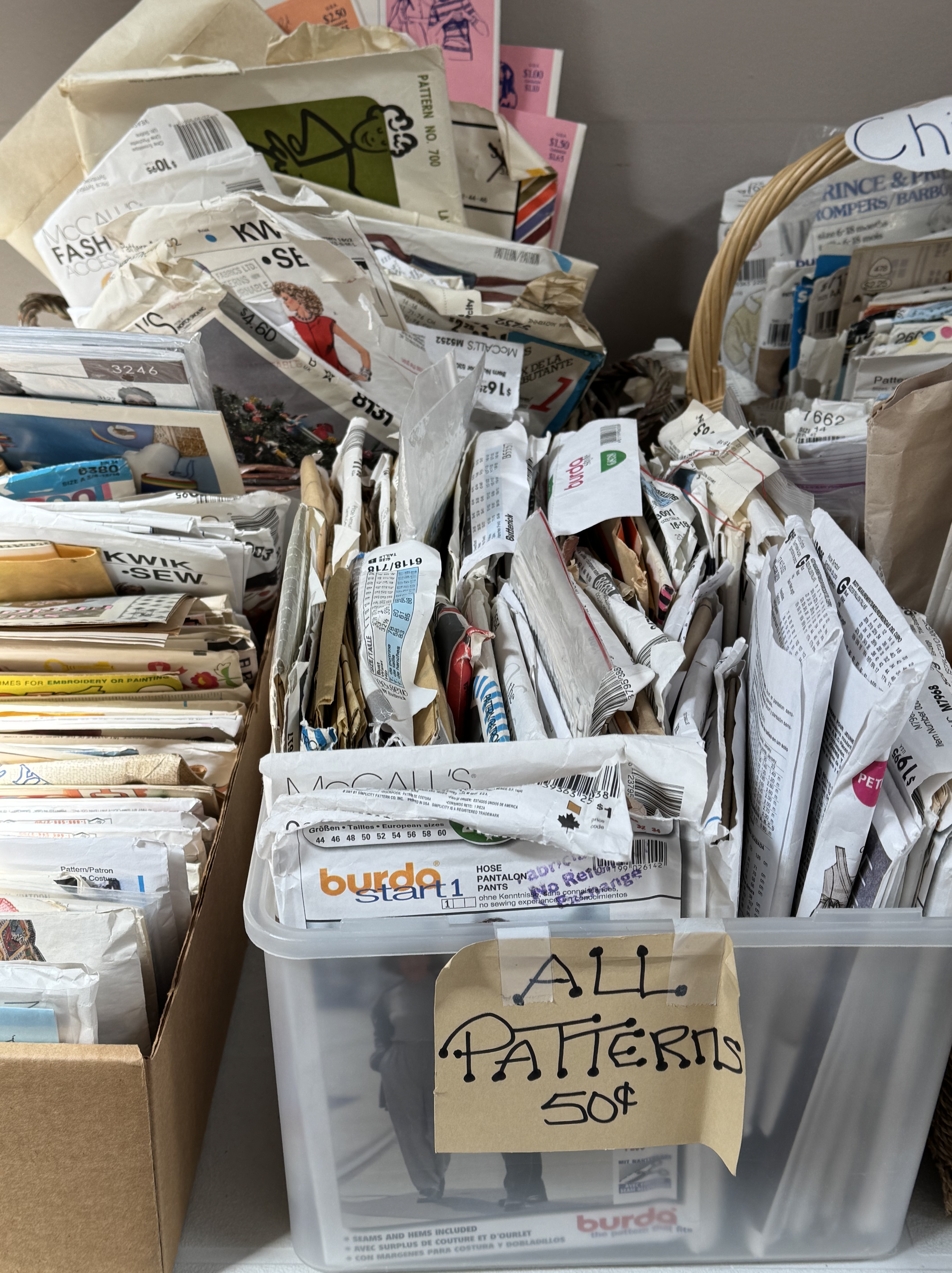
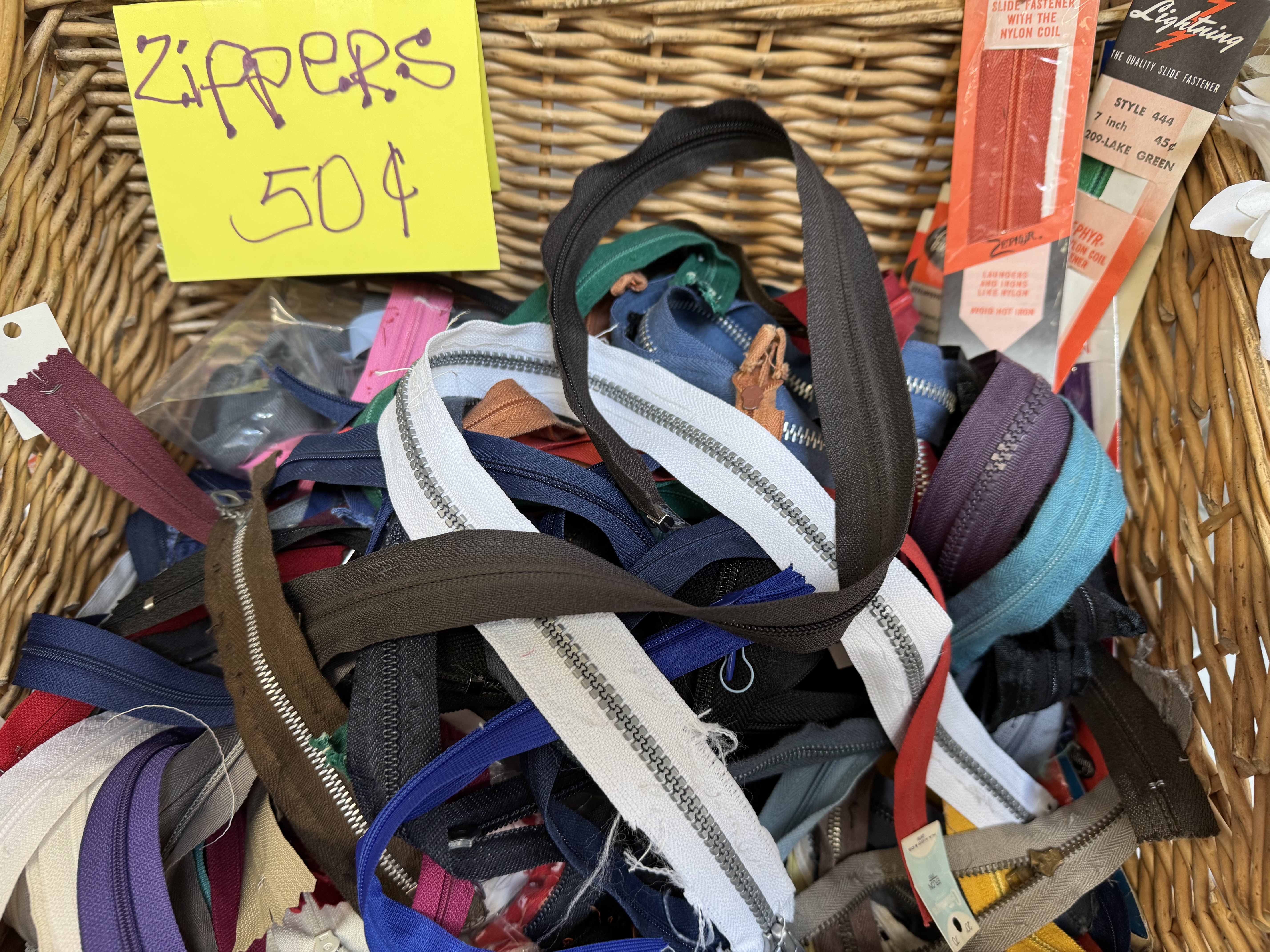
Zippers are fifty cents; Stories are free

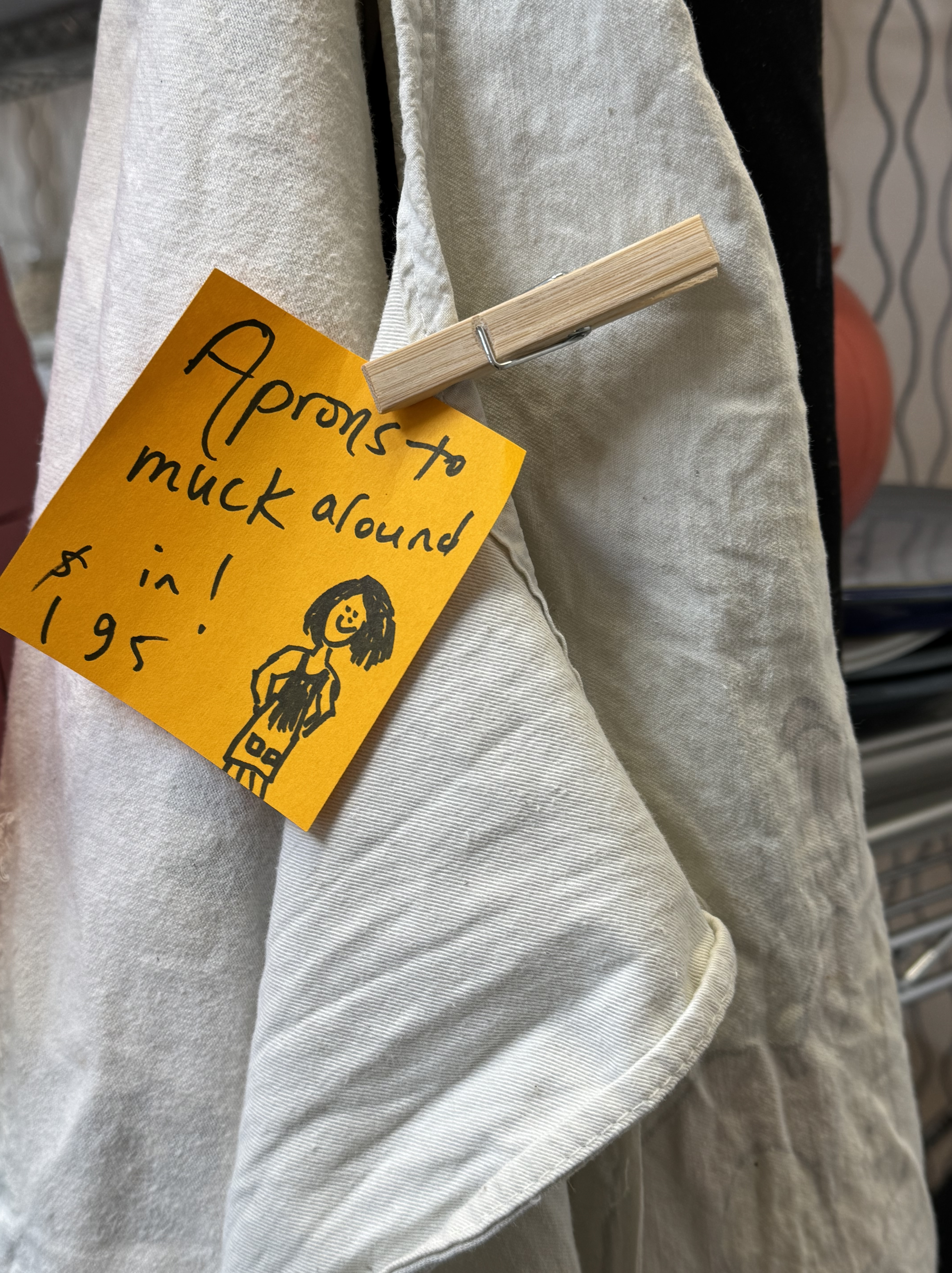
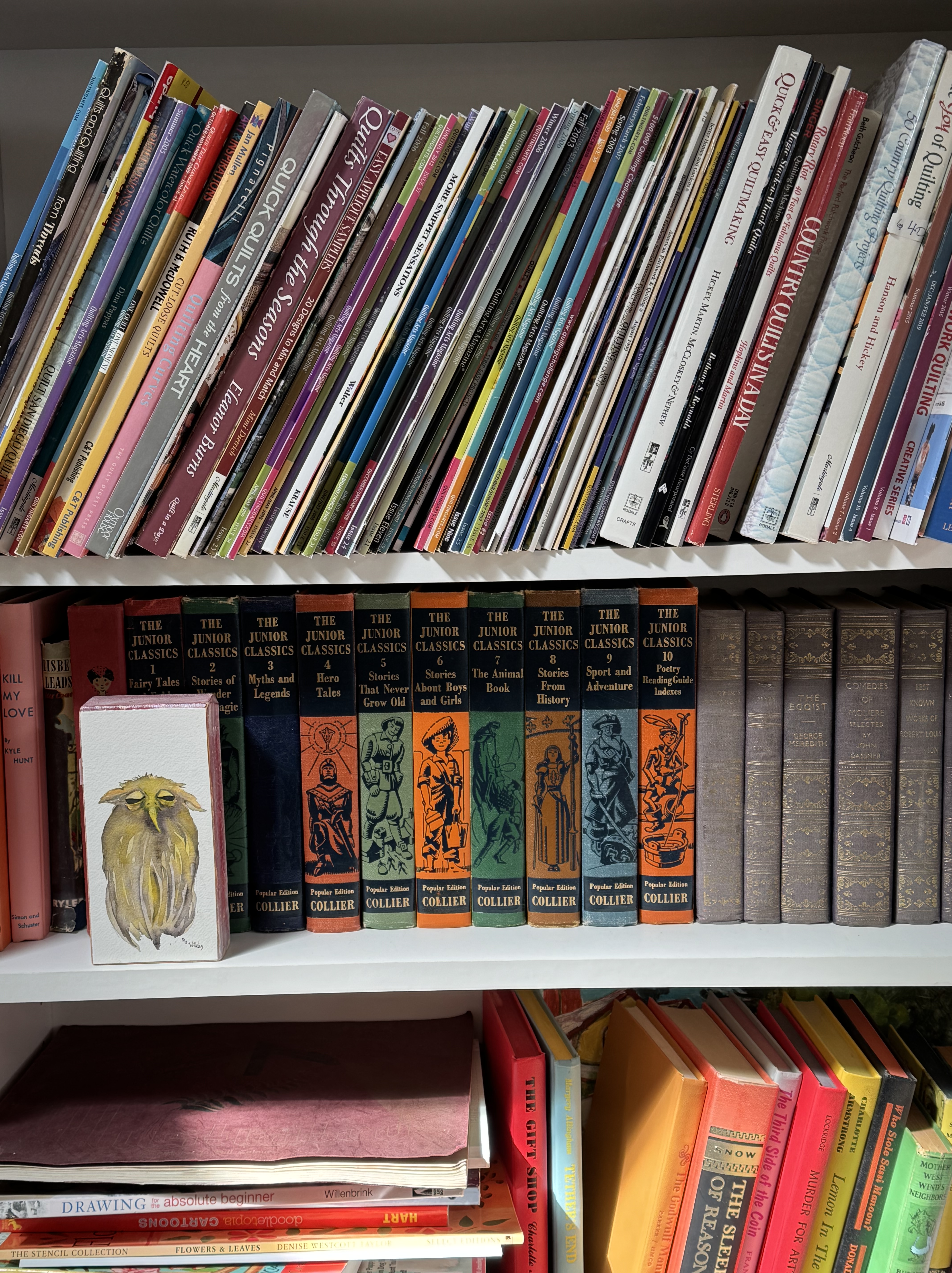
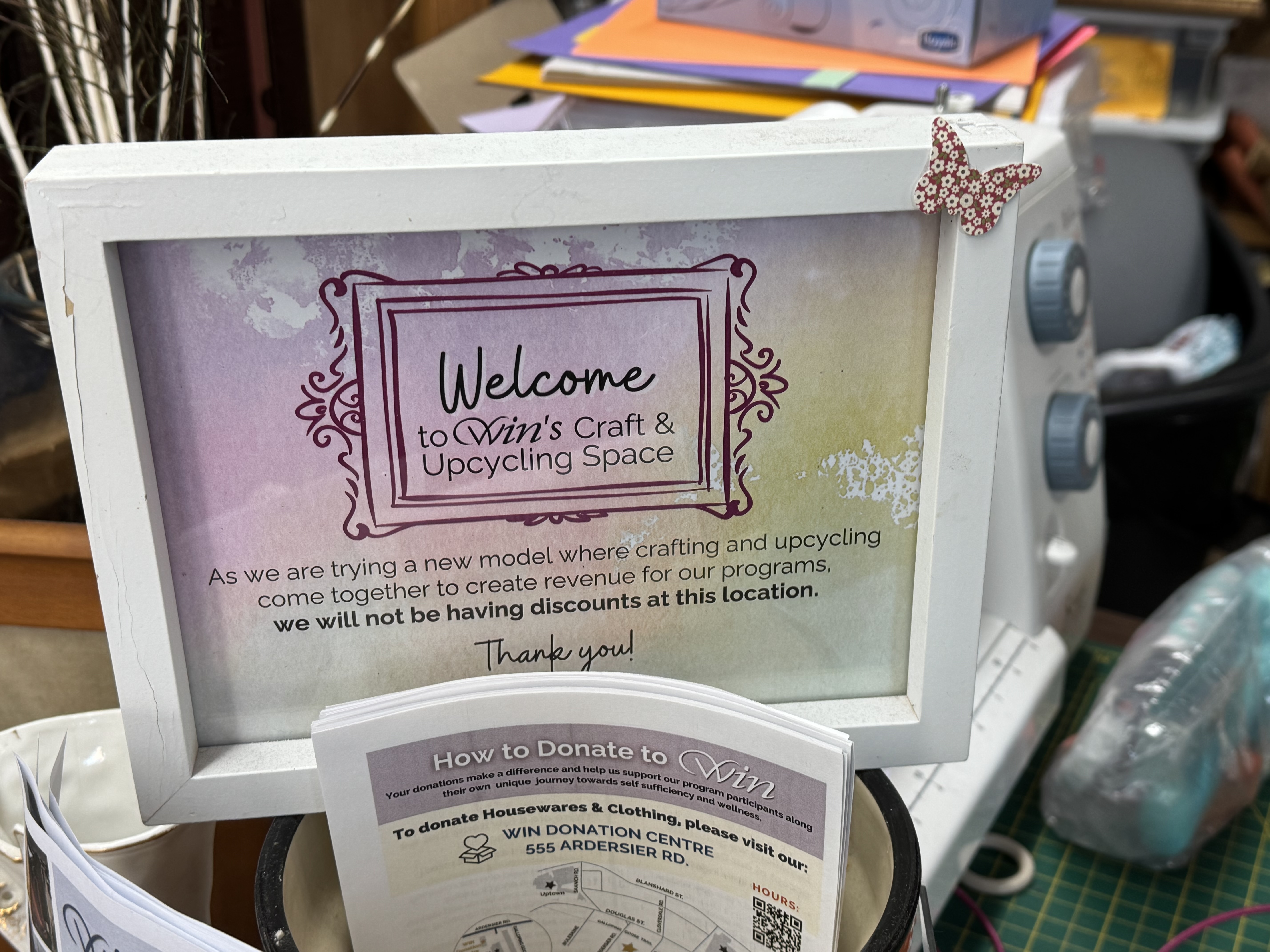
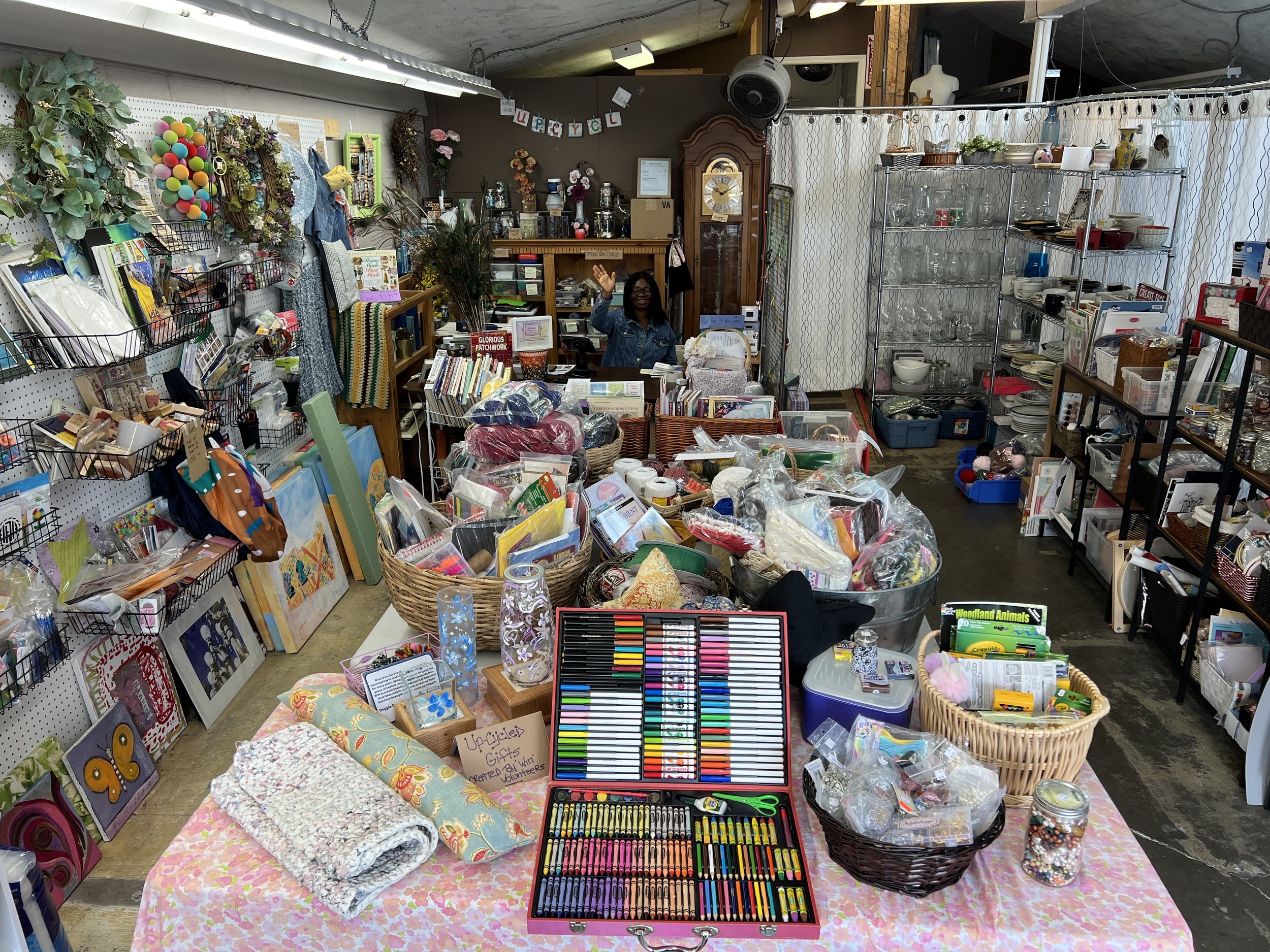
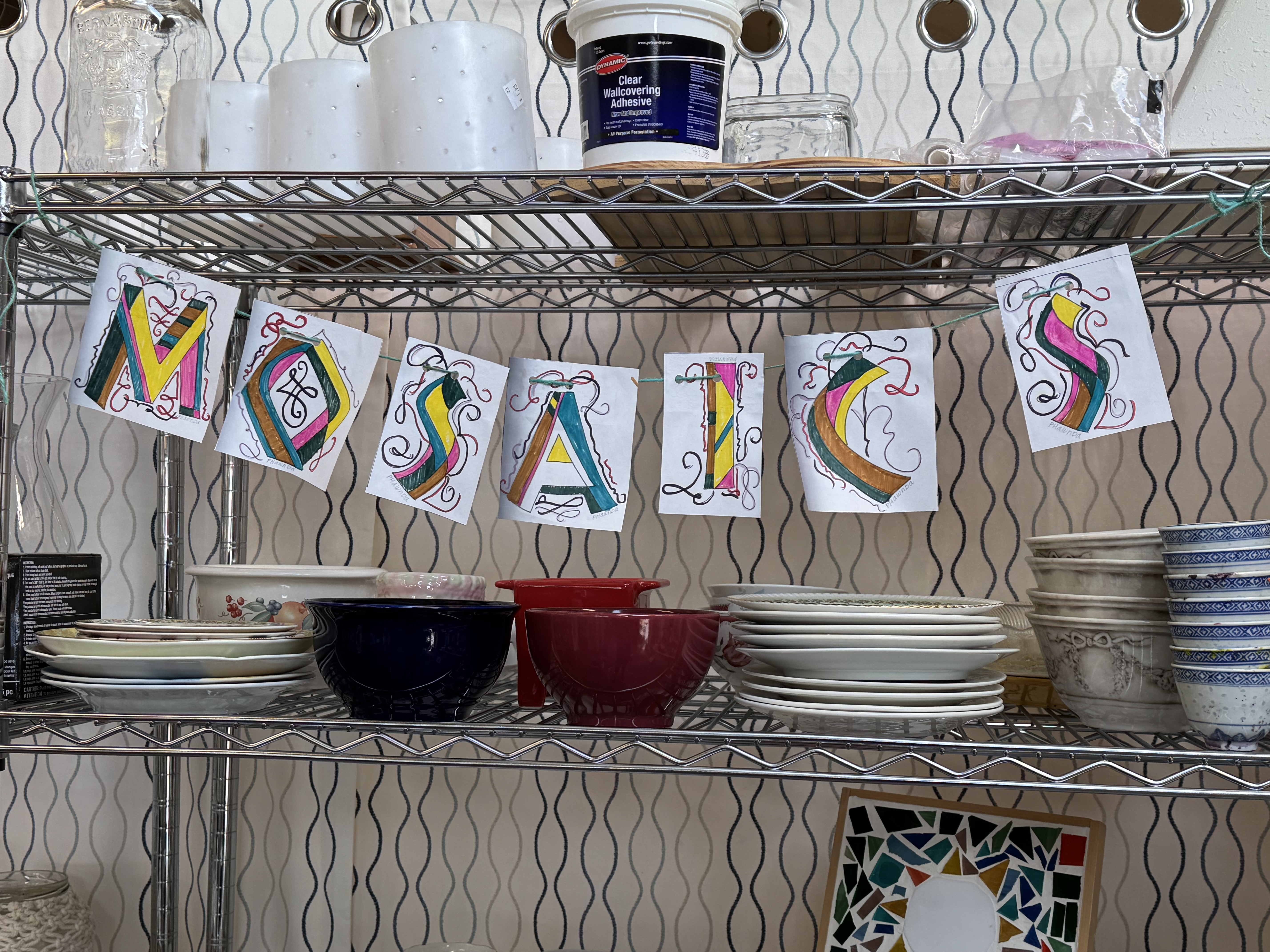
I work a volunteer shift at the upcycle store on Wednesdays. The people that come in delight me, entertain me, astonish me, educate me, soften me. Next week is my last shift at the store. I want to remember some of these people and their stories.

Once a pale man came in and asked if we had a leather hole punch. He didn’t want to buy one, just borrow it so that he could put an additional hole in his belt. He was losing weight, and his pants were hanging on him. Alas, I said, we don’t have one right now. I’m sorry.

I thought about him for weeks, his weight loss, his thinning frame, his sad face. I wondered about his story. Perhaps he was lovesick.

I can no longer untangle my hair
I feed on my own flesh in secret.
Do you want to measure how much I long for you?
Look at my belt, how loose it hangs.

Anonymous, Six Dynasties
Translated from the Chinese by Kenneth Rexroth

As if to balance the sadness of the shrinking man, the joy of meeting Randy bloomed inside of me for weeks. He flounced into the store a few days before Thanksgiving, smelling gloriously of rosemary and thyme. Randy is a contemporary dandy, stained waistcoat and tight jeans, flowing grey hair, phlegmy smoker’s laugh lighting up his brown, creased face. He brought crackling energy into the store with him, along with a small plastic bag of herbs. 

Do you have any Scrabble tiles? he asked. Yes, I handed him two tall mason jars filled with tiles, and as he dug through his pockets for the cash to pay for them, he told me there was always a few Scrabble boards set up on his coffee table. When my friends come over, he said, they add a word or two or three. We play a never-ending game and nobody keeps score.

What a mouth-watering smell! He opened the plastic bag for me to see the long sprigs of green. I picked them at the side of the road, he told me, just around the corner. The herbs were volunteer plants, free for anybody that wanted them. I need sage, I said, for the Thanksgiving turkey. Oh, he said, I think there was sage growing as well. We smiled and said our goodbyes. An hour later he was back with three sprigs of sage he had picked for me and my turkey. 

When I asked a young fellow what he was planning to make with the feathers he was buying, he challenged me: Guess. A headdress? No, good guess, but I am making flies for fly fishing, something his dad taught him to do. He fishes for cutthroat trout under the Bay Bridge with a bunch of female fishers who’d turned him on to it. I never knew!

Last week, a woman came in and poked into the baskets of wool, humming a tune. I noticed her tone—it was strong and true. You have such a beautiful voice, I said. Why don’t you sing us something? Suddenly, gloriously, she burst into “I’m Called Little Buttercup,” from Gilbert and Sullivan’s HMS Pinafore. Her rich mezzo-soprano filled the store as she strutted down the aisles, outthrust chest, a beautiful dockside vendor in love with the captain. I and another shopper were the lucky audience, mesmerized by a performance delivered among stickers and glue, balls of wool, knitting needles, jars of coloured beads. 

I love hearing about the celebrations people are planning. The woman in her thirties who bought armloads of artificial flowers and a bolt of pale pink draping fabric for the table. She and her siblings had been planning a surprise party for their mother’s sixtieth birthday. She keeps mentioning she’s turning sixty, as if reminding us, said the young woman. She’s worried we’ve forgotten. Little does she know what’s in store! I laughed with her, feeling mudita, imagining the pleasure and wonder of her mother on that day. Surprise! 

Finally, I sold the white canvas tent that was propped in the corner for months. The tent is perfect for children to hide and play in, and a woman bought it for her grandchildren. I told her about the teddy bear’s picnic birthday party I’d thrown for my four-year-old so many Decembers ago. We had a play tent pitched in our living room, and the children and their stuffies enjoyed tea and cake. The woman became excited and touched my shoulder in thanks. What a great idea! I’ve got to do that for my grandson! Then she told me that one Christmas her mother-in-law opened the gift of a vibrator in front of the whole family. I wasn’t sure what prompted the story, but we had a good laugh. Teddy bear picnics and vibrators, all in one afternoon.

There’s a regular customer who brings her baby buggy into the store, speaking softly and playfully to her little boy as she shops. She buys bits of fabric, thread, and zippers. Last week, as she paid for her stuff and her baby chortled and tried to put his toes in his mouth in the buggy beside her, she ran her hand over the camel-brown smocked dress she wore and its complementary quilted vest. I made all of this from an old bedsheet, she said. At times like this, I thought, I wish I could whistle. A good long, low whistle to show my WOW in a visceral way. Instead, I shook my head: You are amazing! Queen of Upcycling!

One day I was emptying out the green donation boxes, pricing and sorting items.  My hand fastened on something soft. A bit of plush grey fur, perhaps once the collar of a stylish coat. Wrapped in thin tissue paper, there was a small tag safety-pinned to the edge: Chinchilla, written in the shaky script of somebody very old. Suddenly, I was back in the furrier’s on Spadina Avenue, sitting cross-legged on the dusty floor, playing with scraps of chinchilla, beaver, spotted lynx. I caressed them one at a time, rubbed them against my cheek. My mother and the furrier stood above me, two voices discussing the racoon coat she’d ordered. What happened to that coat? And why was my mother—a passionate animal lover—buying a custom-made fur coat?  

People stream into the store. Have you got books on stained glass? Do you have leatherwork tools? Ever get pillow inserts? Sometimes I say no, sometimes yes, but other times I’m not sure, and we set out to look together, sifting through the boxes and baskets. Sometimes people cry out in delight when they find just what they were looking for. A particular size of crochet hook, fabric printed with mushrooms, a colouring book of Frida Kahlo drawings. 

Last week, a short bespectacled woman said she had an unusual request: golf balls. She was undergoing physiotherapy for an injured hand and the therapist had told her to squeeze a golf ball. I haven’t seen any golf balls, I said, but I think I can help. I remembered that morning finding a bag of large wooden beads strung onto a white shoelace. I thought of a small child or a very old person practicing fine motor skills, threading each bead onto the end of the lace. I found the bag and fished out three of the beads. They were about the size of golf balls. Will this do?  I asked as I slipped them into her cupped hands. They’re perfect! And we agreed that they were much nicer to handle, a globe of burnished brown wood rather than a cold, plastic golf ball. 

At the end of every shift, as I cash out, sweep the cement floor, turn off the heat and lights, lock the door, I feel full of the people I’ve met, the stories I’ve heard. 
Full Time, A Short Story

Last year, Benji was hit by a car. He was Alma’s last cat of the dozen that graced her long life. I heard the thud as I sat sewing at the bay window. When I looked up, Benji lay crumpled on the street and no car in sight. Some asshole hit him and drove off. I threw down my sewing and ran into the street, grabbing my shawl on the way. He was still alive, making a peculiar huffing noise, blood trickling from his jaw that looked all crooked. 

Oh no, this will destroy Alma. I scooped his light body up from the pavement and cradled him in the shawl. When I knocked at Alma’s door, it took a while for her to open it. Her eyesight wasn’t the best, so at first, I think she thought I was bringing her a loaf of my sourdough, wrapped in a kitchen towel. But soon she realized what was in my arms and began to cry.

Alma, we’ll can take him to Peter right away. Our healer Peter lives in a cottage just around the corner. Get in my sidecar, I told her, and I’ll hand Benji to you. Her crying had evolved into low keening. I dropped her purple cape over her shoulders, and she slipped on her sandals. I opened the door of the sidecar attached to my bike, and she slid into the seat, creakily, and held her arms open as if to take a baby. Benji was her baby—a cat she’d coddled and loved since he was a feral kitten, discovered in the old shed behind my cottage with three litter mates. We figured the mother had been killed by a car or racoon. The kittens were starving. We found homes for them, all but one. Alma had been without a cat for almost a year then, and when she saw little squirming Benji, she said she had to have him. Or he had to have her. 

She fed him with an eyedropper for weeks and carried him close to her warm, wrinkled breast in a sling she asked me to sew for her. I made the sling with indigo cloth I had left over after making Peter’s shirt. Alma was a sight to behold, walking slowly to the corner store with her shopping cart, the sling around her front, a tiny feline face peeping from the folds of blue cloth. 

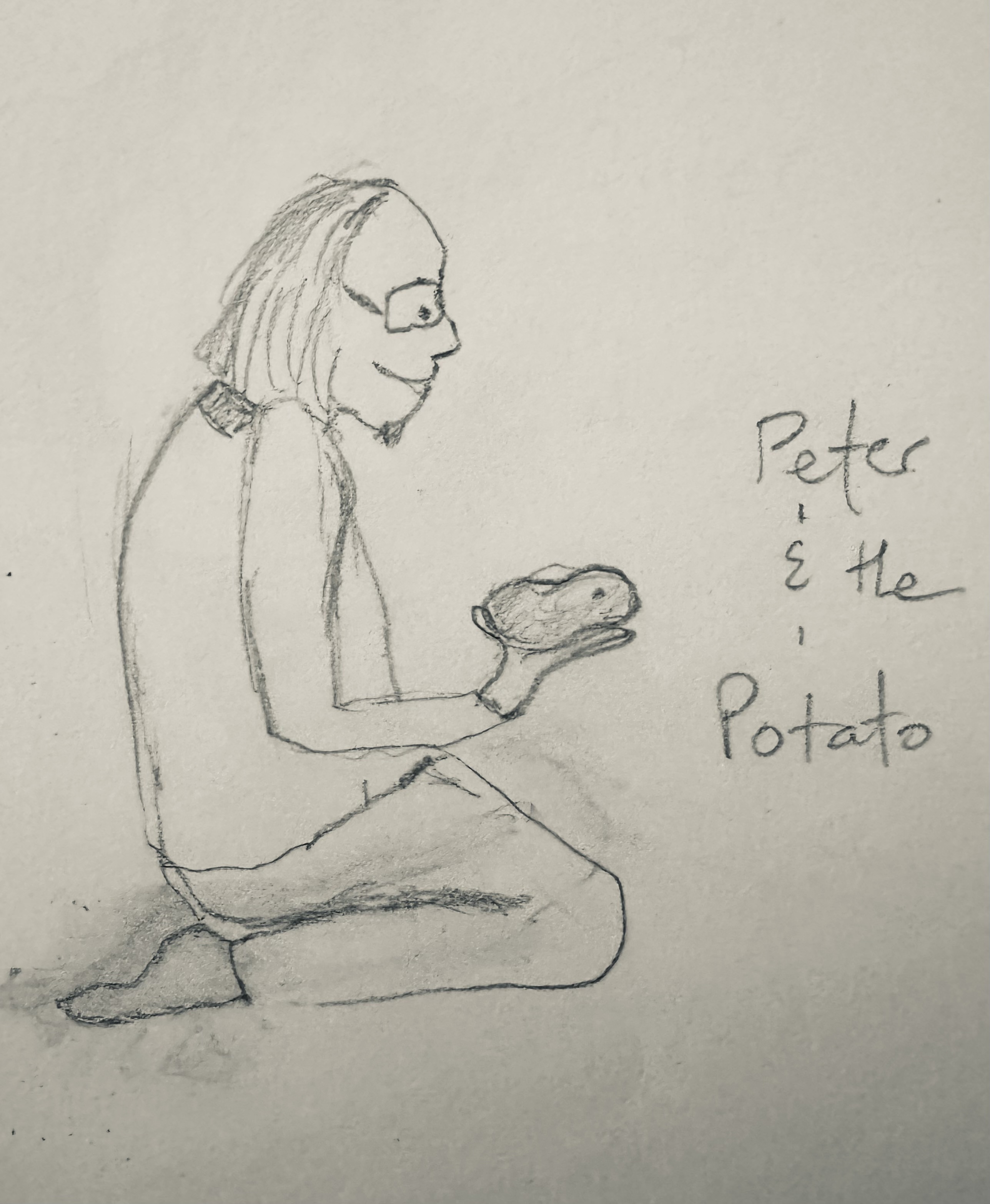
Oh Benji, Benji. Out of my peripheral vision, I could see Alma bent deep over his little body as I pumped the bike, swooshing down the road and around the corner. It took us only a minute to get to Peter’s. We knocked on the door, no answer, so I figured he was in the garden. We trod the narrow path beside the cottage. His back was to us as he sat on his haunches, examining a potato he had just dug from the soil. I looked fondly at the blue indigo cloth straining across the breadth of his back, a breadth of skin and warm muscle I had run my hands over just last night. My knees trembled with desire as I approached him with Benji now in my arms, Alma hobbling behind me. 

An hour later, we sat in Peter’s front room on low velvet couches, drinking jasmine tea. Alma was holding a lifeless Benji in her lap. Peter had determined the injuries too severe to save him, so he’d administered a lethal drug in a long needle while Alma stroked the fur, matted with blood. Now, Benji looked so peaceful, curled up in my red wool shawl, Alma’s hand under his little skull. 

Neither love nor money will persuade me to ever get another cat, Alma said, her voice soft and sad. She’d stretched her stick-thin legs out before her. Alma liked to wear sandals most of the year, except when it snowed, liked her feet to feel the air, and today I could see her thick greenish toenails and large bunions up close. She was terribly old.

Peter heaved a great sigh. Benji was a fine cat, he said. We had all loved Benji’s antics. He’d dance like Baryshnikov, trying to swat the clouds of gnats that floated above the garden beds in summer. His meow was a sweet question mark, meaow? And if you were lucky enough to hold him in your lap, you were blessed with a vibrational purr that set your thighs buzzing. A deep warmth and contentment emanated from his slight, stripey body. We all loved Benji. 

Peter sighed again, shaking his head at the loss. We came to Peter with our sick and injured pets and even, sometimes, with our own ailments. His stinging nettle tonic has reduced my hay fever. His black cohosh tea has helped women all over our neighbourhood with menopause. Peter is not just a skilled herbalist. His magic hands can make me come just by stroking my breasts.

Several weeks after Benji died, a sunny June Saturday, I was at a yard sale with Alma. On summer weekends, Alma and I did the yard sale circuit together on my bike. I pedaled, and she rode sidecar. She has a thing for small dishes, tiny saucers and bowls, sized for fairies. I like to collect children’s books. I don’t have children, and I never will have. I’m fifty this year, but nonetheless I’m charmed by simple stories and illustrations. I would rather read three or four children’s books to myself at bedtime than a novel filled with crime, sex, mystery, and drama. 

A book caught my eye, titled Part-time Dog. I opened the cover to the copyright page to check the publication year, 1965. I always do that first because I prefer old books. They provide the most comfort. I bought it, along with several others, two dollars for the lot. Alma found a gold rimmed bowl decorated with an image of two goldfish. Later, we had dinner at my place—a big salad and thick slices of my sourdough. After dinner I gave Alma a framed photograph of Benji dancing in the garden that I’d taken the year before. I’d caught him with both paws in the air, his golden eyes glittering with excitement. One small foot was off the ground as he leapt. The sun played over his orange and brown stripes, and the patch of white on his face made him look almost human. When Alma saw it, tears rolled down her wrinkly face. I moved next to her on the couch and put my arm around her. Not for the first time, Alma said that neither love nor money would persuade her to get another cat. Benji was the best and the last.  

That night after Alma left, Peter slipped in my back door, and we made love silently. Through the open window, we heard whoo-hoo from the owl in the tall pine. I felt us smile in unison. What if this life was an illusion? What if I were a character in a children’s story about a happy seamstress and her herbalist? After Peter left, I lay in my narrow bed with the stack of new-to-me children’s books on the bedside table. Part-time Dog was on top, so I started with that.  

Brownie is a small stray dog who shows up in the neighbourhood. He starts walking with the children to school, accompanies Mrs. Butterworth to the bank and watches Mrs. Tweedy rake the leaves in her yard. But he has no home, nowhere to go at night, so he sleeps under someone’s porch. Three women in the neighbourhood decide to adopt Brownie. It would be too much work for one of them to have him all the time. So, one gives him breakfast and keeps him in the morning, one has him in the afternoon and gives him his dinner, and another has Brownie every night, where he sleeps in his warm bed, safe and sound. I liked the book so much, I read it again, then fell asleep, dreaming of a little brown dog curled up at my feet. 
In September, Peter noticed a white cat in his garden, sleeping on a warm stone, and he scratched her chin and stroked her, gave her some salmon he was cooking for lunch, and then asked around the neighbourhood. Nobody knew anything about her. She was a short-haired female with one blue eye and one golden, and he named her Nia. Peter worried he’d be taking her from her family, but still, nobody claimed her. 

She claimed us, wandering back and forth from my cottage to Peter’s. When Peter gardened, she stayed close to his side, and when I sewed, she spread out on the table next to me, her purr matching the vibration of the sewing machine. And though Alma said she’d not have another cat for love nor money, there were many nights when Nia wandered into her cottage and curled up on her bed.

Christmas was simple and good. Alma, Peter, and Nia came to my cottage. We had a stew made with pumpkin from the garden and my sourdough bread. For dessert, Peter brought an apple cranberry pie he’d baked. We walked Alma home, then we went to Peter’s cottage because his bed is bigger than mine. I stayed all night.  When I got up, Nia was nowhere to be found. After we drank our coffee, Peter went and called for the cat, but she didn’t come running, her white tail twitching and her little bell tinkling, as she usually did. Frost painted the windows white, and a crust of ice capped the blue bowl of water we kept outside for her. We went to my cottage next, but Nia wasn’t there. At Alma’s, we knocked at the door. No answer, so Peter opened it gingerly, and we called through. Silence. We walked to the back, to Alma’s bedroom, where she lay peacefully, her long white hair flowing out around her across the dark pillowcase, eyes closed in her wrinkled brown face. We knew her life was over. Nia lay at Alma’s feet, purring deep and low. 

Later when we cleaned Alma’s cottage and found a copy of her last will and testament, we discovered she’d left the cottage to both of us. When Peter asked me to marry him in the spring, I said yes, you make me happy. But there’s one condition. Let’s keep things as they are. 

We sleep sometimes at my place, sometimes at Peter’s, and other times at Alma’s. We kept things the same. The blue sling that kept Benji close to Alma’s chest hangs on the hook near the door, the framed photograph of him on the living room wall. The tiny dishes, neatly arranged, are displayed the way Alma liked them, on open shelves in the kitchen. Nia wanders from one cottage to the other to the other. She knows that food, water, and love are everywhere.

Note: Part-time Dog is a book I read to my children by Jane Thayer, pictures by Seymour Fleishman

Becoming intimate with carnations and truth

In mid-December, I bought a green glass jug in a second-hand store, half price. My aspiration was to make a beautiful winter bouquet for my friend, Lillian. I bought a bunch of silver dollar eucalyptus and two dozen white carnations. I envisioned white wintry bursts among the silvery green, but the more I trimmed and mixed the carnations with the stems of eucalyptus, the sillier and more incoherent it looked. I took basic Ikebana but still haven’t a clue how to make flowers and plants look good. 

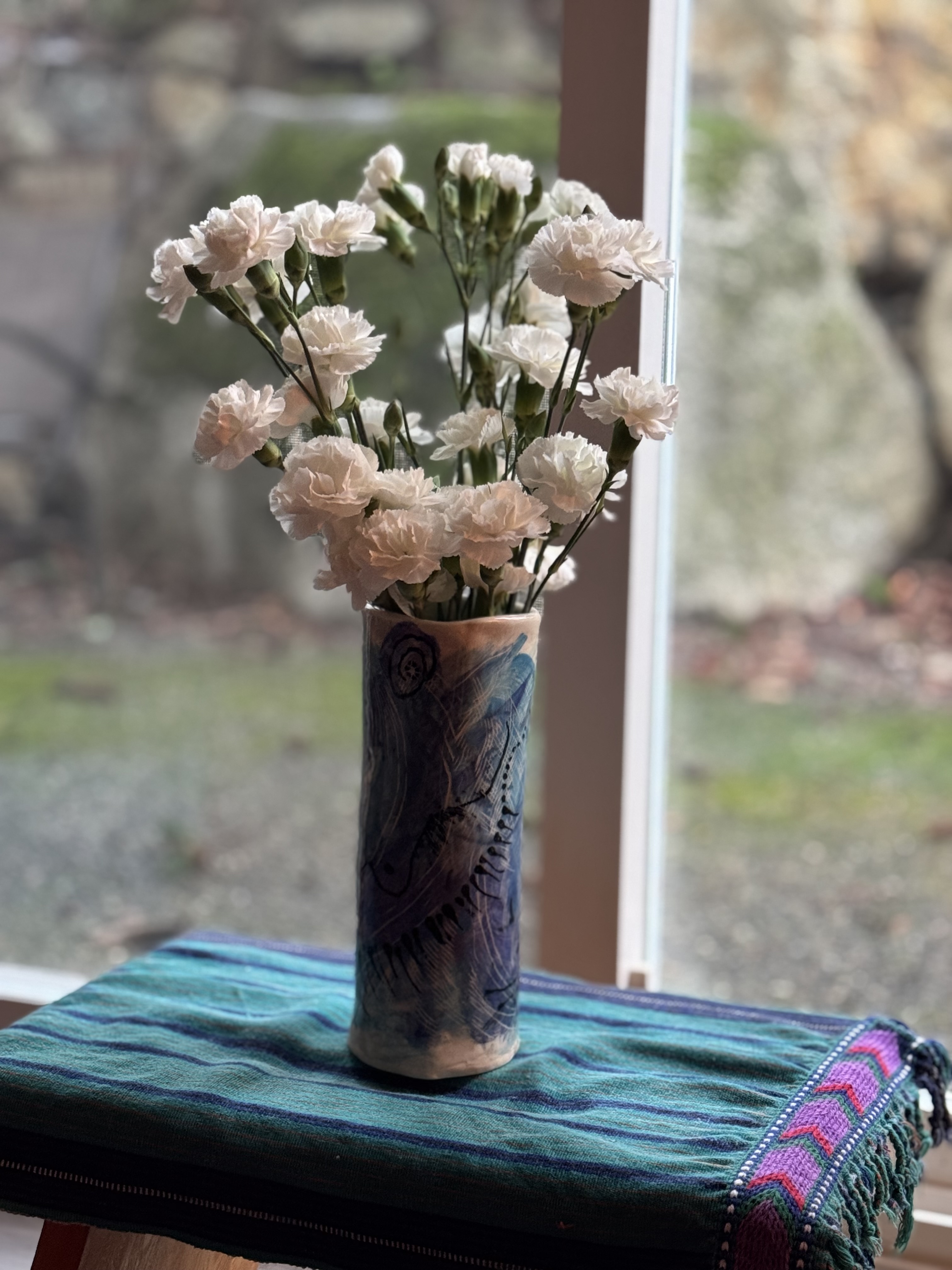
Finally, I used only the eucalyptus, splayed out in a free-fall arrangement. I attached a few small, red shiny balls to the stems, and the effect, I hope, was Christmassy and charming, if a bit messy. Lillian said she loved it. (But what could she say, really?) I was going to throw out the unused carnations, but it seemed such a waste, so I put them in a white and blue vase and placed it in my study on a low stool covered with a blue-green cloth. 

I don’t like carnations, or I didn’t think that I did. I’ve seen too many sad, slender bunches wrapped in cellophane at the mini-mart next to the hospital. They make me think of last-minute purchases for the death bed, cheap flowers that outlive the person you visited. They seem so tight, orthodox, banal. Whorls of perfect, serrated petals, every bloom the same.

But they’ve grown on me. As I spend hours in their presence, they’ve become real. You could say I’ve become intimate with them. I sit here now, the last day of the year, gazing at their fresh ordinariness. The carnation is the sturdy, faithful flower that will see you through. Perhaps they are flower of the year: commonplace as canned milk. Carnations are one-foot-in-front-of-the-other flowers. Quotidian flowers. Bread-and-butter blooms. See you through the hardest times. Last for weeks. Nothing special. 

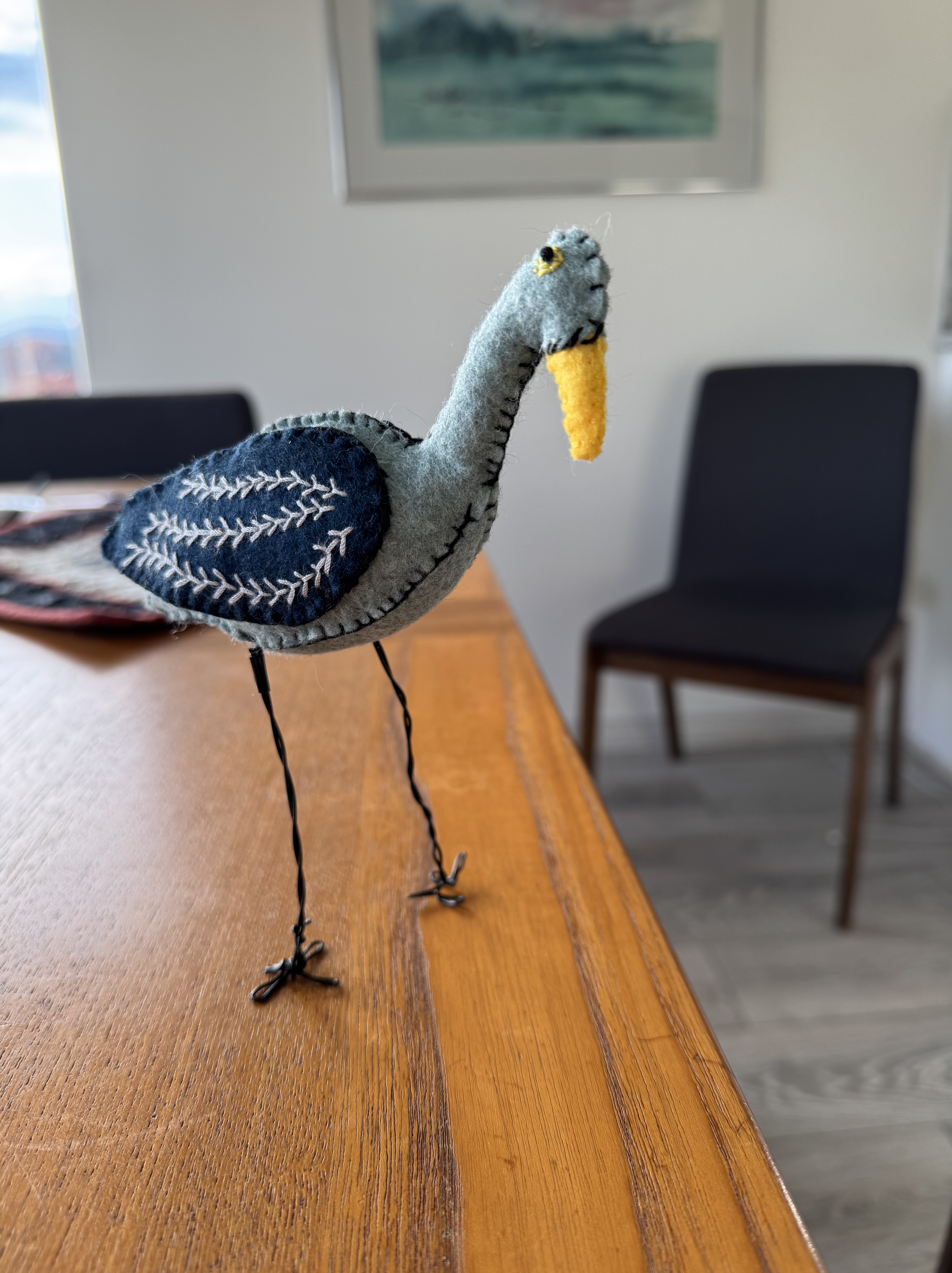
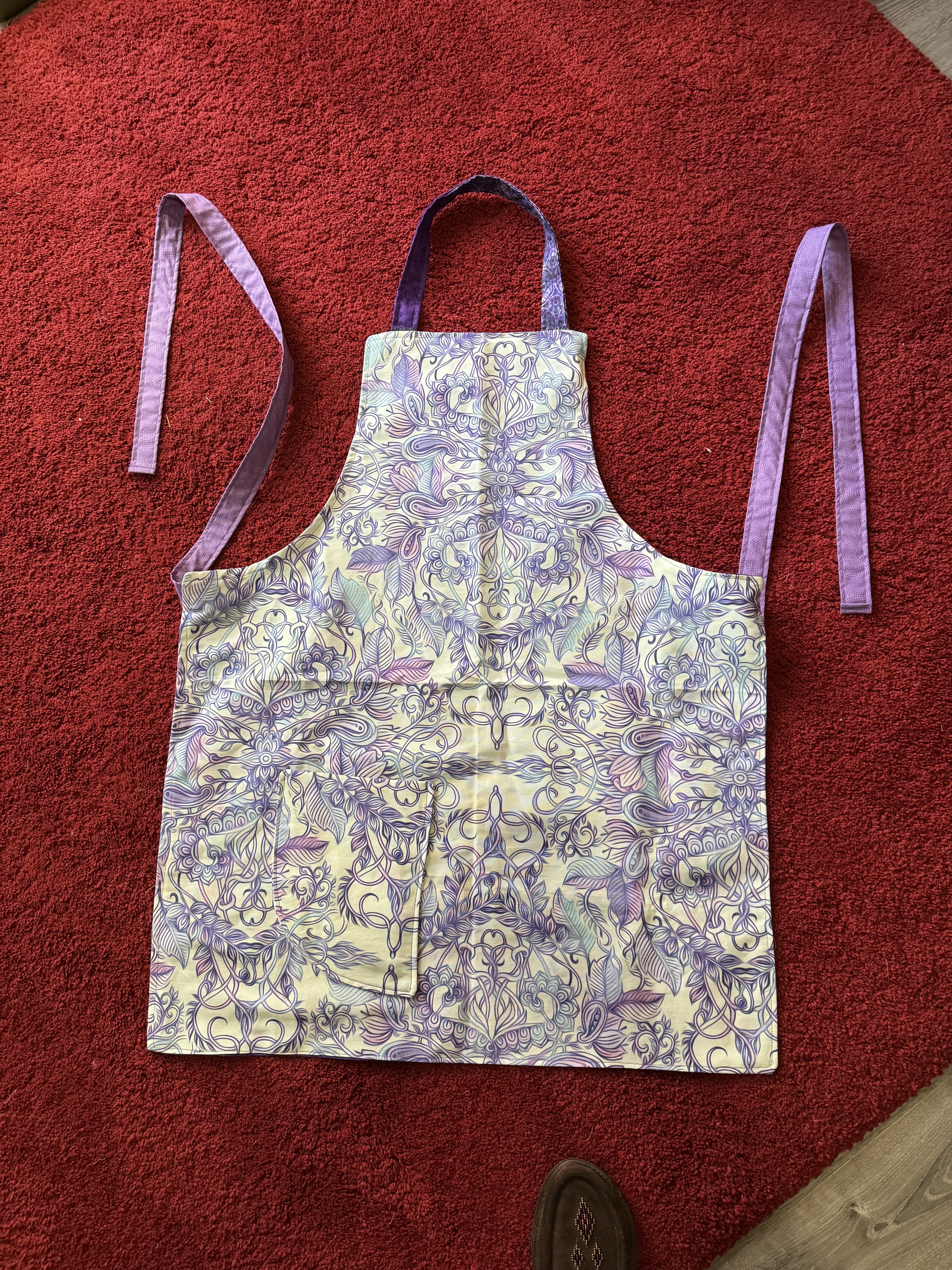
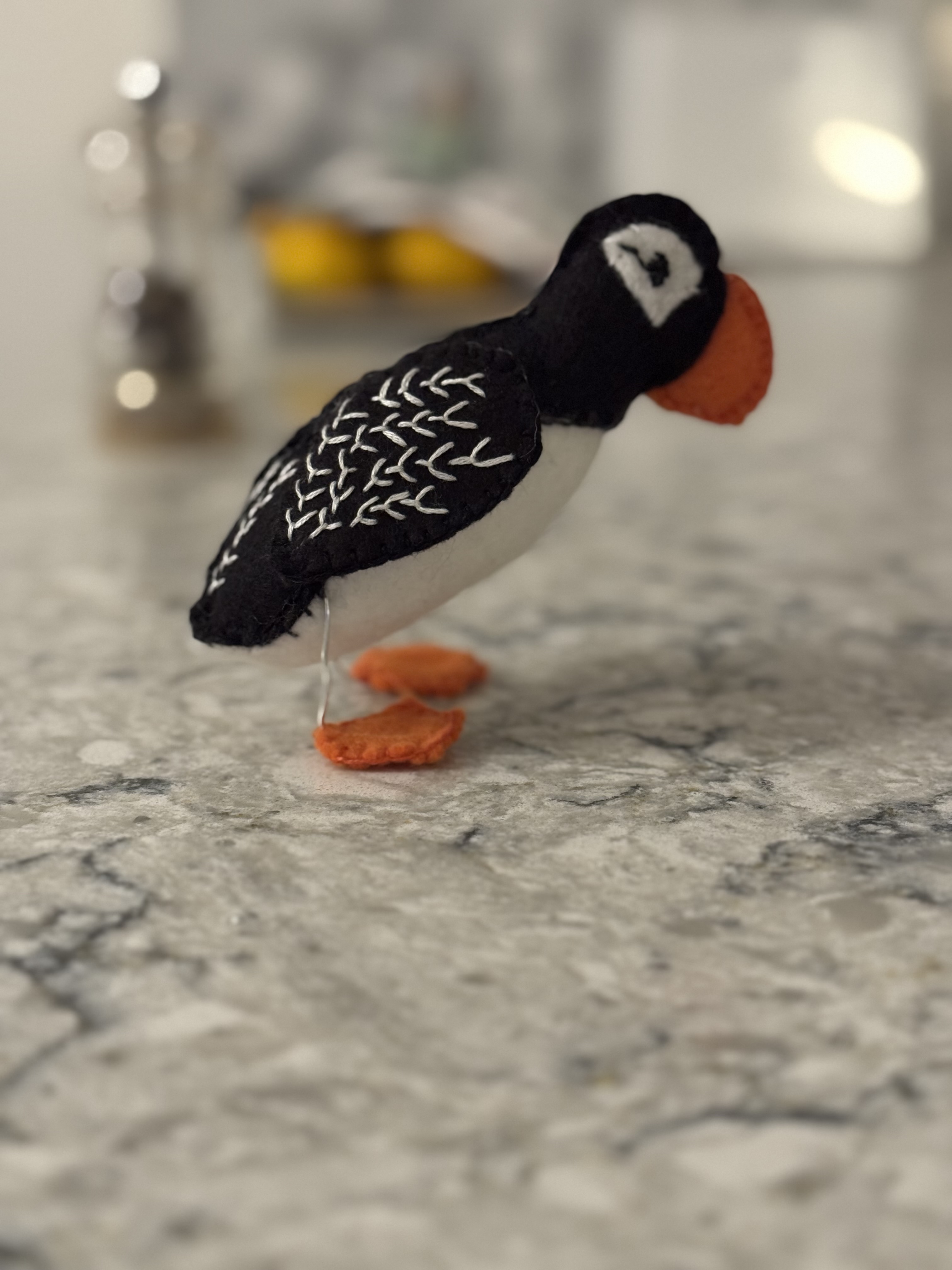
Although 2024 was my first year of so-called retirement, and thus I was given twenty additional hours each week, I wrote less, and I sewed less. (A few felt birds for family and other little felt creations, an apron, a crib quilt start, a fur-lined bag.) I did finish an editing certificate I started in 2020, which is a relief. And I made a lovely new friend and deepened existing friendships. I started a volunteer gig at a non-profit arts and crafts shop in August that has led to meeting many interesting people. Bonus: I get to surround myself with a messy profusion of materials that inspire me. 

This year, I listened to probably one hundred dharma talks on Dharma Seed, with a broad aspiration of becoming more intimate with life—accepting whatever’s happening in my heart, whatever’s happening in the world. Making friends with wild mind. Accepting the truth of the way things are.

I read so many books this year. A couple that stick with me are Rebecca Solnit’s memoir, Recollections of My Nonexistence and The Age of Loneliness, a book of essays about life during the sixth extinction by Laura Marris. 

Solnit writes a lot about being a woman. That’s what her title gestures toward—the peculiar “nonexistence” of being female in a patriarchy (remember mansplaining? She is behind that neologism[i]). She draws on John Berger’s 1972 Ways of Seeing, which I’ve known about for years and now am determined to read. She quotes words from him that jibe with my experience: “To be born a woman has been to be born, within an allotted and confined space, into the keeping of men. The social presence of women has developed as a result of their ingenuity in living under such tutelage with such a limited space. But this has been at the cost of a woman’s self being split into two.” 

Perhaps that sounds dramatic in the Global North in 2024, but that has been my experience. Perhaps it’s different for lesbians. Perhaps it is different for women of subsequent generations, but Solnit and I were born three years apart (1961/1958), so we grew up at roughly the same time. Berger goes on, 

“A woman must continually watch herself. … She has to survey everything she is and everything she does because how she appears to others, and ultimately how she appears to men, is of crucial importance for what is normally thought of as the success of her life. Her own sense of being in herself is supplanted by a sense of being appreciated as yourself by another.”

Solnit calls Berger brilliant and generous, to be able to imagine a woman’s experience, and I agree. What he writes here feels just as real as the carnations in front of me. Reading the passage and feeling its truth is freeing. No action needed, just awareness.

Similarly, truth pinged through me when I read Laura Marris writing about the age of loneliness. We become lonelier as we bear witness to the drastic reduction, or “great thinning,” of ordinary animals. Marris draws on the work of naturalist, Michael McCarthy, who writes of our baby boomer age group, “As we come to the end of our time, a different way of categorising us is beginning to manifest itself: we were the generation who, over the long course of our lives, saw the shadow fall across the face of the earth.” 

Reading this series of essays, elegies to Earth as the shadow descends and animals disappear, I was gripped by a grief so deep I sat for a time and just cried. Again, the truth is freeing. Let’s not deny that this is happening. It’s really happening. We can still enjoy the beauty that is here. 

In keeping with my mood of asceticism, I recently deleted my Facebook and Instagram accounts. Unlike the birds who used to sing outside my window, FB and IG will not be mourned. I feel light as I step through life with a new red pedometer safety-pinned to my leggings (the pedometer frees me from carrying a “smart” phone to count steps). Michael, Marvin, and I amble down to the beach at Thetis Cove to watch the sky change. Rippled water reflects a bank of pink clouds. 

Thank you for reading. In the coming year, may you experience moments of lightness in a shadowy world. 

Berger, John. 1972. Ways of Seeing. Penguin.
Marris, Laura. 2024. The Age of Loneliness: Essays. Greywolf Press.
McCarthy, Michael. 2015. The Moth Snowstorm: Nature and Joy. New York Review Books.
Solnit, Rebecca. 2020. Recollections of My Nonexistence. Viking.


[i] From Wikipedia: The term mansplaining was inspired by an essay, “Men Explain Things to Me: Facts Didn’t Get in Their Way”, written by author Rebecca Solnit and published on TomDispatch.com on 13 April 2008. In the essay, Solnit told an anecdote about a man at a party who said he had heard she had written some books. She began to talk about her most recent, on Eadweard Muybridge, whereupon the man cut her off and asked if she had “heard about the very important Muybridge book that came out this year”—not considering that it might be (as, in fact, it was) Solnit’s book. Solnit did not use the word mansplaining in the essay, but she described the phenomenon as “something every woman knows”.

Throttle down

After my third accident, I decided throttles are my nemesis. First time was on my scooter, second and third times on my e-bike. Originally, my Marin Fairfax bike was not electric–just human powered. Last year, I had a Bafang motor installed to make commuting easier. But I didn’t expect to get a throttle with the install—it just “came with,” and I didn’t question it. After riding the bike for a while and experimenting with the throttle, I thought, this is too much and I don’t really need it. Five levels of assist are more than enough. Nonetheless, I started to depend on the throttle. It was like touching a magic wand to create delicious bursts of power that eased me into motion after a stop, pulled me up the steep hills, glided me along without pedalling.

On the day of the Pride Parade, I set out early for Douglas Street to capture a good spot to watch. Riding up and over the bridge, I slowed down to observe a great cloud of bright balloons approaching from the other side. After a few moments, I pressed my throttle to get a move on. What happened next was so fast and unexpected, I hardly know how to describe it. I hadn’t noticed that one of my handlebars had gotten tucked under a bridge railing. When I throttled, the bike jumped with a life of its own, and the seat swivelled, hitting me hard in the upper thigh. Suddenly, I was on the ground, the bike on top of me, with blood flowing from cuts on my hands. My thigh pulsed with pain. A couple stopped to help me up and righted my bike. Somehow, I got to the parade and watched for a while, but then realized I was in shock. Nothing an extra hot latté at Habit Coffee couldn’t cure. 

But seriously, the eggplant and banana bruise on my thigh was ugly and tender, and I limped for a few days. It took some time for the bruises to go away, the cuts to heal, and for my thinking to coalesce around throttles and what they mean. 

CHEK’s Tess van Straaten co-hosted the Pride Parade broadcast with local drag queen Gouda Gabor

In 2012, I bought a 50 cc scooter. So cute and fun! I loved it. But again, the throttle. I was on my way home from work in backed up traffic, daydreaming. Suddenly, I realized the car ahead of me had started moving a few moments before, and to catch up, I hit the throttle. But my wheel was turned, and the machine jumped. I was thrown to the ground, the scooter on top of me. I stopped traffic that day, ended up at the hospital, and received a sling and advice to keep my fractured arm quiet for several weeks. Shaken by the accident, I sold my scooter soon after that.

My beautiful scooter and me

Then there was the other e-bike incident when I throttled my bike on a gravel path. Big mistake. Again, I ended up flat out on the ground, bruised and shaky, with the bike on top of me. 

Throttle is a noun signifying the device controlling the flow of power to an engine. Also, it’s a verb: you throttle the throttle or (second meaning) you choke or strangle somebody. I started to think of how I might be using the throttle too much on my bike and in my life. I throttle to get the extra boost I think I need. Usually, I throttle without thinking, and then I run into trouble. But if I were to insert a pause, I might realize I don’t need the throttle. Throttling chokes my life. Increasingly, to throttle (act precipitously, riding a burst of power) leads me into discordant situations that I regret getting into. Doing the unnecessary thing, saying the wrong words.

Perhaps I’d be better off if my e-bike didn’t have a throttle at all. But still, I’d be throttling my life. I reflected on ways to stop doing this. Perhaps one of these will resonate with you: 

  • Don’t respond immediately to email or texts. Stop and think. What’s my responsibility here? Is what I am writing useful, timely, kind, necessary?
  • Don’t jump from one activity to another. You might like to pause for a moment and ask, “How do I feel now? What do I need?”
  • Stop manufacturing energy you don’t have. Don’t do that “one extra thing.” Just don’t.
  • Doing stuff is overrated. What about doing nothing? There is plummy goodness in sitting and observing life, engaging all senses.
  • And related to the last point, think about Rick Hanson’s “Taking in the Good” program in Hardwiring Happiness. (I recommend this book!) HEAL is an acronym for four steps: Have a positive experience. Enrich it by exploring all its crevices and beauties. Absorb it fully into your body and mind. Link it with negative experiences so when they arise, you rewire your negatives with positives.

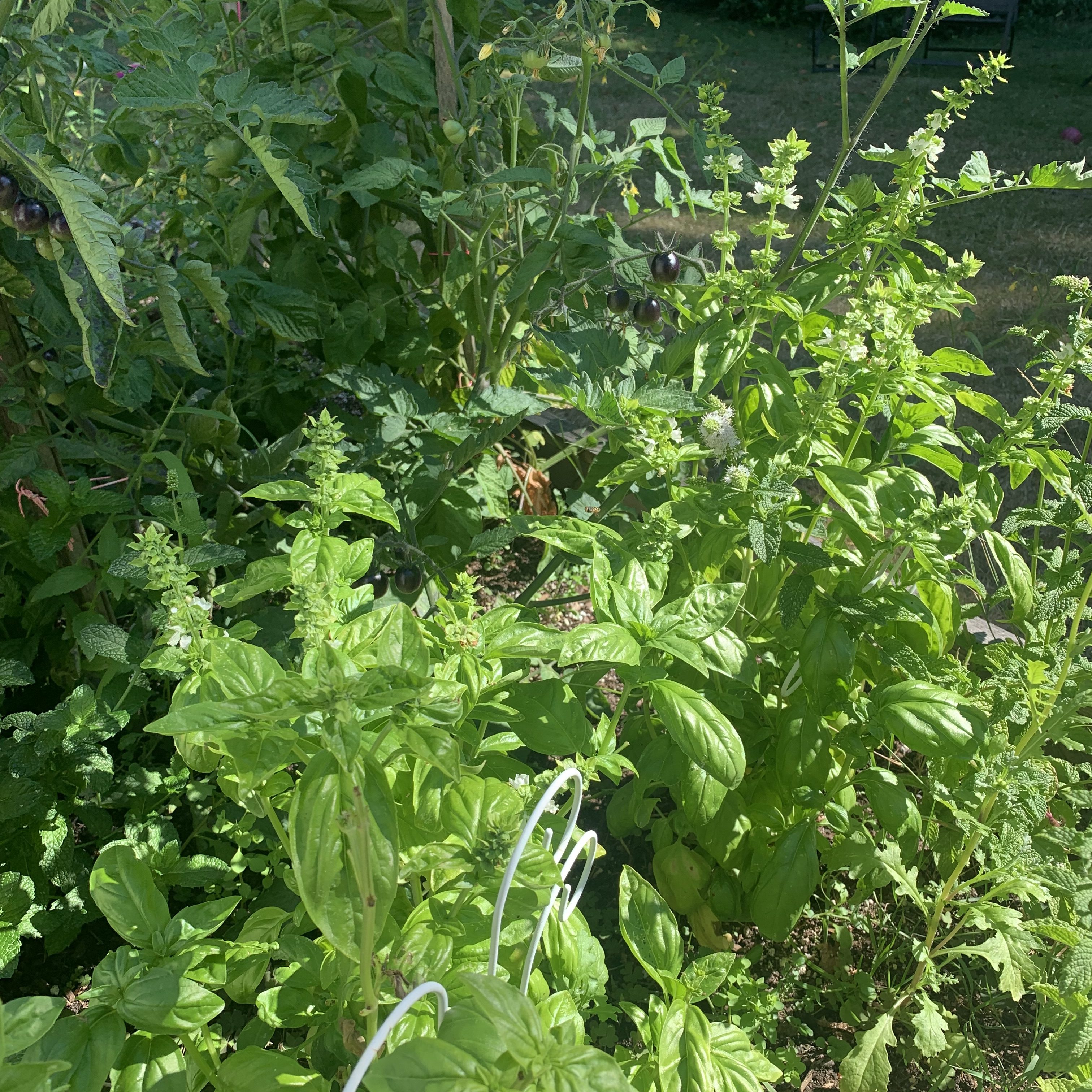
This afternoon, I sat in the sun reading a wonderful book I got out of the library, Country of the Blind: A Memoir at the End of Sight, by Andrew Leland. He writes with candour about his experience of slowly going blind from Retinitus Pigmentosa. I am learning so much about blindness and disability in general. Marvin, our dog, lay near me on the browning grass, contentedly chewing a stick. I sipped from a glass of sparkling water, a lemon sliver among the bubbles. Leland’s prose struck me as honest and evocative; I absorbed his words with delight, laughing occasionally at the stories he told about his two-week experience at the Colorado Center for the Blind. The sun felt restorative. Sounds of the neighbourhood on a summer weekday floated over the yard. The occasional yelp from a dog, somebody’s car radio—the cheesy song “In the Summertime” by Mungo Jerry coming in and out of aural focus—the guy who lives behind us directing somebody in a high, bossy voice about how to find something. “It’s in the back of the cupboard—you really have to search for it.” I could smell the mint and basil in the garden box at my elbow, filling my head with spicy green. My whole body flushed with well-being and pleasure. Throttle down.


The Hyacinth

The bus to work takes about 40 minutes—the perfect length of time to listen to a dharma talk on Dharmaseed. I’m happier with this pastime than I am browsing Facebook or Instagram. The dharma talks inspire me and make me feel better about being alive, while Facebook or IG can make me feel dispirited. Recently, I listened to a talk by a dharma teacher I enjoy—Shelley Graf. She read an excerpt from Sharon Salzberg’s 2002 book on faith. I liked the quotation, but even more, I was intrigued by Salzberg’s book title: Faith: Trusting Your Own Deepest Experience

Trusting your own deepest experience brought to mind a revelation I had when I started to see a therapist four years ago. Doesn’t sound like much, but it was profound for me: I am entitled to claim my own experience. During that therapy session, I had been dithering about whether I felt a certain way, circling around the ugliness of something, making excuses, minimizing my hurt, my terror, my sadness—in short, underplaying what I felt. “Oh, it wasn’t really so bad.” Nancy sat up straight in her chair, looked at me with intensity, and said, “Madeline, you are entitled to claim your own experience!” I laughed, “really?” I didn’t know that. To think I got to this stage in life feeling I couldn’t be honest about how it really was, how it really is, to be me. I came home that day and on the mirror in my sewing room, I wrote, “I am entitled to claim my experience.” I refresh it with a wine glass marker when it fades because it’s a crucial daily reminder.

Back to Salzberg’s book—well, I bought it and read it quickly, underlining the bits that made me cry or wake up or feel a swelling in my chest. There were many passages that made me feel good—made me feel connected to something bigger, something transcendent, which is what faith is, isn’t it? I love the sense that “no matter what happens, we can place our faith in the deepest part of ourselves, our buddha nature” (p. 170). 

With those good feelings still germinating inside of me, I entered the course Michael and I are teaching on Zoom this weekend: Creating and Interpreting Personal Mandalas.[1] This morning, we led our participants through stages one through three. In stage one we rest in the darkness, in the womb. Being, not doing. As I started my mandala, I lined the womb-circle with layers of brown watercolour. Soon, a purple hyacinth spear emerged from the lining of the womb. 

As I painted, my mind travelled back, back, back.  Thirty-five years ago, I had several weeks off work to heal from surgery. Waiting time, resting time, stage one time. Hours in bed spent daydreaming, not doing, just being.  My first husband and I lived in Toronto in a rented house on Devonshire, and the spacious front bedroom had big bay windows with generous ledges. The laser surgery I’d undergone was supposed to give me a chance at having babies, something I hungered for. When my friend Hannah visited me, she brought a potted hyacinth, not yet blooming. I put the plant on the window ledge, and it was as if I could feel the ache of that blue-blushed spear yearning to open. 

It was early spring in Toronto: cold days, deluges, and then suddenly, bright hot sun. One day the hyacinth burst forth in a matter of hours, spraying the room with sweetness. Whenever I smell hyacinths, I go back to that time of hunger and healing. My body craved to follow the flower in her blossoming. But I had to wait. 

My grandmother Marguerite and I were writing to each other that year. She sent me copies of Unity Church’s magazine and told me that she and other members of her congregation in Los Gatos, California, were praying for me to heal and get pregnant. I thanked her and pretended to be onside with her faith. But in fact, I thought it was silly. How quaint, a circle of old ladies in a church basement, holding hands and thinking of me. 

Grandma Marguerite Walker in the Philippines, 1923

Months and months elapsed with no result. I thought the surgery hadn’t worked; after all, the doctor had told me I had only a 15% chance of having children. The odds weren’t great. Feeling like we needed a big change in our lives, my husband and I sold our stuff, quit our jobs, bought a Volkswagen van, and drove south. Almost a year after my surgery, we sat in a Planned Parenthood office in Green Bay, Wisconsin to learn the good news. I was pregnant. 

The hyacinth I painted this morning seemed to have come from the deep well of memory— light-filled room, white sheets rumpled on the bed, the bluish spear opening as I kneeled nearby in my nightgown. Spring magic! And I thought of Sharon Salzberg writing about a research project undertaken in Korea: Women trying to conceive were prayed for at a distance, and these women became pregnant at twice the rate of those who received no prayers. I underlined that passage. Beautiful evidence of our “profound interconnectedness” (p. 147). 

I think often of my grandmother’s faith, and how she and her Unity friends may have had some small part in my blossoming into a mother. And now, I blossom into belief in the interconnectedness of life, belief in the butterfly effect doing its work not only in the material world, but in the emotional realm too. The mistake we make, writes Salzberg, is to expect a certain outcome from our actions. We get attached to results, which leads to expectation. “When our intention is to do good for others, and we nurture that intention, we can have faith that in some way, often unknown to us, it ripples out” (p. 144). As we go deeper into spring and the hyacinths begin to open, let our loving intentions and kind actions ripple out in ways we will never know. 

Photo by Tim Chow on Unsplash


[1] Our course is based on Susanne Fincher and team’s program, creatingmandalas.com, and she has given us permission to use their content.

The wild joy of being nobody

IMG_1905My favourite Arbutus tree was doing her usual backbend into the Colquitz River, her waxy leaves dipping into the brown flow. On my visit yesterday, I leaned into her, as I always do, feeling the cool papery bark under my bare arms and thighs.  It’s dry, high summer, and the river is low and sludgy.  I walk a little way down the path toward the water and crouch in a sunny spot surrounded by white umbrellas of Queen Anne’s Lace swaying in the slight breeze. The drone of bees.  As I gaze at the river, a movement on the opposite bank catches my eye. A mother raccoon with four kits emerges from the undergrowth. The kits follow her lead and stand in the shallows, “washing” their paws in the brown liquid. A sound between a cat’s purr and bird-song chirrups from the large female as she guides the kits along the bank, batting one occasionally when it pauses too long in the water. The creatures disappear quickly back into the hedges and I am left watching the treacly river wend its lazy way.
I walk along the trail 20 metres or so and as I come into a clearing, watch a substantial bird—perhaps the size of a big robin—feeding on the ground. Noticing me, he flies rapidly into a tree and I approach softly, cautiously, to get a better look. He looks like a male Northern Flicker, a scarlet slash on his throat. I am so close I can see the handsome beige plumage on his breast, speckled with dark brown, like flax seeds in bread.

Today, during my walk around the horticulture gardens, I rounded a corner and came upon a California quail, several chicks scuttling behind her. I admire their developing “topknots,” still tiny compared to their mother’s larger plume of dark feathers atop her head.  A few minutes later, I happen upon a hare, still as a statue, on the meadow path. I freeze along with him and study his handsome tweed coat, his tall, swanky ears.

When I saw these animals, I was spacious awareness, a nobody. It felt like a gift I’d been given, to quietly witness their everyday existence on the river, in the tree, in the meadow. I started to think about how I’ve been seeing things, observing, letting my “self” recede so I am a container of consciousness, a watcher.  It hasn’t always been so. Reading my old journals as I attempt to write my memoir has made me see a pattern in my life: My yearning to be seen shows up over and over again.  Engulfed by that obsession to be validated, I was often oblivious to seeing what was happening around me.  Analogous to the logic of Maslow’s hierarchy, I had to be seen before I could see.

Why does being seen by another feel so primordial, so necessary, so life giving?  Ralph Ellison, in his masterpiece, Invisible Man, was able to convey that sense of not being seen—of the eyes of the interlocutor passing over you as if glazing off the skin’s surface without taking in the who-ness of the other.   He is invisible to everyone he meets because they see only the stereotype of black man; he is a carapace, a skin without substance. Nobody sees who he really is. That is an awkward identification—who am I to compare myself to the oppressed African American man? But the idea holds. It was about not been recognized, not being looked at deeply with understanding and recognition. About the hungry, emerging identity, looking for a reflection to hook into. Who am I? The other, the mother, does not mirror back who I am—and my own recognition that I might have missed something crucial in childhood: the mixed comfort and power derived from the mother’s mirroring eyes.

When I come across girls in novels and autobiographies who were not seen by their mothers, I realize that I am looking at a kind of fundamental misrecognition. Didn’t John Bowlby—king of attachment theory—tell us that babies need their own reflections gazing back at them from their mothers’ loving eyes to build identity? And doesn’t this ring true in so many ways?

Judith Duerk tells us that the mother is the “first representative of the Self to the infant, [and] constellates in the infant what will become the sense of Self within as the child grows.”  She goes on to paint that image of loving reflection that almost makes me salivate, it sounds so delicious and so unattainable: “As the baby sees itself mirrored in the face of the mother, sees its own image lovingly reflected in the mother’s eyes, a fledgling sense of a true and worthy self is born within the infant. With the birth of that sense of self is born a sense of being seen, recognized, and valued as who one really is” (10).

Kathryn Harrison’s shocking 1997 memoir The Kiss, in which she describes her “love affair” with her father—paints a portrait of the other kind of mother – the opposite to Duerk’s ideal mirroring mother. This mother demands a certain kind of image from the child; rather than reflecting back what is, she reflects back what ought to be. Harrison gets 100% on a French test at age seven: “My mother’s excitement over my perfect score is devastating. She hugs me, she kisses me, she buys me gifts; and even at the age of seven I understand how damning is my success—that my mother’s love for me (like her mother’s for her) depends on my capitulation. She will accept, acknowledge, seeme only in as much as I will make myself the child who pleases her” (20). But the test was won by cheating, and when the child admits this, her infuriated mother drives her to her grandparents’ house and abandons her there. Harrison next comes down with a sudden, mysterious illness. She loses weight and becomes very pale. When she returns to school, everyone says “She’s a different child!” (21). And she is never quite the same; she has learned the lesson so many children of self-absorbed mothers must learn—I am only seen when I conform to what you want to see; I am only loved when I do what you want me to do. Alice Miller, in The Drama of the Gifted Child (1979) explicated this truth in its brutality, from the point of view of the child.

The crux of Harrison’s true tale is that, as a young woman, she is seduced by her father  and engages in a relationship with him over several years. Not being properly seen by her mother embedded a ravenous hunger for recognition deep into the fibers of her being. He told her she was the most beautiful woman in the world, the smartest, the best.  She felt seen. Her hunger was temporarily fed.

I am not suggesting that that hunger to be seen will drive all “invisible” men and women into destructive embraces. But Duerk articulates not being seen as an identity crisis: “Loss of the personal mother may leave the child without sense of self or self-worth, without hope that one will ever be seen as oneself. There is fear of being unable to become one’s true self, of never being truly known – never knowing who one truly is” (10).

If a tree falls in a forest and there’s nobody there to hear . . . does it make a sound?  I need you to confirm my existence, or else I am invisible. I am persuaded by Alain de Botton’s description of love as “I”-Confirmation: “Perhaps it is true that we do not really exist until there is someone there to see us existing, we cannot properly speak until there is someone there who can understand what we are saying, in essence, we are not wholly alive until we are loved” (108).  While Botton was describing this coming alive in the context of romantic love, it goes back, again, to the birthing of consciousness, to the baby’s awareness of the other, to the mother’s mirroring, loving eyes conferring “you-ness,” unique identity, to her child.

My journals record most of a lifetime searching for recognition in the eyes of others. I have prioritized been seen over seeing. But in the last decade or so there has been a shift. I feel seen now.  I feel loved. And this frees me to see the world around me. Daily meditation has trained my mind so the flow of discursiveness is interrupted for longer periods, holding a space for seeing.  Finally, growing older means a gradual receding of the noisy self. The ego occasionally takes a nap. I gain the ability to listen more than talk. I start to treasure invisibility because it allows me to witness the wild animals and to feel the wild joy of being nobody.

IMG_3112


References

Bowlby, John. Attachment and Loss.New York: Basic Books, 1969.

De Botton, Alain. Essays in Love.London: Picador, 1993.

Duerk, Judith. Circle of Stones: Woman’s Journey to Herself.  San Diego CA: LuraMedia, 1989.

Ellison, Ralph. Invisible Man.  New York: Random House, 1952.

Harris, Kathryn. The Kiss. New York: Random House, 1997.

Miller, Alice, The Drama of the Gifted Child: The Search for the True Self. New York: Basic Books, 1997.


La Passeggiata

IMG_2057A passeggiata is the Italian tradition of a gentle stroll taken around the neighbourhood after dinner.   It’s also a vital part of the “Always Hungry?” (AH) diet developed by Dr. David Ludwig. He writes that “the passeggiata is a moment of joyful movement that helps support healthy digestion and insulin action, while simultaneously relieving stress and helping you sleep better.” (p. 123). That’s true, but I have also experienced intense pleasure in observing the phenomena in our neighbourhood during our evening passeggiata.
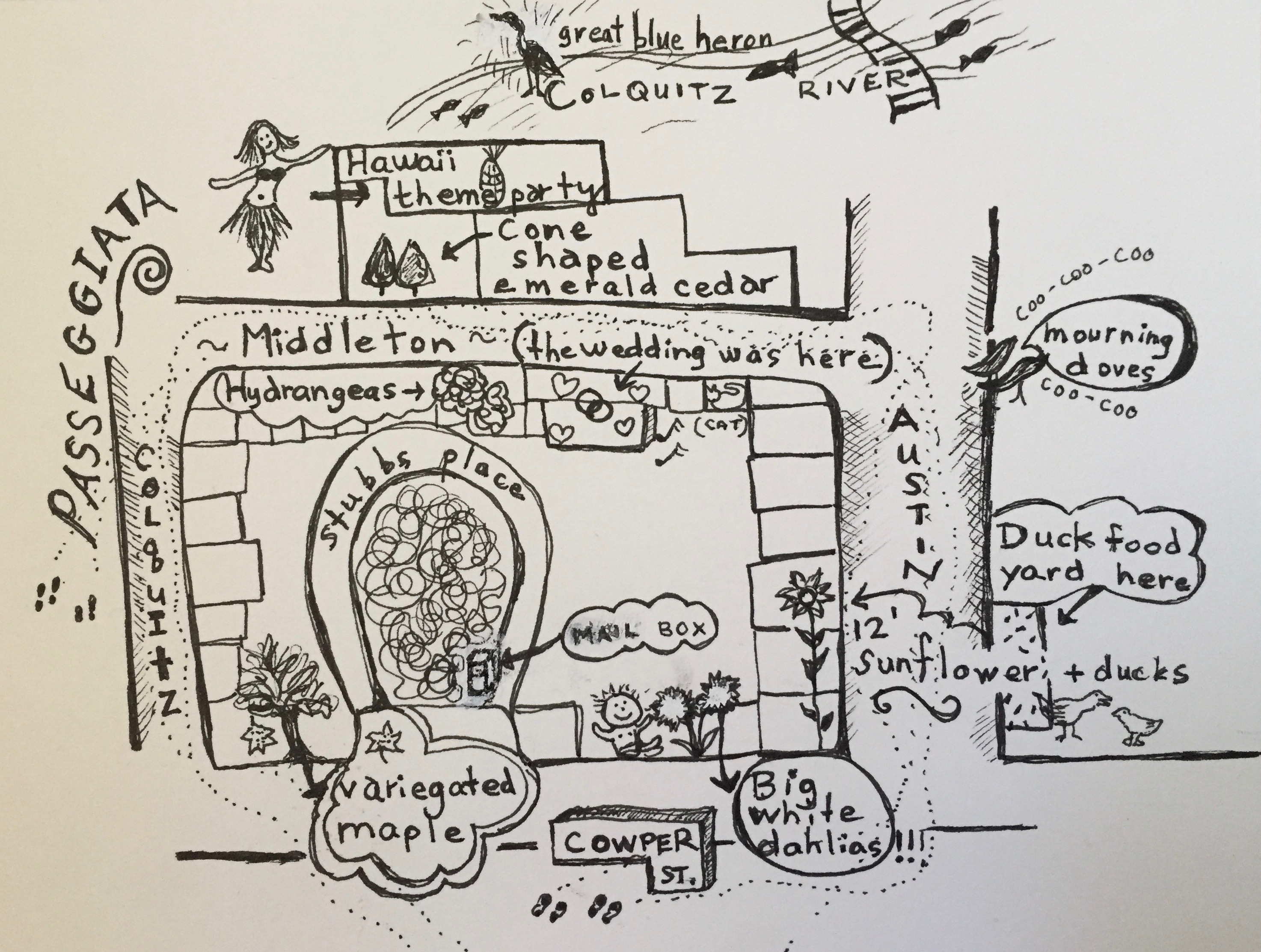
Michael and I have been following the AH diet for almost 8 weeks.  At first I resisted the passeggiata. We work hard all day, often biking to and from work (16-18 km round trip), and after preparing and eating dinner, I want to relax.  So we decided to keep it short. We walk around the block, just over a kilometre, alternating clockwise and counterclockwise. Now I look forward to it, as we walk slowly, encountering people, houses, trees, animals, and cars.

Head across the street passing the maple tree with the variegated leaves. Stop to admire those green speckles. We curve around the corner, down broad Colquitz, past front lawns, the van with “HOP GUY” license plate (he runs a small brewing company).  The houses become more familiar each time we stroll past, noticing details.  As we rounded the corner onto Middleton one evening, we saw a mother and her three kids getting out of their car. A dark-haired woman  helped her young daughter attach a grass skirt around her hips. The boys, perhaps 10 and 12, wore Hawaiian shirts. “Hawaii theme party?” I asked. Somehow the passeggiata leads to these chance meetings. We talked to her about the beauty of the Hawaiian Islands and fare prices while walking with them. In front of the party house many people with colourful leis around their necks  congregated, holding potluck dishes.

Another evening, as we walked by another house on Middleton, upbeat music blasted from the backyard and a catering truck, Food for Thought painted on the side, was parked in the driveway. A young man in a crisp white shirt and black pants approached the truck. “Is that your company?” I asked. “No, but I’m the manager.” “What’s going on?” He explained it was a wedding and in 20 minutes they would be eating dinner. He recommended the catering company as “good food and reasonable,” and went off to do the job.  Music, laughter, and cheers were heard all evening from the wedding house. Mazel tov!

Then there are the animals.  A flock of ducks frequent the neighbourhood. I think they live on Colquitz creek nearby, and travel over to the Gorge. We see them flying overhead almost every night, doing great loopy circles over the neighbourhood, an aerial version of the passeggiata. I can hear their wings creak as they plow the air over our heads.  Then they land on a front yard on Austin St., where the owner has put out plastic tubs of seeds for them to eat and bowls of water to drink.  A brown flurry of moving bodies with flashes of purple and teal as they peck at their food, jostling one another. Sometimes they walk out on the street. Last night a guy in his truck with his daughters had to wait as they slowly made their way to the side of the road so he could proceed. I remembered Robert McCloskey’s Make Way for Ducklings.

Two mourning doves also live in our neighbourhood. I noticed them appear several months ago when the construction up at Admirals Road and the highway got intense and we lost part of Cuthbert Holmes park to the bulldozers.  They have found a new home in the tall trees on our streets. I see them on every passeggiata now, usually together, on branches and telephone wires, cooing. Their mournful cries wash over me, making me feel an old yearning for some other world.

There is another special bird that has perched on the same wire two nights in a row, and trilled out the most complicated melody. We stopped to listen.  A guy pulled into the driveway in his yellow Alfa Romeo. He saw us, necks craned, looking up at the bird on the wire. I explained, “That bird sings such a lovely complex tune—I am just wondering what kind of bird it is.” “Songbird,” he laughed and opened his front door. (I have since searched through my copy of Birds of Victoria and identified the bird as a starling, perhaps mimicking the songs of other birds.)

We saw a cat yesterday, a white cat resting on a moist emerald lawn. Most of the lawns are straw brown, in these late baked summer days. But there she was, looking at us coolly in her stark white elegance against the green, one paw thrust forward.

IMG_2049

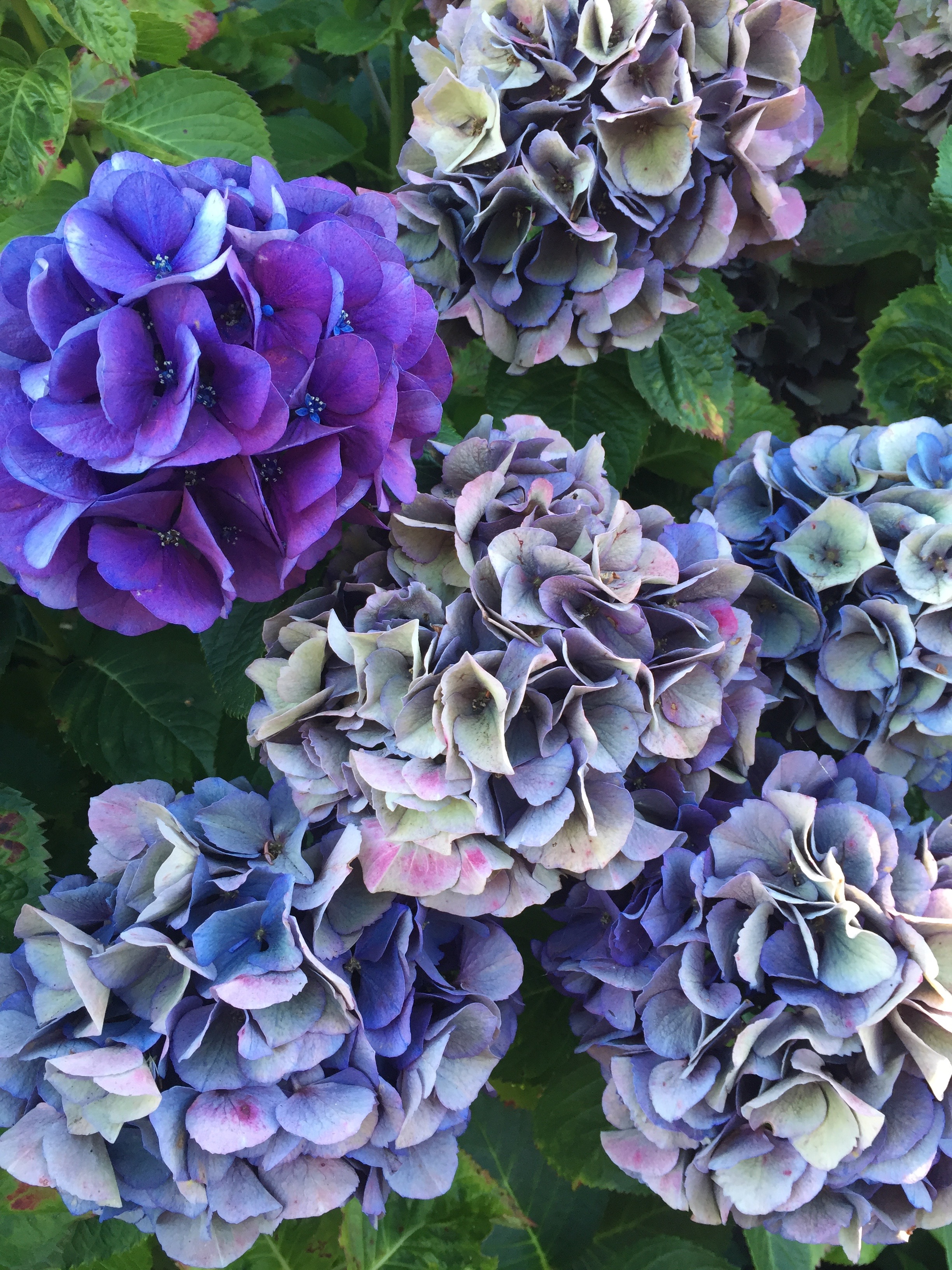
Then there are the flowers. Perfect white dahlias the size of a baby’s head. A huge hydrangea bush, the purplish blossoms weighted with summer, bleached by the daily heat.   Sunflowers. At one house, they tower twelve feet, their heavy bronze heads hung as if shy about their size.  Tonight as we stopped to admire those beauties, their owner drove into driveway and got out of her car. She told us this was the first time they had grown to this height. “I think it was the chicken manure from North Saanich.” When my husband congratulated her, she said it wasn’t her, it was the manure.  “Life is like that,” Michael responded. “Equal parts magic and chicken shit.”

Each day I notice something new or talk to another neighbour. All because of the passeggiata.