Becoming intimate with carnations and truth

In mid-December, I bought a green glass jug in a second-hand store, half price. My aspiration was to make a beautiful winter bouquet for my friend, Lillian. I bought a bunch of silver dollar eucalyptus and two dozen white carnations. I envisioned white wintry bursts among the silvery green, but the more I trimmed and mixed the carnations with the stems of eucalyptus, the sillier and more incoherent it looked. I took basic Ikebana but still haven’t a clue how to make flowers and plants look good. 

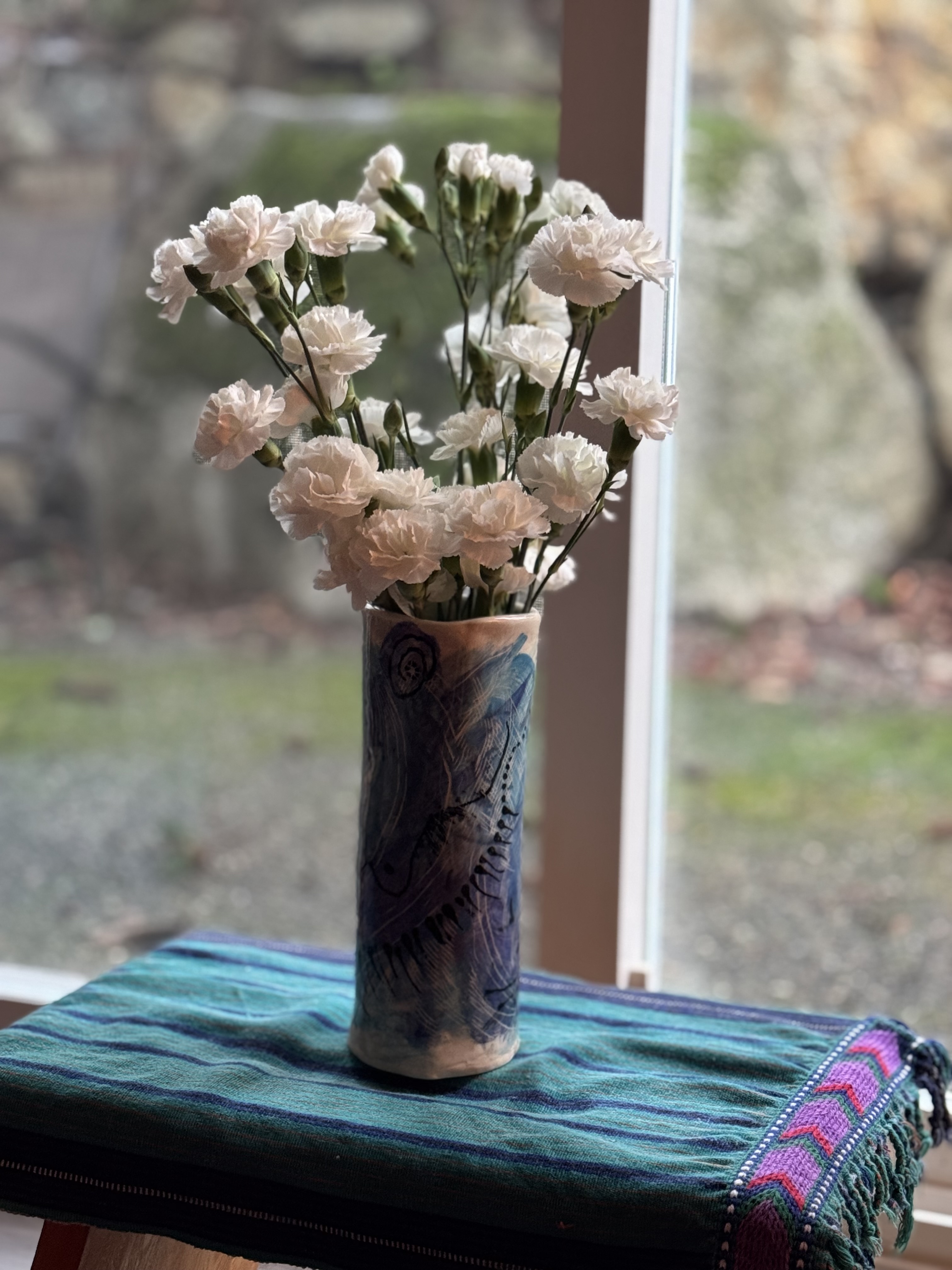
Finally, I used only the eucalyptus, splayed out in a free-fall arrangement. I attached a few small, red shiny balls to the stems, and the effect, I hope, was Christmassy and charming, if a bit messy. Lillian said she loved it. (But what could she say, really?) I was going to throw out the unused carnations, but it seemed such a waste, so I put them in a white and blue vase and placed it in my study on a low stool covered with a blue-green cloth. 

I don’t like carnations, or I didn’t think that I did. I’ve seen too many sad, slender bunches wrapped in cellophane at the mini-mart next to the hospital. They make me think of last-minute purchases for the death bed, cheap flowers that outlive the person you visited. They seem so tight, orthodox, banal. Whorls of perfect, serrated petals, every bloom the same.

But they’ve grown on me. As I spend hours in their presence, they’ve become real. You could say I’ve become intimate with them. I sit here now, the last day of the year, gazing at their fresh ordinariness. The carnation is the sturdy, faithful flower that will see you through. Perhaps they are flower of the year: commonplace as canned milk. Carnations are one-foot-in-front-of-the-other flowers. Quotidian flowers. Bread-and-butter blooms. See you through the hardest times. Last for weeks. Nothing special. 
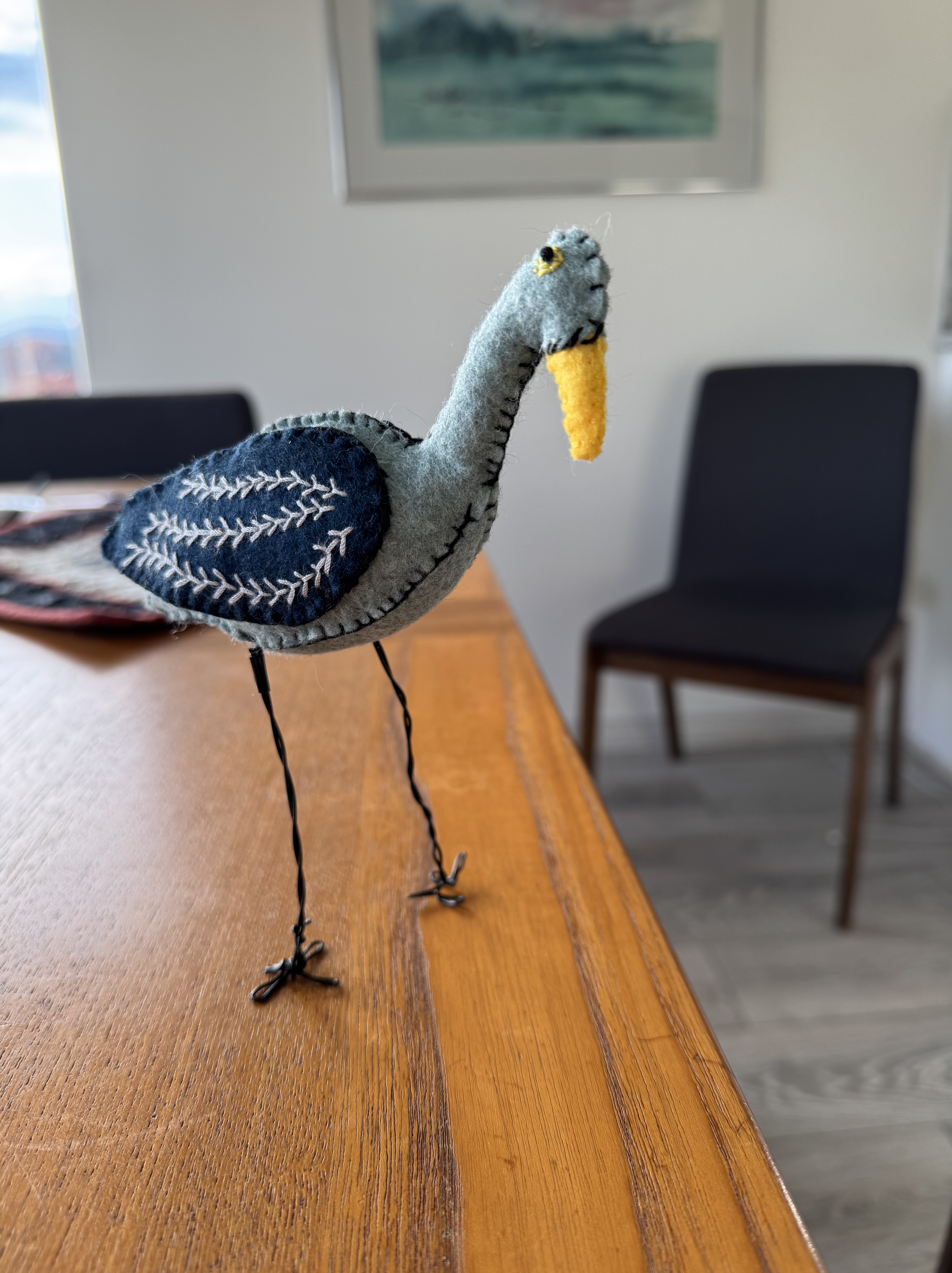
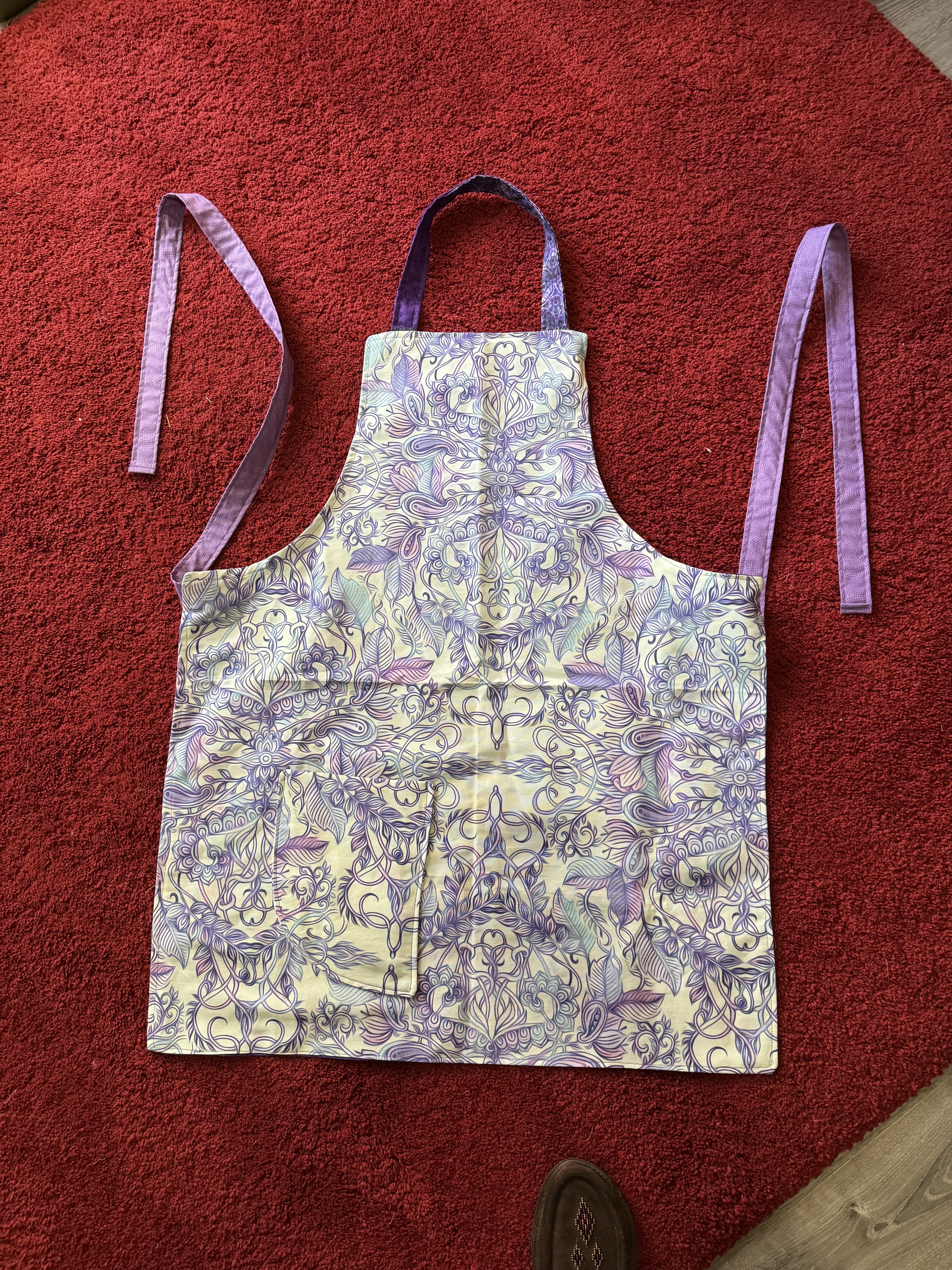
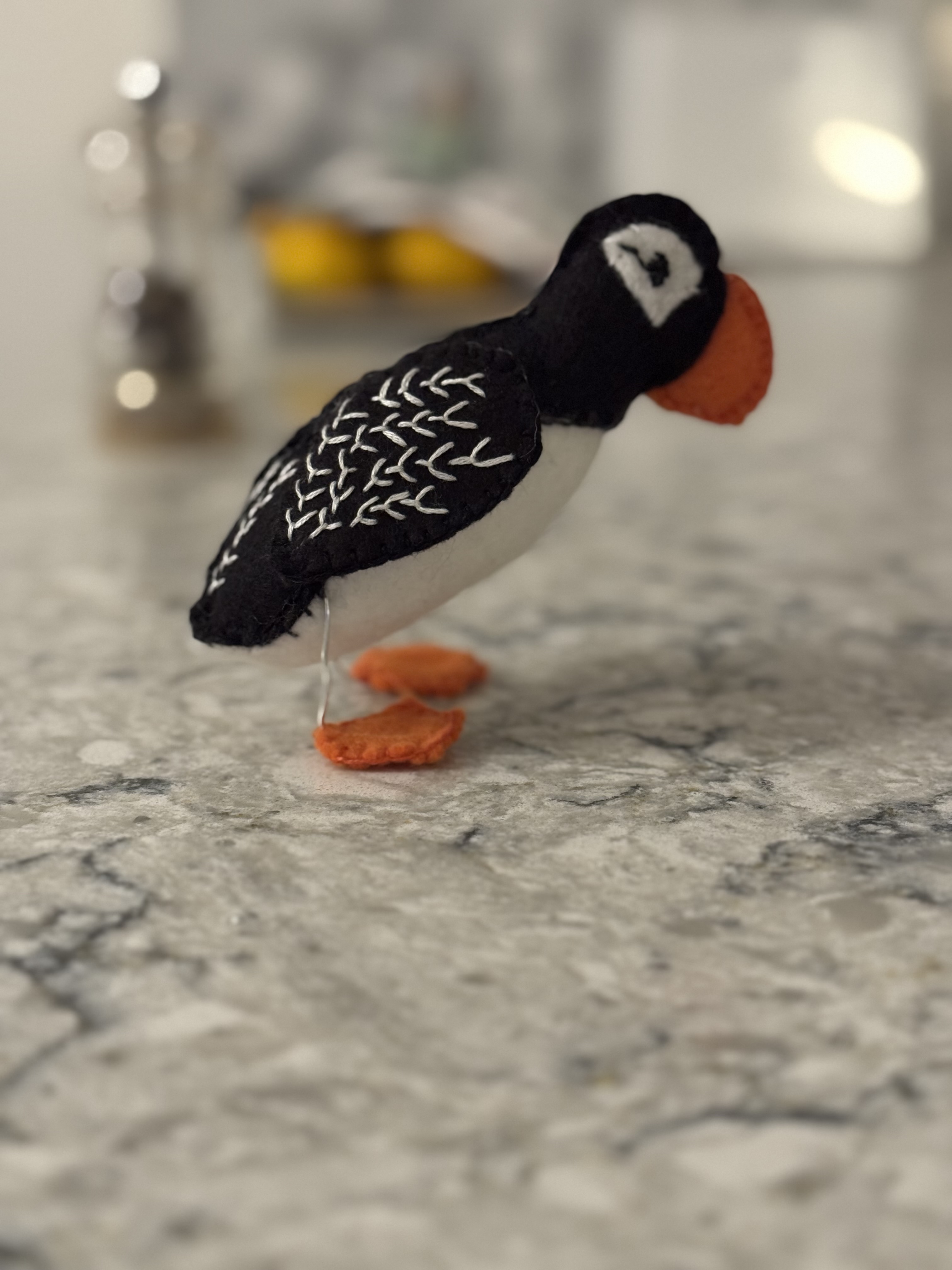
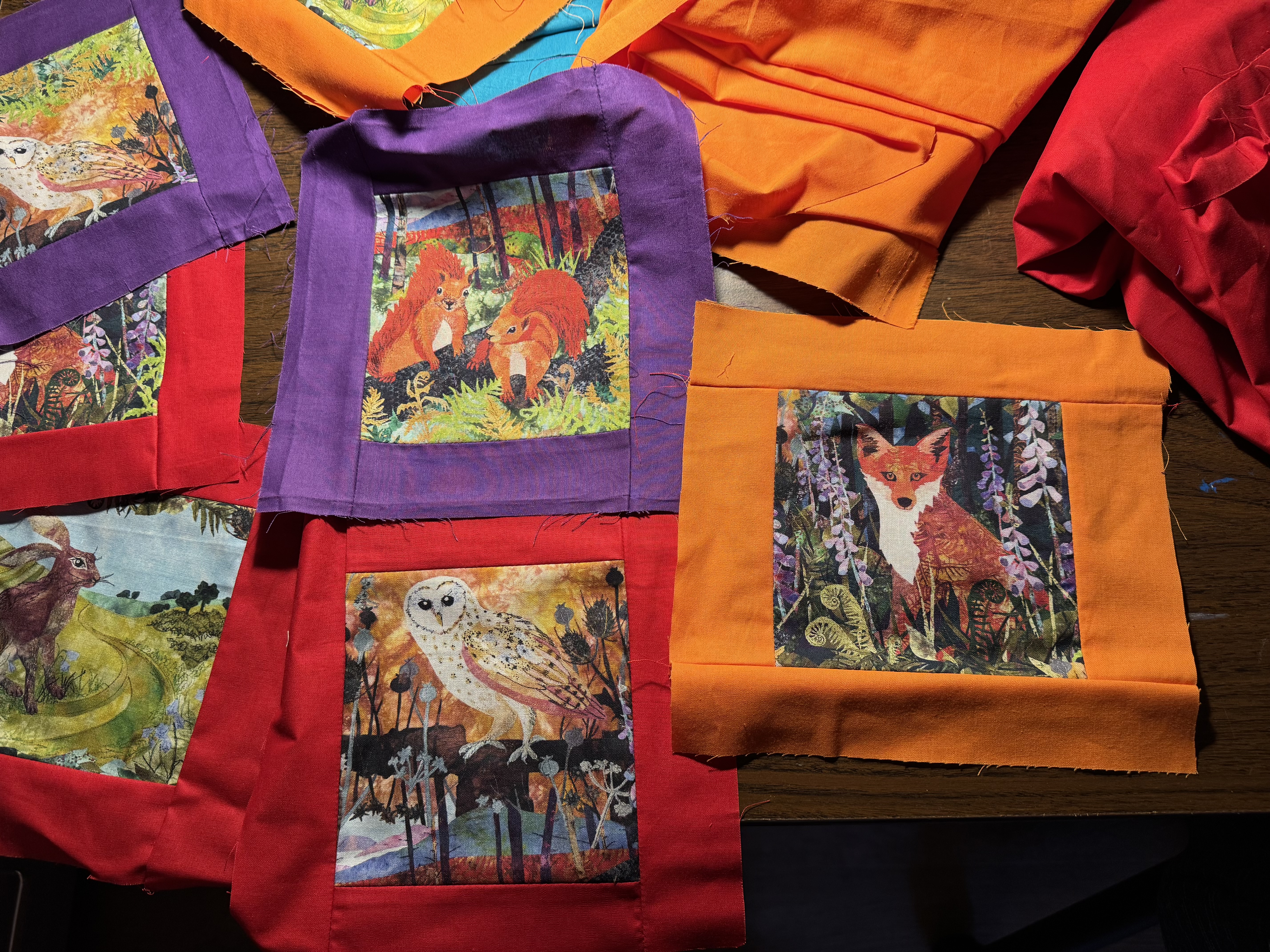
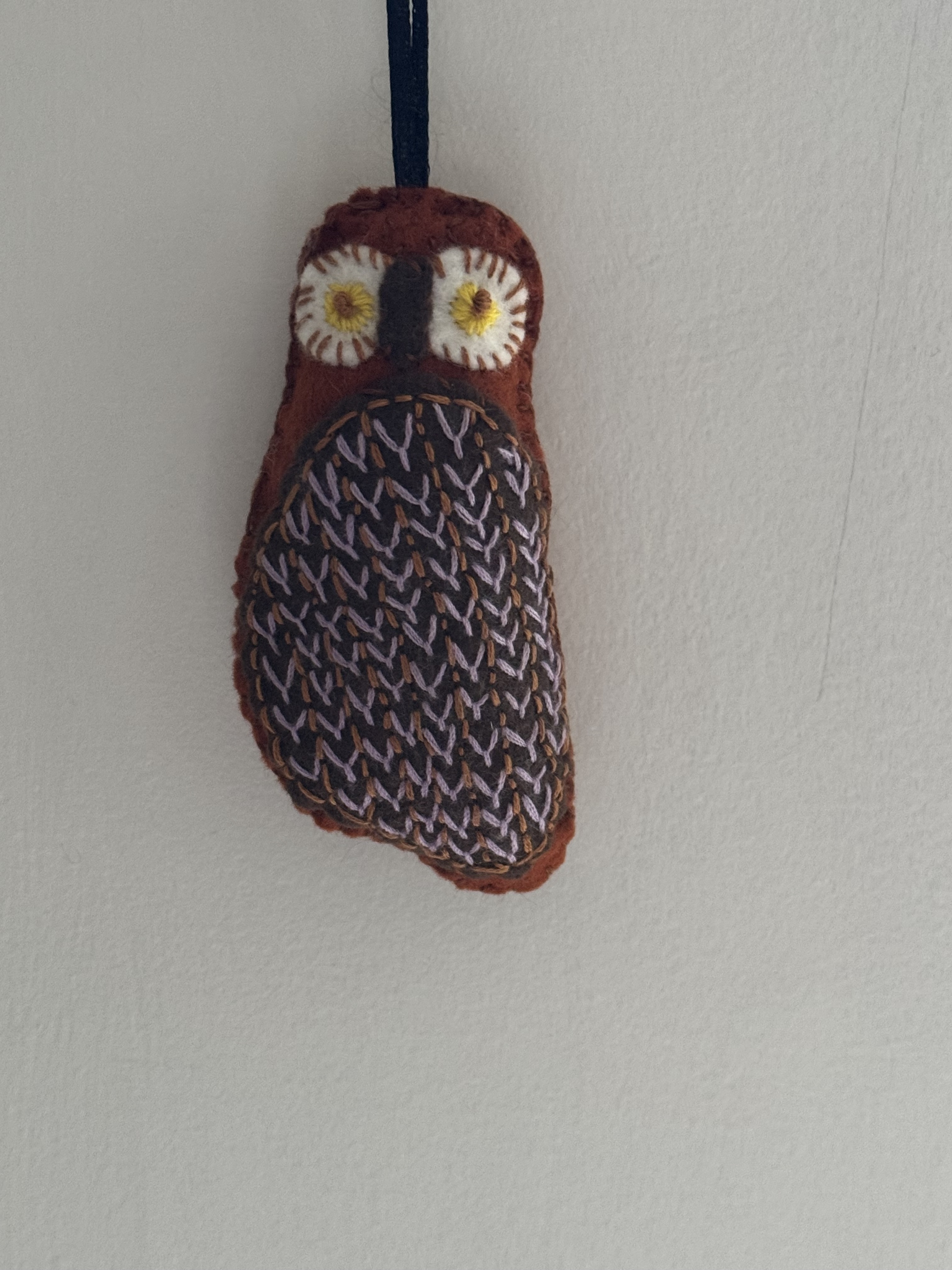
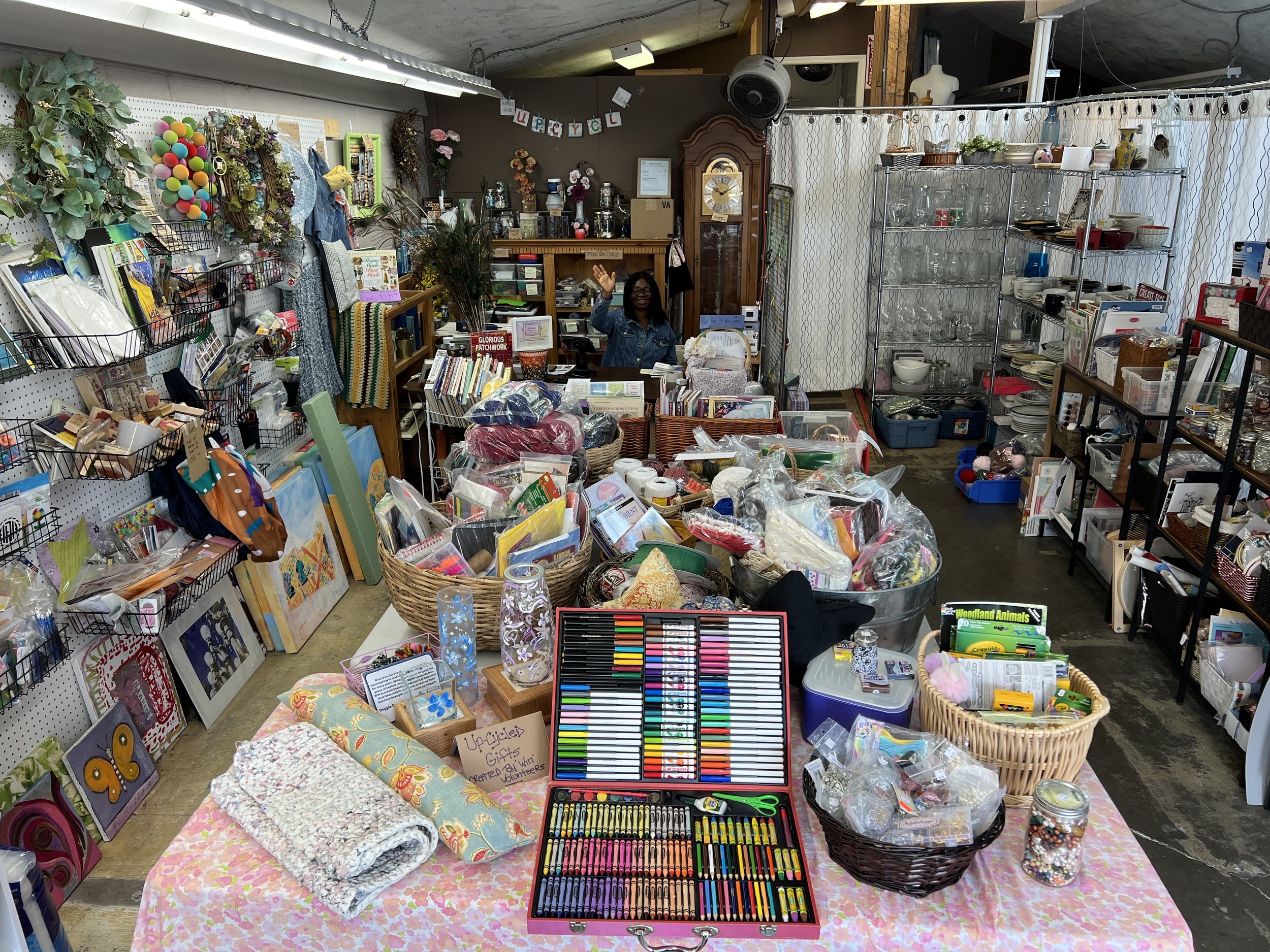
Although 2024 was my first year of so-called retirement, and thus I was given twenty additional hours each week, I wrote less, and I sewed less. (A few felt birds for family and other little felt creations, an apron, a crib quilt start, a fur-lined bag.) I did finish an editing certificate I started in 2020, which is a relief. And I made a lovely new friend and deepened existing friendships. I started a volunteer gig at a non-profit arts and crafts shop in August that has led to meeting many interesting people. Bonus: I get to surround myself with a messy profusion of materials that inspire me. 

This year, I listened to probably one hundred dharma talks on Dharma Seed, with a broad aspiration of becoming more intimate with life—accepting whatever’s happening in my heart, whatever’s happening in the world. Making friends with wild mind. Accepting the truth of the way things are.

I read so many books this year. A couple that stick with me are Rebecca Solnit’s memoir, Recollections of My Nonexistence and The Age of Loneliness, a book of essays about life during the sixth extinction by Laura Marris. 

Solnit writes a lot about being a woman. That’s what her title gestures toward—the peculiar “nonexistence” of being female in a patriarchy (remember mansplaining? She is behind that neologism[i]). She draws on John Berger’s 1972 Ways of Seeing, which I’ve known about for years and now am determined to read. She quotes words from him that jibe with my experience: “To be born a woman has been to be born, within an allotted and confined space, into the keeping of men. The social presence of women has developed as a result of their ingenuity in living under such tutelage with such a limited space. But this has been at the cost of a woman’s self being split into two.” 

Perhaps that sounds dramatic in the Global North in 2024, but that has been my experience. Perhaps it’s different for lesbians. Perhaps it is different for women of subsequent generations, but Solnit and I were born three years apart (1961/1958), so we grew up at roughly the same time. Berger goes on, 

“A woman must continually watch herself. … She has to survey everything she is and everything she does because how she appears to others, and ultimately how she appears to men, is of crucial importance for what is normally thought of as the success of her life. Her own sense of being in herself is supplanted by a sense of being appreciated as yourself by another.”

Solnit calls Berger brilliant and generous, to be able to imagine a woman’s experience, and I agree. What he writes here feels just as real as the carnations in front of me. Reading the passage and feeling its truth is freeing. No action needed, just awareness.

Similarly, truth pinged through me when I read Laura Marris writing about the age of loneliness. We become lonelier as we bear witness to the drastic reduction, or “great thinning,” of ordinary animals. Marris draws on the work of naturalist, Michael McCarthy, who writes of our baby boomer age group, “As we come to the end of our time, a different way of categorising us is beginning to manifest itself: we were the generation who, over the long course of our lives, saw the shadow fall across the face of the earth.” 

Reading this series of essays, elegies to Earth as the shadow descends and animals disappear, I was gripped by a grief so deep I sat for a time and just cried. Again, the truth is freeing. Let’s not deny that this is happening. It’s really happening. We can still enjoy the beauty that is here. 

In keeping with my mood of asceticism, I recently deleted my Facebook and Instagram accounts. Unlike the birds who used to sing outside my window, FB and IG will not be mourned. I feel light as I step through life with a new red pedometer safety-pinned to my leggings (the pedometer frees me from carrying a “smart” phone to count steps). Michael, Marvin, and I amble down to the beach at Thetis Cove to watch the sky change. Rippled water reflects a bank of pink clouds. 

Thank you for reading. In the coming year, may you experience moments of lightness in a shadowy world. 

Berger, John. 1972. Ways of Seeing. Penguin.
Marris, Laura. 2024. The Age of Loneliness: Essays. Greywolf Press.
McCarthy, Michael. 2015. The Moth Snowstorm: Nature and Joy. New York Review Books.
Solnit, Rebecca. 2020. Recollections of My Nonexistence. Viking.


[i] From Wikipedia: The term mansplaining was inspired by an essay, “Men Explain Things to Me: Facts Didn’t Get in Their Way”, written by author Rebecca Solnit and published on TomDispatch.com on 13 April 2008. In the essay, Solnit told an anecdote about a man at a party who said he had heard she had written some books. She began to talk about her most recent, on Eadweard Muybridge, whereupon the man cut her off and asked if she had “heard about the very important Muybridge book that came out this year”—not considering that it might be (as, in fact, it was) Solnit’s book. Solnit did not use the word mansplaining in the essay, but she described the phenomenon as “something every woman knows”.
The Untangler

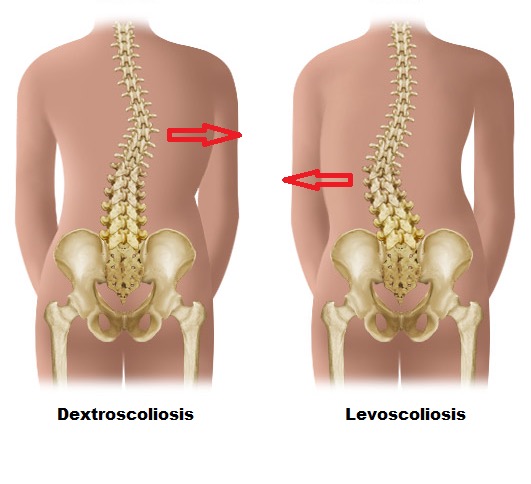
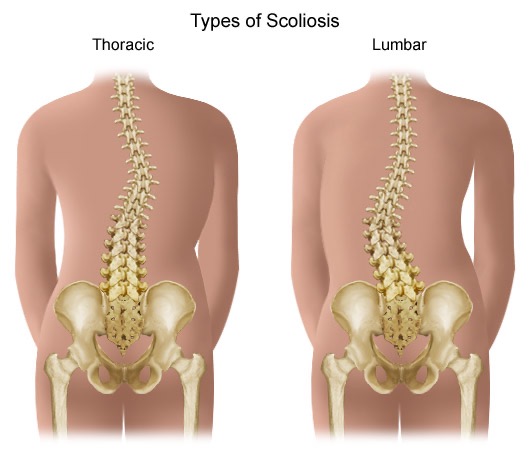
I can’t remember a time in my life when my right shoulder wasn’t lower than the left one. Its slope was unremarkable; this is just the way I am. Then, in my early sixties, a physiotherapist told me I have scoliosis; perhaps I’ve had it since childhood. I didn’t pay much attention. A year later, a Thai Massage practitioner sat behind me on the mat and looked at my twisted spine. “What happened to your back?” she said bluntly. This year it’s been harder than ever to stand up straight. I have daily lower back pain. I feel deformed, out of balance. I used to be five foot six, but during my last doctor’s appointment, I discovered I am now five feet four inches tall. A recent CT scan confirmed it: I have moderate lower thoracic/lumbar dextroscoliosis, a right-bending curvature of the spine. It’s time to figure out what to do. 

I started reading about the condition—S-curves, C-curves, thoracic and lumbar varieties, and treatments, including the Schrott method. I’ve looked at archival black-and-white photos of crooked backs, at racks and braces that looked like torture devices. I started doing yoga for scoliosis and made an appointment with a physiotherapist who specializes in treating this complex condition.

As I wait for my appointment, I have mental work to do. My sister told me about Dr. Joe Dispenza’s website, where there are inspiring stories of transformation and physical healing through meditation. I started to think about how powerful our minds and imaginations are. For many years, my friend Diane has exercised her powerful imagination as a force for good. She has had rheumatoid arthritis since she was 13 and uses visualization to help with her pain. “One of my most powerful visualizations is the dragon, which I call upon during episodes of severe pain,” writes Diane. Describing the creation of her dragon in 2010, Diane writes, “As I surrendered to the flow of molten sensation, the dragon appeared, and I clung to its fiery body until our energies merged. The pain and strength became one, flowing through us as we surrendered to the sensations.”

This visualization has transformed the way Diane sees pain—no longer as an enemy, but as sensation. Pain, she writes, is “neither ‘good’ nor ‘bad’—it simply exists, a presence I accept at the core of my being.”

Diane's AI created image of a woman riding a dragon.
Diane began creating AI images and digital iPad art to visually express what pain feels like in her body, hoping the images resonate with others experiencing pain and disability. This is one of Diane’s AI created images.

Another friend, Janis, visualizes protector angels to bring calm. When her schizophrenic daughter was in crisis, she imagined an angel lovingly holding her adult child, an image that helped her to sleep. 

Anybody in a twelve-step program knows the support that one’s imagined higher power can provide. It doesn’t matter if you visualize the ocean, the forest, a goddess, or your community as your higher power (it’s yours, after all)—the image you create can soothe, comfort, inspire, and heal.

I am reading Dr. Gladys McGarey’s book, The Well-Lived Life: A 103-Year-Old Doctor’s Six Secrets to Health and Happiness at Every Age. In one chapter, she writes about having breast cancer in her nineties. She combined visualization with a lumpectomy and radiation, knowing that how she thought about the tumour played an important part in healing. She started talking to the lump in her breast that she pictured as a “pretty little hand-tooled suitcase.” She spoke kindly to it: “Darling, we’re going to have a family reunion . . . . If there are other cancer cells in my body, call them together, and tell them to get in the suitcase and come on the trip.” I just love that image of the pretty suitcase and all the gathered cells going to a family reunion. There are no enemies inside of us, just family members, and some of them need to regroup elsewhere (or straighten up). 

Book cover of Gladys McGarey's book

Visualization is a powerful tool. 

As I thought about Diane fusing with her fiery dragon, the huge feathery wings of Janis’s angel, and Gladys McGarey’s darling hand-tooled suitcase, I wondered which image, combined with physiotherapy and exercises, could help me straighten my spine. 

I remembered a recent dream that—at the time—struck me as important. My husband Michael and one of my sons accompany me to a job interview. An unusual scene greets us: We are in a large, high-ceilinged space, with brown leather sofas and armchairs spread throughout and around the circumference of the room. My husband and son are told to sit on one of the outer sofas. It’s a public interview; many people are there as audience. A group of men and women at a long table interview me while I sit before them in a butter-soft armchair. The interview is short. I’m told that I have the job. I am the new Untangler. Applause crashes through the air. Everybody is so happy for me! I got the job as the Untangler! One interviewer remarks that I didn’t even need a graduate degree to get this job. Lucky me. 

When I woke from the dream, the unusual noun, untangler, floated free and visited me throughout the day. Now I am thinking of it again—what does it mean to be an untangler? 

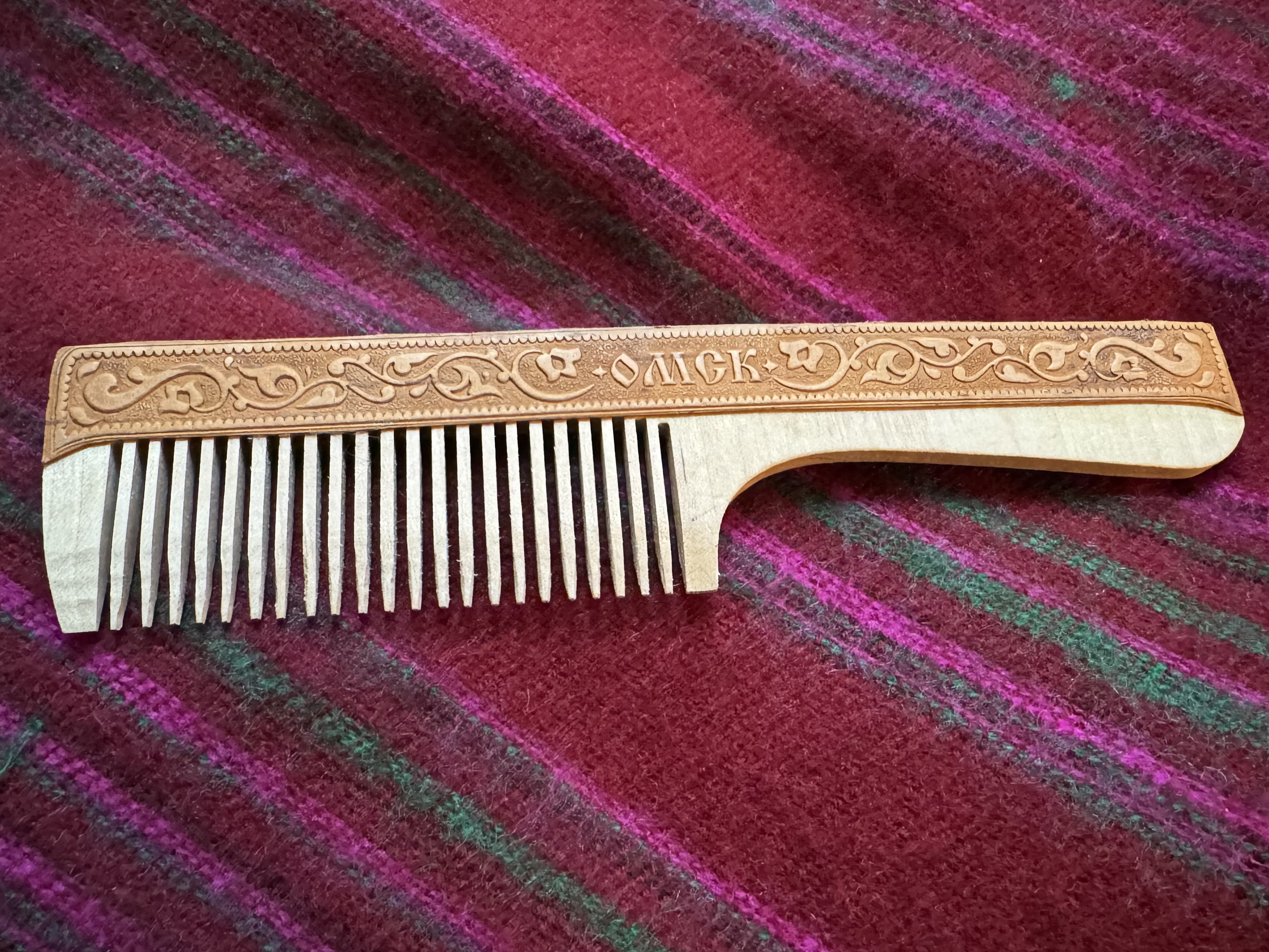
The comb is the foremost untangler, a simple yet effective tool. The earliest known comb was discovered in Syria and dates from 8,000 BC. Made from animal bone, it looks much like the combs we use now, with a handle and teeth. You can buy a cheap black plastic comb in any drugstore, but I am thinking of a more elegant object: the carved wooden comb my friend Olga gave to me. She brought it back from Omsk, Russia, her hometown. I keep that comb at my desk to remind me of her, but lately, I have been using it to comb my hair. To comb is to untangle, to straighten. 

A wooden comb with the handle carved with Omsk and garlands.

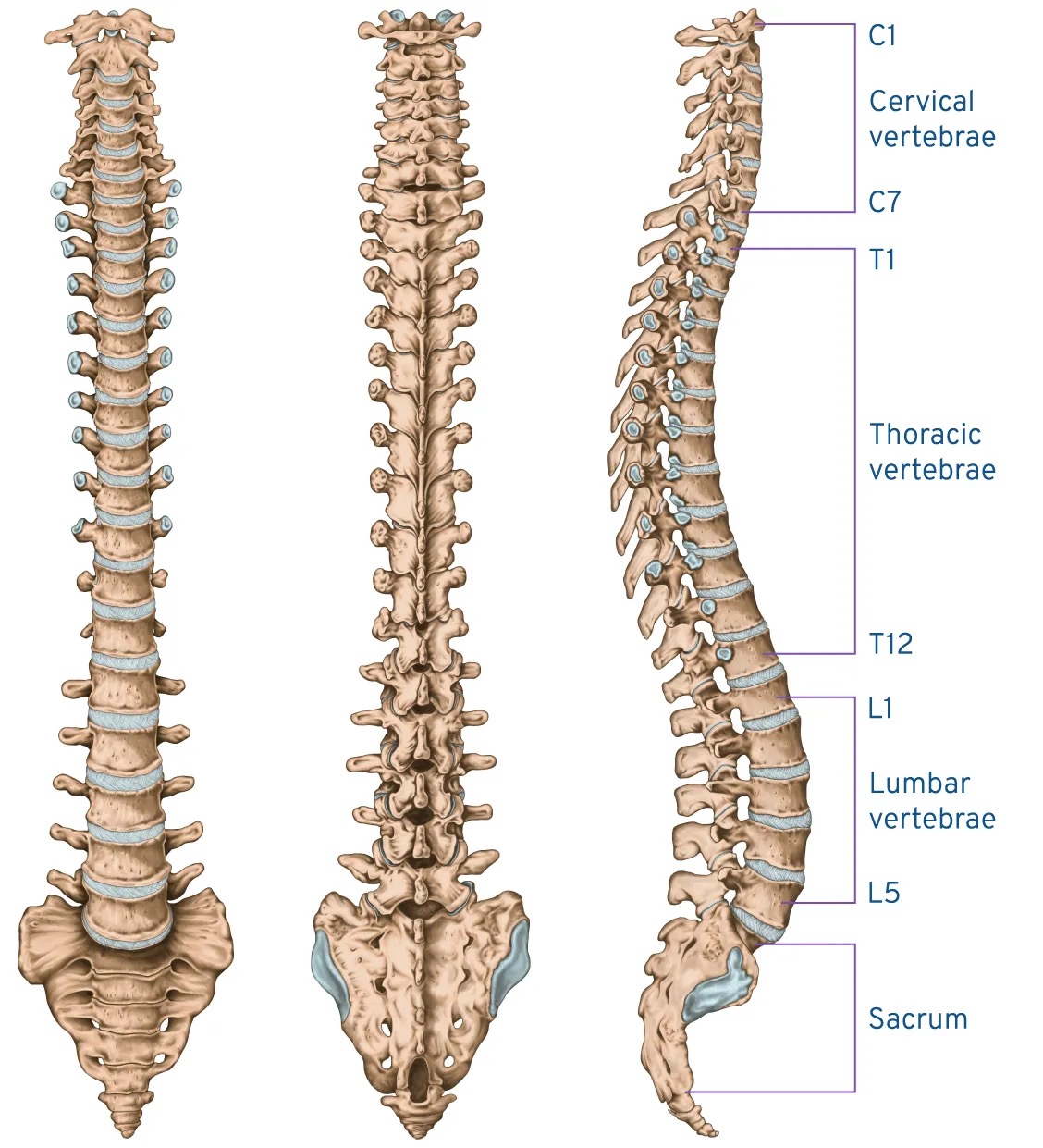
I choose to imagine that wooden comb combing my spine as I walk and when I meditate: long, smooth strokes. (Don’t get too literal; my knobby vertebrae would never fit between the teeth.) When the teeth meet a tangle of resistance, I tug a little, gently exerting pressure, pulling the spinal cord out of its curve. Combing the cervical vertebrae then to the thoracic—T1 right down to T12, then combing through lumbar 1, pulling a bit harder at L2, which—my scan shows—has slipped forward six millimetres to press the nerve, then L3 right down to the sacral region. Comb, comb, comb.  Straighten, darling spine, straighten. Who knows the power of the mind, the power of an image? I was hired as the untangler, so every day, I do my job. 

Anatomy of a spine: shows the cervical, thoracic and lumbar vertebrae sections.

Credits

Types of scoliosis: https://www.hudsonvalleyscoliosis.com/what-is-scoliosis/types-of-scoliosis/

Thank you to Diane, who gave me permission to share her dragon image and story and to Janis, who gave me permission to share her angel story.

Anatomy of spine: https://mxnspine.com/anatomy/

Throttle down

After my third accident, I decided throttles are my nemesis. First time was on my scooter, second and third times on my e-bike. Originally, my Marin Fairfax bike was not electric–just human powered. Last year, I had a Bafang motor installed to make commuting easier. But I didn’t expect to get a throttle with the install—it just “came with,” and I didn’t question it. After riding the bike for a while and experimenting with the throttle, I thought, this is too much and I don’t really need it. Five levels of assist are more than enough. Nonetheless, I started to depend on the throttle. It was like touching a magic wand to create delicious bursts of power that eased me into motion after a stop, pulled me up the steep hills, glided me along without pedalling.

On the day of the Pride Parade, I set out early for Douglas Street to capture a good spot to watch. Riding up and over the bridge, I slowed down to observe a great cloud of bright balloons approaching from the other side. After a few moments, I pressed my throttle to get a move on. What happened next was so fast and unexpected, I hardly know how to describe it. I hadn’t noticed that one of my handlebars had gotten tucked under a bridge railing. When I throttled, the bike jumped with a life of its own, and the seat swivelled, hitting me hard in the upper thigh. Suddenly, I was on the ground, the bike on top of me, with blood flowing from cuts on my hands. My thigh pulsed with pain. A couple stopped to help me up and righted my bike. Somehow, I got to the parade and watched for a while, but then realized I was in shock. Nothing an extra hot latté at Habit Coffee couldn’t cure. 

But seriously, the eggplant and banana bruise on my thigh was ugly and tender, and I limped for a few days. It took some time for the bruises to go away, the cuts to heal, and for my thinking to coalesce around throttles and what they mean. 

CHEK’s Tess van Straaten co-hosted the Pride Parade broadcast with local drag queen Gouda Gabor

In 2012, I bought a 50 cc scooter. So cute and fun! I loved it. But again, the throttle. I was on my way home from work in backed up traffic, daydreaming. Suddenly, I realized the car ahead of me had started moving a few moments before, and to catch up, I hit the throttle. But my wheel was turned, and the machine jumped. I was thrown to the ground, the scooter on top of me. I stopped traffic that day, ended up at the hospital, and received a sling and advice to keep my fractured arm quiet for several weeks. Shaken by the accident, I sold my scooter soon after that.

My beautiful scooter and me

Then there was the other e-bike incident when I throttled my bike on a gravel path. Big mistake. Again, I ended up flat out on the ground, bruised and shaky, with the bike on top of me. 

Throttle is a noun signifying the device controlling the flow of power to an engine. Also, it’s a verb: you throttle the throttle or (second meaning) you choke or strangle somebody. I started to think of how I might be using the throttle too much on my bike and in my life. I throttle to get the extra boost I think I need. Usually, I throttle without thinking, and then I run into trouble. But if I were to insert a pause, I might realize I don’t need the throttle. Throttling chokes my life. Increasingly, to throttle (act precipitously, riding a burst of power) leads me into discordant situations that I regret getting into. Doing the unnecessary thing, saying the wrong words.

Perhaps I’d be better off if my e-bike didn’t have a throttle at all. But still, I’d be throttling my life. I reflected on ways to stop doing this. Perhaps one of these will resonate with you: 

  • Don’t respond immediately to email or texts. Stop and think. What’s my responsibility here? Is what I am writing useful, timely, kind, necessary?
  • Don’t jump from one activity to another. You might like to pause for a moment and ask, “How do I feel now? What do I need?”
  • Stop manufacturing energy you don’t have. Don’t do that “one extra thing.” Just don’t.
  • Doing stuff is overrated. What about doing nothing? There is plummy goodness in sitting and observing life, engaging all senses.
  • And related to the last point, think about Rick Hanson’s “Taking in the Good” program in Hardwiring Happiness. (I recommend this book!) HEAL is an acronym for four steps: Have a positive experience. Enrich it by exploring all its crevices and beauties. Absorb it fully into your body and mind. Link it with negative experiences so when they arise, you rewire your negatives with positives.

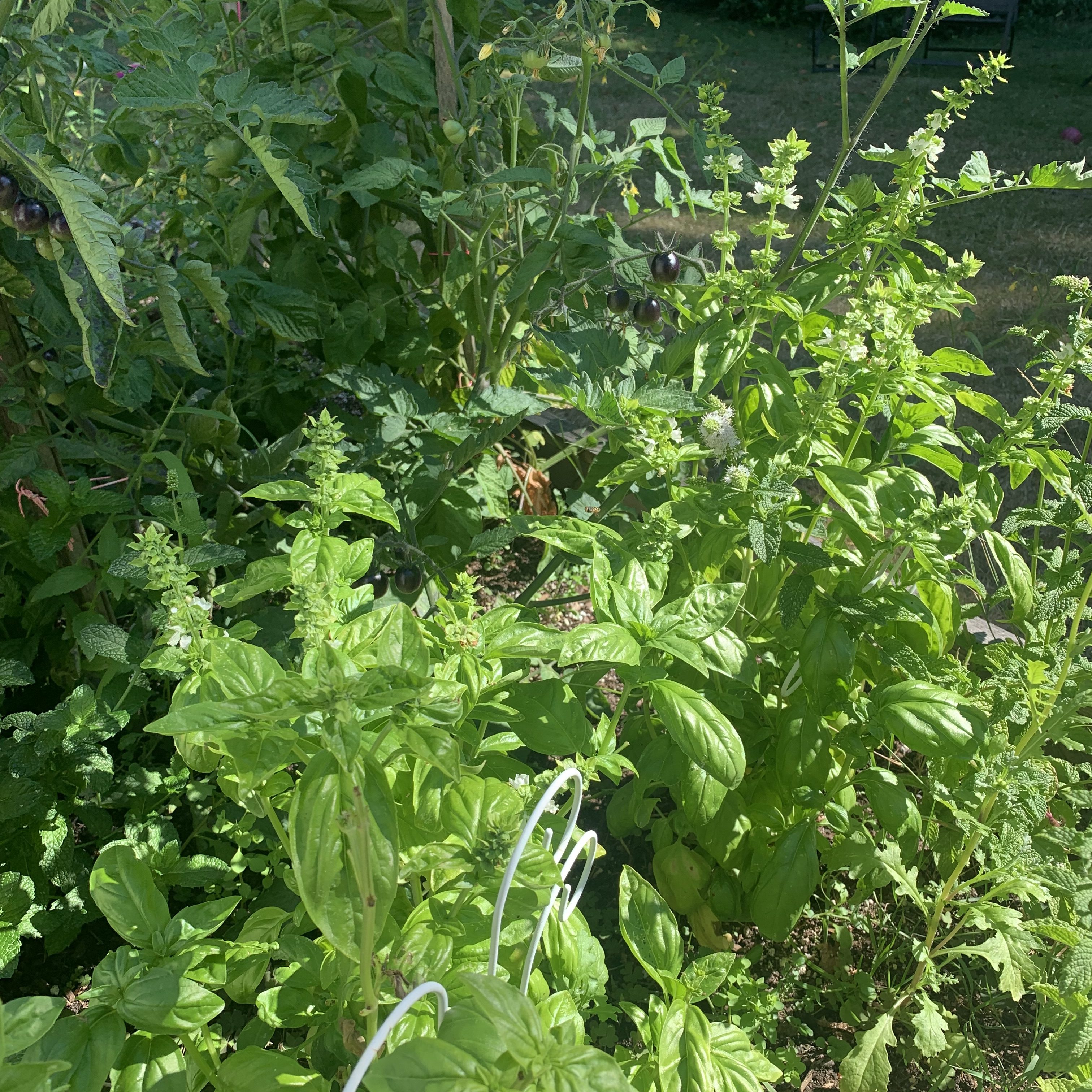
This afternoon, I sat in the sun reading a wonderful book I got out of the library, Country of the Blind: A Memoir at the End of Sight, by Andrew Leland. He writes with candour about his experience of slowly going blind from Retinitus Pigmentosa. I am learning so much about blindness and disability in general. Marvin, our dog, lay near me on the browning grass, contentedly chewing a stick. I sipped from a glass of sparkling water, a lemon sliver among the bubbles. Leland’s prose struck me as honest and evocative; I absorbed his words with delight, laughing occasionally at the stories he told about his two-week experience at the Colorado Center for the Blind. The sun felt restorative. Sounds of the neighbourhood on a summer weekday floated over the yard. The occasional yelp from a dog, somebody’s car radio—the cheesy song “In the Summertime” by Mungo Jerry coming in and out of aural focus—the guy who lives behind us directing somebody in a high, bossy voice about how to find something. “It’s in the back of the cupboard—you really have to search for it.” I could smell the mint and basil in the garden box at my elbow, filling my head with spicy green. My whole body flushed with well-being and pleasure. Throttle down.


The Hyacinth

The bus to work takes about 40 minutes—the perfect length of time to listen to a dharma talk on Dharmaseed. I’m happier with this pastime than I am browsing Facebook or Instagram. The dharma talks inspire me and make me feel better about being alive, while Facebook or IG can make me feel dispirited. Recently, I listened to a talk by a dharma teacher I enjoy—Shelley Graf. She read an excerpt from Sharon Salzberg’s 2002 book on faith. I liked the quotation, but even more, I was intrigued by Salzberg’s book title: Faith: Trusting Your Own Deepest Experience

Trusting your own deepest experience brought to mind a revelation I had when I started to see a therapist four years ago. Doesn’t sound like much, but it was profound for me: I am entitled to claim my own experience. During that therapy session, I had been dithering about whether I felt a certain way, circling around the ugliness of something, making excuses, minimizing my hurt, my terror, my sadness—in short, underplaying what I felt. “Oh, it wasn’t really so bad.” Nancy sat up straight in her chair, looked at me with intensity, and said, “Madeline, you are entitled to claim your own experience!” I laughed, “really?” I didn’t know that. To think I got to this stage in life feeling I couldn’t be honest about how it really was, how it really is, to be me. I came home that day and on the mirror in my sewing room, I wrote, “I am entitled to claim my experience.” I refresh it with a wine glass marker when it fades because it’s a crucial daily reminder.

Back to Salzberg’s book—well, I bought it and read it quickly, underlining the bits that made me cry or wake up or feel a swelling in my chest. There were many passages that made me feel good—made me feel connected to something bigger, something transcendent, which is what faith is, isn’t it? I love the sense that “no matter what happens, we can place our faith in the deepest part of ourselves, our buddha nature” (p. 170). 

With those good feelings still germinating inside of me, I entered the course Michael and I are teaching on Zoom this weekend: Creating and Interpreting Personal Mandalas.[1] This morning, we led our participants through stages one through three. In stage one we rest in the darkness, in the womb. Being, not doing. As I started my mandala, I lined the womb-circle with layers of brown watercolour. Soon, a purple hyacinth spear emerged from the lining of the womb. 

As I painted, my mind travelled back, back, back.  Thirty-five years ago, I had several weeks off work to heal from surgery. Waiting time, resting time, stage one time. Hours in bed spent daydreaming, not doing, just being.  My first husband and I lived in Toronto in a rented house on Devonshire, and the spacious front bedroom had big bay windows with generous ledges. The laser surgery I’d undergone was supposed to give me a chance at having babies, something I hungered for. When my friend Hannah visited me, she brought a potted hyacinth, not yet blooming. I put the plant on the window ledge, and it was as if I could feel the ache of that blue-blushed spear yearning to open. 

It was early spring in Toronto: cold days, deluges, and then suddenly, bright hot sun. One day the hyacinth burst forth in a matter of hours, spraying the room with sweetness. Whenever I smell hyacinths, I go back to that time of hunger and healing. My body craved to follow the flower in her blossoming. But I had to wait. 

My grandmother Marguerite and I were writing to each other that year. She sent me copies of Unity Church’s magazine and told me that she and other members of her congregation in Los Gatos, California, were praying for me to heal and get pregnant. I thanked her and pretended to be onside with her faith. But in fact, I thought it was silly. How quaint, a circle of old ladies in a church basement, holding hands and thinking of me. 

Grandma Marguerite Walker in the Philippines, 1923

Months and months elapsed with no result. I thought the surgery hadn’t worked; after all, the doctor had told me I had only a 15% chance of having children. The odds weren’t great. Feeling like we needed a big change in our lives, my husband and I sold our stuff, quit our jobs, bought a Volkswagen van, and drove south. Almost a year after my surgery, we sat in a Planned Parenthood office in Green Bay, Wisconsin to learn the good news. I was pregnant. 

The hyacinth I painted this morning seemed to have come from the deep well of memory— light-filled room, white sheets rumpled on the bed, the bluish spear opening as I kneeled nearby in my nightgown. Spring magic! And I thought of Sharon Salzberg writing about a research project undertaken in Korea: Women trying to conceive were prayed for at a distance, and these women became pregnant at twice the rate of those who received no prayers. I underlined that passage. Beautiful evidence of our “profound interconnectedness” (p. 147). 

I think often of my grandmother’s faith, and how she and her Unity friends may have had some small part in my blossoming into a mother. And now, I blossom into belief in the interconnectedness of life, belief in the butterfly effect doing its work not only in the material world, but in the emotional realm too. The mistake we make, writes Salzberg, is to expect a certain outcome from our actions. We get attached to results, which leads to expectation. “When our intention is to do good for others, and we nurture that intention, we can have faith that in some way, often unknown to us, it ripples out” (p. 144). As we go deeper into spring and the hyacinths begin to open, let our loving intentions and kind actions ripple out in ways we will never know. 

Photo by Tim Chow on Unsplash


[1] Our course is based on Susanne Fincher and team’s program, creatingmandalas.com, and she has given us permission to use their content.

Kinship with Animals

My friend Nancy and I walk along the streets of her leafy neighbourhood.  Suna, her little Shiba Inu, sniffs the shrubs and grass as we go. I notice a doe standing in the shadows a stone’s throw away. 

“Look.” 

“Yes, sometimes the mother deers think that Suna is a fawn, and they follow her because they think I’ve stolen their baby.”

I laugh at this endearing testament to the deep protective instinct mothers feel. Sure enough, this doe looks with interest at Suna, a plush fox-like dog with a curlicued tail. Her coat is the same colour as a fawn’s—I can see why the doe might wonder. We continue to walk, and I notice the doe has started to follow. Soon, she increases her pace and is very close behind us, an avid look in her eyes as she stares at Suna. Indeed, she seems determined to get close to the dog, and we walk a little faster to put some distance between us. The doe canters elegantly around parked cars on her slender matchstick legs, moist black snout and huge almond eyes leading the way. Nancy and I are alarmed. Might the doe attack us to get closer to what she believes is her offspring?

“Let’s go,” says Nancy, and we begin to run down the middle of the quiet street, Suna in tow. After a block or so, we slow down, and I see we have finally lost the doe. I feel strangely thrilled by this brush with an animal. To see close up her ardency—the quiver of her black nose, her flicking tail and tall twitching ears. To empathize with her desire to rescue something she thinks is hers. I wonder what would have happened if we had simply stopped. Perhaps the doe wanted nothing more than to make contact with Suna, to sniff and nuzzle her. She would quickly realize, “this is not my fawn.” 

It’s been a fortnight of animal encounters. About two weeks ago, a nest cradling six or so baby robins in our yard was the epicenter of a grand battle between parent robins and several crows determined to capture and devour the babies. The bush is outside our bedroom window, and early in the mornings, we could hear the desperate chirping of the parents, the caw-caw of their opponents, the tiny cheeps of the chicks, and the rustling of the bush where the nest was located. It seemed that every day, one or two fewer chicks resided there. And soon there were none. Now the nest sits unoccupied, a bowl of fallen petals. I was angry at the crows and heartbroken for the robins, while at the same time recognizing how sentimental I was being about the ways of nature. 

Empty Nest

A few days ago when I visited my favourite Arbutus tree in our local park, I witnessed two Great Horned Owls sitting about six metres away from me on a branch overhanging the Colquitz River. Astounded at my luck, I crouched on the riverbank, one hand resting on the smooth bark of the Arbutus, and observed them for several minutes. They looked calmly at me. I had a staring contest with the one on the left, and she was the first to blink and look away. The fellow on the right swivelled his large tufted head in a complete rotation. My kin.

Owl kin

Then there was a Cedar Waxwing sighting as we walked through a grassy meadow from the mall to our house a couple of days ago. His head a golden crested helmet, the vermilion patch on his wing like a talisman. I didn’t identify him at the time; when we got home, I got out the Golden Field Guide to the Birds of North America and found his picture. An old childhood memory surfaced: Our family lived in Boston one summer while my Dad did something at Harvard. We rescued an injured Cedar Waxwing, keeping him in a cardboard box. Care and feeding involved an eyedropper. I have a murky feeling that there is a bad ending to that story, involving a cat. My sisters probably remember more than I do.

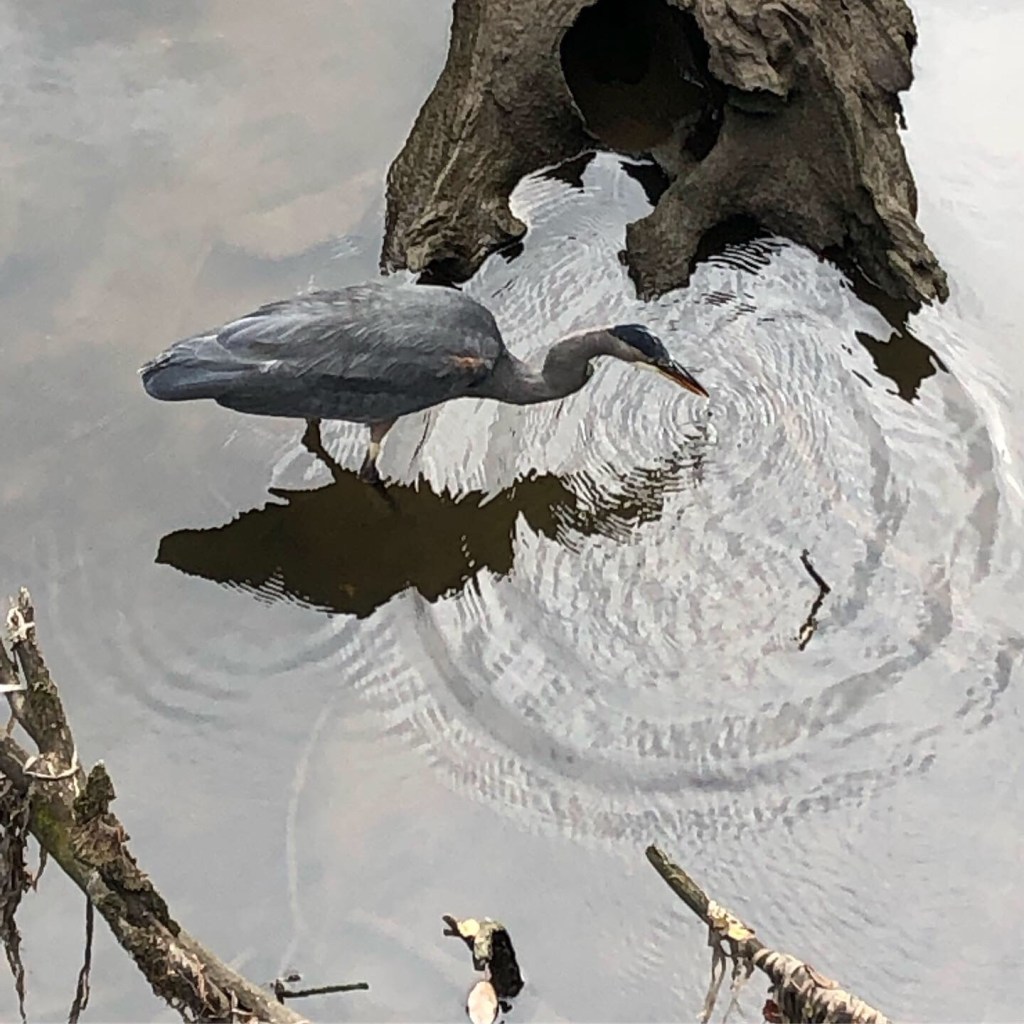
I’ve had numerous heron and rabbit sightings these past two weeks too, and yesterday morning the insistent mournful cry of a Northern Flicker punctuated my morning meditation. Our neighbour is the lucky one to host the hollow tree where the family lives. He reported today that baby Flicker pokes his head out of the hole a little more each day. This morning a chevron of honking Canada Geese passed over me as I watered the garden. I drank in the sight and the wistful sound, the sound of yearning.

Heron fishing in Colquitz Creek

I don’t think there are more animals and birds in our urban environment than there used to be. What has changed is my level of observation. Not working, slowing down, and staying close to home means I notice more of what’s happening around me. 

This strong feeling of kinship with all of these animals has affected me. In January, I eliminated animal products from my diet. My bad cholesterol (LDL) has been too high for years. My doctor told me it was genetic and changing my diet would likely not have an effect. I disagreed: I proposed to eat vegan for six months and get my blood tested at the beginning and end of the period. Though at first I missed cream in my coffee and chunks of cheddar with my apples, I’ve grown to enjoy plant based cooking and eating.

It’s easy to tell people you are not eating animal products for health reasons (dietary veganism). How can they argue with that? If you say you’ve chosen this diet because you don’t want to harm animals (ethical veganism), some meat-eaters become uncomfortable and defensive. (I know because I felt this way.) I hate to cause discomfort, yet as I continue into the final month of my experiment, I realize my reasons for not eating animals products are not so simple as they first were. 

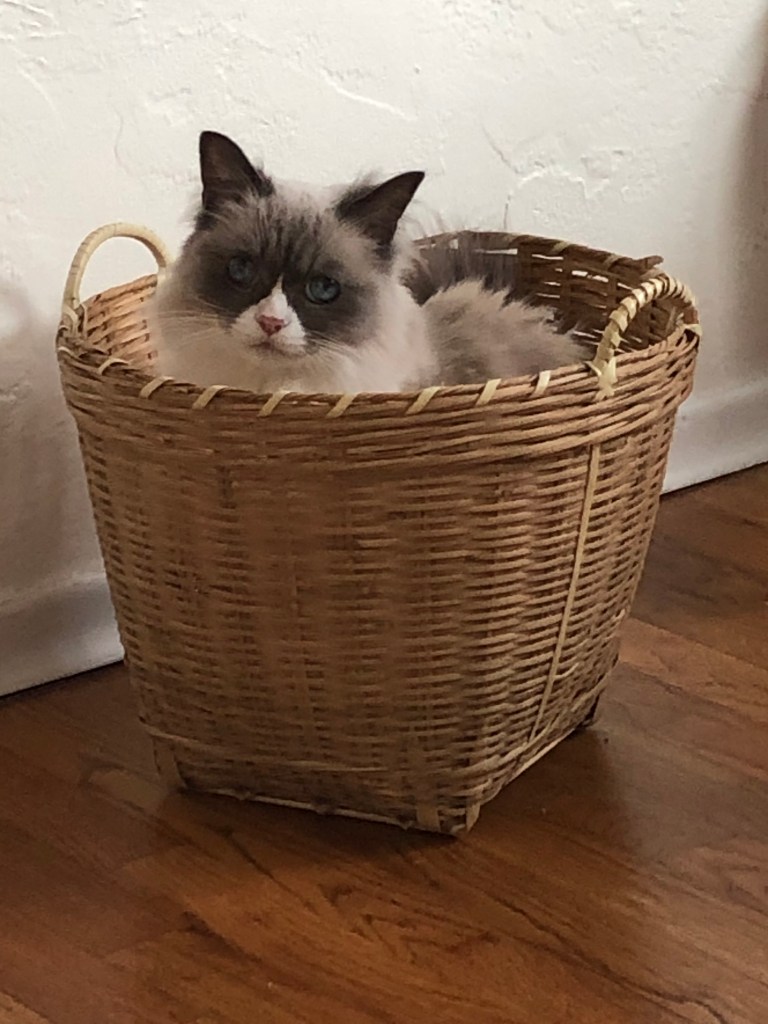
Yes, I want to be healthier, and I predict my blood test in July will be good news. But I also feel close to my animal family: the owls, the mother deer, the big rabbit who scooted in front of me on the path, the robins, the gorgeous Waxwing, the Flicker, the geese. Even the damn crows. Sure, I know none of those animals is on the menu. But I extend that feeling of kin to the big dairy cows with sad eyes hooked up to milking machines at the Saanich Fair last September. The chickens I imagine stuffed into too-small cages. The lambs my father used to raise on his farm and send to be butchered. My kith and kin, just as much as Joy, our Ragdoll cat lying beside me on the couch is family. I don’t know what I’ll do when this experiment in eating is over. What I do know is that I like this feeling of being connected to all sentient beings.  

Joy

Heavy bear

“That inescapable animal walks with me,
Has followed me since the black womb held,
Moves where I move, distorting my gesture,
A caricature, a swollen shadow,
A stupid clown of the spirit’s motive,
Perplexes and affronts with his own darkness,
The secret life of belly and bone
Opaque, too near, my private, yet unknown,
Stretches to embrace the very dear
With whom I would walk without him near,
Touches her grossly, although a word
Would bare my heart and make me clear,
Stumbles, flounders, and strives to be fed
Dragging me with him in his mouthing care,
Amid the hundred million of his kind,
The scrimmage of appetite everywhere.”

From “The Heavy Bear Who Goes with Me,” Delmore Schwartz, 1938

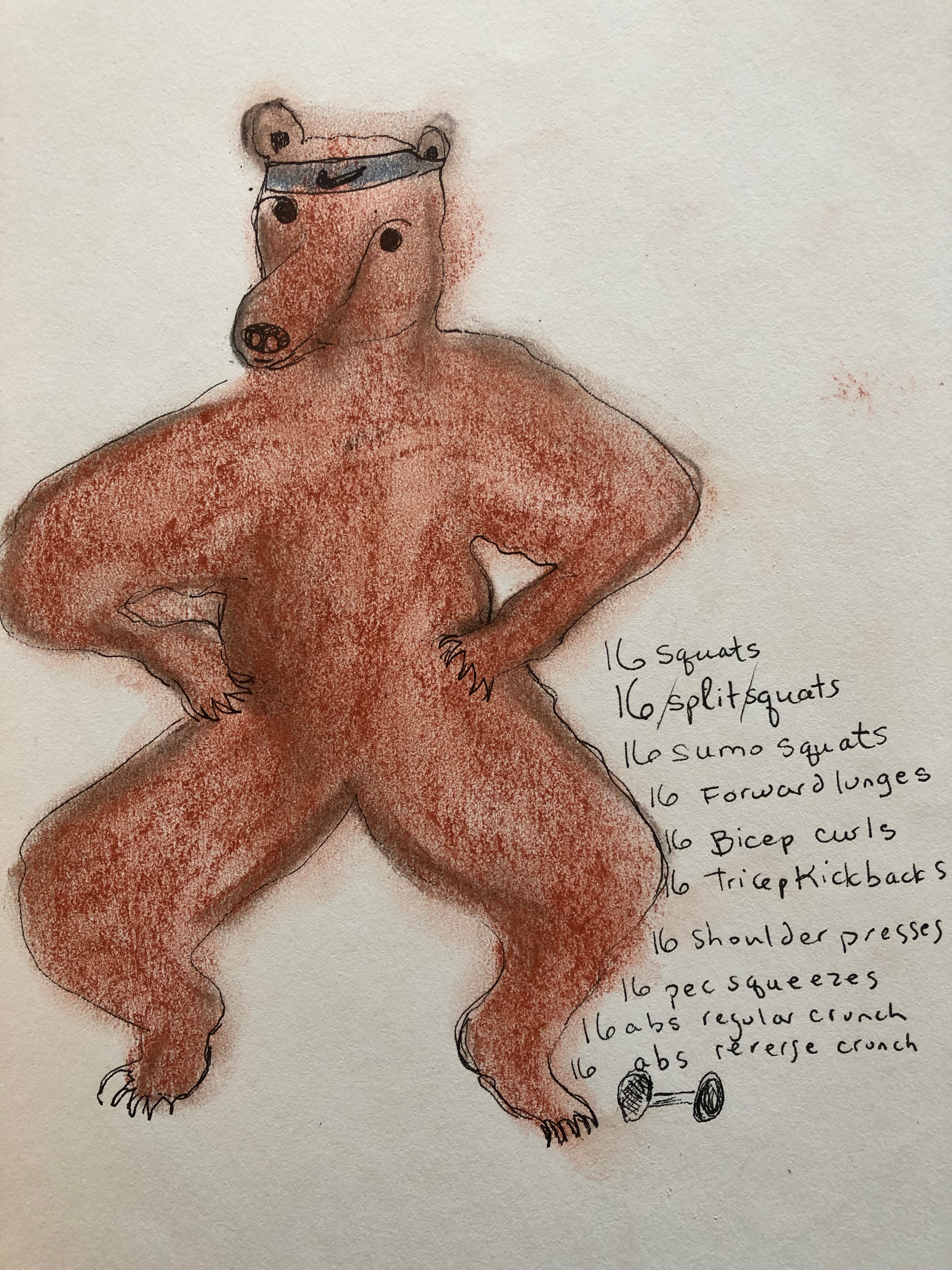
As much as I want to be one with it and to befriend it (as I wrote about here), most days I feel at war with my body. My mind is agile, quick. My body is a heavy bear. I know I should exercise, yet as I make another cup of coffee and settle into my writing chair, I convince myself that it’s not really that important. In August, I hired a personal trainer, thinking she would somehow fire me up, inspire make me to get fit. I had a few sessions with her, and she was lovely and encouraging. She set up a practical plan of cardio, weights, abs, and stretches for me. And then I found dozens of excuses not to go to the gym.  Well, getting motivated to exercise is an inside job. (I knew this but was in denial.)

IMG_0104

***

Clambering around a playground yesterday with the four-year-old girl I sometimes hang out with, I felt old, tired, heavy, and sore. I stumbled and floundered like a shaggy she-grizzly, a version of Schwartz’s inescapable animal. Then I realized on the bus home that I need to treat exercise like I treat water or food. A need. A requirement for living well.

***

Today I accompanied Michael to the rec centre where he goes for his daily run. I took my iPhone and headphones and tuned into Apple Music’s app, looked under “Music by Mood’s” Fitness category, and found it is crammed with playlists of every kind—“R&B Workout,” “Alternative Workout,” “Latin Urban Workout.” I went straight to the “’80s Workout” because there’s nothing like the Pointer Sisters singing “I’m So Excited” to get your heartrate up to its maximum. The record’s needle drops down into the disco groove and before I know it, my past self, my young body, is moving fast, moving sexily.

***

A year or two ago, I was leery of paying monthly for Apple Music, and I loathed the idea of the playlists, prepackaged music pabulum. I didn’t want to be just another baby boomer nostalgic for the sounds of her youth. I should select my own favourite music, make my own mix tapes. But I surrendered. Apple Music’s fitness playlists make me happy.  I warmed up on the rowing machine to Cyndi Lauper’s “Girls Just Want to Have Fun” and Rick James’ “Super Freak.” I had memories of going to aerobics classes with my sister in the big gym at the University of Toronto. After we sweated it out, we’d go out for a beer at a bar on Harbord Street (and for me—multiple cigarettes).

***

Moving to the treadmill, my heart beat faster with the Weather Girls’ “It’s Raining Men,” Madonna’s “Material Girl,” and Wham!’s hit, “Wake Me UP Before You Go Go.”  Peak heart rate with the Pointer Sisters, sweat pouring down my face. Following that, I did weights to the Eurythmics “Sweet Dreams,” remembering a summer in my twenties when I was obsessed with that song, playing it over and over as I lay on the floor in a melancholic haze. Finally, my housemates started to complain about hearing the same song 50 times a day.  I forwarded through some songs, and came “Billie Jean” by Michael Jackson and “Let’s Dance” by Bowie. Wonderful.  As I stretched post-workout, I shifted over to Botswana’s hit songs, another Apple Music feature (Daily top 100 in dozens of countries).

***

Sometimes my body is a heavy bear, fumbling like “a stupid clown of the spirit’s motive.” My mind is electric and agile, my body a “caricature, a swollen shadow.”  As I age, my body can feel like a slow prison for a quick mind.  Her “mouthing care,” her “scrimmage of appetite” always playing out—wanting this, wanting that, buttered toast with jam, too many coffees, lounging for hours on the couch.  How good to feel, at least today, energized, young, strong, and compatible with my animal. How can we become one?

IMG_0101

La Passeggiata

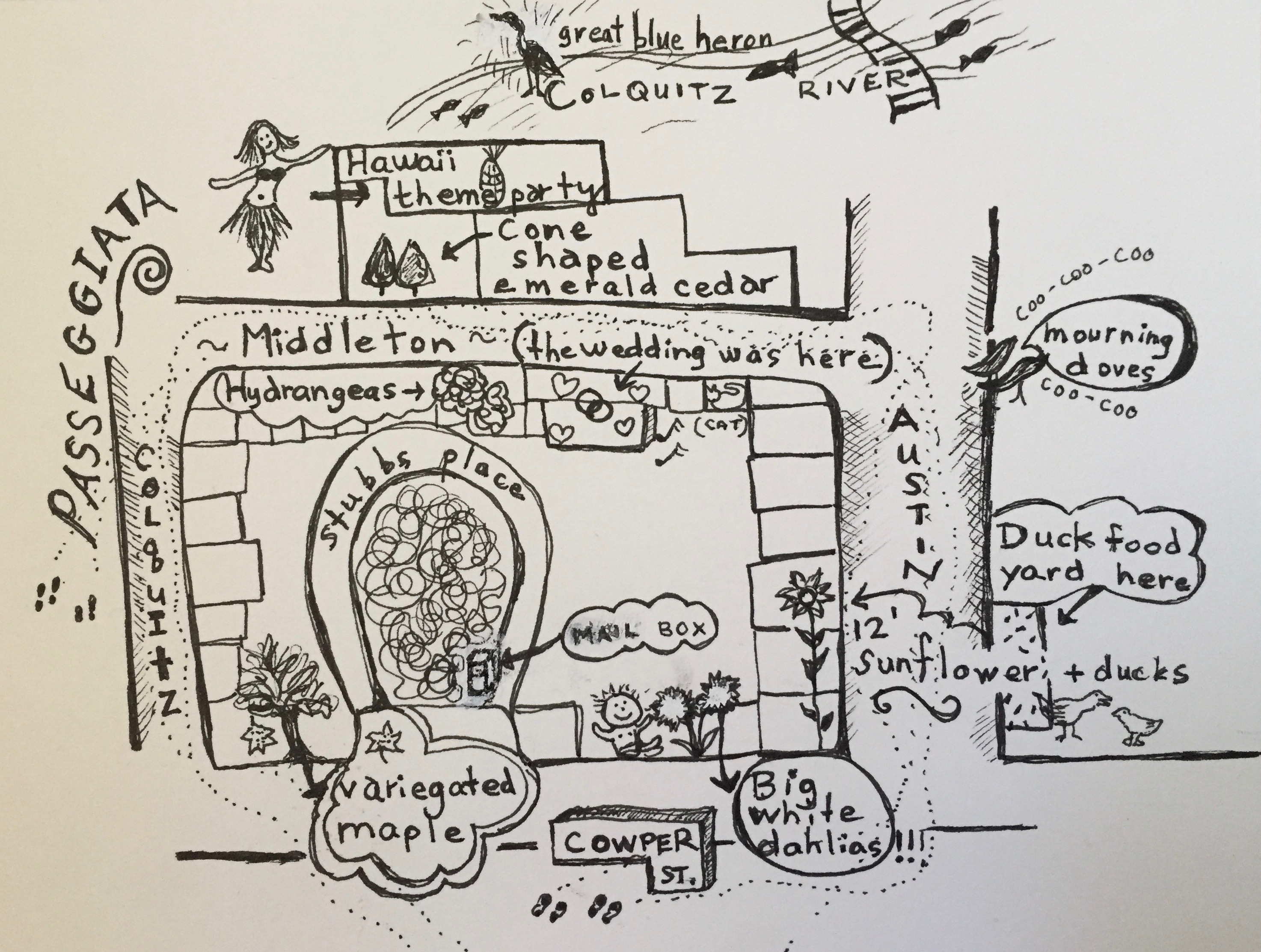
IMG_2057A passeggiata is the Italian tradition of a gentle stroll taken around the neighbourhood after dinner.   It’s also a vital part of the “Always Hungry?” (AH) diet developed by Dr. David Ludwig. He writes that “the passeggiata is a moment of joyful movement that helps support healthy digestion and insulin action, while simultaneously relieving stress and helping you sleep better.” (p. 123). That’s true, but I have also experienced intense pleasure in observing the phenomena in our neighbourhood during our evening passeggiata.
Michael and I have been following the AH diet for almost 8 weeks.  At first I resisted the passeggiata. We work hard all day, often biking to and from work (16-18 km round trip), and after preparing and eating dinner, I want to relax.  So we decided to keep it short. We walk around the block, just over a kilometre, alternating clockwise and counterclockwise. Now I look forward to it, as we walk slowly, encountering people, houses, trees, animals, and cars.

Head across the street passing the maple tree with the variegated leaves. Stop to admire those green speckles. We curve around the corner, down broad Colquitz, past front lawns, the van with “HOP GUY” license plate (he runs a small brewing company).  The houses become more familiar each time we stroll past, noticing details.  As we rounded the corner onto Middleton one evening, we saw a mother and her three kids getting out of their car. A dark-haired woman  helped her young daughter attach a grass skirt around her hips. The boys, perhaps 10 and 12, wore Hawaiian shirts. “Hawaii theme party?” I asked. Somehow the passeggiata leads to these chance meetings. We talked to her about the beauty of the Hawaiian Islands and fare prices while walking with them. In front of the party house many people with colourful leis around their necks  congregated, holding potluck dishes.

Another evening, as we walked by another house on Middleton, upbeat music blasted from the backyard and a catering truck, Food for Thought painted on the side, was parked in the driveway. A young man in a crisp white shirt and black pants approached the truck. “Is that your company?” I asked. “No, but I’m the manager.” “What’s going on?” He explained it was a wedding and in 20 minutes they would be eating dinner. He recommended the catering company as “good food and reasonable,” and went off to do the job.  Music, laughter, and cheers were heard all evening from the wedding house. Mazel tov!

Then there are the animals.  A flock of ducks frequent the neighbourhood. I think they live on Colquitz creek nearby, and travel over to the Gorge. We see them flying overhead almost every night, doing great loopy circles over the neighbourhood, an aerial version of the passeggiata. I can hear their wings creak as they plow the air over our heads.  Then they land on a front yard on Austin St., where the owner has put out plastic tubs of seeds for them to eat and bowls of water to drink.  A brown flurry of moving bodies with flashes of purple and teal as they peck at their food, jostling one another. Sometimes they walk out on the street. Last night a guy in his truck with his daughters had to wait as they slowly made their way to the side of the road so he could proceed. I remembered Robert McCloskey’s Make Way for Ducklings.

Two mourning doves also live in our neighbourhood. I noticed them appear several months ago when the construction up at Admirals Road and the highway got intense and we lost part of Cuthbert Holmes park to the bulldozers.  They have found a new home in the tall trees on our streets. I see them on every passeggiata now, usually together, on branches and telephone wires, cooing. Their mournful cries wash over me, making me feel an old yearning for some other world.

There is another special bird that has perched on the same wire two nights in a row, and trilled out the most complicated melody. We stopped to listen.  A guy pulled into the driveway in his yellow Alfa Romeo. He saw us, necks craned, looking up at the bird on the wire. I explained, “That bird sings such a lovely complex tune—I am just wondering what kind of bird it is.” “Songbird,” he laughed and opened his front door. (I have since searched through my copy of Birds of Victoria and identified the bird as a starling, perhaps mimicking the songs of other birds.)

We saw a cat yesterday, a white cat resting on a moist emerald lawn. Most of the lawns are straw brown, in these late baked summer days. But there she was, looking at us coolly in her stark white elegance against the green, one paw thrust forward.

IMG_2049

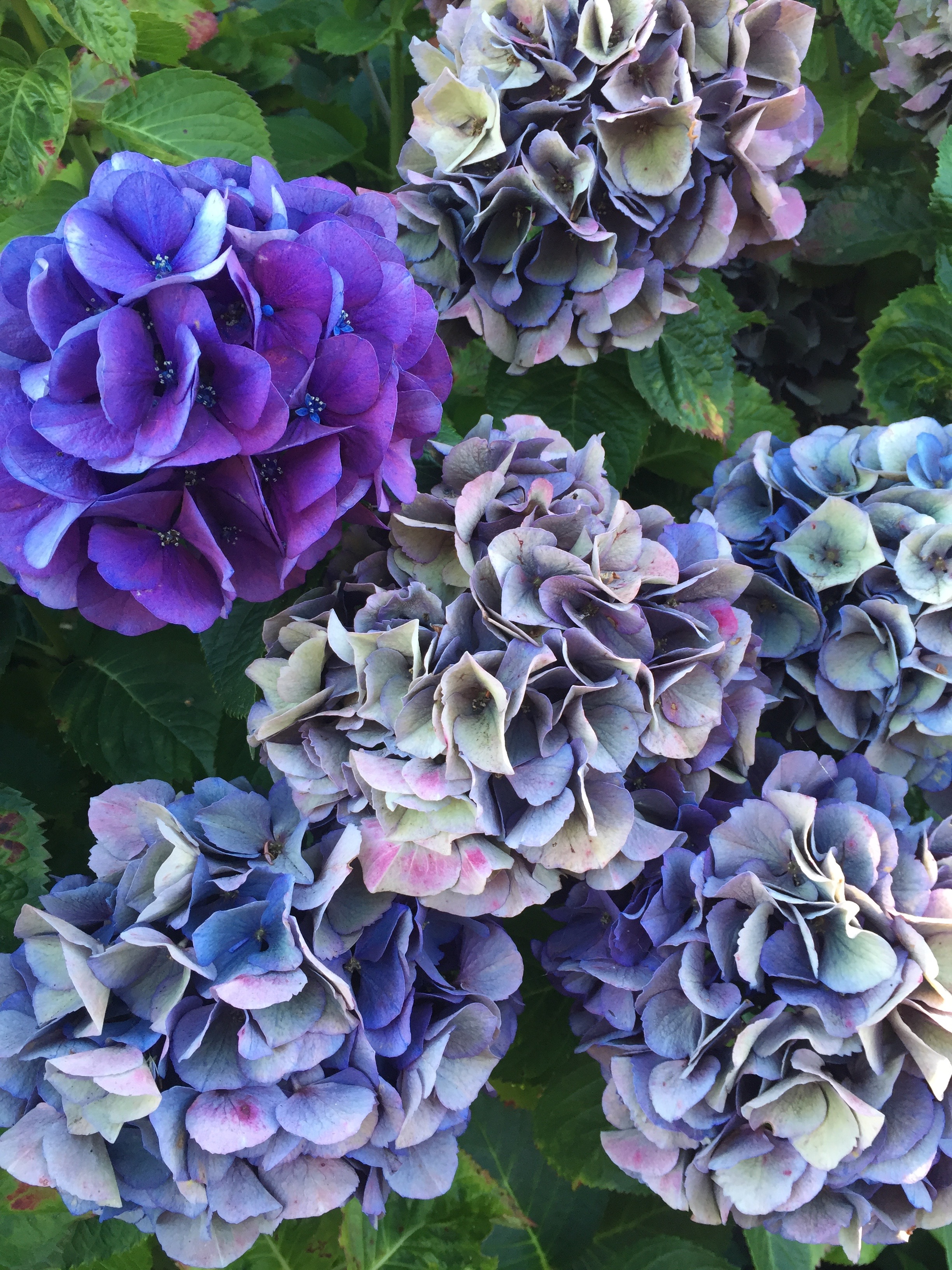
Then there are the flowers. Perfect white dahlias the size of a baby’s head. A huge hydrangea bush, the purplish blossoms weighted with summer, bleached by the daily heat.   Sunflowers. At one house, they tower twelve feet, their heavy bronze heads hung as if shy about their size.  Tonight as we stopped to admire those beauties, their owner drove into driveway and got out of her car. She told us this was the first time they had grown to this height. “I think it was the chicken manure from North Saanich.” When my husband congratulated her, she said it wasn’t her, it was the manure.  “Life is like that,” Michael responded. “Equal parts magic and chicken shit.”

Each day I notice something new or talk to another neighbour. All because of the passeggiata.