Toronto, Again

I am in Toronto for a few days. This city was my home from 1965 to 1989. 

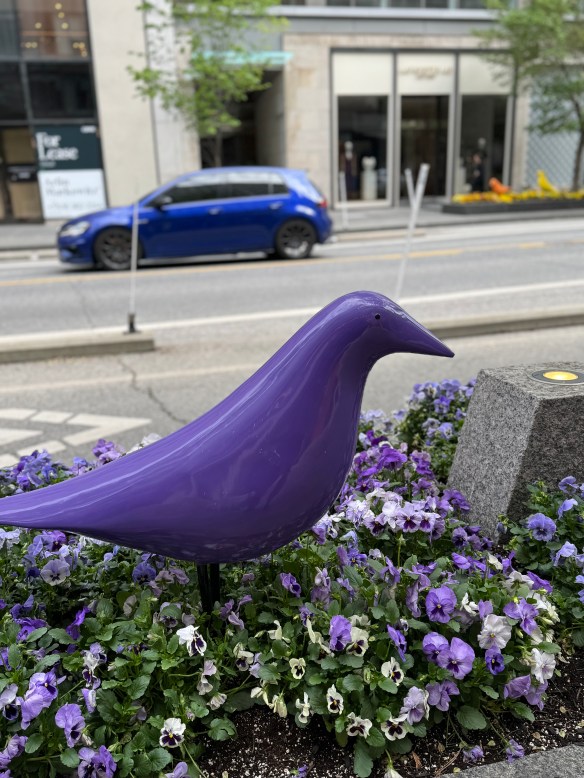
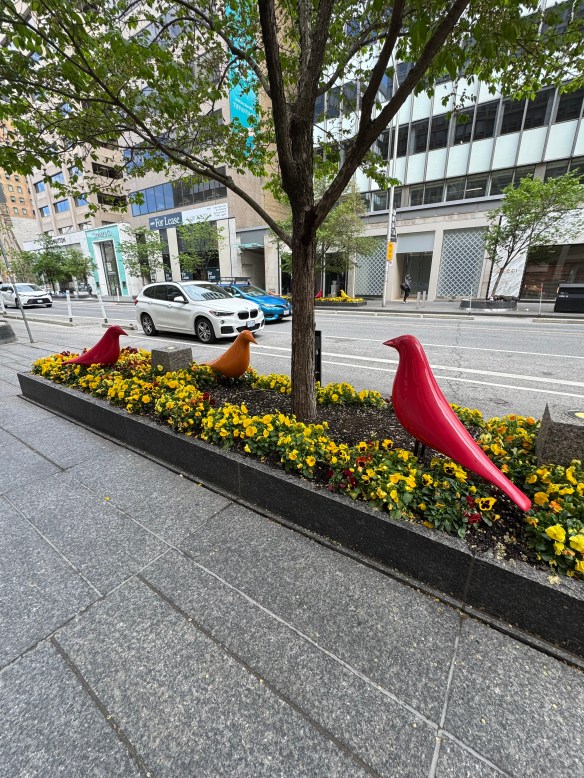
I have been walking Bloor Street West. First, the Mink Mile, that stretch between Yonge and Avenue Road lined with the tall glass storefronts: Zara, Birks, Lululemon, Holt Renfrew. Rich people shop here. Very few birds fly above these tall, inhospitable stores. Instead, big bird shapes in bright shiny colours line the sidewalks, ghosts of extinct species. 
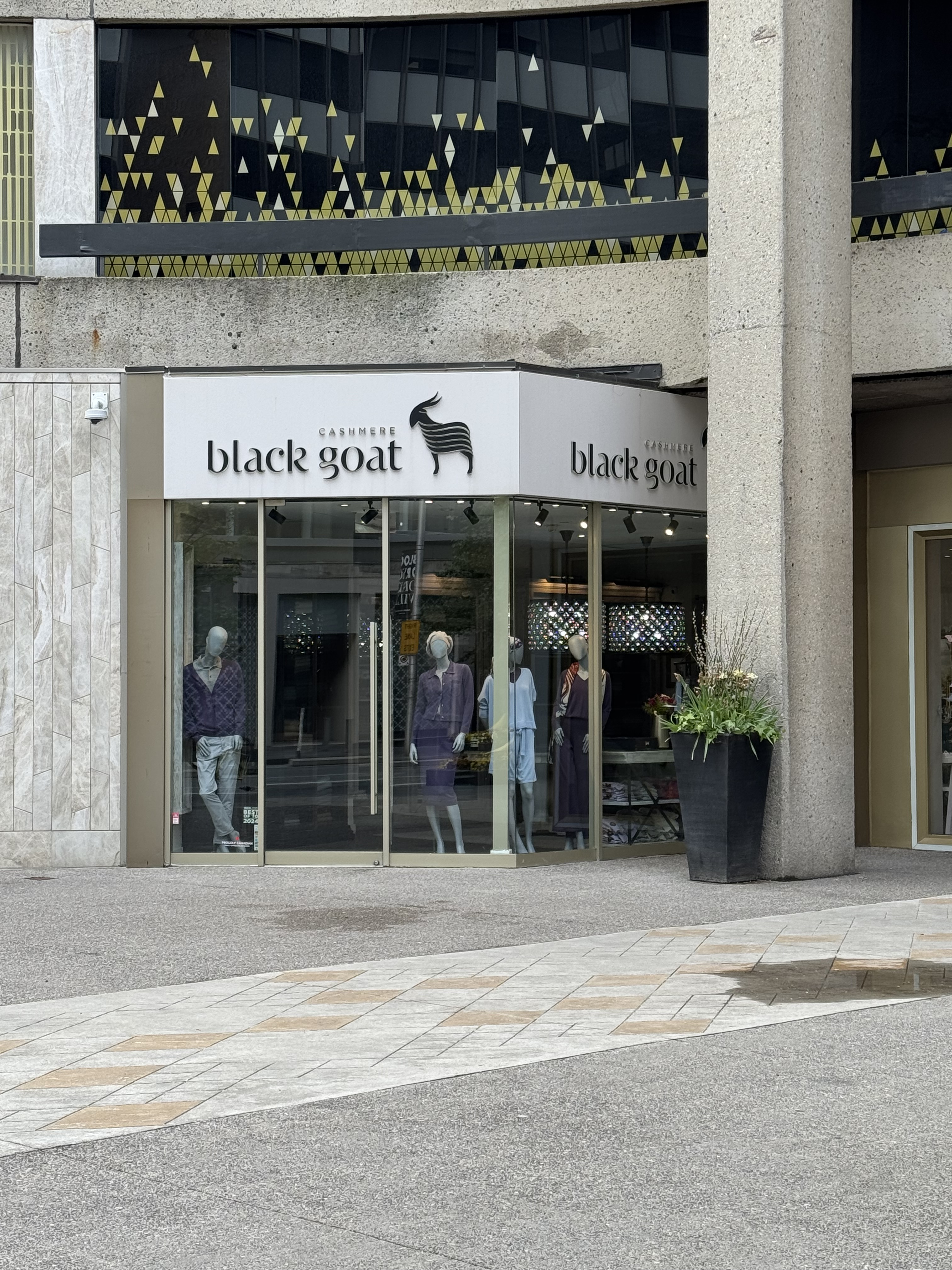
It’s cold in Toronto for late May. I wear a toque, jacket, leather gloves. But now I wish I’d brought a scarf. I admire the scarves in the window of Black Goat Cashmere, next to Ashley’s in what used to be called the Colonnade. This mall was one of my mother’s favourite places; after window shopping Bloor Street arm in arm, we’d drink coffee and eat pastries at the Coffee Mill at the back of the Colonnade. 

I enter the store. Two saleswomen are upon me immediately. I ask about the small scarves, lifting one of them up out of the wooden box where they are displayed like confectionary, soft cashmere in artful designs, wool watercolours. “How much are these little ones?” “Oh,” says one of the women, advancing, “the Carre scarves are $385.” I laugh, folding the luxury item back into its box. “Perhaps in another lifetime.” 
Pulling my zipper up to my chin and walking into a fierce wind, I take a detour to wander around the grounds of my alma mater, Victoria College. I feel nothing as I gaze over the green lawns, watching two young men kick a soccer ball.  Alma mater means “nourishing mother,” but this place was not that for me. Those four years as an undergrad in English Literature are a blur. One thing stuck: a Shakespeare lecture by Northrop Frye when he—already extremely old—told us in his quavery voice that Bach’s Mass in B Minor was the voice of God speaking. All of us bent over our notebooks and wrote that down. It sounded profound.  

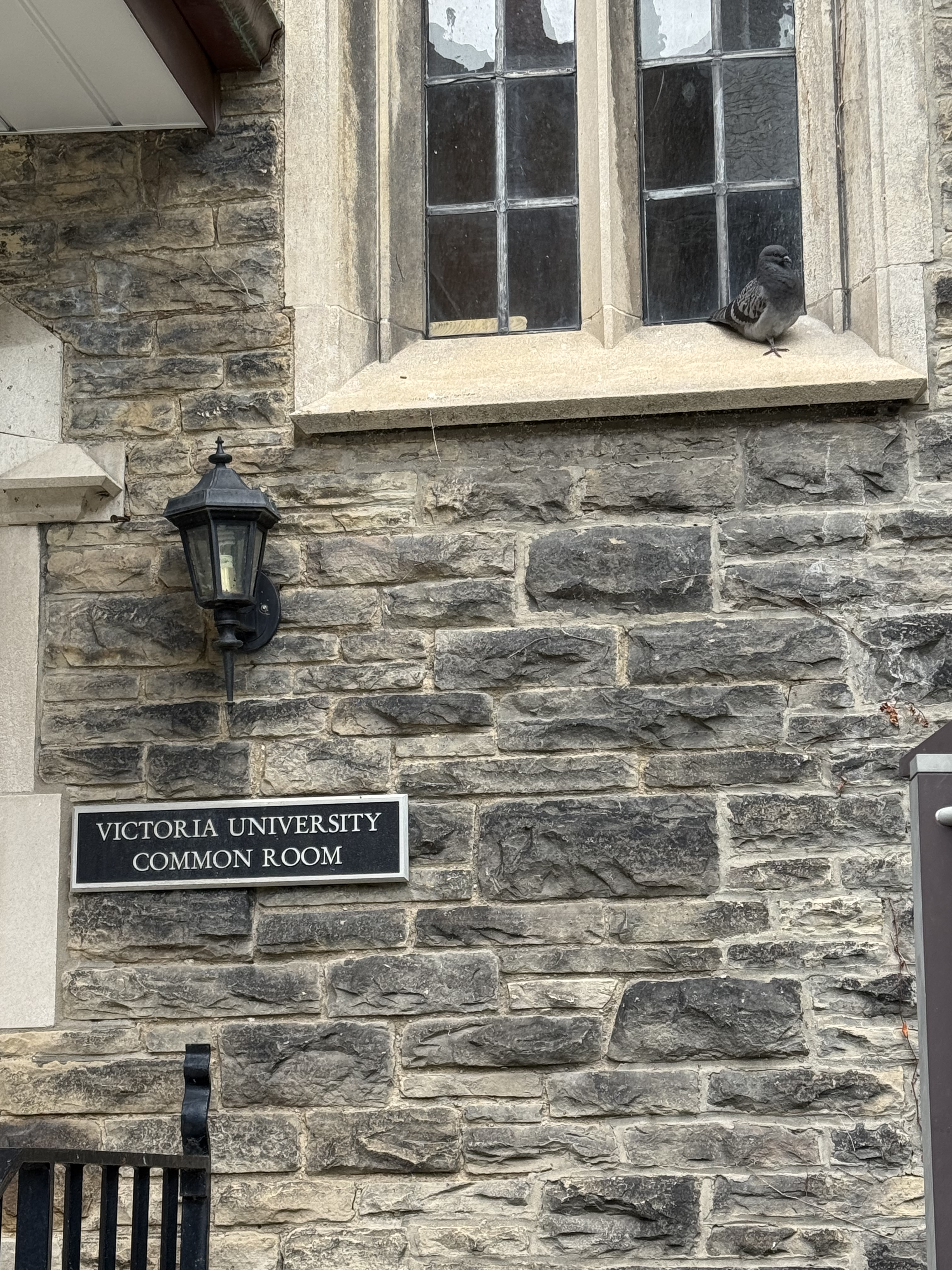
I was a lonely young woman. Barry Lopez writes that “It is not possible for human beings to outgrow loneliness,” and that seems true to me. Though I’m not as lonely as I was. I admire a pigeon perched in the recessed window of the Victoria University Common Room.

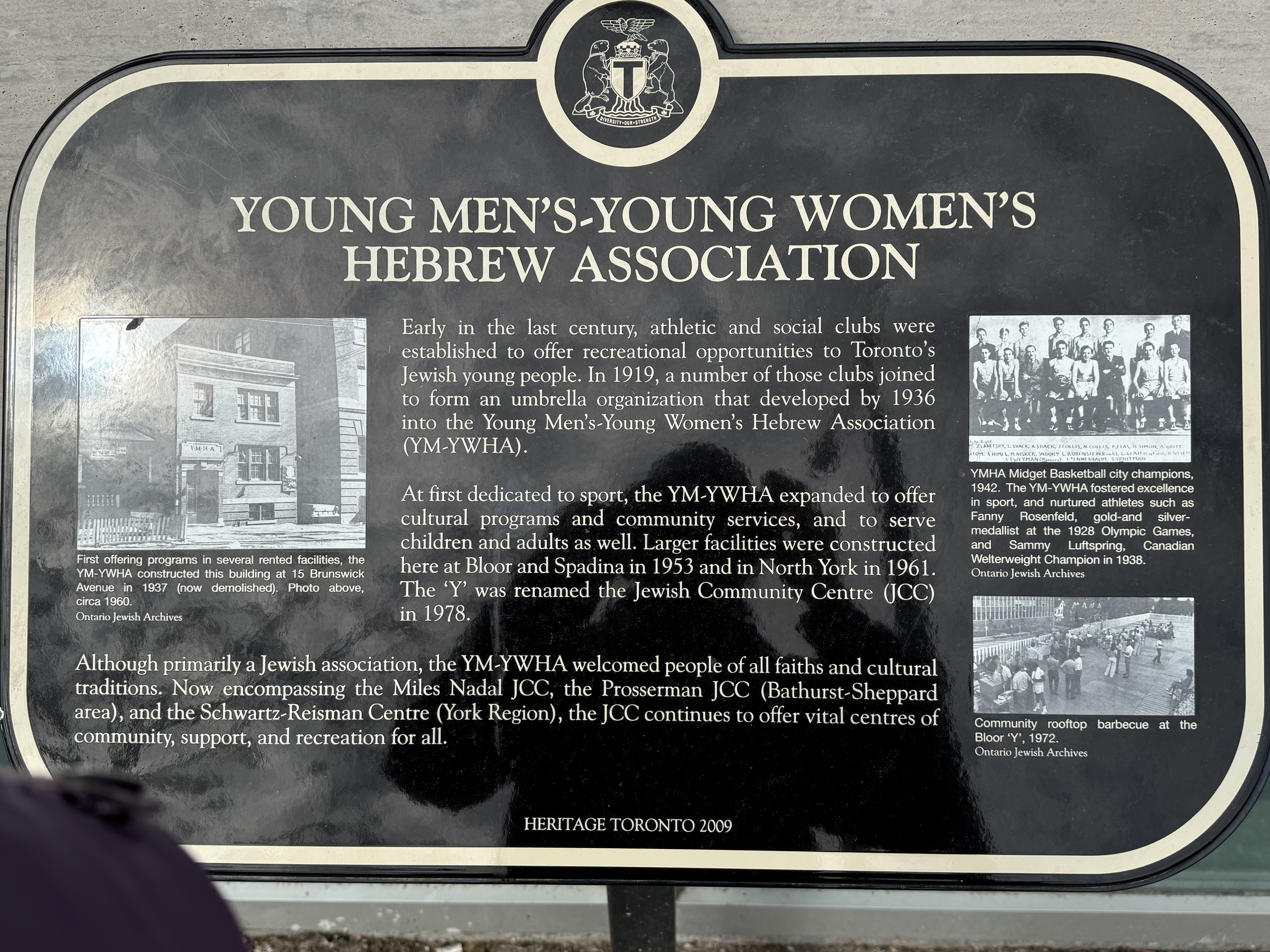
On the way up University back to Bloor Street, I check out the Gardiner Ceramic Museum, where I hope to see the work of contemporary ceramic artists, only to find that the main galleries are closed for renovation. I continue back along Bloor. It’s time for a coffee and I remember a Second Cup in the block before Spadina Avenue. And if that is no longer around, there’s a coffee shop in the old Jewish Community Centre (JCC), where my mother did aquafit for the last decade of her life. Back in the seventies, when it was the Young Men’s Hebrew Association, it was home to SEED, the alternative school my sisters and I went to as wild teens. 

Second Cup is gone, and so are many of the other businesses on that block. Everything in life is impermanent, so I am not surprised Second Cup and Noah’s Health Foods have disappeared, and the spaces are vacant. Once upon a time there was a greasy spoon in this block where we drank coffee in thick cups, smoked cigarettes, and ate French fries. We walked over from “school” and stuffed our electric bodies into the vinyl booths, laughing, talking, flirting, mystified and excited by life. Once, for a time, my sister lived above the restaurant with her boyfriend, an apartment with burlap on the walls and plants everywhere. There’s history here.  
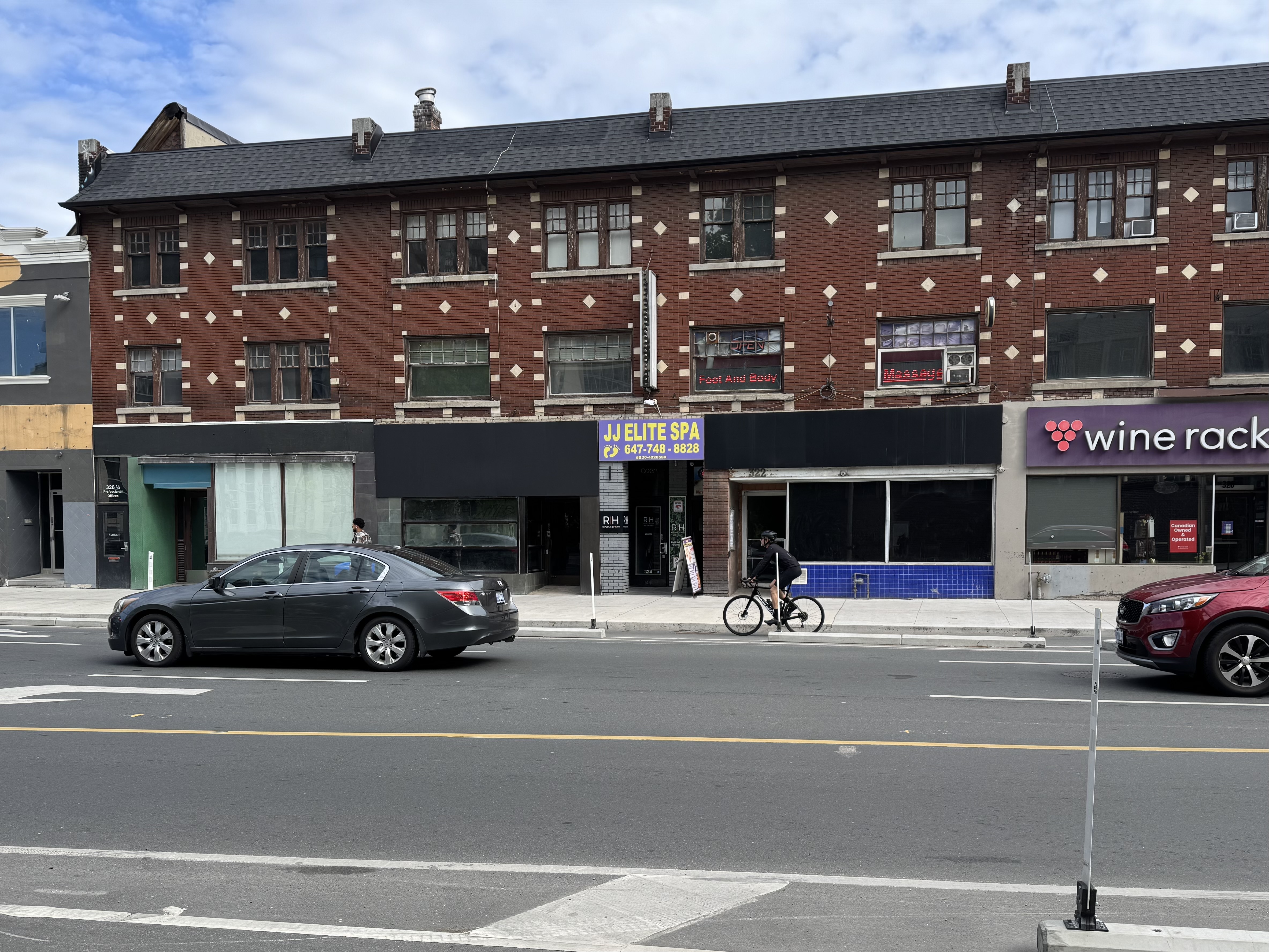
The wine store remains. This is where we bought bottles for the meal marking my mother‘s death in February 2019. Her house is only a few blocks from this corner, and she died at home. We carried the clanking bottles through the snow. My sister made bouillabaisse and we sat around the teak table, drinking, eating, and telling our Virginia stories, stories filled with love, regret, sadness, and confusion. 

I cross the street twice to the southwest corner and pull on the doors of the Jewish Community Centre, but my pull meets resistance. A security guard opens the door from the other side, just a few inches, and peers at me. “I am trying to get into the coffee shop,” I say. “No more coffee shop. Coffee shop no more,” a sort of palindrome of endings. And he closes the door in my face. 
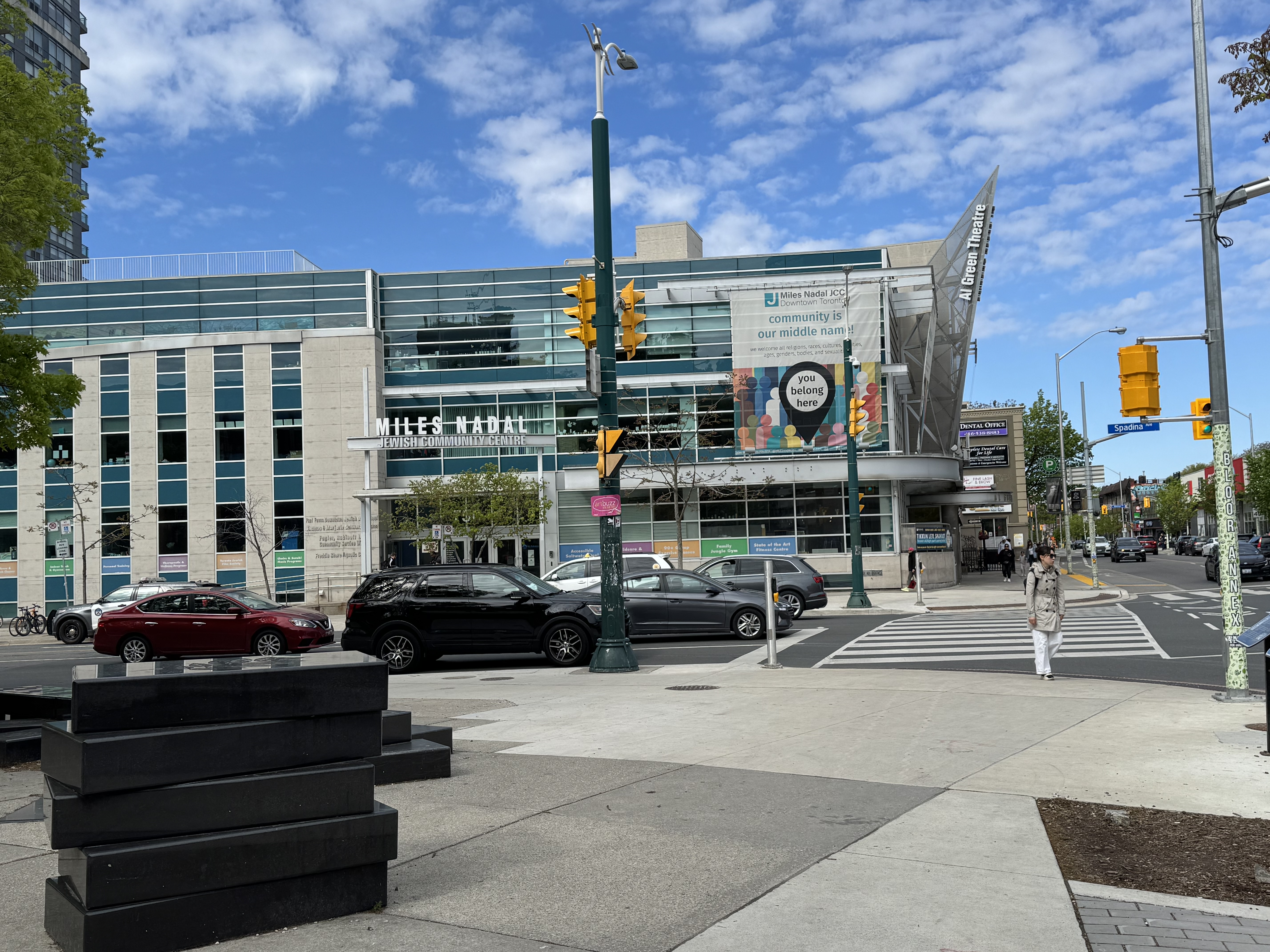
I keep walking. Surely, there is a sweet, cool, interesting café somewhere along Bloor. I am Ahab stalking the great flat white, but she’s nowhere to be found. I pass more than one Tim Hortons among the restaurants and bars still closed this cold morning, but no, I won’t go there. Cigarette butts decorate the grey pavement, evidence of parties spilling onto the street last night. Pigeons strut their stuff. I keep walking. Yes, I know Futures Bakery might be considered an interesting coffee shop, but I hold out for something else, some uncertain thing, something new, something not in the algorithm. 

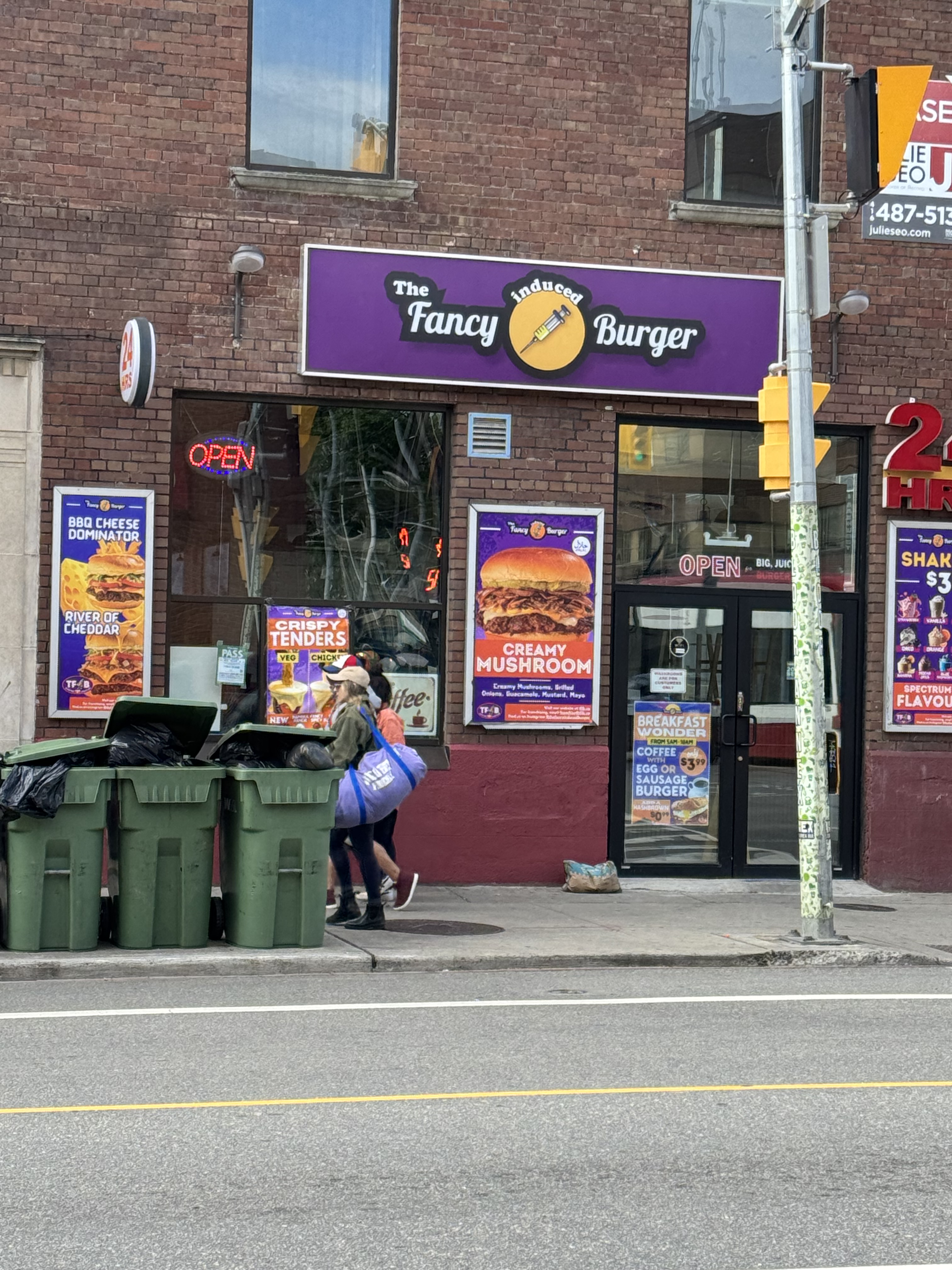
I keep walking. The Hungarian restaurant where we ordered dumplings and gravy and goulash soup:  gone. The delicatessen and the cheese shop with a cow in the window: both gone. The café that once took up that southeast corner of Bloor and Bathurst: gone. Now there’s a Fancy Burger outlet, where you can add a syringe cheese shot to your beef patty for $1.49. This part of Bloor continues to metamorphize. Ethnic restaurants and record stores turn into cannabis shops and bubble tea counters. Used bookstores become pet pampering salons and tattoo parlours. 
I am happy to see Midoco, the office supply shop, a place where you can lose yourself among the art supplies and fountain pens, is still in business. Ditto the Home Hardware.

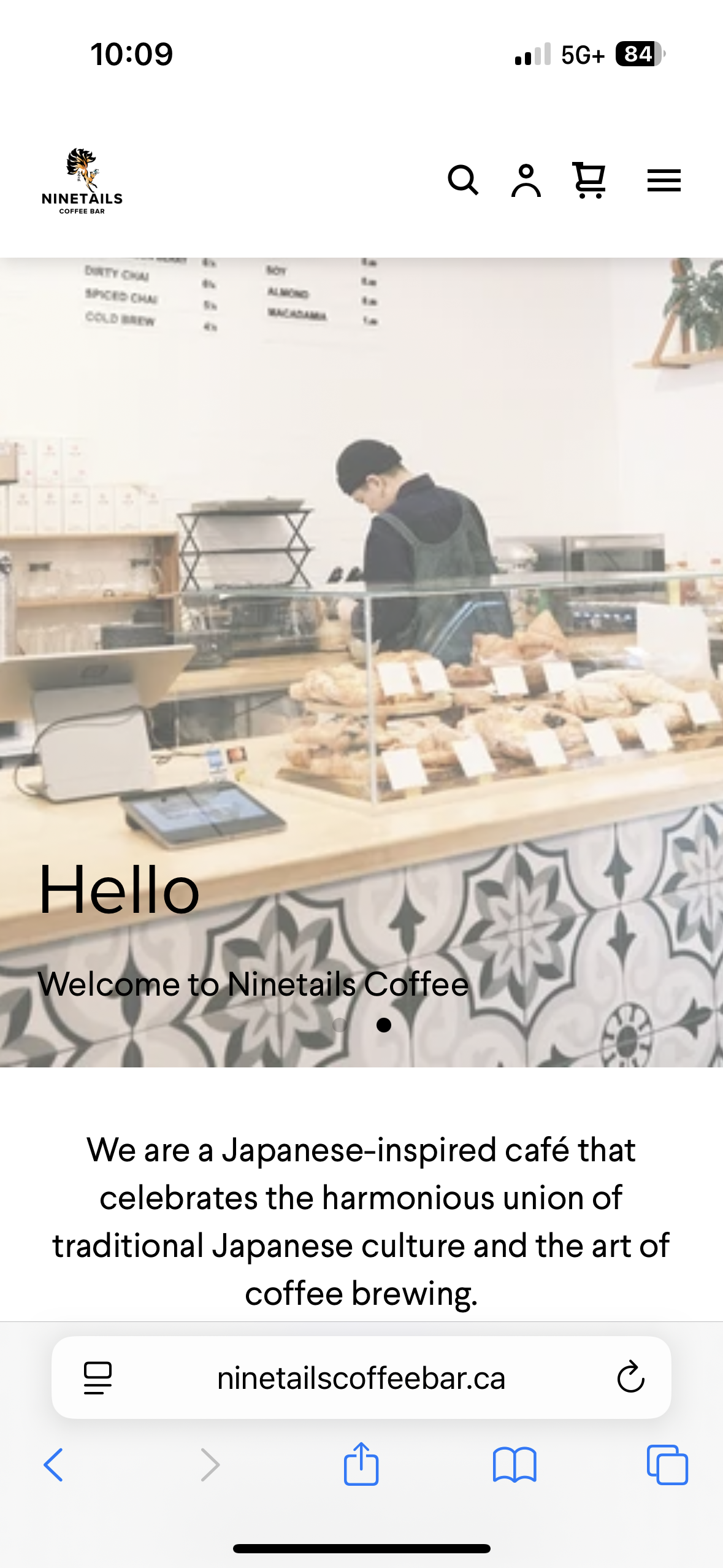
I keep walking, knowing that somewhere soon, I will come upon something interesting. I pass the small corner grocers, happy to see they still sell bargain produce and hanging pots of flowers. I pass Euclid, cross to the south side, and then, suddenly, there is an A-Frame sandwich board picturing a fox with many tails. I walk into Ninetails Coffee Bar, where two young Japanese women bustle behind a honey-coloured wood counter. White walls, a few small round tables graced by simple folding chairs. A coffee bar decorated with ceramic tiles patterned in grey, blue, and white. A full pastry case. Smiling faces welcome me.

 My flat white, delivered in a short glass with a foamy fern on top, is delicious—strong and hot. While I drink my coffee I read about the coffee bar’s philosophy. 

In Japanese folklore, Kitsune are foxes with mystical powers that can grow nine tails.

“we embrace the Japanese philosophy of ‘ichi-go ichi-e,’ which translates to ‘one opportunity, one encounter.’ This concept underscores the importance of cherishing every moment and every connection we make with our guests, as each encounter is unique and irreplaceable. Our goal is to provide you with a little window to Japan & Japanese culture within each visit.”

I gaze across Bloor to the north side and see, to my delight, a used bookstore that I’ll visit after I drink this coffee. It’s too easy to get lost in the past during this trip. Wandering through old neighbourhoods, remembering past experiences, feeling traces of old sadness and joy. But Toronto, like Freud’s Rome, is a metaphor for the mind. There is no denying that my personal history, etched through the decades, permeates my experience of Bloor West. I feel these vestiges of the past in my body.

But there is also the present: every moment is unique and irreplaceable. 

The sun finally emerges from behind grey clouds on this cold day and streams through the glass over my table. I will never experience this moment again, as I drink this coffee, as I gaze at the people around me, the heavily inked man, the woman with green hair, as I examine the fox on the sandwich board outside, waving her many tails. She reminds me there is only one opportunity, one encounter. This is it. 
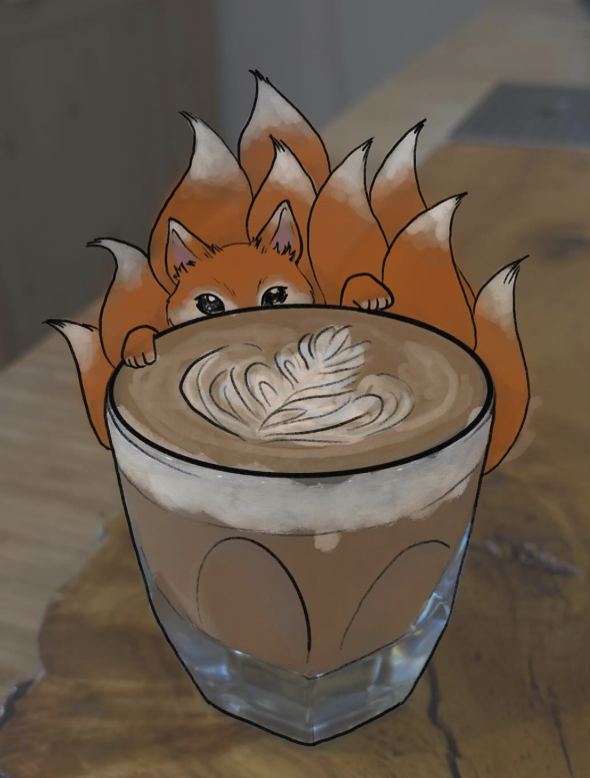
From Ninetails Instagram acccount

Fandom

About a week ago, on our morning dog walk, we stood waiting for the traffic light to change and a young girl, perhaps nine, long dark hair, hooded coat and wearing a backpack, approached and stood near us. She looked over at us a couple of times. When the light turned green, she walked in front of us a few metres, but she kept turning back, peering around her big hood to look at me. And at one point, as we crossed the bridge over the Gorge, I decided to say something. “Do you like dogs?” I thought perhaps she was looking at us because of Marvin, our goldendoodle, who trundled along beside us, at the end of his purple leash. Lots of times kids want to pet him, but they’re too shy to ask. 

“Yes, I like all animals,” she said. And then she spoke, in the most serious way, a line I will not soon forget: “I’m a big fan of nature.” I moved ahead of Michael and she and I walked together for a minute, discussing how we were both big fans of nature. Then we were at the school crosswalk where we parted ways. 

We laughed affectionately about what she’d said—what a great line! “I’m a big fan of nature,” we kept saying to each other throughout the day, and then “I’m a big fan of ____” and we filled in the blank with whatever…fizzy water, sunsets, Marvin, taking out the garbage. 

I’ve thought about that delightful exchange many times this week. The girl’s innocent enthusiasm for nature. A simple trust in the goodness of the natural world and people. Her approach wasn’t naïve; rather, it seemed wise. We spoke so briefly, but what she said made me want to adopt her attitude of fandom. 

I am a big fan of hand sewing

When we went to NYC in December, I heard about Tatter, a Brooklyn-based textile organization that is “committed to preserving skills of the hand.” They promise a lot:

“We work with makers, archivists, and anthropologists to develop extended courses that use textiles as a portal to reclaim history, cultural encounter, indigenous practices, a harmonious relation to the natural world, and making as a tactic of collective liberation.” 

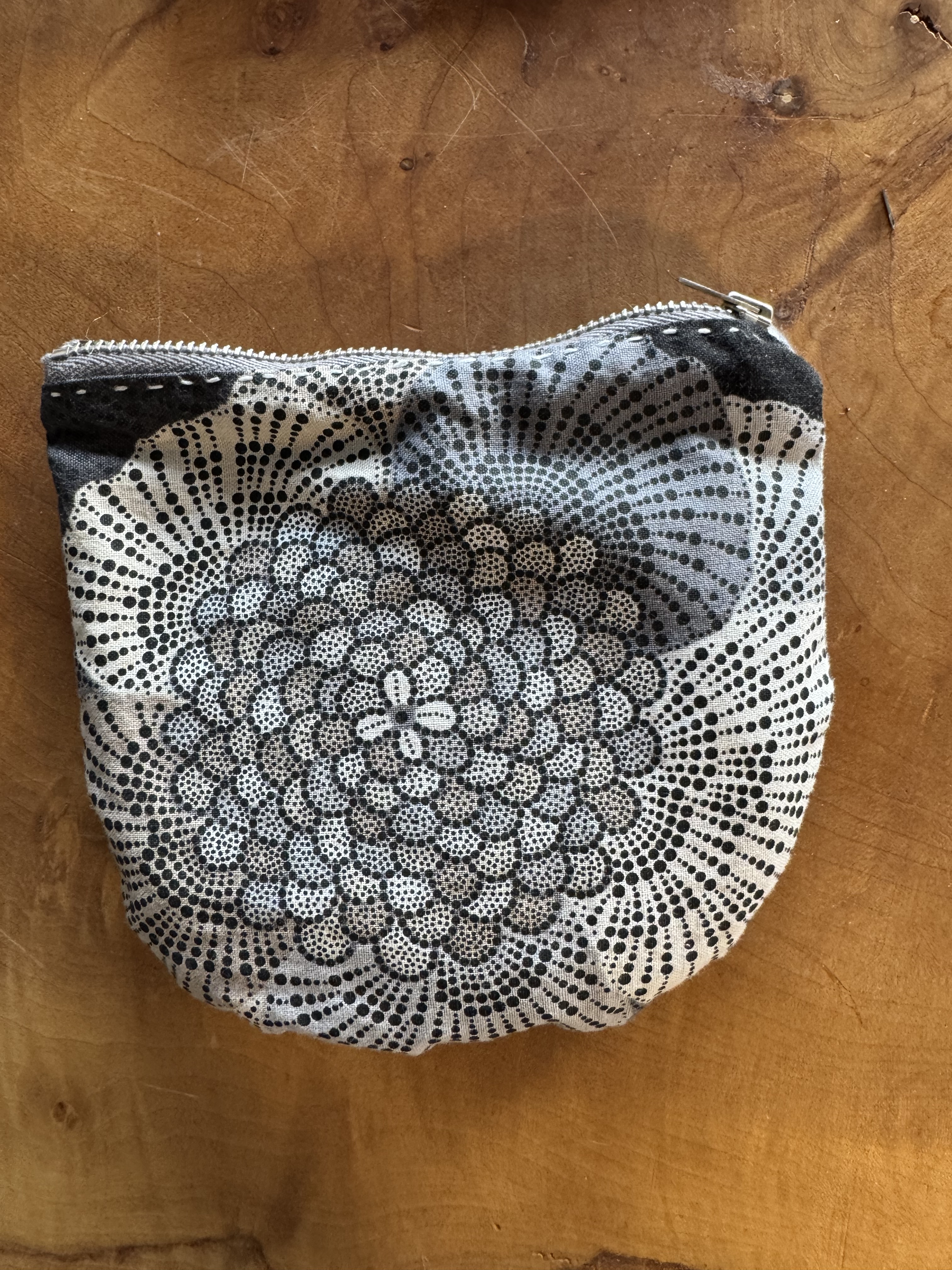
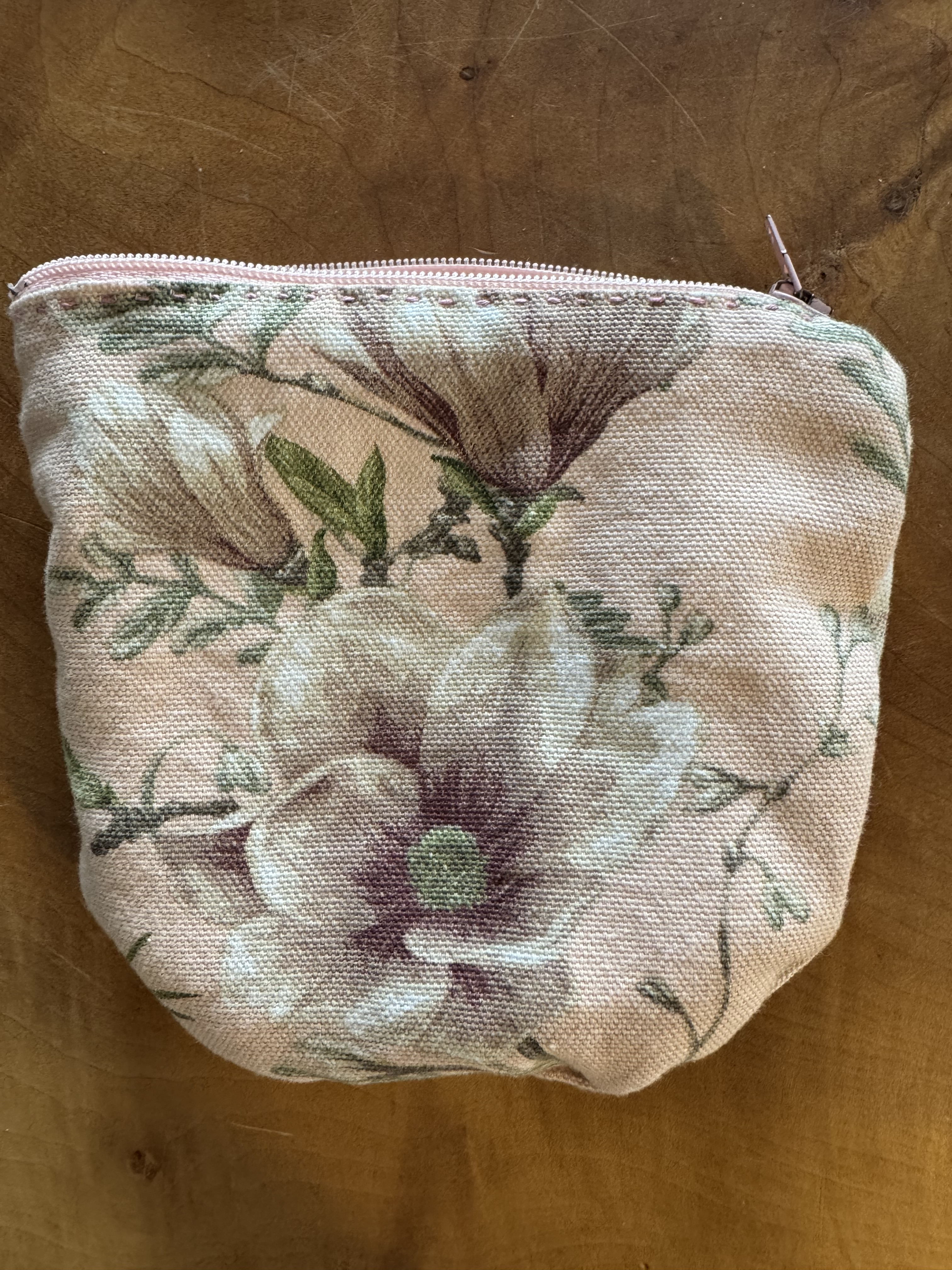
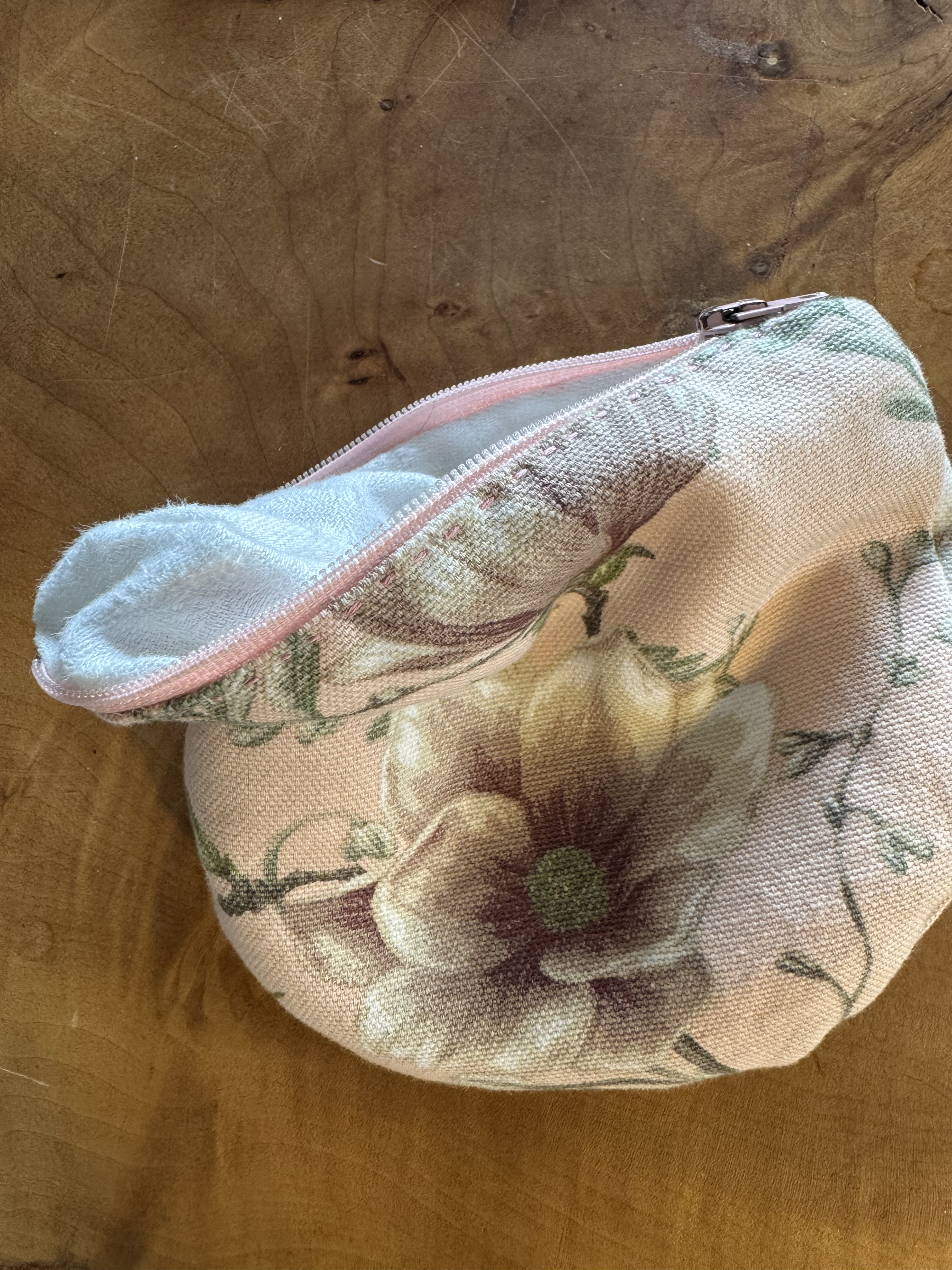
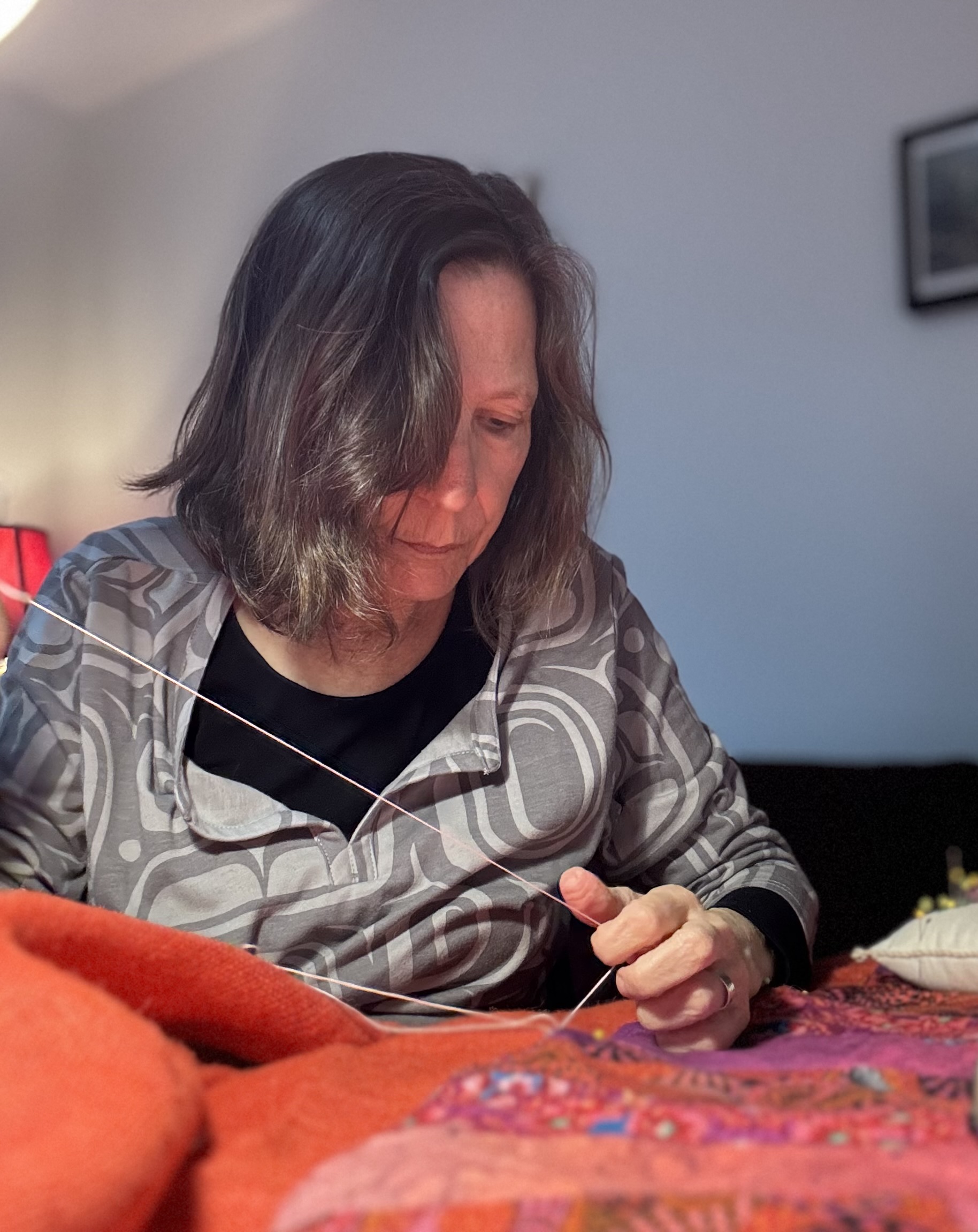
I didn’t have a chance to visit Tatter. However, in February, I took one of their classes on Zoom with Karen Stevens. We learned to hand-sew zippered pouches. Through this class, I rediscovered the enjoyment of hand sewing. The whole-body rhythm of a slow, contemplative backstitch and the satisfying emergence of a line of running stitches along a zipper‘s edge or around an appliqué. There is no rush with hand sewing, no urgency like I feel sometimes when I am at the machine. Hand sewing is portable and calming.

I learned some tips from Karen that I’ll share with you. Perhaps you already know this stuff, but for me, the following was revelatory information.

  1. Don’t thread the needle, needle the thread. This practice makes so much sense, after years of trying to poke three saliva-soaked strands of embroidery thread into a tiny hole. Hold the very end of the thread(s) between index finger and thumb in your non-dominant hand while you angle the needle over the thread. Much easier to get eye over thread than thread into eye.
  2. You don’t need knots. You can just sew one straight stitch several times over to start and end your length of thread.  I think of it as akin to building a house with joinery rather than nails or glue.
  3. Basting is a very useful practice. Sure, pins hold things together, but if you baste with big loopy stitches—it doesn’t take long—your fabric stays in place until you’re ready to anchor it with backstitches. I used to think of basting as a waste of time, but what is time for?

I am a big fan of upcycling stores

I happen to volunteer at one of those stores, Women in Need Upcycle and Craft, so I am biased. We just expanded to double the space, and every week I open boxes of fresh treasures to line our shelves. Some weeks it’s skeins of merino wool and tiny wooden canoes. Other times it might be a kit to make a paper lamp and bags of beautiful retro fabrics and lace. 

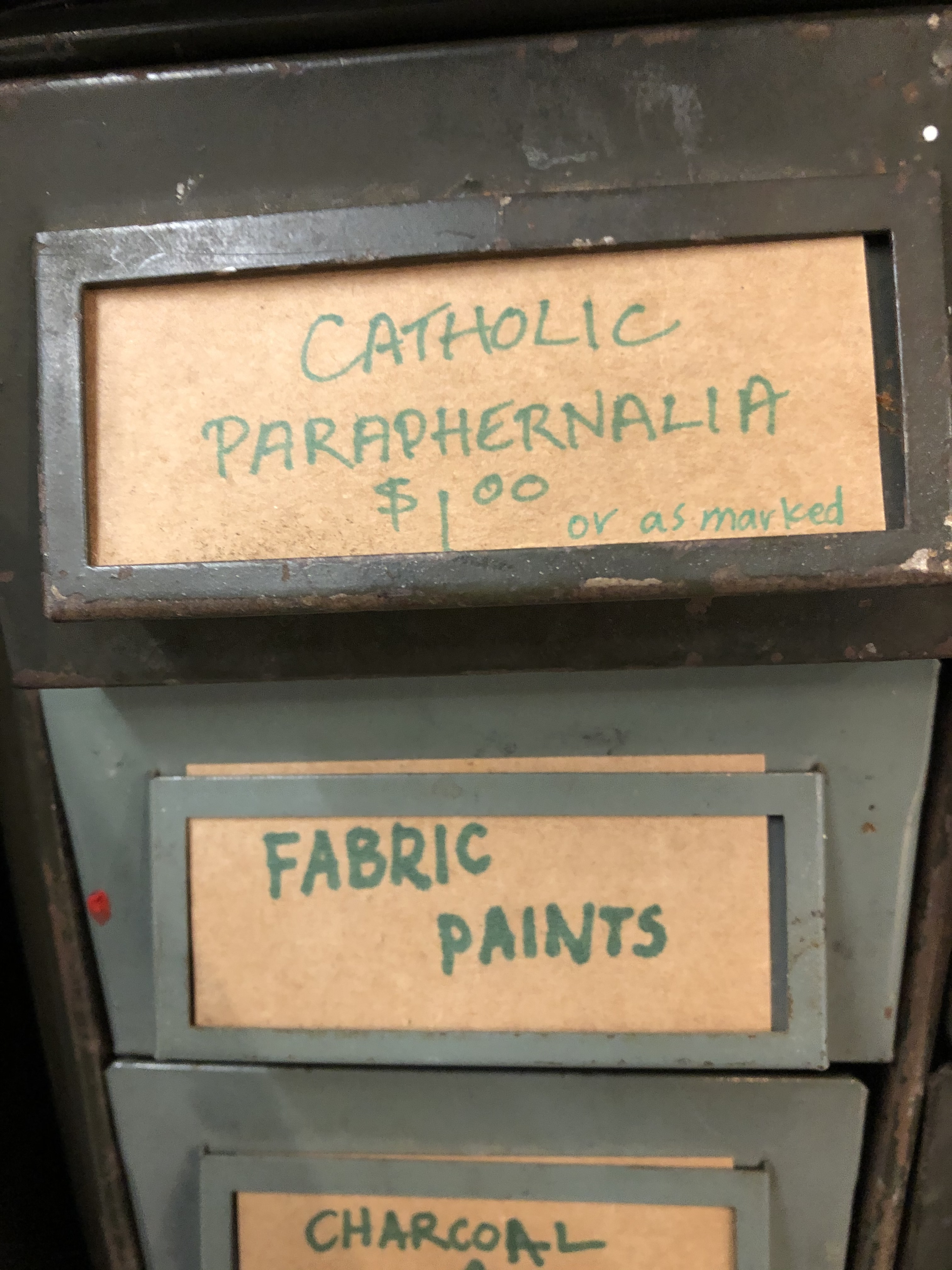
I appreciate all of our sister upcycling stores as well. The Green Thimble‘s name is alluring to eco-conscious sewists. Today, March 4, they are moving from their Quadra Street location to 2950 Douglas St. #400. At Green Thimble, I filled a small paper bag with scraps and loose buttons for only five dollars. I admired the refurbished sewing machines for sale and the bolts of fabric at bargain prices. Supply Creative Reuse Centre on lower Douglas is a finely curated collection of paper, books, cloth, yarn, buttons, ribbons, and more. I was impressed by their sliding scale prices. At Supply, I found a scrap of pink sheepskin for $1.50 that features as the centre of my wall hanging work-in-progress. Thrift/Craft in Market Square is a huge space filled with unusual items and hosted by a devoted proprietress. One of my favourite things there is the weird stuff housed in tiny drawers, for example, Catholic paraphernalia. In each of these places I encounter interesting people who like to chat about making things. 

I am a big fan of creative immersion

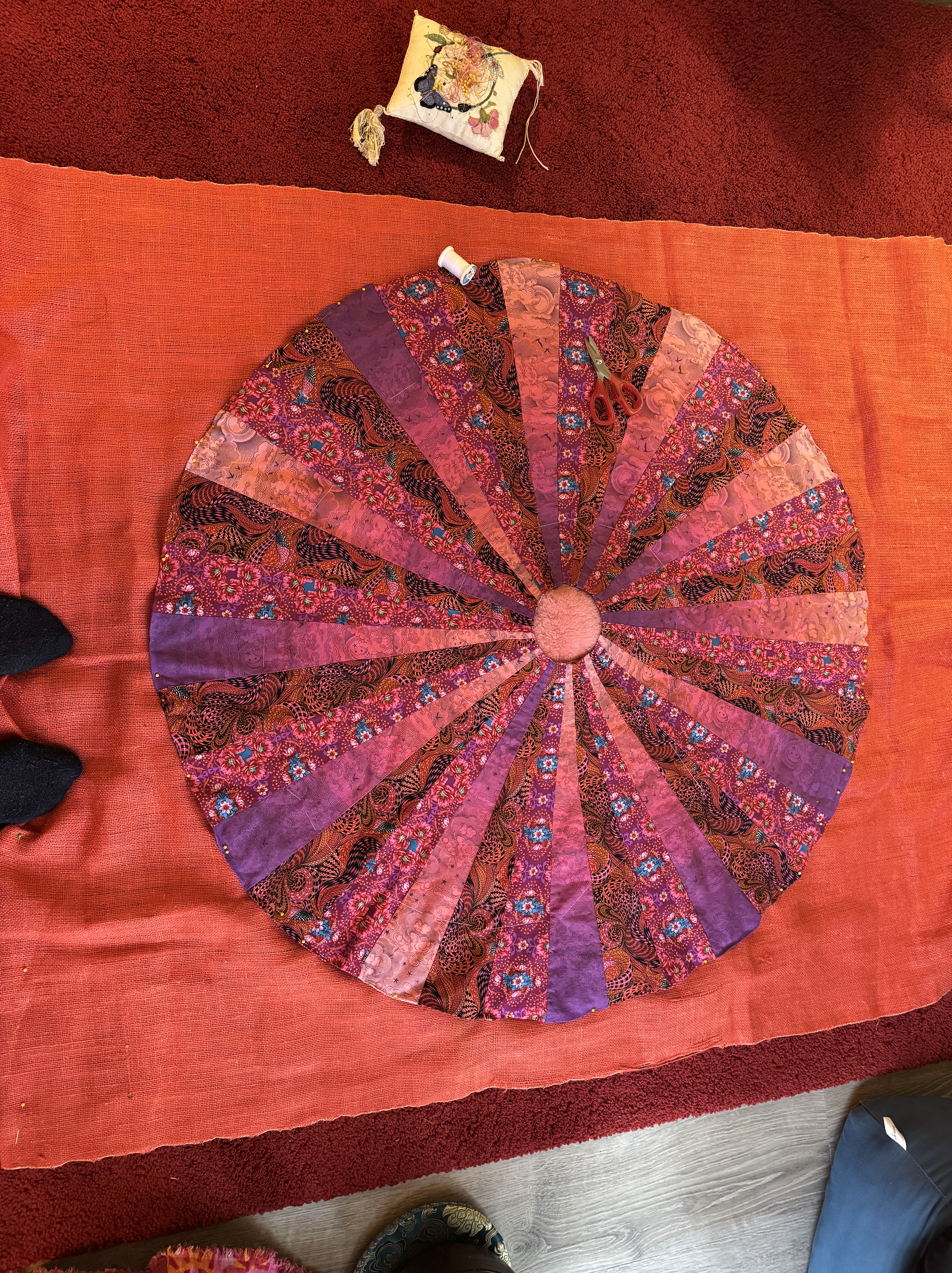
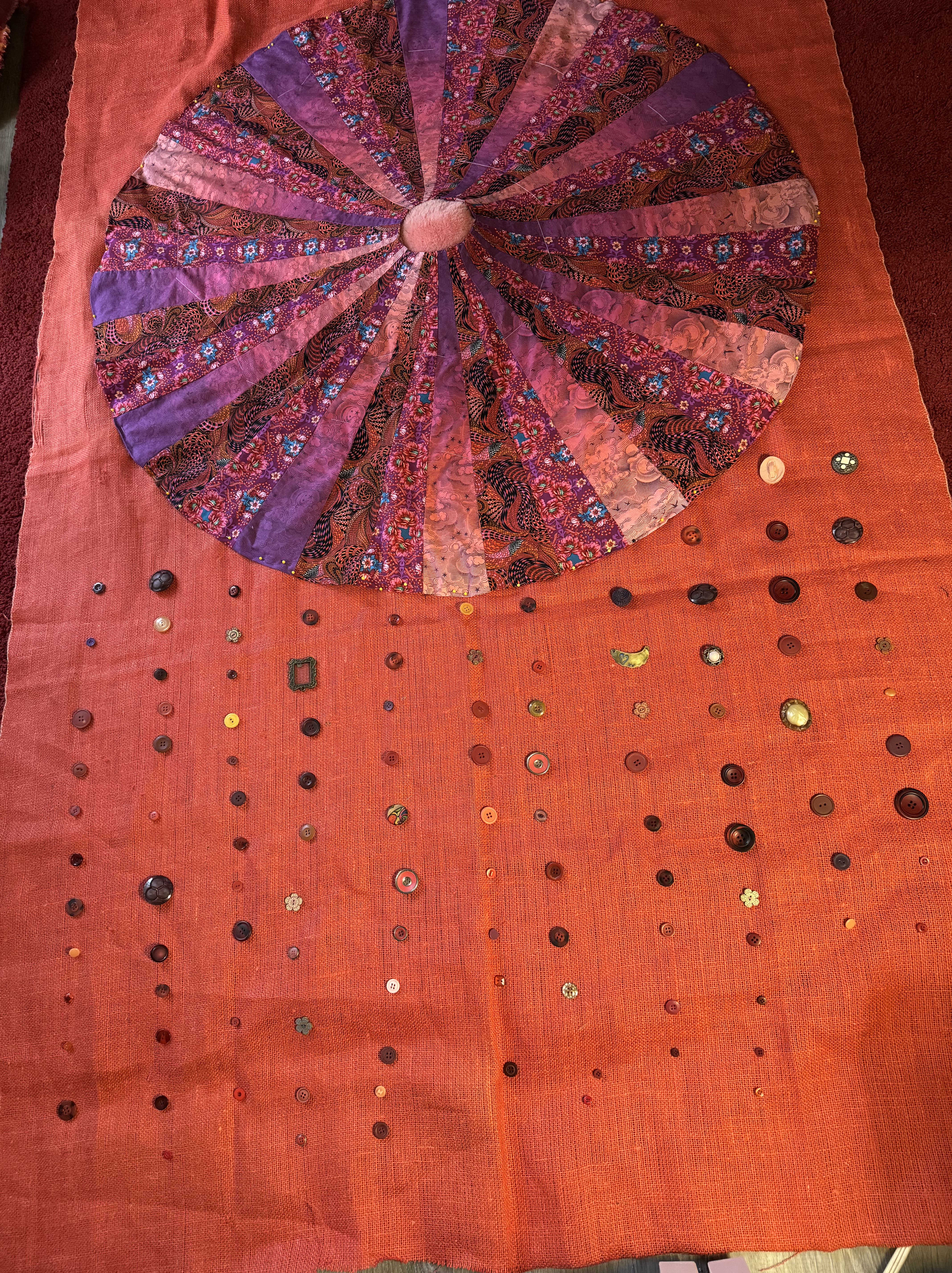
Immersing yourself in a creative project can lift your mood, and we could all use some mood uplift now. Am I right? I am presently working on “Ten Thousand Joys,” a large wall hanging in oranges, pinks, reds, and purples. At its centre is a fabric circle I created using a ten-degree wedge. I cut and sewed three alternating brightly-patterned fabrics together to make this 45-inch mandala. I cut an old blanket into cascading circles to lay under the mandala to create a three-dimensional effect. At the centre, the bit of pink sheepskin peeps through. I basted the padding onto a big piece of orange burlap I found at Value Village and then basted the circle onto the padding. Now I am in the process of using embroidery thread to sew the circle onto its backing at the circumference. I’ll add lots of embroidery stitches in bright colours, zig-zagging up and down the long wedges. The hanging will be finished by sewing on, not ten thousand, but dozens of pink, red, and purple buttons around the central circle. It feels inevitable that I will make a “Ten Thousand Sorrows” wall hanging next. 

“When you open your heart, you get life's ten thousand joys, and ten thousand sorrows.” Chuang Tzu

And what, may I ask, are you a big fan of?

Our stories die with us

When I was in my forties, my mother was in her seventies. (We could rapidly figure out each other’s age because I was born when she was 30.) Those days, I had scant time for or interest in her stories. Busy with kids, negotiating the break-up of my marriage, and immersed in the chaotic life of a graduate student, I was living my life 3,000 miles away from my mother. 

We talked on the phone weekly and visited once or twice a year. When she started to tell a story from the past, I often zoned out or became irritated. I didn’t really care, or I thought I’d heard it before. She sensed my impatience because eventually she stopped expecting a weekly phone call. “You sound too busy,” she said. I didn’t disagree. My forties turned to fifties; her seventies turned to eighties. We kept in touch, but calls were infrequent.

On Valentines Day, it will be six years since her death. I am 66 now, and at least a couple of times each week, I think of something I want to ask her. Some thread we dropped that I’d like to pick up again. Some mystery from her past I want to understand. Some memory I want her to clarify. (There are so many amorphous, shady memories—are they true?)

How did you make that wonderful crème caramel? I wish I’d gotten the recipe. Tell me more about the trip you took to Russia. When you returned from the trip and tried to tell me about it, I had so much on my mind I didn’t listen. But now I really want to know. And the other trips… so many European cities you visited, sometimes with groups of students, showing them great works of art and architecture. I wish you could tell me more.

You didn’t talk to your own mother for decades. I never knew her, only met her once. Why were you estranged? Your childhood was traumatic. Is it true you missed a year of school because you didn’t have shoes to fit your feet? That you learned to drive the tractor at age nine (or was it 12) so you could help on the farm? That your dad kicked you out of the house at 17, but he’s the one you loved? Am I misremembering your narratives?

I have the old phone number in my head 416-922-9534; if only I could call, we would chat. She’d be happy to hear from me and to reminisce, I know. But she’s no longer available. The stories, too, are gone. They died with her. 

I had the wherewithal to record my father talking about his life in 2014 when he was visiting (he was 87). I asked him a series of questions. Now, I am glad to have his voice preserved as he talks about his parents, being a father, his life as an academic and farmer, and formative childhood experiences. For example, he describes discovering an injured bird when he was a young boy, taking it home and nursing it back to health, then releasing it. That event cemented his lifelong love for birds.

I feel wistful now that I didn’t make audio recordings or write down some of my mother’s stories. 

I signed up for an online course, “From Autobiography to Illustrated Story.”  The goal is to produce a short, illustrated book about an object that we still have from childhood: its provenance and meaning to us. I have precious few objects to choose from. The yellow Tonka truck. A doll my mother made for me out of an old sock with yarn hair and an embroidered mouth, nose, and eyes. Little Bear, the Steiff teddy. And I have some things that belonged to my mother.

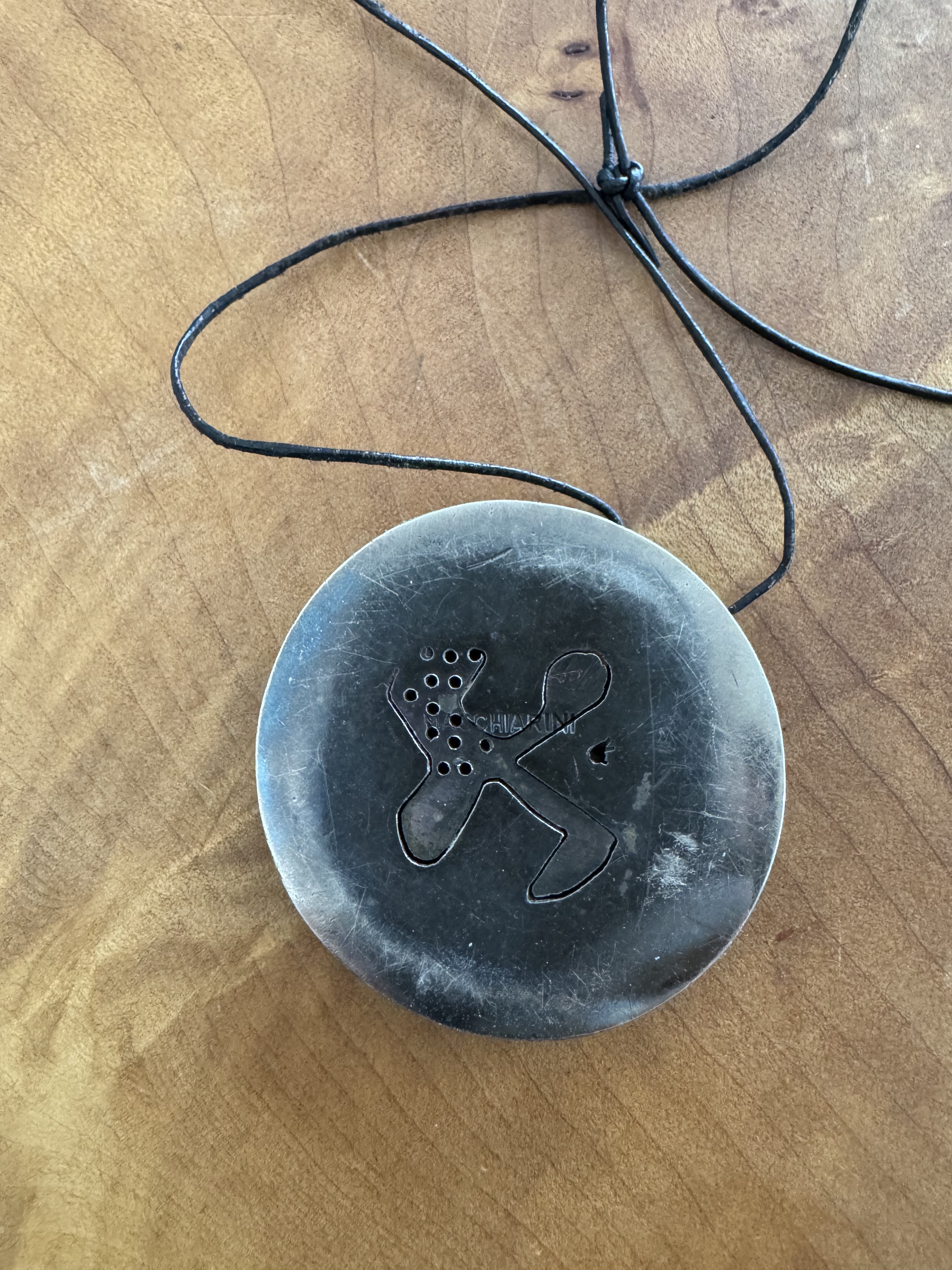
I decided I wanted to write about my mother’s Macchiarini pendant. My sister took it from her house after her death and gave it to me, thinking it suited me. I agree. Mom loved the work of Peter Macchiarini, an American Modernist jeweller (1909-2001) from North Beach, San Francisco. The several pieces my mother owned were passed down to us, her daughters. I have a couple of brooches, the pendant, and two belt buckles, and my sisters have other examples of his work.

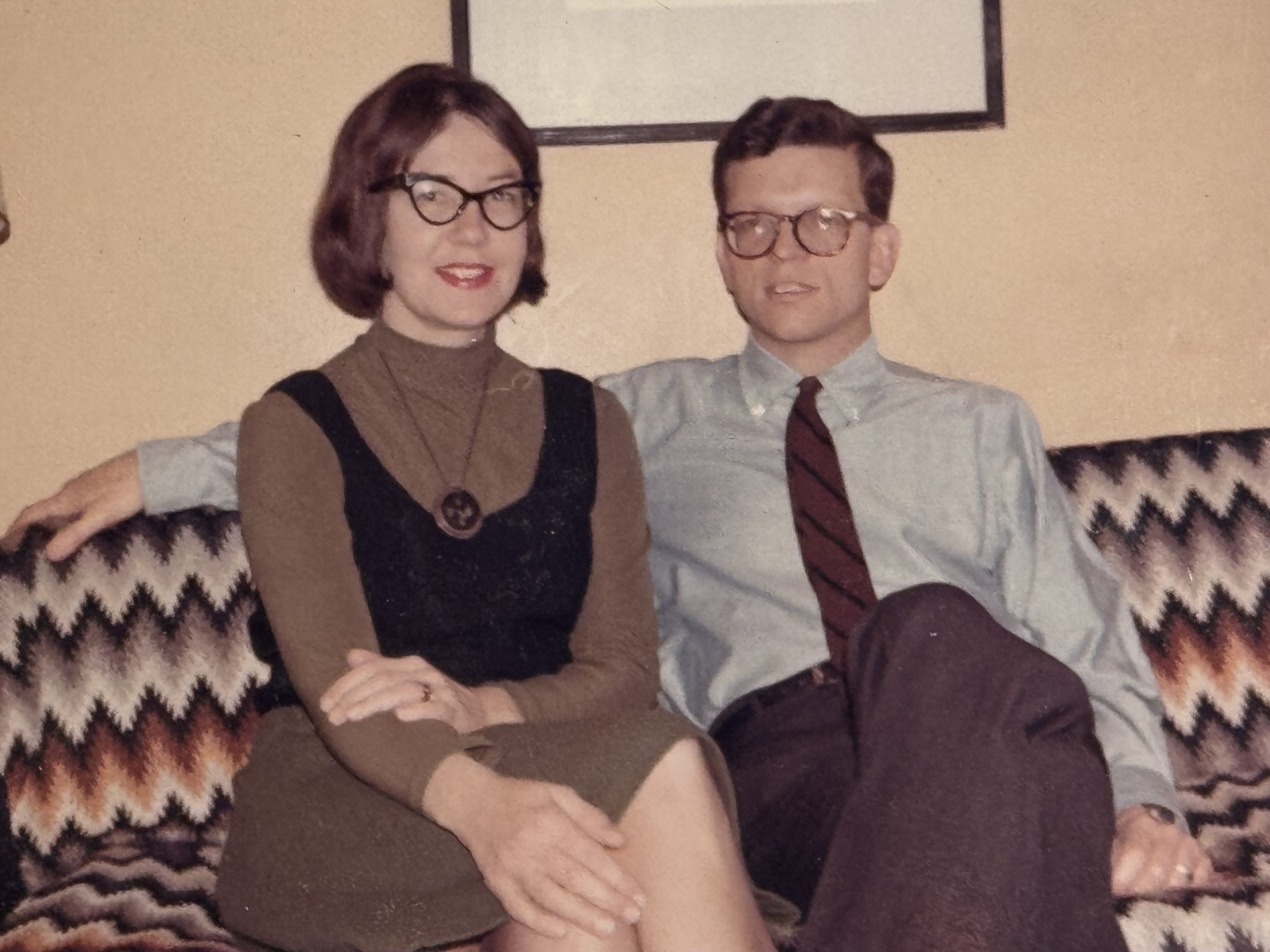
I want the pendant to tell a story—a story about my mother’s love for mid-century art, particularly from the Bay Area. Mom knew Peter, or at least I think she told me she did. She must have had anecdotes about how she bought the jewelry, what he was like, her San Francisco connection to him. She wore this pendant often, her signature piece. The photo of her and my dad shows her wearing it in 1964. She is wearing it again in the photo with her cat when she was in her sixties.

But the stories about Mom’s relationship with Macchiarini died with her. I can’t remember anything, and now I can’t ask her about them. What can I say about this unusual round pendant, a playful amoeba shape carved into dark wood and set in silver and gold?  I can say that when I wear it, I feel warmth under its weight. Warmth around the heart, generated by affection. Our relationship was complicated. She was fucked up, inevitably passing along some of that to me. Yet there was so much love. She instilled in me a reverence for life’s beauty. And inextricable from that, a cellular knowledge of sadness. 

I notice that my left hand is placed on my right arm just as my mother’s left hand is placed on her right arm in the 1964 photograph. Coincidence?

Cotton handkerchiefs and other delights

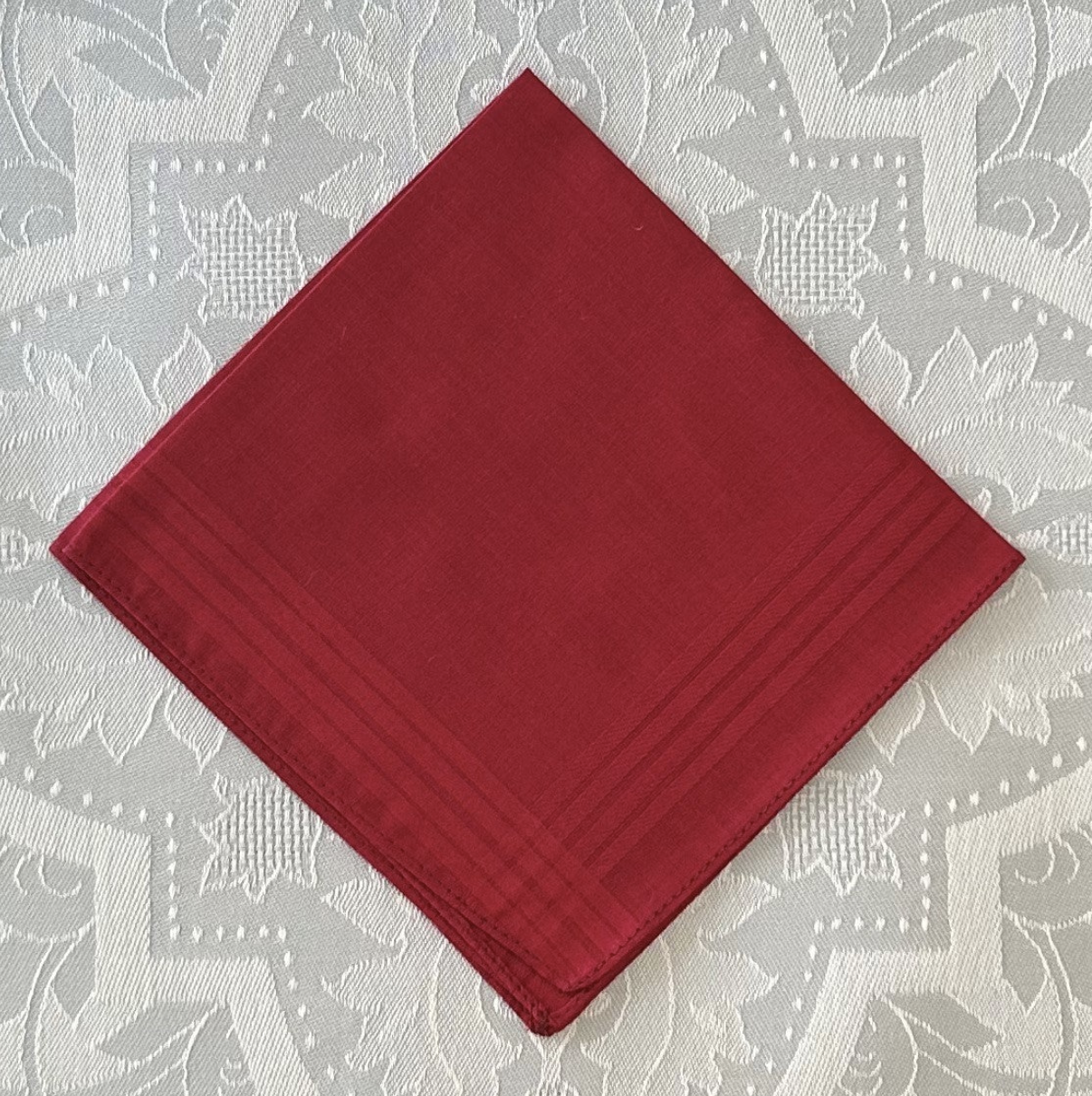
On Thursday, two days after the US election, I cycled to my volunteer gig at the craft store. Perhaps one of the last good-weather days for bike riding. No rain, trees shedding their remaining coloured leaves, a bright blue sky. The wind rushed into my face as I flew along the bike path, and my eyes started to water, which set forth a gush of tears because grief is like that. It sits inside you—a tight, impacted ball, unexpressed—and then some external trigger unfurls it like a flag. Eyes watering from the wind or a song or a television show. I cried all of the way, tears streaming down my cheeks, salt drops flying back into the wind that gave birth to them. I was happy to find in my purse a ruby-red cotton hanky to mop up the tears. Double delight.

I locked my bike then stopped at the Parsonage Cafe and waited for my order, a latte and warmed blueberry muffin with butter. The latte came first, and I asked about the muffin because I thought maybe they’d forgotten about it. The friendly counter guy said, “oh, it takes a few minutes because they warm muffins in the oven.” I smiled. When I got to the craft store, I turned on the lights and heat, cashed in, then took the warm muffin out of the brown paper bag. Two halves fell open, steaming. Salty butter had melted into the crumb to mix with soft, warm blueberries. I was expecting a little plastic tub of butter and a plastic knife, so what a delight. Thank you for doing it, delightfully, the old way. Like cotton handkerchiefs instead of Kleenex.

During my shift I met interesting people, as I do every week. Two women came in, one with an unusual looking buggy, not a baby buggy, but a pet buggy. Two zipped, mesh compartments were stacked on a wheeled frame. She came up to me immediately. “I have my two cats with me, is that okay?” 

“Of course. I love cats. I’ll come to meet them.” 

“This is Ronny, and this is Jimmy. Jimmy is a bit shy; you can see he’s at the back.” I could see two lean black cats—brothers I determined later—through the fine mesh. Ronny sniffed the hand I lay against the fabric. Jimmy just watched with golden eyes. 

The two women browsed the store, staying a good long time. Other customers came in and out. A few years ago, I would have fretted over it. I actually didn’t know what the store policy was regarding animals. Was it okay that cats were in the store?  Did other customers have allergies? Did somebody dislike cats? Were we breaking a rule? But I didn’t say a thing, and I didn’t worry. (I recognized, later, the delightful absence of worry). I just listened to the lovely chatter that fills the store and makes me want to come back and work another Thursday, even as I constantly wonder if it’s the right volunteer gig for me. 

Women (mostly) talking about life and about their crafts and projects, oohing and ahhing over the treasures they find. Often chatting with me about what they’re working on, a crone stick or a pocket skirt or an appliqued cat pillow. Or they tell me whom they are buying materials for—a daughter learning to knit, a grandchild who loves stickers. 

The cat owner talked with her friend, but she also spoke periodically to her cats. “Oh, Jimmy, what a nice stretch you’re having!” And “You boys are so good, so patient.” When she came to pay, she had a bag bulging with Christmas foam shapes. “I’m giving these to our craft leader at the church; she’ll have the children making wonderful things.” I don’t know for sure, but I hazard a guess that she is one of those revered creatures, a childless cat lady, the most generous and loving people around. Delight!

After my shift, I cashed out, set the alarm, turned the key. I unlocked my bike, then looked up at the darkening sky. It was only 4:15, but daylight savings is over and we’re in for early nights. I looked at my bike light and wondered how to turn it on. Somehow, I had forgotten. It had been months since I’d used it, not needing extra light during my summer rides. I tried a few things, but nothing worked, so I walked half a block to North Park Bikes. Leaving my bike just outside, I went into the store’s lower level where they do repairs. A friendly guy with a ginger beard asked if he could help. “I’m kinda embarrassed, but I’ve forgotten how to turn on my bike light.”

 “Oh, don’t be embarrassed, just bring it in, we’ll figure it out.” I wheeled it in, and the first thing he tried (keep steady pressure on the + button) worked. “Thank you sooo much!”  A simple, delightful thing: help asked for and freely given.

At the end of the day, I had many delights to gather (I have been inspired by Ross Gay’s Book of [More] Delights since I finished it a few days ago; it’s just as good as the first book). Tears released into the wind, cotton hanky, butter melting into a warm muffin, sweet customers, absence of worry, childless cat ladies, help with my bike.