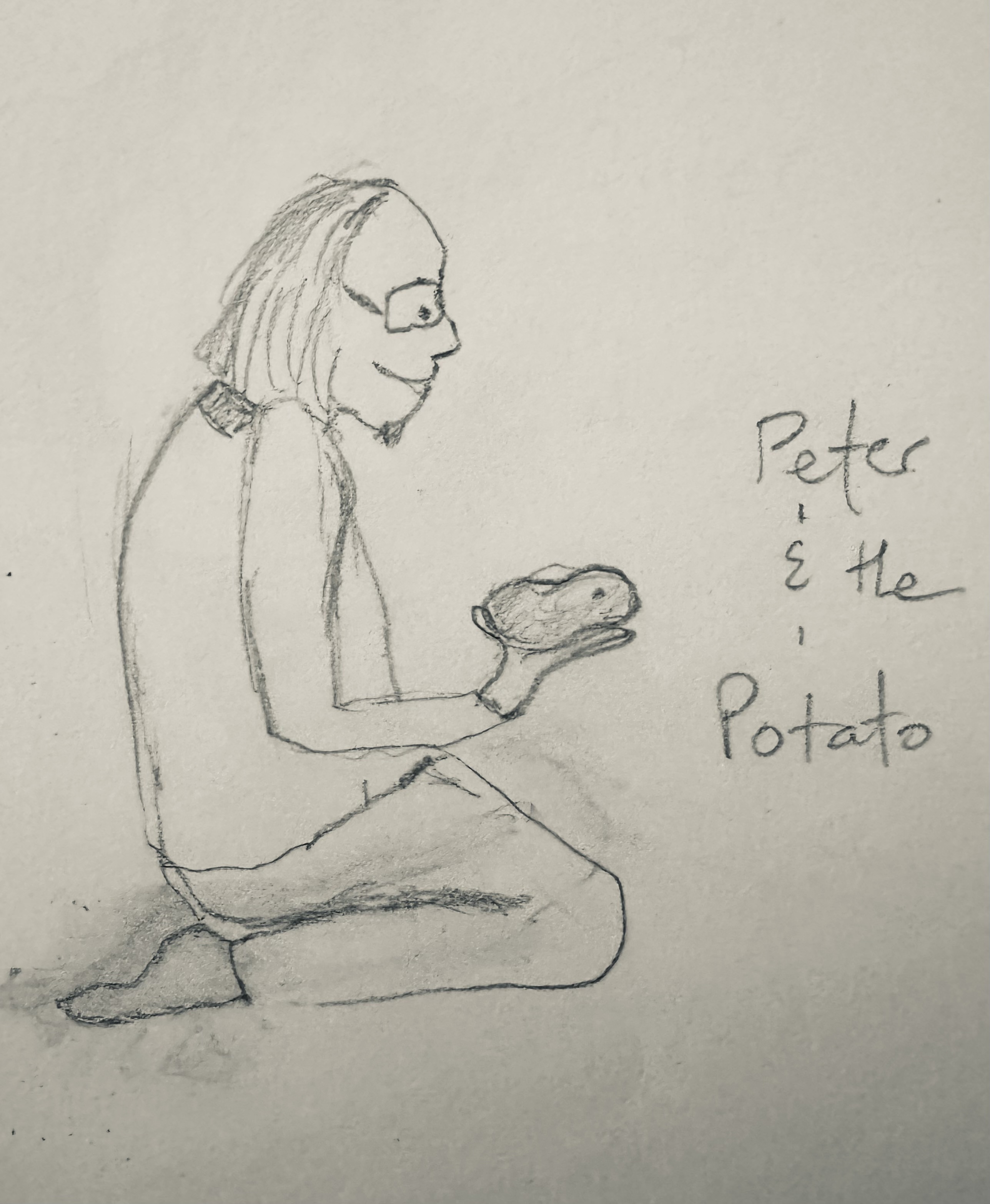
Toronto, Again

I am in Toronto for a few days. This city was my home from 1965 to 1989. 

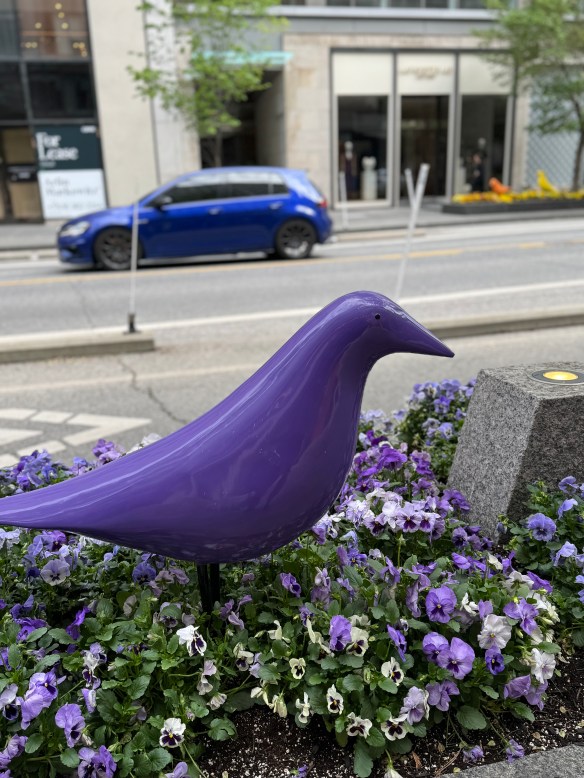
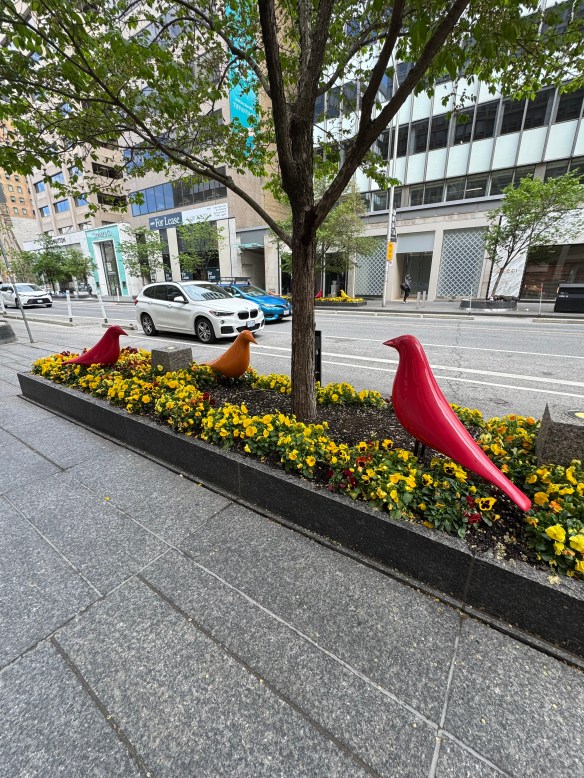
I have been walking Bloor Street West. First, the Mink Mile, that stretch between Yonge and Avenue Road lined with the tall glass storefronts: Zara, Birks, Lululemon, Holt Renfrew. Rich people shop here. Very few birds fly above these tall, inhospitable stores. Instead, big bird shapes in bright shiny colours line the sidewalks, ghosts of extinct species. 
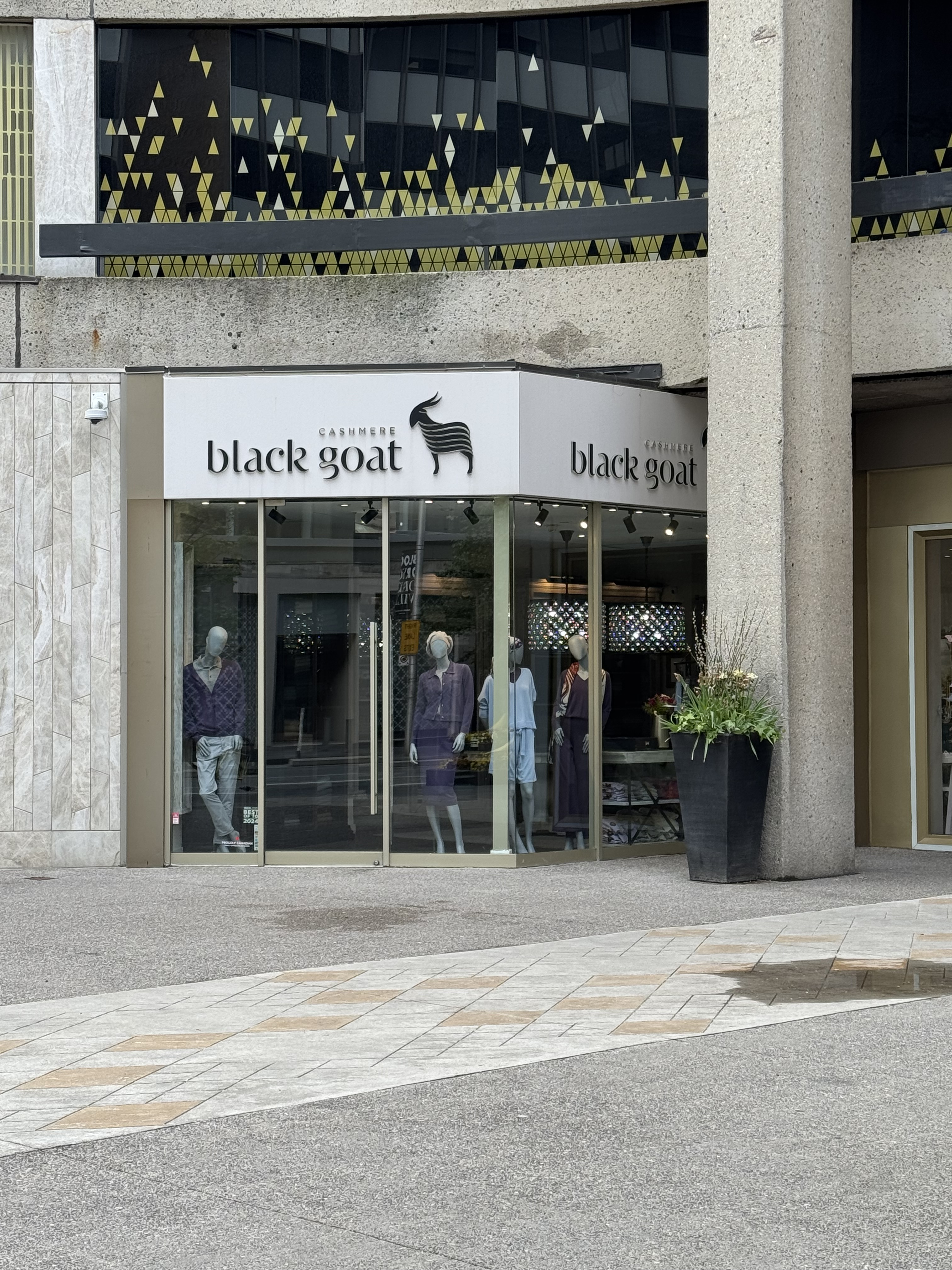
It’s cold in Toronto for late May. I wear a toque, jacket, leather gloves. But now I wish I’d brought a scarf. I admire the scarves in the window of Black Goat Cashmere, next to Ashley’s in what used to be called the Colonnade. This mall was one of my mother’s favourite places; after window shopping Bloor Street arm in arm, we’d drink coffee and eat pastries at the Coffee Mill at the back of the Colonnade. 

I enter the store. Two saleswomen are upon me immediately. I ask about the small scarves, lifting one of them up out of the wooden box where they are displayed like confectionary, soft cashmere in artful designs, wool watercolours. “How much are these little ones?” “Oh,” says one of the women, advancing, “the Carre scarves are $385.” I laugh, folding the luxury item back into its box. “Perhaps in another lifetime.” 
Pulling my zipper up to my chin and walking into a fierce wind, I take a detour to wander around the grounds of my alma mater, Victoria College. I feel nothing as I gaze over the green lawns, watching two young men kick a soccer ball.  Alma mater means “nourishing mother,” but this place was not that for me. Those four years as an undergrad in English Literature are a blur. One thing stuck: a Shakespeare lecture by Northrop Frye when he—already extremely old—told us in his quavery voice that Bach’s Mass in B Minor was the voice of God speaking. All of us bent over our notebooks and wrote that down. It sounded profound.  

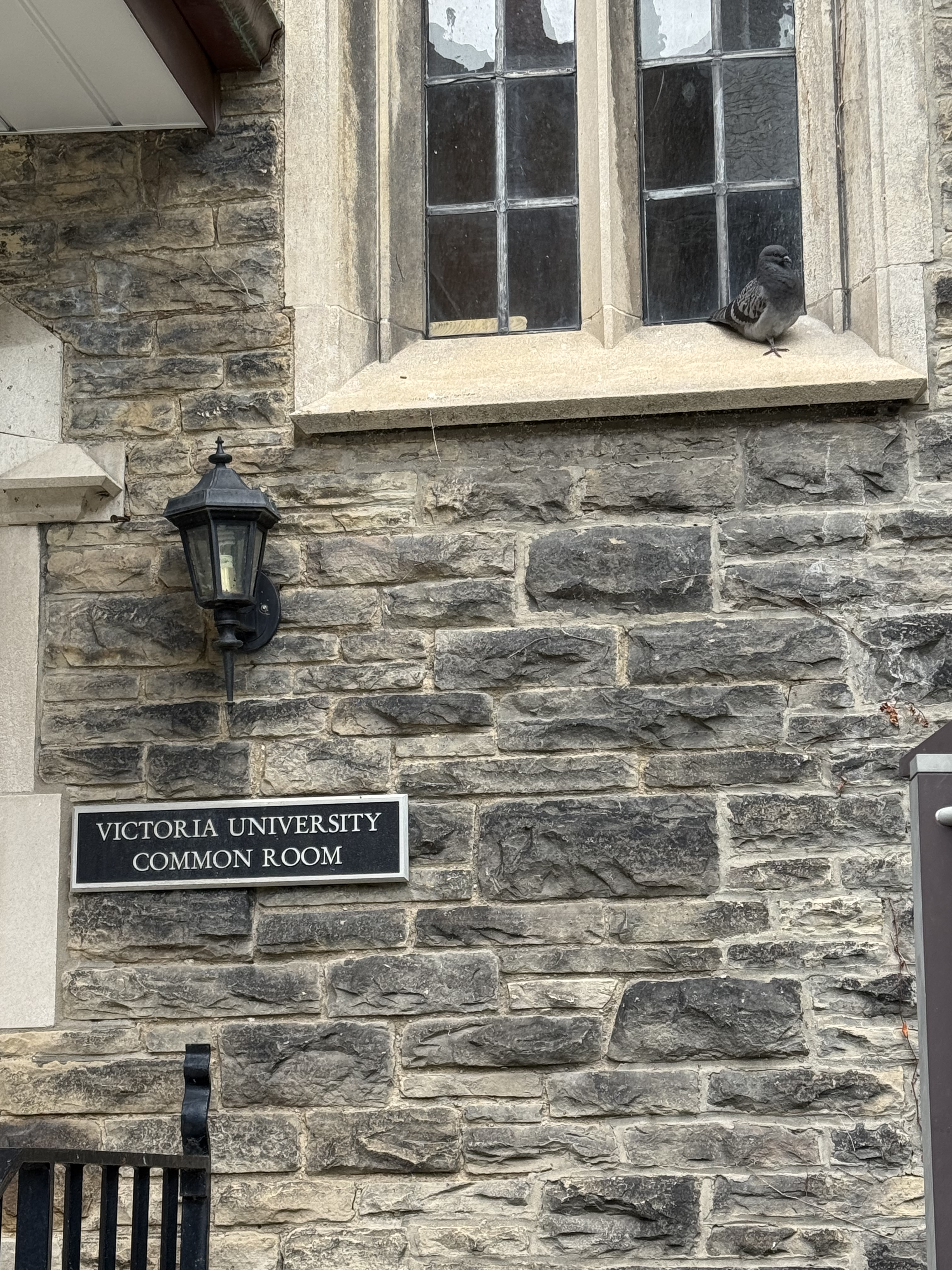
I was a lonely young woman. Barry Lopez writes that “It is not possible for human beings to outgrow loneliness,” and that seems true to me. Though I’m not as lonely as I was. I admire a pigeon perched in the recessed window of the Victoria University Common Room.

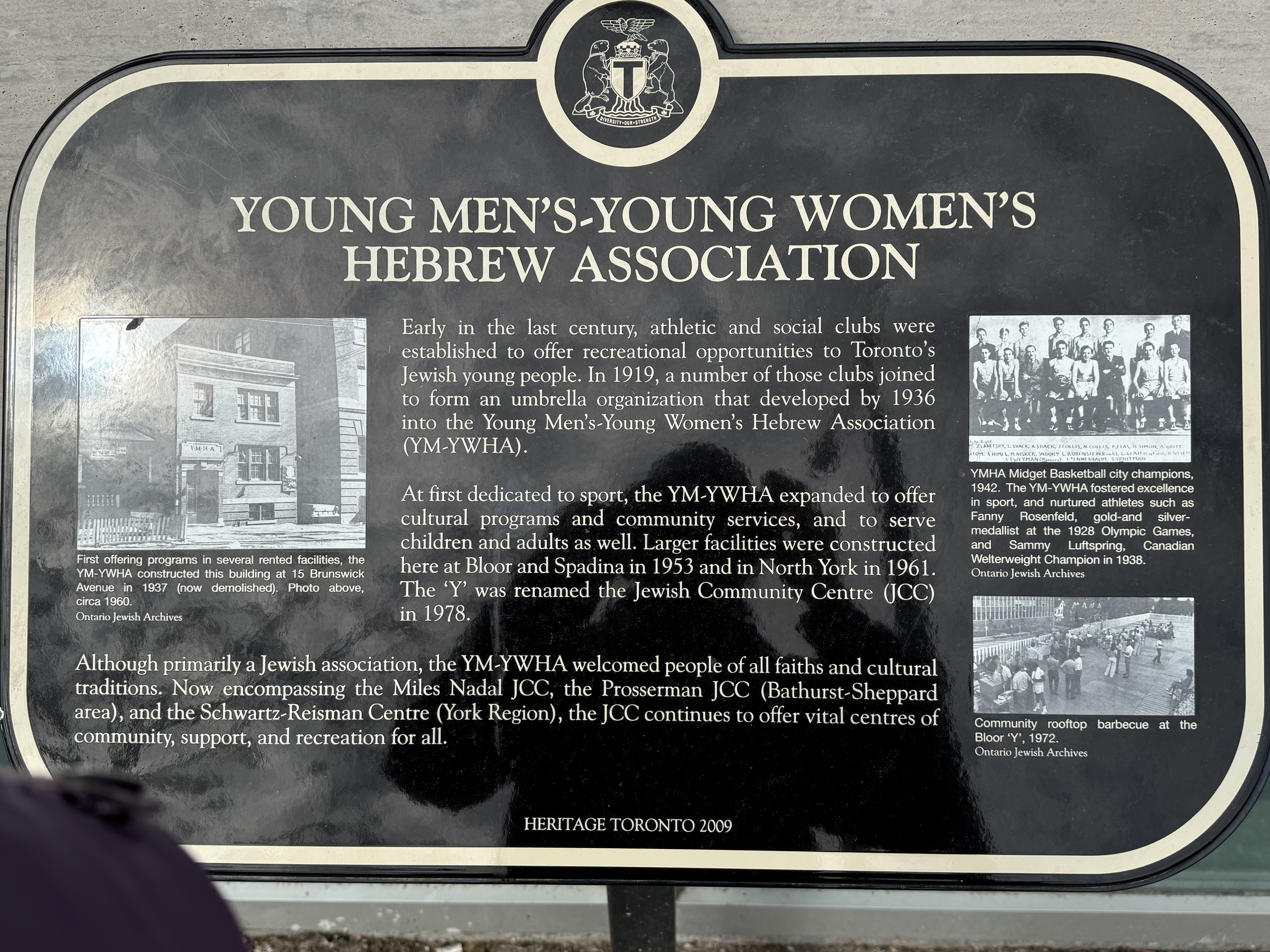
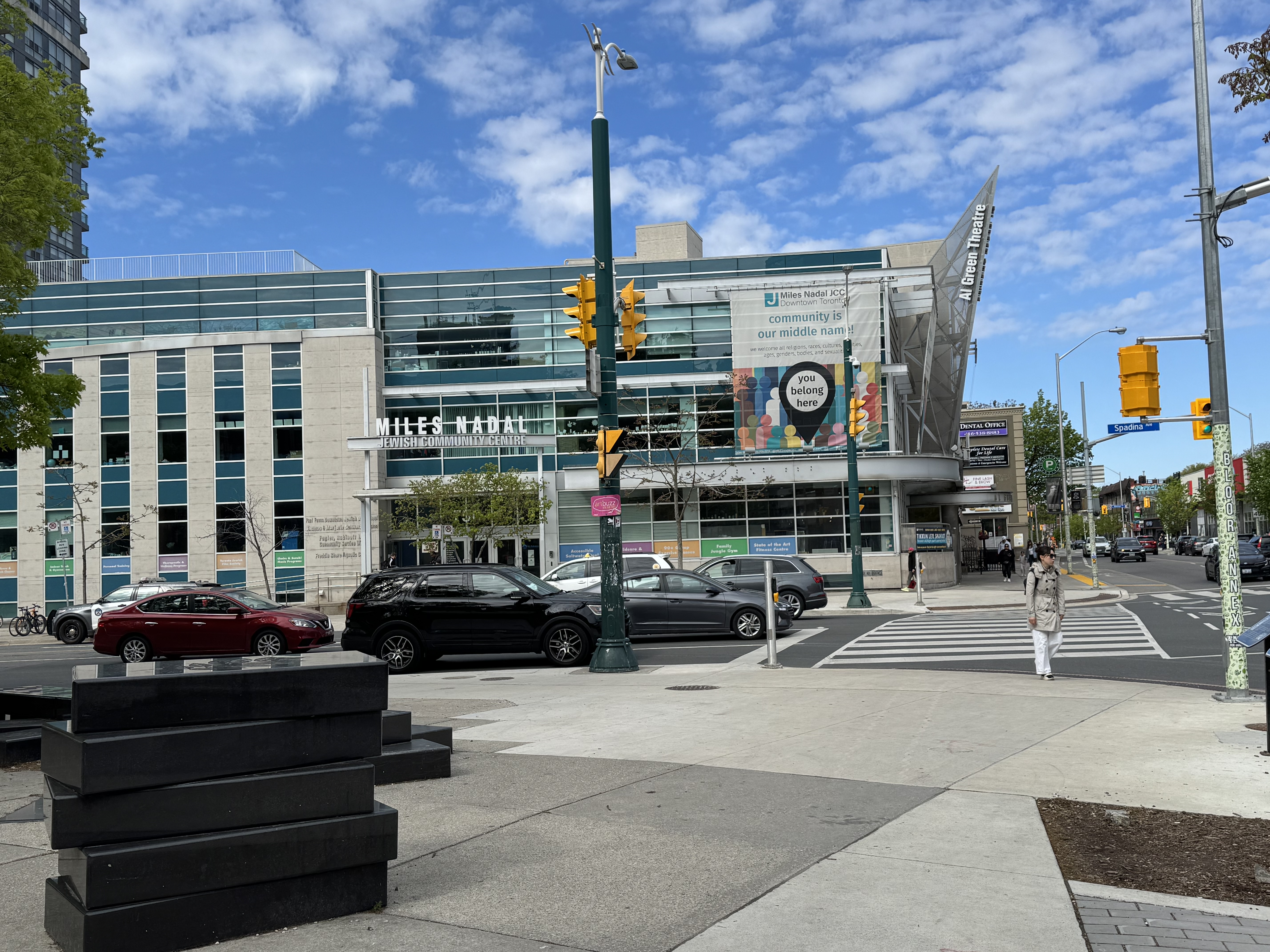
On the way up University back to Bloor Street, I check out the Gardiner Ceramic Museum, where I hope to see the work of contemporary ceramic artists, only to find that the main galleries are closed for renovation. I continue back along Bloor. It’s time for a coffee and I remember a Second Cup in the block before Spadina Avenue. And if that is no longer around, there’s a coffee shop in the old Jewish Community Centre (JCC), where my mother did aquafit for the last decade of her life. Back in the seventies, when it was the Young Men’s Hebrew Association, it was home to SEED, the alternative school my sisters and I went to as wild teens. 

Second Cup is gone, and so are many of the other businesses on that block. Everything in life is impermanent, so I am not surprised Second Cup and Noah’s Health Foods have disappeared, and the spaces are vacant. Once upon a time there was a greasy spoon in this block where we drank coffee in thick cups, smoked cigarettes, and ate French fries. We walked over from “school” and stuffed our electric bodies into the vinyl booths, laughing, talking, flirting, mystified and excited by life. Once, for a time, my sister lived above the restaurant with her boyfriend, an apartment with burlap on the walls and plants everywhere. There’s history here.  
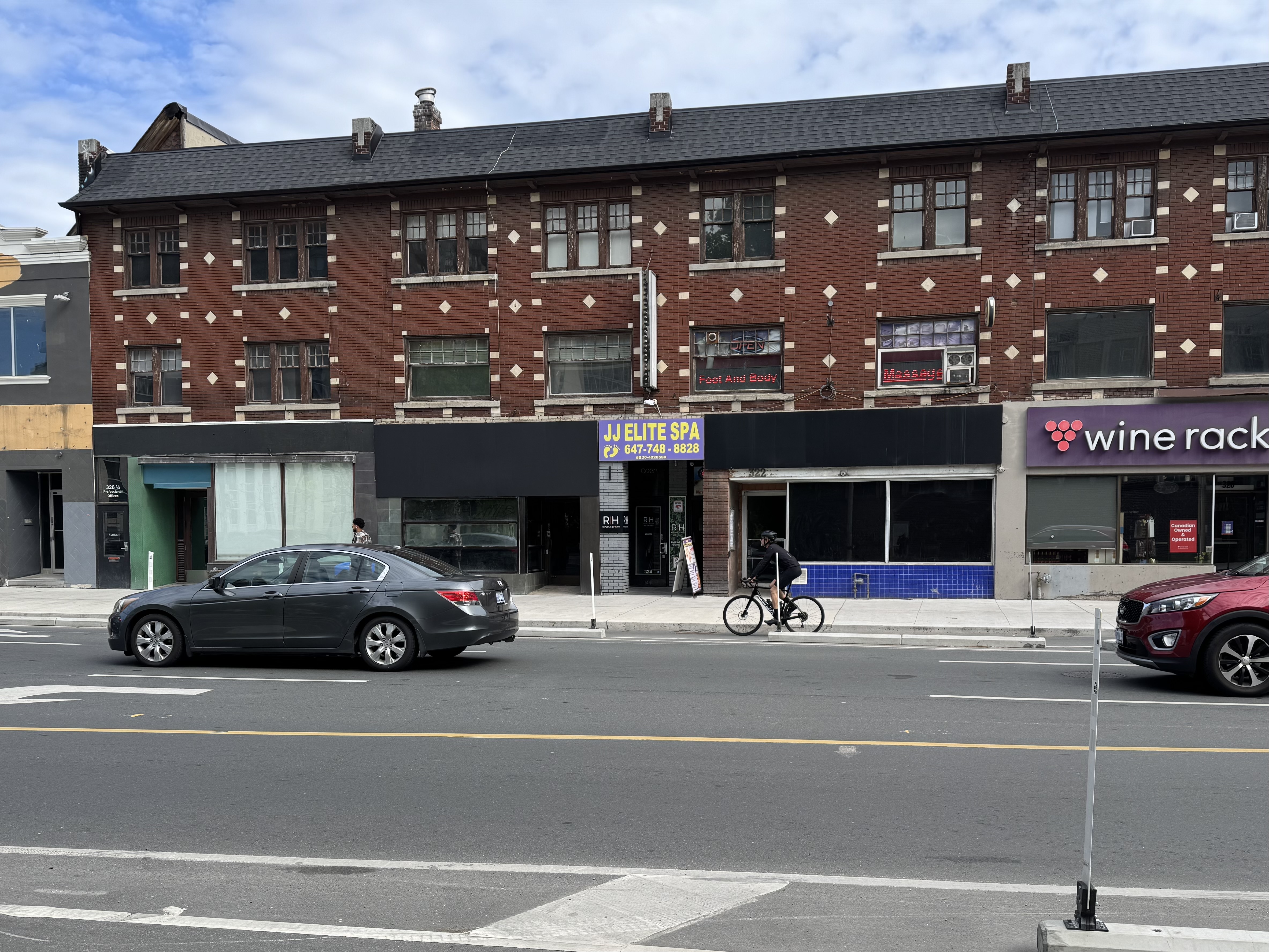
The wine store remains. This is where we bought bottles for the meal marking my mother‘s death in February 2019. Her house is only a few blocks from this corner, and she died at home. We carried the clanking bottles through the snow. My sister made bouillabaisse and we sat around the teak table, drinking, eating, and telling our Virginia stories, stories filled with love, regret, sadness, and confusion. 

I cross the street twice to the southwest corner and pull on the doors of the Jewish Community Centre, but my pull meets resistance. A security guard opens the door from the other side, just a few inches, and peers at me. “I am trying to get into the coffee shop,” I say. “No more coffee shop. Coffee shop no more,” a sort of palindrome of endings. And he closes the door in my face. 
I keep walking. Surely, there is a sweet, cool, interesting café somewhere along Bloor. I am Ahab stalking the great flat white, but she’s nowhere to be found. I pass more than one Tim Hortons among the restaurants and bars still closed this cold morning, but no, I won’t go there. Cigarette butts decorate the grey pavement, evidence of parties spilling onto the street last night. Pigeons strut their stuff. I keep walking. Yes, I know Futures Bakery might be considered an interesting coffee shop, but I hold out for something else, some uncertain thing, something new, something not in the algorithm. 

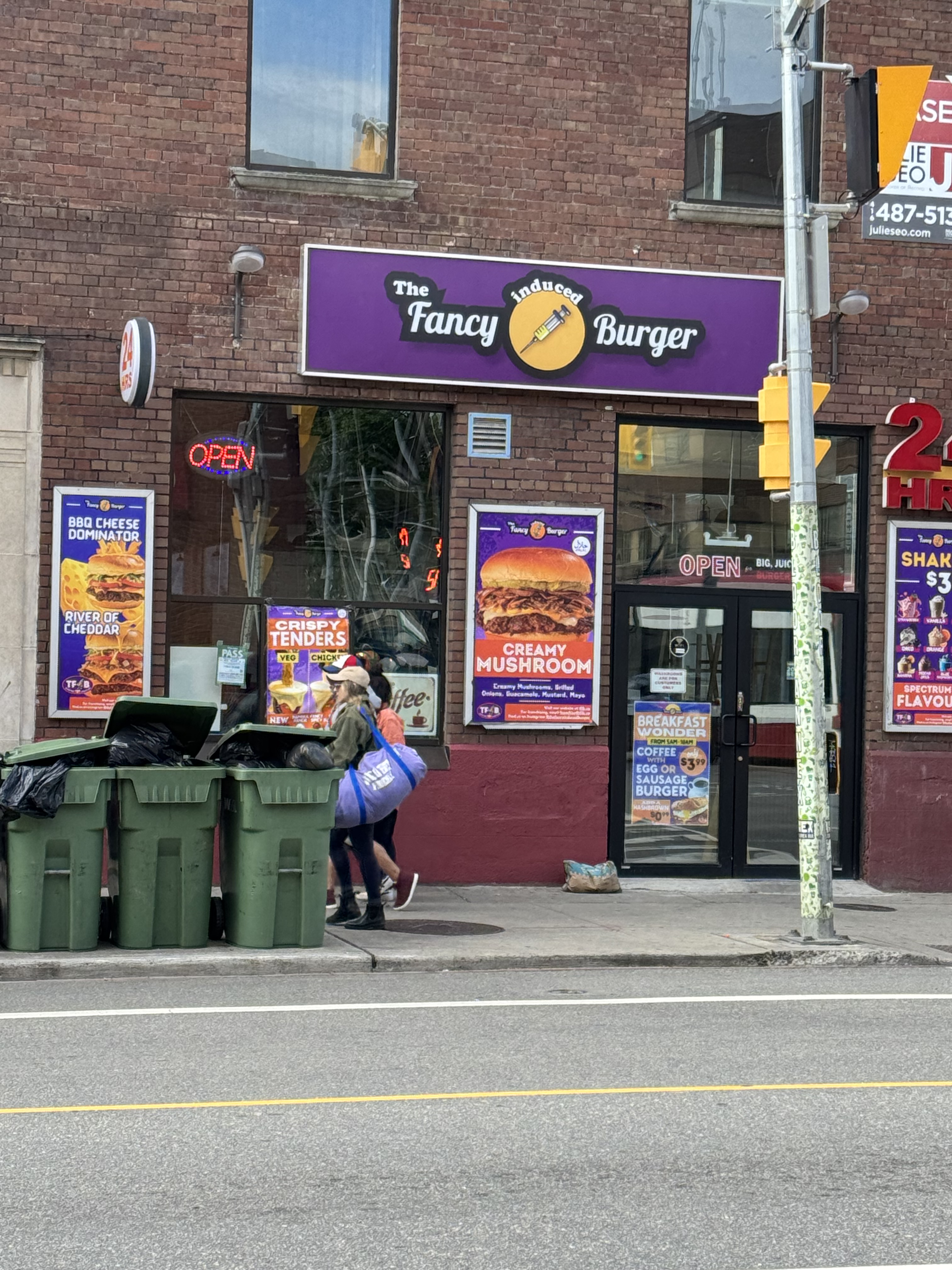
I keep walking. The Hungarian restaurant where we ordered dumplings and gravy and goulash soup:  gone. The delicatessen and the cheese shop with a cow in the window: both gone. The café that once took up that southeast corner of Bloor and Bathurst: gone. Now there’s a Fancy Burger outlet, where you can add a syringe cheese shot to your beef patty for $1.49. This part of Bloor continues to metamorphize. Ethnic restaurants and record stores turn into cannabis shops and bubble tea counters. Used bookstores become pet pampering salons and tattoo parlours. 
I am happy to see Midoco, the office supply shop, a place where you can lose yourself among the art supplies and fountain pens, is still in business. Ditto the Home Hardware.

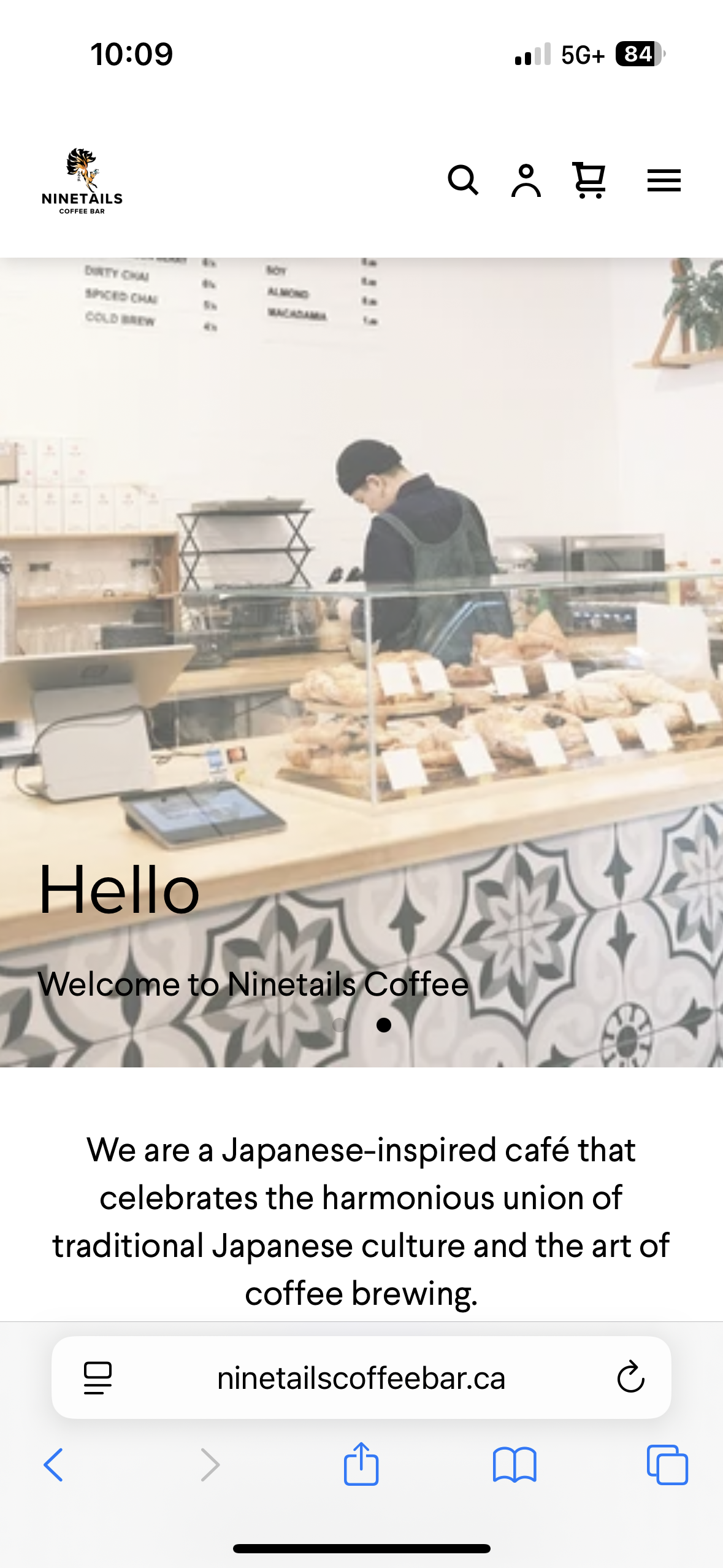
I keep walking, knowing that somewhere soon, I will come upon something interesting. I pass the small corner grocers, happy to see they still sell bargain produce and hanging pots of flowers. I pass Euclid, cross to the south side, and then, suddenly, there is an A-Frame sandwich board picturing a fox with many tails. I walk into Ninetails Coffee Bar, where two young Japanese women bustle behind a honey-coloured wood counter. White walls, a few small round tables graced by simple folding chairs. A coffee bar decorated with ceramic tiles patterned in grey, blue, and white. A full pastry case. Smiling faces welcome me.

 My flat white, delivered in a short glass with a foamy fern on top, is delicious—strong and hot. While I drink my coffee I read about the coffee bar’s philosophy. 

In Japanese folklore, Kitsune are foxes with mystical powers that can grow nine tails.

“we embrace the Japanese philosophy of ‘ichi-go ichi-e,’ which translates to ‘one opportunity, one encounter.’ This concept underscores the importance of cherishing every moment and every connection we make with our guests, as each encounter is unique and irreplaceable. Our goal is to provide you with a little window to Japan & Japanese culture within each visit.”

I gaze across Bloor to the north side and see, to my delight, a used bookstore that I’ll visit after I drink this coffee. It’s too easy to get lost in the past during this trip. Wandering through old neighbourhoods, remembering past experiences, feeling traces of old sadness and joy. But Toronto, like Freud’s Rome, is a metaphor for the mind. There is no denying that my personal history, etched through the decades, permeates my experience of Bloor West. I feel these vestiges of the past in my body.

But there is also the present: every moment is unique and irreplaceable. 

The sun finally emerges from behind grey clouds on this cold day and streams through the glass over my table. I will never experience this moment again, as I drink this coffee, as I gaze at the people around me, the heavily inked man, the woman with green hair, as I examine the fox on the sandwich board outside, waving her many tails. She reminds me there is only one opportunity, one encounter. This is it. 
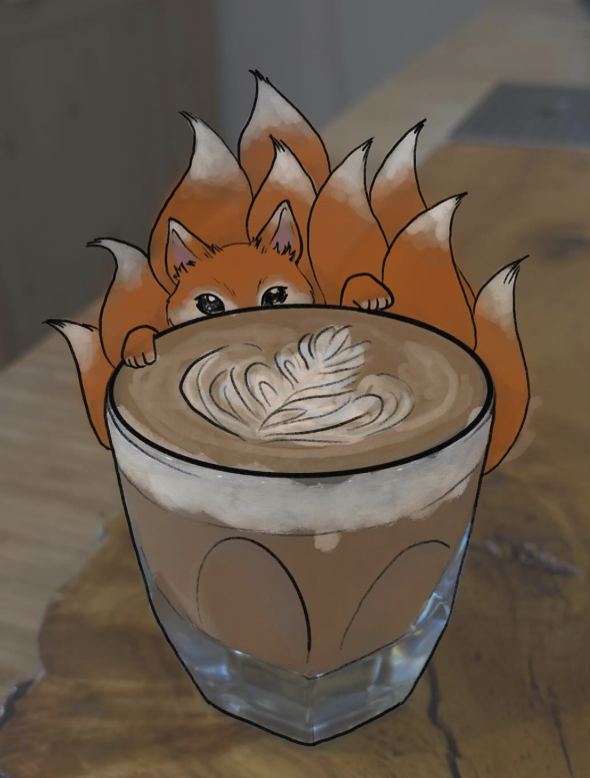
From Ninetails Instagram acccount

Full Time, A Short Story

Last year, Benji was hit by a car. He was Alma’s last cat of the dozen that graced her long life. I heard the thud as I sat sewing at the bay window. When I looked up, Benji lay crumpled on the street and no car in sight. Some asshole hit him and drove off. I threw down my sewing and ran into the street, grabbing my shawl on the way. He was still alive, making a peculiar huffing noise, blood trickling from his jaw that looked all crooked. 

Oh no, this will destroy Alma. I scooped his light body up from the pavement and cradled him in the shawl. When I knocked at Alma’s door, it took a while for her to open it. Her eyesight wasn’t the best, so at first, I think she thought I was bringing her a loaf of my sourdough, wrapped in a kitchen towel. But soon she realized what was in my arms and began to cry.
Alma, we’ll can take him to Peter right away. Our healer Peter lives in a cottage just around the corner. Get in my sidecar, I told her, and I’ll hand Benji to you. Her crying had evolved into low keening. I dropped her purple cape over her shoulders, and she slipped on her sandals. I opened the door of the sidecar attached to my bike, and she slid into the seat, creakily, and held her arms open as if to take a baby. Benji was her baby—a cat she’d coddled and loved since he was a feral kitten, discovered in the old shed behind my cottage with three litter mates. We figured the mother had been killed by a car or racoon. The kittens were starving. We found homes for them, all but one. Alma had been without a cat for almost a year then, and when she saw little squirming Benji, she said she had to have him. Or he had to have her. 

She fed him with an eyedropper for weeks and carried him close to her warm, wrinkled breast in a sling she asked me to sew for her. I made the sling with indigo cloth I had left over after making Peter’s shirt. Alma was a sight to behold, walking slowly to the corner store with her shopping cart, the sling around her front, a tiny feline face peeping from the folds of blue cloth. 

Oh Benji, Benji. Out of my peripheral vision, I could see Alma bent deep over his little body as I pumped the bike, swooshing down the road and around the corner. It took us only a minute to get to Peter’s. We knocked on the door, no answer, so I figured he was in the garden. We trod the narrow path beside the cottage. His back was to us as he sat on his haunches, examining a potato he had just dug from the soil. I looked fondly at the blue indigo cloth straining across the breadth of his back, a breadth of skin and warm muscle I had run my hands over just last night. My knees trembled with desire as I approached him with Benji now in my arms, Alma hobbling behind me. 

An hour later, we sat in Peter’s front room on low velvet couches, drinking jasmine tea. Alma was holding a lifeless Benji in her lap. Peter had determined the injuries too severe to save him, so he’d administered a lethal drug in a long needle while Alma stroked the fur, matted with blood. Now, Benji looked so peaceful, curled up in my red wool shawl, Alma’s hand under his little skull. 

Neither love nor money will persuade me to ever get another cat, Alma said, her voice soft and sad. She’d stretched her stick-thin legs out before her. Alma liked to wear sandals most of the year, except when it snowed, liked her feet to feel the air, and today I could see her thick greenish toenails and large bunions up close. She was terribly old.

Peter heaved a great sigh. Benji was a fine cat, he said. We had all loved Benji’s antics. He’d dance like Baryshnikov, trying to swat the clouds of gnats that floated above the garden beds in summer. His meow was a sweet question mark, meaow? And if you were lucky enough to hold him in your lap, you were blessed with a vibrational purr that set your thighs buzzing. A deep warmth and contentment emanated from his slight, stripey body. We all loved Benji. 

Peter sighed again, shaking his head at the loss. We came to Peter with our sick and injured pets and even, sometimes, with our own ailments. His stinging nettle tonic has reduced my hay fever. His black cohosh tea has helped women all over our neighbourhood with menopause. Peter is not just a skilled herbalist. His magic hands can make me come just by stroking my breasts.

Several weeks after Benji died, a sunny June Saturday, I was at a yard sale with Alma. On summer weekends, Alma and I did the yard sale circuit together on my bike. I pedaled, and she rode sidecar. She has a thing for small dishes, tiny saucers and bowls, sized for fairies. I like to collect children’s books. I don’t have children, and I never will have. I’m fifty this year, but nonetheless I’m charmed by simple stories and illustrations. I would rather read three or four children’s books to myself at bedtime than a novel filled with crime, sex, mystery, and drama. 

A book caught my eye, titled Part-time Dog. I opened the cover to the copyright page to check the publication year, 1965. I always do that first because I prefer old books. They provide the most comfort. I bought it, along with several others, two dollars for the lot. Alma found a gold rimmed bowl decorated with an image of two goldfish. Later, we had dinner at my place—a big salad and thick slices of my sourdough. After dinner I gave Alma a framed photograph of Benji dancing in the garden that I’d taken the year before. I’d caught him with both paws in the air, his golden eyes glittering with excitement. One small foot was off the ground as he leapt. The sun played over his orange and brown stripes, and the patch of white on his face made him look almost human. When Alma saw it, tears rolled down her wrinkly face. I moved next to her on the couch and put my arm around her. Not for the first time, Alma said that neither love nor money would persuade her to get another cat. Benji was the best and the last.  

That night after Alma left, Peter slipped in my back door, and we made love silently. Through the open window, we heard whoo-hoo from the owl in the tall pine. I felt us smile in unison. What if this life was an illusion? What if I were a character in a children’s story about a happy seamstress and her herbalist? After Peter left, I lay in my narrow bed with the stack of new-to-me children’s books on the bedside table. Part-time Dog was on top, so I started with that.  

Brownie is a small stray dog who shows up in the neighbourhood. He starts walking with the children to school, accompanies Mrs. Butterworth to the bank and watches Mrs. Tweedy rake the leaves in her yard. But he has no home, nowhere to go at night, so he sleeps under someone’s porch. Three women in the neighbourhood decide to adopt Brownie. It would be too much work for one of them to have him all the time. So, one gives him breakfast and keeps him in the morning, one has him in the afternoon and gives him his dinner, and another has Brownie every night, where he sleeps in his warm bed, safe and sound. I liked the book so much, I read it again, then fell asleep, dreaming of a little brown dog curled up at my feet. 

In September, Peter noticed a white cat in his garden, sleeping on a warm stone, and he scratched her chin and stroked her, gave her some salmon he was cooking for lunch, and then asked around the neighbourhood. Nobody knew anything about her. She was a short-haired female with one blue eye and one golden, and he named her Nia. Peter worried he’d be taking her from her family, but still, nobody claimed her. 

She claimed us, wandering back and forth from my cottage to Peter’s. When Peter gardened, she stayed close to his side, and when I sewed, she spread out on the table next to me, her purr matching the vibration of the sewing machine. And though Alma said she’d not have another cat for love nor money, there were many nights when Nia wandered into her cottage and curled up on her bed.

Christmas was simple and good. Alma, Peter, and Nia came to my cottage. We had a stew made with pumpkin from the garden and my sourdough bread. For dessert, Peter brought an apple cranberry pie he’d baked. We walked Alma home, then we went to Peter’s cottage because his bed is bigger than mine. I stayed all night.  When I got up, Nia was nowhere to be found. After we drank our coffee, Peter went and called for the cat, but she didn’t come running, her white tail twitching and her little bell tinkling, as she usually did. Frost painted the windows white, and a crust of ice capped the blue bowl of water we kept outside for her. We went to my cottage next, but Nia wasn’t there. At Alma’s, we knocked at the door. No answer, so Peter opened it gingerly, and we called through. Silence. We walked to the back, to Alma’s bedroom, where she lay peacefully, her long white hair flowing out around her across the dark pillowcase, eyes closed in her wrinkled brown face. We knew her life was over. Nia lay at Alma’s feet, purring deep and low. 

Later when we cleaned Alma’s cottage and found a copy of her last will and testament, we discovered she’d left the cottage to both of us. When Peter asked me to marry him in the spring, I said yes, you make me happy. But there’s one condition. Let’s keep things as they are. 

We sleep sometimes at my place, sometimes at Peter’s, and other times at Alma’s. We kept things the same. The blue sling that kept Benji close to Alma’s chest hangs on the hook near the door, the framed photograph of him on the living room wall. The tiny dishes, neatly arranged, are displayed the way Alma liked them, on open shelves in the kitchen. Nia wanders from one cottage to the other to the other. She knows that food, water, and love are everywhere.

Note: Part-time Dog is a book I read to my children by Jane Thayer, pictures by Seymour Fleishman

Our stories die with us

When I was in my forties, my mother was in her seventies. (We could rapidly figure out each other’s age because I was born when she was 30.) Those days, I had scant time for or interest in her stories. Busy with kids, negotiating the break-up of my marriage, and immersed in the chaotic life of a graduate student, I was living my life 3,000 miles away from my mother. 

We talked on the phone weekly and visited once or twice a year. When she started to tell a story from the past, I often zoned out or became irritated. I didn’t really care, or I thought I’d heard it before. She sensed my impatience because eventually she stopped expecting a weekly phone call. “You sound too busy,” she said. I didn’t disagree. My forties turned to fifties; her seventies turned to eighties. We kept in touch, but calls were infrequent.

On Valentines Day, it will be six years since her death. I am 66 now, and at least a couple of times each week, I think of something I want to ask her. Some thread we dropped that I’d like to pick up again. Some mystery from her past I want to understand. Some memory I want her to clarify. (There are so many amorphous, shady memories—are they true?)

How did you make that wonderful crème caramel? I wish I’d gotten the recipe. Tell me more about the trip you took to Russia. When you returned from the trip and tried to tell me about it, I had so much on my mind I didn’t listen. But now I really want to know. And the other trips… so many European cities you visited, sometimes with groups of students, showing them great works of art and architecture. I wish you could tell me more.

You didn’t talk to your own mother for decades. I never knew her, only met her once. Why were you estranged? Your childhood was traumatic. Is it true you missed a year of school because you didn’t have shoes to fit your feet? That you learned to drive the tractor at age nine (or was it 12) so you could help on the farm? That your dad kicked you out of the house at 17, but he’s the one you loved? Am I misremembering your narratives?

I have the old phone number in my head 416-922-9534; if only I could call, we would chat. She’d be happy to hear from me and to reminisce, I know. But she’s no longer available. The stories, too, are gone. They died with her. 

I had the wherewithal to record my father talking about his life in 2014 when he was visiting (he was 87). I asked him a series of questions. Now, I am glad to have his voice preserved as he talks about his parents, being a father, his life as an academic and farmer, and formative childhood experiences. For example, he describes discovering an injured bird when he was a young boy, taking it home and nursing it back to health, then releasing it. That event cemented his lifelong love for birds.

I feel wistful now that I didn’t make audio recordings or write down some of my mother’s stories. 

I signed up for an online course, “From Autobiography to Illustrated Story.”  The goal is to produce a short, illustrated book about an object that we still have from childhood: its provenance and meaning to us. I have precious few objects to choose from. The yellow Tonka truck. A doll my mother made for me out of an old sock with yarn hair and an embroidered mouth, nose, and eyes. Little Bear, the Steiff teddy. And I have some things that belonged to my mother.

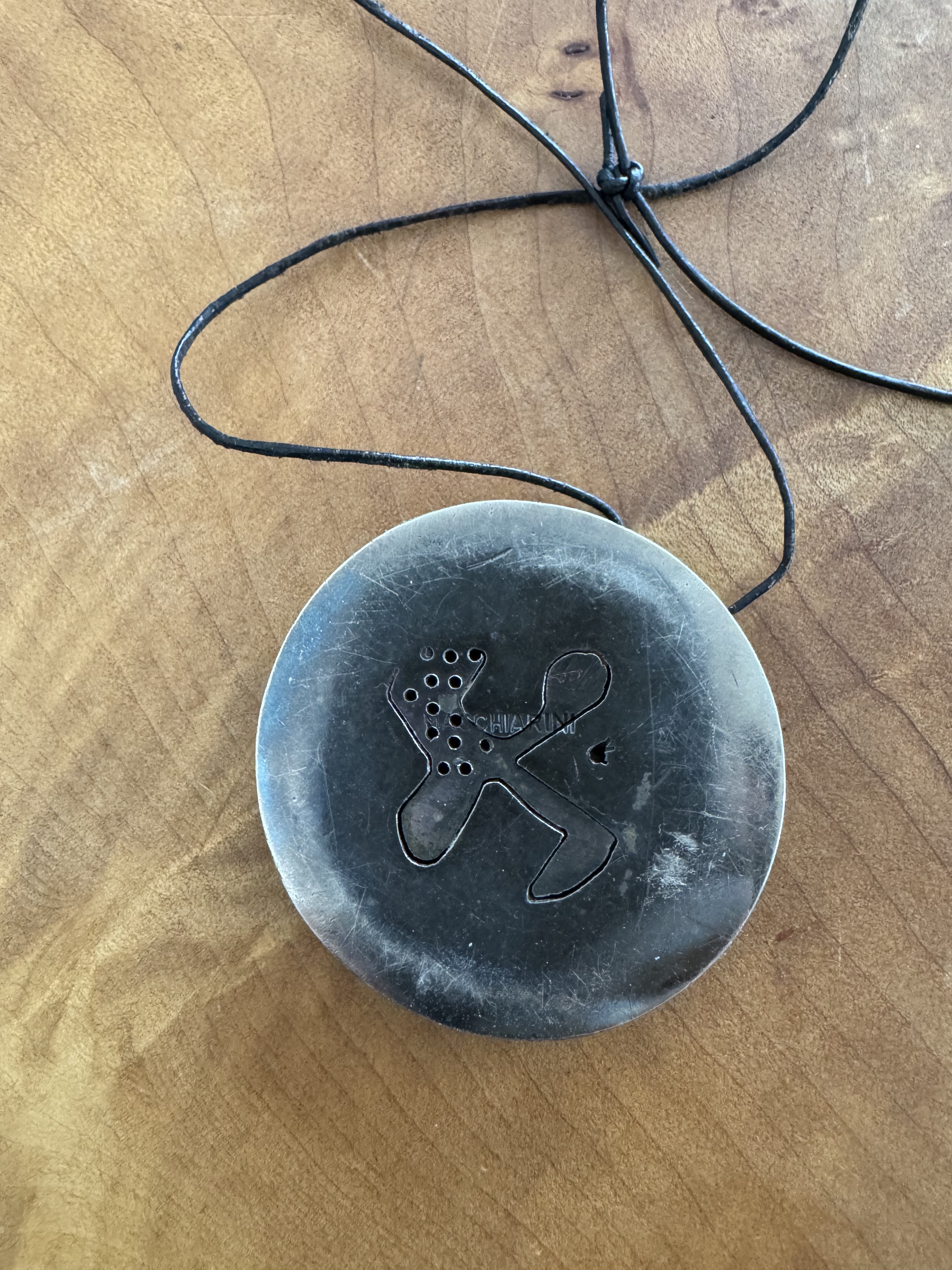
I decided I wanted to write about my mother’s Macchiarini pendant. My sister took it from her house after her death and gave it to me, thinking it suited me. I agree. Mom loved the work of Peter Macchiarini, an American Modernist jeweller (1909-2001) from North Beach, San Francisco. The several pieces my mother owned were passed down to us, her daughters. I have a couple of brooches, the pendant, and two belt buckles, and my sisters have other examples of his work.

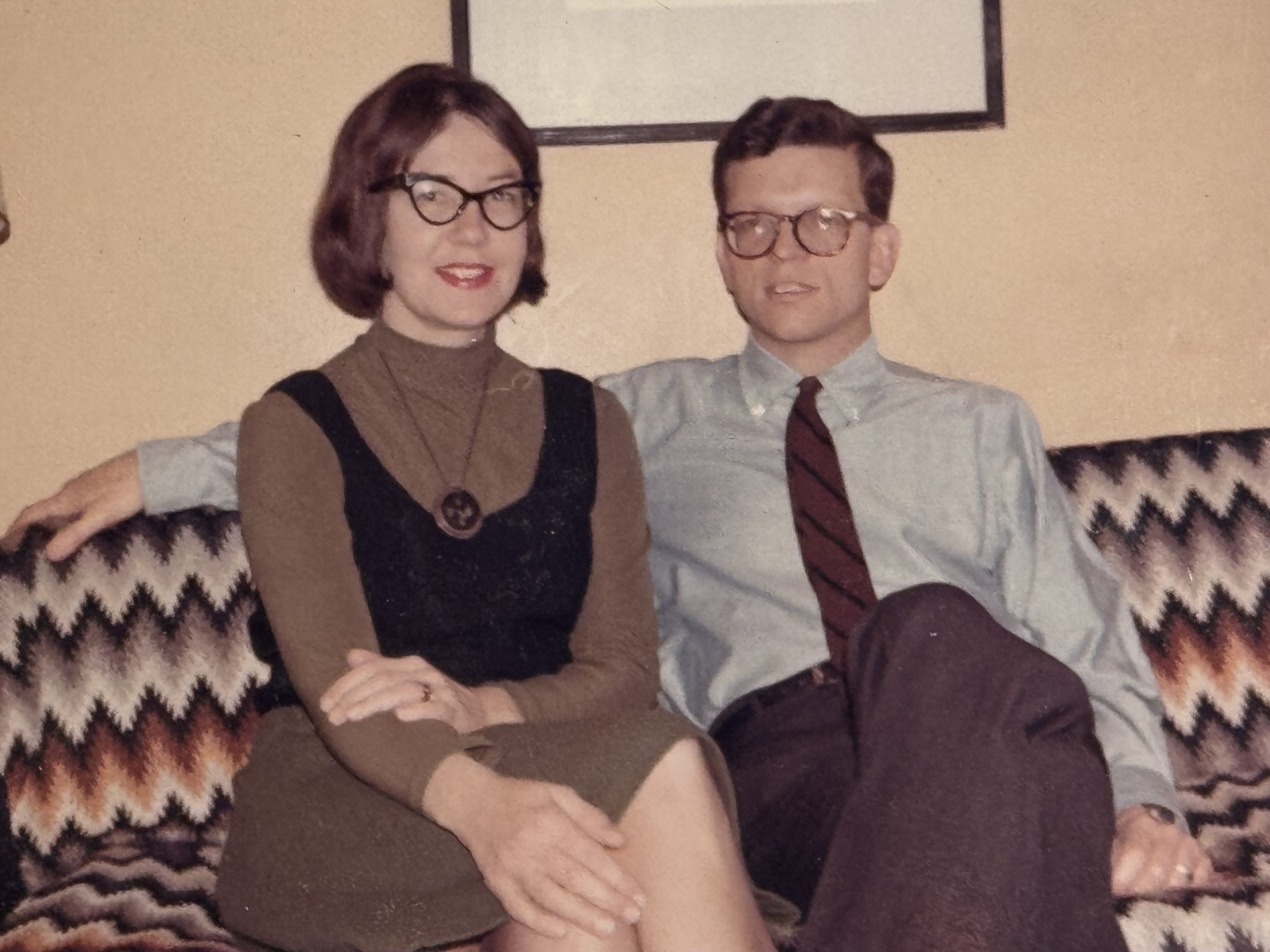
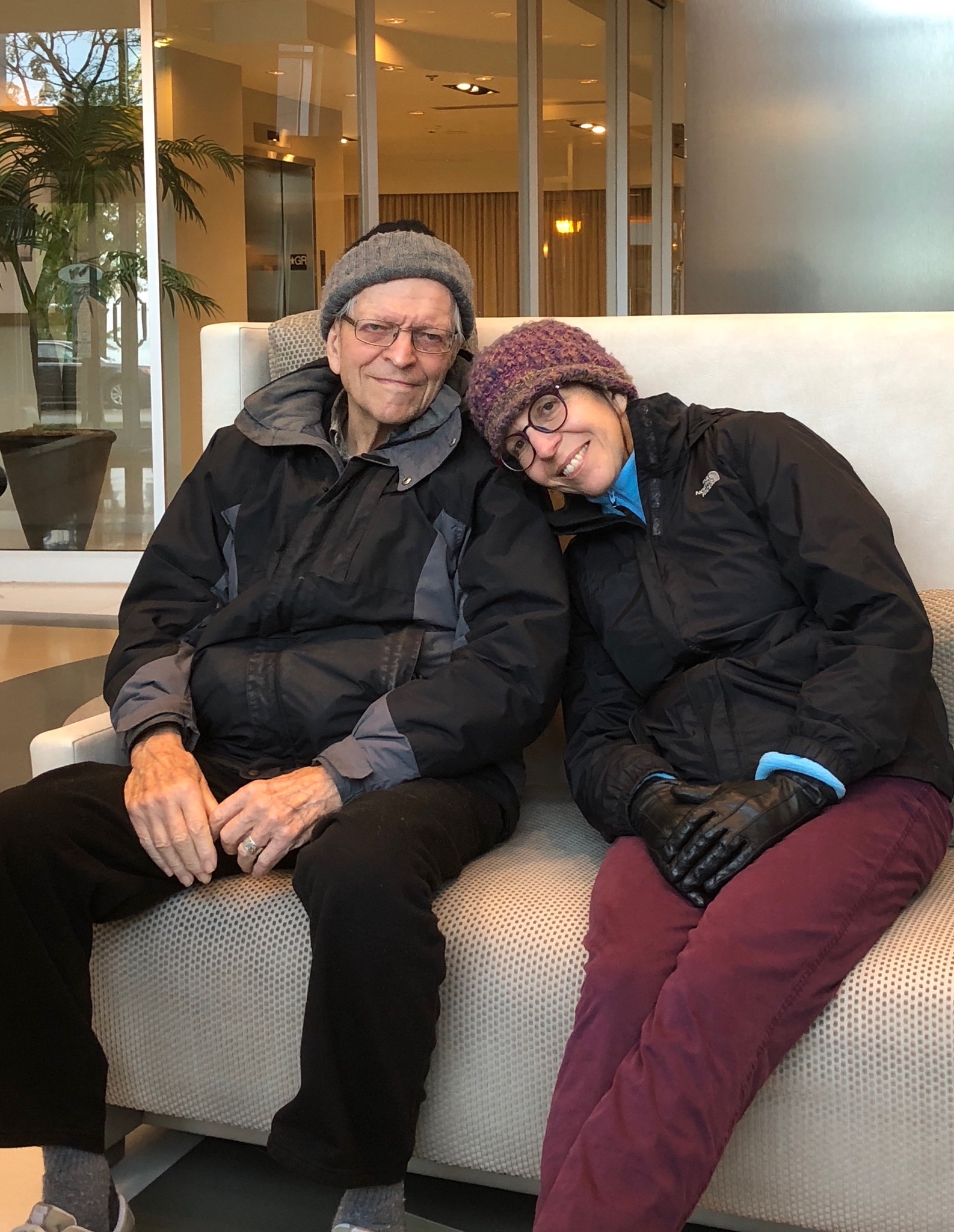
I want the pendant to tell a story—a story about my mother’s love for mid-century art, particularly from the Bay Area. Mom knew Peter, or at least I think she told me she did. She must have had anecdotes about how she bought the jewelry, what he was like, her San Francisco connection to him. She wore this pendant often, her signature piece. The photo of her and my dad shows her wearing it in 1964. She is wearing it again in the photo with her cat when she was in her sixties.

But the stories about Mom’s relationship with Macchiarini died with her. I can’t remember anything, and now I can’t ask her about them. What can I say about this unusual round pendant, a playful amoeba shape carved into dark wood and set in silver and gold?  I can say that when I wear it, I feel warmth under its weight. Warmth around the heart, generated by affection. Our relationship was complicated. She was fucked up, inevitably passing along some of that to me. Yet there was so much love. She instilled in me a reverence for life’s beauty. And inextricable from that, a cellular knowledge of sadness. 

I notice that my left hand is placed on my right arm just as my mother’s left hand is placed on her right arm in the 1964 photograph. Coincidence?

Take a chance

I’m not a gambler. I’ve never been one to buy scratch & win or lottery tickets, with the exception of raffle tickets for a good cause. But I have a weakness for the random—for letting books fall open, for reaching into my closet with my eyes closed. I wrote about random acts of reading in one of my early posts

Lately, my hunger for the random has become ravenous. Perhaps it helps me cope with the relentlessness of karma, of knowing that everything arises as a result of a complex web of causes and conditions. If I just grab something, I cheat the chain of causality for one moment. An illusion of course, but it briefly satisfies something in me. 

When I was at Women in Need thrift store a week ago, I bought a $5 jewelry “grab bag” and felt the thrill of not knowing what I would find inside. And then, at the Juan de Fuca 55+  Activity Centre Craft Fair last weekend, I picked up three “toonie bags,” again feeling excitement at the potential. I know the chances of getting things I neither want nor need are extremely high. But a pesky “what if?” tugs at me. What if there’s magic inside those bags?

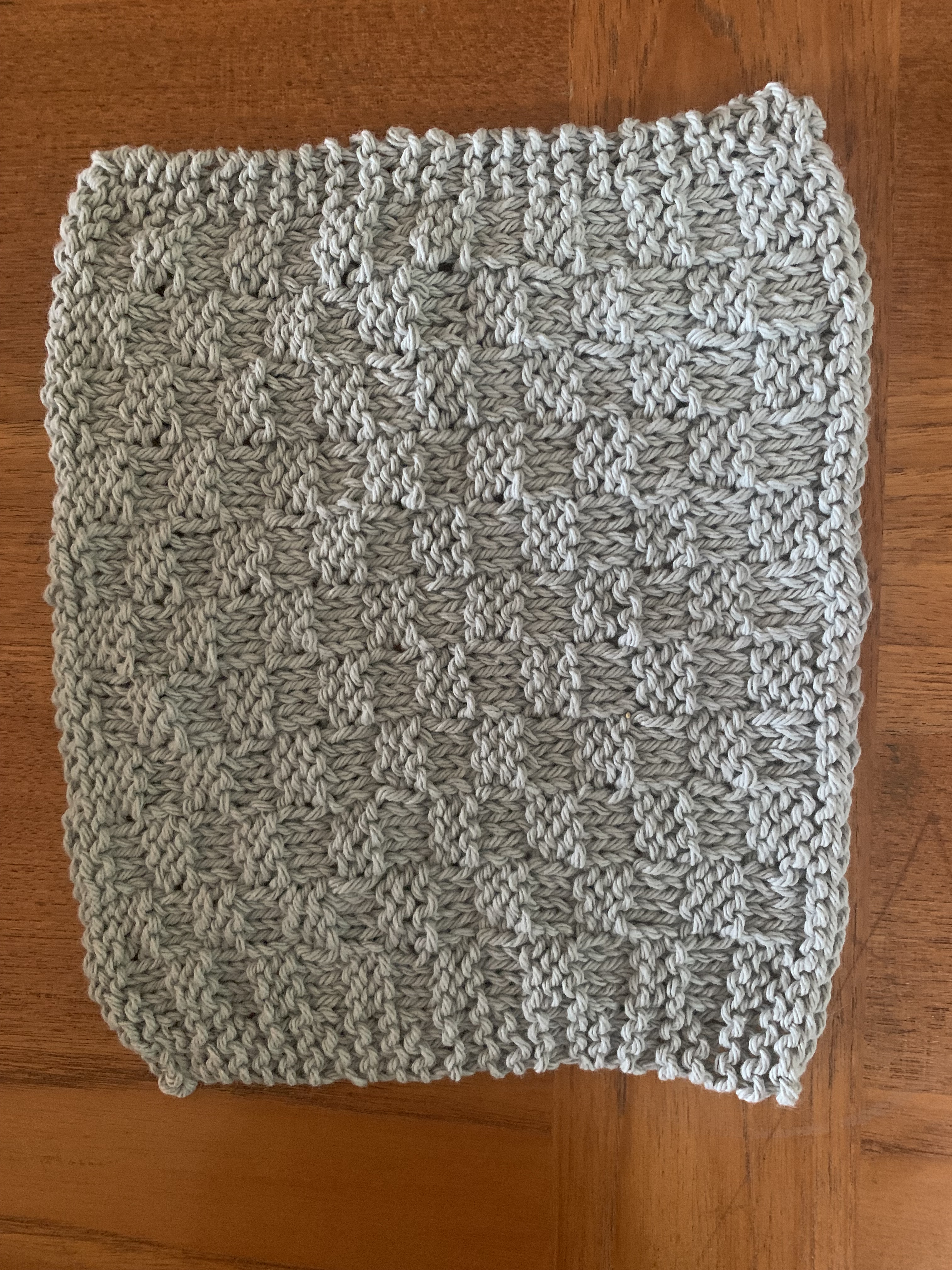
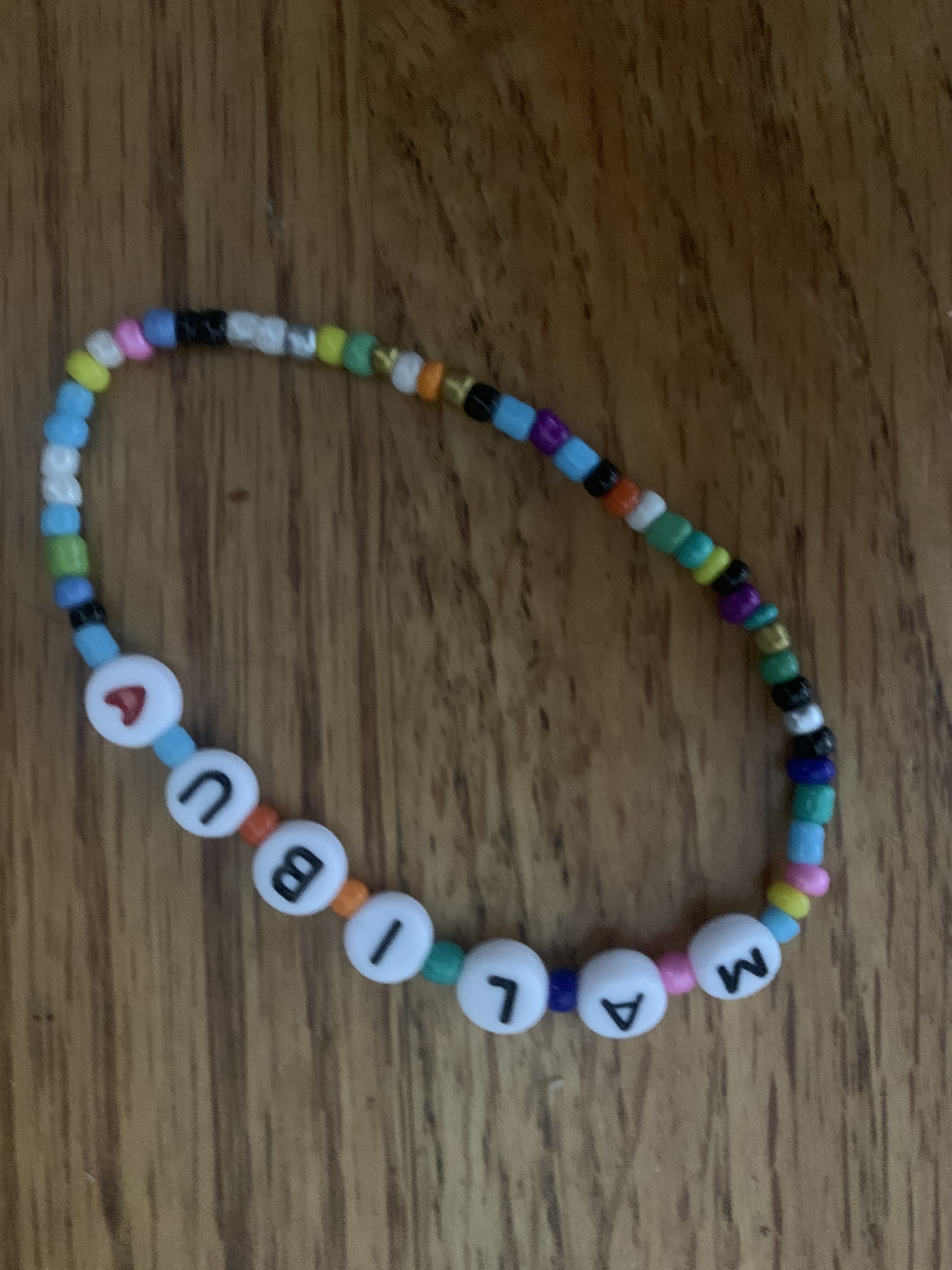
I tell myself it’s not such an expensive gambling habit: $11.00 spent over the past ten days. As you have probably already predicted, the $11.00 yielded mostly junk. Costume jewelry I would never wear. Small glass bowls, silver candles, a MALIBU beaded bracelet: all of these go right into the Goodwill donation bag. But there were a couple of things I liked. A cheesy “love” ring that nestles nicely next to my wedding ring for the time being. Three hand-crocheted dish rags in a shade of grey-green that I love and will use daily. And the priceless frisson of possibility …   If I do this too often though—spend too much money on “grab bags”—I get disgusted with myself, like a gambler must feel about their addiction. 

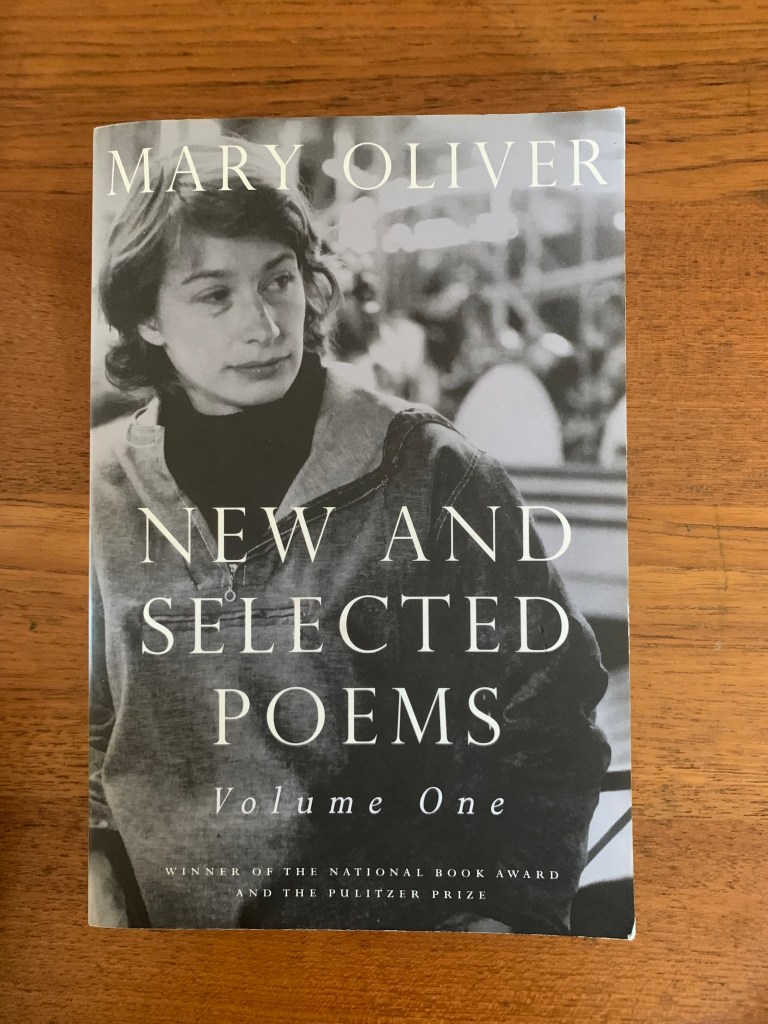
Today, Mandala Monday, I asked Michael to continue with the buffet of randomness. Last time, we each chose a tarot card to inspire us. This time for our mandala-making prompt, I suggested that I would take a book of poems by Mary Oliver and open it anywhere, read the poem, and we would create mandalas in response. Being game to participate in most of my creative ideas, he agreed. I opened to the poem, “White Owl Flies Into and Out of the Field.” Do you know this poem?  The huge white owl, wingspan five feet, picks up a rodent from the snowy field and flies off to the frozen marshes to devour it. Oliver imagines the animal’s death in the jaws of the owl as something incandescent, perhaps even pleasurable. Death, she muses, may be entirely unlike the darkness we tend to imagine:

maybe death 
isn’t darkness, after all,
but so much light
wrapping itself around us —
as soft as feathers —

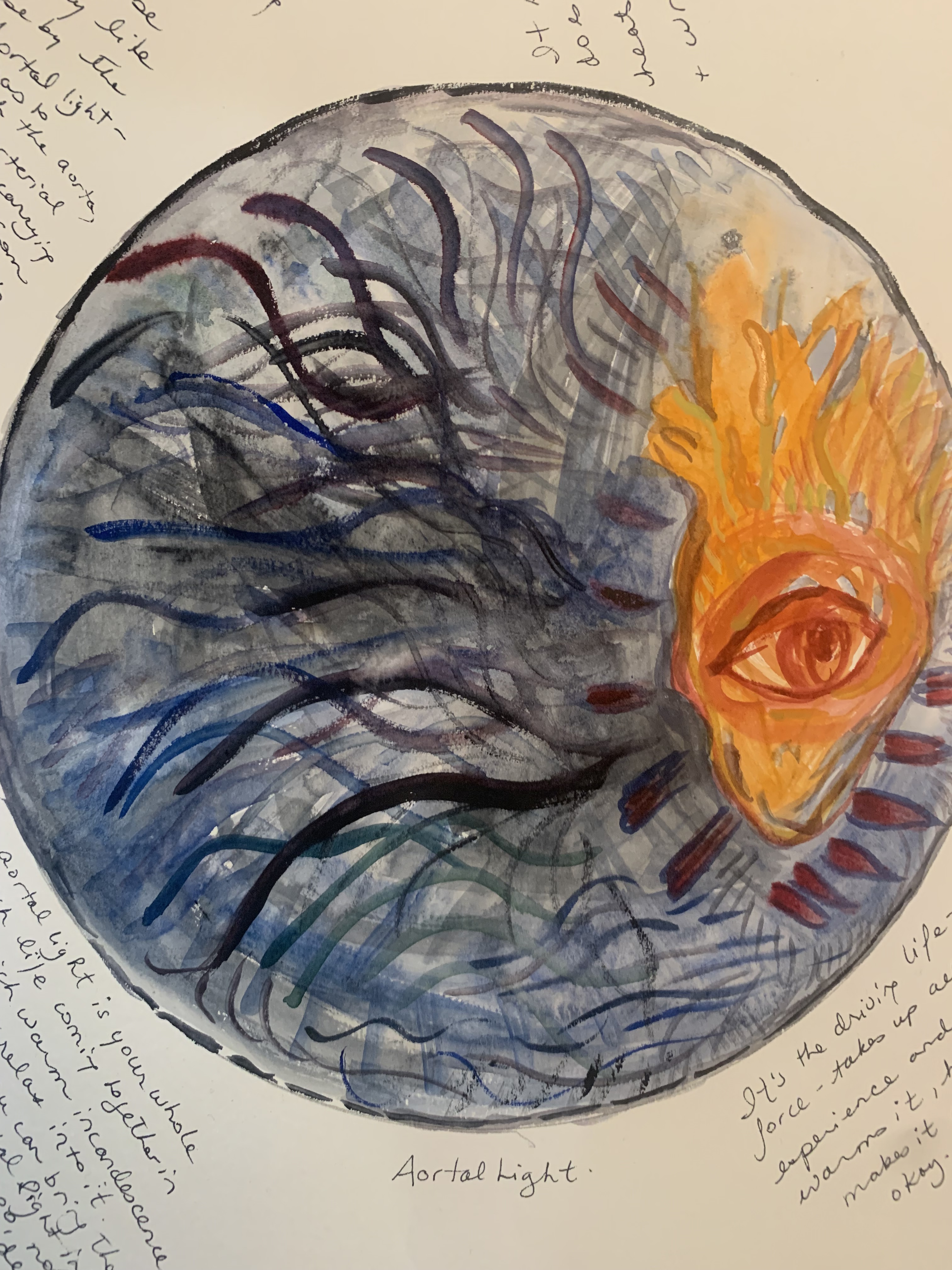
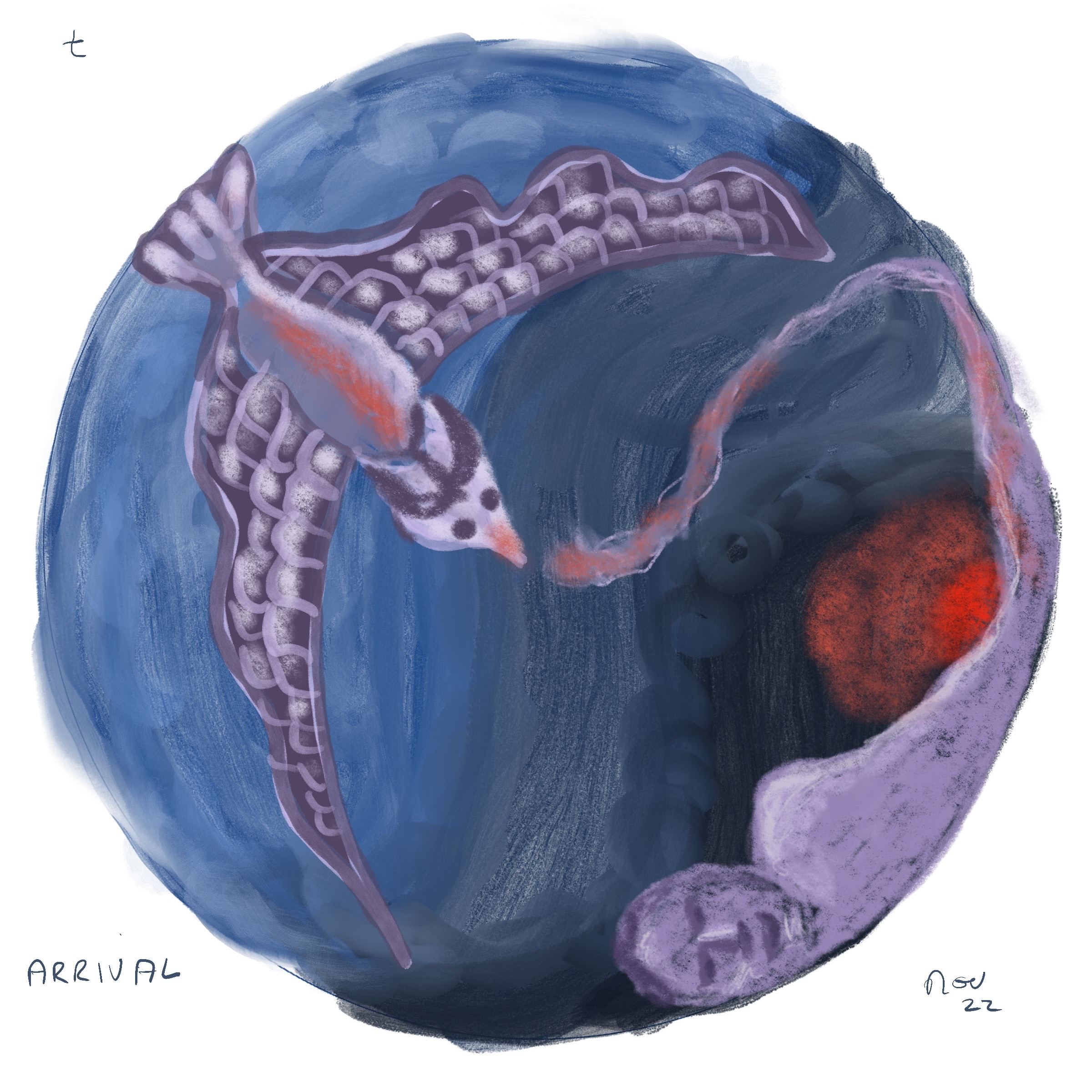
Michael and I sat across from each other at the dining room table, he with his IPad and I with old watercolours and a piece of heavy paper I’d traced a plate on. The songs from Leonard Cohen’s Old Ideas album surrounded us. We worked for a time. I sloshed paint and Michael used his magic wand. I persist in thinking of making digital art on an iPad as something otherworldly, technology out of my reach, which isn’t at all true. However, more and more, I recognize the ways I deceive myself, all of the little lies I tell to keep my life comfortable.

I like to mop up watery colour with an old rag, feel the wet paper under my palm, scrape at the bottom of the indigo blue with my brush, feel that I am using up every last bit of paint. The embodied experience of artmaking. 

I got stuck on a phrase near the end of the poem, “aortal light.” Adjective + noun. Aortal – from aorta, the great arterial trunk that carries blood from the heart to be distributed by branch arteries through the body. I imagined aortal light as a lantern that pulses like a heart, sees all with a glowing eye. Warmth and insight at the end of life. 

I fell in love with Michael’s “Arrival.” After creating hundreds of mandalas, he has developed a quick entry into the thriving, visceral archive of his subconscious. His images are evocative, and today both the image and the act of creation visibly disturbed him. I was riveted by the words he read to me after we’ve finished painting and writing. His honest expression of troubled feelings about the mandala—his fear of death—they scalded me. Would that I could be so honest! I like to think I won’t be scared when I am dying. I may be deceiving myself again. 

Oliver writes, we “let ourselves be carried,
as through the translucence of mica,
to the river 
that is without the least dapple or shadow —
that is nothing but light — scalding, aortal light —
in which we are washed and washed
out of our bones.”

Choosing the random means taking a chance. Please, big “S” Self, let me take more chances in this life. Not just by grabbing toonie bags and reading random poems—please let me take a chance in being honest, vulnerable. 

Daily sojourn

I often despair of my monkey mind, the jumble of thoughts that keep me from noticing what’s present. At the same time, I appreciate my tangential mind. I love following its pathways through shadowy tunnels of white-flowering hawthorns. I seem to always turn a corner to find myself in an unexpected field of light. 

Today as I ate breakfast sitting at the kitchen table, I started to examine the ceramic trivet my father gave me years ago after a trip to Granada. The trivet is decorated with an Arabic design: a mandala in teal, navy, red, and cream. I love the waving flower petals that seem to be in motion, dancing in the wind. The Arabian design on the Spanish trivet took my mind to the poem I’d just been reading by St. Teresa of Avila (1515-1582), a mystic living in Spain after 700 years of Arab culture. St. Teresa was intimate with her God; you can feel it in her language. I re-read the lines,

A woman’s body, like the earth, has seasons;

when the mountain stream flows,

when the holy thaws,

when I am most fragile and in need,

it was then, it seems,

God came

closest.

God, like a medic on a field, is tending our souls

And then, a few lines down,

Why this great war between the countries—the countries—inside of us?

From “When the holy thaws” by St. Teresa of avila

My counsellor tells me that I aggress against myself—a pattern in my life. An ongoing war rages between the countries inside of me. I like to think of God as a medic tending to my wounds, lifting me off the battlefield, holding me close, bringing my countries to peace. I remembered the stage six mandala I drew recently, with a little girl and a dragon (my warring countries). I wrote tenderly to myself, “lay down your sword, little one.” Perhaps the holy is thawing. 

I’d snagged that wonderful book, Love Poems from God: Twelve Sacred Voices from the East and West, from a cardboard box of free stuff. I love our neighbourhood. There is a little clearing across the street near the mail box where all of us take things we don’t want anymore. Neighbours and visitors from other parts of town come to adopt old things and bring them to their new homes—a brilliant system! 

This book caught my eye. What a great find. But boxes of free stuff and friendly dogs are not all that’s on offer here. The neighbourhood has other delights. Yesterday, I started work early in my home office in the basement, checking copy edits for a book. At 10, I took a break from the highly focused work. Michael, Marvin, and I walked down to the Gorge where a pop-up concert was in full swing. A local musician, Danielle Lebeau-Peterson, was playing her guitar and singing under a white tent. Danielle is the daughter of my eldest son’s first music teachers—Connie and Niels, and I marvelled at the “small world” (we’re all connected) feel of Victoria. Her mouth is like her mother’s.

The clouds in the sky threatened rain, but so far it was dry, and children and their parents gathered around Danielle as she sang and played, smiled and bantered. She knew songs from Disney movies, which delighted the younger crowd. The Tillicum-Gorge Association folks had set up a table with a big urn of Tim Horton’s coffee, cartons of donuts, and boxes of Timbits. There was a clipboard with paper and the question, “What do you love about our neighbourhood?” The cheerful woman behind the table filled my cup with coffee, and I took up the pen and wrote, “Everything.”

We sat on the grass listening, and when Danielle asked for requests, I called out “Blackbird,” that gem of a song written by Paul McCartney. It was one of my father’s favourites, and she played and sang it perfectly—her clear ringing voice floating up and over the Gorge: “You were only waiting for this moment to be free.” I smiled while my tears fell on the grass, and Marvin tugged at his leash, tried to smell the woman sitting next to us. This is the first Father’s Day I’ve lived without a father. But he was there in the high, truthful notes of the song. He is still with us. 

And now, I am still sitting here with the book of poems on one side of me and the trivet on the other, back from that pleasurable sojourn, ready to fill the hummingbird feeder with sugar water and play with the dog.  I love my mind and my heart. I love the rich stuff of daily life that produces all of these memories, feelings, and thoughts. The tangents take me unexpected places, but they always lead me back home to love and beauty.  

Grief’s flat feet

My dad, 1927-2021, looking over his land soon after they bought the farm.

We walked slowly Thursday morning because overnight, recycling boxes and bags heaped with cans, bottles, cardboard, and newspaper had appeared at the curb. Blue splashes up and down the street that Marvin had to investigate, and so our walk slowed to a shuffle. He snuffled like a pig rooting for truffles, straining at the leash to lick the pizza box, to reach the Friskies can with a smidgen of catfood left on the rim. The night before, during his last walk of the day, he’d let out a volley of piercing barks at a pile of recycling across the street. Perhaps to his eyes, in the dark, the mound of stuff piled high above the blue box was a threatening mammal.

Early September’s morning chill, high scudding clouds above, and a Northern Flicker playing hide and seek in a hawthorn tree, his red head popping in and out of sight. The street is quiet—just the distant thunder of the McKenzie interchange as a blur of cars crosses into town. I am grateful to work at home, no need to commute. Instead, I love these 7 a.m. walks. Something in a recycling box caught my eye. Neatly folded on top of a pile of newspapers was a section of Saturday’s Globe and Mail, folded to the crossword puzzle. Every clue solved; every box filled with a neatly penciled block letter. Perfection. Did my puzzle-solving compatriot struggle over it as much as I had? 

I felt connected to that person—their careful block letters different from my scribbled slanty ones, but we both finished the thing. Did they do it quickly, or did they stretch out the experience into Sunday or even farther down the week, relishing it? Did they approach the task methodically or fill in random clues? Did they ask for help or go it alone? Dictionary or no dictionary? Google or purely old school?  

Marvin ate half of my pencil.

Think of all of us across the nation who turn to the crossword first thing on Saturday. Sharp number 2 pencil. Or maybe a mechanical one. Do some confident people use pens? Fresh white eraser by Mars. Or a pink Dixon, perhaps? We sit in armchairs, on couches, sprawled on deck chairs, scrunched on buses and subways, drinking lattes in coffee shops. All of us, together in the challenge.

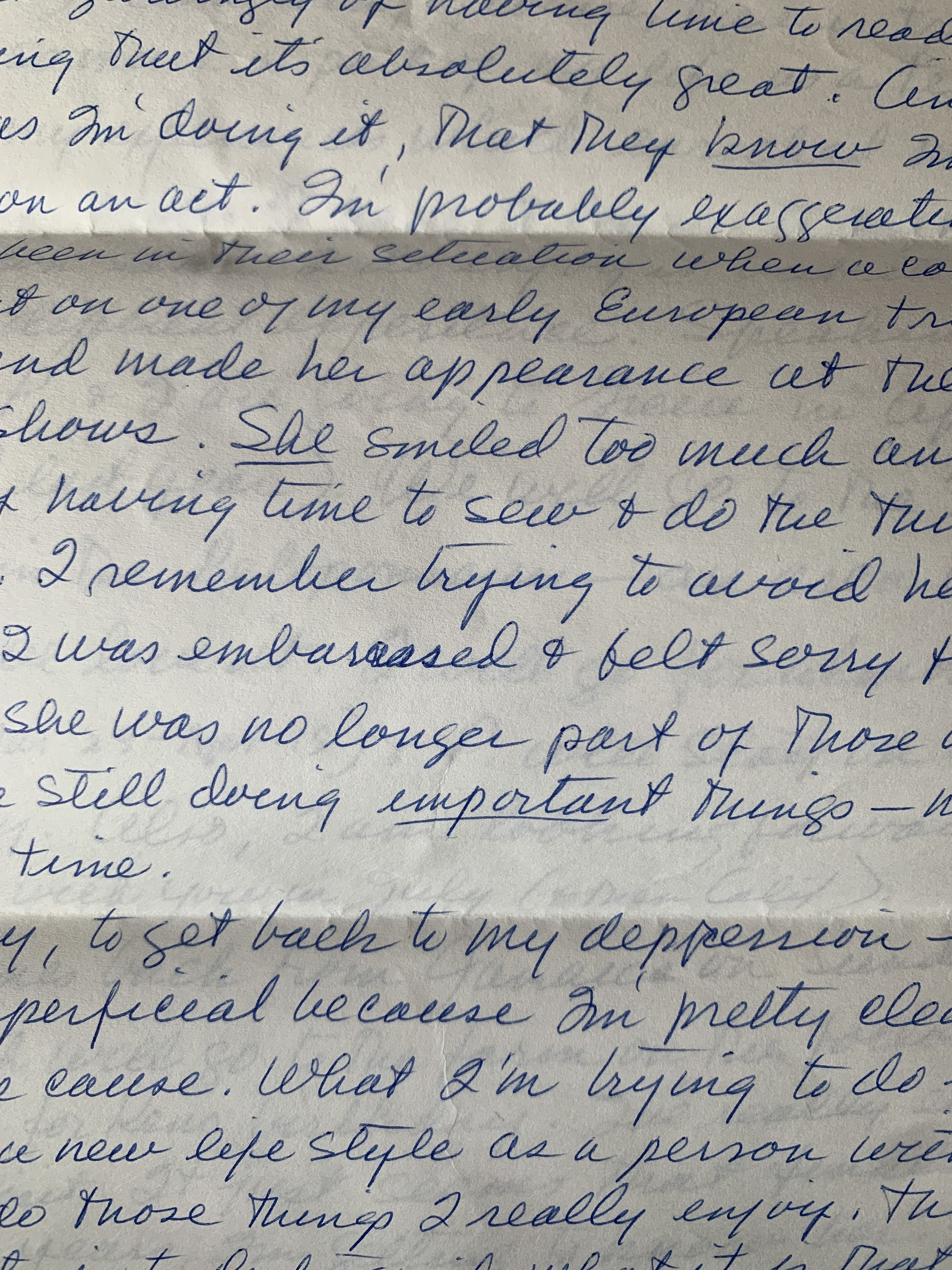
My mother did crosswords daily for the last 22 years of her life. They helped fill blocks of morning time after her mandatory retirement from her job as a lecturer in art history at Ryerson Polytechnic in Toronto. I found a letter from her dated February 1997. She had just received a package I’d sent intended to cheer her up: 

“I didn’t realize my depression was so obvious. It isn’t a deep depression. It is simply that I no longer have an audience and no longer get paid for doing something I enjoy. The awful thing is that as soon as a person retires, he/she loses status. I notice it when I talk to people at Ryerson . . . They seem extra kind and sort of smile at me and ask me what I’m doing, etc. I smile back and try to talk glowingly of having time to read, etc. pretending that it’s absolutely great. And I know, as I’m doing it, that they know I’m putting on an act. . . So, I’m trying to develop a new lifestyle as a person with time to do those things I really enjoy. The difficulty is to distinguish what it is that I enjoy doing! Meanwhile, I do crossword puzzles, which is new for me and I’m getting pretty good at it (usually at breakfast), and it’s very nice to have the leisure not to have to rush.”

I started doing the Saturday crossword soon after my mother died in 2019. I thought they were too hard at first, and so I’d abandon them quickly. I have a healthy vocabulary, and I love language, but the crosswords seemed like something else. They’re filled with puns and tricks, and it seemed you had to be part of the in-crowd to get them: both hip to idiomatic English across the decades and savvy about current cultural trends. I’m just too literal, I thought, and what I know fills such a narrow groove. But then the challenge started to intrigue me. Now I look forward to the Saturday paper. After reading the headlines and the obituaries, I find the crossword, fold it into a nice rectangle, and begin.

All of this is a preface to say, I’ve had no will to write. Nothing seems worth writing about, these days. Life has a flat, fallow quality. Nothing’s important enough. Although there’s plenty of big bad news—pandemic, systemic racism, climate change—I don’t feel equipped to talk about any of it. 

So, I push myself to finish this rather silly piece, a blog post about something as quotidian as the crossword puzzle. I stop and pause often to ask, “Why bother?” Why bother indeed. But it’s just that writing something, anything, seems as if it might be the antidote to the flat way I feel. 

My thoughts return to my mother, sitting on the loveseat in her high-ceilinged living room, wrapped in a thick robe, blinds down, doing the crossword. Filling the hours. Her sleek black cat, Cicero, is curled up beside her. She is deep into it, puzzle dictionary next to her on the small rococo marble-topped table, Schubert’s Trout Quintet playing softly on the CD player. Missing the old nicotine rush, the sweet suck of smoke into her lungs, she holds the pencil like a cigarette for a moment. I miss her. In that old letter from ’97, she wrote, 

“I’m probably exaggerating, but I have been in their situation [those Ryerson people who acted extra kind toward her] when a colleague retired and made her appearance at the annual fashion show. She smiled too much and talked of having time to sew and do the things she enjoyed. I remember trying to avoid her because I think I was embarrassed and felt sorry for her because she was no longer part of those of us who were still doing important things—not just passing time.” 

Mama and me, back in the day.

Doing important things v. Just passing time. . . I flinch at my mother’s binary of “important” paid work and “just passing time.” But something in what she wrote resonates with me. I work part time as a self-employed editor, but lately, I often feel as if I’m just “passing time.”

Maybe this is just the flatness of grief. Flat-footed grief walks over me. After many losses, I am a fallow field—nothing growing here.  

I have been reading memoirs about aging parents. . . Elizabeth Berg writes in hers, “I think as long as a parent is alive, it’s easier to feel young.” After my father died at the end of June, I’ve felt old, flat, fat, tired, sad. Nothing feels important. Especially not the weekly crossword. And yet, musing over the word problems gets my brain churning slowly, raking over clues like a pitchfork turning organic matter in the compost heap. I feel connected to crossword puzzlers across Canada. I imagine, for example, an old guy in Mahone Bay—let’s say he’s 82, goes by Ernest Nickerson and sits in the kitchen nook with morning coffee, chewing the end of the pencil as he tries to remember what a 10-sided shape is (79 across, 7 letters). 

From our 2012 honeymoon in NYC

Remember geometry class in tenth grade? That’s where Ernest first noticed the girl who would be his wife, in geometry class at Mahone Bay School. As he digs deep for the name of a ten-sided shape, another thought is unearthed from that compost heap: Darlene’s thick red hair, held back with tortoiseshell barrettes. He couldn’t take his eyes off those red wings in front of him during class, couldn’t stop imagine pulling his fingers through that rough, dark crimson hair. He unclicks the delicate barrettes to let those wings loose to fly. If Darlene were alive now, Ernest thinks, she’d lean into my ear, her coarse grey hair tickling my nose, skinny shank up against mine, and whisper, “Decagon, Ernest. You knew that, honey.” 

I write to get momentum, to feel connected to people, to create worlds. To feel connected to you, and Ernest, and Darlene. So, if you are a maker, a creative person, (we all are, each in our own way) remember: The work wants to be made, and it wants to be made by you. Even if it doesn’t seem important. Believe me, it’s important. It connects you to life. The fallow field regenerates.

Memoirs about aging and dying parents that I recommend:

  • Roz Chast, Can’t We Talk About Something More Pleasant?
  • Philip Roth, Patrimony: A True Story
  • Elizabeth Hay, All Things Consoled: A Daughter’s Memoir
  • Elizabeth Berg, I’ll Be Seeing You.
From a later trip to NYC, March 2019, after my mother died. Sugar skulls in a restaurant display.

My last phone call with my father

In the last few weeks of my father’s life, my stepsister Sandra held the phone near his ear when one of us called. He lay in a bed set up in the living room, slipping in and out of consciousness. We’d given up on FaceTime; he could no longer see us. But perhaps he could hear my voice. You never know.

That day, perhaps two weeks before he died—I don’t remember—I felt desperate. I was frenzied in my wish to connect, to penetrate the veil, to make him hear me. But I had nothing to say other than I love you, you were a good father. He’d heard it all before. 

So I sang. First, Summertime, from Porgy and Bess, my voice catching and scratching like an old record. Then, I pushed on with the next song that entered my head: Mac the Knife. I scrambled around the world wide web until I found the lyrics. Oh, the shark, babe, has such teeth, dear / And it shows them pearly white. Somehow, I thought he’d remember that song, but I don’t really know the melody beyond the first two lines. I faked it, trying too hard, straining, improvising, hoping. Hoping for what? For his sweet voice to say, “Madeline, that was wonderful”? Nothing.

So, then, a poem. I’ll read a poem. Robert Frost is a good safe bet. 

I wanted to find Nothing Gold can Stay, a poem about impermanence. But my memory failed me. I couldn’t recall the title, so I accepted instead the first poem that popped up when I searched for Frost: Stopping by Woods on a Snowy Evening. I pressed on, putting as much feeling into my voice as I could, wishing I’d chosen a more dramatic poem, a poem I could really emote. Instead, just the simplicity of an Alex Colville painting. A man and his horse on the darkest evening of the year, stopping.

The woods are lovely, dark and deep,   
But I have promises to keep,   
And miles to go before I sleep,   
And miles to go before I sleep.

When I finished the last lines, my stepsister’s voice entered. She’d been there all along, holding the phone. She said kindly that she could listen to me all day, my voice was lovely. But Dad was asleep; he’d been asleep the whole time. She thought perhaps he could still hear me. Did he move an eyebrow? 

But really, I know she didn’t have the heart to interrupt me. We said good-bye. A week later, I used the voice memo app on my iPhone to record myself singing “Blackbird” by the Beatles, Dad’s favourite song, and I texted it to Sandra, with a note, can I talk to Dad on Wednesday? But Tuesday was his last day here. 

A frantic energy inhabited me during those final one-sided calls. Helpless, I worked overtime to get through, to make a mark. Hey you, this is your daughter. Papa! You there? Remember me? Your youngest daughter? Remember how you and I used to joke about you being King Lear, and I was your Cordelia? Sir, do you know me? Surely you do. Just give me a sign. 

Father

In this wine-dark place
a tiny voice
a whisper:
hush, little baby, don’t you cry

From long ago
from far away
a thread
of red travels along
my bloodline

when that shark bites with his teeth, 
babe
scarlet billows start to spread

and meets a tributary.
I know your voice. 
You are mine.

I want you close
daughter,
but this trip
is made alone.

The woods in here
are dark and deep

I want to sleep, 
dear, but
a worry burns:

Tell me, do I have 
promises still to keep?

No, I hear you say, 
no more promises to keep.

Spread your wings,
I hear you whisper

Take to the sky papa,
Take to the 
red-blood sky.


Pockets

In the basement of my mother and stepfather’s house, I look through the closet where Mama’s coats hang. These are her extra coats, at least twenty of them. A black suede jacket by Anne Klein, a gold rain cape by Pierre Carden, an army-style blazer by Eileen Fisher. Size 12, size 14, large, large, large. I wish they fit me, but I swim in them. Except the cape. 

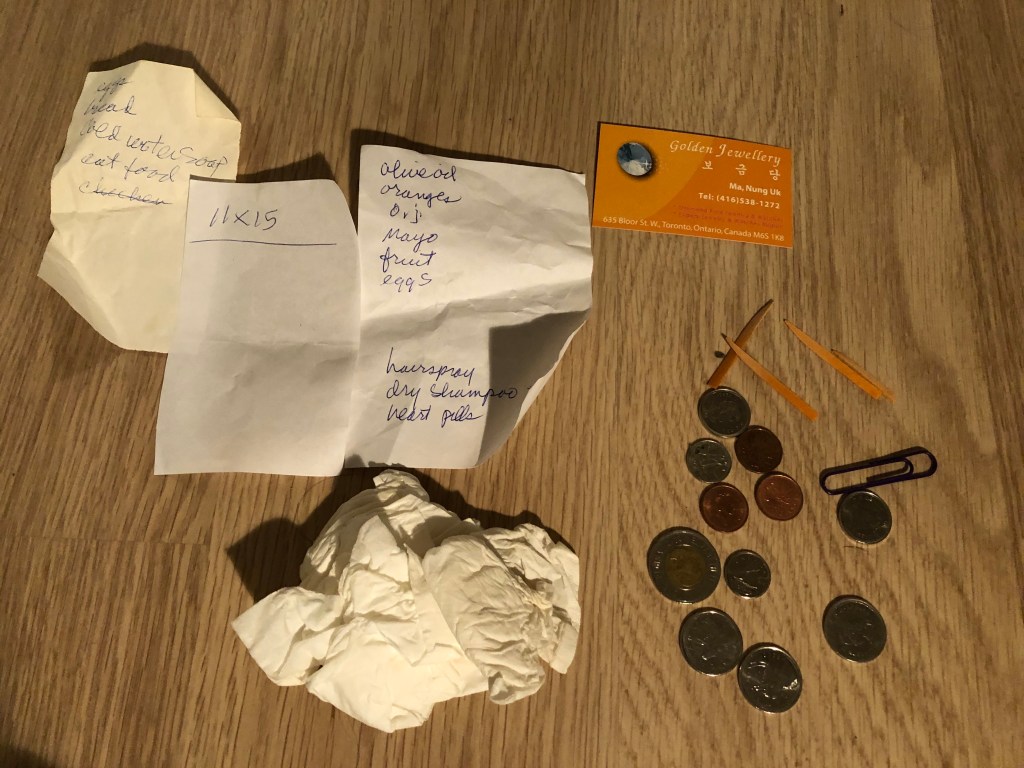
It’s raining, and I didn’t bring a raincoat. I came to Toronto to see my father in hospital, where he lies with a fractured pelvis. I left Victoria in a hurry and packed lightly—just a small overnight bag with a few clothes and a box of KN95 masks. I try on Mama’s rain cape and my hands go to the pockets. Change, Kleenex, a shopping list, a Stim-U-Dent, “the most recommended piece of wood in dental history.” 

I inherited my mother’s gum disease and her love of pockets. The best jackets and coats, dresses, and pants have pockets. Places to stash the things we might need. Mad money, my mother told me, was the money you took on a date in case the guy was a jerk and you needed the bus fare home. Pockets are secret places to slip your hands into when your fingers are cold or restless. Places to finger a hidden thing. 

Wearing the long gold cape, light as tissue paper, I start to rifle through pockets of the other coats. The treasures I find, I pile on the floor. I take just a few sample items and make an arrangement: a toonie, quarters, dimes, nickels, and pennies. Clean Kleenex, wads of it. Stim-U-Dents. A paper clip. The business card of a jeweller up on Bloor Street. Some scraps of paper with her handwriting. 

Handwriting that opens a valve spreading warmth through me. Hey, Mama, it’s you! I’ve opened hundreds of envelopes and packages addressed in that warm energetic cursive. For years, there were frequent letters filling me in, encouraging me, describing events and ideas, asking me how are you? how are the boys? Handwritten cheques, recipe cards, Christmas and birthday packages and “just because” packages. 

And lists—lists that summon an image of Mama getting ready to go out to do her daily errands.

She would tell me during our weekly calls, “I’m just like a European housewife, now. I shop every day.” I can see her in her sunglasses, her dark smooth hair in a classic bob. Pink lipstick. She is dressed all in black, and she tucks the list into her jacket pocket, slings a shopping bag over her arm. She calls for the cat Cicero, making sure he’s inside before she locks up and gets into her black Echo, buzzing up to Fiesta for the good Ace brand ciabatta. For the green net bag of bright oranges to halve and squeeze for juice every morning, using the old-fashioned cut-glass juicer. Mayo—a large jar of Hellman’s to be slathered on the sliced ciabatta and then layered with Asiago cheese and slices of the best-quality salami. A stop at the drug store for heart pills, for “dry shampoo.” I can see the funny little purple and white cannister of “Nuvola Dry Shampoo” on her vanity—that powder she sprinkled on her oily scalp to assuage some anguish she had about her hair.  

Pocket collage

I take off the rain cape—too dramatic. I worry it would draw attention to me as I walk along the street; I want to go by unnoticed. But I ask Petros if I can have her summer robe from the upstairs closet. It’s been 19 months now, but her clothes are all still here. I reach to the back of the closet and pull out the robe, still smelling of her.

Hey, Mama
What is 11 by 15?
Is it the size of a photograph 
you wanted to frame?

Did you ask 
Ma, Nung Uk 
at Golden Jewellery
to make
your ring smaller
so as to 
fit 
your
dwindled
finger?

I hope you don’t mind
that I took your  robe.
The Calvin Klein 
black jersey one
you wore in 
your final 
days. 

I was careless:
forgot to check
the pockets and
when I pulled it 
from the washer,
a fine white
confetti decorated
the dark folds.

The day before I left
I asked him, 
Could you ever
love another
woman?

No, he said. 
I would always 
compare her to 
Virginia. 

Shake your wet weathers in the warm wind

Bouts of anxiety come and go these days: chest tightens, stomach burns, heart flutters. Tears come at any time, unbidden. My hands and face feel raw. My heart even more so. I  am finding comfort in small things. When I saw #StayHomeWriMo’s mental health prompt, “starting re-reading one of your favourite kids’ books,” I took Little House in the Big Woods and Little House on the Prairie off the shelf, the first two books of a series based on Laura Ingalls Wilder’s childhood, specifically pioneer and settler life in Wisconsin, Kansas, Minnesota, and Iowa in the late 1800s. I have the first four books, and I’ve kept them since childhood, moving them from house to house dozens of times. Faded covers, deckled edge pages, and canary yellow flyleaves. Garth Williams’s droll pen and ink illustrations make the stories and the characters come alive. Rereading them more than fifty years later, they produce the same warm feelings of comfort and safety they did back then.

Screen Shot 2020-04-10 at 12.56.29 PM

As I snuggle in bed, I enter a fictional world governed by capable, predictable adults. Wolves howl outside, bears roam the woods, storms erupt and cold winds thrash against the house, malaria descends upon the family, and Indians living down in the creek beds want to kill and scalp all white people. Yet Ma and Pa are there, keeping Laura, Mary, and baby Carrie safe.

Nestling into words and images describing snug, clean, safe indoor environments, I enter the log house in the big Wisconsin woods (Book 1). In the deep of winter, fire shines on the hearth, bulldog Jack and Black Susan the cat stretch out on the warm wood floor. Comfy in her red flannel nightgown, tucked into the trundle bed she shares with her sister, Laura “looked at Pa sitting on the bench by the hearth, the firelight gleaming on his brown hair and beard and glistening on the honey-brown  fiddle. She looked at Ma, gently rocking and knitting. She thought to herself, ‘This is now.’”

IMG_0738

Like a swarm of bees, I can feel the critical arguments seething through my mind as I continue reading: I am trained to call out patriarchal culture, gender construction, racism, oppression, and colonialism, and it’s all there in these books. But I switch off those arguments, sinking into our collective unconscious where an archetypal protector tucks us into cozy trundle beds, watching over us, every one, during this difficult time.

I remembered my 60th birthday party, a year and a half ago. Despite drawing a tarot card that spelled disaster, I experienced the snug feeling of being safe, loved, and watched over. Those were happier times when we were able to gather—when physical distancing was unthinkable.  I invited a friend to the party who reads the tarot, specifically the Motherpeace deck. Karen Vogel and Vicki Noble created Motherpeace tarot in the late 1970s in Berkeley, California, where they worked together as academics, feminists, and sacred healers. This big round deck draws on ancient Goddess wisdom, the occult, magic, myth, and feminine energies. Although when I first saw the deck, I felt disappointed by what I perceived to be crude artwork, I became more and more interested in how these two women had translated the 78 cards from more traditional decks into sacred feminine images.

At my party, I felt honoured by Pamela’s willingness to read for my friends, and one by one, I asked people if they would like a reading. Several of my women friends did, and so by turns, they sat in my low bamboo writing chair that I had dragged into the living room from my sewing room. Pamela, having spread her blue velvet cloth over a low footstool, handed each querent the deck to shuffle. It takes a bit of time to get used to working those big circular cards into a shuffling sequence, and I noticed each of my friends handled the task slightly differently. Pamela asked each woman for her question: What do you want to know? Not a yes/no binary question, but a how or why or what question. Next, Pamela asked them to cut the cards three times, choose three cards, and lay them down. The three-card sequence represents the past, present, and future.

Sometimes, through the buzz of conversations, soft lamplight, music, balanced plates of food, and milling bodies, I glanced at the rapt look on the querent’s face as Pamela leaned in toward her, long blonde hair falling around her beautiful serious face. Sometimes I heard laughter from that corner. And I kept getting little warm flutters in my heart—thinking of how happy it made me for each of my female friends to have this loving attention paid to her for a few moments. To consider her life as this rich, mysterious path. To feel the soundings of old wisdom, submerged, but like a vein of molten lava, spreading warmth and understanding into her body, from the seat of her pants into her torso. But of course these are my feelings about tarot—not theirs. Yet it made me happy. It was as much a gift to me as a gift to each of them.

It was enough for me to know the gift Pamela had given my friends, but then, as I stood in the doorway saying good-bye to a guest, she patted the pillow on the wicker chair. “Your turn.” I sat down, and when she asked me for my question, it came without hesitation, from where, I don’t know: “How do I connect with my power?” The first card, my past, I didn’t take too seriously—six of cups with three women in the water and three riding a wave of orgasm. Perhaps it signified all of the good love I had been experiencing since I met Michael. Perhaps I had started to take it for granted, this bath of love I swim in.

six of cups

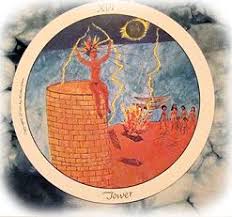
But the present card was the Tower, a powerful card of transformation. “This is the card of big change,” said Pamela. “The card that signals big change in a person’s life, like when your husband leaves you—not like this is actually going to happen,” she laughed. And we both looked across the room and smiled at Michael, who was oblivious to our reading, deep in conversation with one of my sons. “I’ve been getting messages that I need to surrender to something,” I hold her. “Well now you have no choice. It could just be turning 60, the big change.”

tower motherpeaceAt the time, I thought the big change the Tower signified was the crumbling of ego. I was being called to surrender to the slow incremental losses of old age. But the Tower signifies sudden change, and today I believe it foretold the capital c Change the pandemic has brought: change that shakes the very foundations of our lives, change that brings our beliefs and systems under scrutiny and asks us what is most important in life.
My future card, the ace of wands, depicts a small brown body breaking free from a blue eggshell, surrounded by flames. Rebirth, creativity, and victory follow sudden loss. All of my life, I have swum against the river trying to locate firm ground. But wait a second, could surrendering to the flow, to the changes, be a way of accessing my power—connecting with it? Letting go, like surrendering to the body’s irresistable contractions during birth, could be the opening to rapture. Ego dissolves into the deep thrum, the slow heartbeat of the Earth that we finally hear when our struggles to get ahead, to get somewhere cease. All my fighting is just thrashing around on the water. Let go and get swept into the current. That seems about right.

ace of wands motherpeace

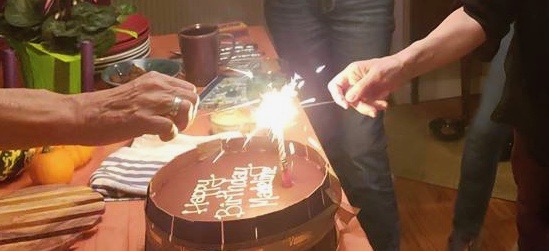
Later that evening, we lit sparklers and ate a cake, resplendent with glossy chocolate ganache and “Happy Birthday Madeline” in piped white sugar lettering. People hung around for a while, then started to leave—much hugging and laughing in the small entranceway. In the now quiet house, Michael and I cleaned the kitchen and put away the leftovers. Something about hearing the dishwasher clicking into its cycle, wiping down the counters, folding damp dishtowels over the oven door, turning off the porch light, rearranging the chairs felt so simple, safe, and sweet. I had a memory of early childhood, when my father used to go around the house and secure everything. Lights off, things put away, daughters in bed, kissed goodnight. Only the whistle of the radiators and murmur of mother and father talking in their bedroom. Nobody, nothing can hurt me now. Did this ever really happen? I don’t know, but the sensation of being safe and warm was real, just as these last few nights I’ve channelled Laura in bed in the little house in the Big Woods to help calm my anxiety.

Version 2

As I lay in bed that night beside my husband, I felt safe, warm, and contented. Now that I had been given permission by the Tower, I could let go. Everything was coming apart anyway, we were all falling, so I didn’t need to hang on so fiercely after all. I fell asleep and dreamt of blue bits of eggshell scattered over the ground, the detritus from rebirth. They crunched under my bare feet as I shook my wet feathers in the warm wind.

The meaning of that dream feels clearer now, many months later. Now that the big Change is here, we get to choose our rebirth. I like to think of all of us as little birds shaking our wet feathers in the warm wind, bits of shell still clinging. We will fly again.


Resources for anxiety

https://bouncebackbc.ca/what-is-bounceback/

https://www.anxietycanada.com/

Resources for writers

NaNoWriMo https://nanowrimo.org/ Sign up with the organization that puts on National Novel Writing Month (November) to get their Covid 19 prompts

How to write when life is sad and wretched: https://discover.submittable.com/blog/how-to-write-when-life-is-sad-and-wretched/

Helen Sword (there is a free online writing retreat coming up later this month): https://www.helensword.com/


.


I am entitled to claim my experience

Lately, I’ve been scared to write a post. The story I’ve been telling myself: Anything written now during the pandemic should be extra meaningful. People are suffering terribly, so anything I write must contain a kernel of wisdom that provides relief and sustenance. Readers need wise words to help them through this. Then today I remembered that perfectionism doesn’t cure insecurity, a gem my therapist shared with me last year, a very pithy teaching just for me. Or perhaps it’s useful to you, too. Repeat after me: perfectionism does not cure insecurity. I have harboured the false belief that if I do it right all the time (impossible!), I won’t have to feel the insecurity. I now know that insecurity is mine for life: there is no cure. But I can choose to wear it lightly. It doesn’t have to hobble me.

IMG_0663

patchwork purses to give away

For me, creativity in the time of Covid-19 has meant sewing patchwork purses to give away. But I also started a “novel,” which is in scare quotes because it is a hypothetical entity. We paid for a one-year subscription to Masterclass so I could listen to Margaret Atwood teach me how to write. I have found it more intimidating than inspiring. Lesson number one: keep your reader reading. But the question is, how? How to craft a page-turner? Don’t get me wrong—there is a great deal of useful teaching in the short videos comprising her master class. I have learned so much.

Nonetheless, after struggling with time and place and plot and characters and writing 4000 words, I was stymied. Setting my novel in the 1940s meant that I needed to do a lot of research, which I expected. I love doing research. But then all the libraries closed. And the internet can only tell you so much. How do home cigarette rolling machines work? One of my characters sits at the kitchen table and rolls her cigarettes for the week. Fiction needs sensory detail. All I could find was vintage rolling machines sold on Etsy, but that doesn’t show me how the contraption works, how the filters are placed, the papers, the shredded tobacco. Is there a lever that clacks? How does the lid close?  Every time I wrote a sentence, I came up against a new problem. I thought at one point, perhaps I should give myself a break and write about something familiar, for example, use the time frame of my own life, familiar places and feelings. In any case, writing the “novel” is on pause. For now I keep the writing going with morning pages and responses to writing prompts.

I love the prompts from Poets and Writers.  Today I tapped into one of the non-fiction prompts:

“This month, TIME magazine unveiled their 100 Women of the Year project, which shines a light on influential women from the past century who have been overshadowed by their past Man of the Year covers. Choose a woman who has played an important role in your life—someone you have been close to for many years, or an acquaintance or celebrity whose words or actions have affected you in a significant way—and think of one year that was particularly affected by your encounter. Write a personal essay that details your memories of an inciting incident, and that celebrates the impact of this woman. Browse through TIME’s new covers for inspiration.”

Great, right? Those women on the covers are remarkable. But then insecurity clouded my mind again. I couldn’t think of one woman who played an important role in my life. Not a famous one or anybody I knew. Does that mean my life is less rich than other people’s? Am I androcentric? Do I lead an impoverished life? I imagined other writers overwhelmed by abundance, choosing from dozens of important women in their lives. Click. I caught it again. My mind doing that trick of comparing (remember, comparison is the thief of joy) and perfectionizing (not a verb, but now it is). This tendency to tell a story that other people are much better than I am—smarter, more creative, more articulate. This story I tell is rooted in perfectionism and, ultimately, it kills creativity. Why bother  to write when everybody else has it sewn up? So I take a deep breath and think again.

Oh, my therapist, N! I can write about her. Last year she was a god-send.  I looked forward to our meetings at 4 p.m. every other Monday, for which I arranged to leave work early. I sit in the waiting room paging through magazines, waiting. She comes out—tall and elegant, and stands before the door, beckoning me, waving me in, then closes it softly behind her. Her movements are graceful as she lowers her willowy frame gently into the chair across from me. She has her glass of water, a discreetly placed, tiny gold clock that will beep once after 50 minutes have elapsed. Folded on the side table is the receipt for $120.00 that she will hand me after I give her a cheque at the end of our session. A box of Kleenex.

I admire her lavender blouse, made from a soft crêpe de Chine, her slim eggplant wool skirt, her big smooth hands folded before her. N’s short frosted blonde hair frames an open Nordic face, a face radiating good health and interest. Lip gloss her only make up. Until then, grey eyes appeared only in fiction, the stuff of fantasy. Her unadorned slate grey eyes pierce through me, a tender piercing. Her shoes are lavender suede Mary Janes with satin bows in dark purple. She always looks so finished, so lovely. She leans forward, curious, engaged, her elbows propped on her thighs, hands clasped together. Clean buffed nails, nicely rounded. “So, what have you been thinking about lately, Madeline?”

I started seeing N. after my mother died in February 2019. When dark feelings crushed me, choked me, weighed me down. Yes, I was sad, I was horrified. But also I was angry and sad, flinty and yearning. I needed someone to help me unpack the complexity of feelings coursing through me. Someone at work recommended N, and I started to see her a year ago. I saw N every two weeks for six months, so a scant dozen meetings. I ripped through the $1,000 that Pacific Blue Cross insurance allowed for counselling and then started to spend our money.

My dreams were frequent and bizarre during those months, and we spent time unfurling them in our sessions. There was always something to talk about, cry about, laugh about. More than enough. And over the six months, many insights arose from my childhood and teen years. I realized those early experiences had painted my relationship with my mother with a thick impasto of purple and black—a tangle of love and hate, fear and yearning, resentment and tenderness.

One of the biggest breakthroughs was the realization that I am entitled to claim my experience. N noticed how I often I downplayed my responses and feelings. I’d say they weren’t important or I would cast doubt on their truth or make light of them. When she told me one day, “Madeline, you know you are entitled to claim your own experience,” tears started coursing down my face. How did I not know that before?  It was as if she had given me permission, after 60 years, to take up space, to make a claim, to speak my truth.

There were other big insights arising from those sessions: I was intruded on and felt unsafe in early life, so as a result have permeable boundaries and difficulty setting boundaries. I withdraw. I use precious energy to keep the lid on my feelings of hurt and anger. I am a pretzel, accommodating others, and in the process I lose sight of what I need or want. I am afraid that if I speak my truth, I won’t be loved. I learned to diminish myself in the big omni-presence of my mother. I learned how not to be different. My internal validation is underdeveloped. When I feel I cannot be different from others, I comply and erase a part of myself. And of course, my perfectionism will not cure my insecurity.

These are only some of the Bold Beautiful Truths I learned and have been working with since I met N. When I told her I was going to stop coming because I would have no income for a year, she said in her kind, firm voice, “but Madeline, I thought we were really getting somewhere; maybe you want to stop because you’re scared of uncovering something really big.” She might be right. Maybe I’ll come back after my unpaid leave, once I have a paycheque again, I told her. “I’ll be here,” she replied.

My woman of the year is Nanette, the midwife to my emotional awakening. I love her for that.