Unknown's avatar

About maddyruthwalker

I have over ten years’ experience in structural, stylistic, and copy editing. I’ve collaborated on research and writing with academic authors and guided two authors through the process of publishing their academic books (both at Routledge, UK). I coach writers, helping them to tackle their obstacles and find joy in writing. The most important element in doing this work is my relationship with you, my client. I enjoy working with creative, flexible people who trust my work. I thrive on collaboration and co-creation. Let’s see if we have a good fit. Please contact me and let me know what you’d like to do. 250-813-3423 maddyruthwalker@gmail.com

Tree poems

Today, I share with you two of my poems.

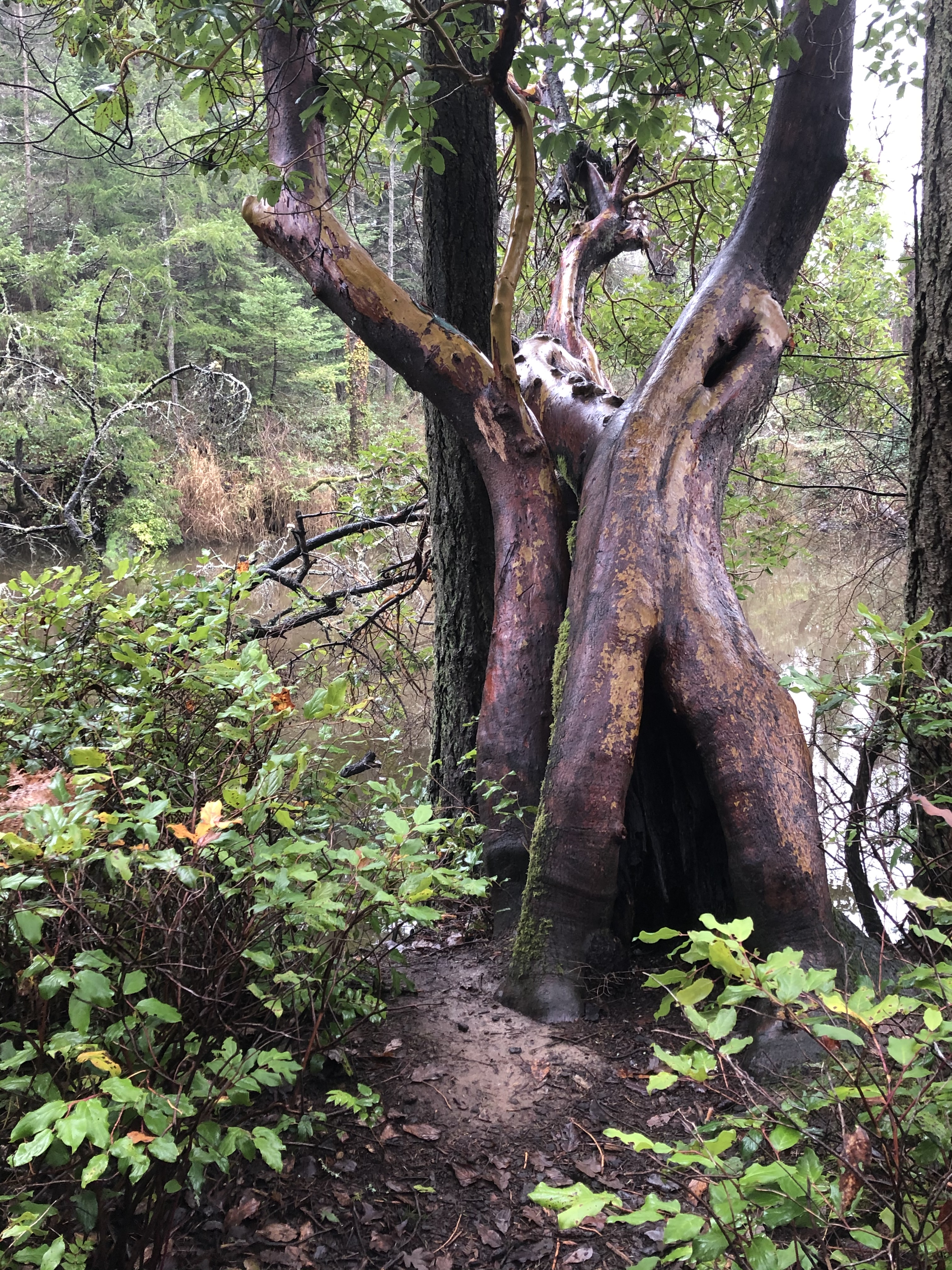
Blood runs green


If you could see her, you’d want
to embrace her too, drape her 
massive arching thighs with yours. 

Close your eyes, I’d say, and after
awhile, you’d feel her green 
rhythm thrum your jangle into hum.

I can see your skeptical eyebrow,
raised—believe me: your blood 

would bloom viridescent, and then
you’d slide smoothly off her trunk
to crouch beside her on the bank. 

You’d place your palm on her red
skin, wired to the wild. 

On that spot, I’ve seen so much—
once, the great horned owl’s cold 
yellow eye locked mine and

for several seconds, we were 
one. Another time, I watched the 
racoon family on the farther shore:

mother and seven kits; washing 
tiny hands in brown eddies.
I’ve watched mallard rafts 

go with the flow, a river otter’s 
easy drift, a heron fish the
private pool beneath her arch. 

I wish she could have purified you, too.

I thought of this too late.

They put up a fence; they broke
the green connection. I wish you 
could have seen her.


Tree


Today I heard a 
sparrow trilling
from inside your 
cool green chamber. 

I long to join her 
there—safe, nested, 
hidden. Free to sing 
my heart out.

Zen wisdom in the middle of the night

When I can’t sleep, I am glad to find my e-reader on the bedside table. In the middle of the night, I pick it up and read quietly, bathed in soft light, disturbing nobody. Last night, I found treasure after midnight: two books I’d bought in 2021 by Charlotte Joko Beck, my favourite Zen teacher. 

I read for an hour or so, finding many paragraphs I’d highlighted. I savoured her wisdom again. How could I have forgotten you, Joko? I fell asleep calmed by her words. This, I hope, gives the flavour of her teachings:

When expectation fails—when we don’t get what we’re after—at that point, practice can begin. . . . Disappointment is our true friend, our unfailing guide; but of course nobody likes such a friend. 

When we refuse to work with our disappointment, we break the Precepts: rather than experience the disappointment, we resort to anger, greed, gossip, criticism. Yet it’s the moment of being that disappointment which is fruitful; and, if we are not willing to do that, at least we should notice that we are not willing. The moment of disappointment in life is an incomparable gift that we receive many times a day if we’re alert. This gift is always present in anyone’s life, that moment when “It’s not the way I want it!”  

Everyday Zen: Love and Work (1989)

The morning before, I’d quickly sketched on my whiteboard a comic of a little girl disappointed with life, as if it’s life’s fault somehow that we are disappointed. To admit that I’m disappointed feels difficult. Rather, I fake it—everything is fine. And I hate to see disappointment on the face of somebody I love. I want to fix it—to remove the disappointment, find an antidote. This reaction leads to all kinds of fuckery, as you can imagine. 

What strange serendipity to find Joko’s words about disappointment. What if disappointment is a gift? 

I cannot seem to write freely anymore. This change is so disappointing! I feel resistance to my own writing and powerless to give good advice to students about how to overcome writing paralysis. It’s been some months since I wrote freely. Everything I put down seems irrelevant or stupid. I’ve started many blogposts and abandoned them after a paragraph or two. After reading Joko, I said to myself, okay—I am here with my disappointment. Here it is, I feel it, and I’ll write through it, through the obstacle. The obstacle is the path. I pull up the abandoned blogpost from last week. Try again.

My first class as a new graduate student was on September 11, 2001.  After watching the twin towers go down in smoldering ruins on our TV, I left the house, trembling, to attend a class in African American literature. My professor, a young, blond, white man around 10 years my junior, not only didn’t mention his own whiteness in relation to the topic of African American literature, but also didn’t mention the traumatic horror of 9/11 that had just happened that morning. It was as if we were in the mythic, impregnable ivory tower—only abstract ideas are permitted here. No planes can touch us. Real politics, real life, real hatred, real racism, poverty, oppression—stay outside the moat, outside the fly zone. When I think of his omission now, I realize how bizarre it was. He was the teacher; we followed his lead and stayed silent about what had just happened. History happened. I know now that it was fear that stopped him. He didn’t know how to handle the mess of us being angry, scared, facing the horror. So he never mentioned the planes, the smoke, the ash, the buildings collapsing in rubble. 

Twenty-two years later, I’ve experienced three different roles at the university: student, faculty, and staff member. And this semester, I end my sojourn here. I can say that things have changed for the better. We have evolved.

We were blind to our privilege back then (well, we still are, it’s a work in progress). The prof who didn’t acknowledge the significance of his whiteness in relation to the topic of African America and Blackness is only one example. Students were considered brains walking around on legs—not full humans with mutable emotions. Not people with hearts, failing bodies, families, jobs, depression, ADHD, mental illness. We were confused, unhappy, imperfect, terrified to admit our vulnerabilities, worried we weren’t smart enough. I remember one professor (another young white male) saying to us, “When I was a student, I never asked for an extension. I was always able to meet the deadlines. If I could do it, so can you. No extensions will be given in this class.” He had no clue that some of us might be dealing with financial and emotional burdens, children who needed care, challenges to our executive functioning, depression, two or three jobs…. 

I went to a learning and teaching conference during the last week of August. The theme was Accessibility, Relationality and Belonging. The keynote speaker, Jackie Stewart (UBC), talked about how to advance equity in university classes and beyond, at the level of program, institution, and society. She talked about collecting data from the grandmother’s perspective, not from big brother’s top-down perspective. An approach of care—we want to see all students succeed—rather than from power. It was wonderful to attend sessions on why we should teach queer theory in first year, on how to coach your ADHD students in executive functioning. Another session on a new Indigenous-student-only academic writing course. I learned about the hidden curriculum: All of those things we assume students should “already know,” but don’t. 

At the executive functioning workshop, the facilitator told us how to incorporate into our syllabi a request-for-extension form. Students can just complete a digital form and get the extension they need without embarrassment or anxiety. Inform them not just of due dates, but also suggested start dates for assignments. We always just thought, “they should figure it out themselves.” Really?

In the queer theory session, Michael Reed showed us a video that made us cry, made us realize this is why we need to—if not teach queer theory in our first year classes—at least include something in our syllabi to show we are allies. Maybe something as simple as, here’s the location of the closest gender-neutral bathroom. We see you, trans and non-binary students. You belong.

I walked back to my office in the library at the end of the conference, past the Digicasters with their welcoming and inclusive messages: “We have screen readers, ask us!” “We have a respite room if you need to take a nap!” Libraries have evolved. Somewhere along the way, we realized we are here to serve the students. And no, it’s not “hand holding.” 

I feel content with all I’ve learned. It’s too late for me to incorporate these innovations into my teaching, but I’ve enjoyed witnessing the consciousness-raising taking place in higher education.

The pandemic really kickstarted this movement. We admitted we were tired, stressed, and scared—staff, instructors, and students all. We needed to infuse our teaching and learning with kindness, patience, care, and transparency. This is real life, not the ivory tower.

And I come back to Joko Beck, relieved that I’ve made it this far in my writing. Perhaps I just had to walk around the (writer’s) block in my path. Not an obstacle, just a detour. Joko Beck writes in Nothing Special (1993), 

“As we watch the mind over the years, the hopes slowly wear out. And we’re left with what? It may seem gruesome, I know: we’re left with life as it is. … Turning our lives of drama to lives of no drama means turning a life where we’re constantly seeking, analyzing, hoping, and dreaming into one of experiencing life as it appears, right now. The key factor is awareness, just experiencing the pain as it is. Paradoxically, this is joy. There is no other joy on this earth except this.”

I find this so consoling—no other joy on this earth than life / pain as it is. Disappointment? Admit it, feel it. Writer’s block? Write around it, through it. Insomnia? Read Zen wisdom in the middle of the night. 

Throttle down

After my third accident, I decided throttles are my nemesis. First time was on my scooter, second and third times on my e-bike. Originally, my Marin Fairfax bike was not electric–just human powered. Last year, I had a Bafang motor installed to make commuting easier. But I didn’t expect to get a throttle with the install—it just “came with,” and I didn’t question it. After riding the bike for a while and experimenting with the throttle, I thought, this is too much and I don’t really need it. Five levels of assist are more than enough. Nonetheless, I started to depend on the throttle. It was like touching a magic wand to create delicious bursts of power that eased me into motion after a stop, pulled me up the steep hills, glided me along without pedalling.

On the day of the Pride Parade, I set out early for Douglas Street to capture a good spot to watch. Riding up and over the bridge, I slowed down to observe a great cloud of bright balloons approaching from the other side. After a few moments, I pressed my throttle to get a move on. What happened next was so fast and unexpected, I hardly know how to describe it. I hadn’t noticed that one of my handlebars had gotten tucked under a bridge railing. When I throttled, the bike jumped with a life of its own, and the seat swivelled, hitting me hard in the upper thigh. Suddenly, I was on the ground, the bike on top of me, with blood flowing from cuts on my hands. My thigh pulsed with pain. A couple stopped to help me up and righted my bike. Somehow, I got to the parade and watched for a while, but then realized I was in shock. Nothing an extra hot latté at Habit Coffee couldn’t cure. 

But seriously, the eggplant and banana bruise on my thigh was ugly and tender, and I limped for a few days. It took some time for the bruises to go away, the cuts to heal, and for my thinking to coalesce around throttles and what they mean. 

CHEK’s Tess van Straaten co-hosted the Pride Parade broadcast with local drag queen Gouda Gabor

In 2012, I bought a 50 cc scooter. So cute and fun! I loved it. But again, the throttle. I was on my way home from work in backed up traffic, daydreaming. Suddenly, I realized the car ahead of me had started moving a few moments before, and to catch up, I hit the throttle. But my wheel was turned, and the machine jumped. I was thrown to the ground, the scooter on top of me. I stopped traffic that day, ended up at the hospital, and received a sling and advice to keep my fractured arm quiet for several weeks. Shaken by the accident, I sold my scooter soon after that.

My beautiful scooter and me

Then there was the other e-bike incident when I throttled my bike on a gravel path. Big mistake. Again, I ended up flat out on the ground, bruised and shaky, with the bike on top of me. 

Throttle is a noun signifying the device controlling the flow of power to an engine. Also, it’s a verb: you throttle the throttle or (second meaning) you choke or strangle somebody. I started to think of how I might be using the throttle too much on my bike and in my life. I throttle to get the extra boost I think I need. Usually, I throttle without thinking, and then I run into trouble. But if I were to insert a pause, I might realize I don’t need the throttle. Throttling chokes my life. Increasingly, to throttle (act precipitously, riding a burst of power) leads me into discordant situations that I regret getting into. Doing the unnecessary thing, saying the wrong words.

Perhaps I’d be better off if my e-bike didn’t have a throttle at all. But still, I’d be throttling my life. I reflected on ways to stop doing this. Perhaps one of these will resonate with you: 

  • Don’t respond immediately to email or texts. Stop and think. What’s my responsibility here? Is what I am writing useful, timely, kind, necessary?
  • Don’t jump from one activity to another. You might like to pause for a moment and ask, “How do I feel now? What do I need?”
  • Stop manufacturing energy you don’t have. Don’t do that “one extra thing.” Just don’t.
  • Doing stuff is overrated. What about doing nothing? There is plummy goodness in sitting and observing life, engaging all senses.
  • And related to the last point, think about Rick Hanson’s “Taking in the Good” program in Hardwiring Happiness. (I recommend this book!) HEAL is an acronym for four steps: Have a positive experience. Enrich it by exploring all its crevices and beauties. Absorb it fully into your body and mind. Link it with negative experiences so when they arise, you rewire your negatives with positives.

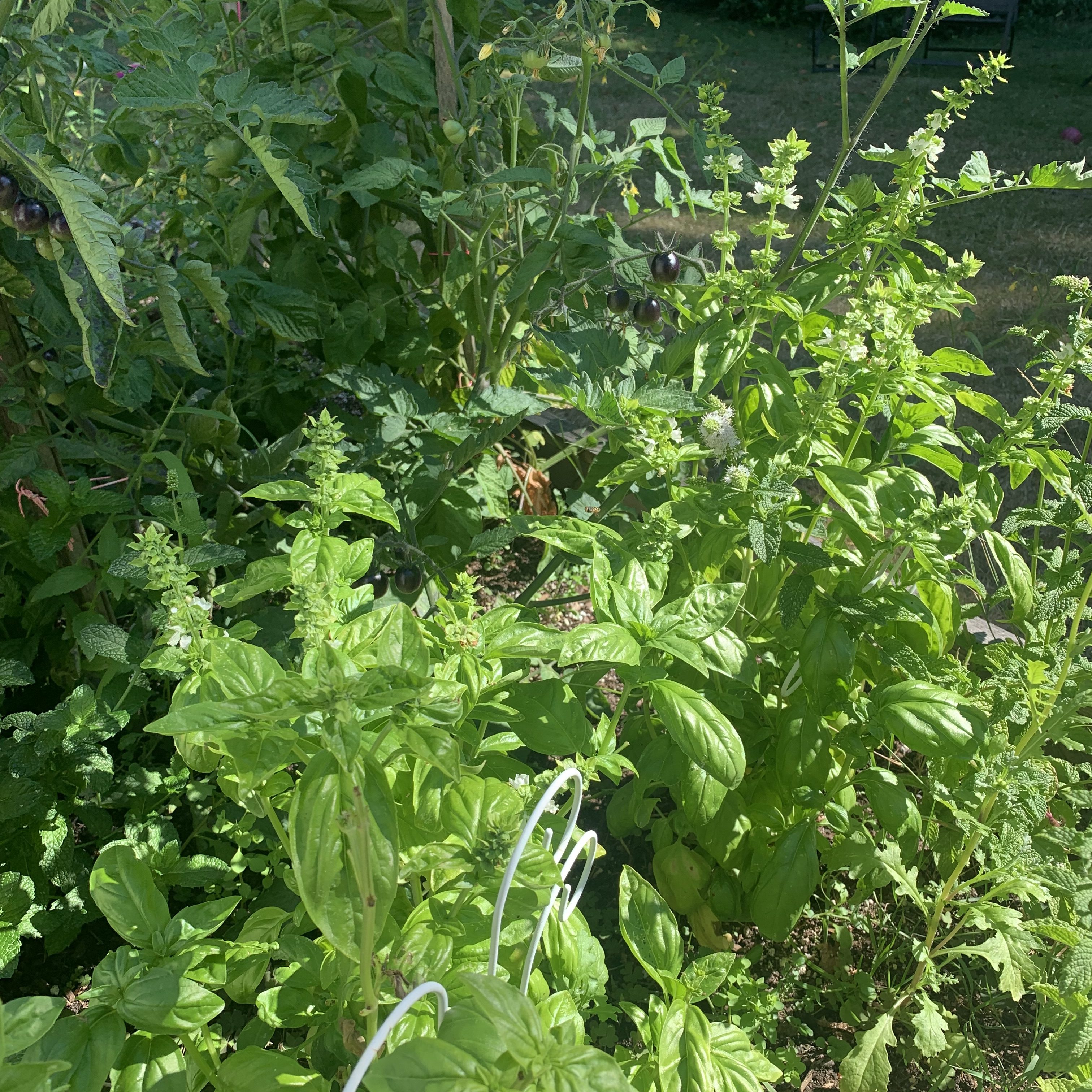
This afternoon, I sat in the sun reading a wonderful book I got out of the library, Country of the Blind: A Memoir at the End of Sight, by Andrew Leland. He writes with candour about his experience of slowly going blind from Retinitus Pigmentosa. I am learning so much about blindness and disability in general. Marvin, our dog, lay near me on the browning grass, contentedly chewing a stick. I sipped from a glass of sparkling water, a lemon sliver among the bubbles. Leland’s prose struck me as honest and evocative; I absorbed his words with delight, laughing occasionally at the stories he told about his two-week experience at the Colorado Center for the Blind. The sun felt restorative. Sounds of the neighbourhood on a summer weekday floated over the yard. The occasional yelp from a dog, somebody’s car radio—the cheesy song “In the Summertime” by Mungo Jerry coming in and out of aural focus—the guy who lives behind us directing somebody in a high, bossy voice about how to find something. “It’s in the back of the cupboard—you really have to search for it.” I could smell the mint and basil in the garden box at my elbow, filling my head with spicy green. My whole body flushed with well-being and pleasure. Throttle down.


Riding with Grindy

By Madeline and Michael

Madeline

On RARE 7, we’re riding with Grindy. Let me explain.

RARE means Radiant Abode Road Experience, a name we devised because our road trips have a magical quality. In Buddhism, the four radiant abodes are loving-kindness, compassion, joy, and equanimity. Our RAREs involve good measures of each of those qualities. I can’t remember precise years, but since we met in 2011, we’ve been on six RAREs: to the Sunshine Coast; round trip to Toronto; to Asheville, Oregon for the Shakespeare Festival; to Utah and Arizona; down the California coast to see the Redwoods; and to Naramata, BC for a wedding. There have been many mini-RARES, but true RARES must involve substantial driving and a shift into the road-trip ethos. The mood-shift usually happens around the third day. Time takes on another dimension.  Long conversations and silences abound. It doesn’t matter what we do, see, eat, or drink—it is all food for breakthrough insights and feelings about life.  So far, some of the discoveries on RARE 7: Accept sadness as part of everyday life. While we can’t deny the facts of aging, impermanence, and loss, we can transform our approach to dealing with them. Spontaneity doesn’t thrive on perfectionism. Let it be messy and muddy, sticky, and real. All you need is curiosity and willingness to try something new. Letting go and renunciation are both part of our path. 

“Renunciation is realizing that our nostalgia for wanting to stay in a protected, limited, petty world is insane.”  Pema Chodron

This RARE has an undertone of sadness. In Michael’s words, the space and texture of this RARE is “gentle, luminous, totally real, a little dark, honest, open-hearted.” Sure, we are joyful to be out on the road together, the summery weather, cold lakes, rolling rivers, green mountains wearing tattered scarves of snow. But we are also realistic—as we deal with aging and loss, there’s no pretending we feel great every day. We both struggle, sometimes dipping into dark holes for a time. 

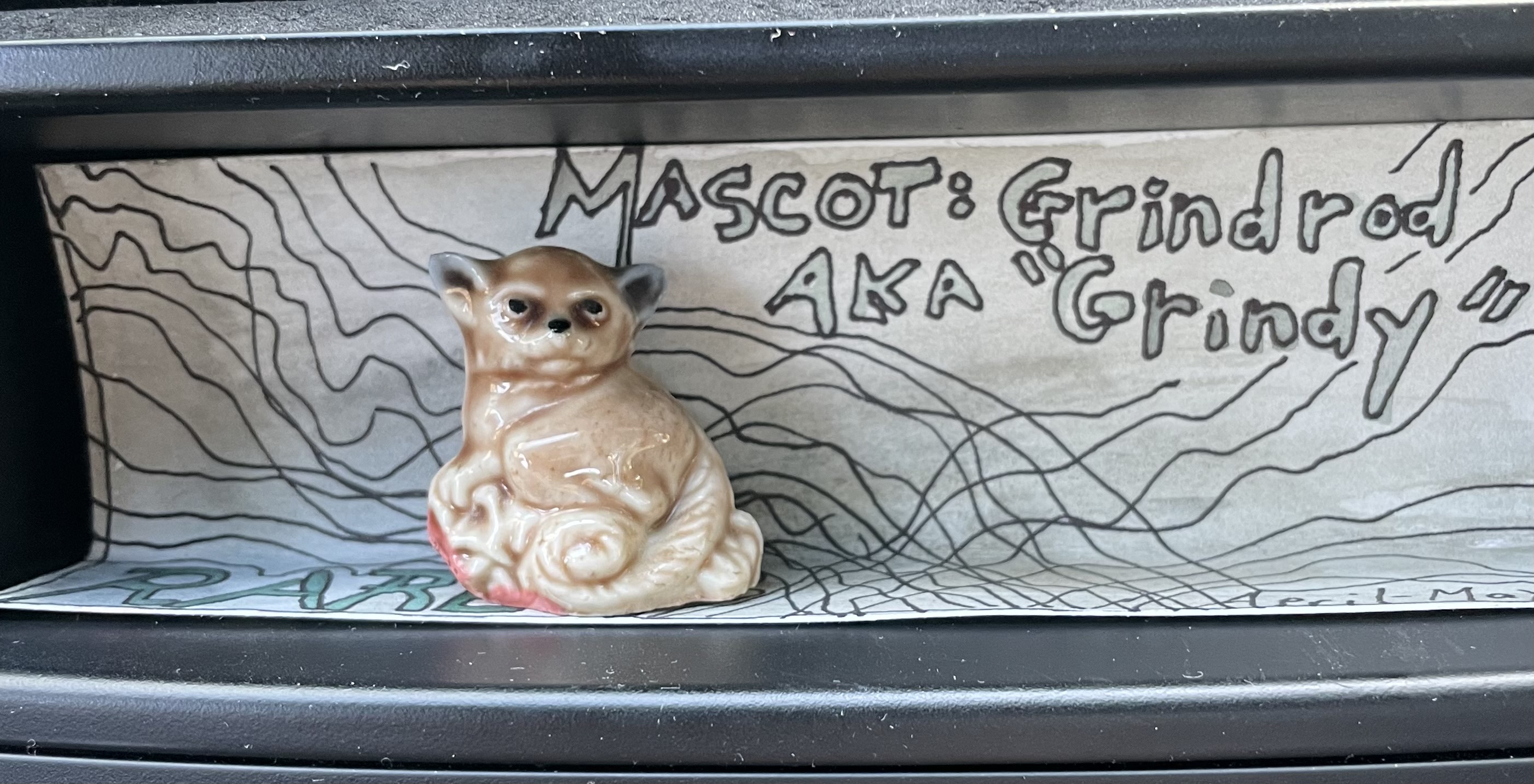
To align with our mood, we look for a suitable RARE mascot at a thrift store along the way. The first leg of RARE 7 took us to the Shuswap Lake area, so we stopped at the Salmon Arm Churches Thrift store and bought for $2 a ceramic lemur, one of those little Wade figurines that you used to find in boxes of Red Rose tea. Attracted to his sad expression, we named our little boy Grindrod after a farming town near to where we are staying in Sicamous, BC. “Grind”? Well, think daily grind, grist of living, the put-one-foot-in-front of the other aspects of life. And “rod”? Think resilience, the ramrod yet flexible backbone that holds us up. Short name, Grindy. On the road with Grindy.

There were some pink and frothy early RAREs. Lying on the pavement in downtown Seattle comes to mind, just so I could see the city sky and feel the sidewalk under me—acting kooky, acting playful. Trying to recreate that lightness is nostalgia for a protected, limited world. It’s insane. 

On our second night in the lakeside cabin near Sicamous, we moved to the bunkbeds after a restless first night in the too-soft bed for adults. Nestled together in the lower bunk, a double, felt like being teenagers at summer camp. Except that, unlike teenagers, we lay back to back, reading.  “There’s an old aunt in this book,” Michael says, “who believes that love isn’t a feeling, it’s a decision. What do you think?” We both do a half turn so we can see each other. “Yes, I agree. But maybe a feeling and a decision. What do you think?” He paused. “I’m not sure. I’ll have to think about it.” 

Something is nudging my memory, and ten minutes later, I ask him if he’s reading Liane Moriarty’s The Last Anniversary. “Yes,” he says. “So am I!” I practically shout, overjoyed. 

“I thought that thing about love being a decision sounded familiar. I’m almost finished the book.” “And I just started,” Michael said. Both of us had checked the e-book out of the library, without realizing the confluence. I love being married to a man who enjoys good-quality feel-good chick lit. We can compare notes on what the characters think and do. A truly RARE moment. 

Michael

Perhaps it’s because I just had my 72nd birthday, or perhaps it’s emerging from the pandemic, but I’ve found myself wrestling with the realities of aging.  Day to day life, even retired, feels full and heavily scheduled –this is why our road trip is such a welcome change of pace, and as Madeline says, it seems to kick in on the third day. I know that the RARE ethos is activating because a great deal of my usual mental activity is revealed to me as nonsense and begins to drop away.

Day three: let’s go hiking!  We look up Sicamous Creek trails, and with a little help from GPS and the Sicamous Visitor Centre, find the trail head. The choices on the map we look at are Easier, Difficult, and More Difficult, and they are accompanied by GPS coordinates.  The only trail available from where we are is not the easy one, but we bravely head off. 

It’s so beautiful hiking the short distance to the waterfall— ice cold air, water music, and forest fragrance.  I love it but find myself wishing the trail wasn’t so narrow, precarious, and steep, and the stairs that make up part of it are giving Madeline pain in her knee. It’s a very short hike, and back at the trail head I realize that my ability to navigate steep trails and uncertain footholds is not what it was. Strangely, I feel totally ok with this.  RARE magic is kicking in. 

Back at the cottage I search for trails in Sicamous that are easy and find the River Front Nature Park.  It’s relatively short, flat, and “family friendly”, so off we go, while I’m thinking “I guess I’m going to have to stick to the codger trails.”  What we find is an absolutely magical world in rich browns and ochres, with the trees just budding and spattered with green.  

We walk along and talk about expectations and perfectionism—the feeling that we need to make the perfect choice, find the perfect hike, the perfect dinner, the perfect accommodation—and how impossible and corrosive this is.  We designed this trip to be spontaneous: unplanned, staying for two or three nights and then moving on to wherever we feel like.  Seeking perfection ensures disappointment; curiosity and acceptance allow me to appreciate experiences just as they are. I feel lighthearted for the first time in months, and I realize how much time and energy I spend thinking about how things “should be.”

One of my favourite teachers is Yongey Mingyur Rinpoche.  He says “Like waves in the ocean, all things are impermanent.  I will accept whatever happens and make it my friend.” I have been writing this in my gratitude journal each day for months, but on this RARE I feel like I am finally getting it.  I am aging.  I have back pains, hearing aids, and my memory isn’t what it was. I am afraid of falling, and I sometimes wake up in the middle of the night worrying about death. I also walk 9000 steps a day and ride my e-bike for 25 kilometers. I am kinder and more contemplative with each passing day, and I am learning to love myself just as I am. Like the landscape flying by our car windows, my thoughts and emotions are fleeting.  Nothing hangs around for long, which is deeply comforting.  Here is the teaching of RARE 7—when I stop fighting impermanence, it becomes my friend.  

The Hyacinth

The bus to work takes about 40 minutes—the perfect length of time to listen to a dharma talk on Dharmaseed. I’m happier with this pastime than I am browsing Facebook or Instagram. The dharma talks inspire me and make me feel better about being alive, while Facebook or IG can make me feel dispirited. Recently, I listened to a talk by a dharma teacher I enjoy—Shelley Graf. She read an excerpt from Sharon Salzberg’s 2002 book on faith. I liked the quotation, but even more, I was intrigued by Salzberg’s book title: Faith: Trusting Your Own Deepest Experience

Trusting your own deepest experience brought to mind a revelation I had when I started to see a therapist four years ago. Doesn’t sound like much, but it was profound for me: I am entitled to claim my own experience. During that therapy session, I had been dithering about whether I felt a certain way, circling around the ugliness of something, making excuses, minimizing my hurt, my terror, my sadness—in short, underplaying what I felt. “Oh, it wasn’t really so bad.” Nancy sat up straight in her chair, looked at me with intensity, and said, “Madeline, you are entitled to claim your own experience!” I laughed, “really?” I didn’t know that. To think I got to this stage in life feeling I couldn’t be honest about how it really was, how it really is, to be me. I came home that day and on the mirror in my sewing room, I wrote, “I am entitled to claim my experience.” I refresh it with a wine glass marker when it fades because it’s a crucial daily reminder.

Back to Salzberg’s book—well, I bought it and read it quickly, underlining the bits that made me cry or wake up or feel a swelling in my chest. There were many passages that made me feel good—made me feel connected to something bigger, something transcendent, which is what faith is, isn’t it? I love the sense that “no matter what happens, we can place our faith in the deepest part of ourselves, our buddha nature” (p. 170). 

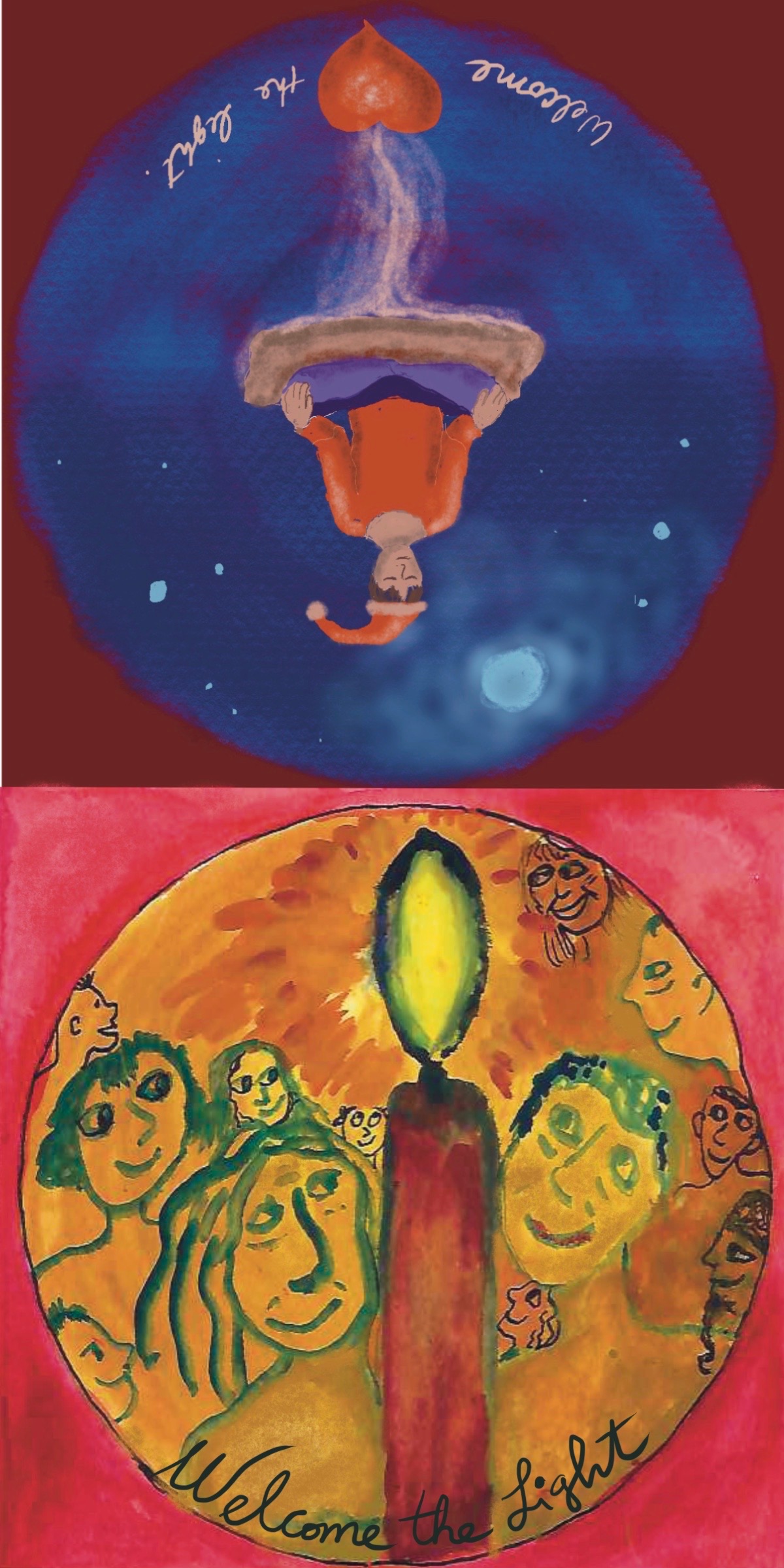
With those good feelings still germinating inside of me, I entered the course Michael and I are teaching on Zoom this weekend: Creating and Interpreting Personal Mandalas.[1] This morning, we led our participants through stages one through three. In stage one we rest in the darkness, in the womb. Being, not doing. As I started my mandala, I lined the womb-circle with layers of brown watercolour. Soon, a purple hyacinth spear emerged from the lining of the womb. 

As I painted, my mind travelled back, back, back.  Thirty-five years ago, I had several weeks off work to heal from surgery. Waiting time, resting time, stage one time. Hours in bed spent daydreaming, not doing, just being.  My first husband and I lived in Toronto in a rented house on Devonshire, and the spacious front bedroom had big bay windows with generous ledges. The laser surgery I’d undergone was supposed to give me a chance at having babies, something I hungered for. When my friend Hannah visited me, she brought a potted hyacinth, not yet blooming. I put the plant on the window ledge, and it was as if I could feel the ache of that blue-blushed spear yearning to open. 

It was early spring in Toronto: cold days, deluges, and then suddenly, bright hot sun. One day the hyacinth burst forth in a matter of hours, spraying the room with sweetness. Whenever I smell hyacinths, I go back to that time of hunger and healing. My body craved to follow the flower in her blossoming. But I had to wait. 

My grandmother Marguerite and I were writing to each other that year. She sent me copies of Unity Church’s magazine and told me that she and other members of her congregation in Los Gatos, California, were praying for me to heal and get pregnant. I thanked her and pretended to be onside with her faith. But in fact, I thought it was silly. How quaint, a circle of old ladies in a church basement, holding hands and thinking of me. 

Grandma Marguerite Walker in the Philippines, 1923

Months and months elapsed with no result. I thought the surgery hadn’t worked; after all, the doctor had told me I had only a 15% chance of having children. The odds weren’t great. Feeling like we needed a big change in our lives, my husband and I sold our stuff, quit our jobs, bought a Volkswagen van, and drove south. Almost a year after my surgery, we sat in a Planned Parenthood office in Green Bay, Wisconsin to learn the good news. I was pregnant. 

The hyacinth I painted this morning seemed to have come from the deep well of memory— light-filled room, white sheets rumpled on the bed, the bluish spear opening as I kneeled nearby in my nightgown. Spring magic! And I thought of Sharon Salzberg writing about a research project undertaken in Korea: Women trying to conceive were prayed for at a distance, and these women became pregnant at twice the rate of those who received no prayers. I underlined that passage. Beautiful evidence of our “profound interconnectedness” (p. 147). 

I think often of my grandmother’s faith, and how she and her Unity friends may have had some small part in my blossoming into a mother. And now, I blossom into belief in the interconnectedness of life, belief in the butterfly effect doing its work not only in the material world, but in the emotional realm too. The mistake we make, writes Salzberg, is to expect a certain outcome from our actions. We get attached to results, which leads to expectation. “When our intention is to do good for others, and we nurture that intention, we can have faith that in some way, often unknown to us, it ripples out” (p. 144). As we go deeper into spring and the hyacinths begin to open, let our loving intentions and kind actions ripple out in ways we will never know. 

Photo by Tim Chow on Unsplash


[1] Our course is based on Susanne Fincher and team’s program, creatingmandalas.com, and she has given us permission to use their content.

Everything becomes something else

Everything becomes something else. For example, my husband, Michael, has become a man who likes Christmas. He wasn’t a big fan of December 25, but he’s supported my love for celebrations surrounding the holiday: the tree, gifts, music, cards, and baking. This year, something shifted for him. He decided to see what it feels like to open to positive Christmas energy. 

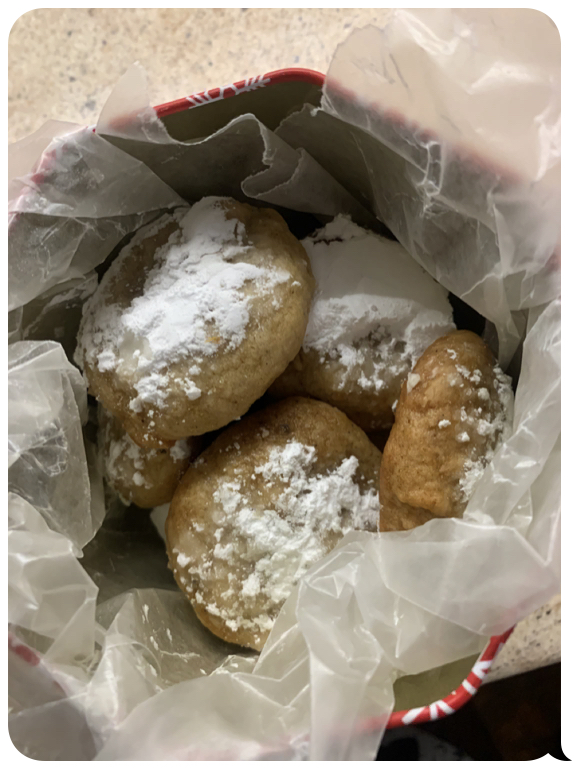
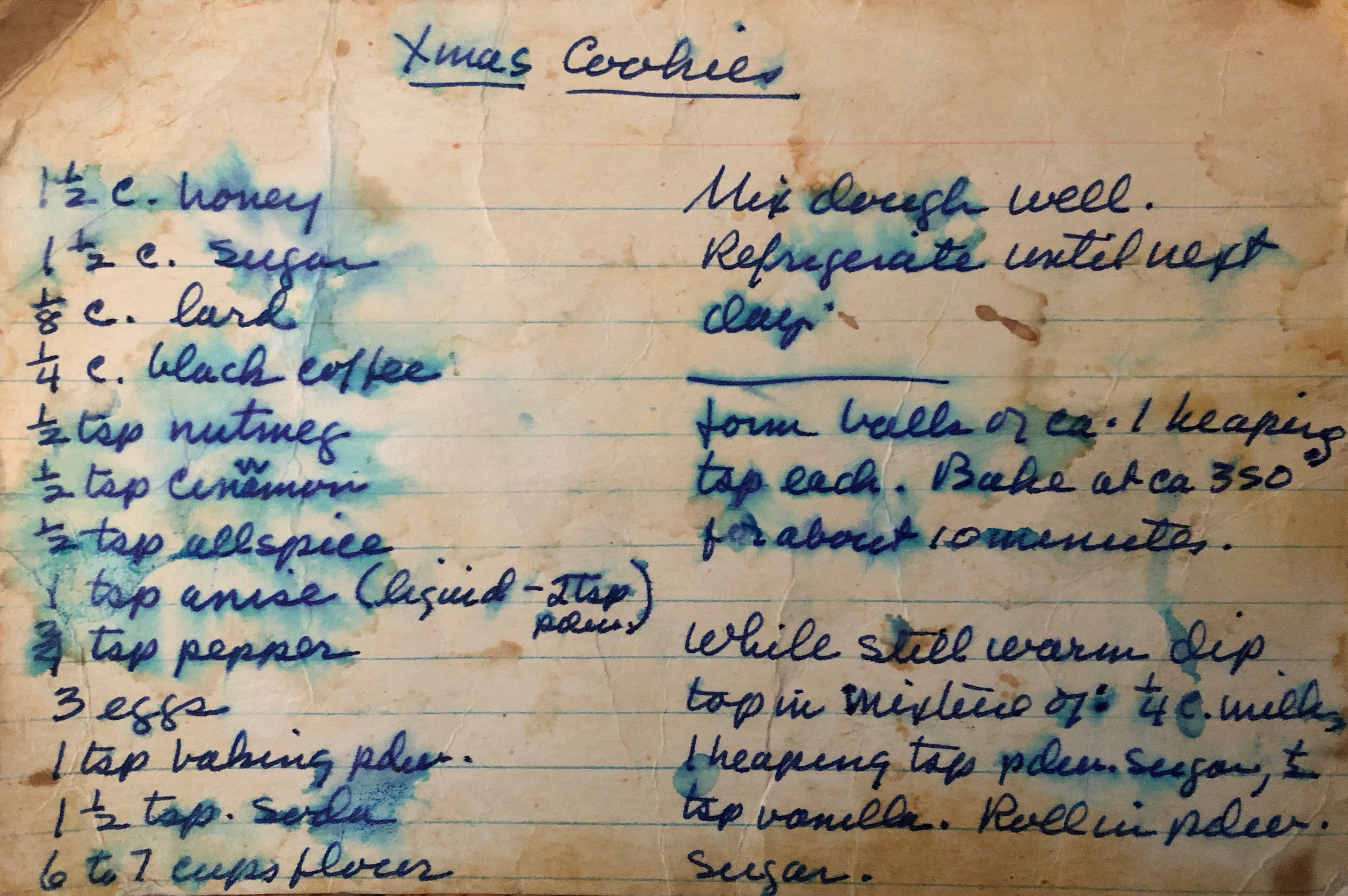
He enjoyed the pferffernüsse I baked, German Christmas cookies from my mother’s recipe. He bought some gifts and wrapped them. He admired the fat little tree I bought and helped me get it into the stand. When I suggested we join forces and design solstice cards then send them to friends and family, he was game. And when I had a yearning for the angel chimes from my childhood, we went together to buy them at a charming little shop at Mattick’s Farm. But best of all, he asked me if he could buy tickets to the sing-along Messiah for us. I lit up. Yes! We’ve gone to hear the Messiah before, and Michael—a good sport—had suffered through the fifty-three separate movements because he knows of my deep love for this piece of music. 

But this was our first sing-along. We crowded into the pews at Alix Goolden Performance Hall, sitting in the soprano section in deference to my voice, and Michael went to the side table to borrow a score. I thought that I knew the soprano section so well, having heard it a million times before. I expected to keep up with just a printout of the lyrics. I was wrong. 

The cold church filled with people in their various sections, many dressed in Christmas finery. Two sisters sitting next to me joked with us and rolled their eyes at the difficulty of some of those soprano runs—I mean, really? We faked it valiantly and giggled during the pauses. When at one point, I dropped my papers under the pew in front of us, the sister closest to me used her long strong leg and athletic foot to rescue them, pulling the damp papers back to me. We grinned at each other as I mouthed my thanks. 

When Michael or close sister got lost in the score, one would notice the fluster of the other, and they would lean in front of me to whisper the page number. When it was time to sing our parts, we all stood, and it felt glorious to belt out the lines, “For unto us a child is born.” We cheered the amazing trumpet player during “The trumpet shall sound,” near the end of the concert. His cheeks ballooned red as pomegranates from the effort. Michael pounded his feet in high praise, earning a scowl from the sour woman in front of us and laughs from the sisters. Later, he said he had a wonderful time, even though he doesn’t sing soprano. He appreciated the experience of following the score all the way through.

Everything becomes something else. A resistance to Christmas becomes an embrace of the holiday. And then the storms hit, and we cancelled family Christmas. When I pulled the three of cups on the morning of the 22nd, I felt sure the tarot card augured well for me and my two sisters (and niece and son and husband) celebrating together the next day. But alas, the treacherous weather made travelling impossible, and instead of being together in person, we had a beautiful three-way telephone conversation filled with warmth, encouragement, and love. So that was what the tarot was telling me—find a way to celebrate, even if it’s not what you imagine it will be. Everything becomes something else, if you can just see it. 

I craved Christmas this year. The year felt difficult, and Christmas seemed like a salve, a hygge solution to my discomfort. So, in my hunger for the lights, sights, and smells, I rushed to the Boy Scouts tree stand on December 1st—too early—and picked the chubbiest one I could find. Every morning I plugged in the coloured lights and enjoyed the sight of the branches decked with many home-made ornaments from over the decades. I especially treasure those old stars my children made in pre-school with their sweet faces in the middle of gold macaroni-studded frames. 

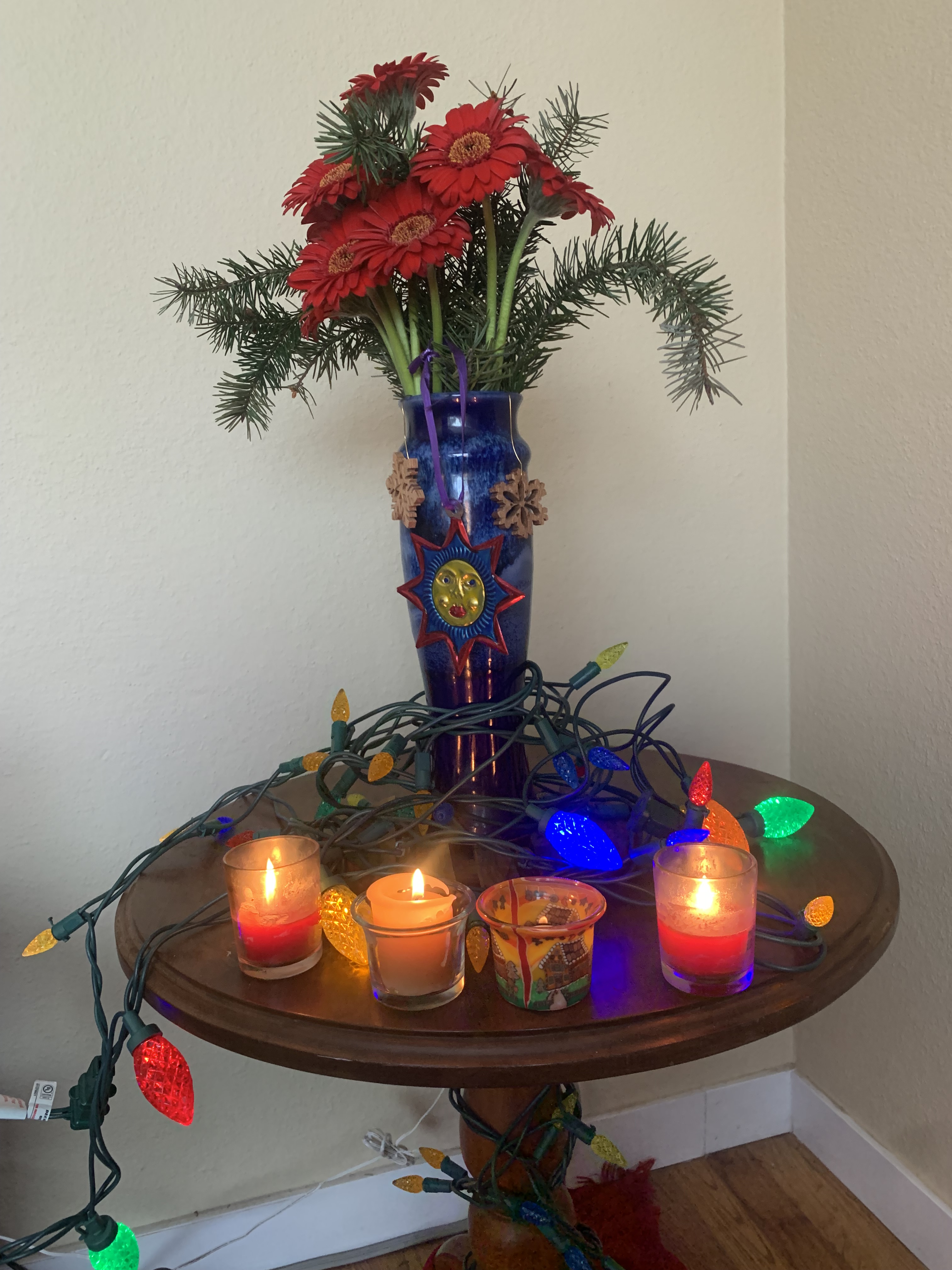
But then a few days ago, Michael said, “is that tree turning colour?” “Yes,” I had to admit. It was dry and yellowish green. So, on the solstice, we undecked the tree, unwound the lights, and tossed it at the side of the house to go into the chipper come January. Where the tree used to be, I placed a small round table holding a tall blue vase of red gerbera daisies—a gift from a friend. I mixed in some evergreen boughs and hung a few ornaments from the lip of the vase. I circled the coloured lights around the table’s base and the vase. Voila! Everything becomes something else: A Christmas tree becomes a festive bouquet. 

Free yourself from fixed mind and you will see this—all things are in the process of continuously becoming something else. Witness the impermanence, get up close to it, get curious about it. It happens anyway, so allow it to happen with a loving, joyous, open heart. That’s the trick. And a micro dose of psilocybin doesn’t hurt, either. 

I wish love, warmth, and all good things to you this season.

The Time to Write is Now

On Fridays I work a half-day at home, and every other Friday afternoon, I see my therapist. That Friday seemed like any other. I sat at my desk, sipped coffee, read student assignments, and provided written feedback using Word’s “comment” feature. I gazed intermittently at the grey skey outside the window. Taking a break between students, I checked “The Time is Now” for a writing prompt. Part of the Poets & Writers website, “The Time is Now” offers free weekly prompts for poetry, fiction, and non-fiction. I felt like writing something other than “you have a modifier problem in this sentence” or “a transition between these paragraphs will create a sense of flow.” That morning, the poetry prompt I read was this:

I clicked the hyperlink to read Kien Lam’s poem (I invite you to read it here). Then without thinking too much, I opened a fresh Word document and started to type couplets. The apocryphal story of your birth incorporating a fantastical tone. This is what I wrote:

Hallowe’en Baby

Like everyone, I come from a mother.
I curled in a womb until the time of my

birth, when the veil between worlds,
like a fully ripened cervix, was thinnest.

A beldam from the other side
invaded the plexiglass cage where I

lay on my belly, helpless, hours old.
That witch, she pulled me from my

crib into the stars, shrieking with
laughter as my limbs contracted in fear. 

She claimed to be my true 
Mother, but her touch was icy 

and her tits were cold and milkless. 
I hung from her broom until

November first, when a meteor 
carried me, feverish, back to my crib. 

I recovered there, alone, sucking my 
thumb for comfort. Nobody knew.

From that time, grief has grown thick 
as a callous to shield me from assailants:

For example, my Mother might try to 
pierce me again from the other side.

I didn’t toy with the poem too much—this is pretty much as it first flowed. At 1:00 p.m., my half-day of work over, I gathered my things, including the poem, which I’d printed out, and drove to my therapist’s office. I read the poem to her. I realized as I read it that it wasn’t just the prompt and Lam’s poem that had pushed the words out—it was remembering the story my mother had told me: I’d spent my first days of life separated from my parents, lying tummy down in a crib in the hospital nursery. My mother had a fever, and they put me in isolation to “protect me.” My father was at home caring for my two older sisters. I wasn’t held in my parents’ arms for days; I didn’t hear their familiar voices that I’d heard daily in utero. I lay there alone, not knowing when somebody would come to me. A connection was broken. That was 1958; I hope this separation between baby and parent wouldn’t happen today.

Writing the poem and reading it to Nancy felt like rupturing the dam holding back feeling and understanding. A river of sadness and comprehension washed over me. Pieces fell into place. My therapist’s contribution was to help me see the link between the absence of my parents’ touch and their voices in early infancy and my difficulty trusting connection in relationships. 

For a day or two, I felt high with the transformative knowledge. It explained so much. Writing that poem had planted a seed, so I decided to change my writing practice in 2023. My memoir (Sow’s Ear), novel (Geraldine), and book of linked short stories (Deedee and Stan: Domestic Stories) languish in folders on my desktop. I don’t want to continue to stew about “getting published” in 2023, to desultorily send my work out to indie publishers. I want to write. The time is now. So, I signed up to receive weekly writing prompts, and my aspiration is to use the prompts to write, if not weekly, then often, sometimes writing poems and other times fiction and non-fiction. 

I want to focus on the practice of writing: an embodied practice, a way of touching into deep feelings, into life’s mystery. My experience of writing “Hallowe’en Baby” was profoundly moving. I don’t expect all of my writing next year to be equally therapeutic, of course. However, I believe many revelations will emerge from writing this way. 

I’ve started on this week’s poetry prompt, following the Seamus Heaney poem, “Postscript”: “think back to a natural landscape that has made a lasting impression on you and write a poem addressed to a loved one that describes this unique terrain’s lasting beauty.” I realized, with sadness, that I’ve spent most of my life indoors. I can’t remember many natural landscapes that have made a “lasting impression.” Perhaps two or three. So, that’s quite a discovery! And it makes me want to get outside to observe the trees and the ocean, to feel the wind and sun, to watch the sky. It makes me want to go different places, to travel, to soak up the transient beauty of this world.

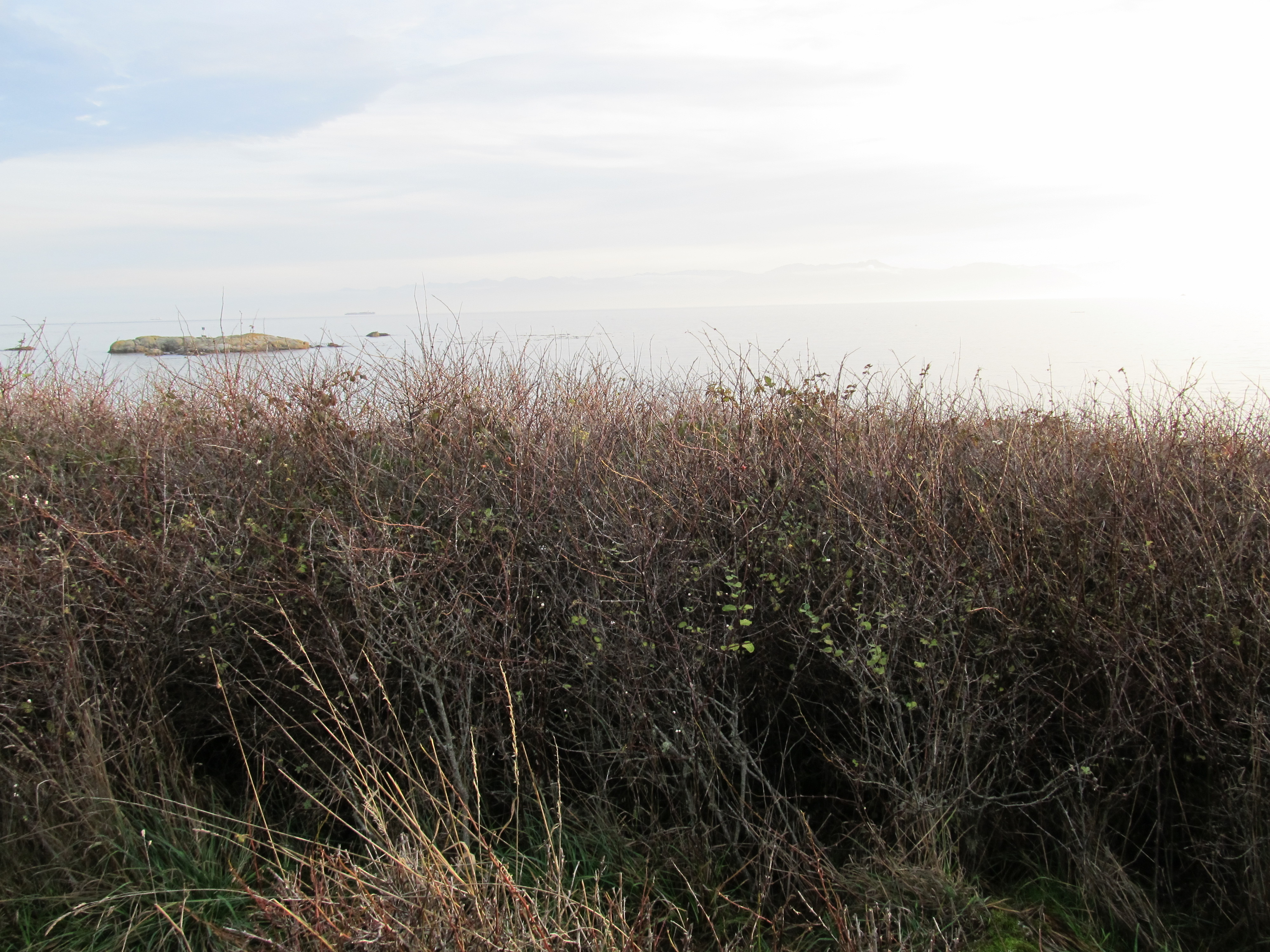
Saxe Point, Esquimalt, British Columbia

Take a chance

I’m not a gambler. I’ve never been one to buy scratch & win or lottery tickets, with the exception of raffle tickets for a good cause. But I have a weakness for the random—for letting books fall open, for reaching into my closet with my eyes closed. I wrote about random acts of reading in one of my early posts

Lately, my hunger for the random has become ravenous. Perhaps it helps me cope with the relentlessness of karma, of knowing that everything arises as a result of a complex web of causes and conditions. If I just grab something, I cheat the chain of causality for one moment. An illusion of course, but it briefly satisfies something in me. 

When I was at Women in Need thrift store a week ago, I bought a $5 jewelry “grab bag” and felt the thrill of not knowing what I would find inside. And then, at the Juan de Fuca 55+  Activity Centre Craft Fair last weekend, I picked up three “toonie bags,” again feeling excitement at the potential. I know the chances of getting things I neither want nor need are extremely high. But a pesky “what if?” tugs at me. What if there’s magic inside those bags?

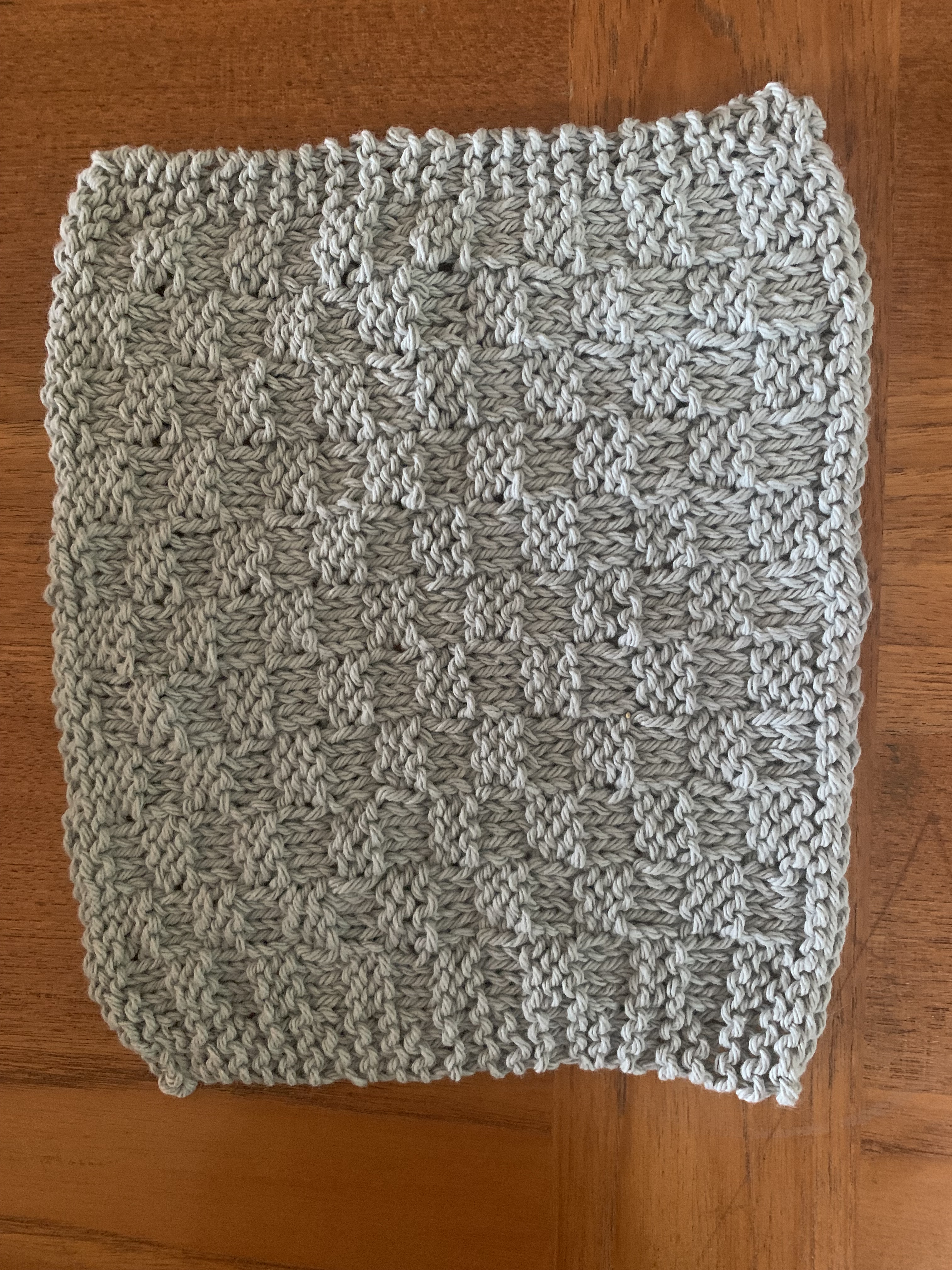
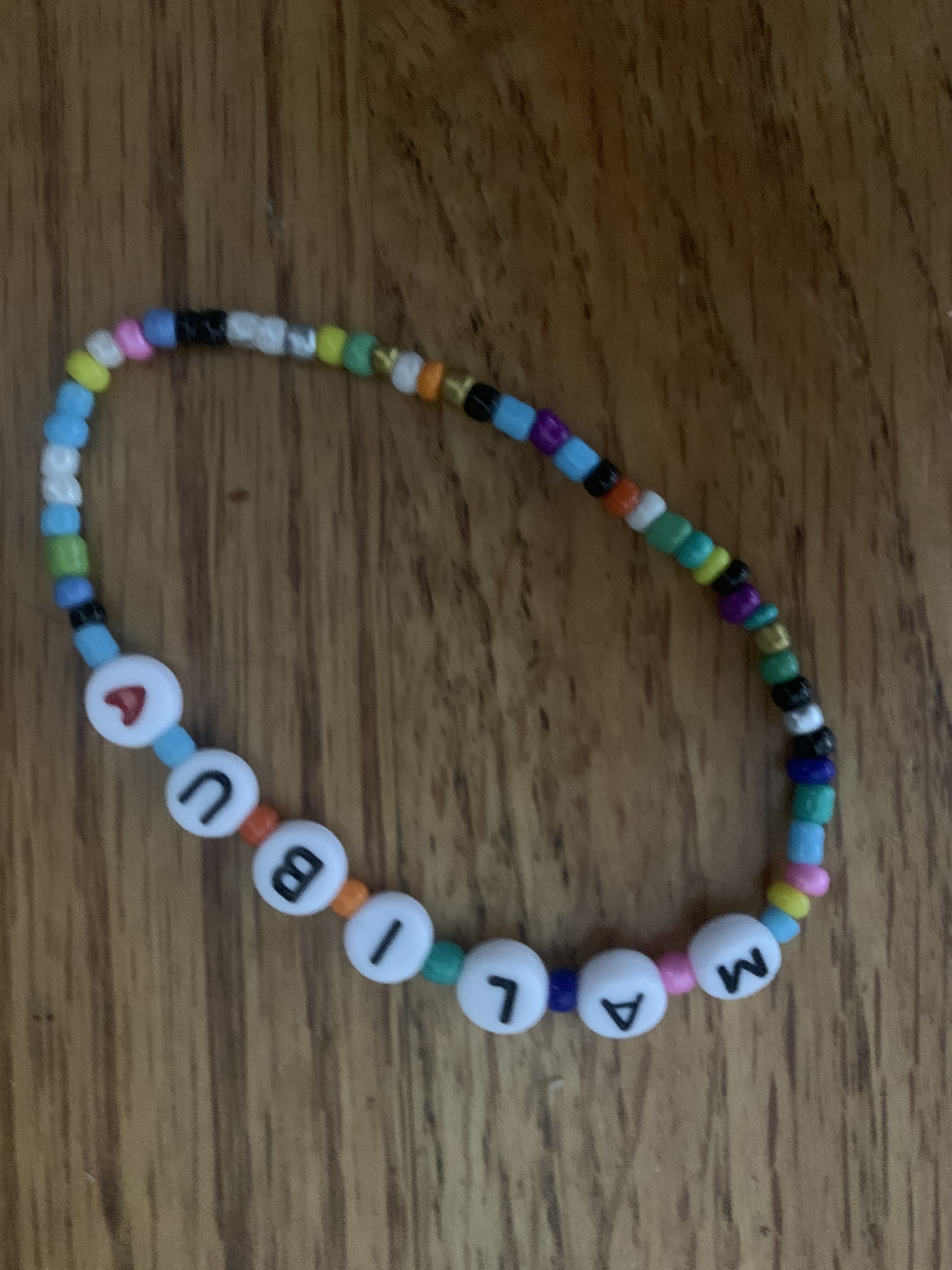
I tell myself it’s not such an expensive gambling habit: $11.00 spent over the past ten days. As you have probably already predicted, the $11.00 yielded mostly junk. Costume jewelry I would never wear. Small glass bowls, silver candles, a MALIBU beaded bracelet: all of these go right into the Goodwill donation bag. But there were a couple of things I liked. A cheesy “love” ring that nestles nicely next to my wedding ring for the time being. Three hand-crocheted dish rags in a shade of grey-green that I love and will use daily. And the priceless frisson of possibility …   If I do this too often though—spend too much money on “grab bags”—I get disgusted with myself, like a gambler must feel about their addiction. 

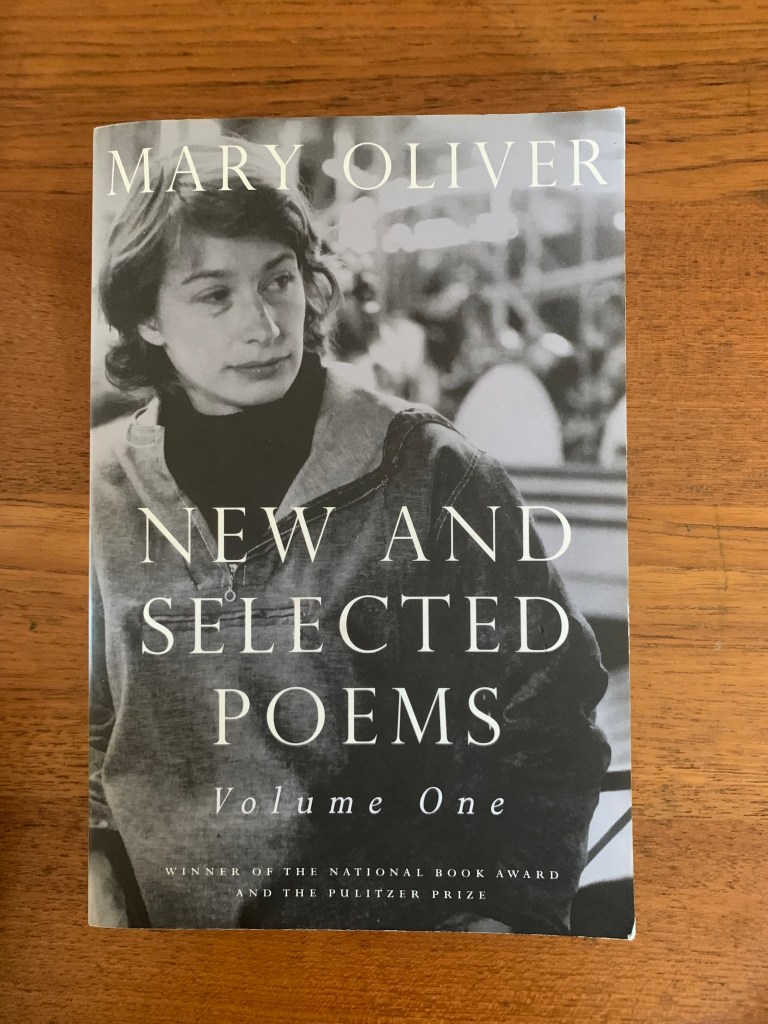
Today, Mandala Monday, I asked Michael to continue with the buffet of randomness. Last time, we each chose a tarot card to inspire us. This time for our mandala-making prompt, I suggested that I would take a book of poems by Mary Oliver and open it anywhere, read the poem, and we would create mandalas in response. Being game to participate in most of my creative ideas, he agreed. I opened to the poem, “White Owl Flies Into and Out of the Field.” Do you know this poem?  The huge white owl, wingspan five feet, picks up a rodent from the snowy field and flies off to the frozen marshes to devour it. Oliver imagines the animal’s death in the jaws of the owl as something incandescent, perhaps even pleasurable. Death, she muses, may be entirely unlike the darkness we tend to imagine:

maybe death 
isn’t darkness, after all,
but so much light
wrapping itself around us —
as soft as feathers —

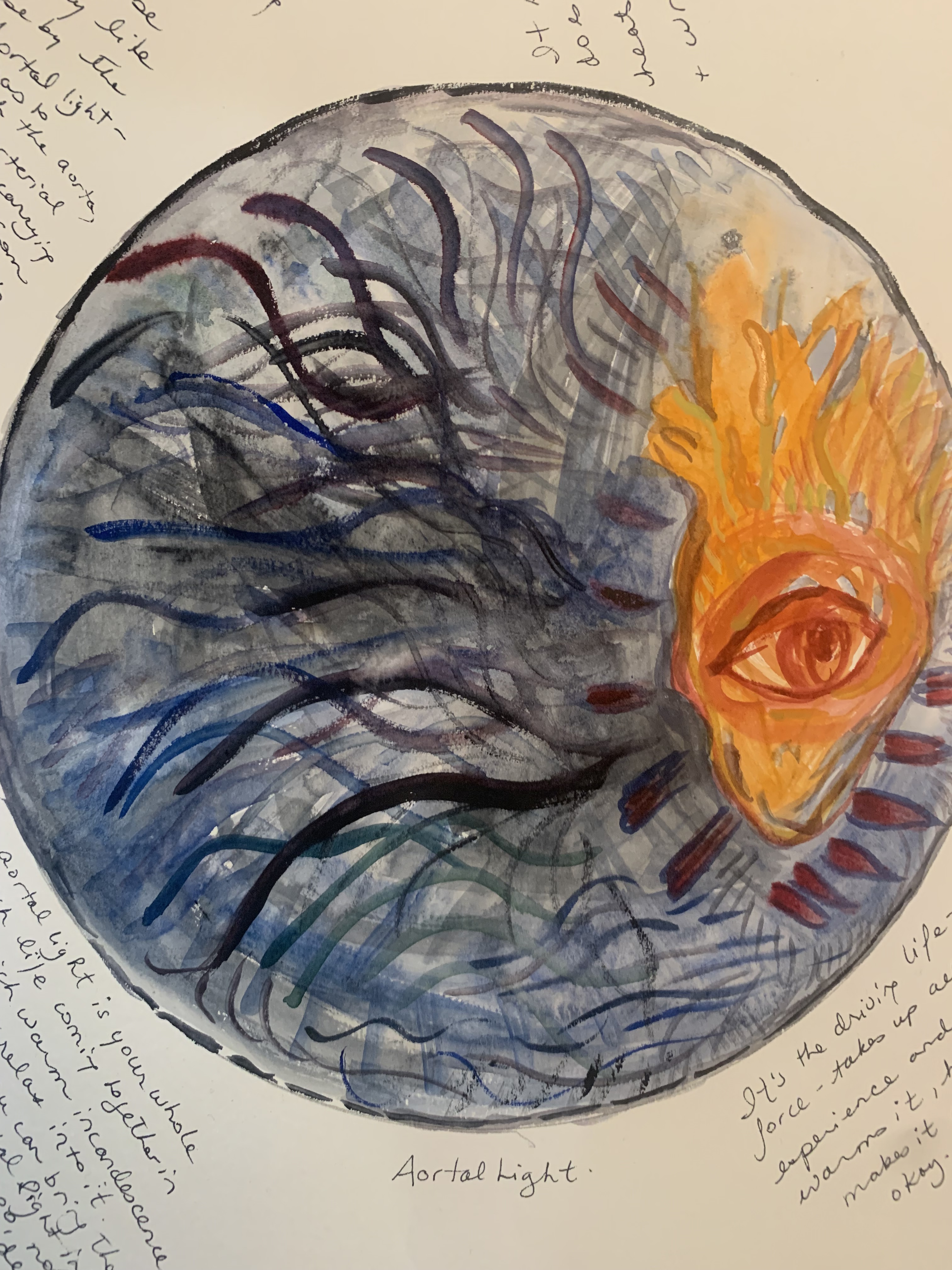
Michael and I sat across from each other at the dining room table, he with his IPad and I with old watercolours and a piece of heavy paper I’d traced a plate on. The songs from Leonard Cohen’s Old Ideas album surrounded us. We worked for a time. I sloshed paint and Michael used his magic wand. I persist in thinking of making digital art on an iPad as something otherworldly, technology out of my reach, which isn’t at all true. However, more and more, I recognize the ways I deceive myself, all of the little lies I tell to keep my life comfortable.

I like to mop up watery colour with an old rag, feel the wet paper under my palm, scrape at the bottom of the indigo blue with my brush, feel that I am using up every last bit of paint. The embodied experience of artmaking. 

I got stuck on a phrase near the end of the poem, “aortal light.” Adjective + noun. Aortal – from aorta, the great arterial trunk that carries blood from the heart to be distributed by branch arteries through the body. I imagined aortal light as a lantern that pulses like a heart, sees all with a glowing eye. Warmth and insight at the end of life. 
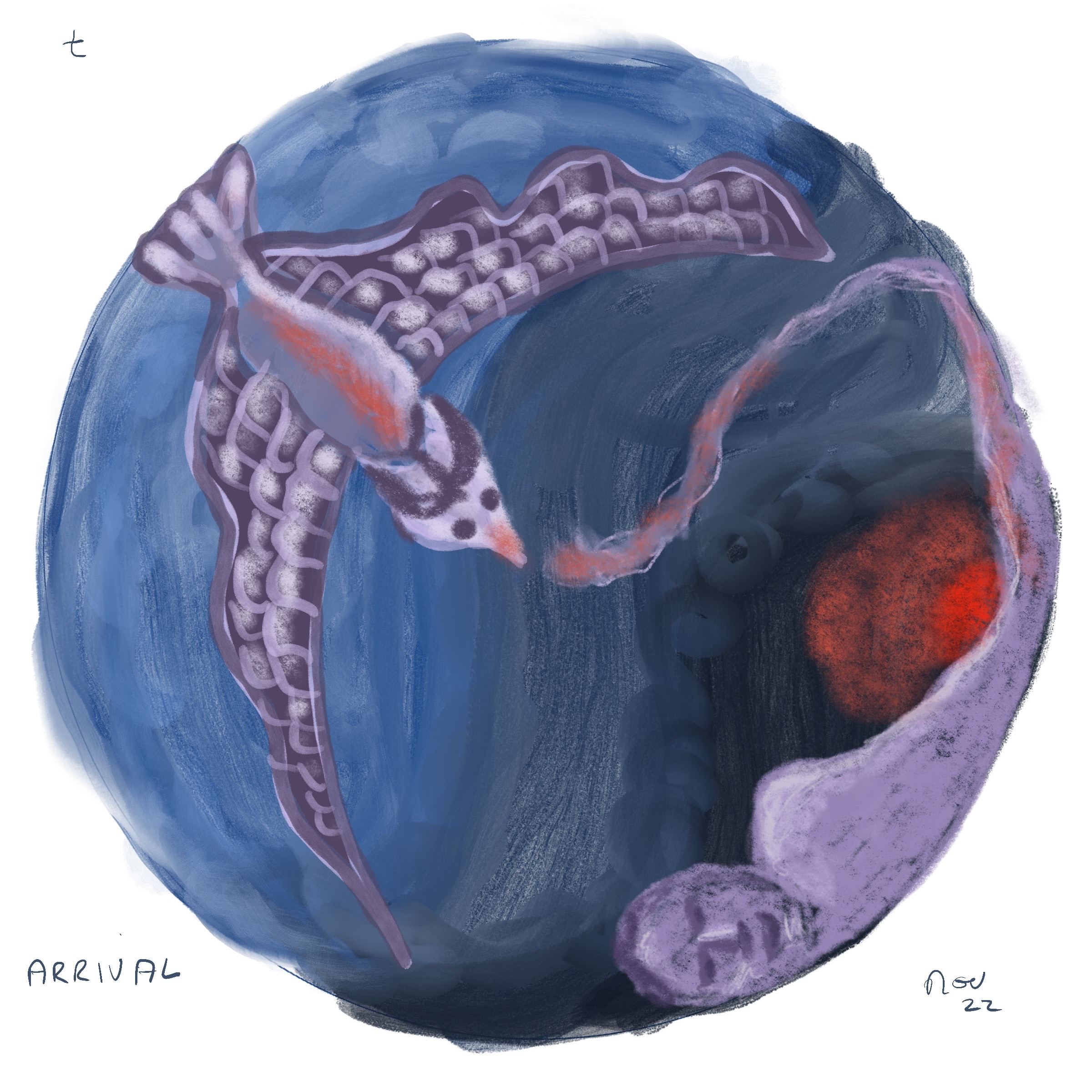
I fell in love with Michael’s “Arrival.” After creating hundreds of mandalas, he has developed a quick entry into the thriving, visceral archive of his subconscious. His images are evocative, and today both the image and the act of creation visibly disturbed him. I was riveted by the words he read to me after we’ve finished painting and writing. His honest expression of troubled feelings about the mandala—his fear of death—they scalded me. Would that I could be so honest! I like to think I won’t be scared when I am dying. I may be deceiving myself again. 

Oliver writes, we “let ourselves be carried,
as through the translucence of mica,
to the river 
that is without the least dapple or shadow —
that is nothing but light — scalding, aortal light —
in which we are washed and washed
out of our bones.”

Choosing the random means taking a chance. Please, big “S” Self, let me take more chances in this life. Not just by grabbing toonie bags and reading random poems—please let me take a chance in being honest, vulnerable. 

Hot pink at the centre

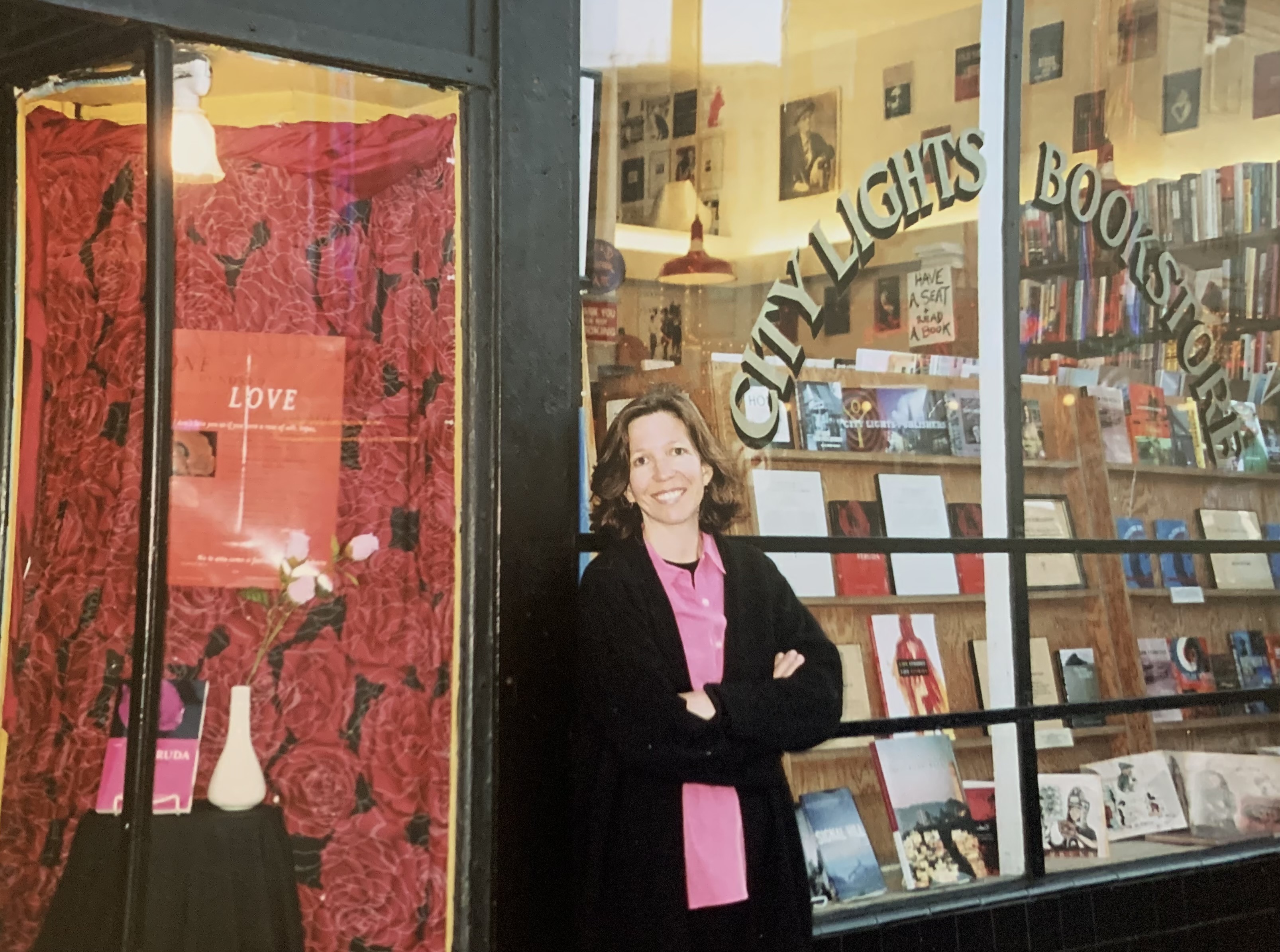
On my bulletin board is a photo from almost 20 years ago. I took the photo down today to examine it, and the more I look at it, the more I wonder why it deserves a place among the special mementos there. 

Arms folded, face glowing, radiant smile, I stand in front of City Lights, the iconic San Francisco bookstore started by Lawrence Ferlinghetti in 1953. I remember we had fun that trip, and I look happy. Yet it’s the portrait of a faker. The fakery is that I am wearing a hot pink button-down shirt under a black jacket. The hot pink cover on a book of love poems in the window display matches the uncharacteristic hot pink of my blouse. 

It’s late May 2004, and my then-husband and I are in San Francisco. We are staying at the Hyatt Regency in the Embarcadero for the 15th Annual American Literature Association conference. I’ve just started my PhD program, and this is my first real conference presentation. What a heady feeling to stay in a fancy hotel, to rub shoulders with people like Maxine Hong Kingston, Charles Johnson, and Arnold Rampersad. To see my name in the printed program: “From the Cultural Margin: Sinclair Lewis’s Quest for Symbolic Goods,” Madeline Walker, University of Victoria, British Columbia.

I wasn’t particularly interested in Sinclair Lewis, writer of early 20th century novels like Main Street and It Can’t Happen Here. But I’d gotten an A on an essay about him and the “literary field” (Pierre Bourdieu)  in one of my PhD seminars, and my professor mentioned there was a Sinclair Lewis Society. Perhaps they were accepting papers for the upcoming conference. At that time in my life, my energy was almost wholly other-directed. I wasn’t sure what I wanted, but if somebody else wanted something for me, or thought I should do something, I would do it. Dear professor: You think I’m capable of presenting my ideas at an international conference, even though I’m only one year into my PhD? Okay!  I’ll go for it. I took it as a challenge. 

When I got in touch with the society, the president told me they hadn’t had a Sinclair Lewis panel at the ALA for a while—it seemed interest in Lewis was waning in the aughts. But I pressed on, bothering him with several more emails. And finally, they were able to find one other presenter to join me, and a small panel of two represented the Sinclair Lewis Society at the ALA that year. 

I look back now from the distance of years and see my hunger for attention and approval. An A-hound since grade school, I had continued my quest for excellence, for pats on the head, for being seen as “special.”  When I look back at grad school, sometimes it seems like I dreamed a long dream. Disconnected from my inner self, I was like a robot scanning for other people’s opinions about what I should be and do. 

I don’t remember much about the conference except attending my professor’s presentation on F. Scott Fitzgerald and Edith Wharton. I sat behind his two young children and observed how they stayed very still, hands folded on their laps, watching their father orate in dense language, his glasses glinting under the overhead lights, his fresh young face like a rosy, earnest teenager’s. 

How were those children even possible? I wondered at their unnatural stillness. And I remember my own presentation, scheduled late on the last day of the conference. Only a few diehards were in the audience, and two of them were my husband and my professor. I got through it by riding that ambition, that force that through the green fuse drives the flower. As Dylan Thomas writes, that same force “blasts the roots of trees/ [and] Is my destroyer.”

While my ambition seemed admirable, it was actually self-destructive. A drive for approval propelled me through graduate school.  I chose topics not with my heart (answering the question, What truly matters to me?) but from my head—looking for subjects and trends that interested my (mostly male) professors and supervisors. I was mildly interested in the topic for the conference paper, but in a purely intellectual way, an arms-length kind of way. I pretended Lewis and symbolic capital captivated me, but it was my teacher’s interest rather than mine. My argument—that Sinclair Lewis accrued more symbolic capital by refusing a literary award than by accepting it—seems wholly irrelevant to me now. 

I went on to present at many more conferences on the way to completing the PhD. But I consistently calibrated my ideas to please others—how could I get the most praise from my all-male committee?  The hot pink shirt I wore in that photograph taken near the beginning of my journey was a metaphor for the charade I was acting in, the pretense that this was the real me. 

During a break in the conference, I wandered into a women’s clothing store on the ground floor concourse of the Hyatt Regency. A two-for-one sale was on: I bought two oversized shirts made of silky synthetic fabric, one white and one hot pink. I felt daring, as if I were dressing this new PhD student-version of myself. Perhaps I would stand out in a crowd—stop wearing black so much, start showing off a little. Speak in public, garner attention, express bold ideas. But I rarely wore either shirt, especially the hot pink number. When I put it on, I didn’t feel like me. I didn’t feel comfortable. So, I would take it off again. 

The pink shirt is like my pilgrimage in academia. Trying to be pink shirt when I am really black shirt. Searching for the holy out there, but never finding it. Not realizing that it’s in here

The weird part is that academia was never the problem. The problem was not trusting and pursuing my own interests. Not pursuing the study of women’s poetry and the body or motherhood or the multiple other threads that pulled me. Not holding my own fascinations with reverence, but instead, trailing after other people’s fascinations, thinking that if I aligned my interests with them, I might get the attention I craved. 

I’m tacking the photo back in its place. I need it to remind me not to wear hot pink, but instead to touch into the hot pink centre of myself, for that’s where my truth lives.

Thomas, Dylan. https://poets.org/poem/force-through-green-fuse-drives-flowe

Summer reading | Summer music

I’ve devoured most of Anne Tyler’s novels in the last two years. It was one of those felicitous discoveries—a wonderful, prolific novelist I hadn’t read yet. Yes, I’d heard the title The Accidental Tourist, but it wasn’t until I found Breathing Lessons in a little free library on Brunswick Avenue, Toronto, a couple of summers ago, that I became engaged, in love with her characters, the messy lives, flawed people and relationships, random and serendipitous comings-together, the tenderness, the realness, the love. I was hooked. I read all of the novels available from the library and bought a couple that weren’t, and then, just a few weeks ago, I found Ladder of Years in a box of free books across the street. What a find! Read this:

“When my first wife was dying, . . . I used to sit by her bed and I thought, This is her true face. It was all hollowed and sharpened. In her youth she’d been very pretty, but now I saw that her younger face had been just a kind of rough draft. Old age was the completed form, the final, finished version she’d been aiming at from the start. The real thing at last! I thought, and I can’t tell you how that notion colored things for me from then on. Attractive young people saw on the street looked so. . . temporary. I asked myself why they bothered dolling up. Didn’t they understand where they were headed? But nobody ever does, it seems.” 

From Ladder of Years by Anne Tyler

I was disarmed by that paragraph. My perspective about my aging face swiveled to a fresh view: the temporary beauty of my youth was just a rough draft. This idea appeals to me not just because it helps me consider my face as closing in on the finished version, the real thing. It’s also because I work with writers, and I see lots of rough drafts, and I found the metaphor very appealing. Not only are our lives works-in-progress—our faces are also works-in-progress. The changes I see in mine are not to be read as signs of deterioration; they are signs of me becoming more me

I am also reading Stranger in a Strange Land, by Robert Heinlein. Years ago, when Michael first used the verb “grok,” I asked him what it meant, and he told me about Heinlein’s science fiction classic. I’m finally reading it, discovering a new world, new words: grok (to fully understand, become one with), discorporate (to die), and water brother (someone you shared a drink of water with, which binds you together).

Valentine Michael Smith (the Martian in the novel) would have loved Vancouver Island Musicfest, teeming with water brothers. We were there last week-end, and still, I am digesting the banquet that it was. On Saturday morning, we found seats in the barn, one of the small stage venues. The place smelled of horses, and the was air thick with hay particles. On the stage, the musicians settled with their instruments—soundchecks, noodling. This was our first time hearing live music for a while—and I sat upright with anticipation. The workshop was well-titled “Great Guitars,” and soon I was swept into the greatness of a bunch of highly skilled and talented guitarists playing, singing, and sometimes jamming. 

Meredith Axelrod, who blushed beet red when she got a name wrong, sang an old Carter Family song called “Hello Stranger”: “Hello, stranger, put your loving hand in mine/ Hello, stranger, put your loving hand in mine/ You are a stranger and you’re a pal of mine.” Her charming manner and amber voice were a tonic to start the show. Her second song featured the line, “I’m gon’ wash my face in the Gulf of Mexico.” She rose, raised her jean-clad leg, and set one foot on her chair, cradling her glowing Wyatt Wilkie guitar. I liked her old-timey manner and voice. I imagined her scooping salt-warm water from the Gulf and splashing it over her face between blonde wings of hair.

I liked everyone on the stage. Jeff Plankenhorn, wearing his special “Plank” cross between a lap steel guitar and an electric guitar, sang that even a blind man can tell if he’s walking in the sun. Jack Semple was there, showing off with his masterful classical gas. Dave Kelly reminded me of Clapton with his British accent and easy elegance. He played a Son House blues tune as a pigeon flew up into the rafters. Then there were the old guys at the back of the stage who—not needing to be seen or noticed—had tucked their egos into the back pockets of their jeans. They picked away, nodding and tapping, studying their instruments, heads down. Music has its own rewards. 

The star of the show was Melody Angel, guitarist and singer from the south side of Chicago. When she sang “Hey Joe,” Michael leaned over and said, “I think she’s channelling Jimi.” Her muscular voice growled up over the crowd, and we pulsed along with her guitar. She pushed notes up the ladder of sound, climbing, climbing, raising our energy. Michael’s lit-up face was plastered with a beautiful smile, and he wiped a tear from his eye. My throat was thick with emotion as I looked around at the performers and the audience, all of us gathering to grok this powerful medium of music, the great connector, the universal love potion. As we clapped and clapped some more, I was filled with sound, in love with the world

In the summer of 2011, Michael and I bought tickets to the Edmonton Folk Festival. We knew we were taking a chance—we’d met only two months earlier, and to spend so much time together was a quick, risky test of our compatibility. We drove through the mountains, stopping at cheap hotels and laughing a lot.

On the way, I got schooled in the songs of Stephen Fearing, and then we listened to Captain Fantastic and the Brown Dirt Cowboy—the whole album—loud. I’d never really heard Elton John until that day. At the festival, we swooned over Matt Anderson and Taj Mahal and got closer and closer to each other. Our love was just a rough draft then, and the music we shared on the way to Edmonton and at the festival was like the first version you write—filled with exploration. The discovery draft, we call it at the Writing Centre. More than a decade passed. And last week-end, at another music festival, we added some nice touches to the current draft. We shared music, and that’s like co-writing a paragraph. We move slowly, inexorably toward the final, finished version, becoming more ourselves each day.