A love to which there is no reply

We recently spent three days in New York City.

As I read the last line of Mary Oliver’s poem “Heavy”—”a love to which there is no reply”—it occurred to me that this describes my love for NYC. You can love NYC, but NYC doesn’t love you back. NYC doesn’t actually give a shit about you; the city is completely self-absorbed, and that’s just fine. It’s all part of the city’s mystique, its swirling, pigeon-flocked, neon-lit-glass-and-steel, rapid-fire, whirling-dervish, creative vibration. 

We stayed at a sweet hotel in the Flatiron district, saw wonderful exhibits at the Whitney and the Met, watched Kenneth Branagh as King Lear, went to a comedy show where five hilarious stand-up comedians made me laugh for ninety minutes. I loved all of it, every minute. But a few small vignettes stay with me and keep breaking the surface of my thoughts.  

One dollar for an original print

In the Whitney Museum gift shop there’s a vending machine at one end where you can slide four quarters into the slots, push, and out pops an original print of some NYC iconic object or scene by Ana Inciardi. We put our quarters in, and now we own two tiny prints (2.5 inches by 3.5 inches): a black and white cookie and a NYC water tower. Inciardi is kind of genius, isn’t she? I don’t know if she profits from this—surely a print for a dollar is not netting her much money. But it is such a delightful thing to encounter: a vending machine dispensing original art. I want art vending machines to be installed everywhere, machines where you insert coins and receive poems, collages, small clay sculptures, watercolours, flash fiction, holograms, fabric art, tarot cards… Can you see it? 

The women’s washroom at Barnes and Noble 

To use the washroom at the Fifth Avenue location of Barnes and Noble, you must first purchase something. At the bottom of your receipt is the bathroom code. I bought The Temporary, a novel by Rachel Cusk, an author I have been wanting to read (the novel is wonderfully written, but very depressing). I then used the code to enter the women’s washroom, where there was a line up for the two working stalls (there always seems to be one stall with a scrawled “out of order” sign). A woman of colour (#1) exited one of the stalls, but the next person in line (white woman) looked in, then withdrew with a look of disgust on her face. Woman #1, was busy washing her hands. I said to woman #2, “what’s the problem? You’re not going in?” Woman #2, not making eye contact with me, said cooly, “they got stuff all over the seat.” I went into the stall and saw a fine spray of water droplets on the seat, likely created by the toilet’s back spray. Quickly removed with a wipe of toilet paper. The venomous way woman #2 said “they got stuff all over the seat” implied something terrible, perhaps excrement smeared everywhere. Her contemptuous reaction was so overblown and ridiculous—it felt symbolic of a rising wave of incivility and prejudice in (American) society. Ugh.

Four girls draw a statue

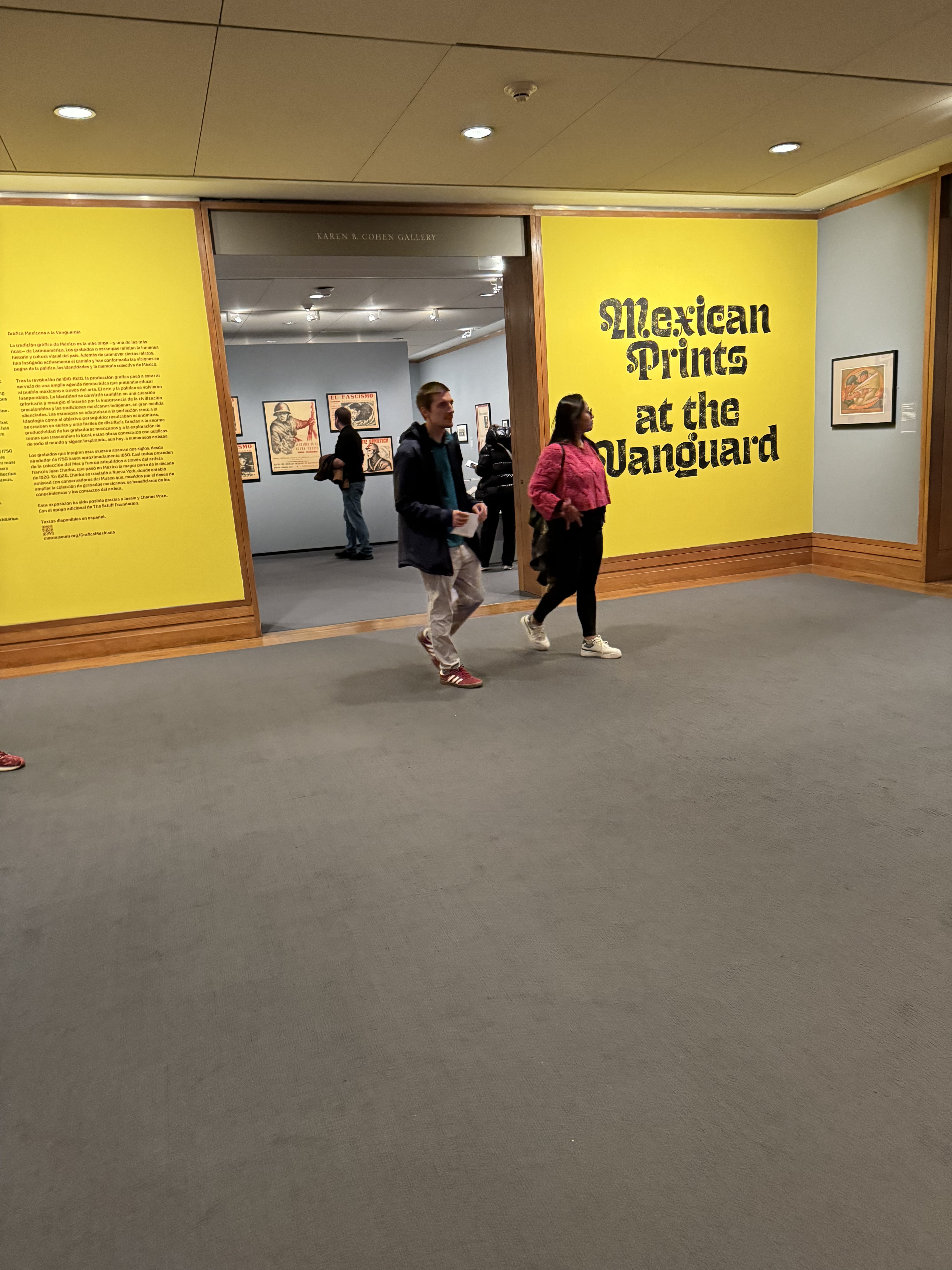
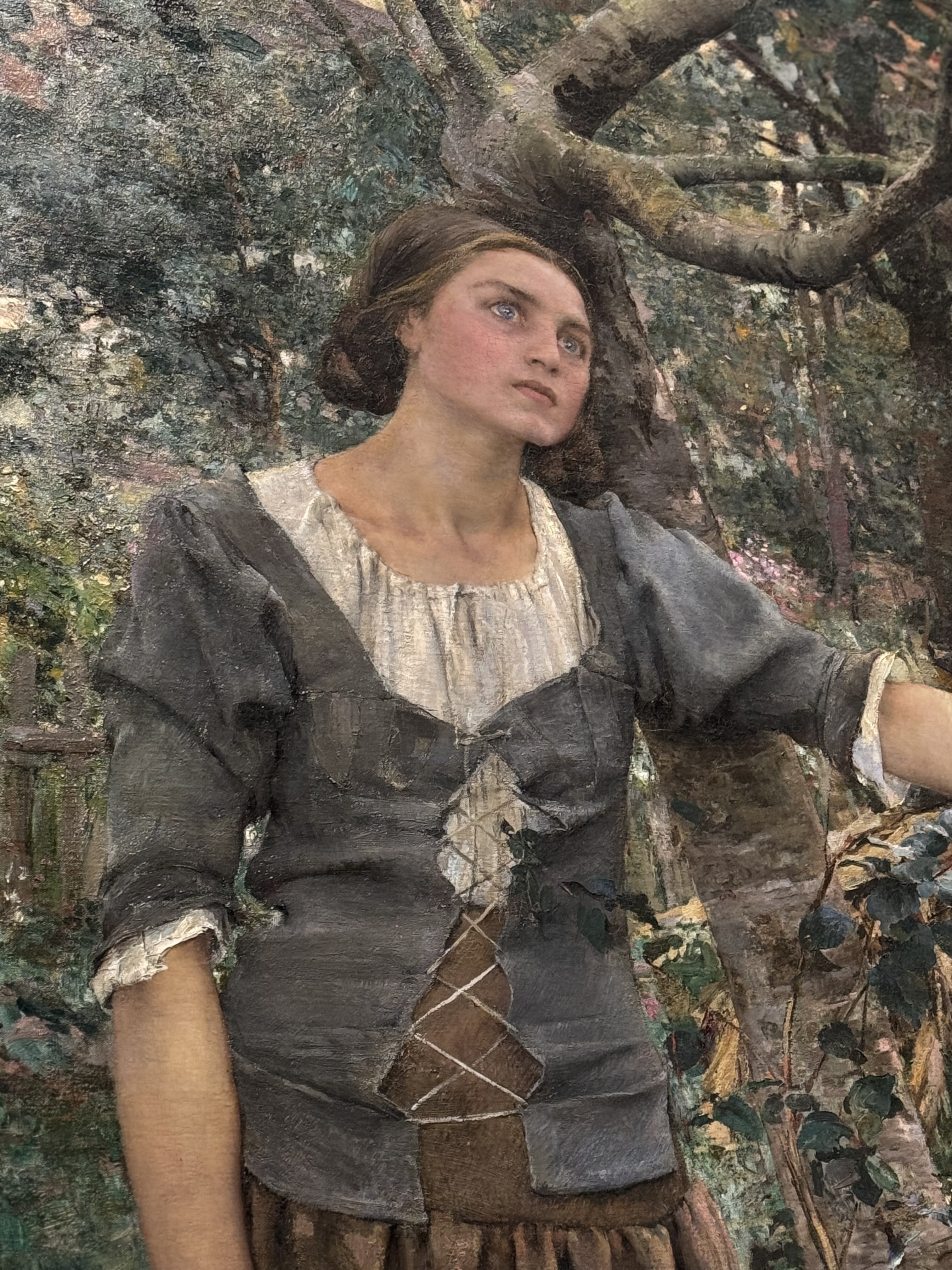
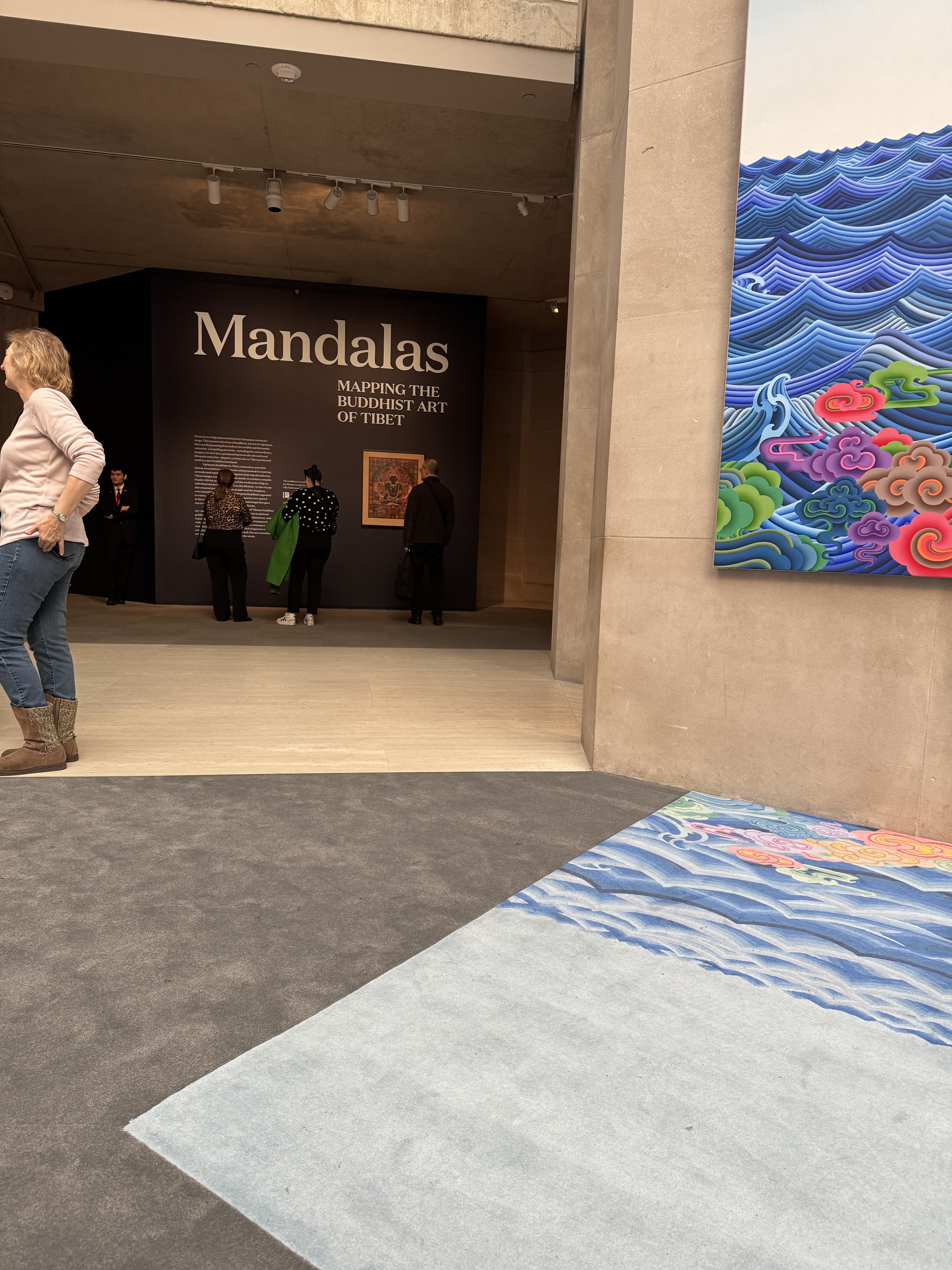
I loved the two exhibits we spent time with at the Metropolitan Museum of Art: Mandalas, Mapping the Buddhist Art of Tibet and Mexican Prints at the Vanguard. As we left the museum, passing through the Leon Levy and Shelby White court filled with ancient Greek and Roman statues, I saw four teen girls sitting on the marble floor in front of a bench, absorbed in drawing a statue of a nude man. This is what I will remember from the trip… their bowed heads, their silent engagement with the statue and with each other. A refreshing palate cleanser after bathroom woman #2’s remark.  Oh, and the Joan of Arc by Jules Bastien-Lepage (1879): her face had me swooning.
Docent at the Met

We got a bit lost after the Mandala exhibit and asked a docent for help locate the gallery where the Mexican prints were on display. She led us rapidly through throngs of people, and I told her my mother had been a docent for years at the Art Gallery of Ontario (I had many moments of thinking of my mom in NYC—we visited the city together in my early twenties and saw, among other things, Zero Mostel in Fiddler on the Roof). The docent explained she had to do highlights tours for two years before they let her specialize in anything. I asked her what she specializes in now. Arms and armour, she answered. And I get to have another speciality, she said, but I am taking a break. Evidently, it’s exhausting to learn all there is to learn about the arms and armour in the Met’s extensive collection. 

Pumpkin Pie at the Malibu Diner 

Before the show at Gotham Comedy Club, West 23rd and 7th Avenue, we ate dinner at the Malibu Diner across the street. An old-fashioned American diner with a huge, laminated menu, plenty of booths with red vinyl benches, low chrome stools facing the long counter. All of the waiters spoke Spanish among themselves. When our waiter brought my twice-baked potato, I said Gracias Señor, and then he started to speak to me in Spanish, and I had to explain that I only know a few words. He laughed. 

We paid for our meals and went to the club, but we were early. The woman said come back in half an hour; they were running late. Where to go? The cold wind bit our cheeks that night. So, we returned to the diner, where the waiters welcomed us like old friends. Come, come to the back, sit in this booth, where you won’t feel the wind that sneaks in whenever somebody opens the door. It’s warm back here. Our same waiter from before brought pumpkin pie with whipped cream. Sometimes eating dessert is the perfect way to pass time.

Shakespeare groupies

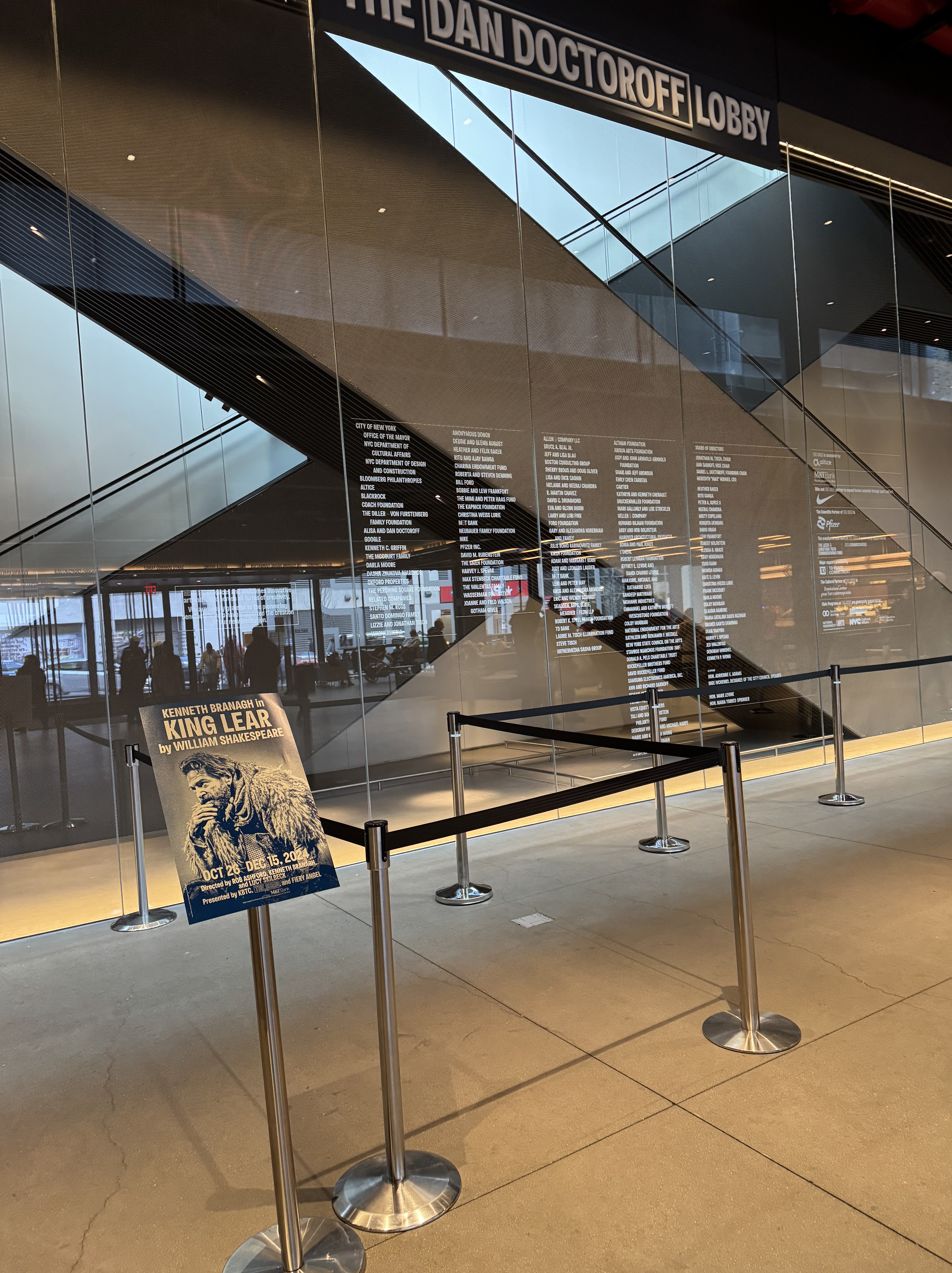
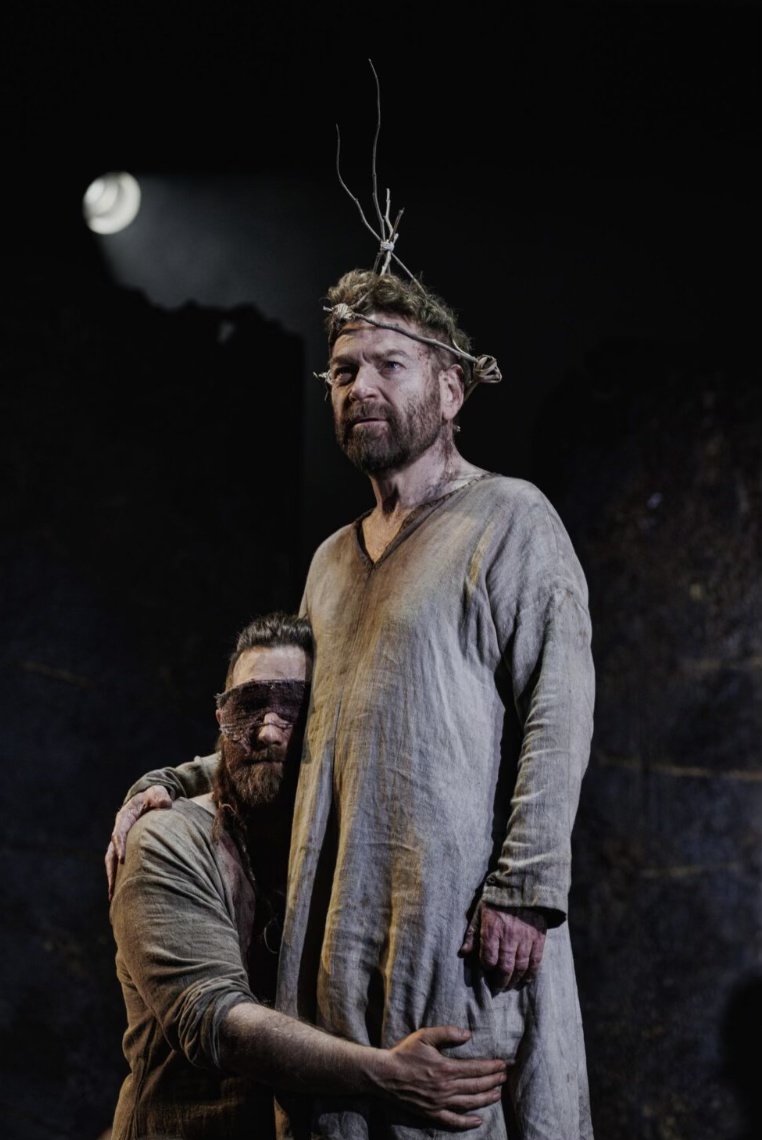
We took our excellent seats at the Griffin Theatre (at the Shed), where we had tickets to see King Lear. In front of us, two women about my age were taking off their coats and chatting. They started to engage us in conversation—where were we from? Did we go to a lot of Shakespeare plays? They had both lived in Atlanta and belonged to a Shakespeare reading group. When one of them moved to Baltimore, Maryland, they figured that was it—they wouldn’t see each other again. But then the Maryland woman saw an advertisement for King Lear with Kenneth Branagh and called her Atlanta friend. Why don’t I buy tickets? You can fly here. We’ll go together. So, Atlanta woman got a flight to Baltimore, and that morning they’d taken the train from Baltimore to Manhattan. We’re Shakespeare groupies, the blonde woman from Atlanta said. In April, we’re going to see Denzel Washington in Othello, said the Baltimore woman. Shakespeare groupies. I love it. 
Window shopping

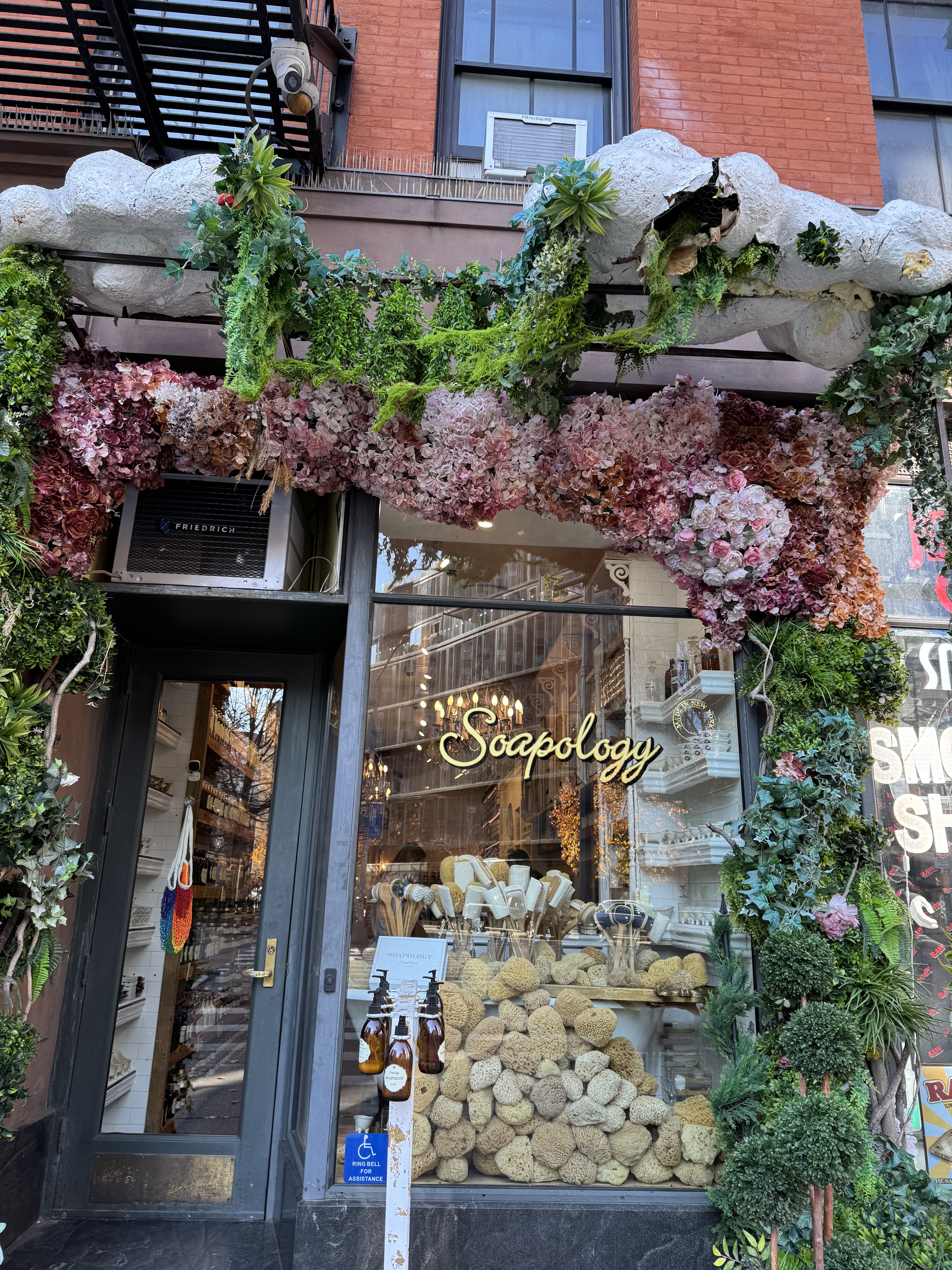
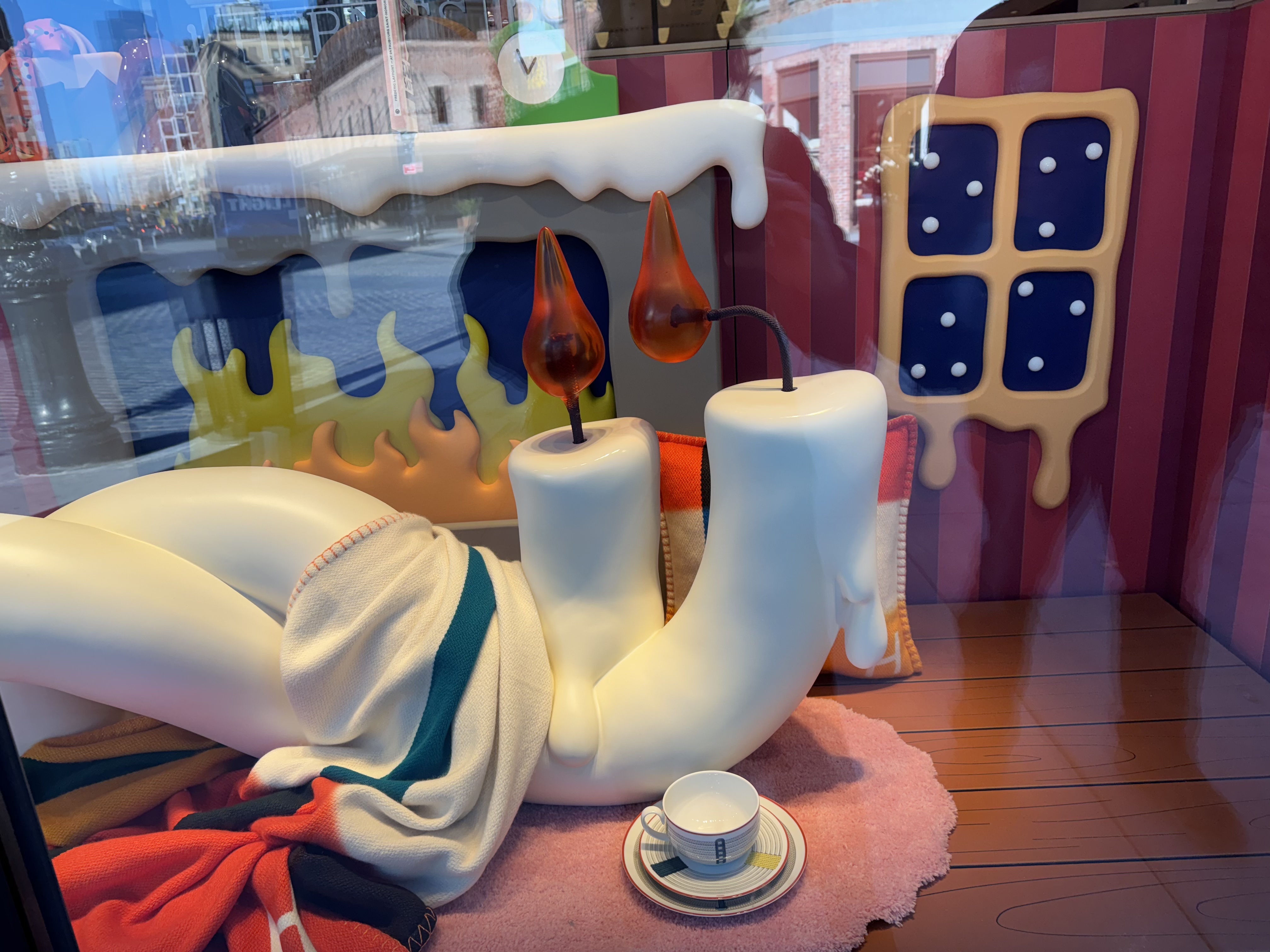
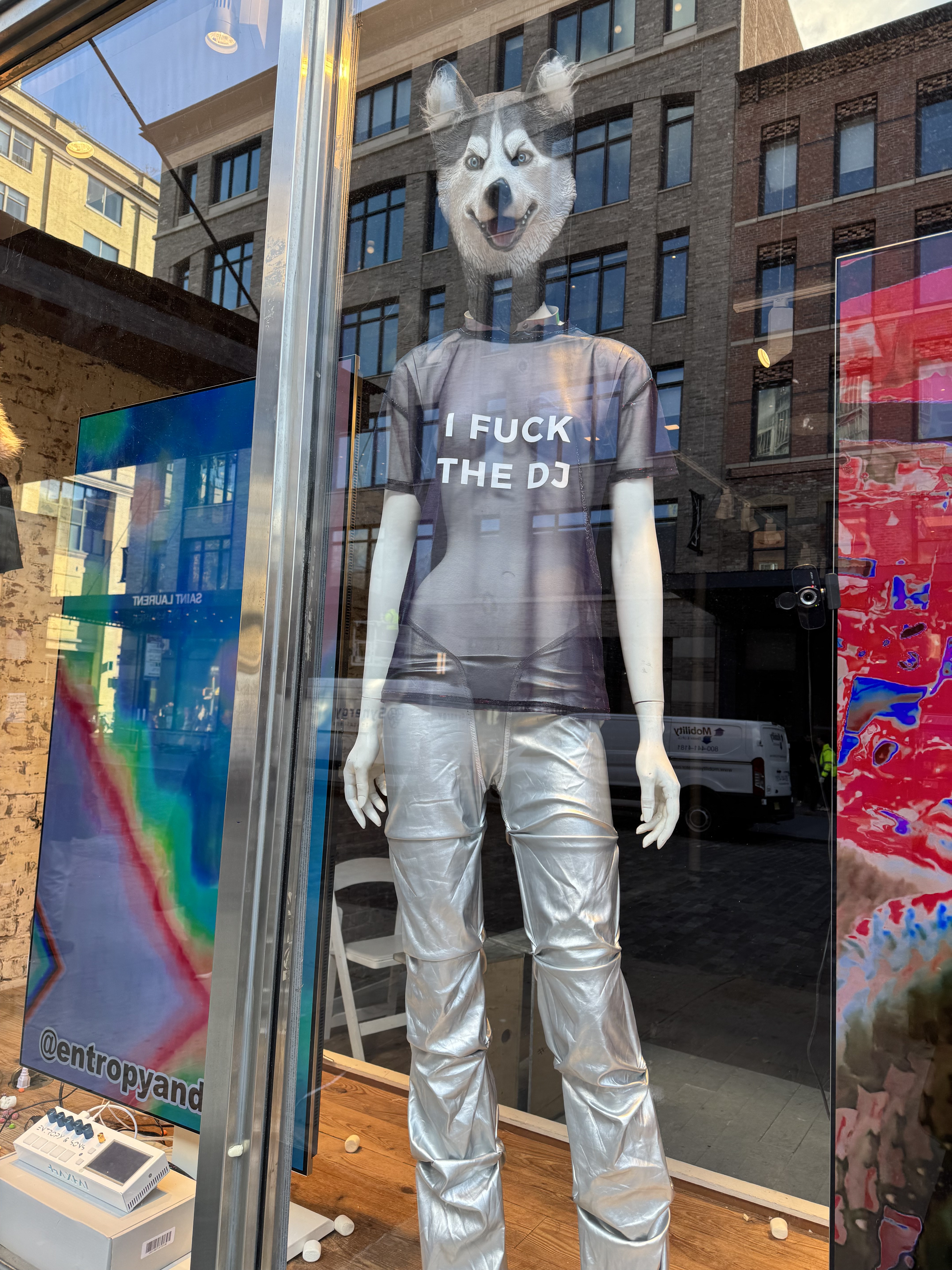
NYC is the best place to window shop. No need to buy a thing; just absorb the kaleidoscope of artifacts and moods rippling through glass. Mannequins wearing weird t-shirts, everything Harry Potter, bolts of cloth, soaps, sculpture, ceramics, sexy candles, life messages, and rainbow bagels.

Until next time…

We walked through Chelsea along a sidewalk that bordered a basketball court. Kids were shooting baskets on the first day of December, laughing, talking. A flock of grey pigeons passed overhead while the sun winked from behind a fringe of clouds. A bubble of pure joy passed through my body and into my head, exploding into a private smile. I love you, New York City; no reply necessary. 

The Word Shed

Sometimes a word rolls around in my mind for weeks. Lately, it’s “shed,” both noun and verb. I started to make notes about “shed” and its associations. When I saw the document file that I’d titled “The Word Shed,” I recognized a new meaning: my mind is a word shed. A space where I collect words, play with them, combine them, examine their denotations and connotations, milk their honey.

Shed the noun is a simple roofed structure, typically made of wood or metal, used as a storage space, a shelter for animals, or a workshop: a bicycle shed | a garden shed | a woodshed. Or a place to work. Last summer we met a couple at their yard sale, and they showed us the woman’s “She Shed” in the backyard. They’d built the small one-room shed during the pandemic: it was a place for her to work at home in peace and quiet. I’d never heard the term “She Shed” before. I like it better than “Man Cave.”

Michael’s drawing of an old shed located in my father and Marion’s sugar bush near Markdale, Ontario. We called it the “sugar shack.”

The Shed is a restaurant in Tofino where, two years ago on my sister’s birthday, I had a delicious salmon bowl that I recreated at home later. I knew the ingredients: salmon, quinoa, raisins, almonds, chopped apple, kale, white cheddar. I intuited a dressing of tahini, olive oil, lemon juice, garlic, honey, and yogurt. I discovered the recipe, handwritten on blue paper, in my recipe binder and realized that I’d somehow cared enough to reverse engineer the recipe, though I can’t remember writing it down.

I made the Salmon-Kale-Quinoa Bowl again the other night and it was delicious. I didn’t have white cheddar or puffed rice, so I used shaved parmesan and skipped the puffed rice.

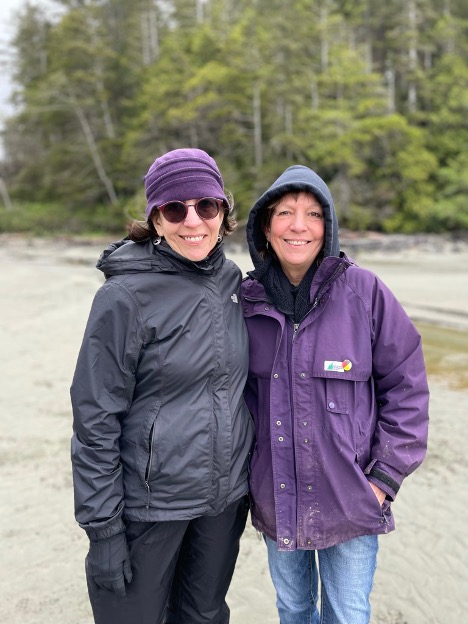
The Shed restaurant invokes a homey feel. I remember being there with Jude and Michael, tucked into a cozy booth while rain spattered the windows and wind whistled outside. Like sitting in a warm shed on a stormy day. We walked on the beach after lunch in our rain gear. 

Over the years, we’ve had two sheds built on our property for storage, bicycles, and garden stuff. Now we’re moving and clearing out the sheds. I’d forgotten about the stuff I stored there. Out of sight, out of mind were boxes of old letters, some going back forty years; kids’ artwork, writings, and report cards; notes from university courses; my old journals. Sorting and shedding and shredding old papers over the last few months has been part pain, part joy, and sometimes so funny I laughed out loud.

Another shed: On December 1, we’ll be in New York City to see Kenneth Branagh in the role of King Lear at the Shed, “a new cultural institution of and for the 21st century.” Their website explains: “We produce and welcome innovative art and ideas, across all forms of creativity, to build a shared understanding of our rapidly changing world and a more equitable society.” After a run in London, England, Branagh is bringing the play to this exclusive U.S. engagement.

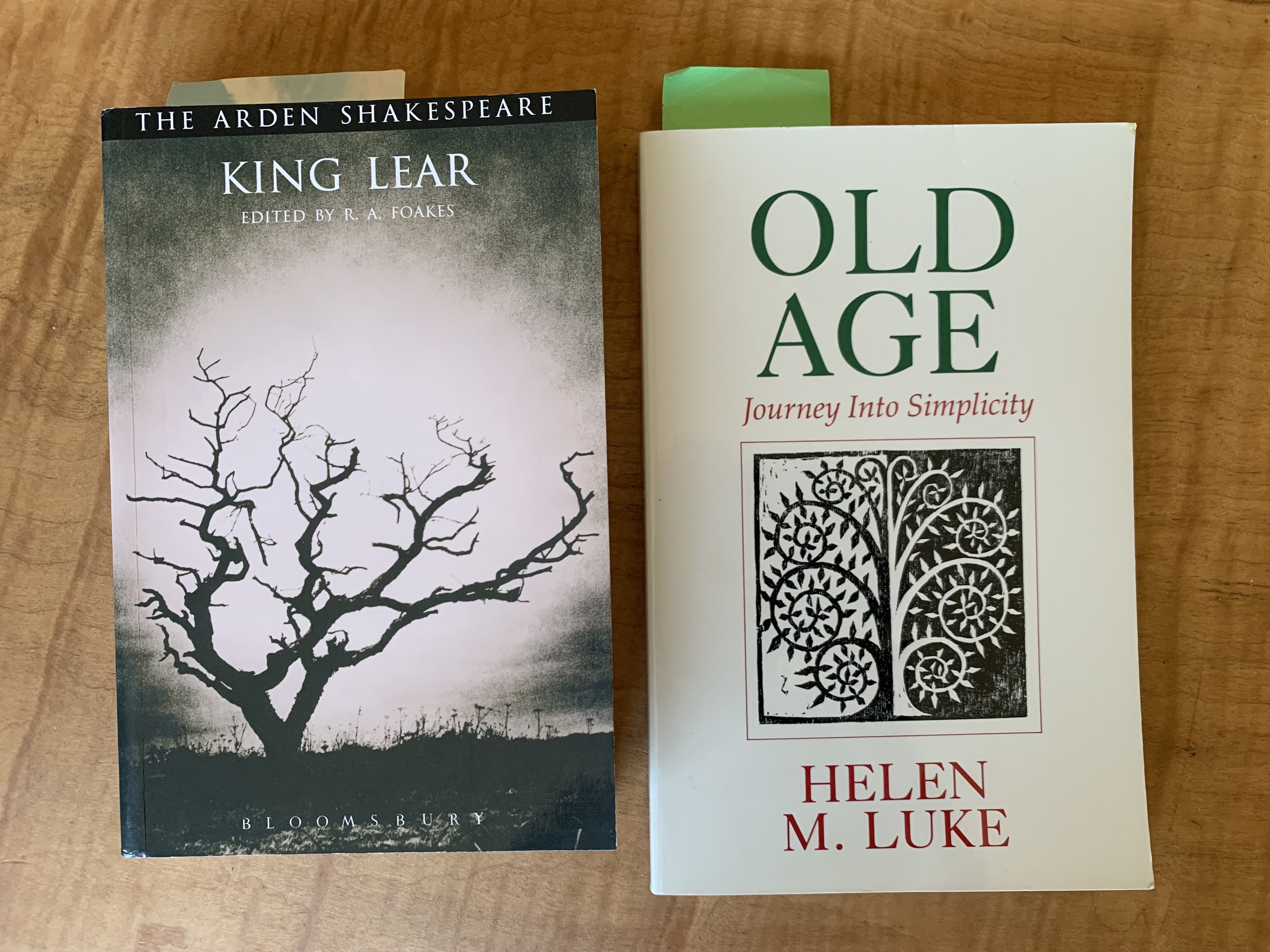
It’s months away, but of course we had to buy tickets early. It will be exciting to see Branagh play Lear in my favourite Shakespeare play. I am reading Helen Luke’s book Old Age, and the chapter on King Lear moved me, particularly when she refers to the two lines spoken by Lear to Cordelia in Act 5, Scene 3, “When thou dost ask me blessing I’ll kneel down / And ask of thee forgiveness.” Luke writes,

“If an old person does not feel his need to be forgiven by the young, he or she certainly has not grown into age, but merely fallen into it, and his or her ‘blessing’ would be worth nothing. The lines convey with the utmost brevity and power the truth that the blessing that the old may pass on to the young springs only out of that humility that is the fruit of wholeness, the humility that knows how to kneel, how to ask forgiveness” (p. 27). 

Lear’s story resonates because he shows us that shedding egotism and pride may be followed by an exquisite sense of humility. Many of us experience this as we grow older. Only after Lear is hollowed out by loss can he enjoin Cordelia to “live / And pray, and sing, and tell old tales, and laugh / At gilded butterflies.” Only after loss decimates us, do we feel an unusual lightness of being. So different from the lightness of youth, this lightness we purchase with grief. 

Shed your burden ~ watercolour by Madeline Walker

Then there’s the verb, “to shed.”

To rid oneself of superfluous or unwanted things or feelings…to give off, discharge, or expel, such as a cat shedding fur, a snake shedding skin, a tree shedding leaves. 

Shedding blood. Bloodshed. Viral shedding. We all shed tears. 

And don’t forget the intransitive verb, to woodshed: to practice a musical instrument, to work out jazz stylings, to go over difficult passages in a private place where you can’t be heard.

Isn’t it odd that the noun shed refers to a place where you store and keep and gather things, whereas the action word (transitive verb) means to let go of, release, slough off feelings, body parts, objects? These meanings are in tension with each other – one wants to keep, the other to release. 

But perhaps it isn’t so odd. The tension between the noun and the verb merely replicates the push and pull we feel in our lives between holding close and letting go. 

The Shed in Tofino: https://www.shedtofino.com

The Shed in Manhattan: https://www.theshed.org/program/302-kenneth-branagh-in-king-lear-by-william-shakespeare

Sewing/sowing history

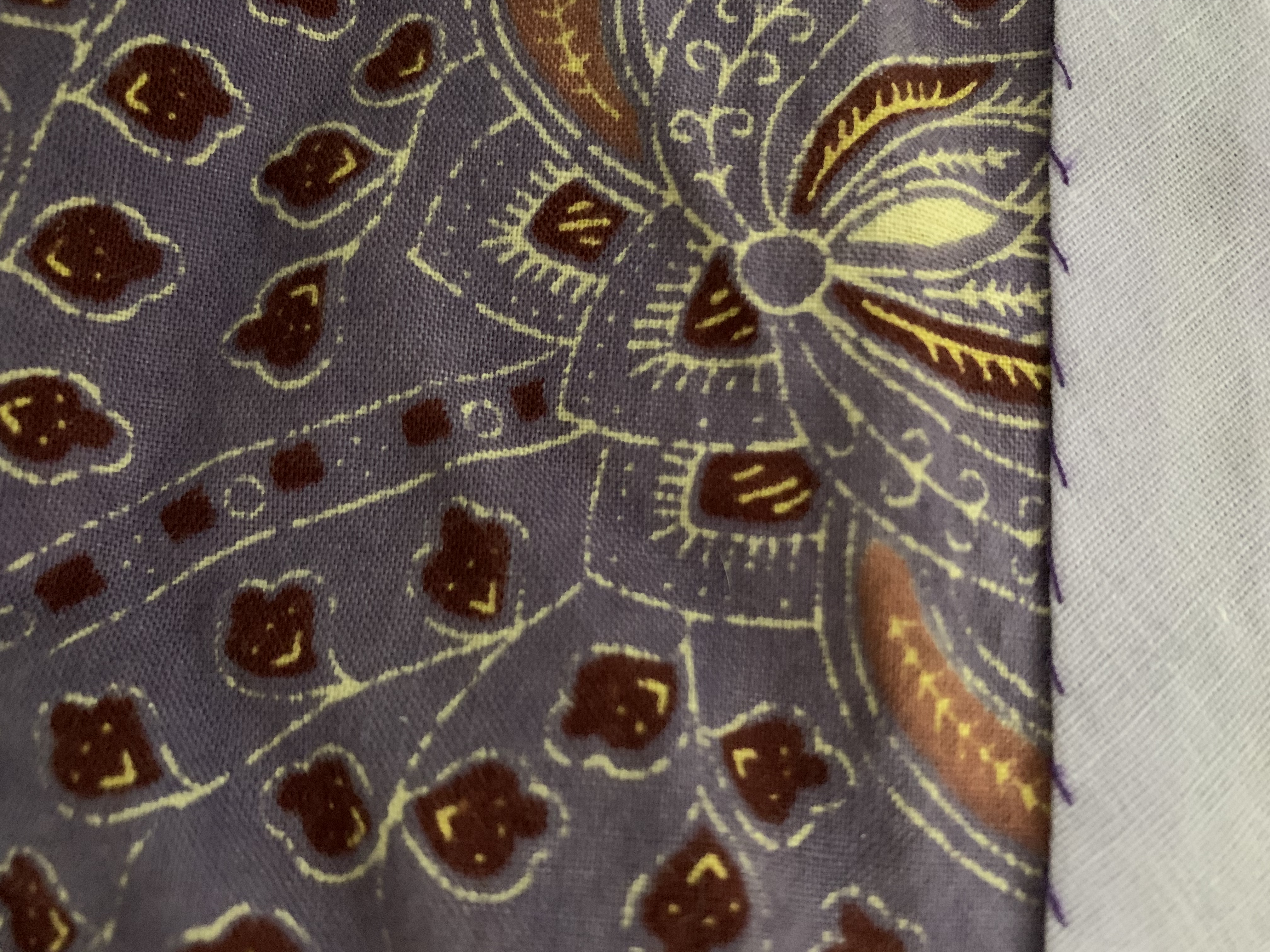
The lavender bias tape is sewn in small, even stitches along the inner edge of the richly patterned cloth. My grandmother once sat quietly, sewing this binding to finish the apron she was making for me. After wearing the apron for decades, I have been cutting it apart, incorporating squares of the purple, cream, and brown fabric into coasters for a friend, a shoulder bag for my niece, and now a quilt. These little squares and rectangles sew/sow history into new textiles. 

Grandma Marguerite Walker (nee Potter) was born in 1896 in Fort Scott, Kansas. Although I didn’t know her well, I have fond memories of her. She was gentle and genteel, soft-spoken, and poised.  When my parents when to Europe for several weeks when I was 8 or 9, she came to stay with us in Toronto. She taught me how to set a table during that visit because, apparently, my mother had never taught me the correct way to place napkin, fork, knife, and spoon. I once visited her in Los Gatos, California, where she lived for many years. One day, we wandered about, looking at the shops. “What a lovely colour your blouse is,” grandma said to a woman we approached on the street. That stranger lit up from the compliment, and I never forgot that simple, kind exchange. Another time we heard ambulance sirens in the distance, and my grandmother prayed aloud that nobody was hurt. This was something new for me. “Prayer” was not in my parents’ lexicon. And in her letters, grandma wrote “thot” for thought, not because she didn’t know how to spell—she was an excellent speller—but because she had her own shorthand. 

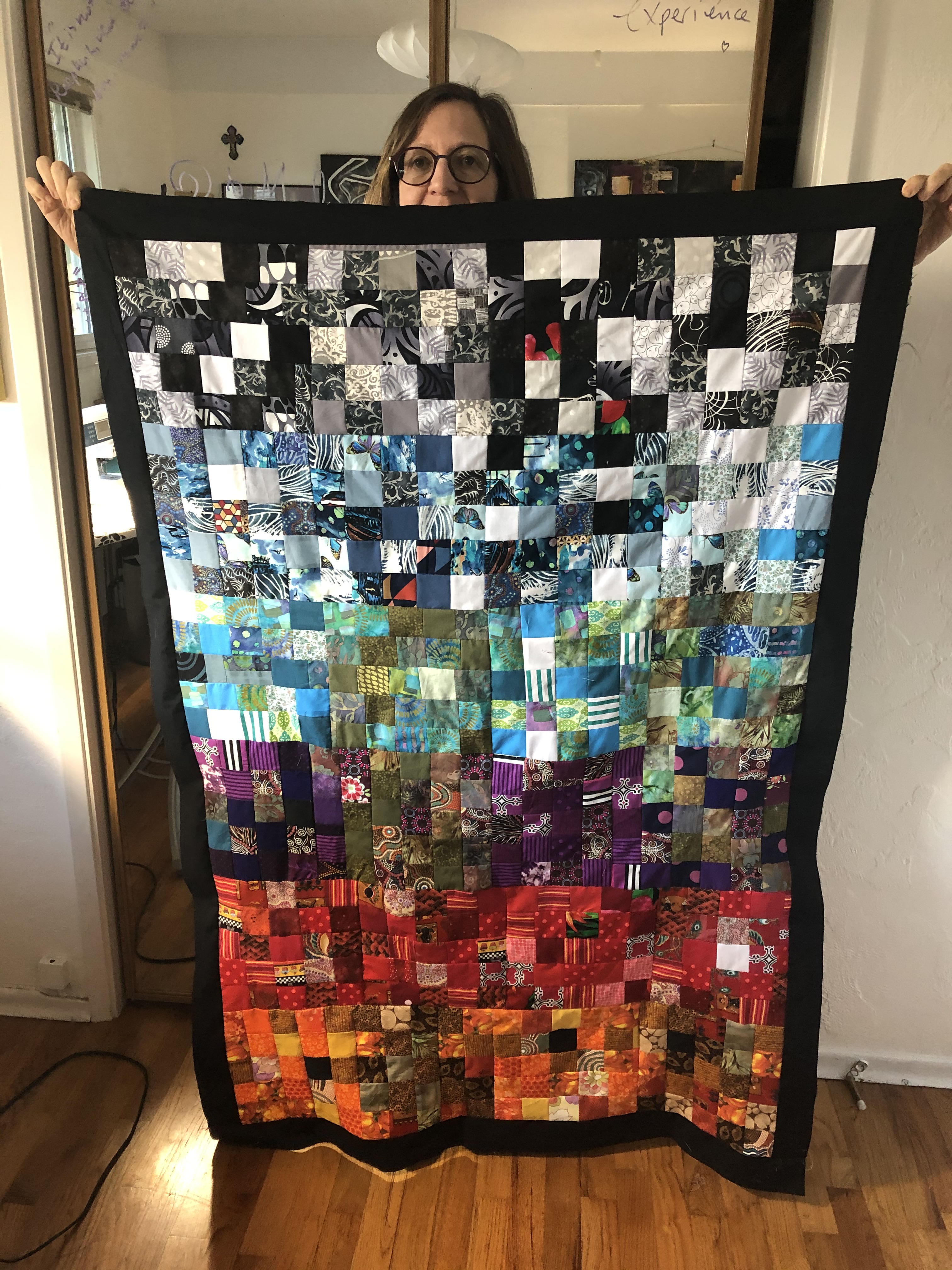
In my twenties, I underwent surgery to correct infertility. I was told after the surgery that I still had only a 15-20% chance of having children. Grandma Marguerite started sending me her copies of Unity magazine and told me her church congregation was praying for me. Ultimately, I gave birth to three healthy sons. I don’t know about cause–effect, but I was forever grateful to her for the energetic and spiritual work she undertook on my behalf. All of these warm memories float through me as I sew squares of Grandma’s apron into the mix of this new quilt, which I think I’ll call “windows to a purple world.” 

Windows to a purple world (quilt in progress)

This type of sewing I’m describing is upcycling, but with a difference. Take fabric that’s been in your family or is otherwise meaningful and make it into something new. If you do this, you incorporate stories into your sewing. A couple of years ago my friend Nancy gave me a large basket of textiles from her family—old linen tablecloths and napkins in pastel green, pink and salmon that her mother and grandmother had used over many years. I cut these precious pieces apart, mixed in other contemporary fabrics, and fashioned pillowcases. I gave Nancy the pillows for her birthday. She can remember her mother and grandmother and meals at the family table whenever she looks at them.  

I incorporated cloth from pink and green tablecloths and napkins from Nancy’s family into pillowcases.

Scattering scraps of one fabric over countless projects feels like I’m sowing seeds of connection far and wide. When Michael and drove to the Shakespeare Festival in Ashland, Oregon in the summer of 2017, we visited Sew Creative, a beautiful fabric store on the main drag. I fell in love with designs by Australian Aboriginal designers: swirly organic patterns that looked like amoebas and rhizomes done in purples, reds, browns, and oranges. And there was a binder there with each designer’s photograph and profile so I could learn about them–their processes and inspiration. I bought two one-yard pieces of fabric. During the last five years, I have cut and sewn those fabrics into countless things: purses, pouches, quilts, coasters. I love the dispersal of one thing into many. Cadmus sowed dragon’s teeth and up rose an army: the fierce Sparti (which means “sown”). I sow scraps of fabric and up rises. . .  delight! 

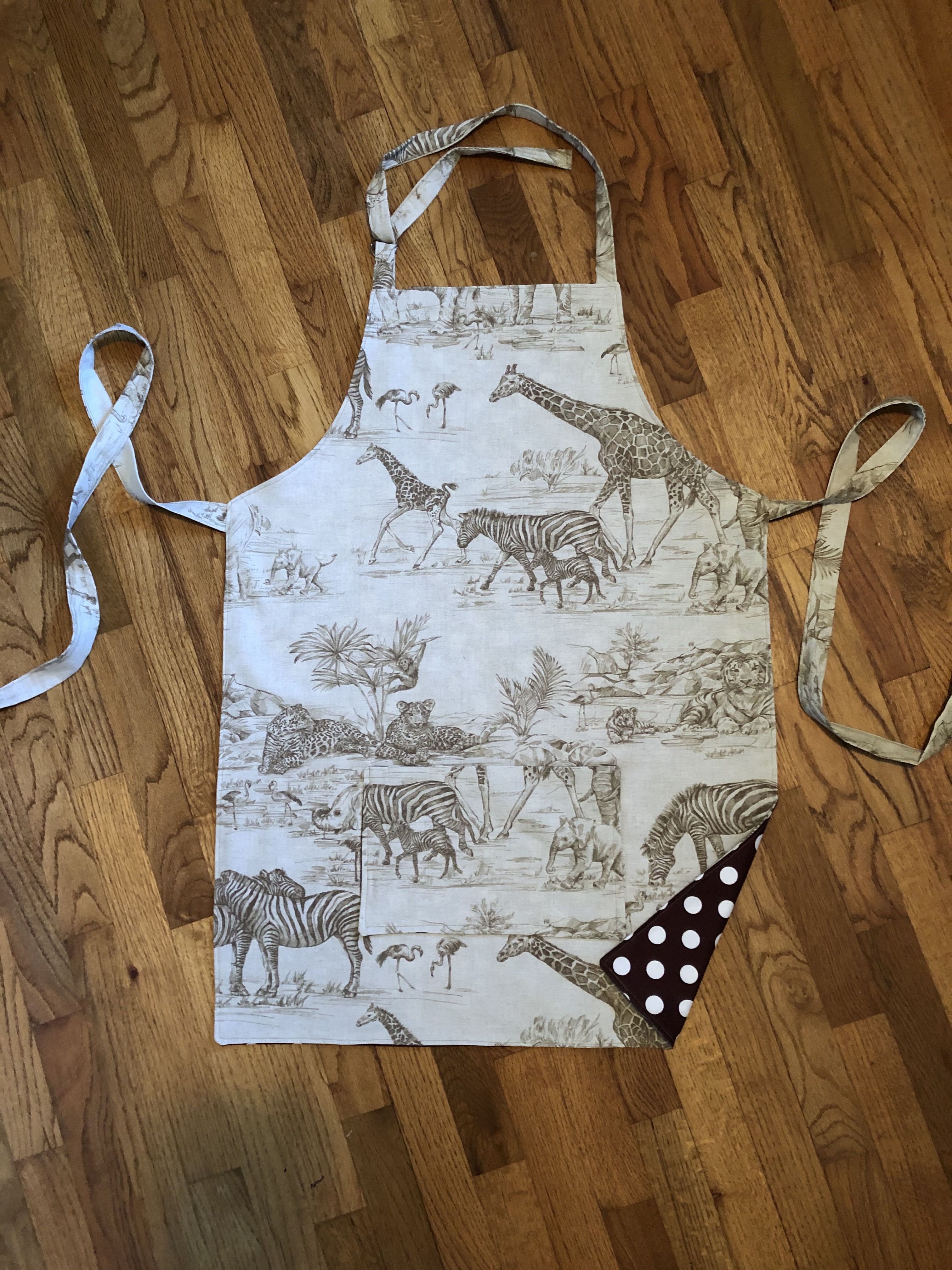
Scraps of the same fabric show up over and over again. The cloth Nat and Sam chose for their aprons (animals on the Serengeti; a bright turquoise broadcloth) show up in the bookmarks I recently made and distributed to friends and family. The blue tablecloth I bought at Value Village became the lining for my blue patchwork apron. It feels, at times, as if I—and not just the fabric—am being dispersed across time and space. It is too easy these days to disconnect and withdraw. I am trying to stay connected through writing and sewing, sewing and writing. Sowing myself far and wide through words and fabric.

Write what you don’t know

img_1075

“The writer is someone, who, embarking on a task, does not know what to do.” Donald Barthelme

I am reading Station Eleven by Emily St. Jean Mandel. Although I read Atwood’s MaddAddam trilogy, I haven’t really been curious about dystopian novels. But this book has me turning pages hungrily. One of Mandel’s themes is the persistence of the works of Shakespeare after the collapse of civilization. This got me thinking of what I know and what I don’t know and what to write about for story number eight.

What did Mandel know, I wondered, in order to write this so-readable novel? She looks blessedly young on the book’s back cover (b. 1979). Yet she writes confidently about Shakespeare, Toronto, BC’s Gulf Islands, pandemics, the life of an aging artist, multiple marriages, paramedicine, the end of civilization… and I am only on page 77. She mustn’t have “known” all this to start. Into the cauldron goes the writer’s research, experience, and imagination. Boil them together with a bit of newt’s eye and bat’s wing to produce fiction.

The old saw about “write what you know” keeps the writer in the silo of lived experience, starved for oxygen. You need all of it—research, imagination, experience, serendipity—to thrive as a fiction writer. One way to write yourself out of what you know and into what you don’t know is to use Peter Elbow’s loop writing methods described in Writing with Power. I decided to use the one where you sit down and write everything you think you know about a topic, then use that as fodder for a story. Mandel’s novel starts with a production of King Lear, so I thought why not use that play? I proceeded with interest.

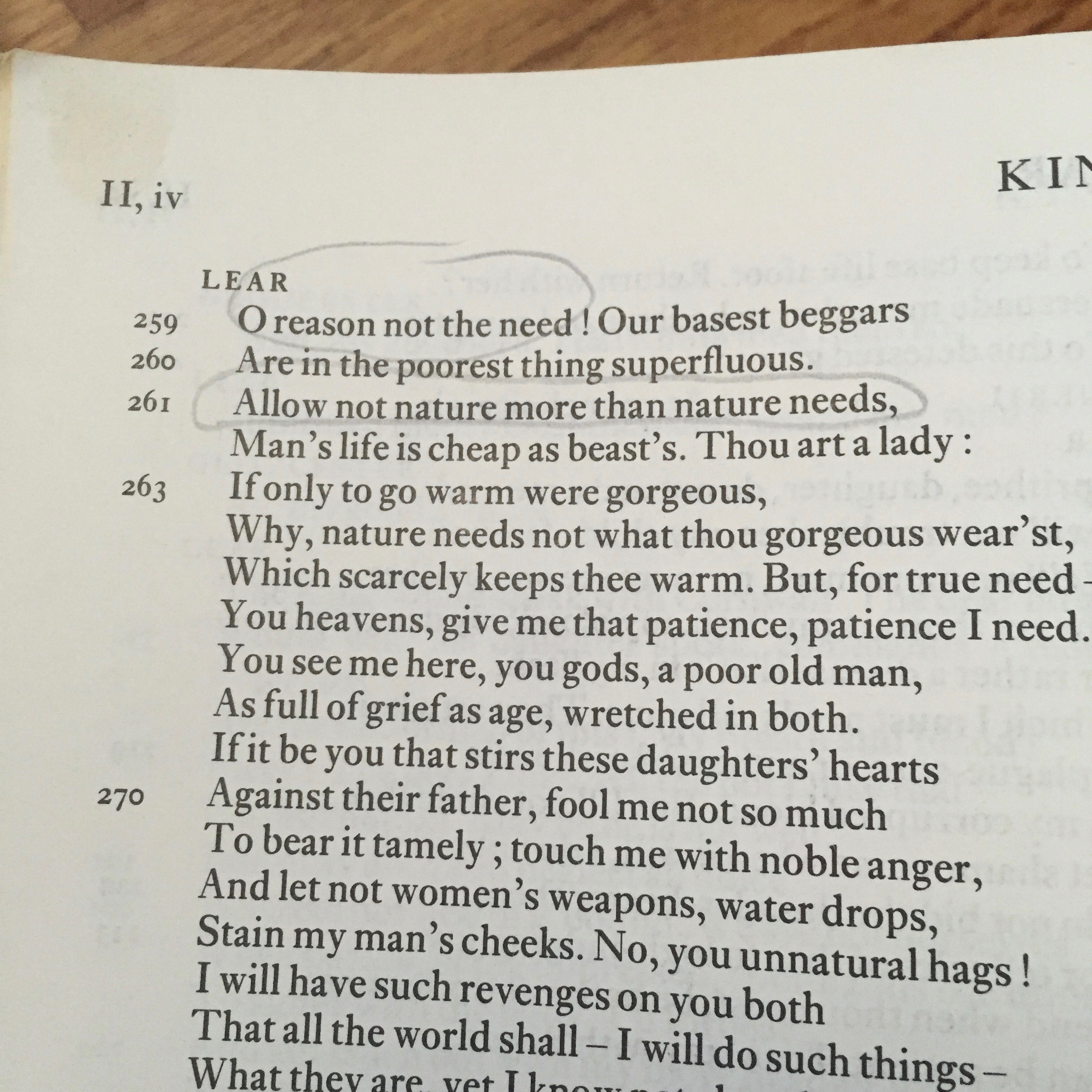
What do I know about King Lear? Well not much. I studied the play in the late seventies with the late great Northrop Frye. I still have my Pelican Complete Works of Shakespeare with my fish bookplate dated 1978, the year I took my sole Shakespeare class at University of Toronto, Victoria College. Frye was an eminent scholar, yet I remember little from the class. I do recall his long pauses as we waited with baited breath, our pens raised, ready to record his wisdom. And the only thing I remember from his lectures was not even about Shakespeare—it was about music. He said that Bach’s Mass in B Minor was surely the voice of God speaking through the composer. As for King Lear, well I remember only that I loved that play the best. A few of the most famous lines stick with me, and I notice as I page through the play that almost forty years ago, my twenty-year old self carefully circled in pencil any mention of nature, natural, and unnatural. I must have written an essay on that theme.

But really, what do I know of Lear? I remember my father joking with me, the youngest of his three daughters, that I was his Cordelia. A rather odd comparison, as I think of it now, but I loved his rueful laugh when he said it. Then there was my first husband’s favourite line from the play, “Reason not the need,” from Lear’s speech in Act 2, Scene 4:

O, reason not the need! Our basest beggars

Are in the poorest thing superfluous.

Allow not nature more than nature needs,

Man’s life’s as cheap as beast’s. Thou art a lady.

If only to go warm were gorgeous,

Why, nature needs not what thou gorgeous wear’st,

Which scarcely keeps thee warm. But, for true need—

My then-husband’s occasional invocation of that line has stayed with me these many years. When frugality became a constraint, he would implore, “reason not the need.” Let us not reduce our lives to need, to scrape by on the drab thrift store clothes, to make black bean soup again. Even beggars need a bit of splurge and splendor. Let’s treat ourselves. You only live once.

But there you go. What do I know of King Lear? A long ago reading for a Shakespeare class almost forty years ago. Frye’s wavering voice. A remembered association from my father’s mouth that cast me, in jest, as his Cordelia. A line spoken by my ex-husband that reverberates still. Reason not the need. And a bleak sadness when I think of Lear, a “poor, bare, forked animal” on the heath.

It was an interesting exercise. I really don’t know much about Lear. An embarrassingly small amount of material, in fact. But I was able to gather enough together to start. I wrote what I know, and that will lead me into what I don’t know. A few shoots that might sprout a story that is more interesting than my experience. Perhaps research will lead to a character based on Dr. Frye. Perhaps a re-reading of King Lear that may lead to something. Or another listen to Bach’s Mass in B Minor that might be fruitful. Or perhaps I can write a story with one character who always reasons the need and another who resists that dictum. Or a contemporary father who sees his daughters as modern-day versions of Goneril, Regan, and Cordelia, and those joking nicknames become more real than he ever intended. So many stories waiting to be written.

img_1077I do not know what to do, exactly (see Barthelme), but I know that limiting myself to writing only what I know is the equivalent of Goneril and Reagan’s telling their father, you don’t really need all that finery, that retinue. I join Lear in saying, “reason not the need.” Let me read, research, imagine. Let me grab from a cornucopia of ideas, thoughts, books, facts, art, beauty, and experiences to make stories. Here I go into story number eight. I’ll report back later.