
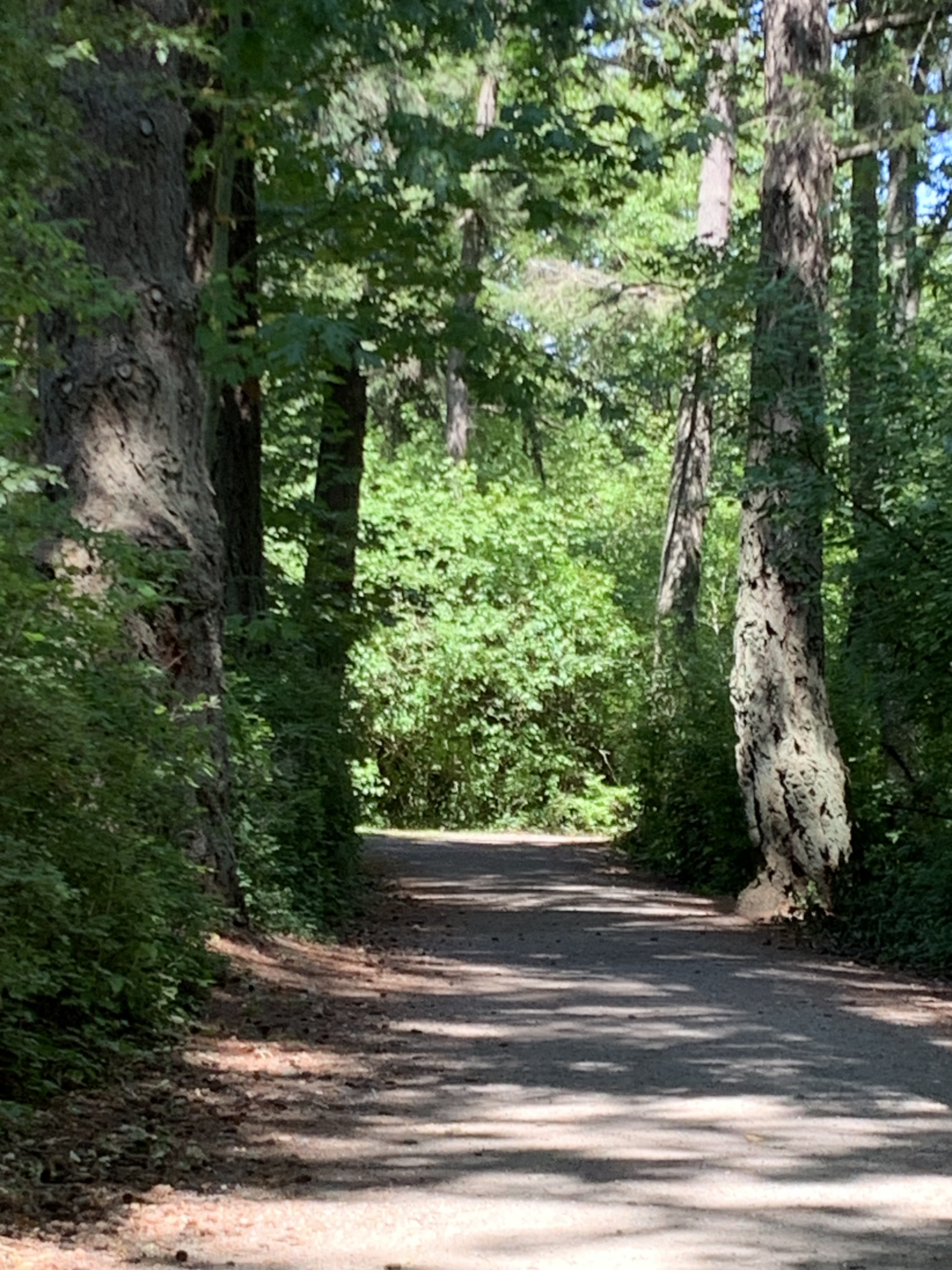
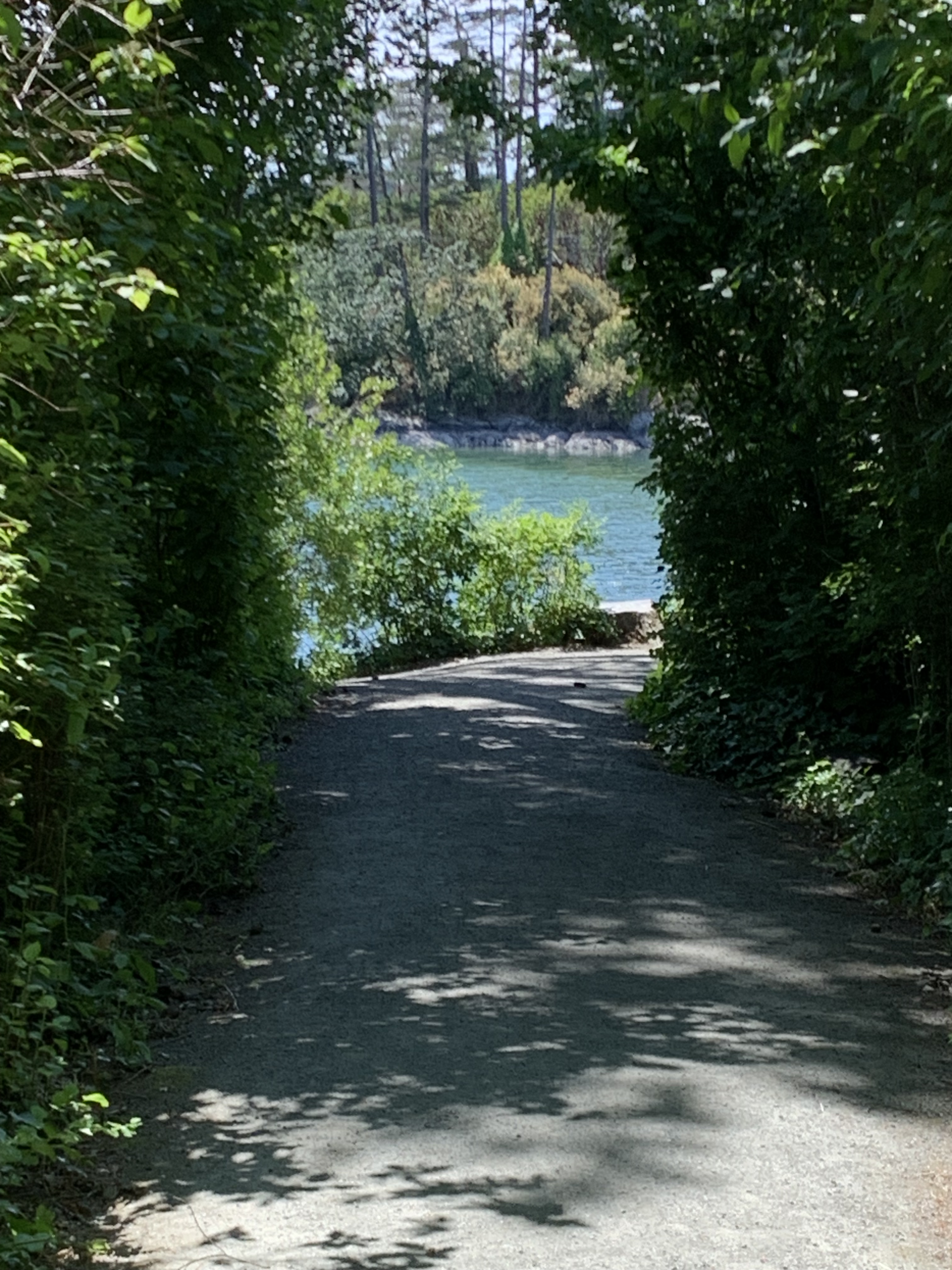
About a week ago, on our morning dog walk, we stood waiting for the traffic light to change and a young girl, perhaps nine, long dark hair, hooded coat and wearing a backpack, approached and stood near us. She looked over at us a couple of times. When the light turned green, she walked in front of us a few metres, but she kept turning back, peering around her big hood to look at me. And at one point, as we crossed the bridge over the Gorge, I decided to say something. “Do you like dogs?” I thought perhaps she was looking at us because of Marvin, our goldendoodle, who trundled along beside us, at the end of his purple leash. Lots of times kids want to pet him, but they’re too shy to ask.
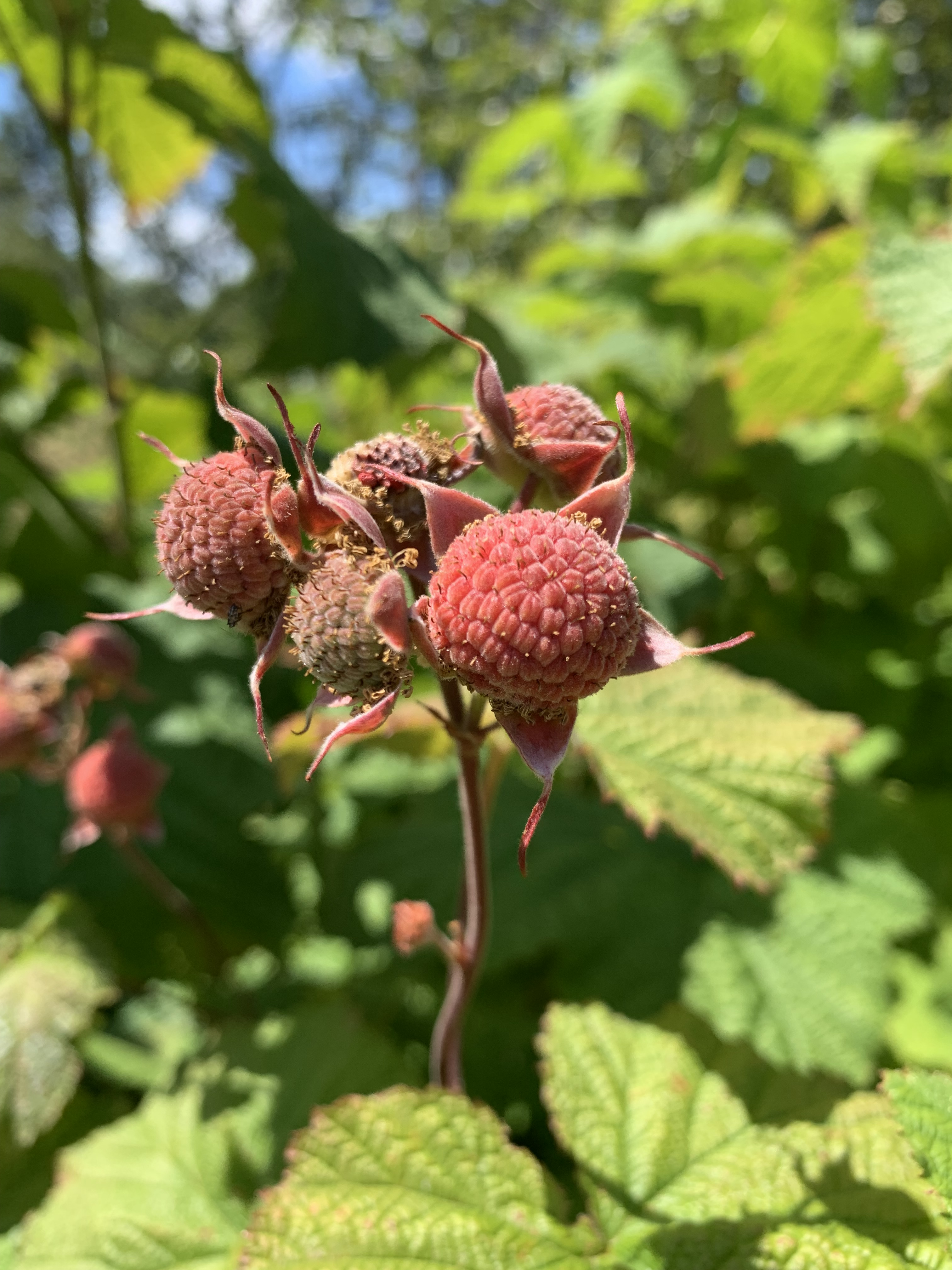
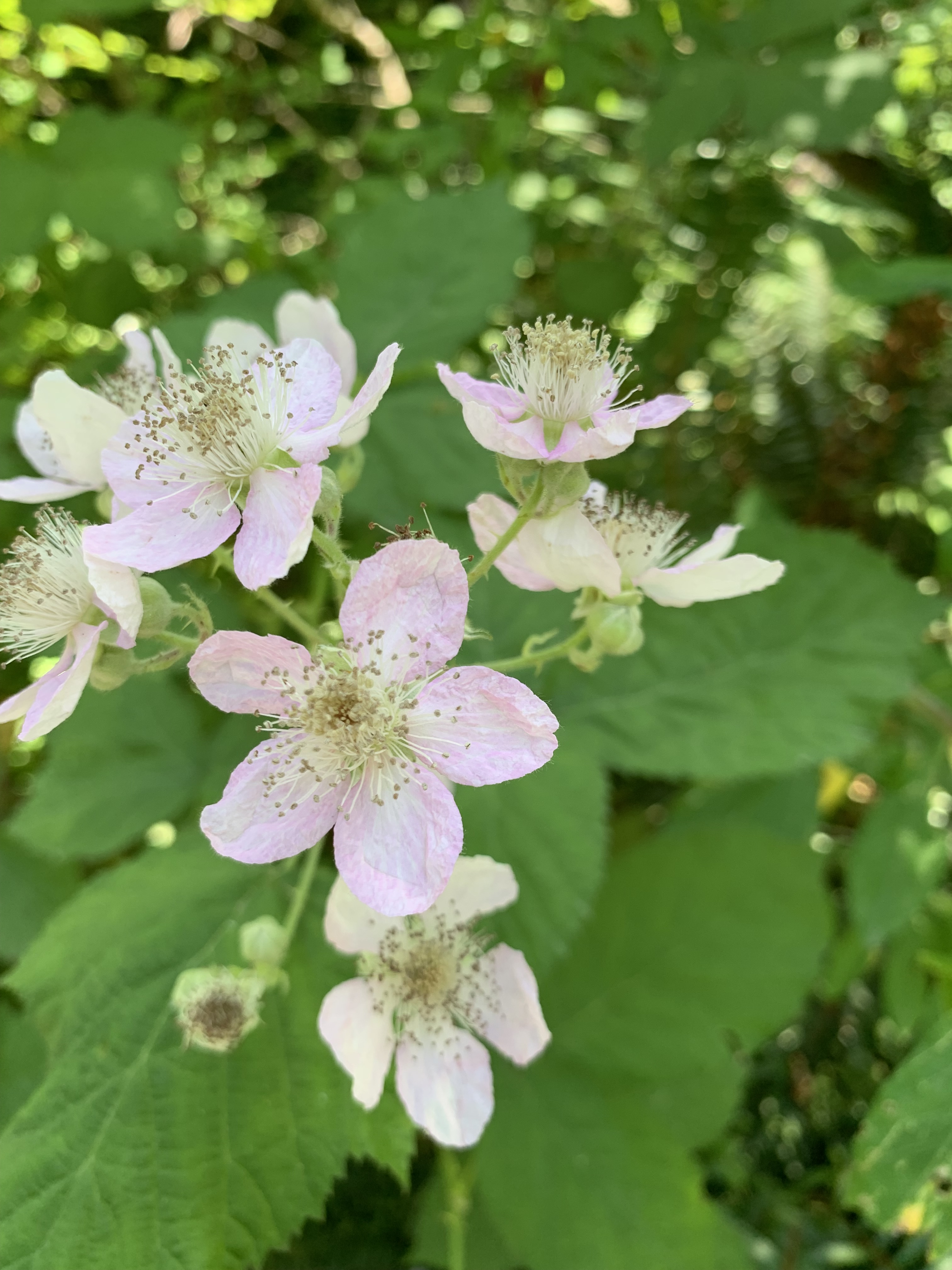
“Yes, I like all animals,” she said. And then she spoke, in the most serious way, a line I will not soon forget: “I’m a big fan of nature.” I moved ahead of Michael and she and I walked together for a minute, discussing how we were both big fans of nature. Then we were at the school crosswalk where we parted ways.

We laughed affectionately about what she’d said—what a great line! “I’m a big fan of nature,” we kept saying to each other throughout the day, and then “I’m a big fan of ____” and we filled in the blank with whatever…fizzy water, sunsets, Marvin, taking out the garbage.
I’ve thought about that delightful exchange many times this week. The girl’s innocent enthusiasm for nature. A simple trust in the goodness of the natural world and people. Her approach wasn’t naïve; rather, it seemed wise. We spoke so briefly, but what she said made me want to adopt her attitude of fandom.
I am a big fan of hand sewing
When we went to NYC in December, I heard about Tatter, a Brooklyn-based textile organization that is “committed to preserving skills of the hand.” They promise a lot:
“We work with makers, archivists, and anthropologists to develop extended courses that use textiles as a portal to reclaim history, cultural encounter, indigenous practices, a harmonious relation to the natural world, and making as a tactic of collective liberation.”

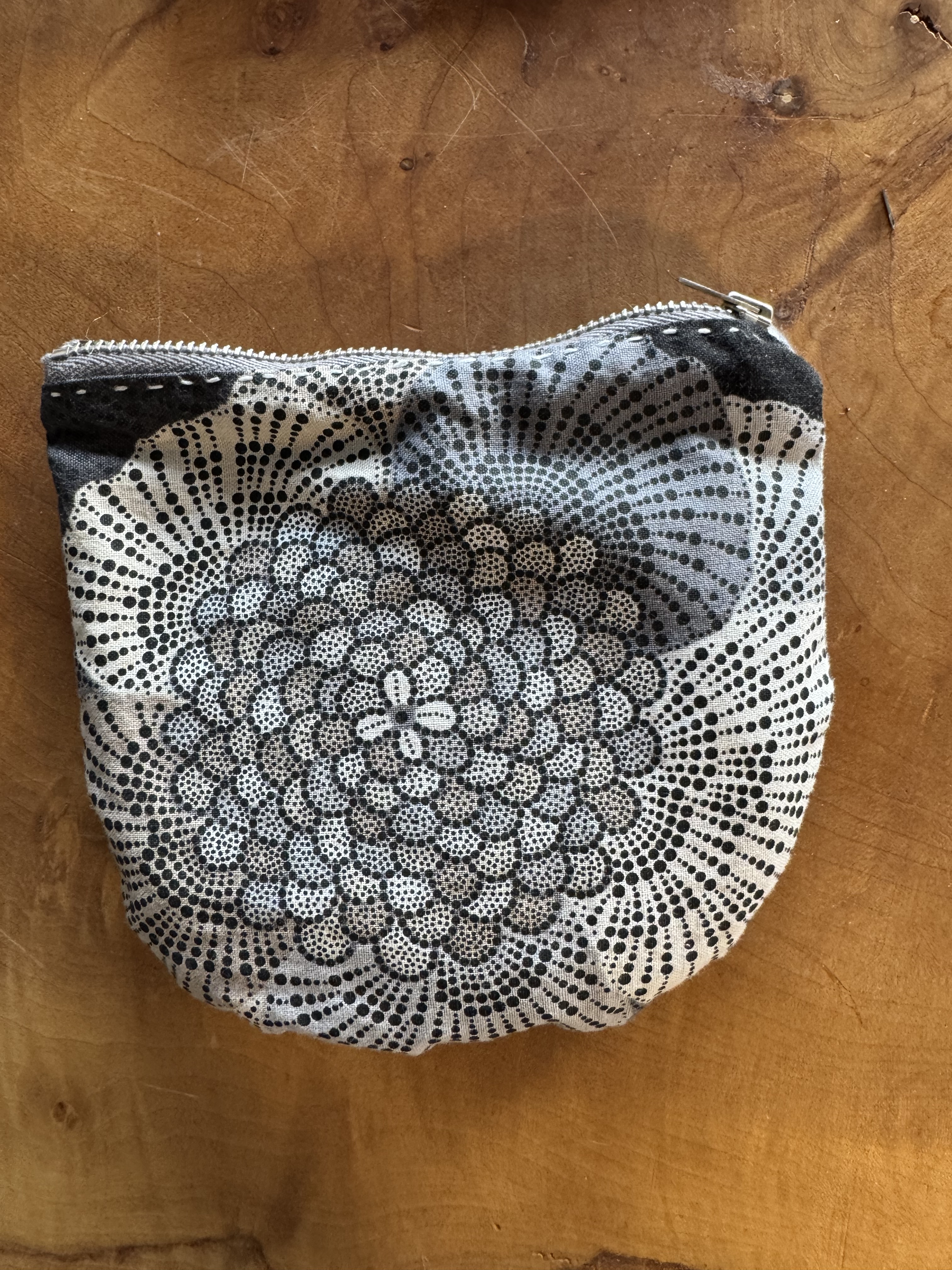
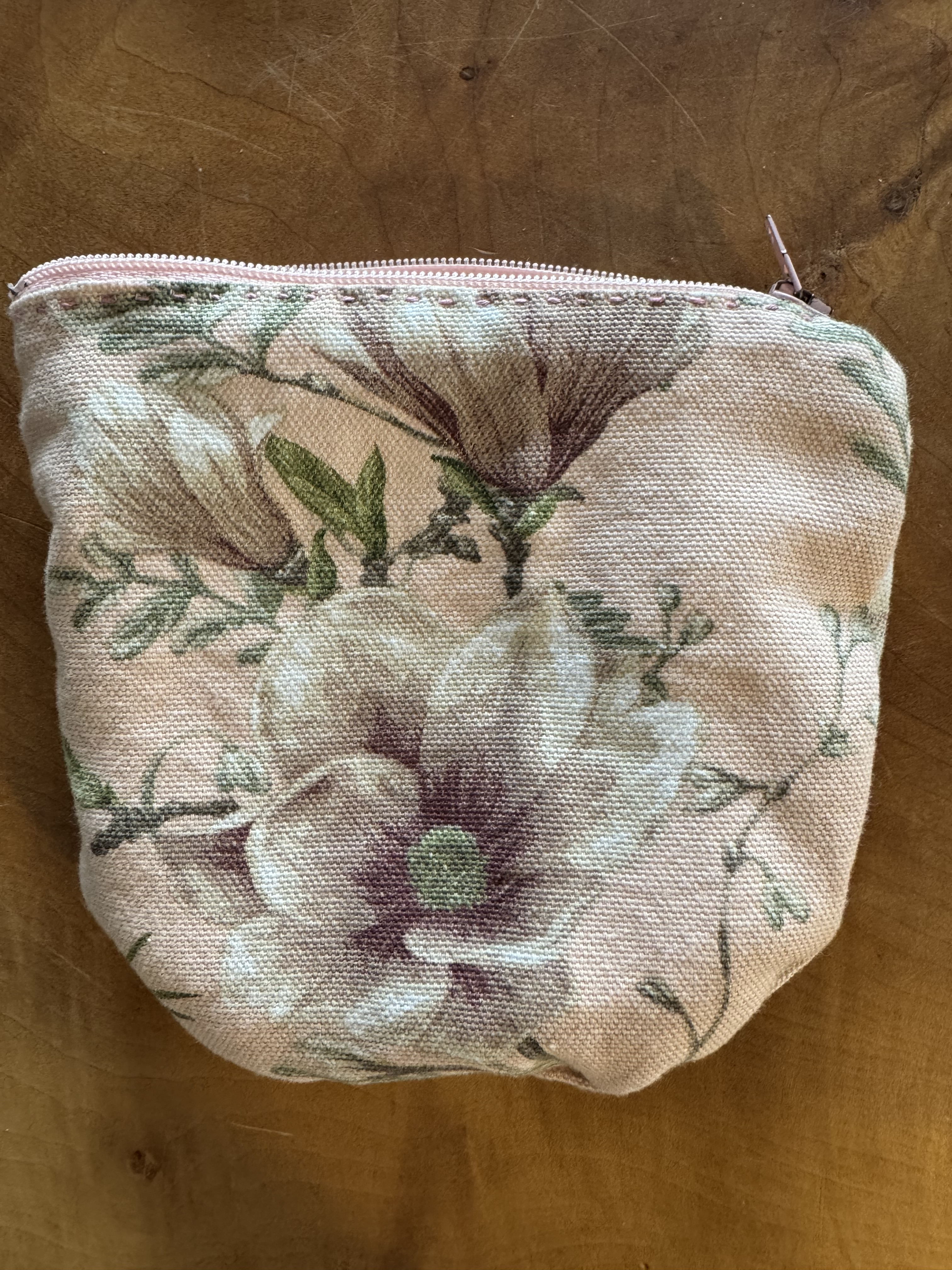
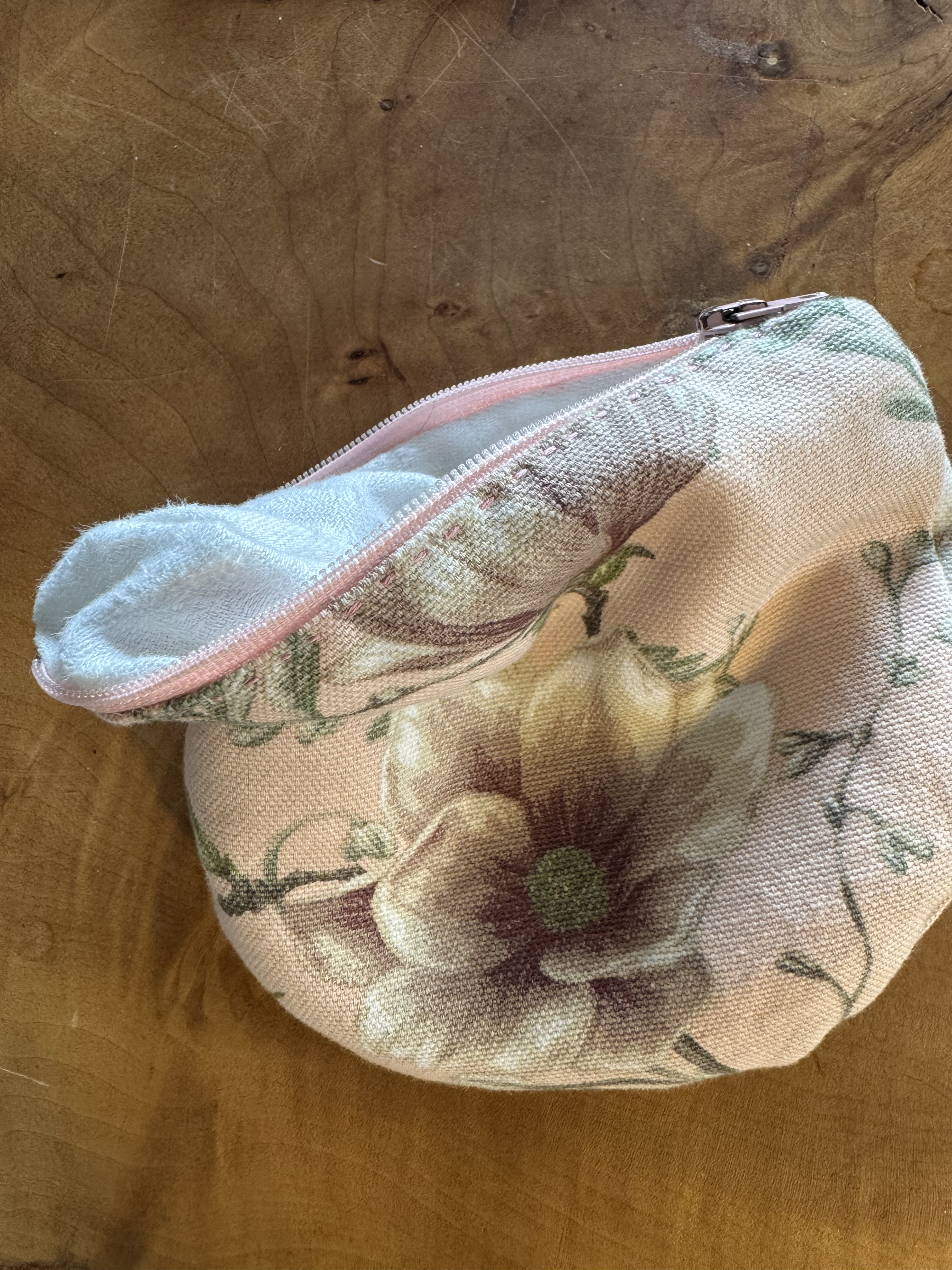
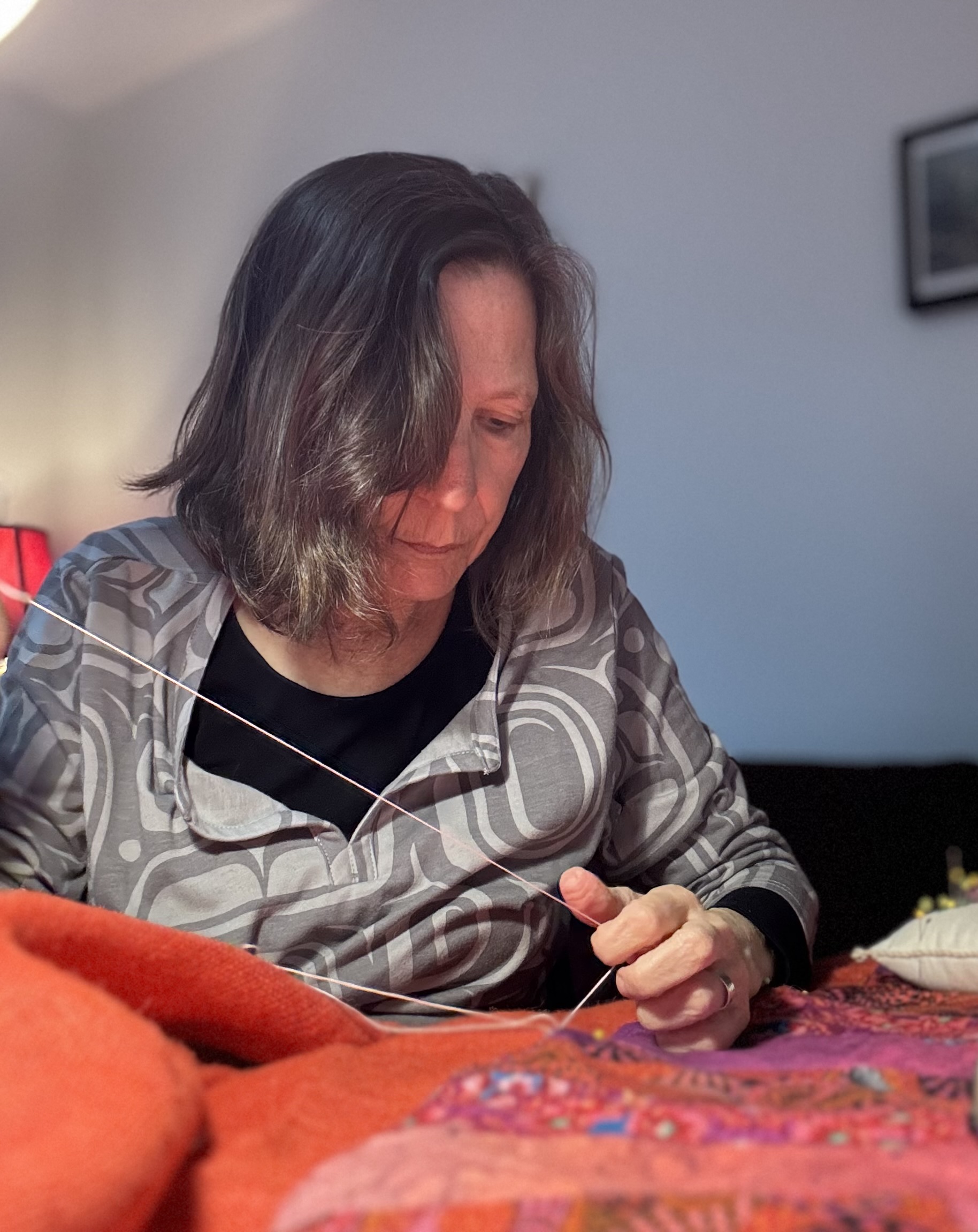
I didn’t have a chance to visit Tatter. However, in February, I took one of their classes on Zoom with Karen Stevens. We learned to hand-sew zippered pouches. Through this class, I rediscovered the enjoyment of hand sewing. The whole-body rhythm of a slow, contemplative backstitch and the satisfying emergence of a line of running stitches along a zipper‘s edge or around an appliqué. There is no rush with hand sewing, no urgency like I feel sometimes when I am at the machine. Hand sewing is portable and calming.
I learned some tips from Karen that I’ll share with you. Perhaps you already know this stuff, but for me, the following was revelatory information.
- Don’t thread the needle, needle the thread. This practice makes so much sense, after years of trying to poke three saliva-soaked strands of embroidery thread into a tiny hole. Hold the very end of the thread(s) between index finger and thumb in your non-dominant hand while you angle the needle over the thread. Much easier to get eye over thread than thread into eye.
- You don’t need knots. You can just sew one straight stitch several times over to start and end your length of thread. I think of it as akin to building a house with joinery rather than nails or glue.
- Basting is a very useful practice. Sure, pins hold things together, but if you baste with big loopy stitches—it doesn’t take long—your fabric stays in place until you’re ready to anchor it with backstitches. I used to think of basting as a waste of time, but what is time for?



I am a big fan of upcycling stores
I happen to volunteer at one of those stores, Women in Need Upcycle and Craft, so I am biased. We just expanded to double the space, and every week I open boxes of fresh treasures to line our shelves. Some weeks it’s skeins of merino wool and tiny wooden canoes. Other times it might be a kit to make a paper lamp and bags of beautiful retro fabrics and lace.
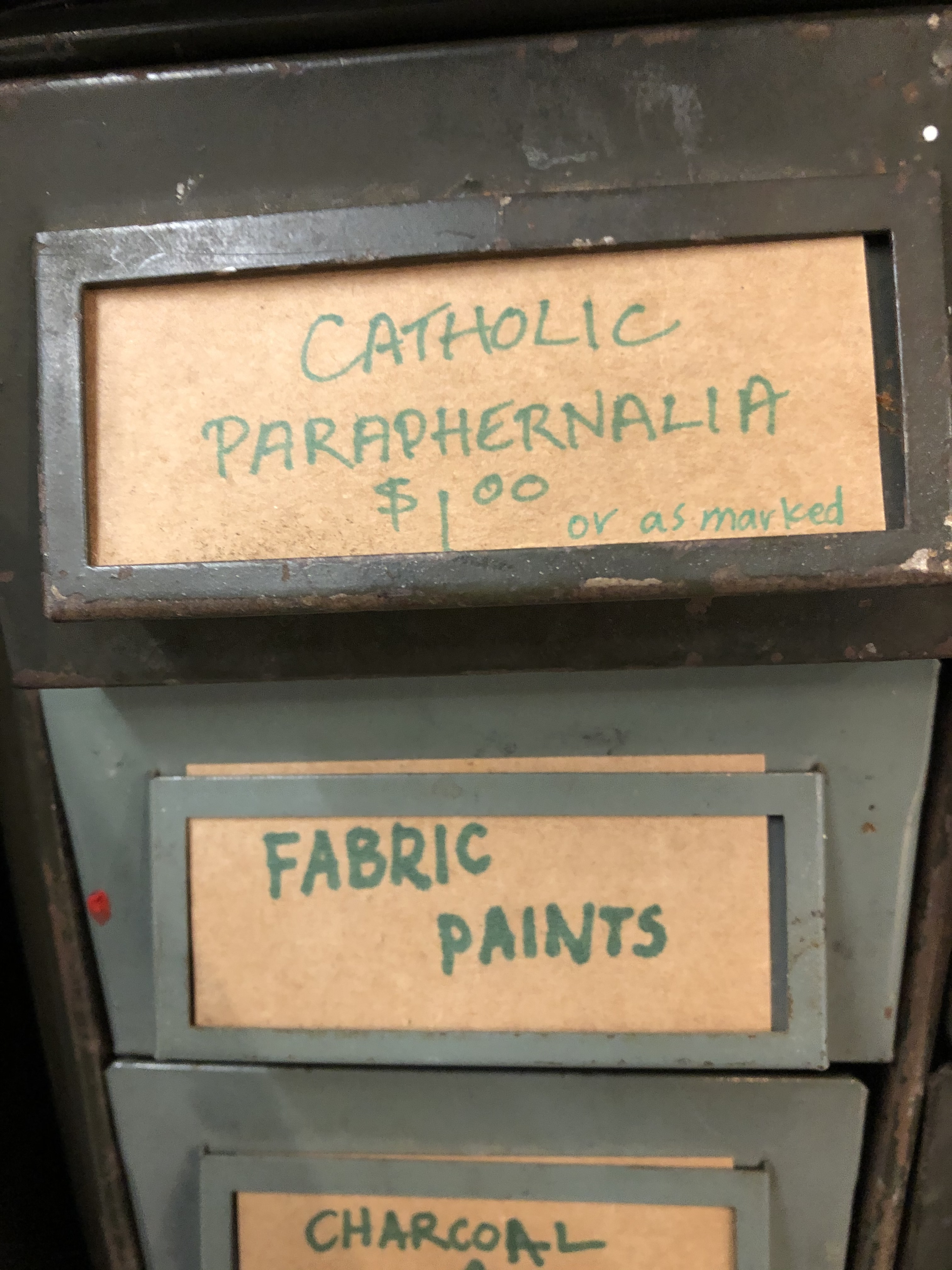
I appreciate all of our sister upcycling stores as well. The Green Thimble‘s name is alluring to eco-conscious sewists. Today, March 4, they are moving from their Quadra Street location to 2950 Douglas St. #400. At Green Thimble, I filled a small paper bag with scraps and loose buttons for only five dollars. I admired the refurbished sewing machines for sale and the bolts of fabric at bargain prices. Supply Creative Reuse Centre on lower Douglas is a finely curated collection of paper, books, cloth, yarn, buttons, ribbons, and more. I was impressed by their sliding scale prices. At Supply, I found a scrap of pink sheepskin for $1.50 that features as the centre of my wall hanging work-in-progress. Thrift/Craft in Market Square is a huge space filled with unusual items and hosted by a devoted proprietress. One of my favourite things there is the weird stuff housed in tiny drawers, for example, Catholic paraphernalia. In each of these places I encounter interesting people who like to chat about making things.
I am a big fan of creative immersion
Immersing yourself in a creative project can lift your mood, and we could all use some mood uplift now. Am I right? I am presently working on “Ten Thousand Joys,” a large wall hanging in oranges, pinks, reds, and purples. At its centre is a fabric circle I created using a ten-degree wedge. I cut and sewed three alternating brightly-patterned fabrics together to make this 45-inch mandala. I cut an old blanket into cascading circles to lay under the mandala to create a three-dimensional effect. At the centre, the bit of pink sheepskin peeps through. I basted the padding onto a big piece of orange burlap I found at Value Village and then basted the circle onto the padding. Now I am in the process of using embroidery thread to sew the circle onto its backing at the circumference. I’ll add lots of embroidery stitches in bright colours, zig-zagging up and down the long wedges. The hanging will be finished by sewing on, not ten thousand, but dozens of pink, red, and purple buttons around the central circle. It feels inevitable that I will make a “Ten Thousand Sorrows” wall hanging next.


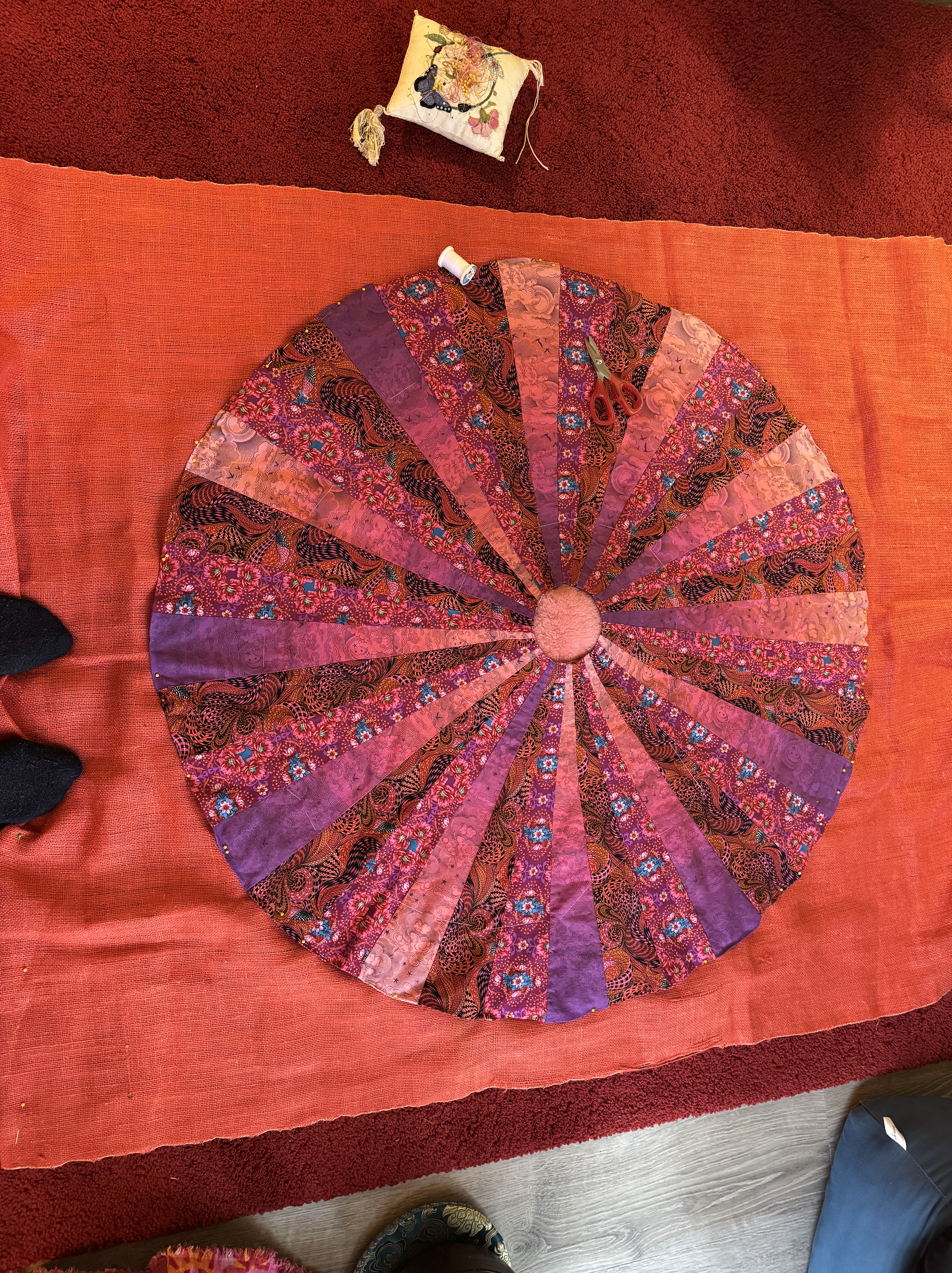
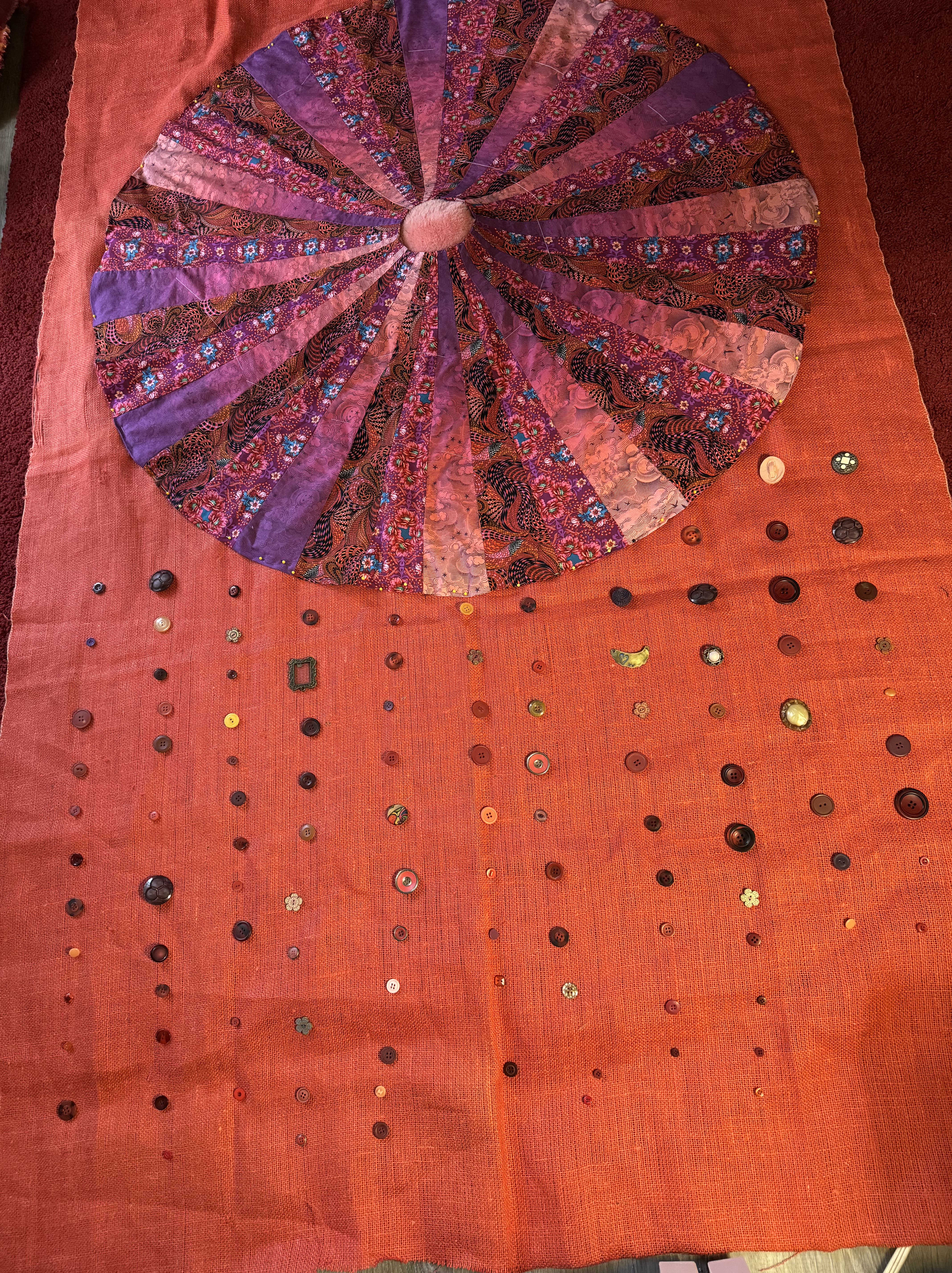

“When you open your heart, you get life's ten thousand joys, and ten thousand sorrows.” Chuang Tzu
And what, may I ask, are you a big fan of?






 Madeline Ruth Walker