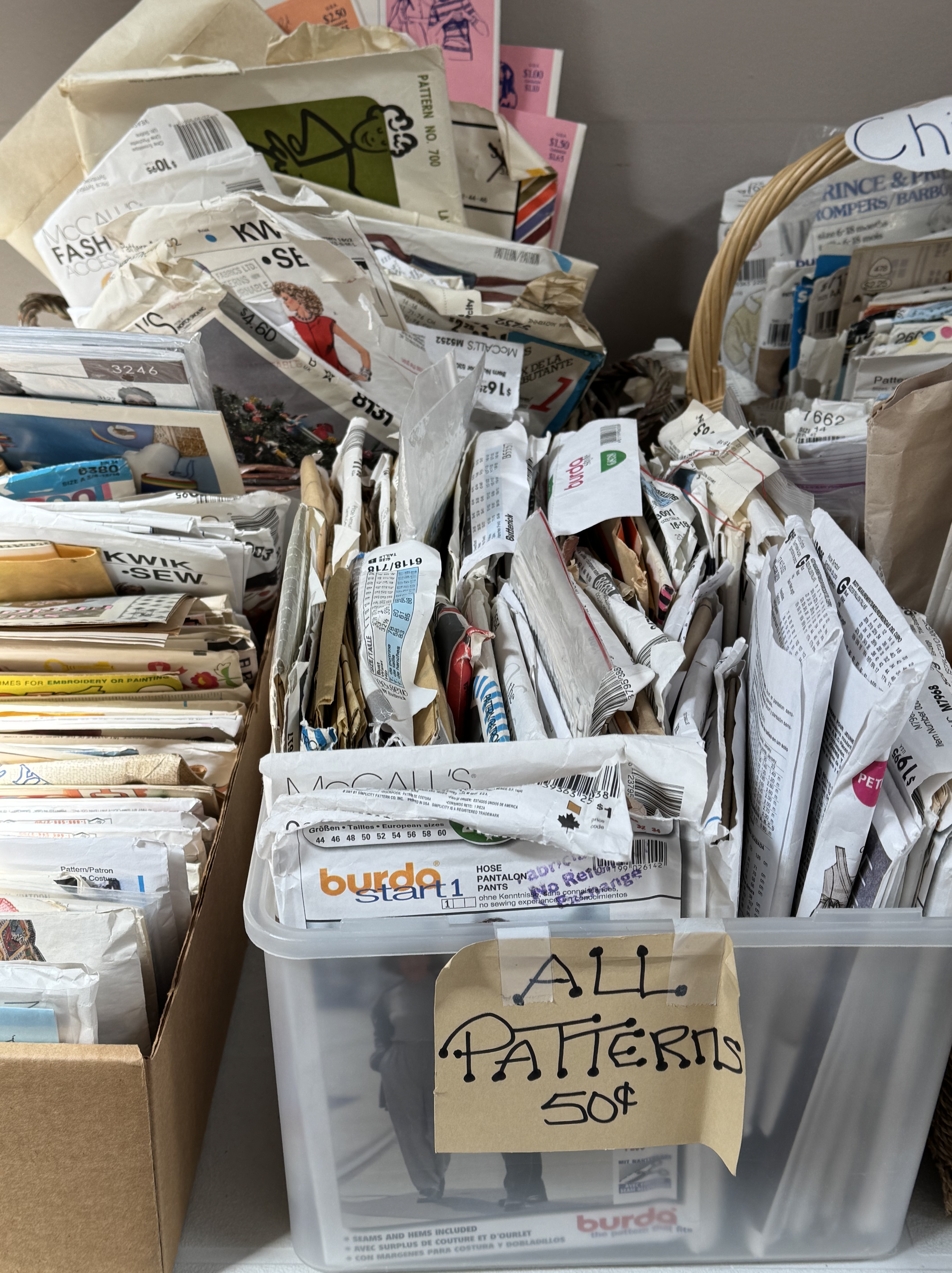
Zippers are fifty cents; Stories are free

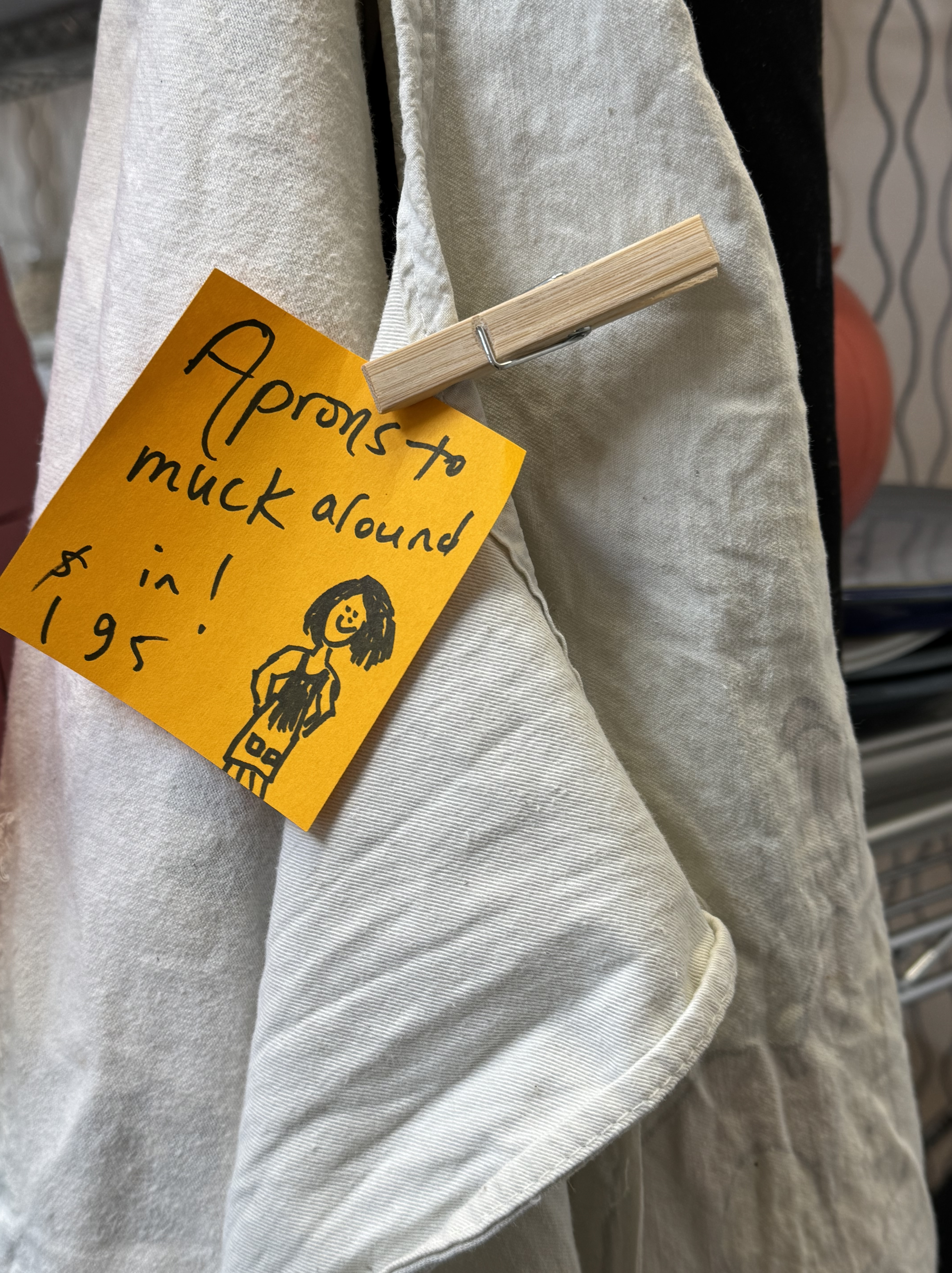
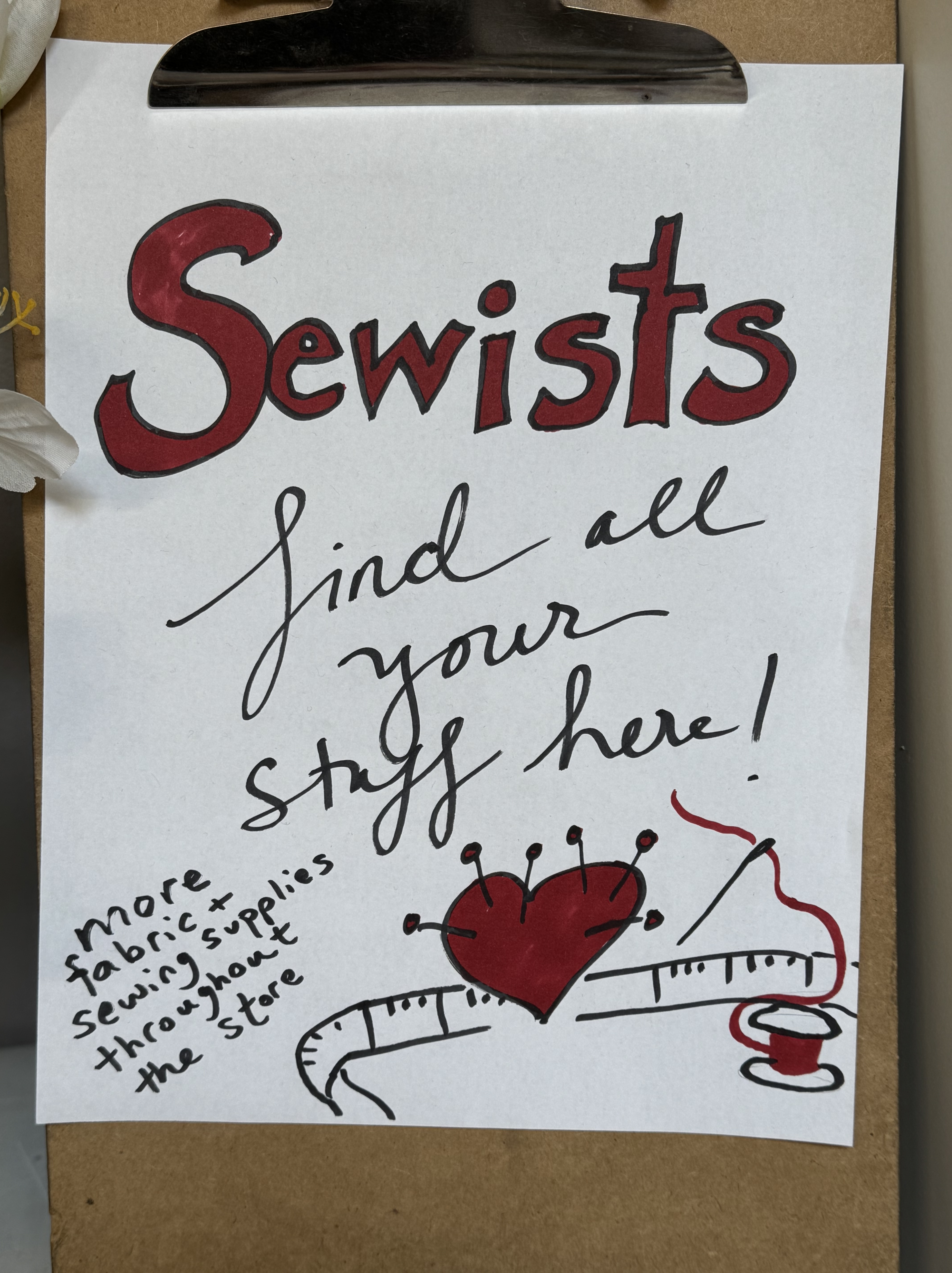
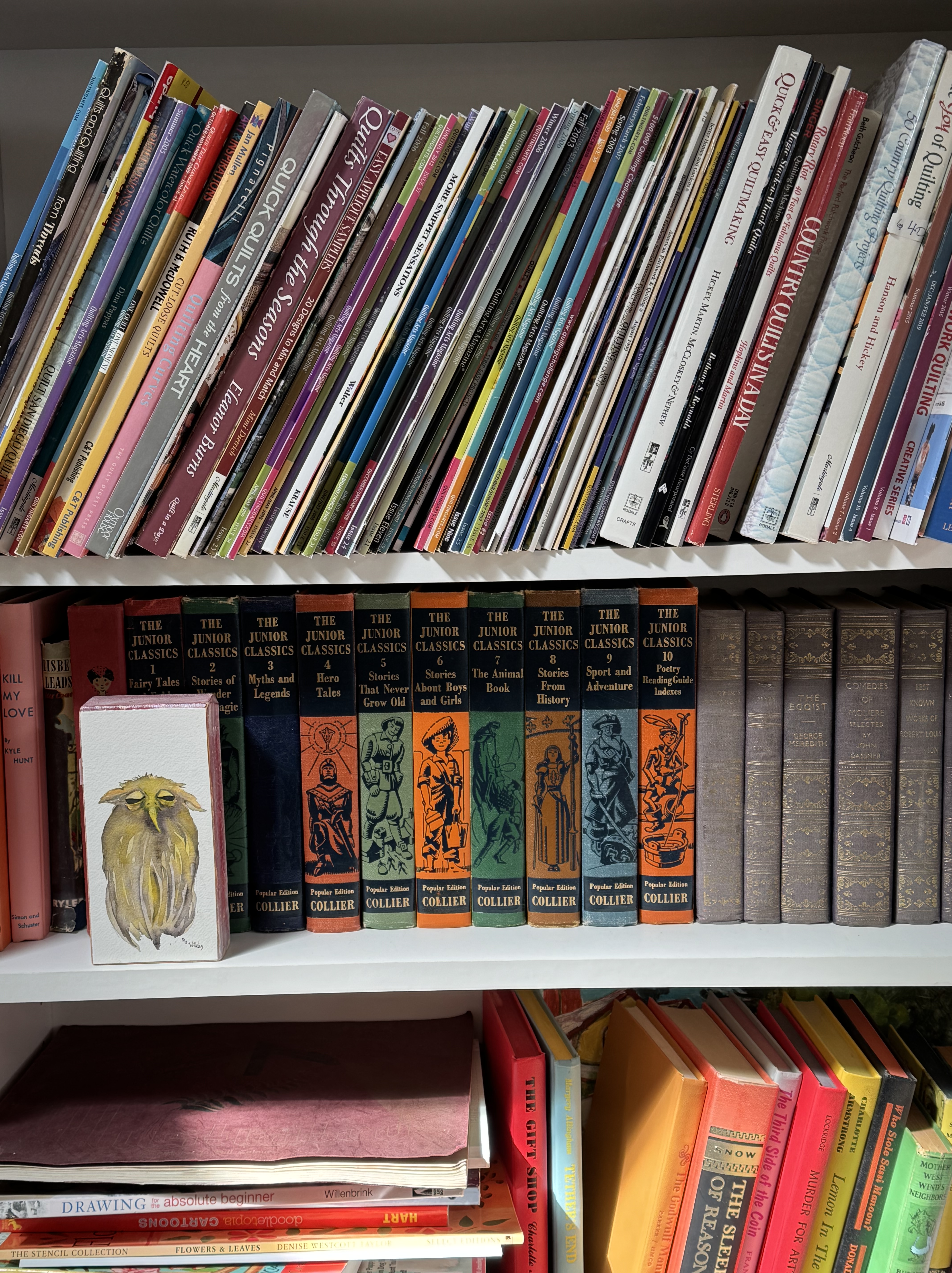
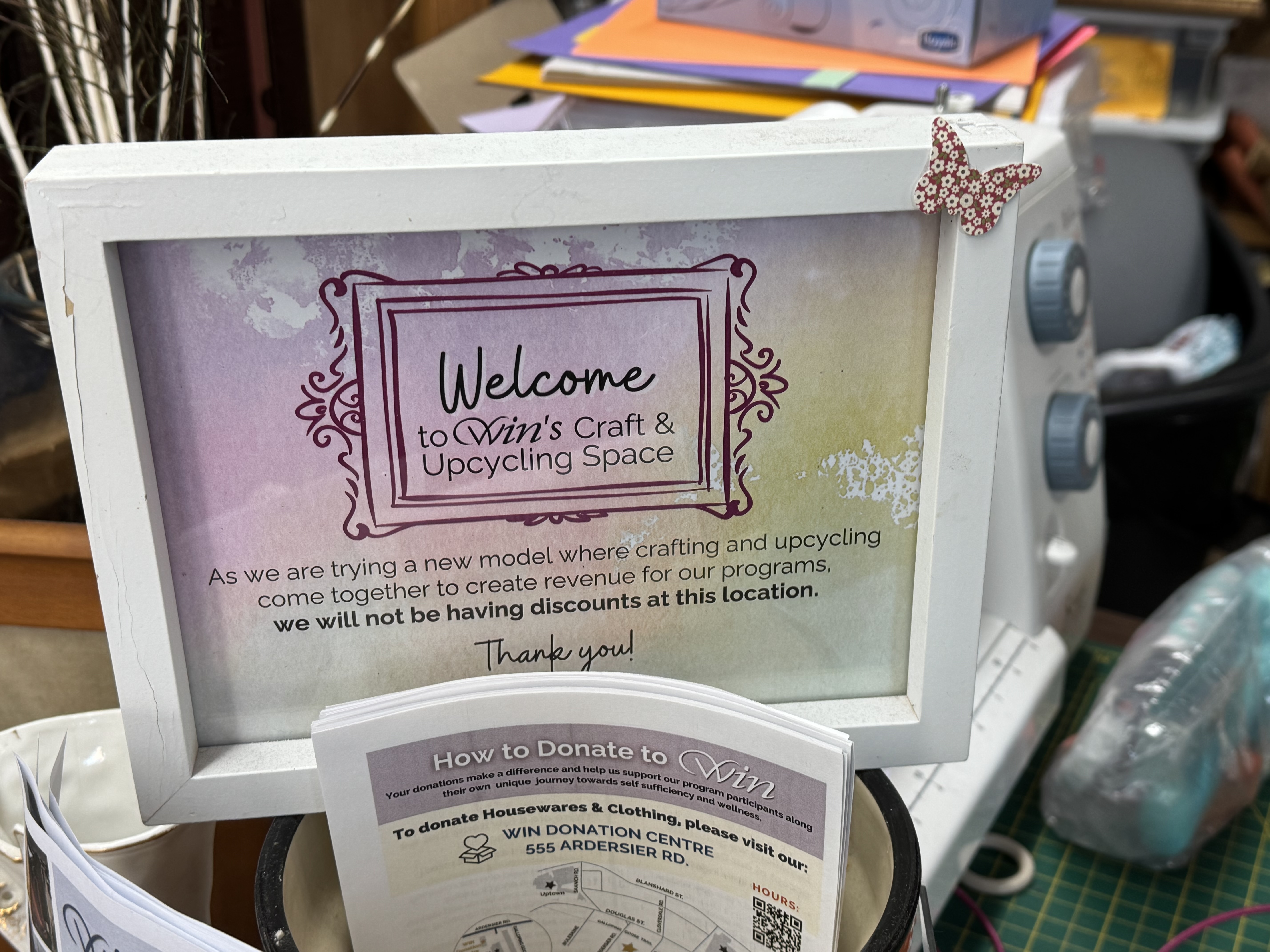
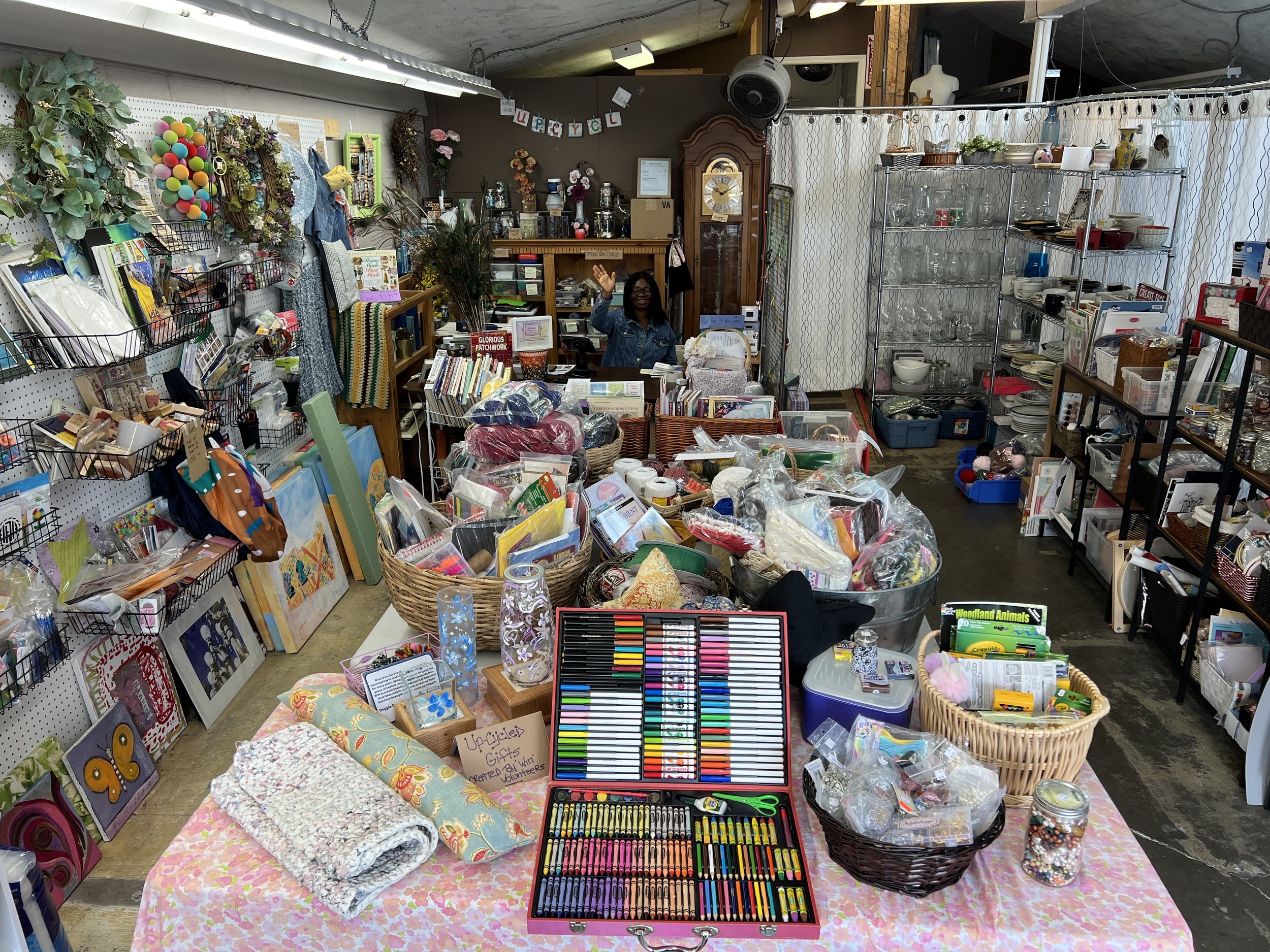
I work a volunteer shift at the upcycle store on Wednesdays. The people that come in delight me, entertain me, astonish me, educate me, soften me. Next week is my last shift at the store. I want to remember some of these people and their stories.

Once a pale man came in and asked if we had a leather hole punch. He didn’t want to buy one, just borrow it so that he could put an additional hole in his belt. He was losing weight, and his pants were hanging on him. Alas, I said, we don’t have one right now. I’m sorry.

I thought about him for weeks, his weight loss, his thinning frame, his sad face. I wondered about his story. Perhaps he was lovesick.

I can no longer untangle my hair
I feed on my own flesh in secret.
Do you want to measure how much I long for you?
Look at my belt, how loose it hangs.

Anonymous, Six Dynasties
Translated from the Chinese by Kenneth Rexroth

As if to balance the sadness of the shrinking man, the joy of meeting Randy bloomed inside of me for weeks. He flounced into the store a few days before Thanksgiving, smelling gloriously of rosemary and thyme. Randy is a contemporary dandy, stained waistcoat and tight jeans, flowing grey hair, phlegmy smoker’s laugh lighting up his brown, creased face. He brought crackling energy into the store with him, along with a small plastic bag of herbs. 

Do you have any Scrabble tiles? he asked. Yes, I handed him two tall mason jars filled with tiles, and as he dug through his pockets for the cash to pay for them, he told me there was always a few Scrabble boards set up on his coffee table. When my friends come over, he said, they add a word or two or three. We play a never-ending game and nobody keeps score.

What a mouth-watering smell! He opened the plastic bag for me to see the long sprigs of green. I picked them at the side of the road, he told me, just around the corner. The herbs were volunteer plants, free for anybody that wanted them. I need sage, I said, for the Thanksgiving turkey. Oh, he said, I think there was sage growing as well. We smiled and said our goodbyes. An hour later he was back with three sprigs of sage he had picked for me and my turkey. 

When I asked a young fellow what he was planning to make with the feathers he was buying, he challenged me: Guess. A headdress? No, good guess, but I am making flies for fly fishing, something his dad taught him to do. He fishes for cutthroat trout under the Bay Bridge with a bunch of female fishers who’d turned him on to it. I never knew!

Last week, a woman came in and poked into the baskets of wool, humming a tune. I noticed her tone—it was strong and true. You have such a beautiful voice, I said. Why don’t you sing us something? Suddenly, gloriously, she burst into “I’m Called Little Buttercup,” from Gilbert and Sullivan’s HMS Pinafore. Her rich mezzo-soprano filled the store as she strutted down the aisles, outthrust chest, a beautiful dockside vendor in love with the captain. I and another shopper were the lucky audience, mesmerized by a performance delivered among stickers and glue, balls of wool, knitting needles, jars of coloured beads. 

I love hearing about the celebrations people are planning. The woman in her thirties who bought armloads of artificial flowers and a bolt of pale pink draping fabric for the table. She and her siblings had been planning a surprise party for their mother’s sixtieth birthday. She keeps mentioning she’s turning sixty, as if reminding us, said the young woman. She’s worried we’ve forgotten. Little does she know what’s in store! I laughed with her, feeling mudita, imagining the pleasure and wonder of her mother on that day. Surprise! 

Finally, I sold the white canvas tent that was propped in the corner for months. The tent is perfect for children to hide and play in, and a woman bought it for her grandchildren. I told her about the teddy bear’s picnic birthday party I’d thrown for my four-year-old so many Decembers ago. We had a play tent pitched in our living room, and the children and their stuffies enjoyed tea and cake. The woman became excited and touched my shoulder in thanks. What a great idea! I’ve got to do that for my grandson! Then she told me that one Christmas her mother-in-law opened the gift of a vibrator in front of the whole family. I wasn’t sure what prompted the story, but we had a good laugh. Teddy bear picnics and vibrators, all in one afternoon.

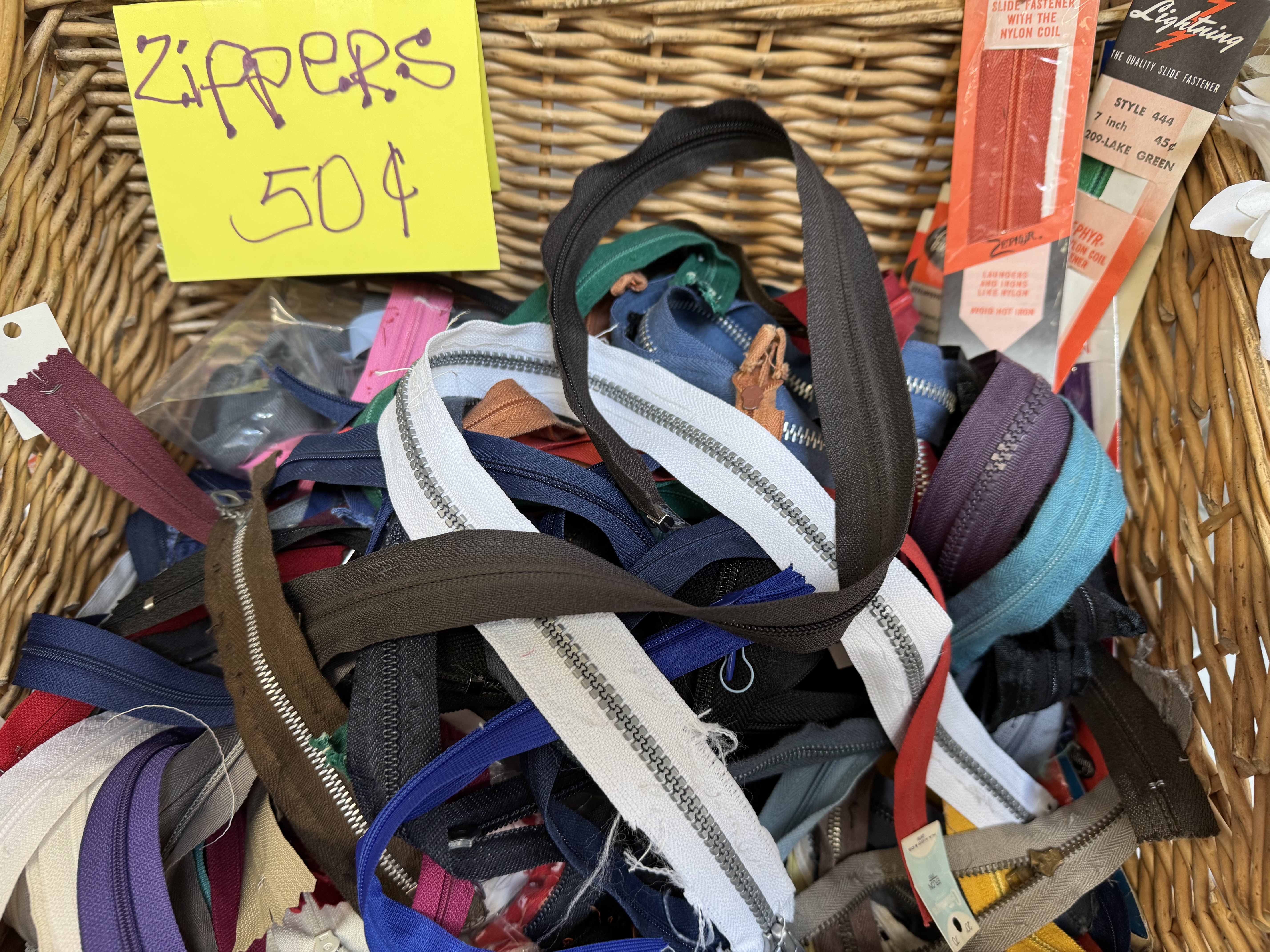
There’s a regular customer who brings her baby buggy into the store, speaking softly and playfully to her little boy as she shops. She buys bits of fabric, thread, and zippers. Last week, as she paid for her stuff and her baby chortled and tried to put his toes in his mouth in the buggy beside her, she ran her hand over the camel-brown smocked dress she wore and its complementary quilted vest. I made all of this from an old bedsheet, she said. At times like this, I thought, I wish I could whistle. A good long, low whistle to show my WOW in a visceral way. Instead, I shook my head: You are amazing! Queen of Upcycling!

One day I was emptying out the green donation boxes, pricing and sorting items.  My hand fastened on something soft. A bit of plush grey fur, perhaps once the collar of a stylish coat. Wrapped in thin tissue paper, there was a small tag safety-pinned to the edge: Chinchilla, written in the shaky script of somebody very old. Suddenly, I was back in the furrier’s on Spadina Avenue, sitting cross-legged on the dusty floor, playing with scraps of chinchilla, beaver, spotted lynx. I caressed them one at a time, rubbed them against my cheek. My mother and the furrier stood above me, two voices discussing the racoon coat she’d ordered. What happened to that coat? And why was my mother—a passionate animal lover—buying a custom-made fur coat?  

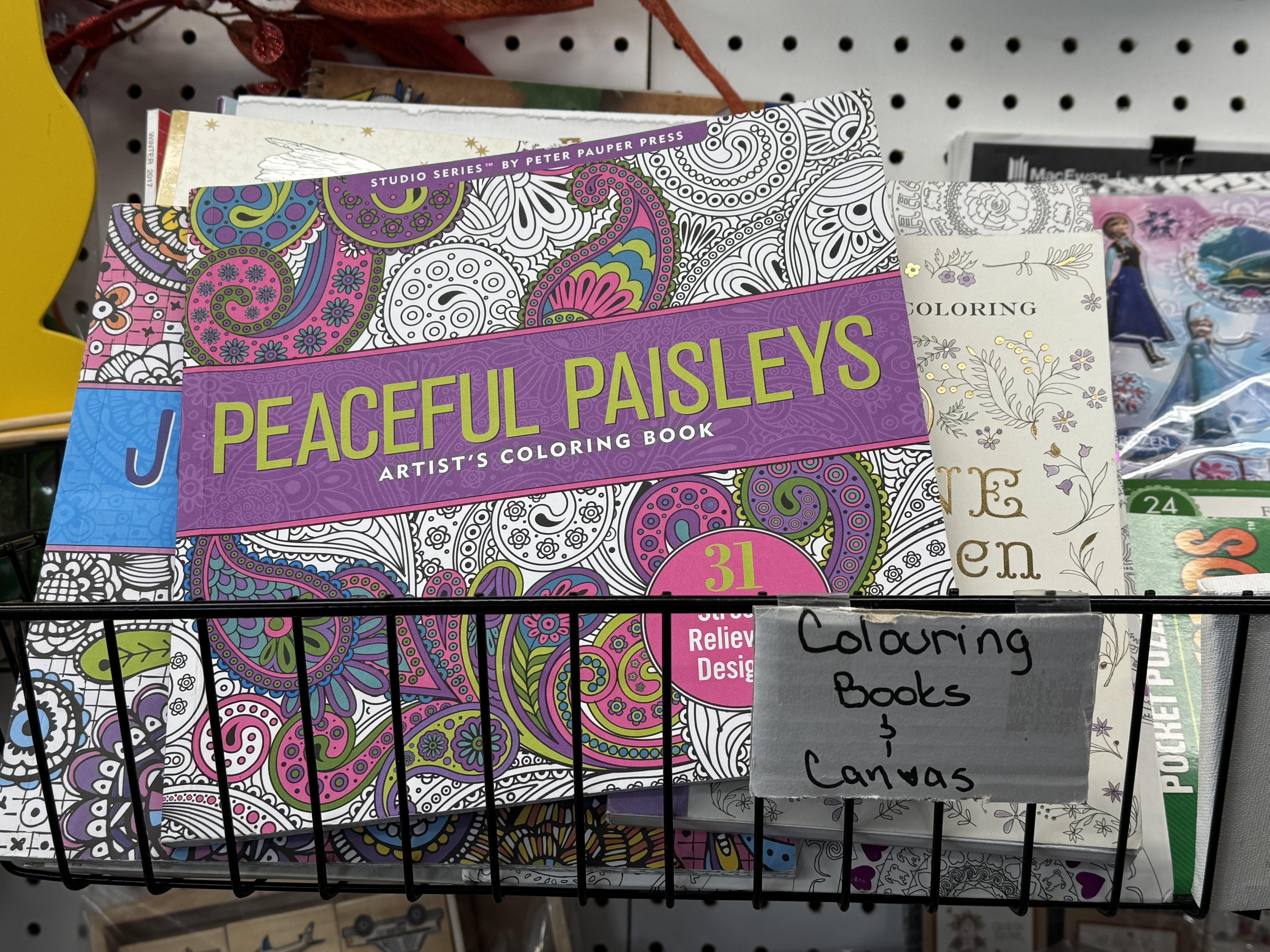
People stream into the store. Have you got books on stained glass? Do you have leatherwork tools? Ever get pillow inserts? Sometimes I say no, sometimes yes, but other times I’m not sure, and we set out to look together, sifting through the boxes and baskets. Sometimes people cry out in delight when they find just what they were looking for. A particular size of crochet hook, fabric printed with mushrooms, a colouring book of Frida Kahlo drawings. 

Last week, a short bespectacled woman said she had an unusual request: golf balls. She was undergoing physiotherapy for an injured hand and the therapist had told her to squeeze a golf ball. I haven’t seen any golf balls, I said, but I think I can help. I remembered that morning finding a bag of large wooden beads strung onto a white shoelace. I thought of a small child or a very old person practicing fine motor skills, threading each bead onto the end of the lace. I found the bag and fished out three of the beads. They were about the size of golf balls. Will this do?  I asked as I slipped them into her cupped hands. They’re perfect! And we agreed that they were much nicer to handle, a globe of burnished brown wood rather than a cold, plastic golf ball. 

At the end of every shift, as I cash out, sweep the cement floor, turn off the heat and lights, lock the door, I feel full of the people I’ve met, the stories I’ve heard. 
Becoming intimate with carnations and truth

In mid-December, I bought a green glass jug in a second-hand store, half price. My aspiration was to make a beautiful winter bouquet for my friend, Lillian. I bought a bunch of silver dollar eucalyptus and two dozen white carnations. I envisioned white wintry bursts among the silvery green, but the more I trimmed and mixed the carnations with the stems of eucalyptus, the sillier and more incoherent it looked. I took basic Ikebana but still haven’t a clue how to make flowers and plants look good. 

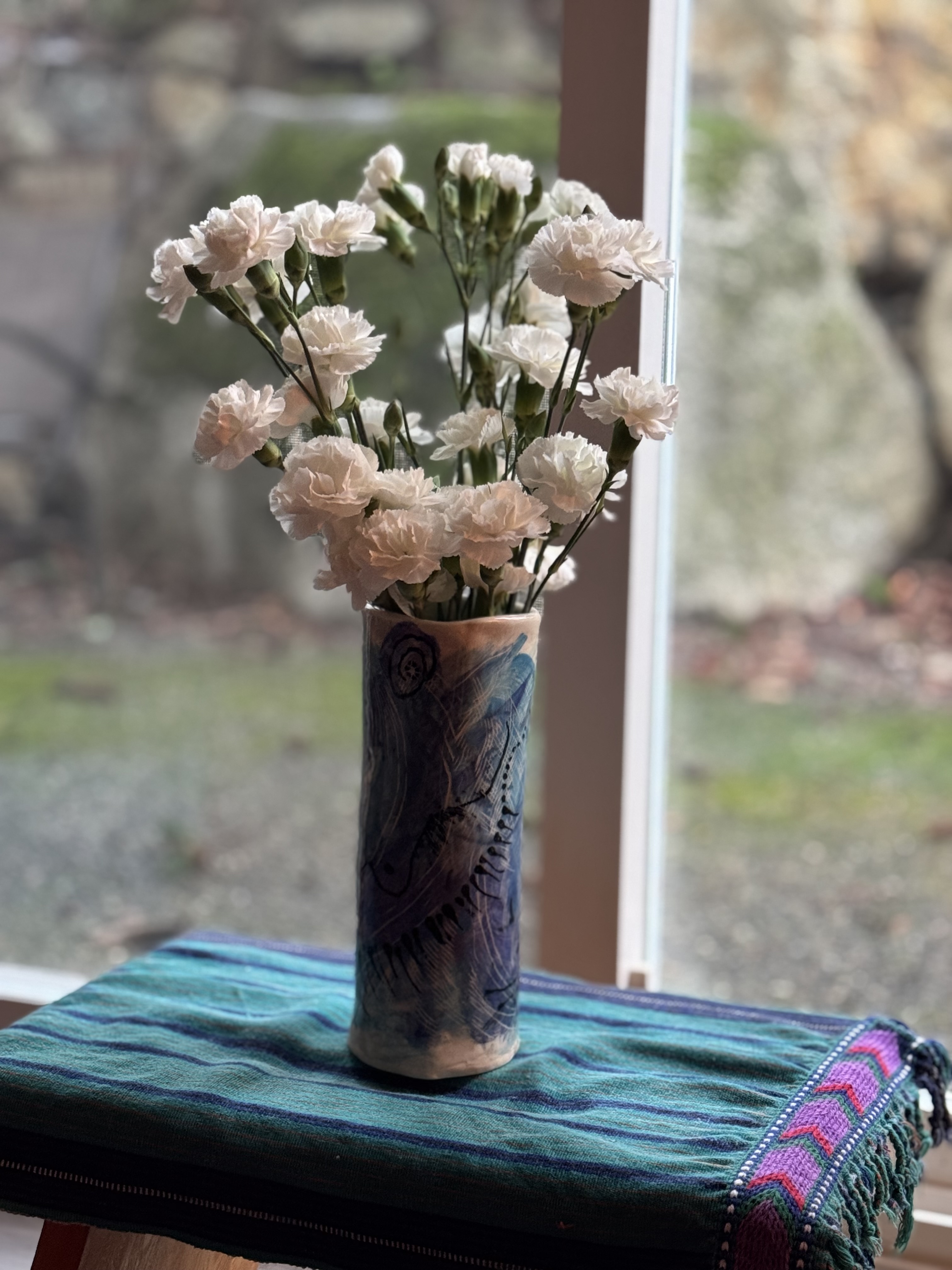
Finally, I used only the eucalyptus, splayed out in a free-fall arrangement. I attached a few small, red shiny balls to the stems, and the effect, I hope, was Christmassy and charming, if a bit messy. Lillian said she loved it. (But what could she say, really?) I was going to throw out the unused carnations, but it seemed such a waste, so I put them in a white and blue vase and placed it in my study on a low stool covered with a blue-green cloth. 

I don’t like carnations, or I didn’t think that I did. I’ve seen too many sad, slender bunches wrapped in cellophane at the mini-mart next to the hospital. They make me think of last-minute purchases for the death bed, cheap flowers that outlive the person you visited. They seem so tight, orthodox, banal. Whorls of perfect, serrated petals, every bloom the same.

But they’ve grown on me. As I spend hours in their presence, they’ve become real. You could say I’ve become intimate with them. I sit here now, the last day of the year, gazing at their fresh ordinariness. The carnation is the sturdy, faithful flower that will see you through. Perhaps they are flower of the year: commonplace as canned milk. Carnations are one-foot-in-front-of-the-other flowers. Quotidian flowers. Bread-and-butter blooms. See you through the hardest times. Last for weeks. Nothing special. 

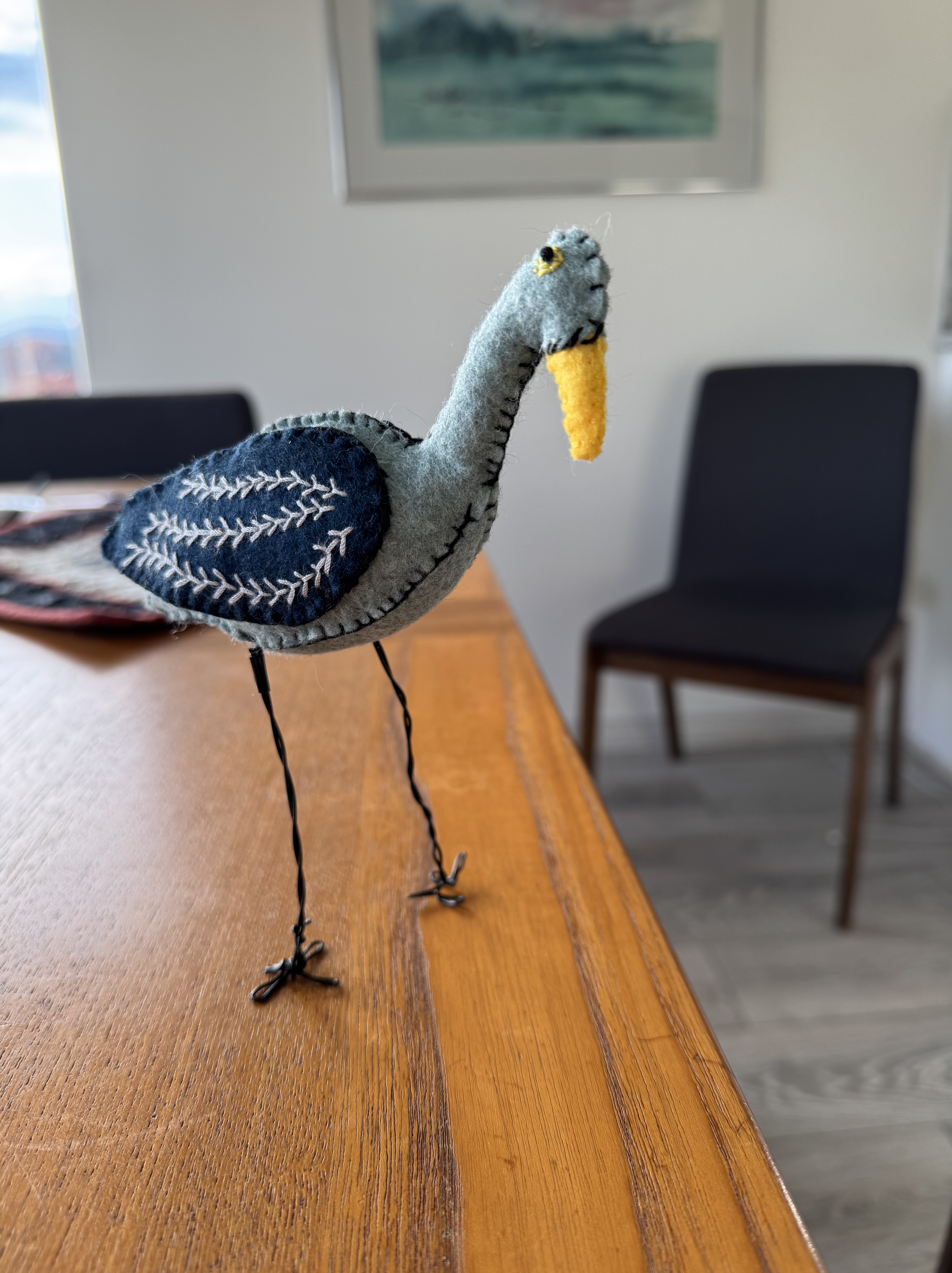
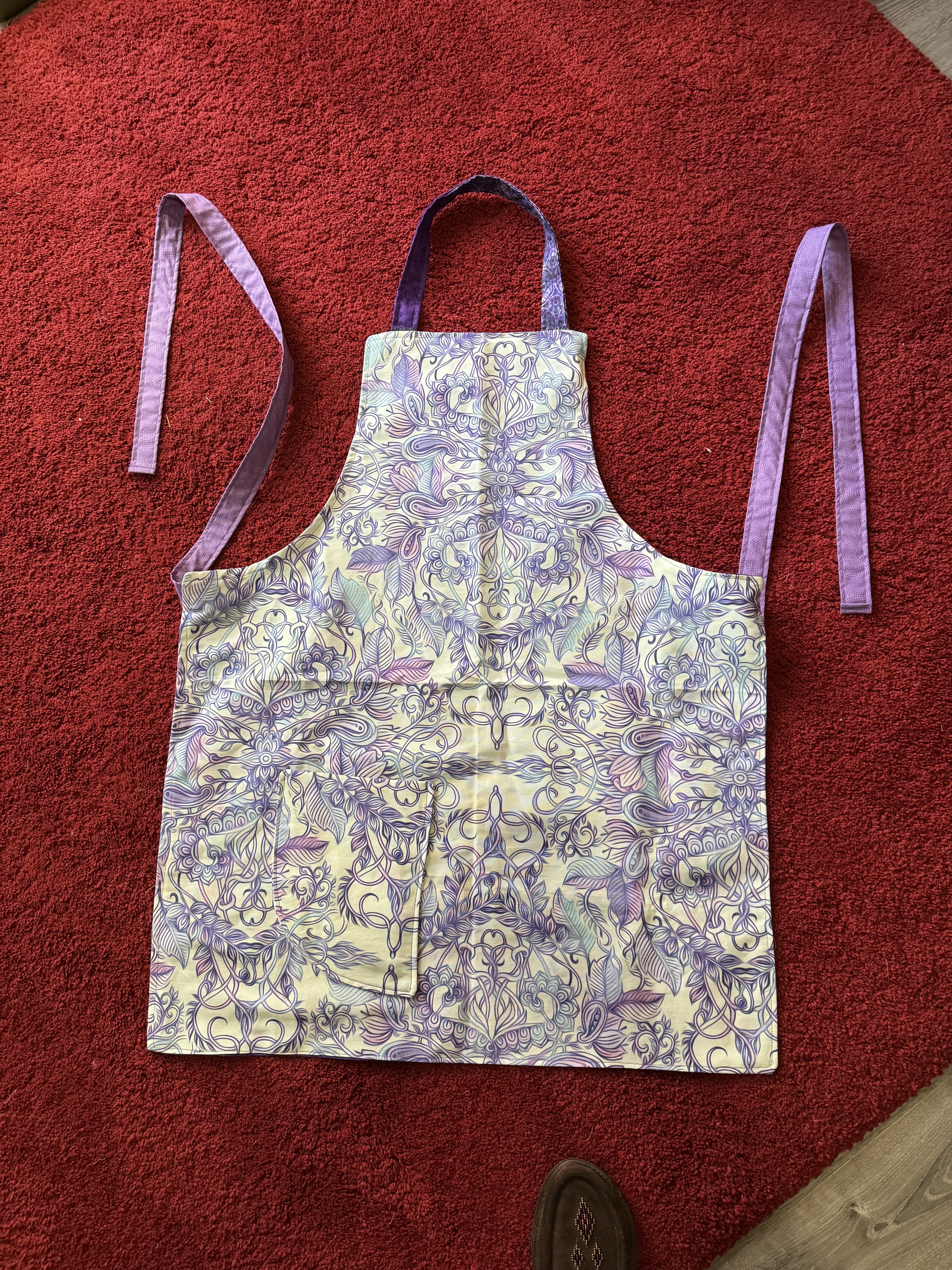
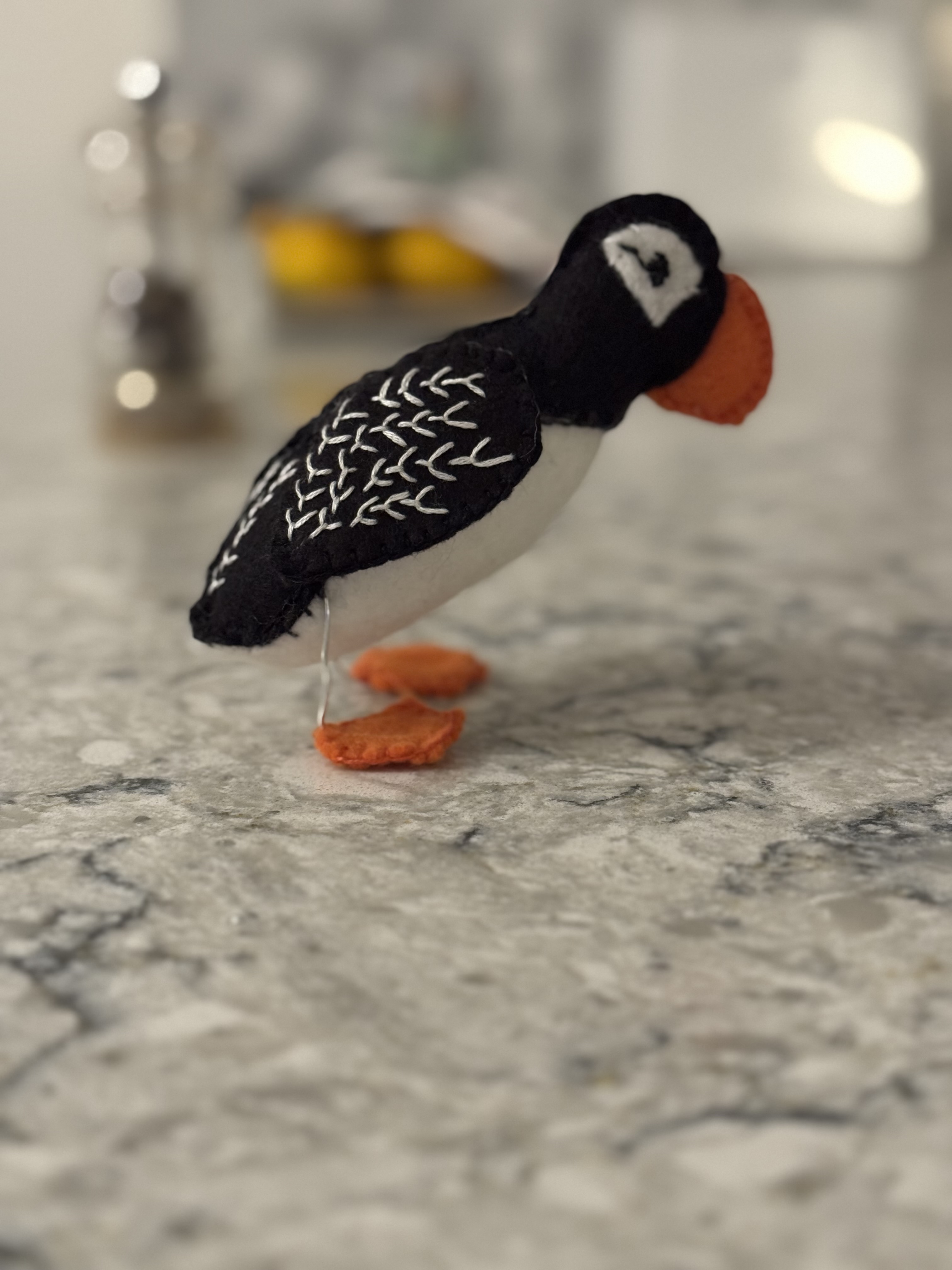
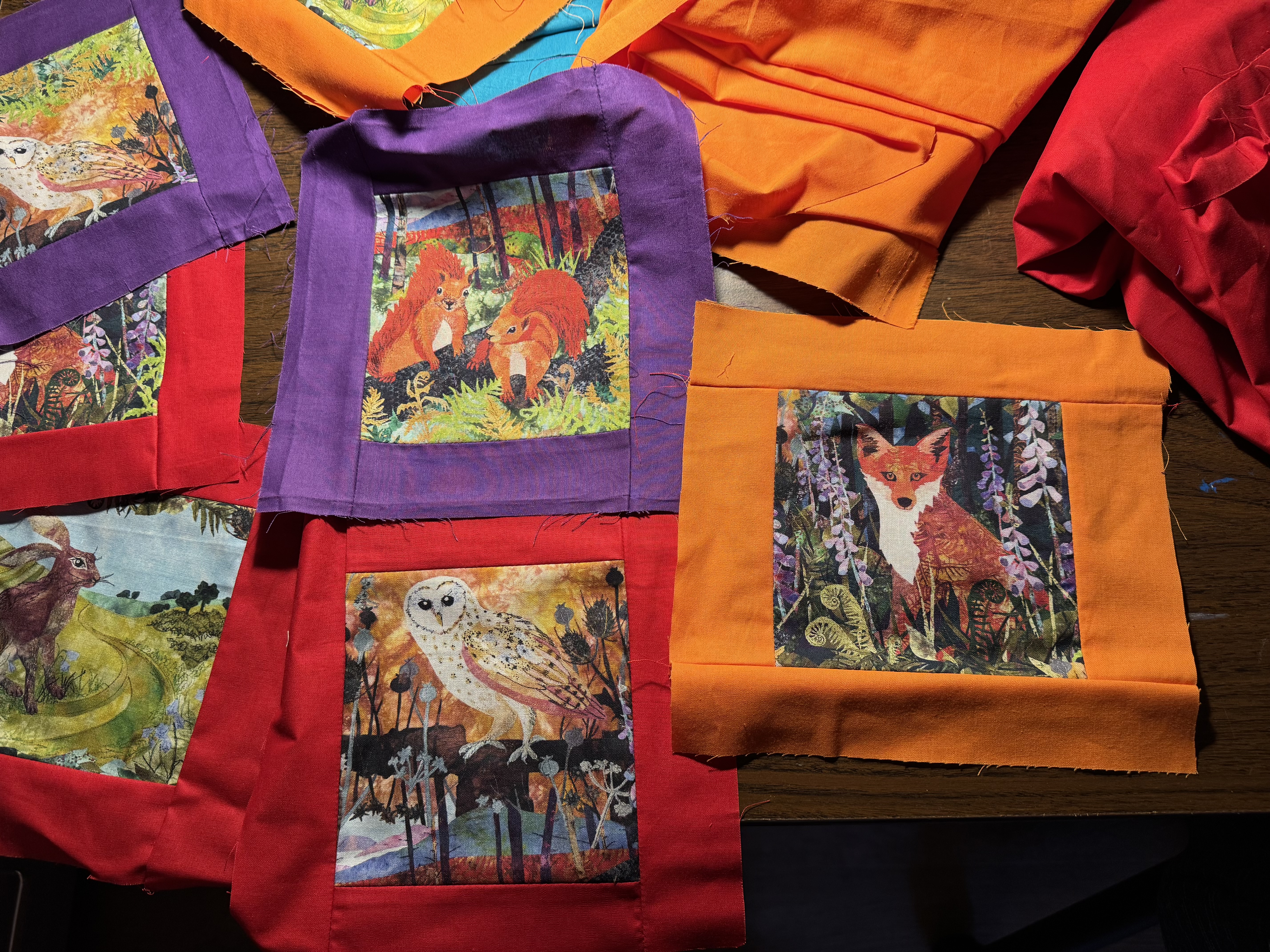
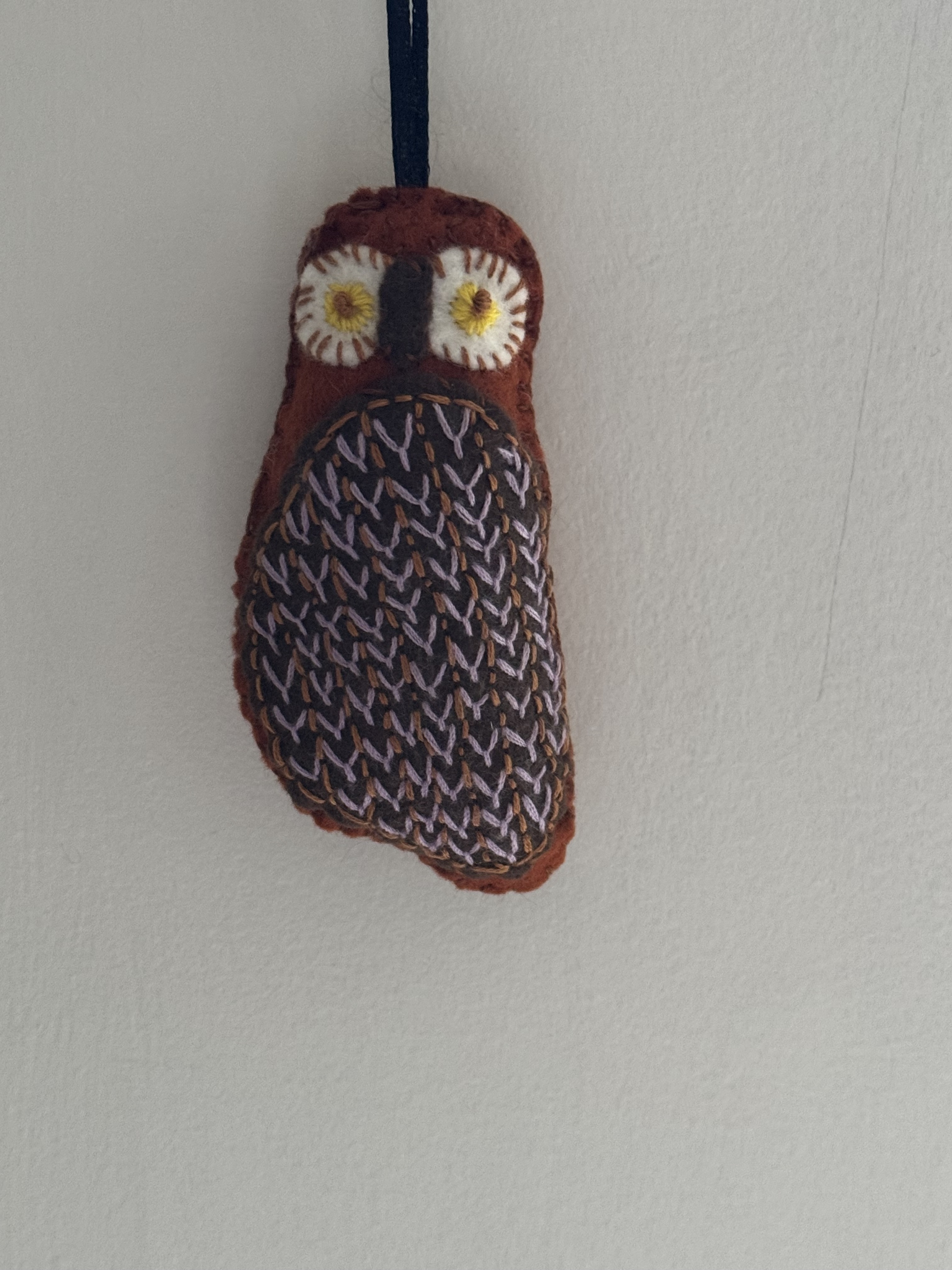
Although 2024 was my first year of so-called retirement, and thus I was given twenty additional hours each week, I wrote less, and I sewed less. (A few felt birds for family and other little felt creations, an apron, a crib quilt start, a fur-lined bag.) I did finish an editing certificate I started in 2020, which is a relief. And I made a lovely new friend and deepened existing friendships. I started a volunteer gig at a non-profit arts and crafts shop in August that has led to meeting many interesting people. Bonus: I get to surround myself with a messy profusion of materials that inspire me. 

This year, I listened to probably one hundred dharma talks on Dharma Seed, with a broad aspiration of becoming more intimate with life—accepting whatever’s happening in my heart, whatever’s happening in the world. Making friends with wild mind. Accepting the truth of the way things are.

I read so many books this year. A couple that stick with me are Rebecca Solnit’s memoir, Recollections of My Nonexistence and The Age of Loneliness, a book of essays about life during the sixth extinction by Laura Marris. 

Solnit writes a lot about being a woman. That’s what her title gestures toward—the peculiar “nonexistence” of being female in a patriarchy (remember mansplaining? She is behind that neologism[i]). She draws on John Berger’s 1972 Ways of Seeing, which I’ve known about for years and now am determined to read. She quotes words from him that jibe with my experience: “To be born a woman has been to be born, within an allotted and confined space, into the keeping of men. The social presence of women has developed as a result of their ingenuity in living under such tutelage with such a limited space. But this has been at the cost of a woman’s self being split into two.” 

Perhaps that sounds dramatic in the Global North in 2024, but that has been my experience. Perhaps it’s different for lesbians. Perhaps it is different for women of subsequent generations, but Solnit and I were born three years apart (1961/1958), so we grew up at roughly the same time. Berger goes on, 

“A woman must continually watch herself. … She has to survey everything she is and everything she does because how she appears to others, and ultimately how she appears to men, is of crucial importance for what is normally thought of as the success of her life. Her own sense of being in herself is supplanted by a sense of being appreciated as yourself by another.”

Solnit calls Berger brilliant and generous, to be able to imagine a woman’s experience, and I agree. What he writes here feels just as real as the carnations in front of me. Reading the passage and feeling its truth is freeing. No action needed, just awareness.

Similarly, truth pinged through me when I read Laura Marris writing about the age of loneliness. We become lonelier as we bear witness to the drastic reduction, or “great thinning,” of ordinary animals. Marris draws on the work of naturalist, Michael McCarthy, who writes of our baby boomer age group, “As we come to the end of our time, a different way of categorising us is beginning to manifest itself: we were the generation who, over the long course of our lives, saw the shadow fall across the face of the earth.” 

Reading this series of essays, elegies to Earth as the shadow descends and animals disappear, I was gripped by a grief so deep I sat for a time and just cried. Again, the truth is freeing. Let’s not deny that this is happening. It’s really happening. We can still enjoy the beauty that is here. 

In keeping with my mood of asceticism, I recently deleted my Facebook and Instagram accounts. Unlike the birds who used to sing outside my window, FB and IG will not be mourned. I feel light as I step through life with a new red pedometer safety-pinned to my leggings (the pedometer frees me from carrying a “smart” phone to count steps). Michael, Marvin, and I amble down to the beach at Thetis Cove to watch the sky change. Rippled water reflects a bank of pink clouds. 

Thank you for reading. In the coming year, may you experience moments of lightness in a shadowy world. 

Berger, John. 1972. Ways of Seeing. Penguin.
Marris, Laura. 2024. The Age of Loneliness: Essays. Greywolf Press.
McCarthy, Michael. 2015. The Moth Snowstorm: Nature and Joy. New York Review Books.
Solnit, Rebecca. 2020. Recollections of My Nonexistence. Viking.


[i] From Wikipedia: The term mansplaining was inspired by an essay, “Men Explain Things to Me: Facts Didn’t Get in Their Way”, written by author Rebecca Solnit and published on TomDispatch.com on 13 April 2008. In the essay, Solnit told an anecdote about a man at a party who said he had heard she had written some books. She began to talk about her most recent, on Eadweard Muybridge, whereupon the man cut her off and asked if she had “heard about the very important Muybridge book that came out this year”—not considering that it might be (as, in fact, it was) Solnit’s book. Solnit did not use the word mansplaining in the essay, but she described the phenomenon as “something every woman knows”.

To speak of sorrow

“To speak of sorrow
works upon it”

from Denise Levertov’s “To Speak”

I haven’t felt like writing.

After the big report on climate change and biodiversity was made public in May, I feel paralyzed, stunned, crushed, blank, undone, guilty, sad, depressed, grieving, grey, blue, flat.  It’s not that we didn’t know it was coming, but the news still hit hard. Given the state of the world—one million plant and animal species at risk of extinction, with humans at fault—writing anything that doesn’t contribute to solving the problem seems frivolous. Blogs, poetry, fiction: all of it seemed trivial, narcissistic, diversionary. And yet the fire to read and to write continues to burn, regardless of the state of the world.

Sadness upon sadness: a couple of weeks after the climate report I learned of a young man dying of a drug overdose. Sure, it happens every day, but when you know the family, the sadness hits your solar plexus. My raw and open heart told me to sew. Working with cloth, with objects, feels healing. Even in the midst of sadness and paralysis—perhaps because of the sadness–the work wants to be made. So I sew, and plant, and draw, and write.

Sewing

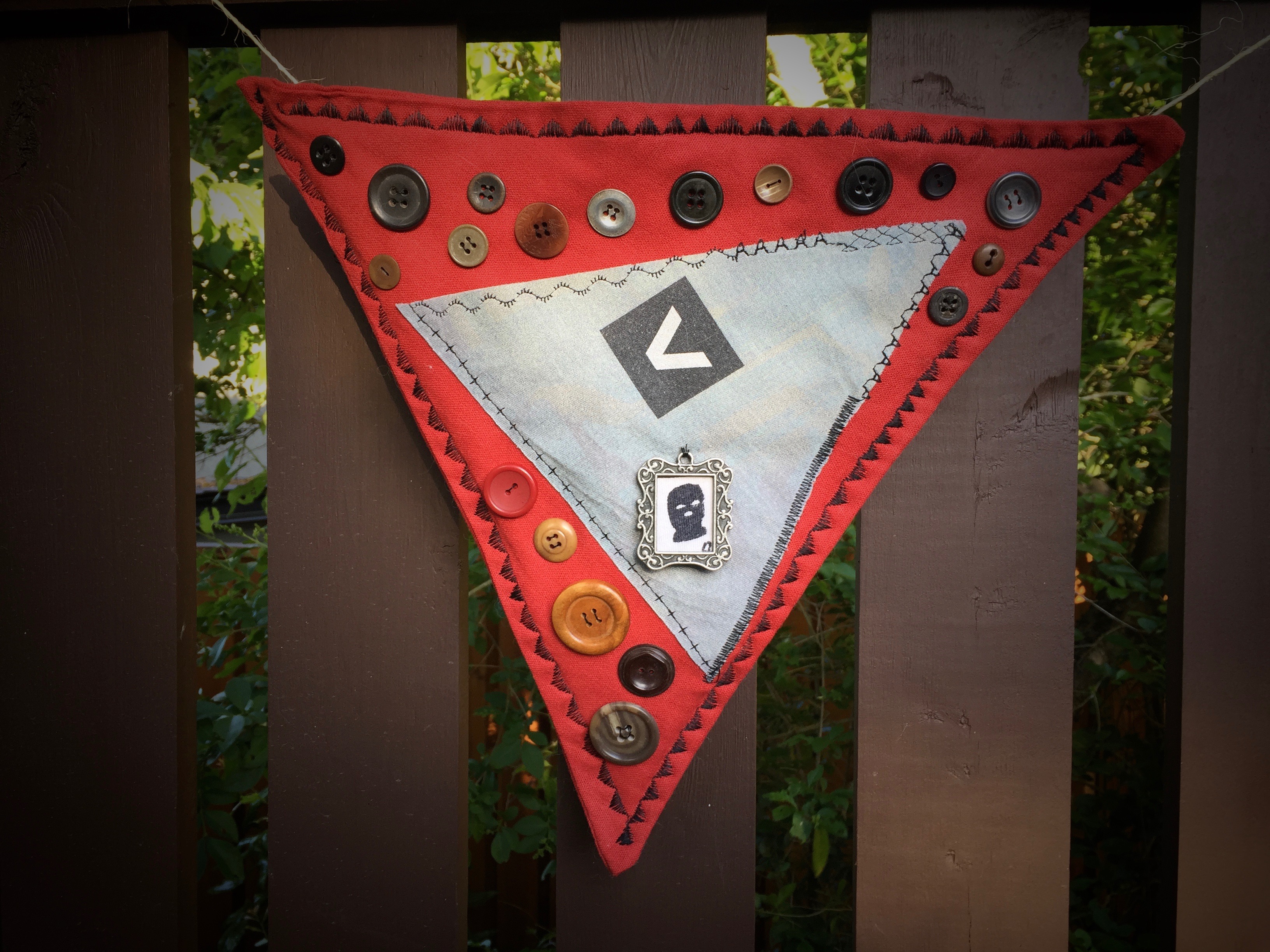
I have slowly been making a quilt using pieces of my stepson Alex’s t-shirts. He died at age 27 in the summer of 2016 when the car he was a passenger in plunged into a deep ravine. This slow craft is my way of memorializing him. When I heard the news that Logan, who had gone to school with my sons, died two weeks ago at age 25 from a drug overdose, I was again plunged into sadness. I paused in my quilt-making to sew death’s pennant.

Pennants typically celebrate the accomplishments of sports teams, but here the “accomplishment” is early death and wasted life, symbolized by the useless buttons that fasten nothing.  I used scraps of Alex’s t-shirts, reminding me of his death but also reverberating with the deaths of all those who die young. Birth leads to death and then back to birth: I chose blood red cloth, the ruddy triangle representing the fertile womb from which we all came.

IMG_3985

Planting, writing

I decided to look closely at a very small part of the natural world and pour my love into that. I won’t be saving any species, but perhaps focusing my energy on a little mound of dirt and a flowering plant will be healing at this time of grief.

When we had our perimeter drains replaced in the winter, the contractor told me he would have to dig up the garden. Did I want him to save any of the plants? I dug up some of the small ones myself, storing them in the shed. “Can you save just four? I’ve tagged them with red ribbon.” The white peony, the two lavender plants, and my favourite, the big blue hydrangea.  During all of the chaos that erupted in front and back yards, the mounds of dirt, the rain and mud, planks of wood bridging the mucky walkways, I lost track of my hydrangea. Eventually, they put her back in the earth, but as March turned to April and April to May, nothing happened. The dry brown sticks remained barren. I could see no life at all.

I was unhappy. I loved that plant. So many times I had sat on the living room couch and gazed out our big picture window at the full-blown blue globes. Marvelled as they changed hue from soft Egyptian blue to darker indigo, then became edged in violet, and finally took on a full, deep purple as late summer turned to fall.

The loss felt deeper than simply a favourite plant dying. I felt stirrings of an old feeling I hadn’t felt for ages. When I was in my 30’s I was part of a Deep Ecology circle. The five members met over several weeks, taking turns hosting, and during each session we’d discuss material we’d read by some of the greats of the movement: Arne Naess and Warwick Fox, for example.  I don’t remember much from the experience except that we visited a local Wiccan gathering and learned how to do the grapevine step as part of the spiral dance. More than any event or book, however, I remembered a feeling from that time, and the feeling was coming back to me like pinpricks of sensation return to a numb limb. We have been desensitized, have learned to turn away from Earth, to tune out her sufferings, because to really feel them, to empathize with her would be too much for us to to stand. Overwhelming. But when we allow ourselves to connect with her, we start to feel the deep grief and outrage appropriate to the situation we are all in.

My dead hydrangea had come to symbolize all of the destruction of the earth, and I grieved over her death for weeks.

Finally, last weekend I bought some potted hydrangeas from a garden center and placed them on the front steps.  I put on my orange gardening gloves and got the pointed shovel. “I’ll dig her out and replace it with another,” I thought to myself. I knew it couldn’t be the same; I had loved that particular hydrangea. She had generously given her bunches of lapis lazuli every summer and fall. One of those bunches I had dried and the lovely antiqued florets graced the bathroom cabinet in a delft vase. She was even a character in one of my short comics. Hydrangea was cherished.

IMG_1954.jpeg

But I couldn’t stand to look at the dry sticks any longer. As I started to push the shovel into the ground to pull out the roots, I noticed a few green leaves at the centre of the plant. What? How had I missed that? Had it happened overnight? Although the main part of the plant appeared lifeless, there was life—tender new shoots and rich green leaves at the heart.  So I went back to the shed, excited, to grab the long clippers and instead of pulling out the plant at her roots, I clipped back all of the dead sticks to expose her new child. Beside this little green girl, I dug a hole and introduced a friend—one of the new hydrangea plants just out of a plastic pot.  I’ll watch the two loves grow together this summer, probably not producing any flowers just yet, but hopefully thriving as they reach for the sky under my gaze from the living room window.

IMG_2133.jpeg