“In a time of destruction, create something.” Maxine Hong Kingston
I have been trying to write poems this year. If you love poetry, I recommend listening to The New Yorker poetry podcast. Poetry editor Kevin Young interviews poets who read a poem from the New Yorker archive plus one of their own poems. Also inspiring, if you are interested in haiku, is Natalie Goldberg’s book, Three Simple Lines. She writes about her pilgrimage to Japan, about haiku, about the first Japanese masters, Basho, Buson, Shiki.
I have started to write my own version of Haibun, a Japanese form that combines concise prose with a haiku. I loosely interpret this form, writing a daily observation in a few sentences plus a “sort of” haiku. No more 17 syllables, just three simple lines. Maybe these aren’t haibuns or haikus at all…. maybe they are just what they are.
I Womb
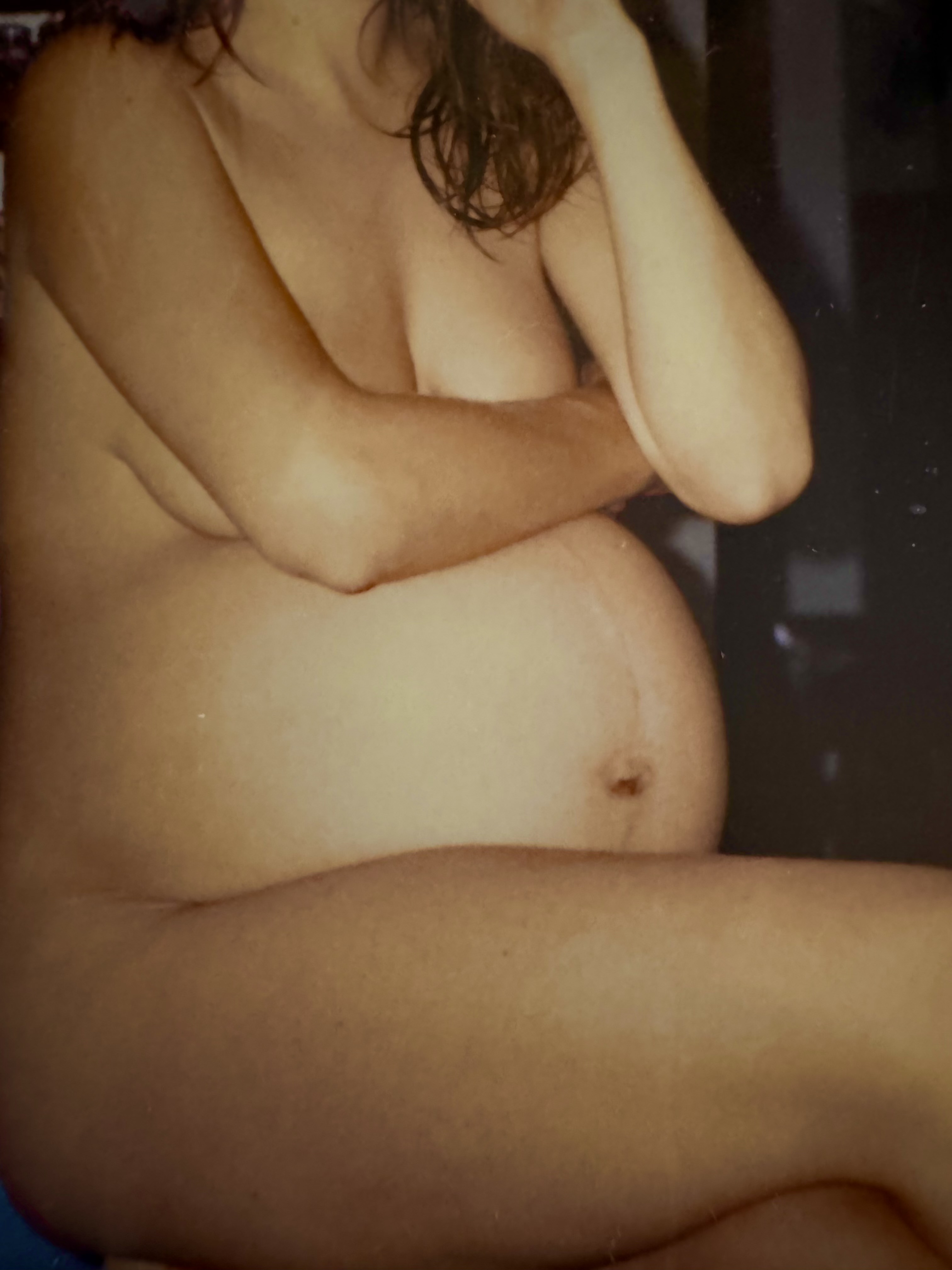
Morning crossword, four letter word, first site of eviction. “Womb,” I say aloud with certainty. But no, the answer is “Eden.”
Every human’s first home, the blood red womb
II Orange
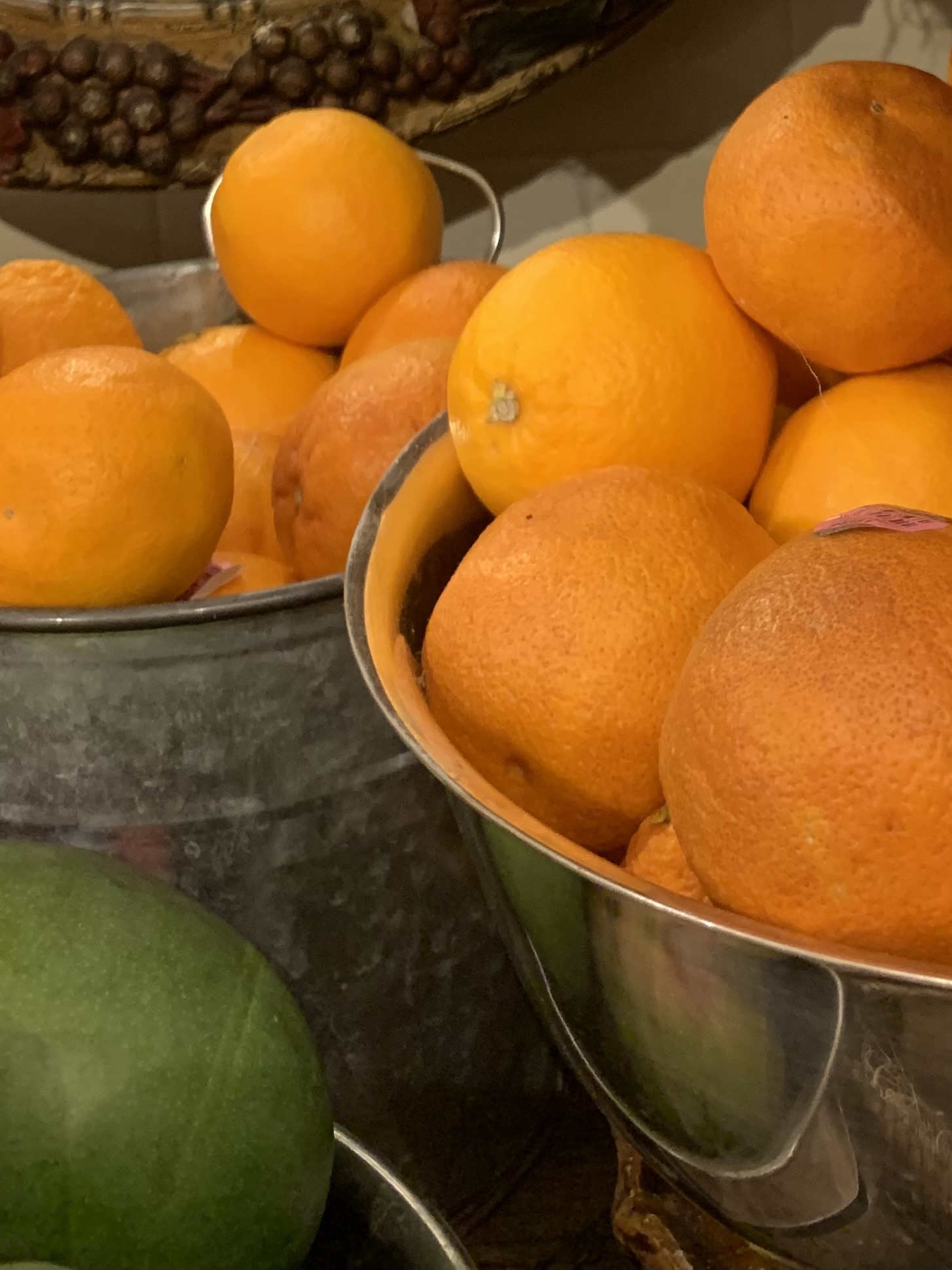
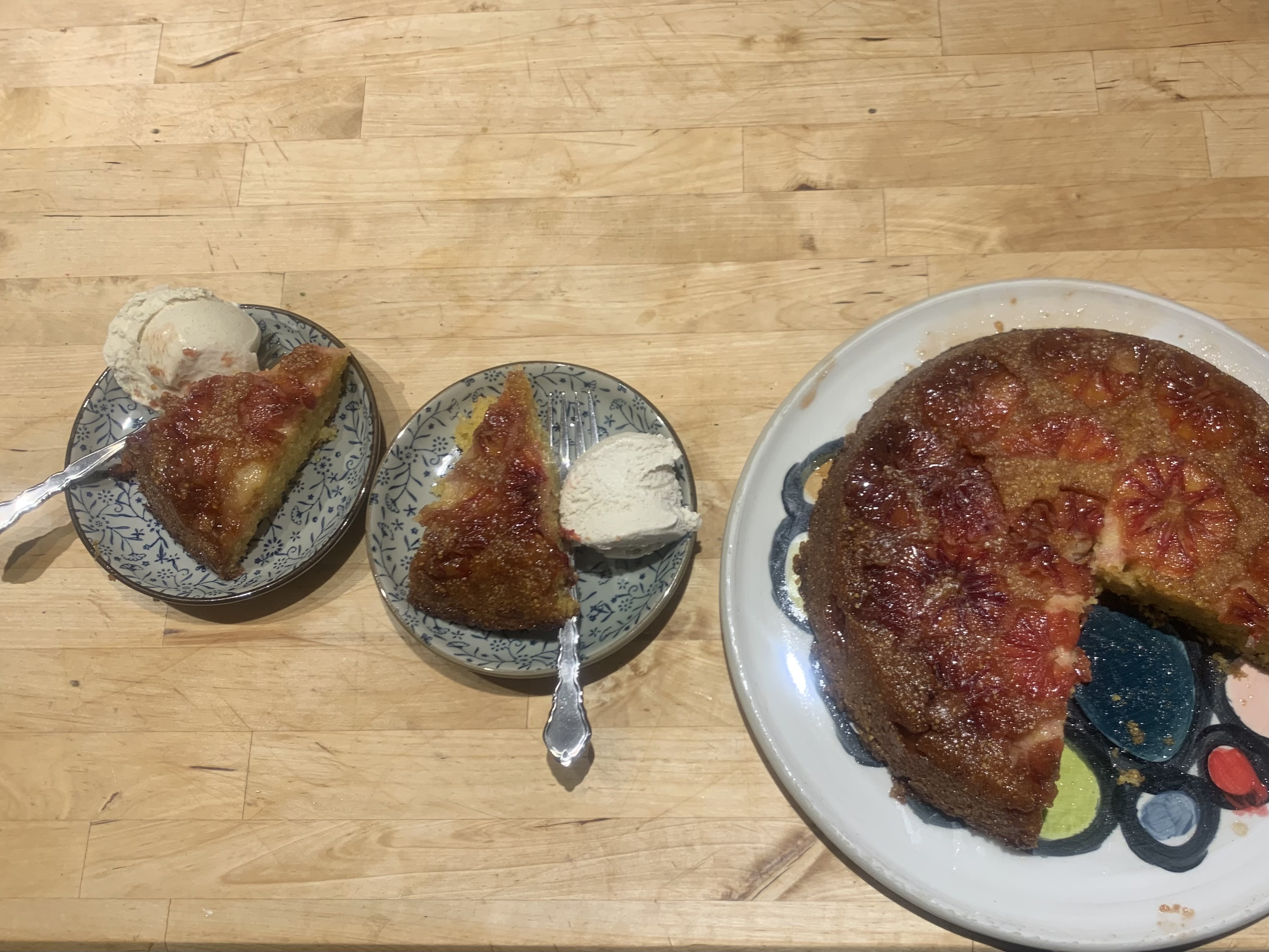
I go to the store to buy blood oranges for the cake and discover they have been rebranded raspberry oranges. the word “blood” is off-putting to consumers. I feel angry.
Remote, bloodless pale body of moon his face, forgotten
III Knife
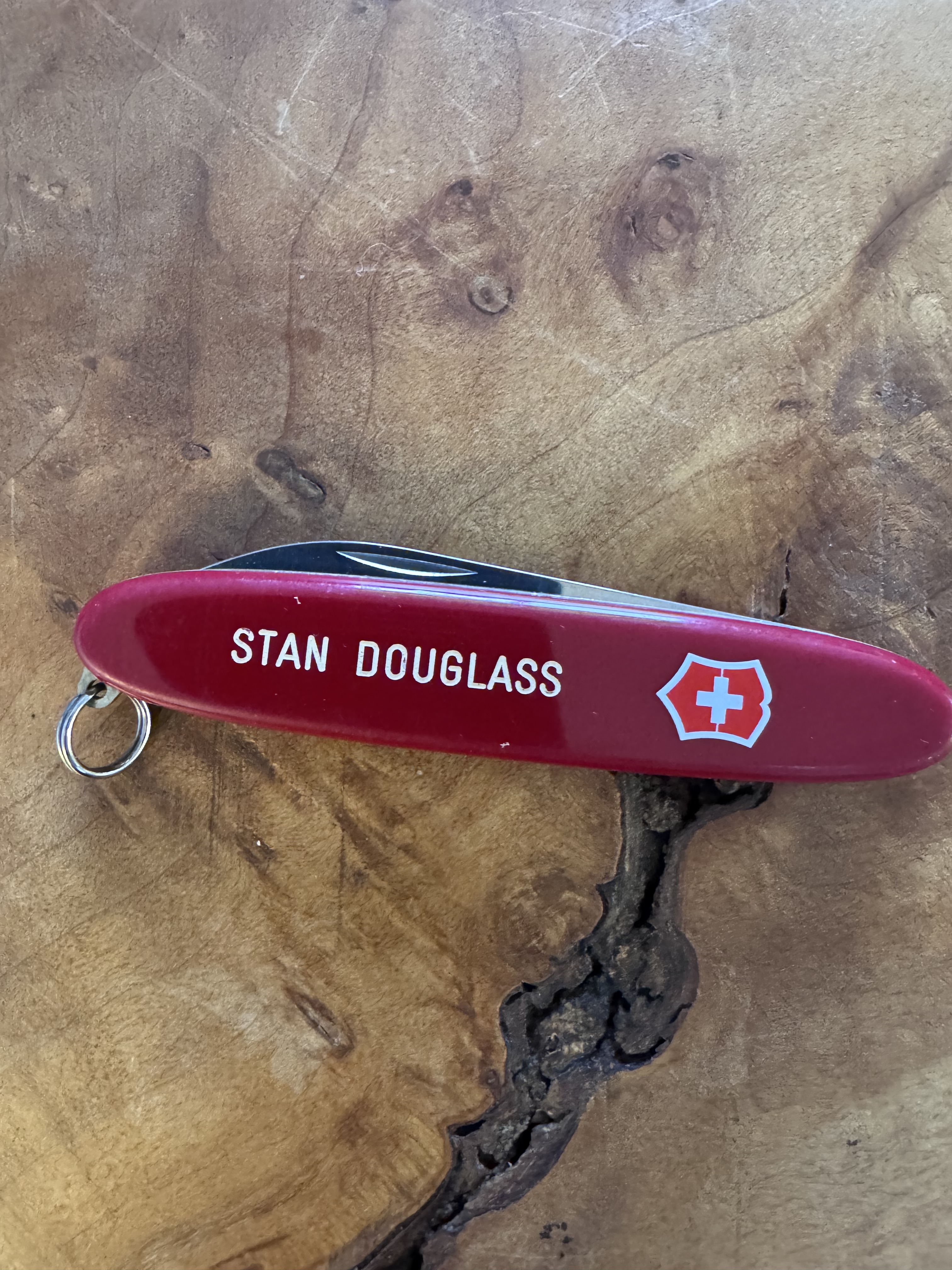
I go to an estate sale and buy a box of assorted junk for two dollars. At the bottom, I find a small Swiss army knife tucked into a black sleeve. The knife is marked with white letters: Stan Douglass. I look up Stan’s obituary.
When fifteen, only a lad, Stanley made a vow to serve the Lord
IV Ruth
My son and I walk along the street, heading to Value Village. He’s shouldering an old chair he took from a free pile, then regretted. I’m following. Suddenly a telephone pole is in front of me with
R U T H
painted in big red letters. Just a day ago, my friend and I compared middle names. Her middle name is Mazal meaning good luck. Mine is Ruth, I texted, and she texted back that “the biblical Ruth is a very special woman, and her name is synonymous with unwavering loyalty and kindness.”
Is it a sign? Four red letters tell my fortune
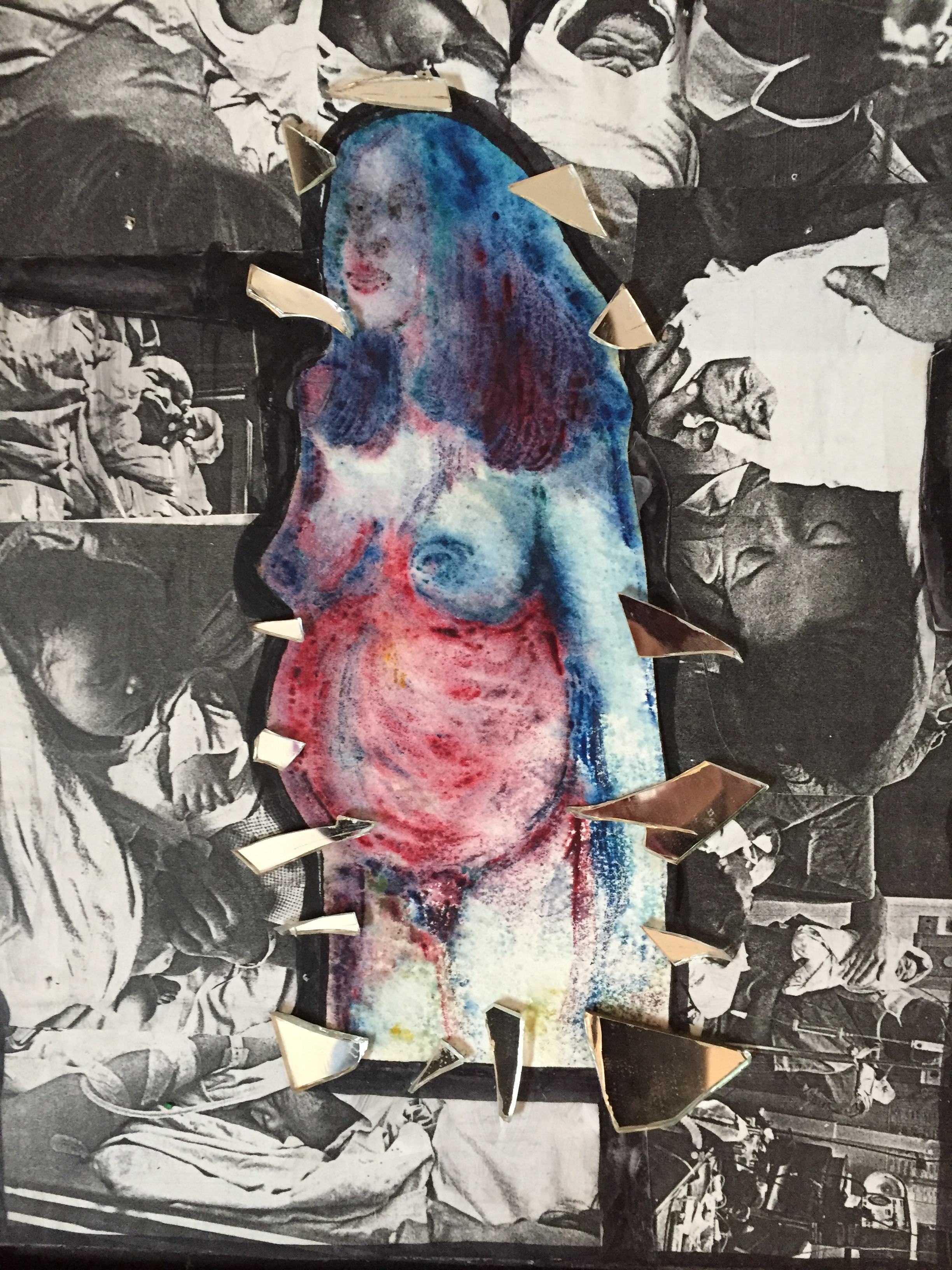
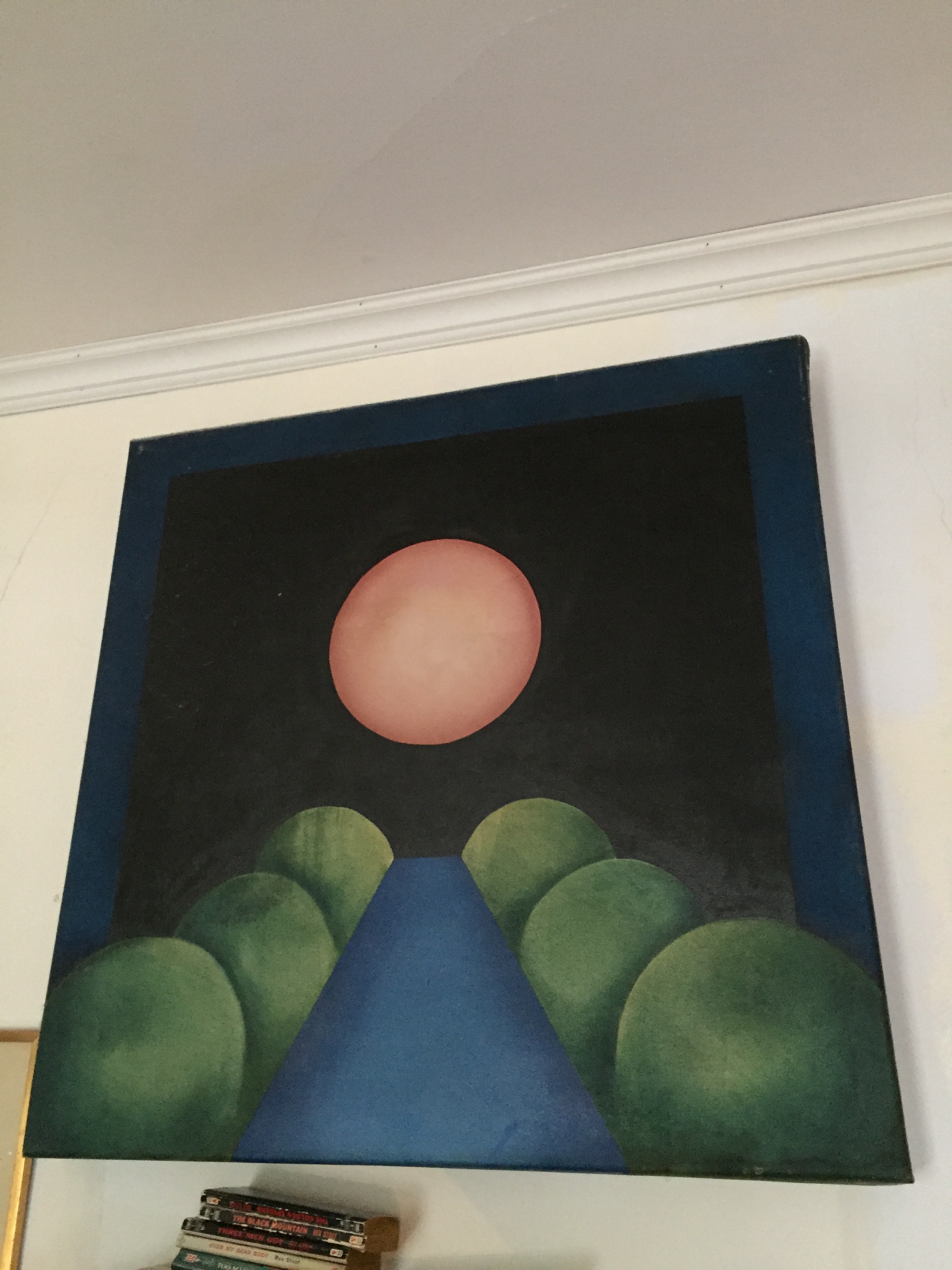
The moon painting is by Bob Sabatini. Other creations are mine.
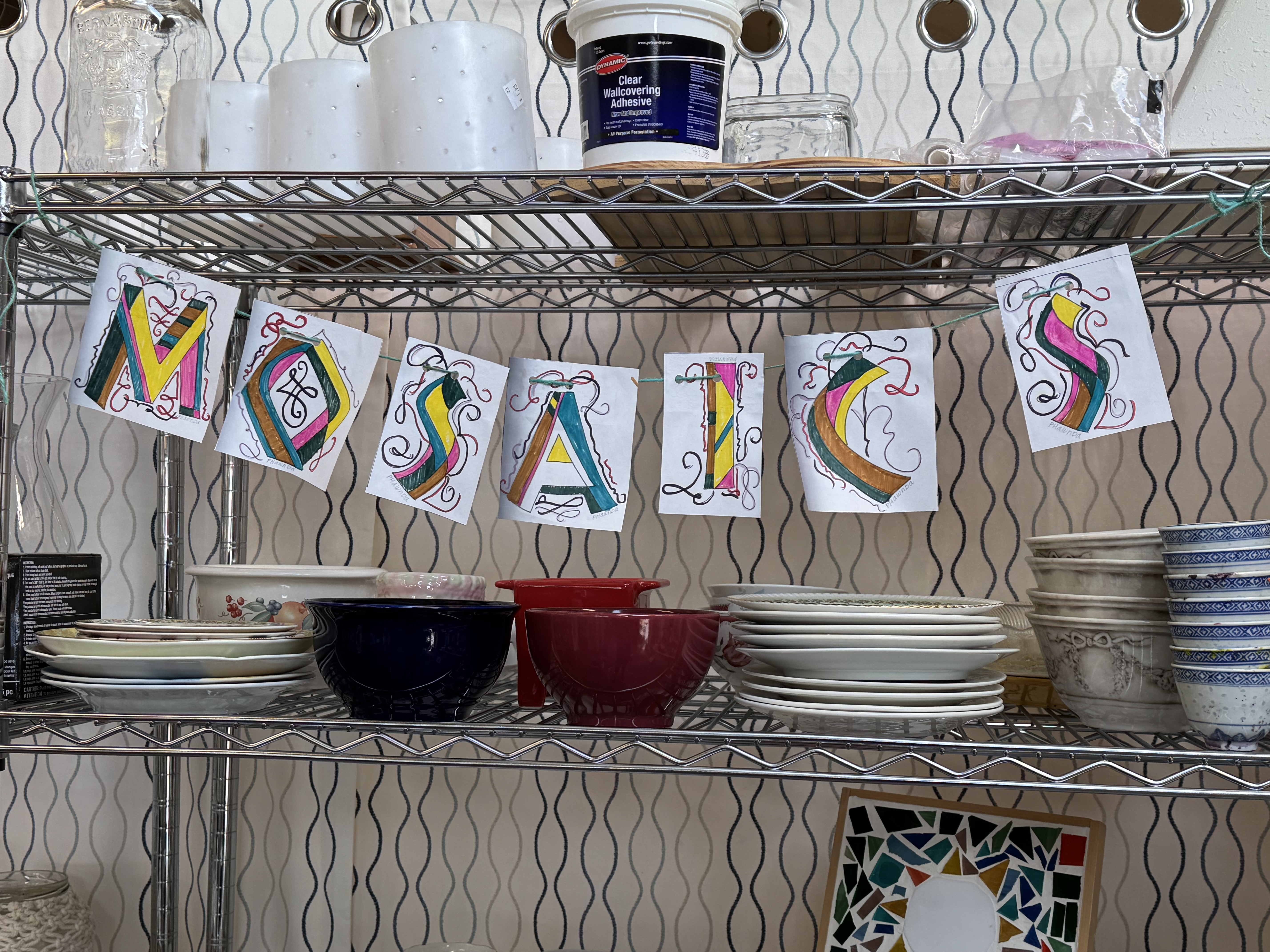
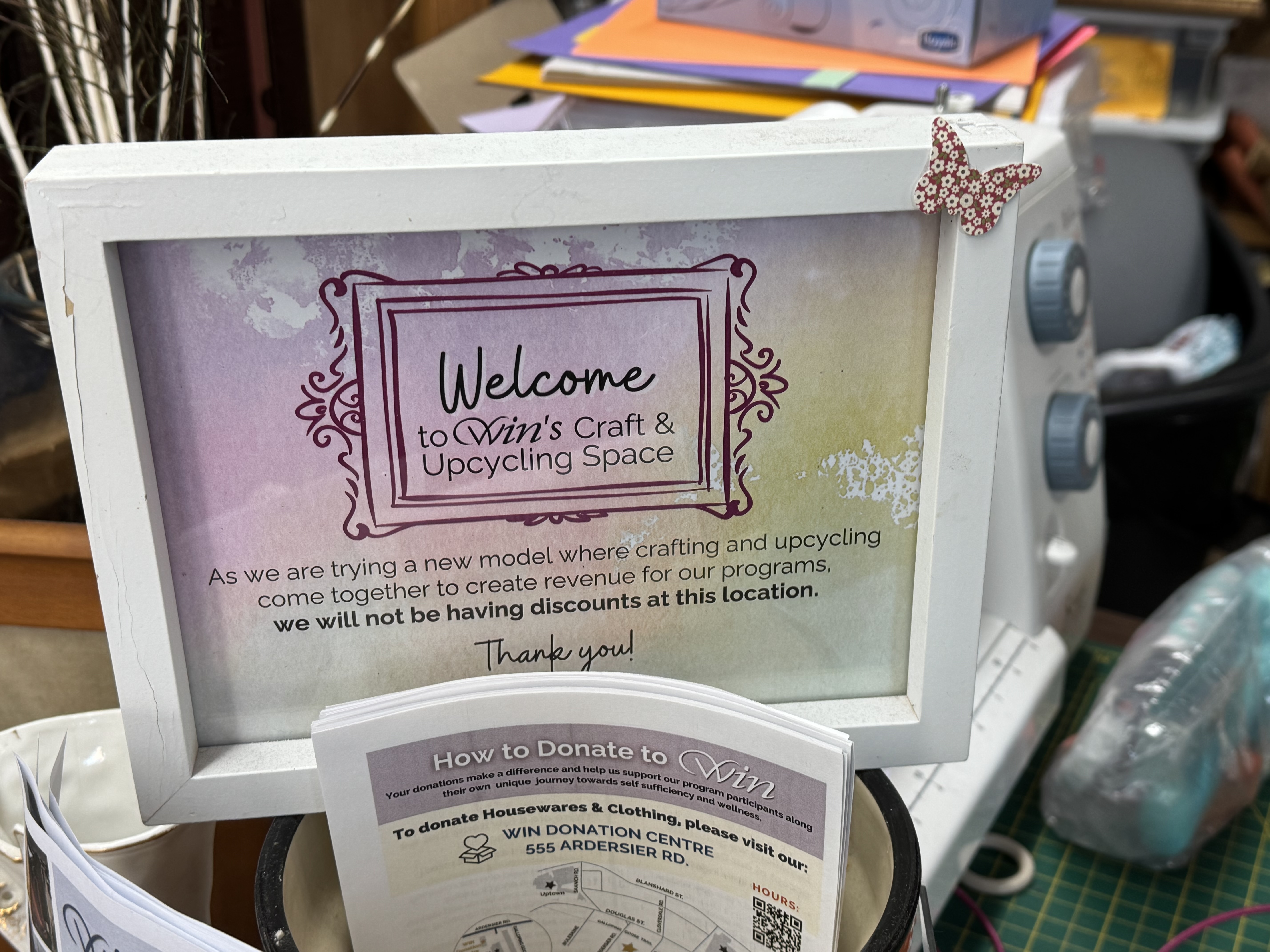
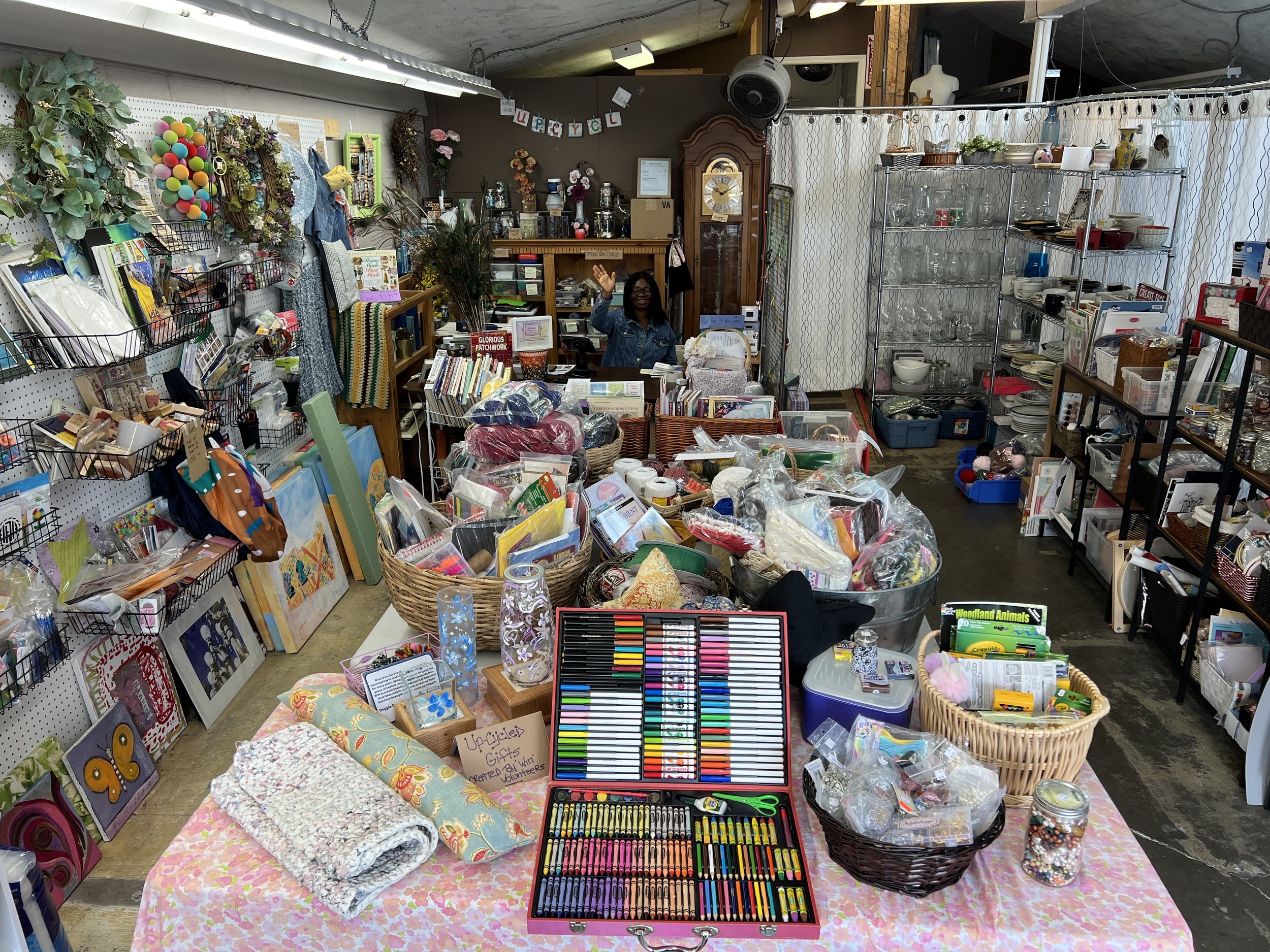
I work a volunteer shift at the upcycle store on Wednesdays. The people that come in delight me, entertain me, astonish me, educate me, soften me. Next week is my last shift at the store. I want to remember some of these people and their stories.
Once a pale man came in and asked if we had a leather hole punch. He didn’t want to buy one, just borrow it so that he could put an additional hole in his belt. He was losing weight, and his pants were hanging on him. Alas, I said, we don’t have one right now. I’m sorry.
I thought about him for weeks, his weight loss, his thinning frame, his sad face. I wondered about his story. Perhaps he was lovesick.
I can no longer untangle my hair I feed on my own flesh in secret. Do you want to measure how much I long for you? Look at my belt, how loose it hangs.
Anonymous, Six Dynasties Translated from the Chinese by Kenneth Rexroth
As if to balance the sadness of the shrinking man, the joy of meeting Randy bloomed inside of me for weeks. He flounced into the store a few days before Thanksgiving, smelling gloriously of rosemary and thyme. Randy is a contemporary dandy, stained waistcoat and tight jeans, flowing grey hair, phlegmy smoker’s laugh lighting up his brown, creased face. He brought crackling energy into the store with him, along with a small plastic bag of herbs.
Do you have any Scrabble tiles? he asked. Yes, I handed him two tall mason jars filled with tiles, and as he dug through his pockets for the cash to pay for them, he told me there was always a few Scrabble boards set up on his coffee table. When my friends come over, he said, they add a word or two or three. We play a never-ending game and nobody keeps score.
What a mouth-watering smell! He opened the plastic bag for me to see the long sprigs of green. I picked them at the side of the road, he told me, just around the corner. The herbs were volunteer plants, free for anybody that wanted them. I need sage, I said, for the Thanksgiving turkey. Oh, he said, I think there was sage growing as well. We smiled and said our goodbyes. An hour later he was back with three sprigs of sage he had picked for me and my turkey.
When I asked a young fellow what he was planning to make with the feathers he was buying, he challenged me: Guess. A headdress? No, good guess, but I am making flies for fly fishing, something his dad taught him to do. He fishes for cutthroat trout under the Bay Bridge with a bunch of female fishers who’d turned him on to it. I never knew!
Last week, a woman came in and poked into the baskets of wool, humming a tune. I noticed her tone—it was strong and true. You have such a beautiful voice, I said. Why don’t you sing us something? Suddenly, gloriously, she burst into “I’m Called Little Buttercup,” from Gilbert and Sullivan’s HMS Pinafore. Her rich mezzo-soprano filled the store as she strutted down the aisles, outthrust chest, a beautiful dockside vendor in love with the captain. I and another shopper were the lucky audience, mesmerized by a performance delivered among stickers and glue, balls of wool, knitting needles, jars of coloured beads.
I love hearing about the celebrations people are planning. The woman in her thirties who bought armloads of artificial flowers and a bolt of pale pink draping fabric for the table. She and her siblings had been planning a surprise party for their mother’s sixtieth birthday. She keeps mentioning she’s turning sixty, as if reminding us, said the young woman. She’s worried we’ve forgotten. Little does she know what’s in store! I laughed with her, feeling mudita, imagining the pleasure and wonder of her mother on that day. Surprise!
Finally, I sold the white canvas tent that was propped in the corner for months. The tent is perfect for children to hide and play in, and a woman bought it for her grandchildren. I told her about the teddy bear’s picnic birthday party I’d thrown for my four-year-old so many Decembers ago. We had a play tent pitched in our living room, and the children and their stuffies enjoyed tea and cake. The woman became excited and touched my shoulder in thanks. What a great idea! I’ve got to do that for my grandson! Then she told me that one Christmas her mother-in-law opened the gift of a vibrator in front of the whole family. I wasn’t sure what prompted the story, but we had a good laugh. Teddy bear picnics and vibrators, all in one afternoon.
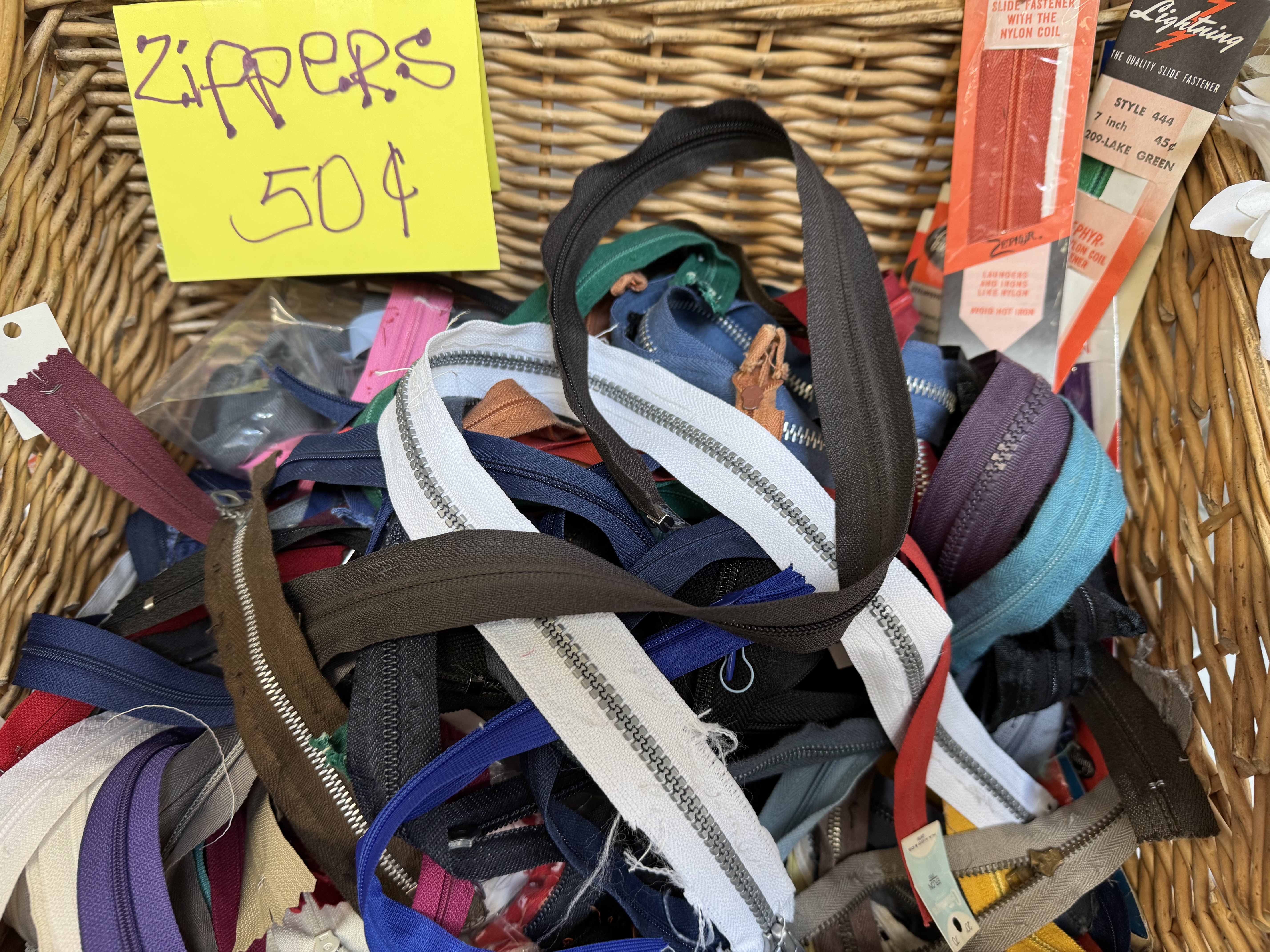
There’s a regular customer who brings her baby buggy into the store, speaking softly and playfully to her little boy as she shops. She buys bits of fabric, thread, and zippers. Last week, as she paid for her stuff and her baby chortled and tried to put his toes in his mouth in the buggy beside her, she ran her hand over the camel-brown smocked dress she wore and its complementary quilted vest. I made all of this from an old bedsheet, she said. At times like this, I thought, I wish I could whistle. A good long, low whistle to show my WOW in a visceral way. Instead, I shook my head: You are amazing! Queen of Upcycling!
One day I was emptying out the green donation boxes, pricing and sorting items. My hand fastened on something soft. A bit of plush grey fur, perhaps once the collar of a stylish coat. Wrapped in thin tissue paper, there was a small tag safety-pinned to the edge: Chinchilla, written in the shaky script of somebody very old. Suddenly, I was back in the furrier’s on Spadina Avenue, sitting cross-legged on the dusty floor, playing with scraps of chinchilla, beaver, spotted lynx. I caressed them one at a time, rubbed them against my cheek. My mother and the furrier stood above me, two voices discussing the racoon coat she’d ordered. What happened to that coat? And why was my mother—a passionate animal lover—buying a custom-made fur coat?
People stream into the store. Have you got books on stained glass? Do you have leatherwork tools? Ever get pillow inserts? Sometimes I say no, sometimes yes, but other times I’m not sure, and we set out to look together, sifting through the boxes and baskets. Sometimes people cry out in delight when they find just what they were looking for. A particular size of crochet hook, fabric printed with mushrooms, a colouring book of Frida Kahlo drawings.
Last week, a short bespectacled woman said she had an unusual request: golf balls. She was undergoing physiotherapy for an injured hand and the therapist had told her to squeeze a golf ball. I haven’t seen any golf balls, I said, but I think I can help. I remembered that morning finding a bag of large wooden beads strung onto a white shoelace. I thought of a small child or a very old person practicing fine motor skills, threading each bead onto the end of the lace. I found the bag and fished out three of the beads. They were about the size of golf balls. Will this do? I asked as I slipped them into her cupped hands. They’re perfect! And we agreed that they were much nicer to handle, a globe of burnished brown wood rather than a cold, plastic golf ball.
At the end of every shift, as I cash out, sweep the cement floor, turn off the heat and lights, lock the door, I feel full of the people I’ve met, the stories I’ve heard.
Last year, Benji was hit by a car. He was Alma’s last cat of the dozen that graced her long life. I heard the thud as I sat sewing at the bay window. When I looked up, Benji lay crumpled on the street and no car in sight. Some asshole hit him and drove off. I threw down my sewing and ran into the street, grabbing my shawl on the way. He was still alive, making a peculiar huffing noise, blood trickling from his jaw that looked all crooked.
Oh no, this will destroy Alma. I scooped his light body up from the pavement and cradled him in the shawl. When I knocked at Alma’s door, it took a while for her to open it. Her eyesight wasn’t the best, so at first, I think she thought I was bringing her a loaf of my sourdough, wrapped in a kitchen towel. But soon she realized what was in my arms and began to cry.
Alma, we’ll can take him to Peter right away. Our healer Peter lives in a cottage just around the corner. Get in my sidecar, I told her, and I’ll hand Benji to you. Her crying had evolved into low keening. I dropped her purple cape over her shoulders, and she slipped on her sandals. I opened the door of the sidecar attached to my bike, and she slid into the seat, creakily, and held her arms open as if to take a baby. Benji was her baby—a cat she’d coddled and loved since he was a feral kitten, discovered in the old shed behind my cottage with three litter mates. We figured the mother had been killed by a car or racoon. The kittens were starving. We found homes for them, all but one. Alma had been without a cat for almost a year then, and when she saw little squirming Benji, she said she had to have him. Or he had to have her.
She fed him with an eyedropper for weeks and carried him close to her warm, wrinkled breast in a sling she asked me to sew for her. I made the sling with indigo cloth I had left over after making Peter’s shirt. Alma was a sight to behold, walking slowly to the corner store with her shopping cart, the sling around her front, a tiny feline face peeping from the folds of blue cloth.
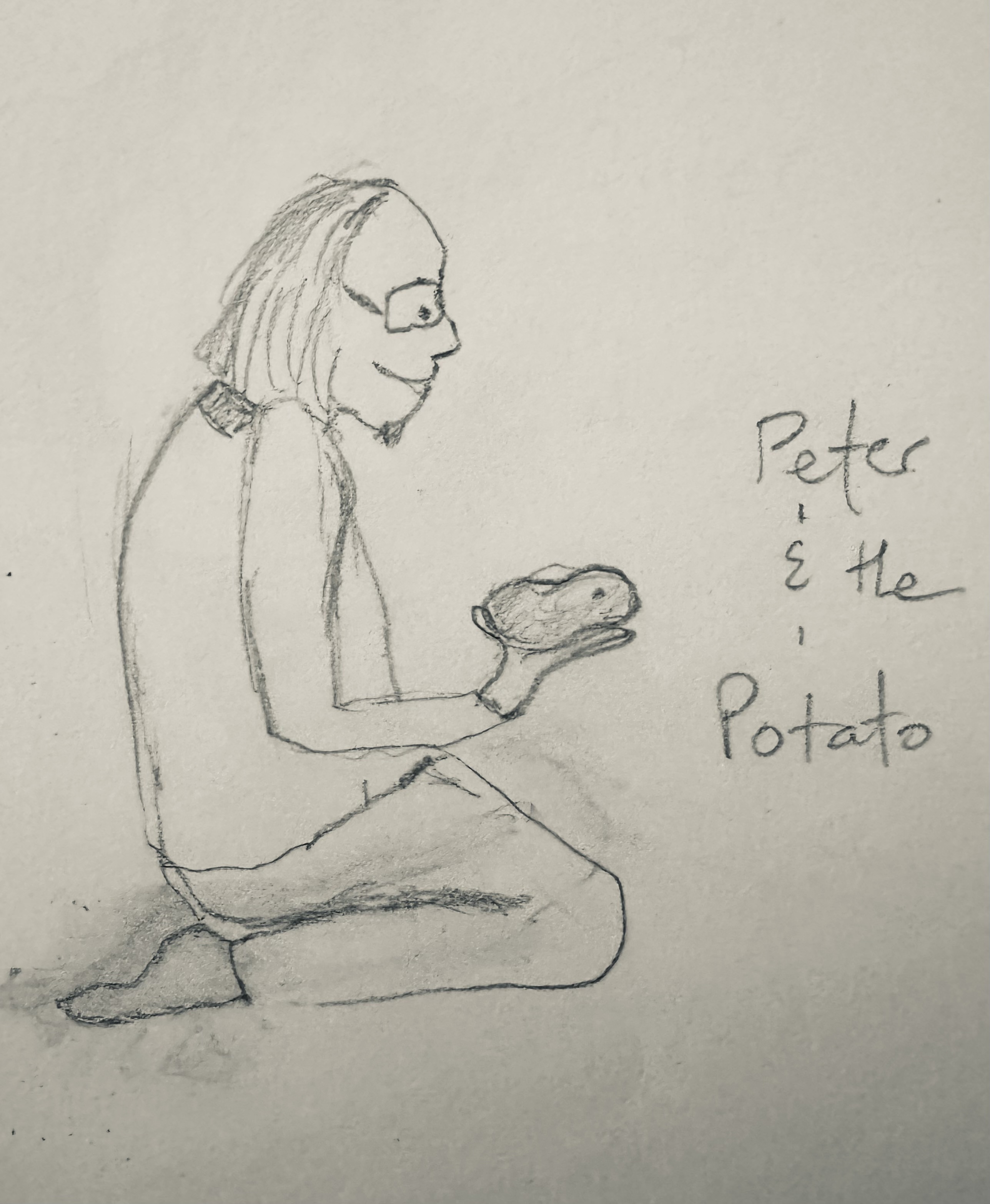
Oh Benji, Benji. Out of my peripheral vision, I could see Alma bent deep over his little body as I pumped the bike, swooshing down the road and around the corner. It took us only a minute to get to Peter’s. We knocked on the door, no answer, so I figured he was in the garden. We trod the narrow path beside the cottage. His back was to us as he sat on his haunches, examining a potato he had just dug from the soil. I looked fondly at the blue indigo cloth straining across the breadth of his back, a breadth of skin and warm muscle I had run my hands over just last night. My knees trembled with desire as I approached him with Benji now in my arms, Alma hobbling behind me.
An hour later, we sat in Peter’s front room on low velvet couches, drinking jasmine tea. Alma was holding a lifeless Benji in her lap. Peter had determined the injuries too severe to save him, so he’d administered a lethal drug in a long needle while Alma stroked the fur, matted with blood. Now, Benji looked so peaceful, curled up in my red wool shawl, Alma’s hand under his little skull.
Neither love nor money will persuade me to ever get another cat, Alma said, her voice soft and sad. She’d stretched her stick-thin legs out before her. Alma liked to wear sandals most of the year, except when it snowed, liked her feet to feel the air, and today I could see her thick greenish toenails and large bunions up close. She was terribly old.
Peter heaved a great sigh. Benji was a fine cat, he said. We had all loved Benji’s antics. He’d dance like Baryshnikov, trying to swat the clouds of gnats that floated above the garden beds in summer. His meow was a sweet question mark, meaow? And if you were lucky enough to hold him in your lap, you were blessed with a vibrational purr that set your thighs buzzing. A deep warmth and contentment emanated from his slight, stripey body. We all loved Benji.
Peter sighed again, shaking his head at the loss. We came to Peter with our sick and injured pets and even, sometimes, with our own ailments. His stinging nettle tonic has reduced my hay fever. His black cohosh tea has helped women all over our neighbourhood with menopause. Peter is not just a skilled herbalist. His magic hands can make me come just by stroking my breasts.
Several weeks after Benji died, a sunny June Saturday, I was at a yard sale with Alma. On summer weekends, Alma and I did the yard sale circuit together on my bike. I pedaled, and she rode sidecar. She has a thing for small dishes, tiny saucers and bowls, sized for fairies. I like to collect children’s books. I don’t have children, and I never will have. I’m fifty this year, but nonetheless I’m charmed by simple stories and illustrations. I would rather read three or four children’s books to myself at bedtime than a novel filled with crime, sex, mystery, and drama.
A book caught my eye, titled Part-time Dog. I opened the cover to the copyright page to check the publication year, 1965. I always do that first because I prefer old books. They provide the most comfort. I bought it, along with several others, two dollars for the lot. Alma found a gold rimmed bowl decorated with an image of two goldfish. Later, we had dinner at my place—a big salad and thick slices of my sourdough. After dinner I gave Alma a framed photograph of Benji dancing in the garden that I’d taken the year before. I’d caught him with both paws in the air, his golden eyes glittering with excitement. One small foot was off the ground as he leapt. The sun played over his orange and brown stripes, and the patch of white on his face made him look almost human. When Alma saw it, tears rolled down her wrinkly face. I moved next to her on the couch and put my arm around her. Not for the first time, Alma said that neither love nor money would persuade her to get another cat. Benji was the best and the last.
That night after Alma left, Peter slipped in my back door, and we made love silently. Through the open window, we heard whoo-hoo from the owl in the tall pine. I felt us smile in unison. What if this life was an illusion? What if I were a character in a children’s story about a happy seamstress and her herbalist? After Peter left, I lay in my narrow bed with the stack of new-to-me children’s books on the bedside table. Part-time Dog was on top, so I started with that.
Brownie is a small stray dog who shows up in the neighbourhood. He starts walking with the children to school, accompanies Mrs. Butterworth to the bank and watches Mrs. Tweedy rake the leaves in her yard. But he has no home, nowhere to go at night, so he sleeps under someone’s porch. Three women in the neighbourhood decide to adopt Brownie. It would be too much work for one of them to have him all the time. So, one gives him breakfast and keeps him in the morning, one has him in the afternoon and gives him his dinner, and another has Brownie every night, where he sleeps in his warm bed, safe and sound. I liked the book so much, I read it again, then fell asleep, dreaming of a little brown dog curled up at my feet.
In September, Peter noticed a white cat in his garden, sleeping on a warm stone, and he scratched her chin and stroked her, gave her some salmon he was cooking for lunch, and then asked around the neighbourhood. Nobody knew anything about her. She was a short-haired female with one blue eye and one golden, and he named her Nia. Peter worried he’d be taking her from her family, but still, nobody claimed her.
She claimed us, wandering back and forth from my cottage to Peter’s. When Peter gardened, she stayed close to his side, and when I sewed, she spread out on the table next to me, her purr matching the vibration of the sewing machine. And though Alma said she’d not have another cat for love nor money, there were many nights when Nia wandered into her cottage and curled up on her bed.
Christmas was simple and good. Alma, Peter, and Nia came to my cottage. We had a stew made with pumpkin from the garden and my sourdough bread. For dessert, Peter brought an apple cranberry pie he’d baked. We walked Alma home, then we went to Peter’s cottage because his bed is bigger than mine. I stayed all night. When I got up, Nia was nowhere to be found. After we drank our coffee, Peter went and called for the cat, but she didn’t come running, her white tail twitching and her little bell tinkling, as she usually did. Frost painted the windows white, and a crust of ice capped the blue bowl of water we kept outside for her. We went to my cottage next, but Nia wasn’t there. At Alma’s, we knocked at the door. No answer, so Peter opened it gingerly, and we called through. Silence. We walked to the back, to Alma’s bedroom, where she lay peacefully, her long white hair flowing out around her across the dark pillowcase, eyes closed in her wrinkled brown face. We knew her life was over. Nia lay at Alma’s feet, purring deep and low.
Later when we cleaned Alma’s cottage and found a copy of her last will and testament, we discovered she’d left the cottage to both of us. When Peter asked me to marry him in the spring, I said yes, you make me happy. But there’s one condition. Let’s keep things as they are.
We sleep sometimes at my place, sometimes at Peter’s, and other times at Alma’s. We kept things the same. The blue sling that kept Benji close to Alma’s chest hangs on the hook near the door, the framed photograph of him on the living room wall. The tiny dishes, neatly arranged, are displayed the way Alma liked them, on open shelves in the kitchen. Nia wanders from one cottage to the other to the other. She knows that food, water, and love are everywhere.
Note: Part-time Dog is a book I read to my children by Jane Thayer, pictures by Seymour Fleishman
In mid-December, I bought a green glass jug in a second-hand store, half price. My aspiration was to make a beautiful winter bouquet for my friend, Lillian. I bought a bunch of silver dollar eucalyptus and two dozen white carnations. I envisioned white wintry bursts among the silvery green, but the more I trimmed and mixed the carnations with the stems of eucalyptus, the sillier and more incoherent it looked. I took basic Ikebana but still haven’t a clue how to make flowers and plants look good.
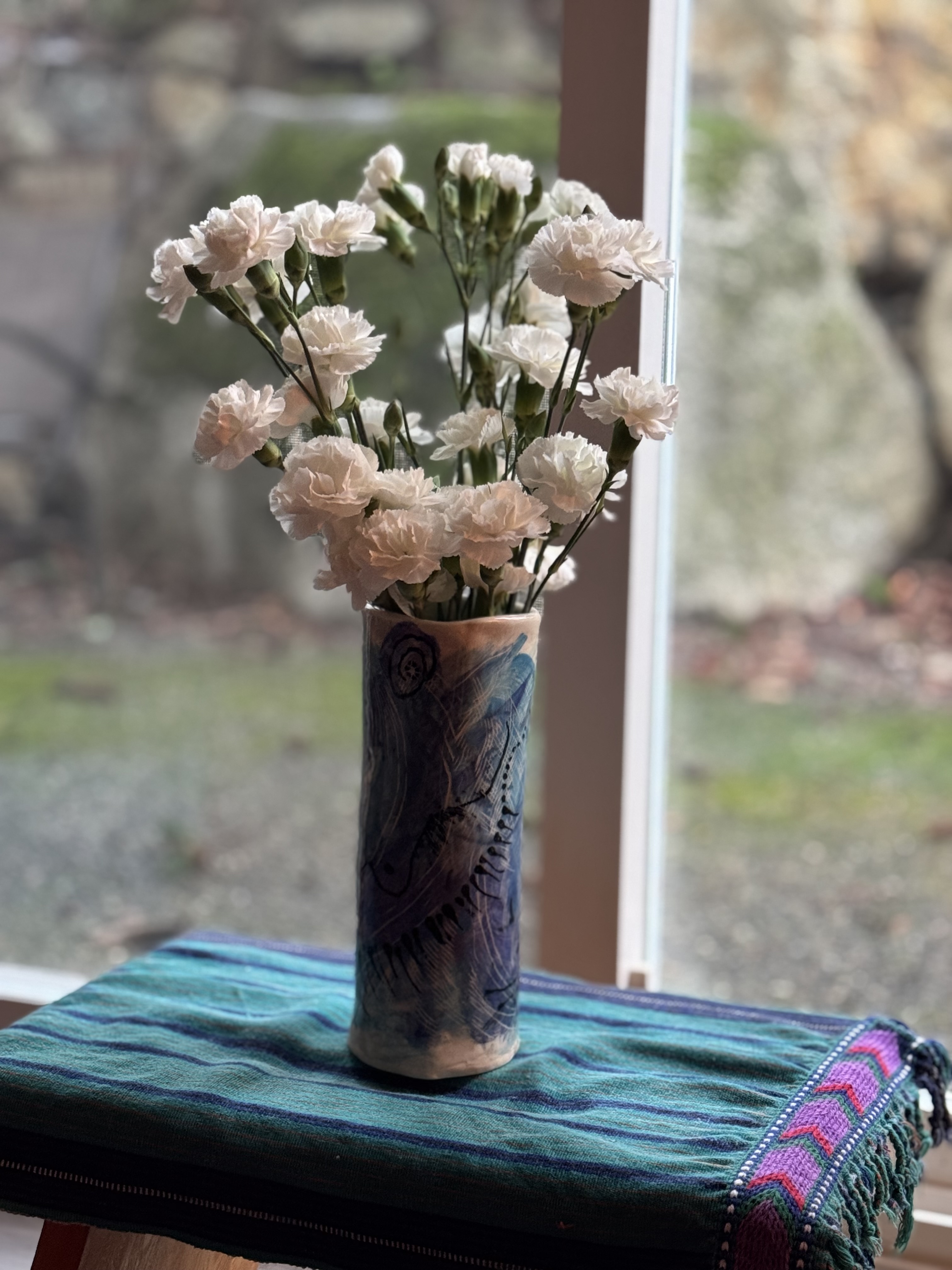
Finally, I used only the eucalyptus, splayed out in a free-fall arrangement. I attached a few small, red shiny balls to the stems, and the effect, I hope, was Christmassy and charming, if a bit messy. Lillian said she loved it. (But what could she say, really?) I was going to throw out the unused carnations, but it seemed such a waste, so I put them in a white and blue vase and placed it in my study on a low stool covered with a blue-green cloth.
I don’t like carnations, or I didn’t think that I did. I’ve seen too many sad, slender bunches wrapped in cellophane at the mini-mart next to the hospital. They make me think of last-minute purchases for the death bed, cheap flowers that outlive the person you visited. They seem so tight, orthodox, banal. Whorls of perfect, serrated petals, every bloom the same.
But they’ve grown on me. As I spend hours in their presence, they’ve become real. You could say I’ve become intimate with them. I sit here now, the last day of the year, gazing at their fresh ordinariness. The carnation is the sturdy, faithful flower that will see you through. Perhaps they are flower of the year: commonplace as canned milk. Carnations are one-foot-in-front-of-the-other flowers. Quotidian flowers. Bread-and-butter blooms. See you through the hardest times. Last for weeks. Nothing special.
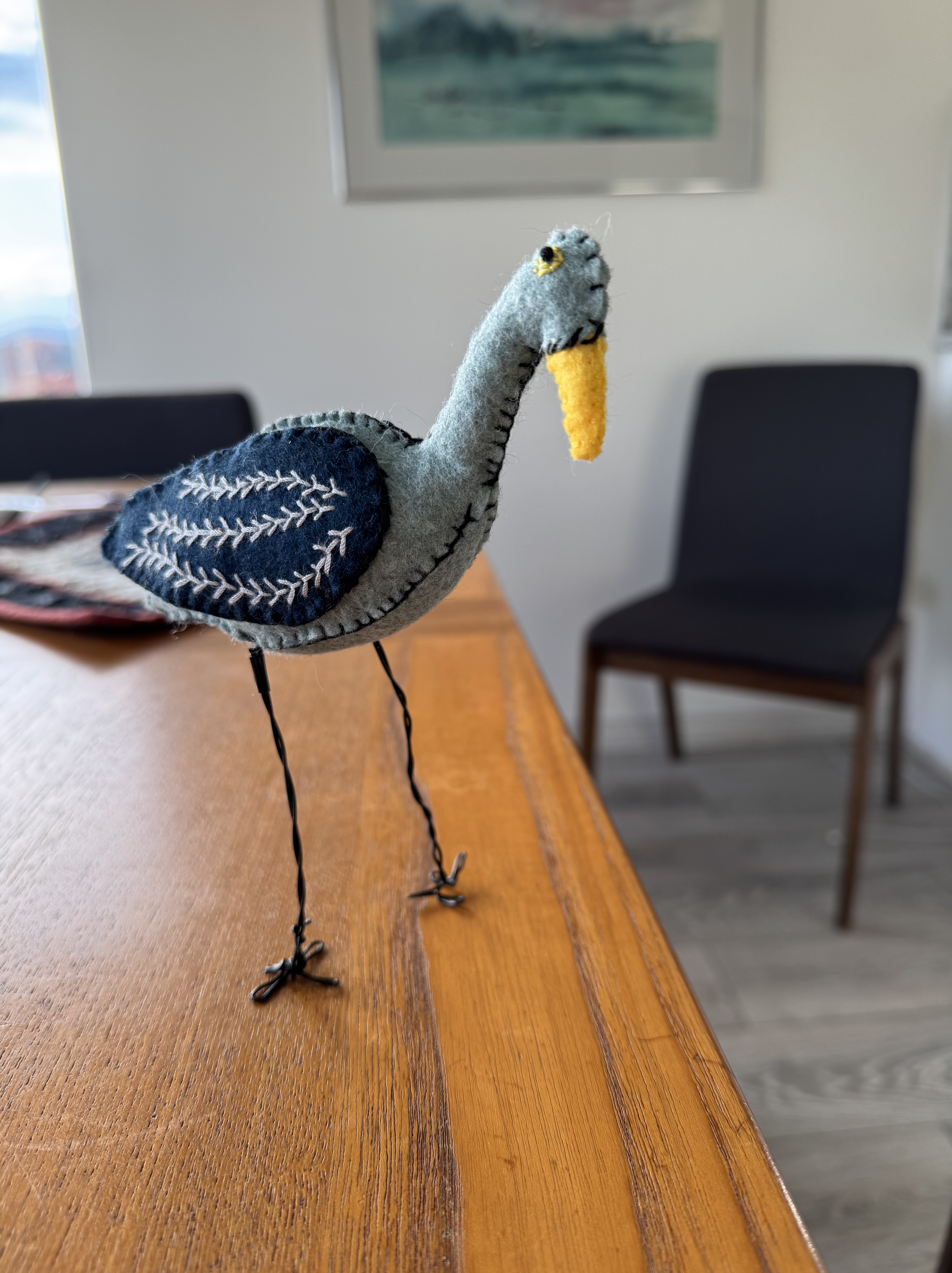
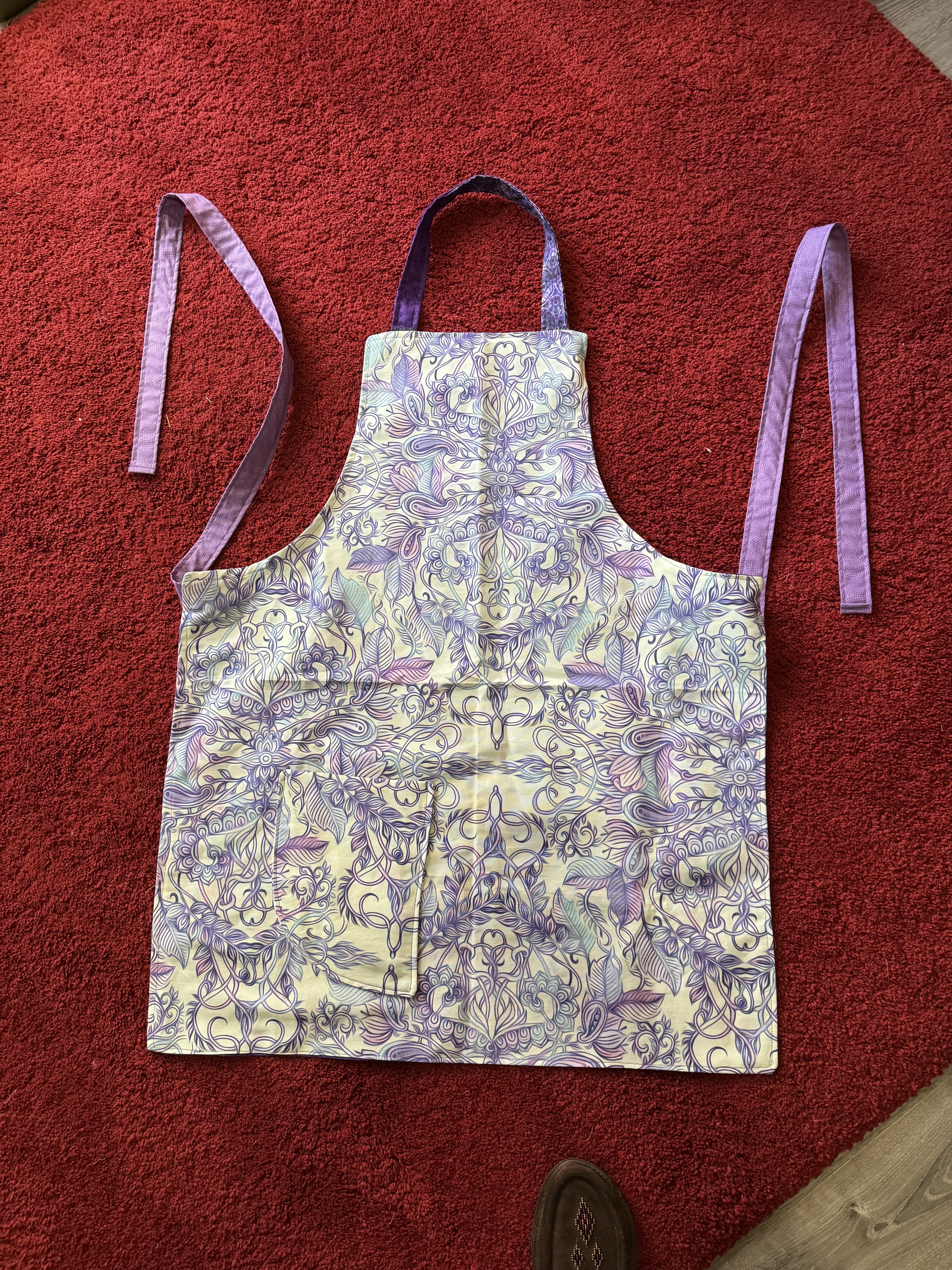
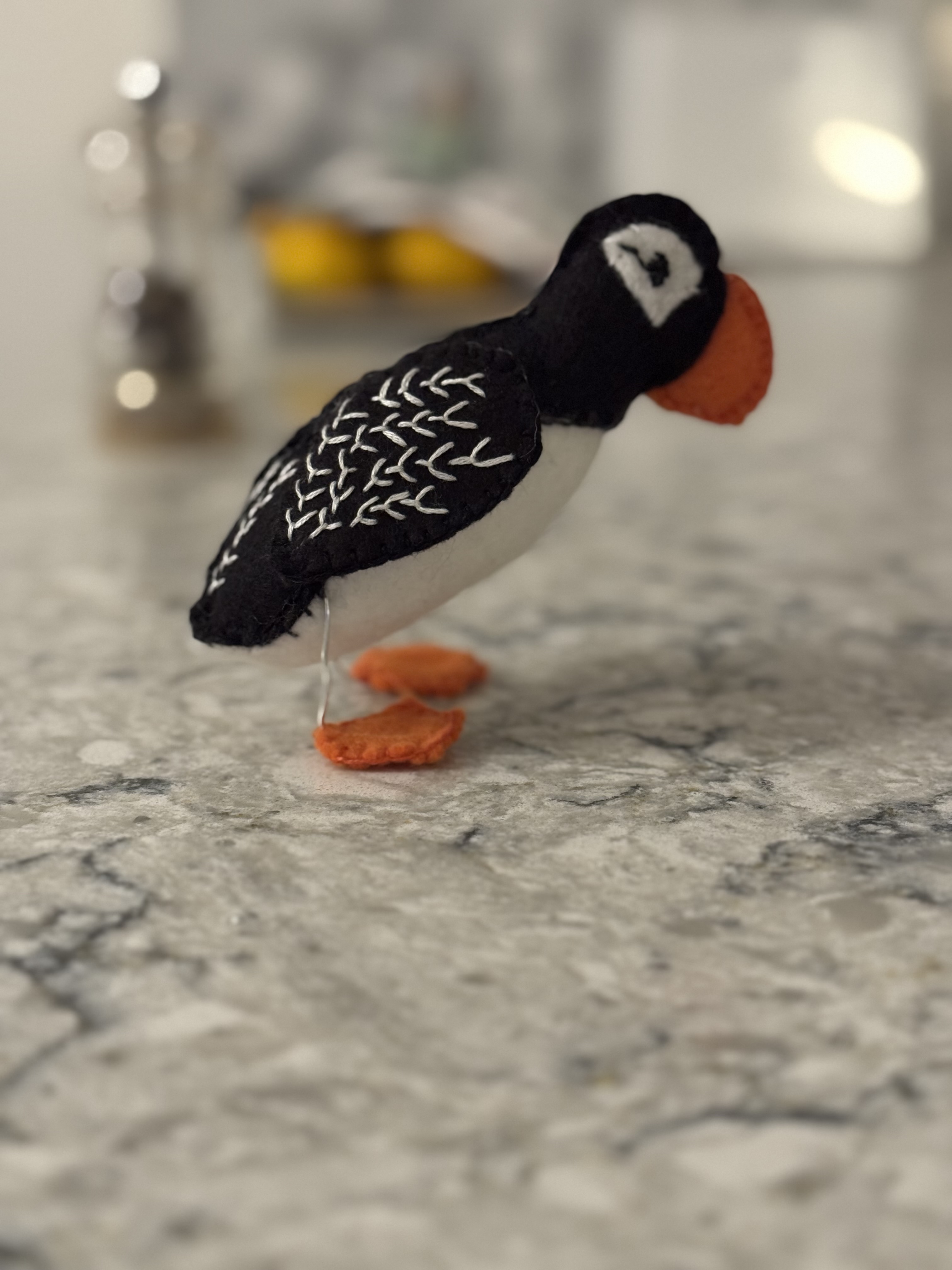
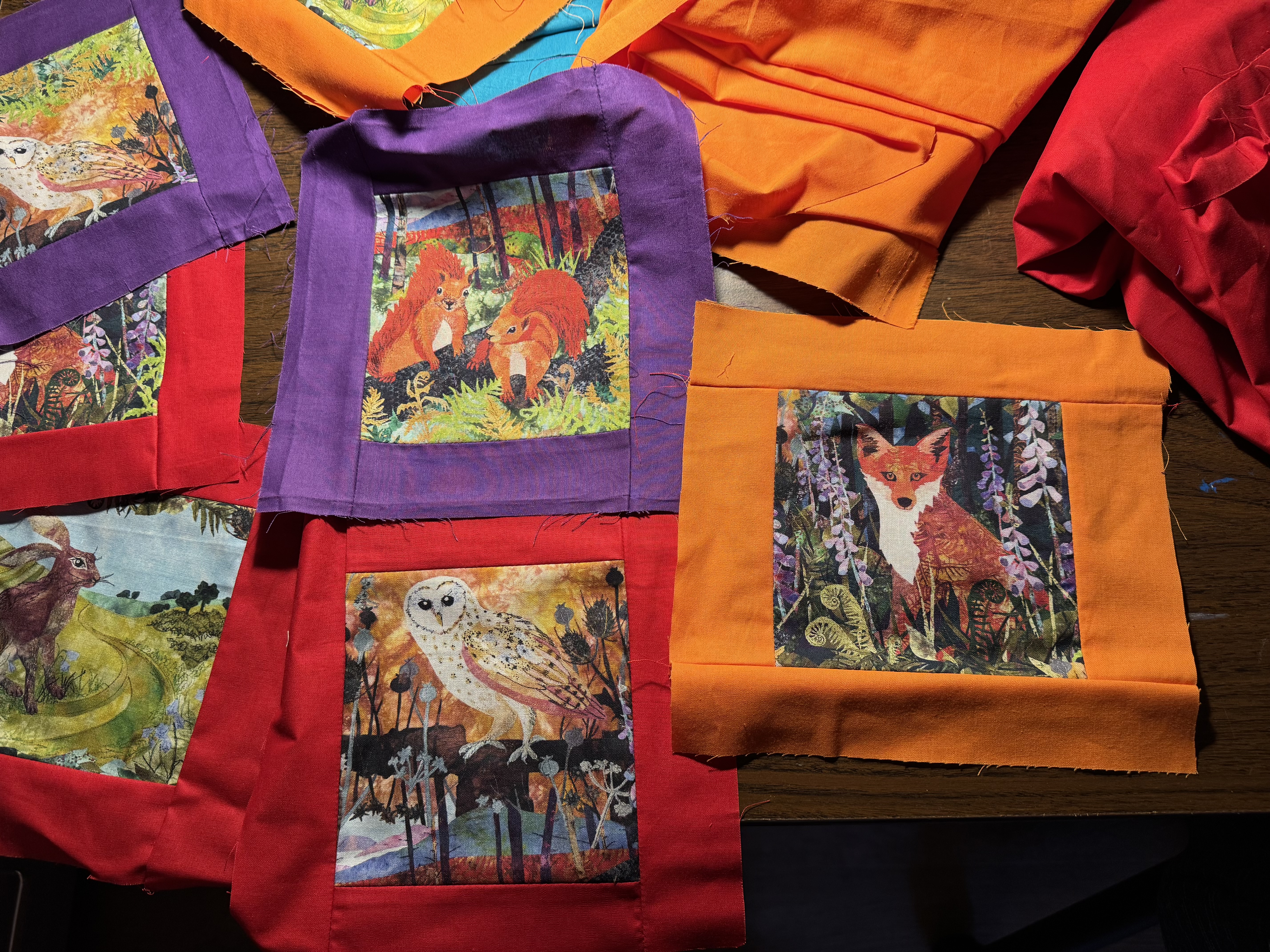
Although 2024 was my first year of so-called retirement, and thus I was given twenty additional hours each week, I wrote less, and I sewed less. (A few felt birds for family and other little felt creations, an apron, a crib quilt start, a fur-lined bag.) I did finish an editing certificate I started in 2020, which is a relief. And I made a lovely new friend and deepened existing friendships. I started a volunteer gig at a non-profit arts and crafts shop in August that has led to meeting many interesting people. Bonus: I get to surround myself with a messy profusion of materials that inspire me.
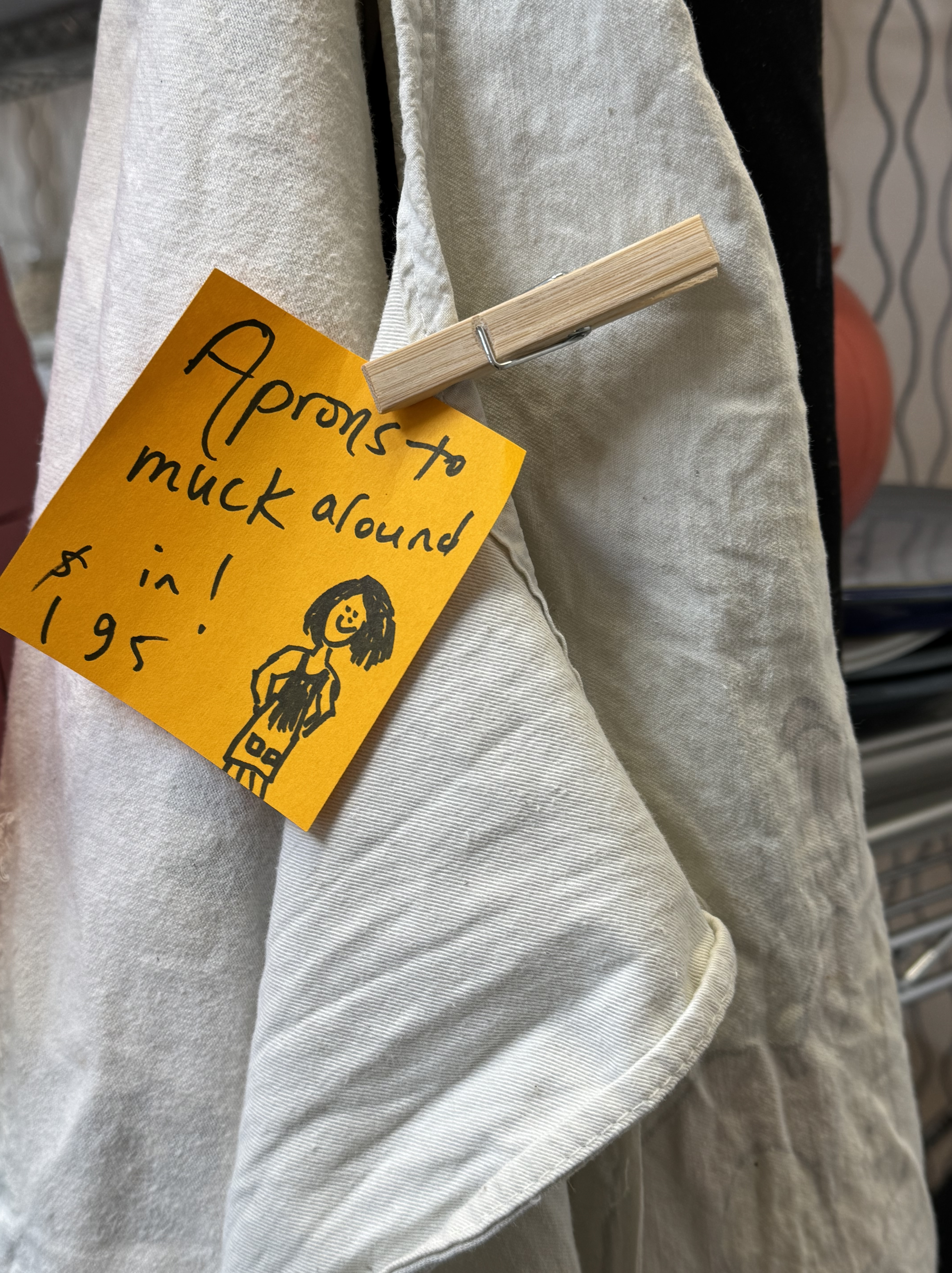
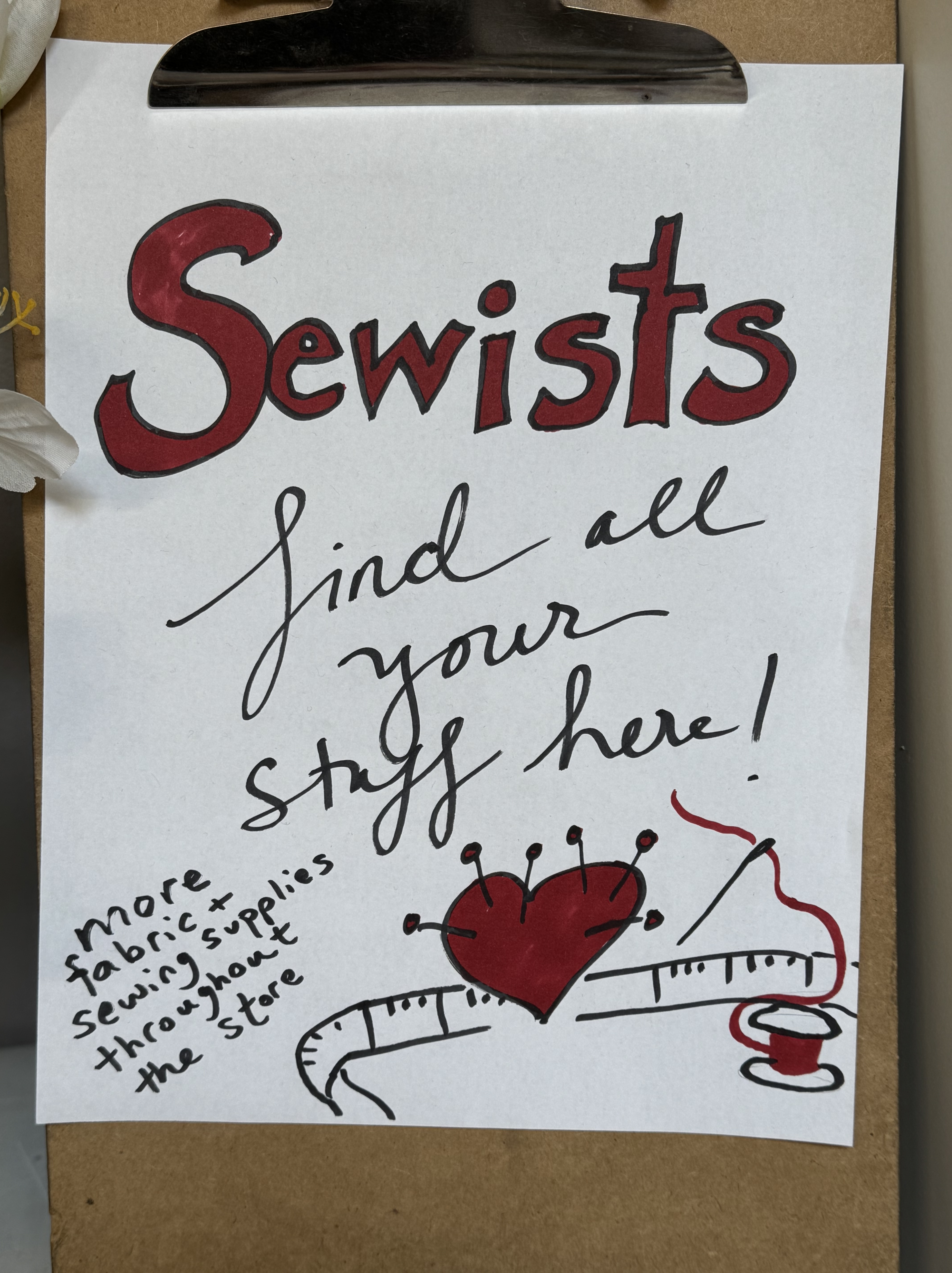
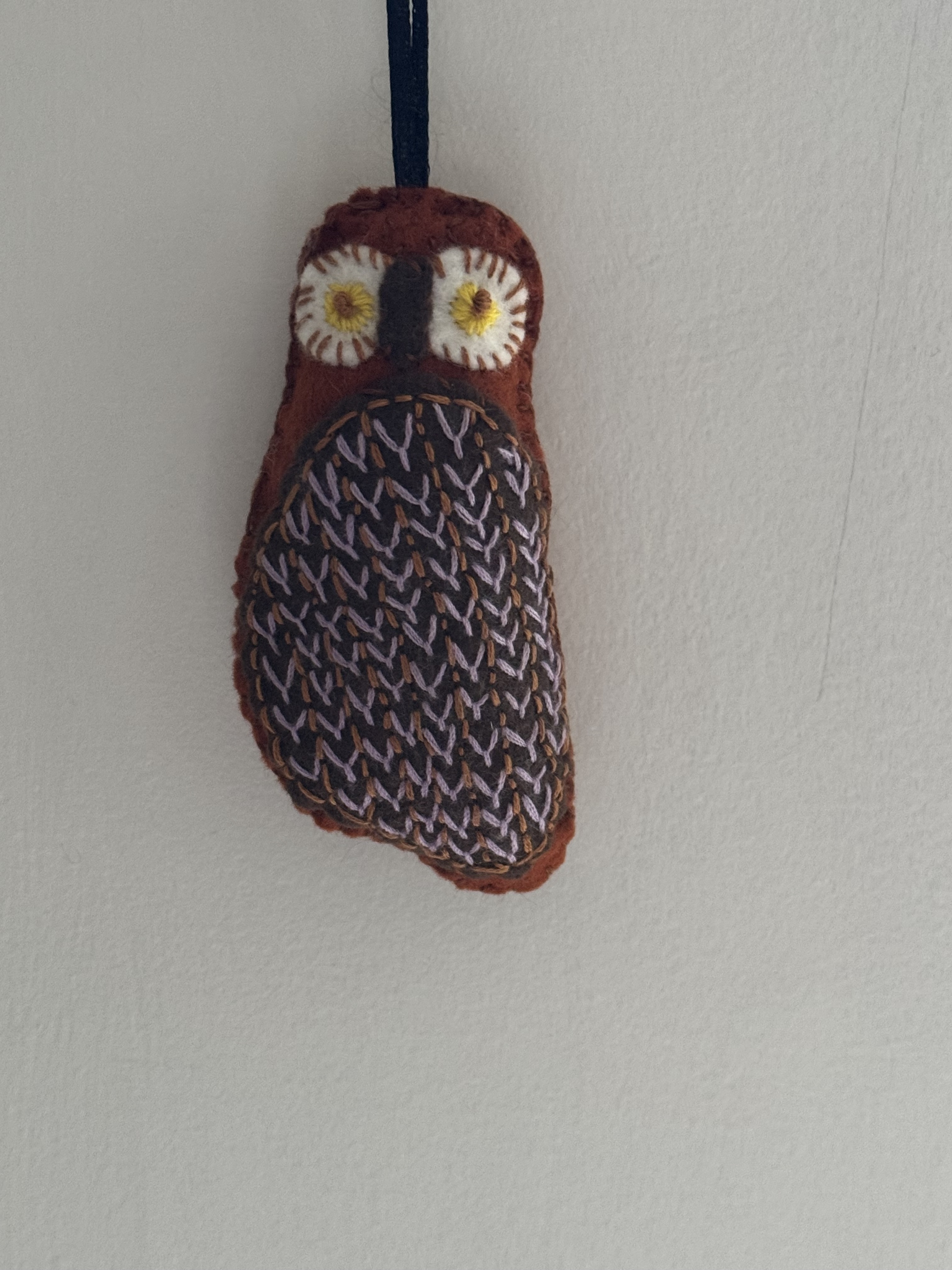
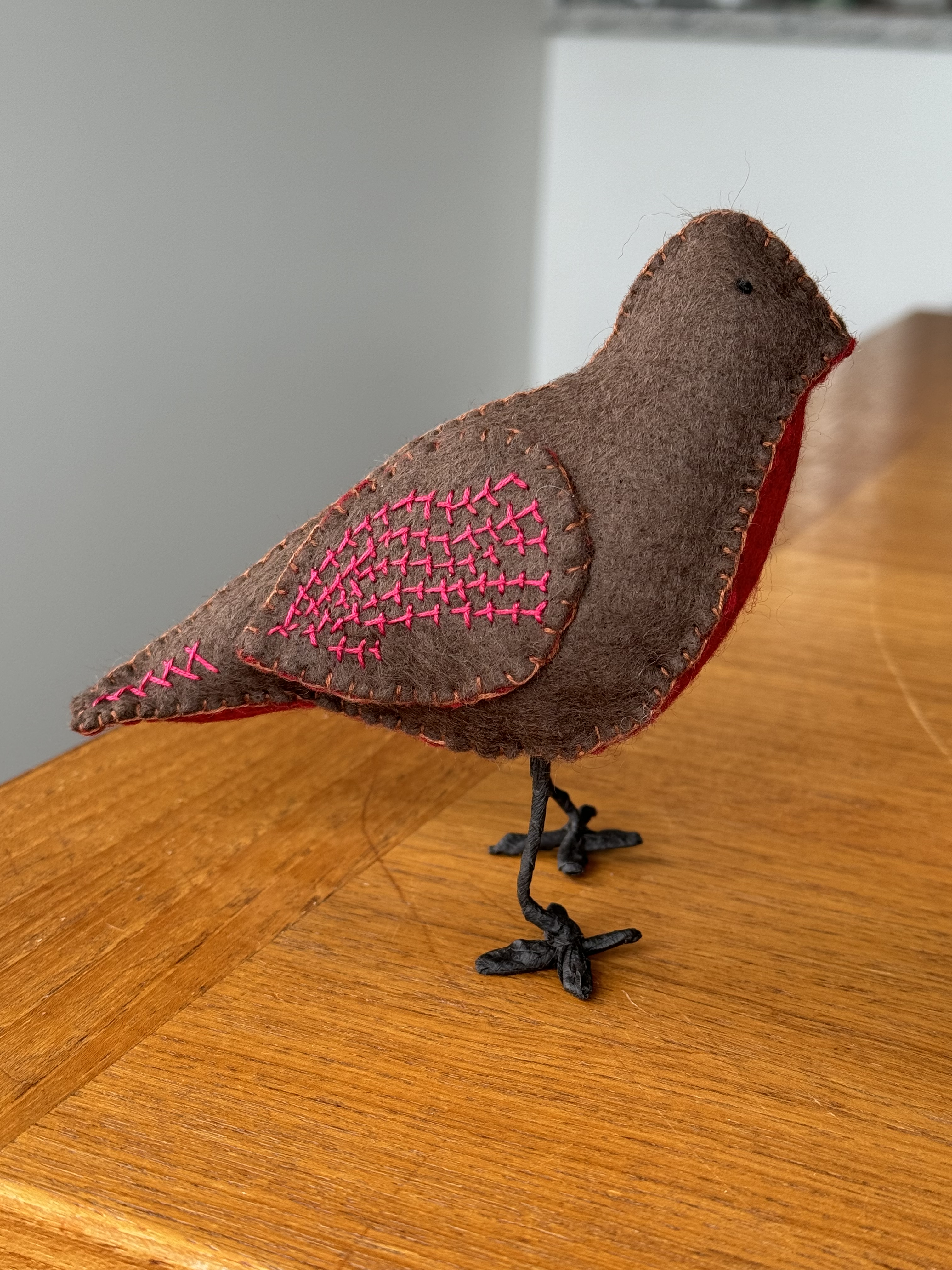
Kathryn’s robinAllison’s pigeonEvan’s heronNancy’s reversible purple apronNancy’s reversible purple apronSarah’s swanI made felt hearts for friends at Christmas.Nat’s puffinNat’s puffinI started a quilt for Lillian’s great grandson, FoxWilson the owl, a gift for Michael Magic bag lined with fake fur for Nat’s 30th birthdayWomen in Need’s Upcycle and Craft store on North Park Avenue. I work there on Thursday afternoons.
This year, I listened to probably one hundred dharma talks on Dharma Seed, with a broad aspiration of becoming more intimate with life—accepting whatever’s happening in my heart, whatever’s happening in the world. Making friends with wild mind. Accepting the truth of the way things are.
I read so many books this year. A couple that stick with me are Rebecca Solnit’s memoir, Recollections of My Nonexistence and The Age of Loneliness, a book of essays about life during the sixth extinction by Laura Marris.
Solnit writes a lot about being a woman. That’s what her title gestures toward—the peculiar “nonexistence” of being female in a patriarchy (remember mansplaining? She is behind that neologism[i]). She draws on John Berger’s 1972 Ways of Seeing, which I’ve known about for years and now am determined to read. She quotes words from him that jibe with my experience: “To be born a woman has been to be born, within an allotted and confined space, into the keeping of men. The social presence of women has developed as a result of their ingenuity in living under such tutelage with such a limited space. But this has been at the cost of a woman’s self being split into two.”
Perhaps that sounds dramatic in the Global North in 2024, but that has been my experience. Perhaps it’s different for lesbians. Perhaps it is different for women of subsequent generations, but Solnit and I were born three years apart (1961/1958), so we grew up at roughly the same time. Berger goes on,
“A woman must continually watch herself. … She has to survey everything she is and everything she does because how she appears to others, and ultimately how she appears to men, is of crucial importance for what is normally thought of as the success of her life. Her own sense of being in herself is supplanted by a sense of being appreciated as yourself by another.”
Solnit calls Berger brilliant and generous, to be able to imagine a woman’s experience, and I agree. What he writes here feels just as real as the carnations in front of me. Reading the passage and feeling its truth is freeing. No action needed, just awareness.
Similarly, truth pinged through me when I read Laura Marris writing about the age of loneliness. We become lonelier as we bear witness to the drastic reduction, or “great thinning,” of ordinary animals. Marris draws on the work of naturalist, Michael McCarthy, who writes of our baby boomer age group, “As we come to the end of our time, a different way of categorising us is beginning to manifest itself: we were the generation who, over the long course of our lives, saw the shadow fall across the face of the earth.”
Reading this series of essays, elegies to Earth as the shadow descends and animals disappear, I was gripped by a grief so deep I sat for a time and just cried. Again, the truth is freeing. Let’s not deny that this is happening. It’s really happening. We can still enjoy the beauty that is here.
In keeping with my mood of asceticism, I recently deleted my Facebook and Instagram accounts. Unlike the birds who used to sing outside my window, FB and IG will not be mourned. I feel light as I step through life with a new red pedometer safety-pinned to my leggings (the pedometer frees me from carrying a “smart” phone to count steps). Michael, Marvin, and I amble down to the beach at Thetis Cove to watch the sky change. Rippled water reflects a bank of pink clouds.
Thank you for reading. In the coming year, may you experience moments of lightness in a shadowy world.
Berger, John. 1972. Ways of Seeing. Penguin. Marris, Laura. 2024. The Age of Loneliness: Essays. Greywolf Press. McCarthy, Michael. 2015. The Moth Snowstorm: Nature and Joy. New York Review Books. Solnit, Rebecca. 2020. Recollections of My Nonexistence. Viking.
[i] From Wikipedia: The term mansplaining was inspired by an essay, “Men Explain Things to Me: Facts Didn’t Get in Their Way”, written by author Rebecca Solnit and published on TomDispatch.com on 13 April 2008. In the essay, Solnit told an anecdote about a man at a party who said he had heard she had written some books. She began to talk about her most recent, on Eadweard Muybridge, whereupon the man cut her off and asked if she had “heard about the very important Muybridge book that came out this year”—not considering that it might be (as, in fact, it was) Solnit’s book. Solnit did not use the word mansplaining in the essay, but she described the phenomenon as “something every woman knows”.
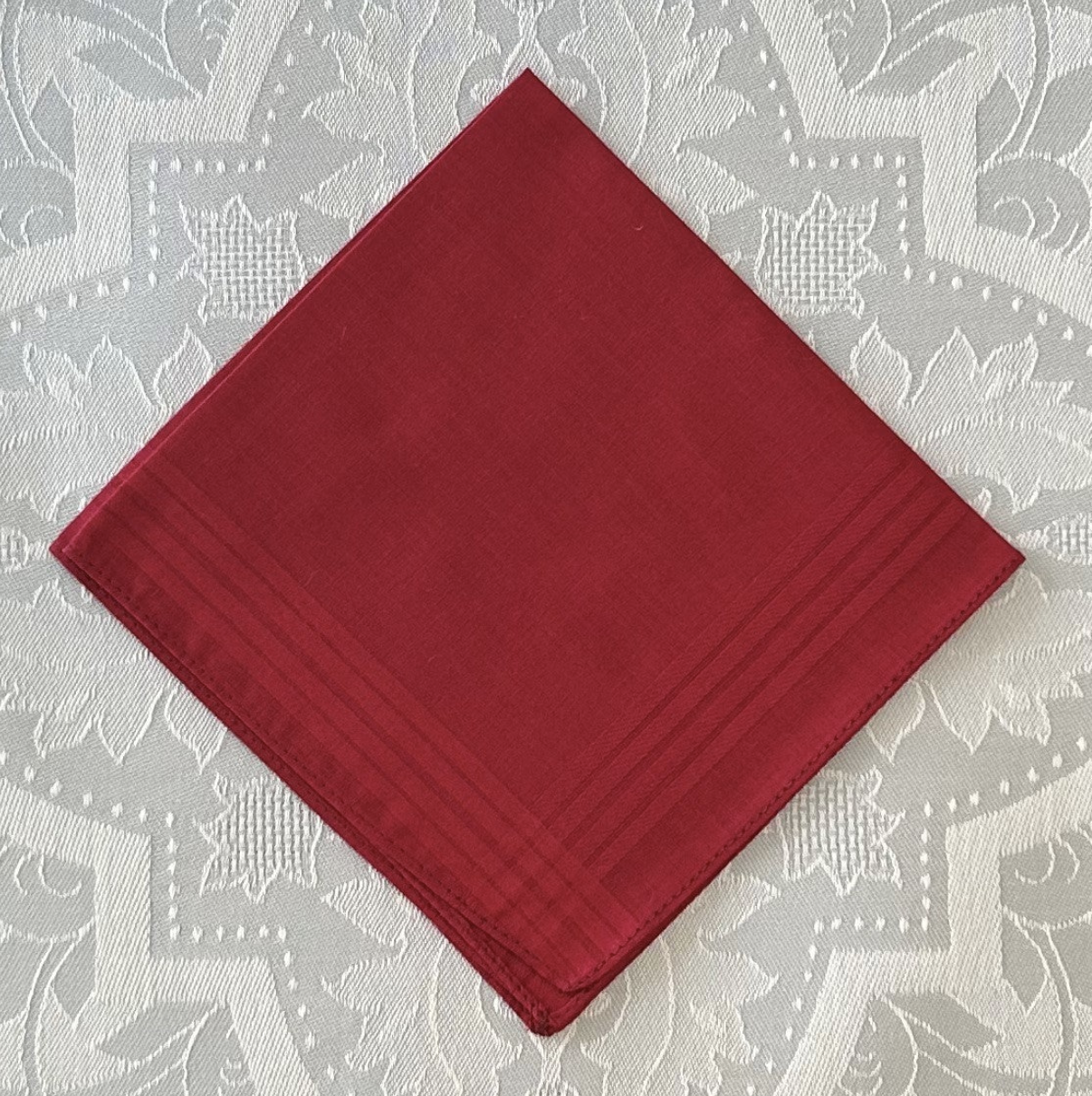
On Thursday, two days after the US election, I cycled to my volunteer gig at the craft store. Perhaps one of the last good-weather days for bike riding. No rain, trees shedding their remaining coloured leaves, a bright blue sky. The wind rushed into my face as I flew along the bike path, and my eyes started to water, which set forth a gush of tears because grief is like that. It sits inside you—a tight, impacted ball, unexpressed—and then some external trigger unfurls it like a flag. Eyes watering from the wind or a song or a television show. I cried all of the way, tears streaming down my cheeks, salt drops flying back into the wind that gave birth to them. I was happy to find in my purse a ruby-red cotton hanky to mop up the tears. Double delight.
I locked my bike then stopped at the Parsonage Cafe and waited for my order, a latte and warmed blueberry muffin with butter. The latte came first, and I asked about the muffin because I thought maybe they’d forgotten about it. The friendly counter guy said, “oh, it takes a few minutes because they warm muffins in the oven.” I smiled. When I got to the craft store, I turned on the lights and heat, cashed in, then took the warm muffin out of the brown paper bag. Two halves fell open, steaming. Salty butter had melted into the crumb to mix with soft, warm blueberries. I was expecting a little plastic tub of butter and a plastic knife, so what a delight. Thank you for doing it, delightfully, the old way. Like cotton handkerchiefs instead of Kleenex.
During my shift I met interesting people, as I do every week. Two women came in, one with an unusual looking buggy, not a baby buggy, but a pet buggy. Two zipped, mesh compartments were stacked on a wheeled frame. She came up to me immediately. “I have my two cats with me, is that okay?”
“Of course. I love cats. I’ll come to meet them.”
“This is Ronny, and this is Jimmy. Jimmy is a bit shy; you can see he’s at the back.” I could see two lean black cats—brothers I determined later—through the fine mesh. Ronny sniffed the hand I lay against the fabric. Jimmy just watched with golden eyes.
The two women browsed the store, staying a good long time. Other customers came in and out. A few years ago, I would have fretted over it. I actually didn’t know what the store policy was regarding animals. Was it okay that cats were in the store? Did other customers have allergies? Did somebody dislike cats? Were we breaking a rule? But I didn’t say a thing, and I didn’t worry. (I recognized, later, the delightful absence of worry). I just listened to the lovely chatter that fills the store and makes me want to come back and work another Thursday, even as I constantly wonder if it’s the right volunteer gig for me.
Women (mostly) talking about life and about their crafts and projects, oohing and ahhing over the treasures they find. Often chatting with me about what they’re working on, a crone stick or a pocket skirt or an appliqued cat pillow. Or they tell me whom they are buying materials for—a daughter learning to knit, a grandchild who loves stickers.
The cat owner talked with her friend, but she also spoke periodically to her cats. “Oh, Jimmy, what a nice stretch you’re having!” And “You boys are so good, so patient.” When she came to pay, she had a bag bulging with Christmas foam shapes. “I’m giving these to our craft leader at the church; she’ll have the children making wonderful things.” I don’t know for sure, but I hazard a guess that she is one of those revered creatures, a childless cat lady, the most generous and loving people around. Delight!
After my shift, I cashed out, set the alarm, turned the key. I unlocked my bike, then looked up at the darkening sky. It was only 4:15, but daylight savings is over and we’re in for early nights. I looked at my bike light and wondered how to turn it on. Somehow, I had forgotten. It had been months since I’d used it, not needing extra light during my summer rides. I tried a few things, but nothing worked, so I walked half a block to North Park Bikes. Leaving my bike just outside, I went into the store’s lower level where they do repairs. A friendly guy with a ginger beard asked if he could help. “I’m kinda embarrassed, but I’ve forgotten how to turn on my bike light.”
“Oh, don’t be embarrassed, just bring it in, we’ll figure it out.” I wheeled it in, and the first thing he tried (keep steady pressure on the + button) worked. “Thank you sooo much!” A simple, delightful thing: help asked for and freely given.
At the end of the day, I had many delights to gather (I have been inspired by Ross Gay’s Book of [More] Delightssince I finished it a few days ago; it’s just as good as the first book). Tears released into the wind, cotton hanky, butter melting into a warm muffin, sweet customers, absence of worry, childless cat ladies, help with my bike.
Last night in bed I was reading Dreyer’s English: An Utterly Correct Guide to Clarity and Style, an amusing book by Benjamin Dreyer, a Random House copy editor. I happen to be two weeks into my final six-week course for Simon Fraser University’s Editing Certificate, so my late night reading aligned with the language-focused mood I’m in. I was enjoying Dreyer’s humour when I read this sentence, which made me sit up in bed:
“You might—or might not—be surprised to learn that many copyeditorial man-hours have been expended over the decades as to the correct construction of the common vulgarity—and an enchantingly common vulgarity it is—used to describe an act of fellatio.” After the term “man-hours” was an endnote: “I know I’m supposed to prefer and use ‘person-hours’ or ‘work-hours.’ I can’t, so I don’t. Please forgive me.”
It wasn’t the discussion of whether or not to use a hyphen with blowjob (Dreyer’s preference is no hyphen) that bothered me. I’m no prude (I hope). It was the insistence on “man-hours” without even trying to find an alternative.
What about just writing “many hours have been expended by copy editors over the decades”? Such an easy way out of “man-hours,” a term that makes the labour of fifty percent of the world’s population disappear. I wonder if Dreyer is just paying lip service to the requirement of conscious editing, editing that does not harm or marginalize. Karen Yin created The Conscious Style Guide, such a useful resource. Countless other editors and writers have worked to use language carefully and critically as a force of good in the world. Dreyer has power, privilege, and pull, and he could use these forces for good by making some small adjustments.
So, there I was, lying in bed, irritated by “man-hours.” What about the millions of “man-hours” women spend breastfeeding? And that started me thinking of breastfeeding, women feeding their infants and toddlers with nourishment produced from their own bodies. Once I started to think of breastfeeding, scenes from two novels came into my mind, one from John Updike’s 1968 Couples and the other from John Steinbeck’s 1939 Grapes of Wrath. In both scenes, an adult man is sucking at the breast of a lactating woman. Updike’s scene is highly erotic (or at least, I found it so when I read it in my twenties), whereas in Steinbeck, the character Rose of Sharon is offering her breast to a starving man, an image I find disturbing. I’ve forgotten so much from the thousands of books I’ve read in my life. But those two scenes have stayed with me throughout the years.
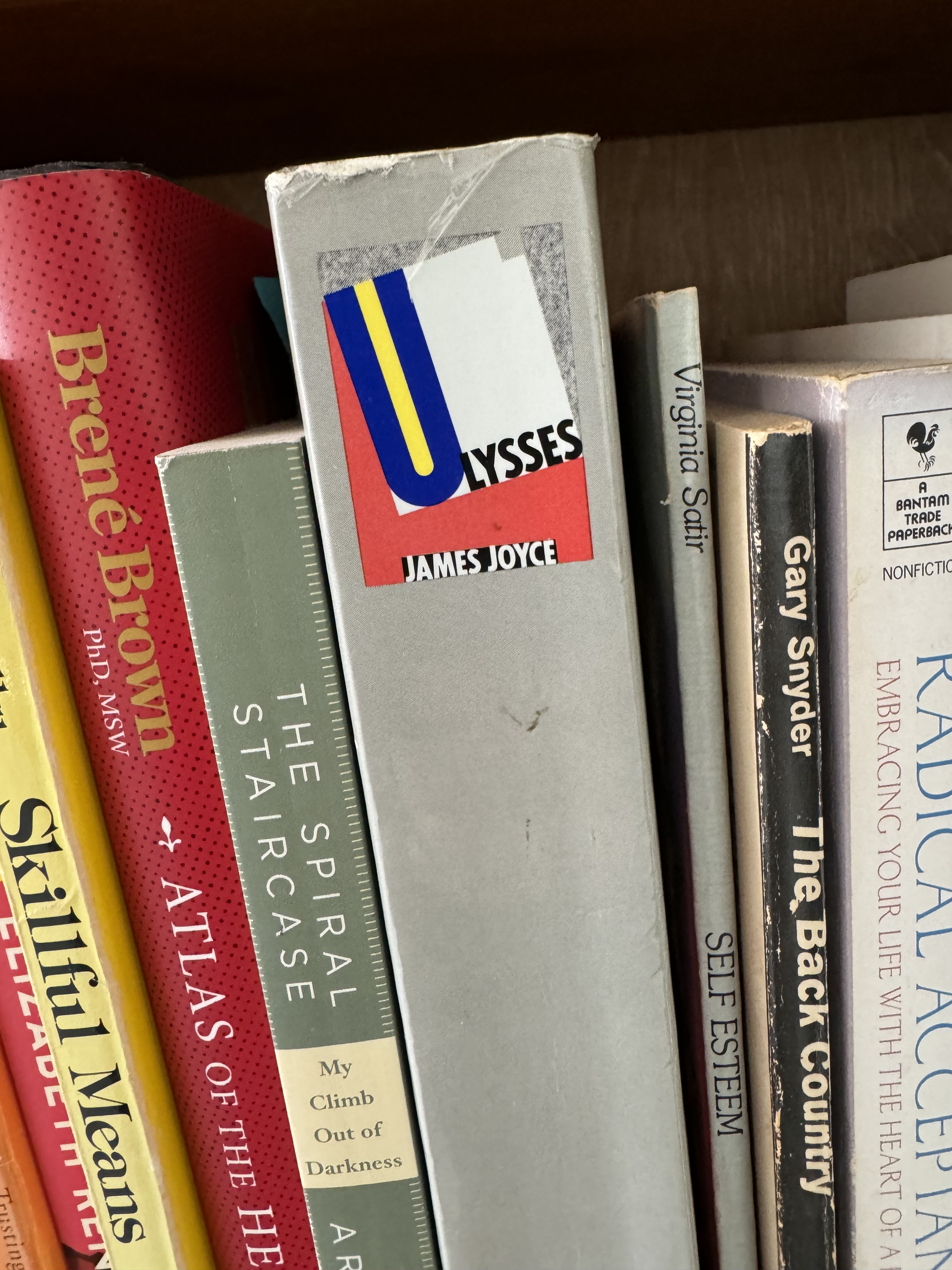
In our new house, we have a bookshelf at the top of the stairs, so every time I ascend to the main living space, a patchwork of book spines meets me like an old friend. The elongated blue U on the thick spine of James Joyce’s Ulysses always catches my eye. My mind likes to repeat itself, going back to well-trod memories, and so I return over and over—with nostalgia—to the summer in grad school when I studied that great modernist novel. It was an intense, six-week seminar course. A small, intimate group of students, mostly women, met for three hours, twice weekly. Each student had to present several times on chosen topics. I was working hard. Add to my hard work and yearning for an A, the presence of a provocative, flirtatious professor who created a highly charged atmosphere in the hot seminar room.
I was immersed in the complexity of Joyce’s schema for the novel, based on Homer’s Odyssey, and by turn delighted then confused by his fresh, arcane, mysterious writing. I could slide down rabbit holes every day, trying to parse meaning.
One day, I took the boys to the beach at Thetis Lake and brought the novel with me. We went in for a swim, and as we came up to our beach blanket where I had laid Joyce’s novel, my six-year old son, who was learning to read, said to me, “Why are you reading a book called Useless?” I laughed. I could see how his mind’s eye read useless; so many of the same letters as Ulysses. I reported this to my professor next class, and he couldn’t stop laughing. He thought what my son said was inadvertently profound, the title Useless pointing to the modernist idea of the inutility of art: art for art’s sake.
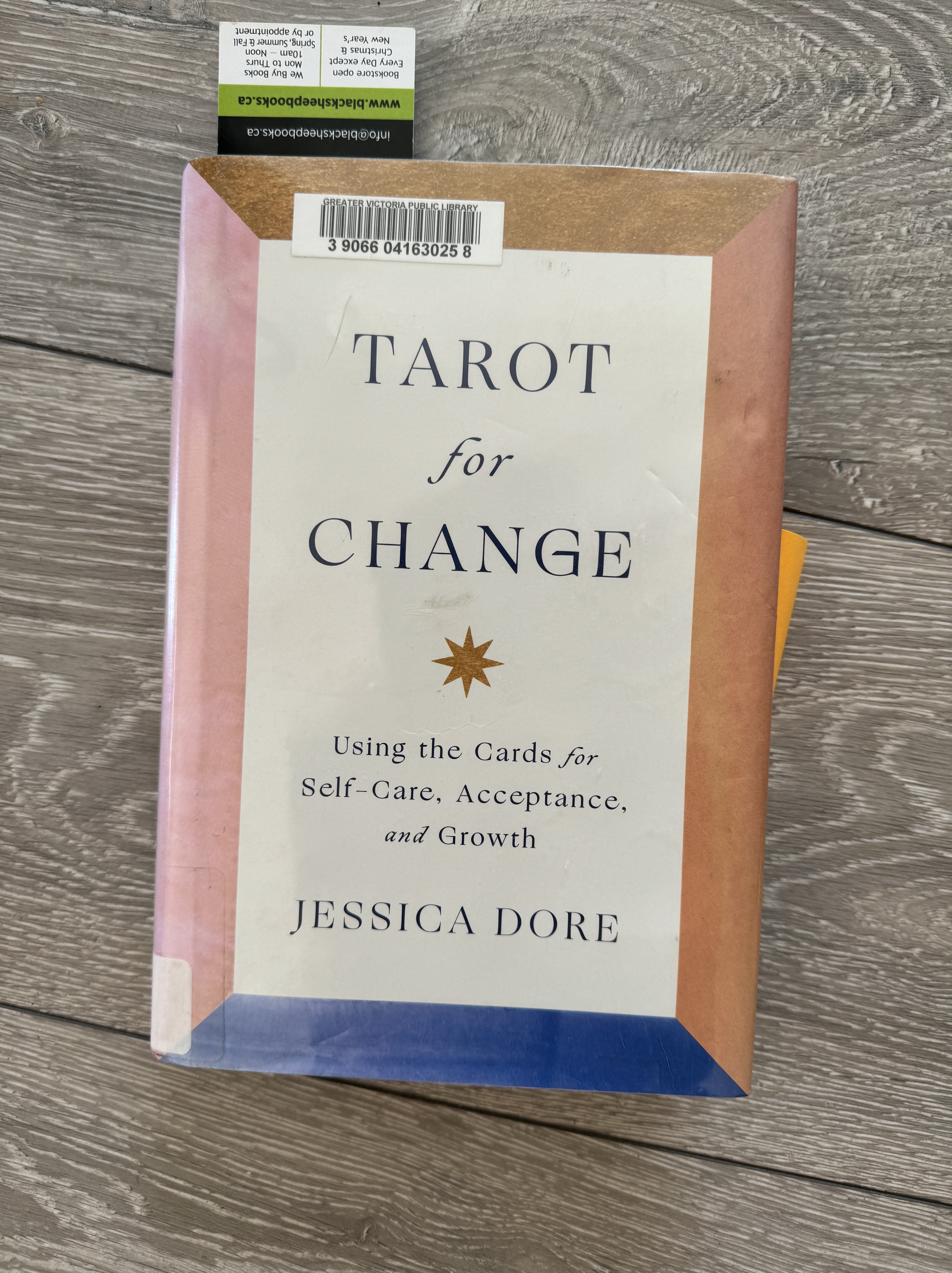
In the mornings, I’ve been trying to not grab my phone immediately, but instead, to read and write. I’m reading Jessica Dore’s Tarot for Change: Using the Cards for Self-Care, Acceptance, and Growth. I first discovered Dore when my husband, Michael, told me about her newsletter, Offerings, on Substack. I love the way she thinks about books and tarot and life, so I borrowed her book from the library, and it’s on the coffee table, ready to dip into whenever I sit down for a spell. It’s funny, the actual tarot card she is writing about (and she writes about all 78) doesn’t matter much—each page has some nugget of wisdom, wisdom from her life experience, and from theology, psychology, literature; wisdom drawn from C.G. Jung, D.W. Winnicott, and newer therapists like Marsha Linehan and Steven Hayes. I enjoy the nuggets.
Here’s an example of a Dore nugget—this is from her comments on the Empress:
“The Empress represents nature and is, in my experience, one of the most misunderstood arcana in the tarot. People love her but can’t put a finger on why. I think it’s that we long to be in our bodies but have forgotten how, and she shows us what it would feel like if we could. Many of us think of the wild as something ‘out there,’ and I think that’s sad for us. It shows how cut off we are from the fact that somewhere deep down and old we are still the wild, and the body—with all its cycles and rhythms and ebbs and flows and generation and degeneration—is proof.” (pp. 47–48)
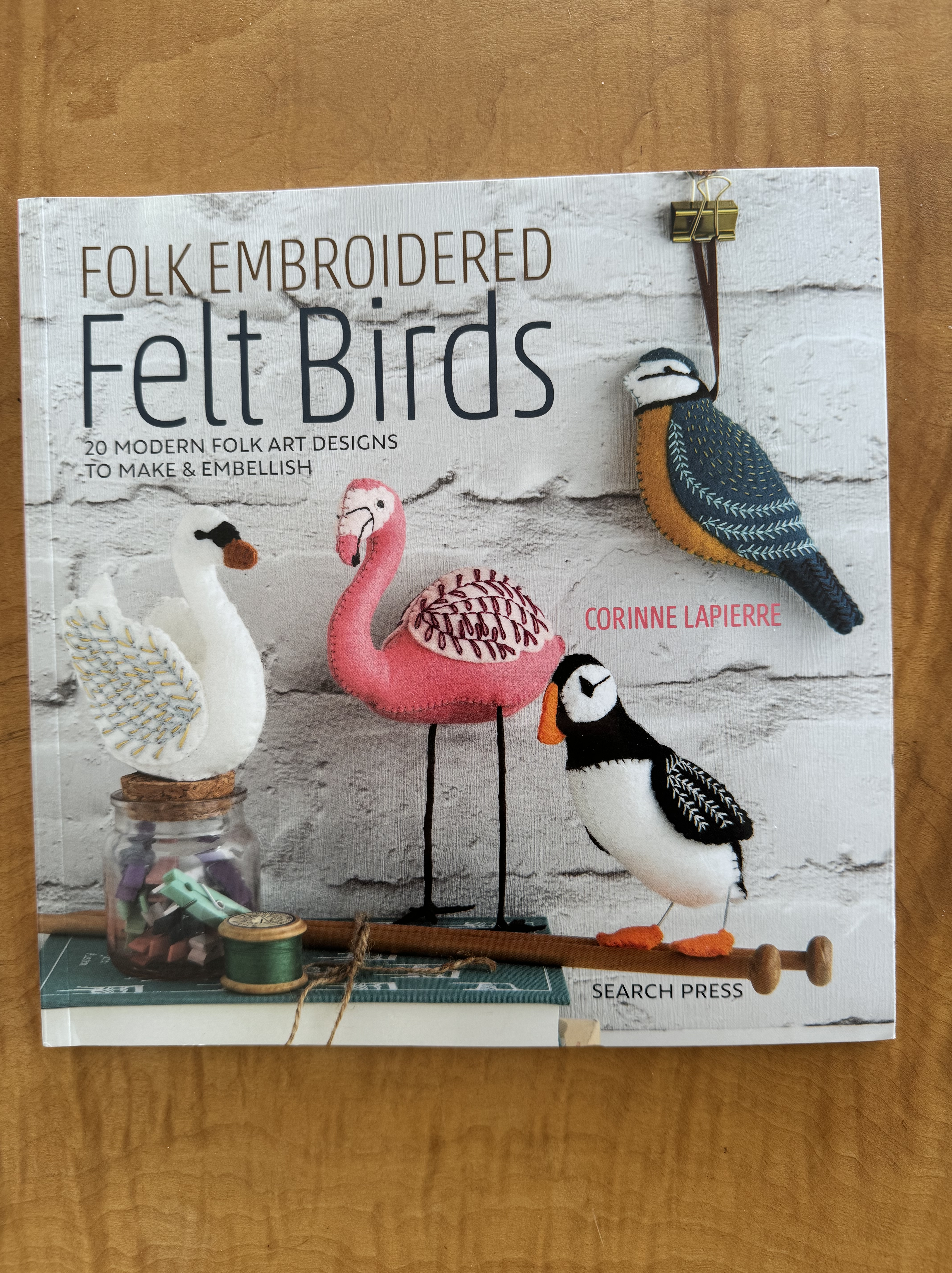
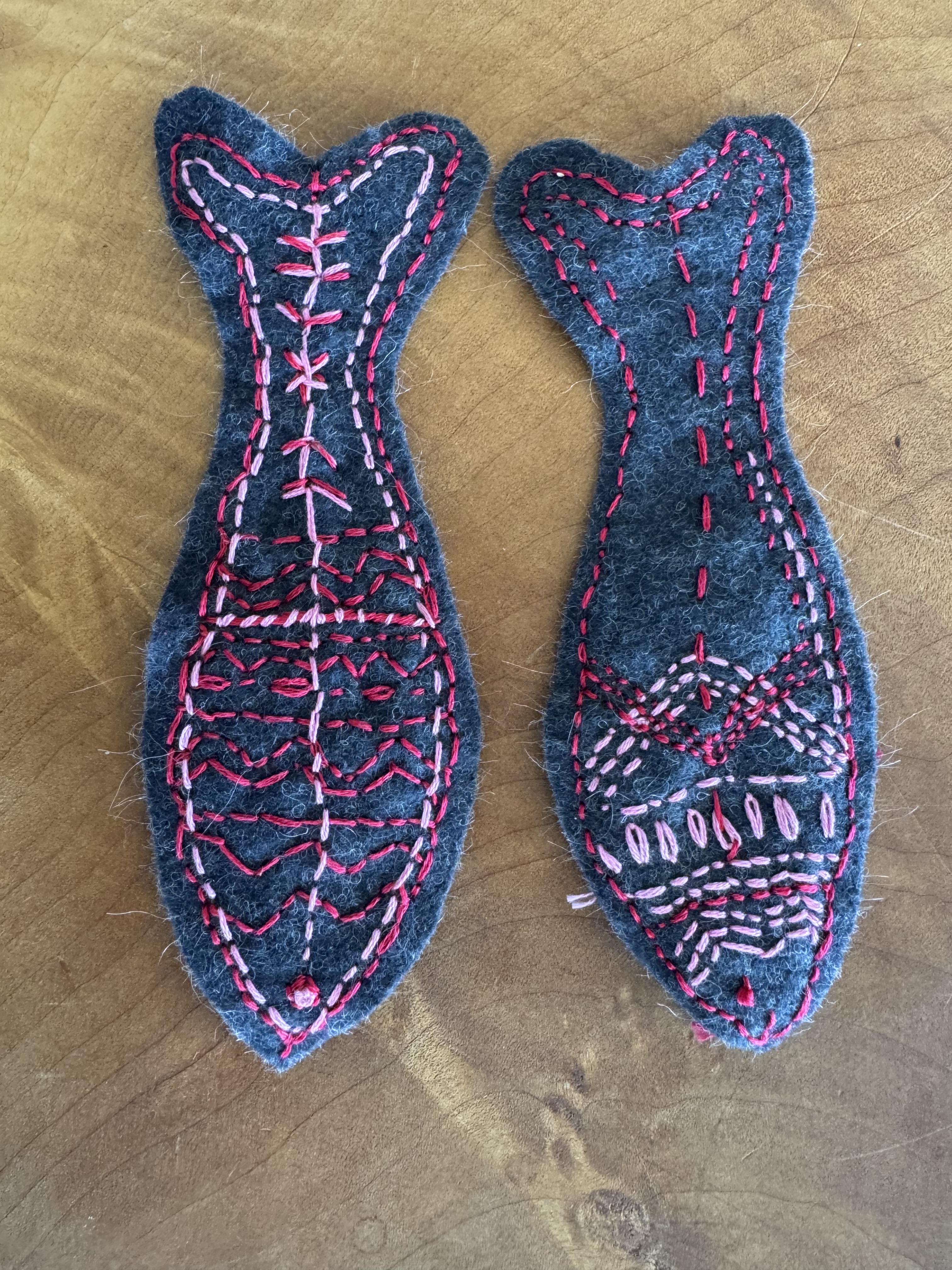
Folk Embroidered Felt Birds: 20 Modern Folk Art Designs to Make & Embellish by Corinne Lapierre. I took this book out of the library and promised myself I’d make two birds before it was due back. I like embroidering at the end of the day, after my mind has been busy with thinking, editing, word stuff. Nice to just sew coloured thread in pretty designs. I met my modest goal—I made a wonky robin and a not-bad pigeon. Then I got a notice the book was due and couldn’t be renewed, as somebody else wanted it. I made a heart for a friend’s birthday, then another heart with a favourite quotation on it, “still, flowing water” from Ajhan Chah, which is to remind me of the paradox that mind is both still and flowing. I don’t entirely understand his talk on this topic, but I still find it inspirational. Then I took out another book by Lapierre, Fabulous Felt, and I made some fish. But I realized what I really want to do is to make all of those twenty birds from her felt birds book, so eighteen more. And it seems that everybody wants the library book, so I ordered a copy and it arrived today. Lots of birds to come!























 Madeline Ruth Walker