“In a time of destruction, create something.” Maxine Hong Kingston
I have been trying to write poems this year. If you love poetry, I recommend listening to The New Yorker poetry podcast. Poetry editor Kevin Young interviews poets who read a poem from the New Yorker archive plus one of their own poems. Also inspiring, if you are interested in haiku, is Natalie Goldberg’s book, Three Simple Lines. She writes about her pilgrimage to Japan, about haiku, about the first Japanese masters, Basho, Buson, Shiki.
I have started to write my own version of Haibun, a Japanese form that combines concise prose with a haiku. I loosely interpret this form, writing a daily observation in a few sentences plus a “sort of” haiku. No more 17 syllables, just three simple lines. Maybe these aren’t haibuns or haikus at all…. maybe they are just what they are.
I Womb
Morning crossword, four letter word, first site of eviction. “Womb,” I say aloud with certainty. But no, the answer is “Eden.”
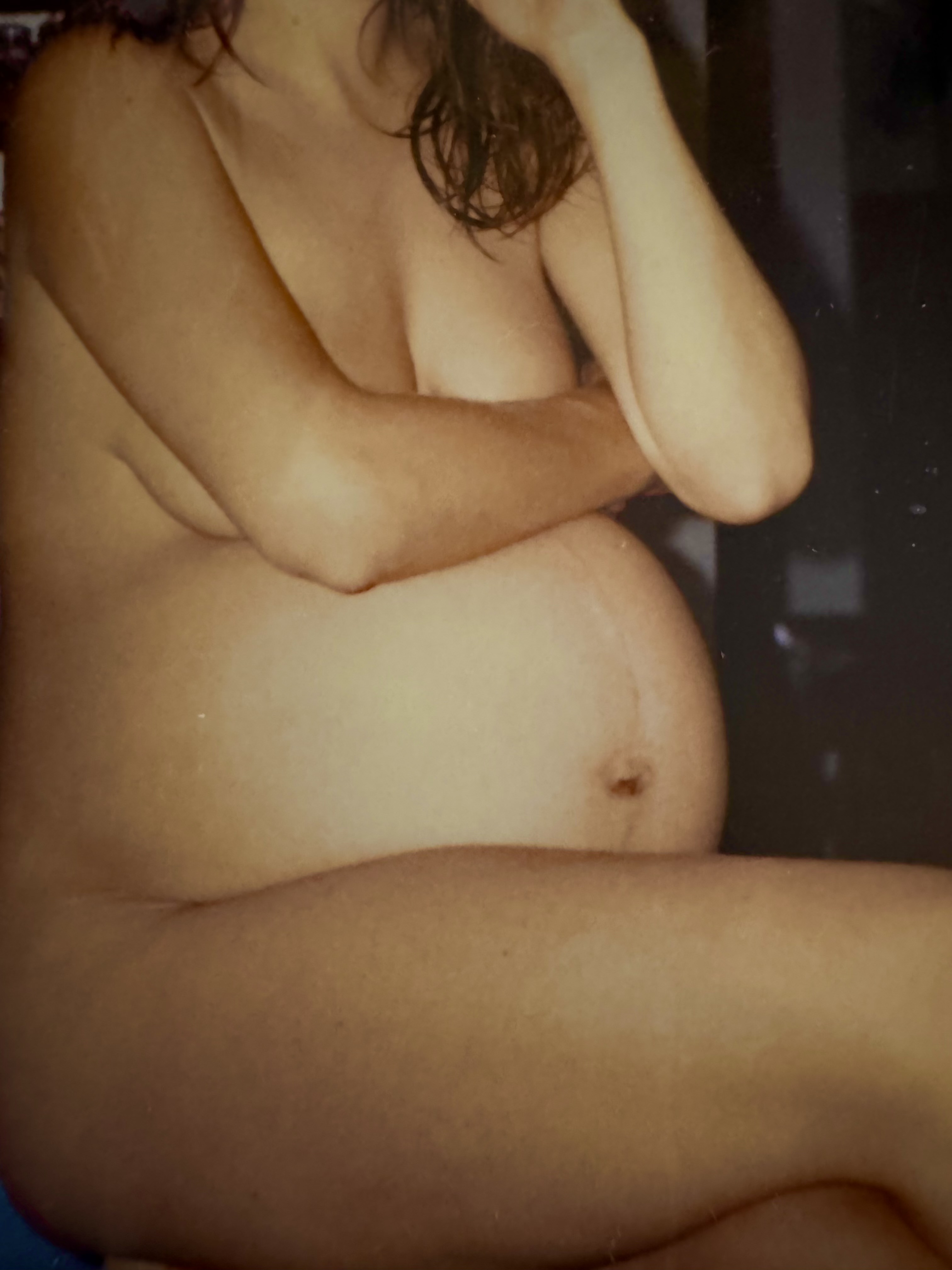
Every human’s first home, the blood red womb
II Orange
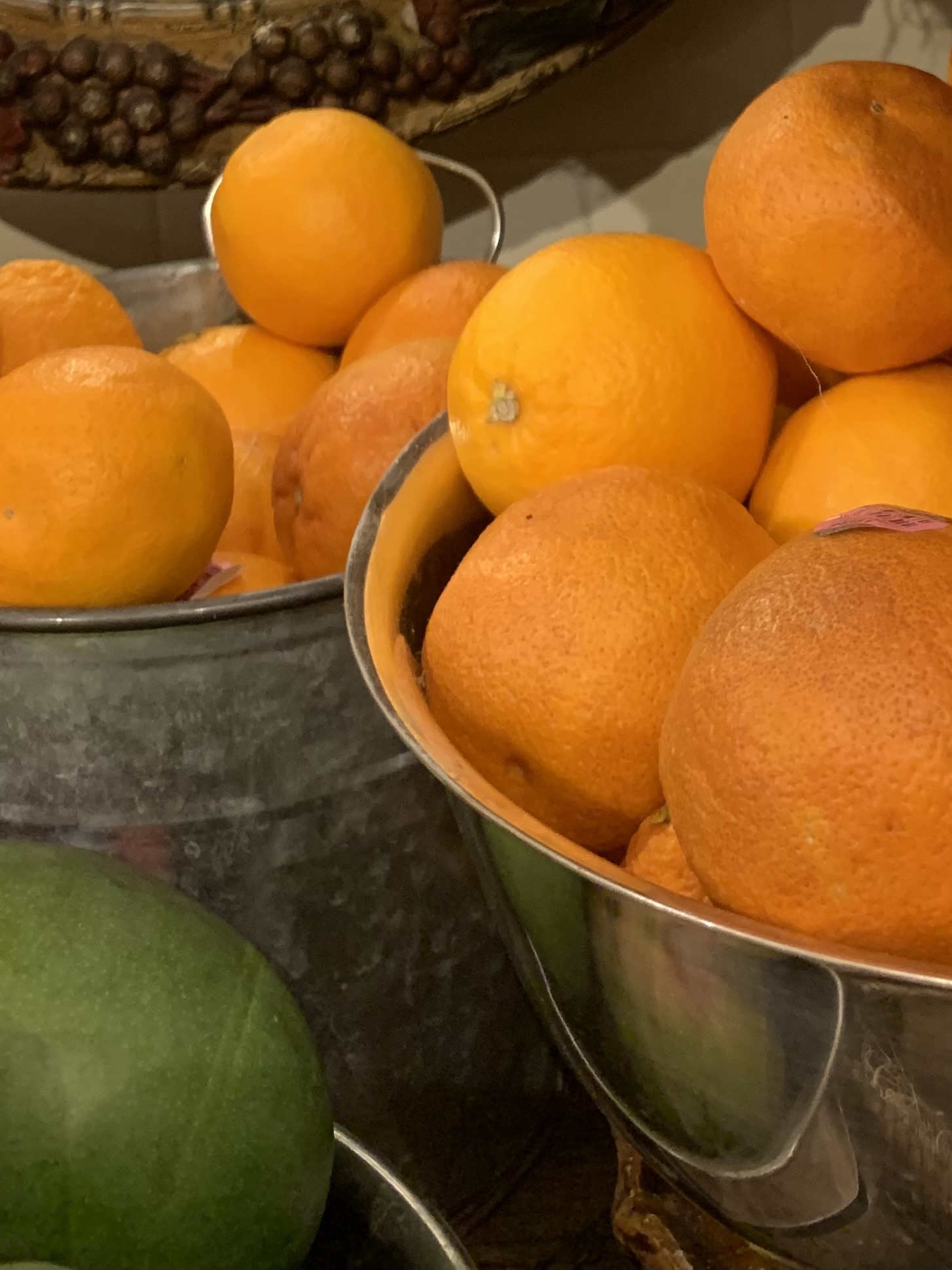
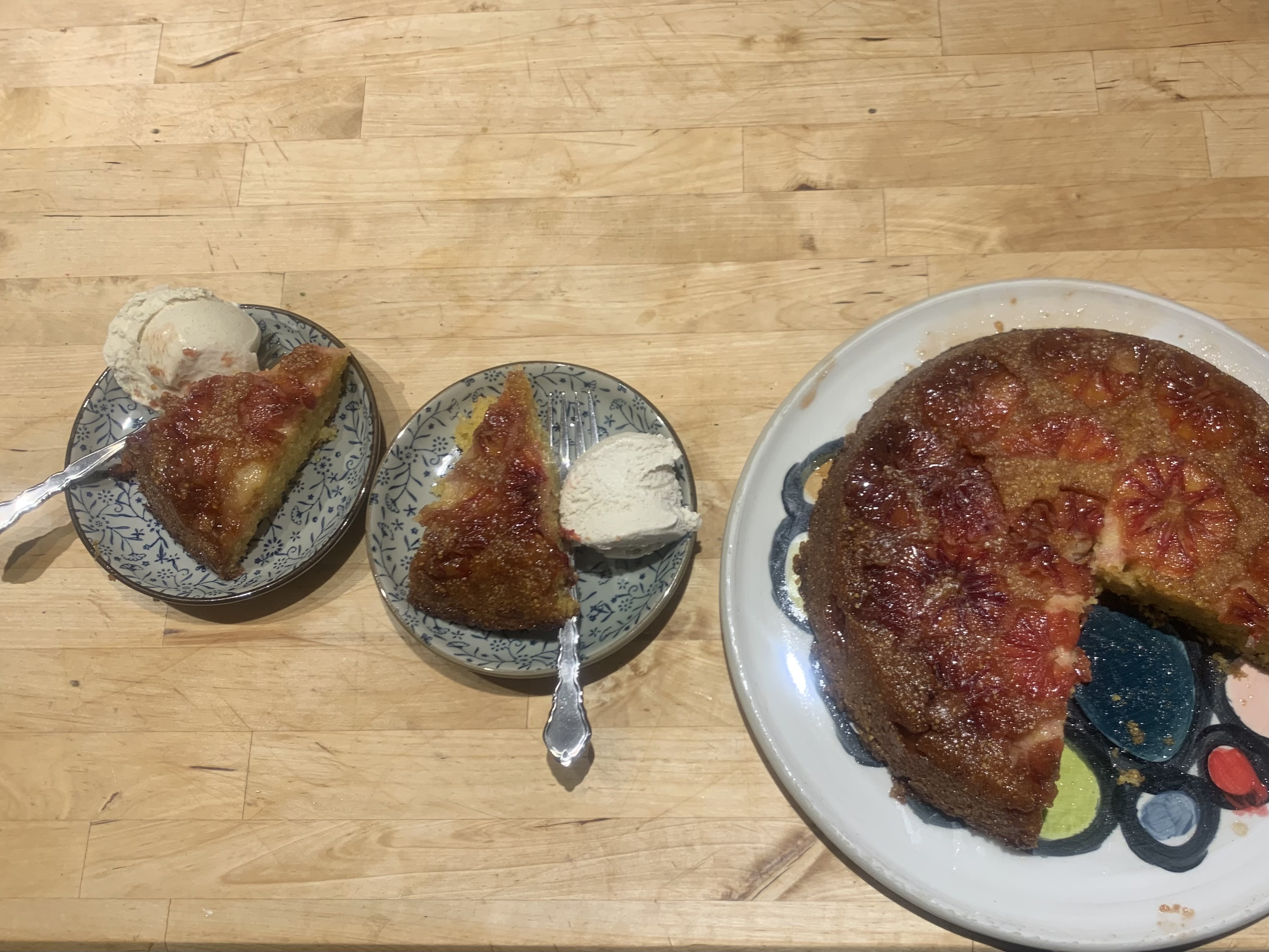
I go to the store to buy blood oranges for the cake and discover they have been rebranded raspberry oranges. the word “blood” is off-putting to consumers. I feel angry.
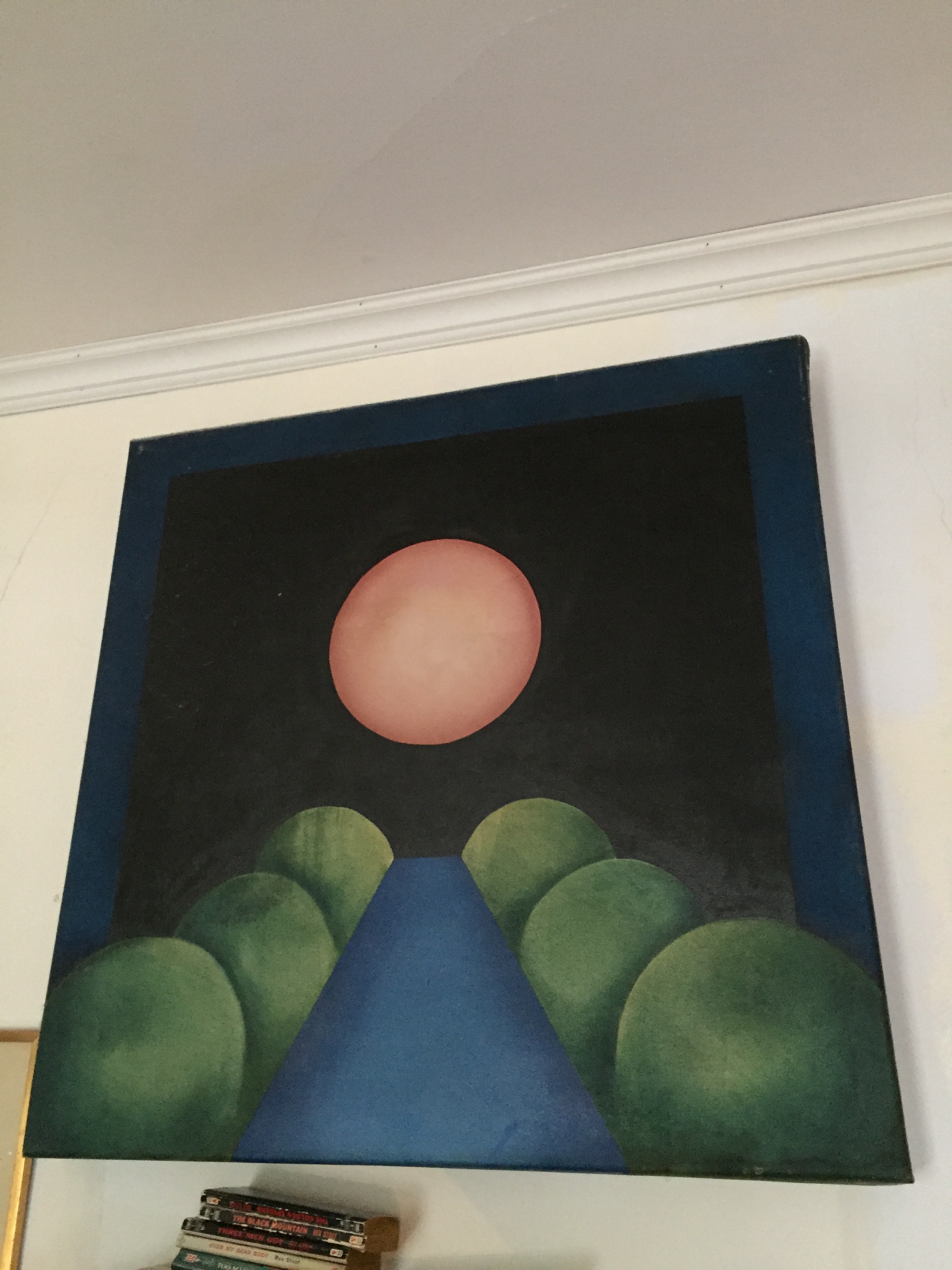
Remote, bloodless pale body of moon his face, forgotten
III Knife
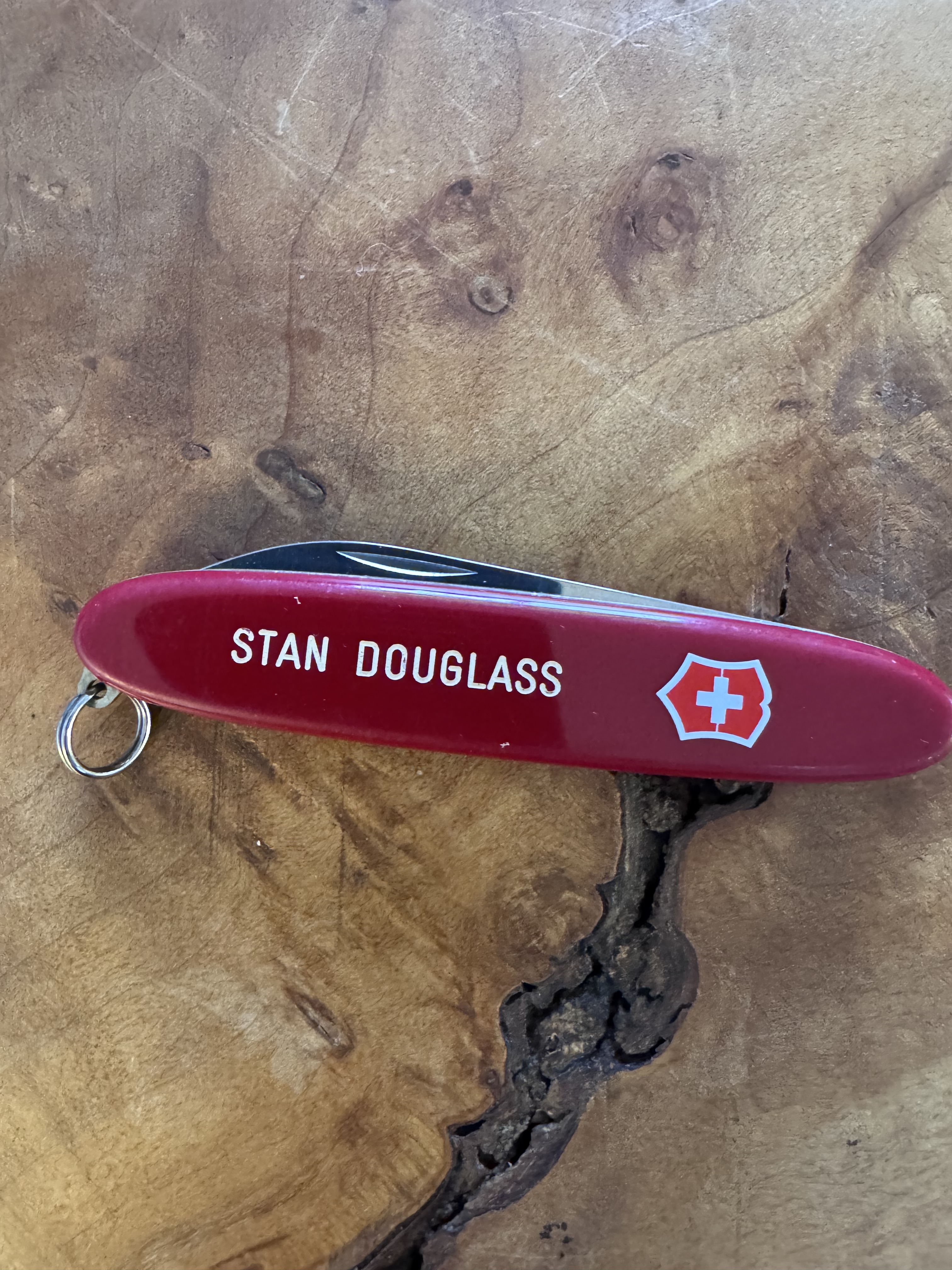
I go to an estate sale and buy a box of assorted junk for two dollars. At the bottom, I find a small Swiss army knife tucked into a black sleeve. The knife is marked with white letters: Stan Douglass. I look up Stan’s obituary.
When fifteen, only a lad, Stanley made a vow to serve the Lord
IV Ruth
My son and I walk along the street, heading to Value Village. He’s shouldering an old chair he took from a free pile, then regretted. I’m following. Suddenly a telephone pole is in front of me with
R U T H
painted in big red letters. Just a day ago, my friend and I compared middle names. Her middle name is Mazal meaning good luck. Mine is Ruth, I texted, and she texted back that “the biblical Ruth is a very special woman, and her name is synonymous with unwavering loyalty and kindness.”
Is it a sign? Four red letters tell my fortune
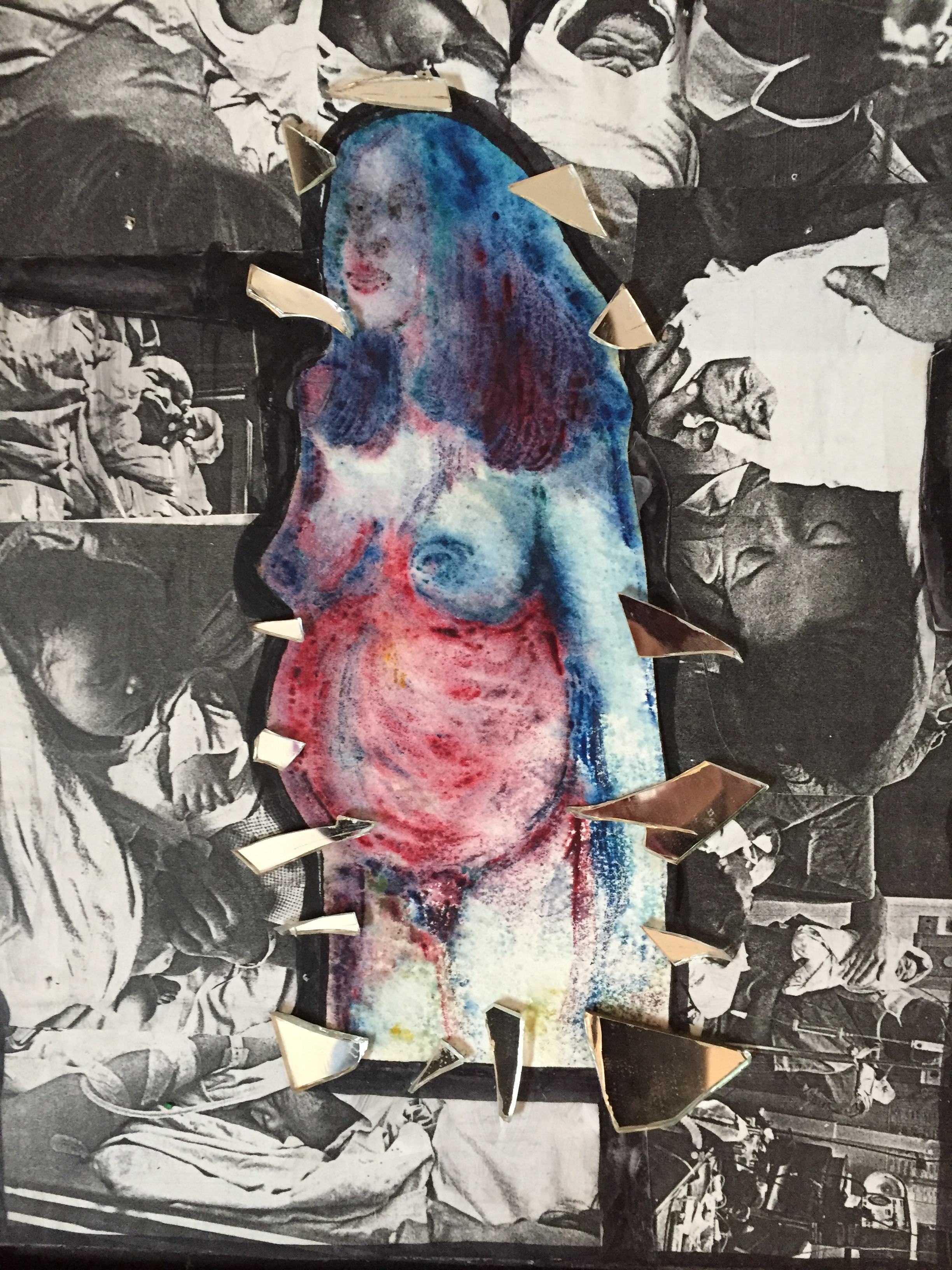
The moon painting is by Bob Sabatini. Other creations are mine.
We trudge up our front steps in the early evening, returning from dinner with friends. We ate turkey, stuffing, beans and brussels sprouts, gravy, mashed potatoes. Our contribution was a salted caramel apple pie and vanilla ice-cream for dessert. We all ate too much. “I’m putting on my fat pants,” says my husband as he enters the code on the front door. At that moment, I turn on the steps to see a man pushing his daughter in a stroller across the street. The autumn light is waning. I catch the eye of this young father. It’s clear to me that he had heard what Michael said about fat pants. We share a smile.
That moment of human connection and common understanding made me happy all evening. What was it? It was knowing the feeling of eating too much and needing to get out of the jeans and zippered clothing, to put on the good old pjs with the forgiving drawstring. That young dad had a pair of fat pants too, I bet, a grungy pair of UVic sweats he pulls on when he’s eaten too many of his wife’s homemade cookies.
These days I wear fat pants most of the time. There has been a softening, not only of the gut, but of the days themselves. The hard beep of the alarm in the morning is gone, replaced by a warm hand touching my back, caressing my flank. The morning routine is unrushed. I push up the shade to see dawn clouds flushed in pink. The coffee tastes good.
I spend as long as possible in my pajamas, then switch to leggings with an elastic waist to take the dog for a walk. I step on the scale every once in a while, and my weight remains the same, hovering around 55 kilograms. But the body expands, loosens, just as time loosens around the edges. The weekends are no longer demarcated. The fence separating Saturday and Sunday from the rest of the week crumbles to reveal the long week as a flat green field. But as you traverse the field, day by day, hillocks rise up before you, unexpected, beautiful. A sudden offer, an old friend reaching out. Time to read a book in the middle of the day. The best morning glory muffin you’ve ever tasted.
Sometimes you panic because the borders have disappeared. Terrifying, all that unmarked space. So, you write to-do lists and make a lot of coffee dates and sign up for classes and try to get part-time work. Then you wake one morning, see the light leaking through the crack between blood-red curtains, hear the bird singing. You realize you’ve gone from writing in the first person to writing you, in the second person, and that you’re not even sure who you are anymore. Everything feels raw, your nerves pulsing beneath your bare skin. You realize you’ve gone from the occasional joy of a fat pants evening to a fat pants life, traversing a field without landmarks.
I am in Toronto for a few days. This city was my home from 1965 to 1989.
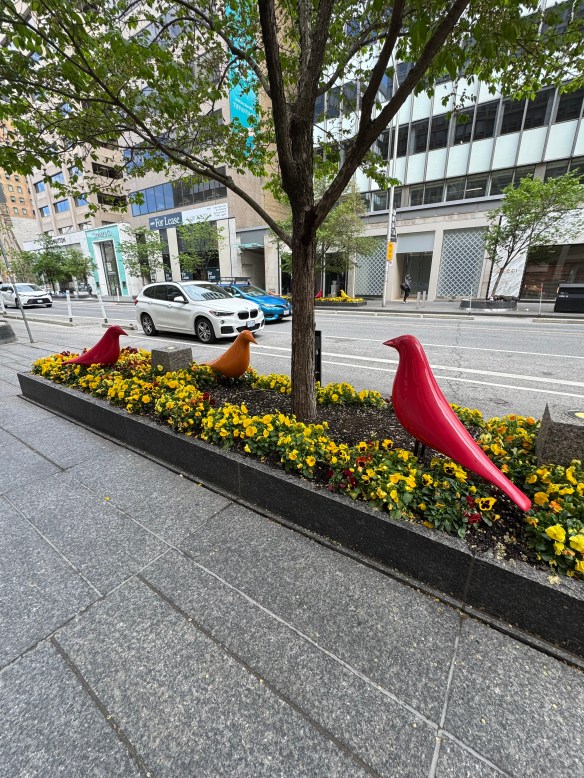
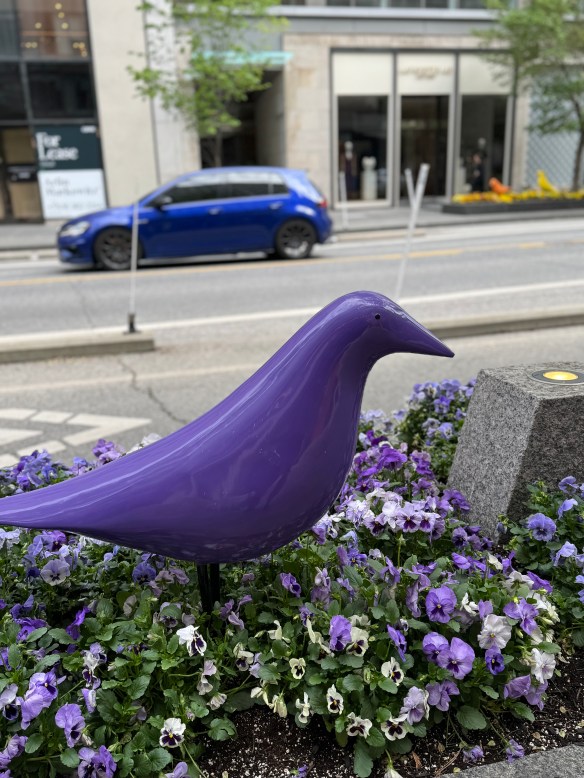
I have been walking Bloor Street West. First, the Mink Mile, that stretch between Yonge and Avenue Road lined with the tall glass storefronts: Zara, Birks, Lululemon, Holt Renfrew. Rich people shop here. Very few birds fly above these tall, inhospitable stores. Instead, big bird shapes in bright shiny colours line the sidewalks, ghosts of extinct species.
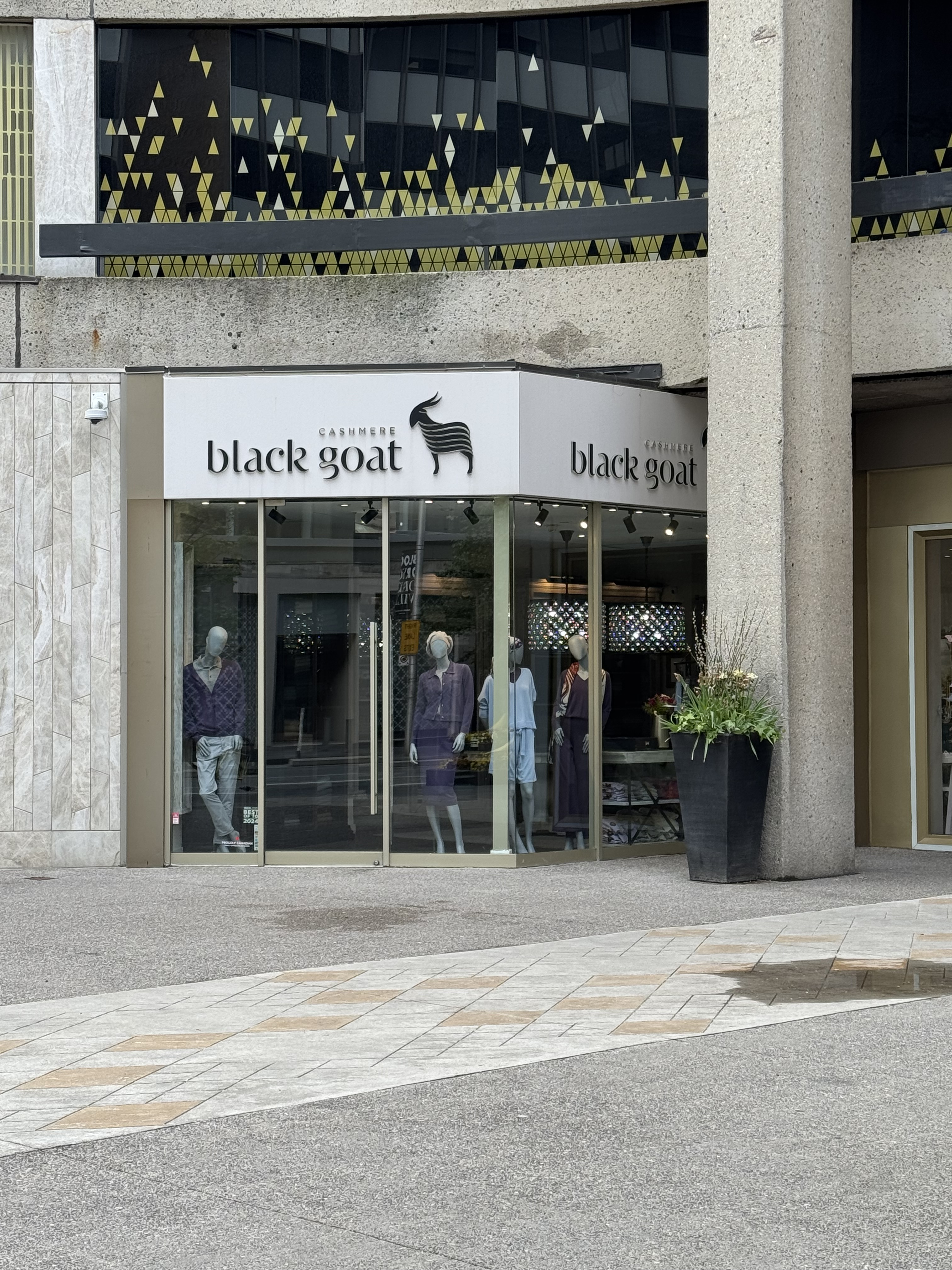
It’s cold in Toronto for late May. I wear a toque, jacket, leather gloves. But now I wish I’d brought a scarf. I admire the scarves in the window of Black Goat Cashmere, next to Ashley’s in what used to be called the Colonnade. This mall was one of my mother’s favourite places; after window shopping Bloor Street arm in arm, we’d drink coffee and eat pastries at the Coffee Mill at the back of the Colonnade.
I enter the store. Two saleswomen are upon me immediately. I ask about the small scarves, lifting one of them up out of the wooden box where they are displayed like confectionary, soft cashmere in artful designs, wool watercolours. “How much are these little ones?” “Oh,” says one of the women, advancing, “the Carre scarves are $385.” I laugh, folding the luxury item back into its box. “Perhaps in another lifetime.”
Pulling my zipper up to my chin and walking into a fierce wind, I take a detour to wander around the grounds of my alma mater, Victoria College. I feel nothing as I gaze over the green lawns, watching two young men kick a soccer ball. Alma mater means “nourishing mother,” but this place was not that for me. Those four years as an undergrad in English Literature are a blur. One thing stuck: a Shakespeare lecture by Northrop Frye when he—already extremely old—told us in his quavery voice that Bach’s Mass in B Minor was the voice of God speaking. All of us bent over our notebooks and wrote that down. It sounded profound.
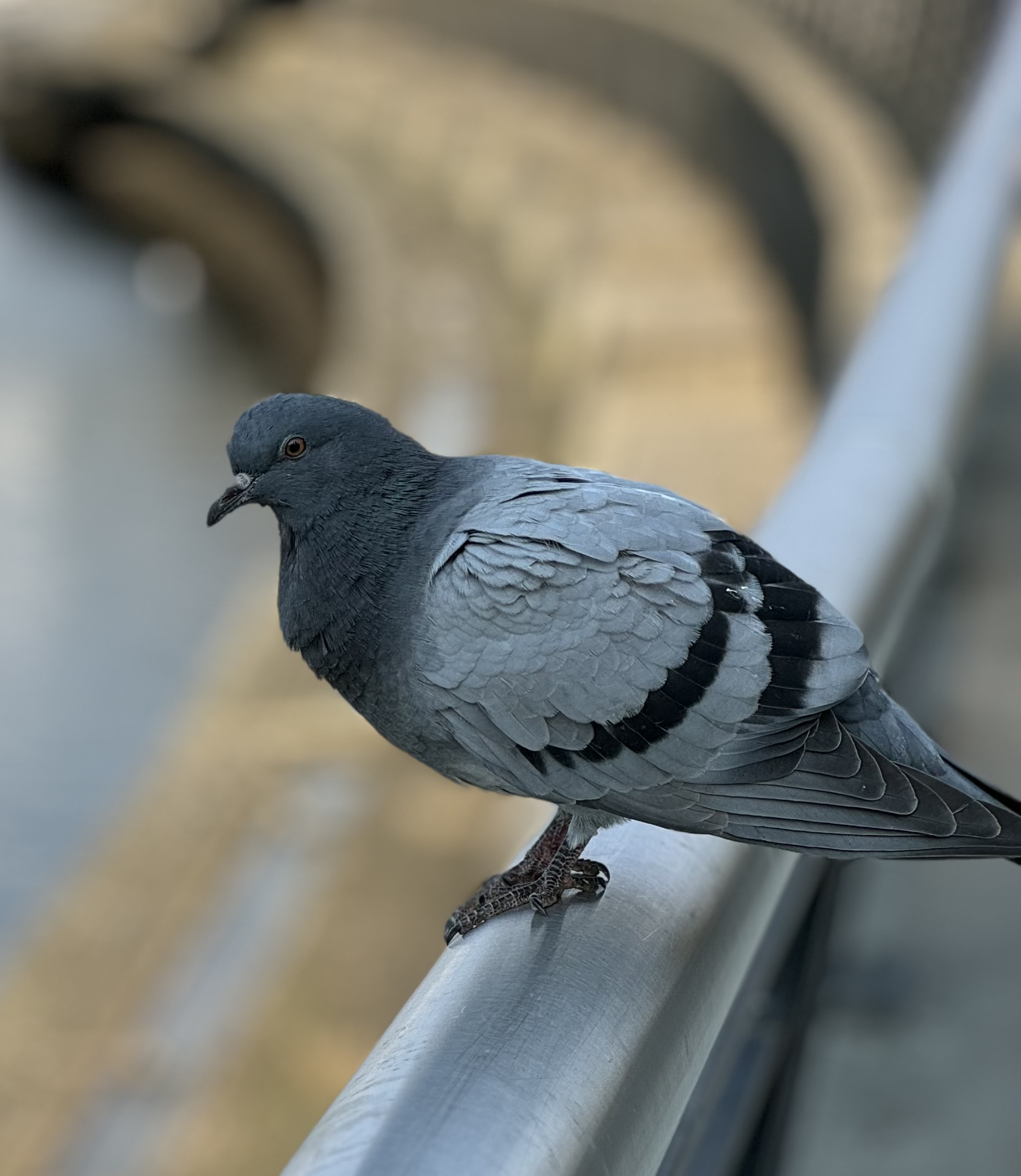
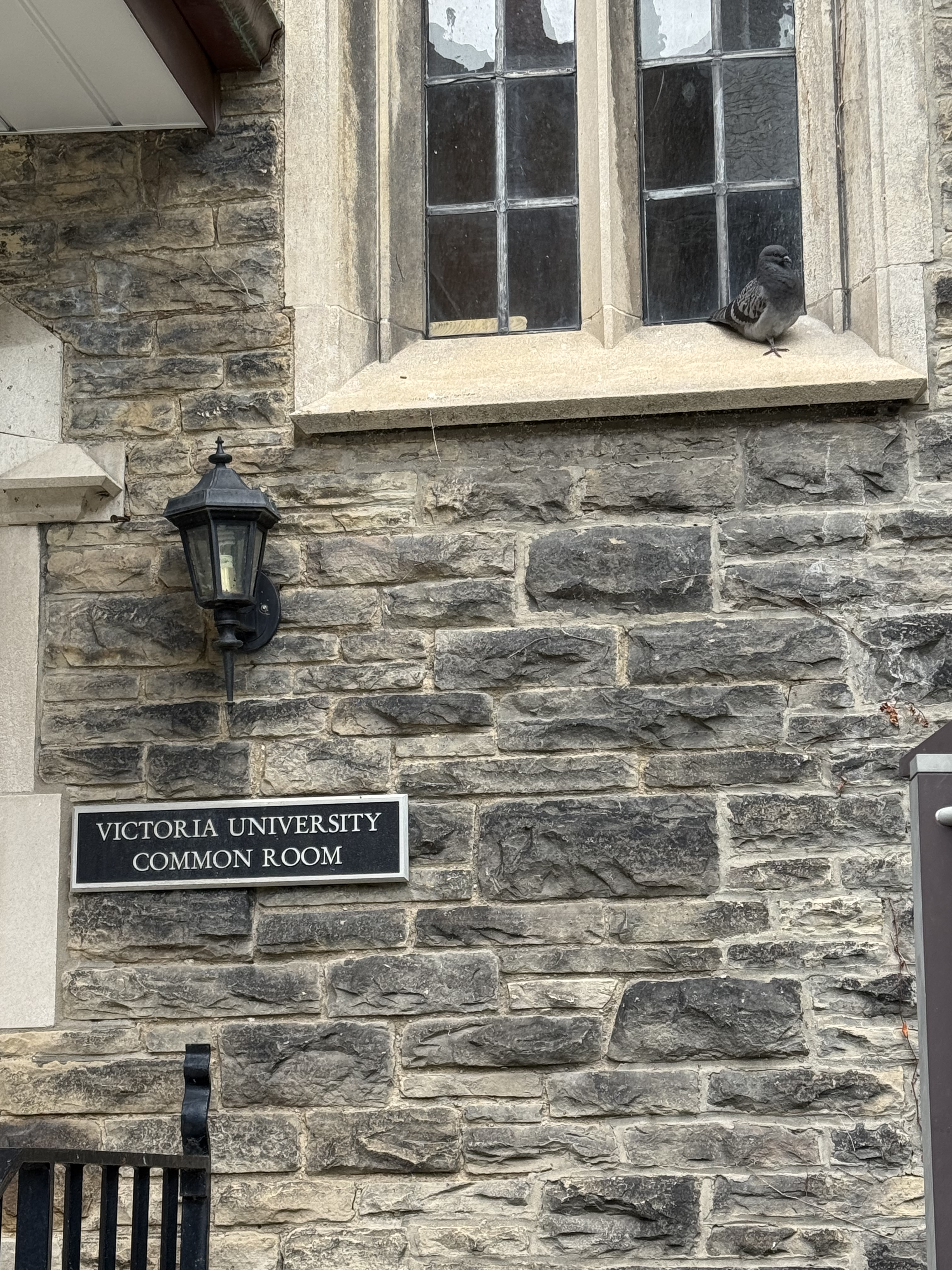
I was a lonely young woman. Barry Lopez writes that “It is not possible for human beings to outgrow loneliness,” and that seems true to me. Though I’m not as lonely as I was. I admire a pigeon perched in the recessed window of the Victoria University Common Room.
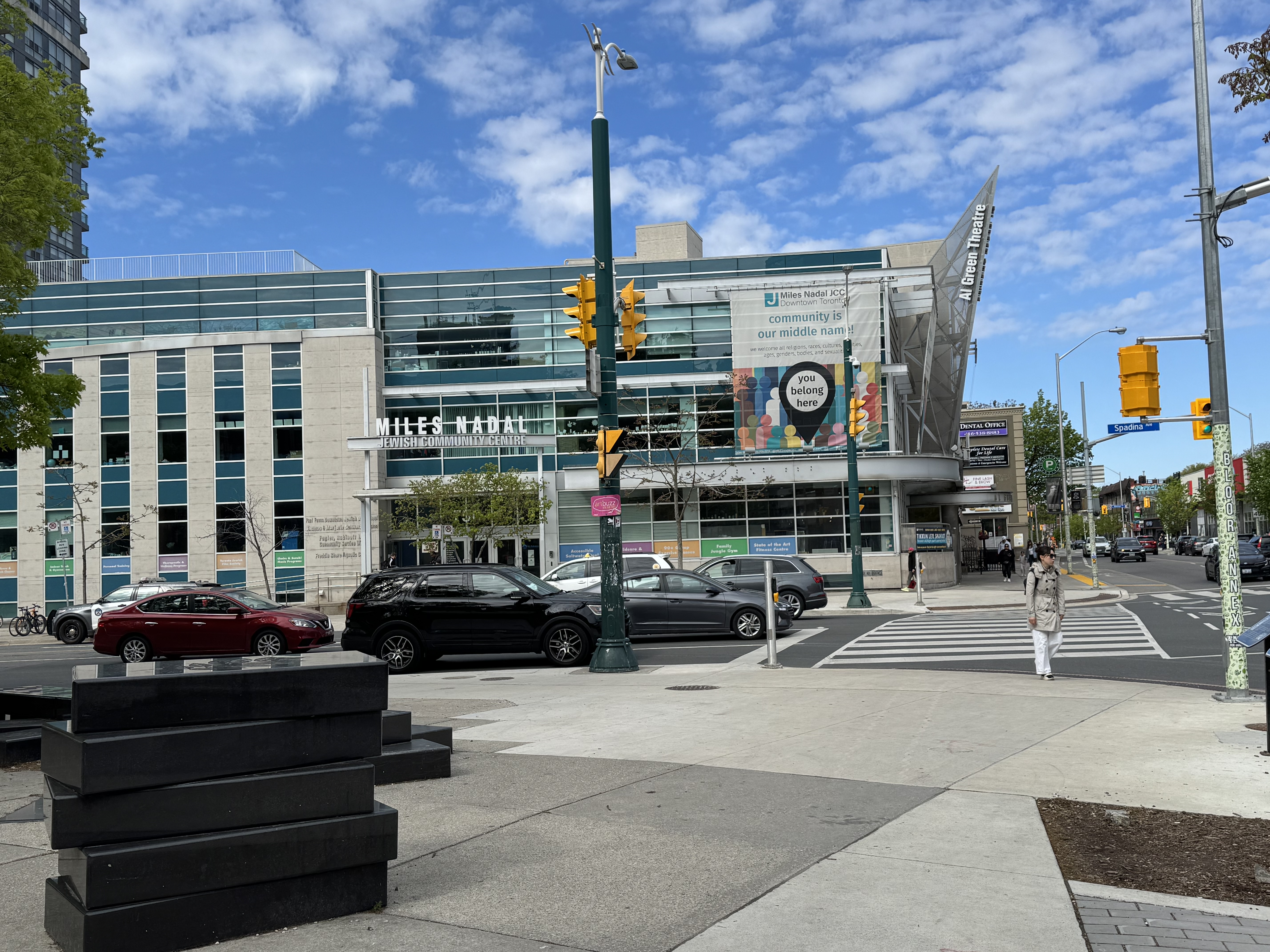
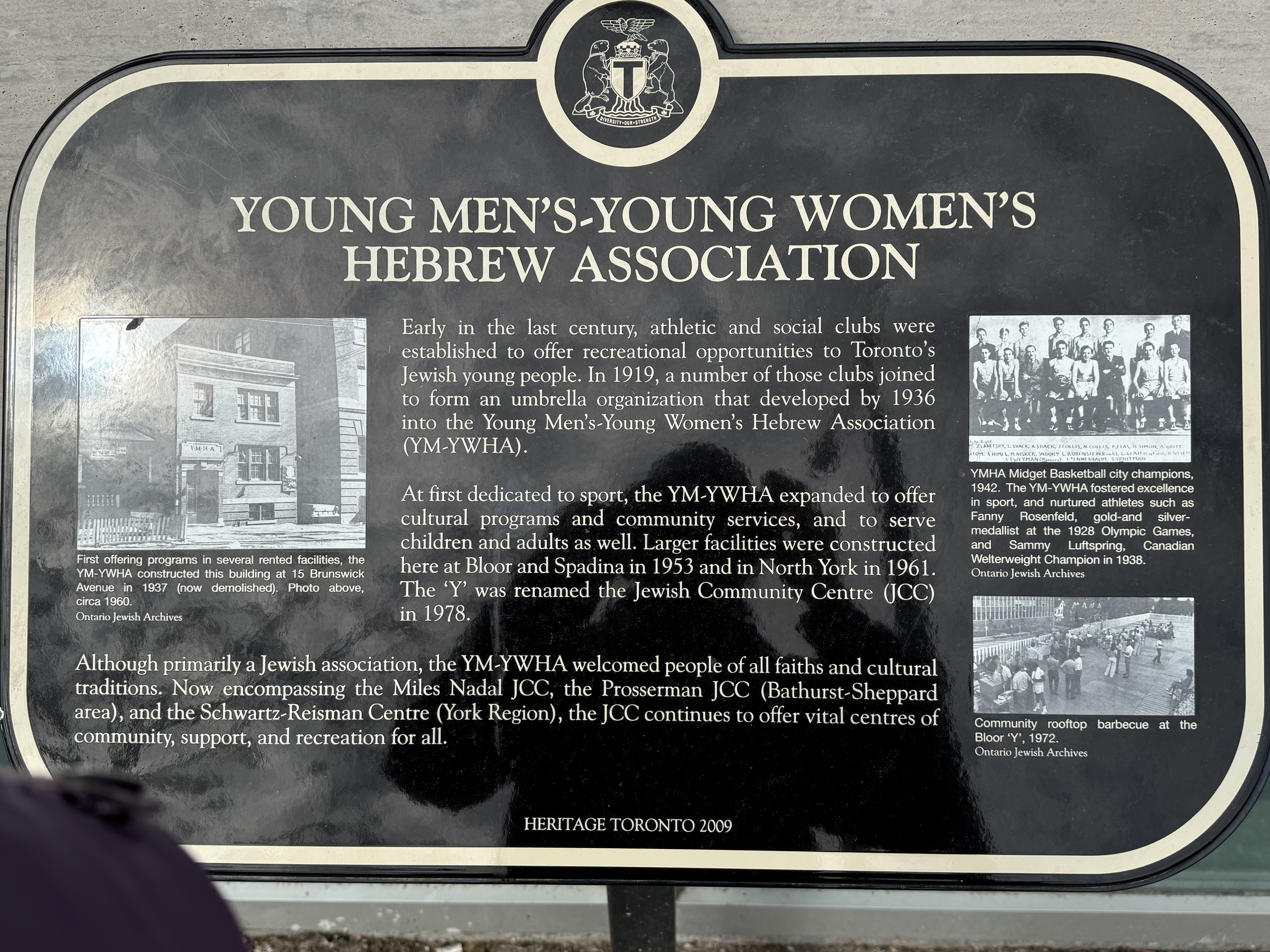
On the way up University back to Bloor Street, I check out the Gardiner Ceramic Museum, where I hope to see the work of contemporary ceramic artists, only to find that the main galleries are closed for renovation. I continue back along Bloor. It’s time for a coffee and I remember a Second Cup in the block before Spadina Avenue. And if that is no longer around, there’s a coffee shop in the old Jewish Community Centre (JCC), where my mother did aquafit for the last decade of her life. Back in the seventies, when it was the Young Men’s Hebrew Association, it was home to SEED, the alternative school my sisters and I went to as wild teens.
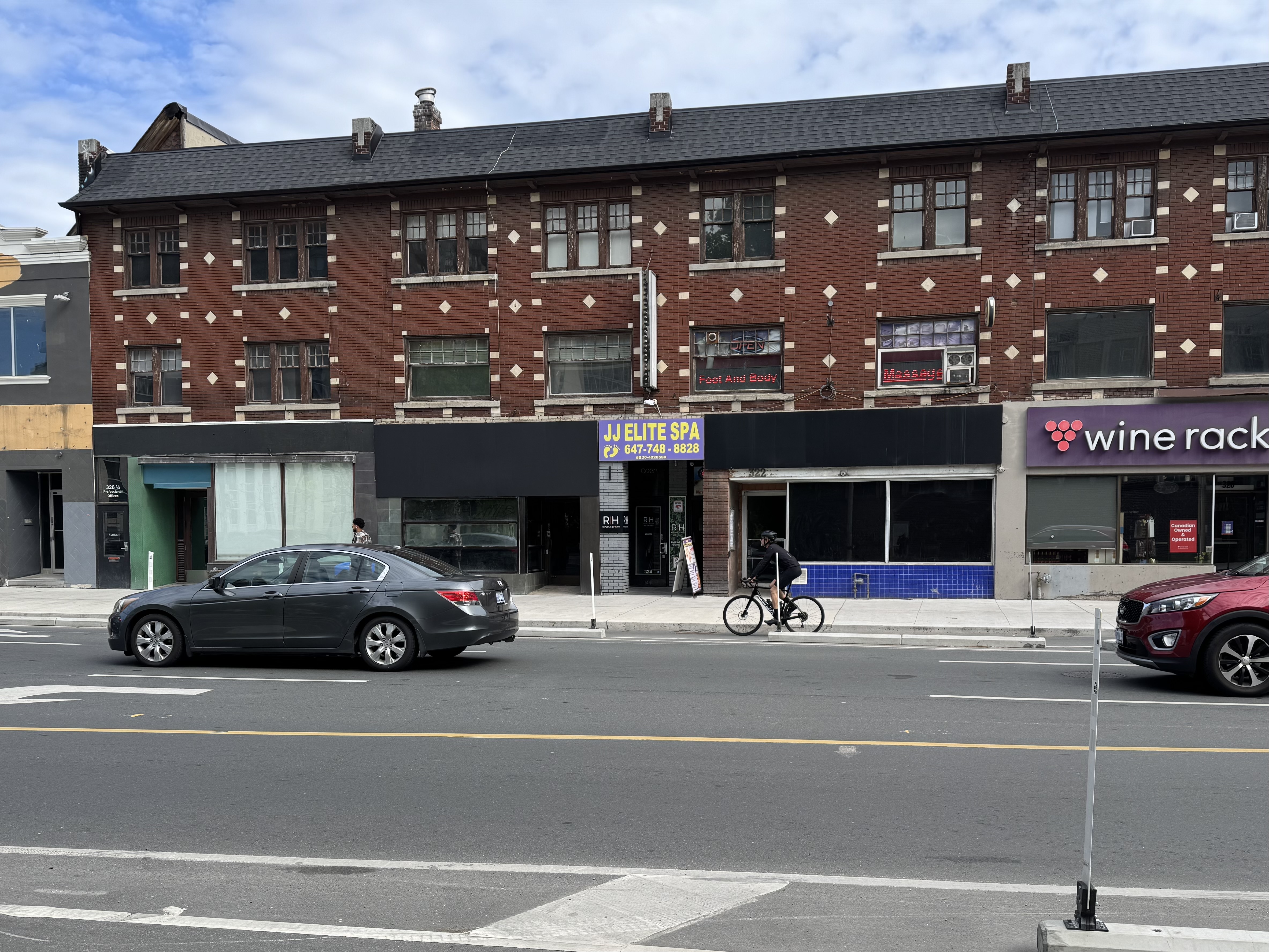
Second Cup is gone, and so are many of the other businesses on that block. Everything in life is impermanent, so I am not surprised Second Cup and Noah’s Health Foods have disappeared, and the spaces are vacant. Once upon a time there was a greasy spoon in this block where we drank coffee in thick cups, smoked cigarettes, and ate French fries. We walked over from “school” and stuffed our electric bodies into the vinyl booths, laughing, talking, flirting, mystified and excited by life. Once, for a time, my sister lived above the restaurant with her boyfriend, an apartment with burlap on the walls and plants everywhere. There’s history here.
The wine store remains. This is where we bought bottles for the meal marking my mother‘s death in February 2019. Her house is only a few blocks from this corner, and she died at home. We carried the clanking bottles through the snow. My sister made bouillabaisse and we sat around the teak table, drinking, eating, and telling our Virginia stories, stories filled with love, regret, sadness, and confusion.
I cross the street twice to the southwest corner and pull on the doors of the Jewish Community Centre, but my pull meets resistance. A security guard opens the door from the other side, just a few inches, and peers at me. “I am trying to get into the coffee shop,” I say. “No more coffee shop. Coffee shop no more,” a sort of palindrome of endings. And he closes the door in my face.
I keep walking. Surely, there is a sweet, cool, interesting café somewhere along Bloor. I am Ahab stalking the great flat white, but she’s nowhere to be found. I pass more than one Tim Hortons among the restaurants and bars still closed this cold morning, but no, I won’t go there. Cigarette butts decorate the grey pavement, evidence of parties spilling onto the street last night. Pigeons strut their stuff. I keep walking. Yes, I know Futures Bakery might be considered an interesting coffee shop, but I hold out for something else, some uncertain thing, something new, something not in the algorithm.
I keep walking. The Hungarian restaurant where we ordered dumplings and gravy and goulash soup: gone. The delicatessen and the cheese shop with a cow in the window: both gone. The café that once took up that southeast corner of Bloor and Bathurst: gone. Now there’s a Fancy Burger outlet, where you can add a syringe cheese shot to your beef patty for $1.49. This part of Bloor continues to metamorphize. Ethnic restaurants and record stores turn into cannabis shops and bubble tea counters. Used bookstores become pet pampering salons and tattoo parlours.
I am happy to see Midoco, the office supply shop, a place where you can lose yourself among the art supplies and fountain pens, is still in business. Ditto the Home Hardware.
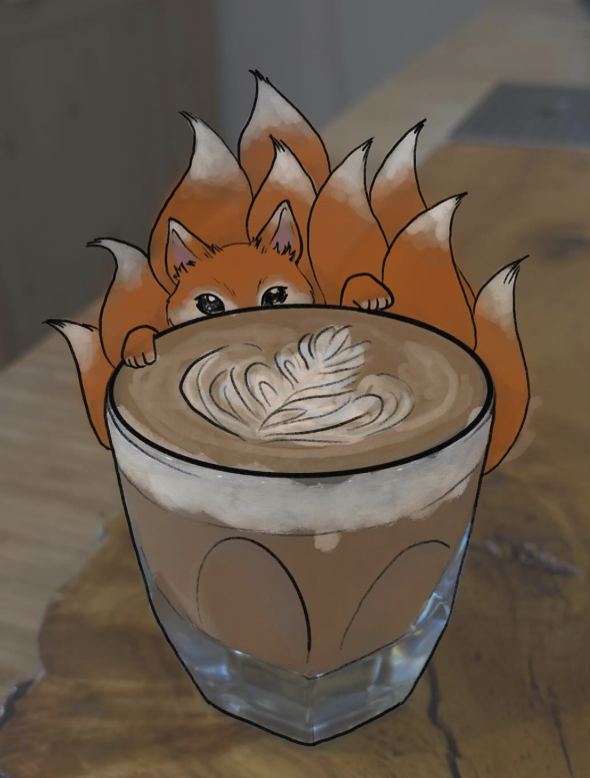
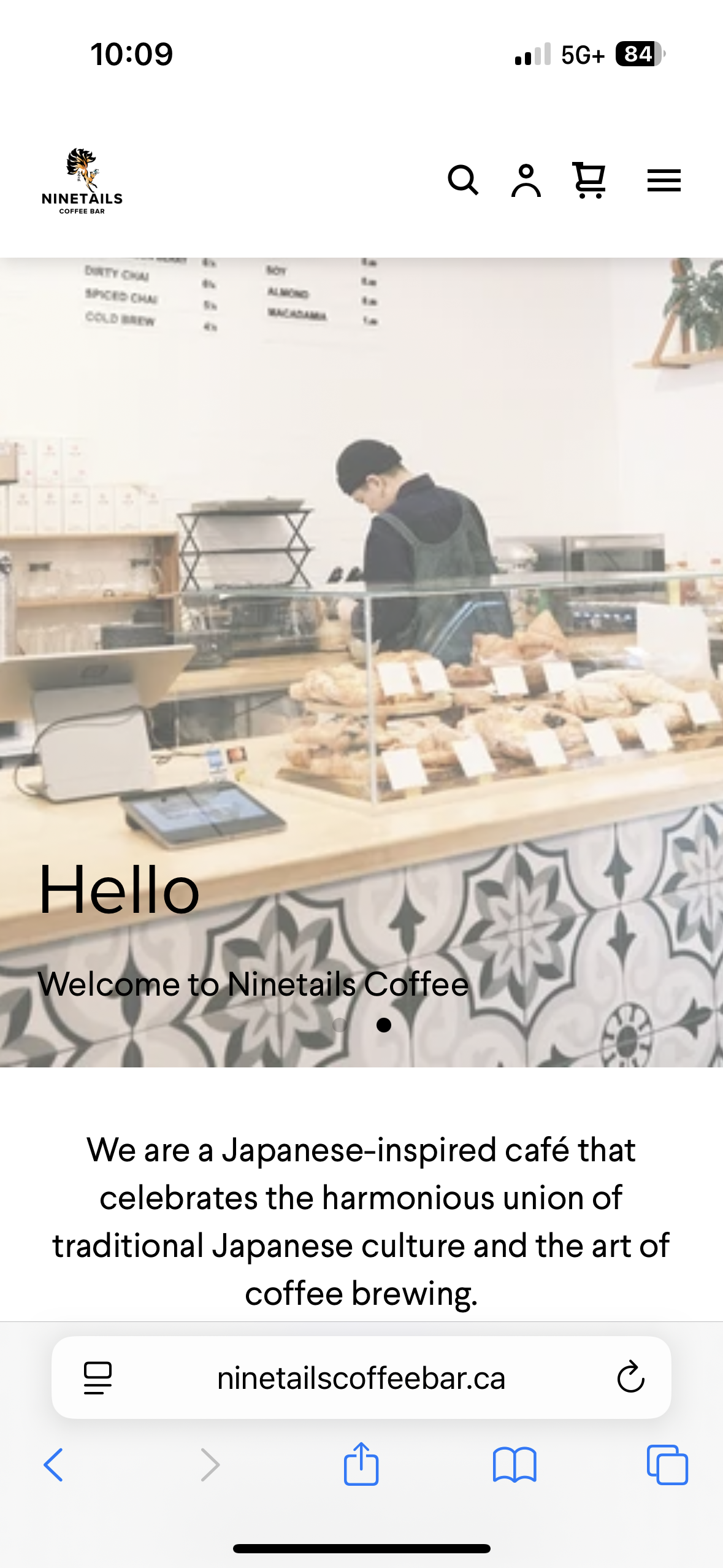
I keep walking, knowing that somewhere soon, I will come upon something interesting. I pass the small corner grocers, happy to see they still sell bargain produce and hanging pots of flowers. I pass Euclid, cross to the south side, and then, suddenly, there is an A-Frame sandwich board picturing a fox with many tails. I walk into Ninetails Coffee Bar, where two young Japanese women bustle behind a honey-coloured wood counter. White walls, a few small round tables graced by simple folding chairs. A coffee bar decorated with ceramic tiles patterned in grey, blue, and white. A full pastry case. Smiling faces welcome me.
My flat white, delivered in a short glass with a foamy fern on top, is delicious—strong and hot. While I drink my coffee I read about the coffee bar’s philosophy.
In Japanese folklore, Kitsune are foxes with mystical powers that can grow nine tails.
“we embrace the Japanese philosophy of ‘ichi-go ichi-e,’ which translates to ‘one opportunity, one encounter.’ This concept underscores the importance of cherishing every moment and every connection we make with our guests, as each encounter is unique and irreplaceable. Our goal is to provide you with a little window to Japan & Japanese culture within each visit.”
I gaze across Bloor to the north side and see, to my delight, a used bookstore that I’ll visit after I drink this coffee. It’s too easy to get lost in the past during this trip. Wandering through old neighbourhoods, remembering past experiences, feeling traces of old sadness and joy. But Toronto, like Freud’s Rome, is a metaphor for the mind. There is no denying that my personal history, etched through the decades, permeates my experience of Bloor West. I feel these vestiges of the past in my body.
But there is also the present: every moment is unique and irreplaceable.
The sun finally emerges from behind grey clouds on this cold day and streams through the glass over my table. I will never experience this moment again, as I drink this coffee, as I gaze at the people around me, the heavily inked man, the woman with green hair, as I examine the fox on the sandwich board outside, waving her many tails. She reminds me there is only one opportunity, one encounter. This is it.
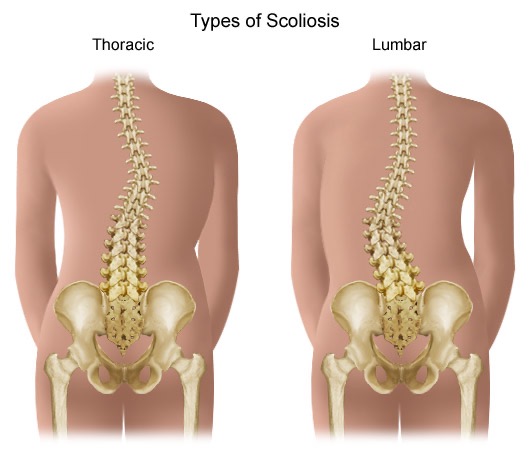
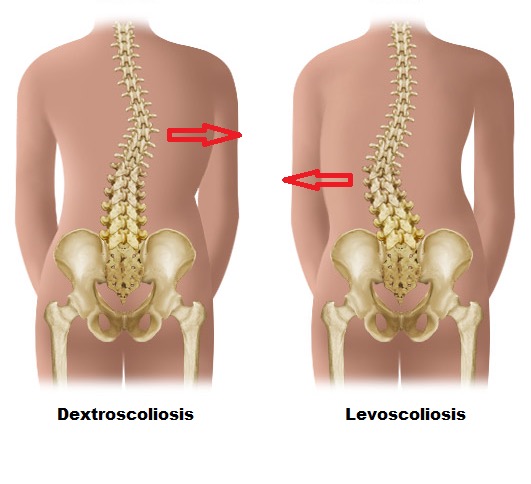
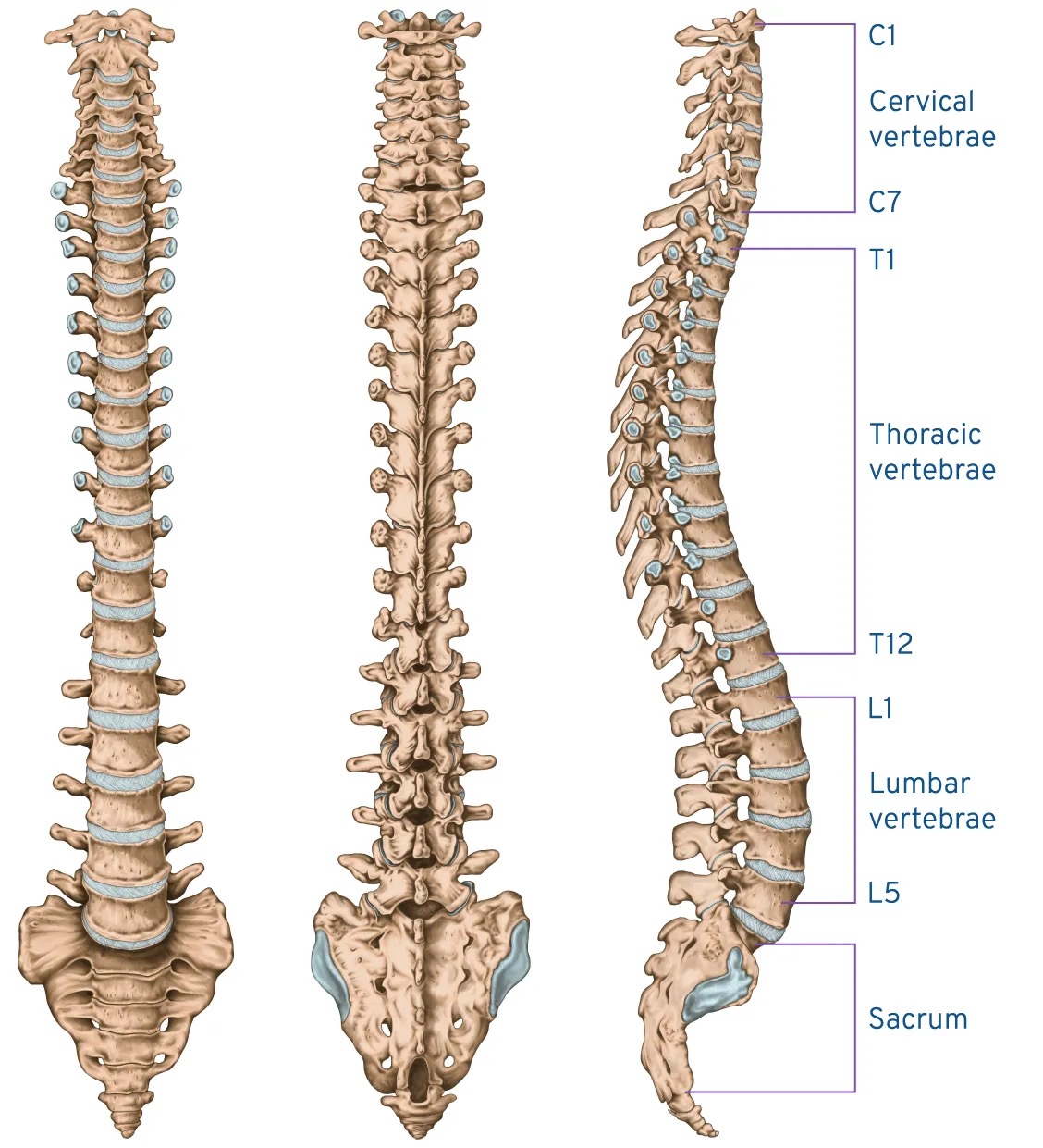
I can’t remember a time in my life when my right shoulder wasn’t lower than the left one. Its slope was unremarkable; this is just the way I am. Then, in my early sixties, a physiotherapist told me I have scoliosis; perhaps I’ve had it since childhood. I didn’t pay much attention. A year later, a Thai Massage practitioner sat behind me on the mat and looked at my twisted spine. “What happened to your back?” she said bluntly. This year it’s been harder than ever to stand up straight. I have daily lower back pain. I feel deformed, out of balance. I used to be five foot six, but during my last doctor’s appointment, I discovered I am now five feet four inches tall. A recent CT scan confirmed it: I have moderate lower thoracic/lumbar dextroscoliosis, a right-bending curvature of the spine. It’s time to figure out what to do.
I started reading about the condition—S-curves, C-curves, thoracic and lumbar varieties, and treatments, including the Schrott method. I’ve looked at archival black-and-white photos of crooked backs, at racks and braces that looked like torture devices. I started doing yoga for scoliosis and made an appointment with a physiotherapist who specializes in treating this complex condition.
As I wait for my appointment, I have mental work to do. My sister told me about Dr. Joe Dispenza’s website, where there are inspiring stories of transformation and physical healing through meditation. I started to think about how powerful our minds and imaginations are. For many years, my friend Diane has exercised her powerful imagination as a force for good. She has had rheumatoid arthritis since she was 13 and uses visualization to help with her pain. “One of my most powerful visualizations is the dragon, which I call upon during episodes of severe pain,” writes Diane. Describing the creation of her dragon in 2010, Diane writes, “As I surrendered to the flow of molten sensation, the dragon appeared, and I clung to its fiery body until our energies merged. The pain and strength became one, flowing through us as we surrendered to the sensations.”
This visualization has transformed the way Diane sees pain—no longer as an enemy, but as sensation. Pain, she writes, is “neither ‘good’ nor ‘bad’—it simply exists, a presence I accept at the core of my being.”
Diane began creating AI images and digital iPad art to visually express what pain feels like in her body, hoping the images resonate with others experiencing pain and disability. This is one of Diane’s AI created images.
Another friend, Janis, visualizes protector angels to bring calm. When her schizophrenic daughter was in crisis, she imagined an angel lovingly holding her adult child, an image that helped her to sleep.
Anybody in a twelve-step program knows the support that one’s imagined higher power can provide. It doesn’t matter if you visualize the ocean, the forest, a goddess, or your community as your higher power (it’s yours, after all)—the image you create can soothe, comfort, inspire, and heal.
I am reading Dr. Gladys McGarey’s book, The Well-Lived Life: A 103-Year-Old Doctor’s Six Secrets to Health and Happiness at Every Age. In one chapter, she writes about having breast cancer in her nineties. She combined visualization with a lumpectomy and radiation, knowing that how she thought about the tumour played an important part in healing. She started talking to the lump in her breast that she pictured as a “pretty little hand-tooled suitcase.” She spoke kindly to it: “Darling, we’re going to have a family reunion . . . . If there are other cancer cells in my body, call them together, and tell them to get in the suitcase and come on the trip.” I just love that image of the pretty suitcase and all the gathered cells going to a family reunion. There are no enemies inside of us, just family members, and some of them need to regroup elsewhere (or straighten up).
Visualization is a powerful tool.
As I thought about Diane fusing with her fiery dragon, the huge feathery wings of Janis’s angel, and Gladys McGarey’s darling hand-tooled suitcase, I wondered which image, combined with physiotherapy and exercises, could help me straighten my spine.
I remembered a recent dream that—at the time—struck me as important. My husband Michael and one of my sons accompany me to a job interview. An unusual scene greets us: We are in a large, high-ceilinged space, with brown leather sofas and armchairs spread throughout and around the circumference of the room. My husband and son are told to sit on one of the outer sofas. It’s a public interview; many people are there as audience. A group of men and women at a long table interview me while I sit before them in a butter-soft armchair. The interview is short. I’m told that I have the job. I am the new Untangler. Applause crashes through the air. Everybody is so happy for me! I got the job as the Untangler! One interviewer remarks that I didn’t even need a graduate degree to get this job. Lucky me.
When I woke from the dream, the unusual noun, untangler, floated free and visited me throughout the day. Now I am thinking of it again—what does it mean to be an untangler?
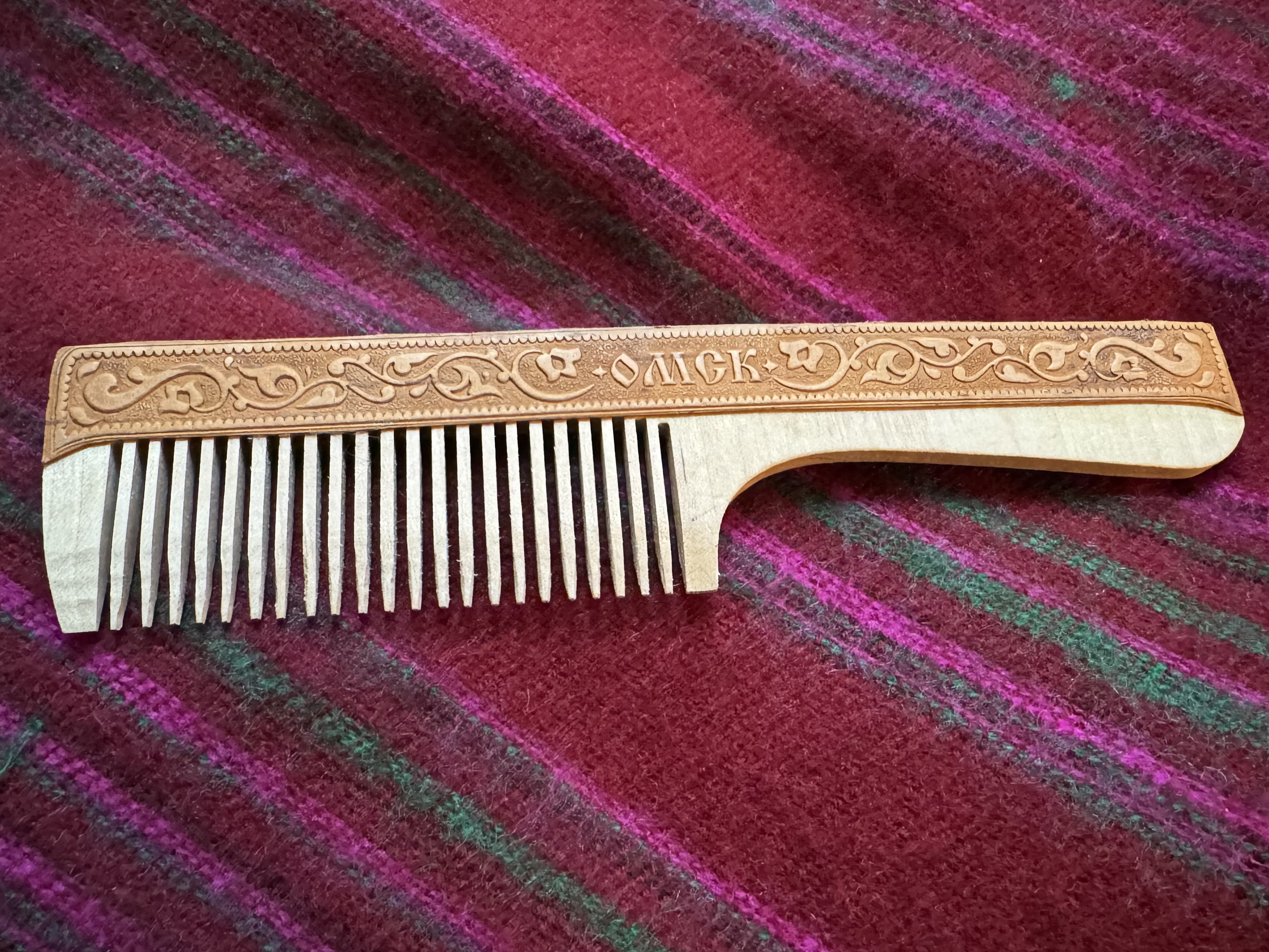
The comb is the foremost untangler, a simple yet effective tool. The earliest known comb was discovered in Syria and dates from 8,000 BC. Made from animal bone, it looks much like the combs we use now, with a handle and teeth. You can buy a cheap black plastic comb in any drugstore, but I am thinking of a more elegant object: the carved wooden comb my friend Olga gave to me. She brought it back from Omsk, Russia, her hometown. I keep that comb at my desk to remind me of her, but lately, I have been using it to comb my hair. To comb is to untangle, to straighten.
I choose to imagine that wooden comb combing my spine as I walk and when I meditate: long, smooth strokes. (Don’t get too literal; my knobby vertebrae would never fit between the teeth.) When the teeth meet a tangle of resistance, I tug a little, gently exerting pressure, pulling the spinal cord out of its curve. Combing the cervical vertebrae then to the thoracic—T1 right down to T12, then combing through lumbar 1, pulling a bit harder at L2, which—my scan shows—has slipped forward six millimetres to press the nerve, then L3 right down to the sacral region. Comb, comb, comb. Straighten, darling spine, straighten. Who knows the power of the mind, the power of an image? I was hired as the untangler, so every day, I do my job.
Last night in bed I was reading Dreyer’s English: An Utterly Correct Guide to Clarity and Style, an amusing book by Benjamin Dreyer, a Random House copy editor. I happen to be two weeks into my final six-week course for Simon Fraser University’s Editing Certificate, so my late night reading aligned with the language-focused mood I’m in. I was enjoying Dreyer’s humour when I read this sentence, which made me sit up in bed:
“You might—or might not—be surprised to learn that many copyeditorial man-hours have been expended over the decades as to the correct construction of the common vulgarity—and an enchantingly common vulgarity it is—used to describe an act of fellatio.” After the term “man-hours” was an endnote: “I know I’m supposed to prefer and use ‘person-hours’ or ‘work-hours.’ I can’t, so I don’t. Please forgive me.”
It wasn’t the discussion of whether or not to use a hyphen with blowjob (Dreyer’s preference is no hyphen) that bothered me. I’m no prude (I hope). It was the insistence on “man-hours” without even trying to find an alternative.
What about just writing “many hours have been expended by copy editors over the decades”? Such an easy way out of “man-hours,” a term that makes the labour of fifty percent of the world’s population disappear. I wonder if Dreyer is just paying lip service to the requirement of conscious editing, editing that does not harm or marginalize. Karen Yin created The Conscious Style Guide, such a useful resource. Countless other editors and writers have worked to use language carefully and critically as a force of good in the world. Dreyer has power, privilege, and pull, and he could use these forces for good by making some small adjustments.
So, there I was, lying in bed, irritated by “man-hours.” What about the millions of “man-hours” women spend breastfeeding? And that started me thinking of breastfeeding, women feeding their infants and toddlers with nourishment produced from their own bodies. Once I started to think of breastfeeding, scenes from two novels came into my mind, one from John Updike’s 1968 Couples and the other from John Steinbeck’s 1939 Grapes of Wrath. In both scenes, an adult man is sucking at the breast of a lactating woman. Updike’s scene is highly erotic (or at least, I found it so when I read it in my twenties), whereas in Steinbeck, the character Rose of Sharon is offering her breast to a starving man, an image I find disturbing. I’ve forgotten so much from the thousands of books I’ve read in my life. But those two scenes have stayed with me throughout the years.
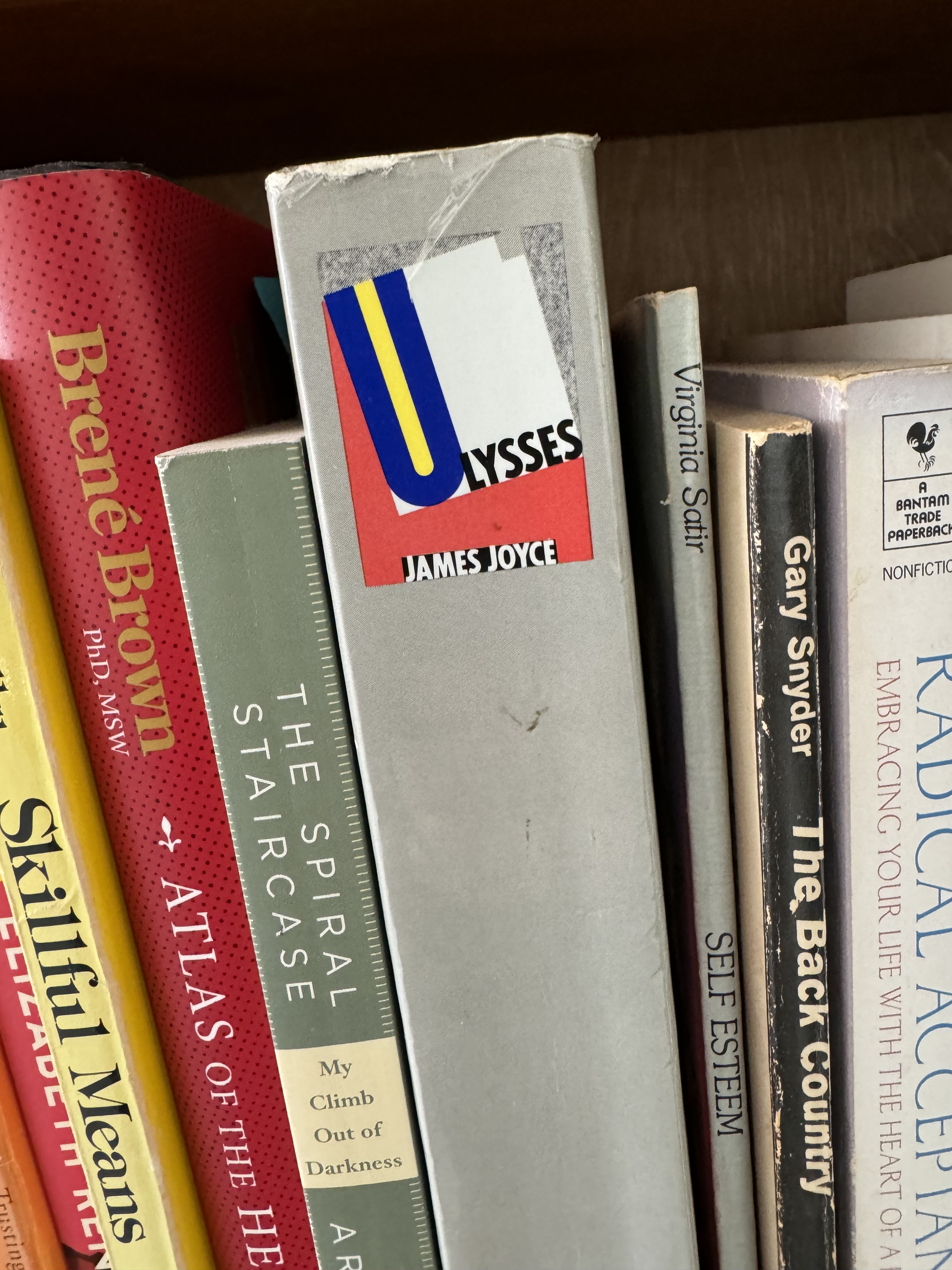
In our new house, we have a bookshelf at the top of the stairs, so every time I ascend to the main living space, a patchwork of book spines meets me like an old friend. The elongated blue U on the thick spine of James Joyce’s Ulysses always catches my eye. My mind likes to repeat itself, going back to well-trod memories, and so I return over and over—with nostalgia—to the summer in grad school when I studied that great modernist novel. It was an intense, six-week seminar course. A small, intimate group of students, mostly women, met for three hours, twice weekly. Each student had to present several times on chosen topics. I was working hard. Add to my hard work and yearning for an A, the presence of a provocative, flirtatious professor who created a highly charged atmosphere in the hot seminar room.
I was immersed in the complexity of Joyce’s schema for the novel, based on Homer’s Odyssey, and by turn delighted then confused by his fresh, arcane, mysterious writing. I could slide down rabbit holes every day, trying to parse meaning.
One day, I took the boys to the beach at Thetis Lake and brought the novel with me. We went in for a swim, and as we came up to our beach blanket where I had laid Joyce’s novel, my six-year old son, who was learning to read, said to me, “Why are you reading a book called Useless?” I laughed. I could see how his mind’s eye read useless; so many of the same letters as Ulysses. I reported this to my professor next class, and he couldn’t stop laughing. He thought what my son said was inadvertently profound, the title Useless pointing to the modernist idea of the inutility of art: art for art’s sake.
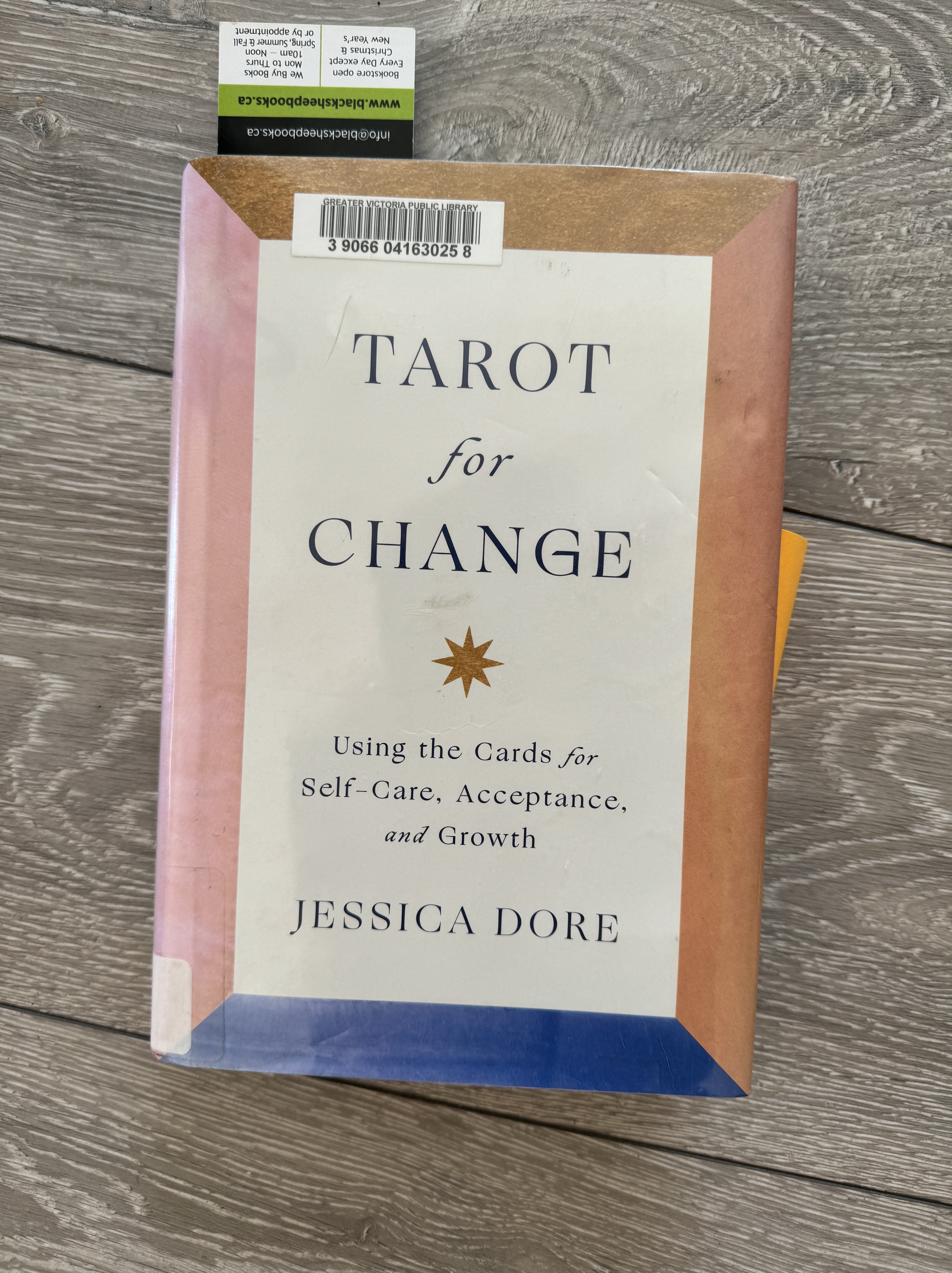
In the mornings, I’ve been trying to not grab my phone immediately, but instead, to read and write. I’m reading Jessica Dore’s Tarot for Change: Using the Cards for Self-Care, Acceptance, and Growth. I first discovered Dore when my husband, Michael, told me about her newsletter, Offerings, on Substack. I love the way she thinks about books and tarot and life, so I borrowed her book from the library, and it’s on the coffee table, ready to dip into whenever I sit down for a spell. It’s funny, the actual tarot card she is writing about (and she writes about all 78) doesn’t matter much—each page has some nugget of wisdom, wisdom from her life experience, and from theology, psychology, literature; wisdom drawn from C.G. Jung, D.W. Winnicott, and newer therapists like Marsha Linehan and Steven Hayes. I enjoy the nuggets.
Here’s an example of a Dore nugget—this is from her comments on the Empress:
“The Empress represents nature and is, in my experience, one of the most misunderstood arcana in the tarot. People love her but can’t put a finger on why. I think it’s that we long to be in our bodies but have forgotten how, and she shows us what it would feel like if we could. Many of us think of the wild as something ‘out there,’ and I think that’s sad for us. It shows how cut off we are from the fact that somewhere deep down and old we are still the wild, and the body—with all its cycles and rhythms and ebbs and flows and generation and degeneration—is proof.” (pp. 47–48)
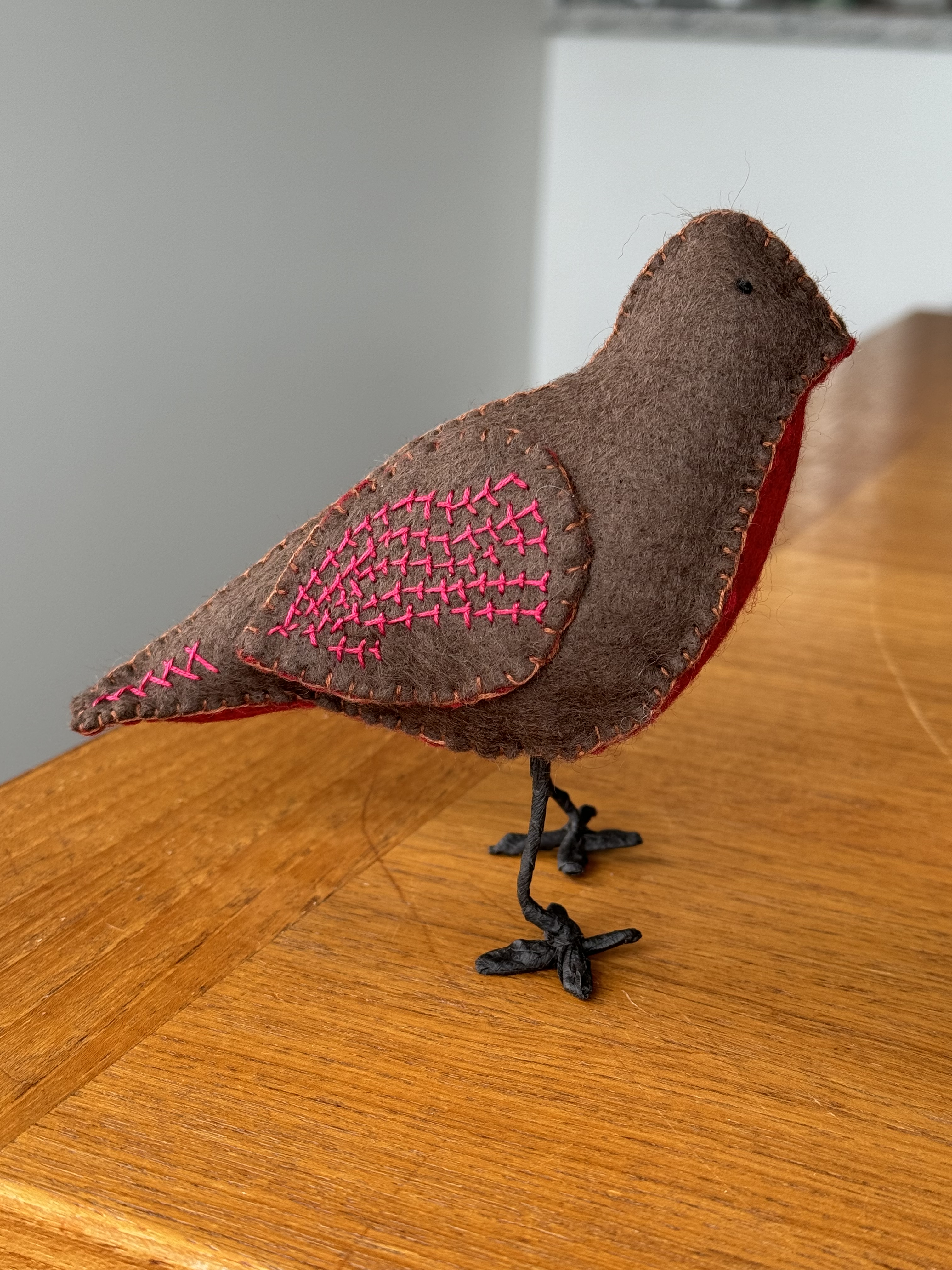
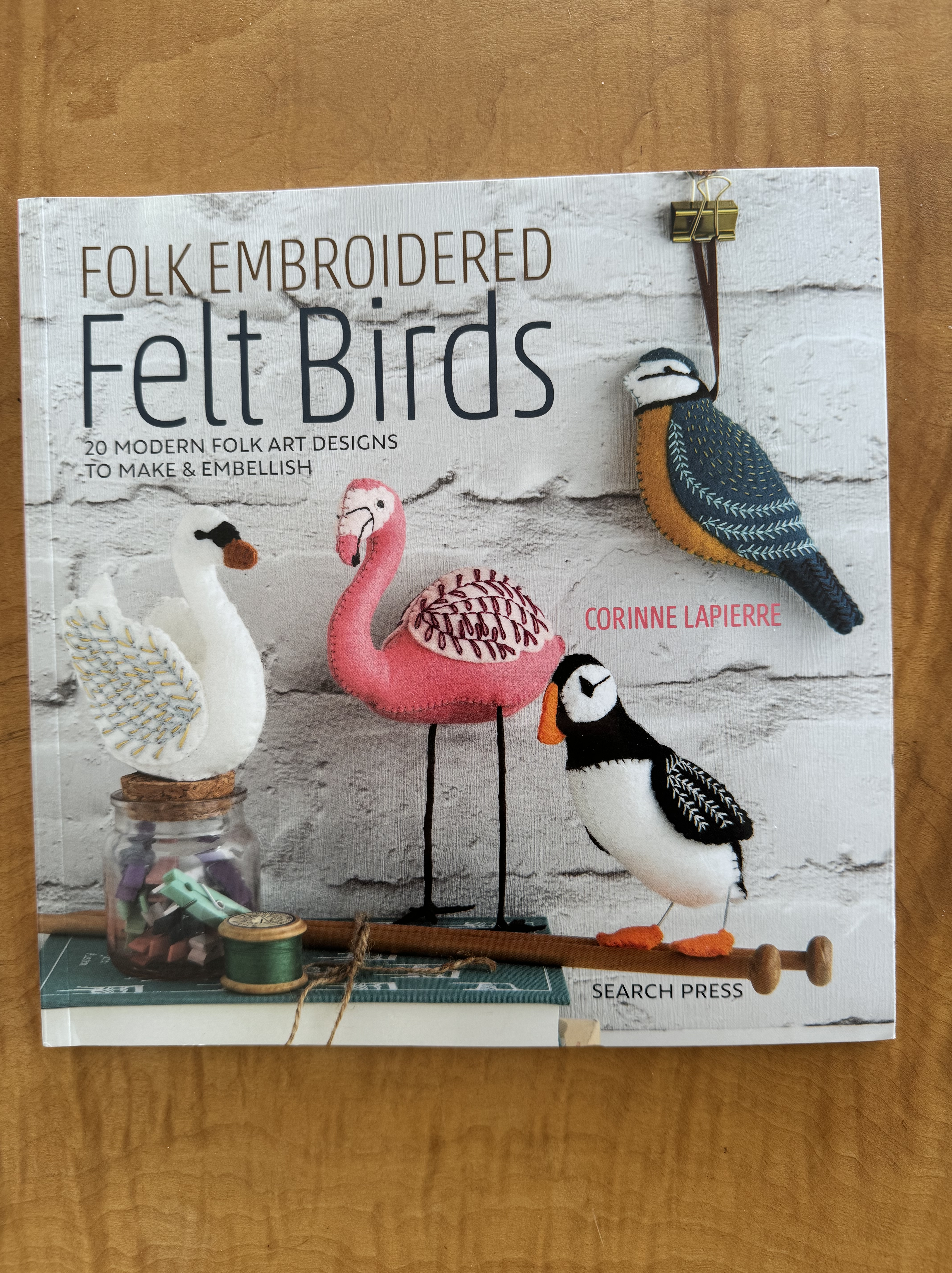
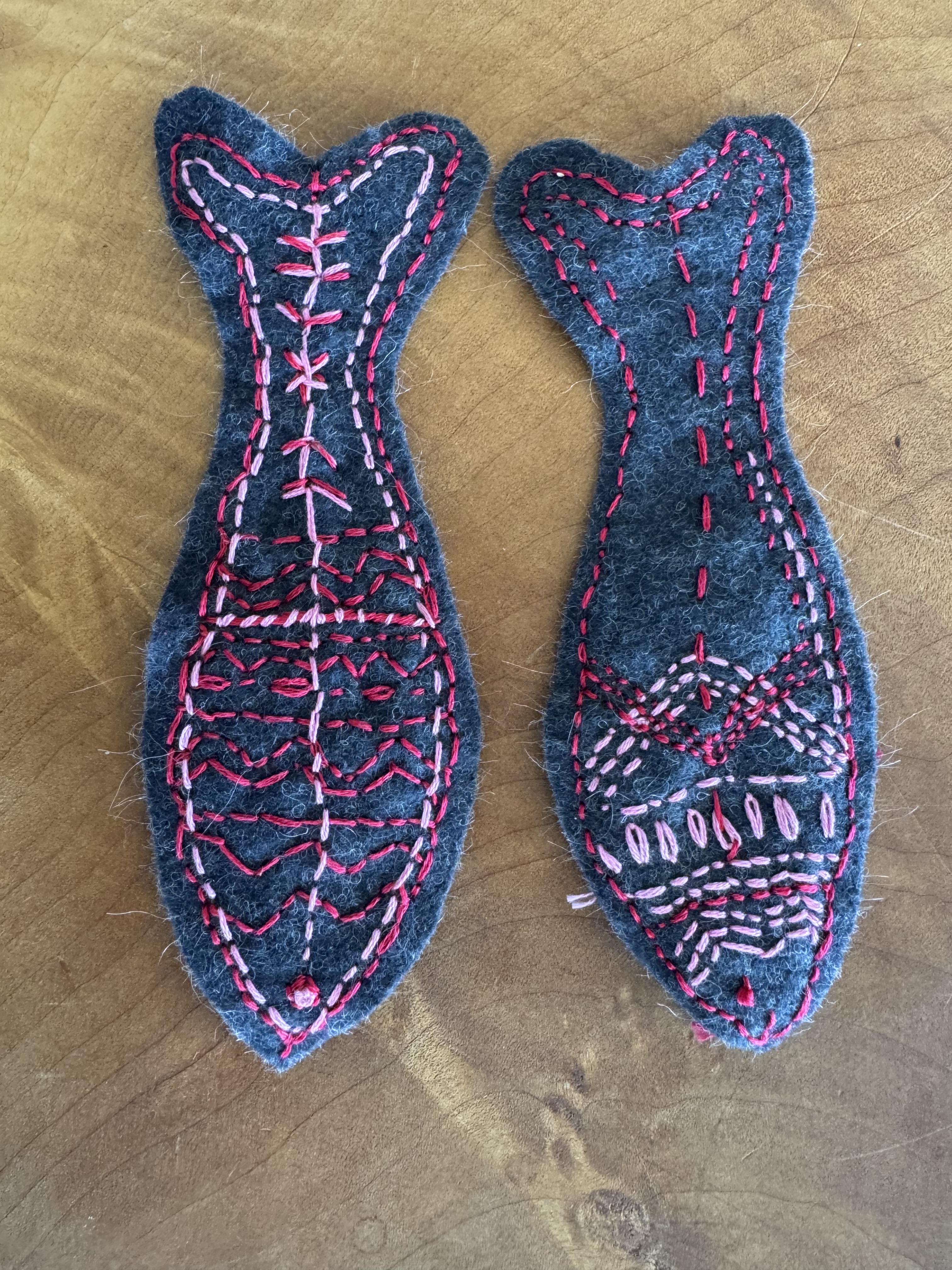
Folk Embroidered Felt Birds: 20 Modern Folk Art Designs to Make & Embellish by Corinne Lapierre. I took this book out of the library and promised myself I’d make two birds before it was due back. I like embroidering at the end of the day, after my mind has been busy with thinking, editing, word stuff. Nice to just sew coloured thread in pretty designs. I met my modest goal—I made a wonky robin and a not-bad pigeon. Then I got a notice the book was due and couldn’t be renewed, as somebody else wanted it. I made a heart for a friend’s birthday, then another heart with a favourite quotation on it, “still, flowing water” from Ajhan Chah, which is to remind me of the paradox that mind is both still and flowing. I don’t entirely understand his talk on this topic, but I still find it inspirational. Then I took out another book by Lapierre, Fabulous Felt, and I made some fish. But I realized what I really want to do is to make all of those twenty birds from her felt birds book, so eighteen more. And it seems that everybody wants the library book, so I ordered a copy and it arrived today. Lots of birds to come!
The bus to work takes about 40 minutes—the perfect length of time to listen to a dharma talk on Dharmaseed. I’m happier with this pastime than I am browsing Facebook or Instagram. The dharma talks inspire me and make me feel better about being alive, while Facebook or IG can make me feel dispirited. Recently, I listened to a talk by a dharma teacher I enjoy—Shelley Graf. She read an excerpt from Sharon Salzberg’s 2002 book on faith. I liked the quotation, but even more, I was intrigued by Salzberg’s book title: Faith: Trusting Your Own Deepest Experience.
Trusting your own deepest experience brought to mind a revelation I had when I started to see a therapist four years ago. Doesn’t sound like much, but it was profound for me: I am entitled to claim my own experience. During that therapy session, I had been dithering about whether I felt a certain way, circling around the ugliness of something, making excuses, minimizing my hurt, my terror, my sadness—in short, underplaying what I felt. “Oh, it wasn’t really so bad.” Nancy sat up straight in her chair, looked at me with intensity, and said, “Madeline, you are entitled to claim your own experience!” I laughed, “really?” I didn’t know that. To think I got to this stage in life feeling I couldn’t be honest about how it really was, how it really is, to be me. I came home that day and on the mirror in my sewing room, I wrote, “I am entitled to claim my experience.” I refresh it with a wine glass marker when it fades because it’s a crucial daily reminder.
Back to Salzberg’s book—well, I bought it and read it quickly, underlining the bits that made me cry or wake up or feel a swelling in my chest. There were many passages that made me feel good—made me feel connected to something bigger, something transcendent, which is what faith is, isn’t it? I love the sense that “no matter what happens, we can place our faith in the deepest part of ourselves, our buddha nature” (p. 170).
With those good feelings still germinating inside of me, I entered the course Michael and I are teaching on Zoom this weekend: Creating and Interpreting Personal Mandalas.[1] This morning, we led our participants through stages one through three. In stage one we rest in the darkness, in the womb. Being, not doing. As I started my mandala, I lined the womb-circle with layers of brown watercolour. Soon, a purple hyacinth spear emerged from the lining of the womb.
As I painted, my mind travelled back, back, back. Thirty-five years ago, I had several weeks off work to heal from surgery. Waiting time, resting time, stage one time. Hours in bed spent daydreaming, not doing, just being. My first husband and I lived in Toronto in a rented house on Devonshire, and the spacious front bedroom had big bay windows with generous ledges. The laser surgery I’d undergone was supposed to give me a chance at having babies, something I hungered for. When my friend Hannah visited me, she brought a potted hyacinth, not yet blooming. I put the plant on the window ledge, and it was as if I could feel the ache of that blue-blushed spear yearning to open.
It was early spring in Toronto: cold days, deluges, and then suddenly, bright hot sun. One day the hyacinth burst forth in a matter of hours, spraying the room with sweetness. Whenever I smell hyacinths, I go back to that time of hunger and healing. My body craved to follow the flower in her blossoming. But I had to wait.
My grandmother Marguerite and I were writing to each other that year. She sent me copies of Unity Church’s magazine and told me that she and other members of her congregation in Los Gatos, California, were praying for me to heal and get pregnant. I thanked her and pretended to be onside with her faith. But in fact, I thought it was silly. How quaint, a circle of old ladies in a church basement, holding hands and thinking of me.
Grandma Marguerite Walker in the Philippines, 1923
Months and months elapsed with no result. I thought the surgery hadn’t worked; after all, the doctor had told me I had only a 15% chance of having children. The odds weren’t great. Feeling like we needed a big change in our lives, my husband and I sold our stuff, quit our jobs, bought a Volkswagen van, and drove south. Almost a year after my surgery, we sat in a Planned Parenthood office in Green Bay, Wisconsin to learn the good news. I was pregnant.
The hyacinth I painted this morning seemed to have come from the deep well of memory— light-filled room, white sheets rumpled on the bed, the bluish spear opening as I kneeled nearby in my nightgown. Spring magic! And I thought of Sharon Salzberg writing about a research project undertaken in Korea: Women trying to conceive were prayed for at a distance, and these women became pregnant at twice the rate of those who received no prayers. I underlined that passage. Beautiful evidence of our “profound interconnectedness” (p. 147).
I think often of my grandmother’s faith, and how she and her Unity friends may have had some small part in my blossoming into a mother. And now, I blossom into belief in the interconnectedness of life, belief in the butterfly effect doing its work not only in the material world, but in the emotional realm too. The mistake we make, writes Salzberg, is to expect a certain outcome from our actions. We get attached to results, which leads to expectation. “When our intention is to do good for others, and we nurture that intention, we can have faith that in some way, often unknown to us, it ripples out” (p. 144). As we go deeper into spring and the hyacinths begin to open, let our loving intentions and kind actions ripple out in ways we will never know.
The other night, we watched the Bach Consort ensemble perform Handel’s Messiah (Knowledge Network). I’ve heard the Messiah hundreds of times, but this time one line resonated especially—Gaia Petrone, mezzosoprano singing, “He was despised and rejected of men, a man of sorrows and acquainted with grief” (Isaiah 53:3) Yes, Jesus was acquainted with grief. And as we traverse our later years, don’t we all become well acquainted with grief? In the last six years the losses just keep on coming, so grief has become an intimate familiar to me.
And yet, there’s joy! The chorus sings “For unto us a child is born, unto us a son is given, and the government shall be upon His shoulder; and His name shall be called Wonderful, Counsellor, the mighty God, the Everlasting Father, the Prince of Peace” (Isaiah 9:6). My whole body is engulfed with joy tempered by grief; tears stream down my face. My intellect has no chance to do its fancy override of emotions, has no opportunity to ridicule me: You’re not Christian, Madeline, why so moved by this, you silly? The analytical brain successfully bypassed, I am immersed in the bittersweet joysadness of the words, bathed by a sense of the sacred: vaulted ceilings, stained-glass windows and flowing frescoes of a Viennese cathedral. The possibility of God. The swell of triumphant sound fills both church and body.
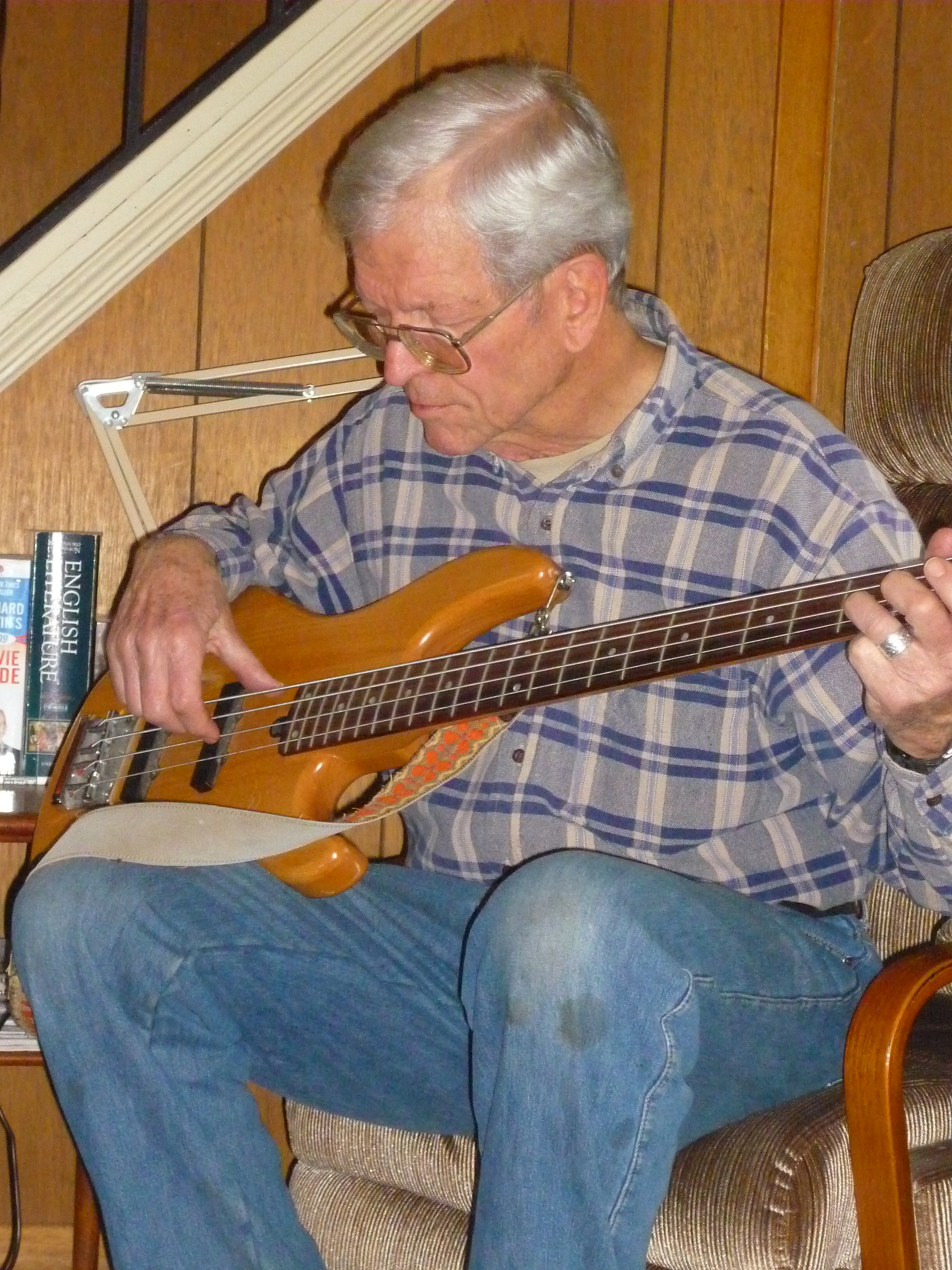
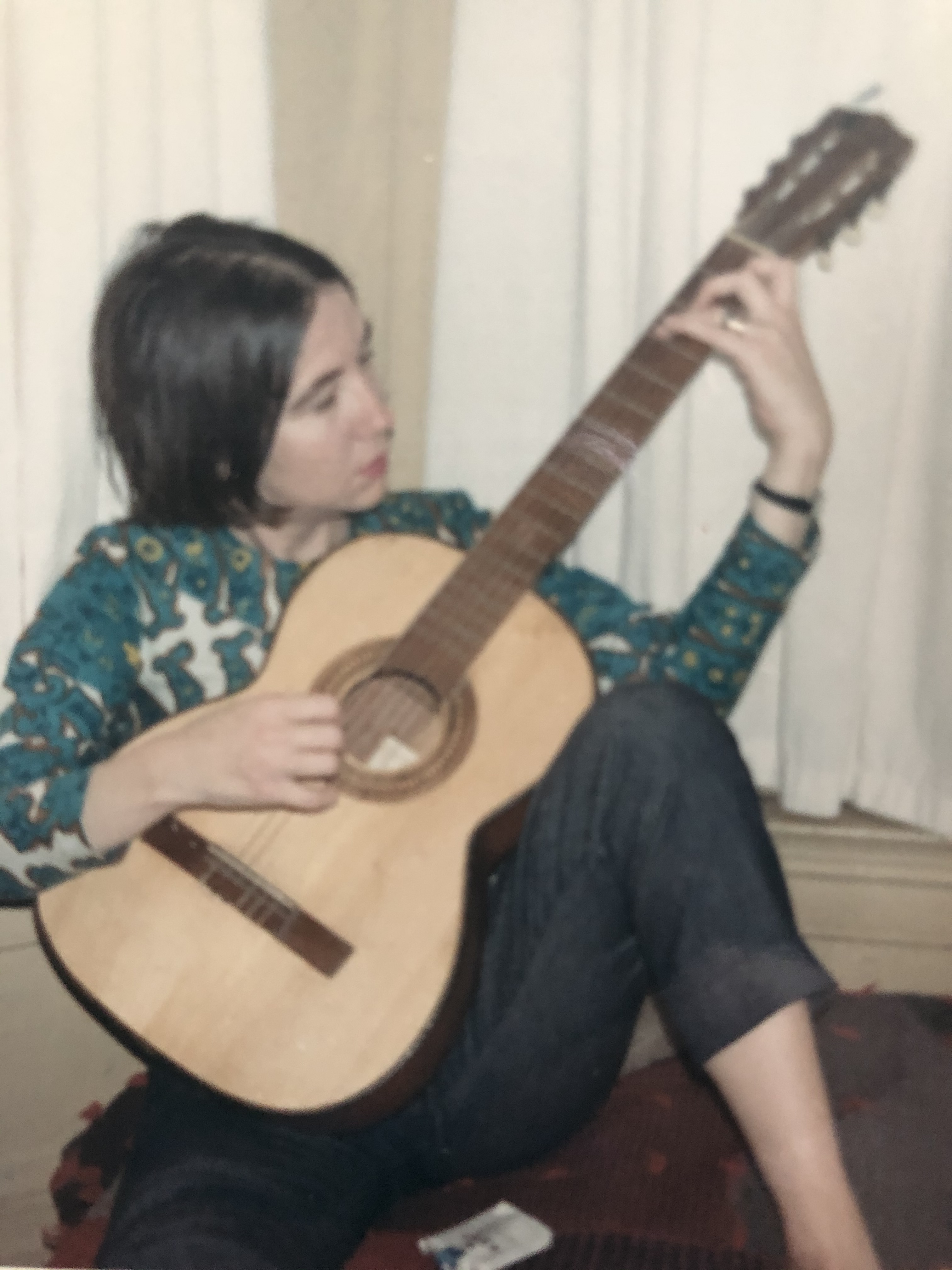
The past rolls in. I go way back and find myself sitting beside my mother who gifted me with her love for classical music. We sink into the wine-red velvet seats of a hushed concert hall. It was 1983, and I had my first job after graduating with a BA in English: I was secretary to the head engineer at the newly built Roy Thompson Hall in Toronto. There was one marvelous perk that kept me showing up at the gloomy subterranean office: free concert tickets. When I got tickets for the Toronto Symphony performing Beethoven’s Ninth and invited my mother, she was thrilled. During the final movement, as the four soloists and choir sang the “Ode to Joy,” I turned to her and saw her cheek wet with tears, her dark eye sparkling with complicated joy. Just as my father retreated into jazz to feel his feelings, classical music was the vehicle for my mother’s deepest emotions. Many times, I caught a glimpse of her crying as she sat on the living room couch, listening to a moving passage from a symphony or quartet or aria. As I wept last night over the Messiah, I felt our tears intermix. We are connected.
Papa playing his beloved bass; Mama in Berkeley with her acoustic
I noticed another sweet outcome from watching the Messiah: the opportunity to hug an old friend no longer with us. One of the second violinists resembled Hanna, who died in 2018. I went to sleep with that image of the violinist merging with the face of my dear friend: wide grin, glasses, brown bob laced with grey. When I met her in the dream, she felt real as anything, and I stayed for a while in her warm, familiar embrace. I love that I can still access my lost ones in the dream world.
So, in a few weeks the year rolls to a close. Last December I wrote about all the things I had accomplished during the year—sewing and writing projects, starting my business. What did I accomplish this year? I put one foot in front of the other every day. This December it feels like more than enough to just write a few paragraphs and give thanks for the good things in my life.
The Walker Sisters, circa 1963, Berkeley California
In August my eldest sister and niece moved from Yellowknife to Nanaimo. The three Walker sisters haven’t lived in such proximity since the 1980s in Toronto. Our closeness brings me comfort and happiness.
Walking the dog day in, day out, has given order to our lives. Sky and earth, weather, sun, moon, trees, and birds break through my orbit of self-absorption, and I am grateful for them all. To stand in rain puddles and watch the fast scud of grey clouds, cormorants flying low over the steel-gray Gorge—is to feel alive.
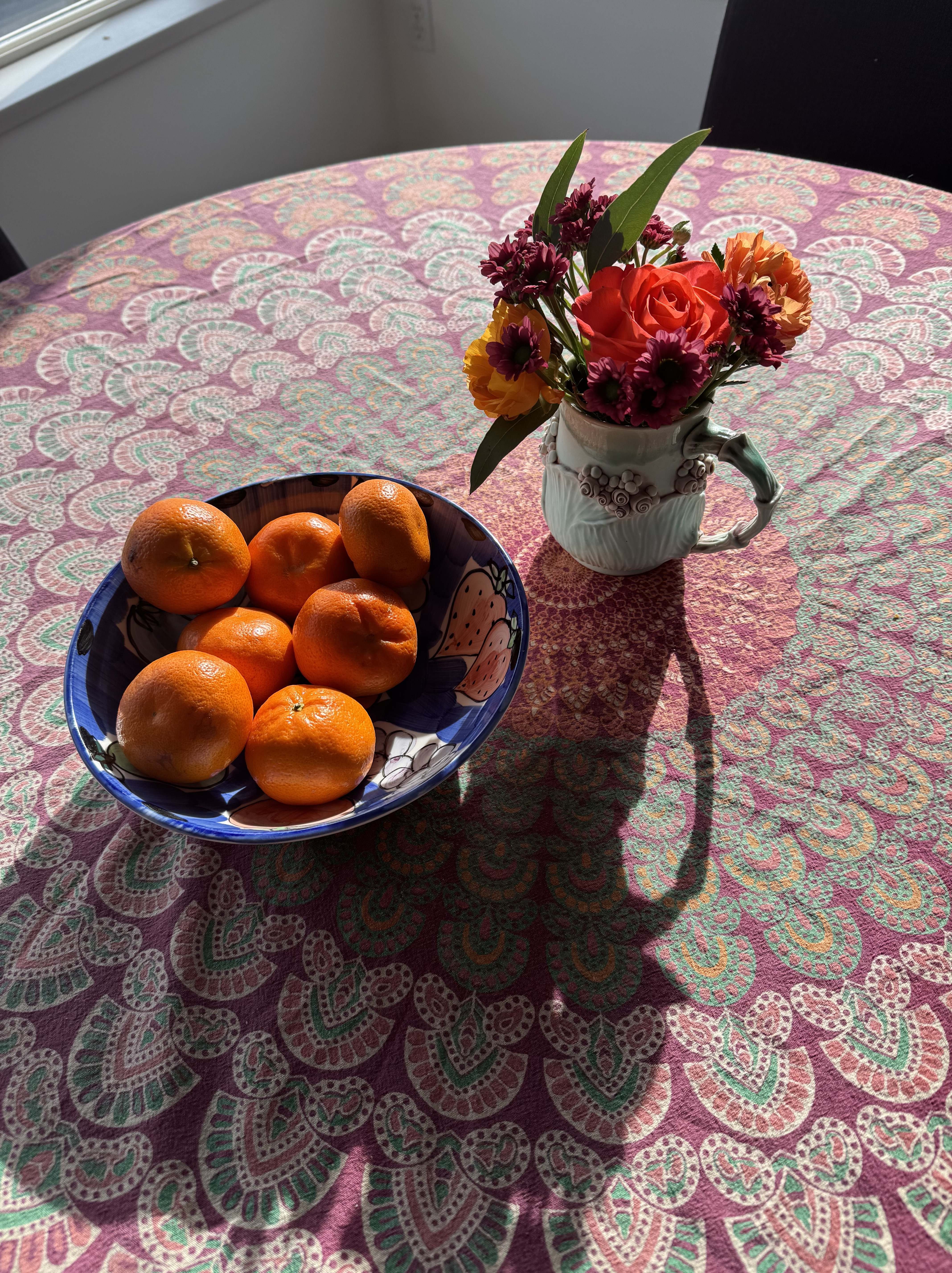
Although my writing group only met a few times this year, I appreciate each member. Late one recent afternoon, we sat in a beautiful room as the winter light slanted through the tall windows, Japanese oranges in a brown bowl, our faces rapt as we listened to one another read our work. We need stories now, more than ever.
This was a year for intake rather than output. I didn’t sew or write much. I read voraciously and watched a lot of television. Grateful to the authors whose words I enjoyed this year, too many to list. But three memoirs stand out for me. I loved poet Elizabeth Alexander’s narrative The Light of the World about her marriage to artist Ficre Ghebreyesus, his sudden death and her grief. She writes with the poet’s delicacy and attention to detail, and her grief/joy is palpable on each page.
Vivian Gornick’s memoir, Fierce Attachments, about her fraught relationship with her depressed mother, Bess Gornick, resonated with me. Vivian struggles for independence from Bess while loving her with the potent mix of passion/compassion limned with hatred and resentment that seems particular to some mother-daughter bonds.
Perhaps you have to be a Margaret Drabble lover or a lover of puzzles to appreciate this one (I am the former). In The Pattern in the Carpet: A Personal History with Jigsaws, Drabble leads us through her lifelong fascination with puzzles, mixing in portraits of family members, tidbits of the history of puzzles, and asides about memory, writing, and life. A circuitous maze-like quality to the writing brings form and content into alignment.
And so many good stories streaming on television. I was grateful for a daily escape from reality through hours and hours of Grey’s Anatomy, No Offence, Pretty Hard Cases, Succession, Shetland, The Chair, Shtisel, Lupin, and many more. . .
I look forward to the shortest day of the year and the return of the light. Thank you for reading, dear people. One foot in front of the other.
“Human beings are creatures of belonging, though they may come to that sense of belonging only through long periods of exile and loneliness.”
David Whyte, The Three Marriages: Reimagining Work, Self and Relationship
Ever since I was small, I have felt I don’t belong. As I grow older, I see how this sense of not belonging is linked to black and white thinking: I am excluded either because I am not good enough or because I am superior (“arrogant worm,” as they say in AA). This strain of thought is endemic for alcoholics. To break the spell, it’s crucial to look for similarities not differences when you attend twelve step meetings or, indeed, whenever you feel the sharp edges of polarity creating a sense of distance.
For me and perhaps for you, the isolation resulting from the pandemic has exacerbated loneliness and a sense of exile. Last month I was feeling particularly alone in the sadness that can arise from being a parent. Only in recognizing that many other parents across the world share in this pain did I not feel so alone. Facebook groups and other modes of connecting across space and time are wonderful to bring a sense of “I’m not the only one.” But also useful has been the Buddhist practice of Tonglen, breathing in the thick suffering of others in your predicament and breathing out coolness and healing. This practice connects me with others, but more than that, it dissolves the sense of specialness and exclusion I am prone to. We’re all in this together.
There is another simple practice I have started. I review small events from the perspective of community. This week, for example, I went to an acupuncturist for the first time. She is a gentle young woman named Demi with a river of brown curls running down her back. She made me feel so comfortable and safe as she stuck a dozen needles into my legs, hands, and back. As I laid face down on the warm table in a quiet room, I felt joined with all of the other people suffering sciatica or other pain in their bodies, and I also felt part of a group of people who get acupuncture. I could picture hundreds of us lying on surfaces—floors, grassy fields, dusty streets, tables, beds—and kind practitioners breathing slowly and rhythmically, putting us at ease, as they insert the slim sharp points. I imagine a collective release of endorphins through bodies old and young, fat and slim, smooth and rough. I imagine our relief.
The next day, I suffered from self-doubt about my new editing business—will I get clients? Will people I’ve done work for get back in touch with me? And imposter syndrome: Am I really an editor or just pretending? Perhaps I don’t belong.
Drawing a tarot card, I asked, “What do I need to know right now?” I pulled the Six of Wands, then consulted Joan Bunning’s Learning the Tarot. She writes that “the Six of Wands appears when you have been working hard toward a goal, and success is finally within reach. . . . If you do not feel close to victory now, know that it is on its way provided you are doing all you can to make it happen.” I felt encouraged.
Amazingly, later that day, I received two emails from former clients who wanted me to do work for them. The next day, a new client gave me an update on work that is planned for this summer. And a referral from a colleague I thought would come to nothing yielded another email today asking for my services.
I feel not only encouraged by all of this positive activity, but connected to a community of editors. Yes, I belong. Amazed by the rightness of the card, I feel connected to all those people everywhere who use tarot to help them make sense of life. I can see the decks being shuffled and cut by hands everywhere—brown hands, gnarled hands, arthritic hands, young hands, a hand with a missing finger. . . . We shuffle and cut and draw and learn about ourselves and others, about our Fool’s journey on this Earth.
On Friday, I felt down again, and as I sat in the backyard with my next-door neighbour and we watched the puppies play, I shared a little of my current grief. She popped out of her lawn chair, “I’m going to get my Animal Spirit cards. They’ll help you to feel better.” She came back with the deck and I shuffled and drew. I tried to pull just one, but two cards were stuck together—Elephant and Otter. She read aloud the description of each animal, and a tear rolled down my cheek.
The descriptions felt resonant—the qualities of the unstoppable, gentle, noble elephant and the giddy and joyful otter were combined inside of me. I felt connected to my neighbour then, linked to her through her kindness to me and her willingness to explore beyond the rational self. I feel connected to everybody everywhere who is suffering and uses tools to understand themselves and bring solace: tarot, mandala-making, building sand-castles, creating songs and singing them, writing novels and poems, reading palms, tea-leaf interpretation, or casting the I Ching.
Then on Saturday, I was washing dishes and noticed movement in our back neighbour’s yard. Raccoons? I fetched my binoculars and trained them on a raccoon couple mating—the male straddling the female and biting her neck. Their black bandit masks and long striated fur were crystal clear through the binocs. I was awed. I am part of a community of animals—our bodies are drawn to one another, we mate. I am connected not only to a world of animal lovers, but to a world of lovers of animals. We train our binoculars on birds and lovely beasts of all kinds; we are curious about the natural life we are part of.
Antoine de Saint-Exupéry wrote that “what is essential is invisible to the eye,” and that has been my experience. An (invisible) sense of community is essential to me now more than ever. This week I call forth community in many ways. I call it forth through my pain and suffering. I call it through being a patient of acupuncture. I call it through using tarot and other mystical tools. I call it through imagining myself as a member of overlapping groups: editors, parents, and neighbours. And I call it through membership in a society of homo sapiens and other animals. An invisible sense of belonging keeps me going. I may not be able to touch you but I feel you.
We’ve been drawing and writing and sewing around here. Michael ordered a drawing bench from Nicole Sleeth and arranged to pick it up on Saturday. Sleeth is a painter, but as a sideline she sells handmade benches that are great for life drawing, as they comfortably accommodate the shape of your body when you are facing a model. I asked Michael if I could come along for the ride, expecting to simply pick up the bench and head home again. But when we knocked on the door, Sleeth welcomed us in, beckoning down a long narrow passageway, past her two little sausage-shaped dogs, into the studio, a long, light-filled room. I was excited to visit a working painter’s studio and see the canvases in progress; new finished work hanging on the walls; shelves of paints, supplies, and curious objects; huge windows facing Fisgard Street; a couch where, once they were tired of barking, the two dogs curled up and observed their owner chatting with us.
Last September, we visited Sleeth’s show “All Eyes on You” at Fortune Gallery. Her work “centers on the female figure as an exploration of power, connection, and lived experience.” Standing before each monumental painting, I felt the personality of the woman before me. The unashamed, unadorned nakedness of women looking comfortable in their bodies startled me at first, but I was soon drinking in the honesty of these representations. I enjoyed that exhibit so much, I saved the postcard. It made me realize I am more at home in my own ageing, sagging body now than I ever was in my twenties or thirties. Later that day, I revisited the studio in my mind and appreciated Sleeth’s gracious unexpected welcome, another one of many small adventures we’ve been having this year, my year off work.
The second half of my year’s leave hasn’t gone as planned—Covid-19 cancelled our trip to Haida Gwaii, where we would have been this week, exploring the parks and learning more about the Haida Nation. So instead of travelling afar, we focus on home, neighbourhood, and our creative journeys, all of which bring contentment. Now that I’ve finished the Eight Worldly Winds project (more on that next time), I will start working on a Courage Cape. The cape is my idea in response to a life coach who asked what I could do to grow my courage as I set out to start my own editing business.
Earlier this month, I had a free life coaching session on Zoom with Lori-anne Demers, who helped me to figure out what I need in order to be/see myself as an entrepreneur. When I go back to work in July, I will concurrently develop a plan for eventual self-employment as a writing coach and editor. Having skills and experience is one thing—I have a PhD and many years of experience in writing, editing, and teaching. In June, I start the first course in Simon Fraser University’s editing certificate program to consolidate some of those skills. But it’s the chutzpah of charging what I’m worth and facing the world with confidence that scare the shit out of me. So Lori-anne asked what I might do to feel into my courage—what symbolic creative act will give me fortitude as I launch this new enterprise? “I’ll sew a Courage Cape,” I said.
The Courage Cape idea just came out my mouth–no premeditation. I love sewing quilts, pillows, bags, and potholders. Lately, I’ve been eager to graduate to sewing garments. I recently ordered Stylish Wraps Sewing Book, by Yoshiko Tsukiori, from Bolen’s Books and picked it up on Saturday before we visited Nicole Sleeth’s studio. The hooded cape—one of the easier patterns—looked like just the ticket, I thought yesterday as I browsed through the different styles. I love capes; wearing them requires the kind of panache that I aspire to. But Tsukiori’s recommendation to use boiled wool to construct the cape had me worried. Boiled wool is about $30 a metre, and I know I make mistakes when I sew something for the first time. I didn’t want to waste money.
So today I got on my bike. It’s a glorious day—sunny and warm. I cycled the E & N trail to Store Street, admiring all of the graffiti along the way. I locked my bike in front of Value Village. They’ve reopened with new safety protocols. A vivacious young woman with purple hair, a plexiglass face shield, and a ready smile was stationed at the entrance, spraying each shopper’s hands with sanitizer. I headed straight to the back. I found a big royal blue wool blanket with understated green criss-crosses for $5.99. It’s in the washing machine right now. I’ll use this wool for the first rendition of the cape. We’ll see how that goes. When I finally make a Courage Cape I am satisfied with (who knows, it may be the first iteration), I see myself wearing it with confidence as I edit a mystery novel, my feet crossed casually on my desk.
Forty-five days left until I return to work. I counted this morning. May I treasure each adventure. May you treasure each of your adventures.
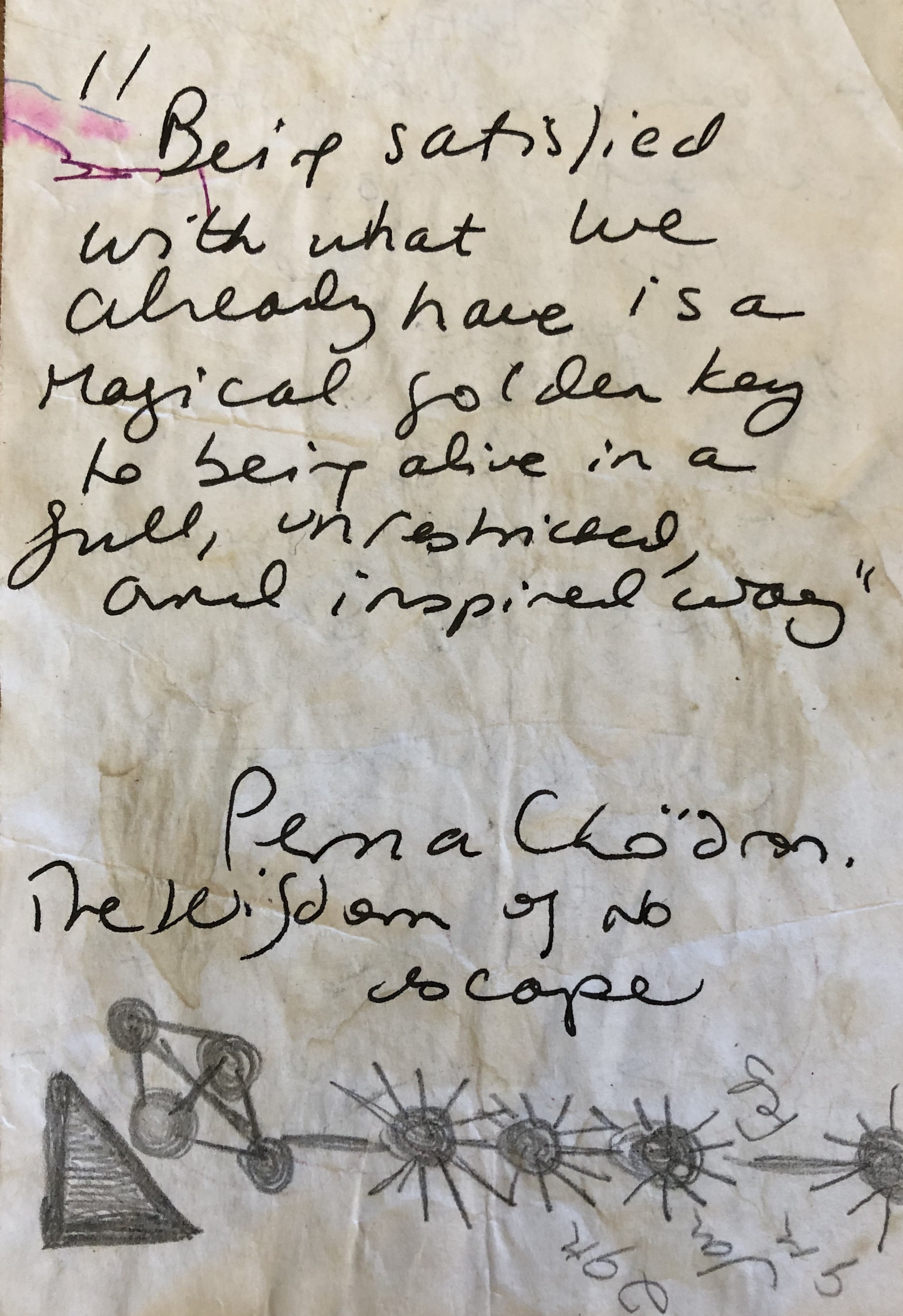
“Being satisfied with what we already have is a magical golden key to being alive in a full, unrestricted and inspired way.” Pema Chodron, The Wisdom of No Escape. I keep this little piece of paper on my desk to remind me that I have all I need to be content with life. It’s all here.
“That inescapable animal walks with me,
Has followed me since the black womb held,
Moves where I move, distorting my gesture,
A caricature, a swollen shadow,
A stupid clown of the spirit’s motive,
Perplexes and affronts with his own darkness,
The secret life of belly and bone
Opaque, too near, my private, yet unknown,
Stretches to embrace the very dear
With whom I would walk without him near,
Touches her grossly, although a word
Would bare my heart and make me clear,
Stumbles, flounders, and strives to be fed
Dragging me with him in his mouthing care,
Amid the hundred million of his kind,
The scrimmage of appetite everywhere.”
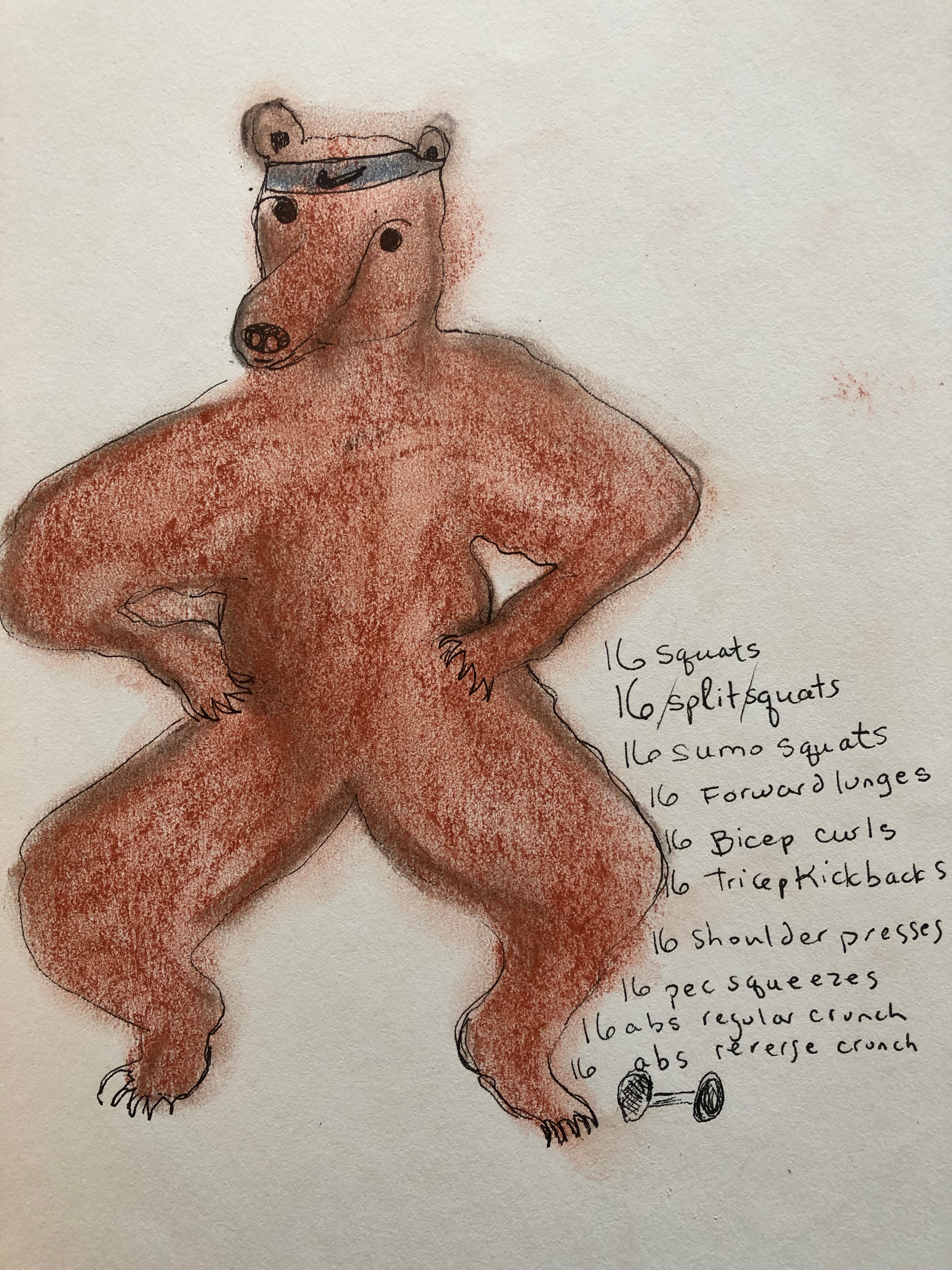
As much as I want to be one with it and to befriend it (as I wrote about here), most days I feel at war with my body. My mind is agile, quick. My body is a heavy bear. I know I should exercise, yet as I make another cup of coffee and settle into my writing chair, I convince myself that it’s not really that important. In August, I hired a personal trainer, thinking she would somehow fire me up, inspire make me to get fit. I had a few sessions with her, and she was lovely and encouraging. She set up a practical plan of cardio, weights, abs, and stretches for me. And then I found dozens of excuses not to go to the gym. Well, getting motivated to exercise is an inside job. (I knew this but was in denial.)
***
Clambering around a playground yesterday with the four-year-old girl I sometimes hang out with, I felt old, tired, heavy, and sore. I stumbled and floundered like a shaggy she-grizzly, a version of Schwartz’s inescapable animal. Then I realized on the bus home that I need to treat exercise like I treat water or food. A need. A requirement for living well.
***
Today I accompanied Michael to the rec centre where he goes for his daily run. I took my iPhone and headphones and tuned into Apple Music’s app, looked under “Music by Mood’s” Fitness category, and found it is crammed with playlists of every kind—“R&B Workout,” “Alternative Workout,” “Latin Urban Workout.” I went straight to the “’80s Workout” because there’s nothing like the Pointer Sisters singing “I’m So Excited” to get your heartrate up to its maximum. The record’s needle drops down into the disco groove and before I know it, my past self, my young body, is moving fast, moving sexily.
***
A year or two ago, I was leery of paying monthly for Apple Music, and I loathed the idea of the playlists, prepackaged music pabulum. I didn’t want to be just another baby boomer nostalgic for the sounds of her youth. I should select my own favourite music, make my own mix tapes. But I surrendered. Apple Music’s fitness playlists make me happy. I warmed up on the rowing machine to Cyndi Lauper’s “Girls Just Want to Have Fun” and Rick James’ “Super Freak.” I had memories of going to aerobics classes with my sister in the big gym at the University of Toronto. After we sweated it out, we’d go out for a beer at a bar on Harbord Street (and for me—multiple cigarettes).
***
Moving to the treadmill, my heart beat faster with the Weather Girls’ “It’s Raining Men,” Madonna’s “Material Girl,” and Wham!’s hit, “Wake Me UP Before You Go Go.” Peak heart rate with the Pointer Sisters, sweat pouring down my face. Following that, I did weights to the Eurythmics “Sweet Dreams,” remembering a summer in my twenties when I was obsessed with that song, playing it over and over as I lay on the floor in a melancholic haze. Finally, my housemates started to complain about hearing the same song 50 times a day. I forwarded through some songs, and came “Billie Jean” by Michael Jackson and “Let’s Dance” by Bowie. Wonderful. As I stretched post-workout, I shifted over to Botswana’s hit songs, another Apple Music feature (Daily top 100 in dozens of countries).
***
Sometimes my body is a heavy bear, fumbling like “a stupid clown of the spirit’s motive.” My mind is electric and agile, my body a “caricature, a swollen shadow.” As I age, my body can feel like a slow prison for a quick mind. Her “mouthing care,” her “scrimmage of appetite” always playing out—wanting this, wanting that, buttered toast with jam, too many coffees, lounging for hours on the couch. How good to feel, at least today, energized, young, strong, and compatible with my animal. How can we become one?





























 Madeline Ruth Walker