Full Time, A Short Story

Last year, Benji was hit by a car. He was Alma’s last cat of the dozen that graced her long life. I heard the thud as I sat sewing at the bay window. When I looked up, Benji lay crumpled on the street and no car in sight. Some asshole hit him and drove off. I threw down my sewing and ran into the street, grabbing my shawl on the way. He was still alive, making a peculiar huffing noise, blood trickling from his jaw that looked all crooked. 

Oh no, this will destroy Alma. I scooped his light body up from the pavement and cradled him in the shawl. When I knocked at Alma’s door, it took a while for her to open it. Her eyesight wasn’t the best, so at first, I think she thought I was bringing her a loaf of my sourdough, wrapped in a kitchen towel. But soon she realized what was in my arms and began to cry.

Alma, we’ll can take him to Peter right away. Our healer Peter lives in a cottage just around the corner. Get in my sidecar, I told her, and I’ll hand Benji to you. Her crying had evolved into low keening. I dropped her purple cape over her shoulders, and she slipped on her sandals. I opened the door of the sidecar attached to my bike, and she slid into the seat, creakily, and held her arms open as if to take a baby. Benji was her baby—a cat she’d coddled and loved since he was a feral kitten, discovered in the old shed behind my cottage with three litter mates. We figured the mother had been killed by a car or racoon. The kittens were starving. We found homes for them, all but one. Alma had been without a cat for almost a year then, and when she saw little squirming Benji, she said she had to have him. Or he had to have her. 

She fed him with an eyedropper for weeks and carried him close to her warm, wrinkled breast in a sling she asked me to sew for her. I made the sling with indigo cloth I had left over after making Peter’s shirt. Alma was a sight to behold, walking slowly to the corner store with her shopping cart, the sling around her front, a tiny feline face peeping from the folds of blue cloth. 

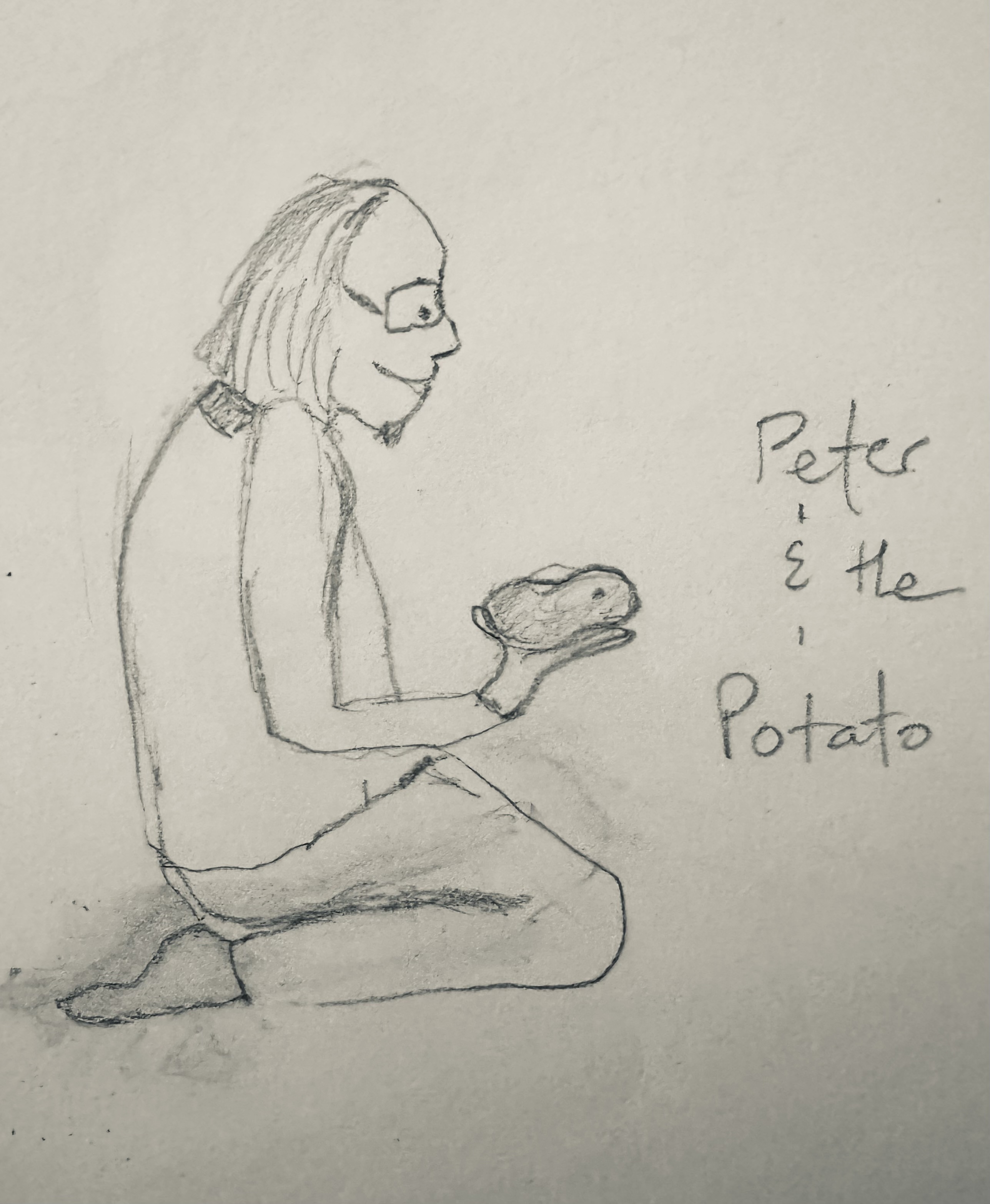
Oh Benji, Benji. Out of my peripheral vision, I could see Alma bent deep over his little body as I pumped the bike, swooshing down the road and around the corner. It took us only a minute to get to Peter’s. We knocked on the door, no answer, so I figured he was in the garden. We trod the narrow path beside the cottage. His back was to us as he sat on his haunches, examining a potato he had just dug from the soil. I looked fondly at the blue indigo cloth straining across the breadth of his back, a breadth of skin and warm muscle I had run my hands over just last night. My knees trembled with desire as I approached him with Benji now in my arms, Alma hobbling behind me. 

An hour later, we sat in Peter’s front room on low velvet couches, drinking jasmine tea. Alma was holding a lifeless Benji in her lap. Peter had determined the injuries too severe to save him, so he’d administered a lethal drug in a long needle while Alma stroked the fur, matted with blood. Now, Benji looked so peaceful, curled up in my red wool shawl, Alma’s hand under his little skull. 

Neither love nor money will persuade me to ever get another cat, Alma said, her voice soft and sad. She’d stretched her stick-thin legs out before her. Alma liked to wear sandals most of the year, except when it snowed, liked her feet to feel the air, and today I could see her thick greenish toenails and large bunions up close. She was terribly old.

Peter heaved a great sigh. Benji was a fine cat, he said. We had all loved Benji’s antics. He’d dance like Baryshnikov, trying to swat the clouds of gnats that floated above the garden beds in summer. His meow was a sweet question mark, meaow? And if you were lucky enough to hold him in your lap, you were blessed with a vibrational purr that set your thighs buzzing. A deep warmth and contentment emanated from his slight, stripey body. We all loved Benji. 

Peter sighed again, shaking his head at the loss. We came to Peter with our sick and injured pets and even, sometimes, with our own ailments. His stinging nettle tonic has reduced my hay fever. His black cohosh tea has helped women all over our neighbourhood with menopause. Peter is not just a skilled herbalist. His magic hands can make me come just by stroking my breasts.
Several weeks after Benji died, a sunny June Saturday, I was at a yard sale with Alma. On summer weekends, Alma and I did the yard sale circuit together on my bike. I pedaled, and she rode sidecar. She has a thing for small dishes, tiny saucers and bowls, sized for fairies. I like to collect children’s books. I don’t have children, and I never will have. I’m fifty this year, but nonetheless I’m charmed by simple stories and illustrations. I would rather read three or four children’s books to myself at bedtime than a novel filled with crime, sex, mystery, and drama. 

A book caught my eye, titled Part-time Dog. I opened the cover to the copyright page to check the publication year, 1965. I always do that first because I prefer old books. They provide the most comfort. I bought it, along with several others, two dollars for the lot. Alma found a gold rimmed bowl decorated with an image of two goldfish. Later, we had dinner at my place—a big salad and thick slices of my sourdough. After dinner I gave Alma a framed photograph of Benji dancing in the garden that I’d taken the year before. I’d caught him with both paws in the air, his golden eyes glittering with excitement. One small foot was off the ground as he leapt. The sun played over his orange and brown stripes, and the patch of white on his face made him look almost human. When Alma saw it, tears rolled down her wrinkly face. I moved next to her on the couch and put my arm around her. Not for the first time, Alma said that neither love nor money would persuade her to get another cat. Benji was the best and the last.  

That night after Alma left, Peter slipped in my back door, and we made love silently. Through the open window, we heard whoo-hoo from the owl in the tall pine. I felt us smile in unison. What if this life was an illusion? What if I were a character in a children’s story about a happy seamstress and her herbalist? After Peter left, I lay in my narrow bed with the stack of new-to-me children’s books on the bedside table. Part-time Dog was on top, so I started with that.  

Brownie is a small stray dog who shows up in the neighbourhood. He starts walking with the children to school, accompanies Mrs. Butterworth to the bank and watches Mrs. Tweedy rake the leaves in her yard. But he has no home, nowhere to go at night, so he sleeps under someone’s porch. Three women in the neighbourhood decide to adopt Brownie. It would be too much work for one of them to have him all the time. So, one gives him breakfast and keeps him in the morning, one has him in the afternoon and gives him his dinner, and another has Brownie every night, where he sleeps in his warm bed, safe and sound. I liked the book so much, I read it again, then fell asleep, dreaming of a little brown dog curled up at my feet. 

In September, Peter noticed a white cat in his garden, sleeping on a warm stone, and he scratched her chin and stroked her, gave her some salmon he was cooking for lunch, and then asked around the neighbourhood. Nobody knew anything about her. She was a short-haired female with one blue eye and one golden, and he named her Nia. Peter worried he’d be taking her from her family, but still, nobody claimed her. 

She claimed us, wandering back and forth from my cottage to Peter’s. When Peter gardened, she stayed close to his side, and when I sewed, she spread out on the table next to me, her purr matching the vibration of the sewing machine. And though Alma said she’d not have another cat for love nor money, there were many nights when Nia wandered into her cottage and curled up on her bed.

Christmas was simple and good. Alma, Peter, and Nia came to my cottage. We had a stew made with pumpkin from the garden and my sourdough bread. For dessert, Peter brought an apple cranberry pie he’d baked. We walked Alma home, then we went to Peter’s cottage because his bed is bigger than mine. I stayed all night.  When I got up, Nia was nowhere to be found. After we drank our coffee, Peter went and called for the cat, but she didn’t come running, her white tail twitching and her little bell tinkling, as she usually did. Frost painted the windows white, and a crust of ice capped the blue bowl of water we kept outside for her. We went to my cottage next, but Nia wasn’t there. At Alma’s, we knocked at the door. No answer, so Peter opened it gingerly, and we called through. Silence. We walked to the back, to Alma’s bedroom, where she lay peacefully, her long white hair flowing out around her across the dark pillowcase, eyes closed in her wrinkled brown face. We knew her life was over. Nia lay at Alma’s feet, purring deep and low. 

Later when we cleaned Alma’s cottage and found a copy of her last will and testament, we discovered she’d left the cottage to both of us. When Peter asked me to marry him in the spring, I said yes, you make me happy. But there’s one condition. Let’s keep things as they are. 

We sleep sometimes at my place, sometimes at Peter’s, and other times at Alma’s. We kept things the same. The blue sling that kept Benji close to Alma’s chest hangs on the hook near the door, the framed photograph of him on the living room wall. The tiny dishes, neatly arranged, are displayed the way Alma liked them, on open shelves in the kitchen. Nia wanders from one cottage to the other to the other. She knows that food, water, and love are everywhere.

Note: Part-time Dog is a book I read to my children by Jane Thayer, pictures by Seymour Fleishman

Shake your wet weathers in the warm wind

Bouts of anxiety come and go these days: chest tightens, stomach burns, heart flutters. Tears come at any time, unbidden. My hands and face feel raw. My heart even more so. I  am finding comfort in small things. When I saw #StayHomeWriMo’s mental health prompt, “starting re-reading one of your favourite kids’ books,” I took Little House in the Big Woods and Little House on the Prairie off the shelf, the first two books of a series based on Laura Ingalls Wilder’s childhood, specifically pioneer and settler life in Wisconsin, Kansas, Minnesota, and Iowa in the late 1800s. I have the first four books, and I’ve kept them since childhood, moving them from house to house dozens of times. Faded covers, deckled edge pages, and canary yellow flyleaves. Garth Williams’s droll pen and ink illustrations make the stories and the characters come alive. Rereading them more than fifty years later, they produce the same warm feelings of comfort and safety they did back then.

Screen Shot 2020-04-10 at 12.56.29 PM

As I snuggle in bed, I enter a fictional world governed by capable, predictable adults. Wolves howl outside, bears roam the woods, storms erupt and cold winds thrash against the house, malaria descends upon the family, and Indians living down in the creek beds want to kill and scalp all white people. Yet Ma and Pa are there, keeping Laura, Mary, and baby Carrie safe.

Nestling into words and images describing snug, clean, safe indoor environments, I enter the log house in the big Wisconsin woods (Book 1). In the deep of winter, fire shines on the hearth, bulldog Jack and Black Susan the cat stretch out on the warm wood floor. Comfy in her red flannel nightgown, tucked into the trundle bed she shares with her sister, Laura “looked at Pa sitting on the bench by the hearth, the firelight gleaming on his brown hair and beard and glistening on the honey-brown  fiddle. She looked at Ma, gently rocking and knitting. She thought to herself, ‘This is now.’”

IMG_0738

Like a swarm of bees, I can feel the critical arguments seething through my mind as I continue reading: I am trained to call out patriarchal culture, gender construction, racism, oppression, and colonialism, and it’s all there in these books. But I switch off those arguments, sinking into our collective unconscious where an archetypal protector tucks us into cozy trundle beds, watching over us, every one, during this difficult time.

I remembered my 60th birthday party, a year and a half ago. Despite drawing a tarot card that spelled disaster, I experienced the snug feeling of being safe, loved, and watched over. Those were happier times when we were able to gather—when physical distancing was unthinkable.  I invited a friend to the party who reads the tarot, specifically the Motherpeace deck. Karen Vogel and Vicki Noble created Motherpeace tarot in the late 1970s in Berkeley, California, where they worked together as academics, feminists, and sacred healers. This big round deck draws on ancient Goddess wisdom, the occult, magic, myth, and feminine energies. Although when I first saw the deck, I felt disappointed by what I perceived to be crude artwork, I became more and more interested in how these two women had translated the 78 cards from more traditional decks into sacred feminine images.

At my party, I felt honoured by Pamela’s willingness to read for my friends, and one by one, I asked people if they would like a reading. Several of my women friends did, and so by turns, they sat in my low bamboo writing chair that I had dragged into the living room from my sewing room. Pamela, having spread her blue velvet cloth over a low footstool, handed each querent the deck to shuffle. It takes a bit of time to get used to working those big circular cards into a shuffling sequence, and I noticed each of my friends handled the task slightly differently. Pamela asked each woman for her question: What do you want to know? Not a yes/no binary question, but a how or why or what question. Next, Pamela asked them to cut the cards three times, choose three cards, and lay them down. The three-card sequence represents the past, present, and future.

Sometimes, through the buzz of conversations, soft lamplight, music, balanced plates of food, and milling bodies, I glanced at the rapt look on the querent’s face as Pamela leaned in toward her, long blonde hair falling around her beautiful serious face. Sometimes I heard laughter from that corner. And I kept getting little warm flutters in my heart—thinking of how happy it made me for each of my female friends to have this loving attention paid to her for a few moments. To consider her life as this rich, mysterious path. To feel the soundings of old wisdom, submerged, but like a vein of molten lava, spreading warmth and understanding into her body, from the seat of her pants into her torso. But of course these are my feelings about tarot—not theirs. Yet it made me happy. It was as much a gift to me as a gift to each of them.

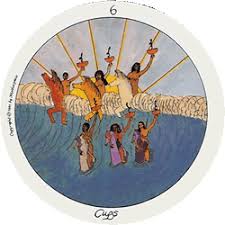
It was enough for me to know the gift Pamela had given my friends, but then, as I stood in the doorway saying good-bye to a guest, she patted the pillow on the wicker chair. “Your turn.” I sat down, and when she asked me for my question, it came without hesitation, from where, I don’t know: “How do I connect with my power?” The first card, my past, I didn’t take too seriously—six of cups with three women in the water and three riding a wave of orgasm. Perhaps it signified all of the good love I had been experiencing since I met Michael. Perhaps I had started to take it for granted, this bath of love I swim in.

six of cups

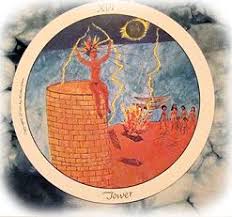
But the present card was the Tower, a powerful card of transformation. “This is the card of big change,” said Pamela. “The card that signals big change in a person’s life, like when your husband leaves you—not like this is actually going to happen,” she laughed. And we both looked across the room and smiled at Michael, who was oblivious to our reading, deep in conversation with one of my sons. “I’ve been getting messages that I need to surrender to something,” I hold her. “Well now you have no choice. It could just be turning 60, the big change.”

tower motherpeaceAt the time, I thought the big change the Tower signified was the crumbling of ego. I was being called to surrender to the slow incremental losses of old age. But the Tower signifies sudden change, and today I believe it foretold the capital c Change the pandemic has brought: change that shakes the very foundations of our lives, change that brings our beliefs and systems under scrutiny and asks us what is most important in life.
My future card, the ace of wands, depicts a small brown body breaking free from a blue eggshell, surrounded by flames. Rebirth, creativity, and victory follow sudden loss. All of my life, I have swum against the river trying to locate firm ground. But wait a second, could surrendering to the flow, to the changes, be a way of accessing my power—connecting with it? Letting go, like surrendering to the body’s irresistable contractions during birth, could be the opening to rapture. Ego dissolves into the deep thrum, the slow heartbeat of the Earth that we finally hear when our struggles to get ahead, to get somewhere cease. All my fighting is just thrashing around on the water. Let go and get swept into the current. That seems about right.

ace of wands motherpeace

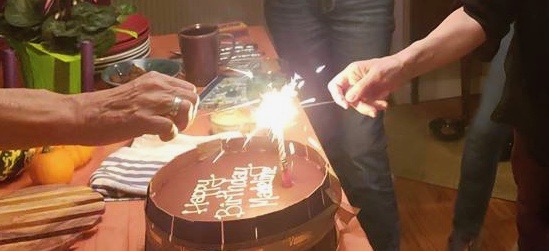
Later that evening, we lit sparklers and ate a cake, resplendent with glossy chocolate ganache and “Happy Birthday Madeline” in piped white sugar lettering. People hung around for a while, then started to leave—much hugging and laughing in the small entranceway. In the now quiet house, Michael and I cleaned the kitchen and put away the leftovers. Something about hearing the dishwasher clicking into its cycle, wiping down the counters, folding damp dishtowels over the oven door, turning off the porch light, rearranging the chairs felt so simple, safe, and sweet. I had a memory of early childhood, when my father used to go around the house and secure everything. Lights off, things put away, daughters in bed, kissed goodnight. Only the whistle of the radiators and murmur of mother and father talking in their bedroom. Nobody, nothing can hurt me now. Did this ever really happen? I don’t know, but the sensation of being safe and warm was real, just as these last few nights I’ve channelled Laura in bed in the little house in the Big Woods to help calm my anxiety.

Version 2

As I lay in bed that night beside my husband, I felt safe, warm, and contented. Now that I had been given permission by the Tower, I could let go. Everything was coming apart anyway, we were all falling, so I didn’t need to hang on so fiercely after all. I fell asleep and dreamt of blue bits of eggshell scattered over the ground, the detritus from rebirth. They crunched under my bare feet as I shook my wet feathers in the warm wind.

The meaning of that dream feels clearer now, many months later. Now that the big Change is here, we get to choose our rebirth. I like to think of all of us as little birds shaking our wet feathers in the warm wind, bits of shell still clinging. We will fly again.


Resources for anxiety

https://bouncebackbc.ca/what-is-bounceback/

https://www.anxietycanada.com/

Resources for writers

NaNoWriMo https://nanowrimo.org/ Sign up with the organization that puts on National Novel Writing Month (November) to get their Covid 19 prompts

How to write when life is sad and wretched: https://discover.submittable.com/blog/how-to-write-when-life-is-sad-and-wretched/

Helen Sword (there is a free online writing retreat coming up later this month): https://www.helensword.com/


.


Pantoum for the girl within

I’ve been spending some time around little girls. A friend of mine and his wife adopted two sisters, ages two and five, and I visited them yesterday.  I’ve also been taking a four-year-old girl to the park every week for a while to help her mother, who has a broken arm. I witness the joy they experience of being in their strong flexible bodies. They leap, climb, cycle, run, and whirl through the world. I started to feel the seeds of that old green life inside of me, memories of cartwheels and craziness, of no shame and feeling free and saucy, the time before self-consciousness descends like a constraining shroud. My body’s talking again, reminding me of the green fuse inside.

I’ve been experimenting a bit with poetic form. The Pantoum has captured my attention, an ancient Malay verse form with repeating lines, like the villanelle and the glosa (you can see my attempt at that verse form here).  The quatrains are arranged like this:

Stanza 1
A
B
C
D

Stanza 2
B
E
D
F

Stanza 3
E
G
F
H

Stanza 4
G
I (or A or C)
H
J (or A or C)

Many famous poets have used this form to wonderful effect. I love, for example, this heartbreaking pantoum by Natalie Diaz

My inspiration comes from those little girls I have been seeing on the playground and in my dreams, the little girl buried among my tangled wires of memory. I suspect you have a young version of yourself, too, deep inside, who sends green sparks up your spine.

Pantoum for the girl within

Stuck out tongue and tangled hair
Within me lives a little girl
Turns cartwheels in the falling dark
Laughing, Gleaming, Spinning World

Within me lives a little girl
Yells “I don’t care, just like Pierre!”
Laughing, Gleaming, Spinning World
Turns cartwheels with no underwear

Yells “I don’t care, just like Pierre!”
Legs scissor through the fading light
Turns cartwheels with no underwear
Strong body spinning in the air

Legs scissor through the fading light
Turns cartwheels in the falling dark
Strong body spinning in the air
Stuck out tongue and tangled hair

IMG_0088

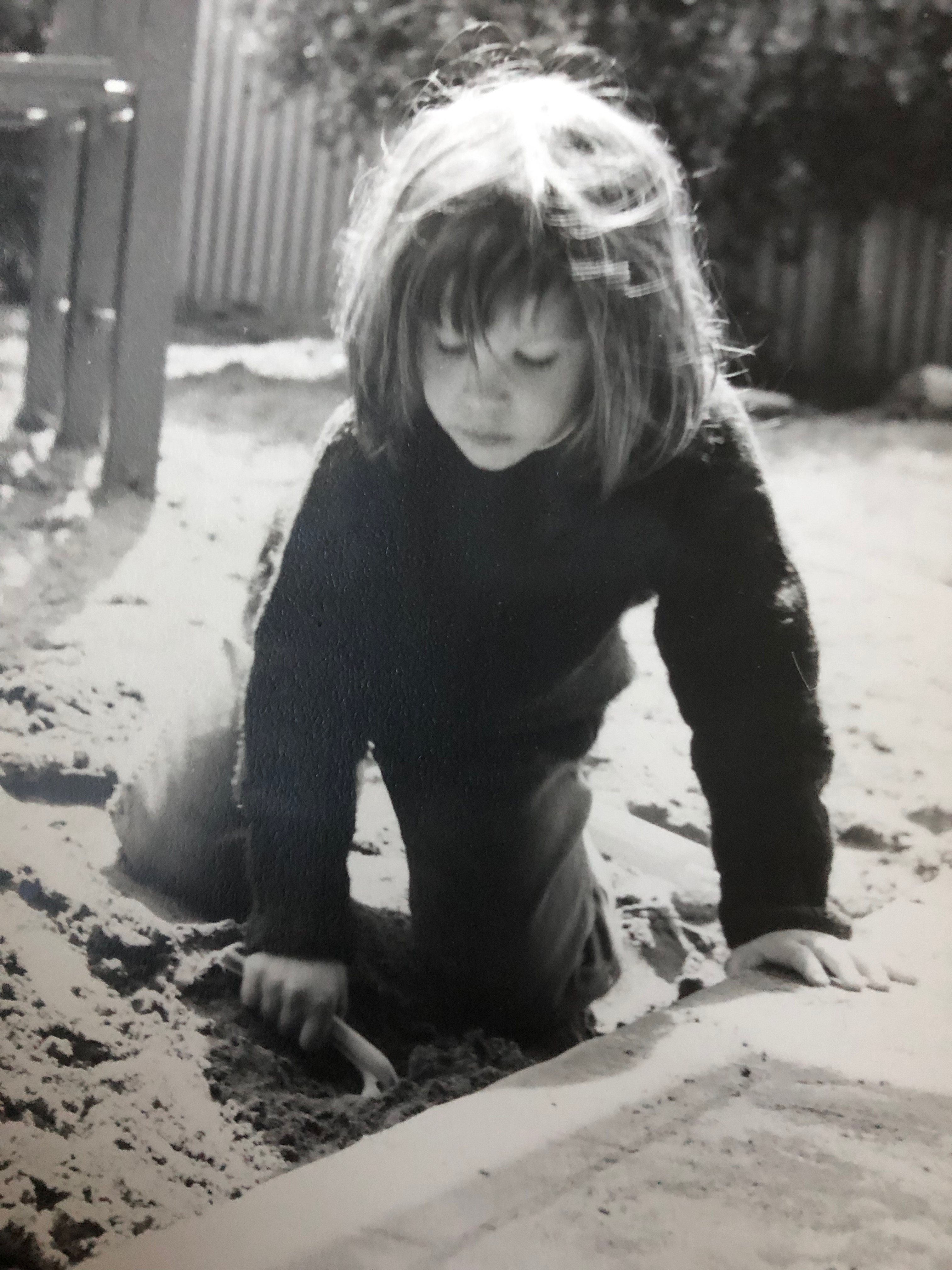
Madeline, 4 and half years old


I hope that you have had the opportunity to read Maurice Sendak’s “Nutshell Library,”  a series of four tiny books sold together in a little cardboard holder. My favourite was Pierre, a cautionary tale about a boy who didn’t care and was eaten by a lion because of his bad attitude. I always found it slightly shocking, but I hungered for the story and wished I could be as defiant as Pierre, even at risk of death.

Deep in pink snow

pinksnowLike walking on pink snow, I thought, as my feet padded over a bed of petals under a cluster of Kwanzan Flowering Cherry trees. Here in Victoria, we get more pink snow than white; from February until May these blossoms drift in eddies from their fruit tree homes and fall gently to the ground.  And then I remembered an old book from my childhood, The Cat in the Hat Comes Back. Sally and her brother were clearing snow outside when the Cat in the Hat ambled by. Even though they remembered the havoc he created in the first book (The Cat in the Hat), they unwisely let him in the house to get out of the cold, where he ate cake in the bathtub, leaving a pink ring. When he tried to clean the bathtub ring, he made things worse: he transferred the pink stain to the mother’s white dress, the father’s shoes, the rug, and the bed. The big Cat asked for help from little cats A, B, and C (who live under his tall hat), but they spread the stain further, onto the white snow outside. You may have read this book, which culminates in “Voom,” an amazing magical cleaning agent under the hat of microscopic cat Z that wiped the snow pure white. But only after all the other 25 alphabet cats plus their leader had transformed the snow into a bubblegum-pink blanket across the yard.

I recalled the book and the image of pink snow not with pleasure, but with disquiet.  I realized that when I read that picture book, published the year of my birth, I used to feel not delight but worry. That huge anarchist cat was threatening, not fun or jolly: he initiated chaos. His swirl of pink filth grew unbidden, and I had no control over it. How scary to watch the malevolent pink stain spread like bacteria over everything inside and outside.  What a revelation to have bodily sensations—a clenched stomach and light fluttery heart—when I remembered the growing pink stain and my helplessness in the face of it. And then when the problem was solved—voila!—by Voom, again I had no control over that; it was simply something that happened out there in the world. It didn’t matter that order was restored as if the stain had never happened. What I remembered was feeling not relieved, but disturbed and powerless.

As children, we have no control over the big Cats out there—they do crazy stuff and all we can do is feel our fear and anxiety as we watch events unfold. I am reading a book, Call it Sleep (1934) by Henry Roth, that perfectly captures a child’s experience of being swung around like a leaf in a windstorm. As an immigrant Austrian Jew in the Lower East Side of New York City, David is manipulated by other children, criticized and beaten by his father, and abused and chastised by his rabbi, leaving him terrified and untrusting of the world. Only his mother Genya provides solace. Roth’s skill is in bringing us into David’s life so we feel the terror of events and his despairing existence. Once he wanders away from home and gets lost, ending up in the police station among Irish cops:

“He understood it now, understood it all, irrevocably, indelibly. Desolation had fused into a touchstone, a crystalline, bitter, burred reagent that would never be blunted, never dissolved. Trust nothing. Trust nothing. Trust nothing. Wherever you look, never believe. Whatever anything was or did or said, it pretended. Never believe. If you played hide’n’-go-seek, it wasn’t hide’n’-go-seek, it was something else, something sinister. If you played follow the leader, the world turned upside down and an evil face passed through it. Don’t play; never believe.”

Part 2

Recently I rediscovered How to be an Explorer of the World (2008) by Keri Smith on my bookshelf. Smith writes, “at any given moment, no matter where you are, there are hundreds of things around you that are interesting and worth documenting.”  I decided to do experiment #33, arrangements, with pink snow. I was interested in pink snow as a thing. There was the idea of pink snow from a children’s book, then there were the pink petals under my feet.

The next day I took my cloth bag to work and gathered handfuls of petals from the ground. They were soft, buttery, and damp. The petals were attached to bits of brown detritus and mixed with long pine needles from a nearby coniferous trees, so I scooped them up all up together. Smith suggests explorers do lots of things with the materials they gather: stretch them out in a long chain, use them to cover a book, freeze them in ice.  I did different things with my petals. I shaped them into a circle, a heart, and face. I placed some in a plastic zip-lock bag with purple ink and smooshed the mess onto paper. I placed a handful in a mason jar full of water and kept it for a couple of days.  I suspended a round crystal over the mound of petals on my floor. I’m not sure why. . . I was just playing.  I realize I have a strong belief in the goodness of play and creativity.  And I have a need to play creatively. I used to think that play had to be for something; now I know it doesn’t have to be purposeful. Just play. Just believe.

Now to clean up all the old petals.


When we were very young

I have been planning and musing over a short story idea, and one of the things I wish to implement is a wise narrating voice of a male ornithologist recalling his boyhood experiences. I thought of Rascal (1963), that beautifully written and illustrated memoir by Sterling North. The story covers one year (May 1918-May 1919) in the author’s life growing up in Wisconsin with his father and many pets, specifically his pet raccoon, Rascal. I was given the abridged version titled Little Rascal (probably for younger children), a red hardcover with a sketch of a raccoon embossed in black on the lower right corner of the book. There were more illustrations in that version than in the original Rascal: Gorgeous “scratchboard” illustrations by John Schoenherr that—although rendered only in black and white—glow with life and light.

I have kept some books from both my childhood and my children’s. But alas, not that book. I searched the shelves high and low. Although it was a favourite, I must have gotten rid of it during one of the many moving purges over the years. I took Rascal: A Memoir of a Better Era out of the curriculum library here at the University, and I’ve been enjoying reading the full version of the story.

North’s writing is spare and lovely. He explains the natural world simply, for the young reader, but without talking down to his junior audience. Indeed, the book captures the attention of readers of all ages. When the boy and his father realize Rascal, the pet raccoon, will need eventually to be caged because he’s developed a taste for sweet corn, Sterling’s father plans a trip in Northern Wisconsin, near Lake Superior for the three of them: father, son, and raccoon.

North describes this childhood idyll, two weeks of camping and fishing in the woods. One day, Sterling and Rascal make a discovery in their rambles along a river:

“Then, half a mile farther upstream, we came upon it suddenly—a little lake which was the very source, as round as a big drop of dew and as clear. Its shores were of clean sand and gravel, and it was cupped among low hills, forested with evergreens, with several white birches standing in sharp relief against this background of dark firs.

There were water lilies in the shallows, their floating pads large enough for little frogs to sit on, and blossoms the size of saucers, where green and scarlet dragonflies held court.” (93-4).

My experience of reading this book again is that I revert to the dreamy, safe space of my child self’s imagination. In these imaginary green spaces, I once felt that the world was whole and benign.

IMG_0949

Bookmark by Madeline Walker

North does not adorn his descriptions with multisyllabic adjectives; he sticks to plain words like “little” and “big,” “low” and “sharp,” and colour words “green and scarlet.” He welcomed me into this warm world when I was very young, and I love returning there.

There is a lake just a twenty-minute car ride from where I live. Recently my friend and I took a dip there. The water lilies had just emerged, pure and white amidst lacquered pads. As we slid into the cool water, we could see an eagle take flight from an old log across the small lake. He thrust his big wings, scooped the air, and was lifted up, up. His white head sparkled against the blue sky. Dark conifers surrounded us, and the dragonflies were dancing, just as they did one hundred years ago for Sterling North.

Work cited

North, Sterling. Rascal: A Memoir of a Better Era. New York, NY: E.P. Dutton & Co., 1963.