
I can’t remember a time in my life when my right shoulder wasn’t lower than the left one. Its slope was unremarkable; this is just the way I am. Then, in my early sixties, a physiotherapist told me I have scoliosis; perhaps I’ve had it since childhood. I didn’t pay much attention. A year later, a Thai Massage practitioner sat behind me on the mat and looked at my twisted spine. “What happened to your back?” she said bluntly. This year it’s been harder than ever to stand up straight. I have daily lower back pain. I feel deformed, out of balance. I used to be five foot six, but during my last doctor’s appointment, I discovered I am now five feet four inches tall. A recent CT scan confirmed it: I have moderate lower thoracic/lumbar dextroscoliosis, a right-bending curvature of the spine. It’s time to figure out what to do.
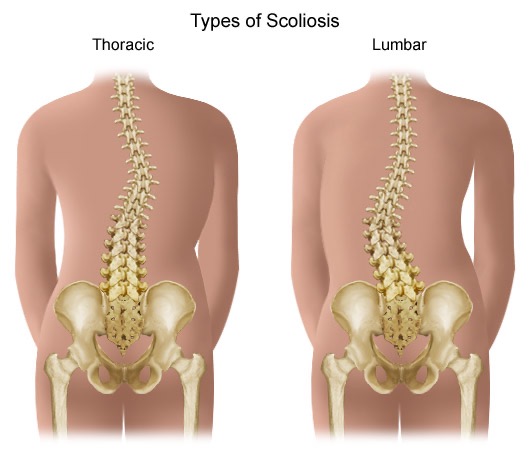
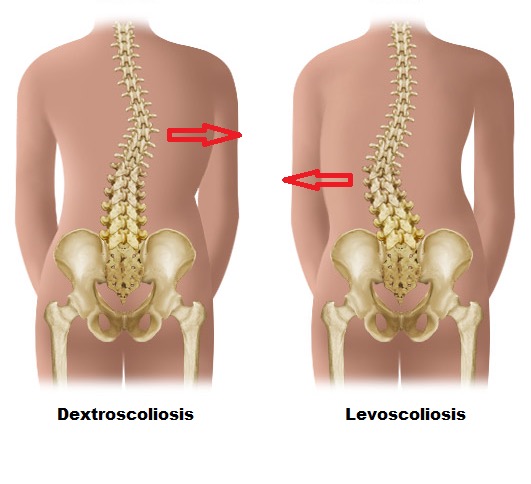
I started reading about the condition—S-curves, C-curves, thoracic and lumbar varieties, and treatments, including the Schrott method. I’ve looked at archival black-and-white photos of crooked backs, at racks and braces that looked like torture devices. I started doing yoga for scoliosis and made an appointment with a physiotherapist who specializes in treating this complex condition.
As I wait for my appointment, I have mental work to do. My sister told me about Dr. Joe Dispenza’s website, where there are inspiring stories of transformation and physical healing through meditation. I started to think about how powerful our minds and imaginations are. For many years, my friend Diane has exercised her powerful imagination as a force for good. She has had rheumatoid arthritis since she was 13 and uses visualization to help with her pain. “One of my most powerful visualizations is the dragon, which I call upon during episodes of severe pain,” writes Diane. Describing the creation of her dragon in 2010, Diane writes, “As I surrendered to the flow of molten sensation, the dragon appeared, and I clung to its fiery body until our energies merged. The pain and strength became one, flowing through us as we surrendered to the sensations.”
This visualization has transformed the way Diane sees pain—no longer as an enemy, but as sensation. Pain, she writes, is “neither ‘good’ nor ‘bad’—it simply exists, a presence I accept at the core of my being.”

Another friend, Janis, visualizes protector angels to bring calm. When her schizophrenic daughter was in crisis, she imagined an angel lovingly holding her adult child, an image that helped her to sleep.
Anybody in a twelve-step program knows the support that one’s imagined higher power can provide. It doesn’t matter if you visualize the ocean, the forest, a goddess, or your community as your higher power (it’s yours, after all)—the image you create can soothe, comfort, inspire, and heal.
I am reading Dr. Gladys McGarey’s book, The Well-Lived Life: A 103-Year-Old Doctor’s Six Secrets to Health and Happiness at Every Age. In one chapter, she writes about having breast cancer in her nineties. She combined visualization with a lumpectomy and radiation, knowing that how she thought about the tumour played an important part in healing. She started talking to the lump in her breast that she pictured as a “pretty little hand-tooled suitcase.” She spoke kindly to it: “Darling, we’re going to have a family reunion . . . . If there are other cancer cells in my body, call them together, and tell them to get in the suitcase and come on the trip.” I just love that image of the pretty suitcase and all the gathered cells going to a family reunion. There are no enemies inside of us, just family members, and some of them need to regroup elsewhere (or straighten up).

Visualization is a powerful tool.
As I thought about Diane fusing with her fiery dragon, the huge feathery wings of Janis’s angel, and Gladys McGarey’s darling hand-tooled suitcase, I wondered which image, combined with physiotherapy and exercises, could help me straighten my spine.
I remembered a recent dream that—at the time—struck me as important. My husband Michael and one of my sons accompany me to a job interview. An unusual scene greets us: We are in a large, high-ceilinged space, with brown leather sofas and armchairs spread throughout and around the circumference of the room. My husband and son are told to sit on one of the outer sofas. It’s a public interview; many people are there as audience. A group of men and women at a long table interview me while I sit before them in a butter-soft armchair. The interview is short. I’m told that I have the job. I am the new Untangler. Applause crashes through the air. Everybody is so happy for me! I got the job as the Untangler! One interviewer remarks that I didn’t even need a graduate degree to get this job. Lucky me.
When I woke from the dream, the unusual noun, untangler, floated free and visited me throughout the day. Now I am thinking of it again—what does it mean to be an untangler?
The comb is the foremost untangler, a simple yet effective tool. The earliest known comb was discovered in Syria and dates from 8,000 BC. Made from animal bone, it looks much like the combs we use now, with a handle and teeth. You can buy a cheap black plastic comb in any drugstore, but I am thinking of a more elegant object: the carved wooden comb my friend Olga gave to me. She brought it back from Omsk, Russia, her hometown. I keep that comb at my desk to remind me of her, but lately, I have been using it to comb my hair. To comb is to untangle, to straighten.
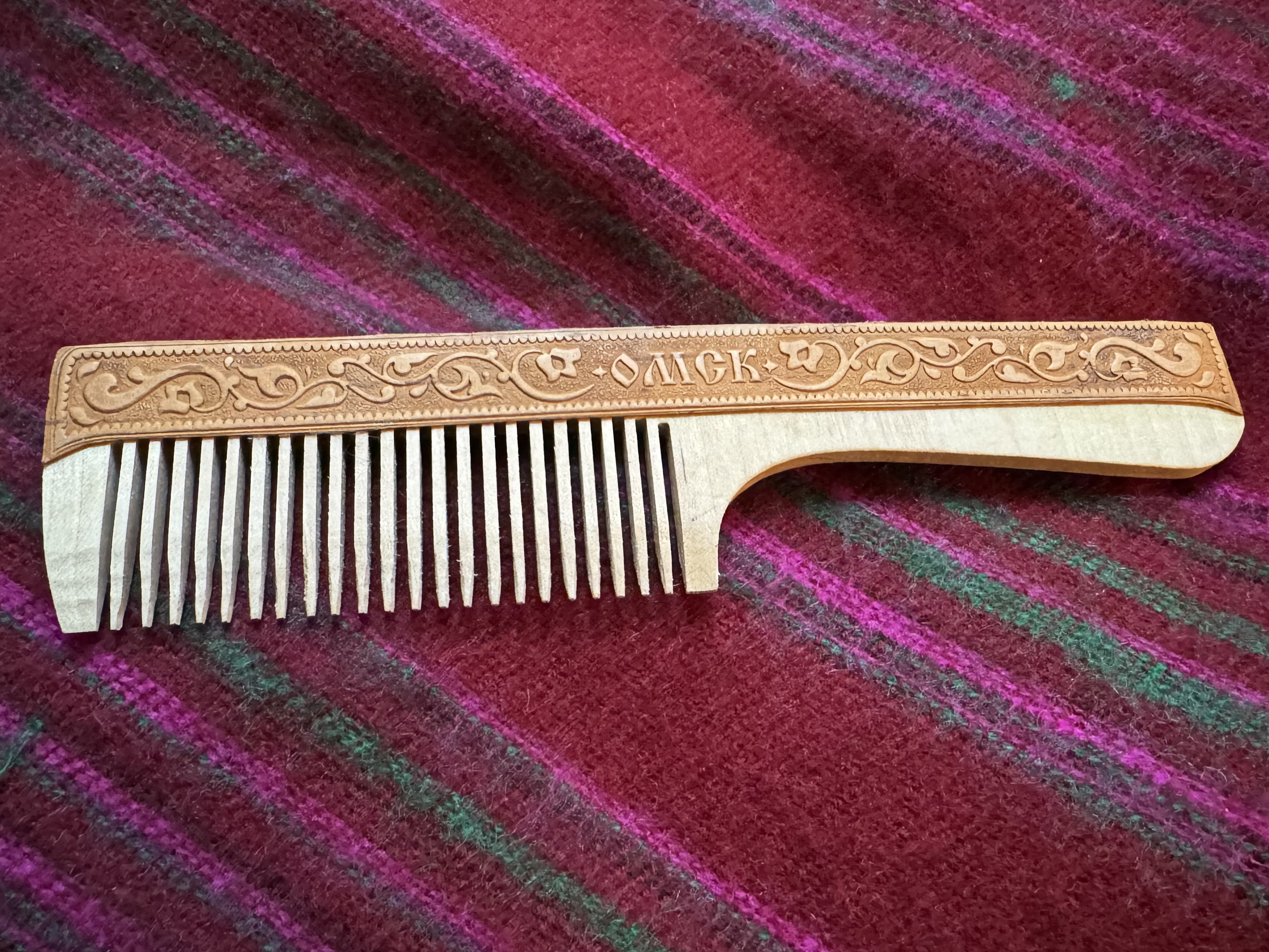
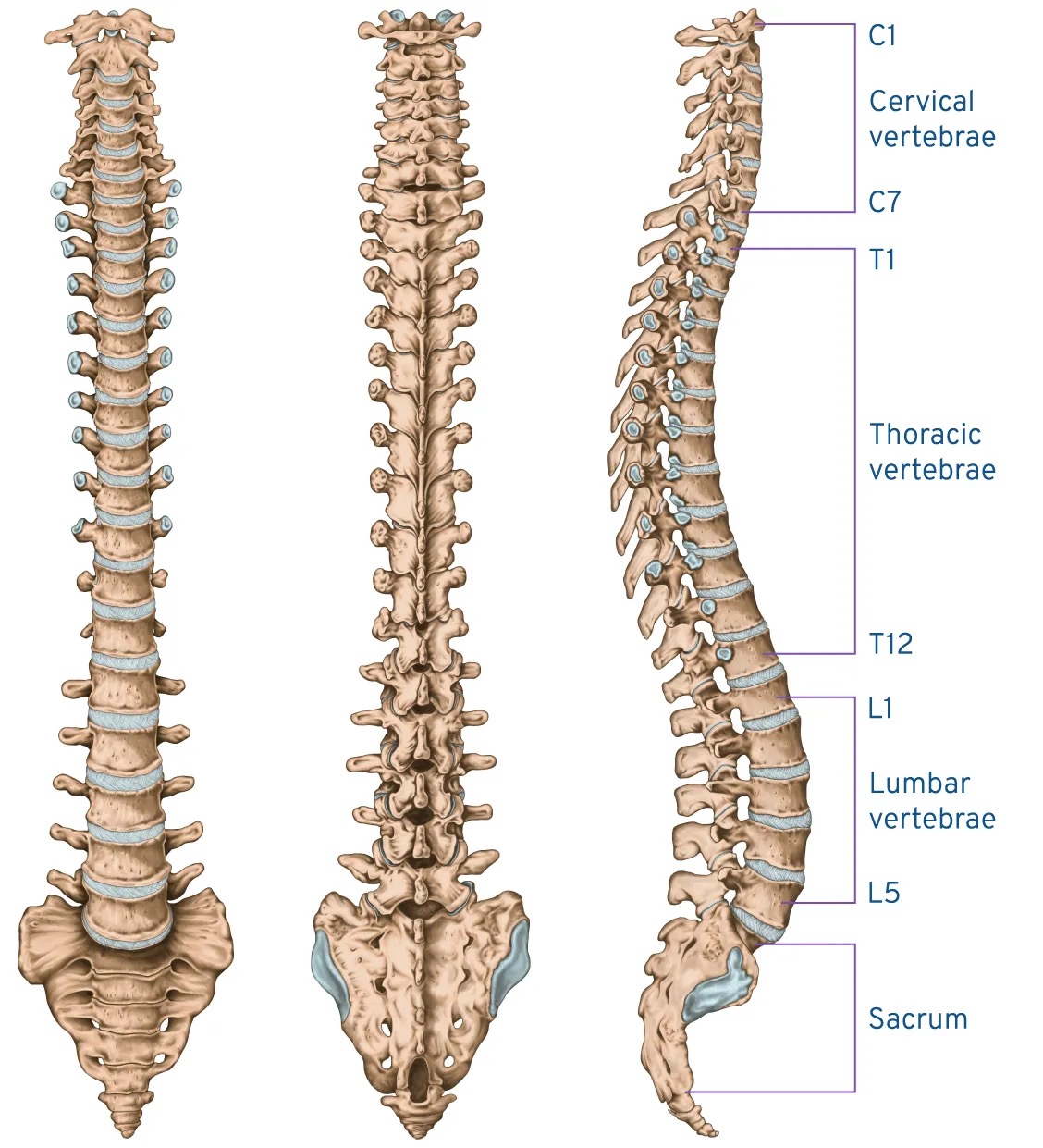
I choose to imagine that wooden comb combing my spine as I walk and when I meditate: long, smooth strokes. (Don’t get too literal; my knobby vertebrae would never fit between the teeth.) When the teeth meet a tangle of resistance, I tug a little, gently exerting pressure, pulling the spinal cord out of its curve. Combing the cervical vertebrae then to the thoracic—T1 right down to T12, then combing through lumbar 1, pulling a bit harder at L2, which—my scan shows—has slipped forward six millimetres to press the nerve, then L3 right down to the sacral region. Comb, comb, comb. Straighten, darling spine, straighten. Who knows the power of the mind, the power of an image? I was hired as the untangler, so every day, I do my job.
Credits
Types of scoliosis: https://www.hudsonvalleyscoliosis.com/what-is-scoliosis/types-of-scoliosis/
Thank you to Diane, who gave me permission to share her dragon image and story and to Janis, who gave me permission to share her angel story.
Anatomy of spine: https://mxnspine.com/anatomy/
 Madeline Ruth Walker
I’m feeling somewhat honoured by you, sharing my visualization story in your writing! Thank you 🙏. I feel so strongly about the benefits from meditation and visualization that your writing about your and of other people’s visualizations resonate deeply with me. The untangled image and the comb was interesting too. I’ve had a dream about going underground and looking for something. There was some kind of community there. My interpretation is I’m looking back at the trauma of living with RA and processing and integrating and accepting it as part of a weaving of my life. Symbolically, I think of the three fates and the woven tapestry of my life. The thread is cut. My life is as it is. For myself, I sometimes think that my prerequisite for my healing practice of meditation and visualization, is loving my body and myself. For most of my life since age 13, when I first was diagnosed with RA, I hated my body. Now, I would say I truly love my body, despite its continuing misbehavior. it’s ability to heal and still function seems almost miraculous to me. Especially after major back surgery or knee replacement. Given time it all knits back together. Body may be cobbled together and still bumpy and twisted but pain is less and function is better. I’m learning to accept what cannot be changed. Your writing is so tender and beautiful. Take care Madeline Di 💚
It is Easier to Wear Slippers than to Carpet the Whole of the Earth.
LikeLike
Diane, thank you for this lovely description of your life and growth. You inspire me to accept what cannot be changed.
LikeLike
Madeline, I love your blog, and this is one of the best pieces you have written. I feel inspired to use visualization on my own physical challenges, and I feel moved by your honesty. Thank you so much
LikeLike
Thank you, my love.
LikeLike
Thanks for your wonderful writing again, Madeline! I also can relate to your diagnosis of scoliosis which I was told some years ago I also have. I also have a very long back and I’ve had back trouble since my teens. We can’t undo what we are given in life, but there’s lots of ways we can do the best we can with it. We all deserve one of these…💜💜💜
Mark
LikeLike
Thank you, Mark. xo
LikeLike
dear Madeline, thank you for your honesty in sharing your travail and for speaking kindly of several of your friends in this post! the untangler is a powerful image; let it carry you through your day. I love that comb – that’s the only kind I can use for my fine hair 🙂 Glad it’s now got a symbolic meaning in addition to its literal material-tool sense. … what also came to mind – well, not everyone would agree – ‘being determines consciousness’ belief. I am so much in support of physio and yoga (the link you shared)… and may i nudge you to reconsider yoga with Anita? … I am thinking about you and miss you. In case you want to respond, please email me (I am afraid I won’t see your reply here, in the blog). Hugs,
LikeLike
Thank you, Olga! I love the comb you gave me. I will email you. Hugs xo
LikeLike