
I was peeling off my wet swimsuit after a sauna. A woman sat on the bench near me, her girth spread wide, a walker placed next to her. She was holding forth to two other women, telling a tale of animals visiting people in hospital. First, it was about the little dog she’d take regularly to visit her mother, who, after many months of illness, had died. Stroking the soft fur gave her mother solace. And she’d heard somewhere that there was a horse. No, really, she insisted, there was this horse who visited hospitals. She’d heard that an orderly led the animal down a hallway, and the horse stopped at one room and wouldn’t budge until he’d visited the man lying there. The man was dying of cancer.
One of the women was trying to get away from this monologue. You know how people stand at the ready, waiting for a small break in a stream of words so they can politely exit? She stood at the edge of the lockers, fully dressed, body ready to spring. The other woman, still in her swimsuit and sitting beside her large friend, seemed rapt. The rapt woman commented softly, “Oh, the horse could smell the cancer.” This remark seemed to be the thing that released the one who wanted to flee. She took off with a wave of her hand.
So apparently, the horse spent a long time visiting the man. As I rolled my suit down over my damp breasts and belly, I imagined liquid brown eyes the size of dessert bowls, a fringe of moist, black lashes, the equine head leaning over the bed as the man’s transparent hand stroked the muzzle. The hospital bed would be high, high enough so they could have skin-to-skin contact, the chemo-ravaged man tilting forward to connect with the curling lip. A horse’s kiss.
As I left the change room, the large woman was still talking about animals in hospitals. I think she’d moved on to other kinds of animals, but I couldn’t get it out of my mind: the image of an auburn horse with a white blaze on its forehead, a huge animal, perhaps 16 hands, rough mane flipped to one side, his bulging legs so close the dying man could run aching hands over those velvety pillars. I could see the horse nuzzling the man, and then standing patiently, quietly by the bedside. The clock ticks, the nurses click by, machines gurgle and beep. The horse stands, a living mountain, a witness to the man sleeping.
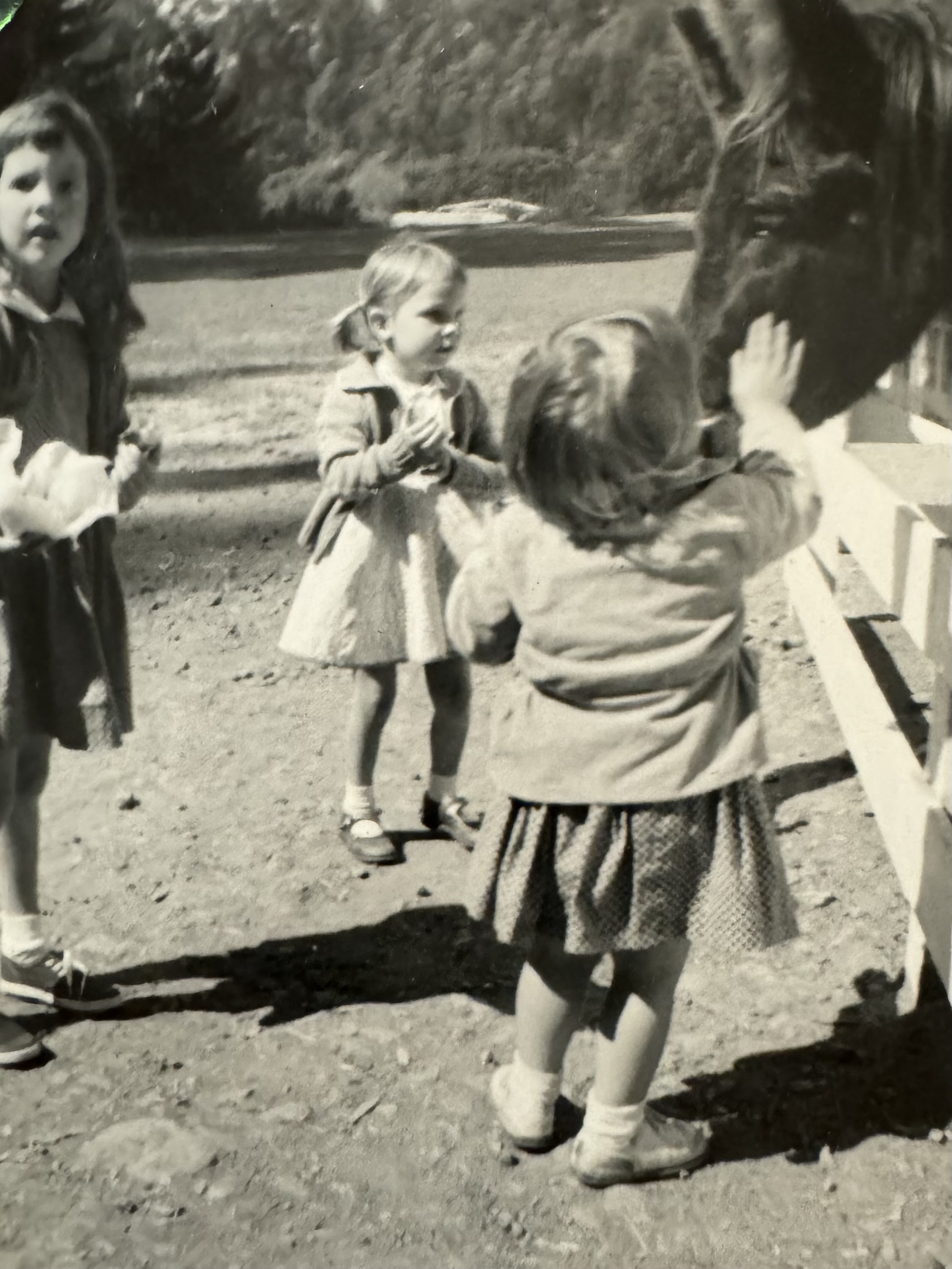
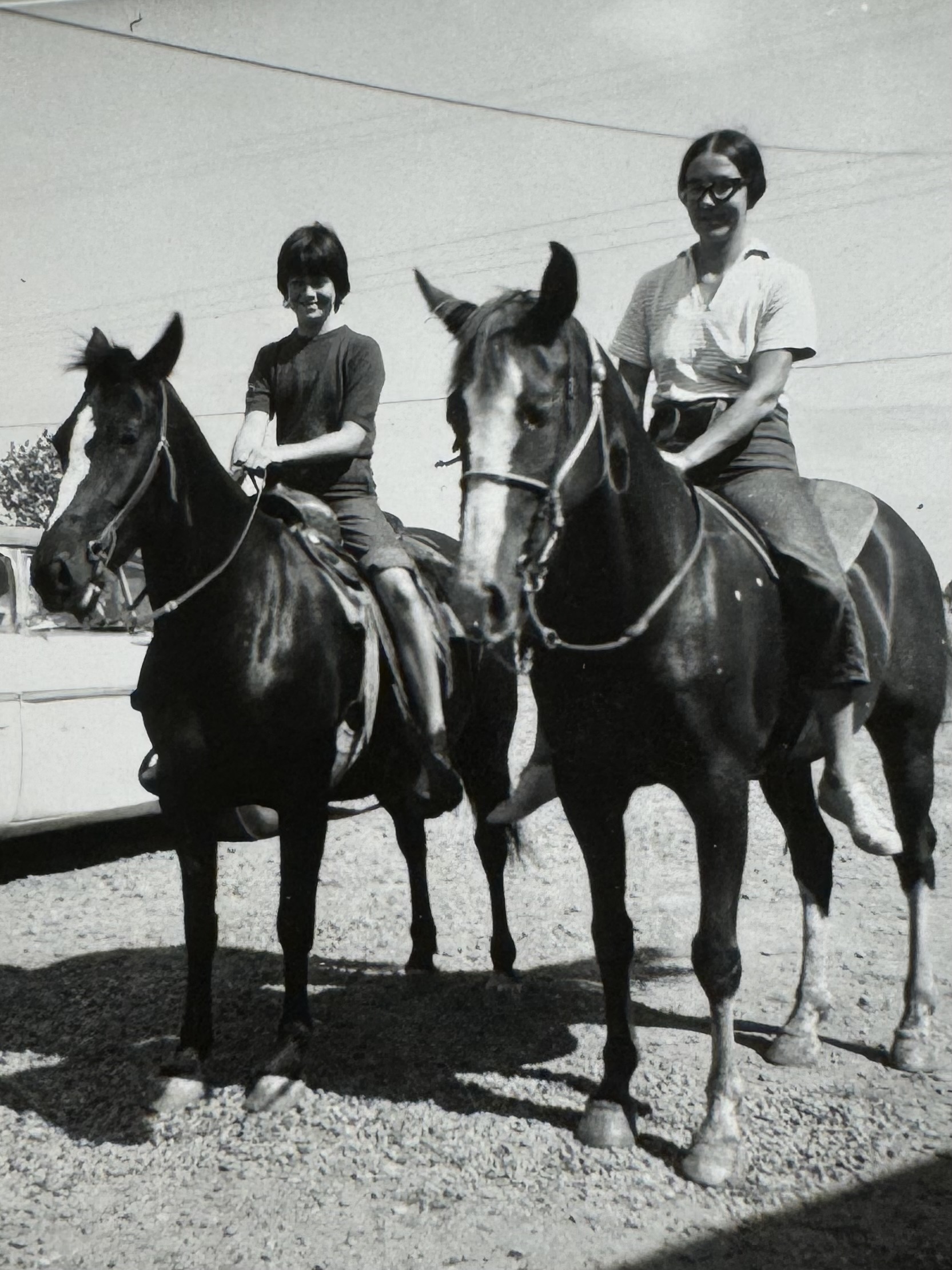
I thought of horses. We’d loved the horse books, Black Beauty, My Friend Flicka. My aunt had a farm in Sacramento we visited as children; the horses were so tall, they scared me. The horses and ponies at the Children’s Farm in Tilden Park seemed more benign, gentle. And then, much later, at my father’s farm, Poco (tall and dark red) and Blackie (small, black of course, unpredictable) lived for a time. We visited them in the barn and the fields, our pockets filled with apples.
The image of the horse in the hospital stayed with me. How did he fit in the elevator? Is the story true? I didn’t want to look it up, to Google “horses in hospitals.” I wanted it to be just what it was, a tale overheard in a women’s change room, a scene in my mind I could replay over and over.
I had a sauna because it’s something that delights me, being held in intense heat, my body melting against cedar boards. I’d opened a little piece of folded paper earlier in the day, and on it I had printed “sauna and hot tub.” On my dresser is a white ramekin filled with little pieces of paper. And on each piece, I’d written something I love to do, something that delights me, gives me pleasure, makes me happy. Swim, visit a thrift store, sing, coffee with a friend, sit on the beach, write, buy flowers, visit a library, ride my bike. I’d responded to an exercise in a self-help book by Richard Wiseman, Rip It Up. The book is about the “As If” principle (based on the work of psychologist William James), and the premise is that behaviour determines outcome: if you smile, you’ll feel happier. If you do things you enjoy, you’ll enjoy life more.
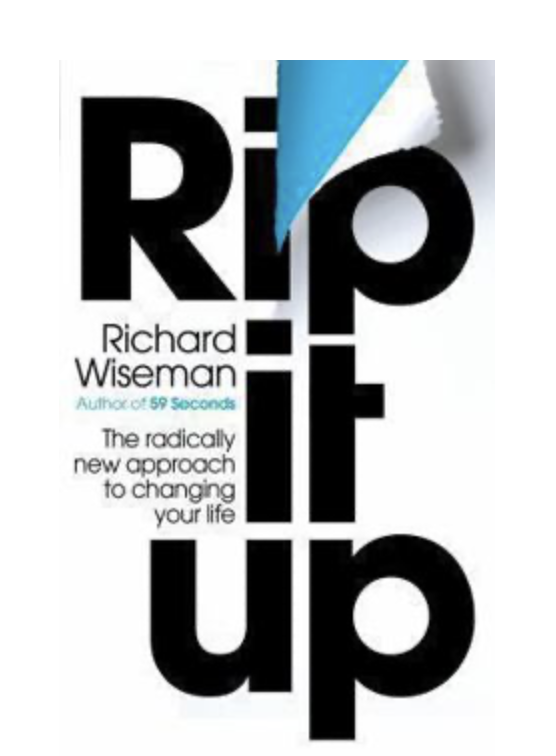
Self-help books usually over-promise and under-deliver. There’s no shortcut to living a good life. Meditate, work on being aware, practice gratitude and compassion. Exercise, eat well, connect with people and nature, right speech, life of purpose. All that. But there is something of value here, in this book that I took from a shelf at the Spiral Café. This exercise has you doing things you love to do more often—your behaviour determines an outcome of feeling good, appreciating your life.
A couple of days after I heard the story in the change room, horses were still on my mind. I thought of the saying, “don’t look a gift horse in the mouth.” I never liked this adage . . . it seemed like a trap. Wasn’t it okay to politely decline an offering? Must you take everything people give you? Could you say, “I’m sorry, I don’t have room in my house for the [fill in the blank].” And then there’s the Trojan Horse. Had the Trojans examined that wooden horse before accepting it, they would have discovered the Greeks, their enemies, hiding inside. So surely, we should be looking gift horses in the mouth?

But I started to see the aphorism another way, not about material gifts at all. Disappointment might hold a gift if you tilt it a little in the sun. Struggling to let go of a disappointment, I wrote to a friend about it. In her wisdom, she encouraged me to “let go, let go” and “just enjoy what comes your way.” I like the simplicity of that: “Just enjoy what comes your way.” The man in the hospital bed, whether real or fictional, enjoyed what came his way. He welcomed the gift of a horse, as rare as a unicorn, visiting him on his deathbed. He welcomed the horse as naturally as you welcome the visit of a beloved relative, which of course the horse was—a beloved relative. With pure gratitude, pure love.

 Madeline Ruth Walker
Lovely. Thank you for this gift.
LikeLike
You are welcome–thank you for reading!
LikeLike
This is a wonderful piece Madeline. From the sensuous (I can feel the sauna and breathe the steam and feel the horse’s coat) to the magic you discover in the interactions and connections between people, I found myself moved and marvelling. Thank you for sharing your insights and joy.
LikeLike
Thank you, Michael xo
LikeLike
Thanks Madeline – I have to confess that I did google “horses in hospitals”! Very interesting and surprising – loved your story.
Mark
LikeLike
You’re welcome, Mark. Glad you enjoyed it. I’ll have to (eventually) google those words too, to see what I find 🙂
LikeLike
Great story. I particularly like not googling horses in hospitsls, just letting it be a story heard in a locker room. The gift horse cartoon was hoot! Arnie
LikeLike
I loved that you just let it be a story overheard in a locker room. The cartoon of looking a gift horse 🐎 in the mouth was impressive! Arnie
LikeLike
Thanks, Arnie. The cartoon is from a book of illustrated sayings I made for my mother, as she was fond of old saws like this one, words she grew up with. When I was teaching writing and I had an exercise in paraphrasing expressions like this one, none of the young students had ever heard of any of them. So they are disappearing from the language.
LikeLike